EP4166551A1 - Composé de triazolone - Google Patents
Composé de triazolone Download PDFInfo
- Publication number
- EP4166551A1 EP4166551A1 EP21813193.6A EP21813193A EP4166551A1 EP 4166551 A1 EP4166551 A1 EP 4166551A1 EP 21813193 A EP21813193 A EP 21813193A EP 4166551 A1 EP4166551 A1 EP 4166551A1
- Authority
- EP
- European Patent Office
- Prior art keywords
- compound
- added
- μmol
- ethyl acetate
- present disclosure
- Prior art date
- Legal status (The legal status is an assumption and is not a legal conclusion. Google has not performed a legal analysis and makes no representation as to the accuracy of the status listed.)
- Pending
Links
Images






Classifications
-
- A—HUMAN NECESSITIES
- A61—MEDICAL OR VETERINARY SCIENCE; HYGIENE
- A61P—SPECIFIC THERAPEUTIC ACTIVITY OF CHEMICAL COMPOUNDS OR MEDICINAL PREPARATIONS
- A61P35/00—Antineoplastic agents
-
- A—HUMAN NECESSITIES
- A61—MEDICAL OR VETERINARY SCIENCE; HYGIENE
- A61P—SPECIFIC THERAPEUTIC ACTIVITY OF CHEMICAL COMPOUNDS OR MEDICINAL PREPARATIONS
- A61P31/00—Antiinfectives, i.e. antibiotics, antiseptics, chemotherapeutics
- A61P31/12—Antivirals
- A61P31/14—Antivirals for RNA viruses
- A61P31/16—Antivirals for RNA viruses for influenza or rhinoviruses
-
- C—CHEMISTRY; METALLURGY
- C07—ORGANIC CHEMISTRY
- C07D—HETEROCYCLIC COMPOUNDS
- C07D249/00—Heterocyclic compounds containing five-membered rings having three nitrogen atoms as the only ring hetero atoms
- C07D249/02—Heterocyclic compounds containing five-membered rings having three nitrogen atoms as the only ring hetero atoms not condensed with other rings
- C07D249/08—1,2,4-Triazoles; Hydrogenated 1,2,4-triazoles
- C07D249/10—1,2,4-Triazoles; Hydrogenated 1,2,4-triazoles with hetero atoms or with carbon atoms having three bonds to hetero atoms with at the most one bond to halogen, e.g. ester or nitrile radicals, directly attached to ring carbon atoms
- C07D249/12—Oxygen or sulfur atoms
-
- C—CHEMISTRY; METALLURGY
- C07—ORGANIC CHEMISTRY
- C07D—HETEROCYCLIC COMPOUNDS
- C07D401/00—Heterocyclic compounds containing two or more hetero rings, having nitrogen atoms as the only ring hetero atoms, at least one ring being a six-membered ring with only one nitrogen atom
- C07D401/02—Heterocyclic compounds containing two or more hetero rings, having nitrogen atoms as the only ring hetero atoms, at least one ring being a six-membered ring with only one nitrogen atom containing two hetero rings
- C07D401/04—Heterocyclic compounds containing two or more hetero rings, having nitrogen atoms as the only ring hetero atoms, at least one ring being a six-membered ring with only one nitrogen atom containing two hetero rings directly linked by a ring-member-to-ring-member bond
-
- C—CHEMISTRY; METALLURGY
- C07—ORGANIC CHEMISTRY
- C07D—HETEROCYCLIC COMPOUNDS
- C07D401/00—Heterocyclic compounds containing two or more hetero rings, having nitrogen atoms as the only ring hetero atoms, at least one ring being a six-membered ring with only one nitrogen atom
- C07D401/02—Heterocyclic compounds containing two or more hetero rings, having nitrogen atoms as the only ring hetero atoms, at least one ring being a six-membered ring with only one nitrogen atom containing two hetero rings
- C07D401/10—Heterocyclic compounds containing two or more hetero rings, having nitrogen atoms as the only ring hetero atoms, at least one ring being a six-membered ring with only one nitrogen atom containing two hetero rings linked by a carbon chain containing aromatic rings
-
- C—CHEMISTRY; METALLURGY
- C07—ORGANIC CHEMISTRY
- C07D—HETEROCYCLIC COMPOUNDS
- C07D401/00—Heterocyclic compounds containing two or more hetero rings, having nitrogen atoms as the only ring hetero atoms, at least one ring being a six-membered ring with only one nitrogen atom
- C07D401/14—Heterocyclic compounds containing two or more hetero rings, having nitrogen atoms as the only ring hetero atoms, at least one ring being a six-membered ring with only one nitrogen atom containing three or more hetero rings
-
- C—CHEMISTRY; METALLURGY
- C07—ORGANIC CHEMISTRY
- C07D—HETEROCYCLIC COMPOUNDS
- C07D403/00—Heterocyclic compounds containing two or more hetero rings, having nitrogen atoms as the only ring hetero atoms, not provided for by group C07D401/00
- C07D403/02—Heterocyclic compounds containing two or more hetero rings, having nitrogen atoms as the only ring hetero atoms, not provided for by group C07D401/00 containing two hetero rings
- C07D403/04—Heterocyclic compounds containing two or more hetero rings, having nitrogen atoms as the only ring hetero atoms, not provided for by group C07D401/00 containing two hetero rings directly linked by a ring-member-to-ring-member bond
Definitions
- the present disclosure relates to a series of triazolone compounds, and specifically relates to a compound represented by formula (V) and a pharmaceutically acceptable salt thereof.
- Dihydroorotate dehydrogenase (DHODH), a kind of iron-containing flavin dependent enzyme, exists in the inner membrane of human mitochondria. It catalyzes the fourth step in the de novo synthesis pathway of pyrimidine nucleotides in nucleic acids in vivo, and is the rate-limiting enzyme for pyrimidine nucleotides synthesis.
- Pyrimidine nucleotides are necessary for the synthesis of DNA, RNA, glycoproteins and phospholipids in organism; therefore, the synthesis of pyrimidine nucleotides is crucial for cell proliferation and metabolism.
- DHODH In tumor cells, the demand for pyrimidine nucleotides is far greater than that of normal cells, and the synthesis of pyrimidine nucleotides mainly depends on the de novo synthesis pathway, therefore, inhibition of DHODH can block the synthesis of new pyrimidine nucleotides, resulting in obstacles in the biosynthesis of DNA (including thymine and cytosine), RNA (including uracil and cytosine), glycoproteins and phospholipids, thereby causing cell cycle arrest and inhibiting abnormal cell proliferation.
- DNA including thymine and cytosine
- RNA including uracil and cytosine
- glycoproteins and phospholipids glycoproteins and phospholipids
- activated lymphocytes also need a lot of nucleic acids for proliferation and metabolism, and are sensitive to the inhibition of DHODH activity, therefore, inhibition of DHODH activity can effectively inhibit the proliferation of activated lymphocytes and the secretion of cytokines, while DHODH inhibitors such as leflunomide and teriflunomide are also effective drugs for treating autoimmune diseases, such as rheumatoid arthritis.
- DHODH inhibitors such as leflunomide and teriflunomide are also effective drugs for treating autoimmune diseases, such as rheumatoid arthritis.
- DHODH has not only become a potential target for anti-tumor therapy, but also an effective target for broad-spectrum anti-virus infection and treatment of autoimmune diseases, it is of great significance to develop and research specific inhibitors against DHODH.
- the present disclosure provides a compound represented by formula (V) or a pharmaceutically acceptable salt thereof, wherein,
- the R 2 is selected from CH 3 , CH 2 CH 3 , CH 2 CH 2 CH 3 and CH(CH 3 ) 2 , and the CH 3 , CH 2 CH 3 , CH 2 CH 2 CH 3 and CH(CH 3 ) 2 are optionally substituted by 1, 2 or 3 R b , and other variables are as defined in the present disclosure.
- the R 2 is selected from CH 3 and CH 2 CH 3 , and other variables are as defined in the present disclosure.
- the ring A is selected from and the are optionally substituted by 1, 2 or 3 R a , and other variables are as defined in the present disclosure.
- the ring A is selected from and and other variables are as defined in the present disclosure.
- the structural moiety is selected from and other variables are as defined in the present disclosure.
- the structural moiety is selected from and other variables are as defined in the present disclosure.
- the structural moiety is selected from and and other variables are as defined in the present disclosure.
- the R 2 is selected from CH 3 , CH 2 CH 3 , CH 2 CH 2 CH 3 and CH(CH 3 ) 2 , and the CH 3 , CH 2 CH 3 , CH 2 CH 2 CH 3 and CH(CH 3 ) 2 are optionally substituted by 1, 2 or 3 R b , and other variables are as defined in the present disclosure.
- the R 2 is selected from CH 3 and CH 2 CH 3 , and other variables are as defined in the present disclosure.
- the ring A is selected from and the are optionally substituted by 1, 2 or 3 R a , and other variables are as defined in the present disclosure.
- the ring A is selected from and other variables are as defined in the present disclosure.
- the structural moiety is selected from and other variables are as defined in the present disclosure.
- the structural moiety is selected from and other variables are as defined in the present disclosure.
- the present disclosure provides a compound represented by formula (I) or a pharmaceutically acceptable salt thereof, wherein,
- the R 2 is selected from CH 3 , CH 2 CH 3 , CH 2 CH 2 CH 3 and CH(CH 3 ) 2 , and the CH 3 , CH 2 CH 3 , CH 2 CH 2 CH 3 and CH(CH 3 ) 2 are optionally substituted by 1, 2 or 3 R b , and other variables are as defined in the present disclosure.
- the R 2 is selected from CH 3 and CH 2 CH 3 , and other variables are as defined in the present disclosure.
- the ring A is selected from , and the are optionally substituted by 1, 2 or 3 R a , and other variables are as defined in the present disclosure.
- the ring A is selected from and other variables are as defined in the present disclosure.
- the structural moiety is selected from and other variables are as defined in the present disclosure.
- the structural moiety is selected from and other variables are as defined in the present disclosure.
- the structural moiety is selected from and other variables are as defined in the present disclosure.
- the present disclosure provides a compound represented by formula (I) or a pharmaceutically acceptable salt thereof, wherein,
- the R 2 is selected from CH 3 , CH 2 CH 3 , CH 2 CH 2 CH 3 and CH(CH 3 ) 2 , and the CH 3 , CH 2 CH 3 , CH 2 CH 2 CH 3 and CH(CH 3 ) 2 are optionally substituted by 1, 2 or 3 R b , and other variables are as defined in the present disclosure.
- the R 2 is selected from CH 3 and CH 2 CH 3 , and other variables are as defined in the present disclosure.
- the ring A is selected from , and the are optionally substituted by 1, 2 or 3 R a , and other variables are as defined in the present disclosure.
- the ring A is selected from and other variables are as defined in the present disclosure.
- the structural moiety is selected from , and other variables are as defined in the present disclosure.
- the structural moiety is selected from , and other variables are as defined in the present disclosure.
- the compound or the pharmaceutically acceptable salt thereof is selected from, wherein, T 4 , T 5 , T 6 , T 7 , T 8 and T 9 are each independently selected from CH and N; E 1 , T 1 , T 2 , T 3 , R 1 , R 2 and R 3 are as defined in the present disclosure.
- the present disclosure also provides a compound represented by the following formula or a pharmaceutically acceptable salt thereof,
- the present disclosure also provides a use of the compound or the pharmaceutically acceptable salt thereof in the manufacture of a medicament for treating diseases related to DHODH.
- the compound of the present disclosure can be prepared by the following methods:
- the compound of the present disclosure has strong inhibitory activity against DHODH enzyme and influenza virus replication. At the same time, the compound of the present disclosure can also effectively inhibit the proliferation of activated PBMC, and has excellent anti-inflammatory activity in vitro.
- the compound of the present disclosure also has excellent pharmacokinetic properties, including permeability in vitro, metabolic stability in vivo, long half-life of IV and PO, good drug exposure and high oral absorption bioavailability, and efficacy in vivo shows obvious anti-inflammatory effects. In the off-target study, it does not inhibit other kinase targets, but has excellent selectivity for the inhibition against DHODH enzyme.
- pharmaceutically acceptable is used herein in terms of those compounds, materials, compositions, and/or dosage forms, which are suitable for use in contact with human and animal tissues within the scope of reliable medical judgment, with no excessive toxicity, irritation, an allergic reaction or other problems or complications, commensurate with a reasonable benefit/risk ratio.
- pharmaceutically acceptable salt refers to a salt of the compound of the present disclosure that is prepared by reacting the compound having a specific substituent of the present disclosure with a relatively non-toxic acid or base.
- a base addition salt may be obtained by bringing the compound into contact with a sufficient amount of base in a pure solution or a suitable inert solvent.
- the pharmaceutically acceptable base addition salt includes a salt of sodium, potassium, calcium, ammonium, organic ammonia or magnesium, or similar salts.
- an acid addition salt may be obtained by bringing the compound into contact with a sufficient amount of acid in a pure solution or a suitable inert solvent.
- the pharmaceutically acceptable acid addition salt examples include an inorganic acid salt, wherein the inorganic acid includes, for example, hydrochloric acid, hydrobromic acid, nitric acid, carbonic acid, bicarbonate, phosphoric acid, monohydrogen phosphate, dihydrogen phosphate, sulfuric acid, hydrogen sulfate, hydroiodic acid, phosphorous acid, and the like; and an organic acid salt, wherein the organic acid includes, for example, acetic acid, propionic acid, isobutyric acid, maleic acid, malonic acid, benzoic acid, succinic acid, suberic acid, fumaric acid, lactic acid, mandelic acid, phthalic acid, benzenesulfonic acid, p -toluenesulfonic acid, citric acid, tartaric acid, and methanesulfonic acid, and the like; and salts of amino acid (such as arginine and the like), and a salt of an organic acid such as glucuronic acid and
- the pharmaceutically acceptable salt of the present disclosure can be prepared from the parent compound that contains an acidic or basic moiety by conventional chemical method.
- such salt can be prepared by reacting the free acid or base form of the compound with a stoichiometric amount of an appropriate base or acid in water or an organic solvent or a mixture thereof.
- the compounds of the present disclosure may exist in specific geometric or stereoisomeric forms.
- the present disclosure contemplates all such compounds, including cis and trans isomers, (-)-and (+)-enantiomers, ( R )-and ( S )-enantiomers, diastereomers isomers, ( D )-isomers, ( L )-isomers, and racemic and other mixtures thereof, such as enantiomers or diastereomeric enriched mixtures, all of which are within the scope of the present disclosure.
- Additional asymmetric carbon atoms may be present in substituents such as alkyl. All these isomers and their mixtures are included within the scope of the present disclosure.
- the compound of the present disclosure may contain an unnatural proportion of atomic isotope at one or more than one atom(s) that constitute the compound.
- the compound can be radiolabeled with a radioactive isotope, such as tritium ( 3 H), iodine-125 ( 125 I) or C-14 ( 14 C).
- deuterated drugs can be formed by replacing hydrogen with heavy hydrogen, the bond formed by deuterium and carbon is stronger than that of ordinary hydrogen and carbon, compared with non-deuterated drugs, deuterated drugs have the advantages of reduced toxic and side effects, increased drug stability, enhanced efficacy, extended biological half-life of drugs, etc. All isotopic variations of the compound of the present disclosure, whether radioactive or not, are encompassed within the scope of the present disclosure.
- substituted means one or more than one hydrogen atom(s) on a specific atom are substituted with the substituent, including deuterium and hydrogen variables, as long as the valence of the specific atom is normal and the substituted compound is stable.
- it means two hydrogen atoms are substituted.
- Positions on an aromatic ring cannot be substituted with a ketone.
- optionally substituted means an atom can be substituted with a substituent or not, unless otherwise specified, the type and number of the substituent may be arbitrary as long as being chemically achievable.
- variable such as R
- the definition of the variable at each occurrence is independent.
- the group can be optionally substituted with up to two R, wherein the definition of R at each occurrence is independent.
- a combination of the substituent and/or the variant thereof is allowed only when the combination results in a stable compound.
- linking group When the number of a linking group is 0, such as -(CRR) 0 -, it means that the linking group is a single bond.
- one of the variables When one of the variables is selected from a single bond, it means that the two groups linked by the single bond are connected directly. For example, when L in A-L-Z represents a single bond, the structure of A-L-Z is actually A-Z.
- the direction for linking is arbitrary, for example, the linking group L contained in is -M-W-, then -M-W- can link ring A and ring B to form in the direction same as left-to-right reading order, and form in the direction contrary to left-to-right reading order.
- a combination of the linking groups, substituents and/or variables thereof is allowed only when such combination can result in a stable compound.
- any one or more sites of the group can be linked to other groups through chemical bonds.
- the linking site of the chemical bond is not positioned, and there is H atom at the linkable site, then the number of H atom at the site will decrease correspondingly with the number of chemical bond linking thereto so as to meet the corresponding valence.
- the chemical bond between the site and other groups can be represented by a straight solid bond ( ), a straight dashed bond ( ) or a wavy line ( ).
- the straight solid bond in -OCH 3 means that it is linked to other groups through the oxygen atom in the group;
- the straight dashed bonds in means that it is linked to other groups through the two ends of nitrogen atom in the group;
- the wave lines in means that the phenyl group is linked to other groups through carbon atoms at position 1 and position 2; means that it can be linked to other groups through any linkable sites on the piperidinyl by one chemical bond, including at least four types of linkage, including Even though the H atom is drawn on the -N-, still includes the linkage of merely when one chemical bond was connected, the H of this site will be reduced by one to the corresponding monovalent piperidinyl; means that R can be arbitrarily connected at both ends of the double bond, which means
- C 1-6 alkyl refers to a linear or branched saturated hydrocarbon group having 1 to 6 carbon atoms.
- the C 1-6 alkyl includes C 1-5 , C 1-4 , C 1-3 , C 1-2 , C 2-6 , C 2-4 , C 6 and C 5 alkyl and the like; it can be monovalent (such as methyl), divalent (such as methylene) or multivalent (such as methine).
- C 1-6 alkyl examples include but are not limited to methyl (Me), ethyl (Et), propyl (including n -propyl and isopropyl), butyl (including n -butyl, isobutyl, s -butyl and t -butyl), amyl (including n -amyl, isoamyl and neopentyl), hexyl and the like.
- C 1-3 alkyl refers to a linear or branched saturated hydrocarbon group having 1 to 3 carbon atoms.
- the C 1-3 alkyl includes C 1-2 and C 2-3 alkyl and the like; it can be monovalent (such as methyl), divalent (such as methylene) or multivalent (such as methine).
- Examples of C 1-3 alkyl include but are not limited to methyl (Me), ethyl (Et), propyl (including n -propyl and isopropyl) and the like.
- C n-n+m or C n -C n+m includes any specific case of n to n+m carbons, for example, C 1-12 includes C 1 , C 2 , C 3 , C 4 , C 5 , C 6 , C 7 , C 8 , C 9 , C 10 , C 11 , and C 12 , and any range from n to n+m is also included, for example C 1-12 includes C 1-3 , C 1-6 , C 1-9 , C 3-6 , C 3-9 , C 3-12 , C 6-9 , C 6-12 , and C 9-12 and the like; similarly, n membered to n+m membered means that the number of atoms on the ring is from n to n+m, for example, 3-12 membered ring includes 3 membered ring, 4 membered ring, 5 membered ring, 6 membered ring, 7 membered ring, 8 membered ring, 9 member
- the compounds of the present disclosure can be prepared by a variety of synthetic methods known to those skilled in the art, including the specific embodiments listed below, the embodiments formed by their combination with other chemical synthesis methods, and equivalent alternatives known to those skilled in the art, preferred implementations include but are not limited to the embodiments of the present disclosure.
- the structure of the compounds of the present disclosure can be confirmed by conventional methods known to those skilled in the art, and if the disclosure involves an absolute configuration of a compound, then the absolute configuration can be confirmed by means of conventional techniques in the art.
- the absolute configuration can be confirmed by collecting diffraction intensity data from the cultured single crystal using a Bruker D8 venture diffractometer with CuK ⁇ radiation as the light source and scanning mode: ⁇ / ⁇ scan, and after collecting the relevant data, the crystal structure can be further analyzed by direct method (Shelxs97).
- the solvents used in the present disclosure are commercially available.
- DIBAL-H refers to diisobutylaluminum hydride.
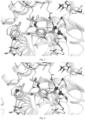
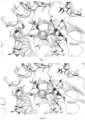
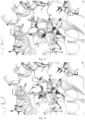
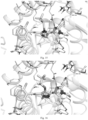
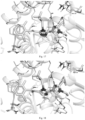
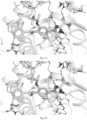
- Molecular docking was performed by using GlideSP[1] in Maestro (Schrödinger version 2017-2) and the default options.
- the cocrystal structure of DHODH (PDB ID code: 6QU7) was selected as the docking template.
- hydrogen atoms were added using the protein preparation wizard module of Maestro [2] and the OPLS3 force field was used.
- 3D structure was generated and energy minimization was performed using LigPrep [3].
- a 30 ⁇ docking grid was generated using the ligand centroid in the 6QU7 crystal structure. The ligand was then removed and the example compound was placed during molecular docking.
- the type of protein receptor-ligand interaction was analyzed, and then a reasonable docking conformation was selected and saved according to the calculated docking score and globalStrain value.
- the molecular docking diagrams of the compounds of the present disclosure are as shown in Figs. 1 to 20 .
- Methyltriphenylphosphonium bromide (58.07 mg, 162.55 ⁇ mol, 1.5 eq) was added to a solution of n -butyllithium (2.5 M, 65.02 ⁇ L, 1.5 eq) in tetrahydrofuran (1 mL) at -78°C and stirred for 0.5 hours.
- a solution of compound 6-8 (50 mg, 108.36 ⁇ mol, 1 eq) in tetrahydrofuran (0.5 mL) was added and stirred for 0.5 hours; heated to 40°C and continued to stir for 15 hours.
- the raw materials were completely reacted, quenched by adding water (10 mL) to the reaction solution, extracted by adding ethyl acetate (10 mL ⁇ 2), and the organic phases were combined, washed with saturated brine (10 mL), dried over anhydrous sodium sulfate, filtered, and the filtrate was concentrated to dryness under reduced pressure to obtain the crude product.
- the crude product was purified by fast silica gel column (0 to 15% ethyl acetate/petroleum ether) to obtain compound 26-2.
- Compound 26-3 was obtained.
- reaction solution was cooled down to 25°C, diluted by adding ethyl acetate (10 mL) to the reaction solution, filtered, and the filtrate was washed with water (10 mL ⁇ 2) and saturated brine (10 mL), dried over anhydrous sodium sulfate, filtered, and the filtrate was concentrated to dryness under reduced pressure to obtain the crude product.
- the crude product was purified by fast silica gel column (0 to 50% ethyl acetate/petroleum ether) to obtain compound 26-4.
- reaction solution was cooled down to 25°C, diluted by adding ethyl acetate (5 mL), filtered, and the filtrate was washed with water (5 mL ⁇ 2) and saturated brine (5 mL), dried over anhydrous sodium sulfate, filtered, and the filtrate was concentrated to dryness under reduced pressure to obtain the crude product.
- Tribromofluoromethane (1.68 g, 6.19 mmol, 2.5 eq ) was added and the reaction solution was stirred at 25°C for 1 hour. After the raw materials were completely reacted, the reaction was quenched by adding water (10 mL) to the reaction solution, extracted by adding ethyl acetate (10 mL ⁇ 2), and the organic phases were combined, washed with saturated brine (10 mL), dried over anhydrous sodium sulfate, filtered, and the filtrate was concentrated to dryness under reduced pressure to obtain the crude product. The crude product was purified by fast silica gel column (0 to 30% ethyl acetate/petroleum ether) to obtain 27-2.
- reaction solution was cooled down to 25°C, diluted by adding ethyl acetate (5 mL), filtered, and the filtrate was washed with water (5 mL ⁇ 2) and saturated brine (5 mL), dried over anhydrous sodium sulfate, filtered, and the filtrate was concentrated to dryness under reduced pressure to obtain the crude product.
- the raw materials were completely reacted, quenched by adding water (10 mL) to the reaction solution, extracted by adding ethyl acetate (10 mL ⁇ 2), and the organic phases were combined and washed with saturated brine (10 mL), dried with anhydrous sodium sulfate, filtered, and the filtrate was concentrated to dryness under reduced pressure to obtain the crude product.
- the crude product was purified by fast silica gel column (0 to 15% ethyl acetate/petroleum ether) to obtain compound 28-2.
- reaction solution was cooled down to 25°C, diluted by adding ethyl acetate (5 mL), filtered, and the filtrate was washed with water (5 mL ⁇ 2) and saturated brine (5 mL), dried over anhydrous sodium sulfate, filtered, and the filtrate was concentrated under reduced pressure to obtain the crude product.
- reaction solution was diluted by adding ethyl acetate (10 mL), and the organic phase was washed with water (10 mL ⁇ 2) and saturated brine (10 mL ⁇ 2), dried over anhydrous sodium sulfate, filtered, and the filtrate was concentrated to dryness under reduced pressure to obtain the crude product.
- the crude product was purified by fast silica gel column (0-60% ethyl acetate/petroleum ether) to obtain compound 29-2.
- reaction solution was cooled down to 25°C, diluted by adding ethyl acetate (10 mL), filtered, and the filtrate was washed with water (5 mL ⁇ 2) and saturated brine (5 mL), dried over anhydrous sodium sulfate, filtered, and the filtrate was concentrated to dryness under reduced pressure to obtain the crude product.
- 1,4-Dioxane (3 mL), water (0.6 mL), compound 5-2 (150 mg) and compound 30-1 (38.78 mg, 186.45 ⁇ mol) were added to a reaction flask and started to stir; then anhydrous potassium phosphate (65.96 mg, 310.75 ⁇ mol) was added thereto, and after nitrogen displacement, [1,1- bis (diphenylphosphino)ferrocene] dichloropalladium (9.10 mg, 12.43 ⁇ mol) was added, heated to 90°C, and reacted for 0.5 hours.
- the pH value was adjusted to 7 by adding saturated sodium bicarbonate solution to the reaction system, and the reaction solution was subjected to rotary evaporation under reduced pressure at 45°C; the obtained aqueous solution was extracted by adding 5 mL of ethyl acetate, and the organic phase was washed once with 5 mL of saturated brine, dried over anhydrous sodium sulfate, filtered, and the filtrate was subjected to rotary evaporation under reduced pressure at 45°C.
- 1,4-Dioxane (1 mL), water (0.2 mL), compound 5-2 (40 mg, 66.29 ⁇ mol), and 2-bromo-3-cyanopyridine (30.33 mg, 165.73 ⁇ mol) were added to a reaction flask and started to stir; then anhydrous potassium phosphate (35.18 mg, 165.73 ⁇ mol, 2.5 eq) was added thereto, after nitrogen displacement, (2-dicyclohexylphosphino-2,4,6-triisopropyl-1,1-biphenyl)[2-(2-amino-1,1-biphenyl)]palladium methanesulfonate (11.22 mg, 13.26 ⁇ mol) was added thereto, heated to 90°C and reacted for 0.5 hours.
- reaction solution was combined with the small test reaction solution, the reaction solution was cooled down to room temperature and the pH value was adjusted to 7 by adding saturated sodium bicarbonate solution to the reaction system, and the reaction solution was subjected to rotary evaporation under reduced pressure at 45°C; the resulting aqueous solution was extracted by adding 5 mL of ethyl acetate, and the organic phase was washed once with 5 mL of saturated brine, dried over anhydrous sodium sulfate, filtered, and the filtrate was subjected to rotary evaporation under reduced pressure at 45°C.
- 1,4-Dioxane (3 mL), water (0.6 mL), compound 5-2 (170 mg) and compound 32-B (35.16 mg, 169.05 ⁇ mol) were added to a reaction flask and started to stir; then anhydrous potassium phosphate (44.85 mg, 211.31 ⁇ mol) was added thereto, and after nitrogen displacement, [1,1- bis (diphenylphosphino)ferrocene]dichloropalladium (6.18 mg, 8.45 ⁇ mol) was added thereto, heated to 90°C and reacted for 0.5 hours.
- the resulting aqueous solution was extracted by adding 5 mL of ethyl acetate, and the organic phase was washed once with 5 mL of saturated brine, dried over anhydrous sodium sulfate, filtered, and the filtrate was subjected to rotary evaporation under reduced pressure at 45°C.
- the crude product was separated and purified by high performance liquid chromatography, the high performance liquid chromatography (HPLC) method: ACSTJ-GX-z preparative chromatograph; chromatographic column: Waters Xbridge BEH C18 100*30 mm ⁇ 10 ⁇ m; mobile phase A: H 2 O (10 mM NH 4 HCO 3 ), mobile phase B: acetonitrile; running gradient: B%: 30%-60%, running for 10 min. Compound 32 was obtained.
- HPLC high performance liquid chromatography
- reaction solution was added with water (5 mL), extracted three times using ethyl acetate (10 mL), and the organic phase was collected; the organic phase was dried over anhydrous sodium sulfate, filtered, and concentrated under reduced pressure to obtain the crude product.
- Tetrahydrofuran 15 mL
- methyltriphenylphosphonium bromide 232.76 mg, 651.58 ⁇ mol
- potassium tert -butoxide 73.11 mg, 651.58 ⁇ mol
- compound 6-8 150 mg, 325.79 ⁇ mol
- tetrahydrofuran 3 mL
- reaction solution was quenched by adding saturated ammonium chloride aqueous solution (20 mL) to the reaction solution and extracted by adding ethyl acetate (10 mL ⁇ 2); the organic phases were combined, washed with saturated brine (15 mL ⁇ 1), dried over anhydrous sodium sulfate, filtered, and the filtrate was concentrated under reduced pressure.
- N -Methylpyrrolidone (1 mL), compound 35-1 (50 mg, 108.83 ⁇ mol), 2-chloro-6-fluorobromobenzene (56.98 mg, 272.07 ⁇ mol) were added to a reaction flask and started to stir; after nitrogen displacement, triethylamine (44.05 mg, 435.32 ⁇ mol, 60.59 ⁇ L) and bis ( tri-tert- butylphosphine)palladium(0) (5.56 mg, 10.88 ⁇ mol) were added thereto, heated to 140°C and reacted for 12 hours.
- reaction solution was reduced to room temperature, combined with the reaction solution of the small test, and the reaction solution was poured into 5 mL of saturated ammonium chloride solution and then extracted by adding 5 mL of ethyl acetate; the resulting organic phase was washed with saturated brine (5 mL ⁇ 3), dried over anhydrous sodium sulfate, filtered, and the filtrate was concentrated under reduced pressure at 45°C.
- HPLC high performance liquid chromatography
- high performance liquid preparation method ACSTJ-GX-AB preparative chromatograph
- chromatographic column Waters Xbridge BEH C18 100*30 mm ⁇ 10 ⁇ m
- mobile phase A H 2 O (10 mM NH 4 HCO 3 )
- mobile phase B acetonitrile
- running gradient B%: 45% - 75%, which was run for 8 min to obtain compound 35 .
- Acetonitrile (5 mL) and compound 36-2 (450 mg, 1.23 mmol) were added to a reaction flask and started to stir; then anhydrous potassium phosphate (522.93 mg, 2.46 mmol) and (25)-1,1,1-trifluoro-2-propanol (210.75 mg, 1.85 mmol) were added thereto, heated to 73°C and reacted for 12 hours.
- reaction solution was quenched by adding saturated ammonium chloride aqueous solution (10 mL), and extracted by adding dichloromethane (10 mL*2); the organic phases were combined, washed with saturated brine (10 mL ⁇ 2), dried over anhydrous sodium sulfate, filtered, and the filtrate was concentrated under reduced pressure.
- Tetrahydrofuran (5 mL), methyltriphenylphosphonium bromide (46.35 mg, 129.76 ⁇ mol) were added to a reaction flask and started to stir; then the temperature was cooled down to -30°C, potassium tert -butoxide (14.56 mg, 129.76 ⁇ mol) was added thereto, heated to 15°C and reacted for 1.5 hours. Then the temperature was cooled down to 0°C and compound 36-4 (30 mg, 64.88 ⁇ mol) dissolved in 0.2 mL of tetrahydrofuran was added dropwise thereto, heated to 15°C and reacted for 12 hours.
- reaction solution was quenched by adding saturated ammonium chloride solution (15 mL), and extracted by adding ethyl acetate (10 mL ⁇ 2). The organic phases were combined, washed with saturated brine (15 mL ⁇ 1), dried over anhydrous sodium sulfate, filtered, and the filtrate was concentrated under reduced pressure.
- N -Methylpyrrolidone (0.7 mL), compound 36-5 (30 mg, 65.16 ⁇ mol) and 2-chloro-6-fluorobromobenzene (40.94 mg, 195.47 ⁇ mol) were added to a reaction flask and started to stir; after nitrogen displacement, triethylamine (23.08 mg, 228.05 ⁇ mol, 31.74 ⁇ L) and bis ( tri-tert- butylphosphine)palladium(0) (6.66 mg, 13.03 ⁇ mol) were added thereto, heated to 140°C and reacted for 12 hours. The reaction solution was poured into 5 mL of saturated ammonium chloride solution and extracted by adding 5 mL of ethyl acetate.
- N-Methylpyrrolidone (0.7 mL), compound 35-1 (30 mg, 65.30 ⁇ mol) and 2-chloro-3-iodopyridine (39.09 mg, 163.24 ⁇ mol) were added to a reaction flask and started to stir; after nitrogen replacement, triethylamine (26.43 mg, 261.19 ⁇ mol, 36.35 ⁇ L) and bis ( tri-tert- butylphosphine)palladium(0) (3.34 mg, 6.53 ⁇ mol) were added thereto, heated to 135°C and reacted for 10 hours.
- N -Methylpyrrolidone (0.5 mL), compound 35-1 (30 mg, 65.30 ⁇ mol) and compound 38-B (33.96 mg, 163.25 ⁇ mol) were added to a reaction flask and started to stirred; after nitrogen replacement, triethylamine (26.43 mg, 261.20 ⁇ mol, 36.35 ⁇ L, 4 eq) and bis (tri -t- butylphosphine)palladium(0) (3.34 mg, 6.53 ⁇ mol) were added, heated to 135°C and stirred for 12 hours.
- 1,4-Dioxane (2 mL), water (0.4 mL), compound 5-2 (115 mg) and compound 38-B (23.79 mg, 114.35 ⁇ mol) were added to a reaction flask and started to stir; then anhydrous potassium phosphate (30.34 mg, 142.94 ⁇ mol) was added thereto, after nitrogen replacement, [1,1- bis (diphenylphosphino)ferrocene]dichloropalladium (4.18 mg, 5.72 ⁇ mol) was added thereto, heated to 90°C and reacted for 0.5 hours.
- the pH was adjusted to 7 by adding saturated sodium bicarbonate solution to the reaction system, and the reaction solution was subjected to rotary evaporation under reduced pressure at 45°C; the resulting aqueous solution was extracted by adding 5 mL of ethyl acetate, and the organic phase was washed once with 5 mL of saturated brine, dried over anhydrous sodium sulfate, filtered, and the filtrate was subjected to rotary evaporation under reduced pressure at 45°C.
- 1,4-Dioxane (1 mL), water (0.2 mL), compound 5-2 (55 mg, 99 ⁇ mol) and compound 40-A (41 mg, 197 ⁇ mol) were added to a reaction flask and started to stir; then anhydrous potassium phosphate (52 mg, 247 ⁇ mol) and 1,1'-bis(diphenylphosphino)ferrocene-palladium(II)dichloride dichloromethane complex (16 mg, 19 ⁇ mol) were added thereto, heated to 90°C and reacted for 1 hour.
- the pH was adjusted to 7 by adding saturated sodium bicarbonate solution to the reaction system, and the reaction solution was subjected to rotary evaporation under reduced pressure at 45°C; the resulting aqueous solution was extracted by adding 5 mL of ethyl acetate, and the organic phase was washed once with 5 mL of saturated brine, dried over anhydrous sodium sulfate, filtered, and the filtrate was subjected to rotary evaporation under reduced pressure at 45°C.
- the DHODH inhibitory activity of the compounds was detected by the following experimental method, and the experimental results are as shown in Table 1.
- DHODH uses flavin mononucleotide FMN to catalyze the oxidation of dihydrooratic acid DHO to produce oratic acid, while the re-oxidation of FMN requires the participation of coenzyme CoQ.
- CoQ was replaced by Resazurin dye as the final electron acceptor in the enzyme activity reaction.
- Resazurin solution is blue, and the resorufin generated after reduction has red fluorescence, and the fluorescence signal can be detected under the 535 nm of excitation wavelength and the 590 nm of emission wavelength.
- the components of the reaction buffer used in the experiment were 100 mM Hepes pH 7.0, 150 mM NaCl, 0.3% CHAPS, 0.5 mg/mL BSA, 0.1 ⁇ M FMN and 1% DMSO.
- the final concentration of DHODH enzyme in the reaction system was 5 nM, and the final concentration of substrate L-DHO was 15 ⁇ M, the final concentration of indicator Resazurin was 80 ⁇ M.
- the components of the reaction stop buffer were 100 mM Hepes pH 7.0 and 5 mM Orotate.
- the compounds of the present disclosure have excellent DHODH enzyme inhibitory activity.
- the antiviral activity of the compounds against influenza virus was evaluated by testing the median effective concentration (EC 50 ) values of the compounds. Cytopathic effect experiment was widely used to detect the protective effect of compounds on virus-infected cells to reflect the antiviral activity of compounds.
- MDCK cells were seeded at a density of 2000 cells per well into a black 384-well cell culture plate and subsequently incubated overnight at 37°C in a 5% CO 2 incubator.
- the compounds were diluted and added to the cell wells by Echo555 non-contact nano-upgrade acoustic liquid handler (triple multiple proportions dilution, 8 test concentration points).
- Influenza virus A/Weiss/43 (H1N1) strain was subsequently added to the cell culture wells at 1-2 90% tissue culture infective dose (TCID90) per well, and the final concentration of DMSO in the culture medium is 0.5%.
- Virus control wells (with DMSO and virus, without compound), cell control wells (with DMSO, without compound and virus) and culture medium control wells (with medium only, without cells) were set up.
- the cytotoxicity assay for the compounds was performed in parallel with the antiviral activity assay, and the experimental conditions were consistent with the antiviral activity detection except that no virus was added.
- Cell plate was incubated at 37°C for 5 days in a 5% CO 2 incubator. Cell activity was tested after 5 days of incubation using the cell viability detection kit CCK8. Raw data were used to calculate the antiviral activity and cytotoxicity of the compounds.
- the antiviral activity and cytotoxicity of the compound are expressed by the inhibition rate (%) of the compound on the cell-virus effect caused by the virus.
- Flow cytometry was used to detect cell proliferation of human peripheral blood mononuclear cells.
- the compounds of the present disclosure can effectively inhibit the proliferation of activated PBMC and have excellent anti-inflammatory activity in vitro.
- the MDR1-MDCK II cell line licensed from the laboratory of Piet Borst at the Netherlands Cancer Institute was used as an in vitro model for permeability evaluation experiments, and was seeded in Transwell-96-well cell plate at a density of 2.3 ⁇ 10 5 cells/cm 2 and cultured in a CO 2 incubator for 4-7 days before being used for transport experiments.
- the Lucifer Yellow Rejection Assay was used to test the integrity of the MDR1-MDCK II cell layer.
- the remaining solution in the apical and basolateral wells was removed, and 75 ⁇ L of TB containing 100 ⁇ M Lucifer Yellow was added to the apical wells and 250 ⁇ L of TB was added to the basolateral wells, respectively, and the cell plate was incubated in a cell incubator at 37 ⁇ 1°C, 5% CO 2 and saturated humidity for 30 min, then the 20 ⁇ L of sample was taken from the apical wells and mixed with 60 ⁇ L of TB, and 80 ⁇ L of sample was taken from the basolateral wells, and the relative fluorescence unit (RFU) was detected at 425/528 nm (excitation/emission) spectra using a microplate reader.
- REU relative fluorescence unit
- the sample analysis of the test samples and control compounds nadolol, metoprolol and digoxin in this experiment was carried out by the method of liquid chromatography-tandem mass spectrometry (LC-MS/MS).
- LC-MS/MS liquid chromatography-tandem mass spectrometry
- the retention times of analytes and internal standards, chromatogram acquisition and integration were processed using the software Analyst (Sciex, Framingham, MA, USA).
- the sample analysis was performed using semi-quantitative determination of peak areas of analytes and internal standards.
- V R is the volume of the solution at the receiving end (0.075 mL for side A and 0.25 mL for side B); Area is the relative surface area of the cell monolayer (0.0804 cm 2 ); Time is the incubation time (9000 s); C 0 is the peak area ratio of the compound at the administration end; V D is the volume at the administration end (0.075 mL for side A and 0.25 mL for side B); C D and C R are the peak area ratios of compounds at the administration side and the receiving side, respectively.
- Lucifer yellow transmittance (%Lucifer Yellow) was calculated using the following equation:
- RFU Apical and RFU Basolateral are the relative fluorescence intensities of Lucifer yellow at the apical end and basolateral end, respectively.
- V Apical and V Basolateral are the sample loading volumes at the apical end and basolateral end, respectively (0.0750 and 0.250 mL, respectively).
- the compounds of the present disclosure have excellent membrane permeability in the study of cell membrane permeability.
- Plasma concentrations were detected by LC-MS/MS, and relevant pharmacokinetic parameters were calculated using WinNonlin TM Version 6.3 (Pharsight, Mountain View, CA) pharmacokinetic software with a non-compartmental model linear logarithmic trapezoid method.
- the compounds of the present disclosure have excellent metabolic stability in vivo (Cl), show long half-lives (T 1/2 ) for both IV and PO, have good drug exposure (AUC), and very high oral absorption bioavailability.
- the compounds of the present disclosure have excellent pharmacokinetic properties.
- the recording frequency is once a day, Days 0 to 8, and is rated at 4 grades according to the following criteria:
- the colonic tissue was divided into two longitudinally and one was fixed in 10% neutral paraformaldehyde in the form of "Swiss" rolls.
- the other was quickly frozen in liquid nitrogen and then stored in a refrigerator at - 80°C for detection and analysis to be selected.
- compound 5 at a dose of 5 mpk/BID significantly improves the inflammation-induced increase of colonic density as well as the tendency of colonic shortening at the experimental endpoint, and has a significant difference, p ⁇ 0.0001, as shown in Fig. 23 and Fig. 24 .
- compound 5 shows significant anti-inflammatory effects on the DSS-induced colitis (IBD) model in mice, which can significantly slow down the weight loss of mice with enteritis and improve the disease health status and score associated with diarrhea and hematochezia; and can also improve the inflammation-induced increase of colonic density as well as the tendency of colonic shortening, which is consistent with the DAI score results; while PD study shows that compound 5 can also significantly reduce the levels of the inflammatory cytokine TNF- ⁇ in the colonic mucosa.
- IBD DSS-induced colitis
- This experiment aims to study the activity and selectivity of the compounds towards kinases selected from the Eurofins KinaseProfilerTM platform.
- the compounds against each selected kinase were tested using the KinaseProfilerTM experimental procedure of Eurofins standard, which follows the relevant standard operating procedures.
- Protein kinases except ATM(h) and DNA-PK(h)
- Compound powders were prepared into 10 mM mother liquor through 100% DMSO solution and then diluted to 50 ⁇ liquid.
- test compound An appropriate amount of 50 ⁇ storage solution of the test compound was taken into the test wells, and then the kinase and substrate were added and mixed well. A certain concentration of ATP was added to start the reaction. The kinase and substrate did not need to be pre-incubated with the compound before adding ATP.
- the compound of the present disclosure has weak inhibition or no inhibition on 15 common kinases, has excellent DHODH target selectivity, and can avoid side effects caused by off-target.
Landscapes
- Organic Chemistry (AREA)
- Chemical & Material Sciences (AREA)
- Health & Medical Sciences (AREA)
- Life Sciences & Earth Sciences (AREA)
- Virology (AREA)
- General Chemical & Material Sciences (AREA)
- Nuclear Medicine, Radiotherapy & Molecular Imaging (AREA)
- Veterinary Medicine (AREA)
- Public Health (AREA)
- Chemical Kinetics & Catalysis (AREA)
- General Health & Medical Sciences (AREA)
- Medicinal Chemistry (AREA)
- Animal Behavior & Ethology (AREA)
- Pharmacology & Pharmacy (AREA)
- Molecular Biology (AREA)
- Pulmonology (AREA)
- Oncology (AREA)
- Communicable Diseases (AREA)
- Pharmaceuticals Containing Other Organic And Inorganic Compounds (AREA)
- Plural Heterocyclic Compounds (AREA)
Applications Claiming Priority (6)
| Application Number | Priority Date | Filing Date | Title |
|---|---|---|---|
| CN202010478375 | 2020-05-29 | ||
| CN202010721277 | 2020-07-24 | ||
| CN202010937150 | 2020-09-08 | ||
| CN202011437576 | 2020-12-07 | ||
| CN202110361719 | 2021-04-02 | ||
| PCT/CN2021/095599 WO2021238881A1 (fr) | 2020-05-29 | 2021-05-24 | Composé de triazolone |
Publications (2)
| Publication Number | Publication Date |
|---|---|
| EP4166551A1 true EP4166551A1 (fr) | 2023-04-19 |
| EP4166551A4 EP4166551A4 (fr) | 2024-07-10 |
Family
ID=78745618
Family Applications (1)
| Application Number | Title | Priority Date | Filing Date |
|---|---|---|---|
| EP21813193.6A Pending EP4166551A4 (fr) | 2020-05-29 | 2021-05-24 | Composé de triazolone |
Country Status (5)
| Country | Link |
|---|---|
| US (1) | US12606540B2 (fr) |
| EP (1) | EP4166551A4 (fr) |
| JP (1) | JP7653456B2 (fr) |
| CN (1) | CN115667245B (fr) |
| WO (1) | WO2021238881A1 (fr) |
Families Citing this family (2)
| Publication number | Priority date | Publication date | Assignee | Title |
|---|---|---|---|---|
| EP4313150A1 (fr) | 2021-03-26 | 2024-02-07 | Georg-August-Universität Göttingen Stiftung Öffentlichen Rechts, Universitätsmedizin | Combinaison d'inhibiteur de la biosynthèse de la pyrimidine destinée à être utilisée dans le traitement d'infections virales |
| CN118284603A (zh) * | 2021-11-26 | 2024-07-02 | 南京明德新药研发有限公司 | 三氮唑酮类化合物的晶型及其应用 |
Family Cites Families (4)
| Publication number | Priority date | Publication date | Assignee | Title |
|---|---|---|---|---|
| WO2006022442A1 (fr) | 2004-08-24 | 2006-03-02 | Santen Pharmaceutical Co., Ltd. | Nouveaux derives d’amides heterocycliques ayant une activite d’inhibition de la dihydroorotate deshydrogenase |
| JOP20190094A1 (ar) | 2016-10-27 | 2019-04-25 | Broad Inst Inc | مركبات 1، 2، 4-تريازولون تحمل ثلاثة بدائل عند المواقع 2، 4، 5 مفيدة كمثبطات لديهيدروجيناز ثنائي هيدرو أوروتات (dhodh) |
| CA3041650A1 (fr) * | 2016-10-27 | 2018-05-03 | Bayer Aktiengesellschaft | 1,2,4-triazolones 4,5-annelees |
| CN107459491A (zh) * | 2017-08-23 | 2017-12-12 | 沈阳药科大学 | 含1,2,3‑三氮唑结构的苯甲酰胺类化合物及其用途 |
-
2021
- 2021-05-24 WO PCT/CN2021/095599 patent/WO2021238881A1/fr not_active Ceased
- 2021-05-24 JP JP2022573319A patent/JP7653456B2/ja active Active
- 2021-05-24 CN CN202180036397.8A patent/CN115667245B/zh active Active
- 2021-05-24 EP EP21813193.6A patent/EP4166551A4/fr active Pending
- 2021-05-24 US US17/999,557 patent/US12606540B2/en active Active
Also Published As
| Publication number | Publication date |
|---|---|
| EP4166551A4 (fr) | 2024-07-10 |
| US12606540B2 (en) | 2026-04-21 |
| JP2023527213A (ja) | 2023-06-27 |
| WO2021238881A1 (fr) | 2021-12-02 |
| CN115667245A (zh) | 2023-01-31 |
| JP7653456B2 (ja) | 2025-03-28 |
| CN115667245B (zh) | 2024-05-17 |
| US20230257362A1 (en) | 2023-08-17 |
Similar Documents
| Publication | Publication Date | Title |
|---|---|---|
| EP3753937B1 (fr) | Inhibiteur d'atr et son application | |
| CN115335372B (zh) | 八氢吡嗪并二氮杂萘啶二酮类化生物 | |
| EP4556481A1 (fr) | Composé de pyrimidine hétérocyclique substitué par un pont pipérazine | |
| EP4148056A1 (fr) | Inhibiteur de sos1 contenant du phosphore | |
| EP3334430B1 (fr) | Atropisomérisme pour une sélectivité accrue des inhibiteurs de kinase | |
| JP6772360B2 (ja) | イソクエン酸デヒドロゲナーゼ阻害剤としての化合物、及びその応用 | |
| EP3842433A1 (fr) | Dérivé de pyridone-pyrimidine agissant en tant qu'inhibiteur de mutéine krasg12c | |
| EP3398950B1 (fr) | Nouvel inhibiteur de kinase contre un egfr de type sauvage et un egfr muté | |
| EP4582427A1 (fr) | Inhibiteur d'usp1 | |
| US11542282B2 (en) | Low affinity poly(AD-ribose) polymerase 1 dependent cytotoxic agents | |
| CN118525008A (zh) | 吡唑-1(2h)-酞嗪酮类化合物及其应用 | |
| EP4166551A1 (fr) | Composé de triazolone | |
| Sharma et al. | Structural comparison of Mtb-DHFR and h-DHFR for design, synthesis and evaluation of selective non-pteridine analogues as antitubercular agents | |
| US12157739B2 (en) | Hypoxanthine compounds | |
| CN114591315A (zh) | 一种组织蛋白酶c小分子抑制剂 | |
| EP4043450A1 (fr) | Dérivés 2h-benzopyrane utilisables en tant qu'inhibiteurs de crac | |
| Qureshi et al. | Microwave assisted synthesis of 2-amino-4-chloro-pyrimidine derivatives: Anticancer and computational study on potential inhibitory action against COVID-19 | |
| EP4389736A1 (fr) | Composé d'urée contenant une substitution du cycle 2-hétéroaromatique, son procédé de préparation et son utilisation | |
| CN111377935B (zh) | 选择性cdk4/6抑制剂及其应用 | |
| TW202246287A (zh) | 十二元大環類化合物 | |
| CN114907274A (zh) | 5-氟尿嘧啶-1-烷基酸衍生物及制备方法及其应用 | |
| CN116655638B (zh) | 氘代prmt5抑制剂 | |
| HK40085435A (en) | Triazolone compound | |
| CN119384422A (zh) | 哒嗪并吡啶酮衍生物及其用途 | |
| CN116425682A (zh) | 一种嘧啶-1(2h)-氧代类化合物及其制备方法与应用 |
Legal Events
| Date | Code | Title | Description |
|---|---|---|---|
| STAA | Information on the status of an ep patent application or granted ep patent |
Free format text: STATUS: THE INTERNATIONAL PUBLICATION HAS BEEN MADE |
|
| PUAI | Public reference made under article 153(3) epc to a published international application that has entered the european phase |
Free format text: ORIGINAL CODE: 0009012 |
|
| STAA | Information on the status of an ep patent application or granted ep patent |
Free format text: STATUS: REQUEST FOR EXAMINATION WAS MADE |
|
| 17P | Request for examination filed |
Effective date: 20221229 |
|
| AK | Designated contracting states |
Kind code of ref document: A1 Designated state(s): AL AT BE BG CH CY CZ DE DK EE ES FI FR GB GR HR HU IE IS IT LI LT LU LV MC MK MT NL NO PL PT RO RS SE SI SK SM TR |
|
| DAV | Request for validation of the european patent (deleted) | ||
| DAX | Request for extension of the european patent (deleted) | ||
| A4 | Supplementary search report drawn up and despatched |
Effective date: 20240611 |
|
| RIC1 | Information provided on ipc code assigned before grant |
Ipc: A61P 35/00 20060101ALI20240605BHEP Ipc: A61K 31/4196 20060101ALI20240605BHEP Ipc: C07D 249/12 20060101ALI20240605BHEP Ipc: C07D 401/02 20060101ALI20240605BHEP Ipc: C07D 403/14 20060101ALI20240605BHEP Ipc: C07D 403/06 20060101ALI20240605BHEP Ipc: C07D 403/02 20060101AFI20240605BHEP |