EP4167155A1 - Planification d'optimisation de tâches interactives homme-machine en tenant compte de l'objectif d'émission de la machine et du développement de compétences humaines - Google Patents
Planification d'optimisation de tâches interactives homme-machine en tenant compte de l'objectif d'émission de la machine et du développement de compétences humaines Download PDFInfo
- Publication number
- EP4167155A1 EP4167155A1 EP21202683.5A EP21202683A EP4167155A1 EP 4167155 A1 EP4167155 A1 EP 4167155A1 EP 21202683 A EP21202683 A EP 21202683A EP 4167155 A1 EP4167155 A1 EP 4167155A1
- Authority
- EP
- European Patent Office
- Prior art keywords
- task
- machinery
- tasks
- workers
- data
- Prior art date
- Legal status (The legal status is an assumption and is not a legal conclusion. Google has not performed a legal analysis and makes no representation as to the accuracy of the status listed.)
- Pending
Links
Images





Classifications
-
- G—PHYSICS
- G06—COMPUTING OR CALCULATING; COUNTING
- G06Q—INFORMATION AND COMMUNICATION TECHNOLOGY [ICT] SPECIALLY ADAPTED FOR ADMINISTRATIVE, COMMERCIAL, FINANCIAL, MANAGERIAL OR SUPERVISORY PURPOSES; SYSTEMS OR METHODS SPECIALLY ADAPTED FOR ADMINISTRATIVE, COMMERCIAL, FINANCIAL, MANAGERIAL OR SUPERVISORY PURPOSES, NOT OTHERWISE PROVIDED FOR
- G06Q10/00—Administration; Management
- G06Q10/06—Resources, workflows, human or project management; Enterprise or organisation planning; Enterprise or organisation modelling
- G06Q10/063—Operations research, analysis or management
- G06Q10/0631—Resource planning, allocation, distributing or scheduling for enterprises or organisations
- G06Q10/06311—Scheduling, planning or task assignment for a person or group
-
- G—PHYSICS
- G06—COMPUTING OR CALCULATING; COUNTING
- G06Q—INFORMATION AND COMMUNICATION TECHNOLOGY [ICT] SPECIALLY ADAPTED FOR ADMINISTRATIVE, COMMERCIAL, FINANCIAL, MANAGERIAL OR SUPERVISORY PURPOSES; SYSTEMS OR METHODS SPECIALLY ADAPTED FOR ADMINISTRATIVE, COMMERCIAL, FINANCIAL, MANAGERIAL OR SUPERVISORY PURPOSES, NOT OTHERWISE PROVIDED FOR
- G06Q10/00—Administration; Management
- G06Q10/20—Administration of product repair or maintenance
-
- G—PHYSICS
- G06—COMPUTING OR CALCULATING; COUNTING
- G06Q—INFORMATION AND COMMUNICATION TECHNOLOGY [ICT] SPECIALLY ADAPTED FOR ADMINISTRATIVE, COMMERCIAL, FINANCIAL, MANAGERIAL OR SUPERVISORY PURPOSES; SYSTEMS OR METHODS SPECIALLY ADAPTED FOR ADMINISTRATIVE, COMMERCIAL, FINANCIAL, MANAGERIAL OR SUPERVISORY PURPOSES, NOT OTHERWISE PROVIDED FOR
- G06Q10/00—Administration; Management
- G06Q10/06—Resources, workflows, human or project management; Enterprise or organisation planning; Enterprise or organisation modelling
- G06Q10/063—Operations research, analysis or management
- G06Q10/0631—Resource planning, allocation, distributing or scheduling for enterprises or organisations
- G06Q10/06311—Scheduling, planning or task assignment for a person or group
- G06Q10/063116—Schedule adjustment for a person or group
-
- G—PHYSICS
- G06—COMPUTING OR CALCULATING; COUNTING
- G06Q—INFORMATION AND COMMUNICATION TECHNOLOGY [ICT] SPECIALLY ADAPTED FOR ADMINISTRATIVE, COMMERCIAL, FINANCIAL, MANAGERIAL OR SUPERVISORY PURPOSES; SYSTEMS OR METHODS SPECIALLY ADAPTED FOR ADMINISTRATIVE, COMMERCIAL, FINANCIAL, MANAGERIAL OR SUPERVISORY PURPOSES, NOT OTHERWISE PROVIDED FOR
- G06Q10/00—Administration; Management
- G06Q10/06—Resources, workflows, human or project management; Enterprise or organisation planning; Enterprise or organisation modelling
- G06Q10/063—Operations research, analysis or management
- G06Q10/0631—Resource planning, allocation, distributing or scheduling for enterprises or organisations
- G06Q10/06311—Scheduling, planning or task assignment for a person or group
- G06Q10/063118—Staff planning in a project environment
-
- G—PHYSICS
- G06—COMPUTING OR CALCULATING; COUNTING
- G06Q—INFORMATION AND COMMUNICATION TECHNOLOGY [ICT] SPECIALLY ADAPTED FOR ADMINISTRATIVE, COMMERCIAL, FINANCIAL, MANAGERIAL OR SUPERVISORY PURPOSES; SYSTEMS OR METHODS SPECIALLY ADAPTED FOR ADMINISTRATIVE, COMMERCIAL, FINANCIAL, MANAGERIAL OR SUPERVISORY PURPOSES, NOT OTHERWISE PROVIDED FOR
- G06Q10/00—Administration; Management
- G06Q10/06—Resources, workflows, human or project management; Enterprise or organisation planning; Enterprise or organisation modelling
- G06Q10/063—Operations research, analysis or management
- G06Q10/0631—Resource planning, allocation, distributing or scheduling for enterprises or organisations
- G06Q10/06312—Adjustment or analysis of established resource schedule, e.g. resource or task levelling, or dynamic rescheduling
-
- G—PHYSICS
- G06—COMPUTING OR CALCULATING; COUNTING
- G06Q—INFORMATION AND COMMUNICATION TECHNOLOGY [ICT] SPECIALLY ADAPTED FOR ADMINISTRATIVE, COMMERCIAL, FINANCIAL, MANAGERIAL OR SUPERVISORY PURPOSES; SYSTEMS OR METHODS SPECIALLY ADAPTED FOR ADMINISTRATIVE, COMMERCIAL, FINANCIAL, MANAGERIAL OR SUPERVISORY PURPOSES, NOT OTHERWISE PROVIDED FOR
- G06Q10/00—Administration; Management
- G06Q10/06—Resources, workflows, human or project management; Enterprise or organisation planning; Enterprise or organisation modelling
- G06Q10/063—Operations research, analysis or management
- G06Q10/0639—Performance analysis of employees; Performance analysis of enterprise or organisation operations
- G06Q10/06393—Score-carding, benchmarking or key performance indicator [KPI] analysis
Definitions
- the invention refers to a method for maintaining machinery, comprising the steps of: determining, by a computer, when the machinery will need to be maintained, and acquiring, by a computer, tasks to be executed by workers.
- the invention further relates to a system for maintaining machinery, comprising an input port for acquiring data from the machinery, a task port configured to receive tasks to be executed by workers, and a configuration portion configured to determine when the machinery will need to be maintained.
- TBL Triple bottom line
- KPIs Key Performance Indicators
- An objective of the invention is to provide a method and system for maintenance planning optimisation of machinery which optionally includes sustainability-oriented and human-centric objectives.
- the invention refers to a method and/or a system for maintaining a machinery which can take into account-human centric objectives and/or systemoriented objectives. This means that a decision whether or not to maintain the machinery is not only based on the technical need to maintain the machinery but also includes "soft" factors such as the environmental impact of delaying or forward a maintenance of the machinery, and worker's needs for example with regards to their schedule, training on the maintained machinery, and/or travelling routes.
- the invention solves an optimization problem which can include one or more of the following aspects:
- the optimisation can include sustainability-oriented and human-centric obj ectives:
- the invention can include building blocks to account for the following types of possible user configuration:
- An aspect of optimisation need is the planning optimisation for individual workers and for teams of workers. This may also include the identification of the optimal number of workers and skills in a maintenance worker department.
- the invention has overcome two main difficulties:
- the invention can address the increasing efforts in industries for including sustainable actions and improve the workers' satisfaction in the workplace. Therefore, human-centric and sustainable goals can be included as an option in the multi-objective selection.
- the invention combines the aforementioned needs for the case of maintenance activities optimisation.
- the invention relates to a method for maintaining machinery and/or planning a list of tasks for a worker, comprising the steps of:
- the method may also include a step d) of maintaining the machinery based on the list of tasks for the one of the workers.
- Step d) may include recording the execution of the maintenance on the machinery and/or the machine to which steps a) to c) relate.
- the invention may also relate to a system for maintaining machinery and/or planning a list of tasks for a worker, comprising an input port for acquiring data from the machinery, a task port configured to receive tasks to be executed by workers, a configuration portion configured to determine when the machinery will need to be maintained, a task portion configured to generate a list of tasks for one of the workers, wherein the list is generated including a task for maintaining the machinery as determined by the configuration portion and including the tasks acquired by the task port, and an output portion configured to output the task to maintain the machinery and/or the list of tasks for one of the workers to the one of the workers, wherein the configuration portion and the task portion are configured to operate independently from each other.
- One or more steps of the method may be executed by a computer which may include a processor and a memory.
- the processor may execute one or more algorithms that are stored in the memory.
- the executed algorithms may be an implementation of one or more steps of the method described above.
- the system described above may be a part of or is implemented by a computer.
- the features of the system may relate to parts of the computer.
- features of the system may relate to functional units that are executed by the computer.
- the computer may include a personal computer, a server, and/or a remote cloud computer which are connected to or coupled to the machinery in order to receive data from the machinery.
- the data generated by the machinery may characterise the working of the machinery.
- the data generated by the machinery can be call machine data which allows a technical characterization of the machinery.
- operational instructions input into the machinery can be data that (technically) characterises the machinery.
- the machinery may include one or more sensors that monitor the (technical) operation of the machinery. The output of the sensors is data that can be analysed by the method and/or system described above.
- the data generated by the machinery may be in a computer readable format. If not, the system and/or the method include means for transforming the data generated by the machinery into a computer readable format.
- the machinery may include one or more machines which can be of the same type or of different types. Further, the one or more machines can be located in a single workshop or in various workshops. The workshops may be located at the same site (such a production plant or a factory) or different sites of a company using the machinery. It is solely important that data characterising the machinery is forwarded to the system. For example, each machine of the machinery is at least indirectly connected to the system described above. The connection may be implemented by a data pipeline such as a LAN, wireless network, and/or an internet connection. For example, the machinery includes all or a sub-group of machines used for the manufacture of a car.
- the machine and/or machinery may be used to manufacture and/or treat one or more products such as a car or parts of a car.
- the machines may execute the same task or different tasks of a workflow for the manufacturing and/or treatment of the product.
- the maintenance of machinery may include repairing, maintaining, upgrading, and/or replacing one or more of the machines of the machinery.
- the maintenance of the machinery may also include adding new machines to the machinery.
- determination whether or not a machine of the machinery needs to be maintained may relate to the hours the machine has operated so far, to existing or expected issues with the functioning of the machine, to the current or expected workload of the machine (such that a new machine may be necessary), and/or environmental aspects that indicate that the machine needs to be replaced/upgraded although it is fully functioning (but a replacement or upgrade improves the environmental impact of the machine).
- the system and/or method may also assess whether the costs for maintaining the machinery are within a given budget. If the costs for maintaining the machinery is over budget, a task for maintaining a machinery may be postponed, for example, if it is a non-urgent task aiming at reducing the emissions.
- the system and/or method may be configured to calculate/compute the costs (e.g. operation costs, costs for expected maintenance, consumption costs such as for electricity, fuel, lubricants, material input, and/or waste, costs for the replacement and addition of a machine) and/or emissions of continued operation of the machinery.
- the system and/or method may also be configured to calculate/compute the costs and/or emissions for a changed machinery included a new, upgraded, and/or replaced machine(s).
- the system and/or method may compare the costs and/or emissions in order to decide whether or not to replace, upgrade and/or add a machine to the machinery.
- the determination whether or not a machine of the machinery needs to be maintained can made based on the data generated by the machinery. To this end, commonly known algorithms and/or methods described further below may be used. Thus, the determination whether or not to maintain a machine of the machinery is a technical consideration based on technical parameters, i.e. the data generated by the machinery.
- the maintenance of a particular machine may be indicated by the machine itself but also in view of the other machines of the machinery. For example, the workload and/or functioning of the other machines of the machinery may require that a machine needs to be upgraded or it is a convenient time to maintain this machine as it is not needed in the workflow.
- the system may include an input port that can be connected to the data pipeline in order to acquire data from the machinery.
- the input port may be an interface of a computer that allows connection of the computer to a LAN and/or wireless network.
- the input port may additionally be configured to receive other types of data which may relate economical and/or environmental information on the machinery such as costs and/or generated by the current machinery, by a new, upgraded and/or replaced machine. These other types of data may be used to determine whether one or more machines need to be replaced, upgraded, and/or added from a business and/or environmental view, i.e. not based on the technical data generated by the machinery itself.
- the task port can include a user interface that allows a user such as a worker to input tasks to be executed by workers.
- the task port may include a screen, touch screen, a keyboard, and/or mouse that allows a user to type in, select, and/or otherwise choose a task to be executed by a worker or group of workers.
- the task port may be a computer interface that allows the connection of the computer to a network, such as LAN or wireless network. This allows that the task can be remotely input and/or that the task is automatically generated for example by the machinery if an error occurs.
- the task port is an example for executing step b) of the method described above.
- the task port may also allow the input of meta-data to the tasks.
- meta-data may relate to the skills/expertise required to execute the task, the location where the task needs to be executed, the duration of the task, the priority of the task, material needs to execute task, and the like.
- the task port may allow the input of information on workers, such as availability, task preferences, training ambitions, skills, expertise, location, and/or the like. These pieces of information may be considered in generating a list of tasks for each worker.
- the output portion can include any means to output the task to maintain the machinery and/or a list of tasks to a worker.
- the output portion includes a screen for displaying the task(s) and/or a printer for printing the task(s). It is also possible that the output portion includes means for forwarding and/or transmitting the task(s) to other computers and/or mobile devices.
- the output portion may include a transmitter and/or an interface allowing connection to a network.
- the list(s) of tasks may be periodically (hourly, daily, or weekly) output.
- the worker or group of workers receiving the list of tasks may execute the tasks in the order outlined in a list of tasks. If one of the tasks includes maintaining a machine or a plurality of machines of the machinery, the worker maintains the machines indicated in the list of tasks.
- the configuration portion may execute or use a configuration model (also called shop floor configuration model).
- a configuration model also called shop floor configuration model. This means that the determination when the machinery needs to be maintained can be made based on the configuration model which is a model that processes the data generated by the machinery in order to determine whether or not a machine needs to be maintained.
- the configuration model may also consider the business and/or environmental aspects discussed above.
- the configuration model may be a deterministic or probabilistic model that puts the various types of data generated by the machinery in relation to each other and/or predicts the maintenance of the machinery in view of the data generated by the machinery. Details of the configuration model which is an example of step a) of the method described above will be discussed in the following.
- the configuration portion may include artificial intelligence such as a neural network that predicts the maintenance of the machinery based on stored machine data.
- artificial intelligence does not require a model or algorithm that is input by a programmer of the configuration portion, but previous data and the functioning of the machinery are input, and the neural network predict the maintenance of the machine solely based on the history of the operation of the machinery.
- the configuration model may also process data relation to the consumption of a machine such as electricity, fuel, lubricants and/or material. For example, deviations from an average consumption may indicate a need for maintaining the machine. Information on the consumption may be acquired directly from the machinery or can be manually input (for example using the input port).
- the configuration model may also include and/or refer to periodic or predetermined maintenance tasks. For example, deviations from the usual maintenance pattern may indicate that the machine may require a general overhaul or replacement. It is also possible that, besides changes in the frequency of maintenance tasks for a machine, increased complexity of the maintenance task indicates a general overhaul or replacement. Information on the usual maintenance pattern may be acquired directly from the machinery or can be manually input (for example using the input port).
- the configuration model may also refer to the capacity of the machine which may include the current capacity (e.g. for manufacturing products, battery life or the like), changes in the capacity, and/or changes in the machine availability. Changes in the capacity may indicate an upgrade of the machine or the purchase of a new machine (to increase the capacity of the machinery). Information on the capacity of the machinery may be acquired directly from the machinery or can be manually input (for example using the input port).
- the current capacity e.g. for manufacturing products, battery life or the like
- Changes in the capacity may indicate an upgrade of the machine or the purchase of a new machine (to increase the capacity of the machinery).
- Information on the capacity of the machinery may be acquired directly from the machinery or can be manually input (for example using the input port).
- the configuration model can also refer to costs of operating the machine such as energy and/or material required for the operation of the machine and/or for producing the product. Increased costs compared to a new or upgraded machine may indicate upgrade of the machine or the purchase of a new machine. This may be the case if the costs due to delays on missing demand opportunities are greater than the cost of a new machine.
- the configuration model may also refer to environmental impacts of the continuation of using the current machine, replacing the machine, and/or the improved performance of the new machine.
- the configuration model may also refer to the financial costs associated with maintaining, repairing, upgrading, and/or replacing a machine. These various aspects may be weighed against each other in order to determine whether or not a machine needs to be maintained.
- the configuration model allows to change the weighting settings of the various aspects considered in the configuration model.
- the task portion may be an example which executes step c) of the method described above.
- the task portion may include a task planning model.
- the tasks planned by the task portion may include a training or training sessions of one or more workers. If so, the task portion includes a task and training planning model.
- the task planning model and the task and training planning model allocate the acquired tasks to each of the workers such that each worker receives a list of tasks.
- the tasks allocated to the workers can include the maintenance of a machine if such maintenance is necessary.
- the allocation of the tasks is an optimization problem in view of the meta-data outlined above which can include the priority of the tasks, task duration, task location (e.g. regarding travelling time between machines), the required skills for the task, worker's preferences (e.g. remote working, type of task).
- the allocation of the task may also refer to environmental impact of the execution of the tasks such emissions for travelling, energy required for postponing tasks, and the like.
- the task planning model and the task and training planning model may be a deterministic or probabilistic model that puts the various types of meta-data described above in relation to each other and/or generates an optimised lists of tasks for each working which implements the best schedule of tasks with regards to minimum delay, minimum planning costs, satisfaction of workers preferences, travelling costs, travelling distances, and/or match of required skills in relation to the skills of each worker.
- Known minimisation or optimization models/algorithms may be used for the task and training planning model or the task and training planning model.
- the task planning model or the task and training planning model may include artificial intelligence such as a neural network that prepares the list of tasks based on stored training data.
- artificial intelligence does not require a model or algorithm that is input by a programmer of the configuration portion but is solely based on previous tasks and their corresponding list of tasks for each worker.
- steps a) to c) as well as the operation of the configuration portion, task portion and/or the task port may be done separate or independent from each other.
- results from one of the steps or portions are input into another step or portion.
- a task for maintaining a machinery (generated by the configuration portion) is input into the task portion which allocates the maintenance task to the workers in view of the other tasks.
- the completion of a training of one or more workers may be input into the configuration model indicating that the skills of the workers allow the upgrade of a machine or the purchase of a new machine.
- the different models, steps, and/or parts of the system may run independent from each other however, they connected with each other.
- the invention solves the maintenance planning optimisation problem while considering simultaneously multiple optimisation objectives, some of them configurable, that is, that can be independently activated, deactivated, and partially weighted.
- the configuration flexibility allows the alignment of the invention with the user's strategy.
- the invention may include as configurable optimisation objectives the reduction of the emissions in the factory (machinery, maintenance travels, materials, etc.), the increase in maintenance task preference matching, the increase in maintenance training assignation as part of the day-to-day planning, and the optimised allocation of the tasks that could be executed remotely to increase the number of workers working remotely.
- step a) includes
- the objectives can refer to aspects, parameters, and/or variables that are taken in account in the configuration model.
- the objectives may also refer to potential outcomes that the configuration model can consider. For example, a potential outcome is whether the configuration model can consider the replacement of a machine or not. This means, a user can select whether step a) solely considers the repair of the machine or other aspects of the maintenance of the machine as described above.
- Step a1) refers to the selection of one or more objectives while step a2) allows the weighting of the selected objectives, i.e. how much importance or priority is associated with a particular objective. This allows that certain objectives are treated more preferably compared to other objectives. Both the selection and the weighting of the objectives allow customisation of the configuration model to the needs of the user. Steps a1) and/or step a) may be executed by the configuration portion.
- step a) Potential objectives for step a) are listed in the following:
- step c) includes
- the objectives can refer aspects, parameters, and/or variables that are taken in account in the task planning model or the task and training planning model.
- the objective may also refer to potential outcomes that the task planning model or the task and training planning model can consider.
- it is also possible to activate/deactivate step c) such as the execution of the task planning model or the task and training planning model.
- the method and/or system solely implement the determination whether or not a machine should be maintained. This highlights the variability of the present invention and the fact that steps a) to c) can be executed independent from each other.
- Step c1) refers to the selection of one or more objectives while step c2) allows the weighting of the selected objectives, i.e. how much importance or priority is associated with a particular objective. This allows that certain objectives are treated more preferably compared to other objectives. Both the selection and the weighting of the objectives allow customisation of the task planning model or the task and training planning model to the needs of the user.
- Step c1) and/or step c2) may be executed by the task portion.
- step c) Potential objectives for step c) are listed in the following:
- system further comprises an interface portion configured to display and/or allow selection of objectives on basis of which the configuration portion and/or the task portion work, wherein optionally the interface portion allows weighting the objectives.
- the objectives that can be selected and/or weighted can be prestored in the configuration portion and/or displayed by the interface portion.
- the configuration portion may be electrically or electronically connected to the interface portion providing data transfer between the respective portions.
- the interface portion may include a screen for displaying optional objectives and/or an input device such as keyboard or mouse.
- the interface portion may comprise a touch screen.
- the interface portion can also be remote of the computer implementing the configuration portion and/or the task portion. If so, the interface portion can include a mobile device and is connected to the computer, for example via an internet connection.
- the weighting of the objectives may be done by inputting a numerical value (e.g. between 0 and 1), by moving a (virtual) slider, and/or by turning a (virtual) dial.
- a numerical value e.g. between 0 and 1
- step a) and/or step c) include the execution of a plurality of sub-models and a top-model, wherein optionally each sub-model processes a different objective, and wherein further optionally the top-model combines the results of the plurality of sub-models.
- the sub-models and/or the top-model may be deterministic or probabilistic models as described above. Alternatively or additionally, the sub-models and/or the top-model are implemented by an artificial intelligence such as a neural network (as described above).
- Each sub-model may refer to a single objective that processes the data input via the input port and/or the tasks (optionally including the meta-data) input via the task port.
- a particular sub-model refers to a plurality of objectives.
- a particular sub-model analyses the data or parts of the data generated by the machinery in order to calculate/compute/predict the outcome of the chosen objective.
- a sub-model analyses the data from the machinery in order to predict the emissions of a machinery or particular machine.
- a sub-model may provide a preliminary list of tasks for a particular worker in view of a particular objective such as the workers' preferences.
- the top-model may combine the results of the sub models in order to determine whether or not the machinery needs to be maintained (with regard to step a)) and/or to generate the final lists of tasks each worker (step c)).
- the top-model compares the different results generated by the sub-models and outputs a final result.
- the top-model may weight the individual results of the sub-models. This means that the weighting of the objectives may be implemented by the top-model.
- the selection of the objectives may be implemented in that the corresponding sub-model is executed or not.
- the division of steps a) and c) into sub-models and a top-model can provide the modularity of the invention.
- the top-model is configured to use the information (such as the objectives) as selected using the interface portion.
- objectives that are selected using the interface portion corresponds to a selection which sub-models have to be executed.
- Terms of the objective(s) of each model and/or additional constraints in order to accommodate the models to the desired objectives can be input at the interface portion.
- Each selected objective can activate one or more objective terms (e.g. the reduction of emissions objective will activate objective terms "machine evaluation" and/or "machine emission”).
- Each objective term may require additional constraints, applicable to one or more sub-models and/or the top-model (e.g., objective term type "machine emission” activates additional constraints to be considered by the configuration portion and/or the task and planning portion), but the correct integration of each constraint within the model(s) that it affects is handled by the system (this may be called user abstraction).
- the method further comprises step e) which includes sequencing or ordering the tasks assigned to the one of the workers (optionally based on an assigned priority of the tasks), wherein step e) is executed independently from steps a) to c).
- Step e) may be executed by the task portion.
- the task portion includes a task (and training) portion (implementing the task training planning or the task and training planning) and/or a sequencing portion which operates independent from the task (and training) portion.
- the sequencing portion can run on a different time scale and independent from the operation of the task and training planning portion.
- the task (and training) portion and/or the sequencing portion may be functional units of the computer described above.
- step e) is executed independently from steps a) to c). The above comments regarding the independent operation of the different steps equally apply.
- the sequencing of the tasks may include ordering the task in the order of more important tasks (having a higher priority) to less important tasks (having a lower priority).
- the priority may be manually assigned when generating the task.
- the priority is automatically assigned when generating the task and/or automatically changed based on pre-stored functions. For example, the non-operation of a machine due to malfunctioning automatically generates a task having a high priority. It is also possible that a task is assigned with a particular due date where in the priority is automatically increased the more the due date approaches.
- Other ways of sequencing the tasks are also possible, for example by due date, by closeness of location, and the like.
- the method further comprises selecting a frequency of execution of steps a) and c).
- the interface portion allows selecting a frequency of operation of the configuration portion and/or the task portion.
- the user can select/choose on which time scales the list of tasks and/or determination whether or not the machinery should be maintained are made.
- the list of tasks for a particular worker is daily made such as at the beginning of a working day.
- the determination of the maintenance of the machinery may not require a daily update.
- step a) or the configuration portion run on a larger time scale.
- steps a) and c) can be manually made, for example based on the requirements, needs and/or experience of the user.
- the invention provides recommendations for the respective time scales.
- the task includes a training task for the workers, wherein optionally step a) includes generating a training task for the maintained machinery that is included in step b).
- the training task may refer to a training for a new, replaced, and/or upgraded machine.
- the training task may be generated upon installation of new, replaced, and/or upgraded machine and/or when a decision is made that a machine is newly installed or upgraded.
- a training task is generated before a new machine is installed such that workers working with the machine have the appropriate training to operate the machine.
- the completion of the training task can be a prerequisite for the scheduling of a maintenance task.
- the training task can also be assigned as a decision of the manager for balancing the skillset of the workers. This means that the training task can be set independent from the maintenance of the machinery.
- the training task can be gathered and stored in the list of tasks that are required in step b), for example using the task port.
- the task port can also be configured to receive tasks (such as training tasks) which are input by a manager of the workers and/or by the workers themselves.
- the method further comprises the step of determining an optimum execution time span for executing steps a) and/or c).
- This step may include measuring/calculating the computational complexity depending on the input (such as (machine) data, objectives, and/or tasks), comparing time for execution of the method (execution time span) with the allowed execution time, and suggesting of the trade-off between data aggregation and execution time span.
- the execution time span depends on the computational complexity.
- the machinery generates a plurality of data types, wherein optionally step a) further includes determining an aggregation level for the plurality of data types and a minimum time frequency for executing step a).
- system further comprises a data analysis portion connected to the input port and configured to determine an aggregation level for the data and a minimum time frequency of operation of the configuration portion.
- the data analysis portion may be a functional unit of the computer described above.
- the data analysis portion may be part of the configuration portion which however can operate independent from the other portions of the configuration portion.
- the data analysis portion may be separate to the configuration portion and can be separate to the computer implementing in the configuration portion.
- the data analysis portion may be connected to the data pipeline to receive the data generated by the machinery.
- the data analysis portion processes the received data and output a recommendation with regards to the aggregation level of the data and the minimum frequency for executing step a) and/or step c).
- the minimum frequency can be considered identical to the optimum execution time span.
- the data analysis portion may output the aggregated data or the original data to the input port.
- the data analysis portion may therefore be connected or coupled to the input port in such a way that data can be forwarded from the data analysis portion to the input port.
- the aggregation level of the data refers to the time scale of the data. For example, an aggregation level of a week includes all data that is generated during a week. Similarly, hourly or monthly aggregation are also possible.
- the aggregation level defines the coarseness of the data that are analysed by the system.
- the aggregation of data may include accumulating data during the aggregation time scale. To this end, the data can be averaged or otherwise processed to provide one particular data point that is representative of the data in the time range/period of the aggregation level. This allows to reduce the number of data points that are analysed in the configuration model (or step a)).
- the minimum frequency for executing step a) as well as the aggregation level can be recommendations to the user.
- the system and the method work with data and frequencies that differ from the minimum frequency and the aggregation level.
- Following the recommendation of the minimum frequency may include in putting the recommended frequency as the frequency for executing step a) as described above. It is also possible that the system automatically implements the minimum frequency as the frequency for executing step a).
- a higher level of aggregation (e.g. a week compared to a day) increases to speed of executing step a) but reduces the accuracy of the result of step a).
- a lower level of aggregation increases the accuracy of the prediction form for maintaining the machinery but reduces to speed of this prediction process.
- the determination of the aggregation level includes determining a standard deviation of each data type for different aggregation levels, calculating a contribution of each data type for the determination that the machinery will need to be maintained, calculating an accuracy penalty for each data type and each aggregation level, and comparing the calculated accuracy penalties against a threshold value in order to determine the aggregation level.
- the standard deviation refers to the mathematical standard deviation which indicates the distribution of the data points within a particular time frame.
- a low standard deviation indicates that the data does not change rapidly while a high standard deviation indicates there is a significant amount of variation within the data.
- the standard deviation is calculated for each aggregation level which means that the standard deviation is for example calculated for data that is generated within hour, within a day, within a week, and/or within a month.
- the standard deviation is calculated for each data type and for each aggregation level.
- the calculation of the contribution of each data type for the determination that the machinery will need to be maintained can be done using models that are stored in the data analysis portion.
- the models may refer to a deterministic or probabilistic model on the one hand and/or to artificial intelligence (neural networks) on the other hand.
- the values are initialised to default and equal values while, in the next runs of the model, the previous values are used.
- the weight of the objective can be the weight that is assigned by the user or can be a predetermined or fixed weight.
- d is the data type.
- the thresholds to which the calculated accuracy penalties are compared can be prestored. If the accuracy penalty is below the threshold, the parameter is static in this aggregation level such that the parameter can be calculated in the next aggregation level. Thus, as a next step, the previous step is repeated in the next aggregation level until the condition is no longer fulfilled. If so (the accuracy penalty is greater than the threshold), this aggregation level corresponds to the suitable aggregation level.
- the comparison of the calculated currency penalty against the threshold can be an iterative process which ends at that aggregation level at which the accuracy penalty is above threshold.
- the determination of the minimum time frequency includes estimating a time period for executing step a) at the determined aggregation level based on stored simulations, comparing the estimated time period with an inverse of the minimum time frequency, and accepting the estimated time period as the inverse of the minimum frequency if the estimated time period is greater than the inverse of the minimum time frequency.
- the inverse of the minimum frequency corresponds to the maximum or optimal time span or time at which the determination whether to maintain a machinery is evaluated based on the chosen aggregation level.
- a time period is estimated for executing step a) at the determined aggregation level using all types of data. This is done using models or simulations which are pre-stored in the data analysis portion. The models and/or simulations may include regression analysis. Alternatively or additionally, the time period for executing step a) may be extrapolated based on previous behaviour and/or on the time period on other aggregation levels.
- the estimated time period is compared to a target execution time which can be a prestored value.
- the estimated time period is accepted if it is greater than the target execution time. If so, the inverse of the estimated time period corresponds to the minimum time frequency.
- the rationale for the data analysis is to control the computational complexity for practical applications.
- the computational complexity can depend on the number of decisions variables, the number of constraints, and/or the number of input parameters. The first two ones depend on the model definition, and thus, of the application for which the method and/or system is going to be used for.
- the number of input parameters depend on the aggregation level (that means, whether the results are provided for daily, weekly, monthly or yearly periods).
- Each application has a corresponding maximum duration that a user would be willing to wait in order to implement the results, and the objective of the data analysis is to find the lowest aggregation level that satisfies that maximum duration constraint, and suggest the maximum time period to evaluate using that aggregation level.
- the method and/or the system might have a practical maximum time of 24h to run because it does not need fast results.
- the method/or system monitors the data required for this strategic evaluation and monitors the data variation and contribution to the model using the accuracy penalty concept. Under this example, there are several situations depending on the data:
- step b) includes periodically checking for new tasks, wherein optionally a task in the list of tasks for the one of the workers that has a low priority is replaced by a new task having a high priority and the replaced task is included in step b).
- the periodical check for new tasks may be executed by a dynamic portion which can be a part of the task portion that runs independent of the task (and training) portion and the sequencing portion.
- the dynamic portion may be a functional unit of the computer implementing the system.
- the dynamic portion can be connected to the task port for receiving tasks.
- the periodical check executed by the dynamic portion may solely check for tasks having a high priority. If a task with a high priority is recognised, the dynamic portion checks each lists of tasks for tasks having a low priority (i.e. a priority having a lower priority than the high priority of the new task). If a low priority task is identified in the list of tasks, this low primary task is replaced by the new high priority task. The replaced low priority task is added to the un-assigned tasks to be executed by the workers. In addition, the dynamic portion updates the list of tasks for the worker which includes the new high priority task.
- the dynamic portion checks in the lists of tasks for availability to take on the new high priority task.
- This check for availability and/or the replacement of a low priority task can include a considering the duration of the new high priority task, the location of the new task, the location of the worker, and/or the like.
- the dynamic portion may include similar or the same functionalities compared to the task (and training) planning portion. A difference may be that the task (and training) planning portion operates on a different time scale (such as daily) while the dynamic portion operates in real-time or on an hour/minute basis. To achieve the higher through-put, the dynamic portion may not include features of the task (and training) planning portion, especially those that are time-consuming.
- the invention further refers to a computer program comprising instructions which, when the program is executed by a computer, cause the computer to carry out the steps of the methods describe above.
- the invention also refers to a computer-readable storage medium comprising instructions which, when executed by a computer, cause the computer to carry out the steps of the methods described above.
- the invention addresses the following issues:
- the complexity of the industrial landscape results in a computational problem which is addressed by carefully designing a multi-model implementation.
- the final solution is solved by multiple models running at different times, assuring the system and/or method are fast for operational applications, with events updating at real or semi-real time.
- the models can be run all simultaneously or individually, depending on the user decision needs (tactical or operational).
- the interactions between the models and the model activation can be handled by the invention.
- the invention may include a data evaluation function that suggests a default timeframe that runs the problem within a pre-defined acceptable time.
- the invention is a multi-weighted, multi-objective tool. That is, the system and/or method allow for the selection of multiple objectives, and the assignation of different importance weights to each objective.
- the invention internally handles the addition or removals of objectives and the consequent change in the interaction between the constraints of the models. Also, in addition to the traditional objectives of cost and time (maintenance time, downtime) minimisation, the invention includes sustainability and human-centric metrics that can be weighted.
- the present invention calculates task plans by considering required competence and skill levels of workers, as well as relevant parameters associated with the worker, such as availability (work time), traveling needs (and associated emissions). In addition and sometimes more importantly, the invention considers worker skills in its optimization objectives. It is possible for the company to calculate an optimized skill matrix necessary for the ensemble of tasks and demands, as well as providing quantitative advice and the planning to assist the worker's competence growth (learning path and training possibilities) while aligning with the employee's operational tasks.
- the invention solves the maintenance planning optimisation problem while considering simultaneously multiple optimisation objectives, some of them configurable, that is, that can be independently activated, deactivated, and partially weighted. That configuration flexibility allows the alignment of the tool with the user's strategy.
- the invention includes as configurable optimisation objectives the reduction of the emissions in the factory (machinery, maintenance travels, materials, etc.), the increase in maintenance task preference matching, the increase in maintenance training assignation as part of the day-to-day planning, and the optimised allocation of the tasks that could be executed remotely to increase the number of workers working remotely.
- This invention includes as distinctive features one or more of the following list:
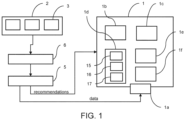
- Fig. 1 shows a system 1 for maintaining machinery 2 which includes a plurality of machines 3.
- the machines 3 may be of the same type or some of the machines 3 may be of a different type.
- the machinery 2 produces a certain product which requires different types of machines 3 which all contribute to the manufacturing of the product.
- the machines 3 can be located in the same workshop or in different workshops. It is possible that the respective workshops are located at different sites of a company.
- the data pipeline 6 may include all types of connections which allows the transmission of data from the machines 3 to the data analysis portion 5 and/or the system 1.
- the machines 3 are provided with various sensors (not shown in the figures) which generate measurement data such as the consumption of electricity, fuel, etc; the operation times; operation speed; and/or other parameters characterising the operation and/or functioning of the machine 3.
- data is input into the machine 3 such as the number of products processed by the machine 3.
- the data pipeline 6 may include a LAN or wireless connection.
- the data pipeline 6 includes an internet connection to transfer data from the machinery 2 to the data analysis portion 5 and/or system 1. This may be the case if the data analysis portion 5 and/or system 1 are remote to the machinery 2, for example if the data analysis portion 5 and/or system 1 are implemented by a cloud computer or a remote server.
- Fig. 1 shows that the data analysis portion 5 is external to the system 1. However, the data analysis portion 5 may be part of the system 1.
- the data analysis portion 5 and/or system 1 may be implemented by a computer having a processor and a memory.
- the data analysis portion 5 is configured to forward the data received from the data pipeline 6 to the system 1 and/or to alter (aggregate) the data received from the data pipeline 6 and generate recommendations how to set the system 1. The generation of the recommendations will be described below.
- the system 1 includes an input port 1a, a task port 1b, a configuration portion 1c, a task portion Id, an output portion 1e, and an interface portion 1f.
- the input port 1a and task port 1b may be a functional unit of the computer which is capable of receiving data and forwarding them to a processor of the computer.
- the input port 1a may thus be regarded as an interface between the processor of the system 1 and the data pipeline 6 or the data analysis portion 5.
- the task port 1b may be connected to another data line which transmits data indicating tasks to be executed by workers.
- the task port 1b may also include an interface by which staff and/or workers can input task to be executed by the workers.
- the task part 1b can include a keyboard or a mouse.
- the input port 1a may additionally be configured to receive other types of data which may relate economical and/or environmental information on the machinery such as costs and/or generated by the current machinery, by a new, upgraded and/or replaced machine.
- the task port 1b may also allow the input of meta-data to the tasks.
- meta-data may relate to the skills/expertise required to execute the task, the location where the task needs to be executed, the duration of the task, the priority of the task, material needs to execute task, and the like.
- the task port 1b may allow the input of information on workers, such as availability, task preferences, training ambitions, skills, expertise, location, and/or the like. These pieces of information may be considered in generating a list of tasks for each worker.
- the configuration portion 1c, the task portion Id, the output portion 1e, and/or the interface portion may be functional units of an algorithm executed by the processor and stored in the memory of the computer/system 1.
- the portions, 1c, 1d, 1e, and If will be described in detail below.
- the output portion 1e may include means for indicating/displaying information or other types of data to a worker such as a screen.
- the output portion 1e may include an interface for transmitting the data generated by the system 1 to other apparatuses such as mobile telephones or other computers.
- the output portion 1e includes a LAN interface or a wireless transmitter.
- the interface portion If can be a graphical interface and may include a displaying device such as a screen and an input device for in putting information such a as a mouse or a keyboard.
- the interface portion If may also include a touch screen.
- the interface portion If allows the display of various types of information and options to be selected as well as the input of information and/or the selection of options.
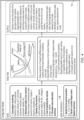
- the interface portion If includes a weight setting portion 12, an objective abstraction portion 121, a model setting portion 18, and/or a model abstraction portion 181.
- Each of these portions 12, 121, 18, and/or 181 may be a part of a common screen or may be displayed on different screens.
- each of these portions 12, 121, 18, and/or 181 may allow selection of one or more options independent from each other.
- the objective abstraction portion 121 and the model abstraction portion 181 may only be provided for information purposes and do not allow a selection but provide a representation of the functioning of the system 1.
- the weight setting portion 12 enables the selection of the weights for setting objectives.
- the weighting implies the activation and deactivation of certain objectives.
- the objective abstraction portion 121 allows the selection of objectives that are considered when determining the need for the maintenance of the machinery 2. It is possible that the user selects, in the first step, the objectives from the displayed list of objectives and then uses the weight setting portion 12 to weight, in a second step, the individual objectives. For example, the weighting of 0 implies a deactivation of a certain objective. In this case, the objective abstraction portion 121 may only be provided for information purposes or can be omitted. It is also possible that certain objectives cannot be weighted and have a fixed or predetermined weighting such as the "reduce cost" objective and the "reduce delay” objective depicted in Fig. 2 .
- Objectives that can be selected may include one or more of the following:
- the model setting portion 18 allows the selection of the operation of the configuration portion 1c and the task portion Id, i.e. whether the portions 1c and/or Id activated or not.
- the model setting portion 18 allows the determination of strategies that are taken into account by the system 1. For example, one strategy for the configuration portion 1c is whether the maintenance of the machinery 2 includes the repair and/or the replacement of the machinery 2.
- An example for a strategy that can be selected and considered by the task portion Id is whether tasks in different locations are considered or not.
- the strategies that can be selected using the model setting portion 18 may be considered a sub-group of objectives that can be selected.
- the model setting portion 18 may allow setting the aggregation level and/or on what frequency the configuration portion 1c and/or task portion Id are operated.
- the model abstraction portion 181 displays the different models that executed by the system 1. This provides better understanding of the functioning of the system 1 to the user.
- the model abstraction portion 181 is an optional feature and can be omitted.
- the configuration portion 1c may include deterministic and/or probabilistic models and/or artificial intelligence such as neural networks to analyse data that is generated by the machinery 2 (received by the input port 1a) to predict whether or not one or more machines 3 need to be maintained.
- the maintenance of the machinery 2 may refer to the repair, maintenance, upgrade, replacement, and/or the addition of one or more machines 3.
- Each of the objectives outlined above may be implemented by a sub-model.
- the results of the individual sub-models can be combined to achieve a final result by a top-model.
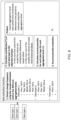
- the configuration portion 1c may also output a training tasks to the task port 1b, for example if the configuration portion 1c determines that a machine 3 should be replaced and the new machine requires different and/or additional training. Details of the functioning of configuration portion 1c can be gathered from Fig. 4 .
- Costs for potential new machine 2 Recycling old machine + buying new machine + operating new machine + material new machine + training new machine ⁇ increase in demand profit + ...
- the objectives input via the interface portion If affect the data that is required by the system 1.
- the system 1 can indicate the data that is required. Some data has default values used in case of no other input provided, in case of missing data that does not have default values, the system 1 (for example using the output portion 1e) indicates which of the objectives (or sub-models) cannot be run due to the missing data.
- the following table exemplifies the interdependence between the selected objectives and the data that is required for running the sub-models and the top-model. Relationship between data and user configuration Objective Reduction of emissions Preference matching Training planning Remote workforce Always necessary Models Shopfloor configuration Task planning: Task planning Task planning Task planning Shopfloor configuration Task planning updating dynamically Data For repair consideration: - On-site worker emissions (initialized with default value).
- Task planning with task in different locations - Recycle emissions - Task locations - Emission information of potential machines (energy consumption, manufacturing emissions) Emissions by kilometer (default valuesfrom GHG protocol) Task planning with task in different locations: - Task locations Initial location of workers
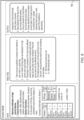
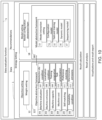
- Fig. 3 illustrates how the selection of the configuration portion 1c, the task and planning portion 15, the dynamic portion 16, and/or the sequencing portion 17 results in a display of corresponding objectives, terms, and/or constraints.
- the final model(s) that the system 1 runs is configured using the information coming from user abstraction layers depicted on the interface portion If.
- the system 1 takes information/input from the section "Model/s selection” of the interface portion If to select which models/portions 1c, 15, 16, and/or 17 have to be executed, and from the section "Objective function" of the interface portion If to activate terms in the objective function of each model as well as to activate additional constraints in order to accommodate the models to the desired objectives.
- Each objective will activate one or more objective terms (e.g.
- each objective terms requires additional constraints, applicable to one or more models (e.g., objective term type 202 activates additional constraints on the models 1c and 15), but the correct integration of each constraint within the models/portions 1c, 15, 16, and/or 17 that it affects is handled by the system 1 (which can be called user abstraction).
- the task portion Id includes a task and training planning portion 15, a dynamic portion 16, and/or a sequencing portion 17 which may operate independent from each other and/or independent from the configuration portion 1c. This means, each portion 1c, 15, 16, and/or 17 may be executed irrespective whether or not one or more of the other portions are running 1c, 15, 16, and/or 17 and/or may operate on different time scales.
- the task and training planning portion 15 processes tasks and/or the meta-data, i.e. data which can include information on the material availability, the task to be executed as received by the task port 1b, the relation and location of each of the tasks, skills required for each task, the assigned priority of each task, and/or the workers preferences.
- the task and training planning portion 15 may include deterministic and/or probabilistic models and/or artificial intelligence such as neural networks to analyse the received data.
- the task and training planning portion 15 outputs a list of tasks for each worker which may include several lists of tasks for a group of workers if several workers need to work on one task.
- the task and training planning portion 15 may change the priority of a task if a deadline is approaching and/or updates the skills of a worker if a training has been completed.
- the task and training planning portion 15 considers the pre-determined objective and/or objectives set using the interface portion 1f. Each of the objectives discussed above may be implemented by a sub-model. The results of the individual sub-models can be combined to achieve a final result by a top-model. Details of the task and training planning portion 15 are depicted in Fig. 5 .
- Min Cost cost of material + cost of workers low , minimum , high expertise * number of workers + cast of delay of production + total travel cost + cost of external support + ...
- Min Emissions Total travel emission + material emissions + delayed maintenance emissions + ...
- Min delay time from deadline * priority
- Min not Preference ⁇ task executed by worker ⁇ task preferred by worker
- Min not Training ⁇ 1 ⁇ training received by worker
- Min not Training Preference ⁇ training received by worker ⁇ training preferred by worker
- the dynamic portion 16 is connected to the task port 1b in order to receive tasks especially tasks having a high priority.
- the dynamic portion 16 receives meta-data such as relating to the skills, expertise, required material, and/or estimated time duration of the tasks.
- the dynamic portion 16 receives meta-data on the skills and expertise of the workers, the schedule of the worker for today, and/or the current schedule.
- the dynamic portion 16 identifies tasks having a low priority (a priority lower than the priority of a new high priority task) in the list of tasks for each worker and checks whether the new high priority task can be taken over by one of the workers in view of meta-data available to the dynamic portion 16 such as the constraints regarding location, expertise and/or estimated time.
- the dynamic portion 16 may also minimise costs and delays similar to the task and training planning portion 15.
- the dynamic portion 16 determines that a low priority tasks can be replaced by a high priority task, the list of tasks for the respective worker is updated by replacing the low priority task with the new high priority task. Further, the dynamic portion 16 forwards the replaced low priority task to the task and training planning portion 15 for the inclusion of this low priority task in the next preparation of lists of tasks for each worker.
- the sequencing portion 17 is connected to the task and training planning portion 15 in order to receive the tasks assigned to each of the workers.
- the sequencing portion 17 orders the tasks assigned by the task and training planning portion 15 while considering and the availability of all workers assigned to the tasks.
- the sequencing portion 17 may be considered processing the daily planning.
- the system 1 may also include a model interaction portion 13 which may be a functional unit of the computer implementing the system 1.
- the comments and remarks regarding implementation of the task and training planning portion 15, to dynamic portion 16, and/over the sequencing portion 17 can equally apply to the implementation of the model interaction portion 13.
- the model interaction portion 13 is configured to control, coordinate, and/or adjust the interaction between the configuration portion 1c, the task and training planning portion 15, the dynamic portion 16, and/or the sequencing portion 17.
- the model interaction portion 13 coordinates the interaction of the portions 1c, 15, 16, 17 if one of the portions 1c, 15, 16, 17 is deactivated by the user as described above. Further, the model interaction portion 13 provides the communication between the respective portions 1c, 15, 16, 17. This is illustrated in Fig. 7 .
- the data analysis portion 5 receives different data types from the machinery 2 and calculates the standard deviation for each data type at different aggregation levels.
- the data analysis portion 5 aggregates the received data at different levels, i.e. over different time periods such as an hour, a day, a week, a month, and/or a year.
- the aggregation levels may be pre-set, can be selected by the user, or is determined by the data analysis portion 5.
- the weight of the objective is either a preselected value or corresponds to the value as chosen by the user (as described above).
- the value of the magnitude may be a default value or equal values in a first run of the calculation of the contribution of each data type. In subsequent runs, the previous values may be used.
- the data analysis portion 5 may include an accuracy penalty evaluation portion 51 which evaluates the calculated accuracy penalties.
- the functioning of the accuracy penalty evaluation portion 51 is depicted in Fig. 9 .
- Fig. 10 provides a general overview of the functional units of the system 1 that are involved when analysing the data from the machinery 3.
- the boxes “result calculation” and “result analysis” correspond to the execution of the configuration portion 1c and the task portion Id.
- the box “result calculation” refers to the analysis of the data generated by the machinery 3 while the box “result analysis” refers to an optional further processing of the results in order to simplify and illustrate the received results. For example, Key Performance Indicators (KPIs) of the results are calculated.
- KPIs Key Performance Indicators
- the box “visualisations and result export” refer to the forwarding of the results and the calculated illustrations (KPIs) to the output portion 1e.
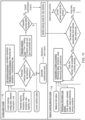
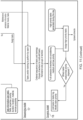
- Fig. 11 illustrates a method for maintaining a machinery and generating a list of tasks for a worker.
- the rectangular blocks refer to calculation/optimisation steps, the rectangular blocks with rounded corners illustrate available data, and the rhombuses correspond to evaluation/decision steps.
- the configuration portion 1c determine costs, emissions, consumption, and/or further objectives that are selected using the interface portion If. This determination is made for each of the current machines 3 and for potential replacement machines and/or additional machines. The determined objectives for the current machinery 2 and the machinery 2 having new or replaced machines is compared in order to determine whether or not a machine 2 should be replaced/upgraded or a new machine 3 should be added to the machinery. If the determination indicates a new or replacement machine 2, it is additionally checked whether the cost for the new or the replaced machine is within the budget. If so, the configuration portion 1c issues a recommendation to purchase a new machine or replace/upgrade an existing machine 2. In addition, the configuration portions 1c generate a training task for the new or the replaced/upgraded machine 3.
- the configuration portion 1c monitors the current status of the machines 3 and determines whether or not the machine 2 needs to be repaired or maintained. If so, the configuration portion 1c generate a maintenance task.
- the task and training planning portion 15 uses material information, information on the workforce (such skills, schedule, location, training ambitions and the like), and/or information on the task to be executed (such as skills, expertise, priority, duration, location, and the like) (in short meta-data) in order to assign the task to the workers. This can be done by creating a list of tasks for each worker.
- the task and training planning portion 15 also checks whether a worker is available for training in view of the list of tasks. If so, training tasks are added to the list of tasks for this worker. In case that a training has been completed by a worker, the stored skills and expertise of the worker are updated in view of the completed training.
- the sequencing portion 17 orders the tasks in the list of tasks assigned to each worker.
- the dynamic portion 16 periodically checks why new tasks having a high priority generated (e.g. a repair task due to malfunction of a machine 3) and/or input into the system 1 using the task port 1b. If one or more workers are assigned to tasks with a lower priority compared to the new high priority task, this new high priority task is added to the ordered list of tasks. This may include the removal of one or more low risk tasks from the ordered list of tasks in case the schedule of the worker is full. If so, to removed low priority task are added to the list of tasks processed by the task and training planning portion 15.
- a high priority generated e.g. a repair task due to malfunction of a machine 3
- this new high priority task is added to the ordered list of tasks. This may include the removal of one or more low risk tasks from the ordered list of tasks in case the schedule of the worker is full. If so, to removed low priority task are added to the list of tasks processed by the task and training planning portion 15.
Landscapes
- Business, Economics & Management (AREA)
- Human Resources & Organizations (AREA)
- Engineering & Computer Science (AREA)
- Strategic Management (AREA)
- Economics (AREA)
- Entrepreneurship & Innovation (AREA)
- Physics & Mathematics (AREA)
- Quality & Reliability (AREA)
- Operations Research (AREA)
- Tourism & Hospitality (AREA)
- Marketing (AREA)
- General Business, Economics & Management (AREA)
- General Physics & Mathematics (AREA)
- Theoretical Computer Science (AREA)
- Development Economics (AREA)
- Educational Administration (AREA)
- Game Theory and Decision Science (AREA)
- Management, Administration, Business Operations System, And Electronic Commerce (AREA)
Priority Applications (2)
| Application Number | Priority Date | Filing Date | Title |
|---|---|---|---|
| EP21202683.5A EP4167155A1 (fr) | 2021-10-14 | 2021-10-14 | Planification d'optimisation de tâches interactives homme-machine en tenant compte de l'objectif d'émission de la machine et du développement de compétences humaines |
| US17/955,585 US20230121776A1 (en) | 2021-10-14 | 2022-09-29 | Planning optimisation for human-machine interactive tasks considering machine emission goal and human competence growth |
Applications Claiming Priority (1)
| Application Number | Priority Date | Filing Date | Title |
|---|---|---|---|
| EP21202683.5A EP4167155A1 (fr) | 2021-10-14 | 2021-10-14 | Planification d'optimisation de tâches interactives homme-machine en tenant compte de l'objectif d'émission de la machine et du développement de compétences humaines |
Publications (1)
| Publication Number | Publication Date |
|---|---|
| EP4167155A1 true EP4167155A1 (fr) | 2023-04-19 |
Family
ID=78211969
Family Applications (1)
| Application Number | Title | Priority Date | Filing Date |
|---|---|---|---|
| EP21202683.5A Pending EP4167155A1 (fr) | 2021-10-14 | 2021-10-14 | Planification d'optimisation de tâches interactives homme-machine en tenant compte de l'objectif d'émission de la machine et du développement de compétences humaines |
Country Status (2)
| Country | Link |
|---|---|
| US (1) | US20230121776A1 (fr) |
| EP (1) | EP4167155A1 (fr) |
Families Citing this family (2)
| Publication number | Priority date | Publication date | Assignee | Title |
|---|---|---|---|---|
| CN118569613B (zh) * | 2024-08-02 | 2024-11-08 | 北京中车行高新技术有限公司 | 基于云计算的跨区域汽修资源协同管理与共享系统 |
| CN120875190B (zh) * | 2025-09-29 | 2026-01-27 | 中国神华能源股份有限公司 | 多模态知识驱动的生产设备系统多目标运行模式优化方法 |
Citations (5)
| Publication number | Priority date | Publication date | Assignee | Title |
|---|---|---|---|---|
| US4888692A (en) | 1986-08-11 | 1989-12-19 | Texas Instruments Incorporated | Real-time scheduling system |
| EP1947598A2 (fr) | 2007-01-15 | 2008-07-23 | Greycon Ltd. | Optimisation de calendrier de fabrication |
| US20100233663A1 (en) | 2009-03-10 | 2010-09-16 | Accenture Global Services Gmbh | Skills competency tool |
| US8533018B2 (en) * | 2005-09-30 | 2013-09-10 | Komatsu Ltd. | System for construction machine maintenance based on predicted service life |
| JP2014016691A (ja) | 2012-07-06 | 2014-01-30 | Hitachi Ltd | 設備維持管理業務支援システム、およびその方法 |
Family Cites Families (11)
| Publication number | Priority date | Publication date | Assignee | Title |
|---|---|---|---|---|
| US20040260594A1 (en) * | 2003-06-18 | 2004-12-23 | Maddox Edward P. | Maintenance and inspection system and method |
| JP4918218B2 (ja) * | 2004-11-12 | 2012-04-18 | ザイブナーコーポレーション | 作業の工程管理システム及び作業の工程管理方法 |
| US20100257015A1 (en) * | 2009-04-01 | 2010-10-07 | National Information Solutions Cooperative, Inc. | Graphical client interface resource and work management scheduler |
| US11610183B2 (en) * | 2017-06-29 | 2023-03-21 | Walmart Apollo, Llc | Systems and methods for performing and tracking asset inspections |
| CA3112850A1 (fr) * | 2018-09-14 | 2020-03-19 | Ats Automation Tooling Systems Inc. | Systeme et procede destines a gerer un equipement d'automatisation |
| US11416830B2 (en) * | 2018-09-25 | 2022-08-16 | Salesforce.Com, Inc. | Method and system for automatically creating action plans based on an action plan template |
| EP3864383A4 (fr) * | 2019-07-10 | 2021-12-22 | Vibrant Corporation | Inversion de modèle de jumeau numérique pour essai |
| US20210088867A1 (en) * | 2019-09-20 | 2021-03-25 | Kinestral Technologies, Inc. | Quality control of an electrochromic device |
| US11995582B2 (en) * | 2020-05-20 | 2024-05-28 | XOEye Technologies, Inc. | Automated generation of condition state information for one or more machines, devices, or systems associated with service or repair events |
| US20220026879A1 (en) * | 2020-07-22 | 2022-01-27 | Micron Technology, Inc. | Predictive maintenance of components used in machine automation |
| US11354639B2 (en) * | 2020-08-07 | 2022-06-07 | Oracle Financial Services Software Limited | Pipeline modeler supporting attribution analysis |
-
2021
- 2021-10-14 EP EP21202683.5A patent/EP4167155A1/fr active Pending
-
2022
- 2022-09-29 US US17/955,585 patent/US20230121776A1/en not_active Abandoned
Patent Citations (5)
| Publication number | Priority date | Publication date | Assignee | Title |
|---|---|---|---|---|
| US4888692A (en) | 1986-08-11 | 1989-12-19 | Texas Instruments Incorporated | Real-time scheduling system |
| US8533018B2 (en) * | 2005-09-30 | 2013-09-10 | Komatsu Ltd. | System for construction machine maintenance based on predicted service life |
| EP1947598A2 (fr) | 2007-01-15 | 2008-07-23 | Greycon Ltd. | Optimisation de calendrier de fabrication |
| US20100233663A1 (en) | 2009-03-10 | 2010-09-16 | Accenture Global Services Gmbh | Skills competency tool |
| JP2014016691A (ja) | 2012-07-06 | 2014-01-30 | Hitachi Ltd | 設備維持管理業務支援システム、およびその方法 |
Also Published As
| Publication number | Publication date |
|---|---|
| US20230121776A1 (en) | 2023-04-20 |
Similar Documents
| Publication | Publication Date | Title |
|---|---|---|
| Ni et al. | Decision support systems for effective maintenance operations | |
| Frantzén et al. | A simulation-based scheduling system for real-time optimization and decision making support | |
| Georgiadis et al. | Real-time production planning and control system for job-shop manufacturing: A system dynamics analysis | |
| Gao et al. | Digital twin-driven dynamic scheduling for the assembly workshop of complex products with workers allocation | |
| Yang et al. | A flexible simulation support for production planning and control in small and medium enterprises | |
| Magnanini et al. | A Digital Twin-based approach for multi-objective optimization of short-term production planning | |
| US20230121776A1 (en) | Planning optimisation for human-machine interactive tasks considering machine emission goal and human competence growth | |
| Mateus et al. | Capacitated lot sizing and sequence dependent setup scheduling: an iterative approach for integration | |
| Zimmermann et al. | Multicriteria decision-making method for scheduling problem based on smart batches and their quality prediction capability | |
| Penchev et al. | Optimization model for production scheduling taking into account preventive maintenance in an uncertainty-based production system | |
| Nicholds et al. | An integrated performance driven manufacturing management strategy based on overall system effectiveness | |
| Zheng et al. | Single machine scheduling with uncertain processing times and carbon emission constraint in the shared manufacturing environment | |
| Ding | Research On CODP Localization Decision Model Of Automotive Supply Chain Based On Delayed Manufacturing Strategy | |
| Fani et al. | A Simulation Optimization Tool For The Metal Accessory Suppliers In The Fashion Industry: A Case Study. | |
| Eickemeyer et al. | Reliable capacity planning despite uncertain disassembly, regeneration and reassembly workloads by using statistical and mathematical approaches–Validation in subsidiaries of a global MRO company with operations in Asia, Europe and North America | |
| Huang et al. | Dynamic performance assessment system for Green tourism supply chain | |
| Rahman et al. | Synchronizing production and delivery in flow shops with time-of-use electricity pricing | |
| Pritsker et al. | Production scheduling using FACTOR | |
| Paschko et al. | Reinforcement learning approach for decision making in disassembly processes | |
| Emroozi et al. | A System Dynamics–Optimization Framework for Human-Error-Aware Preventive Maintenance Planning | |
| Janke et al. | Evaluation concept for order release based on simulation and reinforcement learning against changes to the production configuration | |
| Ghasemi et al. | Frequent Extensions of the Resource-Constrained Project Scheduling Problem: A Systematic Literature Review | |
| Lieckens et al. | A decision support system for the stochastic aggregate planning problem | |
| CN121073158B (zh) | 多参数融合的负载均衡排班适配系统及方法 | |
| Cavalieri et al. | Proposal of a performance measurement system for the evaluation of scheduling solutions |
Legal Events
| Date | Code | Title | Description |
|---|---|---|---|
| PUAI | Public reference made under article 153(3) epc to a published international application that has entered the european phase |
Free format text: ORIGINAL CODE: 0009012 |
|
| STAA | Information on the status of an ep patent application or granted ep patent |
Free format text: STATUS: REQUEST FOR EXAMINATION WAS MADE |
|
| 17P | Request for examination filed |
Effective date: 20211014 |
|
| AK | Designated contracting states |
Kind code of ref document: A1 Designated state(s): AL AT BE BG CH CY CZ DE DK EE ES FI FR GB GR HR HU IE IS IT LI LT LU LV MC MK MT NL NO PL PT RO RS SE SI SK SM TR |
|
| STAA | Information on the status of an ep patent application or granted ep patent |
Free format text: STATUS: EXAMINATION IS IN PROGRESS |
|
| 17Q | First examination report despatched |
Effective date: 20250114 |