EP4167537B1 - Dispositif de modulation ofdm, dispositif de démodulation ofdm, système de communication ofdm et procédé de communication ofdm - Google Patents
Dispositif de modulation ofdm, dispositif de démodulation ofdm, système de communication ofdm et procédé de communication ofdm Download PDFInfo
- Publication number
- EP4167537B1 EP4167537B1 EP20945045.1A EP20945045A EP4167537B1 EP 4167537 B1 EP4167537 B1 EP 4167537B1 EP 20945045 A EP20945045 A EP 20945045A EP 4167537 B1 EP4167537 B1 EP 4167537B1
- Authority
- EP
- European Patent Office
- Prior art keywords
- communication
- unit
- butterfly operation
- fourier transform
- fast fourier
- Prior art date
- Legal status (The legal status is an assumption and is not a legal conclusion. Google has not performed a legal analysis and makes no representation as to the accuracy of the status listed.)
- Active
Links
Images

Classifications
-
- H—ELECTRICITY
- H04—ELECTRIC COMMUNICATION TECHNIQUE
- H04L—TRANSMISSION OF DIGITAL INFORMATION, e.g. TELEGRAPHIC COMMUNICATION
- H04L27/00—Modulated-carrier systems
- H04L27/26—Systems using multi-frequency codes
- H04L27/2601—Multicarrier modulation systems
- H04L27/2602—Signal structure
-
- H—ELECTRICITY
- H04—ELECTRIC COMMUNICATION TECHNIQUE
- H04L—TRANSMISSION OF DIGITAL INFORMATION, e.g. TELEGRAPHIC COMMUNICATION
- H04L27/00—Modulated-carrier systems
- H04L27/26—Systems using multi-frequency codes
- H04L27/2601—Multicarrier modulation systems
- H04L27/2626—Arrangements specific to the transmitter only
- H04L27/2627—Modulators
- H04L27/2628—Inverse Fourier transform modulators, e.g. inverse fast Fourier transform [IFFT] or inverse discrete Fourier transform [IDFT] modulators
-
- H—ELECTRICITY
- H04—ELECTRIC COMMUNICATION TECHNIQUE
- H04L—TRANSMISSION OF DIGITAL INFORMATION, e.g. TELEGRAPHIC COMMUNICATION
- H04L27/00—Modulated-carrier systems
- H04L27/26—Systems using multi-frequency codes
- H04L27/2601—Multicarrier modulation systems
- H04L27/2647—Arrangements specific to the receiver only
- H04L27/2649—Demodulators
- H04L27/265—Fourier transform demodulators, e.g. fast Fourier transform [FFT] or discrete Fourier transform [DFT] demodulators
Definitions
- the present disclosure relates to an OFDM modulation device and an OFDM demodulation device.
- Patent Literature 1 discloses a transmitter and a plurality of receivers that adopt a modulation and demodulation system of orthogonal frequency division multiplexing (OFDM).
- the transmitter simultaneously transmits information to a plurality of receivers by allocating a subcarrier to each receiver and simultaneously transmitting a plurality of subcarriers.
- OFDM orthogonal frequency division multiplexing
- Patent Literature 1 JP 2016-184814 A .
- Patent Literature 1 even when a transmitter transmits a small-capacity control signal only to any one of a plurality of receivers, there is a problem that unused subcarriers other than the subcarrier allocated to the receiver need to be simultaneously transmitted. That is, there is a problem that the number of subcarriers cannot be changed even when a communication use of the signal transmitted from the transmitter to the receiver is changed.
- the present disclosure has been made to solve the above problems, and an object thereof is to provide a technology capable of changing the number of subcarriers when the communication use is changed.
- An OFDM modulation device includes
- the number of subcarriers can be changed when the communication use is changed.
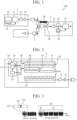
- FIG. 1 is a block diagram illustrating a configuration of an OFDM communication system 100 according to a first embodiment.
- the OFDM communication system 100 includes an OFDM modulation device 1, an OFDM demodulation device 2, and a cable 3.
- the OFDM communication system 100 further includes at least one or more OFDM demodulation devices having a configuration similar to a configuration of the OFDM demodulation device 2 in addition to the OFDM demodulation device 2.
- the OFDM modulation device 1 is connected to the OFDM demodulation device 2 and at least one or more other OFDM demodulation devices via the cable 3.
- FIG. 2 is a block diagram illustrating a detailed configuration of the OFDM modulation device 1 according to a first embodiment.
- the OFDM modulation device 1 is provided with a communication frame generating unit 10, an inverse fast Fourier transform unit 11, a DA converter 12, and an amplifying element 13.
- the OFDM demodulation device 2 is provided with an amplifying element 20, an AD converter 21, a symbol synchronization unit 22, and a fast Fourier transform unit 23.
- the symbol synchronization unit 22 is provided with a communication use determining unit 24.
- the communication frame generating unit 10 generates a communication frame to be transmitted from the OFDM modulation device 1 to the OFDM demodulation device 2.
- the communication frame generating unit 10 is provided with a communication use specifying unit 14, a header generating unit 15, and a payload generating unit 16.
- the communication use specifying unit 14 specifies a communication use of the communication frame.
- the communication use specifying unit 14 outputs information indicating the specified communication use to each of the header generating unit 15 and the inverse fast Fourier transform unit 11.
- Examples of the communication use specified by the communication use specifying unit 14 include a control use, an information use or the like.
- the control use is, for example, a control use to control a single device (one control target), a control use to control each of a plurality of devices (a plurality of control targets) or the like. Note that, in the first embodiment, the "control use" is intended to mean the control use to control a single device.
- the communication frame of the control use is a control signal for controlling an apparatus (not illustrated) provided with the OFDM demodulation device 2.
- the communication frame of the information use is data having an information amount larger than that of the control signal. Examples of the data include image data, audio data or the like.
- the header generating unit 15 generates a header of the communication frame.
- the header generating unit 15 stores communication use specifying information indicating the communication use specified by the communication use specifying unit 14 in the header.
- the header generating unit 15 outputs the header in which the communication use specifying information is stored to the inverse fast Fourier transform unit 11.
- the payload generating unit 16 generates a payload of the communication frame.
- the payload generating unit 16 outputs the generated payload to the inverse fast Fourier transform unit 11.
- the inverse fast Fourier transform unit 11 generates a communication frame of time domain by executing an inverse fast Fourier transform of a size corresponding to the communication use specified by the communication use specifying unit 14 on data of frequency domain including the header generated by the header generating unit 15 and the payload generated by the payload generating unit 16. Note that, at that time, the inverse fast Fourier transform unit 11 executes the inverse fast Fourier transform for each symbol on the data of frequency domain.
- the size is intended to mean the number of input bits (the number of samples) of the inverse fast Fourier transform.
- the inverse fast Fourier transform unit 11 outputs the generated communication frame of time domain to the DA converter 12.
- the size of the inverse fast Fourier transform executed by the inverse fast Fourier transform unit 11 when the communication use specified by the communication use specifying unit 14 is the control use is smaller than the size of the inverse fast Fourier transform executed by the inverse fast Fourier transform unit 11 when the communication use specified by the communication use specifying unit 14 is the information use.
- the size of the inverse fast Fourier transform executed by the inverse fast Fourier transform unit 11 when the communication use specified by the communication use specifying unit 14 is the control use to control a single device is smaller than the size of the inverse fast Fourier transform executed by the inverse fast Fourier transform unit 11 when the communication use specified by the communication use specifying unit 14 is the control use to control each of a plurality of devices.
- the DA converter 12 converts the communication frame of time domain generated by the inverse fast Fourier transform unit 11 from digital data to analog data.
- the DA converter 12 outputs the communication frame of time domain converted to the analog data to the amplifying element 13.
- the amplifying element 13 amplifies the communication frame of time domain converted to the analog data by the DA converter 12.
- the amplifying element 13 outputs the amplified communication frame 30 of time domain to the OFDM demodulation device 2.
- FIG. 3 is a diagram illustrating a specific example of the communication frame 30 of time domain transmitted by the OFDM modulation device 1 to the OFDM demodulation device 2.
- amplitude is plotted along the vertical axis
- time is plotted along the horizontal axis.
- the communication frame 30 includes a plurality of symbols, includes a header symbol 31 being the header generated by the header generating unit 15 and a plurality of payload symbols 32 being the payloads generated by the payload generating unit 16. Note that, the description of short symbol and long symbol in FIG. 3 will be described later.
- the header symbol 31 generated by the header generating unit 15 stores a preamble 311 for the OFDM demodulation device 2 to perform symbol synchronization, an address bit area 312 in which a transfer destination address, a transfer source address or the like is stored, and other information essential for communication control.
- a communication use bit area 313 for storing the communication use specifying information described above is determined in advance.
- the communication use specifying information stored in the communication use bit area 313 of the header symbol 31 indicates, for example, whether the communication use of the communication frame 30 is the control use or the information use. Communication data actually transmitted between the OFDM modulation device 1 and the OFDM demodulation device 2 is stored in the payload symbol 32.
- the communication data is a control signal.
- the communication data is the image data and the like having the information amount larger than that of the control signal.
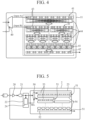
- FIG. 4 is a diagram illustrating a detailed configuration of the inverse fast Fourier transform unit 11 of the OFDM modulation device 1.
- the inverse fast Fourier transform unit 11 is provided with a selector 40, a plurality of layers 41, and a data output unit 42.
- Each of the plurality of layers 41 includes at least one or more data input units 43 and at least one or more butterfly operation units 44 that execute a butterfly operation. More specifically, for example, in an example in FIG. 4 , a highest layer out of the plurality of layers 41 is provided with one data input unit 43 and one butterfly operation unit 44 that acquires data from the data input unit 43. A next highest layer (a second highest layer in FIG.
- the "highest layer” is intended to mean the layer illustrated on the top in FIG. 4 .
- the selector 40 selects the data input unit 43 as an output destination to which data of frequency domain is output out of the data input units 43 of the plurality of layers 41 on the basis of the communication use specified by the communication use specifying unit 14.
- the data of frequency domain is the data of frequency domain including the header generated by the header generating unit 15 and the payload generated by the payload generating unit 16.
- the selector 40 outputs the data of frequency domain to the selected data input unit 43.
- the plurality of layers 41 executes the inverse fast Fourier transform by executing the butterfly operation for each layer.
- each data input unit 43 of the plurality of layers 41 acquires the data of frequency domain from the selector 40
- each data input unit 43 of the plurality of layers 41 acquires data after the butterfly operation from the butterfly operation unit 44 of a preceding layer out of the plurality of layers 41, this outputs the data after the butterfly operation to the butterfly operation unit 44 of the same layer out of the plurality of layers 41.
- the "preceding layer” is intended to mean a layer in which processing is performed before a target layer. More specifically, for example, in the example in FIG. 4 , when the data input unit 43 of the next highest layer out of the plurality of layers 41 acquires the data after the butterfly operation from the butterfly operation unit 44 of the highest layer out of the plurality of layers 41, this outputs the data after the butterfly operation to the butterfly operation unit 44 of the next highest layer out of the plurality of layers 41.
- a “next layer” is intended to mean a layer in which the processing is performed subsequent to a target layer.
- each butterfly operation unit 44 of the plurality of layers 41 a size of the butterfly operation to be executed is smaller as the layer to which this belongs is a later layer.
- each butterfly operation unit 44 of the plurality of layers 41 executes the butterfly operation of a smaller size as the layer to which this belongs is a later layer.
- the "later layer” is intended to mean a layer in which the processing is performed after the target layer.
- the size is intended to mean the number of input bits of the butterfly operation. For example, in the example in FIG. 4 , the butterfly operation unit 44 of the highest layer out of the plurality of layers 41 executes the butterfly operation with the number of input bits of 16.
- the butterfly operation unit 44 of the next highest layer out of the plurality of layers 41 executes the butterfly operation with the number of input bits of 8.
- the butterfly operation unit 44 is configured in such a manner that the size of the butterfly operation to be executed is halved every time the number of stages of the layer to which this belongs is incremented by one.
- the selector 40 selects the data input unit 43 as the output destination as described above, and eventually selects the layer as the output destination out of the plurality of layers 41, so that the size of the inverse fast Fourier transform to be executed on the data of frequency domain can be changed without changing the configuration of the inverse fast Fourier transform unit 11.
- each butterfly operation unit 44 of the plurality of layers 41 acquires the data of frequency domain from the data input unit 43 of the same layer out of the plurality of layers 41, this executes the butterfly operation on the data of frequency domain.
- the data of frequency domain is the data of frequency domain acquired by the data input unit 43 from the selector 40.
- Each butterfly operation unit 44 of the plurality of layers 41 outputs data on which the butterfly operation is executed to the data input unit 43 of the next layer out of the plurality of layers 41 (note that, the butterfly operation unit 44 of a lowest layer outputs the data on which the butterfly operation is executed to the data output unit 42). For example, in the example in FIG.
- the butterfly operation unit 44 of the highest layer out of the plurality of layers 41 acquires the data of frequency domain from the data input unit 43 of the highest layer, this executes the butterfly operation on the data of frequency domain.
- the butterfly operation unit 44 of the highest layer outputs the data on which the butterfly operation is executed to the data input unit 43 of the next highest layer out of the plurality of layers 41.
- each butterfly operation unit 44 of the plurality of layers 41 acquires the data after the butterfly operation from the data input unit 43 of the same layer out of the plurality of layers 41, this executes the butterfly operation on the data after the butterfly operation.
- Each butterfly operation unit 44 of the plurality of layers 41 outputs data on which the butterfly operation is executed to the data input unit 43 of the next layer out of the plurality of layers 41 (note that, the butterfly operation unit 44 of a lowest layer outputs the data on which the butterfly operation is executed to the data output unit 42).
- the butterfly operation unit 44 of the next highest layer out of the plurality of layers 41 acquires the data after the butterfly operation from the data input unit 43 of the next highest layer, this executes the butterfly operation on the data after the butterfly operation.
- the data after the butterfly operation is the data on which the butterfly operation unit 44 of the highest layer out of the plurality of layers 41 performs the butterfly operation.
- the butterfly operation unit 44 of the next highest layer outputs the data on which the butterfly operation is executed to the data input unit 43 of a next layer of the next highest layer (third highest layer) out of the plurality of layers 41.
- the layer to which the data input unit 43 selected by the selector 40 belongs when the communication use specified by the communication use specifying unit 14 is the control use is the layer later than the layer to which the data input unit 43 selected by the selector 40 belongs when the communication use specified by the communication use specifying unit 14 is the information use.
- the layer to which the data input unit 43 selected by the selector 40 belongs when the communication use specified by the communication use specifying unit 14 is the control use is the layer in which the processing is performed after the layer to which the data input unit 43 selected by the selector 40 belongs when the communication use specified by the communication use specifying unit 14 is the information use.
- the size of the butterfly operation executed by the butterfly operation unit 44 belonging to the same layer as the layer to which the data input unit 43 as the output destination selected by the selector 40 belongs when the communication use specified by the communication use specifying unit 14 is the control use is smaller than the size of the butterfly operation executed by the butterfly operation unit 44 belonging to the same layer as the layer to which the data input unit 43 as the output destination selected by the selector 40 belongs when the communication use specified by the communication use specifying unit 14 is the information use.
- the selector 40 selects the data input unit 43 of the next highest layer out of the plurality of layers 41 (Input B in FIG.
- the selector 40 selects the data input unit 43 of the highest layer out of the plurality of layers 41 (Input A in FIG. 4 ).
- the number of input bits of the butterfly operation executed by the butterfly operation unit 44 of the next highest layer is 8, which is smaller than 16, which is the number of input bits of the butterfly operation executed by the butterfly operation unit 44 of the highest layer.
- the layer to which the data input unit 43 selected by the selector 40 belongs when the communication use specified by the communication use specifying unit 14 is the control use to control a single device is the layer later than the layer to which the data input unit 43 selected by the selector 40 belongs when the communication use specified by the communication use specifying unit 14 is the control use to control each of the plurality of devices.
- the data output unit 42 acquires the data after the butterfly operation from the butterfly operation unit 44 of the lowest layer out of the plurality of layers 41, and outputs the same to the DA converter 12 as the communication frame of time domain.
- FIG. 5 is a block diagram illustrating the detailed configuration of the OFDM demodulation device 2 according to the first embodiment.
- the OFDM demodulation device 2 is provided with the amplifying element 20, the AD converter 21, the symbol synchronization unit 22, and the fast Fourier transform unit 23.
- the amplifying element 20 amplifies the communication frame of time domain output by the OFDM modulation device 1.
- the amplifying element 20 outputs the amplified communication frame of time domain to the AD converter 21.
- the AD converter 21 converts the communication frame of time domain amplified by the amplifying element 20 from analog data to digital data.
- the AD converter 21 outputs the communication frame of time domain converted to the digital data to the symbol synchronization unit 22.
- the symbol synchronization unit 22 performs the symbol synchronization on the communication frame of time domain output from the AD converter 21. More specifically, for example, in an example in which the communication frame of time domain is the communication frame 30 illustrated in FIG. 3 , the symbol synchronization unit 22 determines a reception timing of the communication frame 30 on the basis of the preamble 311 stored in the header symbol 31 of the communication frame 30.
- the symbol synchronization unit 22 is provided with the communication use determining unit 24.
- the communication use determining unit 24 determines the communication use of the communication frame on the basis of the communication use specifying information stored in the header of the communication frame of time domain.
- the communication use determining unit 24 outputs a determination result to the fast Fourier transform unit 23.
- the communication use determining unit 24 determines the communication use of the communication frame on the basis of the communication use specifying information stored in the header of the communication frame of time domain output by the AD converter 21. More specifically, for example, in an example in which the communication frame of time domain is the communication frame 30 illustrated in FIG. 3 , the communication use determining unit 24 determines the communication use of the communication frame 30 on the basis of the communication use specifying information stored in the communication use bit area 313 of the header symbol 31 of the communication frame 30.
- the communication use determining unit 24 determines that the communication use of the communication frame is the control use. For example, when the communication use specifying information indicates that the use of the communication frame is the information use, the communication use determining unit 24 determines that the communication use of the communication frame is the information use.
- the fast Fourier transform unit 23 generates the data of frequency domain by executing a fast Fourier transform of a size corresponding to the communication use determined by the communication use determining unit 24 on the communication frame of time domain.
- the fast Fourier transform unit 23 generates the data of frequency domain by executing the fast Fourier transform of the size corresponding to the communication use determined by the communication use determining unit 24 on the communication frame of time domain on which the symbol synchronization is performed by the symbol synchronization unit 22.
- the size is intended to mean the number of input bits (the number of samples) of the fast Fourier transform.
- the size of the fast Fourier transform executed by the fast Fourier transform unit 23 when the communication use determining unit 24 determines that the communication use of the communication frame is the control use is smaller than the size of the fast Fourier transform executed by the fast Fourier transform unit 23 when the communication use determining unit 24 determines that the communication use of the communication frame is the information use.
- the size of the fast Fourier transform executed by the fast Fourier transform unit 23 when the communication use determining unit 24 determines that the communication use of the communication frame is the control use to control a single device is smaller than the size of the fast Fourier transform executed by the fast Fourier transform unit 23 when the communication use determining unit 24 determines that the communication use of the communication frame is the control use to control each of the plurality of devices.
- the fast Fourier transform unit 23 of the OFDM demodulation device 2 is similar to the configuration of the inverse fast Fourier transform unit 11 of the OFDM modulation device 1 illustrated in FIG. 4 , the configuration of the inverse fast Fourier transform unit 11 of the OFDM modulation device 1 described with reference to FIG. 4 can be similarly applied to the configuration of the fast Fourier transform unit 23 of the OFDM demodulation device 2.
- the fast Fourier transform unit 23 is provided with a selector 50, a plurality of layers 51, and a data output unit 52.
- Each of the plurality of layers 51 includes at least one or more data input units 53 and at least one or more butterfly operation units 54 that execute a butterfly operation. More specifically, for example, a highest layer out of the plurality of layers 51 is provided with one data input unit 53 and one butterfly operation unit 54 that acquires data from the data input unit 53.
- a next highest layer out of the plurality of layers 51 is provided with two data input units 53, the butterfly operation unit 54 that acquires the data from one of the two data input units 53, and the butterfly operation unit 54 that acquires the data from the other of the two data input units 53.
- the selector 50 selects the data input unit 53 as an output destination to which the communication frame of time domain is output out of the data input units 53 of the plurality of layers 51 on the basis of the communication use determined by the communication use determining unit 24.
- the data of time domain is the communication frame of time domain on which the symbol synchronization is performed by the symbol synchronization unit 22.
- the selector 50 outputs the communication frame of time domain to the selected data input unit 53.
- the plurality of layers 51 executes the fast Fourier transform by executing the butterfly operation for each layer.
- the data input unit 53 of the plurality of layers 51 acquires the communication frame of time domain from the selector 50, this outputs the communication frame of time domain to the butterfly operation unit 54 of the same layer out of the plurality of layers 51. More specifically, for example, when the data input unit 53 of the highest layer out of the plurality of layers 51 acquires the communication frame of time domain from the selector 50, this outputs the communication frame of time domain to the butterfly operation unit 54 of the highest layer.
- the data input unit 53 of the plurality of layers 51 acquires data after the butterfly operation from the butterfly operation unit 54 of a preceding layer out of the plurality of layers 51
- each butterfly operation unit 54 of the plurality of layers 51 a size of the butterfly operation to be executed is smaller as the layer to which this belongs is a later layer.
- each butterfly operation unit 54 of the plurality of layers 51 executes the butterfly operation of a smaller size as the layer to which this belongs is a later layer.
- the size is intended to mean the number of input bits of the butterfly operation.
- the butterfly operation unit 54 of the highest layer out of the plurality of layers 51 executes the butterfly operation with the number of input bits of 16.
- the butterfly operation unit 54 of the next highest layer out of the plurality of layers 51 executes the butterfly operation with the number of input bits of 8.
- each butterfly operation unit 54 of the plurality of layers 51 acquires the communication frame of time domain from the data input unit 53 of the same layer out of the plurality of layers 51, this executes the butterfly operation on the communication frame of time domain.
- the communication frame of time domain is the communication frame of time domain acquired by the data input unit 53 from the selector 50.
- Each butterfly operation unit 54 of the plurality of layers 51 outputs data on which the butterfly operation is executed to the data input unit 53 of the next layer out of the plurality of layers 51 (note that, the butterfly operation unit 54 of a lowest layer outputs the data on which the butterfly operation is executed to the data output unit 52).
- the butterfly operation unit 54 of the highest layer out of the plurality of layers 51 acquires the communication frame of time domain from the data input unit 53 of the highest layer, this executes the butterfly operation on the communication frame of time domain.
- the butterfly operation unit 54 of the highest layer outputs the data on which the butterfly operation is executed to the data input unit 53 of the next highest layer out of the plurality of layers 51.
- each butterfly operation unit 54 of the plurality of layers 51 acquires the data after the butterfly operation from the data input unit 53 of the same layer out of the plurality of layers 51, this executes the butterfly operation on the data after the butterfly operation.
- Each butterfly operation unit 54 of the plurality of layers 51 outputs data on which the butterfly operation is executed to the data input unit 53 of the next layer out of the plurality of layers 51 (note that, the butterfly operation unit 54 of a lowest layer outputs the data on which the butterfly operation is executed to the data output unit 52). For example, when the butterfly operation unit 54 of the next highest layer out of the plurality of layers 51 acquires the data after the butterfly operation from the data input unit 53 of the next highest layer, this executes the butterfly operation on the data after the butterfly operation.
- the data after the butterfly operation is the data on which the butterfly operation unit 54 of the highest layer out of the plurality of layers 51 performs the butterfly operation.
- the butterfly operation unit 54 of the next highest layer outputs the data on which the butterfly operation is executed to the data input unit 53 of a next layer of the next highest layer out of the plurality of layers 51.
- the layer to which the data input unit 53 selected by the selector 50 belongs when the communication use determining unit 24 determines that the communication use of the communication frame is the control use is the layer later than the layer to which the data input unit 53 selected by the selector 50 belongs when the communication use determining unit 24 determines that the communication use of the communication frame is the information use.
- the layer to which the data input unit 53 selected by the selector 50 belongs when the communication use determining unit 24 determines that the communication use of the communication frame is the control use is the layer in which the processing is performed after the layer to which the data input unit 53 selected by the selector 50 belongs when the communication use determining unit 24 determines that the communication use of the communication frame is the information use.
- the size of the butterfly operation executed by the butterfly operation unit 54 belonging to the same layer as the layer to which the data input unit 53 as the output destination selected by the selector 50 belongs when the communication use determining unit 24 determines that the communication use of the communication frame is the control use is smaller than the size of the butterfly operation executed by the butterfly operation unit 54 belonging to the same layer as the layer to which the data input unit 53 as the output destination selected by the selector 50 belongs when the communication use determining unit 24 determines that the communication use of the communication frame is the information use.
- the selector 50 selects the data input unit 53 of the next highest layer out of the plurality of layers 51 (corresponding to Input B in FIG.
- the selector 50 selects the data input unit 53 of the highest layer out of the plurality of layers 51 (corresponding to Input A in FIG. 4 ).
- the number of input bits of the butterfly operation executed by the butterfly operation unit 54 of the next highest layer is 8, which is smaller than 16, which is the number of input bits of the butterfly operation executed by the butterfly operation unit 54 of the highest layer.
- the layer to which the data input unit 53 selected by the selector 50 belongs when the communication use determining unit 24 determines that the communication use of the communication frame is the control use to control a single device is the layer later than the layer to which the data input unit 53 selected by the selector 50 belongs when the communication use determining unit 24 determines that the communication use of the communication frame is the control use to control each of the plurality of devices.
- the data output unit 52 acquires the data after the butterfly operation from the butterfly operation unit 54 of the lowest layer out of the plurality of layers 51, and outputs the same as data of frequency domain.
- the data of frequency domain is used, for example, for device control, image display, audio output or the like.
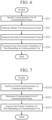
- FIG. 6 is a flowchart illustrating an OFDM modulation method by the OFDM modulation device 1 according to the first embodiment. Note that, a method in which the OFDM modulation method and an OFDM demodulation method to be described later are combined forms an OFDM communication method by the OFDM communication system 100 according to the first embodiment.
- the communication use specifying unit 14 specifies the communication use of the communication frame (step ST1).
- the communication use specifying unit 14 outputs information indicating the specified communication use to each of the header generating unit 15 and the inverse fast Fourier transform unit 11.
- the header generating unit 15 generates the header of the communication frame in which the communication use specifying information indicating the communication use specified by the communication use specifying unit 14 is stored (step ST2).
- the header generating unit 15 outputs the generated header to the inverse fast Fourier transform unit 11.
- the payload generating unit 16 generates the payload of the communication frame (step ST3).
- the payload generating unit 16 outputs the generated payload to the inverse fast Fourier transform unit 11.
- the inverse fast Fourier transform unit 11 generates the communication frame of time domain by executing the inverse fast Fourier transform of the size corresponding to the communication use specified by the communication use specifying unit 14 on the data of frequency domain including the header generated by the header generating unit 15 and the payload generated by the payload generating unit 16 (step ST4).
- the communication frame of time domain generated by the inverse fast Fourier transform unit 11 is transmitted to the OFDM demodulation device 2 after each processing of the DA converter 12 and the amplifying element 13 described above.
- FIG. 7 is a flowchart illustrating the OFDM demodulation method by the OFDM demodulation device 2 according to the first embodiment. Note that, it is set that the communication frame of time domain transmitted from the OFDM modulation device 1 is subjected to each processing of the amplifying element 20 and the AD converter 21 described above before each step described below is executed.
- the symbol synchronization unit 22 performs the symbol synchronization on the communication frame of time domain output from the AD converter 21 (step ST10).
- the symbol synchronization unit 22 outputs the communication frame of time domain on which the symbol synchronization is performed to the fast Fourier transform unit 23.
- the symbol synchronization unit 22 determines a timing to start the fast Fourier transform executed by the inverse fast Fourier transform unit 11 at later steps. At that time, the symbol synchronization unit 22 detects a portion of the header in the communication frame of time domain.
- the communication use determining unit 24 determines the communication use of the communication frame on the basis of the communication use specifying information stored in the header of the communication frame of time domain (step ST11).
- the communication use determining unit 24 outputs a determination result to the fast Fourier transform unit 23.
- the fast Fourier transform unit 23 generates the data of frequency domain by executing the fast Fourier transform of the size corresponding to the communication use determined by the communication use determining unit 24 on the communication frame of time domain on which the symbol synchronization is performed by the symbol synchronization unit 22 (step ST12).
- FIG. 8 is a diagram for illustrating the specific example of the OFDM communication method by the OFDM communication system 100 according to the first embodiment.
- An upper left graph in FIG. 8 illustrates a waveform of the communication frame 30 of time domain transmitted from the OFDM modulation device 1 to the OFDM demodulation device 2 when the communication use of the communication frame 30 is the control use.
- amplitude is plotted along the vertical axis
- time is plotted along the horizontal axis.
- the communication frame 30 includes the header symbol 31 and a plurality of payload symbols 32.
- a lower left graph in FIG. 8 is a graph illustrating a configuration of a subcarrier corresponding to each payload symbol 32 illustrated in the upper left graph in FIG. 8 .
- the frequency is plotted along the vertical axis.
- An upper right graph in FIG. 8 illustrates a waveform of the communication frame 30 of time domain transmitted from the OFDM modulation device 1 to the OFDM demodulation device 2 when the communication use of the communication frame 30 is the information use.
- amplitude is plotted along the vertical axis
- time is plotted along the horizontal axis.
- the communication frame 30 includes the header symbol 31 and a plurality of payload symbols 32.
- a lower right graph in FIG. 8 is a graph illustrating a configuration of a subcarrier corresponding to each payload symbol 32 indicated by the upper right graph in FIG. 8 .
- the frequency is plotted along the vertical axis.
- the information amount of the communication frame 30 of the information use is actually larger than the information amount of the communication frame 30 of the control use, but in FIG. 8 , for comparison, the information amount of the communication frame 30 of the control use is set to be the same as the information amount of the communication frame 30 of the information use. That is, the number of subcarriers used per symbol in the lower left graph in FIG. 8 is the same as the number of subcarriers used per symbol in the lower right graph in FIG. 8 .
- the communication use of the communication frame 30 is the control use (left diagram in FIG. 8 )
- the communication use specifying unit 14 specifies the control use as the communication use of the communication frame 30.
- the header generating unit 15 generates the header symbol 31 of the communication frame 30 in which the communication use specifying information indicating that the communication use of the communication frame 30 is the control use is stored.
- the payload generating unit 16 generates a plurality of payload symbols 32 of the communication frame 30. Note that, the plurality of payload symbols 32 is a control signal.
- the inverse fast Fourier transform unit 11 generates the communication frame 30 of time domain by executing the inverse fast Fourier transform of a size corresponding to the control use for each symbol on the data of frequency domain including the header symbol 31 generated by the header generating unit 15 and a plurality of payload symbols 32 generated by the payload generating unit 16.
- the communication frame 30 of time domain is transmitted to the OFDM demodulation device 2 after each processing of the DA converter 12 and the amplifying element 13 described above. As illustrated in the left diagram in FIG. 8 , it is set that the communication frame 30 of time domain includes 64 subcarriers for each symbol by the inverse fast Fourier transform of the size corresponding to the control use at step ST4 described above.
- the symbol synchronization unit 22 performs the symbol synchronization on the communication frame 30 of time domain.
- the communication use determining unit 24 determines that the communication use of the communication frame 30 is the control use on the basis of the communication use specifying information stored in the header symbol 31 of the communication frame 30 of time domain.
- the fast Fourier transform unit 23 generates the data of frequency domain by executing the fast Fourier transform of the size corresponding to the control use on the communication frame 30 of time domain on which the symbol synchronization is performed by the symbol synchronization unit 22.
- the communication use specifying unit 14 specifies the information use as the communication use of the communication frame 30.
- the header generating unit 15 generates the header symbol 31 of the communication frame 30 in which the communication use specifying information indicating that the communication use of the communication frame 30 is the information use is stored.
- the payload generating unit 16 generates a plurality of payload symbols 32 of the communication frame 30. Note that, the plurality of payload symbols 32 is data having a larger information amount than that of the control signal.
- the inverse fast Fourier transform unit 11 generates the communication frame 30 of time domain by executing the inverse fast Fourier transform of a size corresponding to the information use for each symbol on the data of frequency domain including the header symbol 31 generated by the header generating unit 15 and a plurality of payload symbols 32 generated by the payload generating unit 16.
- the communication frame 30 of time domain is transmitted to the OFDM demodulation device 2 after each processing of the DA converter 12 and the amplifying element 13 described above. As illustrated in the right diagram in FIG. 8 , it is set that the communication frame 30 of time domain includes 128 subcarriers for each symbol by the inverse fast Fourier transform of the size corresponding to the information use at step ST4 described above.
- the size of the inverse fast Fourier transform executed by the inverse fast Fourier transform unit 11 when the communication use specified by the communication use specifying unit 14 is the control use is smaller than the size of inverse fast Fourier transform executed by the inverse fast Fourier transform unit 11 when the communication use specified by the communication use specifying unit 14 is the information use. Therefore, the number of subcarriers (64) for each symbol of the communication frame 30 when the communication use of the communication frame 30 is the control use is smaller than the number of subcarriers (128) for each symbol of the communication frame 30 when the communication use of the communication frame 30 is the information use.
- the symbol synchronization unit 22 performs the symbol synchronization on the communication frame 30 of time domain.
- the communication use determining unit 24 determines that the communication use of the communication frame 30 is the information use on the basis of the communication use specifying information stored in the header symbol 31 of the communication frame 30 of time domain.
- the fast Fourier transform unit 23 generates the data of frequency domain by executing the fast Fourier transform of the size corresponding to the information use on the communication frame 30 of time domain on which the symbol synchronization is performed by the symbol synchronization unit 22.
- the number of subcarriers of the communication frame 30 is 64, and when the communication use of the communication frame 30 is the information use, the number of subcarriers of the communication frame 30 is 128.
- the payload symbol 32 as a time waveform in the communication frame 30 is a short symbol by the inverse fast Fourier transform of the size corresponding to the control use.
- the payload symbol 32 as a time waveform in the communication frame 30 is a long symbol by the inverse fast Fourier transform of the size corresponding to the information use.
- a symbol time (symbol length) of the communication frame 30 when the communication use of the communication frame 30 is the control use is calculated by (N/2)/F BW (N is the number of input bits when the communication use of the communication frame 30 is the information use, and is set to 128) to be 6.4 ⁇ s
- the symbol time of the communication frame 30 when the communication use of the communication frame 30 is the information use is calculated by N/F BW to be 12.8 ⁇ s.
- a maximum speed (theoretical value) of a physical layer is estimated to be 20 Mbps regardless of whether the communication use of the communication frame 30 is the control use or the information use.
- the maximum speed (theoretical value) of the physical layer remains 20 Mbps.
- the time (symbol time) required per symbol is also halved from 12.8 ⁇ s to 6.4 ⁇ s, so that an effective physical speed remains 20 Mbps.
- the physical speed depends on the frequency band (10 MHz) of the communication frame 30 and a multi-level degree of a digital modulation system (multi-level degree of QPSK (two bits)).
- the OFDM modulation device 1 transmits small-capacity data of 12 bytes (96 bits) to the OFDM demodulation device 2. In that case, 48 subcarriers are used for 12-byte data. In a configuration in which the number of subcarriers per symbol in the communication frame 30 is 128 as the number of subcarriers of the communication frame 30 when the communication use of the communication frame 30 is the information use, remaining 80 subcarriers are unused and are uneconomical.
- the number of subcarriers per symbol in the communication frame 30 is 64 as the number of communication frames when the communication use of the communication frame 30 is the control use, only remaining 16 subcarriers are unused. That is, it is possible to reduce the unused subcarriers by changing the size of the inverse fast Fourier transform by the inverse fast Fourier transform unit 11 of the OFDM modulation device 1 and the size of the fast Fourier transform by the fast Fourier transform unit 23 of the OFDM demodulation device 2 to half corresponding to the communication use of the communication frame 30 and performing the communication while setting the number of subcarriers of the communication frame 30 to 64.
- the communication of small-capacity data for example, of around 10 bytes
- suitable communication can be implemented without deteriorating transmission efficiency.
- the communication of the control use in industrial equipment is often required to have real-time performance or low-delay performance, and the OFDM communication method capable of shortening the symbol time when the communication use of the communication frame 30 is the control use as in this specific example is conceivable to be a method that meets such a requirement of the industrial equipment.
- a processing circuit implements each function of the communication frame generating unit 10 (the communication use specifying unit 14, the header generating unit 15, and the payload generating unit 16) and the inverse fast Fourier transform unit 11 (the selector 40, the data input unit 43, the butterfly operation unit 44, and the data output unit 42) in the OFDM modulation device 1. That is, the communication frame generating unit 10 and the inverse fast Fourier transform unit 11 of the OFDM modulation device 1 are provided with the processing circuit for executing processing at each step illustrated in FIG. 6 .
- the processing circuit may be dedicated hardware, but may be a central processing unit (CPU) that executes a program stored in a memory.
- a processing circuit implements each function of the symbol synchronization unit 22 (the communication use determining unit 24), and the fast Fourier transform unit 23 (the selector 50, the data input unit 53, the butterfly operation unit 54, and the data output unit 52) in the OFDM demodulation device 2. That is, the symbol synchronization unit 22 and the fast Fourier transform unit 23 of the OFDM demodulation device 2 are provided with the processing circuit for executing processing at each step illustrated in FIG. 7 .
- the processing circuit may be dedicated hardware, but may be a central processing unit (CPU) that executes a program stored in a memory.
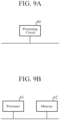
- FIG. 9A is a block diagram illustrating a hardware configuration that implements each function of the communication frame generating unit 10 and the inverse fast Fourier transform unit 11 of the OFDM modulation device 1 or each function of the symbol synchronization unit 22 and the fast Fourier transform unit 23 of the OFDM demodulation device 2.
- FIG. 9B is a block diagram illustrating a hardware configuration that executes software that implements each function of the communication frame generating unit 10 and the inverse fast Fourier transform unit 11 of the OFDM modulation device 1 or a hardware configuration that executes software that implements each function of the symbol synchronization unit 22 and the fast Fourier transform unit 23 of the OFDM demodulation device 2.
- the processing circuit 60 corresponds to, for example, a single circuit, a composite circuit, a programmed processor, a parallel-programmed processor, an application specific integrated circuit (ASIC), a field-programmable gate array (FPGA), or a combination of them.
- ASIC application specific integrated circuit
- FPGA field-programmable gate array
- Each function of the communication frame generating unit 10 and the inverse fast Fourier transform unit 11 of the OFDM modulation device 1 may be implemented by separate processing circuits, or these functions may be collectively implemented by one processing circuit.
- Each function of the symbol synchronization unit 22 and the fast Fourier transform unit 23 of the OFDM demodulation device 2 may be implemented by separate processing circuits, or these functions may be collectively implemented by one processing circuit.
- each function of the communication frame generating unit 10 and the inverse fast Fourier transform unit 11 of the OFDM modulation device 1 is implemented by software, firmware, or a combination of the software and firmware.
- Each function of the symbol synchronization unit 22 and the fast Fourier transform unit 23 of the OFDM demodulation device 2 is implemented by software, firmware, or a combination of the software and firmware.
- the processor 61 implements each function of the communication frame generating unit 10 and the inverse fast Fourier transform unit 11 of the OFDM modulation device 1 by reading and executing the program stored in the memory 62. That is, the communication frame generating unit 10 and the inverse fast Fourier transform unit 11 of the OFDM modulation device 1 are provided with the memory 62 for storing the program by which processing at each step illustrated in FIG. 6 is executed as a result when each of the functions is executed by the processor 61.
- the processor 61 implements each function of the symbol synchronization unit 22 and the fast Fourier transform unit 23 of the OFDM demodulation device 2 by reading and executing the program stored in the memory 62. That is, the symbol synchronization unit 22 and the fast Fourier transform unit 23 of the OFDM demodulation device 2 are provided with the memory 62 for storing the program by which processing at each step illustrated in FIG. 7 is executed as a result when each of the functions is executed by the processor 61.
- the memory 62 may be a computer-readable storage medium storing a program for allowing a computer to serve as the communication frame generating unit 10 and the inverse fast Fourier transform unit 11 of the OFDM modulation device 1.
- the memory 62 may be a computer-readable storage medium storing a program for allowing a computer to serve as the symbol synchronization unit 22 and the fast Fourier transform unit 23 of the OFDM demodulation device 2.
- the processor 61 corresponds to a central processing unit (CPU), a processing unit, an arithmetic device, a processor, a microprocessor, a microcomputer, a digital signal processor (DSP) or the like, for example.
- CPU central processing unit
- processing unit an arithmetic device
- processor a microprocessor
- microcomputer a microcomputer
- DSP digital signal processor
- the memory 62 corresponds to, for example, a non-volatile or volatile semiconductor memory such as a random access memory (RAM), a read only memory (ROM), a flash memory, an erasable programmable read only memory (EPROM), and an electrically-EPROM (EEPROM); magnetic disk such as a hard disk and a flexible disk, a flexible disk, an optical disk, a compact disc, a mini disc, a compact disc (CD), a digital versatile disc (DVD) and the like.
- RAM random access memory
- ROM read only memory
- EPROM erasable programmable read only memory
- EEPROM electrically-EPROM
- magnetic disk such as a hard disk and a flexible disk, a flexible disk, an optical disk, a compact disc, a mini disc, a compact disc (CD), a digital versatile disc (DVD) and the like.
- a part of each function of the communication frame generating unit 10 and the inverse fast Fourier transform unit 11 of the OFDM modulation device 1 may be implemented by the dedicated hardware, and a part thereof may be implemented by the software or firmware.
- a part of each function of the symbol synchronization unit 22 and the fast Fourier transform unit 23 of the OFDM demodulation device 2 may be implemented by the dedicated hardware and a part thereof may be implemented by the software or firmware.
- the function of the communication frame generating unit 10 is implemented by a processing circuit as dedicated hardware.
- the processor 61 may implement the function by reading and executing the program stored in the memory 62.
- the function of the symbol synchronization unit 22 is implemented by a processing circuit as dedicated hardware.
- the processor 61 may implement the function by reading and executing the program stored in the memory 62.
- the processing circuit can implement each of the functions described above by the hardware, software, firmware, or combination thereof.
- the OFDM modulation device 1 is provided with the communication use specifying unit 14 to specify the communication use of the communication frame, the header generating unit 15 to generate the header of the communication frame in which the communication use specifying information indicating the communication use specified by the communication use specifying unit 14 is stored, the payload generating unit 16 to generate the payload of the communication frame, and the inverse fast Fourier transform unit 11 to generate the communication frame of time domain by executing the inverse fast Fourier transform of the size corresponding to the communication use specified by the communication use specifying unit 14 on the data of frequency domain including the header generated by the header generating unit 15 and the payload generated by the payload generating unit 16.
- the number of subcarriers for each symbol of the communication frame by changing the size of the inverse fast Fourier transform corresponding to the communication use of the communication frame. That is, the number of subcarriers can be changed when the communication use is changed.
- the OFDM communication system might be utilized not only for communication of IoT (information) use in which megabyte class large-capacity data transmission is required, but also for communication of control use for industrial equipment in which small-capacity of around 10 bytes and real-time performance (low-delay) are required. That is, it is expected that the OFDM communication device can cope with different system requirements such as information use or control use.
- an OFDM communication device can transmit a large amount of data by arranging a large number of subcarriers in one symbol (unit of modulation and demodulation processing) and performing multi-leveling such as BPSK, QPSK, or QAM modulation on each subcarrier. For example, assuming that 128 subcarriers are arranged in one symbol and QPSK modulation is applied to each subcarrier, the OFDM communication device can transmit up to 256 bits of information per symbol. A time required for one symbol (that is, one symbol length) corresponds to the reciprocal of a subcarrier frequency interval. For example, assuming that 128 subcarriers are arranged in a band of 10 MHz, one symbol length is 12.8 ⁇ s. Since 256 bits can be transmitted with this one symbol length, the maximum physical speed in this case can be estimated to be 20 Mbps.
- the conventional OFDM communication device as described above When the conventional OFDM communication device as described above is used for information use, it is possible to perform large-capacity data communication as described above.
- the OFDM communication device when the OFDM communication device is to be used for control use of industrial equipment, a following problem of deterioration in transmission efficiency occurs. That is, in the control use of industrial equipment, a situation in which small-capacity data transmission of 12 bytes (96 bits) and the like, for example, is performed in one communication frequently occurs. In this case, in a system in which 256 bits (QPSK modulation) of information can be transmitted in one symbol, remaining 160 bits are transmitted in an unused subcarrier state, and uneconomical occurs.
- QPSK modulation QPSK modulation
- the OFDM modulation device 1 it is possible to reduce the unused subcarriers by appropriately changing the size of the inverse fast Fourier transform corresponding to the communication use of the communication frame.
- efficient communication can be performed without deteriorating a substantial transmission speed due to the reason described above.
- communication that satisfies different system requirements such as large-capacity communication of information use for IoT or small-capacity communication of control use for industrial equipment can be implemented.
- the communication use specified by the communication use specifying unit 14 in the OFDM modulation device 1 according to the first embodiment is the control use or the information use
- the size of the inverse fast Fourier transform executed by the inverse fast Fourier transform unit 11 when the communication use specified by the communication use specifying unit 14 is the control use is smaller than the size of the inverse fast Fourier transform executed by the inverse fast Fourier transform unit 11 when the communication use specified by the communication use specifying unit 14 is the information use.
- the inverse fast Fourier transform of the size smaller than the size of the inverse fast Fourier transform executed when the communication use of the communication frame is the information use is executed.
- the communication use of the communication frame is the control use
- the number of subcarriers for each symbol of the communication frame can be reduced. Therefore, when the communication use of the communication frame is the control use, unused subcarriers can be reduced.
- the inverse fast Fourier transform unit 11 in the OFDM modulation device 1 includes the selector 40, and a plurality of layers to execute the inverse fast Fourier transform by executing the butterfly operation for each of the layers, the plurality of layers 41 each of which includes at least one or more data input units 43 and at least one or more butterfly operation units 44 to execute the butterfly operation, the selector 40 selects the data input unit 43 as the output destination to which the data of frequency domain is output out of the data input units 43 of the plurality of layers 41 on the basis of the communication use specified by the communication use specifying unit 14, and each of the data input units 43 of the plurality of layers 41 outputs, when acquiring the data of frequency domain from the selector 40, the data of frequency domain to the butterfly operation unit 44 of the same layer out of the plurality of layers 41, and outputs, when acquiring data after the butterfly operation from the butterfly operation unit 44 of a preceding layer out of the plurality of layers 41, the data after the butterfly operation to the butterfly operation unit 44 of the same layer out of the plurality
- the layer as the output destination to which the data of frequency domain is output is selected corresponding to the communication use of the communication frame. That is, as a result, the size of the inverse fast Fourier transform can be changed corresponding to the communication use of the communication frame. As a result, the number of subcarriers for each symbol of the communication frame can be changed. That is, the number of subcarriers can be changed when the communication use is changed.
- the communication use specified by the communication use specifying unit 14 in the OFDM modulation device 1 according to the first embodiment is the control use or the information use
- the layer to which the data input unit 43 selected by the selector 40 belongs when the communication use specified by the communication use specifying unit 14 is the control use is the layer later than the layer to which the data input unit 43 selected by the selector 40 belongs when the communication use specified by the communication use specifying unit 14 is the information use.
- the layer later than the layer selected when the communication use of the communication frame is the information use is selected. That is, as a result, when the communication use of the communication frame is the control use, the inverse fast Fourier transform of the size smaller than the size of the inverse fast Fourier transform executed when the communication use of the communication frame is the information use can be executed. As a result, when the communication use of the communication frame is the control use, the number of subcarriers for each symbol of the communication frame can be reduced. Therefore, when the communication use of the communication frame is the control use, unused subcarriers can be reduced.
- the OFDM demodulation device 2 is provided with the communication use determining unit 24 to determine, on the basis of the communication use specifying information stored in the header of the communication frame of time domain, the communication use of the communication frame, and the fast Fourier transform unit 23 to generate the data of frequency domain by executing the fast Fourier transform of the size corresponding to the communication use determined by the communication use determining unit 24 on the communication frame of time domain.
- the number of subcarriers for each symbol of the communication frame by changing the size of the fast Fourier transform corresponding to the communication use of the communication frame. That is, the number of subcarriers can be changed when the communication use is changed.
- the communication use determining unit 24 in the OFDM demodulation device 2 determines that the communication use of the communication frame is the control use or determines that the communication use of the communication frame is the information use, and the size of the fast Fourier transform executed by the fast Fourier transform unit 23 when the communication use determining unit 24 determines that the communication use of the communication frame is the control use is smaller than the size of the fast Fourier transform executed by the fast Fourier transform unit 23 when the communication use determining unit 24 determines that the communication use of the communication frame is the information use.
- the fast Fourier transform of the size smaller than the size of the fast Fourier transform executed when the communication use of the communication frame is the information use is executed.
- the communication use of the communication frame is the control use
- the number of subcarriers for each symbol of the communication frame can be reduced. Therefore, when the communication use of the communication frame is the control use, unused subcarriers can be reduced.
- the fast Fourier transform unit 23 in the OFDM demodulation device 2 includes the selector 50, and a plurality of layers to execute the fast Fourier transform by executing the butterfly operation for each of the layers, the plurality of layers each of which includes at least one or more data input units 53 and at least one or more butterfly operation units 54 to execute the butterfly operation, the selector 50 selects the data input unit 53 as the output destination to which the communication frame of time domain is output out of the data input units 53 of the plurality of layers 51 on the basis of the communication use determined by the communication use determining unit 24, and each of the data input units 53 of the plurality of layers 51 outputs, when acquiring the communication frame of time domain from the selector 50, the communication frame of time domain to the butterfly operation unit 54 of the same layer out of the plurality of layers, and outputs, when acquiring data after the butterfly operation from the butterfly operation unit 54 of a preceding layer out of the plurality of layers 51, the data after the butterfly operation to the butterfly operation unit 54 of the same layer out of the plurality of layers
- the layer as the output destination to which the communication frame of time domain is output is selected corresponding to the communication use of the communication frame. That is, as a result, the size of the fast Fourier transform can be changed corresponding to the communication use of the communication frame. As a result, the number of subcarriers for each symbol of the communication frame can be changed. That is, the number of subcarriers can be changed when the communication use is changed.
- the communication use determining unit 24 in the OFDM demodulation device 2 determines that the communication use of the communication frame is the control use or determines that the communication use of the communication frame is the information use, and the layer to which the data input unit 53 selected by the selector 50 belongs when the communication use determining unit 24 determines that the communication use of the communication frame is the control use is the layer later than the layer to which the data input unit 53 selected by the selector 50 belongs when the communication use determining unit 24 determines that the communication use of the communication frame is the information use.
- the layer later than the layer selected when the communication use of the communication frame is the control use is selected. That is, as a result, when the communication use of the communication frame is the control use, the fast Fourier transform of the size smaller than the size of the fast Fourier transform executed when the communication use of the communication frame is the information use can be executed. As a result, when the communication use of the communication frame is the control use, the number of subcarriers for each symbol of the communication frame can be reduced. Therefore, when the communication use of the communication frame is the control use, unused subcarriers can be reduced.
- the OFDM communication system 100 according to the first embodiment is provided with the OFDM modulation device 1 according to the first embodiment and the OFDM demodulation device 2 according to the first embodiment.
- each of the effects described above obtained by the OFDM modulation device 1 according to the first embodiment and the OFDM demodulation device 2 according to the first embodiment can be implemented in the OFDM communication system 100.
- the OFDM communication method is the OFDM communication method including the OFDM modulation method and the OFDM demodulation method, in which the OFDM modulation method includes a communication use specifying step of specifying a communication use of a communication frame, a header generating step of generating a header of the communication frame in which communication use specifying information indicating the communication use specified at the communication use specifying step is stored, a payload generating step of generating a payload of the communication frame, and an inverse fast Fourier transform step of generating a communication frame of time domain by executing an inverse fast Fourier transform of a size corresponding to the communication use specified at the communication use specifying step on data of frequency domain including the header generated at the header generating step and the payload generated at the payload generating step, and the OFDM demodulation method includes a communication use determining step of determining, on the basis of communication use specifying information stored in a header of the communication frame of time domain, a communication use of the communication frame, and a fast Fourier transform step of
- the OFDM modulation device can change the number of subcarriers when the communication use is changed, so that this is applicable in the technology using the OFDM communication.
Landscapes
- Engineering & Computer Science (AREA)
- Computer Networks & Wireless Communication (AREA)
- Signal Processing (AREA)
- Physics & Mathematics (AREA)
- Discrete Mathematics (AREA)
- General Physics & Mathematics (AREA)
- Mathematical Physics (AREA)
- Complex Calculations (AREA)
- Digital Transmission Methods That Use Modulated Carrier Waves (AREA)
- Transmitters (AREA)
Claims (4)
- Dispositif de modulation OFDM comprenant :une unité de spécification de l'utilisation de la communication (14) pour spécifier l'utilisation de la communication d'une trame de communication ;une unité de génération d'en-tête (15) pour générer un en-tête de la trame de communication dans lequel sont stockées des informations spécifiant l'utilisation de la communication spécifiée par l'unité de spécification de l'utilisation de la communication ;une unité de génération de charge utile (16) pour générer une charge utile de la trame de communication ; etune unité de transformée de Fourier rapide inverse (23, 11) pour générer une trame de communication dans le domaine temporel en exécutant une transformée de Fourier rapide inverse d'une taille correspondant à l'utilisation de la communication spécifiée par l'unité de spécification de l'utilisation de la communication sur des données du domaine fréquentiel comprenant l'en-tête généré par l'unité de génération de l'en-tête et la charge utile générée par l'unité de génération de la charge utile,dans lequell'utilisation de la communication spécifiée par l'unité de spécification de l'utilisation de la communication (14) est une utilisation de contrôle ou une utilisation d'information, etla taille de la transformée de Fourier rapide inverse exécutée par l'unité de transformée de Fourier rapide inverse (23, 11) lorsque l'utilisation de communication spécifiée par l'unité de spécification de l'utilisation de communication est l'utilisation de contrôle est inférieure à la taille de la transformée de Fourier rapide inverse exécutée par l'unité de transformée de Fourier rapide inverse lorsque l'utilisation de communication spécifiée par l'unité de spécification de l'utilisation de communication est l'utilisation d'information.
- Dispositif de modulation OFDM selon la revendication 1,
dans lequel
l'unité de transformée de Fourier rapide inverse (23, 11) comprend :un sélecteur (40) ; etune pluralité de couches (41) pour exécuter la transformée de Fourier rapide inverse en exécutant une opération papillon pour chacune des couches, la pluralité de couches comprenant chacune au moins une ou plusieurs unités d'entrée de données (43) et au moins une ou plusieurs unités d'opération papillon (44) pour exécuter l'opération papillon,le sélecteur (40) sélectionne une unité d'entrée de données comme destination de sortie vers laquelle les données du domaine des fréquences sont émises à partir des unités d'entrée de données (43) de la pluralité de couches (41) sur la base de l'utilisation de communication spécifiée par l'unité de spécification de l'utilisation de communication (14), etchacune des unités d'entrée de données (43) de la pluralité de couches(41)émet, lors de l'acquisition des données du domaine de fréquence à partir du sélecteur (40), les données du domaine de fréquence vers l'unité d'opération papillon (44) de la même couche parmi la pluralité de couches (41), etémet, lors de l'acquisition de données après l'opération papillon à partir de l'unité d'opération papillon d'une couche précédente de la pluralité de couches (41), les données après l'opération papillon vers l'unité d'opération papillon (44) de la même couche de la pluralité de couches, etchacune des unités d'opération papillon (44) de la pluralité de couches(41)présente une taille inférieure de l'opération papillon à exécuter, car une couche à laquelle appartient l'unité d'opération papillon est une couche ultérieure,exécute, lors de l'acquisition des données du domaine des fréquences à partir de l'unité d'entrée de données de la même couche parmi la pluralité de couches, l'opération papillon sur les données du domaine des fréquences, etexécute, lors de l'acquisition des données après l'opération papillon à partir de l'unité d'entrée de données de la même couche parmi la pluralité de couches, l'opération papillon sur les données après l'opération papillon, dans lequelune couche à laquelle appartient l'unité d'entrée de données sélectionnée par le sélecteur (40) lorsque l'utilisation de la communication spécifiée par l'unité de spécification de l'utilisation de la communication (14) est l'utilisation de contrôle est une couche postérieure à une couche à laquelle appartient l'unité d'entrée de données sélectionnée par le sélecteur lorsque l'utilisation de la communication spécifiée par l'unité de spécification de l'utilisation de la communication est l'utilisation de l'information. - Dispositif de démodulation OFDM comprenant :une unité de détermination de l'utilisation de la communication (24) pour déterminer, sur la base des informations de spécification de l'utilisation de la communication stockées dans un en-tête d'une trame de communication du domaine temporel, une utilisation de la communication de la trame de communication ; etune unité de transformée de Fourier rapide (23) pour générer des données dans le domaine des fréquences en exécutant une transformée de Fourier rapide d'une taille correspondant à l'utilisation de la communication déterminée par l'unité de détermination de l'utilisation de la communication sur la trame de communication dans le domaine temporel, dans lequell'unité de détermination de l'utilisation de la communication (24) détermine que l'utilisation de la trame de communication est une utilisation de contrôle ou détermine que l'utilisation de la trame de communication est une utilisation d'information, etla taille de la transformée de Fourier rapide inverse exécutée par l'unité de transformée de Fourier rapide inverse lorsque l'utilisation de communication spécifiée par l'unité de spécification de l'utilisation de communication est l'utilisation de contrôle est inférieure à la taille de la transformée de Fourier rapide inverse exécutée par l'unité de transformée de Fourier rapide inverse lorsque l'utilisation de communication spécifiée par l'unité de spécification de l'utilisation de communication est l'utilisation d'information.
- Dispositif de démodulation OFDM selon la revendication 3, dans lequel
l'unité de transformée de Fourier rapide inverse (23) comprend :un sélecteur (50) ; etune pluralité de couches (51) pour exécuter une transformée de Fourier rapide en exécutant une opération papillon pour chacune des couches, la pluralité de couches comprenant chacune au moins une ou plusieurs unités d'entrée de données (53) et au moins une ou plusieurs unités d'opération papillon (54) pour exécuter l'opération papillon,le sélecteur (50) sélectionne une unité d'entrée de données comme destination de sortie vers laquelle la trame de communication du domaine temporel est émise à partir des unités d'entrée de données (53) de la pluralité de couches (51) sur la base de l'utilisation de communication déterminée par l'unité de détermination de l'utilisation de communication, etchacune des unités d'entrée de données (53) de la pluralité de couches émet, lors de l'acquisition de la trame de communication du domaine temporel à partir du sélecteur (50), la trame de communication du domaine temporel vers l'unité d'opération papillon (54) de la même couche parmi la pluralité de couches, etémet, lors de l'acquisition de données après l'opération papillon à partir de l'unité d'opération papillon (54) d'une couche précédente de la pluralité de couches (51), les données après l'opération papillon vers l'unité d'opération papillon de la même couche de la pluralité de couches, etchacune des unités d'opération papillon (54) de la pluralité de couches(51)présente une taille inférieure de l'opération papillon à exécuter, car la couche à laquelle appartient l'unité d'opération papillon est une couche ultérieure,exécute, lors de l'acquisition de la trame de communication du domaine temporel à partir de l'unité d'entrée de données de la même couche parmi la pluralité de couches, l'opération papillon sur la trame de communication du domaine temporel, etexécute, lors de l'acquisition des données après l'opération papillon à partir de l'unité d'entrée de données de la même couche parmi la pluralité de couches, l'opération papillon sur les données après l'opération papillon,dans lequelune couche à laquelle appartient l'unité d'entrée de données sélectionnée par le sélecteur (50) lorsque l'unité de détermination de l'utilisation de la communication détermine que l'utilisation de la communication de la trame de communication est l'utilisation de contrôle est une couche postérieure à une couche à laquelle appartient l'unité d'entrée de données sélectionnée par le sélecteur lorsque l'unité de détermination de l'utilisation de la communication détermine que la trame de communication est l'utilisation de l'information.
Applications Claiming Priority (1)
| Application Number | Priority Date | Filing Date | Title |
|---|---|---|---|
| PCT/JP2020/027269 WO2022013923A1 (fr) | 2020-07-13 | 2020-07-13 | Dispositif de modulation ofdm, dispositif de démodulation ofdm, système de communication ofdm et procédé de communication ofdm |
Publications (3)
| Publication Number | Publication Date |
|---|---|
| EP4167537A1 EP4167537A1 (fr) | 2023-04-19 |
| EP4167537A4 EP4167537A4 (fr) | 2023-07-05 |
| EP4167537B1 true EP4167537B1 (fr) | 2024-05-29 |
Family
ID=79555260
Family Applications (1)
| Application Number | Title | Priority Date | Filing Date |
|---|---|---|---|
| EP20945045.1A Active EP4167537B1 (fr) | 2020-07-13 | 2020-07-13 | Dispositif de modulation ofdm, dispositif de démodulation ofdm, système de communication ofdm et procédé de communication ofdm |
Country Status (5)
| Country | Link |
|---|---|
| US (1) | US11722344B2 (fr) |
| EP (1) | EP4167537B1 (fr) |
| JP (1) | JP7118326B2 (fr) |
| CN (1) | CN115918039B (fr) |
| WO (1) | WO2022013923A1 (fr) |
Family Cites Families (12)
| Publication number | Priority date | Publication date | Assignee | Title |
|---|---|---|---|---|
| JP4726829B2 (ja) * | 2007-03-05 | 2011-07-20 | 三菱電機株式会社 | 電気的線路搬送通信方式 |
| EP2156630A1 (fr) * | 2007-05-04 | 2010-02-24 | Nxp B.V. | Étalement fft parmi des sous-porteuses ofdm sélectionnées |
| US20080320069A1 (en) * | 2007-06-21 | 2008-12-25 | Yi-Sheng Lin | Variable length fft apparatus and method thereof |
| KR20090059315A (ko) * | 2007-12-06 | 2009-06-11 | 삼성전자주식회사 | 통신시스템에서 역 고속 퓨리에 변환 방법 및 장치 |
| KR101949729B1 (ko) * | 2009-03-03 | 2019-02-19 | 엘지전자 주식회사 | 다중 안테나 무선 통신 시스템에서 상향 링크 신호 송신 방법 및 이를 위한 장치 |
| US8804688B2 (en) | 2009-08-11 | 2014-08-12 | Clearwire Ip Holdings Llc | System and method providing various pilot sub-carrier densities in OFDMA communications |
| US9210022B2 (en) | 2013-11-25 | 2015-12-08 | Lg Electronics Inc. | Apparatus for transmitting broadcast signals, apparatus for receiving broadcast, signals, method for transmitting broadcast signals and method for receiving broadcast signals |
| JP6373634B2 (ja) | 2014-04-30 | 2018-08-15 | 日本放送協会 | 送信装置、受信装置、チップ及びデジタル放送システム |
| CA3016736C (fr) | 2014-08-07 | 2019-12-17 | ONE Media, LLC | Configuration dynamique d'une trame flexible de donnees de transport/phy a multiplexage par repartition orthogonale de la frequence |
| JP2016184814A (ja) | 2015-03-25 | 2016-10-20 | アイホン株式会社 | 集合住宅インターホンシステム |
| US10939418B2 (en) * | 2016-09-30 | 2021-03-02 | Nokia Technologies Oy | Apparatus and method for subframe arrangement |
| MA45821B1 (fr) * | 2016-11-17 | 2020-04-30 | Ericsson Telefon Ab L M | Mappage de canal de commande de liaison descendante dépendant de la numérologie |
-
2020
- 2020-07-13 EP EP20945045.1A patent/EP4167537B1/fr active Active
- 2020-07-13 JP JP2022532711A patent/JP7118326B2/ja active Active
- 2020-07-13 WO PCT/JP2020/027269 patent/WO2022013923A1/fr not_active Ceased
- 2020-07-13 CN CN202080102794.6A patent/CN115918039B/zh active Active
-
2022
- 2022-11-02 US US17/979,324 patent/US11722344B2/en active Active
Also Published As
| Publication number | Publication date |
|---|---|
| EP4167537A1 (fr) | 2023-04-19 |
| US11722344B2 (en) | 2023-08-08 |
| JP7118326B2 (ja) | 2022-08-15 |
| CN115918039B (zh) | 2024-11-22 |
| EP4167537A4 (fr) | 2023-07-05 |
| US20230052936A1 (en) | 2023-02-16 |
| JPWO2022013923A1 (fr) | 2022-01-20 |
| WO2022013923A1 (fr) | 2022-01-20 |
| CN115918039A (zh) | 2023-04-04 |
Similar Documents
| Publication | Publication Date | Title |
|---|---|---|
| JP5650859B2 (ja) | 連続及び非連続周波数帯域にわたる送信のための制御シグナリング | |
| US8031670B2 (en) | Systems and methods for selecting the size of a control region of a downlink subframe | |
| CN102754502B (zh) | 移动站装置、通信方法、集成电路及无线通信系统 | |
| US8233377B2 (en) | Assignment method and base station apparatus using the assignment method | |
| NO340201B1 (no) | Fremgangsmåte og apparat for å tilordne og detektere kontrollkanal. | |
| WO2009096319A1 (fr) | Émetteur, récepteur, procédé de transmission et procédé de réception | |
| CN102754371A (zh) | 无线发送装置、基站装置、无线发送方法、基站装置的控制程序以及集成电路 | |
| US20140341179A1 (en) | Base station device, wireless communication system, wireless communication device, frequency band allocation method, and program | |
| JP2011097367A (ja) | 送信装置、無線通信システム、移動局装置の制御プログラムおよび基地局装置の制御プログラム | |
| EP2536236A1 (fr) | Dispositif formant station de base, dispositif formant station mobile, et circuit intégré | |
| JP4760904B2 (ja) | 帯域制限方法及び無線通信システム | |
| JP2008060743A (ja) | 通信方法およびそれを利用した無線装置 | |
| JP2009246587A (ja) | Ofdm信号を受信する通信装置、ofdm無線通信システム及びofdm受信方法 | |
| WO2007111145A1 (fr) | Appareil de station de base et procédé d'attribution de canal | |
| US20160173146A1 (en) | Apparatus and method for controlling gain in communication system | |
| US11722344B2 (en) | OFDM modulation device and OFDM demodulation device | |
| US10027521B2 (en) | Transmitter, receiver, and methods for controlling thereof | |
| JP5688530B2 (ja) | 通信システム、通信装置、通信方法、及びプログラム | |
| JP5016508B2 (ja) | 無線通信装置および受信制御方法 | |
| JP2014236489A (ja) | 無線通信方式、無線通信装置、無線通信方法、及び受信方法 | |
| JP5797299B2 (ja) | 基地局装置、送信装置、送信方法および受信方法 | |
| CN108306659A (zh) | 一种天线选择的方法及装置 | |
| JP6813438B2 (ja) | 無線通信装置および無線通信方法 | |
| KR20240095014A (ko) | 직교 주파수 분할 다중화 방식의 위상 잡음 추정을 위한 기준 신호 설계 방법 및 장치 | |
| JP2010177953A (ja) | 基地局装置および基地局装置の制御方法 |
Legal Events
| Date | Code | Title | Description |
|---|---|---|---|
| STAA | Information on the status of an ep patent application or granted ep patent |
Free format text: STATUS: THE INTERNATIONAL PUBLICATION HAS BEEN MADE |
|
| PUAI | Public reference made under article 153(3) epc to a published international application that has entered the european phase |
Free format text: ORIGINAL CODE: 0009012 |
|
| STAA | Information on the status of an ep patent application or granted ep patent |
Free format text: STATUS: REQUEST FOR EXAMINATION WAS MADE |
|
| 17P | Request for examination filed |
Effective date: 20230105 |
|
| AK | Designated contracting states |
Kind code of ref document: A1 Designated state(s): AL AT BE BG CH CY CZ DE DK EE ES FI FR GB GR HR HU IE IS IT LI LT LU LV MC MK MT NL NO PL PT RO RS SE SI SK SM TR |
|
| A4 | Supplementary search report drawn up and despatched |
Effective date: 20230605 |
|
| RIC1 | Information provided on ipc code assigned before grant |
Ipc: H04L 27/26 20060101AFI20230530BHEP |
|
| DAV | Request for validation of the european patent (deleted) | ||
| DAX | Request for extension of the european patent (deleted) | ||
| GRAP | Despatch of communication of intention to grant a patent |
Free format text: ORIGINAL CODE: EPIDOSNIGR1 |
|
| STAA | Information on the status of an ep patent application or granted ep patent |
Free format text: STATUS: GRANT OF PATENT IS INTENDED |
|
| INTG | Intention to grant announced |
Effective date: 20240129 |
|
| GRAS | Grant fee paid |
Free format text: ORIGINAL CODE: EPIDOSNIGR3 |
|
| GRAA | (expected) grant |
Free format text: ORIGINAL CODE: 0009210 |
|
| STAA | Information on the status of an ep patent application or granted ep patent |
Free format text: STATUS: THE PATENT HAS BEEN GRANTED |
|
| AK | Designated contracting states |
Kind code of ref document: B1 Designated state(s): AL AT BE BG CH CY CZ DE DK EE ES FI FR GB GR HR HU IE IS IT LI LT LU LV MC MK MT NL NO PL PT RO RS SE SI SK SM TR |
|
| REG | Reference to a national code |
Ref country code: CH Ref legal event code: EP |
|
| REG | Reference to a national code |
Ref country code: IE Ref legal event code: FG4D |
|
| REG | Reference to a national code |
Ref country code: DE Ref legal event code: R096 Ref document number: 602020031839 Country of ref document: DE |
|
| REG | Reference to a national code |
Ref country code: LT Ref legal event code: MG9D |
|
| REG | Reference to a national code |
Ref country code: NL Ref legal event code: MP Effective date: 20240529 |
|
| PG25 | Lapsed in a contracting state [announced via postgrant information from national office to epo] |
Ref country code: IS Free format text: LAPSE BECAUSE OF FAILURE TO SUBMIT A TRANSLATION OF THE DESCRIPTION OR TO PAY THE FEE WITHIN THE PRESCRIBED TIME-LIMIT Effective date: 20240929 |
|
| PG25 | Lapsed in a contracting state [announced via postgrant information from national office to epo] |
Ref country code: BG Free format text: LAPSE BECAUSE OF FAILURE TO SUBMIT A TRANSLATION OF THE DESCRIPTION OR TO PAY THE FEE WITHIN THE PRESCRIBED TIME-LIMIT Effective date: 20240529 |
|
| PG25 | Lapsed in a contracting state [announced via postgrant information from national office to epo] |
Ref country code: HR Free format text: LAPSE BECAUSE OF FAILURE TO SUBMIT A TRANSLATION OF THE DESCRIPTION OR TO PAY THE FEE WITHIN THE PRESCRIBED TIME-LIMIT Effective date: 20240529 Ref country code: FI Free format text: LAPSE BECAUSE OF FAILURE TO SUBMIT A TRANSLATION OF THE DESCRIPTION OR TO PAY THE FEE WITHIN THE PRESCRIBED TIME-LIMIT Effective date: 20240529 |
|
| PG25 | Lapsed in a contracting state [announced via postgrant information from national office to epo] |
Ref country code: GR Free format text: LAPSE BECAUSE OF FAILURE TO SUBMIT A TRANSLATION OF THE DESCRIPTION OR TO PAY THE FEE WITHIN THE PRESCRIBED TIME-LIMIT Effective date: 20240830 |
|
| REG | Reference to a national code |
Ref country code: AT Ref legal event code: MK05 Ref document number: 1691543 Country of ref document: AT Kind code of ref document: T Effective date: 20240529 |
|
| PG25 | Lapsed in a contracting state [announced via postgrant information from national office to epo] |
Ref country code: ES Free format text: LAPSE BECAUSE OF FAILURE TO SUBMIT A TRANSLATION OF THE DESCRIPTION OR TO PAY THE FEE WITHIN THE PRESCRIBED TIME-LIMIT Effective date: 20240529 |
|
| PG25 | Lapsed in a contracting state [announced via postgrant information from national office to epo] |
Ref country code: AT Free format text: LAPSE BECAUSE OF FAILURE TO SUBMIT A TRANSLATION OF THE DESCRIPTION OR TO PAY THE FEE WITHIN THE PRESCRIBED TIME-LIMIT Effective date: 20240529 |
|
| PG25 | Lapsed in a contracting state [announced via postgrant information from national office to epo] |
Ref country code: PL Free format text: LAPSE BECAUSE OF FAILURE TO SUBMIT A TRANSLATION OF THE DESCRIPTION OR TO PAY THE FEE WITHIN THE PRESCRIBED TIME-LIMIT Effective date: 20240529 |
|
| PG25 | Lapsed in a contracting state [announced via postgrant information from national office to epo] |
Ref country code: LV Free format text: LAPSE BECAUSE OF FAILURE TO SUBMIT A TRANSLATION OF THE DESCRIPTION OR TO PAY THE FEE WITHIN THE PRESCRIBED TIME-LIMIT Effective date: 20240529 |
|
| PG25 | Lapsed in a contracting state [announced via postgrant information from national office to epo] |
Ref country code: PL Free format text: LAPSE BECAUSE OF FAILURE TO SUBMIT A TRANSLATION OF THE DESCRIPTION OR TO PAY THE FEE WITHIN THE PRESCRIBED TIME-LIMIT Effective date: 20240529 Ref country code: NO Free format text: LAPSE BECAUSE OF FAILURE TO SUBMIT A TRANSLATION OF THE DESCRIPTION OR TO PAY THE FEE WITHIN THE PRESCRIBED TIME-LIMIT Effective date: 20240829 Ref country code: LV Free format text: LAPSE BECAUSE OF FAILURE TO SUBMIT A TRANSLATION OF THE DESCRIPTION OR TO PAY THE FEE WITHIN THE PRESCRIBED TIME-LIMIT Effective date: 20240529 Ref country code: IS Free format text: LAPSE BECAUSE OF FAILURE TO SUBMIT A TRANSLATION OF THE DESCRIPTION OR TO PAY THE FEE WITHIN THE PRESCRIBED TIME-LIMIT Effective date: 20240929 Ref country code: HR Free format text: LAPSE BECAUSE OF FAILURE TO SUBMIT A TRANSLATION OF THE DESCRIPTION OR TO PAY THE FEE WITHIN THE PRESCRIBED TIME-LIMIT Effective date: 20240529 Ref country code: GR Free format text: LAPSE BECAUSE OF FAILURE TO SUBMIT A TRANSLATION OF THE DESCRIPTION OR TO PAY THE FEE WITHIN THE PRESCRIBED TIME-LIMIT Effective date: 20240830 Ref country code: FI Free format text: LAPSE BECAUSE OF FAILURE TO SUBMIT A TRANSLATION OF THE DESCRIPTION OR TO PAY THE FEE WITHIN THE PRESCRIBED TIME-LIMIT Effective date: 20240529 Ref country code: ES Free format text: LAPSE BECAUSE OF FAILURE TO SUBMIT A TRANSLATION OF THE DESCRIPTION OR TO PAY THE FEE WITHIN THE PRESCRIBED TIME-LIMIT Effective date: 20240529 Ref country code: BG Free format text: LAPSE BECAUSE OF FAILURE TO SUBMIT A TRANSLATION OF THE DESCRIPTION OR TO PAY THE FEE WITHIN THE PRESCRIBED TIME-LIMIT Effective date: 20240529 Ref country code: AT Free format text: LAPSE BECAUSE OF FAILURE TO SUBMIT A TRANSLATION OF THE DESCRIPTION OR TO PAY THE FEE WITHIN THE PRESCRIBED TIME-LIMIT Effective date: 20240529 Ref country code: RS Free format text: LAPSE BECAUSE OF FAILURE TO SUBMIT A TRANSLATION OF THE DESCRIPTION OR TO PAY THE FEE WITHIN THE PRESCRIBED TIME-LIMIT Effective date: 20240829 |
|
| PG25 | Lapsed in a contracting state [announced via postgrant information from national office to epo] |
Ref country code: NL Free format text: LAPSE BECAUSE OF FAILURE TO SUBMIT A TRANSLATION OF THE DESCRIPTION OR TO PAY THE FEE WITHIN THE PRESCRIBED TIME-LIMIT Effective date: 20240529 |
|
| PG25 | Lapsed in a contracting state [announced via postgrant information from national office to epo] |
Ref country code: NL Free format text: LAPSE BECAUSE OF FAILURE TO SUBMIT A TRANSLATION OF THE DESCRIPTION OR TO PAY THE FEE WITHIN THE PRESCRIBED TIME-LIMIT Effective date: 20240529 |
|
| PG25 | Lapsed in a contracting state [announced via postgrant information from national office to epo] |
Ref country code: DK Free format text: LAPSE BECAUSE OF FAILURE TO SUBMIT A TRANSLATION OF THE DESCRIPTION OR TO PAY THE FEE WITHIN THE PRESCRIBED TIME-LIMIT Effective date: 20240529 |
|
| PG25 | Lapsed in a contracting state [announced via postgrant information from national office to epo] |
Ref country code: EE Free format text: LAPSE BECAUSE OF FAILURE TO SUBMIT A TRANSLATION OF THE DESCRIPTION OR TO PAY THE FEE WITHIN THE PRESCRIBED TIME-LIMIT Effective date: 20240529 |
|
| PG25 | Lapsed in a contracting state [announced via postgrant information from national office to epo] |
Ref country code: CZ Free format text: LAPSE BECAUSE OF FAILURE TO SUBMIT A TRANSLATION OF THE DESCRIPTION OR TO PAY THE FEE WITHIN THE PRESCRIBED TIME-LIMIT Effective date: 20240529 |
|
| PG25 | Lapsed in a contracting state [announced via postgrant information from national office to epo] |
Ref country code: RO Free format text: LAPSE BECAUSE OF FAILURE TO SUBMIT A TRANSLATION OF THE DESCRIPTION OR TO PAY THE FEE WITHIN THE PRESCRIBED TIME-LIMIT Effective date: 20240529 Ref country code: SK Free format text: LAPSE BECAUSE OF FAILURE TO SUBMIT A TRANSLATION OF THE DESCRIPTION OR TO PAY THE FEE WITHIN THE PRESCRIBED TIME-LIMIT Effective date: 20240529 |
|
| PG25 | Lapsed in a contracting state [announced via postgrant information from national office to epo] |
Ref country code: SM Free format text: LAPSE BECAUSE OF FAILURE TO SUBMIT A TRANSLATION OF THE DESCRIPTION OR TO PAY THE FEE WITHIN THE PRESCRIBED TIME-LIMIT Effective date: 20240529 |
|
| PG25 | Lapsed in a contracting state [announced via postgrant information from national office to epo] |
Ref country code: SM Free format text: LAPSE BECAUSE OF FAILURE TO SUBMIT A TRANSLATION OF THE DESCRIPTION OR TO PAY THE FEE WITHIN THE PRESCRIBED TIME-LIMIT Effective date: 20240529 Ref country code: SK Free format text: LAPSE BECAUSE OF FAILURE TO SUBMIT A TRANSLATION OF THE DESCRIPTION OR TO PAY THE FEE WITHIN THE PRESCRIBED TIME-LIMIT Effective date: 20240529 Ref country code: RO Free format text: LAPSE BECAUSE OF FAILURE TO SUBMIT A TRANSLATION OF THE DESCRIPTION OR TO PAY THE FEE WITHIN THE PRESCRIBED TIME-LIMIT Effective date: 20240529 Ref country code: EE Free format text: LAPSE BECAUSE OF FAILURE TO SUBMIT A TRANSLATION OF THE DESCRIPTION OR TO PAY THE FEE WITHIN THE PRESCRIBED TIME-LIMIT Effective date: 20240529 Ref country code: DK Free format text: LAPSE BECAUSE OF FAILURE TO SUBMIT A TRANSLATION OF THE DESCRIPTION OR TO PAY THE FEE WITHIN THE PRESCRIBED TIME-LIMIT Effective date: 20240529 Ref country code: CZ Free format text: LAPSE BECAUSE OF FAILURE TO SUBMIT A TRANSLATION OF THE DESCRIPTION OR TO PAY THE FEE WITHIN THE PRESCRIBED TIME-LIMIT Effective date: 20240529 |
|
| PG25 | Lapsed in a contracting state [announced via postgrant information from national office to epo] |
Ref country code: IT Free format text: LAPSE BECAUSE OF FAILURE TO SUBMIT A TRANSLATION OF THE DESCRIPTION OR TO PAY THE FEE WITHIN THE PRESCRIBED TIME-LIMIT Effective date: 20240529 Ref country code: MC Free format text: LAPSE BECAUSE OF FAILURE TO SUBMIT A TRANSLATION OF THE DESCRIPTION OR TO PAY THE FEE WITHIN THE PRESCRIBED TIME-LIMIT Effective date: 20240529 |
|
| REG | Reference to a national code |
Ref country code: CH Ref legal event code: PL |
|
| REG | Reference to a national code |
Ref country code: DE Ref legal event code: R097 Ref document number: 602020031839 Country of ref document: DE |
|
| PG25 | Lapsed in a contracting state [announced via postgrant information from national office to epo] |
Ref country code: LU Free format text: LAPSE BECAUSE OF NON-PAYMENT OF DUE FEES Effective date: 20240713 |
|
| PG25 | Lapsed in a contracting state [announced via postgrant information from national office to epo] |
Ref country code: LU Free format text: LAPSE BECAUSE OF NON-PAYMENT OF DUE FEES Effective date: 20240713 |
|
| PLBE | No opposition filed within time limit |
Free format text: ORIGINAL CODE: 0009261 |
|
| STAA | Information on the status of an ep patent application or granted ep patent |
Free format text: STATUS: NO OPPOSITION FILED WITHIN TIME LIMIT |
|
| PG25 | Lapsed in a contracting state [announced via postgrant information from national office to epo] |
Ref country code: SI Free format text: LAPSE BECAUSE OF FAILURE TO SUBMIT A TRANSLATION OF THE DESCRIPTION OR TO PAY THE FEE WITHIN THE PRESCRIBED TIME-LIMIT Effective date: 20240529 Ref country code: BE Free format text: LAPSE BECAUSE OF NON-PAYMENT OF DUE FEES Effective date: 20240731 Ref country code: CH Free format text: LAPSE BECAUSE OF NON-PAYMENT OF DUE FEES Effective date: 20240731 |
|
| PG25 | Lapsed in a contracting state [announced via postgrant information from national office to epo] |
Ref country code: FR Free format text: LAPSE BECAUSE OF NON-PAYMENT OF DUE FEES Effective date: 20240729 |
|
| 26N | No opposition filed |
Effective date: 20250303 |
|
| REG | Reference to a national code |
Ref country code: BE Ref legal event code: MM Effective date: 20240731 |
|
| PGFP | Annual fee paid to national office [announced via postgrant information from national office to epo] |
Ref country code: GB Payment date: 20250529 Year of fee payment: 6 |
|
| PG25 | Lapsed in a contracting state [announced via postgrant information from national office to epo] |
Ref country code: IE Free format text: LAPSE BECAUSE OF NON-PAYMENT OF DUE FEES Effective date: 20240713 |
|
| PG25 | Lapsed in a contracting state [announced via postgrant information from national office to epo] |
Ref country code: SE Free format text: LAPSE BECAUSE OF FAILURE TO SUBMIT A TRANSLATION OF THE DESCRIPTION OR TO PAY THE FEE WITHIN THE PRESCRIBED TIME-LIMIT Effective date: 20240529 |
|
| PGFP | Annual fee paid to national office [announced via postgrant information from national office to epo] |
Ref country code: DE Payment date: 20250528 Year of fee payment: 6 |
|
| PG25 | Lapsed in a contracting state [announced via postgrant information from national office to epo] |
Ref country code: PT Free format text: LAPSE BECAUSE OF NON-PAYMENT OF DUE FEES Effective date: 20240529 |
|
| PG25 | Lapsed in a contracting state [announced via postgrant information from national office to epo] |
Ref country code: CY Free format text: LAPSE BECAUSE OF FAILURE TO SUBMIT A TRANSLATION OF THE DESCRIPTION OR TO PAY THE FEE WITHIN THE PRESCRIBED TIME-LIMIT; INVALID AB INITIO Effective date: 20200713 |
|
| PG25 | Lapsed in a contracting state [announced via postgrant information from national office to epo] |
Ref country code: HU Free format text: LAPSE BECAUSE OF FAILURE TO SUBMIT A TRANSLATION OF THE DESCRIPTION OR TO PAY THE FEE WITHIN THE PRESCRIBED TIME-LIMIT; INVALID AB INITIO Effective date: 20200713 |
|
| PG25 | Lapsed in a contracting state [announced via postgrant information from national office to epo] |
Ref country code: TR Free format text: LAPSE BECAUSE OF FAILURE TO SUBMIT A TRANSLATION OF THE DESCRIPTION OR TO PAY THE FEE WITHIN THE PRESCRIBED TIME-LIMIT Effective date: 20240529 |
|
| PG25 | Lapsed in a contracting state [announced via postgrant information from national office to epo] |
Ref country code: LT Free format text: LAPSE BECAUSE OF FAILURE TO SUBMIT A TRANSLATION OF THE DESCRIPTION OR TO PAY THE FEE WITHIN THE PRESCRIBED TIME-LIMIT Effective date: 20240529 |