EP4167600A2 - Procédé et appareil de rendu hoa à faible débit binaire et faible complexité - Google Patents
Procédé et appareil de rendu hoa à faible débit binaire et faible complexité Download PDFInfo
- Publication number
- EP4167600A2 EP4167600A2 EP22198289.5A EP22198289A EP4167600A2 EP 4167600 A2 EP4167600 A2 EP 4167600A2 EP 22198289 A EP22198289 A EP 22198289A EP 4167600 A2 EP4167600 A2 EP 4167600A2
- Authority
- EP
- European Patent Office
- Prior art keywords
- audio
- source
- sources
- scene based
- spatial
- Prior art date
- Legal status (The legal status is an assumption and is not a legal conclusion. Google has not performed a legal analysis and makes no representation as to the accuracy of the status listed.)
- Pending
Links
Images




Classifications
-
- H—ELECTRICITY
- H04—ELECTRIC COMMUNICATION TECHNIQUE
- H04S—STEREOPHONIC SYSTEMS
- H04S7/00—Indicating arrangements; Control arrangements, e.g. balance control
- H04S7/30—Control circuits for electronic adaptation of the sound field
- H04S7/302—Electronic adaptation of stereophonic sound system to listener position or orientation
- H04S7/303—Tracking of listener position or orientation
-
- H—ELECTRICITY
- H04—ELECTRIC COMMUNICATION TECHNIQUE
- H04S—STEREOPHONIC SYSTEMS
- H04S7/00—Indicating arrangements; Control arrangements, e.g. balance control
- H04S7/30—Control circuits for electronic adaptation of the sound field
- H04S7/302—Electronic adaptation of stereophonic sound system to listener position or orientation
- H04S7/303—Tracking of listener position or orientation
- H04S7/304—For headphones
-
- H—ELECTRICITY
- H04—ELECTRIC COMMUNICATION TECHNIQUE
- H04S—STEREOPHONIC SYSTEMS
- H04S3/00—Systems employing more than two channels, e.g. quadraphonic
- H04S3/008—Systems employing more than two channels, e.g. quadraphonic in which the audio signals are in digital form, i.e. employing more than two discrete digital channels
-
- H—ELECTRICITY
- H04—ELECTRIC COMMUNICATION TECHNIQUE
- H04S—STEREOPHONIC SYSTEMS
- H04S2400/00—Details of stereophonic systems covered by H04S but not provided for in its groups
- H04S2400/01—Multi-channel, i.e. more than two input channels, sound reproduction with two speakers wherein the multi-channel information is substantially preserved
-
- H—ELECTRICITY
- H04—ELECTRIC COMMUNICATION TECHNIQUE
- H04S—STEREOPHONIC SYSTEMS
- H04S2400/00—Details of stereophonic systems covered by H04S but not provided for in its groups
- H04S2400/11—Positioning of individual sound objects, e.g. moving airplane, within a sound field
-
- H—ELECTRICITY
- H04—ELECTRIC COMMUNICATION TECHNIQUE
- H04S—STEREOPHONIC SYSTEMS
- H04S2400/00—Details of stereophonic systems covered by H04S but not provided for in its groups
- H04S2400/15—Aspects of sound capture and related signal processing for recording or reproduction
-
- H—ELECTRICITY
- H04—ELECTRIC COMMUNICATION TECHNIQUE
- H04S—STEREOPHONIC SYSTEMS
- H04S2420/00—Techniques used stereophonic systems covered by H04S but not provided for in its groups
- H04S2420/11—Application of ambisonics in stereophonic audio systems
Definitions
- the present application relates to apparatus and methods for audio rendering with spatial metadata interpolation for audio scenes comprising higher order ambisonics sources at known positions, for users with 6 degrees of freedom.
- Spatial audio capture approaches attempt to capture an audio environment such that the audio environment can be perceptually recreated to a listener in an effective manner and furthermore may permit a listener to move and/or rotate within the recreated audio environment. For example in some systems (3 degrees of freedom - 3DoF) the listener may rotate their head and the rendered audio signals reflect this rotation motion. In some systems (3 degrees of freedom plus - 3DoF+) the listener may 'move' slightly within the environment as well as rotate their head and in others (6 degrees of freedom - 6DoF) the listener may freely move within the environment and rotate their head.
- Linear spatial audio capture refers to audio capture methods where the processing does not adapt to the features of the captured audio. Instead, the output is a predetermined linear combination of the captured audio signals.
- a high-end microphone array For recording spatial sound linearly at one position at the recording space, a high-end microphone array is needed.
- One such microphone is the spherical 32-microphone Eigenmike.
- HOA Ambisonics
- Parametric spatial audio capture refers to systems that estimate perceptually relevant parameters based on the audio signals captured by microphones and, based on these parameters and the audio signals, a spatial sound may be synthesized. The analysis and the synthesis typically takes place in frequency bands which may approximate human spatial hearing resolution.
- MPEG-I Immersive audio is being standardized.
- MPEG-I immersive audio is expected to receive 3 types of audio signal formats, objects, channels and HOA.
- One of the signal types employed in MPEG-I is higher order ambisonics (HOA) sources has benefits for scenarios where object audio capture is not feasible or too complex.
- HOA audio can be created from live capture or synthesized from a virtual scene comprising large number of objects. Multiple HOA sources representing a scene can be used to enable movement with six degrees of freedom.
- one or more HOA sources are created by capturing the audio scene with suitable microphones (e.g., microphone arrays).
- Rendering is a process wherein the captured audio signals (or transport audio signals derived from the captured audio signals) and parameters are processed to produce a suitable output for outputting to a listener, for example via headphones or loudspeakers or any suitable audio transducer.
- an apparatus for generating an immersive audio scene comprising means configured to: obtain two or more audio scene based sources, the two or more audio scene based sources are associated with one or more positions in an audio scene, wherein each audio scene based source comprises at least one spatial parameter and at least one audio signal; determine at least one position associated with at least one of the obtained two or more audio scene based sources, wherein the at least one position is determined for rendering; generate at least one audio source based on the determined at least one position, wherein the means configured to generate the at least one audio source is configured to: generate at least one spatial audio parameter based on the at least one spatial parameter of the associated at least one of the obtained two or more audio scene based sources in relation to the determined at least one position; and generate at least one audio source signal for the at least one audio source based on the at least one audio signal of the obtained two or more audio scene based sources in relation to the determined at least one position; and generate information about a relationship between the generated at least one spatial audio parameter and the at least one
- the means configured to determine at least one position associated with at least one of the obtained two or more audio scene based sources may be configured to obtain the at least one position from at least one further apparatus, and the means may be further configured to: transmit the information to the at least one further apparatus; when selecting the two or more audio scene based sources outputting at least one spatial parameter and the at least one audio signal of the selected two or more sources; and when selecting the at least one audio source outputting the at least one spatial audio parameter of the audio source and the at least one audio source signal.
- the means configured to select the the two or more audio scene based sources or the at least one audio source based on the one position from at least one further apparatus may be configured to select the the two or more audio scene based sources or the at least one audio source based on at least one of: a bandwidth of a transmission or storage channel between the apparatus and the further apparatus; and a computation capability of the further apparatus.
- the means configured to generate at least one audio source based on the determined at least one position may be configured to determine a position of the at least one audio source based on the determined at least one positionfrom the at least one further apparatus.
- the means configured to generate at least one audio source based on the determined at least one position may be configured to: select or define a group of audio scene based sources within the two or more audio scene based sources; generate the at least one at least one spatial audio parameter based on a combination of the two or more audio scene based sources at least one spatial parameter from the selected or defined group of audio scene based sources within the two or more audio scene based sources; and generate the at least one audio source signal based on a combination of the two or more audio scene based sources at least one audio signal of from the selected or defined group of audio scene based sources within the two or more audio scene based sources.
- the means configured to obtain two or more audio scene based sources may be configured to: obtain at least two audio signals from microphones located in the audio scene; and analyse the at least two audio signals to identify the two or more audio scene based sources and the at least one spatial parameter and the at least one audio signal associated with each of the two or more audio scene based sources.
- the means configured to obtain two or more audio scene based sources may be configured to receive or synthesize the two or more audio scene based sources.
- the two or more audio scene based sources may be higher order ambisonics sources.
- the at least one audio source generated based on the determined at least one position may be a position interpolated higher order ambisonics source.
- an apparatus for spatial audio signal rendering comprising means configured to: obtain information about a relationship between a generated at least one spatial audio parameter and at least one audio signals associated with at least one of an obtained two or more audio scene based sources and generated at least one audio source; obtain a user position value and a user orientation value; request, based on the user position value, a selection of the generated at least one audio source and/or at least two of the two or more audio scene based sources; obtain at least one rendering source spatial parameter based on the request; obtain at least one rendering source audio signal based on the request; and generate at least one output audio signal based on the user orientation value, the at least one rendering source spatial parameter and the at least one rendering source audio signal.
- the means configured to request, based on the user position value, a selection of the generated at least one audio source and/or at least two of the two or more audio scene based sources may be further configured to: determine at least one of: a bandwidth of a transmission or storage channel between the apparatus and a further apparatus from which the least one rendering source spatial parameter and the at least one rendering source audio signal is obtained; a computation capability of the apparatus; and select the at least one audio source or at least two of the two or more audio scene based sources based on the a bandwidth of a transmission or storage channel or the computation capability.
- a method for an apparatus for generating an immersive audio scene comprising: obtaining two or more audio scene based sources, the two or more audio scene based sources are associated with one or more positions in an audio scene, wherein each audio scene based source comprises at least one spatial parameter and at least one audio signal; determining at least one position associated with at least one of the obtained two or more audio scene based sources, wherein the at least one position is determined for rendering; generating at least one audio source based on the determined at least one position, wherein generating the at least one audio source comprises: generating at least one spatial audio parameter based on the at least one spatial parameter of the associated at least one of the obtained two or more audio scene based sources in relation to the determined at least one position; and generating at least one audio source signal for the at least one audio source based on the at least one audio signal of the obtained two or more audio scene based sources in relation to the determined at least one position; and generating information about a relationship between the generated at least one spatial audio parameter and the at
- Determining at least one position associated with at least one of the obtained two or more audio scene based sources may comprise obtaining the at least one position from at least one further apparatus, and the method may further comprise: transmiting the information to the at least one further apparatus; when selecting the two or more audio scene based sources outputting at least one spatial parameter and the at least one audio signal of the selected two or more sources; and when selecting the at least one audio source outputting the at least one spatial audio parameter of the audio source and the at least one audio source signal.
- Selecting the the two or more audio scene based sources or the at least one audio source based on the one position from at least one further apparatus comprises selecting the the two or more audio scene based sources or the at least one audio source based on at least one of: a bandwidth of a transmission or storage channel between the apparatus and the further apparatus; and a computation capability of the further apparatus.
- Generating at least one audio source based on the determined at least one position may comprise determining a position of the at least one audio source based on the determined at least one positionfrom the at least one further apparatus.
- Generating at least one audio source based on the determined at least one position may comprise: selecting or defining a group of audio scene based sources within the two or more audio scene based sources; generating the at least one at least one spatial audio parameter based on a combination of the two or more audio scene based sources at least one spatial parameter from the selected or defined group of audio scene based sources within the two or more audio scene based sources; and generating the at least one audio source signal based on a combination of the two or more audio scene based sources at least one audio signal of from the selected or defined group of audio scene based sources within the two or more audio scene based sources.
- Obtaining two or more audio scene based sources may comprise: obtaining at least two audio signals from microphones located in the audio scene; and analysing the at least two audio signals to identify the two or more audio scene based sources and the at least one spatial parameter and the at least one audio signal associated with each of the two or more audio scene based sources.
- Obtaining two or more audio scene based sources may comprise receiving or synthesizing the two or more audio scene based sources.
- the two or more audio scene based sources may be higher order ambisonics sources.
- the at least one audio source generated based on the determined at least one position may be a position interpolated higher order ambisonics source.
- a method for an apparatus for spatial audio signal rendering comprising: obtaining information about a relationship between a generated at least one spatial audio parameter and at least one audio signals associated with at least one of an obtained two or more audio scene based sources and generated at least one audio source; obtaining a user position value and a user orientation value; requesting, based on the user position value, a selection of the generated at least one audio source and/or at least two of the two or more audio scene based sources; obtaining at least one rendering source spatial parameter based on the request; obtaining at least one rendering source audio signal based on the request; and generating at least one output audio signal based on the user orientation value, the at least one rendering source spatial parameter and the at least one rendering source audio signal.
- Requesting, based on the user position value, a selection of the generated at least one audio source and/or at least two of the two or more audio scene based sources may comprise: determining at least one of: a bandwidth of a transmission or storage channel between the apparatus and a further apparatus from which the least one rendering source spatial parameter and the at least one rendering source audio signal is obtained; a computation capability of the apparatus; and selecting the at least one audio source or at least two of the two or more audio scene based sources based on the a bandwidth of a transmission or storage channel or the computation capability.
- an apparatus for generating an immersive audio scene comprising at least one processor and at least one memory including a computer program code, the at least one memory and the computer program code configured to, with the at least one processor, cause the apparatus at least to: obtain two or more audio scene based sources, the two or more audio scene based sources are associated with one or more positions in an audio scene, wherein each audio scene based source comprises at least one spatial parameter and at least one audio signal; determine at least one position associated with at least one of the obtained two or more audio scene based sources, wherein the at least one position is determined for rendering; generate at least one audio source based on the determined at least one position, wherein the means configured to generate the at least one audio source is configured to: generate at least one spatial audio parameter based on the at least one spatial parameter of the associated at least one of the obtained two or more audio scene based sources in relation to the determined at least one position; and generate at least one audio source signal for the at least one audio source based on the at least one audio signal of the obtained
- the apparatus caused to determine at least one position associated with at least one of the obtained two or more audio scene based sources may be caused to obtain the at least one position from at least one further apparatus, and the apparatus may be further caused to: transmit the information to the at least one further apparatus; when selecting the two or more audio scene based sources outputting at least one spatial parameter and the at least one audio signal of the selected two or more sources; and when selecting the at least one audio source outputting the at least one spatial audio parameter of the audio source and the at least one audio source signal.
- the apparatus caused to select the the two or more audio scene based sources or the at least one audio source based on the one position from at least one further apparatus may be caused to select the the two or more audio scene based sources or the at least one audio source based on at least one of: a bandwidth of a transmission or storage channel between the apparatus and the further apparatus; and a computation capability of the further apparatus.
- the apparatus caused to generate at least one audio source based on the determined at least one position may be caused to determine a position of the at least one audio source based on the determined at least one positionfrom the at least one further apparatus.
- the apparatus caused to generate at least one audio source based on the determined at least one position may be caused to: select or define a group of audio scene based sources within the two or more audio scene based sources; generate the at least one at least one spatial audio parameter based on a combination of the two or more audio scene based sources at least one spatial parameter from the selected or defined group of audio scene based sources within the two or more audio scene based sources; and generate the at least one audio source signal based on a combination of the two or more audio scene based sources at least one audio signal of from the selected or defined group of audio scene based sources within the two or more audio scene based sources.
- the apparatus caused to obtain two or more audio scene based sources may be caused to: obtain at least two audio signals from microphones located in the audio scene; and analyse the at least two audio signals to identify the two or more audio scene based sources and the at least one spatial parameter and the at least one audio signal associated with each of the two or more audio scene based sources.
- the apparatus caused to obtain two or more audio scene based sources may be caused to receive or synthesize the two or more audio scene based sources.
- the two or more audio scene based sources may be higher order ambisonics sources.
- the at least one audio source generated based on the determined at least one position may be a position interpolated higher order ambisonics source.
- an apparatus for spatial audio signal rendering comprising at least one processor and at least one memory including a computer program code, the at least one memory and the computer program code configured to, with the at least one processor, cause the apparatus at least to: obtain information about a relationship between a generated at least one spatial audio parameter and at least one audio signals associated with at least one of an obtained two or more audio scene based sources and generated at least one audio source; obtain a user position value and a user orientation value; request, based on the user position value, a selection of the generated at least one audio source and/or at least two of the two or more audio scene based sources; obtain at least one rendering source spatial parameter based on the request; obtain at least one rendering source audio signal based on the request; and generate at least one output audio signal based on the user orientation value, the at least one rendering source spatial parameter and the at least one rendering source audio signal.
- the apparatus caused to request, based on the user position value, a selection of the generated at least one audio source and/or at least two of the two or more audio scene based sources may be further caused to: determine at least one of: a bandwidth of a transmission or storage channel between the apparatus and a further apparatus from which the least one rendering source spatial parameter and the at least one rendering source audio signal is obtained; a computation capability of the apparatus; and select the at least one audio source or at least two of the two or more audio scene based sources based on the a bandwidth of a transmission or storage channel or the computation capability.
- an apparatus for generating a spatialized audio output based on a user position comprising: means for obtaining two or more audio scene based sources, the two or more audio scene based sources are associated with one or more positions in an audio scene, wherein each audio scene based source comprises at least one spatial parameter and at least one audio signal; means for determining at least one position associated with at least one of the obtained two or more audio scene based sources, wherein the at least one position is determined for rendering; means for generating at least one audio source based on the determined at least one position, wherein the means for generating the at least one audio source comprises: means for generating at least one spatial audio parameter based on the at least one spatial parameter of the associated at least one of the obtained two or more audio scene based sources in relation to the determined at least one position; and means for generating at least one audio source signal for the at least one audio source based on the at least one audio signal of the obtained two or more audio scene based sources in relation to the determined at least one position; and means for generating at least one audio source signal for the
- an apparatus for generating a spatialized audio output based on a user position comprising: means for obtaining information about a relationship between a generated at least one spatial audio parameter and at least one audio signals associated with at least one of an obtained two or more audio scene based sources and generated at least one audio source; means for obtaining a user position value and a user orientation value; means for requesting, based on the user position value, a selection of the generated at least one audio source and/or at least two of the two or more audio scene based sources; means for obtaining at least one rendering source spatial parameter based on the request; means for obtaining at least one rendering source audio signal based on the request; and means for generating at least one output audio signal based on the user orientation value, the at least one rendering source spatial parameter and the at least one rendering source audio signal.
- a computer program comprising instructions [or a computer readable medium comprising program instructions] for causing an apparatus, to perform at least the following: obtain two or more audio scene based sources, the two or more audio scene based sources are associated with one or more positions in an audio scene, wherein each audio scene based source comprises at least one spatial parameter and at least one audio signal; determine at least one position associated with at least one of the obtained two or more audio scene based sources, wherein the at least one position is determined for rendering; generate at least one audio source based on the determined at least one position, wherein the generation of the at least one audio source can perform the following: generate at least one spatial audio parameter based on the at least one spatial parameter of the associated at least one of the obtained two or more audio scene based sources in relation to the determined at least one position; and generate at least one audio source signal for the at least one audio source based on the at least one audio signal of the obtained two or more audio scene based sources in relation to the determined at least one position; and generate information about a relationship
- a computer program comprising instructions [or a computer readable medium comprising program instructions] for causing an apparatus to perform at least the following: obtain information about a relationship between a generated at least one spatial audio parameter and at least one audio signals associated with at least one of an obtained two or more audio scene based sources and generated at least one audio source; obtain a user position value and a user orientation value; request, based on the user position value, a selection of the generated at least one audio source and/or at least two of the two or more audio scene based sources; obtain at least one rendering source spatial parameter based on the request; obtain at least one rendering source audio signal based on the request; and generate at least one output audio signal based on the user orientation value, the at least one rendering source spatial parameter and the at least one rendering source audio signal.
- a non-transitory computer readable medium comprising program instructions for causing an apparatus to perform at least the following: obtain two or more audio scene based sources, the two or more audio scene based sources are associated with one or more positions in an audio scene, wherein each audio scene based source comprises at least one spatial parameter and at least one audio signal; determine at least one position associated with at least one of the obtained two or more audio scene based sources, wherein the at least one position is determined for rendering; generate at least one audio source based on the determined at least one position, wherein the generation the at least one audio source caused the apparatus to perform: generate at least one spatial audio parameter based on the at least one spatial parameter of the associated at least one of the obtained two or more audio scene based sources in relation to the determined at least one position; and generate at least one audio source signal for the at least one audio source based on the at least one audio signal of the obtained two or more audio scene based sources in relation to the determined at least one position; and generate information about a relationship between the generated at least one
- a non-transitory computer readable medium comprising program instructions for causing an apparatus to perform at least the following: obtain information about a relationship between a generated at least one spatial audio parameter and at least one audio signals associated with at least one of an obtained two or more audio scene based sources and generated at least one audio source; obtain a user position value and a user orientation value; request, based on the user position value, a selection of the generated at least one audio source and/or at least two of the two or more audio scene based sources; obtain at least one rendering source spatial parameter based on the request; obtain at least one rendering source audio signal based on the request; and generate at least one output audio signal based on the user orientation value, the at least one rendering source spatial parameter and the at least one rendering source audio signal.
- an apparatus comprising: obtaining circuitry configured to obtain two or more audio scene based sources, the two or more audio scene based sources are associated with one or more positions in an audio scene, wherein each audio scene based source comprises at least one spatial parameter and at least one audio signal; determining circuitry configured to determine at least one position associated with at least one of the obtained two or more audio scene based sources, wherein the at least one position is determined for rendering; generate at least one audio source based on the determined at least one position, wherein the generating circuitry configured to generate the at least one audio source is configured to: generate at least one spatial audio parameter based on the at least one spatial parameter of the associated at least one of the obtained two or more audio scene based sources in relation to the determined at least one position; and generate at least one audio source signal for the at least one audio source based on the at least one audio signal of the obtained two or more audio scene based sources in relation to the determined at least one position; and generating circuitry configured to generate information about a relationship between the generated at least
- an apparatus comprising: obtaining circuitry configured to obtain information about a relationship between a generated at least one spatial audio parameter and at least one audio signals associated with at least one of an obtained two or more audio scene based sources and generated at least one audio source; obtain a user position value and a user orientation value; requesting circuitry configured to request, based on the user position value, a selection of the generated at least one audio source and/or at least two of the two or more audio scene based sources; obtaining circuitry configured to obtain at least one rendering source spatial parameter based on the request; obtaining circuitry configured to obtain at least one rendering source audio signal based on the request; and generating circuitry configured to generate at least one output audio signal based on the user orientation value, the at least one rendering source spatial parameter and the at least one rendering source audio signal.
- a computer readable medium comprising program instructions for causing an apparatus to perform at least the following: obtain two or more audio scene based sources, the two or more audio scene based sources are associated with one or more positions in an audio scene, wherein each audio scene based source comprises at least one spatial parameter and at least one audio signal; determine at least one position associated with at least one of the obtained two or more audio scene based sources, wherein the at least one position is determined for rendering; generate at least one audio source based on the determined at least one position, wherein the generation the at least one audio source caused the apparatus to perform: generate at least one spatial audio parameter based on the at least one spatial parameter of the associated at least one of the obtained two or more audio scene based sources in relation to the determined at least one position; and generate at least one audio source signal for the at least one audio source based on the at least one audio signal of the obtained two or more audio scene based sources in relation to the determined at least one position; and generate information about a relationship between the generated at least one spatial audio parameter and
- a computer readable medium comprising program instructions for causing an apparatus to perform at least the following: obtain information about a relationship between a generated at least one spatial audio parameter and at least one audio signals associated with at least one of an obtained two or more audio scene based sources and generated at least one audio source; obtain a user position value and a user orientation value; request, based on the user position value, a selection of the generated at least one audio source and/or at least two of the two or more audio scene based sources; obtain at least one rendering source spatial parameter based on the request; obtain at least one rendering source audio signal based on the request; and generate at least one output audio signal based on the user orientation value, the at least one rendering source spatial parameter and the at least one rendering source audio signal.
- An electronic device may comprise apparatus as described herein.
- a chipset may comprise apparatus as described herein.
- Embodiments of the present application aim to address problems associated with the state of the art.
- Multipoint-higher order ambisonics (MPHOA) rendering is typically computationally heavy.
- the rendering process requires audio signals from multiple higher order ambisonics (HOA) audio sources. This typically results in higher bandwidth requirements in order to transport the audio signals from the multiple audio sources.
- HOA ambisonics
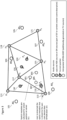
- Figure 1 For example as shown in Figure 1 is shown an example scenario in which embodiments may be employed and produce advantages over the current approaches.
- Figure 1 there are shown four audio sources, a first audio source AS 1 101, a second audio source AS 2 103, a third audio source AS 3 105, and a fourth audio source AS 4 107 in the audio scene and which can be captured by 6 microphones (or microphone arrays) to create the captured higher order ambisoncs (HOA) sources: a first HOA source H 1 111, a second HOA source H 2 113, a third HOA source H 3 115, a fourth HOA source H 4 117, a fifth HOA source H 5 119, and a sixth HOA source H 6 121.
- HOA ambisoncs
- a first subset S 1 123 of HOA sources comprising the HOA sources H 2 113, H 3 115, H 4 117 and a second subset S 2 125 of HOA sources comprising the HOA sources comprises H 3 115, H 4 117, and H 5 119.
- the renderer will require 3-5 HOA sources spatial metadata and audio signal data.
- a synthetic HOA source can also be present.
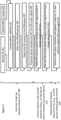
- step 201 is the receiving or otherwise obtaining the encoder input format (EIF) information.
- EIF Encoder Input Format
- the HOA sources H 1 , H 2 , H 3 , H 4 and H 5 are included in the EIF (or any equivalent content creator scene description).
- step 202 is the receiving or otherwise obtaining the MPEG-H or other format audio signal data.
- the EIF and the audio signal data is delivered to a MPEG-I MPHOA encoder as shown in Figure 2 by step 203.
- the encoder is then, as shown in Figure 2 by step 205, configured to parse the EIF to determine the number of HOA groups which are to be processed together for performing MPHOA processing for enabling listener movement with six degrees of freedom.
- the encoder can then, as shown in Figure 2 by step 207, be configured to determine the higher order ambisonic sources (OH) in the HOA groups.
- the encoder is configured to process each of the HOA sources to generate spatial metadata required for 6DOF rendering.
- the generation of the spatial metadata for the higher order ambisonic sources from the higher order ambisonics audio signals is shown in Figure 2 by step 209.
- HOA sources in the EIF are referred to as original HOA sources because they are defined in the EIF by the content creator.
- the (playback device) player as shown in Figure 2 by step 211, is configured to select the HOA sources spatial metadata and audio signals based on the listener position (LP).
- the selected content is then retrieved. Typically this operation consumes a significant amount of the bandwidth.
- the operation of retrieving the OH source spatial metadata and audio signals forming a triangle around the LP is shown in Figure 2 by step 213.
- the steps 211 and 213 can be summarized as content selection and retrieval based on LP (3-5 OH source spatial metadata and audio signals) as shown in Figure 2 by step 210.
- step 221 The performing HOA spatial metadata interpolation based on LP, starting with the closest HOA audio signal is shown in Figure 2 by step 221.
- This rendering processing is the computationally intensive operation due to the processing involving data from multiple HOA sources.
- the step 221 can be summarized as the computational resource requirement for spatial metadata interpolation from 3 to 5 OH source in terms of processing and memory.
- an original higher order ambisonics sources are HOA or scene based audio which are provided by the content creator as part of creating the audio scene.
- the original HOA (OH) sources can either be generated from microphones (or a microphone array) capturing the scene from one or more positions in the audio scene.
- the HOA sources can also be generated synthetically from a set of audio objects. Since the OH sources are the ones introduced in the scene during content creation they are present in the audio scene description.
- the content creator audio scene description is the EIF (encoder input format).
- Position interpolated HOA sources are the HOA sources generated as part of creating the rendering metadata for greater flexibility in terms of content consumption choices.
- the PIH sources are introduced during the 6DOF rendering metadata creation phase by the MPEG-I encoder and consequently, the PIH sources are not present in the content creator scene description or EIF in the MPEG-I Immersive audio standardization scope.
- the PIH sources are present in the MPEG-I bitstream available to the MPEG-I player for content selection and retrieval.
- the concept as shown in the following embodiments describes a method and apparatus that requires a reduced rendering computation and network bandwidth for 6DOF rendering for a scene comprising multiple original HOA (OH) sources by generating additional position interpolated HOA (PIH) sources (with spatial metadata) during the rendering metadata creation stage and generating associated HOA source audio information for the PIH sources to enable 6DoF translation rendering with only a single HOA source.
- OH original HOA
- PIH position interpolated HOA
- the pre-generated PIH sources and associated metadata can be hosted by content distribution servers along with the OH sources. Consequently, the renderers or players can directly retrieve the appropriate PIH sources and the indicated audio signal. This results in lower computation comprising a single HOA source metadata processing (instead of the 3 typically HOA source metadata) and reduced bandwidth due to the need to retrieve only a single HOA source spatial metadata and associated OH source audio signal.
- the PIH source and OH source metadata are indicated in the media presentation description (or manifest) to enable content selection for Dynamic Adaptive Streaming over HTTP (DASH) based delivery.
- DASH Dynamic Adaptive Streaming over HTTP
- the renderer can be configured to operate in different modes depending on the bandwidth and/or computational resource constraints. In some embodiments there can be three modes:
- Mode 1 provides greater freedom in terms of user movement.
- the mode 2 allows lesser freedom in terms of user movement compared to mode 1, however, it also requires low computational complexity and lower bandwidth compared to mode 1.
- the mode 3 has the lowest computational requirements compared to mode 1 and mode 2, however, it expects availability of OH and PIH sources in the expected listening positions.
- the MPEG-I encoder can generate the PIH sources in the appropriate LPs.
- the content processing server i.e. hosting the MPEG-I encoder
- the player can perform rendering in all the 3 modes in an equivalent manner to the PIH sources.
- the need for additional PIH sources is due to the limited user translation without signicant loss of audio quality with single PIH rendering (limited 6DoF) compared to the use of OH sources subsets for full 6DoF.
- MPHOA rendering bandwidth can be reduced by up to a third.
- MPHOA rendering on computationally constrained consumption devices can enable low end devices to become target addressable markets for 6DoF MPHOA rendering.
- the generation of position interpolated HOA or Position interpolated HOA (PIH) sources with the help of OH sources and adding the suitable OH audio source information during 6DoF rendering metadata creation phase is a concept not currently discussed elsewhere. As indicated above this shifts the computational complexity from the renderer to the content processing or content hosting (e.g., DASH server which hosts the PIH source spatial metadata) without having any impact on content creation.
- the content processing or content hosting e.g., DASH server which hosts the PIH source spatial metadata
- the concept as discussed herein is configured to indicate the signaling of a single OH audio source which significantly reduces the need for delivery of multiple HOA source audio signal data.
- FIG. 3 shows the scene as shown in Figure 1 .
- the scene further comprises (Position interpolated HOA) PIH sources 301, 303 305, and 307.
- the PIH sources create additional listening positions where the renderer can perform rendering by retrieving only a single HOA source spatial metadata and single HOA source audio signal data.
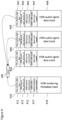
- FIG. 4 With respect to Figure 4 is shown an example data structure for a PIH source 410 and the HOA sources 420, 430, 440 which are associated with a scene label 401 'poal'.
- the data structure for a PIH source such as source 410 in this example is as follows:
- the system comprises a EIF 502 input which is configured to be passed to the encoder (in this example a MPEG-I encoder 505).
- system comprises a MPEG-I audio 504 input which is configured to be passed to the encoder 505.
- the system further comprises an (MPEG-I) encoder 505.
- the encoder 505 is configured to receive the (MPEG-I) audio 504 and EIF 502 and generate rendering metadata from the received scene description (EIF) and audio raw signals.
- the encoder uses the scene description information (EIF) to detect or determine the presence of one or more HOA groups.
- Each HOA group comprises two or more HOA sources.
- the HOA sources specified by the content creator in the EIF information are referred to original HOA sources or OH sources.
- the encoder 505 is configured to determine at least one candidate position for the generation of additional position interpolated HOA sources (PIH sources).
- PH sources additional position interpolated HOA sources
- the encoder 505 in some embodiments performs spatial metadata interpolation using the OH sources encompassing each of the candidate PIH sources to generate the position interpolated spatial metadata.
- the method for performing spatial metadata interpolation can be as discussed in GB application 2002710.8 .
- the encoder further is configured to determine an audio signal from the one or more OH sources used to calculate the PIH spatial metadata used.
- the closest OH source audio signal is added as associated OH source audio signal with the particular PIH source.
- the encoder is configured to select the OH source audio signal such that it is also an associated audio signal for also the neighbouring PIH sources. Such an approach will allow the player/renderer to retrieve a longer duration of audio content to ensure seamless operation in response to listener movement.
- the number of identified or determined listener positions can in some embodiments depend on the number of OH sources and the distances between the OH sources.
- the determined number of PIH sources depends on the amount of translation that will be permitted.
- the number of PIH sources depend on the tradeoff between extent of permitted translation for each PIH source and an acceptable storage size.
- parametric rendering of the single PIH source retains high quality for limited translation with noticeable degradation as d approaches 1.
- the definition for an equilateral triangle can be extended to any triangle.
- the inter-PIH-distance can be determined such that the additional storage space required is the limiting constraint.
- only a subset of the OH sources are embedded with PIH sources.
- this subset implementation can be employed in large audio scenes where additional data storage with PIH sources is controlled based on the listener position heatmaps.
- this sub-set selection can be further customized based on CDNs (content delivery networks) hosting the rendering metadata and audio signal data to customize for individual regions.
- CDNs content delivery networks
- the HOA source information for the OH sources can be as follows: hoa_source_type Semantics 0 By default the value is OH source or original source. In absence of this flag value, OH source can be assumed. 1 Position interpolated HOA source, generated as a position interpolated spatial metadata represented generated from two or more OH sources spatial metadata. 2-3 Reserved
- a grouping of OH sources, PIH sources and OH audio signals that are credible alternatives for rendering 401 can be defined using a EntityToGroupBox with grouping_type equal to 'poal' (PIH and OH source audio alternatives) which specifies tracks containing PIH source metadata and the associated alternative OH audio signals are included in the same entity group.
- ref_ohaudio_id[i] specifies the hoa_source_id from the track identified by i-th entity_id that is a credible audio signal for rendering the PIH source in this group.
- the entity_id for the OH audio signal suitable for rendering the PIH source is ordered such that the smallest index is the highest preference.
- the OH identified by ref_ohaudio_id[0] is the most preferred OH audio signal source.
- the i-th referenced track can have hoa_source_id equal to ref_ohaudio_id[i] present. In case of a single audio signal being suitable the number of entities can be absent.
- the 6DOF OH sources are indicated by signaling HOASourceInformationStruct () as a new box - 6DOFOHSourceBox('6dohb') to be contained in the sample entry of the spatial rendering metadata tracks and carries information about the associated OH audio signal data.
- the (MPEG-I) encoder 505 is further configured to render or generate metadata manifest for content selection.
- the generation of metadata manifest for content selection is such that for a DASH Media Presentation Description (MPD), an HOA source element with a @schemeIdUri attribute equal to "urn:mpeg:mpegl:mia:2021:6DOH" is referred to as a original HOA source (OH source defined in EIF), 6DOH descriptor. Furthermore a HOA source as described in HOASourceInformationStruct(), where the hoa_source_type value is equal to 0.
- HOA source element with @schemeldUri attribute equal to "urn:mpeg:mpegI:mia:2021:6DPH" is referred to as a position interpolated HOA source (PIH source), 6DPH descriptor.
- PHI source position interpolated HOA source
- the number of 6DOH adaptation sets are present for data (audio signal data and spatial metadata) for each of the OH sources in the content creator scene description. Similarly, if there are one or more PIH sources added during the rendering metadata creation phase, they are present as adaptation sets with 6DPH descriptor corresponding to each of the interpolated spatial metadata representation.
- the rendering is performed using only the OH sources (audio and spatial metadata).
- the player In presence of PIH sources in the media manifest, the player has the freedom to select the appropriate adaptation set for retrieval and playback depending on the computational resources on the rendering device and the bandwidth availability.
- the 6DOH and 6DPH descriptor in some embodiments shall include an @value attribute and a HOASourcelnfo element with its sub-elements and attributes as specified in the following Table.
- Elements and attributes for HOA source descriptor Use Data type Description @value M xs:string Specifies the hoa_source_id of the HOA source in the audio scene.
- the value is a string that contains a base-10 integer representation of a HOA source ID. In case of multiple or "N" HOA source IDs packed in a single frame, this can be a whitespace-separated list of HOA source IDs as indicated by hoa_source_id. HOA_Source_Pos ition.
- HOA_Sour ce_Position_X 1..N xs string X coordinate Position of HOA source, or a whitespace-separated list of X position of the HOA sources listed in the @value.
- the number of position values shall be equal to the number of hoa_source_id listed in @value field. This information is 1 is there is only one HOA source in one adaptation set, N if there are N HOA sources packaged in the same DASH segment.
- HOA_Sour ce_Position_Y 1..N xs string Y coordinate Position of HOA source, or a whitespace-separated list of Y position of the HOA sources listed in the @value.
- the number of position values shall be equal to the number of hoa_source_id listed in @value field. This information is 1 is there is only one HOA source in one adaptation set, N if there are N HOA sources packaged in the same DASH segment.
- the number of position values shall be equal to the number of hoa_source_id listed in @value field. This information is 1 is there is only one HOA source in one adaptation set, N if there are N HOA sources packaged in the same DASH segment.
- HOA_Source_Gro up_Info. groupI d CM int This attribute specifies the identifier of the HOA source group that this HOA source belongs to. This information is conditionally mandatory if there are HOA sources belonging to more than one group in the MPD.
- another manifest implementation approach comprises a single descriptor for all HOA sources (OH and PIH).
- the Media Presentation Description (MPD) in such embodiments has an additional mandatory parameter hoa_source_type to indicate whether the adaptation set is representing an OH source or whether it represents a PIH source.
- the OH and PIH sources are listed as attributes in JavaScript Object Notation (JSON) format. This can be useful when delivery methods other than DASH are used.
- Session Description Protocol SDP can also be used to describe the available HOA sources. This can be of benefit for broadcast as well as multicast distribution of content. In such scenarios, the player can select approach streams representing the OH or PIH sources to perform the 6DOF rendering.
- a rendering bitstream and HOA sources audio signal 506 can be passed to a suitable MPEG-I content node 508 (which may be a server or cloud based storage element).
- the content node 508 can furthermore transfer 1 position interpolated HOA source metadata and 1 HOA source audio 510 to the (MPEG-I) renderer 511.
- the renderer 511 can be configured to operate in different modes to leverage the presence of OH and PIH sources in a 6DoF audio scene.
- these modes can be selected based on determined estimated computational resource requirements and network bandwidth available.
- the first rendering mode can be employed in some embodiments where the renderer 511 is computationally equipped to perform the state of the art MPHOA rendering. In this mode of operation the renderer 511 is configured to retrieve the OH sources and the corresponding audio signals which form a triangle based on the listener position.
- This mode has the benefit of having a greater flexibility in terms of listener movement, because the mode allows the use of (typically) 3 or more OH sources. Furthermore, the mode provides the benefit of retrieving a larger amount of data in advance due to the higher likelihood of the listener moving within the triangle formed by the 3 encompassing OH sources.
- this mode enables the renderer to use spatial metadata generated only for the OH sources which needs storage in addition to the OH source audio signal data.
- any suitable MPHOA rendering can be optimized by requiring the use of only the "best fit” OH source audio signal data.
- the "best fit” can be either the closest or the least changing, depending on the implementation.
- a second rendering mode (Mode 2).
- This mode can be implemented where the renderer 511 is computationally equipped but is constrained by bandwidth.
- the renderer 511 can be configured to retrieve based on listener position, one PIH source spatial metadata and associated OH source audio signal.
- the renderer can perform limited 6DOF movements with the retrieved data.
- the renderer 511 can in some embodiments be configured to retrieve the next proximate PIH source spatial metadata and associated source audio signal for rendering.
- Such a mode therefore only requires retrieving a single PIH source spatial metadata and single OH source audio signal data.
- the second rendering mode is configured to generate Spatial metadata for the PIH sources in addition to the OH sources. This mode thus requires additional storage on the content node 508 (e.g., CDNs for DASH delivery).
- this mode can be employed where the renderer 511 is computationally and bandwidth constrained.
- the rendering mode is one where the renderer 511 is configured to retrieve PIH source spatial metadata and an associated audio signal.
- the renderer 511 in such embodiments is configured to perform limited 6DOF rendering.
- the third rendering mode is one in which the renderer 511 is significantly constrained computationally.
- the renderer 511 is configured to select the closest PIH source metadata and the associated OH audio signal data to perform only 3DOF rendering.
- the renderer 511 is configured to provide a better listening experiences compared to the use of the closest OH sources (which would have been the default behaviour) if the renderer was only capable of performing 3DOF rendering due to computational constraints. Furthermore there is an added benefit in that the content creator is not loaded with performing additional content creation to take care of providing spatially localized experience for renderers that have significant computational constraints.
- the MPEG-I encoder takes care of generating the necessary PIH sources during the creation of spatial metadata for rendering.
- step 601 the operation of receiving the EIF.
- the MPHOA groups are determined as shown in Figure 6 by step 605.
- step 607 are shown the determination of the OH sources in the HOA group.
- the steps 609, 611,613, and 615 describe the method based on OH sources and without PIH sources.
- the steps 610, 612, 614, and 616 describe the method based on additional encoder generated PIH source and associated OH audio data signalling.
- step 610 For example in the second mode of rendering is shown the operation of determining interpolation positions for generating PIH sources as shown in Figure 6 by step 610.
- PIH sources comprising spatial metadata and associated audio signal information as shown in Figure 6 by step 612.
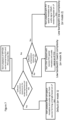
- Figure 7 shows a flow diagram of the renderer HOA source selection criteria for MPHOA rendering with rendering metadata comprising interpolated higher order ambisonics and higher order ambisonic sources.
- the playback is started with OH spatial metadata and audio signals from sources forming a triangle based on LP as shown in Figure 7 by step 707.
- the first rendering mode or default mode is employed.
- the playback is started with 3DoF playback with the nearest PIH spatial metadata and audio signal based on LP as shown in Figure 7 by step 712.
- the third rendering mode (for low bandwidth lowest complexity) is employed.
- playback is started with PIH spatial metadata and audio signal based on LP as shown in Figure 7 by step 711.
- the second rendering mode for low bandwidth low complexity
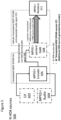
- FIG. 8 With respect to Figure 8 is shown a further view of the system wherein there is a content creator scope 800 which is configured to generate the N OH sources 890.
- MPEG-H encoder and decoder 805 which is configured to receive the audio signals from the audio input and pass these to the MPEG-H encoded/decoded audio buffer/storage 807.
- the MPEG-H encoded/decoded audio buffer/storage 807 can furthermore be configured to pass the encoded audio signals to the (MPEG-I) encoder 809.
- this section may comprise an encoder 809 (though this may also be implemented within the rendering metadata creation 820 part.
- the encoder 809 is configured to obtain or receive the EIF information, the (raw) audio signals from the audio input 803 and the encoded (MPEG-H) audio and generate futher PIH sources.
- rendering metadata creation 820 section there can be a rendering metadata creation 820 section. As indicated above this can comprise the encoder 809 or obtain the output of the encoder 809.
- the rendering metadata creation 820 section can in some embodiments comprise the metadata renderer 821 configured to generate the metadata as indicated above.
- the output of the rendering metadata creation 820 section is one where there is a number (N) of OH sources and a further number (M) of PIH sources 892.
- a further section in the system is the content hosting for distribution 840 section.
- the content hosting for distribution 840 section can provide an indication of OH and PIH sources and OH source audio association with PIH sources 894.
- the content hosting for distribution 840 section in some embodiments comprises a MPEG-I 6DoF Content bitstream Buffer/Storage 841.
- the MPEG-I 6DoF Content bitstream Buffer/Storage 841 is configured to receive or obtain the OH and PIH sources in the bitstream and provide a suitable buffer/storage element to hold it.
- the content hosting for distribution 840 section comprises a content manifest selector 843.
- the content manifest selector 843 is configured to generate and output the manifest 862 and spatial metadata and audio data 864 to the playback device 861.
- the playback 860 section in some embodiments is configured to implement 896 the different modes of rendering such as the OH source based rendering and the PIH source based rendering.
- the playback device 861 comprises a player 863.
- the player 863 furthermore comprises a MPHOA rnderer 865 and content selector 867.
- the player 863 is configured to output the renderer audio as a headphone output 866 to the headphone/tracker and further configured to obtain the 6DoF tracking information 868 from the same.
- the device may be any suitable electronics device or apparatus.
- the device 1600 is a mobile device, user equipment, tablet computer, computer, audio playback apparatus, etc.
- the device 1600 comprises at least one processor or central processing unit 1607.
- the processor 1607 can be configured to execute various program codes such as the methods such as described herein.
- the device 1600 comprises a memory 1611.
- the at least one processor 1607 is coupled to the memory 1611.
- the memory 1611 can be any suitable storage means.
- the memory 1611 comprises a program code section for storing program codes implementable upon the processor 1607.
- the memory 1611 can further comprise a stored data section for storing data, for example data that has been processed or to be processed in accordance with the embodiments as described herein. The implemented program code stored within the program code section and the data stored within the stored data section can be retrieved by the processor 1607 whenever needed via the memory-processor coupling.
- the device 1600 comprises a user interface 1605.
- the user interface 1605 can be coupled in some embodiments to the processor 1607.
- the processor 1607 can control the operation of the user interface 1605 and receive inputs from the user interface 1605.
- the user interface 1605 can enable a user to input commands to the device 1600, for example via a keypad.
- the user interface 1605 can enable the user to obtain information from the device 1600.
- the user interface 1605 may comprise a display configured to display information from the device 1600 to the user.
- the user interface 1605 can in some embodiments comprise a touch screen or touch interface capable of both enabling information to be entered to the device 1600 and further displaying information to the user of the device 1600.
- the device 1600 comprises an input/output port 1609.
- the input/output port 1609 in some embodiments comprises a transceiver.
- the transceiver in such embodiments can be coupled to the processor 1607 and configured to enable a communication with other apparatus or electronic devices, for example via a wireless communications network.
- the transceiver or any suitable transceiver or transmitter and/or receiver means can in some embodiments be configured to communicate with other electronic devices or apparatus via a wire or wired coupling.
- the transceiver can communicate with further apparatus by any suitable known communications protocol.
- the transceiver can use a suitable universal mobile telecommunications system (UMTS) protocol, a wireless local area network (WLAN) protocol such as for example IEEE 802.X, a suitable short-range radio frequency communication protocol such as Bluetooth, or infrared data communication pathway (IRDA).
- UMTS universal mobile telecommunications system
- WLAN wireless local area network
- IRDA infrared data communication pathway
- the transceiver input/output port 1609 may be configured to transmit/receive the audio signals, the bitstream and in some embodiments perform the operations and methods as described above by using the processor 1607 executing suitable code.
- the various embodiments of the invention may be implemented in hardware or special purpose circuits, software, logic or any combination thereof.
- some aspects may be implemented in hardware, while other aspects may be implemented in firmware or software which may be executed by a controller, microprocessor or other computing device, although the invention is not limited thereto.
- firmware or software which may be executed by a controller, microprocessor or other computing device, although the invention is not limited thereto.
- While various aspects of the invention may be illustrated and described as block diagrams, flow charts, or using some other pictorial representation, it is well understood that these blocks, apparatus, systems, techniques or methods described herein may be implemented in, as non-limiting examples, hardware, software, firmware, special purpose circuits or logic, general purpose hardware or controller or other computing devices, or some combination thereof.
- the embodiments of this invention may be implemented by computer software executable by a data processor of the mobile device, such as in the processor entity, or by hardware, or by a combination of software and hardware. Further in this regard it should be noted that any blocks of the logic flow as in the Figures may represent program steps, or interconnected logic circuits, blocks and functions, or a combination of program steps and logic circuits, blocks and functions.
- the software may be stored on such physical media as memory chips, or memory blocks implemented within the processor, magnetic media, and optical media.
- the memory may be of any type suitable to the local technical environment and may be implemented using any suitable data storage technology, such as semiconductor-based memory devices, magnetic memory devices and systems, optical memory devices and systems, fixed memory and removable memory.
- the data processors may be of any type suitable to the local technical environment, and may include one or more of general purpose computers, special purpose computers, microprocessors, digital signal processors (DSPs), application specific integrated circuits (ASIC), gate level circuits and processors based on multi-core processor architecture, as non-limiting examples.
- Embodiments of the inventions may be practiced in various components such as integrated circuit modules.
- the design of integrated circuits is by and large a highly automated process.
- Complex and powerful software tools are available for converting a logic level design into a semiconductor circuit design ready to be etched and formed on a semiconductor substrate.
- Programs such as those provided by Synopsys, Inc. of Mountain View, California and Cadence Design, of San Jose, California automatically route conductors and locate components on a semiconductor chip using well established rules of design as well as libraries of pre-stored design modules.
- the resultant design in a standardized electronic format (e.g., Opus, GDSII, or the like) may be transmitted to a semiconductor fabrication facility or "fab" for fabrication.
Landscapes
- Engineering & Computer Science (AREA)
- Physics & Mathematics (AREA)
- Acoustics & Sound (AREA)
- Signal Processing (AREA)
- Multimedia (AREA)
- Stereophonic System (AREA)
Applications Claiming Priority (1)
| Application Number | Priority Date | Filing Date | Title |
|---|---|---|---|
| GBGB2114833.3A GB202114833D0 (en) | 2021-10-18 | 2021-10-18 | A method and apparatus for low complexity low bitrate 6dof hoa rendering |
Publications (2)
| Publication Number | Publication Date |
|---|---|
| EP4167600A2 true EP4167600A2 (fr) | 2023-04-19 |
| EP4167600A3 EP4167600A3 (fr) | 2023-07-19 |
Family
ID=78718462
Family Applications (1)
| Application Number | Title | Priority Date | Filing Date |
|---|---|---|---|
| EP22198289.5A Pending EP4167600A3 (fr) | 2021-10-18 | 2022-09-28 | Procédé et appareil de rendu hoa à faible débit binaire et faible complexité |
Country Status (4)
| Country | Link |
|---|---|
| US (1) | US12495269B2 (fr) |
| EP (1) | EP4167600A3 (fr) |
| JP (2) | JP7579311B2 (fr) |
| GB (1) | GB202114833D0 (fr) |
Families Citing this family (3)
| Publication number | Priority date | Publication date | Assignee | Title |
|---|---|---|---|---|
| KR102821348B1 (ko) * | 2023-03-15 | 2025-06-16 | 클릭트 주식회사 | 멀티캐스트를 이용한 공간 오디오 전송 장치 및 방법 |
| GB2631543A (en) * | 2023-07-07 | 2025-01-08 | Nokia Technologies Oy | Beamforming control for 6-degrees of freedom audio rendering |
| WO2025263775A1 (fr) * | 2024-06-21 | 2025-12-26 | 삼성전자 주식회사 | Procédé et dispositif de traitement distribué d'audio spatial |
Family Cites Families (12)
| Publication number | Priority date | Publication date | Assignee | Title |
|---|---|---|---|---|
| US20030035553A1 (en) * | 2001-08-10 | 2003-02-20 | Frank Baumgarte | Backwards-compatible perceptual coding of spatial cues |
| CN103649706B (zh) * | 2011-03-16 | 2015-11-25 | Dts(英属维尔京群岛)有限公司 | 三维音频音轨的编码及再现 |
| US9805725B2 (en) | 2012-12-21 | 2017-10-31 | Dolby Laboratories Licensing Corporation | Object clustering for rendering object-based audio content based on perceptual criteria |
| EP3264802B1 (fr) * | 2016-06-30 | 2025-02-12 | Nokia Technologies Oy | Traitement audio spatial pour les sources sonores en mouvement |
| WO2018064528A1 (fr) * | 2016-09-29 | 2018-04-05 | The Trustees Of Princeton University | Navigation ambisonique dans des champs sonores à partir d'un réseau de microphones |
| EP3301951A1 (fr) | 2016-09-30 | 2018-04-04 | Koninklijke KPN N.V. | Traitement d'un objet audio sur la base d'informations d'écoute spatiale |
| US10659906B2 (en) | 2017-01-13 | 2020-05-19 | Qualcomm Incorporated | Audio parallax for virtual reality, augmented reality, and mixed reality |
| BR112020000775A2 (pt) | 2017-07-14 | 2020-07-14 | Fraunhofer-Gesellschaft zur Förderung der angewandten Forschung e.V. | aparelho para gerar uma descrição do campo sonoro, programa de computador, descrição do campo sonoro aprimorada e seu método de geração |
| GB2574238A (en) | 2018-05-31 | 2019-12-04 | Nokia Technologies Oy | Spatial audio parameter merging |
| US11089428B2 (en) * | 2019-12-13 | 2021-08-10 | Qualcomm Incorporated | Selecting audio streams based on motion |
| US11269589B2 (en) * | 2019-12-23 | 2022-03-08 | Dolby Laboratories Licensing Corporation | Inter-channel audio feature measurement and usages |
| GB2592388A (en) * | 2020-02-26 | 2021-09-01 | Nokia Technologies Oy | Audio rendering with spatial metadata interpolation |
-
2021
- 2021-10-18 GB GBGB2114833.3A patent/GB202114833D0/en not_active Ceased
-
2022
- 2022-09-28 EP EP22198289.5A patent/EP4167600A3/fr active Pending
- 2022-10-14 US US17/965,971 patent/US12495269B2/en active Active
- 2022-10-17 JP JP2022165971A patent/JP7579311B2/ja active Active
-
2024
- 2024-10-25 JP JP2024188197A patent/JP2025016580A/ja active Pending
Also Published As
| Publication number | Publication date |
|---|---|
| US12495269B2 (en) | 2025-12-09 |
| JP2025016580A (ja) | 2025-02-04 |
| JP7579311B2 (ja) | 2024-11-07 |
| EP4167600A3 (fr) | 2023-07-19 |
| JP2023060836A (ja) | 2023-04-28 |
| GB202114833D0 (en) | 2021-12-01 |
| US20230123253A1 (en) | 2023-04-20 |
Similar Documents
| Publication | Publication Date | Title |
|---|---|---|
| US11558707B2 (en) | Sound field adjustment | |
| US11429340B2 (en) | Audio capture and rendering for extended reality experiences | |
| CN110832883B (zh) | 以计算机为中介的现实系统的混阶立体混响(moa)音频数据 | |
| EP3747205B1 (fr) | Moteur de rendu audio unifié pouvant être mis à l'échelle | |
| EP4167600A2 (fr) | Procédé et appareil de rendu hoa à faible débit binaire et faible complexité | |
| US11758349B2 (en) | Spatial audio augmentation | |
| CN114008707B (zh) | 适配音频流以进行渲染 | |
| CN115211146B (zh) | 音频表示和相关联的渲染 | |
| CN114747231A (zh) | 基于运动来选择音频流 | |
| US20250024220A1 (en) | Sound field adjustment | |
| US12369006B2 (en) | Associated spatial audio playback | |
| US11363403B2 (en) | Spatial audio augmentation and reproduction | |
| CN111903136B (zh) | 信息处理装置、信息处理方法和计算机可读存储介质 | |
| US20250024219A1 (en) | Sound field adjustment | |
| CN114128312B (zh) | 用于低频效果的音频渲染 | |
| TW202507500A (zh) | 聲場調整 | |
| WO2025014733A1 (fr) | Ajustement de champ acoustique |
Legal Events
| Date | Code | Title | Description |
|---|---|---|---|
| PUAI | Public reference made under article 153(3) epc to a published international application that has entered the european phase |
Free format text: ORIGINAL CODE: 0009012 |
|
| STAA | Information on the status of an ep patent application or granted ep patent |
Free format text: STATUS: THE APPLICATION HAS BEEN PUBLISHED |
|
| AK | Designated contracting states |
Kind code of ref document: A2 Designated state(s): AL AT BE BG CH CY CZ DE DK EE ES FI FR GB GR HR HU IE IS IT LI LT LU LV MC MK MT NL NO PL PT RO RS SE SI SK SM TR |
|
| PUAL | Search report despatched |
Free format text: ORIGINAL CODE: 0009013 |
|
| AK | Designated contracting states |
Kind code of ref document: A3 Designated state(s): AL AT BE BG CH CY CZ DE DK EE ES FI FR GB GR HR HU IE IS IT LI LT LU LV MC MK MT NL NO PL PT RO RS SE SI SK SM TR |
|
| RIC1 | Information provided on ipc code assigned before grant |
Ipc: H04S 7/00 20060101AFI20230612BHEP |
|
| STAA | Information on the status of an ep patent application or granted ep patent |
Free format text: STATUS: REQUEST FOR EXAMINATION WAS MADE |
|
| 17P | Request for examination filed |
Effective date: 20240118 |
|
| RBV | Designated contracting states (corrected) |
Designated state(s): AL AT BE BG CH CY CZ DE DK EE ES FI FR GB GR HR HU IE IS IT LI LT LU LV MC MK MT NL NO PL PT RO RS SE SI SK SM TR |
|
| STAA | Information on the status of an ep patent application or granted ep patent |
Free format text: STATUS: EXAMINATION IS IN PROGRESS |
|
| 17Q | First examination report despatched |
Effective date: 20250623 |