EP4167624B1 - Mobilitätsverwaltungsverfahren und -vorrichtung - Google Patents
Mobilitätsverwaltungsverfahren und -vorrichtung Download PDFInfo
- Publication number
- EP4167624B1 EP4167624B1 EP21836880.1A EP21836880A EP4167624B1 EP 4167624 B1 EP4167624 B1 EP 4167624B1 EP 21836880 A EP21836880 A EP 21836880A EP 4167624 B1 EP4167624 B1 EP 4167624B1
- Authority
- EP
- European Patent Office
- Prior art keywords
- satellite
- terminal
- network
- ngso
- connection
- Prior art date
- Legal status (The legal status is an assumption and is not a legal conclusion. Google has not performed a legal analysis and makes no representation as to the accuracy of the status listed.)
- Active
Links
Images






Classifications
-
- H—ELECTRICITY
- H04—ELECTRIC COMMUNICATION TECHNIQUE
- H04W—WIRELESS COMMUNICATION NETWORKS
- H04W24/00—Supervisory, monitoring or testing arrangements
- H04W24/02—Arrangements for optimising operational condition
-
- H—ELECTRICITY
- H04—ELECTRIC COMMUNICATION TECHNIQUE
- H04B—TRANSMISSION
- H04B7/00—Radio transmission systems, i.e. using radiation field
- H04B7/14—Relay systems
- H04B7/15—Active relay systems
- H04B7/185—Space-based or airborne stations; Stations for satellite systems
- H04B7/1853—Satellite systems for providing telephony service to a mobile station, i.e. mobile satellite service
- H04B7/18545—Arrangements for managing station mobility, i.e. for station registration or localisation
- H04B7/18547—Arrangements for managing station mobility, i.e. for station registration or localisation for geolocalisation of a station
- H04B7/1855—Arrangements for managing station mobility, i.e. for station registration or localisation for geolocalisation of a station using a telephonic control signal, e.g. propagation delay variation, Doppler frequency variation, power variation, beam identification
-
- H—ELECTRICITY
- H04—ELECTRIC COMMUNICATION TECHNIQUE
- H04B—TRANSMISSION
- H04B7/00—Radio transmission systems, i.e. using radiation field
- H04B7/14—Relay systems
- H04B7/15—Active relay systems
- H04B7/185—Space-based or airborne stations; Stations for satellite systems
- H04B7/1851—Systems using a satellite or space-based relay
- H04B7/18513—Transmission in a satellite or space-based system
-
- H—ELECTRICITY
- H04—ELECTRIC COMMUNICATION TECHNIQUE
- H04B—TRANSMISSION
- H04B7/00—Radio transmission systems, i.e. using radiation field
- H04B7/14—Relay systems
- H04B7/15—Active relay systems
- H04B7/185—Space-based or airborne stations; Stations for satellite systems
- H04B7/1851—Systems using a satellite or space-based relay
- H04B7/18519—Operations control, administration or maintenance
-
- H—ELECTRICITY
- H04—ELECTRIC COMMUNICATION TECHNIQUE
- H04W—WIRELESS COMMUNICATION NETWORKS
- H04W36/00—Hand-off or reselection arrangements
- H04W36/08—Reselecting an access point
- H04W36/083—Reselecting an access point wherein at least one of the access points is a moving node
-
- H—ELECTRICITY
- H04—ELECTRIC COMMUNICATION TECHNIQUE
- H04W—WIRELESS COMMUNICATION NETWORKS
- H04W48/00—Access restriction; Network selection; Access point selection
- H04W48/02—Access restriction performed under specific conditions
- H04W48/04—Access restriction performed under specific conditions based on user or terminal location or mobility data, e.g. moving direction, speed
-
- H—ELECTRICITY
- H04—ELECTRIC COMMUNICATION TECHNIQUE
- H04W—WIRELESS COMMUNICATION NETWORKS
- H04W48/00—Access restriction; Network selection; Access point selection
- H04W48/16—Discovering, processing access restriction or access information
-
- H—ELECTRICITY
- H04—ELECTRIC COMMUNICATION TECHNIQUE
- H04W—WIRELESS COMMUNICATION NETWORKS
- H04W76/00—Connection management
- H04W76/10—Connection setup
-
- H—ELECTRICITY
- H04—ELECTRIC COMMUNICATION TECHNIQUE
- H04W—WIRELESS COMMUNICATION NETWORKS
- H04W12/00—Security arrangements; Authentication; Protecting privacy or anonymity
- H04W12/06—Authentication
-
- H—ELECTRICITY
- H04—ELECTRIC COMMUNICATION TECHNIQUE
- H04W—WIRELESS COMMUNICATION NETWORKS
- H04W12/00—Security arrangements; Authentication; Protecting privacy or anonymity
- H04W12/60—Context-dependent security
- H04W12/66—Trust-dependent, e.g. using trust scores or trust relationships
-
- H—ELECTRICITY
- H04—ELECTRIC COMMUNICATION TECHNIQUE
- H04W—WIRELESS COMMUNICATION NETWORKS
- H04W64/00—Locating users or terminals or network equipment for network management purposes, e.g. mobility management
- H04W64/003—Locating users or terminals or network equipment for network management purposes, e.g. mobility management locating network equipment
Definitions
- the present disclosure relates to the technical filed of mobile communications, and in particular to a mobility management method and device.
- a space-earth integration network is the focus of communication technology research in the world and also the key development direction of communication industry, and is widely recognized by the industry as the core technology of Beyond 5G (B5G) and the 6th Generation (6G) mobile communications.
- the space-earth integration network realizes system integration and efficient utilization of resources between a satellite network and a terrestrial network through the all-around integration, such as system integration, network integration, service integration and user integration, of satellite communications and terrestrial communications.
- NGSO Non-Geostationary Orbit
- 5G 5th Generation
- Low earth orbit satellite constellations represented by SpaceX and One Web have entered commercial stage of large-scale deployment.
- the research on the architecture, protocol and network technology of the space-earth integration network is at the initial stage, and the industry has not yet formed a systematic technical consensus, international standards and industry standards.
- the satellite communications and 5G integration networks especially a fixed, mobile and NGSO satellite integration network, have become a key research direction in the field of mobile communication and the space-earth integration, and its mobility management technology which is very different from the terrestrial communications is the key technology to be conquered first.
- FIG. 1 a high-level framework of the fixed, mobile and satellite integration network is shown in FIG. 1 .
- An integration core network is connected to a fixed access network (e.g., a fixed gateway), a mobile access network (e.g., a base station), and a satellite access network (e.g., a satellite gateway) at the same time.
- the integration core network implements unified control plane function, user plane function, service plane function, and management plane function for each domain.
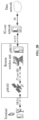
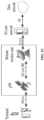
- a mobility management framework of an integration network which integrates the fixed access network, the mobile access network and the satellite access network, is shown in FIG. 2A to FIG. 2C .
- a satellite may serve as a radio frequency remote unit (as shown in FIG. 2A ), or a base station data unit (gNB-Distributed Unit (gNB-DU) as shown in FIG. 2B ), or all functions of a base station (data unit+control unit, a New Radio (NR) gNB as shown in FIG. 2C ), and the satellite access gateway and other functions of the base station are deployed on the ground.
- gNB-Distributed Unit gNB-Distributed Unit
- NR New Radio
- the mobility management of multi-connection User Equipment is performed by the International Mobile Telecommunications (IMT)-2020/5G integration core network
- the mobility management of the NGSO satellites is performed by the satellite access gateway or the IMT-2020/5G integration core network.
- FIG. 3 a mobility management method for the fixed, mobile and satellite integration network is shown in FIG. 3 .
- the NGSO satellites are mobile relative to the ground.
- the multi-connection UE needs to switch the low earth orbit satellites to be accessed every 10 minutes.
- the multi-connection UE needs to establish connections with multiple satellites at the same time; it determines a target satellite to be switched and a switching time point by measuring the signal strength.
- the mobility management method for the integration network is basically the same as that of a mobile network, additionally the position of the multi-connection UE is determined according to the satellite and beams accessed by the multi-connection UE; the integration network needs to page the multi-connection UE to update the position of the multi-connection UE, including a corresponding cell and/or Tracking Area (TA).
- TA Tracking Area
- the cell and/or TA where the multi-connection UE resides cannot be accurately located; for this problem, no feasible solution has been given in the related art.
- Patent document CN110636609A relates to satellite communications, and in particular to a method for optimizing satellite network terminal paging based on a satellite network, which can solve the problem in the prior art that user terminals cannot be successfully paging due to the movement of satellites.
- Patent document WO2020/010595A1 relates to a network search method, which includes presetting, by a terminal device, a public land mobile network (PLMN) and a networking mode associated with the PLMN; searching, by the terminal device based on a geographical location to obtain PLMN information of a current geographical location; determining, by the terminal device, a current networking mode of the terminal device; and switching, by the terminal device, the networking mode.
- PLMN public land mobile network
- At least one embodiment of the present disclosure provides a mobility management method and device, which can simplify a mobility management process for an integration network including a terrestrial access network and a satellite access network, reduce signaling overhead, and improve the efficiency of position update.
- the invention is set out in the appended set of claims.
- the mobility management method and device can update the position of the terminal in the processes that the terminal accesses a network for the first time, updates the network access mode, updates the position and switches the satellite.
- the embodiments of the present disclosure can simplify a communication connection establishment process between the terminal and the NGSO satellite and reduce the signaling overhead of position update.
- the technologies described herein are not limited to an NR system and a Long Term Evolution (LTE)/LTE-Advanced (LTE-A) system, and may also be applied to various wireless communication systems, for example, Code Division Multiple Access (CDMA), Time Division Multiple Access (TDMA), Frequency Division Multiple Access (FDMA), Orthogonal Frequency Division Multiple Access (OFDMA), Single-Carrier Frequency-Division Multiple Access (SC-FDMA), and other systems. Terms “system” and “network” are usually used interchangeably.
- the CDMA system may implement radio technologies such as CDMA2000 and Universal Terrestrial Radio Access (UTRA).
- UTRA includes Wideband CDMA (WCDMA) and other CDMA variations.
- the TDMA system may implement radio technologies such as Global System for Mobile Communication (GSM).
- GSM Global System for Mobile Communication
- the OFDMA system may implement radio technologies such as Ultra Mobile Broadband (UMB), Evolution-UTRA (E-UTRA), Institute of Electrical and Electronics Engineers (IEEE) 802.21 (Wireless Fidelity (Wi-Fi)), IEEE 802.16 (World Interoperability for Microwave Access (WiMAX)), IEEE 802.20, and Flash-OFDM.
- UMB Ultra Mobile Broadband
- E-UTRA Evolution-UTRA
- IEEE Institute of Electrical and Electronics Engineers
- Wi-Fi Wireless Fidelity
- WiMAX Worldwide Interoperability for Microwave Access
- IEEE 802.20 Worldwide Interoperability for Microwave Access
- Flash-OFDM Flash-OFDM.
- UMB Ultra Mobile Broadband
- E-UTRA Evolution-UTRA
- IEEE 802.21 Wireless Fidelity (Wi-Fi)
- WiMAX Worldwide Interoperability for Microwave Access
- UTRA, E-UTRA, UMTS, LTE, LTE-A and GSM are described in the documents from the organization named after "3rd Generation Partnership Project (3GPP)".
- CDMA2000 and UMB are described in the documents from the organization named after "3GPP2" .
- the technologies described herein may be applied not only to the above-mentioned systems and radio technologies but also to other systems and radio technologies.
- the NR system is described below as an example, and NR terms are used in most of the following descriptions although these technologies may also be applied to systems except the NR system.
- a mobility management method provided by the embodiments of the present disclosure can update the position of a terminal in the integration network, thereby performing mobility management on the terminal.
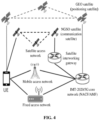
- FIG. 4 provides a schematic diagram of a mobility management architecture of an integration network.
- Access networks of the integration network include a satellite access network and a terrestrial access network.
- the satellite access network includes a plurality of NGSO satellites.
- the terrestrial access network may include a fixed access network and/or a mobile access network.
- the fixed access network refers to an access network that is accessed through fixed gateways (including various wireless access points, such as Access Point (AP), wireless fidelity (Wi-Fi) access point, and etc.).
- the mobile access network refers to a network that is accessed through base stations in the mobile communication technologies (e.g. an evolved Node B (eNB) and a gNB in the 4G and 5G mobile communication technologies).
- eNB evolved Node B
- gNB evolved Node B
- NGSO communication satellites including low earth orbit satellites and medium earth orbit satellites
- NGSO satellites are communication satellites (sometimes referred to as NGSO satellites herein) responsible for communication services of voice, message, data and other types.
- the embodiments of the present disclosure also relate to GEO positioning satellites (sometimes referred to as GEO satellites herein), which specifically include, but are not limited to, Global Positioning System (GPS) satellites, Galileo satellites, GLONASS satellites, Beidou satellites, etc.
- GPS Global Positioning System
- Galileo satellites Galileo satellites
- GLONASS satellites Galileo satellites
- Beidou satellites Beidou satellites
- the terminal in the embodiments of the present disclosure is a multi-connection terminal (sometimes referred to as multi-connection UE herein) with connection capabilities to multiple access networks (including at least the satellite access network and the terrestrial access network).
- Both the multi-connection terminal and the core network of the integration network (the IMT-2020/5G integration core network is taken as an example herein) have an NGSO satellite connection capability and a GEO satellite connection capability, as well as one or both of a fixed access network connection capability and a mobile access network connection capability, thereby realizing the integration of fixed access (i.e. access through the fixed access network), mobile access (i.e. access through the mobile access network) and NGSO satellite access (i.e. access through the satellite access network).
- the NGSO satellite is connected to the IMT-2020/5G integration core network through a satellite interworking gateway, and some network elements of the IMT-2020/5G integration core network, such as Network Access Control Function, NACF)/Access and Mobility Management Function (AMF), perform mobility management of the multi-connection UE.
- the satellite interworking gateway performs mobility management of the NGSO satellite (maintaining a connection relation with an NGSO satellite constellation).
- the mobility management framework of the embodiments of the present disclosure does not rely on the establishment of a communication connection between the NGSO communication satellite and the GEO positioning satellite.
- the mobility management method for an integration network provided by the embodiments of the present disclosure is specifically described below.
- the multi-connection terminal supports local storage and dynamic update of a first communication calendar.
- the first communication calendar includes an NGSO satellite ephemeris and/or a terrestrial communication calendar.
- the NGSO satellite ephemeris may specifically include at least one of following: satellite identifier of the NGSO satellite, beam direction, precise position of the satellite, satellite trajectory, satellite connection capability and other information.
- the precise position and satellite trajectory of the NGSO satellite may be used to determine the satellite whose signal can be received by the terminal currently, namely the satellite which can communicate with, and may also be used to determine the information such as the departing satellite and the newly arriving satellite.
- the satellite connection capability may also specifically include at least one of following: signal quality of the satellite, communication rate of the satellite, communication delay of the satellite, and communication reliability of the satellite.
- the terrestrial communication calendar includes the connection capability and coverage area of the fixed access network, and/or, the connection capability and coverage area of the mobile access network.
- the connection capability of the fixed access network or the mobile access network may also specifically include at least one of following: signal quality of the access network, communication rate of the access network, communication delay of the access network, and communication reliability of the access network.
- the coverage area of the fixed access network or the mobile access network may be used to indicate an area where the access network can provide services.
- the core network of the integration network supports local storage and dynamic update of a second communication calendar.
- the second communication calendar may be stored and dynamically updated by the NACF/AMF of the IMT-2020/5G integration core network.
- the second communication calendar may include the NGSO satellite ephemeris.
- the specific content of the NGSO satellite ephemeris may refer to the description above and will not be repeated here.
- the core network of the integration network such as one or more of followings network elements: Authentication Server Function (ASF) of the IMT-2020 integration core network, Unified Subscription Management Function (USM) of the IMT-2020 integration core network, Authentication Server Function (AUSF) of the 5G integration core network, and Unified Data Management Function (UDM) of the 5G integration core network, may determine whether the multi-connection terminal is trusted based on an authentication mechanism of the related art, a user identity recognition mechanism of the related art, and the second communication calendar.
- ASF Authentication Server Function
- USM Unified Subscription Management Function
- AUSF Authentication Server Function
- UDM Unified Data Management Function
- the multi-connection terminal When the multi-connection terminal is a trusted multi-connection terminal, it may cooperate with the core network of the integration network (for example, the IMT-2020/5G integration core network) to implement the satellite-positioning assisted mobility management method of the embodiments of the present disclosure.
- the mobility management method of the related art For an untrusted multi-connection terminal, the mobility management method of the related art may be used.
- the multi-connection terminal sends an initial communication request message when accessing the integration network for the first time.
- users can manually change a connection mode of accessing the network, for example, from accessing the network through the mobile access network to accessing the network through the satellite access network.
- a connection mode of accessing the network may be triggered.
- the multi-connection terminal sends the connection update request message for requesting to update the network connection mode.
- the multi-connection terminal Before sending the initial communication request message or the connection update request message, the multi-connection terminal may obtain its own real-time located position from the GEO positioning satellite, query the first communication calendar, calculate the connection performance evaluation values of various access networks, and select the connection mode according to the connection performance evaluation values, that is, select one or more of fixed access network connection, mobile access network connection, and NGSO satellite access network connection.
- the connection performance evaluation value may be calculated by weight based on the signal quality, communication rate, communication delay, and communication reliability of the access network, the user preference and other parameters.
- the multi-connection terminal may perform fixed or mobile communications of voice, message, data and other types based on the related art.
- the multi-connection terminal may obtain its own real-time located position from the GEO positioning satellite, query the NGSO satellite ephemeris, calculate the connection performance evaluation values of all the NGSO satellites, and establish a communication connection with an NGSO satellite with the optimal connection performance evaluation value to perform satellite communications of voice, message, data and other types.
- the connection performance evaluation value is calculated by weight based on the signal intensity, communication rate, communication delay, and communication reliability of the NGSO satellite, the user preference, and other parameters.
- the parameters and weighting algorithms used to calculate the connection performance evaluation values of the NGSO satellites may be the same or different from those used to calculate the connection performance evaluation values of the access networks, which is not specifically limited in the embodiments of the present disclosure.
- the embodiments of the present disclosure do not need to measure the quality of satellite signals, nor does the core network need to control the access of the multi-connection terminal, thus simplifying the access process of the terminal.
- the terminal may send a request message carrying its own position to the core network to trigger the core network to update the position of the terminal.
- connection performance evaluation values by weight Some specific examples of calculating the connection performance evaluation values by weight are provided below. It is to be noted that selected parameters and weight values, as well as the weighting algorithms, may be adjusted as required in the embodiments of the present disclosure. The following examples are only examples of calculating the connection performance evaluation values that can be used by the embodiments of the present disclosure, and are not intended to limit the present disclosure.
- the embodiments of the present disclosure may convert each parameter to a corresponding standard value according to a preset mapping relationship between each parameter and the standard value.
- the signal intensity is converted to the corresponding standard value according to the mapping relationship between the signal intensity and the standard value; the signal intensity is converted to the corresponding standard value according to the mapping relationship between the communication rate and the standard value, etc.
- the connection performance evaluation value may be obtained by performing weighted summation on the standard values corresponding to all the parameters.
- the embodiments of the present disclosure may set the priority of each parameter, and then generate the connection performance evaluation value based on the value of the parameter with the highest priority. Specifically, when the communication delay is set to the highest priority, the connection performance evaluation value may be generated according to the value of the communication delay.
- the multi-connection terminal After selecting the connection mode of the NGSO satellite access network, the multi-connection terminal obtains its real-time located position from the GEO positioning satellite; for example, when it finds that its position has changed greatly, it may need to initiate a position update process; in this case, the terminal may query the NGSO satellite ephemeris and select the NGSO satellite to be connected, and actively send the position update request carrying its own position to the NGSO satellite.
- the terminal since due to the power consumption and cost of the satellite communication, even when the connection mode of the NGSO satellite access network is selected, the terminal usually does not establish a long connection with the satellite, but establishes the communication connection when needing to send and receive information as required by the communication.
- the multi-connection terminal may determine, according to a motion trajectory of the NGSO satellite, a time point at which the position of the terminal will move out of the coverage area of the NGSO satellite currently selected for access, take the time point as a switching time point, and reselect the NGSO satellite for access from the NGSO satellites that can be connected by the terminal at the switching time point as the target NGSO satellite to be switched.
- the terminal may directly switch to the target NGSO satellite, establish the communication connection with the NGSO satellite, and send the request message carrying its own position to the network to inform the core network to update the position.
- the multi-connection terminal When selecting the connection mode of the NGSO satellite , the multi-connection terminal carries its own located position in the initial communication request message, the connection update request message, the position update request message and the satellite switch request message, and the NGSO communication satellite sends the above messages to the core network after adding the satellite identifier and beam identifier of this satellite to the messages.
- the core network may determine the cell and/or TA where the multi-connection terminal resides according to the located position of the multi-connection terminal, the satellite identifier, the beam identifier and other information in the above messages, thereby performing mobility management related operations based on the initial communication request message, connection update request message, position update request message and satellite switch request message of the multi-connection terminal.
- FIG. 5 to FIG. 7 provide schematic diagrams of examples of an interaction flow among the terminal, various access networks and core networks in the above processes.
- the IMT-2020/5G integration core network is taken as the core network of the integration network.
- FIG. 5 shows a flow that the terminal accesses for the first time, specifically including the following steps.
- the multi-connection terminal locally stores and dynamically updates the first communication calendar.
- the NACF/AMF of the IMT-2020/5G integration core network locally stores and dynamically updates the second communication calendar.
- the multi-connection terminal interacts with the ASF/USM/AUSF/UDM of the IMT-2020/5G integration core network, and the ASF/USM/AUSF/UDM determines whether the multi-connection terminal is trusted through authentication, and identity recognition and in combination with the communication calendar and other information.
- the subsequent flows in FIG. 5 to FIG. 7 are performed.
- the multi-connection terminal obtains its own real-time located position from the GEO satellite.
- the multi-connection terminal queries the first communication calendar, calculates the connection performance evaluation value, and selects the fixed access network connection, the mobile access network connection, or the satellite access network connection.
- the multi-connection terminal when selecting the fixed access network connection or the mobile access network connection, performs the fixed or mobile communications of voice, message, data and other types based on the related art. Elaborations are omitted herein.
- the multi-connection terminal determines at least one candidate NGSO satellite that can provide services at the current position by querying the NGSO satellite ephemeris, then calculates the connection performance evaluation values of all the candidate NGSO satellites, and selects the NGSO satellite with the optimal evaluation value, which is assumed to be NGSO satellite A.
- the multi-connection terminal establishes the communication connection with the NGSO satellite (assumed to be NGSO satellite A) with the highest connection performance evaluation value, performs the satellite communications of voice, message, data and other types, and sends the initial communication request message carrying its own located position to the core network through the NGSO satellite A.
- the NGSO satellite A adds its own satellite identifier, the beam direction and other information to the above message, and then sends the message to the core network.
- the NACF/AMF of the IMT-2020/5G integration core network determines the cell and/or TA of the multi-connection terminal according to the located position of the multi-connection terminal, the satellite identifier, the beam identifier and other information in the above initial communication request message
- FIG. 6 shows a flow of updating the position of the terminal, specifically including the following steps.
- the multi-connection terminal obtains its own real-time located position.
- the multi-connection terminal queries the NGSO satellite ephemeris to determine at least one candidate NGSO satellite that can provide services at the current position, then calculates the connection performance evaluation values of all the candidate NGSO satellites, and selects the NGSO satellite with the optimal evaluation value, which is as summed to be the NGSO satellite A.
- the multi-connection terminal actively sends the position update request message carrying its own position.
- the NGSO satellite A adds its own satellite identifier, the beam direction and other information to the above message, and then sends the message to the core network.
- the NACF/AMF of the IMT-2020/5G integration core network determines the cell and/or TA of the multi-connection terminal according to the located position of the multi-connection terminal, the satellite identifier, the beam identifier and other information in the above message, and performs an operation of updating the position.
- FIG. 7 shows a flow that the terminal switches the satellite, specifically including the following steps.
- the multi-connection terminal may determine, according to the motion trajectory of the NGSO satellite, that the coverage area of the currently selected satellite will move out of the position of the terminal; in this case, the terminal may select the target NGSO satellite whose coverage area will enter the position of the terminal and determine the time point at which the coverage area of the target NGSO satellite (assumed to be NGSO satellite B) enters the position of the terminal, thereby determining the time point of switching the satellite.
- the multi-connection terminal actively sends a satellite switch request, directly establishes the communication connection with the NGSO satellite B, and sends the satellite switch request message carrying its own position.
- the NGSO satellite A adds its own satellite identifier, the beam direction and other information to the above message, and then sends the message to the core network.
- the NACF/AMF of the IMT-2020/5G integration core network determines the cell and/or TA of the multi-connection terminal according to the located position of the multi-connection terminal, the satellite identifier, the beam identifier and other information in the message, and updates the information of the NGSO satellite currently accessed by the multi-connection terminal, thereby completing the switching operation of the terminal.
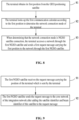
- a mobility management method when applied to a terminal side, includes the following steps.
- the terminal obtains its first position from the GEO positioning satellite.
- the GEO positioning satellite may be a satellite with a positioning service function, such as a GPS satellite, Galileo satellite, GLONASS satellite or Beidou satellite; and the terminal may obtain its own geographical position, which is called the first position here, through the positioning service of the positioning satellite.
- a positioning service function such as a GPS satellite, Galileo satellite, GLONASS satellite or Beidou satellite
- the terminal may obtain its own geographical position, which is called the first position here, through the positioning service of the positioning satellite.
- the terminal looks up the first communication calendar according to the first position to determine the network connection mode of the terminal.
- the first communication calendar includes the NGSO satellite ephemeris and/or the terrestrial communication calendar; the NGSO satellite ephemeris includes at least one of following: position of the NGSO satellite, trajectory of the NGSO satellite and connection capability of the NGSO satellite.
- the terrestrial communication calendar includes the connection capability and coverage area of the fixed access network and/or the mobile access network; and the network connection mode is the NGSO satellite connection, the fixed access network connection or the mobile access network connection.
- the terminal may look up the first communication calendar according to the first position where it resides to determine the candidate access networks at the first position. Specifically, the terminal may look up the NGSO satellite ephemeris according to the first position to determine the NGSO satellite that can be connected at the first position, and add the NGSO satellite to the candidate access networks as a candidate satellite access network (at this point, the candidate satellite access network is represented by this NGSO satellite); and the terminal may look up the terrestrial communication calendar according to the first position to select the fixed access network and/or the mobile access network whose coverage area includes the first position, and add the fixed access network and/or the mobile access network to the candidate access networks, so that one or more candidate access networks may be obtained. Then, first connection performance evaluation values of all the candidate access networks are determined, and the target access network is selected from the candidate access networks according to the first connection performance evaluation values.
- the first connection performance evaluation values of all the candidate access networks generated in advance may be recorded in the first communication calendar.
- the first connection performance evaluation values may be calculated in advance according to the first parameter combination, and the first connection performance evaluation values correspond to the geographical position.
- the terminal may look up the first communication calendar according to the first position, and then obtain the first connection performance evaluation values of all the candidate access networks.
- the first parameter combination includes at least one of following: the user preference for the access network, the signal quality corresponding to the candidate access network, the communication rate corresponding to the candidate access network, the communication delay corresponding to the candidate access network, and the communication reliability corresponding to the candidate access network.
- the candidate access network is the satellite access network
- the parameters such as the signal quality, communication rate, communication delay and communication reliability corresponding to the candidate access network are represented by the parameters such as the signal quality, communication rate, communication delay and communication reliability of the NGSO satellite representing the candidate access network.
- the parameters such as the signal quality, communication rate, communication delay and communication reliability corresponding to the candidate access network are represented by the parameters such as the signal quality, communication rate, communication delay and communication reliability of a base station corresponding to the mobile access network (or an access point corresponding to the fixed access network).
- the terminal calculate the first connection performance evaluation values of all the candidate access networks according to the first parameter combination.
- the calculation method of the connection performance evaluation value may refer to the description above and will not be repeated here.
- the second connection performance evaluation values of all the first candidate NGSO satellites are further determined, and the first NGSO satellite is selected according to the second connection performance evaluation values (that is, the first candidate NGSO satellite corresponding to the optimal second connection performance evaluation value is taken as the first NGSO satellite).
- the first candidate NGSO satellites are the NGSO satellites, connectable at the first position, that are determined by the terminal according to the NGSO satellite ephemeris.
- the method for determining the second connection performance evaluation values may be looking up, according to the first position, the second connection performance evaluation values of all the NGSO satellites recorded in advance in the first communication calendar, or calculating, by the terminal, the second connection performance evaluation values of all the first candidate NGSO satellites according to the second parameter combination.
- the second parameter combination includes at least one of following: the user preference for the access network, the signal quality corresponding to the first candidate NGSO satellite, communication rate corresponding to the first candidate NGSO satellite, communication delay corresponding to the first candidate NGSO satellite, and communication reliability corresponding to the first candidate NGSO satellite.
- the first parameter combination and the second parameter combination may be the same or different.
- the terminal accesses a network through the first NGSO satellite and sends a first request message carrying the first position to the network through the first NGSO satellite.
- the terminal when selecting the first NGSO satellite for access according to the second connection performance evaluation values, the terminal directly establishes the communication connection with the first NGSO satellite, so that various services are performed through the first NGSO satellite. In addition, the terminal also sends the first request message carrying the first position to the network through the first NGSO satellite, so as to request the core network to update the position of the terminal.
- the first request message is the initial communication request message for requesting to access for the first time.
- the core network may also complete registration of the terminal and other processes. Elaborations are omitted herein.
- the first request message is the connection update request message for requesting to update the network connection mode.
- the core network may also update the connection mode of the terminal, for example, establish an association relationship between the terminal and the first NGSO satellite and its beam direction. Elaborations are omitted herein.
- the embodiments of the present disclosure may simplify the process of establishing the communication connection between the terminal and the NGSO satellite, reduce signaling overhead, and realize the mobility management processes like updating the position of the terminal when the terminal initially accesses the network or updates the network access mode.
- whether the terminal is a trusted terminal may be verified through authentication and other processing between the terminal and the core network before S81 in the embodiments of the present disclosure.
- the terminal when accessing the integration network for the first time, the terminal performs authentication and identity recognition with the core network of the integration network.
- the core network may also maintain the NGSO satellite ephemeris and the historical access information of the terminal in the integration network. In this way, the core network may determine whether the terminal is a trusted terminal by performing authentication and identity recognition on the terminal and according to the historical access information of the terminal and whether the identifier and the beam identifier of the first NGSO satellite in the request message match the locally maintained NGSO satellite ephemeris. Only when the terminal is a trusted terminal, the core network of the integration network performs the operation of the position update of the terminal and provides services to the terminal.
- the terminal may also actively initiate the position update process.
- the terminal obtains its own position (called the second position here for ease of description) from the GEO positioning satellite.
- the terminal initiates the position update process. For example, if the distance between the second position and its own position obtained by the terminal from the GEO positioning satellite last time is greater than a preset distance, it may be determined that the second position satisfies the preset position update condition.
- the terminal determines third connection performance evaluation values of all second candidate NGSO satellites by querying the NGSO satellite ephemeris, and selects the second NGSO satellite with the optimal third connection performance evaluation value from the second candidate NGSO satellites according to the third connection performance evaluation values.
- the second candidate NGSO satellites are the NGSO satellites, connectable at the second position, that are determined by the terminal according to the NGSO satellite ephemeris. Then, the terminal accesses a network through the second NGSO satellite and sends the position update request message carrying the second position to the network.
- the terminal may obtain its second position periodically according to a certain preset first period, and compares the second position with its own position obtained in the last period to determine whether the second position satisfies the preset position update condition.
- the terminal may also periodically initiate the position update process according to a certain preset second period.
- the terminal may obtain its own position from the GEO positioning satellite, then determine the NGSO satellites that can be connected at the current position by querying the NGSO satellite ephemeris, select one NGSO satellite from them for access according to the connection performance evaluation values, and send the position update request message carrying its own position.
- the second period is greater than the first period.
- the NGSO satellite moves according to a preset trajectory, after it is determined that the network connection mode is the NGSO satellite connection, the NGSO satellite of the network accessed by the terminal may change, in this case, a satellite switching process will be triggered.
- the terminal may determine a switching time point of switching the NGSO satellite and a target NGSO satellite to be switched by querying the NGSO satellite ephemeris.
- the terminal may determine, according to the motion trajectory of the NGSO satellite, a time point at which the position of the terminal will move out of the coverage area of the NGSO satellite currently selected for access, take the time point as the switching time point, and reselect the NGSO satellite for access from the NGSO satellites that can be connected by the terminal at the switching time point as the target NGSO satellite to be switched.
- the target NGSO satellite may also be selected based on the connection performance evaluation values, that is, the connection performance evaluation values of all the NGSO satellites are calculated and the NGSO satellite with the optimal evaluation value is selected as the target NGSO satellite. In this way, when the switching time point arrives, the terminal directly switches to the target NGSO satellite, and sends the satellite switch request message carrying its current third position to the network through the target NGSO satellite.
- looking up, by the terminal according to the first position, the first communication calendar to determine the network connection mode of the terminal comprises: looking up, according to the first position, the first communication calendar to determine candidate access networks at the first position; determining first connection performance evaluation values of all the candidate access networks, and selecting a target access network according to the first connection performance evaluation values; when the target access network is the satellite access network, determining second connection performance evaluation values of all first candidate NGSO satellites, and selecting the first NGSO satellite according to the second connection performance evaluation values, wherein the first candidate NGSO satellites are NGSO satellites, connectable at the first position, that are determined by the terminal according to the NGSO satellite ephemeris.
- the operation of determining the first connection performance evaluation values of all the candidate access networks comprises: calculating the first connection performance evaluation values of all the candidate access networks according to a first parameter combination, wherein the first parameter combination comprises at least one of following: user preference for access network, signal quality corresponding to candidate access network, communication rate, corresponding to candidate access network communication delay corresponding to candidate access network, and communication reliability corresponding to candidate access network, wherein the operation of determining the second connection performance evaluation values of all the candidate NGSO satellites comprises: calculating the second connection performance evaluation values of all the candidate NGSO satellites according to a second parameter combination, wherein the second parameter combination comprises at least one of following: user preference for access network, signal quality corresponding to first candidate NGSO satellite, communication rate corresponding to first candidate NGSO satellite, communication delay corresponding to first candidate NGSO satellite, and communication reliability corresponding to first candidate NGSO satellite.
- the above satellite switching process does not require the terminal to measure any received satellite signal in real time, nor does it require the network side to control the switching process, but the terminal actively initiates and completes satellite switching by itself. Because no switching control is required on the network side, the signaling overhead of the switching process may be reduced, and the implementation of the switching process may be simplified.
- the mobility management method of the embodiments of the present disclosure is described above from the terminal side, and is further described below from the NGSO satellite side and the core network side.
- the mobility management method of the embodiments of the present disclosure when applied to the first NGSO satellite in the integration network, may include the following steps.
- the first NGSO satellite receives the request message carrying the position of the terminal which is sent by the terminal.
- the request message may specifically be any one of the following messages: the initial communication request message for requesting to access for the first time, the connection update request message for requesting to update the network connection mode, the position update request message for requesting to perform the position update, and the satellite switch request message for requesting to switch the NGSO satellite.
- the first NGSO satellite sends the request message to the core network of the integration network after adding the satellite identifier and beam identifier of this satellite to the request message.
- the NGSO satellite may send the request message to the core network after adding the satellite identifier, the beam direction and other information to the request message.
- the core network may perform the operation of position update according to the request message, so as to update the cell and/or TA corresponding to the terminal, and maintain the association relationship among the terminal, the cell and/or TA corresponding to the terminal, the satellite identifier and beam identifier of the first NGSO satellite providing access to the terminal.
- the mobility management method of the embodiments of the present disclosure when applied to the core network of the integration network, may include the following steps.
- the core network receives the request message sent by the first NGSO satellite, the request message carrying the position of the terminal, and the identifier and beam identifier of the first NGSO satellite.
- the request message may specifically be any of the following messages: the initial communication request message for requesting to access for the first time, the connection update request message for requesting to update the network connection mode, the position update request message for requesting to perform position update, and the satellite switch request message for requesting to switch the NGSO satellite.
- the position update for the terminal is performed according to the position of the terminal, and the identifier and beam identifier of the first NGSO satellite carried in the request message.
- the core network may perform the operation of position update according to the request message, so as to update the cell and/or TA corresponding to the terminal according to the position of the terminal carried in the request message, and maintain the association relationship among the terminal, the cell and/or TA corresponding to the terminal, the satellite identifier and beam identifier of the first NGSO satellite providing access to the terminal.
- the core network may also update the information of the NGSO satellite accessed by the terminal according to the identifier and beam identifier of the first NGSO satellite carried in the satellite switch request message.
- the terminal position update process on the core network side can be realized, so that the core network can provide services to the terminal according to the updated position.
- the core network only needs to receive the request message sent by the NGSO satellite and update the position according to the request message without the need to control the access or switching process of the terminal, thereby simplifying the implementation of the position update process and reducing the signaling overhead.
- the core network only when the terminal is a trusted terminal, the core network performs the operation of updating the position of the terminal and provides services to the terminal.
- the core network may perform authentication and identity recognition on the terminal, and may determine whether the terminal is a trusted terminal according to whether the authentication and identity recognition of the terminal are successfully passed.
- the core network also maintains the NGSO satellite ephemeris.
- the core network may perform authentication and identity recognition on the terminal, and match the identifier and the beam identifier of the first NGSO satellite in the request message with the locally maintained NGSO satellite ephemeris to obtain a match result.
- the core network determines that whether the terminal is a trusted terminal, otherwise, the core network determines that the terminal is not a trusted terminal.
- the core network also maintains the NGSO satellite ephemeris and the historical access information of each terminal in the integration network.
- the core network may also perform authentication and identity recognition on the terminal and match the identifier and the beam identifier of the first NGSO satellite in the request message with the locally maintained NGSO satellite ephemeris to obtain a match result, and judge whether the access of the terminal is normal according to the historical access information of the terminal, and obtain a judgment result. Then, when the authentication and identity recognition of the terminal are passed, the matching result is successful matching, and the access of the terminal is normal, the core network determines that whether the terminal is a trusted terminal, otherwise, the core network determines that the terminal is not a trusted terminal.
- Judging whether the access of the terminal is normal according to the historical access information of the terminal may specifically be judging whether a user access position is abnormal.
- the core network records a position area where the user accesses normally, so as to make judgment based on it; of course, the core network may also make judgment in other ways, which is not specifically limited by the embodiments of the present disclosure.
- the above method may be implemented by one network element on the core network side or by different network elements, which is not specifically limited by the embodiments of the present disclosure.
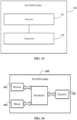
- a terminal 110 which may include: a processor 111 and a transceiver 112.
- the processor 111 is configured to obtain the first position of the terminal from the GEO positioning satellite, and look up the first communication calendar according to the first position to determine the network connection mode of the terminal, the first communication calendar including the NGSO satellite ephemeris and/or the terrestrial communication calendar
- the NGSO satellite ephemeris includes at least one of position, trajectory and connection capability of the NGSO satellite;
- the terrestrial communication calendar includes the connection capability and coverage area of the fixed access network and/or the mobile access network;
- the network connection mode is the NGSO satellite connection, the fixed access network connection or the mobile access network connection.
- the transceiver 112 is configured to, when determining that the network connection mode is NGSO satellite connection, access a network through the first NGSO satellite and send the first request message carrying the first position to the network through the first NGSO satellite.
- the access networks of the integration network include the satellite access network and the terrestrial access network, the satellite access network includes a plurality of NGSO satellites, and the terrestrial access network includes the fixed access network and/or the mobile access network.
- the processor when looking up the first communication calendar, according to the first position to determine the network connection mode of the terminal, is further configured to: look up the first communication calendar according to the first position to determine the candidate access networks at the first position; determine the first connection performance evaluation values of all the candidate access networks, and select the target access network according to the first connection performance evaluation values; and when the target access network is the satellite access network, determine the second connection performance evaluation values of all the first candidate NGSO satellites, and select the first NGSO satellite according to the second connection performance evaluation values.
- the first candidate NGSO satellites are the NGSO satellites, connectable at the first position, that are determined by the terminal according to the NGSO satellite ephemeris.
- connection capability includes at least one of following: signal quality, communication rate, communication delay, and communication reliability.
- the processor is further configured to: calculate the first connection performance evaluation values of all the candidate access networks according to the first parameter combination.
- the first parameter combination includes at least one of following: user preference for the access network, signal quality corresponding to the candidate access network, communication rate corresponding to the candidate access network, communication delay corresponding to the candidate access network, and communication reliability corresponding to the candidate access network.
- the processor when determining the second connection performance evaluation values of all the candidate NGSO satellites, is further configured to: calculate the second connection performance evaluation values of all the candidate NGSO satellites according to the second parameter combination.
- the second parameter combination includes at least one of following: user preference for the access network, signal quality corresponding to the first candidate NGSO satellite, communication rate corresponding to the first candidate NGSO satellite, communication delay corresponding to the first candidate NGSO satellite, and communication reliability corresponding to the first candidate NGSO satellite.
- the processor when looking up the first communication calendar according to the first position to determine the candidate access networks at the first position, is further configured to: look up the NGSO satellite ephemeris according to the first position to determine the NGSO satellites that are connectable at the first position, and add them to the candidate access networks as a candidate satellite access network; and look up the terrestrial communication calendar according to the first position to select the fixed access network and/or the mobile access network whose coverage area includes the first position, and add the same to the candidate access networks.
- the processor is further configured to: after determining that the network connection mode is the NGSO satellite connection, obtain the second position of the terminal from the GEO positioning satellite; when the second position satisfies the preset position update condition, determine the third connection performance evaluation values of all second candidate NGSO satellites by querying the NGSO satellite ephemeris, and select the second NGSO satellite according to the third connection performance evaluation values.
- the second candidate NGSO satellites are the NGSO satellites, connectable at the second position, that are determined by the terminal according to the NGSO satellite ephemeris.
- the transceiver is further configured to access the network through the second NGSO satellite and send the position update request message carrying the second position to the network.
- the processor is further configured to determine, after determining that the network connection mode is the NGSO satellite connection, the switching time point of switching the NGSO satellite and the target NGSO satellite to be switched by querying the NGSO satellite ephemeris.
- the transceiver is further configured for the terminal to directly switch to the target NGSO satellite when the switching time point arrives and send the satellite switch request message carrying a current third position of the terminal to the network through the target NGSO satellite.
- the first request message is the initial communication request message for requesting to access for the first time.
- the first request message is a connection update request message for requesting to update the network connection mode.
- the processor is further configured for the terminal, when accessing the integration network for the first time, to perform authentication and identity recognition with the core network of the integration network to determine whether the terminal is a trusted terminal. Only when the terminal is a trusted terminal, the core network of the integration network performs the operation of position update of the terminal and provides services to the terminal.
- the device in the present embodiment is the device corresponding to the method shown in FIG. 8 , and the implementation modes in the above embodiments are applicable to the embodiment of the device, and can achieve the same technical effect.
- the device provided by the embodiments of the present disclosure can implement all the steps implemented in the above embodiments of the method, and can achieve the same technical effect. The same parts and beneficial effects in the present embodiment as in the embodiments of the method will not be described in detail here.
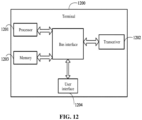
- FIG. 12 shows a structural schematic diagram of a terminal provided by the embodiments of the present disclosure.
- the terminal 1200 may include: a processor 1201, a transceiver 1202, a memory 1203, a user interface 1204 and a bus interface.
- the terminal 1200 may also include: a program stored in the memory 1203 and capable of running in the processor 1201.
- the processor 1201 implements the following steps when executing the program.
- the processor when executing the program, the processor also implements the following steps.
- the first position of the terminal is obtained from the GEO positioning satellite.
- the first communication calendar is looked up to determine the network connection mode of the terminal, the first communication calendar including the NGSO satellite ephemeris and/or the terrestrial communication calendar.
- the network connection mode is NGSO satellite connection
- the network is accessed through the first NGSO satellite, and the first request message carrying the first position is sent to the network through the first NGSO satellite.
- the NGSO satellite ephemeris includes at least one of position of the NGSO satellite, trajectory of the NGSO satellite and connection capability of the NGSO satellite;
- the terrestrial communication calendar includes the connection capability and coverage area of the fixed access network and/or the mobile access network;
- the network connection mode is the NGSO satellite connection, the fixed access network connection or the mobile access network connection.
- the computer program when executed by the processor 1201, the computer program can implement each process of the embodiment of the mobility management method shown in FIG. 8 , and can achieve the same technical effect. For avoiding repetitions, elaborations are omitted herein.
- a bus architecture may consist of any number of interconnected buses and bridges which are linked together by various circuits of one or more processors represented by the processor 1201 and memories represented by the memory 1203.
- the bus architecture may also link various other circuits together, such as peripheral devices, voltage regulators, and power management circuits, which are well known in the field and therefore are not described further here.
- the bus interface provides the interface.
- the transceiver 1202 may be multiple components, that is, includes a transmitter and a receiver, which provide a unit for communicating with a variety of other devices on a transmission medium.
- a user interface 1204 may also be used to connect externally and internally required devices.
- the connected devices include, but are not limited to, keypads, monitors, speakers, microphones, joysticks, etc.
- the processor 1201 is responsible for managing the bus architecture and general processing, and the memory 1203 may store the data used by the processor 1201 to perform operations.
- the terminal in the present embodiment is the terminal corresponding to the method shown in FIG. 8 , and the implementation modes in the above embodiments are applicable to the embodiment of the terminal, and can achieve the same technical effect.
- the transceiver 1202 and the memory 1203, as well as the transceiver 1202 and the processor 1201 can be in communicate connection through the bus interface, the functions of the processor 1201 can also be implemented by the transceiver 1202, and the functions of the transceiver 1202 can also be implemented by the processor 1201.
- the terminal provided by the embodiments of the present disclosure can implement all the steps implemented in the above embodiments of the method, and can achieve the same technical effect. The same parts and beneficial effects in the present embodiment as in the embodiments of the method will not be described in detail here.
- a computer-readable storage medium in which a program is stored. When executed by the processor, the program implements the following steps.
- the first position of the terminal is obtained from the GEO positioning satellite.
- the terminal looks up the first communication calendar to determine the network connection mode of the terminal, the first communication calendar including the NGSO satellite ephemeris and/or the terrestrial communication calendar.
- the network connection mode is NGSO satellite connection
- the network is accessed through the first NGSO satellite, and the first request message carrying the first position is sent to the network through the first NGSO satellite.
- the NGSO satellite ephemeris includes at least one of position of the NGSO satellite, trajectory of the NGSO satellite and connection capability of the NGSO satellite;
- the terrestrial communication calendar includes the connection capability and coverage area of the fixed access network and/or the mobile access network;
- the network connection mode is the NGSO satellite connection, the fixed access network connection or the mobile access network connection.
- the program When executed by the processor, the program can implement all implementation modes in the mobility management method applied to the terminal side, and can achieve the same technical effect. For avoiding repetitions, elaborations are omitted herein.
- the embodiments of the present disclosure provide the first NGSO satellite 130 shown in FIG. 13 , which is not covered by the claims.
- the first NGSO satellite 130 may include: a transceiver 132 and a processor 131.
- the transceiver 132 is configured to receive the request message carrying the first position of the terminal which is sent by the terminal.
- the processor 131 is configured to send the request message to the core network of the integration network after adding the satellite identifier and beam identifier of this satellite to the request message
- the access networks of the integration network include the satellite access network and the terrestrial access network, and the satellite access network includes a plurality of NGSO satellites.
- the terrestrial access network includes the fixed access network and/or the mobile access network.
- the request message is any one of the following messages: the initial communication request message for requesting to access for the first time, the connection update request message for requesting to update the network connection mode, the position update request message for requesting to perform position update; and the satellite switch request message for requesting to switch the NGSO satellite.
- the device in the present embodiment is the device corresponding to the method shown in FIG. 9 , and the implementation modes in the above embodiments are applicable to the embodiment of the device, and can achieve the same technical effect. It is to be noted that, the device provided by the embodiments of the present disclosure can implement all the steps implemented in the above embodiments of the method, and can achieve the same technical effect. The same parts and beneficial effects in the present embodiment as in the embodiments of the method will not be described in detail here.
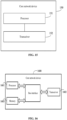
- the first NGSO satellite 1400 may include: a processor 1401, a transceiver 1402, a memory 1403 and a bus interface.
- the first NGSO satellite 1400 may also include: a program stored in the memory 1403 and capable of running in the processor 1401. When executed by the processor 1401, the program implements the following steps.
- the request message carrying the first position of the terminal which is sent by the terminal is received.
- the request message After adding the satellite identifier and beam identifier of this satellite to the request message, the request message is sent to the core network of the integration network.
- the computer program when executed by the processor 1401, the computer program can implement each process of the embodiment of the mobility management method shown in FIG. 9 , and can achieve the same technical effect. For avoiding repetitions, elaborations are omitted herein.
- a bus architecture may consist of any number of interconnected buses and bridges which are linked together by various circuits of one or more processors represented by the processor 1401 and memories represented by the memory 1403.
- the bus architecture may also link various other circuits together, such as peripheral devices, voltage regulators, and power management circuits, which are well known in the field and therefore are not described further here.
- the bus interface provides the interface.
- the transceiver 1402 may be multiple components, that is, includes a transmitter and a receiver, which provide a unit for communicating with a variety of other devices on a transmission medium.
- the processor 1401 is responsible for managing the bus architecture and general processing, and the memory 1403 may store the data used by the processor 1401 to perform operations.
- the first NGSO satellite in the present embodiment is the NGSO satellite corresponding to the method shown in FIG. 9 , and the implementation modes in the above embodiments are applicable to the embodiment of the NGSO satellite, and can achieve the same technical effect.
- the transceiver 1402 and the memory 1403, as well as the transceiver 1402 and the processor 1401 can be in communicate connection through the bus interface, the functions of the processor 1401 can also be implemented by the transceiver 1402, and the functions of the transceiver 1402 can also be implemented by the processor 1401.
- the NGSO satellite provided by the embodiments of the present disclosure can implement all the steps implemented in the above embodiments of the method, and can achieve the same technical effect. The same parts and beneficial effects in the present embodiment as in the embodiments of the method will not be described in detail here.
- a computer-readable storage medium in which a program is stored. When executed by the processor, the program implements the following steps.
- the request message carrying the first position of the terminal which is sent by the terminal is received.
- the request message After adding the satellite identifier and beam identifier of this satellite to the request message, the request message is sent to the core network of the integration network.
- the program When executed by the processor, the program can implement all implementation modes in the mobility management method applied to the first NGSO satellite side, and can achieve the same technical effect. For avoiding repetitions, elaborations are omitted herein.
- the embodiments of the present disclosure provide a core network device 150 shown in FIG. 15 , which is not covered by the claims.
- the core network device 150 may include: a transceiver 152 and a processor 151.
- the transceiver 152 is configured to receive the request message sent by the first NGSO satellite, the request message carrying the position of the terminal, and the identifier and beam identifier of the first NGSO satellite.
- the processor 151 is configured to perform, in a case that the terminal is a trusted terminal, position update for the terminal according to the position of the terminal, and the identifier and beam identifier of the first NGSO satellite carried in the request message.
- the access networks of the integration network include the satellite access network and the terrestrial access network, and the satellite access network includes a plurality of NGSO satellites.
- the terrestrial access network includes the fixed access network and/or the mobile access network.
- the processor is further configured to update, when the request message is the satellite switch request message, the information of the NGSO satellite accessed by the terminal according to the identifier and beam identifier of the first NGSO satellite carried in the satellite switch request message
- the processor is further configured to update the cell and/or TA corresponding to the terminal and maintain the association relationship among the terminal, the cell and/or TA, the identifier and beam identifier of the first NGSO satellite according to the position of the terminal carried in the request message
- the processor is further configured to determine whether the terminal is a trusted terminal by performing authentication and identity recognition for the terminal and according to the historical access information of the terminal and whether the identifier and beam identifier of the first NGSO satellite in the request message match the locally maintained NGSO satellite ephemeris.
- the core network Only when the terminal is a trusted terminal, the core network performs the operation of position update for the terminal and provides services to the terminal.
- the device in the present embodiment is the device corresponding to the method shown in FIG. 10 , and the implementation modes in the above embodiments are applicable to the embodiment of the device, and can achieve the same technical effect. It is to be noted that the device provided by the embodiments of the present disclosure can implement all the steps implemented in the above embodiments of the method, and can achieve the same technical effect. The same parts and beneficial effects in the present embodiment as in the embodiments of the method will not be described in detail here.
- the core network device 1600 may include: a processor 1601, a transceiver 1602, a memory 1603 and a bus interface.
- the request message sent by the first NGSO satellite is received, the request message carrying the position of the terminal, the identifier and beam identifier of the first NGSO satellite.
- position update for the terminal is performed according to the position of the terminal, the identifier and beam identifier of the first NGSO satellite carried in the request message.
- a bus architecture may consist of any number of interconnected buses and bridges which are linked together by various circuits of one or more processors represented by the processor 1601 and memories represented by the memory 1603.
- the bus architecture may also link various other circuits together, such as peripheral devices, voltage regulators, and power management circuits, which are well known in the field and therefore are not described further here.
- the bus interface provides the interface.
- the transceiver 1602 may be multiple components, that is, includes a transmitter and a receiver, which provide a unit for communicating with a variety of other devices on a transmission medium.
- the processor 1601 is responsible for managing the bus architecture and general processing, and the memory 1603 may store the data used by the processor 1601 to perform operations.
- the core network device in the present embodiment is the core network corresponding to the method shown in FIG. 10 , and the implementation modes in the above embodiments are applicable to the embodiment of the core network device, and can achieve the same technical effect.
- the transceiver 1602 and the memory 1603, as well as the transceiver 1602 and the processor 1601 can be in communicate connection through the bus interface, the functions of the processor 1601 can also be implemented by the transceiver 1602, and the functions of the transceiver 1602 can also be implemented by the processor 1601.
- the core network device provided by the embodiments of the present disclosure can implement all the steps implemented in the above embodiments of the method, and can achieve the same technical effect. The same parts and beneficial effects in the present embodiment as in the embodiments of the method will not be described in detail here.
- a computer-readable storage medium in which a program is stored. When executed by the processor, the program implements the following steps.
- the request message sent by the first NGSO satellite is received, the request message carrying the position of the terminal, the identifier and beam identifier of the first NGSO satellite.
- the program When executed by the processor, the program can implement all implementation modes in the mobility management method applied to the core network side, and can achieve the same technical effect. For avoiding repetitions, elaborations are omitted herein.
- the units described as separate parts may or may not be physically separated, and parts displayed as units may or may not be physical units, and namely may be located in the same place, or may also be distributed to multiple network units. Part or all of the units may be selected to achieve the purpose of the solutions in the embodiments of the present disclosure according to a practical requirement.
- each functional unit in each embodiment of the present disclosure may be integrated into a processing unit, each unit may also physically exist independently, and two or more than two units may also be integrated into a unit.
- the program may be stored in a computer readable storage medium.
- the computer program may include the flows in the embodiments of the method.
- the storage medium may be a magnetic disk, a compact disc, an ROM, or an RAM.
- the technology described in the embodiments of the present disclosure can be implemented through modules (such as procedures and functions) that perform the functions described in the embodiments of the disclosure.
- a software code can be stored in the memory and executed by the processor.
- the memory can be implemented in or outside the processor.
Landscapes
- Engineering & Computer Science (AREA)
- Computer Networks & Wireless Communication (AREA)
- Signal Processing (AREA)
- Physics & Mathematics (AREA)
- Astronomy & Astrophysics (AREA)
- Aviation & Aerospace Engineering (AREA)
- General Physics & Mathematics (AREA)
- Computer Security & Cryptography (AREA)
- Mobile Radio Communication Systems (AREA)
Claims (6)
- Mobilitätsmanagementverfahren, durchgeführt durch ein Endgerät in einem Integrationsnetzwerk, wobei Zugangsnetzwerke des Integrationsnetzwerks ein Satellitenzugangsnetzwerk und ein terrestrisches Zugangsnetzwerk umfassen, wobei das Satellitenzugangsnetzwerk eine Vielzahl von Satelliten mit nicht-geostationärer Umlaufbahn (Non-Geostationary Orbit, NGSO) umfasst, und das Verfahren Folgendes umfasst:Erhalten (81) einer ersten Position des Endgeräts von einem Ortungssatelliten mit geosynchroner Erdumlaufbahn (Geo-synchronous Earth Orbit, GEO);Nachschlagen (82), gemäß der ersten Position, eines ersten Kommunikationskalenders, um einen Netzwerkverbindungsmodus des Endgeräts zu bestimmen, wobei der erste Kommunikationskalender eine NGSO-Satelliten-Ephemeride und/oder einen terrestrischen Kommunikationskalender umfasst, wobei der terrestrische Kommunikationskalender eine Verbindungsfähigkeit und einen Abdeckungsbereich des festen Zugangsnetzwerks und/oder eine Verbindungsfähigkeit und einen Abdeckungsbereich des mobilen Zugangsnetzwerks umfasst;wenn bestimmt wird, dass der Netzwerkverbindungsmodus NGSO-Satellitenverbindung ist, Zugreifen (83) auf ein Netzwerk durch einen ersten NGSO-Satelliten und Senden, durch das Endgerät, einer ersten Anforderungsnachricht, die die erste Position trägt, an das Netzwerk durch den ersten NGSO-Satelliten,dadurch gekennzeichnet, dass das Nachschlagen, gemäß der ersten Position, des ersten Kommunikationskalenders, um den Netzwerkverbindungsmodus des Endgeräts zu bestimmen, Folgendes umfasst:Nachschlagen, gemäß der ersten Position, des ersten Kommunikationskalenders, um Kandidatenzugangsnetzwerke an der ersten Position zu bestimmen;Bestimmen von ersten Verbindungsleistungsbewertungswerten von allen der Kandidatenzugangsnetzwerke, und Auswählen eines Zielzugangsnetzwerks gemäß den ersten Verbindungsleistungsbewertungswerten;wenn das Zielzugangsnetzwerk das Satellitenzugangsnetzwerk ist, Bestimmen von zweiten Verbindungsleistungsbewertungswerten von allen ersten Kandidaten-NGSO-Satelliten, und Auswählen des ersten NGSO-Satelliten gemäß den zweiten Verbindungsleistungsbewertungswerten, wobei die ersten Kandidaten-NGSO-Satelliten NGSO-Satelliten sind, die an der ersten Position verbunden werden können, die durch das Endgerät gemäß der NGSO-Satelliten-Ephemeriden bestimmt werden,wobei der Vorgang des Bestimmens der ersten Verbindungsleistungsbewertungswerte von allen der Kandidatenzugangsnetzwerke Folgendes umfasst:Berechnen der ersten Verbindungsleistungsbewertungswerte von allen der Kandidatenzugangsnetzwerke gemäß einer ersten Parameterkombination, wobei die erste Parameterkombination mindestens eines aus dem Folgenden umfasst: Nutzerpräferenz für Zugangsnetzwerk, Signalqualität entsprechend dem Kandidatenzugangsnetzwerk, Kommunikationsrate entsprechend der Kandidatenzugangsnetzwerk-Kommunikationsverzögerung entsprechend dem Kandidatenzugangsnetzwerk und Kommunikationszuverlässigkeit entsprechend dem Kandidatenzugangsnetzwerk,wobei der Vorgang des Bestimmens der zweiten Verbindungsleistungsbewertungswerte von allen der Kandidaten-NGSO-Satelliten Folgendes umfasst:
Berechnen der zweiten Verbindungsleistungsbewertungswerte von allen der Kandidaten-NGSO-Satelliten gemäß einer zweiten Parameterkombination, wobei die zweite Parameterkombination mindestens eines aus dem Folgenden umfasst: Nutzerpräferenz für Zugangsnetzwerk, Signalqualität entsprechend dem ersten Kandidaten-NGSO-Satelliten, Kommunikationsrate entsprechend dem ersten Kandidaten-NGSO-Satelliten, Kommunikationsverzögerung entsprechend dem ersten Kandidaten-NGSO-Satelliten, und Kommunikationszuverlässigkeit entsprechend dem ersten Kandidaten-NGSO-Satelliten. - Verfahren nach Anspruch 1, wobei das terrestrische Zugangsnetzwerk ein festes Zugangsnetzwerk und/oder ein mobiles Zugangsnetzwerk umfasst; die NGSO-Satelliten-Ephemeride mindestens eines aus Position des NGSO-Satelliten, Flugbahn des NGSO-Satelliten und Verbindungsfähigkeit des NGSO-Satelliten umfasst, und die Verbindungsfähigkeit mindestens eines aus Signalqualität, Kommunikationsrate, Kommunikationsverzögerung und Kommunikationszuverlässigkeit umfasst; und der Netzwerkverbindungsmodus NGSO-Satellitenverbindung, feste Zugangsnetzwerkverbindung oder mobile Zugangsnetzwerkverbindung ist.
- Verfahren nach Anspruch 1, wobei nach dem Bestimmen, dass der Netzwerkverbindungsmodus die NGSO-Satellitenverbindung ist, das Verfahren ferner Folgendes umfasst:Erhalten einer zweiten Position des Endgeräts von dem GEO-Ortungssatelliten;wenn die zweite Position einen voreingestellten Positionsaktualisierungszustand erfüllt, Bestimmen von dritten Verbindungsleistungsbewertungswerten von allen zweiten Kandidaten-NGSO-Satelliten durch Abfragen der NGSO-Satelliten-Ephemeride, und Auswählen des zweiten NGSO-Satelliten gemäß den dritten Verbindungsleistungsbewertungswerten, wobei die zweiten Kandidaten-NGSO-Satelliten NGSO-Satelliten sind, die an der zweiten Position verbunden werden können, die durch das Endgerät gemäß der NGSO-Satelliten-Ephemeride bestimmt werden; undZugreifen auf ein Netzwerk durch den zweiten NGSO-Satelliten und Senden einer Positionsaktualisierungsanforderungsnachricht, die die zweite Position trägt, an das Netzwerk.
- Verfahren nach Anspruch 1, wobei nach dem Bestimmen, dass der Netzwerkverbindungsmodus die NGSO-Satellitenverbindung ist, das Verfahren ferner Folgendes umfasst:Bestimmen eines Umschaltzeitpunkts des Umschaltens des NGSO-Satelliten und eines Ziel-NGSO-Satelliten, der umgeschaltet werden soll, durch Abfragen der NGSO-Satelliten-Ephemeride; und,wenn der Umschaltzeitpunkt gekommen ist, direktes Umschalten, zu dem Ziel-NGSO-Satelliten, und Senden einer Satellitenumschaltanforderungsnachricht, die eine aktuelle dritte Position des Endgeräts trägt, an das Netzwerk durch den Ziel-NGSO-Satelliten.
- Verfahren nach Anspruch 1, wobei, wenn das Endgerät zum ersten Mal auf das Integrationsnetzwerk zugreift, das Verfahren ferner Folgendes umfasst:
Durchführen einer Authentifizierung und Identitätserkennung mit einem Kernnetzwerk des Integrationsnetzwerks, um zu bestimmen, ob das Endgerät ein vertrauenswürdiges Endgerät ist; wobei, nur wenn das Endgerät ein vertrauenswürdiges Endgerät ist, das Kernnetzwerk des Integrationsnetzwerks einen Vorgang einer Positionsaktualisierung des Endgeräts durchführt und Dienste für das Endgerät bereitstellt. - Endgerät, umfassend: einen Prozessor, einen Speicher und ein Programm, das in dem Speicher gespeichert wird und in der Lage ist, im Prozessor ausgeführt zu werden, wobei, wenn das Programm durch den Prozessor ausgeführt wird, das Endgerät konfiguriert ist, um die Schritte des Mobilitätsmanagementverfahrens nach einem der Ansprüche 1 bis 5 zu implementieren.
Applications Claiming Priority (2)
| Application Number | Priority Date | Filing Date | Title |
|---|---|---|---|
| CN202010641749.XA CN113973313B (zh) | 2020-07-06 | 2020-07-06 | 移动性管理方法及设备 |
| PCT/CN2021/104260 WO2022007716A1 (zh) | 2020-07-06 | 2021-07-02 | 移动性管理方法及设备 |
Publications (3)
| Publication Number | Publication Date |
|---|---|
| EP4167624A1 EP4167624A1 (de) | 2023-04-19 |
| EP4167624A4 EP4167624A4 (de) | 2023-12-27 |
| EP4167624B1 true EP4167624B1 (de) | 2024-11-20 |
Family
ID=79553535
Family Applications (1)
| Application Number | Title | Priority Date | Filing Date |
|---|---|---|---|
| EP21836880.1A Active EP4167624B1 (de) | 2020-07-06 | 2021-07-02 | Mobilitätsverwaltungsverfahren und -vorrichtung |
Country Status (5)
| Country | Link |
|---|---|
| US (1) | US20230261739A1 (de) |
| EP (1) | EP4167624B1 (de) |
| JP (1) | JP7474878B2 (de) |
| CN (1) | CN113973313B (de) |
| WO (1) | WO2022007716A1 (de) |
Families Citing this family (12)
| Publication number | Priority date | Publication date | Assignee | Title |
|---|---|---|---|---|
| US12225456B2 (en) * | 2020-03-04 | 2025-02-11 | Lg Electronics Inc. | Method and apparatus for cell selection in wireless communication system |
| JP7773623B2 (ja) * | 2021-08-20 | 2025-11-19 | ヴィアサット,インコーポレイテッド | 低軌道衛星の追跡 |
| CN117081639A (zh) * | 2022-05-09 | 2023-11-17 | 中国移动通信有限公司研究院 | 通信方法、装置、相关设备及存储介质 |
| WO2023216259A1 (zh) * | 2022-05-13 | 2023-11-16 | 北京小米移动软件有限公司 | 卫星覆盖信息确定方法、装置、通信设备和存储介质 |
| US20250350913A1 (en) * | 2022-06-01 | 2025-11-13 | Andrew Kahler | System and method for managing emergency communications |
| CN117439852A (zh) * | 2022-07-15 | 2024-01-23 | 中国移动通信有限公司研究院 | 一种网络能力开放方法、装置及网络设备 |
| CN115396007B (zh) * | 2022-08-10 | 2023-10-13 | 中国联合网络通信集团有限公司 | 网络接入方法、网络接入装置、车载网关、车辆及介质 |
| CN115396011B (zh) * | 2022-08-23 | 2024-12-20 | 湖北星纪魅族科技有限公司 | 卫星通信中的切换方法、通信装置、介质及电子设备 |
| WO2024098308A1 (zh) * | 2022-11-09 | 2024-05-16 | 北京小米移动软件有限公司 | 一种确定定位卫星的方法及装置 |
| CN116346198B (zh) * | 2023-03-01 | 2025-07-29 | 西安电子科技大学 | 一种基于预先交互的卫星网络移动性管理方法 |
| CN117119454B (zh) * | 2023-10-24 | 2024-01-19 | 北京盛安同力科技开发有限公司 | 一种终端异构网络中的终端通信方法 |
| JP7689254B1 (ja) * | 2025-01-21 | 2025-06-05 | Kddi株式会社 | 情報処理装置 |
Family Cites Families (12)
| Publication number | Priority date | Publication date | Assignee | Title |
|---|---|---|---|---|
| JPH1117606A (ja) * | 1997-06-26 | 1999-01-22 | Toyota Motor Corp | 車両用データ通信装置 |
| US11483877B2 (en) * | 2015-06-17 | 2022-10-25 | Hughes Network Systems, Llc | Approaches for high speed global packet data services for LEO/MEO satellite systems |
| WO2017052711A2 (en) * | 2015-07-24 | 2017-03-30 | Qualcomm Incorporated | Satellite communication location reporting and paging |
| CN108390713B (zh) * | 2018-02-08 | 2020-09-04 | 北京邮电大学 | 低轨道卫星通信网络的移动通信方法及系统 |
| CN112400343B (zh) * | 2018-07-13 | 2022-01-14 | 华为技术有限公司 | 一种选择nsa和sa组网方式的方法和终端设备 |
| US10763954B2 (en) * | 2018-07-23 | 2020-09-01 | Hughes Network Systems, Llc | Precise beam forming based on user equipment location |
| CN110913472B (zh) * | 2018-09-18 | 2021-04-09 | 电信科学技术研究院有限公司 | 定位管理方法、装置、5g无线接入网节点及核心网节点 |
| CN110972257B (zh) * | 2018-09-29 | 2021-06-08 | 华为技术有限公司 | 通信方法、相关设备及计算机存储介质 |
| CN111106865B (zh) * | 2018-10-25 | 2021-12-14 | 华为技术有限公司 | 基于卫星网络的通信方法、装置及系统 |
| CN111182658B (zh) * | 2018-11-12 | 2023-04-07 | 华为技术有限公司 | 一种卫星通信的方法、装置及系统 |
| US11165491B2 (en) * | 2018-12-31 | 2021-11-02 | Hughes Network Systems, Llc | Location management for satellite systems |
| CN110636609A (zh) * | 2019-10-23 | 2019-12-31 | 广州爱浦路网络技术有限公司 | 基于卫星网络终端寻呼优化的方法 |
-
2020
- 2020-07-06 CN CN202010641749.XA patent/CN113973313B/zh active Active
-
2021
- 2021-07-02 WO PCT/CN2021/104260 patent/WO2022007716A1/zh not_active Ceased
- 2021-07-02 US US18/004,055 patent/US20230261739A1/en active Pending
- 2021-07-02 EP EP21836880.1A patent/EP4167624B1/de active Active
- 2021-07-02 JP JP2022581600A patent/JP7474878B2/ja active Active
Also Published As
| Publication number | Publication date |
|---|---|
| CN113973313B (zh) | 2024-04-09 |
| US20230261739A1 (en) | 2023-08-17 |
| EP4167624A1 (de) | 2023-04-19 |
| CN113973313A (zh) | 2022-01-25 |
| EP4167624A4 (de) | 2023-12-27 |
| JP2023532553A (ja) | 2023-07-28 |
| JP7474878B2 (ja) | 2024-04-25 |
| WO2022007716A1 (zh) | 2022-01-13 |
Similar Documents
| Publication | Publication Date | Title |
|---|---|---|
| EP4167624B1 (de) | Mobilitätsverwaltungsverfahren und -vorrichtung | |
| WO2022270258A1 (en) | Method of access and mobility management function (amf) apparatus, method of user equipment (ue), method of network slice admission control function (nsacf) apparatus, method of radio access network (ran) node, method of policy control function (pcf) apparatus, amf apparatus, ue, nsacf apparatus, ran node and pcf apparatus | |
| WO2023032530A1 (en) | Method of gnb-du apparatus, method of gnb-cu-cp apparatus, method of amf apparatus, method of ue, method of first gnb-cu-up apparatus, method of smf apparatus, gnb-du apparatus, gnb-cu-cp apparatus, amf apparatus, ue, first gnb-cu-up apparatus and smf apparatus | |
| WO2023032528A1 (en) | METHOD OF gNB-DU APPARATUS, METHOD OF gNB-CU-UP APPARATUS, METHOD OF AMF APPARATUS, METHOD OF FIRST gNB-CU-CP APPARATUS, gNB-DU APPARATUS, gNB-CU-UP APPARATUS, AMF APPARATUS AND FIRST gNB-CU-CP APPARATUS | |
| WO2022270386A1 (en) | Method of first access and mobility management function (amf) apparatus, method of user equipment (ue), first access and mobility management function (amf) apparatus, and user equipment (ue) | |
| EP4057691A1 (de) | Verfahren und vorrichtung zum senden von nachrichten, verfahren und vorrichtung zum empfangen von nachrichten sowie vorrichtung und speichermedium | |
| WO2023286779A1 (en) | Method performed by radio terminal and radio terminal | |
| WO2024162185A1 (en) | Access and mobility management function, amf, shared radio access network, ran, and method | |
| WO2020217224A1 (en) | Amf and scp behavior in delegated discovery of pcf | |
| WO2024185727A1 (en) | Method of user equipment, method of communication apparatus, ue and communication apparatus | |
| HK40082940B (en) | Mobility management method and device | |
| HK40082940A (en) | Mobility management method and device | |
| CN118368583A (zh) | 定位处理方法及装置 | |
| WO2022099481A1 (zh) | 一种公用陆地移动网的选择方法以及相关装置 | |
| WO2025211360A1 (en) | Method performed by user equipment (ue), method performed by first core network (cn) device, user equipment (ue), and first core network (cn) device | |
| WO2025211365A1 (en) | Method performed by user equipment, method performed by first core network device, user equipment, and first core network device | |
| WO2025211350A1 (en) | Method performed by user equipment (ue), method performed by first core network (cn) device, user equipment (ue), and first core network (cn) device | |
| WO2025069793A1 (en) | Method of user equipment (ue), method of access and mobility management function (amf), ue, and amf | |
| WO2024185726A1 (en) | Method of user equipment, method of first communication apparatus, ue and first communication apparatus | |
| WO2024225050A1 (en) | Method of remote user equipment (ue), method of first communication apparatus, remote ue and first communication apparatus | |
| WO2025069797A1 (en) | Method of user equipment (ue), method of access and mobility management function (amf), ue, and amf | |
| WO2024210025A1 (en) | Method of first communication apparatus, method of user equipment (ue), first communication apparatus and ue | |
| WO2026070621A1 (en) | Method for radio terminal, method for base station, method for access and mobility management function (amf), and radio terminal | |
| WO2026070951A1 (en) | Method of user equipment, method of radio access network, method of access and mobility management function, user equipment, radio access network and access and mobility management function | |
| WO2026029134A1 (en) | Method performed by user equipment (ue), user equipment (ue), method performed by access and mobility management function (amf), method performed by radio access network (ran) and method performed by access and mobility management function (amf) |
Legal Events
| Date | Code | Title | Description |
|---|---|---|---|
| STAA | Information on the status of an ep patent application or granted ep patent |
Free format text: STATUS: THE INTERNATIONAL PUBLICATION HAS BEEN MADE |
|
| PUAI | Public reference made under article 153(3) epc to a published international application that has entered the european phase |
Free format text: ORIGINAL CODE: 0009012 |
|
| STAA | Information on the status of an ep patent application or granted ep patent |
Free format text: STATUS: REQUEST FOR EXAMINATION WAS MADE |
|
| 17P | Request for examination filed |
Effective date: 20230112 |
|
| AK | Designated contracting states |
Kind code of ref document: A1 Designated state(s): AL AT BE BG CH CY CZ DE DK EE ES FI FR GB GR HR HU IE IS IT LI LT LU LV MC MK MT NL NO PL PT RO RS SE SI SK SM TR |
|
| REG | Reference to a national code |
Ref country code: HK Ref legal event code: DE Ref document number: 40082940 Country of ref document: HK |
|
| DAV | Request for validation of the european patent (deleted) | ||
| DAX | Request for extension of the european patent (deleted) | ||
| A4 | Supplementary search report drawn up and despatched |
Effective date: 20231129 |
|
| RIC1 | Information provided on ipc code assigned before grant |
Ipc: H04W 24/02 20090101AFI20231123BHEP |
|
| GRAP | Despatch of communication of intention to grant a patent |
Free format text: ORIGINAL CODE: EPIDOSNIGR1 |
|
| STAA | Information on the status of an ep patent application or granted ep patent |
Free format text: STATUS: GRANT OF PATENT IS INTENDED |
|
| RIC1 | Information provided on ipc code assigned before grant |
Ipc: H04W 64/00 20090101ALN20240826BHEP Ipc: H04B 7/185 20060101ALI20240826BHEP Ipc: H04W 24/02 20090101AFI20240826BHEP |
|
| GRAS | Grant fee paid |
Free format text: ORIGINAL CODE: EPIDOSNIGR3 |
|
| GRAA | (expected) grant |
Free format text: ORIGINAL CODE: 0009210 |
|
| STAA | Information on the status of an ep patent application or granted ep patent |
Free format text: STATUS: THE PATENT HAS BEEN GRANTED |
|
| INTG | Intention to grant announced |
Effective date: 20240918 |
|
| AK | Designated contracting states |
Kind code of ref document: B1 Designated state(s): AL AT BE BG CH CY CZ DE DK EE ES FI FR GB GR HR HU IE IS IT LI LT LU LV MC MK MT NL NO PL PT RO RS SE SI SK SM TR |
|
| REG | Reference to a national code |
Ref country code: GB Ref legal event code: FG4D |
|
| REG | Reference to a national code |
Ref country code: CH Ref legal event code: EP |
|
| REG | Reference to a national code |
Ref country code: DE Ref legal event code: R096 Ref document number: 602021022212 Country of ref document: DE |
|
| REG | Reference to a national code |
Ref country code: IE Ref legal event code: FG4D |
|
| REG | Reference to a national code |
Ref country code: LT Ref legal event code: MG9D |
|
| REG | Reference to a national code |
Ref country code: NL Ref legal event code: MP Effective date: 20241120 |
|
| PG25 | Lapsed in a contracting state [announced via postgrant information from national office to epo] |
Ref country code: IS Free format text: LAPSE BECAUSE OF FAILURE TO SUBMIT A TRANSLATION OF THE DESCRIPTION OR TO PAY THE FEE WITHIN THE PRESCRIBED TIME-LIMIT Effective date: 20250320 Ref country code: HR Free format text: LAPSE BECAUSE OF FAILURE TO SUBMIT A TRANSLATION OF THE DESCRIPTION OR TO PAY THE FEE WITHIN THE PRESCRIBED TIME-LIMIT Effective date: 20241120 Ref country code: PT Free format text: LAPSE BECAUSE OF FAILURE TO SUBMIT A TRANSLATION OF THE DESCRIPTION OR TO PAY THE FEE WITHIN THE PRESCRIBED TIME-LIMIT Effective date: 20250320 |
|
| PG25 | Lapsed in a contracting state [announced via postgrant information from national office to epo] |
Ref country code: FI Free format text: LAPSE BECAUSE OF FAILURE TO SUBMIT A TRANSLATION OF THE DESCRIPTION OR TO PAY THE FEE WITHIN THE PRESCRIBED TIME-LIMIT Effective date: 20241120 Ref country code: NL Free format text: LAPSE BECAUSE OF FAILURE TO SUBMIT A TRANSLATION OF THE DESCRIPTION OR TO PAY THE FEE WITHIN THE PRESCRIBED TIME-LIMIT Effective date: 20241120 |
|
| REG | Reference to a national code |
Ref country code: AT Ref legal event code: MK05 Ref document number: 1744664 Country of ref document: AT Kind code of ref document: T Effective date: 20241120 |
|
| PG25 | Lapsed in a contracting state [announced via postgrant information from national office to epo] |
Ref country code: BG Free format text: LAPSE BECAUSE OF FAILURE TO SUBMIT A TRANSLATION OF THE DESCRIPTION OR TO PAY THE FEE WITHIN THE PRESCRIBED TIME-LIMIT Effective date: 20241120 |
|
| PG25 | Lapsed in a contracting state [announced via postgrant information from national office to epo] |
Ref country code: ES Free format text: LAPSE BECAUSE OF FAILURE TO SUBMIT A TRANSLATION OF THE DESCRIPTION OR TO PAY THE FEE WITHIN THE PRESCRIBED TIME-LIMIT Effective date: 20241120 |
|
| PG25 | Lapsed in a contracting state [announced via postgrant information from national office to epo] |
Ref country code: NO Free format text: LAPSE BECAUSE OF FAILURE TO SUBMIT A TRANSLATION OF THE DESCRIPTION OR TO PAY THE FEE WITHIN THE PRESCRIBED TIME-LIMIT Effective date: 20250220 |
|
| PG25 | Lapsed in a contracting state [announced via postgrant information from national office to epo] |
Ref country code: LV Free format text: LAPSE BECAUSE OF FAILURE TO SUBMIT A TRANSLATION OF THE DESCRIPTION OR TO PAY THE FEE WITHIN THE PRESCRIBED TIME-LIMIT Effective date: 20241120 Ref country code: GR Free format text: LAPSE BECAUSE OF FAILURE TO SUBMIT A TRANSLATION OF THE DESCRIPTION OR TO PAY THE FEE WITHIN THE PRESCRIBED TIME-LIMIT Effective date: 20250221 Ref country code: AT Free format text: LAPSE BECAUSE OF FAILURE TO SUBMIT A TRANSLATION OF THE DESCRIPTION OR TO PAY THE FEE WITHIN THE PRESCRIBED TIME-LIMIT Effective date: 20241120 |
|
| PG25 | Lapsed in a contracting state [announced via postgrant information from national office to epo] |
Ref country code: PL Free format text: LAPSE BECAUSE OF FAILURE TO SUBMIT A TRANSLATION OF THE DESCRIPTION OR TO PAY THE FEE WITHIN THE PRESCRIBED TIME-LIMIT Effective date: 20241120 |
|
| PG25 | Lapsed in a contracting state [announced via postgrant information from national office to epo] |
Ref country code: RS Free format text: LAPSE BECAUSE OF FAILURE TO SUBMIT A TRANSLATION OF THE DESCRIPTION OR TO PAY THE FEE WITHIN THE PRESCRIBED TIME-LIMIT Effective date: 20250220 |
|
| PG25 | Lapsed in a contracting state [announced via postgrant information from national office to epo] |
Ref country code: SM Free format text: LAPSE BECAUSE OF FAILURE TO SUBMIT A TRANSLATION OF THE DESCRIPTION OR TO PAY THE FEE WITHIN THE PRESCRIBED TIME-LIMIT Effective date: 20241120 |
|
| PG25 | Lapsed in a contracting state [announced via postgrant information from national office to epo] |
Ref country code: DK Free format text: LAPSE BECAUSE OF FAILURE TO SUBMIT A TRANSLATION OF THE DESCRIPTION OR TO PAY THE FEE WITHIN THE PRESCRIBED TIME-LIMIT Effective date: 20241120 |
|
| PGFP | Annual fee paid to national office [announced via postgrant information from national office to epo] |
Ref country code: GB Payment date: 20250529 Year of fee payment: 5 |
|
| PG25 | Lapsed in a contracting state [announced via postgrant information from national office to epo] |
Ref country code: EE Free format text: LAPSE BECAUSE OF FAILURE TO SUBMIT A TRANSLATION OF THE DESCRIPTION OR TO PAY THE FEE WITHIN THE PRESCRIBED TIME-LIMIT Effective date: 20241120 |
|
| PG25 | Lapsed in a contracting state [announced via postgrant information from national office to epo] |
Ref country code: RO Free format text: LAPSE BECAUSE OF FAILURE TO SUBMIT A TRANSLATION OF THE DESCRIPTION OR TO PAY THE FEE WITHIN THE PRESCRIBED TIME-LIMIT Effective date: 20241120 |
|
| PG25 | Lapsed in a contracting state [announced via postgrant information from national office to epo] |
Ref country code: SK Free format text: LAPSE BECAUSE OF FAILURE TO SUBMIT A TRANSLATION OF THE DESCRIPTION OR TO PAY THE FEE WITHIN THE PRESCRIBED TIME-LIMIT Effective date: 20241120 |
|
| PG25 | Lapsed in a contracting state [announced via postgrant information from national office to epo] |
Ref country code: CZ Free format text: LAPSE BECAUSE OF FAILURE TO SUBMIT A TRANSLATION OF THE DESCRIPTION OR TO PAY THE FEE WITHIN THE PRESCRIBED TIME-LIMIT Effective date: 20241120 |
|
| PG25 | Lapsed in a contracting state [announced via postgrant information from national office to epo] |
Ref country code: IT Free format text: LAPSE BECAUSE OF FAILURE TO SUBMIT A TRANSLATION OF THE DESCRIPTION OR TO PAY THE FEE WITHIN THE PRESCRIBED TIME-LIMIT Effective date: 20241120 |
|
| REG | Reference to a national code |
Ref country code: DE Ref legal event code: R097 Ref document number: 602021022212 Country of ref document: DE |
|
| PG25 | Lapsed in a contracting state [announced via postgrant information from national office to epo] |
Ref country code: SE Free format text: LAPSE BECAUSE OF FAILURE TO SUBMIT A TRANSLATION OF THE DESCRIPTION OR TO PAY THE FEE WITHIN THE PRESCRIBED TIME-LIMIT Effective date: 20241120 |
|
| PLBE | No opposition filed within time limit |
Free format text: ORIGINAL CODE: 0009261 |
|
| STAA | Information on the status of an ep patent application or granted ep patent |
Free format text: STATUS: NO OPPOSITION FILED WITHIN TIME LIMIT |
|
| PGFP | Annual fee paid to national office [announced via postgrant information from national office to epo] |
Ref country code: DE Payment date: 20250724 Year of fee payment: 5 |
|
| PGFP | Annual fee paid to national office [announced via postgrant information from national office to epo] |
Ref country code: FR Payment date: 20250722 Year of fee payment: 5 |
|
| 26N | No opposition filed |
Effective date: 20250821 |
|
| REG | Reference to a national code |
Ref country code: CH Ref legal event code: H13 Free format text: ST27 STATUS EVENT CODE: U-0-0-H10-H13 (AS PROVIDED BY THE NATIONAL OFFICE) Effective date: 20260224 |
|
| PG25 | Lapsed in a contracting state [announced via postgrant information from national office to epo] |
Ref country code: LU Free format text: LAPSE BECAUSE OF NON-PAYMENT OF DUE FEES Effective date: 20250702 |
|
| REG | Reference to a national code |
Ref country code: BE Ref legal event code: MM Effective date: 20250731 |
|
| PG25 | Lapsed in a contracting state [announced via postgrant information from national office to epo] |
Ref country code: BE Free format text: LAPSE BECAUSE OF NON-PAYMENT OF DUE FEES Effective date: 20250731 |
|
| PG25 | Lapsed in a contracting state [announced via postgrant information from national office to epo] |
Ref country code: CH Free format text: LAPSE BECAUSE OF NON-PAYMENT OF DUE FEES Effective date: 20250731 |