EP4170028A1 - Erstellung einer pcr-freien bibliothek mit hoher compatibiltät und sequenzierungsverfahren - Google Patents
Erstellung einer pcr-freien bibliothek mit hoher compatibiltät und sequenzierungsverfahren Download PDFInfo
- Publication number
- EP4170028A1 EP4170028A1 EP20940612.3A EP20940612A EP4170028A1 EP 4170028 A1 EP4170028 A1 EP 4170028A1 EP 20940612 A EP20940612 A EP 20940612A EP 4170028 A1 EP4170028 A1 EP 4170028A1
- Authority
- EP
- European Patent Office
- Prior art keywords
- dna
- adapter
- product
- strand
- reaction solution
- Prior art date
- Legal status (The legal status is an assumption and is not a legal conclusion. Google has not performed a legal analysis and makes no representation as to the accuracy of the status listed.)
- Pending
Links
Images


Classifications
-
- C—CHEMISTRY; METALLURGY
- C12—BIOCHEMISTRY; BEER; SPIRITS; WINE; VINEGAR; MICROBIOLOGY; ENZYMOLOGY; MUTATION OR GENETIC ENGINEERING
- C12N—MICROORGANISMS OR ENZYMES; COMPOSITIONS THEREOF; PROPAGATING, PRESERVING, OR MAINTAINING MICROORGANISMS; MUTATION OR GENETIC ENGINEERING; CULTURE MEDIA
- C12N15/00—Mutation or genetic engineering; DNA or RNA concerning genetic engineering, vectors, e.g. plasmids, or their isolation, preparation or purification; Use of hosts therefor
- C12N15/09—Recombinant DNA-technology
- C12N15/10—Processes for the isolation, preparation or purification of DNA or RNA
- C12N15/1034—Isolating an individual clone by screening libraries
- C12N15/1093—General methods of preparing gene libraries, not provided for in other subgroups
-
- C—CHEMISTRY; METALLURGY
- C12—BIOCHEMISTRY; BEER; SPIRITS; WINE; VINEGAR; MICROBIOLOGY; ENZYMOLOGY; MUTATION OR GENETIC ENGINEERING
- C12Q—MEASURING OR TESTING PROCESSES INVOLVING ENZYMES, NUCLEIC ACIDS OR MICROORGANISMS; COMPOSITIONS OR TEST PAPERS THEREFOR; PROCESSES OF PREPARING SUCH COMPOSITIONS; CONDITION-RESPONSIVE CONTROL IN MICROBIOLOGICAL OR ENZYMOLOGICAL PROCESSES
- C12Q1/00—Measuring or testing processes involving enzymes, nucleic acids or microorganisms; Compositions therefor; Processes of preparing such compositions
- C12Q1/68—Measuring or testing processes involving enzymes, nucleic acids or microorganisms; Compositions therefor; Processes of preparing such compositions involving nucleic acids
- C12Q1/6806—Preparing nucleic acids for analysis, e.g. for polymerase chain reaction [PCR] assay
-
- C—CHEMISTRY; METALLURGY
- C40—COMBINATORIAL TECHNOLOGY
- C40B—COMBINATORIAL CHEMISTRY; LIBRARIES, e.g. CHEMICAL LIBRARIES
- C40B40/00—Libraries per se, e.g. arrays, mixtures
- C40B40/04—Libraries containing only organic compounds
- C40B40/06—Libraries containing nucleotides or polynucleotides, or derivatives thereof
-
- C—CHEMISTRY; METALLURGY
- C40—COMBINATORIAL TECHNOLOGY
- C40B—COMBINATORIAL CHEMISTRY; LIBRARIES, e.g. CHEMICAL LIBRARIES
- C40B50/00—Methods of creating libraries, e.g. combinatorial synthesis
- C40B50/06—Biochemical methods, e.g. using enzymes or whole viable microorganisms
Definitions
- the present disclosure relates to the technical filed of molecular biology high-throughput sequencing, and specifically, to a high-compatibility PCR-free library construction method and a high-compatibility PCR-free sequencing method, which are applicable to samples whose DNA is subjected to library construction without PCR amplification.
- NGS Next-generation sequencing
- DNA is the most common technique used in modern molecular biology high-throughput sequencing research.
- NGS workflows for DNA mainly include two steps: library construction and on-machine sequencing.
- library construction step randomly interrupted genomic fragments are amplified by standard PCR.
- the presence of factors such as complex secondary structures or poor thermostability may cause PCR amplification bias of the templates. Therefore, not all sequences are equally represented in the PCR-amplified library.
- PCR-free library There is no obvious difference between a PCR-free library and a conventional PCR library when they are sequenced, except that PCR is not required during construction of a PCR-free library.
- a PCR-free library can theoretically improve data read distribution and has more uniform sequence coverage.
- a signal to be detected is required to be amplified by PCR in most cases. Therefore, even if a PCR-free library is constructed, problems introduced by PCR during sequencing still cannot be avoided.
- PCR library construction has the disadvantages of low coverage, GC bias, and low InDel detection accuracy and sensitivity.
- the PCR library construction requires a long period of time, has high requirements for fully automated instruments and laboratory, and costs a lot in library construction, labor, and depreciation.
- Illumina's Truseq DNA PCR-free sample preparation kit can theoretically construct a library within one day and is compatible with ever-increasing reads in the Illumina sequencing platform.
- this kit is only compatible with a library construction based on physical interruption and an input of 1 to 2 ⁇ g.
- this kit is mainly used for human resequencing, but it is incompatible with digestion interruption and FFPE and is also incompatible with samples of a small input such as cfDNA, thereby having a narrow application range and low flexibility.
- the Illumina platform adopts bridge PCR for library amplification. That is, a PCR-free constructed library is still amplified by PCR before sequencing. Therefore, the Illumina platform is not of a pure PCR-free library construction and sequencing.
- the available PCR-free kits have the following advantages and disadvantages as listed in Table 1.
- PCR library construction requires a long period of time and high costs, and cannot avoid base pairing bias introduced by PCR, thereby leading to base pairing mistake, data bias, and repetitive sequences. Furthermore, a PCR library has poor performance in Indel calling compared to a PCR-free library.
- the existing PCR-free kits on the market are mainly manufactured by overseas companies. High requirements for inputs are an important factor to limit application of the PCR-free kits, and it is important to reduce inputs for library construction by improving library construction efficiency.
- the existing PCR-free kits require the lowest input of 50 ng for gDNA and 5 ng for cfDNA.
- kits have poor compatibility, which is reflected in the following aspects: 1) some kits are only compatible with physical interruption; 2) some kits are only compatible with normal genomic DNA and incompatible with FFPE, cfDNA, and severely degraded DNA; and 3) some kits are not equipped with a matching digestion interruption kit.
- the present disclosure is to provide a new quick and efficient method for constructing a PCR-free sequencing library, and the method is applicable to the sequencing platform self-developed by MGI.
- a library suitable for sequencing can be constructed by ligating an adapter and directly performing single-strand cyclization without PCR amplification, thereby reducing base paring mistake, data bias, and repetitive sequences that may be introduced by PCR.
- the present disclosure provides a PCR-free high-throughput sequencing method.
- the PCR-free high-throughput sequencing method claimed in the present disclosure is the following method A, method B or method C.
- the method A may include the following steps:
- the method B may include the following steps:
- the method C may include the following steps:
- step (B1), or (C1) the fragmentation is performed by digesting the nucleic acid sample with fragmentmase.
- fragmentmase may be, for example, NEBNext ® Ultra TM II FS DNA Module, Qiagen5X WGS Fragmentation Mix, or a self-developed enzyme for interruption.
- the adapter contains a barcode.
- the adapter includes two barcodes.
- the adapter including two barcodes is ligated to both ends of the nucleic acid sample to form a library having dual barcodes.
- the adapter is formed by annealing two partially complementary single-stranded nucleic acids, and the two barcodes are located in a non-complementary region of the two single-stranded nucleic acids.
- the nucleic acid sample may be DNA or RNA.
- the DNA is genomic DNA, a naturally occurring small-molecule DNA, or an amplified DNA product.
- the naturally occurring small-molecule DNA may be, for example, cfDNA.
- the amplified DNA product may be, for example, an MDA product, a cDNA product, or an amplicon.
- a starting sample directly used in the PCR-free library construction method of the present disclosure may be a non-DNA sample such as a blood or saliva sample.
- step (A1) the fragmentation may be performed through physical interruption or digestion interruption.
- the physical interruption may be, for example, ultrasonic interruption.
- the nucleic acid sample is larger than the DNA fragment of target size (e.g., genomic DNA), the nucleic acid sample is required to be interrupted, and the DNA fragment of target size is selected by a magnetic bead method. If the nucleic acid sample is not larger than the DNA fragment of target size (e.g., cfDNA, which is a small DNA fragment and has a concentrated main band), the nucleic acid sample is not required to be subjected to fragmentation.
- the DNA fragment of target size e.g., genomic DNA
- the RNA is subjected to reverse transcription to obtain DNA; and the fragmentation is performed on the RNA or the DNA obtained by the reverse transcription of the RNA.
- a size of the DNA fragment of target size may ranges from 150 bp to 800 bp, for example, 300 bp to 500 bp.
- step (A2) the end repair and the A-tailing reaction are performed in one step by mixing and reacting an end repair-A-tailing reaction solution with the product of step (A1), to obtain the product of step (A2).
- the end repair-A-tailing reaction solution contains a T4 polynucleotide kinase buffer (T4 PNK buffer), adenylate deoxyribonucleic acids (dATP), a mixed deoxyribonucleic acid solution (dNTPs), T4 DNA polymerases, T4 polynucleotide kinases (T4 PNK), and Taq DNA polymerases (rTaq).
- T4 PNK buffer T4 polynucleotide kinase buffer
- dATP adenylate deoxyribonucleic acids
- dNTPs mixed deoxyribonucleic acid solution
- T4 DNA polymerases T4 polynucleotide kinases
- T4 PNK T4 polynucleotide kinases
- rTaq Taq DNA polymerases
- the adenylate deoxyribonucleic acids (dATP), the mixed deoxyribonucleic acid solution (dNTPs), the T4 DNA polymerases, the T4 PNK, the Taq DNA polymerases (rTaq) satisfy a ratio of 50 nmol: 12.5 nmol (for each dNTP): 6 U: 10 U: (2 to 5) U.
- dATP adenylate deoxyribonucleic acid solution
- dNTPs deoxyribonucleic acid
- T4 DNA polymerases at a concentration of 3 U/ ⁇ L T4 PNK at a concentration of 10 U/ ⁇ L
- rTaq Taq DNA polymerases
- step (A2) the end repair-A-tailing reaction solution is mixed with the product of step (A1) in volume ratio of 1: 4.
- step (A2) the end repair-A-tailing reaction solution and the product of step (A1), after being mixed, react under the following conditions: 1) at 14°C for 15 min, at 37°C for 25 min, and at 65°C for 15 min; and kept at 4°C, the heated lid of the PCR instrument is set to 70°C; or, 2) incubated at 37°C for 10 min and at 72°C for 15 min, and cooled to 4°C at a rate of 0.1 s.
- step (B1) the fragmentation, the end repair, and the A-tailing reaction are performed in one step by mixing and reacting a fragmentation-end repair-A-tailing reaction solution with the nucleic acid sample, to obtain the product of step (B1).
- the fragmentation-end repair-A-tailing reaction solution contains fragmentmase, a fragmentmase reaction buffer, adenylate deoxyribonucleic acids, a mixed deoxyribonucleic acid solution, T4 DNA polymerases, Taq DNA polymerases, and a TE buffer.
- the adenylate deoxyribonucleic acids, the mixed deoxyribonucleic acid solution, the T4 DNA polymerases, and the Taq DNA polymerases may satisfy a ratio of 170 nmol: 57.5 nmol: 3 U: 5 U.
- the amount of enzyme for interruption is determined according to the instruction or results of multiple experiments.
- step (B1) the fragmentation-end repair-A-tailing reaction solution and the nucleic acid sample, after being mixed, may be incubated at 37°C for 10 to 20 min and at 65°C for 30 min; and the temperature of the mixture is cooled to 4°C.
- the heated lid of the PCR instrument is set to 70°C.
- step (C1) the fragmentation and the end repair are performed in one step by mixing and reacting a fragmentation-end repair reaction solution with the nucleic acid sample, to obtain the product of step (C1).
- the f fragmentation-end repair reaction solution contains fragmentmase, a fragmentmase reaction buffer, a mixed deoxyribonucleic acid solution, DNA polymerase I, and MgCl 2 , and enzyme-free water.
- the mixed deoxyribonucleic acid solution, the DNA polymerases I, and the MgCl 2 may be satisfy a ratio of 75 nmol (for each dNTP): 20 U: 0.3 ⁇ mol.
- the amount of enzyme for interruption is determined according to the instruction or results of multiple experiments.
- step (C1) the fragmentation-end repair reaction solution and the nucleic acid sample, after being mixed, may react at 37°C for 30 min, and the temperature of the mixture is kept at 4°C.
- the heated lid of the PCR instrument is set to 70°C.
- the sample is collected and placed on ice immediately, and TE is added to make up the total volume of the sample to 30 ⁇ L.
- an A-tailing reaction solution for the A-tailing reaction performed on the product of (C1) contains a T4 PNK buffer, adenylate deoxyribonucleic acids (dATP), a mixed deoxyribonucleic acid solution (dNTPs), and Taq DNA polymerases (rTaq).
- the adenylate deoxyribonucleic acids (dATP), the mixed deoxyribonucleic acid solution (dNTPs), and the Taq DNA polymerases (rTaq) satisfy a ratio of 50 nmol: 8.75 nmol (for each dNTP): 1 U.
- 10 ⁇ T4 PNK buffer, an adenylate deoxyribonucleic acid solution (dATP) at a concentration of 100 mM, a mixed solution of 4 kinds of deoxyribonucleic acid in which the concentration of each deoxyribonucleic acid is 25 mM, Taq DNA polymerases (rTaq) at a concentration of 5 U/ ⁇ L, and enzyme-free water are mixed in volume ratio of 5: 0.5: 0.35: 0.2: 1, to prepare the A-tailing reaction solution.
- dATP adenylate deoxyribonucleic acid solution
- rTaq Taq DNA polymerases
- the adapter is formed by annealing a B strand and a T strand.
- a 3'-end of the B strand is complementary with a 5'-end of the T strand, and the remaining region of the B strand is non-complementary and unpaired with the remaining region of the T stand.
- the 3'-end of the B strand has a protruding dT.
- the non-complementary region of the B strand and/or the non-complementary region of the T strand contain a barcode for identifying different samples.
- a 5'-end of the B strand and the 5'-end of the T strand are each modified with a phosphate group or ligated with a single-stranded oligonucleotide fragment having a U-base at 3'-end.
- the adapter contains a single-stranded oligonucleotide fragment having a U-base at 3'-end, the adapter is required to be subj ected to USER enzyme treatment.
- the USER enzyme treatment and the ligation may be performed simultaneously, or the USER enzyme treatment may be performed after the ligation of the adapter and purification.
- the adapter may be any one of the adapter 1, adapter 2, adapter 3, and adapter 4.
- the adapter 1 is formed by annealing a single-stranded DNA set forth in SEQ ID NO: 1 with a phosphate group-modified 5'-end and a single-stranded DNA set forth in SEQ ID NO: 2 with a phosphate group-modified 5'-end.
- the adapter 1 is a Y adapter, and after the adapter is ligated, the product can be directly subjected to cyclization or simultaneously subjected to cyclization and rolling circle replication.
- the adapter 2 is formed by annealing a single-stranded DNA set forth in SEQ ID NO: 3 or SEQ ID NO: 4 and a single-stranded DNA set forth in SEQ ID NO: 2.
- TTGTCTTCCUGAACGACATGGCTACGATCCGACTT SEQ ID NO: 3
- the adapter 2 is a Bubble U-shaped adapter, and can be simultaneously subjected to ligation and USER enzyme treatment.
- the product can be directly and simultaneously subjected to cyclization or subjected to cyclization and rolling circle replication.
- the adapter 3 is formed by annealing a single-stranded DNA set forth in SEQ ID NO: 5 and a single-stranded DNA set forth in SEQ ID NO: 6.
- the adapter 3 is a dual-barcode U-shaped adapter, and can be simultaneously subjected to ligation and USER enzyme treatment.
- the product can be directly and simultaneously subjected to cyclization or subjected to cyclization and rolling circle replication.
- the adapter 4 is formed by annealing a single-stranded DNA set forth in SEQ ID NO: 7 and a single-stranded DNA set forth in SEQ ID NO: 6.
- the adapter 4 is a dual-barcode Y adapter sequence, and after the adapter is ligated, the product can be directly and simultaneously subjected to cyclization or subjected to cyclization and rolling circle replication.
- a Y portion of the two strands of the adapter have each a barcode, which is added to a library by ligation (see FIG. 1 ).
- the library has barcodes at both ends, having the advantages that the samples can be mixed immediately after the ligation of adapters, and a PCR-free library can be used universally.
- barcodes in the horizontal and vertical columns are added to both ends of a library, respectively, and types of barcodes are increased through the combinations of the barcodes at both ends.
- the barcodes at both ends of a library may be the same or different. In the example shown in FIG. 2 , by only designing 8 types of barcodes, 64 combinations can be obtained through the combinations of the barcodes at both ends, solving the problem that a variety of barcodes is necessarily designed for a library having a single barcode to achieve sequencing for a mixture of corresponding multiple libraries.
- each adapter sequence the 5'-end is on the left, the 3'-end is on the left, "//" represents a modifying group, and "phos" represents phosphorylation.
- a sequence of 10 bases i.e., NNNNNNNNNN, represents a barcode, and N may be A, T, C or G.
- the barcode is used to identify different samples. Samples having different barcodes can be used to construct a mixed library.
- the adapter sequence is not limited to the above sequences. Even if the sequence is modified, a similar effect can be achieved, as long as the structure can be sequenced on BGI/MGI platform.
- UMIs unique molecular identifiers
- the UMI can be used as an identifier for each sample strand and mostly used for detection of low-frequency variants.
- the UMI is usually adjacent to a target nucleic acid or a barcode, and shares one sequencing primer with the target nucleic acid or the barcode during sequencing to achieve continuous sequencing.
- the UMI may be separated from the target nucleic acid and the barcode, and uses a self-developed sequencing primer during sequencing.
- step (A3), (B2), or (C3) the adapter is ligated to the product of step (A2), (B 1), or (C2) by mixing and reacting the adapter and the product of step (A2), (B1), or (C2) with a ligation reaction solution, to obtain the product of step (A3), (B2), or (C3).
- the ligation reaction solution contains a T4 PNK buffer, adenylate ribonucleic acids (ATP), PEG8000, T4 DNA ligases, and enzyme-free water.
- the adenylate ribonucleic acids (ATP), the PEG8000, and the T4 DNA ligase satisfy a ratio of 0.8 ⁇ mol of adenylate ribonucleic acids: (10 to 16) ⁇ L of 50% PEG8000 (e.g., Rigaku's products): (1,200 to 3,000) U of T4 DNA ligases, for example, 0.8 ⁇ mol of adenylate ribonucleic acids: 16 ⁇ L of 50% PEG8000: 3,000 U of T4 DNA ligase.
- T4 PNK buffer 10 ⁇ T4 PNK buffer, adenylate ribonucleic acids (ATP) at a concentration of 0.1 M, PEG8000 at a concentration of 50% (e.g., Rigaku's products), T4 DNA ligases at a concentration of 600 U/ ⁇ L, and enzyme-free water are mixed in volume ratio of 3: 0.8: 16: 5: 0.2, to prepare the ligation reaction solution.
- ATP adenylate ribonucleic acids
- step (A3), (B2), or (C3) the adapter, the product of step (A2), (B1), or (C2), and the ligation reaction solution are mixed by mixing an adapter solution containing the adapter and the product of step (A2), (B1), or (C2) with the ligation reaction solution in a volume ratio of (1 to 5): 50: (25 to 29); specifically, e.g. 5: 50: 25 or 1: 50: 29.
- a concentration of the adapter in the adapter solution is 6 ⁇ M or 1 ⁇ M.
- step (A3), (B2), or (C3) the adapter, the product of step (A2), (B1), or (C2), and the ligation reaction solution, after being mixed, may react at 25°C for 10 to 30 min (e.g., 30 min); and the temperature of the mixture is kept at 4°C.
- the heated lid of the PCR instrument is set to 30°C.
- the adapters compatible with DNBSEQ TM series sequencing platform and multiple high-throughput sequencing platforms self-developed by MGI are designed.
- the adapter sequence contains the barcode sequences, which can be used to identify multiple samples at the same time, and the samples with different barcode sequences can be used to construct a mixed library.
- the optimized adapter ligation system used in the present disclosure can still ensure high ligation efficiency despite a small input of adapters (e.g., a molar ratio of adapters to DNAs is 5: 1 to 50: 1), which advantageously avoiding adapter contamination caused by too many adapters and improving the efficiency of converting DNA templates into sequencing libraries with adapters at both ends.
- step (A4), (B3), or (C4) the product of step (A3), (B2), or (C3) is purified before the single-strand cyclization and the rolling circle replication.
- the purification is a magnetic bead purification (e.g., using XP magnetic beads or various indigenous magnetic beads for purification).
- a TE buffer is added to the product of step (A3), (B2), or (C3), XP magnetic beads (Beckman Coulter) or various indigenous magnetic beads for purification are added to purify the product, and a collected product is dissolved in the TE buffer.
- step (A4), (B3), or (C4) specifically, said obtaining DNA nanoballs by performing the single-strand cyclization on the product of step (A3), (B2), or (C3) and the rolling circle replication includes any one of:
- step (a1) the single-strand cyclization may be performed by a manner I or manner II.
- the manner I includes the following steps:
- the single-strand cyclization reaction solution 1 contains a TA buffer, adenylate ribonucleic acids (ATP), mediation fragments, T4 DNA ligases, and enzyme-free water.
- the mediation fragments are each a single-stranded DNA, which has a 5'-end reversely complementary to a'-end of the B strand constituting the adapter, and a 3'-end reversely complementary to a 3'-end of the T strand constituting the adapter.
- the mediation fragments have a nucleotide sequence set forth in SEQ ID NO: 8.
- the adenylate ribonucleic acids (ATP), the mediation fragments, and the T4 DNA ligase satisfy a ratio of 60 nmol: 62.5 pmol: 600 U.
- 10 ⁇ TA buffer, adenylate ribonucleic acids (ATP) at a concentration of 100 mM, mediation fragments at a concentration of 25 ⁇ M, T4 DNA ligases at a concentration of 600 U/ ⁇ L, and enzyme-free water are mixed in volume ratio of 6: 0.6: 2.5: 1: 1.9, to prepare the single-strand cyclization reaction solution 1.
- ATP adenylate ribonucleic acids
- the single-strand cyclization reaction solution 1 is mixed with the incubation product in volume ratio of 48: 12.
- the single-strand cyclization reaction solution 1 and the incubation product, after being mixed, are incubated at 37°C for 60 min; and the temperature of the mixture is kept at 4°C.
- the heated lid of the PCR instrument is set to 42°C.
- the manner II includes the following steps: mixing the product of step (A3), (B2), or (C3) with the mediation fragments and a NaOH solution; incubating the mixture at the room temperature for 5 min; mixing the mixture with a Tris-HCL solution; and adding a single-strand cyclization reaction solution 2 for reaction to obtain a cyclization product.
- the concentration of the NaOH solution is 2 M, and the concentration of the Tris-HCL solution is 1 M, and the pH is 6.8.
- the NaOH, the mediation fragments, and the Tris-HCL satisfy 5 ⁇ mol: 100 pmol: 5 ⁇ mol.
- the single-strand cyclization reaction solution 2 contains a TA buffer, adenylate ribonucleic acids (ATP), and T4 DNA ligases.
- a ratio of the adenylate ribonucleic acids (ATP) to the T4 DNA ligases is 60 nmol: 240 U.
- 10 ⁇ TA buffer, adenylate ribonucleic acid (ATP) at a concentration of 100 mM, and T4 DNA ligases at a concentration of 600 U/ ⁇ L are mixed in volume ratio of 6: 0.6: 0.4, to prepare the single-strand cyclization reaction solution 2.
- ATP adenylate ribonucleic acid
- the product of step (A3), (B2), or (C3), the mediation fragments at a concentration of 20 ⁇ M, the NaOH solution at a concentration of 2 M, and the 1 M Tris-HCL to the single-strand cyclization reaction solution 2 satisfy a volume ratio of 48: 5: 2.5: 5: 7.
- the reaction may occur at 37°C for 30 min; and the temperature of the mixture is kept at 4°C.
- the heated lid of the PCR instrument is set to 42°C.
- step (a1) the linear single strand digestion includes the following steps: step 3: mixing and reacting a digestion reaction solution with the cyclization product to obtain a digestion product.
- the digestion reaction solution contains a TA buffer, ExoI enzymes, ExoIII enzymes, and enzyme-free water.
- a ratio of the ExoI enzymes to the ExoIII enzymes may be 4 U: 1 U.
- 10 ⁇ TA buffer, ExoI enzymes at a concentration of 20 U/ ⁇ L, ExoIII enzymes at a concentration of 10 U/ ⁇ L, and enzyme-free water are mixed in a volume ratio of 0.4: 2: 1: 0.6, to prepare the digestion reaction solution.
- the digestion reaction solution is mixed with the cyclization product in volume ratio of 4: 60 or 4: 67.5.
- the digestion reaction solution and the cyclization product after being mixed, may be incubated at 37°C for 30 min.
- EDTA may be added to and uniformly mixed with the reaction product.
- the purification is a magnetic bead purification. Specifically, XP magnetic beads are used to purify and collect the product of the previous step, and the product is dissolved in a TE buffer.
- step (A5), (B4), or (C5) the sequencing may be specifically performed on BGISEQ, MGISEQ or DNBSEQ TM series sequencing platform.
- the present disclosure provides a method for constructing a DNA library applicable to PCR-free high-throughput sequencing.
- the method for constructing a DNA library applicable to PCR-free high-throughput sequencing may include steps (A1) to (A4), (B1) to (B3), or (C1) to (C4) as described in the first aspect.
- the present disclosure provides a DNA library constructed by the method described in the second aspect.
- the present disclosure provides an adapter.
- the adapter claimed in the present disclosure is the adapter described in the first aspect.
- the present disclosure provides a kit.
- the kit provided in the present disclosure contains the adapter described in the fourth aspect and all or some of:
- the present disclosure provides a system.
- the system provided in the present disclosure contains the kit described in the fifth aspect, and a DNBSEQ TM sequencing reagent and/or device.
- the present disclosure provides use of the DNA library described in the third aspect, the adapter described in the fourth aspect, the kit described in the fifth aspect or the system described in the sixth aspect in PCR-free high-throughput sequencing.
- the present disclosure provides use of the adapter described in the fourth aspect or the kit described in the fifth aspect in construction of the DNA library described in the third aspect.
- Example 1 Construction of a human whole genome library with a self-developed platform PCR-free library construction kit (based on digestion interruption), and sequencing thereof
- Experimental objective constructing a whole genome library from a human gDNA sample by using an MGI PCR-free kit in combination with an NEB digestion interruption kit.
- NA12878 standard DNA catalog number: NA12878, manufacturer: CORIELL INSTITUTE.
- NEBNext Ultra II FS Reaction Buffer was thawed in advance and vortex-mixed, NEBNext Ultra II FS Enzyme Mix was uniformly mixed in an upside-down manner and placed on ice.
- a reaction system shown in Table 1 was prepared on ice. [Table 1] NEB digestion interruption reaction system for the DNA sample Component Amount NEBNext Ultra II FS Reaction Buffer 7 ⁇ L gDNA (dissolved in TE) X ⁇ L TE 26-X ⁇ L Total volume 33 ⁇ L
- NEBNext Ultra II FS Enzyme Mix was uniformly pipetted, 2 ⁇ L of NEBNext Ultra II FS Enzyme Mix was added to the sample, the mixture was gently and uniformly pipetted 6-8 times (vortex-mixing was prohibited), subjected to transient centrifugation, and immediately placed in a thermocycler for reaction, the reaction conditions were as follows: 4°C forever; 37°C for 10 min; 65°C for 30 min; and 4°C forever; the heated lid of the PCR instrument was set to 70°C. After the reaction was completed, the sample was collected and placed on ice, and TE was added to make up the volume of the sample to 65 ⁇ L.
- the size of the obtained DNA fragment was 300 bp to 500 bp.
- an end repair-A-tailing reaction solution was prepared according to Table 2.
- An adapter sequence used in the present protocol is as follows (in the present example, the 5'-end of the sequence is on the left side, the 3'-end of the sequence is on the right side, "//" represents a modifying group, "phos” represents phosphorylation, and the underlined bases represent a barcode of 10 bases).
- N may be A, T, C or G.
- the adapters A were placed at the room temperature for more than half an hour and then diluted to a use concentration or stored at -20°C. Before use, the adapters A (25 ⁇ M) were diluted with TE prepare adapters B (6 ⁇ M).
- a ligation reaction solution was prepared according to Table 3.
- Composition of a ligation reaction solution Component Amount 10 ⁇ T4 PNK buffer (Enzymatics) 3 ⁇ L 0.1 M ATP (Thermo) 0.8 ⁇ L 50% PEG8000 (Rigaku) 16 ⁇ L T4 DNA ligase (600 U/ ⁇ L) (Enzymatics) 5 ⁇ L Enzyme-free water (Sigma) 0.2 ⁇ L Total volume 25 ⁇ L
- the prepared ligation reaction solution was uniformly vortex-mixed with the mixture of the adapters B and the product of step 4, and the mixture was subjected to transient centrifugation.
- the reaction sample was placed into the PCR instrument for reaction; the reaction conditions were as follows: 25°C for 30 min; and 4°C hold; and the heated lid of the PCR instrument was set to 30°C.
- 20 ⁇ L of TE buffer was added, 50 ⁇ L of XP magnetic beads was added for purification, and the collected product was dissolved in 50 ⁇ L of TE buffer.
- a single-strand cyclization reaction solution was prepared according to Table 4.
- Composition of a single-strand cyclization reaction solution Component Amount 10 ⁇ TA buffer (Epicentre) 6 ⁇ L 100 mM ATP (Thermo) 0.6 ⁇ L 20 ⁇ M mediation fragments 2.5 ⁇ L T4 DNA ligase (600 U/ ⁇ L) (Enzymatics) 1 ⁇ L Enzyme-free water (Sigma) 1.9 ⁇ L Total volume 12 ⁇ L
- 20 ⁇ M fragments for mediation have a corresponding complementary sequence to be ligated to both ends of the single strand.
- the corresponding complementary sequence is (in the present example, the 5'-end of the sequence is on the left side, and the 3'-end of the sequence is on the right side): GCCATGTCGTTCTGTGAGCCAAGG (SEQ ID NO: 8).
- a digestion reaction solution was prepared according to Table 5.
- Table 5 Composition of a digestion reaction solution Component Amount 10 ⁇ TA buffer (Epicentre) 0.4 ⁇ L ExoI (20 U/ ⁇ L) (Enzymatics) 2 ⁇ L ExoIII (10 U/ ⁇ L) (Enzymatics) 1 ⁇ L Enzyme-free water 0.6 ⁇ L Total volume 4 ⁇ L
- the single-stranded cyclization product obtained through the digestion of the linear single strand in the previous step was quantitated by using a Qubit ssDNA Assay Kit.
- DNA nanoballs were prepared with the constructed single-stranded circular DNA library and sequenced on MGISEQ-2000 PE150. The sequencing and data analysis followed the standard operating process of MGISEQ-2000 PE150.
- FIG. 3 shows interruption results of two human whole genome gDNA samples (parallel repetitive library construction results of NA12878 standard DNA).
- FIG. 4 shows a 6% TBU gel detection result of a single-stranded circular library. It can be seen from FIG. 3 and FIG. 4 that the digestion interruption and library construction results are normal, indicating that the library construction system is compatible with digestion interruption.
- Table 6 illustrates the sequencing quality of the human sample WGS PCR-free library (based on NEB digestion interruption) obtained by the library construction and sequencing method of the present example.
- Table 6 indicates that the human sample WGS PCR-free library (based on NEB digestion interruption) has relatively high sequencing quality on the high-throughput sequencing platform MGISEQ-2000RS PE150, which is self-developed by MGI.
- Covaris interruption serves as a comparative PCR-free example, using the same library construction system, indicating that the library construction based on digestion interruption has the same effects as the library construction based on physical interruption.
- Table 7 shows SNP and Indel variation detection and analysis results of the NA12878 WGS PCR-free library obtained by the library construction and sequencing method of the present example.
- Table 7 indicates that the PCR-free library (based on NEB digestion interruption) of the present disclosure is significantly superior to the PCR library in terms of Indel calling, and its overall performance is similar to NovaSeq PCR-free PE150 on the Illumina platform.
- Covaris interruption serves as a comparative PCR-free example, using the same library construction system, indicating that the library construction based on digestion interruption has the same effects as the library construction based on physical interruption.
- BGISEQ-500 physical PCR serves as a PCR-based comparative example.
- Sources of experimental samples 20 plasma samples, including 2 abnormal chromosome samples.
- An end repair-A-tailing reaction solution was prepared according to Table 8.
- Table 8 Composition of an end repair-A-tailing reaction solution 10 ⁇ T4 polynucleotide kinase buffer (Enzematics) 5 ⁇ L T4 polynucleotide kinase (10 U/ ⁇ L) (Enzematics) 1 ⁇ L Mixed desoxyribonucleic acid solution (25 mM each) (Enzematics) 0.5 ⁇ L Taq DNA polymerase (5 U/ ⁇ L) (Takara) 0.4 ⁇ L Adenylate deoxyribonucleic acid (100 mM) (Enzematics) 0.5 ⁇ L T4 DNA polymerase (3 U/ ⁇ L) (Enzymatics) 2 ⁇ L Enzyme-free water (Sigma) 0.6 ⁇ L Total volume 10 ⁇ L
- An adapter sequence used in the present protocol is as follows (in the present example, the 5'-end of the sequence is on the left side, the 3'-end of the sequence is on the right side, "//" represents a modifying group, "phos” represents phosphorylation, and the underlined bases represent a barcode of 10 bases).
- N may be A, T, C or G.
- adapter B strands 100 ⁇ M
- 20 ⁇ L of adapter T strands 100 ⁇ M
- the adapters A were placed at the room temperature for more than half an hour and diluted to a use concentration or stored at -20°C. Before use, the adapters A (25 ⁇ M) were diluted with TE to prepare adapters B (1 ⁇ M).
- a ligation reaction solution was prepared according to Table 9.
- Composition of a ligation reaction solution Component Amount 10 ⁇ T4 PNK buffer (Enzymatics) 3 ⁇ L 0.1 M ATP (Thermo) 0.8 ⁇ L 50% PEG8000 (Rigaku) 16 ⁇ L T4 DNA ligase (600 U/ ⁇ L) (Enzymatics) 5 ⁇ L Enzyme-free water (Sigma) 4.2 ⁇ L Total volume 29 ⁇ L
- the prepared ligation reaction solution was uniformly vortex-mixed with the mixture of the adapters B and the product of step 4, and the mixture was subjected to transient centrifugation.
- the reaction sample was placed into the PCR instrument for reaction, the reaction conditions were as follows: 25°C for 30 min and 4°C hold, and the heated lid of the PCR instrument was set to 30°C.
- 20 ⁇ L of TE buffer was added, 50 ⁇ L of XP magnetic beads (Beckman Coulter) was added for purification, and the collected product was dissolved in 22 ⁇ L of TE buffer. 15 ⁇ L of the respective samples was taken, multiple samples of the same volume were mixed and purified by adding XP magnetic beads (Beckman Coulter) in twice the volume of the sample mixture, and the collected product was dissolved in 22 ⁇ L of TE buffer.
- a DNA nanoball can be prepared by multiple methods.
- Method 1 referring to steps 6 to 9 of the whole genome library construction and sequencing of Example 1, single-strand cyclization of a sample, digestion of a linear single strand, preparation of DNA nanoballs, and sequencing on BGISEQ-500SE50+10 are performed. The sequencing and data analysis follow the standard operating process of BGISEQ-500 SE50+10.
- Method 2 the constructed ligation product is taken and subjected to one-step preparation of DNA nanoballs and sequencing on BGISEQ-500SE50+ 10. The sequencing and data analysis follow the standard operating process of BGISEQ-500 SE50+10. In the present example, the method 2 was adopted.
- the size of the adapter-ligated PCR product is about 250 bp, which is in line with the theoretical value.
- the theoretical value is calculated in such a manner that the size of the cfDNA fragment is 160 bp, the overall length of the adapter is about 84 bp, and the overall length of the adapter-ligated fragment is about 260 bp.
- Concentration detection results of the products in the respective steps are shown in Table 10. It can be seen that this method can be used to prepare a library from this type of sample. [Table 10] Concentration detection results of the products in the respective steps Concentration of the ligation product 0.32 ng/ ⁇ L Total mass of the ligation product 12.8 ng Concentration of the DNA nanoball 12.3 ng/ ⁇ L
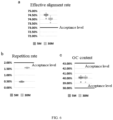
- FIG. 6 shows analysis and statistical results of 5 MB and 30 MB of sequencing data. It can be seen that: in diagram a, effective alignment rates of all samples satisfy the requirements of the MGI prenatal test kit; in diagram b, repetition rates of all samples meet the requirements of the MGI prenatal test kit; and in diagram C, GC contents of all samples meet the requirements of the MGI prenatal test kit.
- Experimental objective a whole genome library was prepared from a human gDNA sample by using an MGI PCR-free kit in combination with an NEB digestion interruption kit.
- NA12878 standard DNA catalog number: NA12878, manufacturer: CORIELL INSTITUTE.
- the DNA sample was added to and uniformly mixed with the prepared reaction system by pipetting or vortex-mixing; the mixture was subjected to transient centrifugation and immediately placed into the thermocycler for reaction, the reaction conditions were as followings: 4°C forever; 37°C for 20 min; 65°C for 30 min; and 4°C forever, and the heated lid of the PCR instrument was set to 70°C. After the reaction was completed, the sample was collected and placed on ice immediately, and TE was added to make up the volume of the sample to 50 ⁇ L.
- the size of the obtained DNA fragment was 300 bp to 500 bp.
- An adapter sequence used in the present protocol is as follows (in the present example, the 5'-end of the sequence is on the left side, the 3'-end of the sequence is on the right side, "//" represents a modifying group, "phos” represents phosphorylation, and the underlined bases represent a barcode of 10 bases).
- N may be A, T, C or G.
- a ligation reaction solution was prepared according to Table 12.
- Composition of a ligation reaction solution Component Amount 10 ⁇ T4 PNK buffer (Enzymatics) 3 ⁇ L 0.1 M ATP (Thermo) 0.8 ⁇ L 50% PEG8000 (Rigaku) 16 ⁇ L T4 DNA ligase (600 U/ ⁇ L) (Enzymatics) 5 ⁇ L Enzyme-free water (Sigma) 0.2 ⁇ L Total volume 25 ⁇ L
- the prepared ligation reaction solution was uniformly vortex-mixed with the mixture of the adapters B and the product of step 4, and the mixture was subjected to transient centrifugation.
- the reaction sample was placed into the PCR instrument for reaction, the reaction conditions were as follows: 25°C for 30 min; and 4°C hold, and the heated lid of the PCR instrument was set to 30°C.
- 20 ⁇ L of TE buffer was added, 50 ⁇ L of XP magnetic beads was added for purification, and the collected product was dissolved in 50 ⁇ L of TE buffer.
- a single-strand cyclization reaction solution was prepared according to Table 13.
- Composition of a single-strand cyclization reaction solution Component Amount 10 ⁇ TA buffer (Epicentre) 6 ⁇ L 100 mM ATP (Thermo) 0.6 ⁇ L 20 ⁇ M mediation fragments 2.5 ⁇ L T4 DNA ligase (600 U/ ⁇ L) (Enzymatics) 1 ⁇ L Enzyme-free water (Sigma) 1.9 ⁇ L Total volume 12 ⁇ L
- 20 ⁇ M fragments for mediation have a corresponding complementary sequence to be ligated to both ends of the single strand.
- the corresponding complementary sequence is (in the present example, the 5'-end of the sequence is on the left side, and the 3'-end of the sequence is on the right side): GCCATGTCGTTCTGTGAGCCAAGG (SEQ ID NO: 8).
- a digestion reaction solution was prepared according to Table 14. [Table 14] Composition of a digestion reaction solution Component Amount 10 ⁇ TA buffer (Epicentre) 0.4 ⁇ L ExoI (20 U/ ⁇ L) (Enzymatics) 2 ⁇ L ExoIII (10 U/ ⁇ L) (Enzymatics) 1 ⁇ L Enzyme-free water 0.6 ⁇ L Total volume 4 ⁇ L
- the single-stranded cyclization product obtained through the digestion of the linear single strand in the previous step was quantitated by using a Qubit ssDNA Assay Kit.
- Concentration detection results of the products in the respective steps are shown in Table 15. It can be seen that, the integration of the interruption, end repair, and A-tailing in one step is also suitable for the PCR-free library construction. [Table 15] Concentration detections results of the products in the respective steps Concentration of the selected fragment 2.6 ng/ ⁇ L Total mass of the selected fragment 130 ng Concentration of the single-stranded circle 2.16 ng/ ⁇ L
- Experimental objective a whole genome library was prepared from a human gDNA sample by using an MGI PCR-free kit in combination with an NEB digestion interruption kit.
- NA12878 standard DNA catalog number: NA12878, manufacturer: CORIELL INSTITUTE.
- the above reaction system was uniformly pipetted, 20 ⁇ L of gDNA sample (total mass was 1 ug) was added to and uniformly mixed with the reaction system by gently pipetting 6-8 times or vortex-mixing; the mixture was subjected to transient centrifugation and immediately placed into the thermocycler for reaction; the reaction conditions were as follows: 37°C for 30 min; and 4°C forever, and the heated lid of the PCR instrument was set to 70°C. After the reaction was completed, the sample was collected and placed on ice immediately, and TE was added to make up the volume of the sample to 30 ⁇ L.
- the size of the obtained DNA fragment was 300 bp to 500 bp.
- an A-tailing reaction solution was prepared according to Table 17.
- reaction sample was placed into the PCR instrument for reaction, the reaction conditions were as follows: 65°C for 30 min; and 4°C forever, and the heated lid of the PCR instrument was set to 70°C.
- An adapter sequence used in the present protocol is as follows (in the present example, the 5'-end of the sequence is on the left side, the 3'-end of the sequence is on the right side, "//" represents a modifying group, "phos” represents phosphorylation, and the underlined bases represent a barcode of 10 bases).
- N may be A, T, C or G.
- a ligation reaction solution was prepared according to Table 18.
- Composition of a ligation reaction solution Component Amount 10 ⁇ T4 PNK buffer (Enzymatics) 3 ⁇ L 0.1 M ATP (Thermo) 0.8 ⁇ L 50% PEG8000 (Rigaku) 16 ⁇ L T4 DNA ligase (600 U/ ⁇ L) (Enzymatics) 5 ⁇ L Enzyme-free water (Sigma) 0.2 ⁇ L Total volume 25 ⁇ L
- the prepared ligation reaction solution was uniformly vortex-mixed with the mixture of the adapters B and the product of step 4, and the mixture was subjected to transient centrifugation.
- the reaction sample was placed into the PCR instrument for reaction, the reaction conditions were as follows: 25°C for 30 min; and 4°C hold, and the heated lid of the PCR instrument was set to 30°C.
- 20 ⁇ L of TE buffer was added, 50 ⁇ L of XP magnetic beads was added for purification, and the collected product was dissolved in 50 ⁇ L of TE buffer.
- the reaction sample was placed into the PCR instrument for reaction, the reaction conditions were as follows: 37°C for 30 min; and 4°C hold, and the heated lid of the PCR instrument was set to 42°C.
- 20 ⁇ M fragments for mediation have a corresponding complementary sequence to be ligated to both ends of the single strand.
- the corresponding complementary sequence is (in the present example, the 5'-end of the sequence is on the left side, and the 3'-end of the sequence is on the right side): GCCATGTCGTTCTGTGAGCCAAGG (SEQ ID NO: 8).
- a digestion reaction solution was prepared according to Table 20.
- Table 20 Composition of a digestion reaction solution Component Amount 10 ⁇ TA buffer (Epicentre) 0.4 ⁇ L ExoI (20 U/ ⁇ L) (Enzymatics) 2 ⁇ L ExoIII (10 U/ ⁇ L) (Enzymatics) 1 ⁇ L Enzyme-free water 0.6 ⁇ L Total volume 4 ⁇ L
- the single-stranded cyclization product obtained through the digestion of the linear single strand in the previous step was quantitated by using a Qubit ssDNA Assay Kit.
- Concentration detection results of the products in the respective steps are shown in Table 21. It can be seen that, the integration of the interruption, end repair, and A-tailing in one step is also suitable for PCR-free library construction. [Table 21] Concentration detection results of the products in the respective steps Concentration of the selected fragment 4.6 ng/ ⁇ L Total mass of the selected fragment 184 ng Concentration of the single-stranded circle 2.2 ng/ ⁇ L
- Example 5 Construction of a human whole genome library with a self-developed PCR-free library construction kit (based on digestion interruption) in combination with a dual-barcode adapter, and sequencing thereof
- Experimental objective a whole genome library was prepared from a human gDNA sample by using an MGI PCR-free kit in combination with a dual-barcode adapter and an NEB digestion interruption kit.
- NA12878 standard DNA catalog number: NA12878, manufacturer: CORIELL INSTITUTE.
- the sample after being pipetted, was added with and gently uniformly mixed with 3 ⁇ L of dsDNA Fragmentase by pipetting 6-8 times or vortex-mixing. After transient centrifugation, the mixture was immediately placed into the thermocycler for reaction, the reaction conditions were as follows: 37°C for 25 min; 65°C for 15 min; and 4°C forever, and the heated lid of the PCR instrument was set to 70°C. After the reaction was completed, the sample was collected and placed on ice immediately, and TE was added to make up the total volume of the sample to 70 ⁇ L.
- the size of the obtained DNA fragment was 300 bp to 500 bp.
- an end repair-A-tailing reaction solution was prepared according to Table 23.
- Composition of an end repair-A-tailing reaction solution Component Amount T4 10 ⁇ PNK buffer (Enzymatics) 5 ⁇ L dATP (100 mM) (Enzymatics) 0.5 ⁇ L dNTPs (each 25 mM) (Enzymatics) 0.5 ⁇ L T4 DNA polymerase (3 U/ ⁇ L) (Enzymatics) 2 ⁇ L T4 PNK (10 U/ ⁇ L) (Enzymatics) 1 ⁇ L rTaq (5 U/ ⁇ L) (Enzymatics) 1 ⁇ L Enzyme-free water (Sigma) 1 ⁇ L
- An adapter sequence used in the present protocol is as follows (in the present example, the 5'-end of the sequence is on the left side, the 3'-end of the sequence is on the right side, "//" represents a modifying group, "phos” represents phosphorylation, and the underlined bases represent a barcode of 10 bases).
- N may be A, T, C or G.
- a ligation reaction solution was prepared according to Table 24.
- Composition of a ligation reaction solution Component Amount 10 ⁇ T4 PNK buffer (Enzymatics) 3 ⁇ L 0.1 M ATP (Thermo) 0.8 ⁇ L 50% PEG8000 (Rigaku) 16 ⁇ L T4 DNA ligase (600 U/ ⁇ L) (Enzymatics) 5 ⁇ L Enzyme-free water (Sigma) 0.2 ⁇ L Total volume 25 ⁇ L
- the prepared ligation reaction solution was uniformly vortex-mixed with the mixture of the adapters B and the product of step 4, and the mixture was subjected to transient centrifugation.
- the reaction sample was placed into the PCR instrument for reaction, the reaction conditions were as follows: 25°C for 30 min; and 4°C hold, and the heated lid of the PCR instrument was set to 30°C.
- 20 ⁇ L of TE buffer was added, 50 ⁇ L XP magnetic beads was added for purification, and the collected product was dissolved in 50 ⁇ L of TE buffer.
- a single-strand cyclization reaction solution was prepared according to Table 25.
- Composition of a single-strand cyclization reaction solution Component Amount 10 ⁇ TA buffer (Epicenter) 6 ⁇ L 100 mM ATP (Thermo) 0.6 ⁇ L 20 ⁇ M mediation fragments 2.5 ⁇ L T4 DNA ligase (600 U/ ⁇ L) (Enzymatics) 1 ⁇ L Enzyme-free water (Sigma) 1.9 ⁇ L Total volume 12 ⁇ L
- 20 ⁇ M fragments for mediation have a corresponding complementary sequence to be ligated to both ends of the single strand.
- the corresponding complementary sequence is (in the present example, the 5'-end of the sequence is on the left side, and the 3'-end of the sequence is on the right side): TGCTGACGTACTGAGAGGCATGGCGACCT (SEQ ID NO: 8).
- a digestion reaction solution was prepared according to Table 26.
- Composition of a digestion reaction solution Component Amount 10 ⁇ TA buffer (Epicenter) 0.4 ⁇ L ExoI (20 U/ ⁇ L) (Enzymatics) 2 ⁇ L ExoIII (10 U/ ⁇ L) (Enzymatics) 1 ⁇ L Enzyme-free water 0.6 ⁇ L Total volume 4 ⁇ L
- the single-stranded cyclization product obtained through the digestion of the linear single strand in the previous step was quantitated by using a Qubit ssDNA Assay Kit.
- DNA nanoballs were prepared with the constructed single-stranded circular DNA library and sequenced on MGISEQ-2000 PE150. The sequencing and data analysis followed the standard operating process of MGISEQ-2000 PE150.
- Table 27 Concentration detection results of the products in the respective steps are shown in Table 27.
- Table 28 shows the sequencing quality of the human sample WGS PCR-free library (based on digestion interruption) obtained by the library construction and sequencing method of the present example. Table 28 indicates that the human sample WGS PCR-free library (based on digestion interruption) has relatively high sequencing quality on the high-throughput sequencing platform MGISEQ-2000RS PE150, self-developed by MGI.
- Covaris interruption serves as a comparative PCR-free example, and using the same library construction system, indicating that library construction based on digestion interruption combined with a dual-barcode adapter has the same effect as the library construction based on physical interruption.
- Table 29 shows SNP and Indel variation detection and analysis results of the NA12878 PCR-free library (based on NEB digestion interruption) obtained by the library construction and sequencing method of the present example.
- Table 29 indicates that the PCR-free library (based on digestion interruption) of the present disclosure is significantly superior to the PCR library in terms of Indel calling, and its overall performance is similar to that of NovaSeq PCR-free PE150 on the Illumina platform.
- Covaris interruption serves as a comparative PCR-free example, using the same library construction system, indicating that the library construction based on digestion interruption has the same effects as the library construction based on physical interruption.
- PCR-free construction solutions overcomes the problems such as base pairing mistake, data bias, and repetitive sequences, which may be introduced by PCR during library construction. Furthermore, these solutions are compatible with library construction based on different interruption methods and small inputs.
- the PCR-free library construction method of the present disclosure achieves true PCR-free library construction and sequencing for samples, thereby achieving whole PCR-free process.
- the library construction efficiency of the self-developed platform PCR-free library construction kit is improved, and required DNA inputs are reduced.
- the library construction system of the present disclosure is compatible with different types of starting samples, which include, but are not limited to, genomic DNA, interrupted DNA, DNA or an interrupted DNA product obtained by whole genome amplification, amplicon DNA, cfDNA, and DNA obtained by reverse transcription of RNA.
- the present disclosure has the following advantages. 1) Wide applicability: the present disclosure is applicable to all species having known or unknown reference sequences; it can be adopted by general molecular biology laboratories; and it is compatible with library construction based on physical interruption and digestion interruption, compatible with different types of samples, which include, but are not limited to, genomic DNA, interrupted DNA, DNA or an interrupted DNA product obtained by whole genome amplification, amplicon DNA, cfDNA, and DNA obtained by reverse transcription of RNA.
- High library construction efficiency according to the library construction method, by adopting the optimized system for end repair and A-tailing, the optimized system for adapter ligation, and the one-step of cyclization and rolling circle replication reaction, a pooling library construction and sequencing with small inputs of starting samples as well as the PCR-free library construction using 200 ⁇ L of plasma DNA can be achieved.
- Enhanced accuracy of sequencing data on the self-developed platform the methods of the present disclosure achieve the true PCR-free library construction and sequencing, which can improve the accuracy and sensitivity of SNP and InDel detection, and the methods of the present disclosure especially have excellent performance in term of InDel detection over other platforms from business competitors, for example, Illumina.
Landscapes
- Chemical & Material Sciences (AREA)
- Life Sciences & Earth Sciences (AREA)
- Organic Chemistry (AREA)
- Health & Medical Sciences (AREA)
- Genetics & Genomics (AREA)
- Engineering & Computer Science (AREA)
- Biochemistry (AREA)
- Wood Science & Technology (AREA)
- Zoology (AREA)
- Molecular Biology (AREA)
- Biotechnology (AREA)
- Bioinformatics & Cheminformatics (AREA)
- General Engineering & Computer Science (AREA)
- Microbiology (AREA)
- Biomedical Technology (AREA)
- Chemical Kinetics & Catalysis (AREA)
- Physics & Mathematics (AREA)
- Biophysics (AREA)
- General Health & Medical Sciences (AREA)
- General Chemical & Material Sciences (AREA)
- Medicinal Chemistry (AREA)
- Proteomics, Peptides & Aminoacids (AREA)
- Analytical Chemistry (AREA)
- Crystallography & Structural Chemistry (AREA)
- Plant Pathology (AREA)
- Bioinformatics & Computational Biology (AREA)
- Immunology (AREA)
- Measuring Or Testing Involving Enzymes Or Micro-Organisms (AREA)
Applications Claiming Priority (1)
| Application Number | Priority Date | Filing Date | Title |
|---|---|---|---|
| PCT/CN2020/096987 WO2021253372A1 (zh) | 2020-06-19 | 2020-06-19 | 一种高兼容性的PCR-free建库和测序方法 |
Publications (2)
| Publication Number | Publication Date |
|---|---|
| EP4170028A1 true EP4170028A1 (de) | 2023-04-26 |
| EP4170028A4 EP4170028A4 (de) | 2023-10-18 |
Family
ID=79268915
Family Applications (1)
| Application Number | Title | Priority Date | Filing Date |
|---|---|---|---|
| EP20940612.3A Pending EP4170028A4 (de) | 2020-06-19 | 2020-06-19 | Erstellung einer pcr-freien bibliothek mit hoher compatibiltät und sequenzierungsverfahren |
Country Status (4)
| Country | Link |
|---|---|
| US (1) | US20230265500A1 (de) |
| EP (1) | EP4170028A4 (de) |
| CN (1) | CN115715323A (de) |
| WO (1) | WO2021253372A1 (de) |
Families Citing this family (6)
| Publication number | Priority date | Publication date | Assignee | Title |
|---|---|---|---|---|
| CN119563033A (zh) * | 2022-08-15 | 2025-03-04 | 深圳华大智造科技股份有限公司 | 一种测序文库的制备方法及用于制备测序文库的试剂盒 |
| CN115651974B (zh) * | 2022-11-11 | 2024-03-08 | 纳昂达(南京)生物科技有限公司 | 人工模拟cfDNA标准品及其制备方法与应用 |
| WO2024138729A1 (zh) * | 2022-12-30 | 2024-07-04 | 深圳华大生命科学研究院 | Dna连接缓冲液及其应用 |
| CN116555922A (zh) * | 2023-04-23 | 2023-08-08 | 安诺优达基因科技(北京)有限公司 | 一种构建测序文库的方法及应用 |
| WO2024239431A1 (zh) * | 2023-05-23 | 2024-11-28 | 深圳华大智造科技股份有限公司 | 核酸进行3'端磷酸化修饰和建库的方法 |
| WO2025076733A1 (zh) * | 2023-10-11 | 2025-04-17 | 深圳华大智造科技股份有限公司 | 一种快速进行核酸文库构建的方法 |
Family Cites Families (9)
| Publication number | Priority date | Publication date | Assignee | Title |
|---|---|---|---|---|
| CN105400776B (zh) * | 2014-09-12 | 2019-12-31 | 深圳华大智造科技有限公司 | 寡核苷酸接头及其在构建核酸测序单链环状文库中的应用 |
| US11149305B2 (en) * | 2015-01-23 | 2021-10-19 | Washington University | Detection of rare sequence variants, methods and compositions therefor |
| CN104962551B (zh) * | 2015-07-15 | 2016-08-24 | 北京中科紫鑫科技有限责任公司 | 一种焦磷酸测序文库的构建方法 |
| US11293033B2 (en) * | 2016-05-18 | 2022-04-05 | Amyris, Inc. | Compositions and methods for genomic integration of nucleic acids into exogenous landing pads |
| CN109689872B (zh) * | 2016-11-21 | 2022-12-23 | 深圳华大智造科技股份有限公司 | 一种dna末端修复与加a的方法 |
| GB2561824B (en) * | 2017-04-19 | 2020-04-01 | Canon Kk | Encoding and decoding of geometry data in a 3D model based on evaluated regularity of the model |
| CN108251504A (zh) * | 2018-01-17 | 2018-07-06 | 翌圣生物科技(上海)有限公司 | 一种超快速构建基因组dna测序文库的方法和试剂盒 |
| EP4245861B1 (de) * | 2018-05-08 | 2025-02-26 | MGI Tech Co., Ltd. | Einzelrohrbead-basierte dna co-barcodierung zur genauen und kostengünstigen sequenzierung, haplotypisierung und anordnung |
| CN111041026B (zh) * | 2019-12-26 | 2022-03-11 | 北京优迅医学检验实验室有限公司 | 一种高通量测序用核酸接头和文库构建方法 |
-
2020
- 2020-06-19 EP EP20940612.3A patent/EP4170028A4/de active Pending
- 2020-06-19 WO PCT/CN2020/096987 patent/WO2021253372A1/zh not_active Ceased
- 2020-06-19 CN CN202080099449.1A patent/CN115715323A/zh active Pending
-
2022
- 2022-12-16 US US18/067,540 patent/US20230265500A1/en active Pending
Also Published As
| Publication number | Publication date |
|---|---|
| US20230265500A1 (en) | 2023-08-24 |
| WO2021253372A1 (zh) | 2021-12-23 |
| CN115715323A (zh) | 2023-02-24 |
| EP4170028A4 (de) | 2023-10-18 |
Similar Documents
| Publication | Publication Date | Title |
|---|---|---|
| EP4170028A1 (de) | Erstellung einer pcr-freien bibliothek mit hoher compatibiltät und sequenzierungsverfahren | |
| EP2619329B1 (de) | Direkte erfassung, amplifikation und sequenzierung einer ziel-dna unter verwendung immobilisierter primer | |
| EP3790967B1 (de) | Einzelrohrbead-basierte dna co-barcodierung zur genauen und kostengünstigen sequenzierung, haplotypisierung und anordnung | |
| EP3377625B1 (de) | Verfahren zur kontrollierten dna-fragmentierung | |
| EP3436596B1 (de) | Verwendung von transposase und y-adaptern zur fragmentierung und markierung der dna | |
| EP3763825B1 (de) | Hochmultiplex-pcr mit molekularer barcodierung | |
| EP3626834B1 (de) | Halbzufällige strichcodes zur nukleinsäureanalyse | |
| EP2631336B1 (de) | Dna-bibliothek und herstellungsverfahren dafür sowie verfahren und vorrichtung zum nachweis von snps | |
| US20200123538A1 (en) | Compositions and methods for library construction and sequence analysis | |
| US20120003657A1 (en) | Targeted sequencing library preparation by genomic dna circularization | |
| KR102354422B1 (ko) | 대량 평행 서열분석을 위한 dna 라이브러리의 생성 방법 및 이를 위한 키트 | |
| WO2021013244A1 (zh) | 一种构建捕获文库的方法和试剂盒 | |
| JP7688972B2 (ja) | 超並列シークエンシングのためのdnaライブラリー生成のための改良された方法及びキット | |
| WO2016138292A1 (en) | Methods and compositions for in silico long read sequencing | |
| JP2004521634A (ja) | MutSおよびRecAを使用する変異検出 | |
| EP2785865A1 (de) | Verfahren und kit zur rna-charakterisierung in einer zusammensetzung | |
| WO2025085821A1 (en) | Methods, systems, and compositions for cell storage and analysis | |
| WO2020005159A1 (en) | Method for detection and quantification of genetic alterations | |
| EP4392577B1 (de) | Optimierter satz von oligonukleotiden zur massen-rna-barcodierung und -sequenzierung | |
| US20180073023A1 (en) | Circular single-stranded nucleic acid, method for preparing the same, and method for using the same | |
| US12473592B2 (en) | Method for the detection and quantification of genetic alterations | |
| Crinnion | Utilising emerging technologies for the molecular diagnosis of genomic pathology | |
| JP2024543250A (ja) | 等温線形増幅されたプローブを利用する標的の濃縮および定量 |
Legal Events
| Date | Code | Title | Description |
|---|---|---|---|
| STAA | Information on the status of an ep patent application or granted ep patent |
Free format text: STATUS: THE INTERNATIONAL PUBLICATION HAS BEEN MADE |
|
| PUAI | Public reference made under article 153(3) epc to a published international application that has entered the european phase |
Free format text: ORIGINAL CODE: 0009012 |
|
| STAA | Information on the status of an ep patent application or granted ep patent |
Free format text: STATUS: REQUEST FOR EXAMINATION WAS MADE |
|
| 17P | Request for examination filed |
Effective date: 20230111 |
|
| AK | Designated contracting states |
Kind code of ref document: A1 Designated state(s): AL AT BE BG CH CY CZ DE DK EE ES FI FR GB GR HR HU IE IS IT LI LT LU LV MC MK MT NL NO PL PT RO RS SE SI SK SM TR |
|
| REG | Reference to a national code |
Ref country code: DE Ref legal event code: R079 Free format text: PREVIOUS MAIN CLASS: C12N0015100000 Ipc: C12Q0001680600 |
|
| DAV | Request for validation of the european patent (deleted) | ||
| DAX | Request for extension of the european patent (deleted) | ||
| A4 | Supplementary search report drawn up and despatched |
Effective date: 20230919 |
|
| RIC1 | Information provided on ipc code assigned before grant |
Ipc: C40B 50/06 20060101ALI20230913BHEP Ipc: C40B 40/06 20060101ALI20230913BHEP Ipc: C12N 15/10 20060101ALI20230913BHEP Ipc: C12Q 1/6806 20180101AFI20230913BHEP |