EP4170449B1 - Système et procédé de compréhension de scène intérieure guidée par ontologie pour des tâches robotiques cognitives - Google Patents
Système et procédé de compréhension de scène intérieure guidée par ontologie pour des tâches robotiques cognitives Download PDFInfo
- Publication number
- EP4170449B1 EP4170449B1 EP22186467.1A EP22186467A EP4170449B1 EP 4170449 B1 EP4170449 B1 EP 4170449B1 EP 22186467 A EP22186467 A EP 22186467A EP 4170449 B1 EP4170449 B1 EP 4170449B1
- Authority
- EP
- European Patent Office
- Prior art keywords
- ontology
- robot
- scene
- knowledge
- graph
- Prior art date
- Legal status (The legal status is an assumption and is not a legal conclusion. Google has not performed a legal analysis and makes no representation as to the accuracy of the status listed.)
- Active
Links
Images



Classifications
-
- G—PHYSICS
- G06—COMPUTING OR CALCULATING; COUNTING
- G06V—IMAGE OR VIDEO RECOGNITION OR UNDERSTANDING
- G06V10/00—Arrangements for image or video recognition or understanding
- G06V10/70—Arrangements for image or video recognition or understanding using pattern recognition or machine learning
- G06V10/86—Arrangements for image or video recognition or understanding using pattern recognition or machine learning using syntactic or structural representations of the image or video pattern, e.g. symbolic string recognition; using graph matching
-
- G—PHYSICS
- G05—CONTROLLING; REGULATING
- G05D—SYSTEMS FOR CONTROLLING OR REGULATING NON-ELECTRIC VARIABLES
- G05D1/00—Control of position, course, altitude or attitude of land, water, air or space vehicles, e.g. using automatic pilots
- G05D1/0088—Control of position, course, altitude or attitude of land, water, air or space vehicles, e.g. using automatic pilots characterized by the autonomous decision making process, e.g. artificial intelligence, predefined behaviours
-
- B—PERFORMING OPERATIONS; TRANSPORTING
- B25—HAND TOOLS; PORTABLE POWER-DRIVEN TOOLS; MANIPULATORS
- B25J—MANIPULATORS; CHAMBERS PROVIDED WITH MANIPULATION DEVICES
- B25J9/00—Program-controlled manipulators
- B25J9/16—Program controls
- B25J9/1628—Program controls characterised by the control loop
- B25J9/163—Program controls characterised by the control loop learning, adaptive, model based, rule based expert control
-
- B—PERFORMING OPERATIONS; TRANSPORTING
- B25—HAND TOOLS; PORTABLE POWER-DRIVEN TOOLS; MANIPULATORS
- B25J—MANIPULATORS; CHAMBERS PROVIDED WITH MANIPULATION DEVICES
- B25J9/00—Program-controlled manipulators
- B25J9/16—Program controls
- B25J9/1656—Program controls characterised by programming, planning systems for manipulators
- B25J9/1661—Program controls characterised by programming, planning systems for manipulators characterised by task planning, object-oriented languages
-
- B—PERFORMING OPERATIONS; TRANSPORTING
- B25—HAND TOOLS; PORTABLE POWER-DRIVEN TOOLS; MANIPULATORS
- B25J—MANIPULATORS; CHAMBERS PROVIDED WITH MANIPULATION DEVICES
- B25J9/00—Program-controlled manipulators
- B25J9/16—Program controls
- B25J9/1694—Program controls characterised by use of sensors other than normal servo-feedback from position, speed or acceleration sensors, perception control, multi-sensor controlled systems, sensor fusion
- B25J9/1697—Vision controlled systems
-
- G—PHYSICS
- G05—CONTROLLING; REGULATING
- G05D—SYSTEMS FOR CONTROLLING OR REGULATING NON-ELECTRIC VARIABLES
- G05D1/00—Control of position, course, altitude or attitude of land, water, air or space vehicles, e.g. using automatic pilots
- G05D1/0011—Control of position, course, altitude or attitude of land, water, air or space vehicles, e.g. using automatic pilots associated with a remote control arrangement
- G05D1/0016—Control of position, course, altitude or attitude of land, water, air or space vehicles, e.g. using automatic pilots associated with a remote control arrangement characterised by the operator's input device
-
- G—PHYSICS
- G05—CONTROLLING; REGULATING
- G05D—SYSTEMS FOR CONTROLLING OR REGULATING NON-ELECTRIC VARIABLES
- G05D1/00—Control of position, course, altitude or attitude of land, water, air or space vehicles, e.g. using automatic pilots
- G05D1/02—Control of position or course in two dimensions
- G05D1/021—Control of position or course in two dimensions specially adapted to land vehicles
- G05D1/0231—Control of position or course in two dimensions specially adapted to land vehicles using optical position detecting means
- G05D1/0246—Control of position or course in two dimensions specially adapted to land vehicles using optical position detecting means using a video camera in combination with image processing means
- G05D1/0248—Control of position or course in two dimensions specially adapted to land vehicles using optical position detecting means using a video camera in combination with image processing means in combination with a laser
-
- G—PHYSICS
- G06—COMPUTING OR CALCULATING; COUNTING
- G06N—COMPUTING ARRANGEMENTS BASED ON SPECIFIC COMPUTATIONAL MODELS
- G06N5/00—Computing arrangements using knowledge-based models
- G06N5/02—Knowledge representation; Symbolic representation
- G06N5/022—Knowledge engineering; Knowledge acquisition
-
- G—PHYSICS
- G06—COMPUTING OR CALCULATING; COUNTING
- G06V—IMAGE OR VIDEO RECOGNITION OR UNDERSTANDING
- G06V10/00—Arrangements for image or video recognition or understanding
- G06V10/40—Extraction of image or video features
- G06V10/42—Global feature extraction by analysis of the whole pattern, e.g. using frequency domain transformations or autocorrelation
- G06V10/422—Global feature extraction by analysis of the whole pattern, e.g. using frequency domain transformations or autocorrelation for representing the structure of the pattern or shape of an object therefor
- G06V10/426—Graphical representations
-
- G—PHYSICS
- G06—COMPUTING OR CALCULATING; COUNTING
- G06V—IMAGE OR VIDEO RECOGNITION OR UNDERSTANDING
- G06V10/00—Arrangements for image or video recognition or understanding
- G06V10/70—Arrangements for image or video recognition or understanding using pattern recognition or machine learning
- G06V10/87—Arrangements for image or video recognition or understanding using pattern recognition or machine learning using selection of the recognition techniques, e.g. of a classifier in a multiple classifier system
-
- G—PHYSICS
- G06—COMPUTING OR CALCULATING; COUNTING
- G06V—IMAGE OR VIDEO RECOGNITION OR UNDERSTANDING
- G06V20/00—Scenes; Scene-specific elements
- G06V20/35—Categorising the entire scene, e.g. birthday party or wedding scene
-
- G—PHYSICS
- G06—COMPUTING OR CALCULATING; COUNTING
- G06V—IMAGE OR VIDEO RECOGNITION OR UNDERSTANDING
- G06V20/00—Scenes; Scene-specific elements
- G06V20/50—Context or environment of the image
-
- G—PHYSICS
- G06—COMPUTING OR CALCULATING; COUNTING
- G06V—IMAGE OR VIDEO RECOGNITION OR UNDERSTANDING
- G06V20/00—Scenes; Scene-specific elements
- G06V20/50—Context or environment of the image
- G06V20/56—Context or environment of the image exterior to a vehicle by using sensors mounted on the vehicle
-
- G—PHYSICS
- G05—CONTROLLING; REGULATING
- G05B—CONTROL OR REGULATING SYSTEMS IN GENERAL; FUNCTIONAL ELEMENTS OF SUCH SYSTEMS; MONITORING OR TESTING ARRANGEMENTS FOR SUCH SYSTEMS OR ELEMENTS
- G05B2219/00—Program-control systems
- G05B2219/30—Nc systems
- G05B2219/33—Director till display
- G05B2219/33318—Knowledge acquisition
-
- G—PHYSICS
- G05—CONTROLLING; REGULATING
- G05B—CONTROL OR REGULATING SYSTEMS IN GENERAL; FUNCTIONAL ELEMENTS OF SUCH SYSTEMS; MONITORING OR TESTING ARRANGEMENTS FOR SUCH SYSTEMS OR ELEMENTS
- G05B2219/00—Program-control systems
- G05B2219/30—Nc systems
- G05B2219/39—Robotics, robotics to robotics hand
- G05B2219/39001—Robot, manipulator control
-
- G—PHYSICS
- G06—COMPUTING OR CALCULATING; COUNTING
- G06N—COMPUTING ARRANGEMENTS BASED ON SPECIFIC COMPUTATIONAL MODELS
- G06N20/00—Machine learning
Definitions
- the disclosure herein generally relates to the field of cognitive robotics and more specifically, to a system and method for an ontology guided indoor scene understanding for cognitive robotic tasks.
- Ontology defines abstract concepts of a domain.
- the instances of the ontology form knowledgebase that ensures semantic interoperability of the knowledge among various applications (can be developed independently by different developers) of the domain.
- the ontologies need to be amended over time.
- the knowledgebase needs to be created by instantiating the classes and their properties as defined in the ontology for the environment where the robot is operating. This process is either done manually or automatically by collecting sensor-based data. With the change of the environment, the knowledgebase needs to be updated continuously, which should ensure consistency and non-conflict with the existing knowledge.
- US 2018/043532 A1 discloses embodiments for assigning tasks to a robot device by a processor.
- a target region may be selected from a displayed image of an image capturing device.
- One or more tasks may be defined according to a plurality of objects displayed within the target region such that the defined one or more tasks are arranged according to a task workflow.
- the defined one or more tasks may be communicated to a self-directed device thereby assigning the self-directed robot to perform the defined one or more tasks according to the task workflow (Abstract).
- US 2019/206400 A1 discloses a plurality of images captured using a camera included in a robotic system are analyzed. A spatial map is generated using a sensor included in the robotic system. A semantic location map is generated using at least the analyzed plurality of captured images and the generated spatial map.
- a natural language input referencing a desired product item is received from a user.
- a speech recognition result is recognized from the natural language input and sent to a reasoning engine. In response to sending the recognized speech recognition result, one or more commands for the robotic system are received from the reasoning engine.
- US 2018/316628 A1 discloses systems and methods of the present disclosure enable exchange of semantic knowledge of resource data and task data between heterogeneous resources in a constrained environment wherein cloud infrastructure and cloud based knowledge repository is not available. Ontology based semantic knowledge exchange firstly enables discovery of available resources in real time. New tasks may evolve at runtime and so also resource data associated with the resources may vary over time. Systems and methods of the present disclosure effectively address these dynamic logistics in a constrained environment involving heterogeneous resources. Furthermore, based on the required resource data for each task and the available resources discovered in real time, task allocation can be effectively handled (Abstract).
- Embodiments of the disclosure present technological improvements as solutions to one or more of the above-mentioned technical problems recognized by the inventors in conventional systems.
- a method and system for an ontology guided indoor scene understanding for cognitive robotic tasks is provided.
- a processor-implemented method of an ontology guided indoor scene understanding for cognitive robotic tasks is as defined in claim 1.
- a system is configured for an ontology guided indoor scene understanding for cognitive robotic tasks is defined in claim 9.
- one or more non-transitory machine-readable information storage mediums comprising one or more instructions, which when executed by one or more hardware processors causes a method of an ontology guided indoor scene understanding for cognitive robotic tasks is defined in claim 15.
- the embodiments herein provide a method and system for ontology guided indoor scene understanding for cognitive robotic tasks.
- an ontology is updated online using external knowledge-base and observed information. This knowledge helps in semantic navigation, aids in speech, and text based human robot interactions. Further, in the process of performing the robotic tasks, the knowledgebase gets enriched, and the knowledge can be shared and used by other robots.
- Ontologies define the abstract concepts of a domain.
- the instances of the ontology form a knowledgebase that ensures semantic interoperability of the knowledge among various applications (can be developed independently by different developers) of the domain.
- ORA Ontologies for Robotics and Automation
- the ontologies need to be amended over time.
- the knowledgebase needs to be created by instantiating the classes and their properties as defined in the ontology for the environment where the robot is operating. This process is either done manually or automatically by collecting sensor-based data. With the change of the environment, the knowledgebase needs to be updated continuously, which should ensure consistency and non-conflict with the existing knowledge.
- ontology is used to understand scene as well as spatial dialogue keyword references in order to carry out cognitive robotic tasks.
- ontology and instance of scene graph is also refined by robotic exploration of the environment to learn property instances of objects, as well as direct linking through dialogue exchange with robot to know more about the world model.
- FIG. 1 through FIG. 5 where similar reference characters denote corresponding features consistently throughout the figures, there are shown preferred embodiments and these embodiments are described in the context of the following exemplary system and/or method.
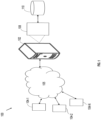
- FIG. 1 illustrates a block diagram of a system (100) for an ontology guided indoor scene understanding for cognitive robotic tasks, in accordance with an example embodiment.
- the system (100) may comprise one or more computing devices (102), such as a laptop computer, a desktop computer, a notebook, a workstation, a cloud-based computing environment and the like. It will be understood that the system (100) may be accessed through one or more input/output interfaces 104-1, 104-2... 104-N, collectively referred to as I/O interface (104).
- Examples of the I/O interface (104) may include, but are not limited to, a user interface, a portable computer, a personal digital assistant, a handheld device, a smartphone, a tablet computer, a workstation, and the like.
- the I/O interface (104) are communicatively coupled to the system (100) through a network (106).
- the network (106) may be a wireless or a wired network, or a combination thereof.
- the network (106) can be implemented as a computer network, as one of the different types of networks, such as virtual private network (VPN), intranet, local area network (LAN), wide area network (WAN), the internet, and such.
- the network (106) may either be a dedicated network or a shared network, which represents an association of the different types of networks that use a variety of protocols, for example, Hypertext Transfer Protocol (HTTP), Transmission Control Protocol/Internet Protocol (TCP/IP), and Wireless Application Protocol (WAP), to communicate with each other.
- the network (106) may include a variety of network devices, including routers, bridges, servers, computing devices, storage devices. The network devices within the network (106) may interact with the system (100) through communication links.
- the system (100) supports various connectivity options such as BLUETOOTH ® , USB, ZigBee, and other cellular services.
- the network environment enables connection of various components of the system (100) using any communication link including Internet, WAN, MAN, and so on.
- the system (100) is implemented to operate as a stand-alone device.
- the system (100) may be implemented to work as a loosely coupled device to a smart computing environment.
- the system (100) comprises at least one memory with a plurality of instructions, one or more databases (110), and one or more hardware processors (108) which are communicatively coupled with the at least one memory to execute a plurality of modules therein.
- the one or more I/O interfaces (104) are configured to obtain at least one navigation command for a robot from a user as an input.
- the one or more I/O interfaces (104) are also configured to enable the user to update a knowledge graph representation of a knowledge base based on the generated scene graph to facilitate an effective interaction between the user and the robot.
- RGB-D Red Green Blue - Depth
- Each of the RGB-D image is a combination of RGB image and its corresponding depth image.
- the depth image is an image channel in which each pixel relates to a distance between an image plane and a corresponding object in the RGB image.
- the system identifies one or more objects within the scene using a combination of image processing techniques, comprising an object detection, a captioning, and an ontology validation (202).
- system (100) is configured to query an ontology to determine one or more properties related to each of the one or more identified objects (202). It is to be noted the system (100) creates a robotic base ontology that align with existing ontologies. Then via a knowledge service, the corresponding requests for respective robotic tasks may be served. In turn, via perception processing, the knowledge may also get enhanced.
- the system (100) describe deep learning based image processing techniques to detect object and certain properties about the objects (206).
- a robot should be able to map human task instruction to its capability and referred objects to the environment. This process of grounding is enabled by a knowledge guided scene graph.
- the image processing techniques would provide a certain set of properties irrespective of the environment or the human agent.
- the knowledge guided (grounded) scene graph generation helps to bridge the gap that requires costly customization of the image processing techniques yet provide an easily customizable scene graph.
- the robot needs to understand where in an environment it is in and for input it has sensors like camera, depth sensor, microphone, infrared sensor, etc. Based on this sensing inputs, the robot may generate a scene graph, a graph containing objects in a scene and corresponding relationships of the objects.
- Traditional scene graphs have just nodes in the graph with some unnamed relations to it.
- the resultant scene graph contains relation edges that comes from the ontology validation itself (208).
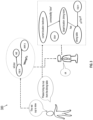
- FIG. 3 a schematic diagram (300) to illustrate usage of knowledge semantics in dialogue and semantic navigation in one instruction in accordance with some embodiments of the present disclosure.
- the system (100) is configured to search ontology to find what relations does cup have with the scene. It sees that in ontology relations are size, color, on top of, near.
- image processing technique the relevant mapping can be done. So accordingly based on whether actual relation exists in the ontology or not, the relations in scene can be searched and populated.
- an image caption technique to generate caption relations for the images, there are usually wrong caption generations that are encountered.
- the ontology can be a way out to make the scene graph logically consistent.
- the reverse correct relation can be established by checking the direction of the edge between nodes.
- the relations can be directional (on top of) or bi-directional (near/ proximity). This matching can be done by using a look up method whenever objects are found in the scene.
- the system (100) selects at least one image processing technique from the combination of image processing techniques based on the determined one or more properties of each of the one or more objects and representation of the ontology to extract one or more attributes and relations from the scene. It would be appreciated that given a generic image processing technique, the outcome of it may need to be processed further for particular application or requirement. This filtering requires a set of techniques for the process, which technique is applicable for a particular scenario is guided by the ontological representation (208).
- technique linking of objects in scene with image processing techniques, in order to use only suitable scene processing techniques based on declaration in ontology to a specific object, environment and task.
- technique linking to tasks or in other words, the task instruction may be processed to extract keywords that can be mapped to tasks possible in that environment and enabling runtime actuation execution calls.
- the decision-making module will query the ontology to get the relevant properties like 'hasColor' and "hasShape' and fetch the corresponding technique link in to execute the image processing technique to detect the color and shape in the designated region in the image scene at runtime.
- the object properties relevant to the object "cup” is fetched.
- Color is one such property mentioned in ontology.
- the system is configured to invoke a technique to detect color, that uses image pixel processing. This invocation is done by a path stored in the ontology, so that when 'color' property is activated, the corresponding technique mapped to it is called and the result is checked within the range of colors.
- a shape detector technique to output 'rectangle within rectangle" can be called to check if it is indeed a 'TV' instead of a picture frame.
- 'TV' and window can be disambiguated.
- system (100) is configured to generate at least one scene graph using the extracted one or more attributes and relations to aid the robot in executing at least one navigation command.
- the generated at least one scene graph is used to update a knowledge graph representation of a knowledge base to facilitate an effective interaction between the user and the robot (214).
- the system (100) extracts knowledge from the dialogue with the user, filter it according to the knowledge representation structure, and then store it in the knowledgebase.
- the keywords are checked with ontology for possible existing entries in the knowledgebase itself, and new information is added based on a confidence estimation technique.
- the information that 'cup is mine may result in knowledge that 'cup" as an object belongs to owner 'user X', as each object of personal type will have an owner.
- This information can be learnt via a dialogue.
- an object may have a property instance that is not getting detected or is a new property altogether. That can be added based on user confirmation - like ⁇ cup' is of 'gray" color, or ' cup' has property of 'handle' like a mug, this information was not there earlier in the ontology. This happens by using finding nodes matching the keywords and creating new nodes of property values in case of specific indoor scene; or new edge properties like 'cup" has component 'handle'.
- the knowledge graph representation facilitates grounded representation.
- the knowledgebase comprises of a global ontology graph, an instance connected scene graph of a predefined environment represented using a multi-graph data structure, and individual scene graph for each of the one or more scenes (216). Further, the knowledgebase is updated by one of exploration by the robot, a dialogue exchange of the user with the robot, and an external knowledge sources using one of filtering techniques to complement the seed ontology built specifically for the robotic domain and indoor applications.
- a global knowledgebase which can be shared across multiple robots and software services as a query service.
- the global knowledge graph is used for cognitive robotics tasks such as and not limited to manipulation, navigation, dialogue exchange; and the global knowledge graph is updated based on inputs derived from feedback of scene exploration by robot, manipulation of objects and new knowledge mining using dialogue exchange and optionally external knowledge sources in graph compliant format.
- a seed ontology is created manually by declaring concepts relevant to the robotic domain and the indoor environment that comprises of commonly occurring objects and their object properties (like color) along with inter object properties (like proximity relation) (402).
- This ontology is aligned with a standard Suggested Upper Merged Ontology (SUMO) to make it semantic web coherence compliant and also with an abstract Core Ontology for Robotics and Automation (CORA) to make it compliant with acceptable robotic standardization.
- SUMO Suggested Upper Merged Ontology
- CORA Robotics and Automation
- the robot used perception information to make sense of where it is and what is sensed (like visible in camera sensor) (406) and then based on task instruction type and current scene analysis requests the knowledgebase to get relevant information in form a service call (408).
- the ontology can also be updated or refined as a service if perception processing entails new generic information not earlier there in the ontology (410).
- a granular knowledgebase is developed for the robot that complies to the known standards of robotics ontology definition. This in turn ensures that the knowledge stored using this representation can be usable by any application who understanding the definition of the representation.
- the knowledge representation enables easy update of the existing data and it supports grounded representation of the knowledge with semantically rich information. This ensures usability of it in human-robot interaction scenario.
- the knowledge format is multi-graph, which is generic to support subject-predicate-object relations in form of node-edge-node. This specific choice of format allows multiple edge instances between two nodes as well as edge properties. This is useful if the user wishes to map it to a Planning Domain Definition Language (PDDL), well graph network analysis, and forming queries on SPARQL.
- PDDL Planning Domain Definition Language
- the graph has options of direction embedded in the property as an example "proximity" is a bi-directional property whereas the ' hasColor' is a unidirectional property.
- FIG. 5 to illustrate a flowchart (500), for an ontology guided indoor scene understanding for cognitive robotic tasks, in accordance with an example embodiment.
- step (502) obtaining, via an input/output interface, at least one navigation command for a robot from a user as an input.
- each of the one or more images is a combination of Red Green Blue (RGB) image and its corresponding depth image.
- RGB Red Green Blue
- identifying one or more objects within the scene using a combination of image processing techniques, comprising an object detection, a captioning, and an ontology validation.
- step (512) generating at least one scene graph using the extracted one or more attributes and relations to aid the robot in executing at least one navigation command.
- the embodiments of present disclosure herein address unresolved problem in cognitive robotics applications of building specific applications for specific use cases.
- the knowledge of the world and the semantics are common for a robot for multiple tasks.
- a method and system for ontology guided indoor scene understanding for cognitive robotic tasks is described where in scenes are processed based on techniques filtered based on querying ontology with relevant objects in perceived scene to generate a semantically rich scene graph.
- an initially manually created ontology is updated and refined in online fashion using external knowledge-base, human robot interaction and observed information.
- This knowledge helps in semantic navigation, aids in speech, and text based human robot interactions.
- the knowledgebase gets enriched and the knowledge can be shared and used by other robots.
- Such computer-readable storage means contain program-code means for implementation of one or more steps of the method, when the program runs on a server or mobile device or any suitable programmable device.
- the hardware device can be any kind of device which can be programmed including e.g., any kind of computer like a server or a personal computer, or the like, or any combination thereof.
- the device may also include means which could be e.g., hardware means like e.g., an application-specific integrated circuit (ASIC), a field-programmable gate array (FPGA), or a combination of hardware and software means, e.g., an ASIC and an FPGA, or at least one microprocessor and at least one memory with software modules located therein.
- ASIC application-specific integrated circuit
- FPGA field-programmable gate array
- the means can include both hardware means, and software means.
- the method embodiments described herein could be implemented in hardware and software.
- the device may also include software means. Alternatively, the embodiments may be implemented on different hardware devices, e.g., using a plurality of CPUs.
- the embodiments herein can comprise hardware and software elements.
- the embodiments that are implemented in software include but are not limited to, firmware, resident software, microcode, etc.
- the functions performed by various modules described herein may be implemented in other modules or combinations of other modules.
- a computer-usable or computer readable medium can be any apparatus that can comprise, store, communicate, propagate, or transport the program for use by or in connection with the instruction execution system, apparatus, or device.
- a computer-readable storage medium refers to any type of physical memory on which information or data readable by a processor may be stored.
- a computer-readable storage medium may store instructions for execution by one or more processors, including instructions for causing the processor(s) to perform steps or stages consistent with the embodiments described herein.
- the term "computer-readable medium” should be understood to include tangible items and exclude carrier waves and transient signals, i.e., be non-transitory. Examples include random access memory (RAM), read-only memory (ROM), volatile memory, nonvolatile memory, hard drives, CD ROMs, DVDs, flash drives, disks, and any other known physical storage media.
Landscapes
- Engineering & Computer Science (AREA)
- Physics & Mathematics (AREA)
- Theoretical Computer Science (AREA)
- General Physics & Mathematics (AREA)
- Multimedia (AREA)
- Computer Vision & Pattern Recognition (AREA)
- Computing Systems (AREA)
- Evolutionary Computation (AREA)
- Artificial Intelligence (AREA)
- Health & Medical Sciences (AREA)
- Medical Informatics (AREA)
- Software Systems (AREA)
- Robotics (AREA)
- Mechanical Engineering (AREA)
- Automation & Control Theory (AREA)
- Aviation & Aerospace Engineering (AREA)
- Remote Sensing (AREA)
- Radar, Positioning & Navigation (AREA)
- General Health & Medical Sciences (AREA)
- Databases & Information Systems (AREA)
- Mathematical Physics (AREA)
- General Engineering & Computer Science (AREA)
- Business, Economics & Management (AREA)
- Game Theory and Decision Science (AREA)
- Data Mining & Analysis (AREA)
- Computational Linguistics (AREA)
- Optics & Photonics (AREA)
- Electromagnetism (AREA)
- Image Analysis (AREA)
Claims (15)
- Procédé mis en oeuvre par processeur (500), comprenant les étapes ci-dessous consistant à :obtenir (502), par l'intermédiaire d'une interface d'entrée/sortie (104), au moins un ordre de navigation pour un robot, en provenance d'un utilisateur, en tant qu'une entrée ;capturer (504), par l'intermédiaire d'un ou plusieurs processeurs matériels (108), une ou plusieurs images d'une scène, par le biais du robot, dans laquelle chaque image de ladite une ou desdites plusieurs images est une combinaison d'images Rouge, Vert, Bleu (RGB) et de leurs images de profondeur correspondantes, caractérisée par les étapes ci-dessous consistant à :identifier (506), par l'intermédiaire dudit un ou desdits plusieurs processeurs matériels (108), un ou plusieurs objets dans la scène, en faisant appel à une combinaison de techniques de traitement d'image ;interroger (508), par l'intermédiaire dudit un ou desdits plusieurs processeurs matériels (108), une ontologie, en vue de déterminer des propriétés connexes à chaque objet dudit un ou desdits plusieurs objets identifiés dans l'environnement d'un robot, dans laquelle l'une des propriétés inclut une couleur de chaque objet identifié et dans lesquels ledit un ou lesdits plusieurs processeurs matériels (108) invoquent une technique permettant de détecter la couleur au moyen d'un traitement de pixels d'image, dans laquelle l'invocation est réalisée par un chemin stocké dans l'ontologie, dans laquelle l'une des propriétés inclut une forme de chaque objet identifié et dans lesquels ledit un ou lesdits plusieurs processeurs matériels (108) invoquent une technique permettant de vérifier la forme de chaque objet identifié, dans laquelle l'étape d'interrogation est mise en oeuvre par un module de prise de décision configuré de manière à interroger l'ontologie afin d'obtenir les propriétés pertinentes de couleur et de forme de chaque objet identifié et récupérer un lien de technique correspondante afin d'exécuter l'une des techniques de traitement d'image en vue de détecter la couleur et la forme dans la scène au moment de l'exécution, et dans laquelle une liaison de technique est également fournie à des tâches moyennant quoi une instruction de tâche donnée au robot est traitée pour extraire des mots clés qui sont mis en correspondance avec des tâches possibles dans l'environnement du robot, et permettre des appels d'exécution d'actionnement au moment de l'exécution ;sélectionner (510), par l'intermédiaire dudit un ou desdits plusieurs processeurs matériels (108), au moins une technique de traitement d'image, parmi la combinaison de techniques de traitement d'image, sur la base des propriétés déterminées de chaque objet dudit un ou desdits plusieurs objets, et d'une représentation de l'ontologie en vue d'extraire un ou plusieurs attributs et une ou plusieurs relations de la scène ;générer (512), par l'intermédiaire dudit un ou desdits plusieurs processeurs matériels (108), au moins un graphe de scène, en utilisant ledit un ou lesdits plusieurs attributs extraits et ladite une ou lesdites plusieurs relations extraites, afin d'aider le robot à exécuter ledit au moins un ordre de navigation ; etmettre à jour (514), par l'intermédiaire dudit un ou desdits plusieurs processeurs matériels (108), une représentation de graphe de connaissances d'une base de connaissances sur la base du graphe de scène généré, dans laquelle la représentation de graphe de connaissances représente une représentation ancrée déduisant que, tant le robot que l'utilisateur, ont une interprétation similaire de l'environnement, dans laquelle, s'il est constaté qu'un objet se trouve à un emplacement inhabituel pour cet environnement, alors l'objet est mis à jour en tant qu'une instance spéciale dans le graphe de scène généré de cet environnement.
- Procédé mis en oeuvre par processeur (500) selon la revendication 1, comprenant en outre une base de connaissances globale partagée à travers une pluralité de robots et de services logiciels en tant qu'un service d'interrogation.
- Procédé mis en oeuvre par processeur (500) selon la revendication 1, dans lequel l'image de profondeur est un canal d'image dans lequel chaque pixel se rapporte à une distance entre un plan d'image et un objet correspondant dans l'image RGB.
- Procédé mis en oeuvre par processeur (500) selon la revendication 1, dans lequel la base de connaissances comprend un graphe d'ontologie global, un graphe de scène à instance connectée d'un environnement prédéfini représenté au moyen d'une structure de données multi-graphe, et un graphe de scène individuelle pour chacune de ladite une ou desdites plusieurs scènes.
- Procédé mis en oeuvre par processeur (500) selon la revendication 1, dans lequel la base de connaissances est mise à jour par l'une des actions parmi une exploration par le robot pour apprendre des instances de propriété d'objets, un échange de dialogue de l'utilisateur avec le robot, en extrayant des connaissances du dialogue avec l'utilisateur, et dans laquelle les mots clés sont vérifiés avec l'ontologie pour des entrées existantes possibles dans la base de connaissances, et une nouvelle propriété est ajoutée, et une source de connaissances externe qui fait appel à l'une parmi des techniques de filtrage pour compléter une ontologie d'amorçage construite spécifiquement pour le domaine robotique et des applications d'intérieur.
- Procédé mis en oeuvre par processeur (500) selon la revendication 1, dans lequel la génération de graphe de scène au moyen de techniques de traitement d'image est validée par des relations de propriétés d'objets et une plage de valeurs déclarée dans l'ontologie.
- Procédé mis en oeuvre par processeur (500) selon la revendication 2, dans lequel le graphe de connaissances global est utilisé pour des tâches robotiques cognitives, dans lesquelles les tâches robotiques cognitives incluent la manipulation, la navigation et l'échange de dialogue.
- Procédé mis en oeuvre par processeur (500) selon la revendication 1, dans lequel la représentation de graphe de connaissances est mise à jour sur la base d'entrées dérivées d'une rétroaction d'exploration de scène par le robot, de la manipulation d'un ou plusieurs objets et d'une nouvelle extraction de connaissances, en utilisant l'échange de dialogue et facultativement des sources de connaissances externes dans un format conforme au graphe.
- Système (100) comprenant :une interface d'entrée/sortie (104) permettant d'obtenir au moins un ordre de navigation pour un robot, en provenance d'un utilisateur, en tant qu'une entrée ;un ou plusieurs processeurs matériels (108) ; etune mémoire, en communication avec ledit un ou lesdits plusieurs processeurs matériels (108), dans lesquels ledit un ou lesdits plusieurs processeurs matériels (108) sont configurés de manière à exécuter des instructions programmées stockées dans la mémoire, en vue de mettre en oeuvre les étapes ci-dessous consistant à :
capturer une ou plusieurs images d'une scène, par le biais du robot, dans laquelle chaque image de ladite une ou desdites plusieurs images est une combinaison d'images Rouge, Vert, Bleu (RGB) et de leurs images de profondeur correspondantes, caractérisée par les étapes ci-dessous consistant à :identifier un ou plusieurs objets dans la scène, en faisant appel à une combinaison de techniques de traitement d'image ;interroger une ontologie, en vue de déterminer des propriétés connexes à chaque objet dudit un ou desdits plusieurs objets identifiés dans l'environnement d'un robot, dans laquelle l'une des propriétés inclut une couleur de chaque objet identifié et dans lesquels ledit un ou lesdits plusieurs processeurs matériels (108) invoquent une technique permettant de détecter la couleur au moyen d'un traitement de pixels d'image, dans laquelle l'invocation est réalisée par un chemin stocké dans l'ontologie, dans laquelle l'une des propriétés inclut une forme de chaque objet identifié et dans lesquels ledit un ou lesdits plusieurs processeurs matériels (108) invoquent une technique permettant de vérifier la forme de chaque objet identifié, dans laquelle l'étape d'interrogation est mise en oeuvre par un module de prise de décision du système, configuré de manière à interroger l'ontologie afin d'obtenir les propriétés pertinentes de couleur et de forme de chaque objet identifié et récupérer un lien de technique correspondante afin d'exécuter l'une des techniques de traitement d'image en vue de détecter la couleur et la forme dans la scène au moment de l'exécution, et dans laquelle une liaison de technique est également fournie à des tâches moyennant quoi une instruction de tâche donnée au robot est traitée pour extraire des mots clés qui sont mis en correspondance avec des tâches possibles dans l'environnement du robot, et permettre des appels d'exécution d'actionnement au moment de l'exécution ;sélectionner au moins une technique de traitement d'image, parmi la combinaison de techniques de traitement d'image, sur la base des propriétés déterminées de chaque objet dudit un ou desdits plusieurs objets, et d'une représentation de l'ontologie, en vue d'extraire un ou plusieurs attributs et une ou plusieurs relations de la scène ;générer au moins un graphe de scène, en utilisant ledit un ou lesdits plusieurs attributs extraits et ladite une ou lesdites plusieurs relations extraites, afin d'aider le robot à exécuter ledit au moins un ordre de navigation ; etmettre à jour une représentation de graphe de connaissances d'une base de connaissances sur la base du graphe de scène généré, dans laquelle la représentation de graphe de connaissances représente une représentation ancrée déduisant que, tant le robot que l'utilisateur, ont une interprétation similaire de l'environnement, dans laquelle, s'il est constaté qu'un objet se trouve à un emplacement inhabituel pour cet environnement, alors l'objet est mis à jour en tant qu'une instance spéciale dans le graphe de scène généré de cet environnement. - Système (100) selon la revendication 9, comprenant en outre une base de connaissances globale partagée à travers une pluralité de robots et de services logiciels en tant qu'un service d'interrogation.
- Système (100) selon la revendication 9, dans lequel l'image de profondeur est un canal d'image dans lequel chaque pixel se rapporte à une distance entre un plan d'image et un objet correspondant dans l'image RGB.
- Système (100) selon la revendication 9, dans lequel la base de connaissances comprend un graphe d'ontologie global, un graphe de scène à instance connectée d'un environnement prédéfini représenté au moyen d'une structure de données multi-graphe, et un graphe de scène individuelle pour chacune de ladite une ou desdites plusieurs scènes.
- Système (100) selon la revendication 9, dans lequel la base de connaissances est mise à jour par l'une des actions parmi une exploration par le robot pour apprendre des instances de propriété d'objets, un échange de dialogue de l'utilisateur avec le robot, en extrayant des connaissances du dialogue avec l'utilisateur, et dans laquelle les mots clés sont vérifiés avec l'ontologie pour des entrées existantes possibles dans la base de connaissances, et une nouvelle propriété est ajoutée, et une source de connaissances externe qui fait appel à l'une parmi des techniques de filtrage pour compléter une ontologie d'amorçage construite spécifiquement pour le domaine robotique et des applications d'intérieur.
- Système (100) selon la revendication 9, dans lequel la génération de graphe de scène au moyen de techniques de traitement d'image est validée par des relations de propriétés d'objets et une plage de valeurs déclarée dans l'ontologie.
- Support non transitoire lisible par ordinateur stockant une ou plusieurs instructions qui, lorsqu'elles sont exécutées par un ou plusieurs processeurs sur un système, amènent ledit un ou lesdits plusieurs processeurs à mettre en oeuvre le procédé selon la revendication 1.
Applications Claiming Priority (1)
| Application Number | Priority Date | Filing Date | Title |
|---|---|---|---|
| IN202121048303 | 2021-10-22 |
Publications (3)
| Publication Number | Publication Date |
|---|---|
| EP4170449A1 EP4170449A1 (fr) | 2023-04-26 |
| EP4170449B1 true EP4170449B1 (fr) | 2024-01-31 |
| EP4170449C0 EP4170449C0 (fr) | 2024-01-31 |
Family
ID=83229029
Family Applications (1)
| Application Number | Title | Priority Date | Filing Date |
|---|---|---|---|
| EP22186467.1A Active EP4170449B1 (fr) | 2021-10-22 | 2022-07-22 | Système et procédé de compréhension de scène intérieure guidée par ontologie pour des tâches robotiques cognitives |
Country Status (2)
| Country | Link |
|---|---|
| US (1) | US12159453B2 (fr) |
| EP (1) | EP4170449B1 (fr) |
Families Citing this family (5)
| Publication number | Priority date | Publication date | Assignee | Title |
|---|---|---|---|---|
| KR102765402B1 (ko) * | 2022-11-24 | 2025-02-13 | 한국전자통신연구원 | 인공지능 에이전트들의 협업을 위한 작업 계획 방법 및 장치 |
| EP4481628A1 (fr) * | 2023-05-31 | 2024-12-25 | Tata Consultancy Services Limited | Procédé et système d'analyse de faisabilité de tâche avec l'explication d'exécution de tâche robotique |
| CN116587251A (zh) * | 2023-06-07 | 2023-08-15 | 南京信息工程大学 | 一种多模式融合机器人 |
| CN117151338B (zh) * | 2023-09-08 | 2024-05-28 | 安徽大学 | 一种基于大语言模型的多无人机任务规划方法 |
| EP4528674A1 (fr) * | 2023-09-20 | 2025-03-26 | Tata Consultancy Services Limited | Système et procédé pour robot de surveillance cognitive permettant de sécuriser des espaces intérieurs |
Family Cites Families (36)
| Publication number | Priority date | Publication date | Assignee | Title |
|---|---|---|---|---|
| CA2979579C (fr) * | 2015-03-20 | 2020-02-18 | Fraunhofer-Gesellschaft Zur Foerderung Der Angewandten Forschung E.V. | Affectation de scores de pertinence pour reseau neuronal artificiel |
| US10460033B2 (en) * | 2015-11-11 | 2019-10-29 | Adobe Inc. | Structured knowledge modeling, extraction and localization from images |
| US10112298B2 (en) * | 2016-08-09 | 2018-10-30 | International Business Machines Corporation | Assigning tasks to a robot device for execution |
| US11151992B2 (en) * | 2017-04-06 | 2021-10-19 | AIBrain Corporation | Context aware interactive robot |
| EP3396607A1 (fr) * | 2017-04-28 | 2018-10-31 | Tata Consultancy Services Limited | Systèmes et procédés de découverte de ressources sémantiques dynamiques dans des réseaux fog-robot |
| GB2565775A (en) * | 2017-08-21 | 2019-02-27 | Nokia Technologies Oy | A Method, an apparatus and a computer program product for object detection |
| US10909401B2 (en) * | 2018-05-29 | 2021-02-02 | Sri International | Attention-based explanations for artificial intelligence behavior |
| EP3590664B1 (fr) * | 2018-07-02 | 2024-09-04 | Tata Consultancy Services Limited | Procédé et système de décomposition hiérarchique de tâches et de planification d'actions dans un réseau robotique |
| EP3605399A1 (fr) * | 2018-07-31 | 2020-02-05 | Tata Consultancy Services Limited | Systèmes et procédés de calcul d'utilité dynamique basé sur la connaissance sémantique |
| US10853398B2 (en) * | 2018-11-13 | 2020-12-01 | Adobe Inc. | Generating three-dimensional digital content from natural language requests |
| US11436825B2 (en) * | 2018-12-14 | 2022-09-06 | Samsung Electronics Co., Ltd. | Method and apparatus for determining target object in image based on interactive input |
| US10997231B2 (en) * | 2019-01-17 | 2021-05-04 | International Business Machines Corporation | Image-based ontology refinement using clusters |
| CA3076646A1 (fr) * | 2019-03-22 | 2020-09-22 | Royal Bank Of Canada | Systeme et procede de generation d`objets de donnees composites non relevees |
| US10949718B2 (en) * | 2019-05-08 | 2021-03-16 | Accenture Global Solutions Limited | Multi-modal visual question answering system |
| US11195046B2 (en) * | 2019-06-14 | 2021-12-07 | Huawei Technologies Co., Ltd. | Method and system for image search and cropping |
| US11373390B2 (en) * | 2019-06-21 | 2022-06-28 | Adobe Inc. | Generating scene graphs from digital images using external knowledge and image reconstruction |
| US11861674B1 (en) * | 2019-10-18 | 2024-01-02 | Meta Platforms Technologies, Llc | Method, one or more computer-readable non-transitory storage media, and a system for generating comprehensive information for products of interest by assistant systems |
| US11599749B1 (en) * | 2019-12-23 | 2023-03-07 | Thales Sa | Method of and system for explainable knowledge-based visual question answering |
| US11960994B2 (en) * | 2020-01-16 | 2024-04-16 | Sri International | Artificial intelligence-based hierarchical planning for manned/unmanned platforms |
| US11210523B2 (en) * | 2020-02-06 | 2021-12-28 | Mitsubishi Electric Research Laboratories, Inc. | Scene-aware video dialog |
| CN111597830A (zh) * | 2020-05-20 | 2020-08-28 | 腾讯科技(深圳)有限公司 | 基于多模态机器学习的翻译方法、装置、设备及存储介质 |
| US11574155B2 (en) * | 2020-05-27 | 2023-02-07 | Nvidia Corporation | Scene graph generation for unlabeled data |
| US11328172B2 (en) * | 2020-08-24 | 2022-05-10 | Huawei Technologies Co. Ltd. | Method for fine-grained sketch-based scene image retrieval |
| US11836187B2 (en) * | 2020-10-26 | 2023-12-05 | Adobe Inc. | Generating occurrence contexts for objects in digital content collections |
| CN112465144B (zh) | 2020-12-11 | 2023-07-28 | 北京航空航天大学 | 基于有限知识的多模态示范意图生成方法及装置 |
| US12361732B2 (en) * | 2020-12-17 | 2025-07-15 | Sri International | System and method for efficient visual navigation |
| US12136250B2 (en) * | 2021-05-27 | 2024-11-05 | Adobe Inc. | Extracting attributes from arbitrary digital images utilizing a multi-attribute contrastive classification neural network |
| EP4137997B1 (fr) * | 2021-08-06 | 2024-06-12 | Tata Consultancy Services Limited | Procédés et système d'exploration en fonction de buts pour la navigation de buts d'objets |
| KR102743436B1 (ko) * | 2021-08-30 | 2024-12-17 | 한국전자통신연구원 | 비디오 의미 구간 검출 방법 및 시스템 |
| US11989923B2 (en) * | 2021-09-23 | 2024-05-21 | Adobe Inc. | Generating semantic scene graphs from ungrounded label graphs and visual graphs for digital images |
| US20230127121A1 (en) * | 2021-10-22 | 2023-04-27 | Robert Bosch Gmbh | System and Method for Knowledge-Based Entity Prediction |
| US12045568B1 (en) * | 2021-11-12 | 2024-07-23 | Meta Platforms, Inc. | Span pointer networks for non-autoregressive task-oriented semantic parsing for assistant systems |
| EP4216015B1 (fr) * | 2022-01-21 | 2025-06-18 | Tata Consultancy Services Limited | Systèmes et procédés de détection d'objet à l'aide d'une navigation robotique basée sur une carte sémantique géométrique |
| US20240096093A1 (en) * | 2022-09-19 | 2024-03-21 | Sri International | Ai-driven augmented reality mentoring and collaboration |
| US20240112044A1 (en) * | 2022-09-29 | 2024-04-04 | Robert Bosch Gmbh | Methods and systems for ontology construction with ai-mediated crowdsourcing and concept mining for high-level activity understanding |
| US20240160929A1 (en) * | 2022-11-10 | 2024-05-16 | Lg Electronics Inc. | Device for training and managing a visual scene graph model and control method thereof |
-
2022
- 2022-07-22 EP EP22186467.1A patent/EP4170449B1/fr active Active
- 2022-07-26 US US17/815,109 patent/US12159453B2/en active Active
Also Published As
| Publication number | Publication date |
|---|---|
| EP4170449A1 (fr) | 2023-04-26 |
| EP4170449C0 (fr) | 2024-01-31 |
| US20230162494A1 (en) | 2023-05-25 |
| US12159453B2 (en) | 2024-12-03 |
Similar Documents
| Publication | Publication Date | Title |
|---|---|---|
| EP4170449B1 (fr) | Système et procédé de compréhension de scène intérieure guidée par ontologie pour des tâches robotiques cognitives | |
| US11397462B2 (en) | Real-time human-machine collaboration using big data driven augmented reality technologies | |
| US12181880B2 (en) | Telepresence robots having cognitive navigation capability | |
| US9751212B1 (en) | Adapting object handover from robot to human using perceptual affordances | |
| US20190378019A1 (en) | Systems and methods enabling online one-shot learning and generalization by intelligent systems of task-relevant features and transfer to a cohort of intelligent systems | |
| US11597080B2 (en) | Knowledge partitioning for task execution by conversational tele-presence robots in a geographically separated environment | |
| CN112733789B (zh) | 一种基于动态时空图的视频推理方法、装置、设备及介质 | |
| US20220148586A1 (en) | Methods and systems for enabling human-robot interaction to resolve task ambiguity | |
| US20240402725A1 (en) | Method and system for task feasibility analysis with explanation for robotic task execution | |
| Hooda et al. | Ontology driven human activity recognition in heterogeneous sensor measurements | |
| CN110785775B (zh) | 用于光学跟踪的系统和方法 | |
| CN114444579A (zh) | 通用扰动获取方法、装置、存储介质及计算机设备 | |
| Cagnin et al. | A multi-agent system approach for management of industrial IoT devices in manufacturing processes | |
| CN112232066A (zh) | 一种教学纲要生成方法、装置、存储介质及电子设备 | |
| JP2019148940A (ja) | 学習処理方法、サーバ装置及び反射検知システム | |
| CN113821648A (zh) | 基于本体知识表示的机器人任务处理方法及系统 | |
| CN114241290B (zh) | 用于边缘计算的室内场景理解方法、设备、介质及机器人 | |
| EP4280174B1 (fr) | Systèmes et procédés de détection et de correction d'anomalie | |
| CN117115590A (zh) | 基于自监督学习的内容审核模型训练方法、装置及介质 | |
| Kassiano et al. | Spatial Awareness for the Deafblind in Natural Language Presentation using SPIN Rules: A Use Case in the SUITCEYES Platform | |
| Park et al. | A method to generate context information sets from analysis results with a unified abstraction model based on an extension of data enrichment scheme | |
| Lopes et al. | Semantic maps for IoT network reorganization in face of sensor malfunctioning | |
| Schmitz et al. | Interaction modalities for digital product memories | |
| Skillen et al. | Using Ontologies for Managing User Profiles in Personalised Mobile Service Delivery | |
| Nguyen et al. | Interaction between humans, NAO robot and multiple cameras for colored objects recognition using information fusion |
Legal Events
| Date | Code | Title | Description |
|---|---|---|---|
| PUAI | Public reference made under article 153(3) epc to a published international application that has entered the european phase |
Free format text: ORIGINAL CODE: 0009012 |
|
| STAA | Information on the status of an ep patent application or granted ep patent |
Free format text: STATUS: THE APPLICATION HAS BEEN PUBLISHED |
|
| STAA | Information on the status of an ep patent application or granted ep patent |
Free format text: STATUS: REQUEST FOR EXAMINATION WAS MADE |
|
| AK | Designated contracting states |
Kind code of ref document: A1 Designated state(s): AL AT BE BG CH CY CZ DE DK EE ES FI FR GB GR HR HU IE IS IT LI LT LU LV MC MK MT NL NO PL PT RO RS SE SI SK SM TR |
|
| 17P | Request for examination filed |
Effective date: 20230420 |
|
| RBV | Designated contracting states (corrected) |
Designated state(s): AL AT BE BG CH CY CZ DE DK EE ES FI FR GB GR HR HU IE IS IT LI LT LU LV MC MK MT NL NO PL PT RO RS SE SI SK SM TR |
|
| STAA | Information on the status of an ep patent application or granted ep patent |
Free format text: STATUS: EXAMINATION IS IN PROGRESS |
|
| GRAP | Despatch of communication of intention to grant a patent |
Free format text: ORIGINAL CODE: EPIDOSNIGR1 |
|
| STAA | Information on the status of an ep patent application or granted ep patent |
Free format text: STATUS: GRANT OF PATENT IS INTENDED |
|
| 17Q | First examination report despatched |
Effective date: 20230712 |
|
| RIC1 | Information provided on ipc code assigned before grant |
Ipc: G06V 20/56 20220101ALI20230725BHEP Ipc: G06N 5/022 20230101ALI20230725BHEP Ipc: G05D 1/02 20200101ALI20230725BHEP Ipc: B25J 9/16 20060101ALI20230725BHEP Ipc: G01C 21/00 20060101ALI20230725BHEP Ipc: G06N 5/00 20230101ALI20230725BHEP Ipc: G06V 20/00 20220101ALI20230725BHEP Ipc: G10L 15/22 20060101ALI20230725BHEP Ipc: G05D 1/00 20060101AFI20230725BHEP |
|
| INTG | Intention to grant announced |
Effective date: 20230810 |
|
| GRAS | Grant fee paid |
Free format text: ORIGINAL CODE: EPIDOSNIGR3 |
|
| GRAA | (expected) grant |
Free format text: ORIGINAL CODE: 0009210 |
|
| STAA | Information on the status of an ep patent application or granted ep patent |
Free format text: STATUS: THE PATENT HAS BEEN GRANTED |
|
| AK | Designated contracting states |
Kind code of ref document: B1 Designated state(s): AL AT BE BG CH CY CZ DE DK EE ES FI FR GB GR HR HU IE IS IT LI LT LU LV MC MK MT NL NO PL PT RO RS SE SI SK SM TR |
|
| REG | Reference to a national code |
Ref country code: GB Ref legal event code: FG4D Ref country code: CH Ref legal event code: EP |
|
| REG | Reference to a national code |
Ref country code: DE Ref legal event code: R096 Ref document number: 602022001777 Country of ref document: DE |
|
| REG | Reference to a national code |
Ref country code: IE Ref legal event code: FG4D |
|
| U01 | Request for unitary effect filed |
Effective date: 20240131 |
|
| U07 | Unitary effect registered |
Designated state(s): AT BE BG DE DK EE FI FR IT LT LU LV MT NL PT SE SI Effective date: 20240219 |
|
| PG25 | Lapsed in a contracting state [announced via postgrant information from national office to epo] |
Ref country code: IS Free format text: LAPSE BECAUSE OF FAILURE TO SUBMIT A TRANSLATION OF THE DESCRIPTION OR TO PAY THE FEE WITHIN THE PRESCRIBED TIME-LIMIT Effective date: 20240531 |
|
| PG25 | Lapsed in a contracting state [announced via postgrant information from national office to epo] |
Ref country code: GR Free format text: LAPSE BECAUSE OF FAILURE TO SUBMIT A TRANSLATION OF THE DESCRIPTION OR TO PAY THE FEE WITHIN THE PRESCRIBED TIME-LIMIT Effective date: 20240501 |
|
| PG25 | Lapsed in a contracting state [announced via postgrant information from national office to epo] |
Ref country code: RS Free format text: LAPSE BECAUSE OF FAILURE TO SUBMIT A TRANSLATION OF THE DESCRIPTION OR TO PAY THE FEE WITHIN THE PRESCRIBED TIME-LIMIT Effective date: 20240430 Ref country code: HR Free format text: LAPSE BECAUSE OF FAILURE TO SUBMIT A TRANSLATION OF THE DESCRIPTION OR TO PAY THE FEE WITHIN THE PRESCRIBED TIME-LIMIT Effective date: 20240131 |
|
| PG25 | Lapsed in a contracting state [announced via postgrant information from national office to epo] |
Ref country code: ES Free format text: LAPSE BECAUSE OF FAILURE TO SUBMIT A TRANSLATION OF THE DESCRIPTION OR TO PAY THE FEE WITHIN THE PRESCRIBED TIME-LIMIT Effective date: 20240131 |
|
| PG25 | Lapsed in a contracting state [announced via postgrant information from national office to epo] |
Ref country code: RS Free format text: LAPSE BECAUSE OF FAILURE TO SUBMIT A TRANSLATION OF THE DESCRIPTION OR TO PAY THE FEE WITHIN THE PRESCRIBED TIME-LIMIT Effective date: 20240430 Ref country code: NO Free format text: LAPSE BECAUSE OF FAILURE TO SUBMIT A TRANSLATION OF THE DESCRIPTION OR TO PAY THE FEE WITHIN THE PRESCRIBED TIME-LIMIT Effective date: 20240430 Ref country code: IS Free format text: LAPSE BECAUSE OF FAILURE TO SUBMIT A TRANSLATION OF THE DESCRIPTION OR TO PAY THE FEE WITHIN THE PRESCRIBED TIME-LIMIT Effective date: 20240531 Ref country code: HR Free format text: LAPSE BECAUSE OF FAILURE TO SUBMIT A TRANSLATION OF THE DESCRIPTION OR TO PAY THE FEE WITHIN THE PRESCRIBED TIME-LIMIT Effective date: 20240131 Ref country code: GR Free format text: LAPSE BECAUSE OF FAILURE TO SUBMIT A TRANSLATION OF THE DESCRIPTION OR TO PAY THE FEE WITHIN THE PRESCRIBED TIME-LIMIT Effective date: 20240501 Ref country code: ES Free format text: LAPSE BECAUSE OF FAILURE TO SUBMIT A TRANSLATION OF THE DESCRIPTION OR TO PAY THE FEE WITHIN THE PRESCRIBED TIME-LIMIT Effective date: 20240131 |
|
| PG25 | Lapsed in a contracting state [announced via postgrant information from national office to epo] |
Ref country code: PL Free format text: LAPSE BECAUSE OF FAILURE TO SUBMIT A TRANSLATION OF THE DESCRIPTION OR TO PAY THE FEE WITHIN THE PRESCRIBED TIME-LIMIT Effective date: 20240131 |
|
| U20 | Renewal fee for the european patent with unitary effect paid |
Year of fee payment: 3 Effective date: 20240725 |
|
| PG25 | Lapsed in a contracting state [announced via postgrant information from national office to epo] |
Ref country code: PL Free format text: LAPSE BECAUSE OF FAILURE TO SUBMIT A TRANSLATION OF THE DESCRIPTION OR TO PAY THE FEE WITHIN THE PRESCRIBED TIME-LIMIT Effective date: 20240131 |
|
| PG25 | Lapsed in a contracting state [announced via postgrant information from national office to epo] |
Ref country code: SM Free format text: LAPSE BECAUSE OF FAILURE TO SUBMIT A TRANSLATION OF THE DESCRIPTION OR TO PAY THE FEE WITHIN THE PRESCRIBED TIME-LIMIT Effective date: 20240131 |
|
| PG25 | Lapsed in a contracting state [announced via postgrant information from national office to epo] |
Ref country code: CZ Free format text: LAPSE BECAUSE OF FAILURE TO SUBMIT A TRANSLATION OF THE DESCRIPTION OR TO PAY THE FEE WITHIN THE PRESCRIBED TIME-LIMIT Effective date: 20240131 |
|
| PG25 | Lapsed in a contracting state [announced via postgrant information from national office to epo] |
Ref country code: SK Free format text: LAPSE BECAUSE OF FAILURE TO SUBMIT A TRANSLATION OF THE DESCRIPTION OR TO PAY THE FEE WITHIN THE PRESCRIBED TIME-LIMIT Effective date: 20240131 |
|
| PG25 | Lapsed in a contracting state [announced via postgrant information from national office to epo] |
Ref country code: SM Free format text: LAPSE BECAUSE OF FAILURE TO SUBMIT A TRANSLATION OF THE DESCRIPTION OR TO PAY THE FEE WITHIN THE PRESCRIBED TIME-LIMIT Effective date: 20240131 Ref country code: SK Free format text: LAPSE BECAUSE OF FAILURE TO SUBMIT A TRANSLATION OF THE DESCRIPTION OR TO PAY THE FEE WITHIN THE PRESCRIBED TIME-LIMIT Effective date: 20240131 Ref country code: RO Free format text: LAPSE BECAUSE OF FAILURE TO SUBMIT A TRANSLATION OF THE DESCRIPTION OR TO PAY THE FEE WITHIN THE PRESCRIBED TIME-LIMIT Effective date: 20240131 Ref country code: CZ Free format text: LAPSE BECAUSE OF FAILURE TO SUBMIT A TRANSLATION OF THE DESCRIPTION OR TO PAY THE FEE WITHIN THE PRESCRIBED TIME-LIMIT Effective date: 20240131 |
|
| REG | Reference to a national code |
Ref country code: DE Ref legal event code: R097 Ref document number: 602022001777 Country of ref document: DE |
|
| PLBE | No opposition filed within time limit |
Free format text: ORIGINAL CODE: 0009261 |
|
| STAA | Information on the status of an ep patent application or granted ep patent |
Free format text: STATUS: NO OPPOSITION FILED WITHIN TIME LIMIT |
|
| 26N | No opposition filed |
Effective date: 20241101 |
|
| PG25 | Lapsed in a contracting state [announced via postgrant information from national office to epo] |
Ref country code: MC Free format text: LAPSE BECAUSE OF FAILURE TO SUBMIT A TRANSLATION OF THE DESCRIPTION OR TO PAY THE FEE WITHIN THE PRESCRIBED TIME-LIMIT Effective date: 20240131 |
|
| PG25 | Lapsed in a contracting state [announced via postgrant information from national office to epo] |
Ref country code: IE Free format text: LAPSE BECAUSE OF NON-PAYMENT OF DUE FEES Effective date: 20240722 |
|
| U20 | Renewal fee for the european patent with unitary effect paid |
Year of fee payment: 4 Effective date: 20250725 |
|
| PGFP | Annual fee paid to national office [announced via postgrant information from national office to epo] |
Ref country code: CH Payment date: 20250801 Year of fee payment: 4 |
|
| PG25 | Lapsed in a contracting state [announced via postgrant information from national office to epo] |
Ref country code: CY Free format text: LAPSE BECAUSE OF FAILURE TO SUBMIT A TRANSLATION OF THE DESCRIPTION OR TO PAY THE FEE WITHIN THE PRESCRIBED TIME-LIMIT; INVALID AB INITIO Effective date: 20220722 |
|
| PG25 | Lapsed in a contracting state [announced via postgrant information from national office to epo] |
Ref country code: HU Free format text: LAPSE BECAUSE OF FAILURE TO SUBMIT A TRANSLATION OF THE DESCRIPTION OR TO PAY THE FEE WITHIN THE PRESCRIBED TIME-LIMIT; INVALID AB INITIO Effective date: 20220722 |