EP4171016A1 - Verfahren und vorrichtung zur interaktion zwischen audio-/videosegmentierung sowie vorrichtung und speichermedium - Google Patents
Verfahren und vorrichtung zur interaktion zwischen audio-/videosegmentierung sowie vorrichtung und speichermedium Download PDFInfo
- Publication number
- EP4171016A1 EP4171016A1 EP21847150.6A EP21847150A EP4171016A1 EP 4171016 A1 EP4171016 A1 EP 4171016A1 EP 21847150 A EP21847150 A EP 21847150A EP 4171016 A1 EP4171016 A1 EP 4171016A1
- Authority
- EP
- European Patent Office
- Prior art keywords
- video
- pointer
- target audio
- audio
- selected clip
- Prior art date
- Legal status (The legal status is an assumption and is not a legal conclusion. Google has not performed a legal analysis and makes no representation as to the accuracy of the status listed.)
- Pending
Links
Images


Classifications
-
- H—ELECTRICITY
- H04—ELECTRIC COMMUNICATION TECHNIQUE
- H04N—PICTORIAL COMMUNICATION, e.g. TELEVISION
- H04N5/00—Details of television systems
- H04N5/222—Studio circuitry; Studio devices; Studio equipment
- H04N5/262—Studio circuits, e.g. for mixing, switching-over, change of character of image, other special effects ; Cameras specially adapted for the electronic generation of special effects
- H04N5/265—Mixing
-
- G—PHYSICS
- G06—COMPUTING OR CALCULATING; COUNTING
- G06F—ELECTRIC DIGITAL DATA PROCESSING
- G06F3/00—Input arrangements for transferring data to be processed into a form capable of being handled by the computer; Output arrangements for transferring data from processing unit to output unit, e.g. interface arrangements
- G06F3/01—Input arrangements or combined input and output arrangements for interaction between user and computer
- G06F3/048—Interaction techniques based on graphical user interfaces [GUI]
- G06F3/0484—Interaction techniques based on graphical user interfaces [GUI] for the control of specific functions or operations, e.g. selecting or manipulating an object, an image or a displayed text element, setting a parameter value or selecting a range
- G06F3/04842—Selection of displayed objects or displayed text elements
-
- H—ELECTRICITY
- H04—ELECTRIC COMMUNICATION TECHNIQUE
- H04N—PICTORIAL COMMUNICATION, e.g. TELEVISION
- H04N21/00—Selective content distribution, e.g. interactive television or video on demand [VOD]
- H04N21/40—Client devices specifically adapted for the reception of or interaction with content, e.g. set-top-box [STB]; Operations thereof
- H04N21/43—Processing of content or additional data, e.g. demultiplexing additional data from a digital video stream; Elementary client operations, e.g. monitoring of home network or synchronising decoder's clock; Client middleware
- H04N21/431—Generation of visual interfaces for content selection or interaction; Content or additional data rendering
-
- H—ELECTRICITY
- H04—ELECTRIC COMMUNICATION TECHNIQUE
- H04N—PICTORIAL COMMUNICATION, e.g. TELEVISION
- H04N21/00—Selective content distribution, e.g. interactive television or video on demand [VOD]
- H04N21/40—Client devices specifically adapted for the reception of or interaction with content, e.g. set-top-box [STB]; Operations thereof
- H04N21/43—Processing of content or additional data, e.g. demultiplexing additional data from a digital video stream; Elementary client operations, e.g. monitoring of home network or synchronising decoder's clock; Client middleware
- H04N21/44—Processing of video elementary streams, e.g. splicing a video clip retrieved from local storage with an incoming video stream or rendering scenes according to encoded video stream scene graphs
- H04N21/44008—Processing of video elementary streams, e.g. splicing a video clip retrieved from local storage with an incoming video stream or rendering scenes according to encoded video stream scene graphs involving operations for analysing video streams, e.g. detecting features or characteristics in the video stream
-
- H—ELECTRICITY
- H04—ELECTRIC COMMUNICATION TECHNIQUE
- H04N—PICTORIAL COMMUNICATION, e.g. TELEVISION
- H04N21/00—Selective content distribution, e.g. interactive television or video on demand [VOD]
- H04N21/40—Client devices specifically adapted for the reception of or interaction with content, e.g. set-top-box [STB]; Operations thereof
- H04N21/47—End-user applications
- H04N21/472—End-user interface for requesting content, additional data or services; End-user interface for interacting with content, e.g. for content reservation or setting reminders, for requesting event notification, for manipulating displayed content
- H04N21/47205—End-user interface for requesting content, additional data or services; End-user interface for interacting with content, e.g. for content reservation or setting reminders, for requesting event notification, for manipulating displayed content for manipulating displayed content, e.g. interacting with MPEG-4 objects, editing locally
-
- H—ELECTRICITY
- H04—ELECTRIC COMMUNICATION TECHNIQUE
- H04N—PICTORIAL COMMUNICATION, e.g. TELEVISION
- H04N21/00—Selective content distribution, e.g. interactive television or video on demand [VOD]
- H04N21/40—Client devices specifically adapted for the reception of or interaction with content, e.g. set-top-box [STB]; Operations thereof
- H04N21/47—End-user applications
- H04N21/485—End-user interface for client configuration
-
- H—ELECTRICITY
- H04—ELECTRIC COMMUNICATION TECHNIQUE
- H04N—PICTORIAL COMMUNICATION, e.g. TELEVISION
- H04N21/00—Selective content distribution, e.g. interactive television or video on demand [VOD]
- H04N21/80—Generation or processing of content or additional data by content creator independently of the distribution process; Content per se
- H04N21/81—Monomedia components thereof
- H04N21/8106—Monomedia components thereof involving special audio data, e.g. different tracks for different languages
-
- H—ELECTRICITY
- H04—ELECTRIC COMMUNICATION TECHNIQUE
- H04N—PICTORIAL COMMUNICATION, e.g. TELEVISION
- H04N21/00—Selective content distribution, e.g. interactive television or video on demand [VOD]
- H04N21/80—Generation or processing of content or additional data by content creator independently of the distribution process; Content per se
- H04N21/83—Generation or processing of protective or descriptive data associated with content; Content structuring
- H04N21/845—Structuring of content, e.g. decomposing content into time segments
- H04N21/8456—Structuring of content, e.g. decomposing content into time segments by decomposing the content in the time domain, e.g. in time segments
-
- H—ELECTRICITY
- H04—ELECTRIC COMMUNICATION TECHNIQUE
- H04N—PICTORIAL COMMUNICATION, e.g. TELEVISION
- H04N5/00—Details of television systems
- H04N5/222—Studio circuitry; Studio devices; Studio equipment
- H04N5/262—Studio circuits, e.g. for mixing, switching-over, change of character of image, other special effects ; Cameras specially adapted for the electronic generation of special effects
Definitions
- the present disclosure relates to a field of audio-video clipping, and more particularly, to an interaction method of audio-video splitting, an apparatus, a device, and a storage medium.
- Audio-video segmentation is a common function of an audio-video clipping tool, which refers to audio-video clipping by splitting a target audio-video into a plurality of audio-video clips.
- a pointer of a track always has a split button displayed, for example, a "scissor" button, which is used to trigger an audio-video splitting operation based on a split point positioned by the pointer.
- the split button is resident on the pointer of the track, even if a user does not need to split the audio-video, misoperation of audio-video segmentation may be caused by mistriggering of the user, which affects the user experience to a certain extent.
- the present disclosure provides an interaction method of audio-video splitting, an apparatus, a device and a storage medium, which can reduce occurrence of misoperation of audio-video splitting, and further improve the user experience.
- the present disclosure provides an interaction method of audio-video splitting, the method includes:
- the method further includes:
- the displaying a split button upon detecting that a pointer on a track of the target audio-video is located in the selected clip includes: in response to detecting that the pointer on the track of the target audio-video is located in the selected clip, displaying the split button in the intersection position of the pointer and the selected clip.
- the method before the splitting the selected clip, in response to a trigger operation for the split button, based on an intersection position of the pointer and the selected clip, the method further includes: highlighting, in response to detecting that a mouse moves to a position of the split button, the intersection position of the pointer and the selected clip.
- the displaying the split button upon detecting that a mouse moves to an intersection position of the pointer and the target audio-video includes: displaying, in response to detecting that the mouse moves to the intersection position of the pointer and the target audio-video, the split button in the intersection position of the pointer and the target audio-video.
- the method before the splitting the target audio-video, in response to the trigger operation for the split button, based on the intersection position of the pointer and the target audio-video, the method further includes: highlighting, in response to detecting that the mouse moves to a position of the split button, the intersection position of the pointer and the target audio-video.
- the method further includes: triggering, in response to detecting that the mouse moves to an intersection position of the pointer and a caption corresponding to the target audio-video, a step of displaying the split button.
- the present disclosure provides an interaction apparatus of audio-video splitting, the apparatus includes:
- the apparatus further includes:
- the present disclosure provides a computer-readable storage medium, wherein the computer-readable storage medium stores instructions, and the instructions, when run on a terminal device, enables the terminal device to implement the method described above.
- the present disclosure provides a device, the device includes a memory, a processor, and a computer program stored on the memory and runnable on the processor, in a case where the processor executes the computer program, the method described above is achieved.
- An embodiment of the present disclosure provides an interaction method of audio-video splitting. Firstly, detecting whether a selected clip exists in a target audio-video; if exists, entering a mode for splitting a selected clip. Specifically, when detecting that a pointer on a track of the target audio-video is located in the selected clip, displaying a split button, and when receiving a trigger operation for the split button, splitting the selected clip based on an intersection position of the pointer and the selected clip. As compared with the interaction mode in which the split button is resident on the pointer of the track, the embodiment of the present disclosure displays the split button when detecting that the pointer is located in the selected clip.
- displaying the split button at this time can facilitate the user triggering a split operation on the selected clip.
- the split button is displayed only when the user has an audio-video splitting demand, which may reduce misoperation of audio-video splitting to the greatest extent, and improve the user experience to a certain extent.
- a pointer on a track of audio-video always has a split button displayed, the split button is used to trigger an audio-video split operation based on a split point positioned by the pointer.
- misoperation of audio-video segmentation may be caused due to reasons such as a user's mistriggering, which affects the user experience to some extent.
- the present disclosure provides an interaction method of audio-video splitting. Specifically, firstly, detecting whether a selected clip exists in a target audio-video; if exists, entering a mode which performs splitting on the selected clip. Specifically, when detecting that a pointer on a track of the target audio-video is located in the selected clip, displaying a split button, and when receiving a trigger operation for the split button, the selected clip is split based on an intersection position of the pointer and the selected clip.
- the embodiment of the present disclosure displays the split button when detecting that the pointer is located in the selected clip; because movement of the pointer to the selected clip indicates that the user currently has an audio-video splitting demand, display of the split button is triggered at this time to facilitate the user triggering a split operation on the selected clip.
- the split button is displayed only when the user has an audio-video splitting demand, which can reduce misoperation of audio-video splitting to the greatest extent, and improve the user experience to a certain extent.
- a target audio-video splitting mode specifically, when detecting that a mouse moves to an intersection position of the pointer and the target audio-video, displaying the split button, and when receiving a trigger operation for the split button, splitting the target audio-video based on the intersection position of the pointer and the target audio-video.
- the embodiment of the present disclosure displays the split button when no selected clip exists in the target audio-video and detecting that the mouse moves to the intersection position of the pointer and the target audio-video.
- the split button is triggered at this time to facilitate the user triggering a split operation on the target audio-video.
- the split button is displayed only when the user has an audio-video splitting demand, which can reduce misoperation of audio-video splitting to the greatest extent, and improve the user experience to a certain extent.
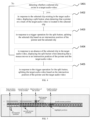
- FIG. 1 is a flow chart of the interaction method of audio-video splitting provided by the embodiment of the present disclosure.
- the method includes: S101: detecting whether a selected clip exists in a target audio-video.
- the target audio-video may be either an audio file or a video file; the embodiment of the present disclosure may implement splitting of an audio or a video in a process of clipping the audio file or the video file. Specifically, splitting may be performed on the audio-video as a whole, or may also be performed on a certain clip in the audio-video.
- the user when the user has a splitting demand for a certain clip in the target audio-video, firstly, at least one clip is determined from the target audio-video as the selected clip. If the user has a splitting demand for the target audio-video as a whole, there is no need to determine the selected clip.
- the selected clip may be determined by dragging the mouse on a track of the target audio-video.
- the selected clip is composed of corresponding audio-video frames from a start position of the dragging mouse operation to an end position of the dragging mouse operation.
- splitting the target audio-video as a whole and splitting the selected clip respectively correspond to different interaction modes, in the embodiment of the present disclosure, detecting whether a selected clip exists in the target audio-video before determining an interaction mode.
- the start position and the end position of the selected clip may be recorded in parameters corresponding to the target audio-video; the detecting whether the selected clip exists in the target audio-video may specifically be detecting whether the start position and the end position of the selected clip are recorded in the parameters corresponding to the target audio-video. If the start position and the end position of the selected clip are recorded in the parameters, indicating that the selected clip exists in the target audio-video; if the record corresponding to the start position and the end position of the selected clip in the parameters is 0 or blank, indicating that the selected clip does not exist in the target audio-video.
- S102 in response to the selected clip existing in the target audio-video, displaying a split button when detecting that a pointer on the track of the target audio-video is located in the selected clip.
- the split button is displayed; for example, the pointer on the track of the target audio-video being located in the selected clip indicates that the pointer on the track of the target audio-video is located between the start position and the end position of the selected clip (including the start position and the end position of the selected clip).
- FIG. 2 is a schematic diagram of an audio-video splitting interaction interface provided by the embodiment of the present disclosure
- the pointer of the track is located in the selected clip of the target audio-video (shown in a dotted line box in FIG. 2 ), that is, at this time, the pointer of the track is located between the start position and the end position of the selected clip; accordingly, the split button is displayed on the interaction interface.
- other clips as shown in a dotted dash line box in FIG. 2
- those clips that are grayed out cannot be split.
- the split button when detecting that the pointer on the track of the target audio-video is located in the selected clip, the split button may be displayed in a preset position on the interaction interface, for example, an upper right corner of the interaction interface.
- the embodiment of the present disclosure may display the split button in an intersection position of the pointer and the selected clip, and as shown in FIG. 2 , the intersection position of the pointer and the selected clip has the split button with a "scissors" pattern displayed.
- the user may directly click the split button displayed in the intersection position of the pointer and the selected clip to trigger splitting for the selected clip, without further increasing interaction time for finding the split button located in other positions on the interaction interface.
- the split button when it is not detected that the pointer on the track of the target audio-video is located in the selected clip, the split button is not displayed, so as to avoid misoperation of audio-video splitting caused by the user's mistriggering.
- the split button is always displayed in the intersection position of the pointer and the selected clip.
- FIG. 3 is a schematic diagram of another audio-video splitting interaction interface provided by the embodiment of the present disclosure, a black bold line position is used for highlighting, and is used to more intuitively prompt the user of the position of the split point.
- the selected clip when receiving the trigger operation for the split button, the selected clip is split. Specifically, the selected clip is split into two clips based on the intersection position of the pointer and the selected clip.
- the embodiments of the present disclosure firstly, detecting whether the selected clip exists in the target audio-video; if yes, entering the splitting mode for the selected clip, specifically, when detecting that the pointer on the track of the target audio-video is located in the selected clip, displaying the split button, and when receiving the trigger operation for the split button, the selected clip is split based on the intersection position of the pointer and the selected clip.
- the embodiment of the present disclosure displays the split button when detecting that the pointer is located in the selected clip.
- the split button is triggered at this time to facilitate the user triggering a split operation on the selected clip.
- the split button is displayed only when the user has an audio-video splitting demand, which can reduce misoperation of audio-video splitting to the greatest extent, and improve the user experience to a certain extent.
- FIG. 4 is a flow chart of the interaction method of audio-video splitting provided by the embodiment of the present disclosure; and referring to FIG. 4 , the method includes:
- a caption may also be displayed above the track of the target audio-video; in the embodiment of the present disclosure, when detecting that the mouse moves to the intersection position of the pointer and the caption corresponding to the target audio-video, the step of displaying the split button may also be triggered.
- FIG. 5 is a schematic diagram of another audio-video splitting interaction interface provided by the embodiment of the present disclosure, and the interaction interface presents interaction when the pointer and mouse are located in different positions on the interaction interface.
- the mouse With respect to a first position of the pointer on the interaction interface, the mouse is in a first mouse position at this time, and because the mouse has not moved to the intersection position of the pointer and the target audio-video, nor is it located in the intersection position of the pointer and the caption corresponding to the target audio-video, the split button is not displayed.
- the mouse With respect to a second position of the pointer on the interaction interface, the mouse is in a second mouse position at this time, and because the mouse only moves to a display region of the target audio-video, but does not move to the second position of the pointer, nor is it located in the intersection position of the pointer and the caption corresponding to the target audio-video, the split button is not displayed.
- the mouse With respect to a third position of the pointer on the interaction interface, the mouse is located in a third mouse position at this time, and because the mouse moves to the intersection position of the pointer and the caption, the split button is displayed.
- a fourth position of the pointer on the interaction interface the mouse is located in a fourth mouse position at this time, and because the mouse moves to the intersection position of the pointer and the target audio-video, the split button is displayed.
- the embodiment of the present disclosure may display the split button in the intersection position of the pointer and the target audio-video, and as shown in the fourth position of the pointer in FIG. 5 , the intersection position of the pointer and the target audio-video has the split button with a "scissors" pattern displayed.
- the user may directly cut the target audio-video by moving the mouse to the intersection position of the pointer and the target audio-video and clicking the split button, making the interaction process smooth.
- the split button when it is not detected that the mouse moves to the intersection position of the pointer and the target audio-video, the split button is not displayed, so as to avoid misoperation of audio-video splitting caused by the user's mistriggering.
- a black bold line position is used for highlighting, and is used to more intuitively prompt the user of the position of the split point.
- the target audio-video when receiving the trigger operation for the split button, is split as a whole. Specifically, the target audio-video is split into two clips based on the intersection position of the pointer and the target audio-video.
- the embodiment of the present disclosure if it is determined that no selected clip exists in the target audio-video, entering the splitting mode for the target audio-video, specifically, when detecting that the mouse moves to the intersection position of the pointer and the target audio-video, displaying the split button, and when receiving the trigger operation for the split button, splitting the target audio-video based on the intersection position of the pointer and the target audio-video.
- the embodiment of the present disclosure displays the split button when no selected clip exists in the target audio-video (i.e., an absence of the selected clip in the target audio-video) and detecting that the mouse moves to the intersection position of the pointer and the target audio-video.
- the split button is triggered at this time to facilitate the user triggering a split operation on the target audio-video.
- the split button is displayed only when the user has an audio-video splitting demand, which can reduce misoperation of audio-video splitting to the greatest extent, and improve the user experience to a certain extent.
- FIG. 6 is a structural schematic diagram of the interaction apparatus of audio-video splitting provided by the embodiment of the present disclosure; and the apparatus includes:
- FIG. 7 is a structural schematic diagram of another interaction apparatus of audio-video splitting provided by the embodiment of the present disclosure. Referring to FIG. 7 , on the basis of FIG. 6 , the apparatus further includes:
- the first display module is configured to: in response to detecting that the pointer on the track of the target audio-video is located in the selected clip, displaying the split button in the intersection position of the pointer and the selected clip.
- the apparatus further includes: a first highlight display module, configured to highlight, in response to detecting that a mouse moves to a position of the split button, the intersection position of the pointer and the selected clip.
- the second display module is configured to: display, in response to detecting that the mouse moves to the intersection position of the pointer and the target audio-video, the split button in the intersection position of the pointer and the target audio-video.
- the apparatus further includes: a second highlight display module, configured to highlight, in response to detecting that the mouse moves to a position of the split button, the intersection position of the pointer and the target audio-video.
- a second highlight display module configured to highlight, in response to detecting that the mouse moves to a position of the split button, the intersection position of the pointer and the target audio-video.
- the apparatus further includes: a third display module, configured to display the split button in response to detecting that the mouse moves to an intersection position of the pointer and a caption corresponding to the target audio-video.
- the split button is displayed when no selected clip exists in the target audio-video and detecting that the mouse moves to the intersection position of the pointer and the target audio-video; or, the split button is displayed when the selected clip exists in the target audio-video and detecting that the pointer is located in the selected clip.
- the above-described opportunity of displaying the split button may indicate that the user currently has an audio-video splitting demand, and at this time, display of the split button is triggered to facilitate the user triggering the split operation.
- the split button is displayed only when the user has an audio-video splitting demand, which can reduce misoperation of audio-video splitting to the greatest extent, and improve the user experience to a certain extent.
- an embodiment of the present disclosure further provides an interaction device of audio-video splitting.
- the device may include: a processor 801, a memory 802, an input apparatus 803, and an output apparatus 804.
- the number of processors 801 in the video processing device may be one or more, taking one processor as an example in FIG. 8 .
- the processor 801, the memory 802, the input apparatus 803 and the output apparatus 804 may be connected by a bus or other means, taking connection by a bus as an example in FIG. 8 .
- the memory 802 may be configured to store software program and module; and the processor 801 may execute various functional applications and data processing of the video processing device by running the software program and the module stored in the memory 802.
- the memory 802 may mainly include a program storage region and a data storage region, the program storage region may store an operating system, an application required for at least one function, etc.
- the memory 802 may include a high-speed random access memory, and may also include a nonvolatile memory, for example, at least one disk storage device, a flash memory, or other volatile solid-state storage device.
- the input apparatus 803 may be configured to receive input digital or character information and generate signal inputs related to user setting and function control of the interaction device of audio-video splitting.
- the processor 801 will load executable files corresponding to the processes of one or more applications into the memory 802 according to instructions below, and the processor 801 may run the applications stored in the memory 802, thereby implementing various functions of the interaction device f audio-video splitting as described above.
Landscapes
- Engineering & Computer Science (AREA)
- Multimedia (AREA)
- Signal Processing (AREA)
- Human Computer Interaction (AREA)
- General Engineering & Computer Science (AREA)
- Theoretical Computer Science (AREA)
- Physics & Mathematics (AREA)
- General Physics & Mathematics (AREA)
- Databases & Information Systems (AREA)
- User Interface Of Digital Computer (AREA)
- Studio Circuits (AREA)
Applications Claiming Priority (2)
| Application Number | Priority Date | Filing Date | Title |
|---|---|---|---|
| CN202010718080.XA CN111901534B (zh) | 2020-07-23 | 2020-07-23 | 一种音视频分割的交互方法、装置、设备及存储介质 |
| PCT/CN2021/107367 WO2022017382A1 (zh) | 2020-07-23 | 2021-07-20 | 音视频分割的交互方法、装置、设备及存储介质 |
Publications (2)
| Publication Number | Publication Date |
|---|---|
| EP4171016A1 true EP4171016A1 (de) | 2023-04-26 |
| EP4171016A4 EP4171016A4 (de) | 2023-12-06 |
Family
ID=73189746
Family Applications (1)
| Application Number | Title | Priority Date | Filing Date |
|---|---|---|---|
| EP21847150.6A Pending EP4171016A4 (de) | 2020-07-23 | 2021-07-20 | Verfahren und vorrichtung zur interaktion zwischen audio-/videosegmentierung sowie vorrichtung und speichermedium |
Country Status (5)
| Country | Link |
|---|---|
| US (1) | US12189930B2 (de) |
| EP (1) | EP4171016A4 (de) |
| JP (1) | JP7471507B2 (de) |
| CN (1) | CN111901534B (de) |
| WO (1) | WO2022017382A1 (de) |
Families Citing this family (2)
| Publication number | Priority date | Publication date | Assignee | Title |
|---|---|---|---|---|
| CN111901534B (zh) | 2020-07-23 | 2022-03-29 | 北京字节跳动网络技术有限公司 | 一种音视频分割的交互方法、装置、设备及存储介质 |
| CN113986083B (zh) * | 2021-10-29 | 2024-09-17 | 维沃移动通信有限公司 | 文件处理的方法和电子设备 |
Family Cites Families (23)
| Publication number | Priority date | Publication date | Assignee | Title |
|---|---|---|---|---|
| AU710297B2 (en) * | 1995-02-23 | 1999-09-16 | Avid Technology, Inc. | Portable moving picture recording device including switching control for multiple data flow configurations |
| JP4243346B2 (ja) * | 1997-11-11 | 2009-03-25 | トムソン ライセンシング | ノンリニア映像放送システム |
| US8732221B2 (en) * | 2003-12-10 | 2014-05-20 | Magix Software Gmbh | System and method of multimedia content editing |
| US10692536B1 (en) * | 2005-04-16 | 2020-06-23 | Apple Inc. | Generation and use of multiclips in video editing |
| WO2010071996A1 (en) * | 2008-12-23 | 2010-07-01 | Gary Mark Symons | Digital media editing interface |
| US8392004B2 (en) * | 2009-04-30 | 2013-03-05 | Apple Inc. | Automatic audio adjustment |
| US8418082B2 (en) | 2009-05-01 | 2013-04-09 | Apple Inc. | Cross-track edit indicators and edit selections |
| US8627207B2 (en) * | 2009-05-01 | 2014-01-07 | Apple Inc. | Presenting an editing tool in a composite display area |
| US8910046B2 (en) * | 2010-07-15 | 2014-12-09 | Apple Inc. | Media-editing application with anchored timeline |
| US8875025B2 (en) * | 2010-07-15 | 2014-10-28 | Apple Inc. | Media-editing application with media clips grouping capabilities |
| US8244103B1 (en) * | 2011-03-29 | 2012-08-14 | Capshore, Llc | User interface for method for creating a custom track |
| US20130073961A1 (en) * | 2011-09-20 | 2013-03-21 | Giovanni Agnoli | Media Editing Application for Assigning Roles to Media Content |
| US9792955B2 (en) * | 2011-11-14 | 2017-10-17 | Apple Inc. | Automatic generation of multi-camera media clips |
| US9728224B2 (en) * | 2013-01-08 | 2017-08-08 | Marcus van Bavel | Video editing system user interface using virtual film equipment |
| US20150371677A1 (en) * | 2014-06-19 | 2015-12-24 | BrightSky Labs, Inc. | User interface for video editing system |
| US11509944B2 (en) * | 2017-05-18 | 2022-11-22 | Nbcuniversal Media, Llc | System and method for presenting contextual clips for distributed content |
| US11856315B2 (en) * | 2017-09-29 | 2023-12-26 | Apple Inc. | Media editing application with anchored timeline for captions and subtitles |
| CN108156407A (zh) * | 2017-12-13 | 2018-06-12 | 深圳市金立通信设备有限公司 | 一种视频剪辑方法及终端 |
| CN109213400A (zh) * | 2018-08-23 | 2019-01-15 | Oppo广东移动通信有限公司 | 多媒体对象的处理方法、装置、终端及存储介质 |
| CN110971957B (zh) * | 2018-09-30 | 2022-04-15 | 阿里巴巴集团控股有限公司 | 一种视频编辑方法、装置以及移动终端 |
| CN305492138S (de) * | 2019-03-15 | 2019-12-13 | ||
| CN110166652A (zh) * | 2019-05-28 | 2019-08-23 | 成都依能科技股份有限公司 | 多轨道音视频同步编辑方法 |
| CN111901534B (zh) * | 2020-07-23 | 2022-03-29 | 北京字节跳动网络技术有限公司 | 一种音视频分割的交互方法、装置、设备及存储介质 |
-
2020
- 2020-07-23 CN CN202010718080.XA patent/CN111901534B/zh active Active
-
2021
- 2021-07-20 EP EP21847150.6A patent/EP4171016A4/de active Pending
- 2021-07-20 WO PCT/CN2021/107367 patent/WO2022017382A1/zh not_active Ceased
- 2021-07-20 JP JP2023504034A patent/JP7471507B2/ja active Active
-
2022
- 2022-12-21 US US18/069,839 patent/US12189930B2/en active Active
Also Published As
| Publication number | Publication date |
|---|---|
| CN111901534B (zh) | 2022-03-29 |
| WO2022017382A1 (zh) | 2022-01-27 |
| US12189930B2 (en) | 2025-01-07 |
| JP2023534069A (ja) | 2023-08-07 |
| CN111901534A (zh) | 2020-11-06 |
| EP4171016A4 (de) | 2023-12-06 |
| US20230185438A1 (en) | 2023-06-15 |
| JP7471507B2 (ja) | 2024-04-19 |
Similar Documents
| Publication | Publication Date | Title |
|---|---|---|
| US12481817B2 (en) | Method and apparatus for generating image file | |
| EP3951578B1 (de) | Verarbeitungsverfahren, vorrichtung und einrichtung zur anzeige auf getrennten bildschirmen und speichermedium | |
| US9158432B2 (en) | Region recommendation device, region recommendation method and recording medium | |
| CN109933256B (zh) | 应用程序切换方法、应用程序切换装置、介质和计算设备 | |
| US20140304631A1 (en) | Method and device for arranging icons | |
| US20180239777A1 (en) | Method and apparatus for dissolving folder and mobile terminal | |
| US12189930B2 (en) | Interaction method of multimedia segmentation, apparatus, device and storage medium | |
| EP4171012A1 (de) | Videoverarbeitungsverfahren und -vorrichtung, vorrichtung und speichermedium | |
| EP4171018A1 (de) | Verfahren und vorrichtung zur erzeugung von untertiteln sowie vorrichtung und speichermedium | |
| EP3840346A1 (de) | Steuerungsbetriebsverfahren und elektronische vorrichtung | |
| US10303349B2 (en) | Image-based application automation | |
| US10216401B2 (en) | Information processing device and method for multi-touch user interface | |
| EP4675621A1 (de) | Videobearbeitungsverfahren und -vorrichtung und computerlesbares speichermedium | |
| US20180067785A1 (en) | Performance of data pasting-related action based on cut or copied data attribute | |
| US20170364233A1 (en) | Operation processing method, electronic device, and computer storage medium | |
| CN104765563A (zh) | 一种终端应用程序的控制方法及装置 | |
| CN109460175B (zh) | 移动应用图标的方法、装置、电子终端及介质 | |
| EP3734431A1 (de) | Bildschwenkverfahren | |
| US9285956B2 (en) | Information processing device, information processing method and information processing program | |
| WO2019024507A1 (zh) | 一种触摸控制方法、装置及终端 | |
| US9846494B2 (en) | Information processing device and information input control program combining stylus and finger input | |
| EP4092516A1 (de) | Verfahren zur zurückweisung falscher berührungen, endgerät und speichermedium | |
| CN113687922A (zh) | 任务切换的控制方法、装置及相关设备 | |
| US20250199888A1 (en) | Full event tracking method and apparatus for page, computer device, and storage medium | |
| CN111142773A (zh) | 操作控制方法和装置 |
Legal Events
| Date | Code | Title | Description |
|---|---|---|---|
| STAA | Information on the status of an ep patent application or granted ep patent |
Free format text: STATUS: THE INTERNATIONAL PUBLICATION HAS BEEN MADE |
|
| PUAI | Public reference made under article 153(3) epc to a published international application that has entered the european phase |
Free format text: ORIGINAL CODE: 0009012 |
|
| STAA | Information on the status of an ep patent application or granted ep patent |
Free format text: STATUS: REQUEST FOR EXAMINATION WAS MADE |
|
| 17P | Request for examination filed |
Effective date: 20230119 |
|
| AK | Designated contracting states |
Kind code of ref document: A1 Designated state(s): AL AT BE BG CH CY CZ DE DK EE ES FI FR GB GR HR HU IE IS IT LI LT LU LV MC MK MT NL NO PL PT RO RS SE SI SK SM TR |
|
| DAV | Request for validation of the european patent (deleted) | ||
| DAX | Request for extension of the european patent (deleted) | ||
| A4 | Supplementary search report drawn up and despatched |
Effective date: 20231107 |
|
| RIC1 | Information provided on ipc code assigned before grant |
Ipc: H04N 5/262 20060101AFI20231031BHEP |
|
| STAA | Information on the status of an ep patent application or granted ep patent |
Free format text: STATUS: EXAMINATION IS IN PROGRESS |
|
| 17Q | First examination report despatched |
Effective date: 20240910 |