EP4173625A1 - Boromycin als gametozytotozide verbindung - Google Patents
Boromycin als gametozytotozide verbindung Download PDFInfo
- Publication number
- EP4173625A1 EP4173625A1 EP21205968.7A EP21205968A EP4173625A1 EP 4173625 A1 EP4173625 A1 EP 4173625A1 EP 21205968 A EP21205968 A EP 21205968A EP 4173625 A1 EP4173625 A1 EP 4173625A1
- Authority
- EP
- European Patent Office
- Prior art keywords
- boromycin
- malaria
- plasmodium
- activity
- plasmodium falciparum
- Prior art date
- Legal status (The legal status is an assumption and is not a legal conclusion. Google has not performed a legal analysis and makes no representation as to the accuracy of the status listed.)
- Withdrawn
Links
Images


Classifications
-
- A—HUMAN NECESSITIES
- A61—MEDICAL OR VETERINARY SCIENCE; HYGIENE
- A61K—PREPARATIONS FOR MEDICAL, DENTAL OR TOILETRY PURPOSES
- A61K45/00—Medicinal preparations containing active ingredients not provided for in groups A61K31/00 - A61K41/00
- A61K45/06—Mixtures of active ingredients without chemical characterisation, e.g. antiphlogistics and cardiaca
-
- A—HUMAN NECESSITIES
- A61—MEDICAL OR VETERINARY SCIENCE; HYGIENE
- A61K—PREPARATIONS FOR MEDICAL, DENTAL OR TOILETRY PURPOSES
- A61K31/00—Medicinal preparations containing organic active ingredients
- A61K31/69—Boron compounds
-
- A—HUMAN NECESSITIES
- A61—MEDICAL OR VETERINARY SCIENCE; HYGIENE
- A61K—PREPARATIONS FOR MEDICAL, DENTAL OR TOILETRY PURPOSES
- A61K31/00—Medicinal preparations containing organic active ingredients
- A61K31/33—Heterocyclic compounds
- A61K31/335—Heterocyclic compounds having oxygen as the only ring hetero atom, e.g. fungichromin
-
- A—HUMAN NECESSITIES
- A61—MEDICAL OR VETERINARY SCIENCE; HYGIENE
- A61K—PREPARATIONS FOR MEDICAL, DENTAL OR TOILETRY PURPOSES
- A61K31/00—Medicinal preparations containing organic active ingredients
- A61K31/65—Tetracyclines
-
- A—HUMAN NECESSITIES
- A61—MEDICAL OR VETERINARY SCIENCE; HYGIENE
- A61P—SPECIFIC THERAPEUTIC ACTIVITY OF CHEMICAL COMPOUNDS OR MEDICINAL PREPARATIONS
- A61P33/00—Antiparasitic agents
- A61P33/02—Antiprotozoals, e.g. for leishmaniasis, trichomoniasis, toxoplasmosis
- A61P33/06—Antimalarials
-
- Y—GENERAL TAGGING OF NEW TECHNOLOGICAL DEVELOPMENTS; GENERAL TAGGING OF CROSS-SECTIONAL TECHNOLOGIES SPANNING OVER SEVERAL SECTIONS OF THE IPC; TECHNICAL SUBJECTS COVERED BY FORMER USPC CROSS-REFERENCE ART COLLECTIONS [XRACs] AND DIGESTS
- Y02—TECHNOLOGIES OR APPLICATIONS FOR MITIGATION OR ADAPTATION AGAINST CLIMATE CHANGE
- Y02A—TECHNOLOGIES FOR ADAPTATION TO CLIMATE CHANGE
- Y02A50/00—TECHNOLOGIES FOR ADAPTATION TO CLIMATE CHANGE in human health protection, e.g. against extreme weather
- Y02A50/30—Against vector-borne diseases, e.g. mosquito-borne, fly-borne, tick-borne or waterborne diseases whose impact is exacerbated by climate change
Definitions
- the present invention relates to a new compound for the inhibition of the transmission of malaria in humans, a pharmaceutical composition comprising said compound, and a method for the inhibition of the transmission of malaria in humans comprising the administration of said compound.
- the invention relates to the field of pharmaceutically active compounds, more particular to the field of anti-malaria compounds.
- Clinical symptoms of malaria appear during the replication of parasites in the erythrocytic cycle (lasting 24 h for P . knowlesi and 48 h for P. falciparum ) in the human host. These symptoms can develop into life-threatening complications such as severe anemia, liver and kidney failure and cerebral malaria if not treated properly.
- Plasmodium parasites have a complex life cycle that includes mosquito and vertebrate hosts. During each replication cycle, a small number of asexual parasites starts a different genetic program and develops into the transmissible sexual form, the gametocytes.
- Tetracyclines were the first antibiotics to treat uncomplicated malaria that dates back to the 1950s.
- doxycycline and the combination of sulfadoxine-pyrimethamine are used for malaria prevention of travelers and risk groups in malaria-endemic regions, respectively.
- clindamycin combined with quinine is used to treat pregnant women during the first trimester or combined with artesunate or quinine to treat uncomplicated malaria when an ACT is unavailable.
- Tetracyclines and macrolides both naturally produced by Streptomyces , have shown promising antiplasmodial activities.
- Antibiotics can be fast or slow-acting compounds, depending on whether they target the treated parasites or act on their progeny, causing the so-called delayed death effect.
- tetracyclines belong to the latter group, but novel tetracyclines have shown superior antiplasmodial activity.
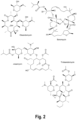
- kitsasamycin also called leucomycin
- primaquine is the only approved drug active against gametocytes, therefore allowing the inhibition of the transmission of the malaria parasite between humans; see Sinden. Developing transmission-blocking strategies for malaria control. PLoS Pathog. 533 (2017) 13:1-12 . However, its use is restricted mainly due to its haemolysis-inducing effect in patients with glucose-6-phosphate dehydrogenase deficiency ( Wadi et al. Recent advances in transmission-blocking drugs for malaria elimination. Future Med Chem. (2019) 11:3047-88 ), and additionally it has to be metabolized by a liver enzyme (CYP2D6) to be active. Compounds with multi-stage activities and novel modes of action are especially desired for the next generation of antimalarial compounds.
- the object is met by the provision of boromycin for use in the inhibition of the transmission of malaria in humans.
- this object is also met by the provision of a pharmaceutical composition for the inhibition of transmission of malaria in humans comprising boromycin and a pharmaceutically acceptable carrier.
- inhibition of the transmission means that the transfer of the malaria parasite from the human being having received said boromycin to another human being is reduced or even prevented, said reduction or prevention is in comparison to the transfer from a reference human being, not having received said boromycin, to another human being.
- the inhibition of the transmission refers to an inhibitory activity of said boromycin against the developmental stage of the malaria parasite, which is responsible for the transmission to another host.
- said developmental stage is a gametocyte.
- a “gametocytocidal compound” refers to an active agent which is destructive to gametocytes, i.e. the developmental stage of the malaria parasite which is responsible for the transmission to another host.
- “Pharmaceutically acceptably carriers” are well known to the skilled person. They allow a proper formulation of the boromycin and serve to improve the selectivity, effectiveness, and/or safety of drug administration.
- Pharmaceutically acceptable carriers include, without being limited thereto, solvents, fillers, binders, lubricants, stabilizers, surfactants, suspensions, thickeners, emulsifiers, preserving agents, liposomes, micelles, microspheres, nanoparticles, etc. suitable for the particular form of dosage. Except for cases, when the medium of conventional carriers is incompatible with the active ingredient, for example, upon occurrence of any undesirable biological effects or other adverse interactions with any other ingredient(s) of the pharmaceutical composition, the use of such compositions falls within the scope of this invention.
- Materials that can serve as pharmaceutically acceptable carriers include, but are not limited to, monosaccharides and oligosaccharides, as well as derivatives thereof; malt, gelatin; talc; excipients such as: cocoa butter and suppository waxes; oils, such as peanut oil, cottonseed oil, safflower oil, sesame oil, olive oil, corn oil and soybean oil; glycols such as propylene glycol; esters, such as ethyl oleate and ethyl laurate; agar; buffering agents, such as magnesium hydroxide and aluminium hydroxide; alginic acid; pyrogen-free water; isotonic saline, Ringer's solution; ethyl alcohol and phosphate buffer solutions.
- excipients such as: cocoa butter and suppository waxes
- oils such as peanut oil, cottonseed oil, safflower oil, sesame oil, olive oil, corn oil and soybean oil
- composition may contain other non-toxic compatible lubricants, for example sodium lauryl sulfate and magnesium stearate, as well as coloring agents, parting liquids, film formers, sweeteners, flavoring additives and flavorants, preserving agents and antioxidants.
- non-toxic compatible lubricants for example sodium lauryl sulfate and magnesium stearate, as well as coloring agents, parting liquids, film formers, sweeteners, flavoring additives and flavorants, preserving agents and antioxidants.
- phrases "pharmaceutically acceptable” refers to those compounds, materials, compositions, and/or dosage forms which are, within the scope of sound medical judgment, suitable for use in contact with the tissues of human beings and animals without excessive toxicity, irritation, allergic response, or other problem or complication, commensurate with a reasonable benefit/risk ratio.
- Suitable pharmaceutical carriers or excipients as well as pharmaceutical necessities for use in pharmaceutical formulations are described in Remington - The Science and Practice of Pharmacy, 23rd edition, 2020 , a well-known reference text in this field, and in the USP/NF (United States Pharmacopeia and the National Formulary). Other sources are also available to one of ordinary skill in the art.
- compositions as well as the method to be explained below of the present invention may be utilized to treat a human being in need thereof.
- Bostremycin (CAS number: 34524-20-4 , molecular mass: 879.89 mol -1 , formula: C 45 H 74 BNO 15 ) is a bacteriocidal polyether-macrolide antibiotic. It was first isolated from a Streptomyces antibioticus found in a soil sample from Ivory Coast and was first described in 1967. It is notable for being the first natural product found to contain the element boron; see Dunitz et al. Structure of Boromycin. Helv Chim Acta. (1971) 54:1709-13 .
- boromycin includes pharmaceutically acceptable salts thereof, as well as derivatives of boromycin and/or its pharmaceutically acceptable salts.
- U.S. patent no. 3,769,418 discloses an antibiotic named "A 28829” formed by cultivating Streptomyces antibioticus A 28829, said antibiotic is described as having an activity against Plasmodium berghei and Plasmodium gallinaceum which may infect rodents and poultry but no humans.
- boromycin is a highly active and fast acting antibiotic against Plasmodium species which may cause malaria in humans. Importantly, they found that boromycin cannot only be used as a conventional anti-malaria substance but to prevent or reduce the transmission of the Plasmodium species to other subjects due to its surprising gametocytocidal activity.
- boromycin showed a high activity and a fast onset of action, a desired property of antimalarials to quickly reduce parasite load and avoid the disease progression to the severe form. It also showed an excellent selectivity and a favorable toxicity profile.
- the inventors additionally evaluated the activity of boromycin against mature gametocytes and could see a very potent activity superior to the positive control and similarly active as a reference compound. Drugs with transmission-blocking activity are of special interest and would be a great asset for controlling and eliminating malaria.
- said malaria is caused by Plasmodium falciparum.
- Plasmodium falciparum is the most virulent intracellular malaria-causing parasite of the genus Plasmodium, which can infect humans. It is mainly found in Africa and is responsible for most malaria cases and deaths.
- said malaria is caused by Plasmodium knowlesi.
- Plasmodium knowlesi described originally as a simian parasite, was recognized as a human malaria parasite only in 2000. Although Plasmodium knowlesi is prevalent only in a restricted area in South-East Asia and not responsible for many infections when regarded globally, it can cause severe malaria in humans and is phylogenetically closer to other not cultivable human Plasmodium species. The invention provides a remedy for this.
- said pharmaceutical composition comprises an additional active ingredient.
- Said latter measure has the advantage that the addition of an additional active ingredient may result in an action amplification of the boromycin or even a synergistic effect.
- the additional active ingredient may be another anti-malaria compound.
- Another subject-matter of the invention relates to a method for the inhibition of the transmission of malaria in humans comprising the administration of the boromycin according to the invention or of the pharmaceutical composition according to the invention into a human suffering from or suspected of having malaria or of being infected by the parasite.
- the concentration of the solvent did not interfere with parasite growth.
- Plasmodium falciparum laboratory strains 3D7 chloroquine-sensitive, provided by BEI resources, MRA-102
- Dd2 multidrug-resistant, provided by BEI resources, MRA-150
- K1 multidrug-resistant, provided by BEI resources, MRA-159
- 7G8 chloroquine resistant, provided by BEI resources, MRA-154
- NF-54 chloroquine sensitive, provided by Sanaria, a vigorous gametocyte producer
- Plasmodium knowlesi laboratory strain A1-H.1 (kindly provided by Robert Moon of LSHTM, London, UK) were cultivated in vitro as described before.
- the parasites were maintained in complete culture medium consisting of RPMI-1640 (Sigma-Aldrich) supplemented with 1M HEPES N-2-hydroxyethylpiperazine-N-2-ethane sulfonic acid (HEPES) solution (2.4% v/v) (Sigma-Aldrich), 200 mM L-glutamine (Gibco), 50 ⁇ g/ml gentamicin (Gibco), and 10% of AlbuMax II solution containing RPMI, HEPES, NaHCO 3 , D-Glucose and 0.5% wt/vol of albumin, 0.4 g of hypoxanthine at 2.5% hematocrit.
- the cultures were maintained at 5% CO 2 , 5% O 2 , at 37°C, with a change of medium every two days. Plasmodium falciparum parasites were synchronized before assays through magnetic column separation.
- Plasmodium knowlesi was cultivated as described for Plasmodium falciparum, with minor modifications. Parasites were cultivated in complete culture medium as detailed above supplemented with 5% human AB serum. Shortly before the growth inhibition assays, Plasmodium knowlesi were synchronized by density centrifugation with Nycodenz solution (Progen) to recover mature schizonts as described before. The Nycodenz solution was prepared according to the manufacturer's instruction and kept protected from the light at 4°C and warmed before using.
- the asexual growth inhibition assays were performed with 3D7 and A1-H.1, while NF-54 was used for gametocyte assays.
- Plasmodium falciparum gametocyte culture was performed as described previously with minor modifications.
- the gametocyte culture was initiated with synchronized ring-stage NF54 parasites at 6% hematocrit and 0.3% parasitemia.
- Complete culture medium (as described above) was supplemented with 5% human serum and changed daily without parasite dilution for 14 days. The medium was doubled when parasitemia reached 5%, and 50-mM N-acetyl-d-glucosamine (MP Biomedicals GmbH) was added between day 11 and day 14 to remove asexual stages.
- mature gametocytes were purified with a Nycodenz and magnetic column separation (MACS) to remove erythrocytes and concentrate the gametocyte population.
- MCS magnetic column separation
- Plasmodium falciparum was measured through an enzyme-linked immunosorbent assay (ELISA) for histidine-rich protein 2 (HRP2) using a microplate reader (CLARIOstar BMG Labtech) (excitation filter: 450 nm).
- ELISA enzyme-linked immunosorbent assay
- Plasmodium knowlesi were grown as described previously with minor modifications. Briefly, the drugs (see Table 1) were distributed in a 3-fold serial dilution in 96-well plates. Synchronized ring-stage parasites were diluted to a parasitemia of 0.5% with O Rh+ erythrocytes and subsequently seeded at a hematocrit of 2% and complete culture medium without human AB serum but double (20%) AlbuMax II solution in a total volume of 225 ⁇ l per well. The growth inhibition of Plasmodium knowlesi was measured with SYBR Green-I (ThermoFisher) using CLARIOstar (BMG Labtech) (490 nm excitation filter).
- Plasmodium falciparum and Plasmodium knowlesi were incubated with the drugs for 3 and 6 days to assess the onset of activity. Both time points were assessed because many antibiotics target only the progeny of the treated parasites, causing a delayed death effect that is measured only after the second replication cycle (after 6 days). Chloroquine and clindamycin were used as positive controls for 3- and 6-day assays, respectively.
- Plasmodium falciparum gametocytes were performed as described previously. Briefly, the drugs were precoated in a 3-fold dilution in 96-well plates. Epoxomicin and methylene blue (Table 1) were used as positive control. Subsequently, the previously purified mature gametocytes were seeded to the plates (50,000 gametocytes/well) and incubated at 37°C in 5% CO 2 and 5% O 2 . After 48 h, the ATP production was measured by the BacTiterGlo assay (Promega), according to the manufacturer's instructions. Finally, the results were quantified using a luminometer (LUmo; Autobio).
- LUmo luminometer
- Asexual Plasmodium falciparum stages, 3D7 and Dd2 were incubated with boromycin at 1 nM for 6 h for visual observation of drug effect. Then, thin blood smears were prepared, fixed in 100% methanol for 10 seconds, and stained with Giemsa (Merck) solution (5%) for 20 minutes. The slides were washed and observed under a Leica DMBL microscope, and pictures were taken using a ProgRes C10 camera and software (Jenoptik), at 100X magnification.
- HepG2 cells obtained from ATCC; HB-8065
- a human hepatocyte carcinoma cell line were maintained in DMEM medium (Sigma-Aldrich) supplemented with 10% of inactivated foetal bovine serum (Sigma-Aldrich), 200 mM L-glutamine (Gibco), 12 mL of HEPES buffer (Gibco), and 50 ⁇ g/ml penicillin/streptomycin solution (Gibco). Trypsin (Gibco) was used to detach the cells when they reached a semi-confluent layer.
- Cytotoxicity was evaluated using the neutral red assay as described previously. Briefly, 300,000 cells were seeded in supplemented Dulbecco's Modified Eagle's Medium (DMEM) medium as described above to 96-well plates. After 24 hours, the cells were incubated with a twofold serial dilution of the respective drug diluted in supplemented DMEM medium for an additional 24 hours. Subsequently, the drug-containing medium was replaced by a supplemented DMEM medium with 1.5% of neutral red, and the cells were incubated for an additional 3 h at 37°C.
- DMEM Dulbecco's Modified Eagle's Medium
- Cells were then washed with phosphate buffered saline (pH 7.2), and 100 ⁇ L of freshly prepared lysing buffer (50% methanol, 49% distilled water, and 1% acetic acid) was added to the plates. Subsequently, the cells were shaken for 10 min and the absorption was measured at a wavelength of 540 nm using CLARIOstar (BMG Labtech).
- phosphate buffered saline pH 7.2
- lysing buffer 50% methanol, 49% distilled water, and 1% acetic acid
- Growth inhibition assays were prepared as described in section 2.2 with modifications to assess whether the apicoplast is the main target of boromycin. Briefly, the parasites ( Plasmodium falciparum strain 3D7) were incubated with boromycin and clindamycin (positive control) and supplemented with isopentenyl pyrophosphate trilithium salt (IPP) (Sigma) at 200 ⁇ M for 6 days as described before. The supplementation with IPP is well-described to rescue treated parasites when the apicoplast is the main target of the drug. The assay was done with and without IPP supplementation on the same plate and results were directly compared.
- IPP isopentenyl pyrophosphate trilithium salt
- boromycin was described to act as a potassium ionophore in Bacillus subtilis and Mycobacterium tuberculosis. So herein, growth inhibition assays complemented with KCI or MgCl 2 (negative control) were performed to evaluate if this is also the case in Plasmodium falciparum. To define a subtoxic concentration of MgCl 2 and KCI for Plasmodium falciparum a standard growth inhibition assays with serial dilutions of these compounds were performed as described in section 1.2. The concentration of 220 ⁇ g/mL was chosen as no signs of toxicity were seen and first inhibitory effects were observed with 440 ⁇ g/mL.
- a growth inhibition assay was prepared with a 2-fold dilution of boromycin with the addition of the sub-toxic concentration of either MgCl 2 (Sigma) or KCI (Sigma) to all wells.
- the assay was run in parallel to a standard growth inhibition assay of boromycin without supplementation of MgCI or KCI as control, and the obtained IC 50 s were compared.
- IC 50 values were determined by nonlinear regression analysis of log concentration-response curves, using the drc v0.9.0 package of R v2.3.1. Mean IC 50 values and standard deviations (SDs) were calculated for each growth inhibition assay using Excel. The chemical structures of the drugs were drawn using ChemDraw 19.0. The graphical presentation of the gametocyte inhibition was done with GraphPad Prism v7.04.
- Plasmodium falciparum and Plasmodium knowlesi parasites were exposed to 15 antibiotics (tetracyclines, macrolides) and chloroquine (control drug) for 3 and for 6 days. This allowed assessing the drug's inhibitory effect on the first and second parasite replication cycle, respectively (see results in Table 2), that indicates a fast or slow onset of antiplasmodial activity of the antibiotics.
- Plasmodium falciparum parasites strain 3D7 ( Figure 2 B) and Dd2 ( Figure 2 C) showed the same pyknotic appearance after boromycin incubation at 1 nM for 6 h, while the untreated control showed the usual ring shape ( Figure 2 A).
- Plasmodium falciparum parasites were incubated with boromycin supplemented with IPP for 6 days to assess whether boromycin targets the apicoplast as described for many antibiotics; clindamycin was used as positive control. At the same time a standard growth inhibition assay without IPP was carried out as a comparator. As expected, clindamycin-treated parasites could be rescued by the supplementation with IPP since the IC 50 values of control and IPP-supplemented parasites were 6.9 nM ⁇ 1.3 and >18000 nM, respectively.
- P. falciparum parasites were incubated with a serial dilution of boromycin, and chloroquine (control) with or without supplementation of 220 ⁇ g/mL of MgCl 2 or KCI, for 3 days to assess whether boromycin has the ionophoric activity on Plasmodium falciparum as described for Mycobacterium and Bacillus subtilis (Table 5).
- Table 5 Activity of boromycin and the control drug chloroquine against the Plasmodium falciparum strain 3D7 in the presence/absence of KCI (220 ⁇ g/ml) and MgCl 2 . (220 ⁇ g/ml). All experiments have been done at least 3 times in duplicate.
- Antibiotics for malaria treatment have been investigated since the middle of the last century, with tetracyclines playing a central role. In recent years, macrolides have also been particularly studied as antimalarials. Although the delayed death effect caused by most antibiotics limits their use as first-line chemotherapy, some antibiotics such as doxycycline, clindamycin, and the combination sulfadoxine-pyrimethamine (that does not display the delayed activity) are recommended as prophylaxis or treatment in certain populations. The need for new alternative therapies, along with the limited investments in drug discovery to treat malaria, make drug repurposing a worthy alternative.
- Plasmodium falciparum is undoubtedly responsible for most of the malaria burden, especially for most of the malaria deaths, which justifies to mainly tailor treatments to this malaria species.
- Plasmodium vivax Plasmodium ovale wallikeri, Plasmodium ovale curtisi, Plasmodium malariae, and Plasmodium knowlesi
- Plasmodium falciparum was the only option for drug screening in vitro because the other human malaria parasites could not be kept in continuous in vitro culture.
- Plasmodium knowlesi has been adapted for in vitro culture and its inclusion in drug screenings could give additional information on antiplasmodial activities of compounds as it is phylogenetically closer to the other human Plasmodium species. Even though previous studies have claimed that most antiplasmodial compounds are equipotent against Plasmodium falciparum and Plasmodium knowlesi, recent studies have reported different susceptibility profiles especially for the novel compounds in development. Plasmodium knowlesi was described as less susceptible to inhibitors of the dihydrofolate reductase, dihydroorotate dehydrogenase, and ATP4.
- boromycin showed a high activity and a fast onset of action, a desired property of antimalarials to quickly reduce parasite load and avoid the disease progression to the severe form. It also showed an excellent selectivity index against HepG2 cells. A favorable toxicity profile was confirmed and encouraged a deeper investigation about the antiplasmodial activity of boromycin.
- the inventors additionally evaluated the activity of boromycin against mature gametocytes and could see a very potent activity superior to the positive control methylene blue, similarly active as the proteasome inhibitor epoxomicin.
- Drugs with transmission-blocking activity are of special interest and would be a great asset for controlling and eliminating malaria.
- primaquine is the only approved drug active against gametocytes but its use is restricted mainly due to its haemolysis-inducing effect in patients with glucose-6-phosphate dehydrogenase deficiency, and additionally it has to be metabolized by a liver enzyme (CYP2D6) to be active.
- CYP2D6 a liver enzyme
- the apicoplast is described as the main target of antibiotics that exert the delayed death effect and the fast-acting antibiotic fosmidomycin.
- Apicoplast-free parasites can survive and proliferate when the medium is supplemented with IPP, but this did not rescue the boromycin-treated parasites in our assay; therefore, we could rule out the apicoplast as a main target.
- boromycin especially for K + channels
- Bacillus subtilis in addition to the impairment of protein, RNA, and DNA synthesis. This ionophoric activity was later confirmed in Mycobacterium bovis, where a rapid loss of membrane potential, reduction of intracellular ATP, and leakage of cytoplasmic proteins were induced and the external addition of a high concentration of KCI (20 mg/mL) decreased boromycin activity from 50% to 10%.
- boromycin acts as a potassium ionophore also in Plasmodium falciparum parasites were simultaneously incubated with boromycin together with the highest non-toxic concentration (220 ⁇ g/mL) of KCI or MgCl 2 (negative control).
- the inventors could not incubate Plasmodium parasites at a similar high ion concentration as in the Mycobaterium experiments, as this concentration was toxic to the parasites.
- the inventors identified a three-fold IC 50 increase with the addition of KCI, suggesting that ionophoric activity could play a role in the potent antiplasmodial activity of boromycin. However, it is most probably not the primary mode of action, as the activity remained in the low nanomolar range. Remarkably, the inventors saw a potentiation of the drug effect by addition of MgCI.
- the inventors presented the antiplasmodial activity of different tetracycline and macrolide antibiotics against different Plasmodium species.
- the tetracyclines tested by the inventors did not show higher in vitro activities than previously tested tetracyclines and all displayed a slow/second cycle onset of action.
- the macrolide boromycin showed the most noticeable results as a fast acting and gametocytocidal compound. These results suggest that boromycin may provide for an alternative therapy for diseases caused by apicomplexan parasites, including Plasmodia.
Landscapes
- Health & Medical Sciences (AREA)
- Veterinary Medicine (AREA)
- Chemical & Material Sciences (AREA)
- Medicinal Chemistry (AREA)
- Pharmacology & Pharmacy (AREA)
- Life Sciences & Earth Sciences (AREA)
- Animal Behavior & Ethology (AREA)
- General Health & Medical Sciences (AREA)
- Public Health (AREA)
- Epidemiology (AREA)
- Tropical Medicine & Parasitology (AREA)
- Chemical Kinetics & Catalysis (AREA)
- General Chemical & Material Sciences (AREA)
- Nuclear Medicine, Radiotherapy & Molecular Imaging (AREA)
- Organic Chemistry (AREA)
- Pharmaceuticals Containing Other Organic And Inorganic Compounds (AREA)
Priority Applications (6)
| Application Number | Priority Date | Filing Date | Title |
|---|---|---|---|
| EP21205968.7A EP4173625A1 (de) | 2021-11-02 | 2021-11-02 | Boromycin als gametozytotozide verbindung |
| PCT/EP2022/080568 WO2023078941A1 (en) | 2021-11-02 | 2022-11-02 | Boromycin as gametocytocidal compound |
| CN202280073988.7A CN118574628A (zh) | 2021-11-02 | 2022-11-02 | 作为杀配子体化合物的硼霉素 |
| EP22813502.6A EP4426311B1 (de) | 2021-11-02 | 2022-11-02 | Boromycin als gametozytozide verbindung |
| US18/650,025 US20240277738A1 (en) | 2021-11-02 | 2024-04-29 | Gametocytocidal compound |
| ZA2024/03319A ZA202403319B (en) | 2021-11-02 | 2024-04-29 | Gametocytocidal compound |
Applications Claiming Priority (1)
| Application Number | Priority Date | Filing Date | Title |
|---|---|---|---|
| EP21205968.7A EP4173625A1 (de) | 2021-11-02 | 2021-11-02 | Boromycin als gametozytotozide verbindung |
Publications (1)
| Publication Number | Publication Date |
|---|---|
| EP4173625A1 true EP4173625A1 (de) | 2023-05-03 |
Family
ID=78500501
Family Applications (2)
| Application Number | Title | Priority Date | Filing Date |
|---|---|---|---|
| EP21205968.7A Withdrawn EP4173625A1 (de) | 2021-11-02 | 2021-11-02 | Boromycin als gametozytotozide verbindung |
| EP22813502.6A Active EP4426311B1 (de) | 2021-11-02 | 2022-11-02 | Boromycin als gametozytozide verbindung |
Family Applications After (1)
| Application Number | Title | Priority Date | Filing Date |
|---|---|---|---|
| EP22813502.6A Active EP4426311B1 (de) | 2021-11-02 | 2022-11-02 | Boromycin als gametozytozide verbindung |
Country Status (5)
| Country | Link |
|---|---|
| US (1) | US20240277738A1 (de) |
| EP (2) | EP4173625A1 (de) |
| CN (1) | CN118574628A (de) |
| WO (1) | WO2023078941A1 (de) |
| ZA (1) | ZA202403319B (de) |
Citations (5)
| Publication number | Priority date | Publication date | Assignee | Title |
|---|---|---|---|---|
| US3769418A (en) | 1965-10-08 | 1973-10-30 | Ciba Geigy Corp | Antibiotic a 28829 |
| US3864479A (en) * | 1974-02-28 | 1975-02-04 | Merck & Co Inc | Boromycin as a coccidiostat |
| GB2012167A (en) * | 1977-12-22 | 1979-07-25 | Ici Ltd | Promoting growth of domestic ruminant animals by use of macrolide antibiotics |
| WO2018106966A1 (en) * | 2016-12-07 | 2018-06-14 | Tufts Medical Center, Inc. | Methods and compositions for prevention and treatment of apicomplexan infections |
| WO2019198825A1 (ja) * | 2018-04-13 | 2019-10-17 | 国立大学法人京都大学 | 微生物由来化合物を用いたアルツハイマー病の予防、治療、または診断薬 |
Family Cites Families (1)
| Publication number | Priority date | Publication date | Assignee | Title |
|---|---|---|---|---|
| US584215A (en) | 1897-06-08 | Bottle-cleaner |
-
2021
- 2021-11-02 EP EP21205968.7A patent/EP4173625A1/de not_active Withdrawn
-
2022
- 2022-11-02 WO PCT/EP2022/080568 patent/WO2023078941A1/en not_active Ceased
- 2022-11-02 EP EP22813502.6A patent/EP4426311B1/de active Active
- 2022-11-02 CN CN202280073988.7A patent/CN118574628A/zh active Pending
-
2024
- 2024-04-29 US US18/650,025 patent/US20240277738A1/en active Pending
- 2024-04-29 ZA ZA2024/03319A patent/ZA202403319B/en unknown
Patent Citations (5)
| Publication number | Priority date | Publication date | Assignee | Title |
|---|---|---|---|---|
| US3769418A (en) | 1965-10-08 | 1973-10-30 | Ciba Geigy Corp | Antibiotic a 28829 |
| US3864479A (en) * | 1974-02-28 | 1975-02-04 | Merck & Co Inc | Boromycin as a coccidiostat |
| GB2012167A (en) * | 1977-12-22 | 1979-07-25 | Ici Ltd | Promoting growth of domestic ruminant animals by use of macrolide antibiotics |
| WO2018106966A1 (en) * | 2016-12-07 | 2018-06-14 | Tufts Medical Center, Inc. | Methods and compositions for prevention and treatment of apicomplexan infections |
| WO2019198825A1 (ja) * | 2018-04-13 | 2019-10-17 | 国立大学法人京都大学 | 微生物由来化合物を用いたアルツハイマー病の予防、治療、または診断薬 |
Non-Patent Citations (9)
| Title |
|---|
| DE CARVALHO LAÍS PESSANHA ET AL: "Boromycin has Rapid-Onset Antibiotic Activity Against Asexual and Sexual Blood Stages of Plasmodium falciparum", FRONTIERS IN CELLULAR AND INFECTION MICROBIOLOGY, vol. 11, 14 January 2022 (2022-01-14), XP055908510, DOI: 10.3389/fcimb.2021.802294 * |
| DOMINIQUE LAURENT ET AL: "Antiplasmodial Marine Natural Products in the Perspective of Current Chemotherapy and Prevention of Malaria. A Review", MARINE BIOTECHNOLOGY, SPRINGER-VERLAG, NE, vol. 8, no. 5, 30 March 2006 (2006-03-30), pages 433 - 447, XP019431941, ISSN: 1436-2236, DOI: 10.1007/S10126-006-6100-Y * |
| DUNITZ ET AL., STRUCTURE OF BOROMYCIN. HELV CHIM ACTA., vol. 54, 1971, pages 1709 - 13 |
| KOHNO ET AL.: "Boromycin, an Anti-HIV antibiotic", BIOSCI BIOTECHNOL BIOCHEM., vol. 60, 1996, pages 1036 - 7 |
| MOREIRA ET AL.: "Boromycin kills Mycobacterial persisters without detectable resistance", FRONT IN MICROBIOL, vol. 7, 2016, pages 199 |
| PLOS PATHOG, vol. 533, no. 13, 2017, pages 1 - 12 |
| PRELOGABENOJA ET AL.: "Antimicrob Agents Chemother", vol. 65, 1973, article "Boromycin has potent anti-Toxoplasma and anti-Cryptosporidium activity", pages: e01278 - 20 |
| SHIMIZU YOHEI ET AL: "Aplasmomycin and boromycin are specific inhibitors of the futalosine pathway", THE JOURNAL OF ANTIBIOTICS, NATURE PUBLISHING GROUP UK, LONDON, vol. 71, no. 11, 8 August 2018 (2018-08-08), pages 968 - 970, XP036623833, ISSN: 0021-8820, [retrieved on 20180808], DOI: 10.1038/S41429-018-0087-2 * |
| WADI ET AL.: "Recent advances in transmission-blocking drugs for malaria elimination", FUTURE MED CHEM., vol. 11, 2019, pages 3047 - 88 |
Also Published As
| Publication number | Publication date |
|---|---|
| US20240277738A1 (en) | 2024-08-22 |
| ZA202403319B (en) | 2025-08-27 |
| EP4426311B1 (de) | 2026-04-29 |
| CN118574628A (zh) | 2024-08-30 |
| WO2023078941A1 (en) | 2023-05-11 |
| EP4426311A1 (de) | 2024-09-11 |
Similar Documents
| Publication | Publication Date | Title |
|---|---|---|
| El-Zawawy et al. | Triclosan and triclosan-loaded liposomal nanoparticles in the treatment of acute experimental toxoplasmosis | |
| Kumar et al. | Perspective in antimalarial chemotherapy | |
| US6677350B1 (en) | Beta-fluoroethyl thiourea compounds and use | |
| CN102724874B (zh) | 治疗疟疾、结核病和mac疾病的方法 | |
| US12202785B2 (en) | Modified tetracycline for treatment of alcohol use disorder, pain and other disorders involving potential inflammatory processes | |
| Lechuga et al. | Interactions between 4-aminoquinoline and heme: Promising mechanism against Trypanosoma cruzi | |
| Burns et al. | Retargeting azithromycin analogues to have dual-modality antimalarial activity | |
| US6627641B1 (en) | Antimalarial naphthylisoquinoline alkaloids and pharmaceutical compositions and medical uses thereof | |
| de Souza et al. | Cutaneous leishmaniasis: new oral therapeutic approaches under development | |
| EP4426311B1 (de) | Boromycin als gametozytozide verbindung | |
| US20080113926A1 (en) | 9A-Carbamoyl-Y-Aminopropyl- And 9A-Thiocabamoyl-Y-Aminopropyl-Azalides With Antimalarial Activity | |
| da Silva et al. | Further evidence that naphthoquinone inhibits Toxoplasma gondii growth in vitro | |
| Gazanion et al. | In vitro activity of nicotinamide/antileishmanial drug combinations | |
| US20080227730A1 (en) | 9A-Carbamoyl and Thiocarbamoyl Azalides With Antimalarial Activity | |
| CN117122595B (zh) | 吡啶衍生物的用途 | |
| EP2520293A1 (de) | Verbindungen zur Verwendung bei der Behandlung von Filariose | |
| Biglari-Moghadam et al. | Efficacy of clofazimine against acute and chronic Toxoplasma gondii infection in mice | |
| JP2011506398A (ja) | プラスモディウム感染症の予防及び治療のための化合物 | |
| WO2013071365A1 (en) | A method of treatment and prophylaxis and compositions useful therefor | |
| US12156915B2 (en) | Selected artemisinin dimers for the treatment of lashmaniasis | |
| JP7742093B2 (ja) | マラリア予防治療薬 | |
| Tileklioğlu et al. | Investigation of the Antiparasitic Potential of Luteolin: in vitro Activity and Comparison with Standard Therapeutics | |
| Tali et al. | Eschweilenol C and subfractions from Terminalia plants disrupt haemoglobin metabolism, inhibiting Plasmodium falciparum growth at rings and trophozoite stages | |
| Dalimi et al. | The therapeutic effect of atovaquone and clindamycin on the reduction of tissue cysts of PRU strain of Toxoplasma gondii | |
| Agwu | Mechanisms of Resistance to Antiparasitic Agents |
Legal Events
| Date | Code | Title | Description |
|---|---|---|---|
| PUAI | Public reference made under article 153(3) epc to a published international application that has entered the european phase |
Free format text: ORIGINAL CODE: 0009012 |
|
| STAA | Information on the status of an ep patent application or granted ep patent |
Free format text: STATUS: REQUEST FOR EXAMINATION WAS MADE |
|
| 17P | Request for examination filed |
Effective date: 20211102 |
|
| AK | Designated contracting states |
Kind code of ref document: A1 Designated state(s): AL AT BE BG CH CY CZ DE DK EE ES FI FR GB GR HR HU IE IS IT LI LT LU LV MC MK MT NL NO PL PT RO RS SE SI SK SM TR |
|
| STAA | Information on the status of an ep patent application or granted ep patent |
Free format text: STATUS: THE APPLICATION IS DEEMED TO BE WITHDRAWN |
|
| 18D | Application deemed to be withdrawn |
Effective date: 20250603 |