EP4173702A1 - Synthèse de nanoparticules métalliques assistée par acide polymaléique pour application de catalyse à trois voies - Google Patents
Synthèse de nanoparticules métalliques assistée par acide polymaléique pour application de catalyse à trois voies Download PDFInfo
- Publication number
- EP4173702A1 EP4173702A1 EP22203456.3A EP22203456A EP4173702A1 EP 4173702 A1 EP4173702 A1 EP 4173702A1 EP 22203456 A EP22203456 A EP 22203456A EP 4173702 A1 EP4173702 A1 EP 4173702A1
- Authority
- EP
- European Patent Office
- Prior art keywords
- support material
- maleic acid
- pgm
- acid
- containing polymer
- Prior art date
- Legal status (The legal status is an assumption and is not a legal conclusion. Google has not performed a legal analysis and makes no representation as to the accuracy of the status listed.)
- Pending
Links
Images

Classifications
-
- B—PERFORMING OPERATIONS; TRANSPORTING
- B01—PHYSICAL OR CHEMICAL PROCESSES OR APPARATUS IN GENERAL
- B01J—CHEMICAL OR PHYSICAL PROCESSES, e.g. CATALYSIS OR COLLOID CHEMISTRY; THEIR RELEVANT APPARATUS
- B01J23/00—Catalysts comprising metals or metal oxides or hydroxides, not provided for in group B01J21/00
- B01J23/38—Catalysts comprising metals or metal oxides or hydroxides, not provided for in group B01J21/00 of noble metals
- B01J23/40—Catalysts comprising metals or metal oxides or hydroxides, not provided for in group B01J21/00 of noble metals of the platinum group metals
- B01J23/46—Ruthenium, rhodium, osmium or iridium
- B01J23/464—Rhodium
-
- B—PERFORMING OPERATIONS; TRANSPORTING
- B01—PHYSICAL OR CHEMICAL PROCESSES OR APPARATUS IN GENERAL
- B01J—CHEMICAL OR PHYSICAL PROCESSES, e.g. CATALYSIS OR COLLOID CHEMISTRY; THEIR RELEVANT APPARATUS
- B01J37/00—Processes, in general, for preparing catalysts; Processes, in general, for activation of catalysts
- B01J37/08—Heat treatment
-
- B—PERFORMING OPERATIONS; TRANSPORTING
- B01—PHYSICAL OR CHEMICAL PROCESSES OR APPARATUS IN GENERAL
- B01D—SEPARATION
- B01D53/00—Separation of gases or vapours; Recovering vapours of volatile solvents from gases; Chemical or biological purification of waste gases, e.g. engine exhaust gases, smoke, fumes, flue gases, aerosols
- B01D53/34—Chemical or biological purification of waste gases
- B01D53/92—Chemical or biological purification of waste gases of engine exhaust gases
- B01D53/94—Chemical or biological purification of waste gases of engine exhaust gases by catalytic processes
- B01D53/9445—Simultaneously removing carbon monoxide, hydrocarbons or nitrogen oxides making use of three-way catalysts [TWC] or four-way-catalysts [FWC]
- B01D53/945—Simultaneously removing carbon monoxide, hydrocarbons or nitrogen oxides making use of three-way catalysts [TWC] or four-way-catalysts [FWC] characterised by a specific catalyst
-
- B—PERFORMING OPERATIONS; TRANSPORTING
- B01—PHYSICAL OR CHEMICAL PROCESSES OR APPARATUS IN GENERAL
- B01J—CHEMICAL OR PHYSICAL PROCESSES, e.g. CATALYSIS OR COLLOID CHEMISTRY; THEIR RELEVANT APPARATUS
- B01J21/00—Catalysts comprising the elements, oxides, or hydroxides of magnesium, boron, aluminium, carbon, silicon, titanium, zirconium, or hafnium
- B01J21/02—Boron or aluminium; Oxides or hydroxides thereof
- B01J21/04—Alumina
-
- B—PERFORMING OPERATIONS; TRANSPORTING
- B01—PHYSICAL OR CHEMICAL PROCESSES OR APPARATUS IN GENERAL
- B01J—CHEMICAL OR PHYSICAL PROCESSES, e.g. CATALYSIS OR COLLOID CHEMISTRY; THEIR RELEVANT APPARATUS
- B01J21/00—Catalysts comprising the elements, oxides, or hydroxides of magnesium, boron, aluminium, carbon, silicon, titanium, zirconium, or hafnium
- B01J21/06—Silicon, titanium, zirconium or hafnium; Oxides or hydroxides thereof
- B01J21/066—Zirconium or hafnium; Oxides or hydroxides thereof
-
- B—PERFORMING OPERATIONS; TRANSPORTING
- B01—PHYSICAL OR CHEMICAL PROCESSES OR APPARATUS IN GENERAL
- B01J—CHEMICAL OR PHYSICAL PROCESSES, e.g. CATALYSIS OR COLLOID CHEMISTRY; THEIR RELEVANT APPARATUS
- B01J31/00—Catalysts comprising hydrides, coordination complexes or organic compounds
- B01J31/02—Catalysts comprising hydrides, coordination complexes or organic compounds containing organic compounds or metal hydrides
- B01J31/12—Catalysts comprising hydrides, coordination complexes or organic compounds containing organic compounds or metal hydrides containing organo-metallic compounds or metal hydrides
- B01J31/123—Organometallic polymers, e.g. comprising C-Si bonds in the main chain or in subunits grafted to the main chain
-
- B—PERFORMING OPERATIONS; TRANSPORTING
- B01—PHYSICAL OR CHEMICAL PROCESSES OR APPARATUS IN GENERAL
- B01J—CHEMICAL OR PHYSICAL PROCESSES, e.g. CATALYSIS OR COLLOID CHEMISTRY; THEIR RELEVANT APPARATUS
- B01J35/00—Catalysts, in general, characterised by their form or physical properties
- B01J35/30—Catalysts, in general, characterised by their form or physical properties characterised by their physical properties
- B01J35/391—Physical properties of the active metal ingredient
- B01J35/393—Metal or metal oxide crystallite size
-
- B—PERFORMING OPERATIONS; TRANSPORTING
- B01—PHYSICAL OR CHEMICAL PROCESSES OR APPARATUS IN GENERAL
- B01J—CHEMICAL OR PHYSICAL PROCESSES, e.g. CATALYSIS OR COLLOID CHEMISTRY; THEIR RELEVANT APPARATUS
- B01J35/00—Catalysts, in general, characterised by their form or physical properties
- B01J35/40—Catalysts, in general, characterised by their form or physical properties characterised by dimensions, e.g. grain size
- B01J35/45—Nanoparticles
-
- B—PERFORMING OPERATIONS; TRANSPORTING
- B01—PHYSICAL OR CHEMICAL PROCESSES OR APPARATUS IN GENERAL
- B01J—CHEMICAL OR PHYSICAL PROCESSES, e.g. CATALYSIS OR COLLOID CHEMISTRY; THEIR RELEVANT APPARATUS
- B01J35/00—Catalysts, in general, characterised by their form or physical properties
- B01J35/50—Catalysts, in general, characterised by their form or physical properties characterised by their shape or configuration
- B01J35/56—Foraminous structures having flow-through passages or channels, e.g. grids or three-dimensional [3D] monoliths
-
- B—PERFORMING OPERATIONS; TRANSPORTING
- B01—PHYSICAL OR CHEMICAL PROCESSES OR APPARATUS IN GENERAL
- B01J—CHEMICAL OR PHYSICAL PROCESSES, e.g. CATALYSIS OR COLLOID CHEMISTRY; THEIR RELEVANT APPARATUS
- B01J37/00—Processes, in general, for preparing catalysts; Processes, in general, for activation of catalysts
- B01J37/02—Impregnation, coating or precipitation
- B01J37/0201—Impregnation
- B01J37/0203—Impregnation the impregnation liquid containing organic compounds
-
- B—PERFORMING OPERATIONS; TRANSPORTING
- B01—PHYSICAL OR CHEMICAL PROCESSES OR APPARATUS IN GENERAL
- B01J—CHEMICAL OR PHYSICAL PROCESSES, e.g. CATALYSIS OR COLLOID CHEMISTRY; THEIR RELEVANT APPARATUS
- B01J37/00—Processes, in general, for preparing catalysts; Processes, in general, for activation of catalysts
- B01J37/02—Impregnation, coating or precipitation
- B01J37/024—Multiple impregnation or coating
- B01J37/0248—Coatings comprising impregnated particles
-
- B—PERFORMING OPERATIONS; TRANSPORTING
- B01—PHYSICAL OR CHEMICAL PROCESSES OR APPARATUS IN GENERAL
- B01D—SEPARATION
- B01D2255/00—Catalysts
- B01D2255/10—Noble metals or compounds thereof
- B01D2255/102—Platinum group metals
- B01D2255/1021—Platinum
-
- B—PERFORMING OPERATIONS; TRANSPORTING
- B01—PHYSICAL OR CHEMICAL PROCESSES OR APPARATUS IN GENERAL
- B01D—SEPARATION
- B01D2255/00—Catalysts
- B01D2255/10—Noble metals or compounds thereof
- B01D2255/102—Platinum group metals
- B01D2255/1025—Rhodium
-
- B—PERFORMING OPERATIONS; TRANSPORTING
- B01—PHYSICAL OR CHEMICAL PROCESSES OR APPARATUS IN GENERAL
- B01D—SEPARATION
- B01D2255/00—Catalysts
- B01D2255/20—Metals or compounds thereof
- B01D2255/209—Other metals
- B01D2255/2092—Aluminium
-
- B—PERFORMING OPERATIONS; TRANSPORTING
- B01—PHYSICAL OR CHEMICAL PROCESSES OR APPARATUS IN GENERAL
- B01D—SEPARATION
- B01D2255/00—Catalysts
- B01D2255/40—Mixed oxides
- B01D2255/407—Zr-Ce mixed oxides
-
- B—PERFORMING OPERATIONS; TRANSPORTING
- B01—PHYSICAL OR CHEMICAL PROCESSES OR APPARATUS IN GENERAL
- B01D—SEPARATION
- B01D2257/00—Components to be removed
- B01D2257/40—Nitrogen compounds
-
- B—PERFORMING OPERATIONS; TRANSPORTING
- B01—PHYSICAL OR CHEMICAL PROCESSES OR APPARATUS IN GENERAL
- B01D—SEPARATION
- B01D2257/00—Components to be removed
- B01D2257/50—Carbon oxides
-
- B—PERFORMING OPERATIONS; TRANSPORTING
- B01—PHYSICAL OR CHEMICAL PROCESSES OR APPARATUS IN GENERAL
- B01D—SEPARATION
- B01D2257/00—Components to be removed
- B01D2257/70—Organic compounds not provided for in groups B01D2257/00 - B01D2257/602
- B01D2257/702—Hydrocarbons
-
- B—PERFORMING OPERATIONS; TRANSPORTING
- B01—PHYSICAL OR CHEMICAL PROCESSES OR APPARATUS IN GENERAL
- B01D—SEPARATION
- B01D2258/00—Sources of waste gases
- B01D2258/01—Engine exhaust gases
- B01D2258/014—Stoichiometric gasoline engines
-
- B—PERFORMING OPERATIONS; TRANSPORTING
- B01—PHYSICAL OR CHEMICAL PROCESSES OR APPARATUS IN GENERAL
- B01J—CHEMICAL OR PHYSICAL PROCESSES, e.g. CATALYSIS OR COLLOID CHEMISTRY; THEIR RELEVANT APPARATUS
- B01J2235/00—Indexing scheme associated with group B01J35/00, related to the analysis techniques used to determine the catalysts form or properties
- B01J2235/30—Scanning electron microscopy; Transmission electron microscopy
-
- Y—GENERAL TAGGING OF NEW TECHNOLOGICAL DEVELOPMENTS; GENERAL TAGGING OF CROSS-SECTIONAL TECHNOLOGIES SPANNING OVER SEVERAL SECTIONS OF THE IPC; TECHNICAL SUBJECTS COVERED BY FORMER USPC CROSS-REFERENCE ART COLLECTIONS [XRACs] AND DIGESTS
- Y02—TECHNOLOGIES OR APPLICATIONS FOR MITIGATION OR ADAPTATION AGAINST CLIMATE CHANGE
- Y02T—CLIMATE CHANGE MITIGATION TECHNOLOGIES RELATED TO TRANSPORTATION
- Y02T10/00—Road transport of goods or passengers
- Y02T10/10—Internal combustion engine [ICE] based vehicles
- Y02T10/12—Improving ICE efficiencies
Definitions
- the invention relates to a method of manufacturing a catalyst article, a catalyst article obtainable by the method, an emission treatment system and a method of treating an exhaust gas.
- a three-way catalyst allows simultaneous conversions ( ⁇ 98%) of CO, HCs and NO x from gasoline engine exhaust to innocuous compounds at stoichiometric air-to-fuel ratio.
- the oxidation of CO and HCs to CO 2 and steam (H 2 O) is mainly catalyzed by Pd
- the reduction of NO x to N 2 is mainly catalyzed by Rh.
- Modern TWCs use supported platinum group metal (hereinafter "PGM”) catalysts (Pd, Rh, Pt, etc .) deposited on a single, double or multilayer support, with the support material consisting of metal oxides with high specific surface area, primarily stabilized gamma alumina and ceria-containing oxygen storage materials.
- the supported catalyst is washcoated on a ceramic monolithic substrate.
- TWC washcoat slurry generally involves the use of a solution of an inorganic PGM precursor, e.g. nitrate, acetate, or chloride salt, to allow the PGM element to be deposited onto the oxide support via incipient wetness or wet impregnation.
- promoter salts are also often added to the washcoat formulations for enhanced TWC performance.
- TWCs prepared using the above method often provide only limited control over the structure of the catalytically active species (i.e. average PGM particle size and composition, location of the active components, and metal-support interactions). This is mainly due to metal migration and grain growth during high temperature calcination process.
- TWCs with higher emissions abatement efficiency are needed.
- PGM cost there is an urgent need of reducing PGM loading without comprising TWC performance.
- a better control of the PGM particle size and metal-support interaction is essential in optimizing the TWC performance.
- a uniformed PGM particle size distribution may contribute to a reduction in the extent of metal sintering due to Ostwald Ripening, as often occurs during a fuel cutoff process, an engine strategy used for enhanced fuel economy.
- the catalyst light-off is the minimum temperature necessary to initiate the catalytic reaction.
- the light-off temperature is the temperature at which conversion reaches 50%.
- US2012/0077669A1 describes a polymer-assisted synthesis of a supported metal catalyst for automotive applications.
- the polymers used in the examples include poly(vinylpyrrolidone), poly(acrylic acid), and poly(ethyleneimine).
- the support alumina powder
- the impregnated support is then separated from the above solution by filtration and drying steps.
- the dried impregnated support is further impregnated with a PGM precursor solution by incipient wetness impregnation.
- the as-described process involves multiple steps for the formation of as-claimed supported metal catalysts, which increases the cost and difficulty for commercial-scale production.
- US 2012/0077669 A1 indicates that a lean burn engine is preferably used, such as a diesel engine or a lean burn gasoline engine, for the application of the technology.
- One aspect of the present disclosure is directed to a method of manufacturing a catalyst article, the method comprising: providing a complex of a maleic acid-containing polymer and a PGM; providing a support material; applying the complex to the support material to form a loaded support material; disposing the loaded support material on a substrate; and heating the loaded support material to form nanoparticles of the PGM on the support material.
- Another aspect of the present disclosure is directed to a catalyst article obtained by the method in the first aspect.
- the invention also encompasses an exhaust system for internal combustion engines that comprises the catalyst article in the second aspect.
- the present invention seeks to tackle at least some of the problems associated with the prior art or at least to provide a commercially acceptable alternative solution thereto.
- the present invention provides a method of manufacturing a catalyst article, the method comprising:
- the catalyst article manufactured by the method of the present invention may exhibit favourable catalytic activity, in particular favourable three-way catalytic activity.
- the catalyst article may exhibit favourable light-off performance, in particular conversions of NO, CO and total hydrocarbons, during three-way catalytic emissions abatement for a stoichiometric gasoline engine.
- Such favourable catalytic activity and light-off performance may be superior to that exhibited by conventional catalyst articles with the same/similar PGM specie(s), loading(s), support(s), and configuration(s).
- the catalyst article may be more durable in comparison to conventional catalyst articles. In other words, such favourable catalytic activity may be exhibited even after aging.
- such superior performance may facilitate the use of lower loadings of PGMs in comparison to conventional catalyst articles without compromising catalytic performance. This may be beneficial in view of the high cost of such metals, in particular rhodium. Furthermore, such superior performance may facilitate the partial/complete substitution of high cost PGMs with lower cost PGMs or other transition metals without compromising catalytic performance.
- ions of PGM may react with carboxylic functional groups, with the same predictable amount of PGM ions "uptaken" by each polymer unit structure, wherein the total amount of PGM "uptaken” is determined by the polymer molecular structure/size and PGM-polymer coordination ratio.
- Each complex may then react/interact with surface functional groups (e.g. hydroxyl groups) or surface charges to allow “anchoring" of PGM-polymer complexes onto the support material surface.
- the "anchored" PGM-polymer complexes may be separated apart due to polymeric steric effects and the available amount of support material surface functional groups/charges.
- the interaction between the complex and support material functional groups may increase PGM uptake by the support, compared to catalyst prepared by conventional methods.
- it is also hypothesized that such even separation may lead to a narrower particle size distribution of PGM nanoparticles (more uniformed particle sizes) upon heating (calcination), which further leads to a reduction in excess agglomeration and/or sintering of PGM particles during ageing and/or fuel-cut events.
- a more sintering-resistant catalyst article may be obtained by using the method of the present invention.
- the method of the present invention is a simpler and more efficient "one-pot" method.
- the method of the present invention does not require separate impregnation, filtration, and drying steps for depositing the polymer molecules onto the support material.
- the yield of polymer-support and PGM-polymer interactions may increase because each polymer molecule added is utilized for interactions.
- only limited amount of polymer molecules may stay on the support after the filtration and washing steps.
- the catalyst article prepared by the method of the present invention may be specifically used as a three-way catalyst for stoichiometric gasoline emissions abatement.
- the catalyst article made by the method of US2012/0077669A1 has a particular application in lean burn diesel or gasoline engines.
- catalyst article used herein may encompass an article in which a catalyst is supported thereon or therein.
- the article may take the form of, for example, a honeycomb monolith, or a filter, e.g. a wall flow filter or a flow-through filter.
- the catalyst article may be for use in an emission treatment system, in particular an emission treatment system for a gasoline engine, preferably a stoichiometric gasoline engine.
- the catalyst article may be for use in three-way catalysis.
- Providing a complex of a maleic acid-containing polymer and a PGM typically involves providing the complex in solution, for example an aqueous or alcohol solution.
- Providing a complex of a maleic acid-containing polymer and a PGM typically involves mixing inorganic PGM precursor(s) and maleic acid-containing polymer in pure or solution form in an aqueous medium, for example mixing PGM nitrate and maleic acid-containing polymer in water.
- maleic acid as used herein may encompass cis -butenedioic acid, i.e.
- maleic acid-containing polymer may encompass a class of polymers formed, at least in part, from maleic acid.
- the polymer may comprise a homopolymer, i.e. polymaleic acid.
- the polymer may comprise a copolymer formed of maleic acid and at least one other monomer.
- the polymer may be linear or branched, but is preferably branched.
- the polymer may be in dendrimeric form.
- platinum group metal may encompass ruthenium, rhodium, palladium, osmium, iridium and platinum.
- the PGM may comprise one of these metals.
- the PGM may comprise two or more of these metals.
- the PGM may be in the form of an alloy.
- the complex may have a PGM to carboxylic group ratio of from 1:1 to 1:10, preferably from 1:2 to 1:8, more preferably from 1:5 to 1:7.
- the support material may be any material that is capable of supporting the complex and nanoparticles thereon on therein.
- the support material may take any form, but is typically in the form of a powder, more typically a high surface area powder.
- the support material will typically be in the form of a powder having a D50 of, for example, from 0.1 to 25 ⁇ m, more typically from 0.5 to 5 ⁇ m as measured using TEM. Such particle sizes may facilitate desirable rheological properties of a slurry used to coat the filter.
- the support material may function as a washcoat.
- the support material may be a washcoat or may be part of a washcoat.
- the support material may also serve as an oxygen storage material, which stores and releases oxygen respectively at fuel lean and fuel rich conditions, for facilitating the three-way catalytic conversion.
- Applying the complex to the support material typically involves contacting the complex and support material in the presence of a solvent (typically water) so as to produce a slurry.
- a solvent typically water
- the term "slurry" as used herein may encompass a liquid comprising insoluble material, e.g. insoluble particles.
- the slurry may comprise (1) solvent; (2) soluble content, e.g. unreacted maleic acid-containing polymer, inorganic PGM and promoter precursor(s), and PGM-polymer complex (outside of the support); and (3) insoluble content, e.g. support particles with and without interactions with the polymer and metal precursors.
- the slurry is typically stirred, more typically for at least 10 minutes, more typically for at least 30 minutes, even more typically for at least an hour. Increased contacting and/or stirring times may increase the amount of complex that is loaded onto the support material.
- loaded support material may encompass a support material that has the PGM-polymer complex loaded thereon (e.g . on the surface of a high-surface area metal oxide support material) and/or loaded therein ( e . g . within the pores of a zeolite support material).
- the complex is typically fixed to the support, for example by electrostatic forces, hydrogen bonds, coordinate bonds, covalent bonds, and/or ionic bonds.
- carboxyl functional groups in the maleic acid-containing polymer and surface hydroxyl groups on the support may interact through electrostatic forces or hydrogen-bond formation.
- substrate may encompass, for example, a ceramic or metallic honeycomb, or a filter block, e.g. a wall flow filter or flow-through filter.
- the substrate may comprise a ceramic monolithic substrate.
- the substrate may vary in its material composition, size and configuration, cell shape and density, and wall thickness. Suitable substrates are known in the art.
- Disposing the loaded support material on a substrate may be carried out using techniques known in the art.
- the loaded support material is disposed on the substrate by pouring a slurry of the loaded support material into the inlet of the substrate using a specific moulding tool in a predetermined amount.
- subsequent vacuum and drying steps may be employed during the disposition step.
- the loaded support material may be disposed on the filter walls, within the filter walls (if porous) or both.
- Heating the loaded support material is typically carried out in an oven or furnace, more typically a belt or static oven or furnace, typically in hot air at a specific flow from one direction.
- the heating may comprise drying.
- the heating may also comprise calcination.
- the drying and calcination steps may be continuous or sequential. For example, a separate washcoat may be applied after the substrate is already washcoated and dried with a previous washcoat.
- a washcoated substrate can also be dried and calcined using one continuous heating program if coating is completed.
- the complex may at least partially, substantially or completely decompose. In other words, the ligands of the complex, i.e.
- the maleic acid-containing polymer are at least partially, substantially or completely removed or separated from the PGM, and are removed from the final catalyst article. Particles of such separated PGMs may then begin to form metal-metal and metal-oxide bonds.
- the substrate is typically substantially free of maleic acid-containing polymer, more typically completely free of maleic acid-containing polymer.
- nanoparticle as used herein may encompass a particle having a diameter of from 0.01 nm to 100 nm as measured by TEM.
- the nanoparticles may be in any shape, e.g. a sphere, a plate, cubic, cylindrical, hexagonal or a rod, but are typically spherical.
- the largest dimension of the nanoparticle i.e . the diameter if the nanoparticle is spherical, will typically be from 0.5 to 10 nm, more typically from 1 to 5 nm, as measured by TEM.
- the substrate is typically cooled, more typically to room temperature.
- the cooling is typically carried out in air with or without cooling agent/media, typically without cooling agent.
- the maleic acid-containing polymer preferably comprises one or more of polymaleic acid (i.e. homopolymer), poly(methyl vinyl ether-alt-maleic acid) and poly(acrylic acid-co-maleic acid).
- polymaleic acid i.e. homopolymer
- poly(methyl vinyl ether-alt-maleic acid) poly(acrylic acid-co-maleic acid)
- Such polymers may be linear or branched, but are preferably branched, and may be in dendrimeric form. The use of such species may result in particularly favourable perturbated light-off performance.
- Polymaleic acid may have the following general formula:
- Poly(methyl vinyl ether-alt-maleic acid) (a.k.a., maleic acid-methyl vinyl ether copolymer, vinyl methyl ether-maleic acid copolymer, poly(maleic acid-methyl vinyl ether), methoxyethylene-maleic acid copolymer) may have the following general formula:
- Poly(acrylic acid-co-maleic acid) may have the following general formula:
- the maleic acid-containing polymer comprises polymaleic acid.
- the use of polymaleic acid may result in particularly favourable perturbated light-off performance.
- the polymaleic acid preferably has a weight average molecular weight M w of from 100 to 6,000,000, more preferably from 10,000 to 4,000,000 g/mol, even more preferably from 100,000 to 2,000,000 g/mol, still even more preferably from 190,000 to 400,000 g/mol measured by light scattering.
- the use of such weight average molecular weights may result in particularly favourable perturbated light-off performance.
- the maleic acid-containing polymer comprises a copolymer.
- the copolymer preferably comprises poly(acrylic acid-co-maleic acid).
- the copolymer and/or poly(acrylic acid-co-maleic acid) may be linear or branched, but are preferably branched.
- the copolymer and/or polymaleic acid may be in dendrimeric form.
- the use of copolymer, in particular poly(acrylic acid-co-maleic acid), may result in particularly favourable perturbated light-off performance.
- the poly(acrylic acid-co-maleic acid) preferably has a weight average molecular weight M w of from 1,000 to 5,000, more preferably from 2,000 to 4,000 g/mol, even more preferably from 2,500 to 3,500 g/mol measured by light scattering.
- the weight average molecular weight M w is determined by the formula above. The use of such weight average molecular weights may result in particularly favourable perturbated light-off performance.
- the poly(acrylic acid-co-maleic acid) preferably has a molar ratio of acrylic acid to maleic acid of from 1.5:1 to 1:1.5, more preferably from 1.25:1 to 1:1.25, even more preferably from 1.1:1 to 1:1.1, still even more preferably about 1:1.
- the use of such ratios may result in particularly favourable perturbated light-off performance.
- the PGM is preferably selected from one or more of rhodium, palladium and platinum, more preferably from rhodium and platinum.
- Such metals may be particularly suitable for carrying out three-way catalysis.
- such metals are expensive meaning that it would be advantageous to be able to provide similar levels of catalytic activity for the same amount of metal.
- the use of such metals in the method of the present invention may result in particularly favourable perturbated light-off performance.
- the PGM more preferably comprises rhodium.
- Rhodium is a particularly expensive PGM.
- the use of rhodium in the method of the present invention may result in particularly favourable perturbated light-off performance.
- the PGM comprises rhodium and platinum.
- the use of such metals in the method of the present invention may result in particularly favourable perturbated light-off performance.
- the support material preferably comprises an oxide, preferably one or more of Al 2 O 3 (aluminum oxide or alumina), SiO 2 , TiO 2 , CeO 2 , ZrO 2 , V 2 O 5 , La 2 O 3 and zeolites.
- the oxide is preferably a metal oxide.
- the support material more preferably comprises alumina, even more preferably gamma-alumina.
- the support material preferably comprises zirconia.
- the alumina and/or zirconia is preferably doped, more preferably with an oxide of one or more of lanthanum, neodymium, yttrium, niobium, praseodymium, hafnium, molybdenum, titanium, vanadium, zinc, cadmium, manganese, iron, copper, calcium, barium, strontium, caesium, magnesium, potassium, or sodium; even more preferably with an oxide of lanthanum, neodymium or yttrium.
- Such doped oxides are particularly effective as support materials.
- the dopant is present in the alumina and/or zirconia in an amount of from 0.001 wt.% to 20 wt.%, and more preferably from 0.5 wt.% to 10 wt.%.
- the support material is preferably in the form of a powder having a D90 of from 0.1 to 25 ⁇ m, more preferably from 0.5 to 5 ⁇ m.
- the D90 may be measured by TEM.
- the loading may comprise washcoating.
- the loaded support material is preferably disposed onto the substrate in the form of a slurry.
- a slurry is particularly effective at disposing a material onto a substrate, in particular for maximized gas diffusion and minimized pressure drop during catalytic conversion.
- Providing the complex of a PGM and a maleic acid-containing polymer preferably comprises synthesising the complex in situ in the slurry.
- the slurry is prepared by a method comprising:
- Such a "one-pot" preparation method may be simplified and lower cost in comparison to conventional methods. It may also maximize utilization of the polymers.
- the steps of providing a complex of a maleic acid-containing polymer and a PGM; providing a support material; applying the complex to the support material to form a loaded support material; and disposing the loaded support material on a substrate may comprise:
- the slurry is prepared by a method comprising:
- Such a "one-pot" preparation method may be simplified and lower cost in comparison to conventional methods. It may also maximize utilization of the polymers.
- the slurry preferably has a solids content of from 10 to 40 %, preferably from 15 to 35 %.
- a solids content may enable slurry rheologies suitable for disposing the loaded support material onto the substrate.
- the substrate is a honeycomb monolith
- such solid contents may enable the deposition of a thin layer of washcoat onto the inner walls of the substrate.
- the substrate is a wall flow filter
- such solids contents may enable the slurry to enter the channels of the wall flow filter and may enable the slurry to enter the walls of the wall flow filter.
- the slurry further comprises one or more of:
- Promotors may include, for example, a non-PGM transition metal element, a rare earth element, an alkali group element, and/or a combination of two or more of the above elements within the same or different groups in periodic table.
- the promotor salt may be a salt of such elements.
- Binders may include, for example, an oxide material with small particle size to bind the individual insoluble particles together in washcoat slurry.
- the use of binders in washcoats is well known in the art.
- Thickening agents may include, for example, a natural polymer with functional hydroxyl groups that interacts with insoluble particles in washcoat slurry. It serves the purpose of thickening washcoat slurry for the improvement of coating profile during washcoat coating onto substrate. It is usually burned off during washcoat calcination.
- Examples of specific thickening agents / rheology modifiers for washcoats include glactomanna gum, guar gum, xanthan gum, curdlan schizophyllan, scleroglucan, diutan gum, Whelan gum, hydroxymethyl cellulose, carboxymethyl cellulose, hydroxyethyl cellulose, methyl cellulose, methyl hydroxyethyl cellulose, methyl hydroxypropyl cellulose and ethyl hydroxycellulose.
- reducing agent as described herein may encompass a compound that can reduce the PGM cations to particles in its metallic state in situ during washcoat preparation.
- An organic acid can be added that acts as a reductant for PGM and/or creates a reducing environment during the later heating / calcinating step.
- a suitable organic acid may include citric acid, succinic acid, oxalic acid, ascorbic acid, acetic acid, formic acid, tannic acid, and combinations thereof.
- the PGM comprises rhodium
- the support material comprises alumina
- the slurry further comprises ceria-zirconia.
- the method preferably further comprises disposing a further slurry on the substrate, the further slurry comprising one or more of a further support material; an oxygen storage material; a promoter salt; a binder; an acid or a base; a thickening agent; and a reducing agent, wherein disposing the further slurry on the substrate takes place before disposing the support material on the substrate and/or after heating the loaded support material to form nanoparticles of the PGM on the support material.
- This may result in a catalyst article having multiple layers of different washcoats, for example a bottom washcoat containing, inter alia, palladium nanoparticles supported on alumina, and a top washcoat containing, inter alia, rhodium nanoparticles supported on alumina.
- an OSC-type support may be added into either or both above layers. Further examples of such multiple layers are discussed in more detail below.
- Disposing the loaded support material on a substrate preferably comprises contacting the slurry with the substrate (e.g. pouring the slurry into an inlet of the substrate) and optionally:
- the drying preferably occurs:
- the substrate may be a "blank", i . e . un-washcoated, substrate.
- the substrate may have one or washcoats already loaded thereon.
- the final catalyst article may comprise multiple layers of different washcoats.
- the substrate preferably comprises cordierite.
- Cordierite substrates are particularly suitable for use in catalyst articles.
- the substrate is preferably in the form of a honeycomb monolith, a wall flow filter or a flow through filter.
- the heating is preferably carried out:
- Lower temperatures and/or shorter heating times may result in insufficient decomposition of the complex and/or may result in high levels of maleic acid-containing polymer remaining in the substrate.
- Higher temperatures and/or longer heating times may lead to the particles of PGM having an unfavourably large particle size, presumably due to sintering.
- Higher temperatures and longer heating times may also lead to damage to the catalyst article.
- the heating preferably comprises calcining.
- calcining as used herein may encompass a thermal treatment process in the absence of, or limited supply of, air or oxygen to bring about a thermal decomposition.
- the nanoparticles preferably have a D50 of from 0.1 nm to 10 nm, more preferably from 0.2 to 5 nm, even more preferably from 0.2 to 4 nm.
- the D50 may be measured by TEM. Such particle sizes may result in a favourable level of catalytic activity.
- the present invention provides a catalyst article obtainable by the method described herein, the catalyst article for use in an emission treatment system.
- the catalyst article obtainable by the method described herein may contain PGM particles having favourably small particle sizes and a favourable particle size distribution (e.g . a D50 of from 0.2 to 4 nm).
- the catalyst article obtainable by the method described herein may exhibit a more uniformed dispersion of PGM particles throughout the substrate.
- the catalyst article When used in an emission treatment system, the catalyst article may exhibit favourable light-off performance, in particular for NO, CO and total hydrocarbons during three-way catalytic conversions for stoichiometric gasoline emissions abatement.
- the catalyst is preferably for three-way catalysis.
- the catalyst article may have a washcoat loading of from 1 g/in 3 to 3 g/in 3 .
- Such a catalyst article may exhibit similar or higher catalytic activity in comparison to conventional catalyst articles but may be lower cost in view of the lower levels of PGM employed.
- the substrate preferably comprises a wall flow filter substrate or a flow-through substrate.
- the catalyst article comprises a bottom layer of support material having rhodium thereon and a top layer of support material having palladium thereon.
- the catalyst article comprises a bottom layer of support material having palladium thereon and a top layer of support material having rhodium thereon.
- the term "bottom layer” as used herein may encompass a layer ( e.g . washcoat layer) that is closest to or in contact with the substrate ( i.e. substrate walls).
- top layer as used herein may encompass a layer ( e.g. a washcoat layer) that is more remote from the substrate ( i.e. substrate walls) than the bottom layer, and may be situated on top of the bottom layer.
- either or both layers maybe further zoned with different catalyst compositions containing same or different PGM species.
- the support material preferably comprises alumina.
- the catalyst article in particular in such preferred embodiments, preferably comprises from 2 g/ft 3 to 15 g/ft 3 rhodium, more preferably from 3 g/ft 3 to 10 g/ft 3 rhodium.
- rhodium levels may be lower than those of conventional catalyst articles but without compromising catalytic activity.
- the catalyst article in particular in such preferred embodiments, preferably comprises from 20 g/ft 3 to 200 g/ft 3 palladium, more preferably from 30 g/ft 3 to 180 g/ft 3 palladium.
- palladium levels may be lower than those of conventional catalyst articles but without compromising catalytic activity.
- the loaded support material is disposed on the substrate in the form of a slurry
- the PGM comprises rhodium
- the support material comprises alumina
- the slurry further comprises ceria-zirconia.
- the present invention provides an emission treatment system comprising the catalyst article described herein.
- the emission treatment system is preferably for a gasoline engine.
- the gasoline engine preferably operates under stoichiometric conditions.
- the present invention provides a method of treating an exhaust gas, the method comprising:
- the exhaust gas is preferably an exhaust gas from a gasoline engine.
- the catalyst article is particularly suitable for treating such exhaust gas.
- the gasoline engine preferably operates under stoichiometric conditions.
- Reference Example 1 0.3%Rh / Gamma alumina (with Rh nitrate) washcoated catalyst.
- a catalyst article was prepared carrying by out the following steps:
- Example 2 0.3%Rh / Gamma alumina (with Rh modified by PMA-a, b, c, or d) washcoated catalyst.
- a catalyst article was prepared carrying by out the following steps:
- a catalyst article was prepared carrying by out the following steps:
- Example 4 Rh-TWC (with Rh modified by PMA-a, b, c, or d) washcoated catalyst.
- a catalyst article was prepared carrying by out the following steps:
- a catalyst article was prepared carrying by out the following steps:
- Example 6 Rh-Pt bimetallic TWC (with Pt modified by PMA-a, b, c, or d) washcoated catalyst.
- a catalyst article was prepared carrying by out the following steps:
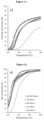
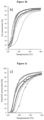
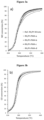
- Example 2 and Reference Example 1 were tested for perturbated light-off performance for TWC conversions under simulated gasoline exhaust conditions.
- the catalysts prepared by complexing Rh with PMAs exhibit significant benefit in TWC activity.
- the maximum T 50 reduction for NO x , CO, and THC for single alumina-supported Rh catalyst by PMA modification were respectively 35 °C, 45 °C and 94 °C.
- Rh-PMA catalysts showed significantly better performance than the reference catalyst, with maximum T 50 reduction for NO x , CO, and THC respectively 33 °C, 40 °C and 37 °C.
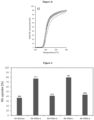
- Rh uptake on alumina with Rh nitrate and various Rh-PMAs were measured.
- first a number of loaded support materials (La-doped alumina) were prepared:
- Rh Uptake % 1 ⁇ Weight of Rh in solution at the end of the test Weight of Total Initial Rh added to solution ⁇ 100 %
- Rh-PMA-a ⁇ Rh-PMA-c > Rh-PMA-b ⁇ Rh-PMA-d The results for the Rh uptake experiment are summarized in FIG. 4 .
- Rh-PMA-a ⁇ Rh-PMA-c > Rh-PMA-b ⁇ Rh-PMA-d Correlating the Rh uptake results (Rh-PMA-a ⁇ Rh-PMA-c > Rh-PMA-b ⁇ Rh-PMA-d) and TWC performance from Fig. 2 (Rh-PMA-a ⁇ Rh-PMA-c > Rh-PMA-b ⁇ Rh-PMA-d > Ref.) suggests that although all PMAs provides TWC performance improvement for Rh, the benefit increases as the Rh-PMA uptake on the alumina support increases.
Landscapes
- Chemical & Material Sciences (AREA)
- Engineering & Computer Science (AREA)
- Chemical Kinetics & Catalysis (AREA)
- Organic Chemistry (AREA)
- Materials Engineering (AREA)
- Environmental & Geological Engineering (AREA)
- Health & Medical Sciences (AREA)
- Biomedical Technology (AREA)
- Combustion & Propulsion (AREA)
- Analytical Chemistry (AREA)
- General Chemical & Material Sciences (AREA)
- Oil, Petroleum & Natural Gas (AREA)
- Physics & Mathematics (AREA)
- Thermal Sciences (AREA)
- Catalysts (AREA)
- Exhaust Gas After Treatment (AREA)
Applications Claiming Priority (1)
| Application Number | Priority Date | Filing Date | Title |
|---|---|---|---|
| US202163263035P | 2021-10-26 | 2021-10-26 |
Publications (1)
| Publication Number | Publication Date |
|---|---|
| EP4173702A1 true EP4173702A1 (fr) | 2023-05-03 |
Family
ID=84361794
Family Applications (1)
| Application Number | Title | Priority Date | Filing Date |
|---|---|---|---|
| EP22203456.3A Pending EP4173702A1 (fr) | 2021-10-26 | 2022-10-25 | Synthèse de nanoparticules métalliques assistée par acide polymaléique pour application de catalyse à trois voies |
Country Status (5)
| Country | Link |
|---|---|
| US (1) | US20230129600A1 (fr) |
| EP (1) | EP4173702A1 (fr) |
| JP (1) | JP2024539808A (fr) |
| CN (1) | CN117769459A (fr) |
| WO (1) | WO2023073353A1 (fr) |
Families Citing this family (3)
| Publication number | Priority date | Publication date | Assignee | Title |
|---|---|---|---|---|
| CN117177813A (zh) * | 2021-06-10 | 2023-12-05 | 庄信万丰股份有限公司 | 使用铑/铂和鞣酸作为络合和还原剂的改进的twc活性 |
| EP4226992A1 (fr) * | 2022-02-10 | 2023-08-16 | Johnson Matthey Public Limited Company | Catalyseurs améliorés pour le traitement des gaz d'échappement d'un moteur à essence |
| EP4234081A1 (fr) * | 2022-02-25 | 2023-08-30 | Johnson Matthey Public Limited Company | Article catalytique ayant une concentration locale élevée en rhodium |
Citations (3)
| Publication number | Priority date | Publication date | Assignee | Title |
|---|---|---|---|---|
| US4708946A (en) * | 1985-05-23 | 1987-11-24 | Nippon Shokubai Kagaku Kogyo Co., Ltd. | Catalyst for purifying exhaust gas |
| US20120077669A1 (en) | 2010-09-29 | 2012-03-29 | Basf Corporation | Polymer-Assisted Synthesis Of A Supported Metal Catalyst |
| US20120263633A1 (en) * | 2009-12-17 | 2012-10-18 | Basf Se | Metal Oxide Support Material Containing Nanoscaled Iron-Platinum Group Metal Particles |
Family Cites Families (4)
| Publication number | Priority date | Publication date | Assignee | Title |
|---|---|---|---|---|
| US20110033353A1 (en) * | 2009-08-05 | 2011-02-10 | Basf Corporation | Preparation of Diesel Oxidation Catalyst Via Deposition of Colloidal Nanoparticles |
| US8617496B2 (en) * | 2011-01-19 | 2013-12-31 | Basf Corporation | Three way conversion catalyst with alumina-free rhodium layer |
| WO2016123534A1 (fr) * | 2015-01-29 | 2016-08-04 | Basf Corporation | Catalyseurs à métal du groupe du platine (pgm) pour traitement des émissions automobiles |
| MX2018014561A (es) * | 2016-05-26 | 2019-03-28 | Basf Corp | Particulas de catalizadores de nucleo-revestimiento y metodo de fabricacion. |
-
2022
- 2022-10-25 EP EP22203456.3A patent/EP4173702A1/fr active Pending
- 2022-10-25 CN CN202280053710.3A patent/CN117769459A/zh active Pending
- 2022-10-25 JP JP2024503538A patent/JP2024539808A/ja not_active Withdrawn
- 2022-10-25 WO PCT/GB2022/052708 patent/WO2023073353A1/fr not_active Ceased
- 2022-10-25 US US18/049,371 patent/US20230129600A1/en active Pending
Patent Citations (3)
| Publication number | Priority date | Publication date | Assignee | Title |
|---|---|---|---|---|
| US4708946A (en) * | 1985-05-23 | 1987-11-24 | Nippon Shokubai Kagaku Kogyo Co., Ltd. | Catalyst for purifying exhaust gas |
| US20120263633A1 (en) * | 2009-12-17 | 2012-10-18 | Basf Se | Metal Oxide Support Material Containing Nanoscaled Iron-Platinum Group Metal Particles |
| US20120077669A1 (en) | 2010-09-29 | 2012-03-29 | Basf Corporation | Polymer-Assisted Synthesis Of A Supported Metal Catalyst |
Also Published As
| Publication number | Publication date |
|---|---|
| CN117769459A (zh) | 2024-03-26 |
| JP2024539808A (ja) | 2024-10-31 |
| WO2023073353A1 (fr) | 2023-05-04 |
| US20230129600A1 (en) | 2023-04-27 |
Similar Documents
| Publication | Publication Date | Title |
|---|---|---|
| US12390795B2 (en) | Preparation of supported metal nanoparticles using polyamine for three-way catalysis application | |
| JP5361855B2 (ja) | パラジウム−ロジウム単一層触媒 | |
| RU2731104C2 (ru) | Катализаторы на основе металлов платиновой группы (pgm) для обработки автомобильных выхлопов | |
| US20230129600A1 (en) | Polymaleic acid assisted metal nanoparticle synthesis for three-way catalysis application | |
| US11845063B2 (en) | TWC activity using rhodium/platinum and tannic acid as a complexing and reducing agent | |
| JPH08224469A (ja) | 高耐熱性触媒担体とその製造方法及び高耐熱性触媒とその製造方法 | |
| EP3991839A1 (fr) | Catalyseurs, leurs synthèses avec complèxes organo-métaux du groupe de platine, système les contenant et procédé de traitement de gaz d'échappement | |
| US11845065B2 (en) | Palladium fixing and low fresh oxygen storage capacity using tannic acid as a complexing and reducing agent | |
| US12343705B2 (en) | TWC catalysts for gasoline engine exhaust gas treatments | |
| JP2003020227A (ja) | 微細混合酸化物粉末とその製造方法及び触媒 | |
| US12508579B2 (en) | Humic acid assisted metal nanoparticle synthesis for three-way catalysis application | |
| EP4403258A1 (fr) | Activite twc amelioree utilisant du rhodium/platine et de l'acide gallique comme agent complexant et reducteur | |
| EP4403257A1 (fr) | Fixation au palladium à l'aide d'acide gallique ou de son dérivé | |
| JP2024533037A (ja) | 触媒中間体を製造する方法 |
Legal Events
| Date | Code | Title | Description |
|---|---|---|---|
| PUAI | Public reference made under article 153(3) epc to a published international application that has entered the european phase |
Free format text: ORIGINAL CODE: 0009012 |
|
| STAA | Information on the status of an ep patent application or granted ep patent |
Free format text: STATUS: THE APPLICATION HAS BEEN PUBLISHED |
|
| AK | Designated contracting states |
Kind code of ref document: A1 Designated state(s): AL AT BE BG CH CY CZ DE DK EE ES FI FR GB GR HR HU IE IS IT LI LT LU LV MC ME MK MT NL NO PL PT RO RS SE SI SK SM TR |
|
| P01 | Opt-out of the competence of the unified patent court (upc) registered |
Effective date: 20230526 |
|
| STAA | Information on the status of an ep patent application or granted ep patent |
Free format text: STATUS: REQUEST FOR EXAMINATION WAS MADE |
|
| 17P | Request for examination filed |
Effective date: 20231023 |
|
| RBV | Designated contracting states (corrected) |
Designated state(s): AL AT BE BG CH CY CZ DE DK EE ES FI FR GB GR HR HU IE IS IT LI LT LU LV MC ME MK MT NL NO PL PT RO RS SE SI SK SM TR |
|
| RAP3 | Party data changed (applicant data changed or rights of an application transferred) |
Owner name: JOHNSON MATTHEY PUBLIC LIMITED COMPANY |
|
| STAA | Information on the status of an ep patent application or granted ep patent |
Free format text: STATUS: EXAMINATION IS IN PROGRESS |
|
| 17Q | First examination report despatched |
Effective date: 20260226 |