EP4174027A1 - Précurseur de matériau actif d'électrode positive, son procédé de préparation, et procédé de préparation de matériau actif d'électrode positive l'utilisant - Google Patents
Précurseur de matériau actif d'électrode positive, son procédé de préparation, et procédé de préparation de matériau actif d'électrode positive l'utilisant Download PDFInfo
- Publication number
- EP4174027A1 EP4174027A1 EP21901002.2A EP21901002A EP4174027A1 EP 4174027 A1 EP4174027 A1 EP 4174027A1 EP 21901002 A EP21901002 A EP 21901002A EP 4174027 A1 EP4174027 A1 EP 4174027A1
- Authority
- EP
- European Patent Office
- Prior art keywords
- positive electrode
- electrode active
- active material
- transition metal
- lithium
- Prior art date
- Legal status (The legal status is an assumption and is not a legal conclusion. Google has not performed a legal analysis and makes no representation as to the accuracy of the status listed.)
- Pending
Links
- 239000007774 positive electrode material Substances 0.000 title claims abstract description 195
- 239000002243 precursor Substances 0.000 title claims abstract description 103
- 238000000034 method Methods 0.000 title claims abstract description 39
- 239000002245 particle Substances 0.000 claims abstract description 83
- 229910052723 transition metal Inorganic materials 0.000 claims abstract description 75
- 150000003624 transition metals Chemical class 0.000 claims abstract description 68
- 238000010438 heat treatment Methods 0.000 claims abstract description 39
- 239000002131 composite material Substances 0.000 claims abstract description 34
- 239000000203 mixture Substances 0.000 claims abstract description 22
- PXHVJJICTQNCMI-UHFFFAOYSA-N Nickel Chemical compound [Ni] PXHVJJICTQNCMI-UHFFFAOYSA-N 0.000 claims description 63
- 239000002994 raw material Substances 0.000 claims description 56
- 229910052744 lithium Inorganic materials 0.000 claims description 52
- WHXSMMKQMYFTQS-UHFFFAOYSA-N Lithium Chemical compound [Li] WHXSMMKQMYFTQS-UHFFFAOYSA-N 0.000 claims description 47
- -1 lithium aluminum hydride Chemical compound 0.000 claims description 41
- 239000000243 solution Substances 0.000 claims description 36
- 238000006243 chemical reaction Methods 0.000 claims description 31
- 150000001875 compounds Chemical class 0.000 claims description 30
- OAKJQQAXSVQMHS-UHFFFAOYSA-N Hydrazine Chemical compound NN OAKJQQAXSVQMHS-UHFFFAOYSA-N 0.000 claims description 29
- 239000007864 aqueous solution Substances 0.000 claims description 26
- 229910052782 aluminium Inorganic materials 0.000 claims description 22
- 229910052759 nickel Inorganic materials 0.000 claims description 20
- 239000010936 titanium Substances 0.000 claims description 17
- XAGFODPZIPBFFR-UHFFFAOYSA-N aluminium Chemical compound [Al] XAGFODPZIPBFFR-UHFFFAOYSA-N 0.000 claims description 15
- 239000011777 magnesium Substances 0.000 claims description 15
- 239000003446 ligand Substances 0.000 claims description 14
- 239000010955 niobium Substances 0.000 claims description 13
- 229910052719 titanium Inorganic materials 0.000 claims description 13
- 238000002156 mixing Methods 0.000 claims description 12
- 229910017052 cobalt Inorganic materials 0.000 claims description 10
- 239000010941 cobalt Substances 0.000 claims description 10
- GUTLYIVDDKVIGB-UHFFFAOYSA-N cobalt atom Chemical compound [Co] GUTLYIVDDKVIGB-UHFFFAOYSA-N 0.000 claims description 10
- 229910052749 magnesium Inorganic materials 0.000 claims description 10
- 229910052758 niobium Inorganic materials 0.000 claims description 10
- 229910021437 lithium-transition metal oxide Inorganic materials 0.000 claims description 9
- 229910052715 tantalum Inorganic materials 0.000 claims description 9
- RTAQQCXQSZGOHL-UHFFFAOYSA-N Titanium Chemical compound [Ti] RTAQQCXQSZGOHL-UHFFFAOYSA-N 0.000 claims description 8
- 239000003381 stabilizer Substances 0.000 claims description 8
- 229910052721 tungsten Inorganic materials 0.000 claims description 8
- KRKNYBCHXYNGOX-UHFFFAOYSA-N citric acid Chemical class OC(=O)CC(O)(C(O)=O)CC(O)=O KRKNYBCHXYNGOX-UHFFFAOYSA-N 0.000 claims description 7
- MUBZPKHOEPUJKR-UHFFFAOYSA-N Oxalic acid Chemical compound OC(=O)C(O)=O MUBZPKHOEPUJKR-UHFFFAOYSA-N 0.000 claims description 6
- 239000007810 chemical reaction solvent Substances 0.000 claims description 6
- 229910052706 scandium Inorganic materials 0.000 claims description 6
- FYYHWMGAXLPEAU-UHFFFAOYSA-N Magnesium Chemical compound [Mg] FYYHWMGAXLPEAU-UHFFFAOYSA-N 0.000 claims description 5
- MHAJPDPJQMAIIY-UHFFFAOYSA-N Hydrogen peroxide Chemical compound OO MHAJPDPJQMAIIY-UHFFFAOYSA-N 0.000 claims description 4
- 239000013078 crystal Substances 0.000 claims description 4
- BDAGIHXWWSANSR-UHFFFAOYSA-N methanoic acid Natural products OC=O BDAGIHXWWSANSR-UHFFFAOYSA-N 0.000 claims description 4
- GUCVJGMIXFAOAE-UHFFFAOYSA-N niobium atom Chemical compound [Nb] GUCVJGMIXFAOAE-UHFFFAOYSA-N 0.000 claims description 4
- 239000001267 polyvinylpyrrolidone Substances 0.000 claims description 4
- 229920000036 polyvinylpyrrolidone Polymers 0.000 claims description 4
- 235000013855 polyvinylpyrrolidone Nutrition 0.000 claims description 4
- SIXSYDAISGFNSX-UHFFFAOYSA-N scandium atom Chemical compound [Sc] SIXSYDAISGFNSX-UHFFFAOYSA-N 0.000 claims description 4
- GUVRBAGPIYLISA-UHFFFAOYSA-N tantalum atom Chemical compound [Ta] GUVRBAGPIYLISA-UHFFFAOYSA-N 0.000 claims description 4
- WFKWXMTUELFFGS-UHFFFAOYSA-N tungsten Chemical compound [W] WFKWXMTUELFFGS-UHFFFAOYSA-N 0.000 claims description 4
- 239000010937 tungsten Substances 0.000 claims description 4
- CIWBSHSKHKDKBQ-JLAZNSOCSA-N Ascorbic acid Chemical compound OC[C@H](O)[C@H]1OC(=O)C(O)=C1O CIWBSHSKHKDKBQ-JLAZNSOCSA-N 0.000 claims description 3
- 239000012280 lithium aluminium hydride Substances 0.000 claims description 3
- 239000001508 potassium citrate Substances 0.000 claims description 3
- 229960002635 potassium citrate Drugs 0.000 claims description 3
- QEEAPRPFLLJWCF-UHFFFAOYSA-K potassium citrate (anhydrous) Chemical compound [K+].[K+].[K+].[O-]C(=O)CC(O)(CC([O-])=O)C([O-])=O QEEAPRPFLLJWCF-UHFFFAOYSA-K 0.000 claims description 3
- 235000011082 potassium citrates Nutrition 0.000 claims description 3
- VSZWPYCFIRKVQL-UHFFFAOYSA-N selanylidenegallium;selenium Chemical compound [Se].[Se]=[Ga].[Se]=[Ga] VSZWPYCFIRKVQL-UHFFFAOYSA-N 0.000 claims description 3
- 239000001509 sodium citrate Substances 0.000 claims description 3
- NLJMYIDDQXHKNR-UHFFFAOYSA-K sodium citrate Chemical compound O.O.[Na+].[Na+].[Na+].[O-]C(=O)CC(O)(CC([O-])=O)C([O-])=O NLJMYIDDQXHKNR-UHFFFAOYSA-K 0.000 claims description 3
- OSWFIVFLDKOXQC-UHFFFAOYSA-N 4-(3-methoxyphenyl)aniline Chemical compound COC1=CC=CC(C=2C=CC(N)=CC=2)=C1 OSWFIVFLDKOXQC-UHFFFAOYSA-N 0.000 claims description 2
- DOOTYTYQINUNNV-UHFFFAOYSA-N Triethyl citrate Chemical compound CCOC(=O)CC(O)(C(=O)OCC)CC(=O)OCC DOOTYTYQINUNNV-UHFFFAOYSA-N 0.000 claims description 2
- 239000011668 ascorbic acid Substances 0.000 claims description 2
- 235000010323 ascorbic acid Nutrition 0.000 claims description 2
- 229960005070 ascorbic acid Drugs 0.000 claims description 2
- MOTZDAYCYVMXPC-UHFFFAOYSA-N dodecyl hydrogen sulfate Chemical class CCCCCCCCCCCCOS(O)(=O)=O MOTZDAYCYVMXPC-UHFFFAOYSA-N 0.000 claims description 2
- 235000019253 formic acid Nutrition 0.000 claims description 2
- 235000006408 oxalic acid Nutrition 0.000 claims description 2
- 239000012279 sodium borohydride Substances 0.000 claims description 2
- 229910000033 sodium borohydride Inorganic materials 0.000 claims description 2
- 235000011083 sodium citrates Nutrition 0.000 claims description 2
- 239000001069 triethyl citrate Substances 0.000 claims description 2
- VMYFZRTXGLUXMZ-UHFFFAOYSA-N triethyl citrate Natural products CCOC(=O)C(O)(C(=O)OCC)C(=O)OCC VMYFZRTXGLUXMZ-UHFFFAOYSA-N 0.000 claims description 2
- 235000013769 triethyl citrate Nutrition 0.000 claims description 2
- HEMHJVSKTPXQMS-UHFFFAOYSA-M Sodium hydroxide Chemical compound [OH-].[Na+] HEMHJVSKTPXQMS-UHFFFAOYSA-M 0.000 description 36
- OKTJSMMVPCPJKN-UHFFFAOYSA-N Carbon Chemical compound [C] OKTJSMMVPCPJKN-UHFFFAOYSA-N 0.000 description 23
- XLYOFNOQVPJJNP-UHFFFAOYSA-N water Chemical compound O XLYOFNOQVPJJNP-UHFFFAOYSA-N 0.000 description 22
- 239000010410 layer Substances 0.000 description 18
- 239000007773 negative electrode material Substances 0.000 description 17
- 239000006258 conductive agent Substances 0.000 description 16
- 239000011230 binding agent Substances 0.000 description 15
- 229910052751 metal Inorganic materials 0.000 description 14
- 230000000052 comparative effect Effects 0.000 description 13
- 239000008367 deionised water Substances 0.000 description 13
- 229910021641 deionized water Inorganic materials 0.000 description 13
- WMFOQBRAJBCJND-UHFFFAOYSA-M Lithium hydroxide Chemical compound [Li+].[OH-] WMFOQBRAJBCJND-UHFFFAOYSA-M 0.000 description 12
- 239000003792 electrolyte Substances 0.000 description 12
- 239000011572 manganese Substances 0.000 description 12
- 239000002904 solvent Substances 0.000 description 12
- SECXISVLQFMRJM-UHFFFAOYSA-N N-Methylpyrrolidone Chemical compound CN1CCCC1=O SECXISVLQFMRJM-UHFFFAOYSA-N 0.000 description 11
- 230000002776 aggregation Effects 0.000 description 11
- 238000002360 preparation method Methods 0.000 description 11
- 230000007704 transition Effects 0.000 description 10
- 229910052799 carbon Inorganic materials 0.000 description 9
- 229910001416 lithium ion Inorganic materials 0.000 description 9
- 238000004220 aggregation Methods 0.000 description 8
- 239000008151 electrolyte solution Substances 0.000 description 8
- 238000001878 scanning electron micrograph Methods 0.000 description 8
- 239000011163 secondary particle Substances 0.000 description 8
- HBBGRARXTFLTSG-UHFFFAOYSA-N Lithium ion Chemical compound [Li+] HBBGRARXTFLTSG-UHFFFAOYSA-N 0.000 description 7
- VSCWAEJMTAWNJL-UHFFFAOYSA-K aluminium trichloride Chemical compound Cl[Al](Cl)Cl VSCWAEJMTAWNJL-UHFFFAOYSA-K 0.000 description 7
- 230000008859 change Effects 0.000 description 7
- JBTWLSYIZRCDFO-UHFFFAOYSA-N ethyl methyl carbonate Chemical compound CCOC(=O)OC JBTWLSYIZRCDFO-UHFFFAOYSA-N 0.000 description 7
- 229920002981 polyvinylidene fluoride Polymers 0.000 description 7
- 239000011164 primary particle Substances 0.000 description 7
- 229910001868 water Inorganic materials 0.000 description 7
- 229910052726 zirconium Inorganic materials 0.000 description 7
- KFZMGEQAYNKOFK-UHFFFAOYSA-N Isopropanol Chemical compound CC(C)O KFZMGEQAYNKOFK-UHFFFAOYSA-N 0.000 description 6
- PWHULOQIROXLJO-UHFFFAOYSA-N Manganese Chemical compound [Mn] PWHULOQIROXLJO-UHFFFAOYSA-N 0.000 description 6
- 238000002441 X-ray diffraction Methods 0.000 description 6
- 150000001768 cations Chemical class 0.000 description 6
- 239000010949 copper Substances 0.000 description 6
- 239000011267 electrode slurry Substances 0.000 description 6
- 239000007789 gas Substances 0.000 description 6
- 229910052748 manganese Inorganic materials 0.000 description 6
- 239000003960 organic solvent Substances 0.000 description 6
- 229910052760 oxygen Inorganic materials 0.000 description 6
- KMTRUDSVKNLOMY-UHFFFAOYSA-N Ethylene carbonate Chemical compound O=C1OCCO1 KMTRUDSVKNLOMY-UHFFFAOYSA-N 0.000 description 5
- 150000001242 acetic acid derivatives Chemical class 0.000 description 5
- 229910021383 artificial graphite Inorganic materials 0.000 description 5
- QVGXLLKOCUKJST-UHFFFAOYSA-N atomic oxygen Chemical compound [O] QVGXLLKOCUKJST-UHFFFAOYSA-N 0.000 description 5
- 229920001577 copolymer Polymers 0.000 description 5
- 230000000694 effects Effects 0.000 description 5
- 150000004820 halides Chemical class 0.000 description 5
- 150000004679 hydroxides Chemical class 0.000 description 5
- 229910003002 lithium salt Inorganic materials 0.000 description 5
- 159000000002 lithium salts Chemical class 0.000 description 5
- 230000014759 maintenance of location Effects 0.000 description 5
- 239000002184 metal Substances 0.000 description 5
- 150000002823 nitrates Chemical class 0.000 description 5
- 239000001301 oxygen Substances 0.000 description 5
- 150000003467 sulfuric acid derivatives Chemical class 0.000 description 5
- 150000003568 thioethers Chemical class 0.000 description 5
- RYGMFSIKBFXOCR-UHFFFAOYSA-N Copper Chemical compound [Cu] RYGMFSIKBFXOCR-UHFFFAOYSA-N 0.000 description 4
- OIFBSDVPJOWBCH-UHFFFAOYSA-N Diethyl carbonate Chemical compound CCOC(=O)OCC OIFBSDVPJOWBCH-UHFFFAOYSA-N 0.000 description 4
- IAZDPXIOMUYVGZ-UHFFFAOYSA-N Dimethylsulphoxide Chemical compound CS(C)=O IAZDPXIOMUYVGZ-UHFFFAOYSA-N 0.000 description 4
- VGGSQFUCUMXWEO-UHFFFAOYSA-N Ethene Chemical compound C=C VGGSQFUCUMXWEO-UHFFFAOYSA-N 0.000 description 4
- 239000005977 Ethylene Substances 0.000 description 4
- 229910021586 Nickel(II) chloride Inorganic materials 0.000 description 4
- 239000002033 PVDF binder Substances 0.000 description 4
- XLOMVQKBTHCTTD-UHFFFAOYSA-N Zinc monoxide Chemical compound [Zn]=O XLOMVQKBTHCTTD-UHFFFAOYSA-N 0.000 description 4
- 230000002411 adverse Effects 0.000 description 4
- 239000003575 carbonaceous material Substances 0.000 description 4
- 239000011248 coating agent Substances 0.000 description 4
- 238000000576 coating method Methods 0.000 description 4
- 229910052802 copper Inorganic materials 0.000 description 4
- 238000009826 distribution Methods 0.000 description 4
- 239000000835 fiber Substances 0.000 description 4
- 239000010408 film Substances 0.000 description 4
- GLXDVVHUTZTUQK-UHFFFAOYSA-M lithium;hydroxide;hydrate Chemical compound [Li+].O.[OH-] GLXDVVHUTZTUQK-UHFFFAOYSA-M 0.000 description 4
- 229910021382 natural graphite Inorganic materials 0.000 description 4
- QMMRZOWCJAIUJA-UHFFFAOYSA-L nickel dichloride Chemical compound Cl[Ni]Cl QMMRZOWCJAIUJA-UHFFFAOYSA-L 0.000 description 4
- 239000004745 nonwoven fabric Substances 0.000 description 4
- 229910001220 stainless steel Inorganic materials 0.000 description 4
- 239000010935 stainless steel Substances 0.000 description 4
- 239000000126 substance Substances 0.000 description 4
- CSCPPACGZOOCGX-UHFFFAOYSA-N Acetone Chemical compound CC(C)=O CSCPPACGZOOCGX-UHFFFAOYSA-N 0.000 description 3
- VHUUQVKOLVNVRT-UHFFFAOYSA-N Ammonium hydroxide Chemical compound [NH4+].[OH-] VHUUQVKOLVNVRT-UHFFFAOYSA-N 0.000 description 3
- UHOVQNZJYSORNB-UHFFFAOYSA-N Benzene Chemical compound C1=CC=CC=C1 UHOVQNZJYSORNB-UHFFFAOYSA-N 0.000 description 3
- 229920000049 Carbon (fiber) Polymers 0.000 description 3
- 229910021580 Cobalt(II) chloride Inorganic materials 0.000 description 3
- XEKOWRVHYACXOJ-UHFFFAOYSA-N Ethyl acetate Chemical compound CCOC(C)=O XEKOWRVHYACXOJ-UHFFFAOYSA-N 0.000 description 3
- 229910001290 LiPF6 Inorganic materials 0.000 description 3
- ZMXDDKWLCZADIW-UHFFFAOYSA-N N,N-Dimethylformamide Chemical compound CN(C)C=O ZMXDDKWLCZADIW-UHFFFAOYSA-N 0.000 description 3
- BQCADISMDOOEFD-UHFFFAOYSA-N Silver Chemical compound [Ag] BQCADISMDOOEFD-UHFFFAOYSA-N 0.000 description 3
- 239000011149 active material Substances 0.000 description 3
- 238000005054 agglomeration Methods 0.000 description 3
- 239000011575 calcium Substances 0.000 description 3
- 239000004917 carbon fiber Substances 0.000 description 3
- 239000000460 chlorine Substances 0.000 description 3
- 239000011651 chromium Substances 0.000 description 3
- 229910052731 fluorine Inorganic materials 0.000 description 3
- 229910002804 graphite Inorganic materials 0.000 description 3
- 239000010439 graphite Substances 0.000 description 3
- 150000002500 ions Chemical class 0.000 description 3
- 229910044991 metal oxide Inorganic materials 0.000 description 3
- 150000004706 metal oxides Chemical class 0.000 description 3
- LGQLOGILCSXPEA-UHFFFAOYSA-L nickel sulfate Chemical compound [Ni+2].[O-]S([O-])(=O)=O LGQLOGILCSXPEA-UHFFFAOYSA-L 0.000 description 3
- 229910000363 nickel(II) sulfate Inorganic materials 0.000 description 3
- 229920000642 polymer Polymers 0.000 description 3
- 239000000843 powder Substances 0.000 description 3
- RUOJZAUFBMNUDX-UHFFFAOYSA-N propylene carbonate Chemical compound CC1COC(=O)O1 RUOJZAUFBMNUDX-UHFFFAOYSA-N 0.000 description 3
- 229910052709 silver Inorganic materials 0.000 description 3
- 239000004332 silver Substances 0.000 description 3
- HRXKRNGNAMMEHJ-UHFFFAOYSA-K trisodium citrate Chemical compound [Na+].[Na+].[Na+].[O-]C(=O)CC(O)(CC([O-])=O)C([O-])=O HRXKRNGNAMMEHJ-UHFFFAOYSA-K 0.000 description 3
- YEJRWHAVMIAJKC-UHFFFAOYSA-N 4-Butyrolactone Chemical compound O=C1CCCO1 YEJRWHAVMIAJKC-UHFFFAOYSA-N 0.000 description 2
- IJGRMHOSHXDMSA-UHFFFAOYSA-N Atomic nitrogen Chemical compound N#N IJGRMHOSHXDMSA-UHFFFAOYSA-N 0.000 description 2
- 102100028667 C-type lectin domain family 4 member A Human genes 0.000 description 2
- 229920002134 Carboxymethyl cellulose Polymers 0.000 description 2
- LFQSCWFLJHTTHZ-UHFFFAOYSA-N Ethanol Chemical compound CCO LFQSCWFLJHTTHZ-UHFFFAOYSA-N 0.000 description 2
- YCKRFDGAMUMZLT-UHFFFAOYSA-N Fluorine atom Chemical compound [F] YCKRFDGAMUMZLT-UHFFFAOYSA-N 0.000 description 2
- GYHNNYVSQQEPJS-UHFFFAOYSA-N Gallium Chemical compound [Ga] GYHNNYVSQQEPJS-UHFFFAOYSA-N 0.000 description 2
- 101000766908 Homo sapiens C-type lectin domain family 4 member A Proteins 0.000 description 2
- 229920002153 Hydroxypropyl cellulose Polymers 0.000 description 2
- XEEYBQQBJWHFJM-UHFFFAOYSA-N Iron Chemical compound [Fe] XEEYBQQBJWHFJM-UHFFFAOYSA-N 0.000 description 2
- 229910021380 Manganese Chloride Inorganic materials 0.000 description 2
- GLFNIEUTAYBVOC-UHFFFAOYSA-L Manganese chloride Chemical compound Cl[Mn]Cl GLFNIEUTAYBVOC-UHFFFAOYSA-L 0.000 description 2
- 229910005518 NiaCobMnc Inorganic materials 0.000 description 2
- 239000004698 Polyethylene Substances 0.000 description 2
- 229920000265 Polyparaphenylene Polymers 0.000 description 2
- 239000004743 Polypropylene Substances 0.000 description 2
- 239000004372 Polyvinyl alcohol Substances 0.000 description 2
- JUJWROOIHBZHMG-UHFFFAOYSA-N Pyridine Chemical compound C1=CC=NC=C1 JUJWROOIHBZHMG-UHFFFAOYSA-N 0.000 description 2
- KAESVJOAVNADME-UHFFFAOYSA-N Pyrrole Chemical compound C=1C=CNC=1 KAESVJOAVNADME-UHFFFAOYSA-N 0.000 description 2
- FAPWRFPIFSIZLT-UHFFFAOYSA-M Sodium chloride Chemical group [Na+].[Cl-] FAPWRFPIFSIZLT-UHFFFAOYSA-M 0.000 description 2
- 229920002472 Starch Polymers 0.000 description 2
- NINIDFKCEFEMDL-UHFFFAOYSA-N Sulfur Chemical compound [S] NINIDFKCEFEMDL-UHFFFAOYSA-N 0.000 description 2
- WYURNTSHIVDZCO-UHFFFAOYSA-N Tetrahydrofuran Chemical compound C1CCOC1 WYURNTSHIVDZCO-UHFFFAOYSA-N 0.000 description 2
- GWEVSGVZZGPLCZ-UHFFFAOYSA-N Titan oxide Chemical compound O=[Ti]=O GWEVSGVZZGPLCZ-UHFFFAOYSA-N 0.000 description 2
- 239000006230 acetylene black Substances 0.000 description 2
- 239000000654 additive Substances 0.000 description 2
- 230000000996 additive effect Effects 0.000 description 2
- 229910052789 astatine Inorganic materials 0.000 description 2
- 229910052796 boron Inorganic materials 0.000 description 2
- 229910052794 bromium Inorganic materials 0.000 description 2
- 229910052791 calcium Inorganic materials 0.000 description 2
- 239000003660 carbonate based solvent Substances 0.000 description 2
- 238000005266 casting Methods 0.000 description 2
- 239000006231 channel black Substances 0.000 description 2
- 229910052801 chlorine Inorganic materials 0.000 description 2
- 229910052804 chromium Inorganic materials 0.000 description 2
- UFMZWBIQTDUYBN-UHFFFAOYSA-N cobalt dinitrate Chemical compound [Co+2].[O-][N+]([O-])=O.[O-][N+]([O-])=O UFMZWBIQTDUYBN-UHFFFAOYSA-N 0.000 description 2
- KTVIXTQDYHMGHF-UHFFFAOYSA-L cobalt(2+) sulfate Chemical compound [Co+2].[O-]S([O-])(=O)=O KTVIXTQDYHMGHF-UHFFFAOYSA-L 0.000 description 2
- 150000005676 cyclic carbonates Chemical class 0.000 description 2
- JHIVVAPYMSGYDF-UHFFFAOYSA-N cyclohexanone Chemical compound O=C1CCCCC1 JHIVVAPYMSGYDF-UHFFFAOYSA-N 0.000 description 2
- 230000007547 defect Effects 0.000 description 2
- 235000014113 dietary fatty acids Nutrition 0.000 description 2
- IEJIGPNLZYLLBP-UHFFFAOYSA-N dimethyl carbonate Chemical compound COC(=O)OC IEJIGPNLZYLLBP-UHFFFAOYSA-N 0.000 description 2
- 229910001873 dinitrogen Inorganic materials 0.000 description 2
- NJLLQSBAHIKGKF-UHFFFAOYSA-N dipotassium dioxido(oxo)titanium Chemical compound [K+].[K+].[O-][Ti]([O-])=O NJLLQSBAHIKGKF-UHFFFAOYSA-N 0.000 description 2
- 239000012153 distilled water Substances 0.000 description 2
- 238000001035 drying Methods 0.000 description 2
- LYCAIKOWRPUZTN-UHFFFAOYSA-N ethylene glycol Natural products OCCO LYCAIKOWRPUZTN-UHFFFAOYSA-N 0.000 description 2
- 238000011156 evaluation Methods 0.000 description 2
- 239000000194 fatty acid Substances 0.000 description 2
- 229930195729 fatty acid Natural products 0.000 description 2
- 239000011737 fluorine Substances 0.000 description 2
- 239000006260 foam Substances 0.000 description 2
- 239000011888 foil Substances 0.000 description 2
- 239000006232 furnace black Substances 0.000 description 2
- 229910052733 gallium Inorganic materials 0.000 description 2
- XLYOFNOQVPJJNP-UHFFFAOYSA-M hydroxide Chemical compound [OH-] XLYOFNOQVPJJNP-UHFFFAOYSA-M 0.000 description 2
- 239000001863 hydroxypropyl cellulose Substances 0.000 description 2
- 235000010977 hydroxypropyl cellulose Nutrition 0.000 description 2
- 229910000765 intermetallic Inorganic materials 0.000 description 2
- 229910052740 iodine Inorganic materials 0.000 description 2
- 239000003273 ketjen black Substances 0.000 description 2
- 238000010030 laminating Methods 0.000 description 2
- 239000006233 lamp black Substances 0.000 description 2
- 238000007561 laser diffraction method Methods 0.000 description 2
- 239000011244 liquid electrolyte Substances 0.000 description 2
- KWGKDLIKAYFUFQ-UHFFFAOYSA-M lithium chloride Chemical compound [Li+].[Cl-] KWGKDLIKAYFUFQ-UHFFFAOYSA-M 0.000 description 2
- IIPYXGDZVMZOAP-UHFFFAOYSA-N lithium nitrate Chemical compound [Li+].[O-][N+]([O-])=O IIPYXGDZVMZOAP-UHFFFAOYSA-N 0.000 description 2
- 239000011565 manganese chloride Substances 0.000 description 2
- NUJOXMJBOLGQSY-UHFFFAOYSA-N manganese dioxide Chemical compound O=[Mn]=O NUJOXMJBOLGQSY-UHFFFAOYSA-N 0.000 description 2
- SQQMAOCOWKFBNP-UHFFFAOYSA-L manganese(II) sulfate Chemical compound [Mn+2].[O-]S([O-])(=O)=O SQQMAOCOWKFBNP-UHFFFAOYSA-L 0.000 description 2
- 229910052750 molybdenum Inorganic materials 0.000 description 2
- 229910021508 nickel(II) hydroxide Inorganic materials 0.000 description 2
- 230000001590 oxidative effect Effects 0.000 description 2
- 229920000573 polyethylene Polymers 0.000 description 2
- 239000005518 polymer electrolyte Substances 0.000 description 2
- 229920006254 polymer film Polymers 0.000 description 2
- 229920001155 polypropylene Polymers 0.000 description 2
- 229920002451 polyvinyl alcohol Polymers 0.000 description 2
- 238000010926 purge Methods 0.000 description 2
- 230000009257 reactivity Effects 0.000 description 2
- 239000004627 regenerated cellulose Substances 0.000 description 2
- 238000007789 sealing Methods 0.000 description 2
- 238000005245 sintering Methods 0.000 description 2
- 239000007787 solid Substances 0.000 description 2
- 239000008107 starch Substances 0.000 description 2
- 235000019698 starch Nutrition 0.000 description 2
- 238000003756 stirring Methods 0.000 description 2
- 238000003860 storage Methods 0.000 description 2
- 229920003048 styrene butadiene rubber Polymers 0.000 description 2
- 229920005608 sulfonated EPDM Polymers 0.000 description 2
- 229910052717 sulfur Inorganic materials 0.000 description 2
- 239000011593 sulfur Substances 0.000 description 2
- JBQYATWDVHIOAR-UHFFFAOYSA-N tellanylidenegermanium Chemical compound [Te]=[Ge] JBQYATWDVHIOAR-UHFFFAOYSA-N 0.000 description 2
- BFKJFAAPBSQJPD-UHFFFAOYSA-N tetrafluoroethene Chemical group FC(F)=C(F)F BFKJFAAPBSQJPD-UHFFFAOYSA-N 0.000 description 2
- 239000006234 thermal black Substances 0.000 description 2
- XOLBLPGZBRYERU-UHFFFAOYSA-N tin dioxide Chemical compound O=[Sn]=O XOLBLPGZBRYERU-UHFFFAOYSA-N 0.000 description 2
- OGIDPMRJRNCKJF-UHFFFAOYSA-N titanium oxide Inorganic materials [Ti]=O OGIDPMRJRNCKJF-UHFFFAOYSA-N 0.000 description 2
- 229910001428 transition metal ion Inorganic materials 0.000 description 2
- 239000011787 zinc oxide Substances 0.000 description 2
- BNGXYYYYKUGPPF-UHFFFAOYSA-M (3-methylphenyl)methyl-triphenylphosphanium;chloride Chemical compound [Cl-].CC1=CC=CC(C[P+](C=2C=CC=CC=2)(C=2C=CC=CC=2)C=2C=CC=CC=2)=C1 BNGXYYYYKUGPPF-UHFFFAOYSA-M 0.000 description 1
- WNXJIVFYUVYPPR-UHFFFAOYSA-N 1,3-dioxolane Chemical compound C1COCO1 WNXJIVFYUVYPPR-UHFFFAOYSA-N 0.000 description 1
- DURPTKYDGMDSBL-UHFFFAOYSA-N 1-butoxybutane Chemical compound CCCCOCCCC DURPTKYDGMDSBL-UHFFFAOYSA-N 0.000 description 1
- XNWFRZJHXBZDAG-UHFFFAOYSA-N 2-METHOXYETHANOL Chemical compound COCCO XNWFRZJHXBZDAG-UHFFFAOYSA-N 0.000 description 1
- OAVRWNUUOUXDFH-UHFFFAOYSA-H 2-hydroxypropane-1,2,3-tricarboxylate;manganese(2+) Chemical compound [Mn+2].[Mn+2].[Mn+2].[O-]C(=O)CC(O)(CC([O-])=O)C([O-])=O.[O-]C(=O)CC(O)(CC([O-])=O)C([O-])=O OAVRWNUUOUXDFH-UHFFFAOYSA-H 0.000 description 1
- DSMUTQTWFHVVGQ-UHFFFAOYSA-N 4,5-difluoro-1,3-dioxolan-2-one Chemical compound FC1OC(=O)OC1F DSMUTQTWFHVVGQ-UHFFFAOYSA-N 0.000 description 1
- ZCYVEMRRCGMTRW-UHFFFAOYSA-N 7553-56-2 Chemical compound [I] ZCYVEMRRCGMTRW-UHFFFAOYSA-N 0.000 description 1
- 229910000838 Al alloy Inorganic materials 0.000 description 1
- ZOXJGFHDIHLPTG-UHFFFAOYSA-N Boron Chemical compound [B] ZOXJGFHDIHLPTG-UHFFFAOYSA-N 0.000 description 1
- WKBOTKDWSSQWDR-UHFFFAOYSA-N Bromine atom Chemical compound [Br] WKBOTKDWSSQWDR-UHFFFAOYSA-N 0.000 description 1
- OYPRJOBELJOOCE-UHFFFAOYSA-N Calcium Chemical compound [Ca] OYPRJOBELJOOCE-UHFFFAOYSA-N 0.000 description 1
- BVKZGUZCCUSVTD-UHFFFAOYSA-L Carbonate Chemical compound [O-]C([O-])=O BVKZGUZCCUSVTD-UHFFFAOYSA-L 0.000 description 1
- 229910000925 Cd alloy Inorganic materials 0.000 description 1
- ZAMOUSCENKQFHK-UHFFFAOYSA-N Chlorine atom Chemical compound [Cl] ZAMOUSCENKQFHK-UHFFFAOYSA-N 0.000 description 1
- VYZAMTAEIAYCRO-UHFFFAOYSA-N Chromium Chemical compound [Cr] VYZAMTAEIAYCRO-UHFFFAOYSA-N 0.000 description 1
- 229910018916 CoOOH Inorganic materials 0.000 description 1
- 229910021503 Cobalt(II) hydroxide Inorganic materials 0.000 description 1
- 229910019421 CoxAly Inorganic materials 0.000 description 1
- PIICEJLVQHRZGT-UHFFFAOYSA-N Ethylenediamine Chemical compound NCCN PIICEJLVQHRZGT-UHFFFAOYSA-N 0.000 description 1
- 229910010088 LiAlO4 Inorganic materials 0.000 description 1
- 229910001559 LiC4F9SO3 Inorganic materials 0.000 description 1
- 229910000552 LiCF3SO3 Inorganic materials 0.000 description 1
- 229910032387 LiCoO2 Inorganic materials 0.000 description 1
- 229910010941 LiFSI Inorganic materials 0.000 description 1
- 229910052493 LiFePO4 Inorganic materials 0.000 description 1
- 229910002993 LiMnO2 Inorganic materials 0.000 description 1
- 229910013131 LiN Inorganic materials 0.000 description 1
- 229910003005 LiNiO2 Inorganic materials 0.000 description 1
- 229910002097 Lithium manganese(III,IV) oxide Inorganic materials 0.000 description 1
- ZOKXTWBITQBERF-UHFFFAOYSA-N Molybdenum Chemical compound [Mo] ZOKXTWBITQBERF-UHFFFAOYSA-N 0.000 description 1
- 229910002651 NO3 Inorganic materials 0.000 description 1
- 229910016970 Ni0.85Co0.15(OH)2 Inorganic materials 0.000 description 1
- 229910005581 NiC2 Inorganic materials 0.000 description 1
- 229910002640 NiOOH Inorganic materials 0.000 description 1
- VEQPNABPJHWNSG-UHFFFAOYSA-N Nickel(2+) Chemical compound [Ni+2] VEQPNABPJHWNSG-UHFFFAOYSA-N 0.000 description 1
- XBDQKXXYIPTUBI-UHFFFAOYSA-M Propionate Chemical compound CCC([O-])=O XBDQKXXYIPTUBI-UHFFFAOYSA-M 0.000 description 1
- 229910000676 Si alloy Inorganic materials 0.000 description 1
- XUIMIQQOPSSXEZ-UHFFFAOYSA-N Silicon Chemical compound [Si] XUIMIQQOPSSXEZ-UHFFFAOYSA-N 0.000 description 1
- 229910001128 Sn alloy Inorganic materials 0.000 description 1
- ATJFFYVFTNAWJD-UHFFFAOYSA-N Tin Chemical compound [Sn] ATJFFYVFTNAWJD-UHFFFAOYSA-N 0.000 description 1
- GSEJCLTVZPLZKY-UHFFFAOYSA-N Triethanolamine Chemical compound OCCN(CCO)CCO GSEJCLTVZPLZKY-UHFFFAOYSA-N 0.000 description 1
- QCWXUUIWCKQGHC-UHFFFAOYSA-N Zirconium Chemical compound [Zr] QCWXUUIWCKQGHC-UHFFFAOYSA-N 0.000 description 1
- PFYQFCKUASLJLL-UHFFFAOYSA-N [Co].[Ni].[Li] Chemical compound [Co].[Ni].[Li] PFYQFCKUASLJLL-UHFFFAOYSA-N 0.000 description 1
- RLTFLELMPUMVEH-UHFFFAOYSA-N [Li+].[O--].[O--].[O--].[V+5] Chemical compound [Li+].[O--].[O--].[O--].[V+5] RLTFLELMPUMVEH-UHFFFAOYSA-N 0.000 description 1
- RTBHLGSMKCPLCQ-UHFFFAOYSA-N [Mn].OOO Chemical compound [Mn].OOO RTBHLGSMKCPLCQ-UHFFFAOYSA-N 0.000 description 1
- XHCLAFWTIXFWPH-UHFFFAOYSA-N [O-2].[O-2].[O-2].[O-2].[O-2].[V+5].[V+5] Chemical compound [O-2].[O-2].[O-2].[O-2].[O-2].[V+5].[V+5] XHCLAFWTIXFWPH-UHFFFAOYSA-N 0.000 description 1
- KXKVLQRXCPHEJC-UHFFFAOYSA-N acetic acid trimethyl ester Natural products COC(C)=O KXKVLQRXCPHEJC-UHFFFAOYSA-N 0.000 description 1
- HDYRYUINDGQKMC-UHFFFAOYSA-M acetyloxyaluminum;dihydrate Chemical compound O.O.CC(=O)O[Al] HDYRYUINDGQKMC-UHFFFAOYSA-M 0.000 description 1
- 239000005456 alcohol based solvent Substances 0.000 description 1
- WNROFYMDJYEPJX-UHFFFAOYSA-K aluminium hydroxide Chemical compound [OH-].[OH-].[OH-].[Al+3] WNROFYMDJYEPJX-UHFFFAOYSA-K 0.000 description 1
- PNEYBMLMFCGWSK-UHFFFAOYSA-N aluminium oxide Inorganic materials [O-2].[O-2].[O-2].[Al+3].[Al+3] PNEYBMLMFCGWSK-UHFFFAOYSA-N 0.000 description 1
- DIZPMCHEQGEION-UHFFFAOYSA-H aluminium sulfate (anhydrous) Chemical compound [Al+3].[Al+3].[O-]S([O-])(=O)=O.[O-]S([O-])(=O)=O.[O-]S([O-])(=O)=O DIZPMCHEQGEION-UHFFFAOYSA-H 0.000 description 1
- 229940009827 aluminum acetate Drugs 0.000 description 1
- 150000001408 amides Chemical class 0.000 description 1
- 235000011114 ammonium hydroxide Nutrition 0.000 description 1
- 150000003863 ammonium salts Chemical class 0.000 description 1
- 229910003481 amorphous carbon Inorganic materials 0.000 description 1
- 238000004458 analytical method Methods 0.000 description 1
- 150000004945 aromatic hydrocarbons Chemical class 0.000 description 1
- 125000003118 aryl group Chemical group 0.000 description 1
- RYXHOMYVWAEKHL-UHFFFAOYSA-N astatine atom Chemical compound [At] RYXHOMYVWAEKHL-UHFFFAOYSA-N 0.000 description 1
- 125000004429 atom Chemical group 0.000 description 1
- 230000008901 benefit Effects 0.000 description 1
- 229910052797 bismuth Inorganic materials 0.000 description 1
- JCXGWMGPZLAOME-UHFFFAOYSA-N bismuth atom Chemical compound [Bi] JCXGWMGPZLAOME-UHFFFAOYSA-N 0.000 description 1
- GDTBXPJZTBHREO-UHFFFAOYSA-N bromine Substances BrBr GDTBXPJZTBHREO-UHFFFAOYSA-N 0.000 description 1
- IAQRGUVFOMOMEM-UHFFFAOYSA-N butene Natural products CC=CC IAQRGUVFOMOMEM-UHFFFAOYSA-N 0.000 description 1
- 239000006227 byproduct Substances 0.000 description 1
- 229910052793 cadmium Inorganic materials 0.000 description 1
- BDOSMKKIYDKNTQ-UHFFFAOYSA-N cadmium atom Chemical compound [Cd] BDOSMKKIYDKNTQ-UHFFFAOYSA-N 0.000 description 1
- 239000003990 capacitor Substances 0.000 description 1
- 239000006229 carbon black Substances 0.000 description 1
- 239000000919 ceramic Substances 0.000 description 1
- 150000005678 chain carbonates Chemical class 0.000 description 1
- 239000002738 chelating agent Substances 0.000 description 1
- 239000003638 chemical reducing agent Substances 0.000 description 1
- 238000000975 co-precipitation Methods 0.000 description 1
- 239000011294 coal tar pitch Substances 0.000 description 1
- 239000011247 coating layer Substances 0.000 description 1
- 229910000361 cobalt sulfate Inorganic materials 0.000 description 1
- 229940044175 cobalt sulfate Drugs 0.000 description 1
- 239000000571 coke Substances 0.000 description 1
- 229920001940 conductive polymer Polymers 0.000 description 1
- 239000004020 conductor Substances 0.000 description 1
- 238000007796 conventional method Methods 0.000 description 1
- 229910052593 corundum Inorganic materials 0.000 description 1
- 230000001186 cumulative effect Effects 0.000 description 1
- 150000004292 cyclic ethers Chemical class 0.000 description 1
- 125000004122 cyclic group Chemical group 0.000 description 1
- 230000000593 degrading effect Effects 0.000 description 1
- 238000009831 deintercalation Methods 0.000 description 1
- 238000011161 development Methods 0.000 description 1
- 150000004862 dioxolanes Chemical class 0.000 description 1
- 238000007599 discharging Methods 0.000 description 1
- 229920001971 elastomer Polymers 0.000 description 1
- 238000003487 electrochemical reaction Methods 0.000 description 1
- 238000005516 engineering process Methods 0.000 description 1
- 239000003759 ester based solvent Substances 0.000 description 1
- 235000019441 ethanol Nutrition 0.000 description 1
- RTZKZFJDLAIYFH-UHFFFAOYSA-N ether Chemical group CCOCC RTZKZFJDLAIYFH-UHFFFAOYSA-N 0.000 description 1
- 239000004210 ether based solvent Substances 0.000 description 1
- 229920001973 fluoroelastomer Polymers 0.000 description 1
- NBVXSUQYWXRMNV-UHFFFAOYSA-N fluoromethane Chemical compound FC NBVXSUQYWXRMNV-UHFFFAOYSA-N 0.000 description 1
- 239000003365 glass fiber Substances 0.000 description 1
- 239000011357 graphitized carbon fiber Substances 0.000 description 1
- 229910021385 hard carbon Inorganic materials 0.000 description 1
- XLYOFNOQVPJJNP-ZSJDYOACSA-N heavy water Substances [2H]O[2H] XLYOFNOQVPJJNP-ZSJDYOACSA-N 0.000 description 1
- 229920001519 homopolymer Polymers 0.000 description 1
- 150000002461 imidazolidines Chemical class 0.000 description 1
- 238000005470 impregnation Methods 0.000 description 1
- 239000012535 impurity Substances 0.000 description 1
- 238000011065 in-situ storage Methods 0.000 description 1
- 229910052738 indium Inorganic materials 0.000 description 1
- APFVFJFRJDLVQX-UHFFFAOYSA-N indium atom Chemical compound [In] APFVFJFRJDLVQX-UHFFFAOYSA-N 0.000 description 1
- 239000008235 industrial water Substances 0.000 description 1
- 238000009830 intercalation Methods 0.000 description 1
- 239000011630 iodine Substances 0.000 description 1
- 229910052742 iron Inorganic materials 0.000 description 1
- 230000001788 irregular Effects 0.000 description 1
- 239000005453 ketone based solvent Substances 0.000 description 1
- TYQCGQRIZGCHNB-JLAZNSOCSA-N l-ascorbic acid Chemical compound OC[C@H](O)[C@H]1OC(O)=C(O)C1=O TYQCGQRIZGCHNB-JLAZNSOCSA-N 0.000 description 1
- XGZVUEUWXADBQD-UHFFFAOYSA-L lithium carbonate Chemical compound [Li+].[Li+].[O-]C([O-])=O XGZVUEUWXADBQD-UHFFFAOYSA-L 0.000 description 1
- 229910052808 lithium carbonate Inorganic materials 0.000 description 1
- 229910000625 lithium cobalt oxide Inorganic materials 0.000 description 1
- 229910001547 lithium hexafluoroantimonate(V) Inorganic materials 0.000 description 1
- 229910001540 lithium hexafluoroarsenate(V) Inorganic materials 0.000 description 1
- GELKBWJHTRAYNV-UHFFFAOYSA-K lithium iron phosphate Chemical compound [Li+].[Fe+2].[O-]P([O-])([O-])=O GELKBWJHTRAYNV-UHFFFAOYSA-K 0.000 description 1
- 229910002102 lithium manganese oxide Inorganic materials 0.000 description 1
- FUJCRWPEOMXPAD-UHFFFAOYSA-N lithium oxide Chemical compound [Li+].[Li+].[O-2] FUJCRWPEOMXPAD-UHFFFAOYSA-N 0.000 description 1
- 229910001947 lithium oxide Inorganic materials 0.000 description 1
- MHCFAGZWMAWTNR-UHFFFAOYSA-M lithium perchlorate Chemical compound [Li+].[O-]Cl(=O)(=O)=O MHCFAGZWMAWTNR-UHFFFAOYSA-M 0.000 description 1
- 229910001486 lithium perchlorate Inorganic materials 0.000 description 1
- 229910001537 lithium tetrachloroaluminate Inorganic materials 0.000 description 1
- 229910001496 lithium tetrafluoroborate Inorganic materials 0.000 description 1
- 229910000686 lithium vanadium oxide Inorganic materials 0.000 description 1
- ACFSQHQYDZIPRL-UHFFFAOYSA-N lithium;bis(1,1,2,2,2-pentafluoroethylsulfonyl)azanide Chemical compound [Li+].FC(F)(F)C(F)(F)S(=O)(=O)[N-]S(=O)(=O)C(F)(F)C(F)(F)F ACFSQHQYDZIPRL-UHFFFAOYSA-N 0.000 description 1
- VDVLPSWVDYJFRW-UHFFFAOYSA-N lithium;bis(fluorosulfonyl)azanide Chemical compound [Li+].FS(=O)(=O)[N-]S(F)(=O)=O VDVLPSWVDYJFRW-UHFFFAOYSA-N 0.000 description 1
- QSZMZKBZAYQGRS-UHFFFAOYSA-N lithium;bis(trifluoromethylsulfonyl)azanide Chemical compound [Li+].FC(F)(F)S(=O)(=O)[N-]S(=O)(=O)C(F)(F)F QSZMZKBZAYQGRS-UHFFFAOYSA-N 0.000 description 1
- BFZPBUKRYWOWDV-UHFFFAOYSA-N lithium;oxido(oxo)cobalt Chemical compound [Li+].[O-][Co]=O BFZPBUKRYWOWDV-UHFFFAOYSA-N 0.000 description 1
- VLXXBCXTUVRROQ-UHFFFAOYSA-N lithium;oxido-oxo-(oxomanganiooxy)manganese Chemical compound [Li+].[O-][Mn](=O)O[Mn]=O VLXXBCXTUVRROQ-UHFFFAOYSA-N 0.000 description 1
- URIIGZKXFBNRAU-UHFFFAOYSA-N lithium;oxonickel Chemical compound [Li].[Ni]=O URIIGZKXFBNRAU-UHFFFAOYSA-N 0.000 description 1
- 229940071125 manganese acetate Drugs 0.000 description 1
- 239000011656 manganese carbonate Substances 0.000 description 1
- 235000002867 manganese chloride Nutrition 0.000 description 1
- 229940099607 manganese chloride Drugs 0.000 description 1
- 239000011564 manganese citrate Substances 0.000 description 1
- 235000014872 manganese citrate Nutrition 0.000 description 1
- 229940097206 manganese citrate Drugs 0.000 description 1
- AMWRITDGCCNYAT-UHFFFAOYSA-L manganese oxide Inorganic materials [Mn].O[Mn]=O.O[Mn]=O AMWRITDGCCNYAT-UHFFFAOYSA-L 0.000 description 1
- 229940099596 manganese sulfate Drugs 0.000 description 1
- 239000011702 manganese sulphate Substances 0.000 description 1
- 235000007079 manganese sulphate Nutrition 0.000 description 1
- UOGMEBQRZBEZQT-UHFFFAOYSA-L manganese(2+);diacetate Chemical compound [Mn+2].CC([O-])=O.CC([O-])=O UOGMEBQRZBEZQT-UHFFFAOYSA-L 0.000 description 1
- 229910000016 manganese(II) carbonate Inorganic materials 0.000 description 1
- MIVBAHRSNUNMPP-UHFFFAOYSA-N manganese(II) nitrate Inorganic materials [Mn+2].[O-][N+]([O-])=O.[O-][N+]([O-])=O MIVBAHRSNUNMPP-UHFFFAOYSA-N 0.000 description 1
- 229910000357 manganese(II) sulfate Inorganic materials 0.000 description 1
- GEYXPJBPASPPLI-UHFFFAOYSA-N manganese(III) oxide Inorganic materials O=[Mn]O[Mn]=O GEYXPJBPASPPLI-UHFFFAOYSA-N 0.000 description 1
- 238000004519 manufacturing process Methods 0.000 description 1
- 239000000463 material Substances 0.000 description 1
- 238000002844 melting Methods 0.000 description 1
- 230000008018 melting Effects 0.000 description 1
- 239000002931 mesocarbon microbead Substances 0.000 description 1
- 239000011302 mesophase pitch Substances 0.000 description 1
- 239000002923 metal particle Substances 0.000 description 1
- 239000011733 molybdenum Substances 0.000 description 1
- PYLWMHQQBFSUBP-UHFFFAOYSA-N monofluorobenzene Chemical compound FC1=CC=CC=C1 PYLWMHQQBFSUBP-UHFFFAOYSA-N 0.000 description 1
- 229910001453 nickel ion Inorganic materials 0.000 description 1
- 229940053662 nickel sulfate Drugs 0.000 description 1
- 229910000008 nickel(II) carbonate Inorganic materials 0.000 description 1
- KBJMLQFLOWQJNF-UHFFFAOYSA-N nickel(II) nitrate Inorganic materials [Ni+2].[O-][N+]([O-])=O.[O-][N+]([O-])=O KBJMLQFLOWQJNF-UHFFFAOYSA-N 0.000 description 1
- GNRSAWUEBMWBQH-UHFFFAOYSA-N nickel(II) oxide Inorganic materials [Ni]=O GNRSAWUEBMWBQH-UHFFFAOYSA-N 0.000 description 1
- 150000002825 nitriles Chemical class 0.000 description 1
- 150000005181 nitrobenzenes Chemical class 0.000 description 1
- 230000003647 oxidation Effects 0.000 description 1
- 238000007254 oxidation reaction Methods 0.000 description 1
- 239000011301 petroleum pitch Substances 0.000 description 1
- 239000011295 pitch Substances 0.000 description 1
- 229920005569 poly(vinylidene fluoride-co-hexafluoropropylene) Polymers 0.000 description 1
- 229920002239 polyacrylonitrile Polymers 0.000 description 1
- 229920000139 polyethylene terephthalate Polymers 0.000 description 1
- 239000005020 polyethylene terephthalate Substances 0.000 description 1
- 239000002861 polymer material Substances 0.000 description 1
- 229920000098 polyolefin Polymers 0.000 description 1
- 229920001384 propylene homopolymer Polymers 0.000 description 1
- UMJSCPRVCHMLSP-UHFFFAOYSA-N pyridine Natural products COC1=CC=CN=C1 UMJSCPRVCHMLSP-UHFFFAOYSA-N 0.000 description 1
- 239000002296 pyrolytic carbon Substances 0.000 description 1
- 239000001008 quinone-imine dye Substances 0.000 description 1
- 230000008707 rearrangement Effects 0.000 description 1
- 230000009467 reduction Effects 0.000 description 1
- 238000011160 research Methods 0.000 description 1
- 238000005096 rolling process Methods 0.000 description 1
- 239000005060 rubber Substances 0.000 description 1
- 238000000926 separation method Methods 0.000 description 1
- 238000007086 side reaction Methods 0.000 description 1
- 229910052710 silicon Inorganic materials 0.000 description 1
- 239000010703 silicon Substances 0.000 description 1
- 239000002153 silicon-carbon composite material Substances 0.000 description 1
- 239000002356 single layer Substances 0.000 description 1
- 239000002002 slurry Substances 0.000 description 1
- 229910021384 soft carbon Inorganic materials 0.000 description 1
- 230000000087 stabilizing effect Effects 0.000 description 1
- HXJUTPCZVOIRIF-UHFFFAOYSA-N sulfolane Chemical class O=S1(=O)CCCC1 HXJUTPCZVOIRIF-UHFFFAOYSA-N 0.000 description 1
- YLQBMQCUIZJEEH-UHFFFAOYSA-N tetrahydrofuran Natural products C=1C=COC=1 YLQBMQCUIZJEEH-UHFFFAOYSA-N 0.000 description 1
- 239000010409 thin film Substances 0.000 description 1
- 239000002733 tin-carbon composite material Substances 0.000 description 1
- 238000012546 transfer Methods 0.000 description 1
- 229910000314 transition metal oxide Inorganic materials 0.000 description 1
- BDZBKCUKTQZUTL-UHFFFAOYSA-N triethyl phosphite Chemical compound CCOP(OCC)OCC BDZBKCUKTQZUTL-UHFFFAOYSA-N 0.000 description 1
- 229910052720 vanadium Inorganic materials 0.000 description 1
- LEONUFNNVUYDNQ-UHFFFAOYSA-N vanadium atom Chemical compound [V] LEONUFNNVUYDNQ-UHFFFAOYSA-N 0.000 description 1
- 229910001935 vanadium oxide Inorganic materials 0.000 description 1
- 229910001845 yogo sapphire Inorganic materials 0.000 description 1
- 229910052727 yttrium Inorganic materials 0.000 description 1
- VWQVUPCCIRVNHF-UHFFFAOYSA-N yttrium atom Chemical compound [Y] VWQVUPCCIRVNHF-UHFFFAOYSA-N 0.000 description 1
- 229910052725 zinc Inorganic materials 0.000 description 1
- 239000011701 zinc Substances 0.000 description 1
- PAPBSGBWRJIAAV-UHFFFAOYSA-N ε-Caprolactone Chemical compound O=C1CCCCCO1 PAPBSGBWRJIAAV-UHFFFAOYSA-N 0.000 description 1
Images


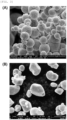


Classifications
-
- C—CHEMISTRY; METALLURGY
- C01—INORGANIC CHEMISTRY
- C01G—COMPOUNDS CONTAINING METALS NOT COVERED BY SUBCLASSES C01D OR C01F
- C01G53/00—Compounds of nickel
- C01G53/80—Compounds containing nickel, with or without oxygen or hydrogen, and containing one or more other elements
- C01G53/82—Compounds containing nickel, with or without oxygen or hydrogen, and containing two or more other elements
-
- C—CHEMISTRY; METALLURGY
- C01—INORGANIC CHEMISTRY
- C01G—COMPOUNDS CONTAINING METALS NOT COVERED BY SUBCLASSES C01D OR C01F
- C01G53/00—Compounds of nickel
-
- C—CHEMISTRY; METALLURGY
- C01—INORGANIC CHEMISTRY
- C01G—COMPOUNDS CONTAINING METALS NOT COVERED BY SUBCLASSES C01D OR C01F
- C01G53/00—Compounds of nickel
- C01G53/40—Complex oxides containing nickel and at least one other metal element
- C01G53/42—Complex oxides containing nickel and at least one other metal element containing alkali metals, e.g. LiNiO2
-
- H—ELECTRICITY
- H01—ELECTRIC ELEMENTS
- H01M—PROCESSES OR MEANS, e.g. BATTERIES, FOR THE DIRECT CONVERSION OF CHEMICAL ENERGY INTO ELECTRICAL ENERGY
- H01M4/00—Electrodes
- H01M4/02—Electrodes composed of, or comprising, active material
- H01M4/36—Selection of substances as active materials, active masses, active liquids
- H01M4/48—Selection of substances as active materials, active masses, active liquids of inorganic oxides or hydroxides
- H01M4/50—Selection of substances as active materials, active masses, active liquids of inorganic oxides or hydroxides of manganese
- H01M4/505—Selection of substances as active materials, active masses, active liquids of inorganic oxides or hydroxides of manganese of mixed oxides or hydroxides containing manganese for inserting or intercalating light metals, e.g. LiMn2O4 or LiMn2OxFy
-
- H—ELECTRICITY
- H01—ELECTRIC ELEMENTS
- H01M—PROCESSES OR MEANS, e.g. BATTERIES, FOR THE DIRECT CONVERSION OF CHEMICAL ENERGY INTO ELECTRICAL ENERGY
- H01M4/00—Electrodes
- H01M4/02—Electrodes composed of, or comprising, active material
- H01M4/36—Selection of substances as active materials, active masses, active liquids
- H01M4/48—Selection of substances as active materials, active masses, active liquids of inorganic oxides or hydroxides
- H01M4/52—Selection of substances as active materials, active masses, active liquids of inorganic oxides or hydroxides of nickel, cobalt or iron
- H01M4/525—Selection of substances as active materials, active masses, active liquids of inorganic oxides or hydroxides of nickel, cobalt or iron of mixed oxides or hydroxides containing iron, cobalt or nickel for inserting or intercalating light metals, e.g. LiNiO2, LiCoO2 or LiCoOxFy
-
- C—CHEMISTRY; METALLURGY
- C01—INORGANIC CHEMISTRY
- C01P—INDEXING SCHEME RELATING TO STRUCTURAL AND PHYSICAL ASPECTS OF SOLID INORGANIC COMPOUNDS
- C01P2002/00—Crystal-structural characteristics
- C01P2002/50—Solid solutions
- C01P2002/52—Solid solutions containing elements as dopants
- C01P2002/54—Solid solutions containing elements as dopants one element only
-
- C—CHEMISTRY; METALLURGY
- C01—INORGANIC CHEMISTRY
- C01P—INDEXING SCHEME RELATING TO STRUCTURAL AND PHYSICAL ASPECTS OF SOLID INORGANIC COMPOUNDS
- C01P2002/00—Crystal-structural characteristics
- C01P2002/70—Crystal-structural characteristics defined by measured X-ray, neutron or electron diffraction data
- C01P2002/76—Crystal-structural characteristics defined by measured X-ray, neutron or electron diffraction data by a space-group or by other symmetry indications
-
- C—CHEMISTRY; METALLURGY
- C01—INORGANIC CHEMISTRY
- C01P—INDEXING SCHEME RELATING TO STRUCTURAL AND PHYSICAL ASPECTS OF SOLID INORGANIC COMPOUNDS
- C01P2004/00—Particle morphology
- C01P2004/60—Particles characterised by their size
- C01P2004/61—Micrometer sized, i.e. from 1-100 micrometer
-
- C—CHEMISTRY; METALLURGY
- C01—INORGANIC CHEMISTRY
- C01P—INDEXING SCHEME RELATING TO STRUCTURAL AND PHYSICAL ASPECTS OF SOLID INORGANIC COMPOUNDS
- C01P2004/00—Particle morphology
- C01P2004/60—Particles characterised by their size
- C01P2004/62—Submicrometer sized, i.e. from 0.1-1 micrometer
-
- H—ELECTRICITY
- H01—ELECTRIC ELEMENTS
- H01M—PROCESSES OR MEANS, e.g. BATTERIES, FOR THE DIRECT CONVERSION OF CHEMICAL ENERGY INTO ELECTRICAL ENERGY
- H01M4/00—Electrodes
- H01M4/02—Electrodes composed of, or comprising, active material
- H01M2004/026—Electrodes composed of, or comprising, active material characterised by the polarity
- H01M2004/028—Positive electrodes
-
- Y—GENERAL TAGGING OF NEW TECHNOLOGICAL DEVELOPMENTS; GENERAL TAGGING OF CROSS-SECTIONAL TECHNOLOGIES SPANNING OVER SEVERAL SECTIONS OF THE IPC; TECHNICAL SUBJECTS COVERED BY FORMER USPC CROSS-REFERENCE ART COLLECTIONS [XRACs] AND DIGESTS
- Y02—TECHNOLOGIES OR APPLICATIONS FOR MITIGATION OR ADAPTATION AGAINST CLIMATE CHANGE
- Y02E—REDUCTION OF GREENHOUSE GAS [GHG] EMISSIONS, RELATED TO ENERGY GENERATION, TRANSMISSION OR DISTRIBUTION
- Y02E60/00—Enabling technologies; Technologies with a potential or indirect contribution to GHG emissions mitigation
- Y02E60/10—Energy storage using batteries
Definitions
- the present invention relates to a positive electrode active material precursor, a method of preparing the same, and a method of preparing a positive electrode active material using the same.
- lithium secondary batteries having high energy density, high voltage, long cycle life, and low self-discharging rate have been commercialized and widely used.
- Lithium transition metal oxides such as lithium cobalt oxide such as LiCoO 2 , lithium nickel oxide such as LiNiO 2 , lithium manganese oxide such as LiMnO 2 or LiMn 2 O 4 , or lithium iron phosphate such as LiFePO 4 , have been developed as a positive electrode active material of the lithium secondary battery, and, recently, lithium composite transition metal oxides including two or more types of transition metals, for example, Li[Ni a Co b Mn c ]O 2 , Li[Ni a Co b Al c ]O 2 , and Li[Ni a Co b Mn c Al d ]O 2 , have been developed and widely used.
- lithium transition metal hydroxide is prepared through a co-precipitation reaction which is performed while adding ammonia water, as a chelating agent, and an aqueous sodium hydroxide solution, as a basic aqueous solution, to a solvent in which raw materials containing transition metals, for example, nickel sulfate, cobalt sulfate, and manganese sulfate, are mixed
- lithium transition metal oxides developed so far are typically prepared by mixing the lithium transition metal hydroxide with a lithium-containing raw material and optionally a doping raw material, and then performing a high-temperature heat treatment.
- the lithium transition metal hydroxide in a form of a spherical secondary particle which is formed by aggregation of primary particles of a few nm to a few tens of nm, is formed as a positive electrode active material precursor, and a high-temperature heat treatment at 900°C or higher is required in order to prepare a positive electrode active material in a form of a single particle by using the lithium transition metal hydroxide.
- An aspect of the present invention provides a positive electrode active material precursor including a composite transition metal in a form of a single particle which may achieve a positive electrode active material in a form of a single particle even by a heat treatment at a low temperature.
- Another aspect of the present invention provides a method of preparing the positive electrode active material precursor.
- Another aspect of the present invention provides a method of preparing a positive electrode active material in which the positive electrode active material in the form of a single particle may be obtained even by a heat treatment at a low temperature by using the positive electrode active material precursor during the preparation of the positive electrode active material.
- a positive electrode active material precursor which has a composition represented by Formula 1 and includes a composite transition metal in a form of a single particle.
- Formula 1 Ni a M 1 b Mn c M 2 d
- a method of preparing the positive electrode active material precursor which includes the steps of: (A) preparing a reaction solution by dissolving a transition metal (M) raw material in a reaction solvent; (B) forming a complex compound (ML x , 1 ⁇ x ⁇ 6) by adding a ligand (L), which forms the complex compound with a transition metal, to the reaction solution; and (C) forming a composite transition metal in a form of a single particle by adding a basic aqueous solution to the solution containing the complex compound, wherein the transition metal (M) raw material includes a nickel-containing raw material and an M 1 (at least one of Co or Al)-containing raw material.
- a method of preparing a positive electrode active material which includes a step of mixing the positive electrode active material precursor according to the present invention with a lithium-containing raw material and performing a heat treatment at 700°C to 820°C to obtain a lithium transition metal oxide in a form of a single particle.
- a positive electrode active material precursor according to the present invention includes a composite transition metal in a form of a single particle
- a positive electrode active material in a form of a single particle may be obtained even by heat treating the positive electrode active material precursor at a low temperature during the preparation of the positive electrode active material.
- the positive electrode active material precursor including the composite transition metal in the form of a single particle may be prepared by the simple method.
- a positive electrode active material which is prepared according to a method of preparing a positive electrode active material according to the present invention, may achieve excellent capacity characteristics, life characteristics, and resistance characteristics and a significant effect of reducing gas generation when it is used in a secondary battery.
- the expression "D 50" in the present specification may be defined as a particle diameter at a cumulative volume of 50% in a particle size distribution curve (graph curve of particle size distribution).
- the D 50 may be measured by using a laser diffraction method.
- the laser diffraction method may generally measure a particle diameter ranging from a submicron level to a few mm and may obtain highly repeatable and high-resolution results.
- on means not only a case in which one component is formed directly on an upper surface of another component, but also includes a case in which intervening components may also be present.
- a single particle form is a concept in contrast to a spherical secondary particle form which is formed by aggregation of tens to hundreds of primary particles prepared by a conventional method, wherein it is a form in which particles are separated and/or dispersed from each other to form each independent and/or separated phase for each particle, but may include a form in which 2 to 10 particles are attached to each other.
- a positive electrode active material precursor according to the present invention has a composition represented by Formula 1 below, and includes a composite transition metal in a form of a single particle.
- the positive electrode active material precursor may be the composite transition metal in the form of a single particle itself which has the composition represented by Formula 1 below.
- the positive electrode active material precursor may be one in which a surface of the composite transition metal in the form of a single particle, which has the composition represented by the following Formula 1, reacts with oxygen or moisture in the air to be surface-modified with an oxide or a hydrate.
- the present inventors have found that, when the positive electrode active material precursor including the composite transition metal in the form of a single particle is used as a positive electrode active material precursor, capacity characteristics, life characteristics, resistance characteristics, and high-temperature storage characteristics of a secondary battery, which includes a positive electrode active material prepared by using the positive electrode active material precursor, may be improved, thereby leading to the completion of the present invention.
- a high temperature heat treatment at 900°C or higher is required to prepare a positive electrode active material in a form of a single particle, but, in a case in which the positive electrode active material precursor in the form of a single particle is used as in the present invention, there is an advantage in that the positive electrode active material in the form of a single particle is prepared even through a heat treatment at less than 900°C.
- a phase transition to a rock salt structure of a NiO phase which may occur when subjected to the high-temperature heat treatment at 900°C or higher, does not occur, and, as a result, a positive electrode active material having excellent performance may be prepared.
- the positive electrode active material precursor according to the present invention is an isotropic transition metal rather than an anisotropic transition metal hydroxide, particles grow uniformly regardless of a growth direction, and thus, the positive electrode active material precursor is easy to be formed as a single particle in comparison to a hydroxide precursor.
- a denotes an atomic fraction of nickel among metallic elements in the precursor, wherein a may satisfy 0.6 ⁇ a ⁇ 1, preferably 0.6 ⁇ a ⁇ 0.98, or more preferably 0.7 ⁇ a ⁇ 0.95.
- b denotes an atomic fraction of M 1 among the metallic elements in the precursor, wherein b may satisfy 0 ⁇ b ⁇ 0.4, preferably 0.01 ⁇ b ⁇ 0.4, or more preferably 0.01 ⁇ b ⁇ 0.3.
- c denotes an atomic fraction of manganese among the metallic elements in the precursor, wherein c may satisfy 0 ⁇ c ⁇ 0.4, preferably 0.01 ⁇ c ⁇ 0.4, or more preferably 0.01 ⁇ c ⁇ 0.3.
- d denotes an atomic fraction of an M 2 element among the metallic elements in the precursor, wherein d may satisfy 0 ⁇ d ⁇ 0.2, preferably 0 ⁇ d ⁇ 0.1, or more preferably 0 ⁇ d ⁇ 0.05.
- the positive electrode active material precursor may include nickel and cobalt in terms of improving the resistance characteristics of the battery.
- the positive electrode active material precursor may have a composition represented by Formula 1-1 below. [Formula 1-1] Ni a Co x Al y Mn c M 2 d
- the positive electrode active material precursor may have an average particle diameter (D 50 ) of 0.1 um to 10 um, particularly 0.5 um to 5 ⁇ m, and more particularly 0.5 um to 3 um.
- D 50 average particle diameter of the positive electrode active material precursor
- the average particle diameter of the positive electrode active material precursor is within the above range, since the number of lithium passes in contact with an electrolyte solution is increased to increase the number of lithium ions that may be used reversibly, high capacity and output characteristics may be exhibited.
- a crystal structure of the positive electrode active material precursor may be a face-centered cubic structure.
- the crystal structure of the positive electrode active material precursor is the face-centered cubic structure, since a large amount of the positive electrode active material may be prepared with small volume and weight of the precursor due to characteristics of the close packed face-centered cubic structure, processability may be improved.
- a method of preparing a positive electrode active material precursor according to the present invention includes the steps of: (A) preparing a reaction solution by dissolving a surface stabilizer and a transition metal (M) raw material in a reaction solvent; (B) forming a complex compound (ML x , 1 ⁇ x ⁇ 6) by adding a ligand (L), which forms the complex compound with a transition metal, to the reaction solution; and (C) forming a composite transition metal in a form of a single particle by adding a basic aqueous solution to the solution containing the complex compound.
- the transition metal (M) raw material includes a nickel-containing raw material and an M 1 (at least one of Co or Al)-containing raw material.
- a positive electrode active material precursor which is prepared according to the method of preparing a positive electrode active material precursor, may be the positive electrode active material precursor according to the present invention.
- the positive electrode active material precursor may have the composition represented by Formula 1 and may include the composite transition metal in the form of a single particle.
- the positive electrode active material precursor may be the composite transition metal in the form of a single particle itself which has the composition represented by Formula 1, but may be one in which the surface thereof reacts with oxygen or moisture in the air to be surface-modified with an oxide or a hydrate.
- Step (A) is a step of preparing a reaction solution by dissolving a transition metal (M) raw material in a reaction solvent.
- the transition metal (M) raw material includes a nickel-containing raw material and an M 1 (at least one of Co or Al)-containing raw material.
- the transition metal (M) raw material may further include an M 2 (at least one of Nb, Ti, Mg, Ta, Zr, W, or Sc)-containing raw material.
- the reaction solution may further include a surface stabilizer.
- the surface stabilizer may prevent agglomeration of transition metal ions or transition metal particles included in the transition metal raw material. Also, excessive agglomeration between precursor particles due to soft magnetic properties may be prevented by stabilizing the surface of the prepared positive electrode active material precursor, and, in a case in which sintering is performed for the preparation of the positive electrode active material, agglomeration between active material particles, which may occur due to high surface energy caused by a small particle size, may also be prevented.
- the reaction solvent may be deionized water, distilled water, industrial water, or general water.
- the reaction solvent may specifically be deionized water and distilled water. In this case, since an amount of impurities is small, purity of the positive electrode active material precursor thus prepared may be high.
- the surface stabilizer may include at least one of a compound containing a citric acid salt, a compound containing a dodecyl sulfate salt, or a compound containing polyvinylpyrrolidone.
- the surface stabilizer may be a compound containing a citric acid salt, and the compound containing the citric acid salt may include at least one of sodium citrate, potassium citrate, or triethyl citrate.
- the compound containing the citric acid salt may specifically be sodium citrate and potassium citrate.
- the compound containing the citric acid salt may stabilize the surface of the particles to suppress aggregation between the particles and to have a uniform particle size distribution.
- the surface stabilizer may be added in an amount of 100 mol% to 200 mol% based on the total number of moles of the transition metal ions included in the transition metal raw material.
- the transition metal (M) raw material essentially includes the nickel-containing raw material and the M 1 (at least one of Co or Al) -containing raw material, and may further include a cobalt-containing raw material, a niobium-containing raw material, a titanium-containing raw material, a magnesium-containing raw material, a tantalum-containing raw material, a zirconium-containing raw material, a tungsten-containing raw material, or a scandium-containing raw material, and a combination thereof.
- the nickel-containing raw material may be nickel-containing acetic acid salts, nitrates, sulfates, halides, sulfides, hydroxides, oxides, or oxyhydroxides, and may specifically be Ni(OH) 2 , NiO, NiOOH, NiCO 3 ⁇ 2Ni(OH) 2 ⁇ 4H 2 O, NiC 2 O 2 ⁇ 2H 2 O, Ni(NO 3 ) 2 ⁇ 6H 2 O, NiSO 4 , NiSO 4 ⁇ 6H 2 O, a fatty acid nickel salt, a nickel halide (specifically, NiCl 2 ), or a combination thereof, but the nickel-containing raw material is not limited thereto.
- the manganese-containing raw material may be manganese-containing acetic acid salts, nitrates, sulfates, halides, sulfides, hydroxides, oxides, or oxyhydroxides, and may specifically be MnCl 2 , Mn 2 O 3 , MnO 2 , Mn 3 O 4 , MnCO 3 , Mn(NO 3 ) 2 , MnSO 4 , manganese acetate, manganese dicarboxylate, manganese citrate, a fatty acid manganese salt, a manganese oxyhydroxide, manganese chloride, or a combination thereof, but the manganese-containing raw material is not limited thereto.
- the aluminum-containing raw material may be aluminum-containing acetic acid salts, nitrates, sulfates, halides, sulfides, hydroxides, oxides, or oxyhydroxides, and may specifically be AlCl 3 , Al 2 O 3 , aluminum hydroxide, aluminum sulfate, aluminum nitrate, aluminum acetate, or a combination thereof, but the aluminum-containing raw material is not limited thereto.
- the cobalt-containing raw material may be cobalt-containing acetic acid salts, nitrates, sulfates, halides, sulfides, hydroxides, oxides, or oxyhydroxides, and may specifically be CoCl 2 , Co(OH) 2 , CoOOH, Co(OCOCH 3 ) 2 ⁇ 4H 2 O, Co(NO 3 ) 2 ⁇ 6H 2 O, CoSO 4 , Co(SO 4 ) 2 ⁇ 7H 2 O, or a combination thereof, but the cobalt-containing raw material is not limited thereto.
- M 2 (at least one of Nb, Ti, Mg, Ta, Zr, W, or Sc)-containing raw material may be M 2 (at least one of Nb, Ti, Mg, Ta, Zr, W, or Sc) -containing acetic acid salts, nitrates, sulfates, halides, sulfides, hydroxides, oxides, or oxyhydroxides, but the M 2 -containing raw material is not limited thereto.
- Step (B) is a step of forming a complex compound (ML x , 1 ⁇ x ⁇ 6) by adding a ligand (L), which forms the complex compound with a transition metal, to the reaction solution.
- the ligand may include at least one of hydrazine, sodium borohydride, lithium aluminum hydride, oxalic acid, formic acid, ascorbic acid, or hydrogen peroxide.
- the ligand may specifically be hydrazine and lithium aluminum hydride. In this case, since it is a ligand and a strong reducing agent at the same time, it may be advantageous to prepare a uniform transition metal precursor.
- the complex compound may be Ni(N 2 H 4 ) 2 , Ni(N 2 H 4 ) 3 , Co(N 2 H 4 ) 2 , Co(N 2 H 4 ) 3 , Mn(N 2 H 4 ) 2 , Mn(N 2 H 4 ) 3 , Al(N 2 H 4 ) 2 , or Al(N 2 H 4 ) 3 .
- the ligand may be added in an amount such that a molar ratio of the transition metal included in the reaction solution to the ligand is in a range of 1:2 to 1:12.
- the ligand may be specifically added in an amount such that the molar ratio of the transition metal included in the reaction solution to the ligand is in a range of 1:2 to 1:8, for example, 1:2 to 1:6.
- step (B) may be performed at 25°C to 80°C, particularly 40°C to 60°C, and more particularly 50°C to 60°C.
- step (B) is performed within the above range, particles having uniform composition and size may be synthesized by controlling viscosity and reaction rate of the solution, and an unnecessary side reaction may be suppressed.
- Step (C) is a step of forming a composite transition metal in a form of a single particle by adding a basic aqueous solution to the solution containing the complex compound.
- a transition metal hydroxide is first formed, and the transition metal hydroxide is reduced to prepare a transition metal.
- reaction Equation 1 Ni(N 2 H 4 ) 2 + 2NaOH ⁇ Ni(OH) 2 + 2N 2 H 4 + 2Na +
- reaction Equation 2 2Ni(OH) 2 + N 2 H 4 ⁇ 2Ni + N 2 (g) + 4H 2 O
- the basic aqueous solution may be added in an amount such that a molar ratio of the transition metal included in the reaction solution to the basic aqueous solution is in a range of 1:2 to 1:12.
- the basic aqueous solution may be specifically added in an amount such that the molar ratio of the transition metal included in the reaction solution to the basic aqueous solution is in a range of 1:2 to 1:10, 1:2 to 1:8, for example, 1:2 to 1:6.
- a uniform size distribution may be obtained, a hydroxide ratio may be suppressed, and a pure transition metal precursor may be prepared. Also, the number of grains and defects in the particle may be reduced.
- a method of preparing a positive electrode active material according to the present invention includes a step of mixing the positive electrode active material precursor according to the present invention with a lithium-containing raw material and then performing a heat treatment at 700°C to 820°C to obtain a lithium transition metal oxide in a form of a single particle.
- a high-temperature heat treatment at 900°C or higher was required to obtain a positive electrode active material in a form of a single particle.
- a positive electrode active material in the form of a single particle may be obtained even by a heat treatment at a low temperature of 700°C to 820°C.
- a positive electrode active material in the form of a single particle may be obtained even by the heat treatment at a low temperature of 700°C to 820°C, instead of the high-temperature heat treatment of 900°C or higher.
- the lithium-containing raw material may include at least one of lithium hydroxide hydrate, lithium carbonate, lithium nitrate, or lithium oxide.
- the lithium-containing raw material may specifically be a lithium hydroxide hydrate, for example, LiOH ⁇ H 2 O. In this case, reactivity between the precursor having a high atomic fraction of nickel among the metallic elements in the precursor and the lithium-containing raw material may be improved.
- the positive electrode active material precursor and the lithium-containing raw material may be mixed in a molar ratio of 1:1.02 to 1:1.2, particularly 1:1.02 to 1:1.1, and more particularly 1:1.02 to 1:1.07 during the preparation of the positive electrode active material.
- capacity of the prepared positive electrode active material may be reduced, and, in a case in which the lithium-containing raw material is mixed in a ratio greater than the above range, unreacted lithium (Li) remains as a by-product, the capacity may be reduced, and separation of the positive electrode active material particles (causing a positive electrode active material impregnation phenomenon) may occur after sintering.
- the heat treatment temperature may be in a range of 700°C to 820°C, particularly 720°C to 820°C, and more particularly 750°C to 820°C.
- the heat treatment temperature is within the above range, crystallinity of the particle may be increased, a phenomenon, in which Ni 2+ ions are inserted into a Li layer, may be suppressed, and accordingly, excellent electrochemical properties may be achieved when the positive electrode active material is used in the battery.
- the heat treatment may be performed in an oxygen atmosphere.
- the reactivity may be increased, the particles may be uniformly sintered, and a degree of crystallinity may be increased.
- the heat treatment may be performed for 5 hours to 20 hours.
- the heat treatment may specifically be performed for 8 hours to 18 hours, for example, 10 hours to 16 hours.
- the heat treatment time is within the above range, since the lithium source reacts for a sufficient period of time, there is an effect of increasing the degree of crystallinity through rearrangement of atoms and reducing the defects.
- the method of preparing a positive electrode active material may prepare a positive electrode active material doped with a doping element by mixing a doping element-containing material together when the positive electrode active material precursor and the lithium-containing raw material are mixed and preforming a heat treatment.
- the method of preparing a positive electrode active material may prepare a positive electrode active material, in which a coating layer is formed on the lithium transition metal oxide, by mixing a coating element-containing raw material with the prepared lithium transition metal oxide in the form of a single particle and performing a secondary heat treatment.
- the positive electrode active material prepared according to the method of preparing a positive electrode active material is a lithium transition metal oxide in the form of a single particle, wherein it may have a composition represented by Formula 2 below.
- Formula 2 Li e [Ni a' M 1 b' Mn c' M 3 d' ]O 2-f A f
- a' represents an atomic fraction of nickel among metallic elements in the positive electrode active material, wherein a may satisfy 0.6 ⁇ a ⁇ 1, preferably 0.6 ⁇ a' ⁇ 0.98, or more preferably 0.7 ⁇ a' ⁇ 0.95.
- b' represents an atomic fraction of an M 1 element among the metallic elements in the positive electrode active material, wherein b' may satisfy 0 ⁇ b' ⁇ 0.4, preferably 0.01 ⁇ b' ⁇ 0.4, or more preferably 0.01 ⁇ b' ⁇ 0.3.
- c' represents an atomic fraction of manganese among the metallic elements in the positive electrode active material, wherein c' may satisfy 0 ⁇ c' ⁇ 0.4, preferably 0.01 ⁇ c' ⁇ 0.4, or more preferably 0.01 ⁇ c' ⁇ 0.3.
- d' represents an atomic fraction of an M 3 element among the metallic elements in the positive electrode active material, wherein d' may satisfy 0 ⁇ d ⁇ 0.2, preferably 0 ⁇ d' ⁇ 0.1, or more preferably 0 ⁇ d' ⁇ 0.05.
- the positive electrode active material may include nickel and cobalt.
- the positive electrode active material may have a composition represented by Formula 2-1 below. [Formula 2-1] Li e [Ni a' Co x' Al y' Mn c' M 2 d' ] O 2-f A f
- a layered crystal structure is not developed properly when the Ni 2+ ions are mixed in the lithium layer, structural stability of the active material is reduced and movement of the lithium ions is hindered by the Ni 2+ ions present in the lithium layer, and thus, battery performance is degraded.
- the positive electrode active material is sintered at a high temperature of 900°C or higher, a ratio, in which phase transition from a stable layered structure of LiNO 2 to a NiO phase occurs, increases, and a degree of cation mixing tends to be significantly increased.
- the positive electrode active material prepared according to the method of preparing a positive electrode active material of the present invention may suppress the above-described phase transition by being sintered at a temperature of 820°C or less, the degree of cation mixing may be low. Specifically, the degree of cation mixing may be 1% or less. Thus, a battery including the positive electrode active material prepared according to the method of preparing a positive electrode active material may achieve excellent electrochemical performance.
- the present invention may provide a positive electrode for a lithium secondary battery which includes the positive electrode active material prepared by the above-described method.
- the positive electrode includes a positive electrode collector and a positive electrode active material layer which is disposed on at least one surface of the positive electrode collector and includes the above-described positive electrode active material.
- the positive electrode collector is not particularly limited as long as it has conductivity without causing adverse chemical changes in the battery, and, for example, stainless steel, aluminum, nickel, titanium, fired carbon, or aluminum or stainless steel that is surface-treated with one of carbon, nickel, titanium, silver, or the like may be used.
- the positive electrode collector may typically have a thickness of 3 um to 500 ⁇ m, and microscopic irregularities may be formed on the surface of the collector to improve the adhesion of the positive electrode active material.
- the positive electrode collector for example, may be used in various shapes such as that of a film, a sheet, a foil, a net, a porous body, a foam body, a non-woven fabric body, and the like.
- the positive electrode active material layer may include a conductive agent and a binder in addition to the positive electrode active material.
- the positive electrode active material may be included in an amount of 80 wt% to 99 wt%, for example, 85 wt% to 98 wt% based on a total weight of the positive electrode active material layer. When the positive electrode active material is included in an amount within the above range, excellent capacity characteristics may be obtained.
- the conductive agent is used to provide conductivity to the electrode, wherein any conductive agent may be used without particular limitation as long as it has suitable electron conductivity without causing adverse chemical changes in the battery.
- the conductive agent may be graphite such as natural graphite or artificial graphite; carbon based materials such as carbon black, acetylene black, Ketjen black, channel black, furnace black, lamp black, thermal black, and carbon fibers; powder or fibers of metal such as copper, nickel, aluminum, and silver; conductive whiskers such as zinc oxide whiskers and potassium titanate whiskers; conductive metal oxides such as titanium oxide; or conductive polymers such as polyphenylene derivatives, and any one thereof or a mixture of two or more thereof may be used.
- the conductive agent may be typically included in an amount of 1 wt% to 30 wt% based on the total weight of the positive electrode active material layer.
- the binder improves the adhesion between the positive electrode active material particles and the adhesion between the positive electrode active material and the current collector.
- the binder may be polyvinylidene fluoride (PVDF), polyvinylidene fluoride-hexafluoropropylene copolymer (PVDF-co-HFP), polyvinyl alcohol, polyacrylonitrile, carboxymethyl cellulose (CMC), starch, hydroxypropyl cellulose, regenerated cellulose, polyvinylpyrrolidone, tetrafluoroethylene, polyethylene, polypropylene, an ethylene-propylene-diene polymer (EPDM), a sulfonated EPDM, a styrene-butadiene rubber (SBR), a fluorine rubber, or various copolymers thereof, and any one thereof or a mixture of two or more thereof may be used.
- the binder may be included in an amount of 1 wt% to 30 wt% based on
- the positive electrode may be prepared according to a typical method of preparing a positive electrode except that the above-described positive electrode active material is used. Specifically, a composition for forming a positive electrode active material layer, which is prepared by dissolving or dispersing the positive electrode active material as well as optionally the binder and the conductive agent in a solvent, is coated on the positive electrode collector, and the positive electrode may then be prepared by drying and rolling the coated positive electrode collector. In this case, types and amounts of the positive electrode active material, the binder, and the conductive are the same as those previously described.
- the solvent may be a solvent normally used in the art.
- the solvent may include dimethyl sulfoxide (DMSO), isopropyl alcohol, N-methylpyrrolidone (NMP), acetone, or water, and any one thereof or a mixture of two or more thereof may be used.
- An amount of the solvent used may be sufficient if the solvent may dissolve or disperse the positive electrode active material, the conductive agent, and the binder in consideration of a coating thickness of a slurry and manufacturing yield, and may allow to have a viscosity that may provide excellent thickness uniformity during the subsequent coating for the preparation of the positive electrode.
- the positive electrode may be prepared by casting the composition for forming a positive electrode active material layer on a separate support and then laminating a film separated from the support on the positive electrode collector.
- an electrochemical device including the positive electrode may be prepared.
- the electrochemical device may specifically be a battery or a capacitor, and, for example, may be a lithium secondary battery.
- the lithium secondary battery specifically includes a positive electrode, a negative electrode disposed to face the positive electrode, a separator disposed between the positive electrode and the negative electrode, and an electrolyte, wherein, since the positive electrode is the same as described above, detailed descriptions thereof will be omitted, and the remaining configurations will be only described in detail below.
- the lithium secondary battery may further optionally include a battery container accommodating an electrode assembly of the positive electrode, the negative electrode, and the separator, and a sealing member sealing the battery container.
- the negative electrode includes a negative electrode collector and a negative electrode active material layer disposed on the negative electrode collector.
- the negative electrode collector is not particularly limited as long as it has high conductivity without causing adverse chemical changes in the battery, and, for example, copper, stainless steel, aluminum, nickel, titanium, fired carbon, copper or stainless steel that is surface-treated with one of carbon, nickel, titanium, silver, or the like, and an aluminum-cadmium alloy may be used.
- the negative electrode collector may typically have a thickness of 3 um to 500 ⁇ m, and, similar to the positive electrode collector, microscopic irregularities may be formed on the surface of the collector to improve the adhesion of a negative electrode active material.
- the negative electrode collector for example, may be used in various shapes such as that of a film, a sheet, a foil, a net, a porous body, a foam body, a non-woven fabric body, and the like.
- the negative electrode active material layer optionally includes a binder and a conductive agent in addition to the negative electrode active material.
- a compound capable of reversibly intercalating and deintercalating lithium may be used as the negative electrode active material.
- the negative electrode active material may be a carbonaceous material such as artificial graphite, natural graphite, graphitized carbon fibers, and amorphous carbon; a metallic compound alloyable with lithium such as silicon (Si), aluminum (Al), tin (Sn), lead (Pb), zinc (Zn), bismuth (Bi), indium (In), magnesium (Mg), gallium (Ga), cadmium (Cd), a Si alloy, a Sn alloy, or an Al alloy; a metal oxide which may be doped and undoped with lithium such as SiO ⁇ (0 ⁇ 2), SnO 2 , vanadium oxide, and lithium vanadium oxide; or a composite including the metallic compound and the carbonaceous material such as a Si-C composite or a Sn-C composite, and any one thereof or a mixture of two or more thereof may be used.
- a metallic lithium thin film may be used as the negative electrode active material.
- both low crystalline carbon and high crystalline carbon may be used as the carbon material.
- Typical examples of the low crystalline carbon may be soft carbon and hard carbon
- typical examples of the high crystalline carbon may be irregular, planar, flaky, spherical, or fibrous natural graphite or artificial graphite, Kish graphite, pyrolytic carbon, mesophase pitch-based carbon fibers, meso-carbon microbeads, mesophase pitches, and high-temperature sintered carbon such as petroleum or coal tar pitch derived cokes.
- the negative electrode active material may be included in an amount of 80 wt% to 99 wt% based on a total weight of the negative electrode active material layer.
- the binder is a component that assists in the binding between the conductive agent, the active material, and the current collector, wherein the binder is typically added in an amount of 0.1 wt% to 10 wt% based on the total weight of the negative electrode active material layer.
- binder may be polyvinylidene fluoride (PVDF), polyvinyl alcohol, carboxymethylcellulose (CMC), starch, hydroxypropylcellulose, regenerated cellulose, polyvinylpyrrolidone, tetrafluoroethylene, polyethylene, polypropylene, an ethylene-propylene-diene polymer (EPDM), a sulfonated-EPDM, a styrene-butadiene rubber, a fluoro rubber, and various copolymers thereof.
- PVDF polyvinylidene fluoride
- CMC carboxymethylcellulose
- EPDM ethylene-propylene-diene polymer
- sulfonated-EPDM a styrene-butadiene rubber
- fluoro rubber a fluoro rubber
- the conductive agent is a component for further improving conductivity of the negative electrode active material, wherein the conductive agent may be added in an amount of 10 wt% or less, for example, 5 wt% or less based on the total weight of the negative electrode active material layer.
- the conductive agent is not particularly limited as long as it has conductivity without causing adverse chemical changes in the battery, and, for example, a conductive material such as: graphite such as natural graphite or artificial graphite; carbon black such as acetylene black, Ketjen black, channel black, furnace black, lamp black, and thermal black; conductive fibers such as carbon fibers or metal fibers; metal powder such as fluorocarbon powder, aluminum powder, and nickel powder; conductive whiskers such as zinc oxide whiskers and potassium titanate whiskers; conductive metal oxide such as titanium oxide; or polyphenylene derivatives may be used.
- a conductive material such as: graphite such as natural graphite or artificial graphite; carbon black such as acetylene black, Ketjen black, channel black, furnace black, lamp black, and thermal black; conductive fibers such as carbon fibers or metal fibers; metal powder such as fluorocarbon powder, aluminum powder, and nickel powder; conductive whiskers such as zinc oxide whiskers and potassium titanate whiskers;
- the negative electrode active material layer may be prepared by coating a negative electrode material mixture, which is prepared by dissolving or dispersing optionally the binder and the conductive agent as well as the negative electrode active material in a solvent, on the negative electrode collector and drying the coated negative electrode collector, or may be prepared by casting the negative electrode material mixture on a separate support and then laminating a film separated from the support on the negative electrode collector.
- the separator separates the negative electrode and the positive electrode and provides a movement path of lithium ions
- any separator may be used as the separator without particular limitation as long as it is typically used in a lithium secondary battery, and particularly, a separator having high moisture-retention ability for an electrolyte as well as low resistance to the transfer of electrolyte ions may be used.
- a porous polymer film for example, a porous polymer film prepared from a polyolefin-based polymer, such as an ethylene homopolymer, a propylene homopolymer, an ethylene/butene copolymer, an ethylene/hexene copolymer, and an ethylene/methacrylate copolymer, or a laminated structure having two or more layers thereof may be used.
- a typical porous nonwoven fabric for example, a nonwoven fabric formed of high melting point glass fibers or polyethylene terephthalate fibers may be used.
- a coated separator including a ceramic component or a polymer material may be used to secure heat resistance or mechanical strength, and the separator having a single layer or multilayer structure may be optionally used.
- the electrolyte used in the present invention may include an organic liquid electrolyte, an inorganic liquid electrolyte, a solid polymer electrolyte, a gel-type polymer electrolyte, a solid inorganic electrolyte, or a molten-type inorganic electrolyte which may be used in the preparation of the lithium secondary battery, but the present invention is not limited thereto.
- the electrolyte may include an organic solvent and a lithium salt.
- any organic solvent may be used as the organic solvent without particular limitation so long as it may function as a medium through which ions involved in an electrochemical reaction of the battery may move.
- an ester-based solvent such as methyl acetate, ethyl acetate, ⁇ -butyrolactone, and ⁇ -caprolactone
- an etherbased solvent such as dibutyl ether or tetrahydrofuran
- a ketone-based solvent such as cyclohexanone
- an aromatic hydrocarbon-based solvent such as benzene and fluorobenzene
- a carbonate-based solvent such as dimethyl carbonate (DMC), diethyl carbonate (DEC), methylethyl carbonate (MEC), ethylmethyl carbonate (EMC), ethylene carbonate (EC), and propylene carbonate (PC)
- an alcohol-based solvent such as ethyl alcohol and isopropyl alcohol
- nitriles such as R-CN (where R is
- the carbonate-based solvent may be used, and, for example, a mixture of a cyclic carbonate (e.g., ethylene carbonate or propylene carbonate) having high ionic conductivity and high dielectric constant, which may increase charge/discharge performance of the battery, and a low-viscosity linear carbonate-based compound (e.g., ethylmethyl carbonate, dimethyl carbonate, or diethyl carbonate) may be used.
- a cyclic carbonate e.g., ethylene carbonate or propylene carbonate
- a low-viscosity linear carbonate-based compound e.g., ethylmethyl carbonate, dimethyl carbonate, or diethyl carbonate
- the performance of the electrolyte solution may be excellent when the cyclic carbonate and the chain carbonate are mixed in a volume ratio of about 1:1 to about 1:9.
- the lithium salt may be used without particular limitation as long as it is a compound capable of providing lithium ions used in the lithium secondary battery. Specifically, LiPF 6 , LiClO 4 , LiAsF 6 , LiBF 4 , LiSbF 6 , LiAlO 4 , LiAlCl 4 , LiCF 3 SO 3 , LiC 4 F 9 SO 3 , LiN(C 2 F 5 SO 3 ) 2 , LiN (C 2 F 5 SO 2 ) 2 , LiN(CF 3 SO 2 ) 2 , LiCl, LiI, or LiB(C 2 O 4 ) 2 may be used as the lithium salt.
- the lithium salt may be used in a concentration range of 0.1 M to 2.0 M. In a case in which the concentration of the lithium salt is included within the above range, since the electrolyte may have appropriate conductivity and viscosity, excellent performance of the electrolyte may be obtained and lithium ions may effectively move.
- At least one additive for example, a halo-alkylene carbonate-based compound such as difluoroethylene carbonate, pyridine, triethylphosphite, triethanolamine, cyclic ether, ethylenediamine, n-glyme, hexamethylphosphate triamide, a nitrobenzene derivative, sulfur, a quinone imine dye, N-substituted oxazolidinone, N,N-substituted imidazolidine, ethylene glycol dialkyl ether, an ammonium salt, pyrrole, 2-methoxy ethanol, or aluminum trichloride, may be further added to the electrolyte in addition to the electrolyte components.
- the additive may be included in an amount of 0.1 wt% to 5 wt% based on a total weight of the electrolyte.
- the lithium secondary battery including the positive electrode active material according to the present invention stably exhibits excellent discharge capacity, output characteristics, and capacity retention
- the lithium secondary battery is suitable for portable devices, such as mobile phones, notebook computers, and digital cameras, and electric cars such as hybrid electric vehicles (HEVs).
- portable devices such as mobile phones, notebook computers, and digital cameras
- electric cars such as hybrid electric vehicles (HEVs).
- HEVs hybrid electric vehicles
- a battery module including the lithium secondary battery as a unit cell and a battery pack including the battery module are provided.
- the battery module or the battery pack may be used as a power source of at least one medium and large sized device of a power tool; electric cars including an electric vehicle (EV), a hybrid electric vehicle, and a plug-in hybrid electric vehicle (PHEV); or a power storage system.
- electric cars including an electric vehicle (EV), a hybrid electric vehicle, and a plug-in hybrid electric vehicle (PHEV); or a power storage system.
- EV electric vehicle
- PHEV plug-in hybrid electric vehicle
- a shape of the lithium secondary battery of the present invention is not particularly limited, but a cylindrical type using a can, a prismatic type, a pouch type, or a coin type may be used.
- the lithium secondary battery according to the present invention may not only be used in a battery cell that is used as a power source of a small device, but may also be used as a unit cell in a medium and large sized battery module including a plurality of battery cells.
- a transition metal-N 2 H 4 composite was formed by adding hydrazine (N 2 H 4 ) to the reaction solution so that a molar ratio of Ni+Co+Al:N 2 H 4 was 1:4.
- a composite transition metal in a form of a single particle was formed by adding a 50 wt% sodium hydroxide aqueous solution to the solution containing the transition metal-N 2 H 4 composite such that a molar ratio of Ni+Co+Al:NaOH was 1:6, the composite transition metal in the form of a single particle was washed and dried to prepare positive electrode active material precursor A which was represented by Ni 0.9 Co 0.08 Al 0.02 and was a composite transition metal in the form of a single particle.
- An average particle diameter (D 50 ) of the positive electrode active material precursor A was 800 nm.
- a transition metal-N 2 H 4 composite was formed by adding hydrazine (N 2 H 4 ) to the reaction solution so that a molar ratio of Ni+Co:N 2 H 4 was 1:6.
- a composite transition metal in a form of a single particle was formed by adding a 50 wt% sodium hydroxide aqueous solution to the solution containing the transition metal-N 2 H 4 composite such that a molar ratio of Ni+Co:NaOH was 1:4, the composite transition metal in the form of a single particle was washed and dried to prepare positive electrode active material precursor B which was represented by Ni 0.85 Co 0.15 and was a composite transition metal in the form of a single particle.
- An average particle diameter (D 50 ) of the positive electrode active material precursor B was 1 ⁇ m.
- a transition metal-N 2 H 4 composite was formed by adding hydrazine (N 2 H 4 ) to the reaction solution so that a molar ratio of Ni+Al:N 2 H 4 was 1:6.
- a composite transition metal in a form of a single particle was formed by adding a 50 wt% sodium hydroxide aqueous solution to the solution containing the transition metal-N 2 H 4 composite such that a molar ratio of Ni+Al:NaOH was 1:4, the composite transition metal in the form of a single particle was washed and dried to prepare positive electrode active material precursor C which was represented by Ni 0.95 Al 0.05 and was a composite transition metal in the form of a single particle.
- An average particle diameter (D 50 ) of the positive electrode active material precursor C was 1 ⁇ m.
- Ni(SO 3 ) 2 and Co(SO 3 ) 2 were mixed in deionized water in amounts such that a molar ratio of Ni:Co was 92:8 to prepare transition metal aqueous solution 1 with a concentration of 2.29 M.
- Al(NO 3 ) 2 was further mixed with deionized water to prepare transition metal aqueous solution 2 with a concentration of 2.29 M.
- transition metal aqueous solution 1 the transition metal aqueous solution 2, a NaOH aqueous solution, and a NH 4 OH aqueous solution were added to the reactor at rates of 11.76 mL/min, 0.48 mL/min, 7.2 mL/min, and 1.8 mL/min, respectively
- a reaction was performed for 48 hours at a reaction temperature of 58°C, a pH of 11.4, and a stirring speed of 350 rpm to prepare positive electrode active material precursor D which was represented by Ni 0.9 Co 0.08 Al 0.02 (OH) 2 and was in a form of a spherical secondary particle formed by aggregation of primary particles.
- An average particle diameter (D 50 ) of the positive electrode active material precursor D was 4 ⁇ m.
- the positive electrode active material precursor D and LiOH were mixed so that a molar ratio of Ni+Co+Al:Li was 1:1.05 and a heat treatment was performed at 1,000°C for 10 hours to prepare a positive electrode active material which was represented by Li[Ni 0.9 Co 0.08 Al 0.02 ]O 2 .
- Ni(SO 3 ) 2 and Co(SO 3 ) 2 were mixed in deionized water in amounts such that a molar ratio of Ni:Co was 85:15 to prepare transition metal aqueous solution 3 with a concentration of 2.29 M.
- transition metal aqueous solution 3 a NaOH aqueous solution, and a NH 4 OH aqueous solution were added to the reactor at rates of 11.76 mL/min, 7.2 mL/min, and 1.8 mL/min, respectively, a reaction was performed for 48 hours at a reaction temperature of 58°C, a pH of 11.4, and a stirring speed of 350 rpm to prepare positive electrode active material precursor E which was represented by Ni 0.85 Co 0.15 (OH) 2 and was in a form of a spherical secondary particle formed by aggregation of primary particles.
- An average particle diameter (D 50 ) of the positive electrode active material precursor E was 4 ⁇ m.
- the positive electrode active material precursor E and LiOH were mixed so that a molar ratio of Ni+Co:Li was 1:1.05 and a heat treatment was performed at 1,000°C for 10 hours to prepare a positive electrode active material which was represented by Li[Ni 0.85 Co 0.15 ]O 2 .
- SEM images of the positive electrode active material precursor and the positive electrode active material of Example 1 were measured and illustrated in FIG. 1(A) and FIG. 1(B) , respectively.
- SEM images of the positive electrode active material precursor and the positive electrode active material of Example 2 were measured and illustrated in FIG. 2(A) and FIG. 2(B) , respectively.
- SEM images of the positive electrode active material precursor and the positive electrode active material of Example 3 were measured and illustrated in FIG. 3(A) and FIG. 3(B) , respectively.
- SEM images of the positive electrode active material precursor and the positive electrode active material of Comparative Example 1 were measured and illustrated in FIG. 4(A) and FIG. 4(B) , respectively.
- SEM images of the positive electrode active material precursor and the positive electrode active material of Comparative Example 2 were measured and illustrated in FIG. 5(A) and FIG. 5(B) , respectively.
- the positive electrode active material precursors of Examples 1 to 3 were in the form of a single particle, wherein it may be confirmed that the positive electrode active materials in the form of a single particle were prepared without a high-temperature heat treatment of 900°C or higher during the preparation of the positive electrode active material.
- the positive electrode active material precursors of Comparative Examples 1 and 2 were in the form of a secondary particle formed by aggregation of primary particles, wherein it may be confirmed that the positive electrode active materials in the form of a single particle were prepared only by a high-temperature heat treatment of 1,000°C or higher.
- X-ray diffraction (XRD) data of the positive electrode active material precursor according to temperature were measured using in-situ XRD (Malvern PANalytical B.V. EMPYREAN, Cu Target) while performing the heat treatment in Example 1 and illustrated in FIG. 6 .
- XRD data of the positive electrode active material precursor of Example 1 were measured using XRD (Bruker Corporation, D4 Endeavor, Cu Target) and illustrated in FIG. 7 .
- the positive electrode active material precursor of Example 1 had a face-centered cubic structure. Also, it may be confirmed that the positive electrode active material precursor of Example 1 was a metal in which Ni, Co, and Al were mixed.
- the positive electrode active materials prepared in Examples 1 to 3 and Comparative Examples 1 and 2 were used to prepare lithium secondary batteries, and initial charge capacity, initial discharge capacity, capacity retention, and resistance increase rate were evaluated for each of the lithium secondary batteries.
- Each of the positive electrode active materials prepared in Examples 1 to 3 and Comparative Examples 1 and 2, a conductive agent (FX35), and a binder (PVdF) were mixed in an N-methyl-2-pyrrolidone (NMP) solvent at a weight ratio of 97.5:1:1.5 to prepare a positive electrode slurry.
- NMP N-methyl-2-pyrrolidone
- One surface of an aluminum current collector was coated with the positive electrode slurry, dried, and then rolled to prepare a positive electrode.
- Each lithium secondary battery was prepared by preparing an electrode assembly by disposing a separator between the positive electrode and Li metal, disposing the electrode assembly in a battery case, and then injecting an electrolyte solution.
- an electrolyte solution in which 1 M LiPF 6 was dissolved in an organic solvent in which ethylene carbonate, ethylmethyl carbonate, and diethyl carbonate were mixed in a volume ratio of 3:3:4.
- each of the secondary batteries was charged at a constant current of 0.1 C to 4.25 V at 25°C. Thereafter, each secondary battery was discharged at a constant current of 0.1 C to 3 V to measure initial charge capacity and initial discharge capacity. The results thereof are presented in Table 1 below.
- capacity of the lithium secondary battery was measured by repeating a charge and discharge cycle 30 times at a constant current of 0.33 C in a voltage range of 3.0 V to 4.25 V at 45°C, and, particularly, a ratio of 30 th cycle discharge capacity to 1 st cycle discharge capacity was defined as a capacity retention and the capacity retentions are presented in Table 1 below.
- a ratio of DCIR which was obtained by dividing a voltage drop ( ⁇ V) for 60 seconds in a 30 th discharge cycle by the current
- DCIR which was obtained by dividing a voltage drop ( ⁇ V) for 60 seconds in a 1 st discharge cycle by the current
- the positive electrode active materials prepared in Example 2 and Comparative Example 2 were used to prepare lithium secondary batteries, and a volume change rate when left standing at a high temperature was evaluated for each of the lithium secondary batteries.
- Each of the positive electrode active materials prepared in Example 2 and Comparative Example 2, a conductive agent (FX35), and a binder (PVdF) were mixed in an N-methyl-2-pyrrolidone (NMP) solvent at a weight ratio of 97.5:1:1.5 to prepare a positive electrode slurry.
- NMP N-methyl-2-pyrrolidone
- One surface of an aluminum current collector was coated with the positive electrode slurry, dried, and then rolled to prepare a positive electrode.
- a negative electrode active material artificial graphite
- a binder (PVdF) were mixed in water (H 2 O) at a ratio of 95.6:2.1:2.3 to prepare a negative electrode slurry.
- Each lithium secondary battery was prepared by preparing an electrode assembly by disposing a separator between the positive electrode and the negative electrode, disposing the electrode assembly in a battery case, and then injecting an electrolyte solution.
- an electrolyte solution was used in which 0.7 M LiPF 6 and 0.3 M LiFSI were dissolved in an organic solvent in which ethylene carbonate and ethylmethyl carbonate were mixed in a volume ratio of 3:7.
- a gas generation amount was measured immediately after the secondary battery was prepared and every week while the secondary battery was stored at 60°C for 8 weeks, wherein a ratio of the gas generation amount of each week to the gas generation amount immediately after the preparation was defined as a volume change rate of the battery and the volume change rates are presented in Table 2 and FIG. 8 .
- the gas generation amount was measured using the Archimedes principle.
- [Table 2] Volume change rate (%) 1 week 2 weeks 3 weeks 4 weeks 5 weeks 6 weeks 7 weeks 8 weeks
- the battery, which included the positive electrode active material prepared by using the positive electrode active material precursor according to the present invention had excellent capacity characteristics, excellent life characteristics at a high temperature, and a small resistance increase rate at a high temperature. Also, it may be confirmed that the battery, which included the positive electrode active material prepared by using the positive electrode active material precursor according to the present invention, had a significantly lower volume change rate when left standing for a long time at a high temperature than the battery including the positive electrode active material which was prepared by using the positive electrode active material precursor in the form of a secondary particle formed by aggregation of primary particles.
Landscapes
- Chemical & Material Sciences (AREA)
- Organic Chemistry (AREA)
- Inorganic Chemistry (AREA)
- Chemical Kinetics & Catalysis (AREA)
- Electrochemistry (AREA)
- General Chemical & Material Sciences (AREA)
- Battery Electrode And Active Subsutance (AREA)
- Inorganic Compounds Of Heavy Metals (AREA)
Applications Claiming Priority (2)
| Application Number | Priority Date | Filing Date | Title |
|---|---|---|---|
| KR20200165676 | 2020-12-01 | ||
| PCT/KR2021/018014 WO2022119314A1 (fr) | 2020-12-01 | 2021-12-01 | Précurseur de matériau actif d'électrode positive, son procédé de préparation, et procédé de préparation de matériau actif d'électrode positive l'utilisant |
Publications (2)
| Publication Number | Publication Date |
|---|---|
| EP4174027A1 true EP4174027A1 (fr) | 2023-05-03 |
| EP4174027A4 EP4174027A4 (fr) | 2024-03-06 |
Family
ID=81854255
Family Applications (1)
| Application Number | Title | Priority Date | Filing Date |
|---|---|---|---|
| EP21901002.2A Pending EP4174027A4 (fr) | 2020-12-01 | 2021-12-01 | Précurseur de matériau actif d'électrode positive, son procédé de préparation, et procédé de préparation de matériau actif d'électrode positive l'utilisant |
Country Status (6)
| Country | Link |
|---|---|
| US (1) | US20230312366A1 (fr) |
| EP (1) | EP4174027A4 (fr) |
| JP (2) | JP7798427B2 (fr) |
| KR (1) | KR102565001B1 (fr) |
| CN (1) | CN116057732A (fr) |
| WO (1) | WO2022119314A1 (fr) |
Families Citing this family (5)
| Publication number | Priority date | Publication date | Assignee | Title |
|---|---|---|---|---|
| US20250289733A1 (en) * | 2022-05-20 | 2025-09-18 | Lg Chem, Ltd. | Positive Electrode Active Material Precursor, Method for Preparing Positive Electrode Active Material Using Same, and Positive Electrode Active Material |
| KR102895825B1 (ko) * | 2022-10-27 | 2025-12-04 | 주식회사 엘지화학 | 양극 활물질, 이의 제조방법 및 이를 포함하는 리튬 이차전지 |
| KR102683638B1 (ko) * | 2022-12-23 | 2024-07-10 | (주)포스코퓨처엠 | 리튬 이차 전지용 양극 활물질 및 이를 포함하는 리튬 이차 전지 |
| KR102683637B1 (ko) * | 2022-12-23 | 2024-07-10 | (주)포스코퓨처엠 | 리튬 이차 전지용 양극 활물질 및 이를 포함하는 리튬 이차 전지 |
| KR20250028754A (ko) * | 2023-08-22 | 2025-03-04 | 주식회사 엘지화학 | 양극 활물질의 제조 방법, 양극 활물질 분말, 이를 포함하는 양극 및 리튬 이차전지 |
Family Cites Families (22)
| Publication number | Priority date | Publication date | Assignee | Title |
|---|---|---|---|---|
| CA2129523C (fr) * | 1992-02-12 | 1999-08-24 | Robert R. Mcdonald | Alliages intermetalliques utilises dans le traitement de l'acier |
| JP2000156224A (ja) * | 1998-11-17 | 2000-06-06 | Japan Storage Battery Co Ltd | 非水電解質電池 |
| JP2003155506A (ja) * | 2001-11-21 | 2003-05-30 | Murata Mfg Co Ltd | ニッケル粉末の製造方法、ニッケル粉末、導電性ペースト、及び積層セラミック電子部品 |
| JP2008266690A (ja) * | 2007-04-17 | 2008-11-06 | Kyushu Univ | 水素吸蔵体とそれを用いた水素吸蔵装置及び水素センサ、並びに、ニッケルナノ粒子及びその製造方法 |
| JP2009064603A (ja) * | 2007-09-05 | 2009-03-26 | Iwatani Internatl Corp | Mlcc用導電性ペースト |
| WO2010082240A1 (fr) * | 2009-01-19 | 2010-07-22 | 株式会社村田製作所 | Oxyde composite, procédé de fabrication associé, et pile rechargeable à électrolyte non aqueux utilisant l'oxyde composite |
| JP2011113869A (ja) * | 2009-11-27 | 2011-06-09 | Panasonic Corp | リチウム二次電池用正極活物質およびその製造方法 |
| CN102169990B (zh) * | 2011-04-07 | 2013-06-26 | 先进储能材料国家工程研究中心有限责任公司 | 一种三元正极材料及其生产方法 |
| CN106159255A (zh) * | 2011-04-14 | 2016-11-23 | 户田工业株式会社 | Li‑Ni复合氧化物颗粒粉末以及非水电解质二次电池 |
| KR101920484B1 (ko) * | 2011-09-26 | 2019-02-11 | 전자부품연구원 | 리튬 이차전지용 양극 활물질의 전구체 및 그의 제조방법, 양극 활물질 및 이를 포함하는 리튬 이차전지 |
| WO2015049862A1 (fr) * | 2013-10-03 | 2015-04-09 | 株式会社Gsユアサ | Matière active d'électrode positive pour batterie secondaire au lithium ainsi que procédé de fabrication associé, électrode pour batterie secondaire au lithium, batterie secondaire au lithium, et dispositif d'accumulation |
| PL3337763T3 (pl) | 2015-08-17 | 2019-12-31 | Basf Se | Sposób wytwarzania materiału czynnego katody i związanego z nim prekursora, materiał czynny katody i jego zastosowanie |
| US20190256994A1 (en) | 2016-02-16 | 2019-08-22 | Lumishield Technologies Incorporated | Electrochemical Deposition of Elements in Aqueous Media |
| KR102572648B1 (ko) * | 2016-06-17 | 2023-08-31 | 삼성전자주식회사 | 리튬전지용 복합양극활물질, 이를 포함하는 리튬전지용 양극 및 리튬전지 |
| WO2018021453A1 (fr) | 2016-07-28 | 2018-02-01 | 住友化学株式会社 | Procédé de production d'un oxyde composite de lithium-nickel |
| CN107195872B (zh) * | 2017-04-17 | 2020-05-05 | 福建金山锂科新材料有限公司 | 一种锂离子电池三元正极材料nca的制备方法 |
| KR102270119B1 (ko) * | 2017-11-13 | 2021-06-28 | 주식회사 엘지화학 | 이차전지용 양극 활물질의 제조방법 |
| HUE068477T2 (hu) * | 2017-11-21 | 2024-12-28 | Lg Energy Solution Ltd | Pozitív elektróda aktív anyag prekurzor, eljárás annak elõállítására, az annak alkalmazásával elõállított pozitív elektróda aktív anyag, pozitív elektróda aktív anyag és szekunder akkumulátor |
| KR102877885B1 (ko) | 2018-02-09 | 2025-10-28 | 바스프 에스이 | 전극 활물질의 제조 방법, 및 전극 활물질 |
| CN110896674A (zh) * | 2018-03-21 | 2020-03-20 | 浙江林奈新能源有限公司 | 镍钴铝三元锂离子电池正极材料、其制备方法和用途、以及锂离子电池 |
| KR20190131842A (ko) * | 2018-05-17 | 2019-11-27 | 주식회사 엘지화학 | 이차전지용 양극 활물질, 그 제조방법 및 이를 포함하는 리튬 이차전지 |
| CN111559763B (zh) * | 2020-04-30 | 2022-12-20 | 蜂巢能源科技有限公司 | 三元高镍立方体前驱体材料及其制备方法和应用 |
-
2021
- 2021-12-01 WO PCT/KR2021/018014 patent/WO2022119314A1/fr not_active Ceased
- 2021-12-01 US US18/006,766 patent/US20230312366A1/en active Pending
- 2021-12-01 KR KR1020210170046A patent/KR102565001B1/ko active Active
- 2021-12-01 CN CN202180058806.4A patent/CN116057732A/zh active Pending
- 2021-12-01 JP JP2023511850A patent/JP7798427B2/ja active Active
- 2021-12-01 EP EP21901002.2A patent/EP4174027A4/fr active Pending
-
2025
- 2025-02-07 JP JP2025019378A patent/JP2025067935A/ja not_active Withdrawn
Also Published As
| Publication number | Publication date |
|---|---|
| JP2025067935A (ja) | 2025-04-24 |
| WO2022119314A1 (fr) | 2022-06-09 |
| EP4174027A4 (fr) | 2024-03-06 |
| CN116057732A (zh) | 2023-05-02 |
| US20230312366A1 (en) | 2023-10-05 |
| JP7798427B2 (ja) | 2026-01-14 |
| JP2023539086A (ja) | 2023-09-13 |
| KR20220077104A (ko) | 2022-06-08 |
| KR102565001B1 (ko) | 2023-08-09 |
Similar Documents
| Publication | Publication Date | Title |
|---|---|---|
| US20240258499A1 (en) | Positive Electrode Active Material For Secondary Battery, Method Of Preparing The Same, And Lithium Secondary Battery Including The Same | |
| US11532815B2 (en) | Positive electrode active material for lithium secondary battery, method of preparing the same, and lithium secondary battery including the positive electrode active material | |
| US11973209B2 (en) | Positive electrode active material including single particles of lithium nickel composite transition metal oxide, method of preparing the same, and lithium secondary battery including the same | |
| EP3609003B1 (fr) | Matériau d'électrode positive comprenant un matériau actif d'électrode positive au lithium-manganèse ayant une structure de spinelle, électrode positive et batterie secondaire au lithium | |
| CN111095630A (zh) | 二次电池用正极活性材料、其制备方法以及包含其的锂二次电池 | |
| EP4084146A1 (fr) | Précurseur de matériau actif d'électrode positive pour batterie secondaire, matériau actif d'électrode positive et batterie secondaire au lithium le comprenant | |
| EP4174027A1 (fr) | Précurseur de matériau actif d'électrode positive, son procédé de préparation, et procédé de préparation de matériau actif d'électrode positive l'utilisant | |
| US20260081137A1 (en) | Method of Preparing Positive Electrode Material for Lithium Secondary Battery and Positive Electrode Material for Lithium Secondary Battery Prepared Thereby | |
| US20250062336A1 (en) | Positive Electrode Active Material Precursor for Secondary Battery, Preparation Method Thereof and Method of Preparing Positive Electrode Active Material | |
| EP4235861A1 (fr) | Précurseur de matériau actif d'électrode positive, son procédé de fabrication, et matériau actif d'électrode positive | |
| EP4325600B1 (fr) | Procédé de fabrication d'un matériau actif de cathode pour batterie secondaire au lithium, et matériau actif de cathode ainsi fabirqué | |
| EP3915945A1 (fr) | Précurseur de matériau actif de cathode pour batterie secondaire, matériau actif de cathode, méthode de préparation associée et batterie secondaire au lithium le comprenant | |
| US20240170663A1 (en) | Positive Electrode Active Material and Preparation Method Thereof | |
| US12528713B2 (en) | Method of preparing positive electrode active material for lithium secondary battery and positive electrode active material prepared thereby | |
| EP4254554A1 (fr) | Matériau actif de cathode, cathode le comprenant, et batterie secondaire | |
| EP3892590B1 (fr) | Procédé de fabrication d'un matériau actif d'électrode positive pour batteries secondaires | |
| EP4588896A1 (fr) | Procédé de préparation d'un précurseur de matériau actif d'électrode positive, précurseur de matériau actif d'électrode positive et procédé de préparation de matériau actif d'électrode positive à l'aide d'un précurseur de matériau actif d'électrode positive | |
| EP4174989B1 (fr) | Précurseur de matériau actif d'électrode positive et son procédé de préparation | |
| EP4510231A1 (fr) | Procédé de préparation d'un matériau actif d'électrode positive, et matériau actif d'électrode positive | |
| EP4462513A1 (fr) | Matériau d'électrode positive, et électrode positive et batterie secondaire au lithium le comprenant | |
| EP4708389A1 (fr) | Matériau actif d'électrode positive, son procédé de préparation, électrode positive le comprenant et batterie secondaire au lithium |
Legal Events
| Date | Code | Title | Description |
|---|---|---|---|
| STAA | Information on the status of an ep patent application or granted ep patent |
Free format text: STATUS: THE INTERNATIONAL PUBLICATION HAS BEEN MADE |
|
| PUAI | Public reference made under article 153(3) epc to a published international application that has entered the european phase |
Free format text: ORIGINAL CODE: 0009012 |
|
| STAA | Information on the status of an ep patent application or granted ep patent |
Free format text: STATUS: REQUEST FOR EXAMINATION WAS MADE |
|
| 17P | Request for examination filed |
Effective date: 20230126 |
|
| AK | Designated contracting states |
Kind code of ref document: A1 Designated state(s): AL AT BE BG CH CY CZ DE DK EE ES FI FR GB GR HR HU IE IS IT LI LT LU LV MC MK MT NL NO PL PT RO RS SE SI SK SM TR |
|
| A4 | Supplementary search report drawn up and despatched |
Effective date: 20240206 |
|
| DAV | Request for validation of the european patent (deleted) | ||
| DAX | Request for extension of the european patent (deleted) | ||
| RIC1 | Information provided on ipc code assigned before grant |
Ipc: H01M 4/525 20100101ALI20240131BHEP Ipc: C01G 53/00 20060101AFI20240131BHEP |