EP4174091A1 - Anticorps monocaténaire anti-cd44 et son utilisation dans la préparation d'un médicament pour le traitement d'une tumeur - Google Patents
Anticorps monocaténaire anti-cd44 et son utilisation dans la préparation d'un médicament pour le traitement d'une tumeur Download PDFInfo
- Publication number
- EP4174091A1 EP4174091A1 EP21850918.0A EP21850918A EP4174091A1 EP 4174091 A1 EP4174091 A1 EP 4174091A1 EP 21850918 A EP21850918 A EP 21850918A EP 4174091 A1 EP4174091 A1 EP 4174091A1
- Authority
- EP
- European Patent Office
- Prior art keywords
- seq
- chain antibody
- nucleic acid
- sequence shown
- fusion protein
- Prior art date
- Legal status (The legal status is an assumption and is not a legal conclusion. Google has not performed a legal analysis and makes no representation as to the accuracy of the status listed.)
- Pending
Links
Images
Classifications
-
- C—CHEMISTRY; METALLURGY
- C07—ORGANIC CHEMISTRY
- C07K—PEPTIDES
- C07K16/00—Immunoglobulins [IG], e.g. monoclonal or polyclonal antibodies
- C07K16/18—Immunoglobulins [IG], e.g. monoclonal or polyclonal antibodies against material from animals or humans
- C07K16/28—Immunoglobulins [IG], e.g. monoclonal or polyclonal antibodies against material from animals or humans against receptors, cell surface antigens or cell surface determinants
- C07K16/2884—Immunoglobulins [IG], e.g. monoclonal or polyclonal antibodies against material from animals or humans against receptors, cell surface antigens or cell surface determinants against CD44
-
- A—HUMAN NECESSITIES
- A61—MEDICAL OR VETERINARY SCIENCE; HYGIENE
- A61K—PREPARATIONS FOR MEDICAL, DENTAL OR TOILETRY PURPOSES
- A61K40/00—Cellular immunotherapy
- A61K40/10—Cellular immunotherapy characterised by the cell type used
- A61K40/11—T-cells, e.g. tumour infiltrating lymphocytes [TIL] or regulatory T [Treg] cells; Lymphokine-activated killer [LAK] cells
-
- A—HUMAN NECESSITIES
- A61—MEDICAL OR VETERINARY SCIENCE; HYGIENE
- A61K—PREPARATIONS FOR MEDICAL, DENTAL OR TOILETRY PURPOSES
- A61K40/00—Cellular immunotherapy
- A61K40/30—Cellular immunotherapy characterised by the recombinant expression of specific molecules in the cells of the immune system
- A61K40/31—Chimeric antigen receptors [CAR]
-
- A—HUMAN NECESSITIES
- A61—MEDICAL OR VETERINARY SCIENCE; HYGIENE
- A61K—PREPARATIONS FOR MEDICAL, DENTAL OR TOILETRY PURPOSES
- A61K40/00—Cellular immunotherapy
- A61K40/40—Cellular immunotherapy characterised by antigens that are targeted or presented by cells of the immune system
- A61K40/41—Vertebrate antigens
- A61K40/42—Cancer antigens
- A61K40/4202—Receptors, cell surface antigens or cell surface determinants
- A61K40/4203—Receptors for growth factors
- A61K40/4204—Epidermal growth factor receptors [EGFR]
-
- A—HUMAN NECESSITIES
- A61—MEDICAL OR VETERINARY SCIENCE; HYGIENE
- A61K—PREPARATIONS FOR MEDICAL, DENTAL OR TOILETRY PURPOSES
- A61K40/00—Cellular immunotherapy
- A61K40/40—Cellular immunotherapy characterised by antigens that are targeted or presented by cells of the immune system
- A61K40/41—Vertebrate antigens
- A61K40/42—Cancer antigens
- A61K40/4202—Receptors, cell surface antigens or cell surface determinants
- A61K40/4224—Molecules with a "CD" designation not provided for elsewhere
-
- A—HUMAN NECESSITIES
- A61—MEDICAL OR VETERINARY SCIENCE; HYGIENE
- A61P—SPECIFIC THERAPEUTIC ACTIVITY OF CHEMICAL COMPOUNDS OR MEDICINAL PREPARATIONS
- A61P35/00—Antineoplastic agents
-
- C—CHEMISTRY; METALLURGY
- C07—ORGANIC CHEMISTRY
- C07K—PEPTIDES
- C07K14/00—Peptides having more than 20 amino acids; Gastrins; Somatostatins; Melanotropins; Derivatives thereof
- C07K14/435—Peptides having more than 20 amino acids; Gastrins; Somatostatins; Melanotropins; Derivatives thereof from animals; from humans
- C07K14/705—Receptors; Cell surface antigens; Cell surface determinants
- C07K14/70503—Immunoglobulin superfamily
- C07K14/7051—T-cell receptor (TcR)-CD3 complex
-
- C—CHEMISTRY; METALLURGY
- C07—ORGANIC CHEMISTRY
- C07K—PEPTIDES
- C07K14/00—Peptides having more than 20 amino acids; Gastrins; Somatostatins; Melanotropins; Derivatives thereof
- C07K14/435—Peptides having more than 20 amino acids; Gastrins; Somatostatins; Melanotropins; Derivatives thereof from animals; from humans
- C07K14/705—Receptors; Cell surface antigens; Cell surface determinants
- C07K14/70503—Immunoglobulin superfamily
- C07K14/70521—CD28, CD152
-
- C—CHEMISTRY; METALLURGY
- C07—ORGANIC CHEMISTRY
- C07K—PEPTIDES
- C07K14/00—Peptides having more than 20 amino acids; Gastrins; Somatostatins; Melanotropins; Derivatives thereof
- C07K14/435—Peptides having more than 20 amino acids; Gastrins; Somatostatins; Melanotropins; Derivatives thereof from animals; from humans
- C07K14/705—Receptors; Cell surface antigens; Cell surface determinants
- C07K14/715—Receptors; Cell surface antigens; Cell surface determinants for cytokines; for lymphokines; for interferons
- C07K14/7155—Receptors; Cell surface antigens; Cell surface determinants for cytokines; for lymphokines; for interferons for interleukins [IL]
-
- C—CHEMISTRY; METALLURGY
- C07—ORGANIC CHEMISTRY
- C07K—PEPTIDES
- C07K16/00—Immunoglobulins [IG], e.g. monoclonal or polyclonal antibodies
- C07K16/18—Immunoglobulins [IG], e.g. monoclonal or polyclonal antibodies against material from animals or humans
- C07K16/28—Immunoglobulins [IG], e.g. monoclonal or polyclonal antibodies against material from animals or humans against receptors, cell surface antigens or cell surface determinants
- C07K16/2803—Immunoglobulins [IG], e.g. monoclonal or polyclonal antibodies against material from animals or humans against receptors, cell surface antigens or cell surface determinants against the immunoglobulin superfamily
-
- C—CHEMISTRY; METALLURGY
- C07—ORGANIC CHEMISTRY
- C07K—PEPTIDES
- C07K16/00—Immunoglobulins [IG], e.g. monoclonal or polyclonal antibodies
- C07K16/18—Immunoglobulins [IG], e.g. monoclonal or polyclonal antibodies against material from animals or humans
- C07K16/28—Immunoglobulins [IG], e.g. monoclonal or polyclonal antibodies against material from animals or humans against receptors, cell surface antigens or cell surface determinants
- C07K16/2896—Immunoglobulins [IG], e.g. monoclonal or polyclonal antibodies against material from animals or humans against receptors, cell surface antigens or cell surface determinants against molecules with a "CD"-designation, not provided for elsewhere
-
- C—CHEMISTRY; METALLURGY
- C12—BIOCHEMISTRY; BEER; SPIRITS; WINE; VINEGAR; MICROBIOLOGY; ENZYMOLOGY; MUTATION OR GENETIC ENGINEERING
- C12N—MICROORGANISMS OR ENZYMES; COMPOSITIONS THEREOF; PROPAGATING, PRESERVING, OR MAINTAINING MICROORGANISMS; MUTATION OR GENETIC ENGINEERING; CULTURE MEDIA
- C12N15/00—Mutation or genetic engineering; DNA or RNA concerning genetic engineering, vectors, e.g. plasmids, or their isolation, preparation or purification; Use of hosts therefor
- C12N15/09—Recombinant DNA-technology
- C12N15/63—Introduction of foreign genetic material using vectors; Vectors; Use of hosts therefor; Regulation of expression
- C12N15/79—Vectors or expression systems specially adapted for eukaryotic hosts
- C12N15/85—Vectors or expression systems specially adapted for eukaryotic hosts for animal cells
- C12N15/86—Viral vectors
-
- C—CHEMISTRY; METALLURGY
- C12—BIOCHEMISTRY; BEER; SPIRITS; WINE; VINEGAR; MICROBIOLOGY; ENZYMOLOGY; MUTATION OR GENETIC ENGINEERING
- C12N—MICROORGANISMS OR ENZYMES; COMPOSITIONS THEREOF; PROPAGATING, PRESERVING, OR MAINTAINING MICROORGANISMS; MUTATION OR GENETIC ENGINEERING; CULTURE MEDIA
- C12N5/00—Undifferentiated human, animal or plant cells, e.g. cell lines; Tissues; Cultivation or maintenance thereof; Culture media therefor
- C12N5/06—Animal cells or tissues; Human cells or tissues
- C12N5/0602—Vertebrate cells
- C12N5/0634—Cells from the blood or the immune system
- C12N5/0636—T lymphocytes
-
- C—CHEMISTRY; METALLURGY
- C07—ORGANIC CHEMISTRY
- C07K—PEPTIDES
- C07K2317/00—Immunoglobulins specific features
- C07K2317/60—Immunoglobulins specific features characterized by non-natural combinations of immunoglobulin fragments
- C07K2317/62—Immunoglobulins specific features characterized by non-natural combinations of immunoglobulin fragments comprising only variable region components
- C07K2317/622—Single chain antibody (scFv)
-
- C—CHEMISTRY; METALLURGY
- C07—ORGANIC CHEMISTRY
- C07K—PEPTIDES
- C07K2317/00—Immunoglobulins specific features
- C07K2317/70—Immunoglobulins specific features characterized by effect upon binding to a cell or to an antigen
- C07K2317/73—Inducing cell death, e.g. apoptosis, necrosis or inhibition of cell proliferation
-
- C—CHEMISTRY; METALLURGY
- C07—ORGANIC CHEMISTRY
- C07K—PEPTIDES
- C07K2319/00—Fusion polypeptide
- C07K2319/01—Fusion polypeptide containing a localisation/targetting motif
- C07K2319/02—Fusion polypeptide containing a localisation/targetting motif containing a signal sequence
-
- C—CHEMISTRY; METALLURGY
- C07—ORGANIC CHEMISTRY
- C07K—PEPTIDES
- C07K2319/00—Fusion polypeptide
- C07K2319/01—Fusion polypeptide containing a localisation/targetting motif
- C07K2319/03—Fusion polypeptide containing a localisation/targetting motif containing a transmembrane segment
-
- C—CHEMISTRY; METALLURGY
- C07—ORGANIC CHEMISTRY
- C07K—PEPTIDES
- C07K2319/00—Fusion polypeptide
- C07K2319/33—Fusion polypeptide fusions for targeting to specific cell types, e.g. tissue specific targeting, targeting of a bacterial subspecies
-
- C—CHEMISTRY; METALLURGY
- C07—ORGANIC CHEMISTRY
- C07K—PEPTIDES
- C07K2319/00—Fusion polypeptide
- C07K2319/70—Fusion polypeptide containing domain for protein-protein interaction
- C07K2319/74—Fusion polypeptide containing domain for protein-protein interaction containing a fusion for binding to a cell surface receptor
-
- C—CHEMISTRY; METALLURGY
- C12—BIOCHEMISTRY; BEER; SPIRITS; WINE; VINEGAR; MICROBIOLOGY; ENZYMOLOGY; MUTATION OR GENETIC ENGINEERING
- C12N—MICROORGANISMS OR ENZYMES; COMPOSITIONS THEREOF; PROPAGATING, PRESERVING, OR MAINTAINING MICROORGANISMS; MUTATION OR GENETIC ENGINEERING; CULTURE MEDIA
- C12N2501/00—Active agents used in cell culture processes, e.g. differentation
- C12N2501/20—Cytokines; Chemokines
- C12N2501/23—Interleukins [IL]
- C12N2501/2302—Interleukin-2 (IL-2)
-
- C—CHEMISTRY; METALLURGY
- C12—BIOCHEMISTRY; BEER; SPIRITS; WINE; VINEGAR; MICROBIOLOGY; ENZYMOLOGY; MUTATION OR GENETIC ENGINEERING
- C12N—MICROORGANISMS OR ENZYMES; COMPOSITIONS THEREOF; PROPAGATING, PRESERVING, OR MAINTAINING MICROORGANISMS; MUTATION OR GENETIC ENGINEERING; CULTURE MEDIA
- C12N2510/00—Genetically modified cells
-
- C—CHEMISTRY; METALLURGY
- C12—BIOCHEMISTRY; BEER; SPIRITS; WINE; VINEGAR; MICROBIOLOGY; ENZYMOLOGY; MUTATION OR GENETIC ENGINEERING
- C12N—MICROORGANISMS OR ENZYMES; COMPOSITIONS THEREOF; PROPAGATING, PRESERVING, OR MAINTAINING MICROORGANISMS; MUTATION OR GENETIC ENGINEERING; CULTURE MEDIA
- C12N2740/00—Reverse transcribing RNA viruses
- C12N2740/00011—Details
- C12N2740/10011—Retroviridae
- C12N2740/15011—Lentivirus, not HIV, e.g. FIV, SIV
- C12N2740/15041—Use of virus, viral particle or viral elements as a vector
- C12N2740/15043—Use of virus, viral particle or viral elements as a vector viral genome or elements thereof as genetic vector
-
- C—CHEMISTRY; METALLURGY
- C12—BIOCHEMISTRY; BEER; SPIRITS; WINE; VINEGAR; MICROBIOLOGY; ENZYMOLOGY; MUTATION OR GENETIC ENGINEERING
- C12N—MICROORGANISMS OR ENZYMES; COMPOSITIONS THEREOF; PROPAGATING, PRESERVING, OR MAINTAINING MICROORGANISMS; MUTATION OR GENETIC ENGINEERING; CULTURE MEDIA
- C12N2740/00—Reverse transcribing RNA viruses
- C12N2740/00011—Details
- C12N2740/10011—Retroviridae
- C12N2740/16011—Human Immunodeficiency Virus, HIV
- C12N2740/16041—Use of virus, viral particle or viral elements as a vector
- C12N2740/16043—Use of virus, viral particle or viral elements as a vector viral genome or elements thereof as genetic vector
-
- C—CHEMISTRY; METALLURGY
- C12—BIOCHEMISTRY; BEER; SPIRITS; WINE; VINEGAR; MICROBIOLOGY; ENZYMOLOGY; MUTATION OR GENETIC ENGINEERING
- C12N—MICROORGANISMS OR ENZYMES; COMPOSITIONS THEREOF; PROPAGATING, PRESERVING, OR MAINTAINING MICROORGANISMS; MUTATION OR GENETIC ENGINEERING; CULTURE MEDIA
- C12N2800/00—Nucleic acids vectors
- C12N2800/10—Plasmid DNA
- C12N2800/106—Plasmid DNA for vertebrates
- C12N2800/107—Plasmid DNA for vertebrates for mammalian
Definitions
- the disclosure relates to the field of medical biotechnology, in particular to a chimeric antigen receptor targeting CD44, an encoding nucleic acid, an expression vector, a cell, a pharmaceutical composition and use thereof.
- Chimeric antigen receptor is a synthetic T cell receptor consisting of an antigen binding domain, a transmembrane domain and an intracellular signaling domain.
- the antigen binding domain is located outside a T cell membrane, includes a single-chain antibody or ligand, and is used for specifically binding to a target antigen.
- the intracellular signaling domain is located within the T cell membrane, and is used for transmitting signals to a T cell to stimulate the immune response of the T cell.
- the CAR can target and recognize the target antigen on the surface of a tumor cell, so the T cell expressing the CAR can be used for targeting and killing a tumor cell.
- the existing T cell expressing the CAR is still weak in killing the tumor cell.
- the objective of the disclosure is to overcome the problem that the existing T cell expressing a CAR is still weak in killing a tumor cell, and to provide an anti-CD44 single-chain antibody.
- the disclosure provides an anti-CD44 single-chain antibody, the amino acid sequence of which includes a sequence shown in SEQ ID NO. 1.
- the disclosure further provides a nucleic acid encoding the anti-CD44 single-chain antibody according to the first aspect; and preferably, the nucleic acid has a nucleotide sequence shown in SEQ ID NO. 2.
- the disclosure further provides a fusion protein containing an antigen binding domain, a transmembrane domain and an intracellular signaling domain that are sequentially linked; the amino acid sequence of the antigen binding domain includes the amino acid sequence of the anti-CD44 single-chain antibody according to the first aspect.
- the antigen binding domain includes the anti-CD44 single-chain antibody and/or an anti-CD133 single-chain antibody
- the intracellular signaling domain includes an anti-TIM3 single-chain antibody and/or IL7R ⁇ or a truncated body of IL7R ⁇ .
- the fusion protein has an amino acid sequence shown in any of SEQ ID NO. 3, SEQ ID NO. 4, SEQ ID NO. 5, SEQ ID NO. 6, or SEQ ID NO. 7.
- the fusion protein has an amino acid sequence shown in SEQ ID NO. 8.
- the disclosure further provides a fusion nucleic acid encoding the fusion protein according to the third aspect.
- the fusion nucleic acid has a nucleotide sequence shown in any of SEQ ID NO. 9, SEQ ID NO. 10, SEQ ID NO. 11, SEQ ID NO. 12, or SEQ ID NO. 13.
- the fusion nucleic acid has a nucleotide sequence shown in SEQ ID NO. 14.
- the disclosure provides an expression vector, the expression vector is inserted with an expression cassette, the expression cassette includes a first nucleic acid fragment encoding an antigen binding molecule and a second nucleic acid fragment encoding an intracellular signaling molecule, the antigen binding molecule contains the anti-CD44 single-chain antibody according to the first aspect, and an IRES element or a 2A peptide encoding sequence is inserted between the first nucleic acid fragment and the second nucleic acid fragment.
- the expression cassette is the fusion nucleic acid according to the fourth aspect.
- the disclosure provides a cell expressing a chimeric antigen receptor, the cell expressing a chimeric antigen receptor is obtained by transfection of the expression vector according to the fifth aspect by a host cell, and the chimeric antigen receptor contains the anti-CD44 single-chain antibody according to the first aspect.
- the host cell is a T cell.
- the disclosure provides use of the anti-CD44 single-chain antibody according to the first aspect, the nucleic acid according to the second aspect, the fusion protein according to the third aspect, the fusion nucleic acid according to the fourth aspect, the expression vector according to the fifth aspect, and the cell expressing a chimeric antigen receptor according to the sixth aspect in preparing a drug for treating a tumor.
- the tumor is glioma.
- the disclosure provides a pharmaceutical composition, an active ingredient of which includes the cell expressing an anti-CD44 chimeric antigen receptor according to the sixth aspect.
- T lymphocytes expressing the anti-CD44 single-chain antibody provided by the disclosure can specifically kill CD44-positive tumor cells and have high specificity as well as strong killing ability.
- a first aspect of the disclosure provides an anti-CD44 single-chain antibody, the amino acid sequence of the anti-CD44 single-chain antibody including a sequence shown in SEQ ID NO. 1.
- CD44 is an antigen on the surface of a tumor cell, and can be expressed on various tumor cells, particularly tumor stem cells.
- the level of CD44 expression is directly related to the invasion ability of a tumor.
- the anti-CD44 single-chain antibody was designed against CD44, and chimeric antigen receptor T cells were constructed by using the designed anti-CD44 single-chain antibody and could specifically recognize and kill CD44-positive tumor cells.
- T lymphocytes expressing the above-mentioned anti-CD44 single-chain antibody can specifically kill CD44-positive tumor cells and have high specificity as well as strong killing ability.
- a second aspect of the disclosure provides a nucleic acid encoding the anti-CD44 single-chain antibody according to the first aspect.
- the nucleic acid has a nucleotide sequence shown in SEQ ID NO. 2.
- a third aspect of the disclosure provides a fusion protein containing an antigen binding domain, a transmembrane domain and an intracellular signaling domain that are sequentially linked;
- the amino acid sequence of the antigen binding domain includes the amino acid sequence of the anti-CD44 single-chain antibody according to the first aspect;
- the antigen binding domain includes the anti-CD44 single-chain antibody and/or an anti-CD133 single-chain antibody
- the intracellular signaling domain includes an anti-TIM3 single-chain antibody and/or IL7R ⁇ or a truncated body of IL7R ⁇ ;
- the fusion protein has an amino acid sequence shown in any of SEQ ID NO. 3, SEQ ID NO. 4, SEQ ID NO. 5, SEQ ID NO. 6, or SEQ ID NO. 7; and particularly preferably, the fusion protein has an amino acid sequence shown in SEQ ID NO. 8.
- the fusion protein shown in SEQ ID NO. 3 consists of the anti-CD44 single-chain antibody, a CD28, and a CD3.
- the fusion protein shown in SEQ ID NO. 4 consists of the anti-CD44 single-chain antibody, an anti-CD133 single-chain antibody, a CD28, and a CD3.
- the fusion protein shown in SEQ ID NO. 5 consists of the anti-CD44 single-chain antibody, a CD28, a truncated body of IL7R ⁇ , and a CD3.
- the fusion protein shown in SEQ ID NO. 6 consists of the anti-CD44 single-chain antibody, a CD28, a CD3, a T2A, and an anti-TIM3 single-chain antibody.
- the fusion protein shown in SEQ ID NO. 8 consists of the anti-CD44 single-chain antibody, an anti-CD133 single-chain antibody, a CD28, a truncated body of IL7R ⁇ , a CD3, a T2A, and an anti-TIM3 single-chain antibody.
- T lymphocytes can express the fusion protein with the amino acid sequence shown in SEQ ID NO. 8, the T lymphocytes have higher specificity and stronger killing ability to CD44-positive tumor cells.
- a fourth aspect of the disclosure provides a fusion nucleic acid encoding the fusion protein according to the third aspect; preferably, the fusion nucleic acid has a nucleotide sequence shown in any of SEQ ID NO. 9, SEQ ID NO. 10, SEQ ID NO. 11, SEQ ID NO. 12, or SEQ ID NO. 13; and more preferably, the fusion nucleic acid has a nucleotide sequence shown in SEQ ID NO. 14.
- the nucleotide sequence shown in SEQ ID NO. 9 is used for encoding the amino acid sequence shown in SEQ ID NO. 3.
- the nucleotide sequence shown in SEQ ID NO. 10 is used for encoding the amino acid sequence shown in SEQ ID NO. 4.
- the nucleotide sequence shown in SEQ ID NO. 11 is used for encoding the amino acid sequence shown in SEQ ID NO. 5.
- the nucleotide sequence shown in SEQ ID NO. 12 is used for encoding the amino acid sequence shown in SEQ ID NO. 6.
- the nucleotide sequence shown in SEQ ID NO. 13 is used for encoding the amino acid sequence shown in SEQ ID NO. 7.
- the nucleotide sequence shown in SEQ ID NO. 14 is used for encoding the amino acid sequence shown in SEQ ID NO. 8.
- a fifth aspect of the disclosure provides an expression vector, the expression vector is inserted with an expression cassette, the expression cassette includes a first nucleic acid fragment encoding an antigen binding molecule and a second nucleic acid fragment encoding an intracellular signaling molecule, the antigen binding molecule contains the anti-CD44 single-chain antibody according to the first aspect, and an IRES element or a 2A peptide encoding sequence is inserted between the first nucleic acid fragment and the second nucleic acid fragment; and preferably, the expression cassette is the fusion nucleic acid according to the fourth aspect.
- a sixth aspect of the disclosure provides a cell expressing a chimeric antigen receptor, the cell expressing a chimeric antigen receptor is obtained by transfection of the expression vector according to the fifth aspect by a host cell, and the chimeric antigen receptor contains the anti-CD44 single-chain antibody according to the first aspect.
- the host cell is a T cell.
- a seventh aspect of the disclosure provides use of the anti-CD44 single-chain antibody according to the first aspect, the nucleic acid according to the second aspect, the fusion protein according to the third aspect, the fusion nucleic acid according to the fourth aspect, the expression vector according to the fifth aspect, and the cell expressing a chimeric antigen receptor according to the sixth aspect in preparing a drug for treating a tumor.
- the tumor is glioma.
- An eighth aspect of the disclosure provides a pharmaceutical composition, an active ingredient of which includes the cell expressing an anti-CD44 chimeric antigen receptor according to the sixth aspect.
- This example was used to explain the preparation and test of T cells expressing an anti-CD44 single-chain antibody.
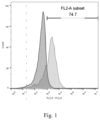
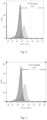
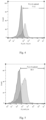
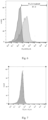
- the cells were re-suspended with PBS, and the ratio of the above seven kinds of CAR-T cells and the expression of CAR protein on the surface were tested with a flow cytometer.
- the test method was as follows: the T cells to be tested after transfection were centrifuged and collected respectively, the supernatant was discarded after the T cells to be tested were washed with PBS once, and a corresponding test amount of monoclonal antibody was added according to antibody instructions and kept away from light for 30 min, followed by PBS washing, re-suspension, filtration with a membrane, and sandwich test with a flow cytometer, where the antibody used for the test was a mixture of His-tag labeled CD44 and PE labeled anti-His-tag antibodies. The results were shown in Figs. 1-7 .
- Fig. 1 is a flow cytometer test result diagram of CAR-T 1 cells provided by an embodiment of the disclosure
- Fig. 2 is a flow cytometer test result diagram of CAR-T 2 cells provided by an embodiment of the disclosure
- Fig. 3 is a flow cytometer test result diagram of CAR-T 3 cells provided by an embodiment of the disclosure.
- Fig. 4 is a flow cytometer test result diagram of CAR-T 4 cells provided by an embodiment of the disclosure.
- Fig. 5 is a flow cytometer test result diagram of CAR-T 5 cells provided by an embodiment of the disclosure.
- Fig. 6 is a flow cytometer test result diagram of CAR-T 6 cells provided by an embodiment of the disclosure.
- Fig. 7 is a flow cytometer test result diagram of CAR-T 7 cells according to an embodiment of the disclosure.
- FIGs. 1-6 other cells different from normal T lymphocytes were detected out from the CAR-T 1 cells, the CAR-T 2 cells, the CAR-T 3 cells, the CAR-T 4 cells, the CAR-T 5 cells, and the CAR-T 6 cells.
- FIG. 7 other cells different from normal T lymphocytes were not detected out from the CAR-T 7 cells. This showed that the CAR-T cells transfected with fusion genes in this example had successfully expressed the target fusion protein.
- This example was used to verify the ability of T cells expressing an anti-CD44 single-chain antibody to kill CD44-positive tumor cells.
- Kits for LDH release tests in this example were purchased from DOJINDO.
- the seven kinds of CAR-T cells obtained by transfection and culture in Example 2 were respectively mixed with CD44-positive and CD133-positive glioma stem cells GSC20 according to different effect-target ratios (the number of T cells: the number of glioma stem cells).
- the mixed cells were cultured in 96-well plates, where each well contained 4 ⁇ 10 4 glioma stem cells, and the reaction system was 200 ⁇ L per well.
- Lysis rate % OD of the experimental group ⁇ OD spontaneously released by glioma stem cells ⁇ OD naturally released by effector cells / maximum OD released by glioma stem cells ⁇ OD spontaneously released by glioma stem cells
- Table 1 CAR-T cells Lysis rate of glioma stem cells by CAR-T cells under different effect-target ratios (%) 5:1 3:1 2:1 1:1 CAR-T 1 57.33% 34.95% 12.19% 9.93% CAR-T 2 56.87% 40.97% 23.17% 13.97% CAR-T 3 62.53% 44.03% 35.19% 15.18% CAR-T 4 61.44% 56.23% 37.27% 22.24% CAR-T 5 81.25% 51.22% 48.51% 30.33% CAR-T 6 86.76% 62.81% 50.00% 31.15% CAR-T 7 6.87% 2.63% 1.23% 2.41%
- T lymphocytes expressing the anti-CD44 single-chain antibody provided by the disclosure can specifically kill CD44-positive tumor cells and have high specificity as well as strong killing ability.
Landscapes
- Health & Medical Sciences (AREA)
- Life Sciences & Earth Sciences (AREA)
- Chemical & Material Sciences (AREA)
- Organic Chemistry (AREA)
- General Health & Medical Sciences (AREA)
- Genetics & Genomics (AREA)
- Immunology (AREA)
- Engineering & Computer Science (AREA)
- Zoology (AREA)
- Biochemistry (AREA)
- Biomedical Technology (AREA)
- Public Health (AREA)
- Animal Behavior & Ethology (AREA)
- Veterinary Medicine (AREA)
- Molecular Biology (AREA)
- Biophysics (AREA)
- Bioinformatics & Cheminformatics (AREA)
- Wood Science & Technology (AREA)
- Biotechnology (AREA)
- Medicinal Chemistry (AREA)
- Epidemiology (AREA)
- Proteomics, Peptides & Aminoacids (AREA)
- General Engineering & Computer Science (AREA)
- Cell Biology (AREA)
- Microbiology (AREA)
- Gastroenterology & Hepatology (AREA)
- Toxicology (AREA)
- Hematology (AREA)
- Plant Pathology (AREA)
- Physics & Mathematics (AREA)
- Virology (AREA)
- General Chemical & Material Sciences (AREA)
- Pharmacology & Pharmacy (AREA)
- Nuclear Medicine, Radiotherapy & Molecular Imaging (AREA)
- Chemical Kinetics & Catalysis (AREA)
- Micro-Organisms Or Cultivation Processes Thereof (AREA)
- Peptides Or Proteins (AREA)
- Medicines Containing Material From Animals Or Micro-Organisms (AREA)
Applications Claiming Priority (2)
| Application Number | Priority Date | Filing Date | Title |
|---|---|---|---|
| CN202010760953.3A CN114057874B (zh) | 2020-07-31 | 2020-07-31 | 抗cd44的单链抗体及其在制备治疗肿瘤的药物中的用途 |
| PCT/CN2021/109867 WO2022022720A1 (fr) | 2020-07-31 | 2021-07-30 | Anticorps monocaténaire anti-cd44 et son utilisation dans la préparation d'un médicament pour le traitement d'une tumeur |
Publications (2)
| Publication Number | Publication Date |
|---|---|
| EP4174091A1 true EP4174091A1 (fr) | 2023-05-03 |
| EP4174091A4 EP4174091A4 (fr) | 2024-07-24 |
Family
ID=80037679
Family Applications (1)
| Application Number | Title | Priority Date | Filing Date |
|---|---|---|---|
| EP21850918.0A Pending EP4174091A4 (fr) | 2020-07-31 | 2021-07-30 | Anticorps monocaténaire anti-cd44 et son utilisation dans la préparation d'un médicament pour le traitement d'une tumeur |
Country Status (4)
| Country | Link |
|---|---|
| US (1) | US20230322940A1 (fr) |
| EP (1) | EP4174091A4 (fr) |
| CN (1) | CN114057874B (fr) |
| WO (1) | WO2022022720A1 (fr) |
Families Citing this family (8)
| Publication number | Priority date | Publication date | Assignee | Title |
|---|---|---|---|---|
| CN114057875B (zh) * | 2020-07-31 | 2023-05-05 | 北京市神经外科研究所 | 抗cd133的单链抗体及其在制备治疗肿瘤的药物中的用途 |
| WO2024040194A1 (fr) | 2022-08-17 | 2024-02-22 | Capstan Therapeutics, Inc. | Conditionnement pour l'ingénierie de cellules immunitaires in vivo |
| AU2024279278A1 (en) | 2023-05-31 | 2025-12-18 | Capstan Therapeutics, Inc. | Lipid nanoparticle formulations and compositions |
| US20250127728A1 (en) | 2023-10-05 | 2025-04-24 | Capstan Therapeutics, Inc. | Constrained Ionizable Cationic Lipids and Lipid Nanoparticles |
| WO2025076113A1 (fr) | 2023-10-05 | 2025-04-10 | Capstan Therapeutics, Inc. | Lipides cationiques ionisables à espacement conservé et nanoparticules lipidiques |
| US20250302763A1 (en) | 2024-02-22 | 2025-10-02 | Capstan Therapeutics, Inc. | Immune engineering amplification |
| WO2025217452A1 (fr) | 2024-04-11 | 2025-10-16 | Capstan Therapeutics, Inc. | Lipides cationiques ionisables contraints et nanoparticules lipidiques |
| WO2025217454A2 (fr) | 2024-04-11 | 2025-10-16 | Capstan Therapeutics, Inc. | Lipides cationiques ionisables et nanoparticules lipidiques |
Family Cites Families (9)
| Publication number | Priority date | Publication date | Assignee | Title |
|---|---|---|---|---|
| EP1258255A1 (fr) * | 2001-05-18 | 2002-11-20 | Boehringer Ingelheim International GmbH | Conjugués d'un anticorps contre CD44 et d'un maytansinoide |
| US7169894B2 (en) * | 2001-11-14 | 2007-01-30 | Mirari Biosciences, Inc. | Methods and compositions for reverse translation |
| UY30776A1 (es) * | 2006-12-21 | 2008-07-03 | Medarex Inc | Anticuerpos cd44 |
| LT3194434T (lt) * | 2014-09-15 | 2019-09-25 | Molmed Spa | Chimeriniai antigeno receptoriai |
| PH12018502112B1 (en) * | 2016-04-12 | 2024-03-27 | Servier Lab | Anti-tim-3 antibodies and compositions |
| KR102746901B1 (ko) * | 2017-03-03 | 2024-12-26 | 옵시디안 테라퓨틱스, 인크. | Cd19 조성물 및 면역요법을 위한 방법 |
| EP3592368A1 (fr) * | 2017-03-08 | 2020-01-15 | Memorial Sloan Kettering Cancer Center | Compositions à base de cellules immunitaires et leurs procédés d'utilisation |
| CN109608537B (zh) * | 2018-12-12 | 2020-09-15 | 深圳市龙华区人民医院 | 基于前列腺癌干细胞标志物cd44的抗原表位多肽cd44-p2及其应用 |
| CN109593125A (zh) * | 2018-12-12 | 2019-04-09 | 深圳市龙华区人民医院 | 基于前列腺癌干细胞标志物cd44的抗原表位多肽cd44-p1及其应用 |
-
2020
- 2020-07-31 CN CN202010760953.3A patent/CN114057874B/zh active Active
-
2021
- 2021-07-30 WO PCT/CN2021/109867 patent/WO2022022720A1/fr not_active Ceased
- 2021-07-30 US US18/018,764 patent/US20230322940A1/en active Pending
- 2021-07-30 EP EP21850918.0A patent/EP4174091A4/fr active Pending
Also Published As
| Publication number | Publication date |
|---|---|
| EP4174091A4 (fr) | 2024-07-24 |
| CN114057874A (zh) | 2022-02-18 |
| US20230322940A1 (en) | 2023-10-12 |
| CN114057874B (zh) | 2023-05-05 |
| WO2022022720A1 (fr) | 2022-02-03 |
Similar Documents
| Publication | Publication Date | Title |
|---|---|---|
| EP4174090A1 (fr) | Anticorps à chaîne unique anti-cd133 et son utilisation dans la préparation d'un médicament pour le traitement d'une tumeur | |
| EP4174091A1 (fr) | Anticorps monocaténaire anti-cd44 et son utilisation dans la préparation d'un médicament pour le traitement d'une tumeur | |
| EP4174089A1 (fr) | Anticorps à chaîne unique anti-tim3 et son utilisation dans la préparation de médicament pour le traitement de tumeurs | |
| EP3892631B1 (fr) | Protéine de fusion pour une utilisation dans le traitement de maladie hvg | |
| EP3877054B1 (fr) | Procédé de production de cellules t génétiquement modifiées | |
| EP3946636B1 (fr) | Car pour une utilisation dans le traitement de maladie hvg | |
| EP4190807A1 (fr) | Corps troncé d'il7r alpha et son utilisation dans la préparation de médicaments pour le traitement des tumeurs | |
| US20240245771A1 (en) | Fully human antibody for human b7h3, chimeric antigen receptor and uses thereof | |
| AU2018361810A1 (en) | Vectors | |
| US20240197873A1 (en) | Modified tumor-infiltrating lymphocyte and use thereof | |
| US20230181641A1 (en) | Process for producing donor-batched cells expressing a recombinant receptor | |
| US20250144139A1 (en) | Chimeric antigen receptors binding steap1 | |
| EP4532695A1 (fr) | Procédés de fabrication de thérapies par lymphocytes t | |
| CN115947854B (zh) | 抗人cd40蛋白单克隆抗体、制备方法及其应用 | |
| US12049492B2 (en) | CR3022 chimeric antigen receptors and methods of use | |
| CN116903756A (zh) | 一种靶向psma抗原的双特异性嵌合抗原受体及应用 | |
| CA3200770A1 (fr) | Procedes et reactifs pour caracteriser des lymphocytes car-t pour des therapies | |
| KR20230135593A (ko) | 면역 세포를 형질도입하는 방법 | |
| WO2025207642A1 (fr) | Isoformes de cxcr3 pour améliorer le trafic de récepteurs recombinants | |
| AU2024274301A9 (en) | Pro-inflammatory cytokine enhanced steap1 recombinant receptors | |
| JP2025521148A (ja) | B細胞活性化因子受容体に結合する組換え受容体およびその使用 | |
| HK40119794A (zh) | 用於供体细胞分析的方法 | |
| JP2026503849A (ja) | 免疫細胞の機能を増強するための誘導型サイトカイン導入遺伝子 | |
| Chen et al. | Dual checkpoint blockade of CD47 and PD-L1 using an affinity-tuned bispecific antibody maximizes antitumor immunity. |
Legal Events
| Date | Code | Title | Description |
|---|---|---|---|
| STAA | Information on the status of an ep patent application or granted ep patent |
Free format text: STATUS: THE INTERNATIONAL PUBLICATION HAS BEEN MADE |
|
| PUAI | Public reference made under article 153(3) epc to a published international application that has entered the european phase |
Free format text: ORIGINAL CODE: 0009012 |
|
| STAA | Information on the status of an ep patent application or granted ep patent |
Free format text: STATUS: REQUEST FOR EXAMINATION WAS MADE |
|
| 17P | Request for examination filed |
Effective date: 20230127 |
|
| AK | Designated contracting states |
Kind code of ref document: A1 Designated state(s): AL AT BE BG CH CY CZ DE DK EE ES FI FR GB GR HR HU IE IS IT LI LT LU LV MC MK MT NL NO PL PT RO RS SE SI SK SM TR |
|
| DAV | Request for validation of the european patent (deleted) | ||
| DAX | Request for extension of the european patent (deleted) | ||
| A4 | Supplementary search report drawn up and despatched |
Effective date: 20240624 |
|
| RIC1 | Information provided on ipc code assigned before grant |
Ipc: A61P 35/00 20060101ALI20240619BHEP Ipc: A61K 39/395 20060101ALI20240619BHEP Ipc: C12N 15/13 20060101ALI20240619BHEP Ipc: C07K 16/28 20060101AFI20240619BHEP |
|
| STAA | Information on the status of an ep patent application or granted ep patent |
Free format text: STATUS: EXAMINATION IS IN PROGRESS |
|
| 17Q | First examination report despatched |
Effective date: 20251104 |