EP4174601A1 - Système, appareil et procédé de surveillance de l'état d'un actif dans une installation technique - Google Patents
Système, appareil et procédé de surveillance de l'état d'un actif dans une installation technique Download PDFInfo
- Publication number
- EP4174601A1 EP4174601A1 EP21205196.5A EP21205196A EP4174601A1 EP 4174601 A1 EP4174601 A1 EP 4174601A1 EP 21205196 A EP21205196 A EP 21205196A EP 4174601 A1 EP4174601 A1 EP 4174601A1
- Authority
- EP
- European Patent Office
- Prior art keywords
- asset
- critical parameters
- condition data
- forecast model
- determining
- Prior art date
- Legal status (The legal status is an assumption and is not a legal conclusion. Google has not performed a legal analysis and makes no representation as to the accuracy of the status listed.)
- Withdrawn
Links
Images






Classifications
-
- G—PHYSICS
- G05—CONTROLLING; REGULATING
- G05B—CONTROL OR REGULATING SYSTEMS IN GENERAL; FUNCTIONAL ELEMENTS OF SUCH SYSTEMS; MONITORING OR TESTING ARRANGEMENTS FOR SUCH SYSTEMS OR ELEMENTS
- G05B23/00—Testing or monitoring of control systems or parts thereof
- G05B23/02—Electric testing or monitoring
- G05B23/0205—Electric testing or monitoring by means of a monitoring system capable of detecting and responding to faults
- G05B23/0259—Electric testing or monitoring by means of a monitoring system capable of detecting and responding to faults characterized by the response to fault detection
- G05B23/0267—Fault communication, e.g. human machine interface [HMI]
- G05B23/0272—Presentation of monitored results, e.g. selection of status reports to be displayed; Filtering information to the user
-
- G—PHYSICS
- G05—CONTROLLING; REGULATING
- G05B—CONTROL OR REGULATING SYSTEMS IN GENERAL; FUNCTIONAL ELEMENTS OF SUCH SYSTEMS; MONITORING OR TESTING ARRANGEMENTS FOR SUCH SYSTEMS OR ELEMENTS
- G05B23/00—Testing or monitoring of control systems or parts thereof
- G05B23/02—Electric testing or monitoring
- G05B23/0205—Electric testing or monitoring by means of a monitoring system capable of detecting and responding to faults
- G05B23/0218—Electric testing or monitoring by means of a monitoring system capable of detecting and responding to faults characterised by the fault detection method dealing with either existing or incipient faults
- G05B23/0224—Process history based detection method, e.g. whereby history implies the availability of large amounts of data
- G05B23/024—Quantitative history assessment, e.g. mathematical relationships between available data; Functions therefor; Principal component analysis [PCA]; Partial least square [PLS]; Statistical classifiers, e.g. Bayesian networks, linear regression or correlation analysis; Neural networks
-
- G—PHYSICS
- G05—CONTROLLING; REGULATING
- G05B—CONTROL OR REGULATING SYSTEMS IN GENERAL; FUNCTIONAL ELEMENTS OF SUCH SYSTEMS; MONITORING OR TESTING ARRANGEMENTS FOR SUCH SYSTEMS OR ELEMENTS
- G05B23/00—Testing or monitoring of control systems or parts thereof
- G05B23/02—Electric testing or monitoring
- G05B23/0205—Electric testing or monitoring by means of a monitoring system capable of detecting and responding to faults
- G05B23/0218—Electric testing or monitoring by means of a monitoring system capable of detecting and responding to faults characterised by the fault detection method dealing with either existing or incipient faults
- G05B23/0243—Electric testing or monitoring by means of a monitoring system capable of detecting and responding to faults characterised by the fault detection method dealing with either existing or incipient faults model based detection method, e.g. first-principles knowledge model
- G05B23/0254—Electric testing or monitoring by means of a monitoring system capable of detecting and responding to faults characterised by the fault detection method dealing with either existing or incipient faults model based detection method, e.g. first-principles knowledge model based on a quantitative model, e.g. mathematical relationships between inputs and outputs; functions: observer, Kalman filter, residual calculation, Neural Networks
-
- G—PHYSICS
- G05—CONTROLLING; REGULATING
- G05B—CONTROL OR REGULATING SYSTEMS IN GENERAL; FUNCTIONAL ELEMENTS OF SUCH SYSTEMS; MONITORING OR TESTING ARRANGEMENTS FOR SUCH SYSTEMS OR ELEMENTS
- G05B23/00—Testing or monitoring of control systems or parts thereof
- G05B23/02—Electric testing or monitoring
- G05B23/0205—Electric testing or monitoring by means of a monitoring system capable of detecting and responding to faults
- G05B23/0259—Electric testing or monitoring by means of a monitoring system capable of detecting and responding to faults characterized by the response to fault detection
- G05B23/0283—Predictive maintenance, e.g. involving the monitoring of a system and, based on the monitoring results, taking decisions on the maintenance schedule of the monitored system; Estimating remaining useful life [RUL]
Definitions
- the present invention relates to a field of monitoring systems and more particularly relates to monitoring condition of an asset in a technical installation .
- the object of the present invention is achieved by a method for monitoring the condition of an asset in a technical installation.
- the term 'asset' as used herein may refer to any device, system, instrument or machinery manufactured or used in an industry or any other installation that may be employed for performing an operation.
- Example of assets include any machinery in a technical system or technical installation/facility such as motors, gears, bearings, shafts, switchgears, rotors, circuit breakers, protection devices, remote terminal units, transformers, reactors, disconnectors, gear-drive, gradient coils, magnet, radio frequency coils etc.
- Exemplary technical systems include turbines, large drives, etc.
- Example facility/technical installation may be a complex industrial set-up with a plurality of assets such as a power plant, wind farm, power grid, manufacturing facility, process plants and so on.
- the method of retraining the forecast model using the reinforcement learning model if the accuracy of the forecast model is below the predefined threshold value comprises retraining the forecast model using a new set of training data.
- the method comprises evaluating the accuracy of the retrained forecast model.
- the method comprises evaluating the values of the critical parameters, correlation between critical parameters and operational ranges of the assets based on the current condition data received in real-time, if the accuracy of the retrained forecast model is below the predefined threshold value.
- the method comprises updating the retrained forecast model based on the evaluation.
- the present invention continuously retrains the forecast model such that the predicted forecasts are accurate.
- the forecast model is retrained after regular intervals of time.
- the method further comprises rendering a representative view of the of the condition of the asset on a display device.
- the apparatus is a cloud computing system having a cloud computing based platform configured to provide a cloud service for analyzing analyzing defects in a bearing.
- cloud computing refers to a processing environment comprising configurable computing physical and logical resources, for example, networks, servers, storage, applications, services, etc., and data distributed over the network, for example, the internet.
- the cloud computing platform may be implemented as a service for analyzing defects in a bearing.
- the cloud computing system provides on-demand network access to a shared pool of the configurable computing physical and logical resources.
- the network is, for example, a wired network, a wireless network, a communication network, or a network formed from any combination of these networks.
- the object of the present invention is achieved by a system for monitoring condition of an asset in a technical installation.
- the system comprises one or more sources capable of providing condition data associated with an asset and an apparatus as described above, communicatively coupled to the one or more sources.
- sources capable of providing condition data associated with an asset and an apparatus as described above, communicatively coupled to the one or more sources.
- the term 'sources' as used herein, refer to electronic devices configured to obtain and transmit the condition data to the apparatus.
- Non-limiting examples of sources include sensing units, controllers and edge devices.
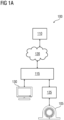
- FIG 1A illustrates a block-diagram of a system 100 for monitoring the condition of an asset 105 in a technical installation, in accordance with an embodiment of the present invention.
- Example of assets 105 include any machinery in a technical system or technical installation/facility such as motors, gears, bearings, shafts, switchgears, rotors, circuit breakers, protection devices, remote terminal units, transformers, reactors, disconnectors, gear-drive, gradient coils, magnet, radio frequency coils etc.
- Exemplary technical systems include turbines, large drives, Magnetic Resonance Imaging (MRI) scanner, etc.
- Example facility/technical installation may be a complex industrial set-up with a plurality of assets such as a power plant, wind farm, power grid, manufacturing facility, process plants and so on.
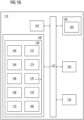
- the preprocessing module 164 is configured for receiving the condition data from the data acquisition module and processing the data to an understandable format. Further, the preprocessing module 164 is configured for normalizing the multivariate data for further processing by the forecast model, first machine learning model and second machine learning model.
- the configuration module 166 is configured for tagging the condition data as received from different sources to a particular asset 105.
- the tags may be configured by the user using a web-based application.
- the data tagged with corresponding assets are then stored in the database 165 for future reference.
- the forecast model generation module 168 is configured for identifying one or more critical parameters associated with the operation of the asset 105 based on the received condition data and determining a correlation matrix representing relationship between the identified critical parameters associated with the asset 105. Further, the forecast model generation module 168 is configured for predicting values of the critical parameters of the asset 105 based on the generated forecast model for a given time period.
- the deviation determination module 172 is configured for calculation lower limit and upper limit of the critical parameters of the asset 105 based on the condition data.
- the deviation determination module 172 is further configured for determining an operational range of the asset 105 based on the calculated lower limit and calculated upper limit of each of the identified critical parameters of the asset 105.
- the deviation determination module 172 is further configured for determining a level of criticality of the deviation in current values of the critical parameters of the asset 105 with respect to the determined operational range.
- the data storage layer 230 is configured for storing the data in a preddefiend format.
- the data may be asset tagging configuration data, user roles data, processed data and correlation values.
- the data storage layer 230 provides data adapters for various databases like RDBMS, NOSQL database, time series databases which may be configured, and respective data can be stored.
- the forecast model is generated based on the correlation matrix.
- the forecast model is a machine learning model trained on the relationships derived from the correlation matrix.
- the term "machine learning model” as used herein refers to a prediction model given a set of training dataset.
- each individual sample of the training data is a pair containing a dataset (e.g., critical parameters and relationship between the critical parameters) and a desired output value or dataset (e.g., forecasted values of the critical parameters in a given time period).
- the machine learning model analyzes the training data and produces a predictor function.
- the predictor function once derived through training, is capable of reasonably predicting or estimating the correct output value or dataset.
- the trained machine learning model receives the data from the correlation matrix and predicts forecasted values of the critical parameters in real-time.
- Exemplary machine learning models may include artificial intelligence model such as deep neural network, convolutional neural network, and the like.
- values of the critical parameters of the asset 105 are predicted based on the generated forecast model for a given time period.
- the machine learning model is a vector auto-regression model.
- the regression model is trained on condition data, identified critical parameters and relations therebetween.
- the machine learning model is trained with the correlation matrix as a regressor and forecasted values for critical parameters as a target variable.
- the forecasted values are determined for the criticaal parameters and correlations between them based on an extracted feature vector using the trained machine learning model.
- the extracted feature vector is inputted at an input node of the trained machine learning model.
- the feature vector is a regressor variable for the machine learning model.
- the forecasted value is outputted at an output node of the trained machine learning model.
- the predicted values of the critical parameters are represented on the display device 130.
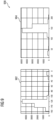
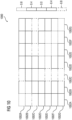
- FIG 11 and FIG 12 depicted is a is a Graphical User Interface view 1100 showing forecasted values and current values of critical parameters for a particular time period, in accordance with an embodiment of the present disclosure.
- the time period is considered as 2 hours.
- the displayed graph 1102 represents the forecasted values of pressure with respect to time.
- the displayed graph 1104 represents the forecasted values of temperature with respect to time.
- the current values of temperature and pressure as observed in real-time are also displyed on the Graphical User Interface 1100 for easy interpretation of data.
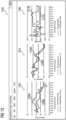
- FIG 12 depicted is a Graphical User Interface view 1200 showing forecasted values and current values of critical parameters for a particular time period, in accordance with another embodiment of the present disclosure.
- a graphical view of comparisons of forecasted value and current value with respect to time are shown for different critical parameters of the asset 105.
- the graph 1202 represents comparison of forecasted value of pressure and current value of pressure with respect to time.
- the graph 1204 represents comparison of forecasted value of temperature and current value of temperature with respect to time.
- the graph 1206 represents comparison of forecasted value of speed and current value of speed with respect to time.
- line plot 1208A represents variation in current value of pressure with respect to time
- line plot 1208B represents variation in forecasted value of pressure with respect to time.
- line plot 1210A represents variation in current value of temperature with respect to time and line plot 1210B represents variation in forecasted value of temperature with respect to time.
- line plot 1212A represents variation in current value of speed with respect to time and line plot 1212B represents variation in forecasted value of speed with respect to time.
- step 310 it is determined whether the predicted values of the critical parameters are within the operational range of the critical parameters.
- step 312 one or more actions are recommended on the display device 130 if the predicted values of the critical parameters are beyond the operational range of the critical parameters.
- a fault may have occured in the asset 105.
- the detection of at least one fault in the asset 105 may be determined using a first machine learning model. The detection of at least one fault in the asset is explained in greater detail in FIG 4 .
- the recommendations may be generated based on information stored in the database 165.
- the database 165 may be queried using a graphy query language.
- the query may be based on keywords corresponding to the impact on the performance of the asset 105, anoamlies of the asset 105, detected faults of the asset 105 and the like.
- the one or more responses correspond to recommendations for monitoring the asset 105.
- notifications may be generated and the is provided an alert if the the predicted values of the critical parameters are beyond the predefined range of values of the critical parameters of the asset 105.
- a deviation in the operation of the asset 105 is determined if the the predicted values of the critical parameters are beyond the operational range of the critical parameters of the asset 105. The method of determining deviation is explained in greater details in FIG 5 .
- an accuracy of the forecast model is determined based on a comparison between the predicted values of the critical parameters and current values of the critical parameters for the given time period.
- the values of the critical parameters as obtained from the sensing units 125 is recorded and is compared with the corresponding predicted values within the time period. The comparison enables the system 100 to evaluate performance of the forecast model.
- the forecast model is retrained using a reinforcement learning model if the accuracy of the forecast model is below a predetermined threshold value.
- the threshold value corresponds to a quantitative value below which the forecast model outputs inaccurate values.
- reinforcement learning model refers to a machine learning model capable of determining an accuracy of the forecast model and retraining the forecast model in case the accuracy is below the predetermined threshold value.
- the reinforcement learning model is deployed because the condition data is dynamic and may affect the performance of the forecast model.
- the reinforcement learning model deploys an agent which continuously interacts with forecast model to determine the accuracy. When the accuracy is below the predetermined threshold value, then the forecast model is retrained. The retraining of the forecast model is explained in greater detail in FIG 6 .
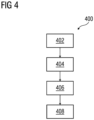
- FIG 4 depicts a flowchart of a method 400 for determining the at least one fault associated with the asset 105 based on the received condition data using a first trained machine learning model, in accordance with an embodiment of the present invention.
- condition data is received from one or more sensing units 125 associated with the asset 105 in real-time.
- the condition data is received in real-time such that the faults may be detected as they occur in the asset 105.
- at least one fault is detected in the received condition data.
- a fault may be occurred in the asset 105 due to anomalies in one or more parameters.
- Non-limiting examples of such parameters may include pressure, temperature, vibrations, speed, voltage, current and so forth.
- the at least one fault may include, but not limited to, locked rotor, under voltage, over voltage, over loading, single phasing, and unbalanced supply voltage.
- the detected fault is classified into at least one of predetermined classes of faults in the asset 105 using the trained first machine learning model.
- the predetermined classes may include locked rotor, under voltage, over voltage, over loading, single phasing, and unbalanced supply voltage.
- the first machine learning model is trained to classify a detected fault in the asset 105 into the predetermined classes based on a labelled training dataset.
- the input to the first machine learning model is the RMS value of 3 phase voltage and current drawn by the asset 105.
- phase imbalance in case of single phasing, one of the phase voltages would be low and voltage and current in the other two phases would have increased. In yet another example, in case of phase imbalance the percentage value of imbalance between the voltage would be greater than 5%. Notably, other fault patterns are also identified and labelled accordingly in a similar manner.
- the training dataset is collected, and the subsequently cleaned to remove noise. Further, the dataset is normalized, and variables are obtained from therein.
- the cleaned data set is divided into three parts as training set, validation set and test set.
- the first machine learning model is trained using the training set and validation set. Further, the first machine learning model is tested using the testing set.
- the optimal values of model parameters i.e. kernel, gamma ( ⁇ ) and c are determined using the Gridserch cv algorithm. Therefore, the first machine learning model is trained on RBF kernel with gamma and c value as 0.0001 and 1 respectively. In this particular embodiment, the training and testing accuracy achieved is 92%.
- step 408 determining the at least one fault associated with the received condition data based on the classification.
- the condition data is input to the first machine learning model and the output is the type of faults detected.
- a notification may be generated on the display device 130 which informs the user of the type of fault detected in the asset 105.
- the determined faults may be stored and a report may also be generated after regular intervals of time to provide an analysis of different types of faults occurred in the asset 105 over a period of time. Such a report is illustrated in FIG 7.
- FIG 7 is a Graphical User Interface view 700 showing an example of determined faults, in acccordance with an embodiment of the present invention.
- remaining maintenance life of the asset 105 is determined based on the at least one fault associated with asset 105 based on the classification.
- the detected faults are classified into different types of faults using the first trained machine learning model.
- the faults are stored in the database 165 and then remaining maintenance life of the asset 105 is determined based on the classified faults.
- the term 'remaining maintenance life' (RML) as used herein refers to a duration between initiation of a detectable failure a functional failure of the asset 105.
- the remaining maintenance life may be estimated based upon observations, or average estimates of similar assets, components, or systems, or a combination thereof. For example, RML of a motor would be estimated by looking at the historical data of similar motors.
- the invention predicts RML to schedule maintenance activities, optimize operating efficiency, and avaoid unplanned downtime.
- the present invention may not be dependent on the run-to-failure/maintenance data of the asset 105 like in existing solutions. It would be appreciated that the degradation model as disclosed herein may be built with limited information about the predefined threshold ranges, for example, the temperature of a liquid pumped cannot exceed 70 degree C and pressure must be under 10 bar.
- Exemplary machine learning models may include artificial intelligence model such as deep neural network, convolutional neural network, and the like.
- the second machine learning model is trained on values of operational ranges of a plurality of assets. Subsequently, the second machine learning model is able to predict the operational ranges of the asset 105.
- the threshold values or the operational ranges of the asset 105 are predicted dynamically by the second machine learning model based on the dynamic condition data received in real-time. It will be appreciated that the operational ranges of the asset 105 may vary at different stages of the lifecycle of the asset 105. Therefore, the second machine learning model is trained to determine and update the operational ranges of the asset 105 in a dynamic manner.
- a value of a lower limit of the identified critical parameters of the asset 105 is calculated based on the received condition data.
- the second trained machine learning model determines the lower limit of the asset 105.
- a value of an upper limit of the identified critical parameters of the asset 105 is determined based on the received condition data.
- the second trained machine learning model determines the upper limit of the asset 105.
- the operational range of the asset 105 is determined based on the calculated lower limit and calculated upper limit of each of the identified critical parameters of the asset 105.
- the operational range is the predefined range of values within which the performance of the asset is optimal. In an example, the deviation in the parameters such as pressure, temperature, vibrations, speed, voltage, current, and so forth is determined by the second machine learning model.
- the condition data received from the sensing units125 is preprocessed to clean and normalize the data. Furthermore, operational ranges of the parameters are determined using the lower limit and upper limit calculated.
- the second machine learning model employs statistical techniques such as measurement of dispersions and central tendency and box plots that are used to visualize the data. Moreover, several derived variables are also calculated such as rate of change (percentage change from previous value to current value) to improve the output of the second machine learning model.
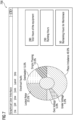
- the operational ranges of the critical parameters as obtained from the second machine learning model may be presented to the user on the display device 130. Such an example is illustrated in FIG 9 . The parameters may be further fine tuned by the user.
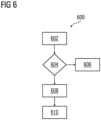
- FIG 6 depicts a flowchart of a method 600 for retraining the forecast model using a reinforcement learning model, in accordance with an embodiment of the present invention.
- the forecast model is retrained using a new set of training data. It will be appreciated that since the system 100 is deployed in a dynamic environment such as an industrial installation, the training dataset on which the forecast model is trained need to be updated with a new dataset to maintain an optimal accuracy of the forecast model. Therefore, when the performance of the forecast model degrades, the forecast model is trained on a new set of training data.
- the new set of training data is condition data of the asset 105 obtained from various sources.
- the accuracy of the retrained forecast model is evaluated.
- the present invention provides an accurate, time-efficient ad automatic method and system for monitoring the assets 105.
- the present invention facilitates accurate determination of remaining maintenance life (RML) of the asset 105 by generating a degradation model based on determined faults and related maintenance information.
- the present invention classifies and labels of identified faults under different classes to effectively determine which particular faults have a higher frequency and require further root cause analysis.
- the invention determines one or more actions that need to be performed in order to efficiently operate the asset 105 so as to mitigate any major failures.
- the present invention provides a method to dynamically determine threshold values of the critical parameters to determine operational ranges of the asset 105.
- the present invention provides a method to retrain the forecast models based on updated condition data over a period of time. Such a method mitigates errors in the forecast model and ensures that the accuracy of the forecast model is at an optimal level.
- the present invention is not limited to a particular computer system platform, processing unit, operating system, or network.
- One or more aspects of the present invention may be distributed among one or more computer systems, for example, servers configured to provide one or more services to one or more client computers, or to perform a complete task in a distributed system.
- one or more aspects of the present invention may be performed on a client-server system that comprises components distributed among one or more server systems that perform multiple functions according to various embodiments. These components comprise, for example, executable, intermediate, or interpreted code, which communicate over a network using a communication protocol.
- the present invention is not limited to be executable on any particular system or group of system, and is not limited to any particular distributed architecture, network, or communication protocol.
Landscapes
- Engineering & Computer Science (AREA)
- Physics & Mathematics (AREA)
- General Physics & Mathematics (AREA)
- Automation & Control Theory (AREA)
- Artificial Intelligence (AREA)
- Evolutionary Computation (AREA)
- Mathematical Physics (AREA)
- Human Computer Interaction (AREA)
- Testing And Monitoring For Control Systems (AREA)
- Management, Administration, Business Operations System, And Electronic Commerce (AREA)
Priority Applications (5)
| Application Number | Priority Date | Filing Date | Title |
|---|---|---|---|
| EP21205196.5A EP4174601A1 (fr) | 2021-10-28 | 2021-10-28 | Système, appareil et procédé de surveillance de l'état d'un actif dans une installation technique |
| US18/704,535 US20250231558A1 (en) | 2021-10-28 | 2022-10-20 | System, apparatus and method for monitoring condition of an asset in technical installation |
| CN202280073166.9A CN118176467A (zh) | 2021-10-28 | 2022-10-20 | 用于监视技术安装中的资产的状况的系统、装置和方法 |
| EP22802644.9A EP4423582B1 (fr) | 2021-10-28 | 2022-10-20 | Système, appareil et procédé de surveillance de l'état d'un actif dans une installation technique |
| PCT/EP2022/079214 WO2023072724A1 (fr) | 2021-10-28 | 2022-10-20 | Système, appareil et procédé de surveillance de l'état d'un actif dans une installation technique |
Applications Claiming Priority (1)
| Application Number | Priority Date | Filing Date | Title |
|---|---|---|---|
| EP21205196.5A EP4174601A1 (fr) | 2021-10-28 | 2021-10-28 | Système, appareil et procédé de surveillance de l'état d'un actif dans une installation technique |
Publications (1)
| Publication Number | Publication Date |
|---|---|
| EP4174601A1 true EP4174601A1 (fr) | 2023-05-03 |
Family
ID=78414311
Family Applications (2)
| Application Number | Title | Priority Date | Filing Date |
|---|---|---|---|
| EP21205196.5A Withdrawn EP4174601A1 (fr) | 2021-10-28 | 2021-10-28 | Système, appareil et procédé de surveillance de l'état d'un actif dans une installation technique |
| EP22802644.9A Active EP4423582B1 (fr) | 2021-10-28 | 2022-10-20 | Système, appareil et procédé de surveillance de l'état d'un actif dans une installation technique |
Family Applications After (1)
| Application Number | Title | Priority Date | Filing Date |
|---|---|---|---|
| EP22802644.9A Active EP4423582B1 (fr) | 2021-10-28 | 2022-10-20 | Système, appareil et procédé de surveillance de l'état d'un actif dans une installation technique |
Country Status (4)
| Country | Link |
|---|---|
| US (1) | US20250231558A1 (fr) |
| EP (2) | EP4174601A1 (fr) |
| CN (1) | CN118176467A (fr) |
| WO (1) | WO2023072724A1 (fr) |
Cited By (1)
| Publication number | Priority date | Publication date | Assignee | Title |
|---|---|---|---|---|
| EP4718193A1 (fr) * | 2024-09-26 | 2026-04-01 | Siemens Aktiengesellschaft | Surveillance automatisée d'un système d'entraînement |
Families Citing this family (4)
| Publication number | Priority date | Publication date | Assignee | Title |
|---|---|---|---|---|
| EP3951529A1 (fr) * | 2020-08-04 | 2022-02-09 | Siemens Aktiengesellschaft | Dispositif et procédé de surveillance pour la détection d'anomalies |
| US20220214678A1 (en) * | 2021-01-05 | 2022-07-07 | Phillips 66 Company | Method for optimizing and categorizing equipment diagnostic messages |
| CN117767577B (zh) * | 2024-02-22 | 2024-05-24 | 大连华亿电力电器有限公司 | 一种基于电流、电压测量的电力故障监控系统 |
| CN118964749A (zh) * | 2024-10-18 | 2024-11-15 | 杭州辰链信息科技有限公司 | 多渠道多语言全自动化获客营销的处理方法及系统 |
-
2021
- 2021-10-28 EP EP21205196.5A patent/EP4174601A1/fr not_active Withdrawn
-
2022
- 2022-10-20 CN CN202280073166.9A patent/CN118176467A/zh active Pending
- 2022-10-20 EP EP22802644.9A patent/EP4423582B1/fr active Active
- 2022-10-20 US US18/704,535 patent/US20250231558A1/en active Pending
- 2022-10-20 WO PCT/EP2022/079214 patent/WO2023072724A1/fr not_active Ceased
Non-Patent Citations (2)
| Title |
|---|
| SAKRUTINA EKATERINA: "Assessing Algorithm of the Risk Potential of Critical Infrastructure of a NPP Based on Technical and Economic Indicators", 2019 TWELFTH INTERNATIONAL CONFERENCE "MANAGEMENT OF LARGE-SCALE SYSTEM DEVELOPMENT" (MLSD), IEEE, 1 October 2019 (2019-10-01), pages 1 - 4, XP033640918, DOI: 10.1109/MLSD.2019.8911076 * |
| WILSON REGINAD: "Multivariate data analysis in hydroelectric system maintenance: A decision evaluation case study", 2015 ANNUAL IEEE SYSTEMS CONFERENCE (SYSCON) PROCEEDINGS, IEEE, 13 April 2015 (2015-04-13), pages 365 - 372, XP032782327, DOI: 10.1109/SYSCON.2015.7116778 * |
Cited By (2)
| Publication number | Priority date | Publication date | Assignee | Title |
|---|---|---|---|---|
| EP4718193A1 (fr) * | 2024-09-26 | 2026-04-01 | Siemens Aktiengesellschaft | Surveillance automatisée d'un système d'entraînement |
| WO2026068306A1 (fr) * | 2024-09-26 | 2026-04-02 | Siemens Aktiengesellschaft | Surveillance automatisée d'un système d'entraînement |
Also Published As
| Publication number | Publication date |
|---|---|
| WO2023072724A1 (fr) | 2023-05-04 |
| EP4423582A1 (fr) | 2024-09-04 |
| EP4423582C0 (fr) | 2025-08-27 |
| US20250231558A1 (en) | 2025-07-17 |
| CN118176467A (zh) | 2024-06-11 |
| EP4423582B1 (fr) | 2025-08-27 |
Similar Documents
| Publication | Publication Date | Title |
|---|---|---|
| EP4423582B1 (fr) | Système, appareil et procédé de surveillance de l'état d'un actif dans une installation technique | |
| US20240353830A1 (en) | Scalable systems and methods for assessing healthy condition scores in renewable asset management | |
| EP3902992B1 (fr) | Système évolutif et moteur permettant de prédire une défaillance d'éolienne | |
| CN113359682B (zh) | 设备故障预测方法、装置、设备故障预测平台及介质 | |
| CN117270514B (zh) | 基于工业物联网的生产过程全流程故障检测方法 | |
| CN112272763B (zh) | 异常探测装置、异常探测方法以及计算机可读取的存储介质 | |
| EP3183622B1 (fr) | Apprentissage basé sur une population et incluant des réseaux de croyances profondes | |
| US20240125675A1 (en) | Anomaly detection for industrial assets | |
| CN114837902B (zh) | 一种风电机组健康度评估方法、系统、设备和介质 | |
| WO2013041440A1 (fr) | Système et procédé permettant une gestion d'actifs à l'échelle de l'usine | |
| da Silva Arantes et al. | A novel unsupervised method for anomaly detection in time series based on statistical features for industrial predictive maintenance | |
| WO2018106150A1 (fr) | Procédé et système de contrôle d'objets à distance | |
| WO2023186317A1 (fr) | Système, appareil et procédé de gestion d'un ou de plusieurs actifs | |
| CN113642618B (zh) | 一种用于螺杆装置状态预测模型训练的方法及设备 | |
| WO2020253950A1 (fr) | Procédé de surveillance, procédé de prédiction, système de surveillance et programme informatique | |
| JP2025517109A (ja) | データ駆動型アプローチを通したセンサ故障のリアルタイム検出、予測、及び修復 | |
| US20240280084A1 (en) | Systems and methods for monitoring wind turbines using wind turbine component vibration data | |
| KR102900968B1 (ko) | Ai 기반의 제조 설비 진단 및 챗봇 대응 방법 | |
| US11339763B2 (en) | Method for windmill farm monitoring | |
| CN118091406B (zh) | 电机检测修复方法、装置、电子设备及存储介质 | |
| EP4386584A1 (fr) | Système de détection d'anomalie et d'analyse de performance dans des données de diffusion en continu de grande dimension | |
| Chhabria et al. | Predictive maintenance using machine learning on industrial water pumps | |
| CN119109136A (zh) | 基于大数据的电力系统智能调度方法以及系统 | |
| TWI870899B (zh) | 用於最佳化預警管理的誤警評價系統及方法 | |
| Randrianandraina et al. | Wind turbine generator bearing anomaly detection and explanation using rrcf approach |
Legal Events
| Date | Code | Title | Description |
|---|---|---|---|
| PUAI | Public reference made under article 153(3) epc to a published international application that has entered the european phase |
Free format text: ORIGINAL CODE: 0009012 |
|
| STAA | Information on the status of an ep patent application or granted ep patent |
Free format text: STATUS: THE APPLICATION HAS BEEN PUBLISHED |
|
| AK | Designated contracting states |
Kind code of ref document: A1 Designated state(s): AL AT BE BG CH CY CZ DE DK EE ES FI FR GB GR HR HU IE IS IT LI LT LU LV MC MK MT NL NO PL PT RO RS SE SI SK SM TR |
|
| STAA | Information on the status of an ep patent application or granted ep patent |
Free format text: STATUS: THE APPLICATION IS DEEMED TO BE WITHDRAWN |
|
| 18D | Application deemed to be withdrawn |
Effective date: 20231104 |