EP4174655A1 - Procédé et dispositif d'appel d'interface de programmation, support d'enregistrement et dispositif électronique - Google Patents
Procédé et dispositif d'appel d'interface de programmation, support d'enregistrement et dispositif électronique Download PDFInfo
- Publication number
- EP4174655A1 EP4174655A1 EP21833307.8A EP21833307A EP4174655A1 EP 4174655 A1 EP4174655 A1 EP 4174655A1 EP 21833307 A EP21833307 A EP 21833307A EP 4174655 A1 EP4174655 A1 EP 4174655A1
- Authority
- EP
- European Patent Office
- Prior art keywords
- api
- acquiring
- target
- data
- data range
- Prior art date
- Legal status (The legal status is an assumption and is not a legal conclusion. Google has not performed a legal analysis and makes no representation as to the accuracy of the status listed.)
- Pending
Links
Images


Classifications
-
- G—PHYSICS
- G06—COMPUTING OR CALCULATING; COUNTING
- G06F—ELECTRIC DIGITAL DATA PROCESSING
- G06F9/00—Arrangements for program control, e.g. control units
- G06F9/06—Arrangements for program control, e.g. control units using stored programs, i.e. using an internal store of processing equipment to receive or retain programs
- G06F9/46—Multiprogramming arrangements
- G06F9/54—Interprogram communication
- G06F9/547—Remote procedure calls [RPC]; Web services
-
- G—PHYSICS
- G06—COMPUTING OR CALCULATING; COUNTING
- G06F—ELECTRIC DIGITAL DATA PROCESSING
- G06F9/00—Arrangements for program control, e.g. control units
- G06F9/06—Arrangements for program control, e.g. control units using stored programs, i.e. using an internal store of processing equipment to receive or retain programs
- G06F9/46—Multiprogramming arrangements
- G06F9/54—Interprogram communication
- G06F9/541—Interprogram communication via adapters, e.g. between incompatible applications
Definitions
- Embodiments of the present invention relate to the field of communications, and in particular, to a method and device for calling an application program interface, a storage medium and an electronic device.
- the range of API return data cannot be dynamically controlled.
- only static control may be performed on the API return data, that is, different APIs are defined for different data ranges, and a caller acquires data of different ranges by means of calling different APls.
- Embodiments of the present invention provide a method and device for calling an application program interface, a storage medium, and an electronic device, so as to at least solve the problem in the related art that dynamic control of API return data is not implemented.
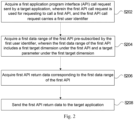
- a method for calling an application program interface including: acquiring a first application program interface (API) call request sent by a target application, wherein the first API call request is used for requesting to call a first API, and the first API call request carries a first user identifier; acquiring a first data range of the first API pre-subscribed by the first user identifier, wherein the first data range of the first API includes a first target dimension under the first API and a target parameter under the first target dimension; acquiring first API return data corresponding to the first data range of the first API; and sending the first API return data to the target application.
- API application program interface
- a device for calling an application program interface including: a first acquisition unit, configured to acquire a first application program interface (API) call request sent by a target application, wherein the first API call request is used for requesting to call a first API, and the first API call request carries a first user identifier; a second acquisition unit, configured to acquire a first data range of the first API pre-subscribed by the first user identifier, wherein the first data range of the firstAPI includes a first target dimension under the first API and a target parameter under the first target dimension; a third acquisition unit, configured to acquire first API return data corresponding to the first data range of the first API; and a first sending unit, configured to send the first API return data to the target application.
- API application program interface
- a computer-readable storage medium is further provided, a computer program is stored in the computer-readable storage medium, wherein the computer program is configured to execute the steps in any one of the foregoing method embodiments.
- an electronic device including a memory and a processor, wherein a computer program is stored in the memory, and the processor is configured to run the computer program, so as to execute the steps in any one of the foregoing method embodiments.
- the first data range can be determined according to the first user identifier in the request, and then the first API return data is returned, so that the subscribed data can be dynamically determined according to the first user identifier, therefore the problem of not implementing the dynamic control of the API return data can be solved, and a dynamic control effect on the API return data is achieved.
- API application program interface
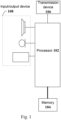
- Fig. 1 is a block diagram of a hardware structure of a mobile terminal of a method for calling an application program interface according to an embodiment of the present invention.
- the mobile terminal may include one or more (only one is shown in Fig.
- processors 102 may include, but is not limited to, processing devices such as a micro-programmed control unit (MCU) or a field-programmable gate array (FPGA)) and a memory 104 for storing data, wherein the mobile terminal may further include a transmission device 106 for a communication function and an input/output device 108.
- MCU micro-programmed control unit
- FPGA field-programmable gate array
- the structure shown in Fig. 1 is only schematic, and does not limit the structure of the mobile terminal.
- the mobile terminal may also include more or fewer components than shown in Fig. 1 , or have a different configuration as shown in Fig. 1 .
- the memory 104 may be used for storing a computer program, for example, a software program and a module of application software, for example, a computer program corresponding to the method for calling the application program interface in the embodiments of the present invention, and the processor 102 executes various functional applications and data processing by means of running the computer program stored in the memory 104, that is, implements the method for calling the application program interface.
- the memory 104 may include a high-speed random access memory, and may further include a non-volatile memory, such as one or more magnetic storage devices, a flash memory, or other non-volatile solid state memories.
- the memory 104 may further include memories that are arranged remotely relative to the processor 102, and these remote memories may be connected to the mobile terminal by means of a network.
- the network include, but are not limited to, the Internet, an intranet, a local area network, a mobile communication network, and combinations thereof.
- the transmission device 106 is used for receiving or sending data by means of a network.
- a specific instance of the network may include a wireless network provided by a communication provider of the mobile terminal.
- the transmission device 106 includes a network interface controller (Network Interface Controller, NIC for short), which may be connected with other network devices by means of a base station, so as to communicate with the Internet.
- the transmission device 106 may be a radio frequency (Radio Frequency, RF for short) module, which is used for communicating with the Internet in a wireless manner.
- RF Radio Frequency
- Fig. 2 is a flow diagram of a method for calling an application program interface according to an embodiment of the present invention, and as shown in Fig. 2 , the process includes the following steps:
- the step of acquiring the first API return data corresponding to the first data range of the first API includes: when the first target dimension includes a plurality of dimensions, acquiring API return data corresponding to the target parameter under each dimension among the plurality of dimensions, so as to obtain a plurality of pieces of API return data, wherein the first API return data includes the plurality of pieces of API return data.
- the step of acquiring the first API return data corresponding to the first data range of the first API includes: when the target parameter under the first target dimension includes a plurality of parameters, acquiring API return data corresponding to each parameter among the plurality of parameters under the first target dimension, so as to obtain a plurality of pieces of API return data, wherein the first API return data includes the plurality of pieces of API return data.
- the step of acquiring the first API return data corresponding to the first data range of the first API includes: acquiring API return data, which is obtained by a first API service provided by the first API under the target parameter of the first target dimension, wherein the first API return data includes the acquired API return data.
- the method further includes: acquiring a first subscription request of the first user identifier, wherein the first subscription request is used for requesting to subscribe the first data range of the first API; and recording the first data range subscribed by the first user identifier.
- API application program interface
- the method further includes: when the data range of the first API pre-subscribed by the first user identifier changes from the first data range into a second data range, acquiring a second API call request sent by the target application, wherein the second API call request is used for requesting to call the first API, and the second API call request carries the first user identifier; acquiring the second data range of the first API pre-subscribed by the first user identifier, wherein the second data range of the first API includes a second target dimension under the first API and a target parameter under the second target dimension; acquiring second API return data corresponding to the second data range of the first API; and sending the second API return data to the target application.
- the step of acquiring the first application program interface (API) call request sent by the target application includes: acquiring the first API call request sent by the target application by means of a target API call code; and the step of acquiring the second API call request sent by the target application includes: acquiring the second API call request sent by the target application by means of the target API call code.
- API application program interface
- the method further includes: acquiring a second subscription request of the first user identifier, wherein the second subscription request is used for requesting to change the data range of the first API subscribed by the first user identifier from the first data range into the second data range; and changing the data range of the first API subscribed by the recorded first user identifier from the first data range into the second data range.
- the method further includes: registering the first API, wherein the first API is allowed to be called after being registered; and recording a dimension that is allowed to be selected under the first API and a parameter that is allowed to be selected under the dimension that is allowed to be selected, wherein the dimension that is allowed to be selected includes the first target dimension, and the parameter that is allowed to be selected includes the target parameter.
- API application program interface
- the step of acquiring the first application program interface (API) call request sent by the target application includes: acquiring, on an API gateway, the first API call request sent by the target application; the step of acquiring the first data range of the first API pre-subscribed by the first user identifier includes: acquiring, on the API gateway, the first data range stored in an API subscription information storage sub-module; and the step of acquiring the first API return data corresponding to the first data range of the first API includes: adding, on the API gateway, the first data range as control information into the first API call request, so as to obtain a third API call request; sending, on the API gateway, the third API call request to an MEC capability providing module; and acquiring, on the API gateway, the first API return data sent by the MEC capability providing module, wherein the MEC capability providing module is used for querying the first API return data corresponding to the first data range.
- API application program interface
- the first data range can be determined according to the first user identifier in the request, and then the first API return data is returned, so that the subscribed data can be dynamically determined according to the first user identifier, therefore the problem of not implementing the dynamic control of the API return data can be solved, and a dynamic control effect on the API return data is achieved.
- API application program interface
- the executive body of the foregoing steps may be a base station, a terminal, or the like, but is not limited thereto.
- the first API return data is data, which is requested by the target application to call by means of the first application program interface (API) call request, and the target application provides services for a user by means of calling the first API return data.
- API application program interface
- a related MEC capability opening system generally utilizes a static control method for API data control, and defines different APIs for different data ranges, using different URLs to represent different data ranges.
- An API user acquires data of different ranges by means of purchasing different APIs.
- two APIs need to be defined, for example, an API1 is defined, and the URL thereof is ⁇ apiroot ⁇ /location/v1/area/A, which represents the positioning data of the region A; and an API2 is defined, and the URL thereof is ⁇ apiroot ⁇ /location/v1/area/B, which represents the positioning data of the region B.
- the API user calls ⁇ apiroot ⁇ /location/v1/area/A to subscribe the data of the region A, and calls ⁇ apiroot ⁇ /location/v1/area/B to subscribe the data of the region B.
- APP application
- the embodiments of the present application propose the above method.
- the control information is defined by the MEC capability opening API data in the form of key-value; the control information is stored in an API control information storage sub-module, and the user selects the range of the required control information when subscribing the API; and after sending the API call request, the APP program processes the control information by means of the API gateway, so as to realize dynamic control of the API data.
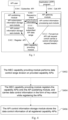
- the data control method of the MEC capability opening API proposed in the embodiments of the present invention may be implemented by the following several modules: an API publishing module, an API control information storage sub-module, an API subscription information storage sub-module, an API gateway module, an API control information processing sub-module, and an MEC capability providing module.
- the MEC capability providing module provides an implementation of a specific MEC capability API, for example, an implementation of a user location capability API.
- the MEC capability providing module divides the provided API return data according to the control range, and returns different data for different control ranges.
- the return data of the user location capability API may be controlled according to a region dimension
- the region control dimension may be defined as area
- a dictionary value thereof may be defined for the area
- the region control dimension is defined as three regions A, B and C.
- a plurality of control dimensions may be defined, for example, the user location capability API may also define a period control dimension in addition to defining the area dimension control, and the dictionary value of the period dimension may be hour, day, month, etc.
- the control dimension and the dictionary value are collectively referred to as the control information of the API.
- the MEC capability providing module registers the capability API onto the API publishing module.
- the API control information is carried in the form of key-value, and the main purpose of registering the API is to provide an API caller with an URL address of an access entry.
- different APIs need to be registered, for example, the above regions A, B and C and three times of hour, day and month, so the following six APIs need to be registered:
- control information is sent to the API publishing module as additional information in the form of key-value.
- control information may be defined in the following manner:
- the API publishing module only stores and displays the URL of the call entry of the API.
- the API control information storage sub-module and the API subscription information storage sub-module are added on an API registration module in the embodiments of the present invention.
- the API control information storage sub-module does not need to understand the meaning of the control dimension and the dictionary value of the API, and only stores and displays the control information reported by the MEC capability providing module.
- the API publishing module provides an API subscription function at the same time.
- the API user needs to subscribe different APIs to use data of different ranges, for example, if requiring the data of regions B and C, the API user needs to subscribe the following two APIs, and calls the two APIs in the codes of the APP program.
- the API users use data of different ranges all subscribe the same API, and only call this API in the codes, for example, the following API: ⁇ apiroot ⁇ /location/v1/zone.
- the API user selects the data range that needs to be subscribed, and the data range is provided by the API control information storage sub-module.
- the data range selected by the user is stored in the API subscription information storage sub-module. For example, if the user selects the data of the region B and the region C, the API subscription information storage sub-module stores the following information: area : B
- the user may also select data ranges of a plurality of dimensions, for example, in addition to the region, the user may also select data of a time dimension "day", and at this time, the API subscription information storage sub-module stores the control information of all dimensions, for example:
- the API gateway module provides an entry and forwarding function of API call, and after receiving the API call request, the API gateway module forwards the request to the MEC capability providing module.
- the API control information processing sub-module is added on the API gateway, the control information, which is selected when the API caller subscribes the API, is queried from the API subscription information storage sub-module, and the control information is added into a request header according to a certain rule, and then is forwarded to the capability providing module.
- the capability providing module After receiving the API request forwarded by the API gateway module, the capability providing module needs to parse the request header to acquire the control information therein. Since the control information itself is defined by the capability providing module, the capability providing module can return different data according to different control information.
- the API user When the API user needs to change the data range acquired by calling the API in the APP program, the API user only needs to re-subscribe the data range of the API without modifying the codes of the APP program, so as to implement the dynamic control of the API data.
- the MEC capability opening may be divided into two stages: the first stage is an MEC capability API publishing stage, and the second stage is an API call stage. Specific implementation steps of the embodiments of the present invention in the two stages are described below.
- the MEC capability providing module performs data control range division on the provided capability.
- the MEC capability providing module may provide a user location capability API.
- the MEC capability providing module first defines the control dimension of the data, for example, performs control according to the area dimension, and then divides the data according to this control dimension. For example, area is divided into three regions A, B, and C. For different API callers, only the location data of the region A or the region B may be returned.
- a plurality of control dimensions may be defined, for example, the user location capability API may also define the a period dimension in addition to defining the area dimension for example, for example, divide the period dimension into hour, day, month, etc.
- the MEC capability providing module registers the capability API onto the API publishing module.
- the API When the API is registered, it is not need to register a plurality of APIs for the data of different control ranges, only one API needs to be registered, and the control range of the data is carried in an additional field.
- the user location capability API when registered, only one API needs to be registered as below: ⁇ apiroot ⁇ /location/v1/zone.
- the control ranges of the regions A, B and C are sent to the API registration module through additional fields.
- the mode of sending the control range may be in the form of key-value, key is a dimension to be controlled, value is the dictionary value of the control, and each dictionary value is segmented by using a separator.
- the control information sent by the user location capability API may be defined as: the key is "area”, the value is "A
- the separator of value is pre-agreed by the MEC capability providing module and the API publishing module, for example, "I” may be used as the separator, and ", " may also be used as the separator. In the above example, “I” is used as the separator.
- all of the plurality of control dimensions are sent to the API publishing module.
- the time control dimension may be defined as: the key is "period”, the value is "hour
- Table 1 is an example of the control dimension and the dictionary value of one API.
- Table 1 API URL key key display value value display ⁇ apiroot ⁇ /location/v1/zone area region selection A
- the API control information storage sub-module stores and displays all API data control information, and the control information reported in Table 1 is stored in this module.
- the API publishing module reads the control information from the API control information storage sub-module and displays the control information.
- Fig. 5 provides an example of a display effect of a user location service API. In this example, after displaying the URL of the API, the user location service adds two control dimensions: "region selection" and "time selection", and the information displayed on the interface is the display information of key-value sent by the capability providing module.
- the API user subscribes an API, for example, the user location capability API: ⁇ apiroot ⁇ /location/v1/zone, and selects data of different ranges according to requirements.
- Fig. 7 provides an example of subscription of a user location service.
- the API user selects the "region B " and "region C” in the region dimension and selects "day” in the time dimension.
- the API subscription information storage sub-module stores the data range selected by the API user, and the information stored in the present example is:
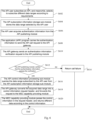
- the API obtains the authentication information for calling the API from the API publishing module, and the authentication information may be an APIKey, a user token, etc.
- the APP program developed by the API user carries the authentication information to send a call request to the API gateway, for example, sends a request to call the user location service API.
- the API gateway after receiving the call request, the API gateway sends a verification request to the API publishing module to verify whether the authentication information is correct.
- the API publishing module verifies the authentication information and returns the result to the API gateway.
- S614 is executed, that is, returning a call failure message. If the call is passed, S616 is execute, that is, the API gateway sends the request to the API control information processing sub-module after receiving a return message indicating correctness of the authentication information verified by the API publishing module.
- the API control information processing sub-module queries the data range subscribed by the API user from the API subscription information storage sub-module. In this example, the information returned by the API subscription information storage sub-module is:
- the API gateway adds the information returned by the API subscription information storage sub-module as control information into a request header.
- the naming rule of the header is defined according to an HTTP protocol, when the API gateway module adds the request header, the header name may be defined as an "x-control dimension key". In this example, the following request header may be added:
- the MEC capability providing module needs to parse the "x-" request header carried by the gateway.
- the request header is "x-area” and "x-period"
- the capability providing module acquires key “area” and “period” of the control dimensions, and the values "B
- the return data of the API is automatically controlled by means of the API gateway. If the API user wants to change the API data range acquired in the APP program, the API user does not need to modify the codes of the APP program, and only needs to re-select the data subscription range, that is, performs selection in the first step, and then the data acquired by the APP can be dynamically changed.
- the method according to the above embodiments may be implemented by means of software plus a necessary universal hardware platform, and of course may also be implemented by hardware, but the former is better embodiment in many cases.
- the technical solutions of the present invention essentially or the part contributing to the prior art may be embodied in the form of a software product, the computer software product is stored in a storage medium (such as an ROM/RAM, a magnetic disk and an optical disk), and include a plurality of instructions for instructing a computer device (may be a mobile phone, a computer, a server, or a network device and the like) to execute the method in various embodiments of the present invention.
- the present embodiment further provides a device for calling an application program interface, the device is used for implementing the foregoing embodiments and the preferred embodiments, and will not be repeated here.
- the term "module” may implement a combination of software and/or hardware of a predetermined function.
- the device described in the following embodiments is preferably implemented in software, implementations of hardware, or a combination of software and hardware are also possible and contemplated.
- Fig. 8 is a structural block diagram of a device for calling an application program interface according to an embodiment of the present invention, and as shown in Fig. 8 , the device includes:
- the third acquisition unit includes: a first acquisition module configured to acquire API return data corresponding to the target parameter under each dimension among the plurality of dimensions when the first target dimension includes a plurality of dimensions. So as to obtain a plurality of pieces of API return data, wherein the first API return data includes the plurality of pieces of API return data.
- the third acquisition unit includes: a second acquisition module configured to, when the target parameter under the first target dimension includes a plurality of parameters, acquire API return data corresponding to each parameter among the plurality of parameters under the first target dimension, so as to obtain a plurality of pieces of API return data, wherein the first API return data includes the plurality of pieces of API return data.
- the third acquisition unit includes: a third acquisition module, configured to acquire API return data, which is obtained by a first API service provided by the first API under the target parameter of the first target dimension, wherein the first API return data includes the acquired API return data.
- the device further includes: a fourth acquisition unit configured to, before acquiring the first application program interface (API) call request sent by the target application, acquire a first subscription request of the first user identifier, wherein the first subscription request is used for requesting to subscribe the first data range of the first API; and a recording unit, configured to record the first data range subscribed by the first user identifier.
- API application program interface
- the device further includes: a fifth acquisition unit configured to, when the data range of the first API pre-subscribed by the first user identifier changes from the first data range into a second data range, acquire a second API call request sent by the target application, wherein the second API call request is used for requesting to call the first API, and the second API call request carries the first user identifier; a sixth acquisition unit, configured to acquire the second data range of the first API pre-subscribed by the first user identifier, wherein the second data range of the first API includes a second target dimension under the first API and a target parameter under the second target dimension; a seventh acquisition unit, configured to acquire second API return data corresponding to the second data range of the first API; and a second sending unit, configured to send the second API return data to the target application.
- a fifth acquisition unit configured to, when the data range of the first API pre-subscribed by the first user identifier changes from the first data range into a second data range, acquire a second API call request sent by the target application, wherein the
- the first acquisition unit includes: a fourth acquisition module, configured to acquire the first API call request sent by the target application by means of a target API call code; and the fifth acquisition unit includes: a fifth acquisition module, configured to acquire the second API call request sent by the target application by means of the target API call code.
- the device further includes: an eighth acquisition unit configured to, before acquiring the second API call request sent by the target application, acquire a second subscription request of the first user identifier, wherein the second subscription request is used for requesting to change the data range of the first API subscribed by the first user identifier from the first data range into the second data range; and a changing unit, configured to change the data range of the first API subscribed by the recorded first user identifier from the first data range into the second data range.
- an eighth acquisition unit configured to, before acquiring the second API call request sent by the target application, acquire a second subscription request of the first user identifier, wherein the second subscription request is used for requesting to change the data range of the first API subscribed by the first user identifier from the first data range into the second data range
- a changing unit configured to change the data range of the first API subscribed by the recorded first user identifier from the first data range into the second data range.
- the device further includes: a registration unit configured to, before acquiring the first application program interface (API) call request sent by the target application, register the first API, wherein the first API is allowed to be called after being registered; and a recording unit, configured to record a dimension that is allowed to be selected under the first API and a parameter that is allowed to be selected under the dimension that is allowed to be selected, wherein the dimension that is allowed to be selected includes the first target dimension, and the parameter that is allowed to be selected includes the target parameter.
- API application program interface
- the first acquisition unit includes: a sixth acquisition module, configured to acquire, on an API gateway, the first API call request sent by the target application; the second acquisition unit includes: a seventh acquisition module, configured to acquire, on the API gateway, the first data range stored in an API subscription information storage sub-module; and the third acquisition unit includes: a processing module, configured to add, on the API gateway, the first data range as control information into the first API call request, so as to obtain a third API call request; send, on the API gateway, the third API call request to an MEC capability providing module; and acquire, on the API gateway, the first API return data sent by the MEC capability providing module, wherein the MEC capability providing module is used for querying the first API return data corresponding to the first data range.
- the first data range can be determined according to the first user identifier in the request, and then the first API return data is returned, so that the subscribed data can be dynamically determined according to the first user identifier, therefore the problem of not implementing the dynamic control of the API return data can be solved, and a dynamic control effect on the API return data is achieved.
- API application program interface
- the foregoing modules may be implemented by software or hardware, and for the latter, the foregoing modules may be implemented in the following manner, but are not limited thereto: the foregoing modules are all located in the same processor; or the foregoing modules are respectively located in different processors in the form of any combination.
- the embodiments of the present invention further provide a computer-readable storage medium, a computer program is stored in the computer-readable storage medium, wherein the computer program is configured to execute the steps in any one of the foregoing method embodiments when running.
- the computer-readable storage medium may include, but is not limited to, various media capable of storing the computer program, such as a USB flash disk, a read-only memory (Read-Only Memory, ROM for short), a random access memory (Random Access Memory, RAM for short), a mobile hard disk, a magnetic disk, or an optical disk.
- various media capable of storing the computer program such as a USB flash disk, a read-only memory (Read-Only Memory, ROM for short), a random access memory (Random Access Memory, RAM for short), a mobile hard disk, a magnetic disk, or an optical disk.
- the embodiments of the present invention further provide an electronic device, including a memory and a processor, wherein a computer program is stored in the memory, and the processor is configured to run the computer program, so as to execute the steps in any one of the foregoing method embodiments.
- the electronic device may further include a transmission device and an input/output device, wherein the transmission device is connected with the processor, and the input/output device is connected with the processor.
- modules or various steps of the embodiments of the present invention may be implemented by general computing devices, may be concentrated on a single computing device or distributed on a network composed of a plurality of computing devices, and may be implemented by program codes executable by the computing devices, such that the modules or steps may be stored in a storage device to be executed by the computing devices, and in some cases, the steps shown or described may be executed in an order different from that herein, or they are made into various integrated circuit modules respectively, or a plurality of modules or steps in the integrated circuit modules may be manufactured into a single integrated circuit module for implementation. In this way, the embodiments of the present invention are not limited to any specific hardware and software combination.
- the first data range can be determined according to the first user identifier in the request, and then the first API return data is returned, so that the subscribed data can be dynamically determined according to the first user identifier, therefore the problem of not implementing the dynamic control of the API return data can be solved, and a dynamic control effect on the API return data is achieved.
- API application program interface
Landscapes
- Engineering & Computer Science (AREA)
- Software Systems (AREA)
- Theoretical Computer Science (AREA)
- Physics & Mathematics (AREA)
- General Engineering & Computer Science (AREA)
- General Physics & Mathematics (AREA)
- Telephonic Communication Services (AREA)
Applications Claiming Priority (2)
| Application Number | Priority Date | Filing Date | Title |
|---|---|---|---|
| CN202010615384.3A CN113867976A (zh) | 2020-06-30 | 2020-06-30 | 应用程序接口的调用方法和装置、存储介质及电子装置 |
| PCT/CN2021/103590 WO2022002141A1 (fr) | 2020-06-30 | 2021-06-30 | Procédé et dispositif d'appel d'interface de programmation, support d'enregistrement et dispositif électronique |
Publications (2)
| Publication Number | Publication Date |
|---|---|
| EP4174655A1 true EP4174655A1 (fr) | 2023-05-03 |
| EP4174655A4 EP4174655A4 (fr) | 2023-11-15 |
Family
ID=78981399
Family Applications (1)
| Application Number | Title | Priority Date | Filing Date |
|---|---|---|---|
| EP21833307.8A Pending EP4174655A4 (fr) | 2020-06-30 | 2021-06-30 | Procédé et dispositif d'appel d'interface de programmation, support d'enregistrement et dispositif électronique |
Country Status (3)
| Country | Link |
|---|---|
| EP (1) | EP4174655A4 (fr) |
| CN (1) | CN113867976A (fr) |
| WO (1) | WO2022002141A1 (fr) |
Families Citing this family (4)
| Publication number | Priority date | Publication date | Assignee | Title |
|---|---|---|---|---|
| CN116974777A (zh) * | 2022-04-21 | 2023-10-31 | 腾讯科技(深圳)有限公司 | 应用于软件工具开发包sdk的数据处理方法及装置 |
| CN115514820B (zh) * | 2022-09-26 | 2025-07-18 | 中国建设银行股份有限公司 | 数据调用的方法、装置、设备、存储介质及程序产品 |
| CN115756679A (zh) * | 2022-11-01 | 2023-03-07 | 深圳市普森斯科技有限公司 | 一种应用程序换肤方法、装置、存储介质及电子设备 |
| CN115842653A (zh) * | 2022-11-03 | 2023-03-24 | 支付宝(杭州)信息技术有限公司 | 信息交换方法、装置、设备与计算机存储介质 |
Family Cites Families (10)
| Publication number | Priority date | Publication date | Assignee | Title |
|---|---|---|---|---|
| US7716357B2 (en) * | 2003-10-24 | 2010-05-11 | Microsoft Corporation | Service discovery and publication |
| US9262183B2 (en) * | 2012-04-23 | 2016-02-16 | Microsoft Technology Licensing, Llc | Self-service composed web APIs |
| CN106998343B (zh) * | 2016-01-26 | 2020-11-03 | 创新先进技术有限公司 | 一种远程过程调用处理方法、装置及系统 |
| CN106873958B (zh) * | 2016-07-06 | 2020-06-23 | 阿里巴巴集团控股有限公司 | 一种应用编程接口的调用方法及装置 |
| CN106325870B (zh) * | 2016-08-25 | 2020-03-10 | 金蝶软件(中国)有限公司 | 一种动态表单api接口的实现方法及装置 |
| US10616211B2 (en) * | 2017-04-12 | 2020-04-07 | Cisco Technology, Inc. | System and method for authenticating clients |
| US10747587B2 (en) * | 2017-10-30 | 2020-08-18 | Microsoft Technology Licensing, Llc | Dynamic rule-based transformation of API calls |
| US10616352B2 (en) * | 2018-01-24 | 2020-04-07 | Salesforce.Com, Inc. | Integrating third-party vendors' APIs |
| CN108388475B (zh) * | 2018-02-27 | 2021-06-29 | 周翠敏 | 一种基于终端类型配置api资源的方法及系统 |
| CN110716738A (zh) * | 2019-09-03 | 2020-01-21 | 无锡华云数据技术服务有限公司 | 数据处理方法、装置、云平台、电子设备及存储介质 |
-
2020
- 2020-06-30 CN CN202010615384.3A patent/CN113867976A/zh active Pending
-
2021
- 2021-06-30 WO PCT/CN2021/103590 patent/WO2022002141A1/fr not_active Ceased
- 2021-06-30 EP EP21833307.8A patent/EP4174655A4/fr active Pending
Also Published As
| Publication number | Publication date |
|---|---|
| CN113867976A (zh) | 2021-12-31 |
| EP4174655A4 (fr) | 2023-11-15 |
| WO2022002141A1 (fr) | 2022-01-06 |
Similar Documents
| Publication | Publication Date | Title |
|---|---|---|
| EP4174655A1 (fr) | Procédé et dispositif d'appel d'interface de programmation, support d'enregistrement et dispositif électronique | |
| US11737014B2 (en) | Service processing method and device | |
| US10911378B2 (en) | System and method for providing conversational contents | |
| EP2869661A1 (fr) | Procédé de partage d'une carte sim virtuelle par de multiples terminaux, terminaux, serveur, et système | |
| US20180324299A1 (en) | Network-controlled robocall and scam call handling | |
| US20140206349A1 (en) | Obtaining, by a Terminal, of Information Relating to Access to a Service | |
| EP3879787B1 (fr) | Procédé et système de communication dans une architecture de micro-services | |
| CN109429214B (zh) | 业务会话建立方法、设备及系统 | |
| KR20210141689A (ko) | 데이터 처리 방법 및 장치, 전자 디바이스, 단말 디바이스, 및 저장 매체 | |
| CN104363507B (zh) | 一种基于ott机顶盒的视音频录制及分享方法及系统 | |
| US8326288B2 (en) | Method and apparatus for providing virtual mobile phone number | |
| WO2007033471A2 (fr) | Appareil et procede de fourniture d'une reponse a un service de message multimedia sensible au contexte | |
| KR102738898B1 (ko) | 수동으로 네트워크를 선택하는 방법 및 장치 | |
| US20160203144A1 (en) | Method and System for Processing Associated Content | |
| CN101925158A (zh) | 号码详情的获取系统及方法 | |
| CN112672340A (zh) | 一种运营商信息的处理系统、方法和装置 | |
| US10869230B2 (en) | Access control method and apparatus for service in broadband cluster system, and cluster terminal | |
| US8401531B2 (en) | Messaging service subscription | |
| EP2247124A1 (fr) | Procédé, système et dispositif associé pour mettre en uvre un service de messagerie multimédia | |
| RU2839110C1 (ru) | Способ и устройство для вызова интерфейса прикладного программирования, носитель информации и электронное устройство | |
| US9077798B2 (en) | Automatic provisioning of abbreviated dialing codes | |
| CN106302670A (zh) | 一种图片更新方法、通信终端及服务器 | |
| EP4075762A1 (fr) | Informatique périphérique | |
| CA2682063C (fr) | Noeud de reseau pour permettre la desactivation a distance d'un client | |
| KR102326625B1 (ko) | 서비스 제공 시스템, 단말기 및 서비스 제공 시스템의 처리 방법 |
Legal Events
| Date | Code | Title | Description |
|---|---|---|---|
| STAA | Information on the status of an ep patent application or granted ep patent |
Free format text: STATUS: THE INTERNATIONAL PUBLICATION HAS BEEN MADE |
|
| PUAI | Public reference made under article 153(3) epc to a published international application that has entered the european phase |
Free format text: ORIGINAL CODE: 0009012 |
|
| STAA | Information on the status of an ep patent application or granted ep patent |
Free format text: STATUS: REQUEST FOR EXAMINATION WAS MADE |
|
| 17P | Request for examination filed |
Effective date: 20230125 |
|
| AK | Designated contracting states |
Kind code of ref document: A1 Designated state(s): AL AT BE BG CH CY CZ DE DK EE ES FI FR GB GR HR HU IE IS IT LI LT LU LV MC MK MT NL NO PL PT RO RS SE SI SK SM TR |
|
| DAV | Request for validation of the european patent (deleted) | ||
| DAX | Request for extension of the european patent (deleted) | ||
| A4 | Supplementary search report drawn up and despatched |
Effective date: 20231016 |
|
| RIC1 | Information provided on ipc code assigned before grant |
Ipc: G06F 9/54 20060101AFI20231010BHEP |