EP4175337B1 - Procédé de gestion d'au moins un ensemble d'informations euicc (eis) d'un euicc et proxy tampon intermédiaire - Google Patents
Procédé de gestion d'au moins un ensemble d'informations euicc (eis) d'un euicc et proxy tampon intermédiaire Download PDFInfo
- Publication number
- EP4175337B1 EP4175337B1 EP21020526.6A EP21020526A EP4175337B1 EP 4175337 B1 EP4175337 B1 EP 4175337B1 EP 21020526 A EP21020526 A EP 21020526A EP 4175337 B1 EP4175337 B1 EP 4175337B1
- Authority
- EP
- European Patent Office
- Prior art keywords
- euicc
- request
- function
- intermediate buffer
- eum
- Prior art date
- Legal status (The legal status is an assumption and is not a legal conclusion. Google has not performed a legal analysis and makes no representation as to the accuracy of the status listed.)
- Active
Links
Images


Classifications
-
- H—ELECTRICITY
- H04—ELECTRIC COMMUNICATION TECHNIQUE
- H04W—WIRELESS COMMUNICATION NETWORKS
- H04W8/00—Network data management
- H04W8/18—Processing of user or subscriber data, e.g. subscribed services, user preferences or user profiles; Transfer of user or subscriber data
- H04W8/20—Transfer of user or subscriber data
- H04W8/205—Transfer to or from user equipment or user record carrier
-
- H—ELECTRICITY
- H04—ELECTRIC COMMUNICATION TECHNIQUE
- H04W—WIRELESS COMMUNICATION NETWORKS
- H04W8/00—Network data management
- H04W8/18—Processing of user or subscriber data, e.g. subscribed services, user preferences or user profiles; Transfer of user or subscriber data
- H04W8/20—Transfer of user or subscriber data
-
- H—ELECTRICITY
- H04—ELECTRIC COMMUNICATION TECHNIQUE
- H04W—WIRELESS COMMUNICATION NETWORKS
- H04W12/00—Security arrangements; Authentication; Protecting privacy or anonymity
- H04W12/30—Security of mobile devices; Security of mobile applications
- H04W12/35—Protecting application or service provisioning, e.g. securing SIM application provisioning
-
- H—ELECTRICITY
- H04—ELECTRIC COMMUNICATION TECHNIQUE
- H04W—WIRELESS COMMUNICATION NETWORKS
- H04W12/00—Security arrangements; Authentication; Protecting privacy or anonymity
- H04W12/40—Security arrangements using identity modules
-
- H—ELECTRICITY
- H04—ELECTRIC COMMUNICATION TECHNIQUE
- H04W—WIRELESS COMMUNICATION NETWORKS
- H04W4/00—Services specially adapted for wireless communication networks; Facilities therefor
- H04W4/50—Service provisioning or reconfiguring
-
- H—ELECTRICITY
- H04—ELECTRIC COMMUNICATION TECHNIQUE
- H04W—WIRELESS COMMUNICATION NETWORKS
- H04W4/00—Services specially adapted for wireless communication networks; Facilities therefor
- H04W4/70—Services for machine-to-machine communication [M2M] or machine type communication [MTC]
Definitions
- the invention relates to a method for managing at least one eUICC Information Set (EIS) of a eUICC and an intermediate buffer proxy.
- EIS eUICC Information Set
- eUICCs Embedded Universal Integrated Circuit Cards
- SIMs Embedded Subscriber Identity Modules
- M2M machine-to-machine
- an eUICC is an integrated circuit that is not designed to be user removable, i.e., it is generally embedded with or soldered to other electronic components of a device.
- the eUICC is in general issued by a manufacturer (EUM) often also referred to as Original Equipment Manufacturer (OEM).
- EUM manufacturer
- OEM Original Equipment Manufacturer
- SIM card issued by the Mobile Network Operator would have to be inserted into the device.
- MNO Mobile Network Operator
- the SIM card for the current MNO would be removed from the device and would be replaced with another SIM card associated with the new MNO.
- the requirement to swap out SIM cards whenever a connection to a different mobile network is needed constitutes a major flaw, especially in the context of M2M communication. It is much more efficient and desirable to install a single SIM card when the device is manufactured and then enable that SIM card to support a connection to a MNO of a user's choice.
- GSMA Global System for Mobile Association
- An eSIM is built into an IoT device and provides a secure, interoperable architecture to facilitate commercial deployment of a system that enables remote provisioning of a target MNO profile into the eSIM.
- the GSMA has specified the method and protocols for MNOs to provision their profile information on eSIMs using a wireless communication channel. This method is referred to as Over-The-Air (OTA) provisioning.
- OTA provisioning of entirely new SIM profiles can be used for devices that travel across operator networks.
- the document includes a description of an eUICC registration at a SM-SR. To achieve this the eUICC manufacturer sends a registration request to a SM-SR and the SM-SR, after executing the registration, sends back a registration confirmation.
- eSIMs support multiple subscription profiles. These profiles can be added, activated, disabled, and deleted as needed.
- GSMA has standardized OTA architecture for eSIM profile installation and switching. The profile installation and switching are based on Global Platform Card specifications (v2.2.1).
- Subscription Manager Data Preparation (SM-DP) function is used for creating SIM profiles
- Subscription Manager Secure Routing (SM-SR) function is used to communicate with eUICC to install, activate, deactivate, and delete profiles.
- Certificate Issuer (CI) is used for authentication and integrity protection.
- An eUICC may be provisioned with one or more eSIM profiles, in which each eSIM profile contains a unique international mobile subscriber identity (IMSI) number that authenticates a subscriber to a wireless communication carrier.
- IMSI international mobile subscriber identity
- Other data that are stored in the eSIM profile may include carrier network information, security authentication information, a list of accessible network services, and/or so forth.
- the wireless communication carrier may transfer an eSIM profile to the eUICC of a user device in the form of a consumer device or a M2M device via an over-the-air (OTA) update.
- OTA over-the-air
- Consumer devices are network-capable devices that are generally marketed to individual consumers. For example, these devices may include a smartphone, a tablet computer, a smartwatch, a gaming console, and/or so forth.
- M2M devices are networked machines that use the telecommunication services provided by the wireless communication carrier to communicate with other networked machines.
- a M2M monitoring device that is embedded on a vehicle may automatically send vehicle tracking and operation information to a remote support device at a control center.
- a M2M device in the form of a smart home appliance may automatically send diagnostic information to a monitoring device at a service center in case of device malfunction.
- the eUICC may further comprise a eUICC Information Set (EIS).
- EIS eUICC Information Set
- the eUICC Information Set (EIS) represents the eUICC and can comprise a eUICC identifier, an identifier of the manufacturer of the eUICC and further information, such as a list of profiles associated with the eUICC.
- the eUICC Information Set (EIS) is defined in the SGP.02 specification..
- a condition for pushing the eUICC Information Set (EIS) to the Subscription Manager Secure Routing (SM-SR) function can be a registered and active subscription of the eUICC at a Home Location Register (HLR) or a knowledge of the MNO that an eUICC is embedded on a device which is about to be powered on.
- HLR Home Location Register
- an MNO can have control over multiple EUM providers and to decide which eUICC Information Set (EIS) is loaded to the Subscription Manager Secure Routing (SM-SR) function, from whom the eUICC Information Set (EIS) is loaded to the Subscription Manager Secure Routing (SM-SR) function and when the eUICC Information Set (EIS) is loaded to the Subscription Manager Secure Routing (SM-SR) function.
- EIS eUICC Information Set
- SM-SR Subscription Manager Secure Routing
- ES1 interface acts as an interface between the two entities which fulfill the role of EUM and SM-SR function.
- GSMA SGP.02 specifications do not provide such possibilities, as all interactions between EUM or OEM and the SM-SR function have to be synchronous. Furthermore, GSMA SGP.02 specifications fail to provide a component which delays a load to the Subscription Manager Secure Routing (SM-SR) function.
- SM-SR Subscription Manager Secure Routing
- a transparent proxy intercepts normal application layer communication without requiring any special client configuration.
- a transparent proxy is a proxy that does not modify the request or response beyond what is required for proxy authentication and identification. Clients need not be aware of the existence of the proxy.
- the transparent proxy can be provided between the EUM or OEM and the SM-SR function. Although such a transparent proxy could act as a broker between the EUM or OEM and the SM-SR function, it would not be able to delay the load to the Subscription Manager Secure Routing (SM-SR) function.
- SM-SR Subscription Manager Secure Routing
- EUMs or SPs providing a stop and go proxy is also known from prior art.
- a stop and go proxy between the EUM or OEM and the SM-SR function would allow to delay the load to the Subscription Manager Secure Routing (SM-SR) function but would endanger the integrity of the chain between the EUM or OEM and the SM-SR function and would present a risk when cloning data of the SM-SR function or at the EUM or OEM.
- SM-SR Subscription Manager Secure Routing
- WO 2020/071975 A1 discloses a solution to register an embedded Universal Integrated Circuit Card (eUICC) for an autonomous device.
- the method comprises an eUICC manufacturer providing an eUICC to a manufacturer of autonomous devices which requests a specialized SM-SR entity to take over responsibility for provisioning the eUICC.
- the specialized SM-SR entity informs the eUICC manufacturer of its responsibility.
- US 2019/0159016 A1 discloses a solution to provision new SIM profiles onto eSIMs associated with other MNOs comprising a subscription manager (SM)-proxy which is positioned between the SM-DP of a target MNO and the SM-SR of a current MNO.
- SM-Proxy enables creation, download, activation, and/or deactivation of the target MNO's profile over an existing subscription.
- the problem to be solved by the present invention is to provide a possibility to delay the load to the SM-SR function without endangering the integrity of the chain between the EUM or OEM and the SM-SR function.
- the problem is solved by the method for managing at least one eUICC information set (EIS) of a eUICC according to claim 1 and by an intermediate buffer proxy according to claim 6. Further preferred embodiments of the invention are object of the dependent claims.
- EIS eUICC information set
- the method for managing at least one eUICC information set (EIS) of a eUICC comprises the following consecutive steps:
- the method further comprises the following consecutive steps:
- the method further comprises the following consecutive steps:
- the method further comprises the following consecutive steps:
- the method further comprises the following consecutive steps:
- the invention further relates to an intermediate buffer proxy configured to receive a first request from a eUICC manufacturer (EUM), for registering an eUICC information set (EIS), wherein the first request comprises a first Function Call Identifier (FCI), to generate a response to the first request and to sending the response to the request to the eUICC manufacturer (EUM).
- EUM eUICC manufacturer
- FCI Function Call Identifier
- the intermediate buffer proxy is further configured to generate a second request for registering the eUICC information set (EIS) and to send the second request to a Subscription Manager Secure Routing (SM-SR) function.
- EIS eUICC information set
- SM-SR Subscription Manager Secure Routing
- the intermediate buffer proxy is further configured to receive a response to the second request from the Subscription Manager Secure Routing (SM-SR) function.
- SM-SR Subscription Manager Secure Routing
- the intermediate buffer proxy further comprises a unique object identifier (OID).
- OID unique object identifier
- the intermediate buffer proxy further comprises a Function Requester Identifier (FRI).
- FFI Function Requester Identifier
- the method and the intermediate buffer proxy provide a possibility to delay the load to the SM-SR function without endangering the integrity of the chain between the EUM or OEM and the SM-SR function.
- the present application relates to a method for managing at least one eUICC information set (EIS) of a eUICC and to an intermediate buffer proxy 20.
- EIS eUICC information set
- the eUICC are in general issued by a manufacturer (EUM) often also referred to as Original Equipment Manufacturer (OEM).
- EUM manufacturer
- OEM Original Equipment Manufacturer
- SIM card issued by the Mobile Network Operator would have to be inserted into the device.
- MNO Mobile Network Operator
- the SIM card for the current MNO would be removed from the device and would be replaced with another SIM card associated with the new MNO.
- the requirement to swap out SIM cards whenever a connection to a different mobile network is needed constitutes a major flaw, especially in the context of M2M communication. It is much more efficient and desirable to install a single SIM card when the device is manufactured and then enable that SIM card to support a connection to a MNO of a user's choice.
- GSMA Global System for Mobile Association
- An eSIM is built into an IoT device and provides a secure, interoperable architecture to facilitate commercial deployment of system that enable remote provisioning of a target MNO profile into the eSIM.
- the GSMA has specified the method and protocols for MNOs to provision their profile information on eSIMs using a wireless communication channel. This method is referred to as Over-The-Air (OTA) provisioning.
- OTA Over-The-Air
- eSIMs support multiple subscription profiles. These profiles can be added, activated, disabled, and deleted as needed.
- GSMA has standardized OTA architecture for eSIM profile installation and switching. The profile installation and switching are based on Global Platform Card specifications (v2.2.1), which is incorporated herein by reference.
- Subscription Manager Data Preparation (SM-DP) function is used for creating SIM profiles
- Subscription Manager Secure Routing (SM-SR) function is used to communicate with eUICC to install, activate, deactivate, and delete profiles.
- Certificate Issuer (CI) is used for authentication and integrity protection.
- An eUICC may be provisioned with one or more eSIM profiles, in which each eSIM profile contains a unique international mobile subscriber identity (IMSI) number that authenticates a subscriber to a wireless communication carrier.
- IMSI international mobile subscriber identity
- Other data that are stored in the eSIM profile may include carrier network information, security authentication information, a list of accessible network services, and/or so forth.
- the wireless communication carrier may transfer an eSIM profile to the eUICC of a user device in the form of a consumer device or a M2M device via an over-the-air (OTA) update.
- OTA over-the-air
- the eUICC may further comprise a eUICC Information Set (EIS).
- EIS eUICC Information Set
- the eUICC Information Set (EIS) represents the eUICC and can comprise a eUICC identifier, an identifier of the manufacturer of the eUICC and further information, such as a list of profiles associated with the eUICC.
- the eUICC Information Set (EIS) is defined in the SGP.02specification.
- the eUICC may have a file system as described in 3GPP TS 11.11 or 3GPP TS 11.14.
- An eUICC in the sense of the invention can be, for example, an electronic module reduced in size and resources, which has a control unit (microcontroller) and at least one interface (data interface) for communication with the device. This communication preferably takes place via a connection protocol, in particular a protocol in accordance with the ETSI TS 102 221 or ISO-7816 standard.
- the eUICC can be an integral part within the device, for example a hard-wired electronic component. These eUICCs are not intended to be removed from the device and cannot, in principle, be easily replaced. Such eUICCs can also be designed as embedded secure elements and are a secure hardware component in the device.
- the eUICC can be used for remote monitoring, control and maintenance of equipment such as machines, plants and systems. It can be used for metering units such as electricity meters, hot water meters, etc.
- eUICC is part of the technology of IoT.
- a device in the sense of the invention is in principle a device or a device component with means for communication with a communication network in order to be able to use services of the communication network or to be able to use services of a server via a gateway of the communication network.
- a mobile device such as a smart phone, a tablet PC, a notebook, a PDA can be included under the term.
- Multimedia devices such as digital picture frames, audio devices, television sets, e-book readers, which also have means of communicating with the communications network, can also be understood as a device.
- the device can be installed in a machine, a vending machine and/or a vehicle. If the device is placed in a motor vehicle, it typically has an integrated eUICC.
- the eUICC can establish a data connection to a server via the communication network via the device, for example by means of a modem of the device.
- EUM device manufacturer
- ECUs Electronic Control Unit
- the eUICC can be used to contact a server in the background system of the mobile network operator, MNO, for example a server to load updates for software, firmware or/and operating system of the eUICC onto the eUICC.
- the eUICC is set up, for example, to establish a data connection to a server of the communication network in order to use services of the server or another server and to exchange data.
- connection parameters for example a unique server address and the data connection protocol to be used, are required.
- CAT card application toolkit
- ETSI standard TS 102 223 ETSI standard TS 102 223 is used to establish, terminate and operate a data connection.
- a communication network is a technical facility on which the transmission of signals takes place with identification and/or authentication of the subscriber.
- the communication network offers its own services (its own voice and data services) and/or enables the use of services from external entities.
- the communication network is preferably a mobile network. Device-to-device communication under supervision of the communication network is thereby possible.
- a mobile communications network is understood here to be, for example, the "Global System for Mobile Communications", GSM, as an example for the second generation, or the "General Packet Radio Service", GPRS, or “Universal Mobile Telecommunications System", UMTS, as an example for the third generation, the "Long Term Evolution", LTE, as an example for the fourth generation as a mobile communications network, or a 5th generation mobile communications network with the current working title "5G” as a communications network.
- Communication in the communication network can take place via a secure channel, for example as defined in the technical standards ETSI TS 102 225 and/or ETSI TS 102 226, for example SCP80, SCP81 or a transport layer security, TLS.
- a server is an entity spatially remote from the device.
- the server may be a part of the communication network.
- the server is an external instance (i.e., not an instance of the communication network).
- the server is a server of the device manufacturer to address control units, e.g., electronic control units (ECUs), for functionalities of the device.
- the server is a server for remote management of the eUICC, for example a so-called OTA server, to load updates for software, firmware or/and operating system of the eUICC into the eUICC.
- Subscriber identity data is for example data that uniquely identifies a subscriber (a person or a device) in the communication network. This includes, for example, a subscriber identifier, also known as International Mobile Subscriber Identity, or IMSI, and/or subscriber-specific data.
- the IMSI is the subscriber identity file that is unique in a mobile communications network. It is composed of the country code MCC (Mobile Country Code), the network code MNC (Mobile Network Code) and a sequential number assigned by the network operator.
- subscriber identity data is, for example, data that uniquely authenticates a subscriber to the communications network, such as an authentication algorithm, specific algorithm parameters, a cryptographic authentication key Ki, and/or a cryptographic over-the-air, or OTA, key.
- subscriber identity data is, for example, data that uniquely authenticates a subscriber to a service, such as a unique identifier or signature.
- a service is in particular a voice service or a data service of a server, with which information and/or data are transmitted via the communication network.
- the eUICC may be operationally embedded in the device.
- the communication between the UICC and the device is based on a connection protocol.
- the device can also be set up to independently establish a data connection to the remote server in order to also use its services and exchange data with this server.
- a profile can be managed, using for example SMS, CAT_TP or HTTPS for over-the-air, OTA, communication with the eUICC.
- This profile management which is not part of this description - includes "create”, “load”, “enable”, “disable”, “delete” and “update”. For details, reference is made to the GSMA specifications mentioned.
- a condition for pushing the eUICC Information Set (EIS) to the Subscription Manager Secure Routing (SM-SR) function can be a registered and active subscription of the eUICC at a Home Location Register (HLR) or a knowledge of the MNO that an eUICC is embedded on a device which is about to be powered on.
- HLR Home Location Register
- an MNO can have control over multiple EUM providers and to decide which eUICC Information Set (EIS) is loaded to the Subscription Manager Secure Routing (SM-SR) function, from whom the eUICC Information Set (EIS) is loaded to the Subscription Manager Secure Routing (SM-SR) function and when the eUICC Information Set (EIS) is loaded to the Subscription Manager Secure Routing (SM-SR) function.
- EIS eUICC Information Set
- SM-SR Subscription Manager Secure Routing
- ES1 interface acts as an interface between the two entities which fulfill the role of EUM and SM-SR function.
- GSMA SGP.02 specifications do not provide such possibilities, as all interactions between EUM or OEM and the SM-SR function have to be synchronous. Furthermore, GSMA SGP.02 specifications fail provide a component which delays a load to the Subscription Manager Secure Routing (SM-SR) function.
- SM-SR Subscription Manager Secure Routing
- EUMs or SPs providing a transparent proxy is known from prior art.
- a method known from prior art employing such a transparent proxy is depicted in Fig. 1 .
- a transparent proxy intercepts normal application layer communication without requiring any special client configuration.
- a transparent proxy is a proxy that does not modify the request or response beyond what is required for proxy authentication and identification. Clients need not be aware of the existence of the proxy.
- the transparent proxy can be provided between the EUM or OEM and the SM-SR function.
- Such a transparent proxy can be a single point of provisioning of EIS data where MNO data whose destination is the SM-SR function can be generated by the EUMs or OEMs and seamlessly passed on to the SM-SR function through BSS of the mobile communications network in a secure and standardized manner.
- the transparent proxy needs to employ the same Function Requester Identifier (FRI) and the same Function Call Identifier (FCI) as the EUM or OEM.
- FFI Function Requester Identifier
- FCI Function Call Identifier
- a validity period of the requests can be optionally set.
- the EUM or OEM and the transparent proxy employ the ES 1 interface as defined by the GSMA SGP.02 specifications.
- the request can be a request "ES1.RegiseterEISRequest" as defined in the GSMA SGP.02 specifications.
- SM-SR Subscription Manager Secure Routing
- a stop and go proxy is also known from prior art.
- a method known from prior art employing such a stop ang go proxy is depicted in Fig. 2 .
- a different FCI can be used by the proxy and the EUM or OEM. This, however, would break the trust on the chain of the EUM or OEM to the SM-SR function. Furthermore, an expiration of the validity period of the requests could cause unknow behavior towards the EUM or OEM, the proxy and/or the SM-SR function. For instance, endless loops could be occurring for a single EIS that may or may not have been registered, when for instance retry mechanisms start acting. According to this approach, it is not possible to inform back the MNO from the EUM or OEM when the request "RegisterEIS" was successful. Any changes on the stop and go proxy side or on the EUM or OEM side will affect all MNOs and all SM-Sr functions supported by the EUM or OEM.
- a stop and go proxy between the EUM or OEM and the SM-SR function would allow to delay the load to the Subscription Manager Secure Routing (SM-SR) function but would endanger the integrity of the chain between the EUM or OEM and the SM-SR function and would present a risk when cloning data of the SM-SR function or at the EUM or OEM.
- SM-SR Subscription Manager Secure Routing
- Fig. 3 shows an example of a method according to the preferred embodiment using an intermediate buffer proxy
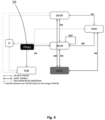
- Fig. 4 shows an example of a mobile communications network comprising an intermediate buffer proxy according to the preferred embodiment.
- the method for managing at least one eUICC information set (EIS) of an eUICC comprises the following consecutive steps:
- the intermediate buffer proxy is configured to receive a first request from a eUICC manufacturer (EUM), to generate a response to the first request and to sending the response to the request to the eUICC manufacturer (EUM).
- EUM eUICC manufacturer
- the method and the intermediate buffer proxy 20 according to the present embodiment provides a possibility to delay the load to the SM-SR function without endangering the integrity of the chain between the EUM or OEM and the SM-SR function.
- the intermediate buffer proxy 20 simulates a response of the SM-SR function for the EUM or OEM or responds with a fake response to avoid invalidation of the request after the expiration of the validity period of the request.
- the intermediate buffer proxy 20 acts as the SM-SR for the EUM or OEM.
- MNO may be used synonymously with an MNO server communicating in the mobile network.
- EUM may be used synonymously with an EUM server communicating in the mobile network.
- SM-SR function may be used synonymously with an SM-SR server running the SM-SR function and communicating in the mobile network.
- the EUM or OEM may receive input data from the MNO.
- the EUM may simultaneously send response files for HLR registration to the MNO.
- the EUM may send an "ES1 Register Results Response" to the MNO.
- the intermediate buffer proxy 20 may have to create a new FCI for its communication with the SM-SR function, in particular if the FCI originating from the EUM or OEM has expired. Data validation can be conducted on the intermediate buffer proxy 20 until the request is validated by the SM-SR.
- the intermediate buffer proxy 20 may be identified by its own Object Identifier (OID) and comprise its own FRI.
- OID Object Identifier
- EIS data manipulation can be conducted on the intermediate buffer proxy 20 instead of being conducted on the EUM or OEM, for example.
- a correlation of the FCI from the EUM or OEM and the FCI employed by the intermediate buffer proxy 20 can be tracked by the intermediate buffer proxy 20. This can ensure the integrity of the communication end-to-end between the EUM or OEM and the intermediate buffer proxy 20.
- the method may further comprise the following consecutive steps:
- the method may further comprise the following consecutive steps:
- the intermediate buffer proxy 20 may further be configured to generate a second request for registering the eUICC information set (EIS) and to send the second request the Subscription Manager Secure Routing (SM-SR) function.
- EIS eUICC information set
- SM-SR Subscription Manager Secure Routing
- the method may further comprise the following consecutive steps:
- the method may further comprise the following consecutive steps:
- the intermediate buffer proxy 20 may further be configured to receive a response to the second request from the Subscription Manager Secure Routing (SM-SR) function.
- SM-SR Subscription Manager Secure Routing
- the intermediate buffer proxy 20 may further comprise a unique object identifier (OID and/or a unique Function Requester Identifier (FRI).
- OID unique object identifier
- FPI Function Requester Identifier
- the intermediate buffer proxy 20 acts as SM-SR function towards the EUM and the intermediate buffer proxy 20 acts as the EUM towards the SM-SR function.
- the intermediate buffer proxy 20 may send a pseudo-response to the EUM in response to a request for registration of a new EIS to the SM-SR function.
- the pseudo-response received at the EUM may trigger a registration response at the EUM which is sent to the MNO for confirmation.
- a redirection of the request received by the intermediate buffer proxy 20 to the SM-SR function may then be initiated at a later time, which may be chosen by the MNO, EUM, OEM or SP.
- the intermediate buffer proxy 20 may hence act as a bridge for settlement and reconciliation of data exchanged between EUM or OEM and SM-SR function.
- the intermediate proxy buffer 20 may send fake responses to avoid validity periods expirations on EUM.
- the intermediate proxy buffer 20 may "impersonate”, that is act as the SM-SR to respond to the EUM immediately and avoid validity period expiration.
Landscapes
- Engineering & Computer Science (AREA)
- Computer Networks & Wireless Communication (AREA)
- Signal Processing (AREA)
- Computer Security & Cryptography (AREA)
- Databases & Information Systems (AREA)
- Mobile Radio Communication Systems (AREA)
Claims (11)
- Procédé de gestion d'au moins un ensemble d'informations eUICC, EIS, d'un eUICC, comprenant les étapes consécutives suivantes :- générer (110), au niveau d'un fabricant d'eUICC, EUM, une première demande d'enregistrement de l'ensemble d'informations eUICC, EIS, la première demande comprenant un premier identifiant d'appel de fonction FCI ;- envoyer (120) la première demande depuis le fabricant d'eUICC, EUM, à un proxy tampon intermédiaire (20) ;- générer (130) une réponse à la première demande dans le proxy tampon intermédiaire (20) ; et- envoyer (140) la réponse à la demande au fabricant d'eUICC, EUM.
- Procédé selon la revendication 1, caractérisé en ce qu'il comprend en outre les étapes consécutives suivantes :- après réception de la réponse à la demande adressée au fabricant d'eUICC, EUM, au niveau du fabricant d'eUICC, EUM, générer (150) une réponse aux résultats de registre dans le fabricant d'eUICC, EUM ; et- envoyer (160) la réponse de résultats de registre à un opérateur de réseau mobile, MNO.
- Procédé selon l'une quelconque des revendications 1 ou 2, caractérisé en ce qu'il comprend en outre les étapes consécutives suivantes :- sur la base de la première demande reçue par le proxy tampon intermédiaire (20), générer (170), au niveau du proxy tampon intermédiaire (20), une deuxième demande d'enregistrement de l'ensemble d'informations eUICC, EIS, la deuxième demande comprenant un deuxième identifiant d'appel de fonction, FCI ; et- envoyer (180) la deuxième demande depuis le proxy tampon intermédiaire (20) vers une fonction de routage sécurisé de gestionnaire d'abonnement, SM-SR.
- Procédé selon la revendication 3, caractérisé en ce qu'il comprend en outre les étapes consécutives suivantes :- recevoir (190), au niveau de la fonction de routage sécurisé de gestionnaire d'abonnement, SM-SR, la deuxième demande émanant du proxy tampon intermédiaire (20) ; et- vérifier (200), au niveau de la fonction de routage sécurisé de gestionnaire d'abonnement, SM-SR, que l'ensemble d'informations eUICC, EIS, est présent dans un répertoire d'ensemble d'informations eUICC, EIS, stocké dans la fonction de routage sécurisé de gestionnaire d'abonnement, SM-SR.
- Procédé selon la revendication 4, caractérisé en ce qu'il comprend en outre les étapes consécutives suivantes :- stocker (210) l'ensemble d'informations eUICC, EIS, dans une base de données d'ensembles d'informations eUICC, EIS, actifs présents sur la fonction de routage sécurisé de gestionnaire d'abonnement, SM-SR ; et- générer (220) une réponse à la deuxième demande au niveau de la fonction de routage sécurisé de gestionnaire d'abonnement, SM-SR ; et- envoyer (230) la réponse depuis la fonction de routage sécurisé de gestionnaire d'abonnement, SM-SR, vers le proxy tampon intermédiaire (20).
- Proxy tampon intermédiaire configuré pour recevoir une première demande en provenance d'un fabricant d'eUICC, EUM, pour l'enregistrement d'un ensemble d'informations eUICC, EIS, où la première demande comprend un premier identifiant d'appel de fonction, FCI, où le proxy tampon intermédiaire est en outre configuré pour générer une réponse à la première demande et pour envoyer la réponse à la demande au fabricant d'eUICC, EUM.
- Proxy tampon intermédiaire selon la revendication 6, caractérisé en ce qu'il est en outre configuré pour générer une deuxième demande d'enregistrement de l'ensemble d'informations eUICC, EIS, et pour envoyer la deuxième demande à une fonction de routage sécurisé de gestionnaire d'abonnement, SM-SR.
- Proxy tampon intermédiaire selon la revendication 7, caractérisé en ce qu'il est en outre configuré pour recevoir une réponse à la deuxième demande de la fonction de routage sécurisé de gestionnaire d'abonnement, SM-SR.
- Proxy tampon intermédiaire selon l'une quelconque des revendications 6 à 8, caractérisé en ce qu'il comprend un identifiant d'objet unique, OID.
- Proxy tampon intermédiaire selon l'une quelconque des revendications 6 à 9, caractérisé en ce qu'il comprend un identifiant de demandeur de fonction unique, FRI.
- Proxy tampon intermédiaire selon l'une quelconque des revendications 6 à 10, caractérisé en ce qu'il est configuré pour créer un nouvel identifiant d'appel de fonction, FCI, pour sa communication avec la fonction de routage sécurisé de gestionnaire d'abonnement, SM-SR.
Priority Applications (6)
| Application Number | Priority Date | Filing Date | Title |
|---|---|---|---|
| EP21020526.6A EP4175337B1 (fr) | 2021-10-26 | 2021-10-26 | Procédé de gestion d'au moins un ensemble d'informations euicc (eis) d'un euicc et proxy tampon intermédiaire |
| ES21020526T ES3013958T3 (en) | 2021-10-26 | 2021-10-26 | Method for managing at least one euicc information set (eis) of a euicc and intermediate buffer proxy |
| PCT/EP2022/025466 WO2023072428A1 (fr) | 2021-10-26 | 2022-10-06 | Procédé pour la gestion d'au moins un ensemble d'informations euicc (eis) d'un proxy euicc et d'un proxy tampon intermédiaire |
| US18/703,490 US20240422527A1 (en) | 2021-10-26 | 2022-10-06 | Method for managing at least one euicc information set (eis) of a euicc and intermediate buffer proxy |
| CN202280071598.6A CN118160334A (zh) | 2021-10-26 | 2022-10-06 | 管理euicc的至少一个euicc信息集(eis)的方法和中间缓冲代理 |
| JP2024515044A JP2024538862A (ja) | 2021-10-26 | 2022-10-06 | Euiccの少なくとも1つのeuicc情報セット(eis)を管理する方法及び中間バッファープロキシ |
Applications Claiming Priority (1)
| Application Number | Priority Date | Filing Date | Title |
|---|---|---|---|
| EP21020526.6A EP4175337B1 (fr) | 2021-10-26 | 2021-10-26 | Procédé de gestion d'au moins un ensemble d'informations euicc (eis) d'un euicc et proxy tampon intermédiaire |
Publications (2)
| Publication Number | Publication Date |
|---|---|
| EP4175337A1 EP4175337A1 (fr) | 2023-05-03 |
| EP4175337B1 true EP4175337B1 (fr) | 2024-12-25 |
Family
ID=78413567
Family Applications (1)
| Application Number | Title | Priority Date | Filing Date |
|---|---|---|---|
| EP21020526.6A Active EP4175337B1 (fr) | 2021-10-26 | 2021-10-26 | Procédé de gestion d'au moins un ensemble d'informations euicc (eis) d'un euicc et proxy tampon intermédiaire |
Country Status (6)
| Country | Link |
|---|---|
| US (1) | US20240422527A1 (fr) |
| EP (1) | EP4175337B1 (fr) |
| JP (1) | JP2024538862A (fr) |
| CN (1) | CN118160334A (fr) |
| ES (1) | ES3013958T3 (fr) |
| WO (1) | WO2023072428A1 (fr) |
Families Citing this family (2)
| Publication number | Priority date | Publication date | Assignee | Title |
|---|---|---|---|---|
| US12604175B2 (en) * | 2022-11-29 | 2026-04-14 | Boost SubscriberCo L.L.C. | Method of tracking ESIMS |
| DE102023132851A1 (de) | 2023-11-24 | 2025-05-28 | Giesecke+Devrient Mobile Security Germany Gmbh | Verfahren, Computerprogramm, computerlesbarer Datenträger, Endgerät und Kommunikationsnetzwerk zum Übertragen eines Nutzerdatensatzes |
Family Cites Families (2)
| Publication number | Priority date | Publication date | Assignee | Title |
|---|---|---|---|---|
| US10356606B2 (en) * | 2017-11-14 | 2019-07-16 | Syniverse Technologies, Llc | Proxy platform for inter-operator provisioning of eSIM profiles |
| WO2020071975A1 (fr) * | 2018-10-05 | 2020-04-09 | Telefonaktiebolaget Lm Ericsson (Publ) | Fourniture d'euicc pour dispositifs autonomes |
-
2021
- 2021-10-26 EP EP21020526.6A patent/EP4175337B1/fr active Active
- 2021-10-26 ES ES21020526T patent/ES3013958T3/es active Active
-
2022
- 2022-10-06 WO PCT/EP2022/025466 patent/WO2023072428A1/fr not_active Ceased
- 2022-10-06 US US18/703,490 patent/US20240422527A1/en active Pending
- 2022-10-06 JP JP2024515044A patent/JP2024538862A/ja active Pending
- 2022-10-06 CN CN202280071598.6A patent/CN118160334A/zh active Pending
Also Published As
| Publication number | Publication date |
|---|---|
| WO2023072428A1 (fr) | 2023-05-04 |
| JP2024538862A (ja) | 2024-10-24 |
| US20240422527A1 (en) | 2024-12-19 |
| EP4175337A1 (fr) | 2023-05-03 |
| CN118160334A (zh) | 2024-06-07 |
| ES3013958T3 (en) | 2025-04-15 |
Similar Documents
| Publication | Publication Date | Title |
|---|---|---|
| US11368839B2 (en) | Secure privacy provisioning in 5G networks | |
| US11930558B2 (en) | Method for providing subscription profiles, subscriber identity module and subscription server | |
| KR102371357B1 (ko) | 모바일 네트워크 오퍼레이터로부터 보안 요소로 기존 서브스크립션 프로파일을 송신하는 방법, 대응하는 서버들 및 보안 요소 | |
| US12439250B2 (en) | Method and apparatus for transferring network access information between terminals in mobile communication system | |
| US11838752B2 (en) | Method and apparatus for managing a profile of a terminal in a wireless communication system | |
| EP3284274B1 (fr) | Procédé et appareil de gestion d'un profil d'un terminal dans un système de communication sans fil | |
| US11589212B2 (en) | Method and apparatus for managing event in communication system | |
| US8260885B2 (en) | Method and system for bootstrap of a device | |
| US12114166B2 (en) | Method for setting up a subscription profile, method for providing a subscription profile, subscriber identity module | |
| KR20160101626A (ko) | 이동통신 시스템의 단말에서 프로파일 수신을 위한 방법 및 장치 | |
| EP3769551B1 (fr) | Procédé et appareil pour négocier une version d'euicc | |
| US9769648B2 (en) | Provisioning connectivity service data in a telecommunications network | |
| KR20180093333A (ko) | eSIM 접근 제어 방법 및 장치 | |
| CN114631339A (zh) | 无线通信系统中用于重新安装sim配置文件的方法和装置 | |
| EP2466759A1 (fr) | Procédé et système de changement d'un opérateur nominal sélectionné d'un équipement de communication entre machines | |
| US20240422527A1 (en) | Method for managing at least one euicc information set (eis) of a euicc and intermediate buffer proxy | |
| CN107211385B (zh) | 一种profile下载和激活方法、集成电路卡及系统 | |
| US11018966B2 (en) | Providing connectivity information | |
| US12256468B2 (en) | Method and server for pushing data to MNO | |
| EP4661454A1 (fr) | Procédé et dispositifs d'auto-approvisionnement de profils dans des réseaux mobiles | |
| EP3815407B1 (fr) | Procédé, appareil et système pour autoriser une gestion de profil à distance | |
| EP3729847B1 (fr) | Inscription de msisdn |
Legal Events
| Date | Code | Title | Description |
|---|---|---|---|
| PUAI | Public reference made under article 153(3) epc to a published international application that has entered the european phase |
Free format text: ORIGINAL CODE: 0009012 |
|
| STAA | Information on the status of an ep patent application or granted ep patent |
Free format text: STATUS: THE APPLICATION HAS BEEN PUBLISHED |
|
| AK | Designated contracting states |
Kind code of ref document: A1 Designated state(s): AL AT BE BG CH CY CZ DE DK EE ES FI FR GB GR HR HU IE IS IT LI LT LU LV MC MK MT NL NO PL PT RO RS SE SI SK SM TR |
|
| RAP3 | Party data changed (applicant data changed or rights of an application transferred) |
Owner name: GIESECKE+DEVRIENT MOBILE SECURITY GMBH |
|
| RAP3 | Party data changed (applicant data changed or rights of an application transferred) |
Owner name: GIESECKE+DEVRIENT EPAYMENTS GMBH |
|
| STAA | Information on the status of an ep patent application or granted ep patent |
Free format text: STATUS: REQUEST FOR EXAMINATION WAS MADE |
|
| 17P | Request for examination filed |
Effective date: 20231103 |
|
| RBV | Designated contracting states (corrected) |
Designated state(s): AL AT BE BG CH CY CZ DE DK EE ES FI FR GB GR HR HU IE IS IT LI LT LU LV MC MK MT NL NO PL PT RO RS SE SI SK SM TR |
|
| RAP1 | Party data changed (applicant data changed or rights of an application transferred) |
Owner name: GIESECKE+DEVRIENT MOBILE SECURITY GERMANY GMBH |
|
| GRAP | Despatch of communication of intention to grant a patent |
Free format text: ORIGINAL CODE: EPIDOSNIGR1 |
|
| STAA | Information on the status of an ep patent application or granted ep patent |
Free format text: STATUS: GRANT OF PATENT IS INTENDED |
|
| RIC1 | Information provided on ipc code assigned before grant |
Ipc: H04W 12/40 20210101ALI20240930BHEP Ipc: H04W 12/30 20210101ALI20240930BHEP Ipc: H04W 4/70 20180101ALI20240930BHEP Ipc: H04W 8/20 20090101AFI20240930BHEP |
|
| INTG | Intention to grant announced |
Effective date: 20241014 |
|
| GRAS | Grant fee paid |
Free format text: ORIGINAL CODE: EPIDOSNIGR3 |
|
| GRAA | (expected) grant |
Free format text: ORIGINAL CODE: 0009210 |
|
| STAA | Information on the status of an ep patent application or granted ep patent |
Free format text: STATUS: THE PATENT HAS BEEN GRANTED |
|
| AK | Designated contracting states |
Kind code of ref document: B1 Designated state(s): AL AT BE BG CH CY CZ DE DK EE ES FI FR GB GR HR HU IE IS IT LI LT LU LV MC MK MT NL NO PL PT RO RS SE SI SK SM TR |
|
| REG | Reference to a national code |
Ref country code: GB Ref legal event code: FG4D |
|
| REG | Reference to a national code |
Ref country code: CH Ref legal event code: EP |
|
| REG | Reference to a national code |
Ref country code: DE Ref legal event code: R096 Ref document number: 602021023733 Country of ref document: DE |
|
| REG | Reference to a national code |
Ref country code: IE Ref legal event code: FG4D |
|
| REG | Reference to a national code |
Ref country code: LT Ref legal event code: MG9D |
|
| PG25 | Lapsed in a contracting state [announced via postgrant information from national office to epo] |
Ref country code: HR Free format text: LAPSE BECAUSE OF FAILURE TO SUBMIT A TRANSLATION OF THE DESCRIPTION OR TO PAY THE FEE WITHIN THE PRESCRIBED TIME-LIMIT Effective date: 20241225 |
|
| PG25 | Lapsed in a contracting state [announced via postgrant information from national office to epo] |
Ref country code: FI Free format text: LAPSE BECAUSE OF FAILURE TO SUBMIT A TRANSLATION OF THE DESCRIPTION OR TO PAY THE FEE WITHIN THE PRESCRIBED TIME-LIMIT Effective date: 20241225 |
|
| REG | Reference to a national code |
Ref country code: ES Ref legal event code: FG2A Ref document number: 3013958 Country of ref document: ES Kind code of ref document: T3 Effective date: 20250415 |
|
| PG25 | Lapsed in a contracting state [announced via postgrant information from national office to epo] |
Ref country code: BG Free format text: LAPSE BECAUSE OF FAILURE TO SUBMIT A TRANSLATION OF THE DESCRIPTION OR TO PAY THE FEE WITHIN THE PRESCRIBED TIME-LIMIT Effective date: 20241225 |
|
| PG25 | Lapsed in a contracting state [announced via postgrant information from national office to epo] |
Ref country code: NO Free format text: LAPSE BECAUSE OF FAILURE TO SUBMIT A TRANSLATION OF THE DESCRIPTION OR TO PAY THE FEE WITHIN THE PRESCRIBED TIME-LIMIT Effective date: 20250325 |
|
| PG25 | Lapsed in a contracting state [announced via postgrant information from national office to epo] |
Ref country code: LV Free format text: LAPSE BECAUSE OF FAILURE TO SUBMIT A TRANSLATION OF THE DESCRIPTION OR TO PAY THE FEE WITHIN THE PRESCRIBED TIME-LIMIT Effective date: 20241225 Ref country code: GR Free format text: LAPSE BECAUSE OF FAILURE TO SUBMIT A TRANSLATION OF THE DESCRIPTION OR TO PAY THE FEE WITHIN THE PRESCRIBED TIME-LIMIT Effective date: 20250326 |
|
| PG25 | Lapsed in a contracting state [announced via postgrant information from national office to epo] |
Ref country code: RS Free format text: LAPSE BECAUSE OF FAILURE TO SUBMIT A TRANSLATION OF THE DESCRIPTION OR TO PAY THE FEE WITHIN THE PRESCRIBED TIME-LIMIT Effective date: 20250325 |
|
| REG | Reference to a national code |
Ref country code: NL Ref legal event code: MP Effective date: 20241225 |
|
| PG25 | Lapsed in a contracting state [announced via postgrant information from national office to epo] |
Ref country code: NL Free format text: LAPSE BECAUSE OF FAILURE TO SUBMIT A TRANSLATION OF THE DESCRIPTION OR TO PAY THE FEE WITHIN THE PRESCRIBED TIME-LIMIT Effective date: 20241225 |
|
| REG | Reference to a national code |
Ref country code: AT Ref legal event code: MK05 Ref document number: 1755184 Country of ref document: AT Kind code of ref document: T Effective date: 20241225 |
|
| PG25 | Lapsed in a contracting state [announced via postgrant information from national office to epo] |
Ref country code: SM Free format text: LAPSE BECAUSE OF FAILURE TO SUBMIT A TRANSLATION OF THE DESCRIPTION OR TO PAY THE FEE WITHIN THE PRESCRIBED TIME-LIMIT Effective date: 20241225 |
|
| PG25 | Lapsed in a contracting state [announced via postgrant information from national office to epo] |
Ref country code: PL Free format text: LAPSE BECAUSE OF FAILURE TO SUBMIT A TRANSLATION OF THE DESCRIPTION OR TO PAY THE FEE WITHIN THE PRESCRIBED TIME-LIMIT Effective date: 20241225 |
|
| PG25 | Lapsed in a contracting state [announced via postgrant information from national office to epo] |
Ref country code: IS Free format text: LAPSE BECAUSE OF FAILURE TO SUBMIT A TRANSLATION OF THE DESCRIPTION OR TO PAY THE FEE WITHIN THE PRESCRIBED TIME-LIMIT Effective date: 20250425 |
|
| PG25 | Lapsed in a contracting state [announced via postgrant information from national office to epo] |
Ref country code: PT Free format text: LAPSE BECAUSE OF FAILURE TO SUBMIT A TRANSLATION OF THE DESCRIPTION OR TO PAY THE FEE WITHIN THE PRESCRIBED TIME-LIMIT Effective date: 20250428 |
|
| PG25 | Lapsed in a contracting state [announced via postgrant information from national office to epo] |
Ref country code: EE Free format text: LAPSE BECAUSE OF FAILURE TO SUBMIT A TRANSLATION OF THE DESCRIPTION OR TO PAY THE FEE WITHIN THE PRESCRIBED TIME-LIMIT Effective date: 20241225 |
|
| PG25 | Lapsed in a contracting state [announced via postgrant information from national office to epo] |
Ref country code: RO Free format text: LAPSE BECAUSE OF FAILURE TO SUBMIT A TRANSLATION OF THE DESCRIPTION OR TO PAY THE FEE WITHIN THE PRESCRIBED TIME-LIMIT Effective date: 20241225 Ref country code: AT Free format text: LAPSE BECAUSE OF FAILURE TO SUBMIT A TRANSLATION OF THE DESCRIPTION OR TO PAY THE FEE WITHIN THE PRESCRIBED TIME-LIMIT Effective date: 20241225 |
|
| PG25 | Lapsed in a contracting state [announced via postgrant information from national office to epo] |
Ref country code: SK Free format text: LAPSE BECAUSE OF FAILURE TO SUBMIT A TRANSLATION OF THE DESCRIPTION OR TO PAY THE FEE WITHIN THE PRESCRIBED TIME-LIMIT Effective date: 20241225 |
|
| PG25 | Lapsed in a contracting state [announced via postgrant information from national office to epo] |
Ref country code: CZ Free format text: LAPSE BECAUSE OF FAILURE TO SUBMIT A TRANSLATION OF THE DESCRIPTION OR TO PAY THE FEE WITHIN THE PRESCRIBED TIME-LIMIT Effective date: 20241225 |
|
| PG25 | Lapsed in a contracting state [announced via postgrant information from national office to epo] |
Ref country code: IT Free format text: LAPSE BECAUSE OF FAILURE TO SUBMIT A TRANSLATION OF THE DESCRIPTION OR TO PAY THE FEE WITHIN THE PRESCRIBED TIME-LIMIT Effective date: 20241225 |
|
| PG25 | Lapsed in a contracting state [announced via postgrant information from national office to epo] |
Ref country code: SE Free format text: LAPSE BECAUSE OF FAILURE TO SUBMIT A TRANSLATION OF THE DESCRIPTION OR TO PAY THE FEE WITHIN THE PRESCRIBED TIME-LIMIT Effective date: 20241225 |
|
| REG | Reference to a national code |
Ref country code: DE Ref legal event code: R097 Ref document number: 602021023733 Country of ref document: DE |
|
| PG25 | Lapsed in a contracting state [announced via postgrant information from national office to epo] |
Ref country code: DK Free format text: LAPSE BECAUSE OF FAILURE TO SUBMIT A TRANSLATION OF THE DESCRIPTION OR TO PAY THE FEE WITHIN THE PRESCRIBED TIME-LIMIT Effective date: 20241225 |
|
| PLBE | No opposition filed within time limit |
Free format text: ORIGINAL CODE: 0009261 |
|
| STAA | Information on the status of an ep patent application or granted ep patent |
Free format text: STATUS: NO OPPOSITION FILED WITHIN TIME LIMIT |
|
| 26N | No opposition filed |
Effective date: 20250926 |
|
| PGFP | Annual fee paid to national office [announced via postgrant information from national office to epo] |
Ref country code: DE Payment date: 20251020 Year of fee payment: 5 |
|
| PGFP | Annual fee paid to national office [announced via postgrant information from national office to epo] |
Ref country code: GB Payment date: 20251024 Year of fee payment: 5 |
|
| PGFP | Annual fee paid to national office [announced via postgrant information from national office to epo] |
Ref country code: FR Payment date: 20251017 Year of fee payment: 5 |
|
| PGFP | Annual fee paid to national office [announced via postgrant information from national office to epo] |
Ref country code: ES Payment date: 20251114 Year of fee payment: 5 |