EP4176094B1 - Rückgewinnung von seltenerdmetallen aus ferromagnetischen legierungen - Google Patents
Rückgewinnung von seltenerdmetallen aus ferromagnetischen legierungen Download PDFInfo
- Publication number
- EP4176094B1 EP4176094B1 EP21742187.4A EP21742187A EP4176094B1 EP 4176094 B1 EP4176094 B1 EP 4176094B1 EP 21742187 A EP21742187 A EP 21742187A EP 4176094 B1 EP4176094 B1 EP 4176094B1
- Authority
- EP
- European Patent Office
- Prior art keywords
- rare earth
- ferromagnetic alloy
- iron
- volatile
- earth metal
- Prior art date
- Legal status (The legal status is an assumption and is not a legal conclusion. Google has not performed a legal analysis and makes no representation as to the accuracy of the status listed.)
- Active
Links
Images




Classifications
-
- C—CHEMISTRY; METALLURGY
- C22—METALLURGY; FERROUS OR NON-FERROUS ALLOYS; TREATMENT OF ALLOYS OR NON-FERROUS METALS
- C22B—PRODUCTION AND REFINING OF METALS; PRETREATMENT OF RAW MATERIALS
- C22B1/00—Preliminary treatment of ores or scrap
- C22B1/005—Preliminary treatment of scrap
-
- C—CHEMISTRY; METALLURGY
- C22—METALLURGY; FERROUS OR NON-FERROUS ALLOYS; TREATMENT OF ALLOYS OR NON-FERROUS METALS
- C22B—PRODUCTION AND REFINING OF METALS; PRETREATMENT OF RAW MATERIALS
- C22B3/00—Extraction of metal compounds from ores or concentrates by wet processes
- C22B3/20—Treatment or purification of solutions, e.g. obtained by leaching
- C22B3/44—Treatment or purification of solutions, e.g. obtained by leaching by chemical processes
-
- C—CHEMISTRY; METALLURGY
- C22—METALLURGY; FERROUS OR NON-FERROUS ALLOYS; TREATMENT OF ALLOYS OR NON-FERROUS METALS
- C22B—PRODUCTION AND REFINING OF METALS; PRETREATMENT OF RAW MATERIALS
- C22B59/00—Obtaining rare earth metals
-
- C—CHEMISTRY; METALLURGY
- C22—METALLURGY; FERROUS OR NON-FERROUS ALLOYS; TREATMENT OF ALLOYS OR NON-FERROUS METALS
- C22B—PRODUCTION AND REFINING OF METALS; PRETREATMENT OF RAW MATERIALS
- C22B7/00—Working up raw materials other than ores, e.g. scrap, to produce non-ferrous metals and compounds thereof; Methods of a general interest or applied to the winning of more than two metals
- C22B7/006—Wet processes
- C22B7/008—Wet processes by an alkaline or ammoniacal leaching
-
- C—CHEMISTRY; METALLURGY
- C25—ELECTROLYTIC OR ELECTROPHORETIC PROCESSES; APPARATUS THEREFOR
- C25B—ELECTROLYTIC OR ELECTROPHORETIC PROCESSES FOR THE PRODUCTION OF COMPOUNDS OR NON-METALS; APPARATUS THEREFOR
- C25B1/00—Electrolytic production of inorganic compounds or non-metals
- C25B1/01—Products
- C25B1/02—Hydrogen or oxygen
- C25B1/04—Hydrogen or oxygen by electrolysis of water
-
- C—CHEMISTRY; METALLURGY
- C25—ELECTROLYTIC OR ELECTROPHORETIC PROCESSES; APPARATUS THEREFOR
- C25B—ELECTROLYTIC OR ELECTROPHORETIC PROCESSES FOR THE PRODUCTION OF COMPOUNDS OR NON-METALS; APPARATUS THEREFOR
- C25B15/00—Operating or servicing cells
- C25B15/02—Process control or regulation
- C25B15/021—Process control or regulation of heating or cooling
-
- C—CHEMISTRY; METALLURGY
- C25—ELECTROLYTIC OR ELECTROPHORETIC PROCESSES; APPARATUS THEREFOR
- C25C—PROCESSES FOR THE ELECTROLYTIC PRODUCTION, RECOVERY OR REFINING OF METALS; APPARATUS THEREFOR
- C25C1/00—Electrolytic production, recovery or refining of metals by electrolysis of solutions
- C25C1/06—Electrolytic production, recovery or refining of metals by electrolysis of solutions or iron group metals, refractory metals or manganese
-
- C—CHEMISTRY; METALLURGY
- C25—ELECTROLYTIC OR ELECTROPHORETIC PROCESSES; APPARATUS THEREFOR
- C25C—PROCESSES FOR THE ELECTROLYTIC PRODUCTION, RECOVERY OR REFINING OF METALS; APPARATUS THEREFOR
- C25C1/00—Electrolytic production, recovery or refining of metals by electrolysis of solutions
- C25C1/22—Electrolytic production, recovery or refining of metals by electrolysis of solutions of metals not provided for in groups C25C1/02 - C25C1/20
-
- C—CHEMISTRY; METALLURGY
- C25—ELECTROLYTIC OR ELECTROPHORETIC PROCESSES; APPARATUS THEREFOR
- C25C—PROCESSES FOR THE ELECTROLYTIC PRODUCTION, RECOVERY OR REFINING OF METALS; APPARATUS THEREFOR
- C25C3/00—Electrolytic production, recovery or refining of metals by electrolysis of melts
- C25C3/34—Electrolytic production, recovery or refining of metals by electrolysis of melts of metals not provided for in groups C25C3/02 - C25C3/32
-
- C—CHEMISTRY; METALLURGY
- C25—ELECTROLYTIC OR ELECTROPHORETIC PROCESSES; APPARATUS THEREFOR
- C25C—PROCESSES FOR THE ELECTROLYTIC PRODUCTION, RECOVERY OR REFINING OF METALS; APPARATUS THEREFOR
- C25C5/00—Electrolytic production, recovery or refining of metal powders or porous metal masses
-
- C—CHEMISTRY; METALLURGY
- C25—ELECTROLYTIC OR ELECTROPHORETIC PROCESSES; APPARATUS THEREFOR
- C25C—PROCESSES FOR THE ELECTROLYTIC PRODUCTION, RECOVERY OR REFINING OF METALS; APPARATUS THEREFOR
- C25C7/00—Constructional parts, or assemblies thereof, of cells; Servicing or operating of cells
- C25C7/005—Constructional parts, or assemblies thereof, of cells; Servicing or operating of cells of cells for the electrolysis of melts
-
- C—CHEMISTRY; METALLURGY
- C25—ELECTROLYTIC OR ELECTROPHORETIC PROCESSES; APPARATUS THEREFOR
- C25C—PROCESSES FOR THE ELECTROLYTIC PRODUCTION, RECOVERY OR REFINING OF METALS; APPARATUS THEREFOR
- C25C7/00—Constructional parts, or assemblies thereof, of cells; Servicing or operating of cells
- C25C7/02—Electrodes; Connections thereof
- C25C7/025—Electrodes; Connections thereof used in cells for the electrolysis of melts
-
- Y—GENERAL TAGGING OF NEW TECHNOLOGICAL DEVELOPMENTS; GENERAL TAGGING OF CROSS-SECTIONAL TECHNOLOGIES SPANNING OVER SEVERAL SECTIONS OF THE IPC; TECHNICAL SUBJECTS COVERED BY FORMER USPC CROSS-REFERENCE ART COLLECTIONS [XRACs] AND DIGESTS
- Y02—TECHNOLOGIES OR APPLICATIONS FOR MITIGATION OR ADAPTATION AGAINST CLIMATE CHANGE
- Y02E—REDUCTION OF GREENHOUSE GAS [GHG] EMISSIONS, RELATED TO ENERGY GENERATION, TRANSMISSION OR DISTRIBUTION
- Y02E60/00—Enabling technologies; Technologies with a potential or indirect contribution to GHG emissions mitigation
- Y02E60/30—Hydrogen technology
- Y02E60/36—Hydrogen production from non-carbon containing sources, e.g. by water electrolysis
-
- Y—GENERAL TAGGING OF NEW TECHNOLOGICAL DEVELOPMENTS; GENERAL TAGGING OF CROSS-SECTIONAL TECHNOLOGIES SPANNING OVER SEVERAL SECTIONS OF THE IPC; TECHNICAL SUBJECTS COVERED BY FORMER USPC CROSS-REFERENCE ART COLLECTIONS [XRACs] AND DIGESTS
- Y02—TECHNOLOGIES OR APPLICATIONS FOR MITIGATION OR ADAPTATION AGAINST CLIMATE CHANGE
- Y02P—CLIMATE CHANGE MITIGATION TECHNOLOGIES IN THE PRODUCTION OR PROCESSING OF GOODS
- Y02P10/00—Technologies related to metal processing
- Y02P10/20—Recycling
Definitions
- This invention is directed to methods for recovery of at least one rare earth metal from ferromagnetic alloy, including a chlorination of the rare earth metal following by separation of the chlorinated product.
- Rare earth magnets based upon neodymium-iron-boron are employed in many clean energy and high-tech applications, including hard disk drives (HDDs), motors in electric vehicles and electric generators in wind turbines.
- HDDs hard disk drives
- the supply of rare earth metals has come under considerable strain. This resulted in dramatic price fluctuations for the rare earth metals, in particular, neodymium, praseodymium and dysprosium, the rare earth constituents of NdFeB magnets.
- the rare earth metals are classified as at greatest risk of supply shortages compared to those of all other materials used for clean energy technologies.
- Recycling of magnet scrap from waste products consists of multiple steps, including preliminary steps; separation of the magnets from the waste product, demagnetization through heat treatment at 300-350°C, decarbonization (for removal of resin) by combustion at 700-1000°C under air or oxygen flow, and deoxidization by hydrogen reduction[1-3].
- the main process (separation of rare earth metals and iron) begins after these preliminary stages.
- acid dissolution [4] acid dissolution
- solvent extraction solvent extraction
- the oxalate method [5] are used too for recovery of the neodymium.
- These wet chemical methods have poor yield from the acid dissolution and effluent treatment steps, which requires a multiple-step process resulting in high cost. It is important that the recovery process for the rare earth metals from magnet scrap has as low cost and as few steps as possible, because recovery of the magnets from the product is itself a multi-step process.
- Kamimoto et al. discloses the electrodeposition of rare-earth elements from neodymium magnets using molten salt electrolysis (Journal of Material Cycles and Waste Management, Springer Japan, Tokyo, vol. 20, no. 4, 13 November 2017, pages 1918-1922, DOI: 10.1007/S10163-017-0682-5 ).
- the present invention provides a method for electrolytic atomic hydrogen decrepitation of a ferromagnetic alloy, wherein the method comprises an electrolytic reaction by providing an applied potential between an anode and a cathode, wherein the ferromagnetic alloy is connected to the cathode, producing atomic hydrogen at the cathode, wherein the ferromagnetic alloy is scattered by the atomic hydrogen to obtain a ferromagnetic alloy powder.
- the present invention is defined by claim 1.
- the electrolytic atomic hydrogen decrepitation is carried out at room temperature.
- the cathode comprises copper, nickel, steel, titanium, or a combination thereof.
- the anode comprises lead, nickel, steel or a combination thereof.
- This invention also provides a method for recovery of at least one rare earth metal from ferromagnetic alloy, the method comprising: pre-treatment of the ferromagnetic alloy by the atomic hydrogen decrepitation treatment, followed by:
- the at least one chlorine-containing gas in step (a) is present in an amount of 0.5 - 2.0 kg of chlorine per 1 kg of ferromagnetic alloy.
- the air flow to the volatile iron-containing chloride product of step (b) is present in an amount of 0.5 - 2.0 kg of air per 1 kg of volatile iron-containing chloride product.
- the at least one rare earth metal is selected from cerium (Ce), dysprosium (Dy), erbium (Er), europium (Eu), gadolinium (Gd), holmium (Ho), lanthanum (La), lutetium (Lu), neodymium (Nd), praseodymium (Pr), promethium (Pm), samarium (Sm), scandium (Sc), terbium (Tb), thulium (Tm), ytterbium (Yb), and yttrium (Y).
- the present invention provides a method for electrolytic atomic hydrogen decrepitation of a ferromagnetic alloy, wherein the method comprises an electrolytic reaction by providing an applied potential between an anode and a cathode, wherein the ferromagnetic alloy is connected to the cathode, producing atomic hydrogen at the cathode, wherein the ferromagnetic alloy is scattered by the atomic hydrogen to obtain a ferromagnetic alloy powder.
- This invention also provides a method for recovery of at least one rare earth metal from ferromagnetic alloy, the method comprising: pre-treatment of the ferromagnetic alloy by the atomic hydrogen decrepitation treatment, followed by:
- the decrepitation is performed at room temperature.
- the electrolysis is performed using a first electrode (cathode) of copper, nickel, steel, titanium or combination thereof; and a second electrode (anode) of lead, nickel, steel or combination thereof.
- the ferromagnetic alloy is attached to said first electrode (cathode).
- the recovery of spent neodymium magnets by chlorine treatment does not require pre-treatment of magnets.
- a clinker consisting of rare earth metals chlorides and sublimates consisting of iron oxide and iron chlorides were obtained.
- the resulting rare earth metals chlorides can be easily processed by electrolysis of the molten salts for rare earth metals production [12, 13].
- ferromagnetic can be used interchangeably with ferrimagnetic alloy it should be understood to encompass any type of source (including spent) of permanent magnet made of a combination of metals that creates its own persistent magnetic field.
- These metals include the elements iron, nickel and cobalt, rare-earth metals, naturally occurring minerals (such as lodestone) and any combination thereof.
- said at least one rare earth metal is selected from cerium (Ce), dysprosium (Dy), erbium (Er), europium (Eu), gadolinium (Gd), holmium (Ho), lanthanum (La), lutetium (Lu), neodymium (Nd), praseodymium (Pr), promethium (Pm), samarium (Sm), scandium (Sc), terbium (Tb), thulium (Tm), ytterbium (Yb), and yttrium (Y).
- the at least one chlorine-containing gas which is used in the methods of this invention is present in an amount of 0.5 - 2.0 kg of the chlorine per 1 kg of the ferromagnetic alloy (or powder alloy).
- said air flow to the volatile iron-containing chloride product of step (b) is present in an amount of 0.5 - 2.0 kg of the air per 1 kg of the volatile iron-containing chloride product.
- the electrolysis in step (e) is performed using graphite electrodes (cathode, anode). In some further embodiments, said electrolysis is performed at a temperature range of between about 500 to 1500°C. In other embodiments, said electrolysis is performed using potential of between 10 to 15V.
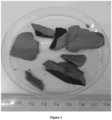
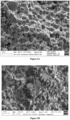
- the decrepitation of the ferromagnetic alloy was carried out in aqueous 1M sodium hydroxide solution at room temperature. Electrolysis was carried out with cathode copper electrode and lead anode electrode. Current density was 0.1A/cm 2 . Uncrushed ferromagnetic alloy was attached to the cathode electrode. The atomic hydrogen that is released at the cathode passes through a layer of pieces of a ferromagnetic alloy and reacted with him. The pieces of a ferromagnetic alloy are scattered by atomic hydrogen reaction with ferromagnetic alloy powder production. Figures 1 , 2 and 8 show the ferromagnetic alloy before and after atomic hydrogen decrepitation.
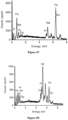
- composition of the material was characterized by energy dispersive X-ray fluorescence spectroscopy (EDS, LEO Supra) ( Figures 5A-5D ).
- Dy 2 O 3 does not react with molecular hydrogen (reactions 8, 9). Iron from a magnet practically does not participate in reactions with hydrogen under our conditions (reactions 3, 8).
- Group 3 includes hydrolysis reactions of the neodymium, praseodymium, and dysprosium hydrides in the water. Under our conditions, the Gibbs energy of the hydrolysis reactions (11-16) in Group 3 for rare metals is strongly negative (- 350-530 kJ/mole). Thermodynamic calculations predict that the hydrolysis reactions of the neodymium, praseodymium, and dysprosium hydrides can result in the formation of Nd, Pr, and Dy hydroxides or oxides within a wide temperature range, including the range of interest 273-373 K.
- Test duration was 2-4 hours. Temperature was varied from room temperature to boiling temperature. Potential was 4.7 V, current - 13-15A. Cathode current density was 0.8-0.9 A/cm 2 .
- Used magnet pieces were used as input material. Content of components presented in the Table 3. Table 3. Content of components in the used magnet pieces. Sample Content (mass %) Iron Neodymium Praseodymium Dysprosium Cerium 1 64.9 24.5 8.1 4.3 0 2 32.8 31.8 16.7 0.8 15.4
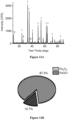
- composition of the material was characterized by energy dispersive X-ray fluorescence spectroscopy (EDS, LEO Supra) (Table 3 and Figures 4A and 4B ).
- the first sample ( Fig. 4A ) is a well-crystalline material with an average crystal size of about 70 nm, while the second ( Fig. 4B ) consists of nanocrystals with a size of about 5 nm.
- Pieces (30-40 mm) of the neodymium magnet (as they were, without demagnetization, crushing and milling) were placed in the furnace in a Pyrex glass crucible. Prior to heating, the quartz reactor was cleaned under 100 ml/min nitrogen flow, following which the furnace was heated to a given temperature, again under 100 ml/min nitrogen flow. Chlorine gas was fed into the reactor after the latter had reached the designated temperature. All elements (iron, neodymium, praseodymium, and boron) were chlorinated in accordance with reactions (1-6, 8) from Table 4. Dysprosium oxide Dy 2 O 3 did not react with chlorine (reaction 7 from Table 4).
- Chlorine was obtained by reaction (7) and could have returned to the Pilot or industrial unit to the chlorination stage, therefore a circulation of chlorine gas can be achieved.
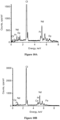
- composition of the material was characterized by energy dispersive X-ray fluorescence spectroscopy (EDS, LEO Supra) ( Figures 10A-10B and Table 5). Table 5. The composition of the neodymium clinker (mass %). Sample Iron Neodymium Praseodymium Dysprosium 1 0.4 56.3 26.3 9.1 2 0.4 59.0 32.2 1.5
- the resulting rare earth metals chlorides can be easily processed by electrolysis of the molten salts for metallic rare earth metals production [12-13].
Landscapes
- Chemical & Material Sciences (AREA)
- Engineering & Computer Science (AREA)
- Organic Chemistry (AREA)
- Materials Engineering (AREA)
- Metallurgy (AREA)
- Chemical Kinetics & Catalysis (AREA)
- Electrochemistry (AREA)
- Life Sciences & Earth Sciences (AREA)
- Environmental & Geological Engineering (AREA)
- General Life Sciences & Earth Sciences (AREA)
- Mechanical Engineering (AREA)
- Geology (AREA)
- Manufacturing & Machinery (AREA)
- Geochemistry & Mineralogy (AREA)
- General Chemical & Material Sciences (AREA)
- Automation & Control Theory (AREA)
- Inorganic Chemistry (AREA)
- Manufacture And Refinement Of Metals (AREA)
- Hard Magnetic Materials (AREA)
- Inorganic Compounds Of Heavy Metals (AREA)
- Processing Of Solid Wastes (AREA)
- Electrolytic Production Of Metals (AREA)
Claims (8)
- Verfahren zur elektrolytischen atomaren Wasserstoff-Dekrepitation einer ferromagnetischen Legierung, wobei das Verfahren eine elektrolytische Reaktion umfasst, wonach ein angelegtes Potenzial zwischen einer Anode und einer Kathode bereitgestellt wird, wobei die ferromagnetische Legierung mit der Kathode verbunden ist, wodurch atomarer Wasserstoff an der Kathode prodiziert wird, wobei die ferromagnetische Legierung durch den atomaren Wasserstoff gestreut wird, um ein ferromagnetisches Legierungspulver zu erhalten.
- Verfahren nach Anspruch 1, wobei die elektrolytische atomare Wasserstoff- Dekrepitation bei Raumtemperatur durchgeführt wird.
- Verfahren nach Anspruch 1 oder 2, wobei die Kathode Kupfer, Nickel, Stahl, Titan oder eine Kombination davon umfasst.
- Verfahren nach einem der Ansprüche 1-3 wobei die Anode Blei, Nickel, Stahl oder eine Kombination davon umfasst.
- Verfahren zur Rückgewinnung mindestens eines Metalls Seltener Erden aus einer ferromagnetischen Legierung, wobei das Verfahren wie folgt umfasst:
eine Vorbehandlung der ferromagnetischen Legierung durch die atomare Wasserstoff-Dekrepitationsbehandlung nach einem der Ansprüche 1-4; gefolgt vom:(a) Umsetzen des ferromagnetischen Legierungspulvers mit mindestens einem chlorhaltigen Gas bei einer Temperatur von zwischen 400 °C und 450 °C, wobei ein flüchtiges eisenhaltiges Chloridprodukt und ein nicht flüchtiges Metallchlorid mindestens einer Seltenen Erde erhalten wird;(b) Bereitstellen eines Luftstroms zu dem flüchtigen eisenhhaltigen Chloridprodukt und Oxidieren des eisenhaltigen Chloridprodukts zu Eisenoxid;(c) Trennen des Eisenoxidprodukts und des einen nicht flüchtigen Metallchlorids mindestens einer Seltenen Erde;(d) Kühlen des getrennten einen nicht flüchtigen Metallchlorids mindestens einer Seltenen Erde; und(e) Elektrolysieren des gekühlten nicht flüchtigen Metallchlorids mindestens einer Seltenen Erde; dadurch Rückgewinnen des mindestens einen Metalls einer Seltenen Erde. - Verfahren nach Anspruch 5, wobei das mindestens eine chlorhaltige Gas aus Schritt (a) in einer Menge von 0,5 - 2,0 kg Clor je 1 kg ferromagnetischer Legierung vorliegt.
- Verfahren nach einem der Ansprüche 5-6, wobei der Luftstrom zu dem flüchtigen eisenhaltigen Chloridprodukt aus Schritt (b) in einer Menge von 0,5 - 2,0 kg Luft je 1 kg flüchtiges eisenhaltiges Chlorprodukt vorliegt.
- Verfahren nach einem der Ansprüche 5-7, wobei das mindestens eine Metall einer Seltenen Erde unter Folgenden ausgewählt ist: Cerium (Ce), Dysprosium (Dy), Erbium (Er), Europium (Eu), Gadolinium (Gd), Holmium (Ho), Lanthanum (La), Lutetium (Lu), Neodymium (Nd), Praseodymium (Pr), Promethium (Pm), Samarium (Sm), Scandium (Sc), Terbium (Tb), Thulium (Tm), Ytterbium (Yb) und Yttrium (Y).
Priority Applications (1)
| Application Number | Priority Date | Filing Date | Title |
|---|---|---|---|
| SI202130301T SI4176094T1 (sl) | 2020-07-01 | 2021-07-01 | Pridobivanje redkozemeljskih kovin iz feromagnetnih zlitin |
Applications Claiming Priority (2)
| Application Number | Priority Date | Filing Date | Title |
|---|---|---|---|
| US202063046727P | 2020-07-01 | 2020-07-01 | |
| PCT/IL2021/050811 WO2022003694A1 (en) | 2020-07-01 | 2021-07-01 | Recovery of rare earth metals from ferromagnetic alloys |
Publications (2)
| Publication Number | Publication Date |
|---|---|
| EP4176094A1 EP4176094A1 (de) | 2023-05-10 |
| EP4176094B1 true EP4176094B1 (de) | 2025-02-12 |
Family
ID=79167616
Family Applications (1)
| Application Number | Title | Priority Date | Filing Date |
|---|---|---|---|
| EP21742187.4A Active EP4176094B1 (de) | 2020-07-01 | 2021-07-01 | Rückgewinnung von seltenerdmetallen aus ferromagnetischen legierungen |
Country Status (12)
| Country | Link |
|---|---|
| US (1) | US20220002890A1 (de) |
| EP (1) | EP4176094B1 (de) |
| JP (1) | JP2023533386A (de) |
| KR (1) | KR20230031298A (de) |
| CN (1) | CN115768909A (de) |
| AU (1) | AU2021301442B9 (de) |
| CA (1) | CA3188559A1 (de) |
| IL (1) | IL299519B1 (de) |
| MX (1) | MX2022016256A (de) |
| PH (1) | PH12022553600A1 (de) |
| SI (1) | SI4176094T1 (de) |
| ZA (1) | ZA202300168B (de) |
Families Citing this family (3)
| Publication number | Priority date | Publication date | Assignee | Title |
|---|---|---|---|---|
| CN115433843A (zh) * | 2022-08-27 | 2022-12-06 | 萍乡泽昊新材料有限责任公司 | 一种稀土杂质分离方法 |
| US12357945B2 (en) | 2022-09-09 | 2025-07-15 | Phoenix Tailings, Inc. | Systems and methods for recovery of substances from molten salt electrolysis |
| US20250109460A1 (en) * | 2023-09-29 | 2025-04-03 | University Of Utah Research Foundation | Production of Neodymium and Other Rare Earth Metals Using Hydrogen Augmented Magnesium Alloy |
Family Cites Families (17)
| Publication number | Priority date | Publication date | Assignee | Title |
|---|---|---|---|---|
| FR2664086A1 (fr) * | 1990-07-02 | 1992-01-03 | Centre Nat Rech Scient | Procede perfectionne pour l'optimisation des proprietes magnetiques de materiaux magnetiques pulverulents et produits ainsi obtenus. |
| JPH04329804A (ja) * | 1991-04-26 | 1992-11-18 | Tdk Corp | 希土類合金粉末の製造方法 |
| JP2000144275A (ja) * | 1998-11-10 | 2000-05-26 | Agency Of Ind Science & Technol | 希土類元素の回収方法 |
| JP2001026426A (ja) * | 1999-07-14 | 2001-01-30 | Kawasaki Steel Corp | 焙焼炉への塩化鉄水溶液の供給方法及び供給装置 |
| JP3684381B2 (ja) * | 1999-11-26 | 2005-08-17 | 独立行政法人産業技術総合研究所 | 酸化鉄含有金属塩化物の製造方法 |
| JP2003073754A (ja) * | 2001-08-30 | 2003-03-12 | Tetsuya Uda | 希土類元素の回収方法 |
| CN101767200B (zh) * | 2010-01-05 | 2012-05-09 | 北京科技大学 | 一种微细球形Nd-Fe-B粉的制备方法 |
| GB2486175A (en) * | 2010-12-02 | 2012-06-13 | Univ Birmingham | Separating rare earth magnetic materials from electronic devices |
| RU2595178C2 (ru) * | 2012-03-19 | 2016-08-20 | Орбит Текнолоджиз Инк. | Способ извлечения редкоземельных элементов и редких металлов |
| JP2015531827A (ja) * | 2012-08-17 | 2015-11-05 | イェルンコントレットJernkontoret | 希土類金属の回収 |
| JP2016056393A (ja) * | 2014-09-05 | 2016-04-21 | 株式会社東芝 | 希土類含有合金のリサイクル装置及び方法 |
| US20160068929A1 (en) * | 2014-09-08 | 2016-03-10 | Patrick R. Taylor | EXTRACTION OF RARE EARTH METALS FROM NdFeB USING SELECTIVE SULFATION ROASTING |
| EP3375895A1 (de) * | 2017-03-15 | 2018-09-19 | Fundación Tecnalia Research & Innovation | Extraktion von seltenerdelementen mit tief eutektischen lösungsmitteln |
| IL254209A0 (en) * | 2017-08-29 | 2017-10-31 | Yissum Res Dev Co Of Hebrew Univ Jerusalem Ltd | Magnetic separation of chiral substances |
| FR3070985B1 (fr) * | 2017-09-14 | 2021-12-24 | Univ Claude Bernard Lyon | Procede d'extraction selective de metaux par mecanosynthese et lixiviation |
| CN110093505A (zh) * | 2018-01-28 | 2019-08-06 | 蒋盼盼 | 一种熔融稀土废料回收稀土的方法 |
| IL258252A (en) * | 2018-03-20 | 2018-06-28 | Technion Res & Development Found Ltd | System and method for generation of gases |
-
2021
- 2021-07-01 SI SI202130301T patent/SI4176094T1/sl unknown
- 2021-07-01 JP JP2023523700A patent/JP2023533386A/ja active Pending
- 2021-07-01 KR KR1020237001823A patent/KR20230031298A/ko not_active Ceased
- 2021-07-01 PH PH1/2022/553600A patent/PH12022553600A1/en unknown
- 2021-07-01 MX MX2022016256A patent/MX2022016256A/es unknown
- 2021-07-01 EP EP21742187.4A patent/EP4176094B1/de active Active
- 2021-07-01 CA CA3188559A patent/CA3188559A1/en active Pending
- 2021-07-01 CN CN202180047605.4A patent/CN115768909A/zh active Pending
- 2021-07-01 AU AU2021301442A patent/AU2021301442B9/en active Active
- 2021-08-31 US US17/462,047 patent/US20220002890A1/en active Pending
-
2022
- 2022-12-26 IL IL299519A patent/IL299519B1/en unknown
-
2023
- 2023-01-03 ZA ZA2023/00168A patent/ZA202300168B/en unknown
Non-Patent Citations (2)
| Title |
|---|
| MAKAROVA IRINA ET AL: "Electrochemical leaching of rare-earth elements from spent NdFeB magnets", HYDROMETALLURGY, ELSEVIER SCIENTIFIC PUBLISHING CY. AMSTERDAM, NL, vol. 192, 22 January 2020 (2020-01-22), XP086076658, ISSN: 0304-386X, [retrieved on 20200122], DOI: 10.1016/J.HYDROMET.2020.105264 * |
| MATEUSZ SZYMAŃSKI ET AL: "Recycling of Nd-Fe-B Magnets from Scrap Hard Disc Drives", KEY ENGINEERING MATERIALS, vol. 682, 1 February 2016 (2016-02-01), pages 308 - 313, XP055426173, DOI: 10.4028/www.scientific.net/KEM.682.308 * |
Also Published As
| Publication number | Publication date |
|---|---|
| IL299519A (en) | 2023-02-01 |
| MX2022016256A (es) | 2023-05-17 |
| CA3188559A1 (en) | 2022-01-06 |
| AU2021301442B2 (en) | 2023-12-14 |
| US20220002890A1 (en) | 2022-01-06 |
| ZA202300168B (en) | 2024-08-28 |
| KR20230031298A (ko) | 2023-03-07 |
| EP4176094A1 (de) | 2023-05-10 |
| AU2021301442B9 (en) | 2024-02-15 |
| CN115768909A (zh) | 2023-03-07 |
| JP2023533386A (ja) | 2023-08-02 |
| IL299519B1 (en) | 2026-03-01 |
| BR112022026942A2 (pt) | 2023-01-24 |
| SI4176094T1 (sl) | 2025-06-30 |
| AU2021301442A1 (en) | 2023-02-16 |
| PH12022553600A1 (en) | 2024-05-06 |
Similar Documents
| Publication | Publication Date | Title |
|---|---|---|
| Wang et al. | Towards cleaner production of rare earth elements from bastnaesite in China | |
| KR102441721B1 (ko) | 희토류 원소의 추출 및 분리 방법 | |
| EP4176094B1 (de) | Rückgewinnung von seltenerdmetallen aus ferromagnetischen legierungen | |
| JP6406675B2 (ja) | 電気炉製鋼ダストからの亜鉛回収方法および電気炉製鋼ダストからの亜鉛回収装置 | |
| CN103443304B (zh) | 稀土元素的分离回收方法 | |
| KR102153737B1 (ko) | 철-희토류계 영구자석으로부터 선택염화법에 의한 희토류 원소의 회수 방법 | |
| JP2012041588A (ja) | 塩化揮発法による希土類元素の分離方法及び分離システム | |
| Chen et al. | Review of efficient recycling and resource utilization for rare earth molten salt electrolytic slag | |
| Sinha et al. | A review on recovery of terbium from primary and secondary resources: Current state and future perspective | |
| Heo et al. | Extraction of rare earth elements from neodymium (NdFeB) magnet scrap using magnesium halides | |
| Zakeri et al. | A review of the current progress in high-temperature recycling strategies for recovery of rare-earth elements from magnet waste | |
| JP2023533386A5 (de) | ||
| JP2016186121A (ja) | 希土類元素含有物からの希土類元素回収方法 | |
| JP5137110B2 (ja) | 電気炉ダストからの酸化亜鉛の回収方法 | |
| WO2022003694A1 (en) | Recovery of rare earth metals from ferromagnetic alloys | |
| Stopić et al. | Leaching of rare earth elements from bastnasite ore (third part) | |
| HK40090901B (en) | Recovery of rare earth metals from ferromagnetic alloys | |
| HK40090901A (en) | Recovery of rare earth metals from ferromagnetic alloys | |
| EA046348B1 (ru) | Извлечение редкоземельных металлов из ферромагнитных сплавов | |
| Hua | Rare earth recycling from NdFeB | |
| BR112022026942B1 (pt) | Recuperação de metais de terras raras a partir de ligas ferromagnéticas | |
| Erust et al. | Solvent extraction of rare earth elements and α-alumina production from pregnant leaching solution obtained from Turkish bauxite-related ore | |
| JP2019026871A (ja) | 希土類フッ化物の製造方法 | |
| US20240368790A1 (en) | Electrolytic atomic hydrogen decrepitation of rare-earth-containing materials | |
| Stopic et al. | Recovery of Rare Earth Elements through Spent NdFeB Magnet Oxidation (First Part). Metals 2022, 12, 1464 |
Legal Events
| Date | Code | Title | Description |
|---|---|---|---|
| STAA | Information on the status of an ep patent application or granted ep patent |
Free format text: STATUS: UNKNOWN |
|
| STAA | Information on the status of an ep patent application or granted ep patent |
Free format text: STATUS: THE INTERNATIONAL PUBLICATION HAS BEEN MADE |
|
| PUAI | Public reference made under article 153(3) epc to a published international application that has entered the european phase |
Free format text: ORIGINAL CODE: 0009012 |
|
| STAA | Information on the status of an ep patent application or granted ep patent |
Free format text: STATUS: REQUEST FOR EXAMINATION WAS MADE |
|
| 17P | Request for examination filed |
Effective date: 20230131 |
|
| AK | Designated contracting states |
Kind code of ref document: A1 Designated state(s): AL AT BE BG CH CY CZ DE DK EE ES FI FR GB GR HR HU IE IS IT LI LT LU LV MC MK MT NL NO PL PT RO RS SE SI SK SM TR |
|
| STAA | Information on the status of an ep patent application or granted ep patent |
Free format text: STATUS: EXAMINATION IS IN PROGRESS |
|
| P01 | Opt-out of the competence of the unified patent court (upc) registered |
Effective date: 20230525 |
|
| 17Q | First examination report despatched |
Effective date: 20230629 |
|
| DAV | Request for validation of the european patent (deleted) | ||
| DAX | Request for extension of the european patent (deleted) | ||
| REG | Reference to a national code |
Ref country code: HK Ref legal event code: DE Ref document number: 40090901 Country of ref document: HK |
|
| REG | Reference to a national code |
Ref country code: DE Ref legal event code: R079 Free format text: PREVIOUS MAIN CLASS: C22B0001000000 Ipc: C25C0001060000 Ref country code: DE Ref legal event code: R079 Ref document number: 602021026024 Country of ref document: DE Free format text: PREVIOUS MAIN CLASS: C22B0001000000 Ipc: C25C0001060000 |
|
| RIC1 | Information provided on ipc code assigned before grant |
Ipc: C22B 59/00 20060101ALI20240813BHEP Ipc: C22B 7/00 20060101ALI20240813BHEP Ipc: C22B 3/44 20060101ALI20240813BHEP Ipc: C22B 1/00 20060101ALI20240813BHEP Ipc: C25C 5/00 20060101ALI20240813BHEP Ipc: C25C 1/22 20060101ALI20240813BHEP Ipc: C25C 1/06 20060101AFI20240813BHEP |
|
| GRAP | Despatch of communication of intention to grant a patent |
Free format text: ORIGINAL CODE: EPIDOSNIGR1 |
|
| STAA | Information on the status of an ep patent application or granted ep patent |
Free format text: STATUS: GRANT OF PATENT IS INTENDED |
|
| INTG | Intention to grant announced |
Effective date: 20240923 |
|
| GRAS | Grant fee paid |
Free format text: ORIGINAL CODE: EPIDOSNIGR3 |
|
| GRAA | (expected) grant |
Free format text: ORIGINAL CODE: 0009210 |
|
| STAA | Information on the status of an ep patent application or granted ep patent |
Free format text: STATUS: THE PATENT HAS BEEN GRANTED |
|
| AK | Designated contracting states |
Kind code of ref document: B1 Designated state(s): AL AT BE BG CH CY CZ DE DK EE ES FI FR GB GR HR HU IE IS IT LI LT LU LV MC MK MT NL NO PL PT RO RS SE SI SK SM TR |
|
| REG | Reference to a national code |
Ref country code: GB Ref legal event code: FG4D |
|
| REG | Reference to a national code |
Ref country code: CH Ref legal event code: EP |
|
| REG | Reference to a national code |
Ref country code: DE Ref legal event code: R096 Ref document number: 602021026024 Country of ref document: DE |
|
| REG | Reference to a national code |
Ref country code: IE Ref legal event code: FG4D |
|
| REG | Reference to a national code |
Ref country code: NL Ref legal event code: MP Effective date: 20250212 |
|
| PG25 | Lapsed in a contracting state [announced via postgrant information from national office to epo] |
Ref country code: RS Free format text: LAPSE BECAUSE OF FAILURE TO SUBMIT A TRANSLATION OF THE DESCRIPTION OR TO PAY THE FEE WITHIN THE PRESCRIBED TIME-LIMIT Effective date: 20250512 |
|
| PG25 | Lapsed in a contracting state [announced via postgrant information from national office to epo] |
Ref country code: FI Free format text: LAPSE BECAUSE OF FAILURE TO SUBMIT A TRANSLATION OF THE DESCRIPTION OR TO PAY THE FEE WITHIN THE PRESCRIBED TIME-LIMIT Effective date: 20250212 |
|
| PG25 | Lapsed in a contracting state [announced via postgrant information from national office to epo] |
Ref country code: PL Free format text: LAPSE BECAUSE OF FAILURE TO SUBMIT A TRANSLATION OF THE DESCRIPTION OR TO PAY THE FEE WITHIN THE PRESCRIBED TIME-LIMIT Effective date: 20250212 |
|
| PG25 | Lapsed in a contracting state [announced via postgrant information from national office to epo] |
Ref country code: ES Free format text: LAPSE BECAUSE OF FAILURE TO SUBMIT A TRANSLATION OF THE DESCRIPTION OR TO PAY THE FEE WITHIN THE PRESCRIBED TIME-LIMIT Effective date: 20250212 |
|
| PGFP | Annual fee paid to national office [announced via postgrant information from national office to epo] |
Ref country code: GB Payment date: 20250522 Year of fee payment: 5 |
|
| REG | Reference to a national code |
Ref country code: LT Ref legal event code: MG9D |
|
| PG25 | Lapsed in a contracting state [announced via postgrant information from national office to epo] |
Ref country code: IS Free format text: LAPSE BECAUSE OF FAILURE TO SUBMIT A TRANSLATION OF THE DESCRIPTION OR TO PAY THE FEE WITHIN THE PRESCRIBED TIME-LIMIT Effective date: 20250612 Ref country code: NO Free format text: LAPSE BECAUSE OF FAILURE TO SUBMIT A TRANSLATION OF THE DESCRIPTION OR TO PAY THE FEE WITHIN THE PRESCRIBED TIME-LIMIT Effective date: 20250512 |
|
| PG25 | Lapsed in a contracting state [announced via postgrant information from national office to epo] |
Ref country code: NL Free format text: LAPSE BECAUSE OF FAILURE TO SUBMIT A TRANSLATION OF THE DESCRIPTION OR TO PAY THE FEE WITHIN THE PRESCRIBED TIME-LIMIT Effective date: 20250212 |
|
| PGFP | Annual fee paid to national office [announced via postgrant information from national office to epo] |
Ref country code: BE Payment date: 20250526 Year of fee payment: 5 |
|
| PG25 | Lapsed in a contracting state [announced via postgrant information from national office to epo] |
Ref country code: HR Free format text: LAPSE BECAUSE OF FAILURE TO SUBMIT A TRANSLATION OF THE DESCRIPTION OR TO PAY THE FEE WITHIN THE PRESCRIBED TIME-LIMIT Effective date: 20250212 |
|
| PG25 | Lapsed in a contracting state [announced via postgrant information from national office to epo] |
Ref country code: LV Free format text: LAPSE BECAUSE OF FAILURE TO SUBMIT A TRANSLATION OF THE DESCRIPTION OR TO PAY THE FEE WITHIN THE PRESCRIBED TIME-LIMIT Effective date: 20250212 Ref country code: PT Free format text: LAPSE BECAUSE OF FAILURE TO SUBMIT A TRANSLATION OF THE DESCRIPTION OR TO PAY THE FEE WITHIN THE PRESCRIBED TIME-LIMIT Effective date: 20250612 |
|
| PGFP | Annual fee paid to national office [announced via postgrant information from national office to epo] |
Ref country code: FR Payment date: 20250523 Year of fee payment: 5 |
|
| PG25 | Lapsed in a contracting state [announced via postgrant information from national office to epo] |
Ref country code: GR Free format text: LAPSE BECAUSE OF FAILURE TO SUBMIT A TRANSLATION OF THE DESCRIPTION OR TO PAY THE FEE WITHIN THE PRESCRIBED TIME-LIMIT Effective date: 20250513 Ref country code: BG Free format text: LAPSE BECAUSE OF FAILURE TO SUBMIT A TRANSLATION OF THE DESCRIPTION OR TO PAY THE FEE WITHIN THE PRESCRIBED TIME-LIMIT Effective date: 20250212 |
|
| PGFP | Annual fee paid to national office [announced via postgrant information from national office to epo] |
Ref country code: SI Payment date: 20250526 Year of fee payment: 5 |
|
| REG | Reference to a national code |
Ref country code: AT Ref legal event code: MK05 Ref document number: 1766122 Country of ref document: AT Kind code of ref document: T Effective date: 20250212 |
|
| PG25 | Lapsed in a contracting state [announced via postgrant information from national office to epo] |
Ref country code: SE Free format text: LAPSE BECAUSE OF FAILURE TO SUBMIT A TRANSLATION OF THE DESCRIPTION OR TO PAY THE FEE WITHIN THE PRESCRIBED TIME-LIMIT Effective date: 20250212 |
|
| PG25 | Lapsed in a contracting state [announced via postgrant information from national office to epo] |
Ref country code: SM Free format text: LAPSE BECAUSE OF FAILURE TO SUBMIT A TRANSLATION OF THE DESCRIPTION OR TO PAY THE FEE WITHIN THE PRESCRIBED TIME-LIMIT Effective date: 20250212 |
|
| PG25 | Lapsed in a contracting state [announced via postgrant information from national office to epo] |
Ref country code: DK Free format text: LAPSE BECAUSE OF FAILURE TO SUBMIT A TRANSLATION OF THE DESCRIPTION OR TO PAY THE FEE WITHIN THE PRESCRIBED TIME-LIMIT Effective date: 20250212 |
|
| PGFP | Annual fee paid to national office [announced via postgrant information from national office to epo] |
Ref country code: DE Payment date: 20250521 Year of fee payment: 5 |
|
| PG25 | Lapsed in a contracting state [announced via postgrant information from national office to epo] |
Ref country code: IT Free format text: LAPSE BECAUSE OF FAILURE TO SUBMIT A TRANSLATION OF THE DESCRIPTION OR TO PAY THE FEE WITHIN THE PRESCRIBED TIME-LIMIT Effective date: 20250212 |
|
| PG25 | Lapsed in a contracting state [announced via postgrant information from national office to epo] |
Ref country code: AT Free format text: LAPSE BECAUSE OF FAILURE TO SUBMIT A TRANSLATION OF THE DESCRIPTION OR TO PAY THE FEE WITHIN THE PRESCRIBED TIME-LIMIT Effective date: 20250212 |
|
| PG25 | Lapsed in a contracting state [announced via postgrant information from national office to epo] |
Ref country code: EE Free format text: LAPSE BECAUSE OF FAILURE TO SUBMIT A TRANSLATION OF THE DESCRIPTION OR TO PAY THE FEE WITHIN THE PRESCRIBED TIME-LIMIT Effective date: 20250212 Ref country code: CZ Free format text: LAPSE BECAUSE OF FAILURE TO SUBMIT A TRANSLATION OF THE DESCRIPTION OR TO PAY THE FEE WITHIN THE PRESCRIBED TIME-LIMIT Effective date: 20250212 |
|
| PG25 | Lapsed in a contracting state [announced via postgrant information from national office to epo] |
Ref country code: RO Free format text: LAPSE BECAUSE OF FAILURE TO SUBMIT A TRANSLATION OF THE DESCRIPTION OR TO PAY THE FEE WITHIN THE PRESCRIBED TIME-LIMIT Effective date: 20250212 |
|
| PG25 | Lapsed in a contracting state [announced via postgrant information from national office to epo] |
Ref country code: SK Free format text: LAPSE BECAUSE OF FAILURE TO SUBMIT A TRANSLATION OF THE DESCRIPTION OR TO PAY THE FEE WITHIN THE PRESCRIBED TIME-LIMIT Effective date: 20250212 |
|
| REG | Reference to a national code |
Ref country code: DE Ref legal event code: R097 Ref document number: 602021026024 Country of ref document: DE |
|
| PLBE | No opposition filed within time limit |
Free format text: ORIGINAL CODE: 0009261 |
|
| STAA | Information on the status of an ep patent application or granted ep patent |
Free format text: STATUS: NO OPPOSITION FILED WITHIN TIME LIMIT |
|
| REG | Reference to a national code |
Ref country code: CH Ref legal event code: L10 Free format text: ST27 STATUS EVENT CODE: U-0-0-L10-L00 (AS PROVIDED BY THE NATIONAL OFFICE) Effective date: 20251224 |
|
| 26N | No opposition filed |
Effective date: 20251113 |
|
| REG | Reference to a national code |
Ref country code: CH Ref legal event code: H13 Free format text: ST27 STATUS EVENT CODE: U-0-0-H10-H13 (AS PROVIDED BY THE NATIONAL OFFICE) Effective date: 20260224 |
|
| PG25 | Lapsed in a contracting state [announced via postgrant information from national office to epo] |
Ref country code: LU Free format text: LAPSE BECAUSE OF NON-PAYMENT OF DUE FEES Effective date: 20250701 |
|
| PG25 | Lapsed in a contracting state [announced via postgrant information from national office to epo] |
Ref country code: CH Free format text: LAPSE BECAUSE OF NON-PAYMENT OF DUE FEES Effective date: 20250731 |