EP4176345B1 - Vollkohärentes effizientes dateisystem mit nichtlokalem speichercluster - Google Patents
Vollkohärentes effizientes dateisystem mit nichtlokalem speichercluster Download PDFInfo
- Publication number
- EP4176345B1 EP4176345B1 EP21749742.9A EP21749742A EP4176345B1 EP 4176345 B1 EP4176345 B1 EP 4176345B1 EP 21749742 A EP21749742 A EP 21749742A EP 4176345 B1 EP4176345 B1 EP 4176345B1
- Authority
- EP
- European Patent Office
- Prior art keywords
- node
- data block
- nodes
- replicate
- data
- Prior art date
- Legal status (The legal status is an assumption and is not a legal conclusion. Google has not performed a legal analysis and makes no representation as to the accuracy of the status listed.)
- Active
Links
Images
Classifications
-
- G—PHYSICS
- G06—COMPUTING OR CALCULATING; COUNTING
- G06F—ELECTRIC DIGITAL DATA PROCESSING
- G06F3/00—Input arrangements for transferring data to be processed into a form capable of being handled by the computer; Output arrangements for transferring data from processing unit to output unit, e.g. interface arrangements
- G06F3/06—Digital input from, or digital output to, record carriers, e.g. RAID, emulated record carriers or networked record carriers
- G06F3/0601—Interfaces specially adapted for storage systems
- G06F3/0668—Interfaces specially adapted for storage systems adopting a particular infrastructure
- G06F3/067—Distributed or networked storage systems, e.g. storage area networks [SAN], network attached storage [NAS]
-
- G—PHYSICS
- G06—COMPUTING OR CALCULATING; COUNTING
- G06F—ELECTRIC DIGITAL DATA PROCESSING
- G06F16/00—Information retrieval; Database structures therefor; File system structures therefor
- G06F16/10—File systems; File servers
- G06F16/18—File system types
- G06F16/182—Distributed file systems
- G06F16/184—Distributed file systems implemented as replicated file system
- G06F16/1844—Management specifically adapted to replicated file systems
-
- G—PHYSICS
- G06—COMPUTING OR CALCULATING; COUNTING
- G06F—ELECTRIC DIGITAL DATA PROCESSING
- G06F16/00—Information retrieval; Database structures therefor; File system structures therefor
- G06F16/10—File systems; File servers
- G06F16/13—File access structures, e.g. distributed indices
- G06F16/137—Hash-based
-
- G—PHYSICS
- G06—COMPUTING OR CALCULATING; COUNTING
- G06F—ELECTRIC DIGITAL DATA PROCESSING
- G06F16/00—Information retrieval; Database structures therefor; File system structures therefor
- G06F16/10—File systems; File servers
- G06F16/17—Details of further file system functions
- G06F16/176—Support for shared access to files; File sharing support
- G06F16/1767—Concurrency control, e.g. optimistic or pessimistic approaches
- G06F16/1774—Locking methods, e.g. locking methods for file systems allowing shared and concurrent access to files
-
- G—PHYSICS
- G06—COMPUTING OR CALCULATING; COUNTING
- G06F—ELECTRIC DIGITAL DATA PROCESSING
- G06F18/00—Pattern recognition
- G06F18/20—Analysing
- G06F18/24—Classification techniques
- G06F18/241—Classification techniques relating to the classification model, e.g. parametric or non-parametric approaches
- G06F18/2415—Classification techniques relating to the classification model, e.g. parametric or non-parametric approaches based on parametric or probabilistic models, e.g. based on likelihood ratio or false acceptance rate versus a false rejection rate
- G06F18/24155—Bayesian classification
-
- G—PHYSICS
- G06—COMPUTING OR CALCULATING; COUNTING
- G06F—ELECTRIC DIGITAL DATA PROCESSING
- G06F3/00—Input arrangements for transferring data to be processed into a form capable of being handled by the computer; Output arrangements for transferring data from processing unit to output unit, e.g. interface arrangements
- G06F3/06—Digital input from, or digital output to, record carriers, e.g. RAID, emulated record carriers or networked record carriers
- G06F3/0601—Interfaces specially adapted for storage systems
- G06F3/0602—Interfaces specially adapted for storage systems specifically adapted to achieve a particular effect
- G06F3/061—Improving I/O performance
- G06F3/0611—Improving I/O performance in relation to response time
-
- G—PHYSICS
- G06—COMPUTING OR CALCULATING; COUNTING
- G06F—ELECTRIC DIGITAL DATA PROCESSING
- G06F3/00—Input arrangements for transferring data to be processed into a form capable of being handled by the computer; Output arrangements for transferring data from processing unit to output unit, e.g. interface arrangements
- G06F3/06—Digital input from, or digital output to, record carriers, e.g. RAID, emulated record carriers or networked record carriers
- G06F3/0601—Interfaces specially adapted for storage systems
- G06F3/0628—Interfaces specially adapted for storage systems making use of a particular technique
- G06F3/0646—Horizontal data movement in storage systems, i.e. moving data in between storage devices or systems
- G06F3/065—Replication mechanisms
Definitions
- the present invention relates to managing replication of data across multiple storage nodes using a heatmap of access activity.
- a distributed filesystem can be implemented in at least two ways:
- US 2015/0169612 A1 discloses a distributed file system in which a number of replicas of a file is set to two or more replicas.
- a computer sets a timer to track a time since a last access to the file, wherein the replicas of the file are distributed across two or more nodes within the distributed file system. Responsive to an access to the file prior to the timer reaching a first timer window threshold, the computer resets the timer. Responsive to the timer reaching the first timer window threshold, the computer automatically reduces a number of replicas of the file within the distributed file system, wherein the probability that the file will be accessed prior to the first timer window threshold is greater than the probability that the file will be accessed after the first timer window threshold.
- US 2011/0040792 A1 discloses a data center with multiple storage nodes.
- the data center employs a distributed file system that allows each file to be independently replicated by a factor specified on a per-file basis. It is said to be generally desirable to provide more replicas of relatively popular documents, wherein the "popularity" used for determining a replication value can be determined by tracking accesses to a published object.
- read and write access types are distinguished when obtaining statistical data. Based on a relative frequency of read and write accesses, a replication number can be set such that a greater number of write accesses relative to read accesses reduces the number of object replicas whilst a lower number of write accesses relative to read accesses will result in an increased number of object replicas.
- Clusters herein when fully interconnected for peer-to-peer data transfer, maintain proper file update modifications and prevent conflicting modifications to a file that would corrupt or lose data. Clusters herein guarantee filesystem consistency between nodes without the overhead of full replication.
- Cluster filesystems herein present a logical filesystem that clients can access without having to understand where their files are stored. Techniques herein let storage of clustered servers be combined into a larger logical filesystem that clients access through convenient means such as network filesystem (NFS), Local Access, server message block (SMB), or other methodologies.
- NFS network filesystem
- SMB server message block
- a clustered filesystem that aggregates local storage of nodes in a cluster to represent a Posix-compliant storage solution with efficient replication of persistent data objects such as files, portions of files, and/or individual data blocks or ranges of data blocks.
- Replication provides important benefits such as data locality to reduce network traffic and redundancy to avoid data loss. Redundancy can avoid single points of failure that could otherwise hinder a complex system.
- techniques herein provide high availability (HA) even when an actively involved node experiences a disk crash, a software fault, or exhaustion of a resource such as disk space, scratch memory, or processor or input/output (I/O) bandwidth.
- Replication may provide reliability, availability, and serviceability (RAS) to high volume or complex systems, in a same or different data centers, such as for a data warehouse, a data grid, or a transactional cluster such as an elastic cloud.
- RAS reliability, availability, and serviceability
- Each node in the cluster maintains local storage that is logically shared with all of the nodes in the cluster even if not physically shared. For example for replication, techniques herein do not require a cross mounted filesystem such as NFS.
- Each node implements a cache that can persist a respective subset of the cluster's data blocks.
- each data block is replicated to a respective subset of the cluster's nodes.
- the subset of nodes that persist replicas of a same data block are known herein as replicate nodes for that data block.
- Cache coherency is maintained between replicate nodes. That is, each replicate node for a data block maintains a consistent copy of the data block.
- a first node in a cluster of nodes requests access to a range of data blocks from a replicate node of a set of replicate nodes that store copies of the range of data blocks.
- the set of replicate nodes are configured to store, within their respective local storage, copies of the range of data blocks.
- the replicate node, in the set of replicate nodes upon receiving the access request, may provide a copy of the data blocks to the first node.
- the first node may receive the copy of the range of data blocks. Once received, the first node may persist the copy of the range of data blocks into a local cache on the first node.
- the local cache includes volatile and nonvolatile storage, both of which store same data blocks as discussed herein.
- Each node, in the cluster of nodes, is enabled with cluster management software configured to manage locks for the range of data blocks and the set of replicate nodes for the range of data blocks.
- the cluster management software on the first node may record access activity for the range of data blocks in a heatmap of access activity used to track read and write accesses and allocated locks on the range of data blocks.
- the cluster management software may then determine whether to adjust the number of nodes in the set of replicate nodes configured to store copies of the range of data blocks. In response to determining whether to adjust the number of nodes in the set of replicate nodes for the range of data blocks, the cluster management software may adjust the number of nodes in the set of replicate nodes.
- a heatmap of access patterns can be created. If each node requesting access to a file or data block through the DLM layer is assigned a unique identifier (which may be a requirement for DLM), then a map of nodes which most frequently access files or data blocks can be dynamically updated. Read and modify operations can be tracked separately, allowing for the cluster to know where files are accessed most, and in what ways.
- DLM distributed lock manager
- heatmaps can ensure that data is replicated to nodes that use the data most.
- Various heuristics could be used: For N-Way replication, determine the top N most demanding nodes for a particular range of data blocks of a file - and ensure that all of those top nodes contain a copy of the data. This serves two purposes - creating data redundancy through replication, and keeping data access local for those nodes with greatest demand for data.
- Other algorithms and/or heuristics can additionally or instead be used with heatmaps to tune the performance of a cluster.
- artificial intelligence (AI) algorithms such as Bayesian networks, prediction systems, and other optimized tuning may determine the replication and storage settings for various files or data blocks.
- One general goal is to enable low-latency writes and low-latency reads, which are opposing concerns in other approaches.
- the cluster management software may increase the number of nodes in the set of replicate nodes. For example, an increase in the number of reads may mean that it is more efficient to have additional copies of the range of data blocks on additional replicate nodes, thereby decreasing latency associated with copying the range of data blocks from one replicate node to a node not in the set of replicate nodes.
- Write access requests require the changed data blocks to be copied to each of the replicate nodes in the set of replicate nodes. If the set of replicate nodes is large, then copying the new writes to each of the replicate node may require significant time and resources, thereby increasing latency for other access requests of the range of data blocks. If the cluster management software determines the number of write access requests for the range of data blocks exceeds a configured threshold, then the cluster management software may decrease the number of nodes in the set of replicate nodes in order to decrease the number of writes across the cluster in order to decrease latency.
- the heatmap may be used to identify access patterns of ranges of data blocks at specific times, in order to optimize the size of the set of replicate nodes, for the purpose of reducing access latency.
- the heatmap is used to enforce minimum replication of each data block such as when a replicate node crashes and is replaced.
- the heatmap is used to adjust the minimum replication of a data block such as during and after a demand spike.
- each data block is replicated on a minimum amount of respective replicate nodes of a cluster.
- a first node requests access to data blocks. Based on the requesting the access, a heatmap is modified, and the data blocks are replicated to the first node. Based on the heatmap, the minimum amount of nodes in the respective replicate nodes for at least one data block is adjusted.
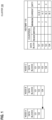
- FIG. 1 is a block diagram that depicts an example cluster 100 that, over a communication network or internetwork, replicates data blocks 121-124 to respective subsets of nodes A-C that may be same or different network element types such as a rack server such as a blade, a mainframe, a storage device, a laptop, a smartphone, or a virtual machine (VM).
- Data blocks 121-124 each has a fixed amount of data storage capacity.
- data blocks 121-124 are contiguous or noncontiguous disk blocks of same or different files.
- data blocks 121-124 are database blocks and/or are not part of a file.
- Data blocks 121-124 may be individually or in various subsets replicated on same or different respective subsets of nodes A-C. For example, data block 121 is replicated on all nodes A-C, while data block 124 is replicated only on nodes B-C. Different nodes may store same or different amounts of data blocks. For example, node C has more data blocks than node A.
- Recent access frequencies of respective ranges or individuals of data blocks 121-124 are recorded in heatmap 110 that may reside in volatile or nonvolatile storage of a central server, or one, some, or all of nodes A-C.
- heatmap 110 has columns that separately count recent reads and writes for each data block, such as during a current period. For example, when any node reads data block 122, the read counter of data block 122 is incremented by one in heatmap 110.
- the heatmap does not have access counter(s) for individual data blocks.
- there may be access counter(s) shared by multiple data blocks such as: a range of data blocks, data blocks with colliding hash codes, or a range of hash codes of data blocks.
- a hash function may calculate a hash code for a data block based on an identifier of the data block such as a logical block address (LBA).
- LBA logical block address
- read and/or write counts are reset to zero in heatmap 110 between same or different respective periods. In an embodiment, read and/or write counts are more or less gradually decreased according to same or different linear or non-linear cooling schedules.
- Embodiments of heatmap 110 may contain more or fewer than the shown columns. In an embodiment, some shown columns are additionally or instead contained in software component(s) other than heatmap 110.
- heatmap 110 contains tracking data and metrics that can be used to automatically optimize amounts and locations of replicas to protect data and throughput. Which component(s) in cluster 100 request or perform such automatic replica optimization may depend on the embodiment. In most of the embodiments discussed herein, the sole or primary component to perform automatic replica optimization is a node that currently accesses a data block, which entails inspecting heatmap 110.
- a lock manager performs automatic replica optimization based on heatmap 110.
- heatmap 110 is object oriented to provide both data and behavior such as automatic replica optimization.
- An advantage of having nodes be responsible for automatic replica optimization is that decentralization may avoid a single point of failure for automatic replication optimization, which makes cluster 100 more robust.
- heatmap 110 may be a passive data structure.
- Automatic replica optimization may occur at various times in various embodiments. All embodiments may perform automatic replica optimization at important times such as when: a) a data block is locked, accessed, and/or unlocked, or b) when a node crashes or otherwise leaves cluster 100 as discussed later herein. Some embodiments are autonomous and perform automatic replica optimization at additional times according to various schedules, triggers, and/or conditions as discussed later herein such as even when cluster 100 is otherwise idle.
- an active node, lock manager, or heatmap 110 may perform automatic replica optimization based on heatmap 110 in various embodiments.
- Such a component of cluster 100 that does so autonomously is known herein as an autonomous component.
- Cluster 100 may have one or many autonomous components of same or different kinds.
- some or all nodes and heatmap 110 may be autonomous components that may have same or different causes and logic for autonomously performing automatic replica optimization.
- heatmap 110 may also be recorded identifiers of: the accessing node and the data block.
- heatmap 110 contains a more or less detailed log of recent accesses of any data blocks by any nodes.
- the current column of heatmap 110 indicates subsets of nodes A-C that contain a respective data block of 121-124. For example, all nodes A-C contain data block 121. A node is a replicate node for a data block if the node has locally persisted a replica of the data block. As shown, all nodes A-C are replicate nodes for data block 121, but node A is not a replicate node for data blocks 123-124.
- the minimum column of heatmap 110 is used during at various times as discussed later herein.
- Cluster 100 ensures that each data block is always replicated on at least a minimum amount of replicate nodes.
- all data blocks 121-124 have a same minimum amount of replicas.
- different data blocks have different minimum amounts. For example, data block 122 has more replicas than needed.
- Various embodiments may have data access locks of various granularities such as a data block, a range of data blocks, and/or all data blocks in a file.
- a node should acquire lock(s) when accessing data block(s).
- all of nodes A-C may request locks from a lock manager.
- Various embodiments have a lock manager for all locks or a separate lock manager for each lock. Requests to lock or unlock data block(s) are submitted to a lock manager that is hosted by a central server, or one, some, or all of nodes A-C in various embodiments.
- heatmap 110 and a lock manager are a same component.
- a node should lock a data block before accessing the data block, regardless of whether or not the data block is already stored locally on the node.
- a node should always access its local copy of a data block, even if that requires suddenly copying the data block into volatile or nonvolatile storage of the node from volatile or nonvolatile storage of another node. For example as shown, node A copies data block 124 from node B, even though node C could instead provide same data block 124.
- node B or C may have various criteria such as network topology, workload, and/or performance metrics.
- node A or the lock manager or heatmap 110 has logic to decide which replicate node should provide a data block.
- Lock semantics are as follows. As shown, there are separate locks for different access types such as reads and writes. In an embodiment, deletion of data block(s) such as file truncation is an example of a write. A write lock provides exclusive access to one node. As shown in the lock column, "W: A" means that node A has data block 121 write locked. In an embodiment, the lock column is part of a lock manager and not part of heatmap 110.
- R: A, C means that nodes A and C both have data block 122 read locked. A same data block should not be concurrently write locked and read locked. As shown, data blocks 123-124 are unlocked.
- a node notifies other nodes and/or records within heatmap 110 that the node is requesting a read lock or a write lock.
- a node that acquires a write lock should eventually and expressly release the lock.
- a read lock may be expressly or implicitly released or broken as follows. Acquisition of a write lock may be initiated even for a data block that is already read locked by other nodes. When the write lock of a data block is acquired, multiple reactions may occur such as follows.
- all nodes that already acquired read locks of that data block are notified that their read locks are now automatically broken.
- a node that needs to resume reading the data block should reacquire the read lock, which is not granted until the write lock is expressly released, at which time a new version of the data block can be read.
- a reader node may decide to continue using content from a stale local replica without a lock such as after a read lock is broken.
- an isolation level of a database session may be configured for repeatable reads.
- a node that has acquired a read lock can upgrade to a write lock, which occurs in a same way as acquiring a write lock without already having a read lock, and which implicitly breaks the read lock.
- a node that has acquired a write lock can downgrade to a read lock, which occurs in a same way as unlocking the write lock and then acquiring the read lock.
- Fairness in granting locks prevents starvation by a node needing a data block.
- locks are granted in a same temporal ordering as requested for a same data block such as by queueing requests. A request to release a lock is never queued.
- downgrading a lock occurs without queuing.
- replication on demand entails creating an extra replica of a data block on a node that needs but lacks the data block. If a same data block is eventually, whether simultaneously or not, needed on many or all nodes of a cluster, then an embodiment may eventually replicate that data block to many or all nodes of the cluster. In other words, many or all nodes may simultaneously be replicate nodes for the same data block, which ensures ample replication of that data block.
- the other kind of replication is minimum replication to ensure minimal redundancy regardless of demand.
- a data block may be currently unneeded by all nodes, but the data block should still be persisted on a few nodes to avoid data loss in case of a future need for that data block by any node.
- a technical problem may arise when only one node needs and writes a data block. Locally writing the data block necessarily causes remote replicas to become stale. Due to lack of current demand for that data block by other nodes, demand replication does not occur to propagate the revised data block.
- This problem of lack of replication is solved by minimum replication, for which other problems arise, including deciding which nodes should be replicate nodes when: a) none or only one node needs the data block in the case of low demand, or b) in the opposite case of high demand, there may be too many stale replicas of the data block to replace all of the stale replicas with the revised data block.
- Techniques herein solve these problems of replicate node selection for minimum replication by integrating minimum replication into various triggers such as release of a write lock as follows.
- a node that acquires a read or write lock also receives and persists a replica if the node lacks a local replica, and b) that may create more than the minimum amount of replicas of a data block.
- the minimum amount of replicate nodes including the node that acquired the write lock, are selected to remain replicate nodes.
- heatmap 110 or the node that acquired and releases the write lock selects the remaining replicate nodes.
- a same synchronous call path i.e. control flow
- Criteria for selecting remaining replicate nodes may or may not include: network topology such as with a hierarchical network, workload, and/or performance metrics such as unused local disk space.
- network topology such as with a hierarchical network
- workload such as a workload
- performance metrics such as unused local disk space.
- a Bayesian network calculates and compares various probabilities to select remaining replicate nodes by predicting which replicate nodes could maximize throughput and/or optimize other performance metrics.
- a data block may have more replicas than needed.
- Extra replicate nodes that are not selected to be remaining replicate nodes cease to be replicate nodes of the data block when a write lock is released.
- an autonomous component of cluster 100 may autonomously decide to increase or decrease the minimum and/or current replication of a data block as discussed later herein.
- writing a data block may cause invalidation of replicas of the data block at other nodes even before a write lock is released.
- the dirty column in heatmap 110 indicates such invalidation.
- node C has written and marked node 123 as dirty.
- invalidation may or may not entail immediate breaking of read locks.
- various embodiments may eagerly or lazily invalidate a data block. For example as shown, node B has not yet noticed and/or reacted to node B's replica being invalidated by node C's write.
- the consistency model of cluster 100 may provide read-after-write semantics such that stale data is never read. For example even though replicas are distributed and not necessarily centrally managed, cluster 100 may still provide POSIX compliant I/O such as read-after-write.
- a writer node may modify a data block in volatile memory such as with an I/O buffer with deferred flushing that may include persisting and replicating.
- deferred flushing may include persisting and replicating.
- node A may replicate: a) data blocks 123-124 from node B, b) same blocks 123-124 instead from node C, or c) simultaneously data block 123 from node B and data block 124 from node C.
- which replicate node provides a data block depends on which node requests the data block such as with a hierarchical network as discussed earlier herein.
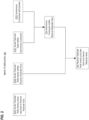
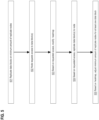
- FIG. 2 is a flow diagram that depicts example implementation ways to replicate 200 a data block from one node to another.
- FIG. 2 introduces replication patterns that may be applicable to figures presented later herein.
- Various components in FIG. 2 may be implementations of more or less similar components of FIG. 1 .
- FIG. 2 emphasizes transfer interactions without context. Occasions and scenarios for replication are discussed later herein.
- Various embodiments may have various transport mechanisms as discussed later herein.
- Ways to replicate 200 includes various mutually exclusive ways that begin with respective steps 202A-D, some of which share subsequent steps 204 and 206 as shown.
- FIG. 2 entails a system that includes: a) a data block and a heatmap, b) a sender replicate node that already has a valid local replica of the data block, c) a receiver replicate node that is becoming a replicate node or is refreshing its stale replica of the data block, and d) an autonomous component of the cluster as explained earlier herein.
- steps of FIG. 2 are performed by those various components as follows.
- replication is primarily driven by active nodes, and the heatmap may be a passive data structure in most embodiments.
- replication may sometimes entail initiation and/or participation by an autonomous component of the cluster.
- steps 202C-D and 204 entail active participation by the autonomous component.
- step 202D actually entails autonomous activity by the autonomous component.
- the sender replicate node directly pushes the data block to the receiver replicate node.
- the sender replicate node may perform a remote direct memory access (RDMA) write to copy the data block from the sender replicate node's volatile memory into the receiver replicate node's volatile memory.
- RDMA remote direct memory access
- replication may be incomplete until: a) the heatmap is updated with the transfer, and/or b) the receiver replicate node locally persists the data block.
- step 202B the sender replicate node directly notifies the receiver replicate node of a replication opportunity such as an occurrence that may conditionally or unconditionally need replication. If the receiver replicate node decides to react, then step 206 occurs. In step 206, the receiver replicate node directly pulls the data block from the sender replicate node such as with an RDMA read.
- NPL non-patent literature
- the sender replicate node expressly or implicitly notifies the autonomous component of a replication opportunity such as an occurrence that may conditionally or unconditionally need replication. Implicit notification may occur if the autonomous component subscribes, monitors, observes, or otherwise receives or detects an indication of the sender replicate node's activity such as locking, modifying, persisting, or unlocking of the data block. For example in various embodiments, the autonomous component may observe initiation and/or completion of some or all of the shown steps and/or some or all of the shown transitions between steps. The autonomous component conditionally or unconditionally reacts by performing step 204.
- step 204 the autonomous component notifies the receiver replicate node of a replication opportunity such as an occurrence that may conditionally or unconditionally need replication. If the receiver replicate node decides to react, then step 206 occurs as described above.
- the autonomous component autonomously activates itself such as upon: a) periodic expiration of an interval timer such as for cooling or resetting access counts, b) some performance metric threshold of a node, a data block, or the whole system, and/or c) as directed according to a probabilistic prediction by a Bayesian network as discussed later herein.
- the autonomous component may autonomously decide that replication is required or desirable, in which case steps 204 and 206 may occur as described above.
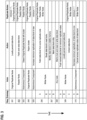
- FIG. 3 depicts an example sequence of steps 301-310 that may occur to create and discard replicas of a data block as various scenarios progress and interact.
- FIG. 3 is a macroscopic view of system behavior.
- FIG. 4 is a microscopic view of behavior of a node that can receive and/or read a data block for various reasons such as the reader node below.
- FIGs. 3-4 may or may not depict a same embodiment.
- Steps 301-310 occur in the order shown. However, sub-steps of a given step may be reordered or parallelized within the step under some conditions or embodiments. For example, sub-steps A-B of step 309 may concurrently occur as discussed later herein.
- FIG. 3 may be implementations of more or less similar components of FIG. 1 .
- FIG. 3 entails a system that includes: a) a data block and a heatmap, b) an original replicate node that already has a valid local replica of the data block, c) a reader node and a writer node that need but lack the data block, and d) an autonomous component of the cluster as explained earlier herein.
- FIG. 3 Various steps of FIG. 3 are performed by various components as shown in the actor column. Sub-steps of a same step are performed by a same actor.
- the autonomous component may observe initiation and/or completion of some or all of the shown steps and/or sub-steps, even if the autonomous component is currently inactive and not otherwise directly involved with the step.
- the original replicate node locally persists the data block as shown in the action column.
- the heatmap is used to enforce a minimum of one replica of the data block, which resides on the original replicate node.
- the original replica node has a copy of the data block in volatile memory and on local disk, and no other node contains the data block.
- step 302 the reader node autonomously replicates and reads the data block.
- Unshown sub-steps of step 302 may include: a) read locking the data block, b) causing the data block to be copied from the original replicate node such as with some way presented in FIG. 2 , c) storing the data block in volatile and nonvolatile storage, and/or d) using the content of the data block such as during database query execution by a remote client of the reader node such as for online analytical processing (OLAP).
- step 302 causes the reader node to become an extra replicate node, as shown in the replicate nodes column, which the heatmap may track.
- Steps 303-304 regard cluster membership of nodes.
- the cluster has a static inventory of nodes that fluctuate only during malfunctions or maintenance.
- additional nodes can be added to: a) increase cluster storage capacity by providing more unused disk space, b) increase throughput by storing fewer replicas on each of more nodes, and/or c) increase reliability by increasing minimum replicates.
- the cluster has a federation of nodes that can individually and autonomously join and leave the cluster.
- Example federations include: a) elastic horizontal scaling such as in a computer cloud or data grid, or b) a loose federation of personal computers, workstations, and/or mobile devices such as laptops and smartphones.
- the original replicate node leaves the cluster, which the autonomous component detects.
- the original replicate node may expressly leave or implicitly leave by timeout or loss of heartbeat such as when a disk drive crashes. That may cause catastrophic data loss if the node leaving were the only replicate node for the data block, which is why a more practical example would never set the minimum replication below two.
- How the autonomous component reacts to a node leaving may vary as follows. If the cluster no longer has the minimum replicas of the data block, a node that was not a replicate node is selected to become another replicate node to persist a replacement of the lost replica. When a node leaving causes multiple data blocks to have insufficient replicas, then one or more new replicate nodes may be needed. Discussed later herein are heuristics for selecting: a) how many additional replicate nodes to recruit, b) which of those additional replicate nodes should receive which data blocks, and c) from which surviving replicate nodes should new replicas be copied from. In one example, one new replicate node receives all of the replacement replicas.
- the reader node is a sole surviving replicate node for the data block. Because the current minimum of one replicate node is still available, the autonomous component does not need to recruit an additional replicate node.
- the original replicate node rejoins the cluster.
- some or all of the original replicate node's local inventory of replicas is lost, stale, or ignored by default.
- the cluster does not accept replicas from a rejoining node.
- the autonomous component or the rejoining node detects that some replicas on the rejoining node are still valid such as when the data block was unmodified in the cluster between leaving and rejoining. In that case and as shown in the replicate nodes column of step 304, the cluster again has more replicas of the data block than needed.
- step 305 the autonomous component autonomously decides to increase the minimum replicas of the data block to two as shown in the replicate nodes column. Because the data block already has two replicas, the autonomous component need not recruit another replicate node. Otherwise, recruitment would occur as discussed above.
- Steps 306-309 involve a writer node such as for a database transaction such as for online transaction processing (OLTP).
- the writer node write locks the data block.
- sub-step 306A and because the writer node lacks and needs the data block, replication of the data block to the writer node from any other replicate node for that data block occurs such as by some way presented in FIG. 2 . Heuristics for selecting which replicate node to copy from are presented later herein and may be decided by the writer node. As shown in the replicate nodes column of step 306, the writer node becomes another replicate node.
- step 306B write locking the data block causes all read locks on that data block to be broken, for which other nodes may react in various ways and embodiments as discussed later herein.
- the heatmap still tracks which other nodes are replicate nodes, and their replicas are not yet invalid. For example, data is not lost merely because a node were to write lock the data block and then immediately crash.
- step 307 the writer node modifies the data block. Specifically, in sub-step 307A the writer node modifies the data block in volatile memory. Buffering is discussed later herein.
- the writer node marks the data block as dirty, which means modified but not locally persisted and/or not replicated.
- the heatmap records which data blocks are dirty. As discussed later herein, marking a data block as dirty may eventually cause lazy invalidation such as when a replicate node eventually and autonomously checks to see if the data block has been marked as dirty.
- any other node may attempt to acquire a read lock or a write lock of the data block. The attempt is stalled until the current write lock is released, and the attempting node waits for the requested lock to be granted.
- step 309 the writer node commits and flushes the revised data block by unlocking it.
- the writer node selects a minimum amount of replicate nodes, including the writer node, to remain as replicate nodes.
- the writer node's revised replica is copied to the remaining replicate nodes, which in this case are the writer node and the original replicate node as shown in the replicate nodes column of sub-step 309C.
- An embodiment may select the most recent writer node, no other recent writer nodes, and recent reader nodes as remaining replicate nodes.
- Such replication may occur by some way presented in FIG. 2 .
- Replicate nodes in excess of minimum replication cease to be replicate nodes for the data block such as the reader node as shown.
- sub-step 309B in which the writer node locally persists the revised data block.
- sub-step309C unlocking is complete, and a same or different node may immediately or eventually lock the data block for a different use.
- Step 310 entails autonomous behavior by the autonomous component.
- the autonomous component autonomously reduces the minimum replication of the data block such as after quiescence of a demand spike for the data block and/or during a demand spike of a different data block.
- the autonomous component autonomously cancels excess replicate nodes of a data block. However, canceling excess replicate nodes may be optional and not occur in some cases.
- the writer node Because the writer node had most recently write locked the data block, the writer node remains a replicate node. In this case, the original replicate node ceases to be a replicate node for the data block.
- the autonomous component may autonomously cancel excess replicate nodes even when the minimum replication amount is unchanged, the data block is never write locked, and cluster membership is unchanged. For example, dynamic fluctuations of demand for data or local or system performance metrics may cause autonomous intervention by the autonomous component that may create or discard replicas of same or different data blocks.
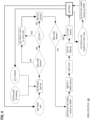
- FIG. 4 depicts an example read lifecycle 400 for a reader node and a data block.
- initiation and/or completion of some or all of the shown steps and/or some or all of the shown transitions between steps may be observed by an autonomous component and/or recorded in a heatmap.
- the shown steps are performed by a reader node during various scenarios that involve a same data block in various ways.
- transition When adjacent steps occur more or less in rapid sequence or concurrently, the transition is shown as a solid arrow. If an external or asynchronous stimulus is needed to cause a transition after an indefinitely long duration, then the transition is shown as a dashed arrow.
- the reader node lacks and needs to read the data block.
- the reader node decides to read the data block such as when a remote client of the reader node uses the reader node for data retrieval during query execution.
- Step 402 requests the read lock for the data block as discussed earlier herein.
- Steps 403 and 415 are shown as decision diamonds because behavior involved with requesting the read lock may be conditioned on locality of the data block and/or dirtiness of the data block.
- Step 403 detects whether or not the data block already resides on the reader node.
- step 403 detects whether or not the reader node is already a replicate node for the data block, in which case the read might be locally satisfied. If the data block is not locally available, step 404 potentially waits for the data block to be unlocked by a writer node. If the data block is already unlocked, waiting is unneeded, and step 404 immediately completes.
- step 403 instead detects the data block is already locally available, then step 415 detects whether or not the data block was marked as dirty by a writer node.
- the reader node may inspect a global catalog of data blocks and/or ranges of data blocks that are currently marked as dirty.
- step 415 is immediately followed by step 405 when the data block is not dirty.
- step 415 is followed by step 404 to await release of the write lock as explained above.
- the transition from step 415 to 404 includes the reader node notifying and causing the writer node to flush its buffered and dirty data block including replication and local persistence by the writer node.
- remote flushing need not include releasing the write lock.
- step 404 waiting for release of a write lock in step 404 may occur whether the data block is local or not. Thus, waiting by step 404 may be preceded by step 403 or 415. Eventually the write lock is released, and the read lock is granted in step 405. After acquiring the read lock, subsequent behavior of the reader node depends on step 406 that detects whether or not the data block is already locally available.
- steps 403 and 406 should be the same. If the data block is locally available, then direct use of the data block may occur in step 411. For example, the reader node may inspect and analyze the content of the data block. Otherwise, the data block is only remotely available and should be immediately replicated to the reader node, which entails steps 407-410 as follows.
- Step 407 uses an RDMA read, as discussed earlier herein for FIG. 2 , to receive a copy of the data block into the reader node's volatile memory from another node.
- Some embodiments may or may not have step 408 that locally keeps the data block at a particular location in volatile memory. For example eventually, another node may use an RDMA read to fetch the data block from that particular address in volatile memory.
- step 407 uses a buffer such as an operating system (OS) input/output (I/O) buffer that remains at the particular address in memory.
- step 407 uses a buffer in a buffer cache such as managed by a database management system (DBMS) for database blocks.
- DBMS database management system
- RDMA buffering and addressing is presented in related non-patent literature (NPL) "Designing NFS With RDMA for Security, Performance and Scalability".
- Volatile storage by step 407 may be insufficient for replication herein, and additional step 409 that locally persists the received data block may also be necessary.
- the data block may be locally persisted: a) into a corresponding block position within a whole or partial local copy of the original file, b) as a one-block file by itself, or d) into another file of unordered data blocks that are cataloged for random access.
- various data blocks may be initially persisted without regard for ordering within the original file and later reassembled as a contiguous part or all of the original file.
- step 410 the reader node expressly records in, the heatmap, the replication after locally persisting the data block.
- the reader node By persisting a local replica in step 410, the reader node has become a replicate node for the data block, and the reader node can directly use content of the local replica in step 411.
- step 411 may occur regardless of whether replication was needed or the data block was already locally available.
- a precondition of step 411 may be that the data block resides in volatile and nonvolatile local storage.
- step 411 reading and using the data block by the reader node may be complete, but the reader node still remains a replicate node of data block in step 412.
- the reader node does or does not release its read lock on the data block when finished using the data block.
- step 413 may receive a read request from another node that also becomes a replicate node when step 414 sends a copy of the data block such as by RDMA to and from volatile memories, after which the ready state of step 412 is revisited.
- the reader node may retain and provide replicas of the data block while in the ready state more or less indefinitely.
- an autonomous component or a writer node may cancel the reader node as a replicate node for the data block. In that case, the reader node may discard the data block from volatile and nonvolatile memory.
- invalidation step 417 occurs that may discard the data block from volatile and nonvolatile memory and, in some cases, causes the data block to be again replicated to the reader node.
- any attempt by the reader node to later use the data block should begin again at step 401, including relocking.
- the local copy of the data block can be locally reused without needing replication when steps 401-403, 415, 405-406, and 411 are repeated in that order. Otherwise, repeating replication as described above is needed.
- an autonomous component may act proactively and autonomously to cause replication not requested by a node.
- a replicate node may crash or the autonomous component may autonomously raise the minimum amount of replicas of the data block.
- the autonomous component may autonomously recruit a node to become a replicate node.
- the autonomous component may cause the reader node to become a replicate node in step 416, with replication occurring as described above.
- FIG. 5 depicts an example computer process in which replication and a heatmap may affect each other.
- An involved system may include a data block, a heatmap, an autonomous component, and nodes, including a requesting node.
- step 501 is preparatory and entails persisting replicas of data blocks on various nodes
- step 501 may expressly occur as an initial distributing and storing of persistent data or by operation of earlier replications as discussed earlier herein.
- various files may contain various data blocks, and whole or partial replicas of the files may be distributed and stored in local disks of various nodes.
- step 502 the requesting node request read or write access to various data block(s) such as a range of data blocks.
- Step 502 may entail acquiring read locks or write locks on the involved data blocks as discussed earlier herein.
- the heatmap is modified in step 503. For example, a read counter or a write counter may be respectively associated with each data block or range of data blocks being accessed.
- the heatmap is informed of the access according to techniques presented earlier herein. For example, requesting or granting a lock may cause incrementing the heat map.
- a minimum amount of replicate nodes is adjusted in step 505 for at least one data block, range of data blocks, or file.
- increasing or decreasing the minimum amount of replicas may occur in response to an autonomous and proactive decision by an autonomous component.
- the autonomous component may increase and then decrease the minimum amount for a data block respectively at the start and finish of a demand spike for the data block.
- the autonomous component may delegate some decisions to a Bayesian network that predicts optimal configurations and adjustments based on probabilities that respective recognizable patterns are occurring as learned from historical accesses of data blocks and nodes such as observed and/or recorded in the heatmap.
- Various embodiments of logic for automatic replica optimization may impose various replication patterns on an entire cluster or respective subsets of nodes, data blocks, and/or files such as the following replication patterns:
- an autonomous component can impose and switch between replication patterns.
- a same or different autonomous component can further adapt and tune a replication configuration, autonomously and on an ongoing basis, after a replication pattern was imposed.
- a storage cluster of nodes is logically fully connected at the transport layer that is one layer of a stack of layers in the open systems interconnection (OSI) network communication model
- OSI open systems interconnection
- a network topology of the cluster may entail asymmetry such as differing communication link bandwidths such as with an internetwork or with store-and-forward multi-hop distance and differing link utilizations that may cause a bottleneck.
- Communication fabric may contain a hierarchy of network switches. Factors and concerns similar to those of network routing may be included in decisions by automatic replica optimization logic. Such decisions may integrate static metrics and facts such as from an Infiniband topology and dynamic metrics and facts such as relative utilizations of links and/or nodes and node membership in a loosely federated cluster.
- Transmissions may be encrypted such as over an untrusted internetwork.
- a network session begins when a node joins the cluster and ends when the node leaves the cluster, regardless of whether transport has a connection or is connectionless.
- a network session may entail selecting particular data blocks for transmission such as database blocks.
- non-contiguous data blocks may be sent for random access.
- a sequence of more data blocks than requested may be sent such as when: a) table scanning, or b) sending all or part of a file such as when a filesystem is used for persistence.
- Various embodiments may use various communication link technologies that are optimized for low latency transmission such as Fibre Channel (FC), Internet Small Computer System Interface (iSCSI), and Fibre Channel over Ethernet (FCoE).
- FC Fibre Channel
- iSCSI Internet Small Computer System Interface
- FCoE Fibre Channel over Ethernet
- RDMA protocols to avoid mechanical drive latencies such as from disk rotation or track switching.
- RDMA may deliver a replica into volatile memory of a reader node, and then the following may concurrently occur: a) the reader node uses the volatile content for application specific purposes, and b) the content is locally persisted.
- RDMA protocols include RDMA over Converged Ethernet (RoCE) and iWARP.
- a cluster of nodes may operate as a distributed cache whose latency, throughput, energy consumption, and disk drive lifespan may depend on data block distribution patterns.
- OLTP latency may depend on temporal and spatial locality of replicas. Sequential access of many data blocks such as during a table scan such as by OLAP may disrupt placement of needed replicas. Selection of replicate nodes after writing may jeopardize existing placement of replicas.
- the techniques described herein are implemented by one or more special-purpose computing devices.
- the special-purpose computing devices may be hard-wired to perform the techniques, or may include digital electronic devices such as one or more application-specific integrated circuits (ASICs) or field programmable gate arrays (FPGAs) that are persistently programmed to perform the techniques, or may include one or more general purpose hardware processors programmed to perform the techniques pursuant to program instructions in firmware, memory, other storage, or a combination.
- ASICs application-specific integrated circuits
- FPGAs field programmable gate arrays
- Such special-purpose computing devices may also combine custom hard-wired logic, ASICs, or FPGAs with custom programming to accomplish the techniques.
- the special-purpose computing devices may be desktop computer systems, portable computer systems, handheld devices, networking devices or any other device that incorporates hard-wired and/or program logic to implement the techniques.
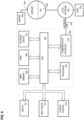
- FIG. 6 is a block diagram that illustrates a computer system 600 upon which an embodiment of the invention may be implemented.
- Computer system 600 includes a bus 602 or other communication mechanism for communicating information, and a hardware processor 604 coupled with bus 602 for processing information.
- Hardware processor 604 may be, for example, a general purpose microprocessor.
- Computer system 600 also includes a main memory 606, such as a random access memory (RAM) or other dynamic storage device, coupled to bus 602 for storing information and instructions to be executed by processor 604.
- Main memory 606 also may be used for storing temporary variables or other intermediate information during execution of instructions to be executed by processor 604.
- Such instructions when stored in non-transitory storage media accessible to processor 604, render computer system 600 into a special-purpose machine that is customized to perform the operations specified in the instructions.
- Computer system 600 further includes a read only memory (ROM) 608 or other static storage device coupled to bus 602 for storing static information and instructions for processor 604.
- ROM read only memory
- a storage device 610 such as a magnetic disk, optical disk, or solid-state drive is provided and coupled to bus 602 for storing information and instructions.
- Computer system 600 may be coupled via bus 602 to a display 612, such as a cathode ray tube (CRT), for displaying information to a computer user.
- a display 612 such as a cathode ray tube (CRT)
- An input device 614 is coupled to bus 602 for communicating information and command selections to processor 604.
- cursor control 616 is Another type of user input device
- cursor control 616 such as a mouse, a trackball, or cursor direction keys for communicating direction information and command selections to processor 604 and for controlling cursor movement on display 612.
- This input device typically has two degrees of freedom in two axes, a first axis (e.g., x) and a second axis (e.g., y), that allows the device to specify positions in a plane.
- Non-volatile media includes, for example, optical disks, magnetic disks, or solid-state drives, such as storage device 610.
- Volatile media includes dynamic memory, such as main memory 606.
- Storage media is distinct from but may be used in conjunction with transmission media.
- Transmission media participates in transferring information between storage media.
- transmission media includes coaxial cables, copper wire and fiber optics, including the wires that comprise bus 602.
- transmission media can also take the form of acoustic or light waves, such as those generated during radio-wave and infra-red data communications.
- Computer system 600 also includes a communication interface 618 coupled to bus 602.
- Communication interface 618 provides a two-way data communication coupling to a network link 620 that is connected to a local network 622.
- communication interface 618 may be an integrated services digital network (ISDN) card, cable modem, satellite modem, or a modem to provide a data communication connection to a corresponding type of telephone line.
- ISDN integrated services digital network
- communication interface 618 may be a local area network (LAN) card to provide a data communication connection to a compatible LAN.
- LAN local area network
- Wireless links may also be implemented.
- communication interface 618 sends and receives electrical, electromagnetic or optical signals that carry digital data streams representing various types of information.
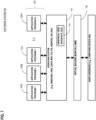
- the OS 710 manages low-level aspects of computer operation, including managing execution of processes, memory allocation, file input and output (I/O), and device I/O.
- One or more application programs represented as 702A, 702B, 702C ... 702N, may be "loaded” (e.g., transferred from fixed storage 610 into memory 606) for execution by the system 700.
- the applications or other software intended for use on computer system 600 may also be stored as a set of downloadable computer-executable instructions, for example, for downloading and installation from an Internet location (e.g., a Web server, an app store, or other online service).
- OS 710 can execute directly on the bare hardware 720 (e.g., processor(s) 604) of computer system 600.
- bare hardware 720 e.g., processor(s) 604
- a hypervisor or virtual machine monitor (VMM) 730 may be interposed between the bare hardware 720 and the OS 710.
- VMM 730 acts as a software "cushion" or virtualization layer between the OS 710 and the bare hardware 720 of the computer system 600.
- VMM 730 instantiates and runs one or more virtual machine instances ("guest machines"). Each guest machine comprises a “guest” operating system, such as OS 710, and one or more applications, such as application(s) 702, designed to execute on the guest operating system.
- the VMM 730 presents the guest operating systems with a virtual operating platform and manages the execution of the guest operating systems.
- the VMM 730 may allow a guest operating system to run as if it is running on the bare hardware 720 of computer system 700 directly. In these instances, the same version of the guest operating system configured to execute on the bare hardware 720 directly may also execute on VMM 730 without modification or reconfiguration. In other words, VMM 730 may provide full hardware and CPU virtualization to a guest operating system in some instances.
- a guest operating system may be specially designed or configured to execute on VMM 730 for efficiency.
- the guest operating system is "aware" that it executes on a virtual machine monitor.
- VMM 730 may provide para-virtualization to a guest operating system in some instances.
- a cloud computing environment (sometimes referred to as a cloud environment, or a cloud) can be implemented in a variety of different ways to best suit different requirements.
- a cloud environment in a public cloud environment, the underlying computing infrastructure is owned by an organization that makes its cloud services available to other organizations or to the general public.
- a private cloud environment is generally intended solely for use by, or within, a single organization.
- a community cloud is intended to be shared by several organizations within a community; while a hybrid cloud comprise two or more types of cloud (e.g., private, community, or public) that are bound together by data and application portability.
- a cloud computing model enables some of those responsibilities which previously may have been provided by an organization's own information technology department, to instead be delivered as service layers within a cloud environment, for use by consumers (either within or external to the organization, according to the cloud's public/private nature).
- the precise definition of components or features provided by or within each cloud service layer can vary, but common examples include: Software as a Service ( SaaS ), in which consumers use software applications that are running upon a cloud infrastructure, while a SaaS provider manages or controls the underlying cloud infrastructure and applications.
- SaaS Software as a Service
- the example embodiment(s), however, are not necessarily limited to any particular computing environment or computing device configuration. Instead, the example embodiment(s) may be implemented in any type of system architecture or processing environment that one skilled in the art, in light of this disclosure, would understand as capable of supporting the features and functions of the example embodiment(s) presented herein.
Landscapes
- Engineering & Computer Science (AREA)
- Theoretical Computer Science (AREA)
- Physics & Mathematics (AREA)
- General Engineering & Computer Science (AREA)
- General Physics & Mathematics (AREA)
- Data Mining & Analysis (AREA)
- Databases & Information Systems (AREA)
- Human Computer Interaction (AREA)
- Life Sciences & Earth Sciences (AREA)
- Evolutionary Biology (AREA)
- Evolutionary Computation (AREA)
- Computer Vision & Pattern Recognition (AREA)
- Bioinformatics & Computational Biology (AREA)
- Bioinformatics & Cheminformatics (AREA)
- Artificial Intelligence (AREA)
- Probability & Statistics with Applications (AREA)
- Information Retrieval, Db Structures And Fs Structures Therefor (AREA)
Claims (15)
- Verfahren, das umfasst:Replizieren jedes Datenblocks einer Mehrzahl von Datenblöcken (121-124) auf mindestens einer Mindestanzahl von jeweils einem oder mehreren Replizierungsknoten einer Mehrzahl von Knoten (A-C),Anfordern, durch einen ersten Knoten der Mehrzahl von Knoten (A-C), von Schreibzugriff auf einen Datenblock oder mehrere Datenblöcke der Mehrzahl von Datenblöcken (121-124), einschließlich Erlangen einer Schreibsperre für den einen Datenblock oder die mehreren Datenblöcke, die einen exklusiven Zugriff auf den einen Datenblock oder die mehreren Datenblöcke durch den ersten Knoten bereitstellt;beruhend auf dem Anfordern des Schreibzugriffs:Modifizieren einer Heatmap (110), undReplizieren des einen Datenblocks oder der mehreren Datenblöcke an den ersten Knoten, wodurch mehr als die Mindestanzahl von Replizierungsknoten für den einen Datenblock oder die mehreren Datenblöcke erzeugt werden;Freigeben der Schreibsperre für den einen Datenblock oder die mehreren Datenblöcke, einschließlich Auswählen einer Teilmenge der Mehrzahl von Knoten (A-C), die Replizierungsknoten für den einen Datenblock oder die mehreren Datenblöcke bleiben sollen, wobei die Teilmenge den ersten Knoten enthält und die Teilmenge die Mindestanzahl von Replizierungsknoten für den einen Datenblock oder die mehreren Datenblöcke aufweist;Anpassen, und zwar beruhend auf der Heatmap (110), der Mindestanzahl von jeweils einem oder mehreren Replizierungsknoten für mindestens einen Datenblock des einen Datenblocks oder der mehreren Datenblöcke.
- Verfahren nach Anspruch 1, wobei die Mindestanzahl von Replizierungsknoten zwei beträgt.
- Verfahren nach Anspruch 1 oder Anspruch 2, wobei das auf der Heatmap (110) beruhende Anpassen der Mindestanzahl von Replizierungsknoten für den mindestens einen Datenblock umfasst, dass die Mindestanzahl von Replizierungsknoten für den mindestens einen Datenblock reduziert wird.
- Verfahren nach Anspruch 3, wobei nach dem Reduzieren der Mindestanzahl von Replizierungsknoten für den mindestens einen Datenblock der erste Knoten ein Replizierungsknoten bleibt.
- Verfahren nach einem der Ansprüche 1-4, wobei das auf der Heatmap (110) beruhende Anpassen der Mindestanzahl von Replizierungsknoten für den mindestens einen Datenblock ansprechend auf das Freigeben der Schreibsperre für den einen Datenblock oder die mehreren Datenblöcke erfolgt.
- Verfahren nach einem der Ansprüche 1-5, wobei, wenn die Schreibsperre freigegeben wird, mindestens ein Knoten aufhört, ein Replizierungsknoten für den einen Datenblock oder die mehreren Datenblöcke zu sein.
- Verfahren nach einem der Ansprüche 1-6, wobei die Teilmenge den ersten Knoten enthält, aber keine anderen Knoten, die kürzlich in den einen Datenblock oder die mehreren Datenblöcke geschrieben haben, und wobei die Teilmenge zusätzlich zu dem ersten Knoten einen oder mehrere Knoten enthält, die kürzlich aus dem einen Datenblock oder den mehreren Datenblöcken gelesen haben.
- Verfahren nach einem der Ansprüche 1-6, ferner umfassend:Gewähren einer Lesesperre für den einen Datenblock oder die mehreren Datenblöcke, die die Mehrzahl von Knoten (A-C) daran hindert, mindestens einen Datenblock des einen Datenblocks oder der mehreren Datenblöcke zu modifizieren;Gewähren einer zweiten Schreibsperre für den mindestens einen Datenblock des einen Datenblocks oder der mehreren Datenblöcke, die exklusiven Zugriff auf mindestens einen Datenblock durch einen zweiten Knoten bereitstellt;wobei das Gewähren der Lesesperre vor dem Gewähren der zweiten Schreibsperre erfolgt;wobei das Erlangen der Schreibsperre nach dem Freigeben der zweiten Schreibsperre erfolgt; undwobei die Teilmenge den ersten Knoten umfasst und den zweiten Knoten nicht umfasst.
- Verfahren nach Anspruch 1, wobei das Modifizieren der Heatmap (110) auf einem Typ des Zugriffs beruht.
- Verfahren nach Anspruch 1 oder Anspruch 9, wobei das Modifizieren der Heatmap (110) einen Hash-Vorgang umfasst.
- Verfahren nach Anspruch 1, ferner umfassend, dass Kennungen des ersten Knotens und mindestens eines Datenblocks des einen Datenblocks oder der mehreren Datenblöcke aufgezeichnet werden, und zwar ansprechend auf das Anfordern des Schreibzugriffs.
- Verfahren nach Anspruch 1, wobei das Anpassen der Mindestanzahl von jeweils einem oder mehreren Replizierungsknoten für den mindestens einen Datenblock umfasst, und zwar für den mindestens einen Datenblock des einen Datenblocks oder der mehreren Datenblöcke:Reduzieren der Mindestanzahl von jeweils einem oder mehreren Replizierungsknoten beruhend auf einer Anzahl von Schreibzugriffsanforderungen, und/oderErhöhen der Mindestanzahl von jeweils einem oder mehreren Replizierungsknoten beruhend auf einer Anzahl von Lesezugriffsanforderungen.
- Verfahren nach Anspruch 1 oder Anspruch 12, wobei das Anpassen der Mindestanzahl von jeweils einem oder mehreren Replizierungsknoten für den mindestens einen Datenblock eine Asynchronität für den mindestens einen Datenblock des einen Datenblocks oder der mehreren Datenblöcke umfasst.
- Verfahren nach Anspruch 1 oder Anspruch 12 oder Anspruch 13, wobei das Anpassen der Mindestanzahl von jeweils einem oder mehreren Replizierungsknoten für den mindestens einen Datenblock umfasst, dass für den mindestens einen Datenblock des einen Datenblocks oder der mehreren Datenblöcke durch ein Bayes'sches Netz eine Wahrscheinlichkeit vorhergesagt wird, dass:auf zwei Datenblöcke zusammen zugegriffen wird,auf einen Datenblock zugegriffen wird, weil auf einen anderen Datenblock zugegriffen worden ist,der erste Knoten auf einen bestimmten Datenblock zugreift, und/odereine Sperre während einer Zeitdauer freigegeben wird.
- Ein nicht-flüchtiges computerlesbares Speichermedium oder mehrere nicht-flüchtige computerlesbare Speichermedien, das/die Anweisungen speichert/speichern, die, wenn sie von einem Prozessor (604) oder mehreren Prozessoren (604) ausgeführt werden, den einen Prozessor oder die mehreren Prozessoren veranlassen, das Verfahren nach einem der Ansprüche 1-14 auszuführen.
Applications Claiming Priority (2)
| Application Number | Priority Date | Filing Date | Title |
|---|---|---|---|
| US16/918,822 US20220004525A1 (en) | 2020-07-01 | 2020-07-01 | Fully coherent efficient non-local storage cluster file system |
| PCT/US2021/037532 WO2022005744A1 (en) | 2020-07-01 | 2021-06-16 | Fully coherent efficient non-local storage cluster file system |
Publications (2)
| Publication Number | Publication Date |
|---|---|
| EP4176345A1 EP4176345A1 (de) | 2023-05-10 |
| EP4176345B1 true EP4176345B1 (de) | 2024-12-11 |
Family
ID=77180308
Family Applications (1)
| Application Number | Title | Priority Date | Filing Date |
|---|---|---|---|
| EP21749742.9A Active EP4176345B1 (de) | 2020-07-01 | 2021-06-16 | Vollkohärentes effizientes dateisystem mit nichtlokalem speichercluster |
Country Status (4)
| Country | Link |
|---|---|
| US (1) | US20220004525A1 (de) |
| EP (1) | EP4176345B1 (de) |
| CN (1) | CN115997190A (de) |
| WO (1) | WO2022005744A1 (de) |
Families Citing this family (6)
| Publication number | Priority date | Publication date | Assignee | Title |
|---|---|---|---|---|
| US11573719B2 (en) | 2020-03-26 | 2023-02-07 | Oracle International Corporation | PMEM cache RDMA security |
| US11984174B2 (en) * | 2021-03-02 | 2024-05-14 | Micron Technology, Inc. | Accelerating configuration updates for memory devices |
| US11928207B2 (en) * | 2021-09-24 | 2024-03-12 | Microsoft Technology Licensing, Llc | Automatic graph-based detection of potential security threats |
| US12093208B2 (en) * | 2022-05-27 | 2024-09-17 | Nvidia Corporation | Remote descriptor to enable remote direct memory access (RDMA) transport of a serialized object |
| CN116009782B (zh) * | 2022-12-29 | 2025-07-22 | 上海交通大学 | 基于图的跨机柜更新方法、系统及可读存储介质 |
| CN120179176B (zh) * | 2025-03-17 | 2025-08-26 | 昱格电子科技有限公司 | 基于云计算的数据全闪存储优化方法及系统 |
Family Cites Families (7)
| Publication number | Priority date | Publication date | Assignee | Title |
|---|---|---|---|---|
| US6925515B2 (en) * | 2001-05-07 | 2005-08-02 | International Business Machines Corporation | Producer/consumer locking system for efficient replication of file data |
| US20110040792A1 (en) * | 2009-08-12 | 2011-02-17 | Russell Perry | Stored Object Replication |
| US9575985B2 (en) * | 2009-12-07 | 2017-02-21 | Novell, Inc. | Distributed lock administration |
| KR101662173B1 (ko) * | 2010-07-21 | 2016-10-04 | 에스케이텔레콤 주식회사 | 분산 파일 관리 장치 및 방법 |
| US9348707B2 (en) * | 2013-12-18 | 2016-05-24 | International Business Machines Corporation | Dynamically adjusting the number of replicas of a file according to the probability that the file will be accessed within a distributed file system |
| US9886440B2 (en) * | 2015-12-08 | 2018-02-06 | International Business Machines Corporation | Snapshot management using heatmaps in a large capacity disk environment |
| US10860443B2 (en) * | 2018-12-10 | 2020-12-08 | Commvault Systems, Inc. | Evaluation and reporting of recovery readiness in a data storage management system |
-
2020
- 2020-07-01 US US16/918,822 patent/US20220004525A1/en not_active Abandoned
-
2021
- 2021-06-16 WO PCT/US2021/037532 patent/WO2022005744A1/en not_active Ceased
- 2021-06-16 EP EP21749742.9A patent/EP4176345B1/de active Active
- 2021-06-16 CN CN202180053403.0A patent/CN115997190A/zh active Pending
Non-Patent Citations (1)
| Title |
|---|
| CRISTINA L ABAD ET AL: "DARE: Adaptive Data Replication for Efficient Cluster Scheduling", CLUSTER COMPUTING (CLUSTER), 2011 IEEE INTERNATIONAL CONFERENCE ON, IEEE, 26 September 2011 (2011-09-26), pages 159 - 168, XP032066036, ISBN: 978-1-4577-1355-2, DOI: 10.1109/CLUSTER.2011.26 * |
Also Published As
| Publication number | Publication date |
|---|---|
| WO2022005744A1 (en) | 2022-01-06 |
| CN115997190A (zh) | 2023-04-21 |
| EP4176345A1 (de) | 2023-05-10 |
| US20220004525A1 (en) | 2022-01-06 |
Similar Documents
| Publication | Publication Date | Title |
|---|---|---|
| EP4176345B1 (de) | Vollkohärentes effizientes dateisystem mit nichtlokalem speichercluster | |
| US11068395B2 (en) | Cached volumes at storage gateways | |
| US10338834B1 (en) | Application performance in replication environments | |
| CN108292235B (zh) | 使用选择性资源迁移的网络附连存储器 | |
| US9274956B1 (en) | Intelligent cache eviction at storage gateways | |
| US9268651B1 (en) | Efficient recovery of storage gateway cached volumes | |
| US9559889B1 (en) | Cache population optimization for storage gateways | |
| US10365980B1 (en) | Storage system with selectable cached and cacheless modes of operation for distributed storage virtualization | |
| US10599535B2 (en) | Restoring distributed shared memory data consistency within a recovery process from a cluster node failure | |
| US20150081636A1 (en) | Systems and methods for providing snapshots of applications to remote locations with minimal performance impact | |
| US9378218B2 (en) | Apparatus and method for enabling clients to participate in data storage in distributed file system | |
| US12131075B2 (en) | Implementing coherency and page cache support for a storage system spread across multiple data centers | |
| US10216416B1 (en) | Application performance in replication environments | |
| Paiker et al. | Design and implementation of an overlay file system for cloud-assisted mobile apps | |
| Zhang et al. | DLS: a cloud-hosted data caching and prefetching service for distributed metadata access | |
| US12093280B2 (en) | Multi-geography orchestration | |
| US20260105000A1 (en) | Model and query server for local inferencing and training with generative models | |
| Raynaud et al. | CedCom: A high-performance architecture for Big Data applications | |
| Dzinamarira et al. | Dyrs: Bandwidth-aware disk-to-memory migration of cold data in big-data file systems | |
| Cordeiro | Rethinking Distributed Caching Systems Design and Implementation | |
| de Brito Cordeiro | Rethinking Distributed Caching Systems Design and Implementation | |
| Sinha | Memory management and transaction scheduling for large-scale databases |
Legal Events
| Date | Code | Title | Description |
|---|---|---|---|
| STAA | Information on the status of an ep patent application or granted ep patent |
Free format text: STATUS: UNKNOWN |
|
| STAA | Information on the status of an ep patent application or granted ep patent |
Free format text: STATUS: THE INTERNATIONAL PUBLICATION HAS BEEN MADE |
|
| PUAI | Public reference made under article 153(3) epc to a published international application that has entered the european phase |
Free format text: ORIGINAL CODE: 0009012 |
|
| STAA | Information on the status of an ep patent application or granted ep patent |
Free format text: STATUS: REQUEST FOR EXAMINATION WAS MADE |
|
| 17P | Request for examination filed |
Effective date: 20230131 |
|
| AK | Designated contracting states |
Kind code of ref document: A1 Designated state(s): AL AT BE BG CH CY CZ DE DK EE ES FI FR GB GR HR HU IE IS IT LI LT LU LV MC MK MT NL NO PL PT RO RS SE SI SK SM TR |
|
| DAV | Request for validation of the european patent (deleted) | ||
| DAX | Request for extension of the european patent (deleted) | ||
| STAA | Information on the status of an ep patent application or granted ep patent |
Free format text: STATUS: EXAMINATION IS IN PROGRESS |
|
| 17Q | First examination report despatched |
Effective date: 20231205 |
|
| GRAP | Despatch of communication of intention to grant a patent |
Free format text: ORIGINAL CODE: EPIDOSNIGR1 |
|
| STAA | Information on the status of an ep patent application or granted ep patent |
Free format text: STATUS: GRANT OF PATENT IS INTENDED |
|
| INTG | Intention to grant announced |
Effective date: 20240701 |
|
| GRAS | Grant fee paid |
Free format text: ORIGINAL CODE: EPIDOSNIGR3 |
|
| GRAA | (expected) grant |
Free format text: ORIGINAL CODE: 0009210 |
|
| STAA | Information on the status of an ep patent application or granted ep patent |
Free format text: STATUS: THE PATENT HAS BEEN GRANTED |
|
| P01 | Opt-out of the competence of the unified patent court (upc) registered |
Free format text: CASE NUMBER: APP_59072/2024 Effective date: 20241030 |
|
| AK | Designated contracting states |
Kind code of ref document: B1 Designated state(s): AL AT BE BG CH CY CZ DE DK EE ES FI FR GB GR HR HU IE IS IT LI LT LU LV MC MK MT NL NO PL PT RO RS SE SI SK SM TR |
|
| REG | Reference to a national code |
Ref country code: GB Ref legal event code: FG4D |
|
| REG | Reference to a national code |
Ref country code: CH Ref legal event code: EP |
|
| REG | Reference to a national code |
Ref country code: DE Ref legal event code: R096 Ref document number: 602021023295 Country of ref document: DE |
|
| REG | Reference to a national code |
Ref country code: IE Ref legal event code: FG4D |
|
| REG | Reference to a national code |
Ref country code: LT Ref legal event code: MG9D |
|
| PG25 | Lapsed in a contracting state [announced via postgrant information from national office to epo] |
Ref country code: HR Free format text: LAPSE BECAUSE OF FAILURE TO SUBMIT A TRANSLATION OF THE DESCRIPTION OR TO PAY THE FEE WITHIN THE PRESCRIBED TIME-LIMIT Effective date: 20241211 |
|
| PG25 | Lapsed in a contracting state [announced via postgrant information from national office to epo] |
Ref country code: FI Free format text: LAPSE BECAUSE OF FAILURE TO SUBMIT A TRANSLATION OF THE DESCRIPTION OR TO PAY THE FEE WITHIN THE PRESCRIBED TIME-LIMIT Effective date: 20241211 |
|
| PG25 | Lapsed in a contracting state [announced via postgrant information from national office to epo] |
Ref country code: BG Free format text: LAPSE BECAUSE OF FAILURE TO SUBMIT A TRANSLATION OF THE DESCRIPTION OR TO PAY THE FEE WITHIN THE PRESCRIBED TIME-LIMIT Effective date: 20241211 |
|
| REG | Reference to a national code |
Ref country code: NL Ref legal event code: MP Effective date: 20241211 |
|
| PG25 | Lapsed in a contracting state [announced via postgrant information from national office to epo] |
Ref country code: ES Free format text: LAPSE BECAUSE OF FAILURE TO SUBMIT A TRANSLATION OF THE DESCRIPTION OR TO PAY THE FEE WITHIN THE PRESCRIBED TIME-LIMIT Effective date: 20241211 |
|
| PG25 | Lapsed in a contracting state [announced via postgrant information from national office to epo] |
Ref country code: NO Free format text: LAPSE BECAUSE OF FAILURE TO SUBMIT A TRANSLATION OF THE DESCRIPTION OR TO PAY THE FEE WITHIN THE PRESCRIBED TIME-LIMIT Effective date: 20250311 |
|
| PG25 | Lapsed in a contracting state [announced via postgrant information from national office to epo] |
Ref country code: LV Free format text: LAPSE BECAUSE OF FAILURE TO SUBMIT A TRANSLATION OF THE DESCRIPTION OR TO PAY THE FEE WITHIN THE PRESCRIBED TIME-LIMIT Effective date: 20241211 Ref country code: GR Free format text: LAPSE BECAUSE OF FAILURE TO SUBMIT A TRANSLATION OF THE DESCRIPTION OR TO PAY THE FEE WITHIN THE PRESCRIBED TIME-LIMIT Effective date: 20250312 |
|
| PG25 | Lapsed in a contracting state [announced via postgrant information from national office to epo] |
Ref country code: RS Free format text: LAPSE BECAUSE OF FAILURE TO SUBMIT A TRANSLATION OF THE DESCRIPTION OR TO PAY THE FEE WITHIN THE PRESCRIBED TIME-LIMIT Effective date: 20250311 |
|
| PG25 | Lapsed in a contracting state [announced via postgrant information from national office to epo] |
Ref country code: NL Free format text: LAPSE BECAUSE OF FAILURE TO SUBMIT A TRANSLATION OF THE DESCRIPTION OR TO PAY THE FEE WITHIN THE PRESCRIBED TIME-LIMIT Effective date: 20241211 |
|
| REG | Reference to a national code |
Ref country code: AT Ref legal event code: MK05 Ref document number: 1750913 Country of ref document: AT Kind code of ref document: T Effective date: 20241211 |
|
| PG25 | Lapsed in a contracting state [announced via postgrant information from national office to epo] |
Ref country code: SM Free format text: LAPSE BECAUSE OF FAILURE TO SUBMIT A TRANSLATION OF THE DESCRIPTION OR TO PAY THE FEE WITHIN THE PRESCRIBED TIME-LIMIT Effective date: 20241211 |
|
| PG25 | Lapsed in a contracting state [announced via postgrant information from national office to epo] |
Ref country code: PL Free format text: LAPSE BECAUSE OF FAILURE TO SUBMIT A TRANSLATION OF THE DESCRIPTION OR TO PAY THE FEE WITHIN THE PRESCRIBED TIME-LIMIT Effective date: 20241211 |
|
| PGFP | Annual fee paid to national office [announced via postgrant information from national office to epo] |
Ref country code: DE Payment date: 20250429 Year of fee payment: 5 |
|
| PGFP | Annual fee paid to national office [announced via postgrant information from national office to epo] |
Ref country code: GB Payment date: 20250501 Year of fee payment: 5 |
|
| PG25 | Lapsed in a contracting state [announced via postgrant information from national office to epo] |
Ref country code: IS Free format text: LAPSE BECAUSE OF FAILURE TO SUBMIT A TRANSLATION OF THE DESCRIPTION OR TO PAY THE FEE WITHIN THE PRESCRIBED TIME-LIMIT Effective date: 20250411 |
|
| PG25 | Lapsed in a contracting state [announced via postgrant information from national office to epo] |
Ref country code: PT Free format text: LAPSE BECAUSE OF FAILURE TO SUBMIT A TRANSLATION OF THE DESCRIPTION OR TO PAY THE FEE WITHIN THE PRESCRIBED TIME-LIMIT Effective date: 20250411 |
|
| PG25 | Lapsed in a contracting state [announced via postgrant information from national office to epo] |
Ref country code: EE Free format text: LAPSE BECAUSE OF FAILURE TO SUBMIT A TRANSLATION OF THE DESCRIPTION OR TO PAY THE FEE WITHIN THE PRESCRIBED TIME-LIMIT Effective date: 20241211 |
|
| PG25 | Lapsed in a contracting state [announced via postgrant information from national office to epo] |
Ref country code: RO Free format text: LAPSE BECAUSE OF FAILURE TO SUBMIT A TRANSLATION OF THE DESCRIPTION OR TO PAY THE FEE WITHIN THE PRESCRIBED TIME-LIMIT Effective date: 20241211 Ref country code: AT Free format text: LAPSE BECAUSE OF FAILURE TO SUBMIT A TRANSLATION OF THE DESCRIPTION OR TO PAY THE FEE WITHIN THE PRESCRIBED TIME-LIMIT Effective date: 20241211 |
|
| PG25 | Lapsed in a contracting state [announced via postgrant information from national office to epo] |
Ref country code: SK Free format text: LAPSE BECAUSE OF FAILURE TO SUBMIT A TRANSLATION OF THE DESCRIPTION OR TO PAY THE FEE WITHIN THE PRESCRIBED TIME-LIMIT Effective date: 20241211 |
|
| PG25 | Lapsed in a contracting state [announced via postgrant information from national office to epo] |
Ref country code: CZ Free format text: LAPSE BECAUSE OF FAILURE TO SUBMIT A TRANSLATION OF THE DESCRIPTION OR TO PAY THE FEE WITHIN THE PRESCRIBED TIME-LIMIT Effective date: 20241211 |
|
| PG25 | Lapsed in a contracting state [announced via postgrant information from national office to epo] |
Ref country code: IT Free format text: LAPSE BECAUSE OF FAILURE TO SUBMIT A TRANSLATION OF THE DESCRIPTION OR TO PAY THE FEE WITHIN THE PRESCRIBED TIME-LIMIT Effective date: 20241211 |
|
| PG25 | Lapsed in a contracting state [announced via postgrant information from national office to epo] |
Ref country code: SE Free format text: LAPSE BECAUSE OF FAILURE TO SUBMIT A TRANSLATION OF THE DESCRIPTION OR TO PAY THE FEE WITHIN THE PRESCRIBED TIME-LIMIT Effective date: 20241211 |
|
| REG | Reference to a national code |
Ref country code: DE Ref legal event code: R097 Ref document number: 602021023295 Country of ref document: DE |
|
| PG25 | Lapsed in a contracting state [announced via postgrant information from national office to epo] |
Ref country code: DK Free format text: LAPSE BECAUSE OF FAILURE TO SUBMIT A TRANSLATION OF THE DESCRIPTION OR TO PAY THE FEE WITHIN THE PRESCRIBED TIME-LIMIT Effective date: 20241211 |
|
| PLBE | No opposition filed within time limit |
Free format text: ORIGINAL CODE: 0009261 |
|
| STAA | Information on the status of an ep patent application or granted ep patent |
Free format text: STATUS: NO OPPOSITION FILED WITHIN TIME LIMIT |
|
| REG | Reference to a national code |
Ref country code: CH Ref legal event code: L10 Free format text: ST27 STATUS EVENT CODE: U-0-0-L10-L00 (AS PROVIDED BY THE NATIONAL OFFICE) Effective date: 20251022 |
|
| 26N | No opposition filed |
Effective date: 20250912 |
|
| REG | Reference to a national code |
Ref country code: CH Ref legal event code: H13 Free format text: ST27 STATUS EVENT CODE: U-0-0-H10-H13 (AS PROVIDED BY THE NATIONAL OFFICE) Effective date: 20260127 |
|
| PG25 | Lapsed in a contracting state [announced via postgrant information from national office to epo] |
Ref country code: MC Free format text: LAPSE BECAUSE OF FAILURE TO SUBMIT A TRANSLATION OF THE DESCRIPTION OR TO PAY THE FEE WITHIN THE PRESCRIBED TIME-LIMIT Effective date: 20241211 |
|
| PG25 | Lapsed in a contracting state [announced via postgrant information from national office to epo] |
Ref country code: LU Free format text: LAPSE BECAUSE OF NON-PAYMENT OF DUE FEES Effective date: 20250616 |
|
| REG | Reference to a national code |
Ref country code: BE Ref legal event code: MM Effective date: 20250630 |
|
| PG25 | Lapsed in a contracting state [announced via postgrant information from national office to epo] |
Ref country code: IE Free format text: LAPSE BECAUSE OF NON-PAYMENT OF DUE FEES Effective date: 20250616 |
|
| PG25 | Lapsed in a contracting state [announced via postgrant information from national office to epo] |
Ref country code: BE Free format text: LAPSE BECAUSE OF NON-PAYMENT OF DUE FEES Effective date: 20250630 |
|
| PG25 | Lapsed in a contracting state [announced via postgrant information from national office to epo] |
Ref country code: FR Free format text: LAPSE BECAUSE OF NON-PAYMENT OF DUE FEES Effective date: 20250630 |
|
| PG25 | Lapsed in a contracting state [announced via postgrant information from national office to epo] |
Ref country code: CH Free format text: LAPSE BECAUSE OF NON-PAYMENT OF DUE FEES Effective date: 20250630 |