EP4177904A1 - Vorrichtung und verfahren zur verarbeitung medizinischer informationen - Google Patents
Vorrichtung und verfahren zur verarbeitung medizinischer informationen Download PDFInfo
- Publication number
- EP4177904A1 EP4177904A1 EP22205628.5A EP22205628A EP4177904A1 EP 4177904 A1 EP4177904 A1 EP 4177904A1 EP 22205628 A EP22205628 A EP 22205628A EP 4177904 A1 EP4177904 A1 EP 4177904A1
- Authority
- EP
- European Patent Office
- Prior art keywords
- data
- reliability level
- correct answer
- input
- model
- Prior art date
- Legal status (The legal status is an assumption and is not a legal conclusion. Google has not performed a legal analysis and makes no representation as to the accuracy of the status listed.)
- Pending
Links
Images






Classifications
-
- G—PHYSICS
- G16—INFORMATION AND COMMUNICATION TECHNOLOGY [ICT] SPECIALLY ADAPTED FOR SPECIFIC APPLICATION FIELDS
- G16H—HEALTHCARE INFORMATICS, i.e. INFORMATION AND COMMUNICATION TECHNOLOGY [ICT] SPECIALLY ADAPTED FOR THE HANDLING OR PROCESSING OF MEDICAL OR HEALTHCARE DATA
- G16H50/00—ICT specially adapted for medical diagnosis, medical simulation or medical data mining; ICT specially adapted for detecting, monitoring or modelling epidemics or pandemics
- G16H50/20—ICT specially adapted for medical diagnosis, medical simulation or medical data mining; ICT specially adapted for detecting, monitoring or modelling epidemics or pandemics for computer-aided diagnosis, e.g. based on medical expert systems
-
- G—PHYSICS
- G06—COMPUTING OR CALCULATING; COUNTING
- G06N—COMPUTING ARRANGEMENTS BASED ON SPECIFIC COMPUTATIONAL MODELS
- G06N20/00—Machine learning
-
- G—PHYSICS
- G16—INFORMATION AND COMMUNICATION TECHNOLOGY [ICT] SPECIALLY ADAPTED FOR SPECIFIC APPLICATION FIELDS
- G16H—HEALTHCARE INFORMATICS, i.e. INFORMATION AND COMMUNICATION TECHNOLOGY [ICT] SPECIALLY ADAPTED FOR THE HANDLING OR PROCESSING OF MEDICAL OR HEALTHCARE DATA
- G16H30/00—ICT specially adapted for the handling or processing of medical images
- G16H30/40—ICT specially adapted for the handling or processing of medical images for processing medical images, e.g. editing
-
- G—PHYSICS
- G16—INFORMATION AND COMMUNICATION TECHNOLOGY [ICT] SPECIALLY ADAPTED FOR SPECIFIC APPLICATION FIELDS
- G16H—HEALTHCARE INFORMATICS, i.e. INFORMATION AND COMMUNICATION TECHNOLOGY [ICT] SPECIALLY ADAPTED FOR THE HANDLING OR PROCESSING OF MEDICAL OR HEALTHCARE DATA
- G16H40/00—ICT specially adapted for the management or administration of healthcare resources or facilities; ICT specially adapted for the management or operation of medical equipment or devices
- G16H40/60—ICT specially adapted for the management or administration of healthcare resources or facilities; ICT specially adapted for the management or operation of medical equipment or devices for the operation of medical equipment or devices
- G16H40/63—ICT specially adapted for the management or administration of healthcare resources or facilities; ICT specially adapted for the management or operation of medical equipment or devices for the operation of medical equipment or devices for local operation
Definitions
- Embodiments described herein relate generally to medical information processing apparatus and method.
- a medical information processing apparatus has a processing circuitry.
- the processing circuitry adds a correct answer label used for training a decision making model, which is a machine learning model used for decision making in the medical field, in accordance with an operator's input instruction.
- the processing circuitry collects status data indicating a status of the operator while doing the work of adding the correct answer label.
- the processing circuitry trains a reliability level determination model, which is a machine learning model which accepts status data and outputs a reliability level of the correct answer label, based on the status data and the correct answer label.
- the processing circuitry obtains input data of the decision making model.
- the processing circuitry trains the decision making model which accepts the input data and outputs output data that is data indicating a result of the decision making, based on the input data, the correct answer label, and the reliability level.
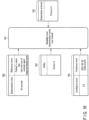
- FIG. 1 is a diagram showing a configuration example of a medical information processing system 1 according to the present embodiment.
- the medical information processing system 1 is a computer system having a medical information processing apparatus 2 and a medical device terminal 3.
- the medical information processing apparatus 2 and the medical device terminal 3 are connected to each other by wire or wirelessly in a communicable manner.
- the medical information processing apparatus 2 is an information processing terminal such as a computer of, for example, a workstation processing medical information.
- the medical device terminal 3 is an information processing terminal capable of transmitting operator's instructions to the medical information processing apparatus and having a processor, a storage apparatus, an input device, a communication device, and a display device.
- an installation-type computer, a laptop computer, a tablet device, a smartphone, etc. can be adopted.
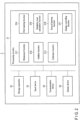
- FIG. 2 is a diagram showing a configuration example of the medical information processing apparatus 2.
- the medical information processing apparatus 2 has processing circuitry 21, a storage apparatus 22, an input device 23, a communication device 24, and a display device 25.
- the processing circuitry 21, the storage apparatus 22, the input device 23, the communication device 24, and the display device 25 are connected via a bus in such a manner that signals can be input to and output from each other.
- the medical information processing apparatus 2 generates a machine learning model used for medical decision making (hereinafter, a "decision making model”) and a machine learning model for determining a reliability level of a correct answer label (hereinafter a "reliability level determination model").
- a machine learning model used for medical decision making hereinafter, a "decision making model”
- a machine learning model for determining a reliability level of a correct answer label hereinafter a "reliability level determination model”
- FIG. 3 is a diagram showing a relationship between the input and the output of the decision making model 31 in a learning phase and an operation phase.
- the decision making model 31 in a learning phase, is trained based on the input data 32 of medical decision making, the correct answer label 33, and the reliability level 34 of the correct answer label 33.
- the correct answer label 33 a correct answer label added by an operator's instruction that is input via the medical device terminal 3 is used.
- the reliability level 34 is an index value indicating a degree of reliability, such as appropriateness of the correct answer label 33.
- the reliability level 34 is used as a weight for the correct answer label 33.
- the reliability level 34 is output from the reliability level determination model.
- a combination of the input data 32, the correct answer label 33, and the reliability level 34 is called a "training sample”.
- a plurality of training samples are collected for various kinds of input data.
- a trained decision making model 35 is generated.
- the input data 32 of medical decision making is input to the decision making model 35, and the decision making model 35 outputs output data 36 as a result of decision making.
- the decision making model 31 and the trained decision making model 35 are a network having an input layer for inputting input data 32, hidden layers for converting input data 32 into output data 36, and an output layer for outputting output data 36. It suffices that there is at least one hidden layer.
- the decision making model 31 and the trained decision making model 35 are a multi-class classification model that outputs a probability of a corresponding class of multiple classes relating to a decision making result as the output data 36. For example, in the case of medical decision making for image diagnosis, a disease is placed as a class; in the case of medical decision making for determining an examination protocol, on the other hand, an examination protocol is placed as a class.
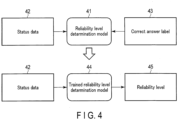
- FIG. 4 is a diagram showing a relationship between the input and the output of the reliability level determination model 41 in a learning phase and an operation phase.
- the reliability level determination model 41 is trained based on the status data 42 and the correct answer label 43 in a learning phase.
- the status data 42 is data indicating an operator's status while doing the work of adding a correct answer label 43.
- the status data 42 is data relating to an operator's operations, lines of sight, speech, and/or facial expressions that reflect a process of the operator's decision making at the time of adding a label.
- the correct answer label 43 is the same as the correct answer label 33 used in the decision making model 31, and the one added in accordance with an operator's instruction that is input via the medical device terminal 3 is used.
- a combination of the status data 42 and the correct answer label 43 is called a "training sample”.
- a plurality of training samples are collected for various kinds of input data.
- a reliability level determination model 44 is generated.
- the status data 42 is input to the reliability level determination model 44 and a reliability level 45 of the correct answer label is output from the reliability level determination model 44.
- the reliability level determination model 41 and the trained reliability level determination model 44 are a neural network having an input layer for inputting the status data 42, hidden layers for converting the status data 42 into the reliability level 45, and an output layer for outputting the reliability level 45. It suffices that there is at least one hidden layer.
- the reliability level determination model 41 and the trained reliability level determination model 44 are a multi-class classification model that outputs a probability of a corresponding class of multiple classes relating to a decision making result as the reliability level 45. Specific tasks of the reliability level determination model 41 and the trained reliability level determination model 44 are set in accordance with those of the decision making model 31 and the trained decision making model 35.
- the tasks of the decision making model 31 and the trained decision making model 35 are medical decision making for image diagnosis
- the tasks of the reliability level determination model 41 and the trained reliability level determination model 44 are also medical decision making for the image diagnosis; on the other hand, if the tasks of the decision making model 31 and the trained decision making model 35 are medical decision making for determining an examination protocol, the tasks of the reliability level determination model 41 and the trained reliability level determination model 44 are also medical decision making for determining an examination protocol.
- the medical information processing apparatus 2 has processing circuitry 21, a storage apparatus 22, an input device 23, a communication device 24, and a display device 25.
- the processing circuitry 21, the storage apparatus 22, the input device 23, the communication device 24, and the display device 25 are connected to each other via a bus in such a manner that signals can be mutually input and output.
- the processing circuitry 21 includes processors such as a CPU (central processing unit) and a GPU (graphics processing unit).
- the processing circuitry 21 executes a medical information processing program to realize an obtainment function 211, an addition function 212, a collection function 213, a first learning function 214, a reliability level calculation function 215, a second learning function 216, and a display controlling function 217, etc.
- the embodiment is not limited to the case in which the respective functions 211 to 217 are realized by single processing circuitry.
- Processing circuitry may be composed by combining a plurality of independent processors, and the respective processors may execute programs, thereby realizing the functions 211 to 217.
- the functions 211 to 217 may be respective modularized program constituting a consensus making support program or separate programs. These programs are stored in the storage apparatus 22.
- the processing circuitry 21 obtains various information items.
- the processing circuitry 21 obtains input data of medical decision making.
- the input data of medical decision making is used for training a decision making model.
- the input data of medical decision making can be obtained from a medical information system, such as a hospital information system (HIS) or a radiology information system (RIS), etc.
- a medical information system such as a hospital information system (HIS) or a radiology information system (RIS), etc.
- the processing circuitry 21 adds a correct answer label in accordance with an operator's instruction that is input via the medical device terminal 3.
- the correct answer label is used for training a reliability level determination model and a decision making model.
- the processing circuitry 21 acquires various information items. For example, the processing circuitry 21 collects status data indicating an operator's status while doing the work of adding a correct answer label.
- the processing circuitry 21 trains, based on the status data and the correct answer label, a reliability level determination model which accepts the status data and outputs a reliability level of the correct answer label.
- the processing circuitry 21 calculates a reliability level of a correct answer label based on the trained reliability level determination model.
- the processing circuitry 21 trains the decision making model which accepts the input data and outputs output data that is data indicating a result of the decision making, based on the input data of medical decision making, the correct answer label, and the reliability level.
- the processing circuitry 21 display various information on the display device 25 and/or the medical device terminal 3. For example, the processing circuitry 21 display a reliability level obtained by the reliability level calculation function 215, etc, on the display device 25 and/or the medical device terminal 3.
- the storage apparatus 22 is a ROM (read only memory), a RAM (random access memory), an HDD (Hard Disk Drive), an SSD (Solid State Drive), or an integrated circuit storage device, etc. storing various types of information.
- the storage apparatus 22 may be not only the above-listed memory devices, but also a driver that writes and reads various types of information to and from, for example, a portable storage medium such as a compact disc (CD), a digital versatile disc (DVD), a flash memory, or a semiconductor memory.
- the storage apparatus 22 may be provided in another computer connected via a network.
- the input device 23 accepts various kinds of input operations from an operator, converts the accepted input operations to electric signals, and outputs the electric signals to the processing circuitry 21.
- the input device 23 is connected to an input device, such as a mouse, a keyboard, a trackball, a switch, a button, a joystick, a touch pad, or a touch panel display.
- the input device 23 outputs to the processing circuitry 21 an electrical signal corresponding to an input operation on the input device.
- the input device 23 may be an input device provided in another computer connected via a network or the like.
- the communication device 24 is an interface for sending and receiving various types of information to and from other computers, such as the medical device terminal 3, etc. included in the medical information processing system 1.
- the display device 25 displays various types of information through the display controlling function 217 of the processing circuitry 21.
- a liquid crystal display (LCD), a cathode ray tube (CRT) display, an organic electro luminescence display (OELD), a plasma display, or any other display can be used as appropriate.
- a projector may be used as the display device 25.
- a task of the decision making model is determining an examination protocol.
- a decision making model that determines an examination protocol will be hereinafter called an "examination protocol classification model”.
- FIG. 5 is a diagram showing a flow of an example of medical information processing by the medical information processing apparatus 2.
- the processing circuitry 21 obtains examination data through the realization of the obtainment function 211 (step S1).
- the processing circuitry 21 obtains examination data relating to a patient targeted for medical decision making.
- the medical decision making is an examination protocol determination; therefore, examination data is obtained as data that may be referred to when an examination protocol is determined.
- the examination data is obtained from a hospital information system, such as a hospital information system (HIS) or a radiology information system (RIS), etc. A part or an entirety of the examination data is used as input data in medical decision making.
- a hospital information system such as a hospital information system (HIS) or a radiology information system (RIS), etc.
- a part or an entirety of the examination data is used as input data in medical decision making.
- step S1 the processing circuitry 21, through the realization of the display controlling function 217, displays a working screen for examination protocol determination (step S2).
- step S2 the processing circuitry 21 displays the working screen with a predetermined layout.
- step S3 the processing circuitry 21 adds a correct answer label through the implementation of the addition function 212 (step S3).
- the processing circuitry 21 adds a correct answer label on the working screen displayed in step S2, in accordance with an operator's instruction that is input via the input device 23 and/or the medical device terminal 3.
- an examination protocol is added.
- the processing circuitry 21 collects status data indicating a status of the operator while doing the work of the adding a correct answer label, through the implementation of the collection function 213.
- the processing circuitry 21 collects, as status data, data relating to operator's operations, lines of sight, speech, and/or facial expressions that reflect a process of the operator's decision making at the time of adding a correct answer label.
- FIG. 6 is a diagram schematically showing adding of a correct answer label and collection of status data in step S3.
- a working screen 61 for adding a correct answer label is displayed on the display device 25.
- the working screen 61 includes a select area 611 for selecting a target patient who is a target for determining an examination protocol, a display area 612 of examination data relating to the target patient, and a select area 613 for selecting an examination protocol which is a correct answer label.
- a list of names of candidate patients is displayed in the select area 611 in such a manner that each patient name is selectable.
- FIG. 6 shows an example where "Kanja Taro" is selected as a target patient.
- Examination data relating to the target patient "Kanja Taro" is displayed in the display area 612. Specifically, age, sex, use or non-use of a contrast agent, an examined body parts, a diagnosed disease, etc. are displayed as order information in the examination data.
- the select area 613 displays a list of examination protocol names or symbols in such a manner that each examination protocol is selectable.
- FIG. 6 shows that "protocol B" is selected as a correct answer label. After an examination protocol is selected, the confirmation button is pressed via the input device 23.
- the processing circuitry 21 collects an event log 62 that can be obtained through the working screen 61 that occurs during a process of determining a correct answer label by the operator.
- the event log 62 is raw data relating to the status data.
- an operation log of a screen operation by an operator via the input device 23 and a log of an operator's line of sight on the working screen 61 are collected as event logs 62.
- the event logs 62 are recorded in a chronological manner for items such as date and time, user name, event name, and location of acquisition.
- Date and time is a time when the event took place.
- a user name is a name of the operator who added the correct answer label.
- Event name indicates a type of event.
- a location of acquisition indicates a location where the event takes place on the working screen.
- the event name "mouse clicking" and the location of acquisition "Kanja Taro" are recorded as operation logs.
- the event name "looking” and the location of acquisition "age” are recorded as line-of-sight logs. Whether the operator looks or not may be determined based on whether or not the operator's line of sight stays on the same displayed item on the working screen 61 longer than a predetermined length of time.
- the display item located at the arrival point of the operator's line of sight can be calculated based on a correspondence between the location of the operator's eyeballs reflected on an image taken by an optical camera arranged in the display device 25, etc. and the location of each item on the working screen 61.
- the event logs 62 are recorded for each targeted patient. Specifically, the events of selecting a targeted patient to adding a correct answer label, in other words pressing the confirmation button, are collected as a single event log 62 relating to the target patient.
- the speech log which is a log relating to an operator's speech
- a facial expression log which is a log relating to an operator's facial expression
- the processing circuitry 21 After event logs 62 relating to the target patient are collected, the processing circuitry 21 generates status data 63 based on the event logs 62.
- the status data 63 has determination time information and reference items as an example.
- the determination time information is time relating to a time required for the work of adding a correct answer label. More specifically, it is an elapsed time from the time when the target patient is selected to the time when the confirmation button of an examination protocol is pressed.
- the reference item is information relating to a display item that the operator looks at in the examination data. More specifically, information of a location of acquisition relating to the event name "looking".
- the status data 63 relating to the target patient is stored in the storage apparatus 22. A combination of the status data 63 relating to the target patient and the correct solution label is stored as a single training sample in the storage apparatus 22.
- the determination time may be fragmented according to reference items when it is recorded. For example, x seconds from a selection of a patient to checking of patient information, y seconds from checking of patient information to confirmation of a protocol.
- the attention level may be converted into a numerical value. For example, three seconds for determining whether to use a contrast agent, ten seconds to refer to a diagnosed disease name, three times of checking (rechecking) a use of a contrast agent in a single diagnosis session.
- step S3 the processing circuitry 21 determines whether or not the training of the reliability level determination model should be started through realization of the first learning function 214 (step S4).
- step S4 the processing circuitry 21 determines whether or not the number of collected training samples has reached the number required to train the reliability level determination model. If the number of collected training samples is less than the required number, the training of the reliability level determination model is not started, and steps S1 through S3 are repeated for another patient.
- the processing circuitry 21 trains the reliability level determination model based on status data and the correct answer label through a realization of the first learning function 214 (step S5).
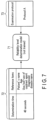
- FIG. 7 is a diagram showing a relationship between the input and the output of the reliability level determination model 71 in a learning phase.
- the processing circuitry 21 trains the learning parameter of the reliability level determination model 71, which is a multi-class classification model, based on the supervised learning in which the status data 72 is input and the correct answer label 73 is used as a teacher. It is desirable that classes be provided in accordance with examination protocol candidates. For example, if there are three candidates, "protocol A”, “protocol B", and “protocol C", three classes are provided. In FIG.
- the status data 72 includes a determination time ("40 seconds") and reference items ("patient's name”, “age”, “use/non-use of contrast agent", “diagnosed disease name”)
- the correct answer label 73 includes an examination protocol ("protocol A").
- the processing circuitry 21 calculates a prediction label obtained by inputting the status data 72 to the reliability level determination model 71 and performing forward propagation computation, and an error between the prediction label and the correct answer label 73 is calculated, and updates a learning parameter by optimizing the error using a method such as stochastic gradient descent.
- a prediction label is an output of the reliability level determination model 71 and is a vector amount indicating the probability of each class.
- the learning parameter are optimized by repeating the updating calculation using a plurality of training samples in such a manner that the error is minimized.
- a trained reliability level determination model is generated by allocating the optimized learning parameter to the machine learning model.
- the learning parameter is a weight variable or a bias, etc. indicating conversion between layers included in the reliability level determination model 71.
- the reliability level determination model 71 learns a correlation between the status data 72 and the correct answer label 73.
- the correlation between the status data 72 and the correct answer label 73 is explained.
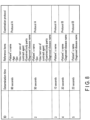
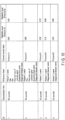
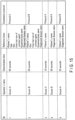
- FIG. 8 is a diagram showing an example of training data.
- the training data includes status data (determination time and reference items) and the correct answer label (examination protocol).
- status data determination time and reference items
- the correct answer label extraction protocol
- the reliability level determination model outputs a higher value of the probability of protocol B than the probability of protocol A.
- the probability of each protocol indicates a degree of appropriateness of choosing the protocol in consideration of the input status data, in other words, the degree of reliability of the protocol. In the present embodiment, the probability is used as a reliability level for labelling.
- step S5 the processing circuitry 21 calculates a reliability level from the status data, using the trained reliability level determination mode, through realization of the reliability level calculation function 215 (step S6) .
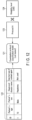
- FIG. 9 is a diagram showing a relationship between the input and the output of the trained reliability level determination model 91 in an operation phase.
- the status data 92 is input to the reliability level determination model 91 and the model outputs the reliability level 93.
- the reliability level determination model 91 is a class classification model, and there are two classes, protocol A and protocol B.
- the reliability level determination model 91 outputs a probability (likelihood) of each protocol. The probability is used as a reliability level.
- the status data 92 includes the determination time "40 seconds", the reference items "patient's name”, “age”, “use/non-use of contrast agent”, “diagnosed disease name”, and the reliability level 93 includes protocol A “20%” and protocol B "80%".
- step S6 the processing circuitry 21 calculates a reliability level for status data of each target patient.
- the reliability level is registered in the reliability level database being associated with the status data.
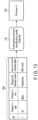
- FIG. 10 is a diagram showing an example of a reliability database. As shown in FIG. 10 , the status data, the correct answer label, and the reliability level are associated with each other in the reliability level database. The reliability level is registered for each of protocol A and protocol B. For example, for ID "1", protocol A "0.95" and protocol B "0.05" are registered as a reliability level.
- the processing circuitry 21 trains the examination protocol classification model based on the input data and the correct answer label through realization of the second learning function 216 (step S7).
- the input data is data input to the examination protocol classification model and is a part of the examination data.
- the input data is data of items for which a correlation can be acknowledged between the item and the examination protocol in the examination data.
- the items of the input data are predetermined. Assume that the input data is associated with the status data, the correct answer label, and the reliability level through an ID, etc.
- FIG. 11 is a diagram showing an example of input data.
- the input data relates to patient's age ("70”, “75”, etc.), patient's sex ("male”, “female”, etc.), diagnosed disease name ("hepatoma”, “renal cell carcinoma”, etc.) and use/non-use of a contrast agent ("used” or “not used”).
- FIG. 12 is a diagram showing a relationship between the input and the output of the examination protocol classification model 121 in a learning phase.
- the processing circuitry 21 specifies the input data 122 targeted for processing, and extracts the correct answer label 123 and the reliability level 124 associated with the targeted input data 122 from the reliability level database.
- the processing circuitry 21 trains the learning parameter of the examination protocol classification model 121, which is a multi-class classification model, based on supervised learning in which the input data 122 is input and the correct answer label 123 weighted by the reliability level 124 is used as a teacher.
- the learning parameter of the examination protocol classification model 121 which is a multi-class classification model, based on supervised learning in which the input data 122 is input and the correct answer label 123 weighted by the reliability level 124 is used as a teacher.
- the input data 122 is: patient's age “70”, patient's sex "male”, diagnosed disease name “hepatoma”, and use/non-use of a contrast agent "not used”, and the correct answer label 73 is "protocol A”, and the reliability level 124 is "0.95".
- the processing circuitry 21 calculates an output obtained by performing forward propagation computation (hereinafter, a "model output") on the input data 122 that is input to the examination protocol classification model 121, and the processing circuitry 21 calculates an error between the model output and the correct answer label 73, and updates the learning parameter by optimizing the error by, for example, stochastic gradient descent.
- the learning parameter is optimized by repeating the updating calculation using a plurality of training samples in such a manner that the error is minimized.
- the error is expressed by a loss function L(T,p,w) wherein T is a correct answer label, p is a model output, and w is a reliability level of the correct answer label T, as represented by Expression (1) below.
- the subscript k indicates a training sample number.
- L T p w ⁇ ⁇ k w k T k log p k
- the loss function L (T,p,w) is defined by a total sum of cross entropy indicating an error between a correct answer label T weighted by a reliability level w and a model output p over the plurality of training samples.
- the reliability level 124 of the correct answer label 123 is "0.95"
- the cross entropy is computed, "0.95" is multiplied by the value "1.00" of the correct answer label 123 "protocol A”.
- the training parameter of the examination protocol determination model is trained so that the loss function L(T,p,w) is minimized over the plurality of training samples k.
- the trained examination protocol classification model is generated by allocating the determined parameter that is optimized so as to minimize the loss function L(T,p,w) to the machine learning model.
- FIG. 13 is a diagram showing the relationship between the input and the output of the trained examination protocol classification model 131 in an operation phase.
- the input data 132 is input to the examination protocol classification model 131 and the model outputs the examination protocol 133.
- a probability of each of protocol A and protocol B and the name of the protocol with a larger probability is output as the examination protocol 133.
- the examination protocol classification model 131 may be designed to output a probability of each of protocol A and protocol B.
- step S7 the medical information processing according to the first embodiment is finished.
- the processing circuitry 21 successively performs the training of the reliability level determination model (S5) and the training of the examination protocol classification model (S7); however, for example, the training of the examination protocol classification model (S7) may be performed after a predetermined length of time, for example a few days, a few weeks, or a few months, of the training of the reliability level determination model (S5).
- the reliability level determination model (S5) and the training of the examination protocol classification model (S7) may not be necessarily performed by the same medical information processing apparatus 2 and may be performed by separate medical information processing apparatuses.
- the plurality of training samples are not necessarily collected by the same medical information processing apparatus 2 and may be collected by separate medical information processing apparatuses.
- the medical information processing apparatus 2 has the addition function 212, the collection function 213, the first learning function 214, the obtainment function 211, and the second learning function 216.
- the addition function 212 adds a correct answer label used for training a decision making model, which is a machine learning model used for decision making by health care provision, in accordance with an operator's input instruction.
- the collection function 213 collects status data indicating a status of the operator while doing the work of adding a correct answer label.
- the first learning function 214 trains a reliability level determination model, which is a machine learning model to which status data is input and which outputs a reliability level of the correct answer label, based on the status data and the correct answer label.
- the obtainment function 211 obtains input data of the decision making model.
- the second learning function 216 trains the decision making model to which the input data is input and which outputs output data that is data indicating a result of the decision making, based on the input data, the correct answer label, and the reliability level.
- the reliability level determination model is trained based on status data and a correct answer label.
- the present embodiment is not limited thereto.
- training of the reliability level determination model according to Modification 1 is described.
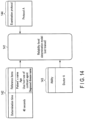
- FIG. 14 is a diagram showing the relationship between the input and the output of the reliability level determination model 141 according to Modification 1 in a learning phase.
- the processing circuitry 21 trains a training parameter of the reliability level determination model 141, which is a multi-class classification model, to which status data 142 and the ability data 143 are input, based on supervised training in which the correct answer label 144 is used as a teacher.
- the status data 142 is data indicating an operator's status while doing the work of adding a correct answer label, similarly to the foregoing example.
- the correct answer label 144 is a label added by the operator, similarly to the foregoing example.
- the ability data 143 is data indicating an ability of the operator.
- the ability data 143 is not limited to an operator's name, and some kind of data having a correlation to an ability, such as the number of years of being employed, the number of years of experience, a job title, and the like, may be used.
- the processing circuitry 21 calculates a predicted label obtained by inputting the status data 142 and the ability data 143 to the reliability level determination model 141 and performing forward propagation computation, calculates an error between the prediction label and the correct answer label 144, and updates a training parameter in accordance with an optimization method, such as stochastic gradient descent.
- the learning parameter is optimized by repeating the updating calculation using a plurality of training samples in such a manner that the error is minimized.
- a trained reliability level determination model is generated by allocating the optimized learning parameter to the machine learning model.
- FIG. 15 is a diagram showing an example of training data according to Modification 1.
- the training data includes ability data (operator's name), status data (determination time and reference items), and the correct answer label (examination protocol).
- ability data operator's name
- status data determination time and reference items
- the correct answer label examination protocol
- doctor A tends to select protocol A when he/she refers to more reference items and takes a longer determination time
- doctor B tends to select protocol B when he/she refers to more reference items and takes a longer determination time.
- the ability data also has a correlation between a correct answer label and a reliability level, and if the reliability level determination model is trained using the ability data in addition to the status data, it is thus possible to improve the accuracy of the reliability level.
- FIG. 16 is a diagram showing the relationship between the input and the output of the reliability level determination model 161 according to Modification 2 in a learning phase.
- the processing circuitry 21 trains a training parameter of the reliability level determination model 161, which is a multi-class classification model, to which status data 162, the ability data 163, and the additional data 164 are input, based on supervised training in which the correct answer label 165 is used as a teacher.
- the status data 162 is data indicating an operator's status while doing the work of adding a correct answer label, similarly to the foregoing example.
- the ability data 163 is data indicating an ability of the operator, similarly to Modification 1.
- the correct answer label 165 is a label added by the operator, similarly to the foregoing example.
- the additional data 164 is data obtained before and after the work of adding a correct answer label and is expected to have a correlation to the reliability level. Specifically, the additional data 164 is data related to a freshness level, a confidence level, quality, and/or a required time. FIG. 16 shows a freshness level and a confidence level as the additional data 164.
- a freshness level is a time at which the operator adds a correct answer label. The later the time is, the higher the freshness level is. The higher the freshness level is, the higher the reliability level is.
- the confidence level indicates a degree of subjective confidence felt by an operator toward a correct answer label added by himself/herself or when he/she adds a label. The confidence level is input by an operator after a correct answer label is added. For example, if the operator is aware that he/she took some time to add a correct answer label, a lower confidence level is assigned compared to that assigned to an operator who is aware that he/she did not take very much time. The higher the confidence level is, the higher the reliability level is.
- the quality indicates the quality of information which is referred to when a correct answer label is added. For example, if an annotation is added to a medical image as a correct answer label, it is information regarding a quality of the medical image.
- quality an image format of a medical image, a presence/absence of artifacts in a medical image, a difference in SNR, and an imaging condition are used.
- a required time is a difference between an optimal value of a preset required time (determination time) and an actual required time (determination time) or a score based on the difference.
- the processing circuitry 21 calculates a predicted label obtained by inputting the status data 162, the ability data 163, and the additional data 164 to the reliability level determination model 161 and performing forward propagation computation, calculates an error between the prediction label and the correct answer label 165, and updates a training parameter in accordance with an optimization method, such as stochastic gradient descent.
- the learning parameter is optimized by repeating the updating calculation using a plurality of training samples in such a manner that the error is minimized.
- a trained reliability level determination model is generated by allocating the optimized learning parameter to the machine learning model.
- the reliability level that is output from the reliability level determination model is used as a weight in the training of the decision making model, such as an examination protocol classification model, etc.
- the present embodiment is not limited thereto.
- the processing circuitry 21 according to Modification 3 displays a reliability level. Hereinafter, the display of a reliability level is explained.
- the decision making model according to Modification 3 is an image diagnosis model to which a medical image is input and which outputs an annotation indicating a disease candidate area. An annotation is included in a correct answer label.
- the imaging model is a multi-class classification model that outputs a probability of a disease candidate for each unit area such as a pixel.
- the image diagnosis model outputs the probability of each disease candidate in each unit area, and outputs a disease candidate with the highest probability.
- the processing circuitry 21 retains a color table defining a correspondence between a disease candidate and a color value, determines a disease candidate with a highest probability for each unit area, and displays the unit area with a color value corresponding to the disease candidate.
- a set of unit areas each displayed with a color value corresponding to a disease candidate constitutes an annotation.
- An annotation is used as a correct answer label in order to train an image diagnosis model; however, similarly to the forgoing example, the operator adds the annotation.
- the reliability level determination model according to Modification 3 is trained based on status data relating to the time when an annotation is added and an annotation, and state data is input to the model and the model outputs a reliability level of each unit area.
- the processing circuitry 21 causes the display device 25 to display a medical image on which a reliability level is overlaid.
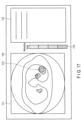
- FIG. 17 is a diagram showing an example of a display screen 170 for the reliability level.
- the display screen 170 displays a medical image 171 and an information display section 172.
- the medical image 171 is a medical image which is a target for adding an annotation, which is a correct answer label.
- the annotation 173 added by the operator is overlaid on the medical image 171.
- a color value (color code) according to a reliability level determined for each pixel by the reliability level determination model is assigned to each pixel of the annotation 173, and the annotation 173 is displayed in a color value according to the reliability level.
- the correspondence between the reliability level and the color value is defined by the color table 174, and it is preferable to display the correspondence on the display screen 170 so that the operator, etc. can know the relationship between the reliability level and the color value.
- examination data, etc. of a patient who is a subject of the medical image 171, which was referred to when an annotation 173 was added is displayed.
- the display screen 170 is observed by the operator who added the annotation 173.
- the annotation 173 By displaying the annotation 173 with color coding in accordance with a reliability level, it is possible to easily check the reliability level for each area of the annotation 173. For example, it is possible to prompt an operator to review the annotation for the area where the reliability level is low.
- the reliability level is divided by a discretionarily selected number of color values, for example 4.
- the range of reliability level for each color value may be set by equally dividing the range of values that may be taken by the reliability level (for example, from "0" to "1").
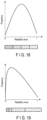
- FIG. 18 is a diagram showing an example of a correspondence between frequency distribution of a reliability level and a color value.
- FIG. 19 is a diagram showing another example of a correspondence between frequency distribution of a reliability level and a color value.
- the correspondence between the reliability level and the color value may be set in accordance with the frequency distribution of the reliability level.
- a color value is set based on the reliability level and the frequency. If there are four categories of the color value, the categories can be divided into four groups, namely a group ranging from the lowest to the middle frequencies, a group ranging from the middle to the highest frequencies, a group ranging from the highest to the middle frequencies, and a group ranging from the middle to the lowest frequencies.
- the category of the color value is set within the range obtained by equally dividing the range that may be taken by the reliability level (for example, from "0" to "1").
- the processing circuitry 21 sets the correspondence between the reliability level and the color value in accordance with a level of difficulty in adding an annotation.
- the number of color value categories is finite, it is possible to set minute color value categories of color value for the range of reliability level to the range of reliability level that needs to be focused on in accordance with the difficulty level.
- the display of the reliability level is not limited to a case where the decision making model is an image diagnosis model; any type of model, such as an examination protocol classification model can be used.
- processor indicates, for example, a circuit, such as a CPU, a GPU, or an Application Specific Integrated Circuit (ASIC), and a programmable logic device (for example, a simple programmable logic device (SPLD), a complex programmable logic device (CPLD), and a field programmable gate array (FPGA)).
- SPLD simple programmable logic device
- CPLD complex programmable logic device
- FPGA field programmable gate array
- the processor realizes its function by reading and executing the program stored in the storage circuitry.
- the program may be directly incorporated into the circuit of the processor instead of being stored in the storage circuit.
- the processor implements the function by reading and executing the program incorporated into the circuit.
- the function corresponding to the program may be implemented by a combination of logic circuits instead of executing the program.
- processors described in connection with the above embodiments are not limited to single-circuit processors; a plurality of independent processors may be integrated into a single processor that implements the functions of the processors. Furthermore, a plurality of constituent elements shown in FIGS. 1 and 2 may be integrated into one processor to implement the functions.
Landscapes
- Engineering & Computer Science (AREA)
- Health & Medical Sciences (AREA)
- Medical Informatics (AREA)
- Biomedical Technology (AREA)
- Public Health (AREA)
- Primary Health Care (AREA)
- General Health & Medical Sciences (AREA)
- Epidemiology (AREA)
- Software Systems (AREA)
- Theoretical Computer Science (AREA)
- Data Mining & Analysis (AREA)
- Evolutionary Computation (AREA)
- Computer Vision & Pattern Recognition (AREA)
- Computing Systems (AREA)
- Artificial Intelligence (AREA)
- Mathematical Physics (AREA)
- Physics & Mathematics (AREA)
- General Engineering & Computer Science (AREA)
- General Physics & Mathematics (AREA)
- Radiology & Medical Imaging (AREA)
- Nuclear Medicine, Radiotherapy & Molecular Imaging (AREA)
- Business, Economics & Management (AREA)
- General Business, Economics & Management (AREA)
- Databases & Information Systems (AREA)
- Pathology (AREA)
- Medical Treatment And Welfare Office Work (AREA)
Applications Claiming Priority (1)
| Application Number | Priority Date | Filing Date | Title |
|---|---|---|---|
| JP2021181131A JP7728150B2 (ja) | 2021-11-05 | 2021-11-05 | 医療情報処理装置及びプログラム |
Publications (1)
| Publication Number | Publication Date |
|---|---|
| EP4177904A1 true EP4177904A1 (de) | 2023-05-10 |
Family
ID=84245575
Family Applications (1)
| Application Number | Title | Priority Date | Filing Date |
|---|---|---|---|
| EP22205628.5A Pending EP4177904A1 (de) | 2021-11-05 | 2022-11-04 | Vorrichtung und verfahren zur verarbeitung medizinischer informationen |
Country Status (3)
| Country | Link |
|---|---|
| US (1) | US20230143054A1 (de) |
| EP (1) | EP4177904A1 (de) |
| JP (1) | JP7728150B2 (de) |
Citations (2)
| Publication number | Priority date | Publication date | Assignee | Title |
|---|---|---|---|---|
| US20200160981A1 (en) * | 2018-11-15 | 2020-05-21 | Canon Medical Systems Corporation | Medical image processing apparatus, medical image processing method, and storage medium |
| JP2021181131A (ja) | 2020-05-18 | 2021-11-25 | 株式会社ジェイテクト | アシスト装置 |
Family Cites Families (3)
| Publication number | Priority date | Publication date | Assignee | Title |
|---|---|---|---|---|
| JP7027070B2 (ja) * | 2017-08-31 | 2022-03-01 | キヤノン株式会社 | 情報処理装置、情報処理方法、及びプログラム |
| JP7104292B2 (ja) * | 2017-11-29 | 2022-07-21 | キヤノンマーケティングジャパン株式会社 | 情報処理装置、情報処理方法、プログラム |
| JP7374756B2 (ja) * | 2019-12-20 | 2023-11-07 | キヤノン株式会社 | 情報処理装置、情報処理方法、及びプログラム |
-
2021
- 2021-11-05 JP JP2021181131A patent/JP7728150B2/ja active Active
-
2022
- 2022-11-03 US US18/052,226 patent/US20230143054A1/en active Pending
- 2022-11-04 EP EP22205628.5A patent/EP4177904A1/de active Pending
Patent Citations (2)
| Publication number | Priority date | Publication date | Assignee | Title |
|---|---|---|---|---|
| US20200160981A1 (en) * | 2018-11-15 | 2020-05-21 | Canon Medical Systems Corporation | Medical image processing apparatus, medical image processing method, and storage medium |
| JP2021181131A (ja) | 2020-05-18 | 2021-11-25 | 株式会社ジェイテクト | アシスト装置 |
Also Published As
| Publication number | Publication date |
|---|---|
| JP7728150B2 (ja) | 2025-08-22 |
| US20230143054A1 (en) | 2023-05-11 |
| JP2023069344A (ja) | 2023-05-18 |
Similar Documents
| Publication | Publication Date | Title |
|---|---|---|
| AU2018206741B2 (en) | Characterizing states of subject | |
| JP7479168B2 (ja) | 問診装置 | |
| EP2601608B1 (de) | Berichtsautorisierung | |
| CN112970070B (zh) | 用于健康护理提供者辅助系统的方法和系统 | |
| US7805385B2 (en) | Prognosis modeling from literature and other sources | |
| US20100145720A1 (en) | Method of extracting real-time structured data and performing data analysis and decision support in medical reporting | |
| CN103460213A (zh) | 图像采集和/或图像相关参数推荐器 | |
| CN110291555A (zh) | 用于促进对健康状况的计算分析的系统和方法 | |
| JP7393518B2 (ja) | 教師データ収集装置、教師データ収集方法および記録媒体 | |
| JP7238705B2 (ja) | 診療支援方法、診療支援システム、学習モデルの生成方法、および、診療支援プログラム | |
| KR20150007468A (ko) | 임상의사결정 지원방법 및 그 장치 | |
| US20200294682A1 (en) | Medical interview apparatus | |
| JP2022054606A (ja) | 医療支援装置および医療支援システム | |
| JP2009517737A (ja) | 知的情報収集及びデータ・モデル化による実時間保健医療業務意志決定支援システム及び方法 | |
| EP4177904A1 (de) | Vorrichtung und verfahren zur verarbeitung medizinischer informationen | |
| US20220336063A1 (en) | Medical information processing apparatus | |
| US20240156415A1 (en) | Diagnosis support system and diagnosis support apparatus | |
| US20240404668A1 (en) | Medical information processing device, medical information processing system, and medical information processing method | |
| US20230047826A1 (en) | Context based performance benchmarking | |
| Wang et al. | A Visual Analytics Approach to Exploring the Feature and Label Space Based on Semi-structured Electronic Medical Records | |
| JP2026021869A (ja) | 医用情報処理装置及びプログラム | |
| JP2026040932A (ja) | 診断支援装置、診断支援方法、及び、プログラム |
Legal Events
| Date | Code | Title | Description |
|---|---|---|---|
| PUAI | Public reference made under article 153(3) epc to a published international application that has entered the european phase |
Free format text: ORIGINAL CODE: 0009012 |
|
| STAA | Information on the status of an ep patent application or granted ep patent |
Free format text: STATUS: REQUEST FOR EXAMINATION WAS MADE |
|
| 17P | Request for examination filed |
Effective date: 20221104 |
|
| AK | Designated contracting states |
Kind code of ref document: A1 Designated state(s): AL AT BE BG CH CY CZ DE DK EE ES FI FR GB GR HR HU IE IS IT LI LT LU LV MC ME MK MT NL NO PL PT RO RS SE SI SK SM TR |