EP4178241A1 - Bss mit verbesserter privatsphäre und entdeckungsmechanismen - Google Patents
Bss mit verbesserter privatsphäre und entdeckungsmechanismen Download PDFInfo
- Publication number
- EP4178241A1 EP4178241A1 EP22203070.2A EP22203070A EP4178241A1 EP 4178241 A1 EP4178241 A1 EP 4178241A1 EP 22203070 A EP22203070 A EP 22203070A EP 4178241 A1 EP4178241 A1 EP 4178241A1
- Authority
- EP
- European Patent Office
- Prior art keywords
- bss
- legacy
- encrypted
- field
- access point
- Prior art date
- Legal status (The legal status is an assumption and is not a legal conclusion. Google has not performed a legal analysis and makes no representation as to the accuracy of the status listed.)
- Granted
Links
Images











Classifications
-
- H—ELECTRICITY
- H04—ELECTRIC COMMUNICATION TECHNIQUE
- H04W—WIRELESS COMMUNICATION NETWORKS
- H04W12/00—Security arrangements; Authentication; Protecting privacy or anonymity
- H04W12/03—Protecting confidentiality, e.g. by encryption
- H04W12/037—Protecting confidentiality, e.g. by encryption of the control plane, e.g. signalling traffic
-
- H—ELECTRICITY
- H04—ELECTRIC COMMUNICATION TECHNIQUE
- H04W—WIRELESS COMMUNICATION NETWORKS
- H04W48/00—Access restriction; Network selection; Access point selection
- H04W48/08—Access restriction or access information delivery, e.g. discovery data delivery
-
- H—ELECTRICITY
- H04—ELECTRIC COMMUNICATION TECHNIQUE
- H04W—WIRELESS COMMUNICATION NETWORKS
- H04W12/00—Security arrangements; Authentication; Protecting privacy or anonymity
- H04W12/02—Protecting privacy or anonymity, e.g. protecting personally identifiable information [PII]
-
- H—ELECTRICITY
- H04—ELECTRIC COMMUNICATION TECHNIQUE
- H04W—WIRELESS COMMUNICATION NETWORKS
- H04W12/00—Security arrangements; Authentication; Protecting privacy or anonymity
- H04W12/06—Authentication
-
- H—ELECTRICITY
- H04—ELECTRIC COMMUNICATION TECHNIQUE
- H04W—WIRELESS COMMUNICATION NETWORKS
- H04W12/00—Security arrangements; Authentication; Protecting privacy or anonymity
- H04W12/06—Authentication
- H04W12/069—Authentication using certificates or pre-shared keys
-
- H—ELECTRICITY
- H04—ELECTRIC COMMUNICATION TECHNIQUE
- H04W—WIRELESS COMMUNICATION NETWORKS
- H04W48/00—Access restriction; Network selection; Access point selection
- H04W48/16—Discovering, processing access restriction or access information
-
- H—ELECTRICITY
- H04—ELECTRIC COMMUNICATION TECHNIQUE
- H04W—WIRELESS COMMUNICATION NETWORKS
- H04W48/00—Access restriction; Network selection; Access point selection
- H04W48/20—Selecting an access point
-
- H—ELECTRICITY
- H04—ELECTRIC COMMUNICATION TECHNIQUE
- H04W—WIRELESS COMMUNICATION NETWORKS
- H04W84/00—Network topologies
- H04W84/02—Hierarchically pre-organised networks, e.g. paging networks, cellular networks, WLAN [Wireless Local Area Network] or WLL [Wireless Local Loop]
- H04W84/10—Small scale networks; Flat hierarchical networks
- H04W84/12—WLAN [Wireless Local Area Networks]
-
- H—ELECTRICITY
- H04—ELECTRIC COMMUNICATION TECHNIQUE
- H04L—TRANSMISSION OF DIGITAL INFORMATION, e.g. TELEGRAPHIC COMMUNICATION
- H04L63/00—Network architectures or network communication protocols for network security
- H04L63/04—Network architectures or network communication protocols for network security for providing a confidential data exchange among entities communicating through data packet networks
- H04L63/0428—Network architectures or network communication protocols for network security for providing a confidential data exchange among entities communicating through data packet networks wherein the data content is protected, e.g. by encrypting or encapsulating the payload
- H04L63/0435—Network architectures or network communication protocols for network security for providing a confidential data exchange among entities communicating through data packet networks wherein the data content is protected, e.g. by encrypting or encapsulating the payload wherein the sending and receiving network entities apply symmetric encryption, i.e. same key used for encryption and decryption
-
- H—ELECTRICITY
- H04—ELECTRIC COMMUNICATION TECHNIQUE
- H04W—WIRELESS COMMUNICATION NETWORKS
- H04W12/00—Security arrangements; Authentication; Protecting privacy or anonymity
- H04W12/08—Access security
- H04W12/086—Access security using security domains
-
- H—ELECTRICITY
- H04—ELECTRIC COMMUNICATION TECHNIQUE
- H04W—WIRELESS COMMUNICATION NETWORKS
- H04W12/00—Security arrangements; Authentication; Protecting privacy or anonymity
- H04W12/10—Integrity
- H04W12/106—Packet or message integrity
-
- H—ELECTRICITY
- H04—ELECTRIC COMMUNICATION TECHNIQUE
- H04W—WIRELESS COMMUNICATION NETWORKS
- H04W12/00—Security arrangements; Authentication; Protecting privacy or anonymity
- H04W12/60—Context-dependent security
- H04W12/69—Identity-dependent
- H04W12/71—Hardware identity
-
- H—ELECTRICITY
- H04—ELECTRIC COMMUNICATION TECHNIQUE
- H04W—WIRELESS COMMUNICATION NETWORKS
- H04W12/00—Security arrangements; Authentication; Protecting privacy or anonymity
- H04W12/60—Context-dependent security
- H04W12/69—Identity-dependent
- H04W12/73—Access point logical identity
Definitions
- the present application relates to wireless communications, including techniques for a privacy enhanced BSS, including privacy enhancements for both access points and wireless stations as well as privacy enchantments for authentication, association, and discovery operations.
- Wireless communication systems are rapidly growing in usage. Further, wireless communication technology has evolved from voice-only communications to also include the transmission of data, such as Internet and multimedia content.
- a popular short/intermediate range wireless communication standard is wireless local area network (WLAN). Most modern WLANs are based on the IEEE 802.11 standard (or 802.11, for short) and are marketed under the Wi-Fi brand name. WLAN networks link one or more devices to a wireless access point, which in turn provides connectivity to the wider area Internet.
- Wireless stations can be either wireless access points or wireless clients (or mobile stations).
- Access points which are also referred to as wireless routers, act as base stations for the wireless network.
- APs transmit and receive radio frequency signals for communication with wireless client devices.
- APs can also typically couple to the Internet in a wired fashion.
- Wireless clients operating on an 802.11 network can be any of various devices such as laptops, tablet devices, smart phones, or fixed devices such as desktop computers.
- Wireless client devices are referred to herein as user equipment (or UE for short).
- Some wireless client devices are also collectively referred to herein as mobile devices or mobile stations (although, as noted above, wireless client devices overall may be stationary devices as well).
- Embodiments described herein relate to systems and methods associated with a privacy enhanced BSS, including privacy enhancements for both access points and wireless stations as well as privacy enchantments for authentication, association, and discovery operations.
- Some embodiments relate to a wireless station that includes one or more antennas, one or more radios, and one or more processors coupled (directly or indirectly) to the radios. At least one radio is configured to perform Wi-Fi communications, e.g., via a Wi-Fi interface. The wireless station may perform voice and/or data communications, as well as any or all of the methods described herein.
- the wireless station may be configured to communicate with a legacy basic service set (BSS) of a wireless network to transition to a privacy enhanced (PE) BSS of the wireless network.
- BSS legacy basic service set
- PE privacy enhanced
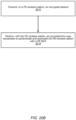
- the wireless station may be configured to receive, from a PE BSS of the wireless network, an encrypted beacon.
- the encrypted beacon may be decoded based on information received from the legacy BSS.
- the wireless station may be configured to perform, with the PE BSS of the wireless network, an encrypted handshake procedure to authenticate and associate with the PE BSS of the wireless network.
- a wireless station may be and/or may be configured as an Internet of Things (IoT) station.
- the IoT station may be configured to configure to operate in a PE BSS mode.
- the IoT station may be configured to communicate with a configuring wireless station of a wireless network to receive information associated with the PE IoT BSS.
- the information associated with the PE IoT BSS may include at least a channel on which the PE IoT BSS operates.
- the IoT station may be configured to receive, from the PE IoT BSS, an encrypted beacon.
- the encrypted beacon may be encrypted by a beacon key specific to the PE IoT BSS.
- the IoT station may perform, with the PE IoT BSS, an encrypted handshake procedure to authenticate and associate with the PE IoT BSS.
- a wireless station may be configured to scan (or look) for a BSSID in a PE BSS beacon, e.g., to receive a PE BSS beacon.
- the wireless station may be configured to attempt to match the BSSID with an address key stored at the wireless station and if (and/or when) the BSSID matches an address key, the wireless station may be configured to decrypt the BSS specific beacon using a BSS specific key stored at the wireless station.
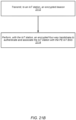
- a wireless station which may be a non-associated PE wireless station, may be configured to receive, from a PE access point, one or more discovery beacons advertising PE BSSs hosted by the PE access point.
- the wireless station may be configured to transmit, to the PE access point, a request to setup pre-association security protection. Further, upon setup of pre-association security protection, the wireless station may be configured to transmit, to the PE access point, a protected request frame and receive, from the PE access point, a protected response that includes PE access point parameters.
- the PE access point parameters may include PE BSS information.
- Some embodiments relate to an access point that includes one or more antennas, one or more radios, and one or more processors coupled (directly or indirectly) to the radios. At least one radio is configured to perform Wi-Fi communications, e.g., via a Wi-Fi interface. The access point may perform voice and/or data communications, as well as any or all of the methods described herein.
- an access point hosting a PE BSS, may be configured to transmit, to a PE wireless station, an encrypted beacon.
- the encrypted beacon may be decoded based on information received from a legacy BSS.
- the access point may be configured to perform, with the PE wireless station, an encrypted handshake procedure to authenticate and associate the PE wireless station with the PE BSS.
- an access point may be configured to transmit, to an IoT station, an encrypted beacon.
- the encrypted beacon may be decoded based on information received from a configuring wireless station associated with the IoT station.
- the access point may be configured to perform, with the IoT station, an encrypted handshake procedure to authenticate and associate the IoT station with the PE IoT BSS.
- an access point which may be a PE access point, may be configured to transmit, to non-associated PE wireless stations, one or more discovery beacons advertising PE BSSs hosted by the PE access point.
- the access point may be configured to receive, from at least one non-associated PE wireless station, a request to setup a pre-association security protection. Further, upon setup of pre-association security protection, the access point may be configured to receive, from the at least one non-associated PE wireless station, a protected request frame and transmit, to the at least one non-associated PE wireless station, a protected response that includes PE access point parameters.
- the PE access point parameters may include PE BSS information.
- first,” “second,” “third,” and so forth as used herein are used as labels for nouns that they precede, and do not imply any type of ordering (e.g., spatial, temporal, logical, etc.) unless such an ordering is otherwise explicitly indicated.
- a “third component electrically connected to the module substrate” does not preclude scenarios in which a “fourth component electrically connected to the module substrate” is connected prior to the third component, unless otherwise specified.
- a “second” feature does not require that a “first” feature be implemented prior to the “second” feature, unless otherwise specified.
- FIG. 1 illustrates an example WLAN system according to some embodiments.
- the exemplary WLAN system includes a plurality of wireless client stations or devices, or user equipment (UEs), 106 that are configured to communicate over a wireless communication channel 142 with an Access Point (AP) 112.
- the AP 112 may be a Wi-Fi access point.
- the AP 112 may communicate via a wired and/or a wireless communication channel 150 with one or more other electronic devices (not shown) and/or another network 152, such as the Internet.
- Additional electronic devices, such as the remote device 154 may communicate with components of the WLAN system via the network 152.
- the remote device 154 may be another wireless client station.
- the WLAN system may be configured to operate according to any of various communications standards, such as the various IEEE 802.11 standards.
- at least one wireless device 106 is configured to communicate directly with one or more neighboring mobile devices (e.g., via direct communication channels 140), without use of the access point 112.
- a wireless device 106 may be configured to perform methods associated with a privacy enhanced BSS, including privacy enhancements for both access points and wireless stations as well as privacy enchantments for authentication, association, and discovery operations.
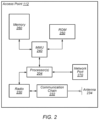
- FIG. 2 illustrates an exemplary block diagram of an access point (AP) 112. It is noted that the block diagram of the AP of Figure 2 is only one example of a possible system.
- the AP 112 may include processor(s) 204 which may execute program instructions for the AP 112.
- the processor(s) 204 may also be coupled (directly or indirectly) to memory management unit (MMU) 240, which may be configured to receive addresses from the processor(s) 204 and to translate those addresses to locations in memory (e.g., memory 260 and read only memory (ROM) 250) or to other circuits or devices.
- MMU memory management unit
- the AP 112 may include at least one network port 270.
- the network port 270 may be configured to couple to a wired network and provide a plurality of devices, such as mobile devices 106, access to the Internet.
- the network port 270 (or an additional network port) may be configured to couple to a local network, such as a home network or an enterprise network.
- port 270 may be an Ethernet port.
- the local network may provide connectivity to additional networks, such as the Internet.
- the AP 112 may include at least one antenna 234, which may be configured to operate as a wireless transceiver and may be further configured to communicate with mobile device 106 via wireless communication circuitry 230.
- the antenna 234 communicates with the wireless communication circuitry 230 via communication chain 232.
- Communication chain 232 may include one or more receive chains, one or more transmit chains or both.
- the wireless communication circuitry 230 may be configured to communicate via Wi-Fi or WLAN, e.g., 802.11.
- the wireless communication circuitry 230 may also, or alternatively, be configured to communicate via various other wireless communication technologies, including, but not limited to, Long-Term Evolution (LTE), LTE Advanced (LTE-A), Global System for Mobile (GSM), Wideband Code Division Multiple Access (WCDMA), CDMA2000, etc., for example when the AP is co-located with a base station in case of a small cell, or in other instances when it may be desirable for the AP 112 to communicate via various different wireless communication technologies.
- LTE Long-Term Evolution
- LTE-A LTE Advanced
- GSM Global System for Mobile
- WCDMA Wideband Code Division Multiple Access
- CDMA2000 Code Division Multiple Access
- AP 112 may be configured to perform methods for a privacy enhanced BSS, including privacy enhancements for both access points and wireless stations as well as privacy enchantments for authentication, association, and discovery operations
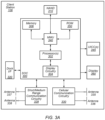
- FIG. 3A illustrates an example simplified block diagram of a client station 106. It is noted that the block diagram of the client station of Figure 3A is only one example of a possible client station.
- client station 106 may be a user equipment (UE) device, a mobile device or mobile station, and/or a wireless device or wireless station.
- the client station 106 may include a system on chip (SOC) 300, which may include portions for various purposes.
- SOC 300 may be coupled to various other circuits of the client station 106.
- the client station 106 may include various types of memory (e.g., including NAND flash 310), a connector interface (I/F) (or dock) 320 (e.g., for coupling to a computer system, dock, charging station, etc.), the display 360, cellular communication circuitry 330 such as for LTE, GSM, etc., and short to medium range wireless communication circuitry 329 (e.g., Bluetooth TM and WLAN circuitry).
- the client station 106 may further include one or more smart cards 310 that incorporate SIM (Subscriber Identity Module) functionality, such as one or more UICC(s) (Universal Integrated Circuit Card(s)) cards 345.
- SIM Subscriber Identity Module
- the cellular communication circuitry 330 may couple to one or more antennas, such as antennas 335 and 336 as shown.
- the short to medium range wireless communication circuitry 329 may also couple to one or more antennas, such as antennas 337 and 338 as shown.
- the short to medium range wireless communication circuitry 329 may couple to the antennas 335 and 336 in addition to, or instead of, coupling to the antennas 337 and 338.
- the short to medium range wireless communication circuitry 329 may include multiple receive chains and/or multiple transmit chains for receiving and/or transmitting multiple spatial streams, such as in a multiple-input multiple output (MIMO) configuration.
- MIMO multiple-input multiple output
- the SOC 300 may include processor(s) 302, which may execute program instructions for the client station 106 and display circuitry 304, which may perform graphics processing and provide display signals to the display 360.
- the processor(s) 302 may also be coupled to memory management unit (MMU) 340, which may be configured to receive addresses from the processor(s) 302 and translate those addresses to locations in memory (e.g., memory 306, read only memory (ROM) 350, NAND flash memory 310) and/or to other circuits or devices, such as the display circuitry 304, cellular communication circuitry 330, short range wireless communication circuitry 329, connector interface (I/F) 320, and/or display 360.
- the MMU 340 may be configured to perform memory protection and page table translation or set up. In some embodiments, the MMU 340 may be included as a portion of the processor(s) 302.
- the client station 106 may be configured to communicate wirelessly directly with one or more neighboring client stations.
- the client station 106 may be configured to communicate according to a WLAN RAT for communication in a WLAN network, such as that shown in Figure 1 .
- client station 106 may be configured to perform methods associated with a privacy enhanced BSS, including privacy enhancements for both access points and wireless stations as well as privacy enchantments for authentication, association, and discovery operations.
- the client station 106 may include hardware and software components for implementing the features described herein.
- the processor 302 of the client station 106 may be configured to implement part or all of the features described herein, e.g., by executing program instructions stored on a memory medium (e.g., a non-transitory computer-readable memory medium).
- processor 302 may be configured as a programmable hardware element, such as an FPGA (Field Programmable Gate Array), or as an ASIC (Application Specific Integrated Circuit).
- the processor 302 of the UE 106 in conjunction with one or more of the other components 300, 304, 306, 310, 320, 330, 335, 340, 345, 350, 360 may be configured to implement part or all of the features described herein.
- processor 302 may include one or more processing elements.
- processor 302 may include one or more integrated circuits (ICs) that are configured to perform the functions of processor 302.
- each integrated circuit may include circuitry (e.g., first circuitry, second circuitry, etc.) configured to perform the functions of processor(s) 204.
- cellular communication circuitry 330 and short-range wireless communication circuitry 329 may each include one or more processing elements.
- one or more processing elements may be included in cellular communication circuitry 330 and also in short range wireless communication circuitry 329.
- each of cellular communication circuitry 330 and short-range wireless communication circuitry 329 may include one or more integrated circuits (ICs) that are configured to perform the functions of cellular communication circuitry 330 and short-range wireless communication circuitry 329, respectively.
- each integrated circuit may include circuitry (e.g., first circuitry, second circuitry, etc.) configured to perform the functions of cellular communication circuitry 330 and short-range wireless communication circuitry 329.
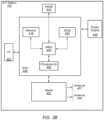
- FIG. 3B illustrates an example simplified block diagram of an IoT station 107, according to some embodiments.
- IoT station 107 may include a system on chip (SOC) 400, which may include one or more portions for performing one or more purposes (or functions or operations).
- SOC 400 may be coupled to one or more other circuits of the IoT station 107.
- the IoT station 107 may include various types of memory (e.g., including NAND flash 410), a connector interface (I/F) 420 (e.g., for coupling to a computer system, dock, charging station, light (e.g., for visual output), speaker (e.g., for audible output), etc.), a power supply 425 (which may be non-removable, removable and replaceable, and/or rechargeable), and communication circuitry (radio) 451 (e.g., BT/BLE and/or WLAN).
- memory e.g., including NAND flash 410
- I/F connector interface
- I/F for coupling to a computer system, dock, charging station
- light e.g., for visual output
- speaker e.g., for audible output
- a power supply 425 which may be non-removable, removable and replaceable, and/or rechargeable
- communication circuitry (radio) 451 e.g., BT/BLE and/
- the IoT station 107 may include at least one antenna, and in some embodiments, multiple antennas 457 and 458, for performing wireless communication with a companion device (e.g., client station 106, AP 112, and so forth) as well as other wireless devices (e.g., client station 106, AP 112, other IoT stations 107, and so forth).
- a companion device e.g., client station 106, AP 112, and so forth
- other wireless devices e.g., client station 106, AP 112, other IoT stations 107, and so forth.
- one or more antennas may be dedicated for use with a single radio and/or radio protocol.
- one or more antennas may be shared across two or more radios and/or radio protocols.
- the wireless communication circuitry 451 may include WLAN logic and/or BT/BLE logic.
- the wireless communication circuitry 451 may include multiple receive chains and/or multiple transmit chains for receiving and/or transmitting multiple spatial streams, such as in a multiple-input multiple
- the SOC 400 may include processor(s) 402, which may execute program instructions for the IoT station 107.
- the processor(s) 402 may also be coupled (directly or indirectly) to memory management unit (MMU) 440, which may be configured to receive addresses from the processor(s) 402 and translate those addresses into locations in memory (e.g., memory 416, read only memory (ROM) 450, NAND flash memory 410) and/or to other circuits or devices, such as the wireless communication circuitry 451.
- MMU 440 may be configured to perform memory protection and page table translation or set up. In some embodiments, the MMU 440 may be included as a portion of the processor(s) 402.
- the IoT station 107 may be configured to communicate wirelessly with one or more neighboring wireless devices.
- IoT station 107 may be configured to perform (and/or assist in the performance of) methods associated with a privacy enhanced BSS, including privacy enhancements for both access points and wireless stations as well as privacy enchantments for authentication, association, and discovery operations.
- legacy stations may also leak personally correlated information (PCI) that may identify what a legacy station's and/or end user's actions (e.g., applications being run, websites being visited, purchased being made) and/or where the legacy station is operating (e.g., location).
- PCI personally correlated information
- legacy BSS features include non-encrypted beacons (thus, all wireless stations can receive beacons and full set of access point parameters), passive and active scanning of privacy enhanced BSSs (thus, all wireless stations in proximity can discover the access point and identify the access point through its Service Set Identifier (SSID) and its Basic Service Set Identifier (BSSID)), association and re-association to PE BSS (thus, all devices can receive access point and wireless station information and allows wireless station tracking), constant access point and wireless station MAC addresses (thus, access point and station tracking is possible via tracking of MAC addresses), and non-encrypted frames (thus, allowing access point and station tracking).
- SSID Service Set Identifier
- BSSID Basic Service Set Identifier
- association and re-association to PE BSS thus, all devices can receive access point and wireless station information and allows wireless station tracking
- constant access point and wireless station MAC addresses thus, access point and station tracking is possible via tracking of MAC addresses
- non-encrypted frames thus,
- legacy access points may be enhanced to include privacy enhanced wireless stations or a new privacy enhanced BSS needs to be introduced. Enhancement of legacy access points may improve wireless station privacy, however, legacy access point privacy would not be improved. Additionally, legacy access points may not be suitable for newer use cases that require access point privacy, such as mobile access points and/or in-vehicle access points.
- Embodiments described herein provide systems, methods, and mechanisms for a privacy enhanced BSS, including privacy enhancements for both access points and wireless stations as well as privacy enchantments for authentication, association, and discovery operations. Further, embodiments described herein may provide systems, methods, and mechanisms to continue to support legacy wireless stations. In other words, the embodiments described herein may be (considered) backward compatible.
- FIG. 4 illustrates an example of an architecture for a privacy enhanced BSS, according to some embodiments.
- an access point such as access point 112 may support both a legacy BSS 422 and a privacy enhanced (PE) BSS 424.
- the access point may present as two access points - a first access point broadcasting an SSID and supporting legacy wireless stations (STAs), such as legacy STA 406, and a second access point that does not include its SSID in beacons and supports PE wireless stations, such as PE STA 106.
- STAs legacy wireless stations
- PE wireless stations such as PE STA 106.
- both access points (or BSSs) co-located within access point 112 may operate on the same channel.
- Such an architecture as described in Figure 4 provides and/or support privacy improvements such as encrypted beacons, passive and active scanning of PE BSS, association and re-association to a PE BSS, random and changing MAC addresses for both PE access points and PE wireless stations, encrypted frame exchanges, and privacy improved formats for physical layer protocol data units (PPDUs), MAC layer protocol data units (MPDUs), and management MPDUs (MMPDUs), as well as for various other frame formats.
- Encrypted beacons may allow PE access point elements and buffered traffic indications (TIMs) to be available only for associated PE wireless stations.
- Passive and active scanning of a PE BSS may allow for improved privacy of the PE BSS as only previously associated PE wireless stations may discover the PE BSS. Additionally, association and re-association to the PE BSS may provide mechanisms to allow both the PE access point's information and the PE wireless station's information to be encrypted. Further, random and changing MAC addresses for both PE access points and PE wireless stations may hinder tracking of both the PE access point and PE wireless station. In addition, encrypted frame exchanges and privacy improved formats for PPDUs, MPDUs, and MMPDUs may offer improved privacy by eliminating element fingerprinting.
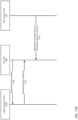
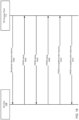
- Figure 5 illustrates an example of signaling for a PE wireless station to associate with a PE BSS of a public network, according to some embodiments.
- the signaling shown in Figure 5 may be used in conjunction with any of the systems, methods, or devices shown in the Figures, among other devices.
- some of the signaling shown may be performed concurrently, in a different order than shown, or may be omitted. Additional signaling may also be performed as desired. As shown, this signaling may flow as follows.
- a PE wireless station such as PE STA 106 may receive a legacy beacon 502 from a legacy BSS 422 indicating that an access point, such as access point 112, hosting the legacy BSS 422 is PE capable, e.g., indicating that the access point 112 is also hosting a PE BSS 424.
- the PE STA 106 may discover, authenticate, and associate with the legacy BSS.
- the legacy BSS 422 may move the PE STA 106 to the PE BSS hosted by the access point.
- the PE STA 106 may optionally transmit a robust BSS transition query 506 to the legacy BSS 422 requesting PE access point recommendations.
- the PE STA 106 may receive, from the legacy BSS 422, a robust BSS transition request 508 that may include an access point candidate list that may include a neighbor report and beacon reception parameters.
- the PE STA 106 may send a robust BSS transition response 510 to the legacy BSS 422 indicating the PE STA 106 will transition to a PE BSS, such as PE BSS 112.
- the PE STA 106 may scan for a selected PE BSS and then transition to the selected PE BSS, e.g., via use of a pre-association security protocol such as a pre-association security negotiation (PASN) encrypted 4-way handshake (e.g., fast BSS transition signaling over-the-air), a public key to protect identifiers, e.g., such as an Identifier Protection Key (IPK), and/or performing a faux (or dummy) association to establish security (e.g., encryption) prior to performing an actual association that is protected (e.g., encrypted).
- a pre-association security protocol such as a pre-association security negotiation (PASN) encrypted 4-way handshake (e.g., fast BSS transition signaling over-the-air), a public key to protect identifiers, e.g., such as an Identifier Protection Key (IPK), and/or performing a faux (or dummy) association to establish security (e.g., encryption) prior to performing an actual association that
- the PE STA 106 may receive a PASN encrypted authentication response 518 and may respond with a PASN encrypted association request 520.
- the PE STA 106 may receive a PASN encrypted association response 522 from the PE BSS.
- the PE STA 106 may be associated with the encrypted PE BSS.
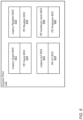
- a residential access point such as access point 112 may host multiple networks/BSSs (e.g., such as legacy guest BSS 622 and PE guest BSS 624, legacy resident BSS 632 and PE resident BSS 634, legacy Internet of Things (IoT) BSS 642 and PE IoT BSS 644 in which the PE IoT BSS 644 may be a hidden network, PE backbone mesh BSS 654, as well as a PE employee BSS 664), each BSS having different security domains and/or keys.
- BSSs e.g., such as legacy guest BSS 622 and PE guest BSS 624, legacy resident BSS 632 and PE resident BSS 634, legacy Internet of Things (IoT) BSS 642 and PE IoT BSS 644 in which the PE IoT BSS 644 may be a hidden network, PE backbone mesh BSS 654, as well as a PE employee BSS 664
- each network may have a legacy BSS and a PE BSS.
- a network may only have PE BSSs if the network serves only PE wireless stations, such as PE wireless station 106.
- a legacy BSS may offer easy network discovery to associate legacy wireless stations while also allowing initial authentication and association of PE wireless stations.
- the legacy BSS (either legacy guest BSS 622 or legacy resident BSS 632) may steer PE wireless stations to operate with the PE BSS (e.g., either PE guest BSS 624 or PE resident BSS 634).
- a PE wireless station may directly associate with the PE BSS (e.g., either PE guest BSS 624 or PE resident BSS 634), e.g., if the PE wireless station knows the PE BSS's keys.
- a mesh backbone network (e.g., PE backbone mesh BSS 654) may only be used between access points (e.g., in a residential mesh network), thus, backbone mesh access points may be configured to find certain beacon types.
- an employee service (and/or government service and/or public safety service) network (e.g., PE employee BSS 664) may be a private network that is only discoverable to/by employee devices that have an application and/or configuration to operate in the employee service network.
- an IoT network (e.g., legacy IoT BSS 642 and/or PE IoT BSS 644) may remain hidden.
- an IoT device may be configured to operate in a single network.
- the configuration may be done to the legacy IoT BSS 642 if the IoT device and/or a configuring device (e.g., wireless station) does not support PE BSS.
- the configuration may be done to the PE IoT BSS 644 if the IoT device supports PE BSS.
- an IoT network may not have steering from the legacy IoT BSS 642 to the PE IoT BSS 644.
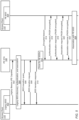
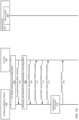
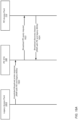
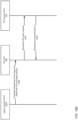
- Figures 7A and 7B illustrate an example of signaling for an IoT device configuration to a PE BSS, according to some embodiments.
- the signaling shown in Figure 7 may be used in conjunction with any of the systems, methods, or devices shown in the Figures, among other devices.
- some of the signaling shown may be performed concurrently, in a different order than shown, or may be omitted. Additional signaling may also be performed as desired. As shown, this signaling may flow as follows.
- an IoT station 707 which may be an IoT station 107, may be powered on and may configure itself to operate in PE BSS mode. Additionally, a configuring wireless station 106, may launch an application that knows a MAC address key of an PE IoT BSS, such as PE IoT BSS 644 and is able to discover the PE IoT BSS 644. The configuring wireless station 106 may receive an encrypted beacon 704 from the IoT station 707 with a randomized MAC address of the IoT station 707.
- the configuring wireless station 106 may discover the PE IoT BSS 644 of the IoT station 707 and an end user of the configuring wireless station 106 may select to authenticate and associate with the PE IoT BSS 644 of the IoT station 707. Further, the configuring wireless station 106 may authenticate and associate with the IoT station 707 using, for example, a pre-association security protocol. For example, the configuring wireless station 106 may perform a 4-way PASN encrypted handshake with the IoT station 707 via messages 708, 710, 712, and 714 to authenticate and associate with the IoT station 707.
- the configuring wireless station 106 may use a public key to protect identifiers, e.g., such as an Identifier Protection Key (IPK) to securely authenticate and associate with the IoT station 707 and/or the configuring wireless station 106 may perform a faux (or dummy) association with IoT station 707 to establish security (e.g., encryption) prior to performing an actual association that is protected (e.g., encrypted).
- IPK Identifier Protection Key
- the configuring wireless station 106 has authenticated and associated with the IoT station 707 and provides the IoT station 707 specific information while making necessary authentications to an IoT service. Further, the configuring wireless station 106 may provide PE IoT BSS information to the IoT station 707 via encrypted data frame 718.
- the IoT station 707 knows the channel of the PE IoT BSS 644 and, at 720, the IoT station 707 may switch to the channel of the PE IoT BSS 644.
- the IoT station 707 may receive an encrypted beacon 722 from the PE IoT BSS 644 and may authenticate and associate with the PE IoT BSS 644 using, for example, a pre-association security protocol.
- the IoT station 707 may perform a 4-way PASN encrypted handshake with the PE IoT BSS 644 via messages 724, 726, 728, and 730 to authenticate and associate with the PE IoT BSS 644.
- the IoT station 707 may use a public key to protect identifiers, e.g., such as an Identifier Protection Key (IPK) to securely authenticate and associate with the PE IoT BSS 644 and/or the IoT station 707 may perform a faux (or dummy) association with PE IoT BSS 644 to establish security (e.g., encryption) prior to performing an actual association that is protected (e.g., encrypted).
- IPK Identifier Protection Key
- the IoT station 707 has associated with the PE IoT BSS 644 and may authenticate with an IoT server via the Internet. Further, the IoT station 707 may begin to operate as programmed. Thus, the IoT station 707 may transmit encrypted application data 734 to the PE IoT BSS 644.
- IPK Identifier Protection Key
- a WLAN device may transition to (e.g., operate, at least in some instances, as) a mobile access point.
- the mobile access point may have short operating times and may stop its operation, e.g., if the mobile access point has no uplink or downlink data for a period of time and/or to (aggressively) save power.
- the mobile access point may switch to a discoverability mode if the mobile access point senses other wireless stations in proximity, has been requested to do so by an associated PE wireless station through a management frame, senses many scanning frames, and/or is activated by the end user. Note that when activated, the mobile access point may operate as a PE BSS using the principles, methods, and mechanisms described herein.
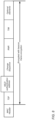
- FIG 8 illustrates an example format of an encrypted beacon frame, according to some embodiments.
- a PE access point e.g., such as access point 112 may transmit encrypted beacons for a PE BSS.
- the encrypted beacons may be encrypted by a BSS specific beacon key.
- encrypted beacons may contain minimum (and/or minimal) information in order to maintain associations, e.g., goal is to minimize a size of the encrypted beacon.
- An associated PE wireless station e.g., such as wireless station 106) may store long term beacon keys to receive the encrypted beacon from the PE access point (e.g., PE BSS).
- beacon keys may enable beacon reception, e.g., passive PE BSS discovery, which may be required for association to the PE BSS.
- an encrypted beacon frame may include a MAC header field, a timing synchronization function (TSF) field, a multi-link device (MLD)/authentication address field, a reduced neighbor report (RNR) field, a traffic indication map (TIM) field, a change sequence field, a management message integrity check (MIC) element (MME), and other various optional elements.
- the MAC header may include a transmitter address and/or access point MAC address for detection of the transmitter of the frame. Note that the MAC address may be randomized.
- the TSF field may support synchronization maintenance with the access point.
- the MLD/authentication address field may include the access point's authentication address.
- the RNR field may support detection of other suitable access points in proximity to the access point and/or to maintain access point MLD links with other affiliated access points.
- the TIM field may indicate whether the access point has buffered unicast and/or groupcast frames for the wireless station.
- the change sequence field may signal whether the PE BSS has a critical parameter update.
- the MME field may include an integrity check sum of the beacon frame content.
- the various optional elements may include critically updated elements that may be included in the beacon, thereby avoiding probe responses.
- a PE wireless station may check from an over-the-air (OTA) BSSID of a PE access point, such as access point 112, whether the PE wireless station knows the PE BSS.
- OTA over-the-air
- a non-access point PE wireless station e.g., wireless station 106
- the PE wireless station may have stored an ARK and may use the ARK to determine whether the PE access point is a known PE access point.
- the PE wireless station may confirm the PE access point is a known PE access point. Further, if the PE access point is detected, then the PE wireless station may continue to authenticate and associate with the PE access point, e.g., by using the stored parameters.
- the ARK key may be extended service set (ESS) wide.
- ESS extended service set
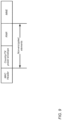
- a PE access point may transmit discovery beacons, e.g., as illustrated by Figure 9 , to advertise PE BSSs it operates to PE wireless stations, such as wireless station 106, that do not have beacon keys. Note that all PE wireless stations may receive discovery beacons.
- a discovery beacon may include a minimal set of elements, e.g., as compared to the encrypted discovery beacon described in reference to Figure 8 , to allow discovery of the advertised PE BSS(s).
- the discovery beacon may include a MAC header field, a country and/or transmission power envelope field, an RNR field, and/or an MME field.
- the MAC address included in the MAC header field may be randomized.
- the MAC header field may include a transmitter address and/or access point MAC address for detection of the transmitter of the frame.
- the country and/or transmission power envelope field may include elements required for the PE wireless station to calculate a regulatory maximum transmission power.
- the RNR field may support detection of the transmitting PE access point as well as other suitable access points in proximity to the transmitting PE access point. Thus, the RNR field may also contain information for one or more legacy and PE BSSs in the same band/channels and/or in other band/channels as the transmitting PE access point.
- the RNR field may be the main content of the discovery beacon.
- the MME field may include an integrity check sum of the beacon frame content.
- a complete set of BSS parameters may be obtained through active scanning.
- the discovery beacon may contain the PE BSS information in a non-encrypted format. Further, the elements included in the discovery beacon may allow PE BSS discovery for all non-associated wireless stations that receive the discovery beacon.
- the RNR element of the encrypted beacon frame and/or the discovery frame may include a neighbor access point information field.
- the neighbor access point information field may include various fields and, in particular, may include a target beacon transmission time (TBTT) information field.
- the TBTT information field may in turn include various fields such as a neighbor access point (AP) TBTT offset field, a BSSID field, a short SSID field, a BSS parameters field, a 20MHz power spectral density (PSD) field, and an MLD parameters field.
- the BSSID field may provide a transmitting access point's MAC address, e.g., a MAC address that is transmitted over-the-air.
- the MAC address provided in the BSSID field may not be the MAC address used for authentication.
- the short SSID field may be a 4-octets long hash sum of the SSID. Note that in a discovery beacon and/or for a discoverable PE BSS, the short SSID field may be used for BSS discovery.
- the BSS parameters field may in turn include various fields such as an OCT recommended field, a same SSID field, a multiple BSSID field, a transmitted BSSID field, a member of ESS with 2.4/5 GHz co-located AP field, an unsolicited probe response active field, a co-located AP field, and/or a reserved field.
- a PE BSS may set the same SSID field, multiple BSSID field, transmitted BSSID field, and/or the co-located AP field to a value of 0 to protect PE BSS privacy and to not provide all information for the PE BSS.
- the PE BSS may set the value of these fields to zero when they would otherwise be one.
- the MLD parameters field may in turn includes various fields such as an MLD identifier (ID) field, a link ID field, a change sequence field, a PE AP field, and a reserved field.
- ID MLD identifier
- the PE AP field which may be one bit in length, may be set to a value of one to indicate that a reported AP is privacy enhanced and set to zero otherwise.
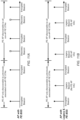
- a number of transmitted encrypted beacons and/or discovery beacons may be controlled and/or limited.
- an access point such as access point 112
- PE BSS may transmit encrypted beacons for a first period of time and then interleave discovery beacons with encrypted beacons for a second period of time. Note that such operations may repeat periodically.
- the PE access point may only be discoverable for non-access point wireless stations when transmitting discovery beacons (e.g., during the second period of time).
- the PE access point may only be discoverable by previously associated non-access point wireless stations when it is only transmitting encrypted beacons (e.g., during the first period of time).
- an access point operating both a PE BSS and a legacy BSS may interleave encrypted beacons with legacy beacons that do not contain PE access point information for a first period of time and then interleave encrypted beacons with legacy beacons that do contain PE access point information for a second period of time.
- the PE access point may only be discoverable for non-access point wireless stations when transmitting legacy beacons with the PE access point information (e.g., during the second period of time).
- the PE access point may only be discoverable by previously associated non-access point wireless stations when it is transmitting legacy beacons without the PE access point information (e.g., during the first period of time).
- the beacon transmission interval illustrated in Figures 11A and 11B is exemplary only.
- discovery beacons may be transmitted more or less frequently than legacy beacons.
- the discovery beacon may be transmitted as an unsolicited broadcast probe response, e.g., once every 20 TUs and/or at some other interval.
- the encrypted beacon transmission interval may change, e.g., depending on access point needs and/or requirements to randomize beacon transmission intervals.
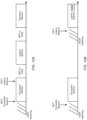
- beacon frames may be transmitted separately inside a transmission opportunity.
- TXOP transmission opportunity
- an encrypted beacon, legacy beacon, and discovery beacon may be transmitted in any order.
- the encrypted beacon is transmitted first at its TBTT followed by the legacy beacon (transmitted after its TBTT), and the discovery beacon, which may not have an associated TBTT, however, as noted, the order of transmission can vary.
- PE BSS discovery information may be transmitted in an RNR of a legacy beacon and each beacon (e.g., an encrypted beacon and a legacy beacon with PE BSS discovery information in the RNR) may be transmitted in dedicated transmission opportunities.
- each beacon e.g., an encrypted beacon and a legacy beacon with PE BSS discovery information in the RNR
- TXOP first transmission opportunity
- TXOP second transmission opportunity
- a legacy beacon with PE BSS discovery information in its RNR may be transmitted at or after its associated TBTT.
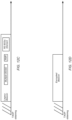
- some of the non-transmitted BSSs may be included only in an RNR element, e.g., as illustrated by Figure 14 .
- a beacon may or may not have a multiple BSSID element.
- the RNR element may contain non-transmit BSSs with legacy BSS only in RNR field set to 1. Note that setting the legacy BSS only in RNR field to 1 means that non-transmitted BSS is not included to multiple BSSID element and its information may be obtained only through RNR.
- a PE access point 112 may respond to broadcast or directed probe requests (without changes or with signaling to request responses from PE BSSs) as well as broadcast or directed PE query requests that request responses from PE BSSs.
- the query frame may have signaling to further specify desired response types (e.g., encrypted beacon or discovery beacon).
- the PE query request frame may be received only by PE BSSs.
- a broadcast PE query request may be transmitted as un-encrypted. However, a unicast PE query request may be encrypted (Robust) if it is addressed to an associated PE BSS but may not be encrypted when addressed to other PE BSSs.
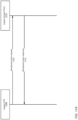
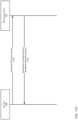
- a PE STA 106 may receive an unsolicited broadcast probe response 1840 from a legacy access point 1812.
- the unsolicited broadcast probe response 1840 may include an RNR element/field that indicate both legacy and PE BSSs.
- the PE STA 106 may transmit a unicast PE query request 1842 to a PE access point 112, which may have been indicated in the RNR element/field.
- the unicast PE query request 1842 may be encrypted.
- the PE STA 106 may receive a broadcast encrypted beacon 1844 from PE access point 112. Upon receipt, the PE STA 106 may begin an authentication and association procedure with PE access point 112.
- the wireless station may perform, with the PE BSS of the wireless network, an encrypted handshake procedure (e.g., such as a multi-way handshake that includes two or more exchanges between participating devices, such as a four-way handshake) to authenticate and associate with the PE BSS of the wireless network.
- an encrypted handshake procedure e.g., such as a multi-way handshake that includes two or more exchanges between participating devices, such as a four-way handshake
- the wireless station may transmit, to the PE BSS, an encrypted authentication request and receive, from the PE BSS, an encrypted authentication response.
- the wireless station may transmit, to the PE BSS, an encrypted association request and receive, from the PE BSS, an encrypted association response.
- the encrypted beacon may include one or more of a medium access control (MAC) header field, a timing synchronization function (TSF) field, a multi-link device (MLD)/authentication address field, a reduced neighbor report (RNR) field, a traffic indication map (TIM) field, a change sequence field, a management message integrity check (MIC) element (MME), and/or an optional field.
- the MAC header may include a MAC address of a transmitter.
- the MAC address may be randomized.
- the MLD/authentication address field may include a transmitter's authentication address.
- the RNR field may include a list of suitable access points in proximity or maintains MLD links with other affiliated access points.
- the change sequence field may signal whether the PE BSS has a critical parameter update.
- the access point may host one or more legacy BSSs.
- the one or more legacy BSSs may include at least one of a legacy resident BSS, a legacy guest BSS, a legacy Internet of Things (IoT) BSS, a legacy backbone mesh BSS, and/or a legacy service BSS.
- IoT Internet of Things
- a wireless station such as wireless station 106, may scan (or look) for a BSSID in the PE BSS beacon.
- the PE BSS may use a public key to protect identifiers, e.g., such as an Identifier Protection Key (IPK) to respond to protected active scanning and queries.
- IPK Identifier Protection Key
- the PE BSS may perform a faux (or dummy) association to establish security (e.g., encryption) to respond to protected active scanning and queries prior to performing an actual association that is protected (e.g., encrypted).
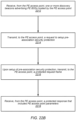
- an access point such as access point 112 which may be a PE access point, may transmit, to non-associated PE wireless stations, one or more discovery beacons advertising PE BSSs hosted by the PE access point.
- Each beacon of the one or more discovery beacons may include a medium access control (MAC) header field, a power envelope field, a reduced neighbor report (RNR) field, and/or a management message integrity check (MIC) element (MME) field.
- the RNR field may include a target beacon transmission time (TBTT) information field.
- the TBTT information field may include at least a short BSS identifier (ID) field, a BSS parameters field, and/or a multi-link device (MLD) parameters field.
- ID short BSS identifier
- MLD multi-link device
Landscapes
- Engineering & Computer Science (AREA)
- Computer Security & Cryptography (AREA)
- Computer Networks & Wireless Communication (AREA)
- Signal Processing (AREA)
- Mobile Radio Communication Systems (AREA)
Applications Claiming Priority (3)
| Application Number | Priority Date | Filing Date | Title |
|---|---|---|---|
| US202163277016P | 2021-11-08 | 2021-11-08 | |
| US17/949,910 US12309578B2 (en) | 2021-11-08 | 2022-09-21 | Privacy enhanced BSS and discovery mechanisms |
| US17/949,933 US20230144897A1 (en) | 2021-11-08 | 2022-09-21 | Privacy Enhanced BSS Discovery for Non-associated Stations |
Publications (2)
| Publication Number | Publication Date |
|---|---|
| EP4178241A1 true EP4178241A1 (de) | 2023-05-10 |
| EP4178241B1 EP4178241B1 (de) | 2025-10-15 |
Family
ID=83995020
Family Applications (1)
| Application Number | Title | Priority Date | Filing Date |
|---|---|---|---|
| EP22203070.2A Active EP4178241B1 (de) | 2021-11-08 | 2022-10-21 | Bss mit verbesserter privatsphäre und entdeckungsmechanismen |
Country Status (2)
| Country | Link |
|---|---|
| EP (1) | EP4178241B1 (de) |
| CN (1) | CN116095676A (de) |
Cited By (4)
| Publication number | Priority date | Publication date | Assignee | Title |
|---|---|---|---|---|
| GB2628022A (en) * | 2023-03-10 | 2024-09-11 | Canon Kk | Communication method obfuscating multiple privacy parameters |
| WO2024243859A1 (en) * | 2023-05-31 | 2024-12-05 | Nokia Shanghai Bell Co., Ltd | Method and apparatus for privacy mechanism in wireless network |
| CN119325118A (zh) * | 2023-05-31 | 2025-01-17 | 华为技术有限公司 | Btm中的信息指示方法及装置 |
| WO2025036551A1 (en) * | 2023-08-11 | 2025-02-20 | Huawei Technologies Co., Ltd. | Devices and methods for secure communication in a wireless network |
Families Citing this family (2)
| Publication number | Priority date | Publication date | Assignee | Title |
|---|---|---|---|---|
| CN121286028A (zh) * | 2023-11-01 | 2026-01-06 | 摩尔斯微公司 | 用于无线通信网络中的短帧保护的方法和设备 |
| CN117915313B (zh) * | 2024-03-19 | 2024-06-07 | 南京云程半导体有限公司 | 无缝漫游隐私增强方法、终端及存储介质 |
Citations (5)
| Publication number | Priority date | Publication date | Assignee | Title |
|---|---|---|---|---|
| US20060227972A1 (en) * | 2005-03-31 | 2006-10-12 | Jacco Brok | Selecting a hidden network to connect a user to a wireless local area network |
| EP1806897A1 (de) * | 2006-01-10 | 2007-07-11 | Zyxel Communications Corporation | Drahtlose Sicherheitseinstellung zwischen einer Station und einem Zugangspunkt, der MSSID unterstützt |
| WO2016072902A1 (en) * | 2014-11-03 | 2016-05-12 | Telefonaktiebolaget L M Ericsson (Publ) | Wlan network node and method for steering wlan stations between public and private wlans provided by said wlan network node |
| US20190200278A1 (en) * | 2018-03-02 | 2019-06-27 | Ido Ouzieli | Enhanced beacon frames in wireless communications |
| EP4002899A1 (de) * | 2020-11-20 | 2022-05-25 | Apple Inc. | Multilink-vorrichtung-datenschutz und -funktionsverbesserungen |
Family Cites Families (4)
| Publication number | Priority date | Publication date | Assignee | Title |
|---|---|---|---|---|
| KR100779800B1 (ko) * | 2002-12-06 | 2007-11-27 | 엘지노텔 주식회사 | 무선 랜에서 인증 서비스 방법 |
| WO2013056143A1 (en) * | 2011-10-12 | 2013-04-18 | Shah Ullah | Presence platform for passive radio access network-to-radio access network device transition |
| GB2580842B (en) * | 2018-03-01 | 2021-02-10 | Canon Kk | Improved access management to multi-user uplink random resource units by a plurality of BSSs |
| US20200221378A1 (en) * | 2019-01-07 | 2020-07-09 | Apple Inc. | Active Scanning Enhancements for Multi-Band and Multi-Basic Service Set Discovery |
-
2022
- 2022-10-21 EP EP22203070.2A patent/EP4178241B1/de active Active
- 2022-11-07 CN CN202211387605.1A patent/CN116095676A/zh active Pending
Patent Citations (5)
| Publication number | Priority date | Publication date | Assignee | Title |
|---|---|---|---|---|
| US20060227972A1 (en) * | 2005-03-31 | 2006-10-12 | Jacco Brok | Selecting a hidden network to connect a user to a wireless local area network |
| EP1806897A1 (de) * | 2006-01-10 | 2007-07-11 | Zyxel Communications Corporation | Drahtlose Sicherheitseinstellung zwischen einer Station und einem Zugangspunkt, der MSSID unterstützt |
| WO2016072902A1 (en) * | 2014-11-03 | 2016-05-12 | Telefonaktiebolaget L M Ericsson (Publ) | Wlan network node and method for steering wlan stations between public and private wlans provided by said wlan network node |
| US20190200278A1 (en) * | 2018-03-02 | 2019-06-27 | Ido Ouzieli | Enhanced beacon frames in wireless communications |
| EP4002899A1 (de) * | 2020-11-20 | 2022-05-25 | Apple Inc. | Multilink-vorrichtung-datenschutz und -funktionsverbesserungen |
Non-Patent Citations (1)
| Title |
|---|
| JARKKO KNECKT (APPLE): "AP MLD Beaconing and Discovery", vol. 802.11 EHT; 802.11be, no. 2, 29 July 2020 (2020-07-29), pages 1 - 28, XP068170308, Retrieved from the Internet <URL:https://mentor.ieee.org/802.11/dcn/20/11-20-0865-02-00be-ap-mld-beaconing-and-discovery.pptx> [retrieved on 20200729] * |
Cited By (7)
| Publication number | Priority date | Publication date | Assignee | Title |
|---|---|---|---|---|
| GB2628022A (en) * | 2023-03-10 | 2024-09-11 | Canon Kk | Communication method obfuscating multiple privacy parameters |
| GB2628014A (en) * | 2023-03-10 | 2024-09-11 | Canon Kk | Communication method obfuscating multiple privacy parameters |
| GB2628004A (en) * | 2023-03-10 | 2024-09-11 | Canon Kk | Communication method obfuscating multiple privacy parameters |
| GB2628022B (en) * | 2023-03-10 | 2025-07-23 | Canon Kk | Communication method obfuscating multiple privacy parameters |
| WO2024243859A1 (en) * | 2023-05-31 | 2024-12-05 | Nokia Shanghai Bell Co., Ltd | Method and apparatus for privacy mechanism in wireless network |
| CN119325118A (zh) * | 2023-05-31 | 2025-01-17 | 华为技术有限公司 | Btm中的信息指示方法及装置 |
| WO2025036551A1 (en) * | 2023-08-11 | 2025-02-20 | Huawei Technologies Co., Ltd. | Devices and methods for secure communication in a wireless network |
Also Published As
| Publication number | Publication date |
|---|---|
| CN116095676A (zh) | 2023-05-09 |
| EP4178241B1 (de) | 2025-10-15 |
Similar Documents
| Publication | Publication Date | Title |
|---|---|---|
| US12267766B2 (en) | MLD privacy and operation enhancements | |
| EP4178241B1 (de) | Bss mit verbesserter privatsphäre und entdeckungsmechanismen | |
| US12309578B2 (en) | Privacy enhanced BSS and discovery mechanisms | |
| US20230144897A1 (en) | Privacy Enhanced BSS Discovery for Non-associated Stations | |
| US12279171B2 (en) | Operating channel validation | |
| US11191042B2 (en) | Exchanging ranging and location information among peer-to-peer devices | |
| EP3101874B1 (de) | Bluetooth-nan-auslösung mit niedriger leistung zur weiteren entdeckung und verbindung | |
| US20180359633A1 (en) | Neighbor Awareness Networking Device Pairing | |
| US10880928B2 (en) | Random access procedures for link budget constrained wireless devices | |
| US10999780B2 (en) | Bluetooth trigger for NAN | |
| US10609543B2 (en) | Flexible BTLE TDS frame format for bi-directional service discovery | |
| US11490263B2 (en) | Assisted discovery of a local private 3GPP network via a local private non-3GPP wireless network | |
| US20250240685A1 (en) | Channel Switching | |
| US11212806B2 (en) | NAN fine-grained availability schedule indications | |
| US10397767B2 (en) | NAN further availability schedule indications | |
| US10320902B2 (en) | Detecting asymmetric awareness in peer-to-peer protocol | |
| US20220353682A1 (en) | NAN Trusted Device Cluster | |
| US10375179B2 (en) | Pre-association service discovery | |
| US20230319688A1 (en) | Privacy enhancement beacon frames | |
| US10893482B2 (en) | Selection of mode and data range in device-to-device close field communication | |
| WO2018170061A1 (en) | Apparatus, system and method of securing wireless communication | |
| US20190357308A1 (en) | Neighbor Awareness Networking Discovery Window Congestion Mitigation | |
| US20240244683A1 (en) | Reader and Access Device Operation for Access Control without Bluetooth Low Energy Pairing | |
| WO2021151244A1 (en) | Protection of resume request messages | |
| EP4645124A1 (de) | Kommunikationssysteme mit steuerrahmenschutz |
Legal Events
| Date | Code | Title | Description |
|---|---|---|---|
| PUAI | Public reference made under article 153(3) epc to a published international application that has entered the european phase |
Free format text: ORIGINAL CODE: 0009012 |
|
| STAA | Information on the status of an ep patent application or granted ep patent |
Free format text: STATUS: REQUEST FOR EXAMINATION WAS MADE |
|
| 17P | Request for examination filed |
Effective date: 20221021 |
|
| AK | Designated contracting states |
Kind code of ref document: A1 Designated state(s): AL AT BE BG CH CY CZ DE DK EE ES FI FR GB GR HR HU IE IS IT LI LT LU LV MC ME MK MT NL NO PL PT RO RS SE SI SK SM TR |
|
| GRAP | Despatch of communication of intention to grant a patent |
Free format text: ORIGINAL CODE: EPIDOSNIGR1 |
|
| STAA | Information on the status of an ep patent application or granted ep patent |
Free format text: STATUS: GRANT OF PATENT IS INTENDED |
|
| INTG | Intention to grant announced |
Effective date: 20250514 |
|
| GRAS | Grant fee paid |
Free format text: ORIGINAL CODE: EPIDOSNIGR3 |
|
| GRAA | (expected) grant |
Free format text: ORIGINAL CODE: 0009210 |
|
| STAA | Information on the status of an ep patent application or granted ep patent |
Free format text: STATUS: THE PATENT HAS BEEN GRANTED |
|
| AK | Designated contracting states |
Kind code of ref document: B1 Designated state(s): AL AT BE BG CH CY CZ DE DK EE ES FI FR GB GR HR HU IE IS IT LI LT LU LV MC ME MK MT NL NO PL PT RO RS SE SI SK SM TR |
|
| REG | Reference to a national code |
Ref country code: GB Ref legal event code: FG4D Ref country code: CH Ref legal event code: F10 Free format text: ST27 STATUS EVENT CODE: U-0-0-F10-F00 (AS PROVIDED BY THE NATIONAL OFFICE) Effective date: 20251015 |
|
| P01 | Opt-out of the competence of the unified patent court (upc) registered |
Free format text: CASE NUMBER: UPC_APP_6648_4178241/2025 Effective date: 20250910 |
|
| REG | Reference to a national code |
Ref country code: DE Ref legal event code: R096 Ref document number: 602022022975 Country of ref document: DE |
|
| REG | Reference to a national code |
Ref country code: IE Ref legal event code: FG4D |
|
| PGFP | Annual fee paid to national office [announced via postgrant information from national office to epo] |
Ref country code: DE Payment date: 20251202 Year of fee payment: 4 |
|
| PGFP | Annual fee paid to national office [announced via postgrant information from national office to epo] |
Ref country code: AT Payment date: 20260113 Year of fee payment: 4 |
|
| REG | Reference to a national code |
Ref country code: NL Ref legal event code: MP Effective date: 20251015 |
|
| REG | Reference to a national code |
Ref country code: AT Ref legal event code: MK05 Ref document number: 1848170 Country of ref document: AT Kind code of ref document: T Effective date: 20251015 |
|
| PG25 | Lapsed in a contracting state [announced via postgrant information from national office to epo] |
Ref country code: NL Free format text: LAPSE BECAUSE OF FAILURE TO SUBMIT A TRANSLATION OF THE DESCRIPTION OR TO PAY THE FEE WITHIN THE PRESCRIBED TIME-LIMIT Effective date: 20251015 |
|
| PG25 | Lapsed in a contracting state [announced via postgrant information from national office to epo] |
Ref country code: ES Free format text: LAPSE BECAUSE OF FAILURE TO SUBMIT A TRANSLATION OF THE DESCRIPTION OR TO PAY THE FEE WITHIN THE PRESCRIBED TIME-LIMIT Effective date: 20251015 |
|
| REG | Reference to a national code |
Ref country code: LT Ref legal event code: MG9D |
|
| PG25 | Lapsed in a contracting state [announced via postgrant information from national office to epo] |
Ref country code: NO Free format text: LAPSE BECAUSE OF FAILURE TO SUBMIT A TRANSLATION OF THE DESCRIPTION OR TO PAY THE FEE WITHIN THE PRESCRIBED TIME-LIMIT Effective date: 20260115 |
|
| PG25 | Lapsed in a contracting state [announced via postgrant information from national office to epo] |
Ref country code: HR Free format text: LAPSE BECAUSE OF FAILURE TO SUBMIT A TRANSLATION OF THE DESCRIPTION OR TO PAY THE FEE WITHIN THE PRESCRIBED TIME-LIMIT Effective date: 20251015 Ref country code: FI Free format text: LAPSE BECAUSE OF FAILURE TO SUBMIT A TRANSLATION OF THE DESCRIPTION OR TO PAY THE FEE WITHIN THE PRESCRIBED TIME-LIMIT Effective date: 20251015 Ref country code: AT Free format text: LAPSE BECAUSE OF FAILURE TO SUBMIT A TRANSLATION OF THE DESCRIPTION OR TO PAY THE FEE WITHIN THE PRESCRIBED TIME-LIMIT Effective date: 20251015 |
|
| PG25 | Lapsed in a contracting state [announced via postgrant information from national office to epo] |
Ref country code: RS Free format text: LAPSE BECAUSE OF FAILURE TO SUBMIT A TRANSLATION OF THE DESCRIPTION OR TO PAY THE FEE WITHIN THE PRESCRIBED TIME-LIMIT Effective date: 20260115 |
|
| PG25 | Lapsed in a contracting state [announced via postgrant information from national office to epo] |
Ref country code: IS Free format text: LAPSE BECAUSE OF FAILURE TO SUBMIT A TRANSLATION OF THE DESCRIPTION OR TO PAY THE FEE WITHIN THE PRESCRIBED TIME-LIMIT Effective date: 20260215 |
|
| PG25 | Lapsed in a contracting state [announced via postgrant information from national office to epo] |
Ref country code: PT Free format text: LAPSE BECAUSE OF FAILURE TO SUBMIT A TRANSLATION OF THE DESCRIPTION OR TO PAY THE FEE WITHIN THE PRESCRIBED TIME-LIMIT Effective date: 20260216 |
|
| PG25 | Lapsed in a contracting state [announced via postgrant information from national office to epo] |
Ref country code: PL Free format text: LAPSE BECAUSE OF FAILURE TO SUBMIT A TRANSLATION OF THE DESCRIPTION OR TO PAY THE FEE WITHIN THE PRESCRIBED TIME-LIMIT Effective date: 20251015 |
|
| PG25 | Lapsed in a contracting state [announced via postgrant information from national office to epo] |
Ref country code: LV Free format text: LAPSE BECAUSE OF FAILURE TO SUBMIT A TRANSLATION OF THE DESCRIPTION OR TO PAY THE FEE WITHIN THE PRESCRIBED TIME-LIMIT Effective date: 20251015 |