EP4178285A1 - Positionierungsverfahren und -vorrichtung sowie kommunikationsvorrichtung und speichermedium - Google Patents
Positionierungsverfahren und -vorrichtung sowie kommunikationsvorrichtung und speichermedium Download PDFInfo
- Publication number
- EP4178285A1 EP4178285A1 EP20942673.3A EP20942673A EP4178285A1 EP 4178285 A1 EP4178285 A1 EP 4178285A1 EP 20942673 A EP20942673 A EP 20942673A EP 4178285 A1 EP4178285 A1 EP 4178285A1
- Authority
- EP
- European Patent Office
- Prior art keywords
- random access
- positioning
- access resources
- terminal device
- preamble
- Prior art date
- Legal status (The legal status is an assumption and is not a legal conclusion. Google has not performed a legal analysis and makes no representation as to the accuracy of the status listed.)
- Pending
Links
Images


Classifications
-
- H—ELECTRICITY
- H04—ELECTRIC COMMUNICATION TECHNIQUE
- H04L—TRANSMISSION OF DIGITAL INFORMATION, e.g. TELEGRAPHIC COMMUNICATION
- H04L5/00—Arrangements affording multiple use of the transmission path
- H04L5/003—Arrangements for allocating sub-channels of the transmission path
- H04L5/0053—Allocation of signalling, i.e. of overhead other than pilot signals
-
- H—ELECTRICITY
- H04—ELECTRIC COMMUNICATION TECHNIQUE
- H04W—WIRELESS COMMUNICATION NETWORKS
- H04W64/00—Locating users or terminals or network equipment for network management purposes, e.g. mobility management
- H04W64/003—Locating users or terminals or network equipment for network management purposes, e.g. mobility management locating network equipment
-
- H—ELECTRICITY
- H04—ELECTRIC COMMUNICATION TECHNIQUE
- H04L—TRANSMISSION OF DIGITAL INFORMATION, e.g. TELEGRAPHIC COMMUNICATION
- H04L5/00—Arrangements affording multiple use of the transmission path
- H04L5/003—Arrangements for allocating sub-channels of the transmission path
- H04L5/0048—Allocation of pilot signals, i.e. of signals known to the receiver
-
- H—ELECTRICITY
- H04—ELECTRIC COMMUNICATION TECHNIQUE
- H04L—TRANSMISSION OF DIGITAL INFORMATION, e.g. TELEGRAPHIC COMMUNICATION
- H04L5/00—Arrangements affording multiple use of the transmission path
- H04L5/003—Arrangements for allocating sub-channels of the transmission path
- H04L5/0048—Allocation of pilot signals, i.e. of signals known to the receiver
- H04L5/005—Allocation of pilot signals, i.e. of signals known to the receiver of common pilots, i.e. pilots destined for multiple users or terminals
-
- H—ELECTRICITY
- H04—ELECTRIC COMMUNICATION TECHNIQUE
- H04W—WIRELESS COMMUNICATION NETWORKS
- H04W74/00—Wireless channel access
- H04W74/08—Non-scheduled access, e.g. ALOHA
- H04W74/0833—Random access procedures, e.g. with 4-step access
-
- G—PHYSICS
- G01—MEASURING; TESTING
- G01S—RADIO DIRECTION-FINDING; RADIO NAVIGATION; DETERMINING DISTANCE OR VELOCITY BY USE OF RADIO WAVES; LOCATING OR PRESENCE-DETECTING BY USE OF THE REFLECTION OR RERADIATION OF RADIO WAVES; ANALOGOUS ARRANGEMENTS USING OTHER WAVES
- G01S5/00—Position-fixing by co-ordinating two or more direction or position line determinations; Position-fixing by co-ordinating two or more distance determinations
- G01S5/02—Position-fixing by co-ordinating two or more direction or position line determinations; Position-fixing by co-ordinating two or more distance determinations using radio waves
- G01S5/0205—Details
-
- H—ELECTRICITY
- H04—ELECTRIC COMMUNICATION TECHNIQUE
- H04L—TRANSMISSION OF DIGITAL INFORMATION, e.g. TELEGRAPHIC COMMUNICATION
- H04L5/00—Arrangements affording multiple use of the transmission path
- H04L5/003—Arrangements for allocating sub-channels of the transmission path
- H04L5/0032—Distributed allocation, i.e. involving a plurality of allocating devices, each making partial allocation
- H04L5/0035—Resource allocation in a cooperative multipoint environment
-
- H—ELECTRICITY
- H04—ELECTRIC COMMUNICATION TECHNIQUE
- H04W—WIRELESS COMMUNICATION NETWORKS
- H04W64/00—Locating users or terminals or network equipment for network management purposes, e.g. mobility management
-
- H—ELECTRICITY
- H04—ELECTRIC COMMUNICATION TECHNIQUE
- H04W—WIRELESS COMMUNICATION NETWORKS
- H04W74/00—Wireless channel access
- H04W74/08—Non-scheduled access, e.g. ALOHA
- H04W74/0833—Random access procedures, e.g. with 4-step access
- H04W74/0836—Random access procedures, e.g. with 4-step access with 2-step access
Definitions
- the present disclosure relates to the field of communication technologies, and provides a positioning method, a positioning apparatus, a communication device and a storage medium.
- terminal devices In order to identify their own locations, terminal devices need to be positioned.
- the embodiments of the present disclosure provide a positioning method, a positioning apparatus, a communication device and a storage medium.
- Network device(s) sends n synchronization signal blocks (SSBs) to a terminal device, and the terminal device sends at least one positioning reference signal according to the n synchronization signal blocks.
- SSBs synchronization signal blocks
- the terminal device sends at least one positioning reference signal according to the n synchronization signal blocks.
- a positioning method includes: receiving n synchronization signal blocks, n being an integer greater than or equal to 2; determining n positioning random access resources corresponding to the n synchronization signal blocks, in which the positioning random access resources are random access resources for positioning; and sending at least one positioning reference signal according to the n positioning random access resources.
- a positioning method includes: sending n synchronization signal blocks to a terminal device, n being an integer greater than or equal to 2.
- the n synchronization signal blocks are provided for the terminal device to determine n positioning random access resources, and the positioning random access resources are random access resources for positioning.
- a positioning apparatus includes: a receiving module, a determining module and a sending module.
- the receiving module is configured to receive n synchronization signal blocks, n being an integer greater than or equal to 2.
- the determining module is configured to determine n positioning random access resources corresponding to the n synchronization signal blocks.
- the positioning random access resources are random access resources for positioning.
- the sending module is configured to send at least one positioning reference signal according to the n positioning random access resources.
- the sending module is configured to send, with at least one random access channel resource corresponding to the n positioning random access resources, at least one preamble corresponding to the n positioning random access resources.
- n preambles are sent to different transmission reception points (TRPs) of different cells; or n preambles are sent to different TRPs of a same cell; or n preambles are sent to a same TRP of a same cell.
- TRPs transmission reception points
- the sending module is configured to send, with the at least one random access channel resource corresponding to the n positioning random access resources, the at least one preamble corresponding to the n positioning random access resources by using different sending beams.
- the sending module is configured to send, with the at least one random access channel recourse corresponding to the n positioning random access resources, the at least one preamble corresponding to the n positioning random access resources with identical or different transmission powers.
- the determining module is configure to determine n random access feedback window durations corresponding to the n positioning random access resources; detect at least one random access feedback within the n random access feedback window durations, and determine at least one feedback timing, in which the at least one random access feedback is the feedback(s) for the at least one preamble, and the at least one feedback timing is the time at which the random access feedback is detected; and determine at least one time difference, in which the at least one time difference is the difference(s) between the feedback timing and a sending time of the preamble corresponding to the random access feedback, and the time difference is used for positioning calculation.
- the sending module is configure to send the at least one time difference to one or more network devices; or send the at least one time difference to a location management function (LMF) network element.
- LMF location management function
- reference signal receiving powers (RSRPs) of the n synchronization signal blocks are greater than a threshold value of an RSRP.
- the n synchronization signal blocks are from different TRPs of different cells; or the n synchronization signal blocks are from different TRPs of a same cell; or the n synchronization signal blocks are from a same TRP of a same cell.
- the positioning random access resource includes: a random access time domain resource, a random access frequency domain resource, and a preamble. At least one of the random access time domain resource, the random access frequency domain resource or the preamble, corresponding to the n synchronization signal blocks, is different.
- a random access procedure of the synchronization signal block includes a 2-step random access procedure or a 4-step random access procedure.
- the random access procedure of the synchronization signal block includes the 2-step random access procedure
- the sending module is further configured to send a notification message via an MsgA transmitted by a physical uplink shared channel (PUSCH).
- PUSCH physical uplink shared channel
- the random access procedure of the synchronization signal block includes the 4-step random access procedure
- the sending module is further configured to send a notification message via an Msg3 transmitted by a PUSCH.
- the apparatus further includes a state switching module, configured to switch the terminal device back to an idle state after a random access procedure; or configured to switch the terminal device to a connected state to report a notification message after the random access procedure is completed and to switch the terminal device back to the idle state after the reporting; or configured to switch the terminal device to the connected state for service transmission after the random access procedure is completed.
- a state switching module configured to switch the terminal device back to an idle state after a random access procedure; or configured to switch the terminal device to a connected state to report a notification message after the random access procedure is completed and to switch the terminal device back to the idle state after the reporting; or configured to switch the terminal device to the connected state for service transmission after the random access procedure is completed.
- the notification message includes at least one of: a transmission power value for the preamble, a result value of positioning reference signal measurement, or an identification information of the terminal device.
- the result value of the positioning reference signal measurement includes at least one of a signal strength measurement value, a time measurement value or an angle measurement value acquired by measuring the positioning reference signal received by the terminal device.
- a positioning apparatus includes: a transmission module, configured to send n synchronization signal blocks to a terminal device, n being an integer greater than or equal to 2.
- the n synchronization signal blocks are provided for the terminal device to determine n positioning random access resources, and the positioning random access resources are random access resources for positioning.
- the apparatus further includes a reception module configured to receive, with at least one random access channel resource corresponding to the n positioning random access resources, at least one preamble corresponding to the n positioning random access resources.
- the reception module is configured to receive, with the at least one random access channel resource corresponding to the n positioning random access resources, the at least one preamble corresponding to the n positioning random access resources via different TRPs of different cells; or receive, with the at least one random access channel resource corresponding to the n positioning random access resources, the at least one preamble corresponding to the n positioning random access resources via different TRPs of a same cell; or receive, with the at least one random access channel resource corresponding to the n positioning random access resources, the at least one preamble corresponding to the n positioning random access resources via a same TRP of a same cell.
- the apparatus further includes: a measurement module configured to obtain a measurement value by measuring the at least one preamble corresponding to the n positioning random access resources.
- the measurement value includes at least one of a time measurement value, a signal strength measurement value or an angle measurement value of the preamble corresponding to the positioning random access resource.
- a random access procedure of the synchronization signal block includes a 2-step random access procedure
- the apparatus further includes a reception module configured to receive a notification message via an MsgA transmitted by a PUSCH.
- a random access procedure of the synchronization signal block includes: a 4-step random access procedure, and the apparatus further includes a reception module configured to receive a notification message via an Msg3 transmitted by a PUSCH.
- the notification message includes at least one of a transmission power value for the preamble, a result value of positioning reference signal measurement or an identification information of the terminal device.
- the result value of the positioning reference signal measurement includes at least one of a signal strength measurement value, a time measurement value or an angle measurement value acquired by measuring the positioning reference signal received by the terminal device.
- a terminal device includes: a processor; a transceiver connected to the processor; and a memory for storing instructions executable by the processor.
- the processor is configured to load and execute the executable instructions to implement the positioning method as described in the above aspect.
- a network device includes: a processor; a transceiver connected to the processor; and a memory for storing instructions executable by the processor.
- the processor is configured to load and execute the executable instructions to implement the positioning method as described in the above aspect.
- a computer-readable storage medium has stored therein executable instructions that, when loaded and executed by a processor, causes the processor to implement the positioning method as described in the above aspects.
- a computer program product or a computer program includes a computer instruction, and the computer instruction is stored in a computer-readable storage medium.
- a processor of a computer device reads the computer instruction from the computer-readable storage medium, and the processor executes the computer instruction, to allow the computer device to perform the positioning method as described in the above aspects.
- the network device(s) sends n SSBs to the terminal device, to allow the terminal device to use the n positioning random access resources corresponding to the n SSBs, and the terminal device sends the at least one positioning reference signal separately according to the n SSBs.
- the positioning method for the terminal device is provided, even during the random access procedure of the terminal device.
- Synchronization signal block is a signal structure defined in new radio (NR), which includes a primary synchronization signal (PSS), a secondary synchronization signal (SSS) and a physical broadcast channel (PBCH).
- PSS primary synchronization signal
- SSS secondary synchronization signal
- PBCH physical broadcast channel
- the SSB is a set of resources (resource units) transmitted on a basic orthogonal frequency division multiplexing (OFDM) grid.
- the set of resources includes at least one of a time domain resource, a frequency domain resource, a code domain resource, a time domain resource or a frequency domain resource.
- FIG. 1 illustrates a time domain structure and a frequency domain structure of an SSB. As shown in FIG. 1 , the SSB occupies four continuous OFDM symbols in the time domain.
- Subcarrier spacing of the SSB may be 15 KHz, 30 KHz, 120 KHz or 240 KHz. All the SSBs are sent within 5 ms. In order to support beam transmission, each beam needs to send the SSB when the beams exist.
- the maximum number of SSBs that is sent within 5 ms may be 4 (in a case where a carrier frequency is below 3GHz), 8 (in a case where the carrier frequency is from 3GHz to 6GHz), or 64 (in a case where the carrier frequency is above 6GHz).
- the terminal device in response to detecting one of SSBs sent by the network device, the terminal device obtains an SSB index of this SSB and learns a symbol location where this SSB is located, and thus a downlink symbol synchronization between the terminal device and the network device is achieved.
- the terminal device needs to send a random access preamble, and how to select this preamble and how to determine on which random access channel occasion (RO) this preamble is sent are determined according to the SSB received by the terminal device, the SSBs actually sent by the network device and a set of RO locations.
- a specific process includes the following four operations.
- the terminal device detects the SSB index of the received SSB as SSB#1.
- the terminal device receives a message of a system information block 1 (SIB1) from the network device, and the message indicates which SSBs are actually sent by the network device.
- SIB1 system information block 1
- the network device may use two 8-bit numbers to indicate the SSBs actually sent. Since the maximum SSB transmittable location number is 64, the 64 SSBs are divided into 8 groups, and locations of 8 SSBs within each group are consecutive. That is, SSBs #0 to #7 constitute the first group, SSBs #8 to 15 constitute the second group, and so on, and SSBs #56 to #63 constitute the eighth group.
- the first 8-bit number indicates a group having the sent SSB(s), for example, the first 8-bit number is 00000001 (in a descending order from left to right), and it means only the first group has the sent SSB(s).
- the second 8-bit number indicates a location of the sent SSB(s) in the group having the sent SSB(s).
- the second 8-bit number is 10011011, and it means that in the first group, SSBs #0, #1, #3, #4, and #7 are sent.
- the terminal device determines that the received SSB#1 is the second SSB of the five SSBs sent by the network device.
- the terminal device receives the SIB1 from the network device and obtains SSB-perRACH-Occasion information, the information indicates the number of the actually sent SSBs which the preamble within the RO need to be assigned to.
- a value of SSB-perRACH-Occasion may be selected from ⁇ 1/8, 1/4, 1/2, 1, 2, 4, 8, 16 ⁇ . If the value is 1/8, it means that the SSB occupies 8 consecutive ROs. If the value is 8, it means that the 8 consecutive SSBs that are actually sent share the RO but use different preambles. For example, 64 preambles are divided into 8 consecutive groups, in which each SSB corresponds to one group of the 8 consecutive groups.
- the terminal device receives the SIB1 from the network device and obtains the number of ROs in frequency-division multiplexing (FDM), which may be one of ⁇ 1,2,4,8 ⁇ . For example, if the number is 2, it means that there are two ROs in different frequency domains at the same time.
- the ROs may be numbered in the frequency domain first and then in the time domain.
- the SSB-perRACH-Occasion value is 2 and the number of the ROs in the FDM is 2, the ROs corresponds to the SSBs are shown in FIG. 2 .
- the random access procedure is a process from the time the terminal device sends a preamble to the network to attempt to access the network until a basic signaling connection is established with the network.
- the random access procedure is one of the most basic requirements for any cellular communication system and is used to establish data communication between the terminal device and the network side.
- the random access procedure may be performed by a 4-step random access procedure or a 2-step random access procedure.
- FIG. 3 illustrates the 4 steps of the random access procedure in a contention-based random access procedure.
- the terminal device sends the preamble to the network device, and the network device estimates a transmission delay of the terminal device based on the preamble to achieve the uplink synchronization.
- the network device sends a message 2: a random access response (RAR) to the terminal device.
- RAR random access response
- the network device Based on the transmission delay estimated in block (1) above, the network device sends a timing advance command to adjust a sending time of the terminal device.
- the message 2 is organized by a media access control (MAC) layer of the network device and is carried by the downlink share channel (DL_SCH).
- MAC media access control
- the network device uses a physical downlink control channel (PDCCH) to schedule the message 2 and addresses (i.e., scrambles) it with a cell radio network temporary identifier (C-RNTI) or a random access radio network temporary identifier (RA-RNTI), and RA-RNTI is determined by a time-frequency resource location of a physical random access channel (PRACH) carrying the message 1.
- PDCCH physical downlink control channel
- C-RNTI cell radio network temporary identifier
- RA-RNTI random access radio network temporary identifier
- PRACH physical random access channel
- the terminal device sends the message 3: a first scheduling transmission to the network device.
- the terminal device After receiving the message 2, the terminal device transmits the message 3 with the allocated uplink resource and sends a user equipment identifier (UE ID) to the network device via the PUSCH.
- UE ID user equipment identifier
- the network device sends a message 4: a competition resolution message to the terminal device.
- the network device sends the contention resolution message to the terminal device via a physical downlink share channel (PDSCH).
- PDSCH physical downlink share channel
- the 4 steps for the random access procedure can be combined into 2 steps.
- the 2-step random access procedure includes a message A and a message B. The relevant steps are provided as follows.
- the message A includes the contents of the message 1 and the message 3.
- the message A includes: a preamble and a UE ID.
- the UE ID may be one of a C-RNTI, a temporary C-RNTI, a RA-RNTI, and a non-access stratum (NAS) UE ID.
- NAS non-access stratum
- the message B includes the contents of the message 2 and the message 4.
- the message B includes: a RAR and a contention resolution message.
- FIG. 5 is a block diagram of a communication system according to an embodiment of the present disclosure.
- the communication system may include: an access network 12 and a terminal device 14.
- the access network 12 includes a plurality of network devices 120.
- the network device may be a base station.
- the base station is a device deployed in the access network to provide a wireless communication function for the terminal device.
- the base station may include various forms of macro base stations, micro base stations, relay stations, and access points.
- the name of the device having the functions of the base station may be different, for example, it can be called eNodeB or eNB in a long term evolution (LTE) system, or gNodeB or gNB in a 5G NR system.
- LTE long term evolution
- gNodeB or gNB in a 5G NR system.
- the description of "base station” may change as the communication technology evolves.
- the devices described above that provide wireless communication capabilities for the terminal device 14 are collectively referred to as the network device.
- the terminal device 14 may include a variety of handheld devices with wireless communication capabilities, in-vehicle devices, wearable devices, computing devices or internet of things (IoT) devices or industrial internet of things (IIoT) devices or other processing devices connected to a wireless modem, and various forms of user devices, such as mobile stations (MSs) and terminal devices.
- IoT internet of things
- IIoT industrial internet of things
- terminal devices such as mobile stations (MSs) and terminal devices.
- MSs mobile stations
- the network device 120 and the terminal device 14 communicate with each other via a certain radio interface technology, such as a Uu interface.
- GSM global system of mobile communication
- CDMA code division multiple access
- WCDMA wideband code division multiple access
- GPRS general packet radio service
- LTE LTE system
- FDD frequency division duplex
- FDD time division duplex
- LTE-A advanced long term evolution
- NR NR
- UMTS universal mobile telecommunication system
- WiMAX worldwide interoperability for microwave access
- WLAN wireless local area networks
- Wi-Fi wireless fidelity
- next-generation communication systems or other communication systems for example, a global system of mobile communication (GSM) system, a code division multiple access (CDMA) system, a wideband code division multiple access (WCDMA) system, a general packet radio service (GPRS), a LTE system, a LTE frequency division duplex (FDD) system, a LTE time division duplex (FDD) system, an advanced long term evolution (LTE-A) system, a NR system, an evolved system of the NR system, a LTE-based access to unlicensed spectrum (LTE
- the mobile communication system supports not only the traditional communication, but also, for example, a device to device (D2D) communication, a machine to machine (M2M) communication, a machine type communication (MTC), a vehicle to vehicle (V2V) communication, and a vehicle to everything (V2X) system.
- D2D device to device
- M2M machine to machine
- MTC machine type communication
- V2V vehicle to vehicle
- V2X vehicle to everything
- FIG. 6 is a flowchart of a positioning method according to an embodiment of the present disclosure. This method can be applied to the terminal device and the network device as shown in FIG. 5 . The method includes the following operations.
- one or more network devices send n SSBs to a terminal device.
- n is an integer greater than or equal to 2.
- the one or more network devices are in one or more cells.
- the one or more cells may include a serving cell where the terminal device is located and one or more neighboring cell adjacent to the serving cell.
- one or more TRPs are located in the one or more network devices, and the multiple TRPs may belong to the serving cell where the terminal device is located or to the neighboring cell(s).
- Each of the one or more network devices sends the SSBs in a beam scanning manner, i.e., it sends different SSBs on different beams in the form of TDM.
- the network device(s) can send the SSBs periodically, and a period may be 5 ms, 10 ms, or 20 ms. Different network devices can send the same SSB(s) or different SSBs on different beams simultaneously.
- n is determined by the network device(s), the LMF or an Access and Mobility Management Function (AMF), or is pre-configured in a protocol and stored in a terminal chip.
- AMF Access and Mobility Management Function
- n is an integer greater than or equal to 3.
- the one or more network devices send 3 or more SSBs to the terminal device.
- the terminal device receives the n SSBs.
- the terminal device receives the n SSBs sent by the network device(s).
- the 5G radio resource control supports three states, namely RRC_IDLE state (i.e., an idle state), RRC_INACTIVE state (i.e., an inactive state) and RRC_CONNECTED state (i.e., a connected state).
- RRC_IDLE state i.e., an idle state
- RRC_INACTIVE state i.e., an inactive state
- RRC_CONNECTED state i.e., a connected state.
- other states may be added, and the names of these aforementioned states may be changed. However, these changes do not affect the implementability and completeness of the technical solution of the present disclosure, and these changed names shall also be considered to be within the scope of protection of the present disclosure.
- the terminal device receives the SSB(s) while it is in the idle state.
- paging for the terminal device is initiated by a core network (CN), and a paging area is configured by the CN.
- CN core network
- AS access stratum
- the terminal device is in the inactive state when it receives the SSB(s).
- the terminal device is in the connected state but a beam failure or a radio link failure (RLF) happens.
- RLF radio link failure
- the terminal device determines n positioning random access resources corresponding to the n SSBs.
- one of the n SSBs may correspond to one of the n positioning random access resources, respectively, or one of the n SSBs may correspond to two or more positioning random access resources, or two or more SSBs may correspond to one positioning random access resource.
- the positioning random access resources are random access resources for positioning.
- one of the positioning random access resources includes, but is not limited to, at least one of a random access time domain resource, a random access frequency domain resource or a preamble.
- Each SSB corresponds to one or more positioning random access resources. After receiving one SSB, the terminal device can determine the one or more positioning random access resource corresponding to the SSB.
- the terminal device sends at least one positioning reference signal according to the n positioning random access resources.
- the terminal device determines the positioning reference signal(s) corresponding to the n positioning random access resources in block 640.
- One positioning reference signal is a reference signal used for the network device(s) to perform a positioning measurement for the terminal device and determine a geographical location of the terminal device(s).
- one positioning reference signal is an uplink reference signal.
- one positioning reference signal includes: a random access preamble.
- the terminal device may send n positioning reference signals on the n random access resources, respectively, and the network device(s) perform the positioning measurement based on the positioning reference signal(s).
- one positioning random access resource may be at least one of a time domain resource, a frequency domain resource, a code domain resource, a time domain resource or a frequency domain resource.
- the terminal device sends the n positioning reference signals to a same cell or to different cells.
- the terminal device sends the n positioning reference signals to one or more TRPs of the same cell or to one or more TRPs of different cells.
- the one or more network devices send the n SSBs to the terminal device, for the terminal device using the n positioning random access resources corresponding to the n SSBs, and the terminal device sends the positioning reference signals according to the n SSBs separately.
- the positioning method for the terminal device is provided, even during the random access procedure of the terminal device.
- the method of the embodiments improves the positioning accuracy by increasing the number of positioning reference signals to cause the network devices to perform the positioning measurement for the terminal device.
- FIG. 7 illustrates a flowchart of a positioning method according to an embodiment of the present disclosure, and the method can be applied to the terminal device and the network device shown in FIG. 5 .
- operation in block 640 can be replaced by operation in block 641, and the method further includes an operation in block 650.
- n is an integer greater than or equal to 2.
- the terminal device and the network device(s) can communicate with each other based on multiple TRPs.
- the n SSBs are from different TRPs of different cells.
- the n SSBs are from different TRPs of a same cell.
- the n SSBs are from a same TRP of a same cell.
- the network device(s) can send the n SSBs by different TRPs of different cells, by the same TRP of different cells, or by a same TRP of a same cell.
- the terminal device 810 is located in the coverage of the serving cell and also in the coverage of the neighboring cell(s).
- Each cell may be covered by one or more TRPs.
- a serving cell is jointly covered by TRP 1 and TRP 2, thereby increasing a coverage radius of the serving cell.
- a neighboring cell is covered by TRP 3.
- the one or more network devices send 3 SSBs to a terminal device.
- These 3 SSBs may be from TRP 1 of the serving cell (i.e., the same TRP of the same cell), or may be from TRP 1 and TRP 2 of the serving cell (i.e., different TRPs of the same cell), or may be from TRP 1 and TRP 2 of the serving cell and TRP 3 of the neighboring cell (i.e., different TRPs of different cells).
- the terminal device receives the n SSBs.
- the n SSBs are from different TRPs of different cells. In another implementation, the n SSBs are from different TRPs of a same cell. In yet another implementation, the n SSBs are from a same TRP of a same cell.
- the terminal device measures an RSRP of the SSBs.
- the RSRP is an average value of powers of the signals received on all resource elements (RE) carrying the reference signal within a given symbol.
- the RSRP of the SSB measured by the terminal device is greater than a threshold value of an RSRP.
- the threshold value of the RSRP is a threshold value for positioning.
- the threshold value of the RSRP is independent of a threshold value determined for a random access or a candidate beam, that is, the above threshold value of the RSRP may or may not be the same value as one of the other two threshold values.
- the terminal device sends the preambles corresponding to the n positioning random access resources using different sending beams via the plurality of random access channels corresponding to the n positioning random access resources.
- the terminal device may include a plurality of antenna panels.
- the terminal device uses different antenna panels (which correspond to different sending beams) or different sending beams of the same antenna panel to send the preamble(s) corresponding to the n positioning random access resources to different TRPs of different cells, to different TRPs of the same cell, or to the same TRP.
- the terminal device sends the preamble(s) corresponding to the n positioning random access resources using identical or different transmission powers via the random access channels corresponding to the n positioning random access resources. That is, the transmission powers of the preambles corresponding to the n SSBs may be identical or different.
- the terminal device determines the n positioning random access resources corresponding to the n SSBs.
- the positioning random access resources are random access resources for positioning.
- one positioning random access resource includes at least one of a random access time domain resource, a random access frequency domain resource or a preamble. At least one of the random access time domain resource, the random access frequency domain resource or the preamble, corresponding to n SSBs, is different.
- the terminal device sends the at least one preamble corresponding to the n positioning random access resources with the at least one random access channel resource corresponding to the n positioning random access resources.
- One positioning reference signal includes at least one preamble.
- one of the n SSBs may correspond to one of the n preambles, respectively.
- one of the SSBs may correspond to two or more preambles.
- two or more of the SSBs may correspond to one preamble.
- the terminal device needs to send a preamble corresponding to a random access resource
- how to select this preamble and how to determine a random access time domain resource and a random access frequency domain resource (i.e., RO) with which this preamble is sent are determined based on this SSB received by the terminal device and the SSBs actually sent by the network device(s) and a set of RO locations, which can refer to the process described above.
- RO random access frequency domain resource
- n preambles are sent to different TRPs of different cells. In another implementation, n preambles are sent to different TRPs of a same cell. In yet another implementation, n preambles are sent to a same TRP of a same cell.
- the terminal device sends 3 preambles to the network device(s). These 3 preambles may be sent to TRP 3 of the neighboring cell (i.e., the same TRP of the same cell). These 3 preambles may be sent to TRP 1 and TRP 2 of the serving cell (i.e., different TRPs of the same cell). These 3 preambles may be sent to TRP 1 and TRP 2 of the serving cell and TRP 3 of the neighboring cell (i.e., different TRPs of different cells).
- the one or more network devices receive the at least one preamble corresponding to the n positioning random access resources with the at least one random access channel resource corresponding to the n positioning random access resources.
- one of the n SSBs may correspond to one of the n preambles, respectively.
- one of the SSBs may correspond to two or more preambles.
- two or more of the SSBs may correspond to one preamble.
- the terminal device Since the terminal device sends the preamble(s) corresponding to the n positioning random access resources with the at least one random access channel resource corresponding to the n positioning random access resources, the one or more network devices receive the at least one preamble corresponding to the n positioning random access resources with the at least one random access channel resource corresponding to the n positioning random access resources accordingly.
- the one or more network devices receive, via different TRPs of different cells, the at least one preamble corresponding to the n positioning random access resources with the at least one random access channel resource corresponding to the n positioning random access resources. In another implementation, the one or more network devices receive, via different TRPs of a same cell, the at least one preamble corresponding to the n positioning random access resources with the at least one random access channel resource corresponding to the n positioning random access resources. In yet another implementation, the one or more network devices receive, via a same TRP of a same cell, the at least one preamble corresponding to the n positioning random access resources with the at least one random access channel resource corresponding to the n positioning random access resources.
- the one or more network devices obtain measurement value(s) by measuring the preamble(s) corresponding to the n positioning random access resources.
- the measurement value includes at least one of a time measurement value, a signal strength measurement value or an angle measurement value of the preamble corresponding to the positioning random access resource.
- the time measurement value includes, but is not limited to, at least one of a reference signal time difference (RSTD) or an Rx-Tx time difference.
- the signal strength measurement value includes, but is not limited to, at least one of an RSRP, a reference signal received quality (RSRQ), or a received signal strength indicator (RSSI).
- the angle measurement value includes, but is not limited to, at least one of an angle of departure (AoD) or an angle of arrival (AoA).
- the network device can use the above measurement values for positioning calculation, or report the above measurement values to the LMF for positioning calculation.
- the terminal device After the terminal device sends the preamble(s) corresponding to the n positioning random access resources, the terminal device performs the following operations.
- the positioning random access resources correspond to the random access feedback window durations.
- the random access feedback window durations are configured by a high-level parameter.
- one of the n SSBs may correspond to one of the n random access feedback window durations, respectively.
- one of the SSBs may correspond to two or more random access feedback window durations.
- two or more of the SSBs may correspond to one random access feedback window duration.
- the terminal device detects at least one random access feedback within the n random access feedback window durations and determines at least one feedback timing.
- the at least one random access feedback is the feedback(s) for the at least one preamble, and the at least one feedback timing is the time at which the random access feedback is detected.
- the one or more network devices send the at least one random access feedback corresponding to the at least one preamble to the terminal device.
- the terminal device detects the at least one random access feedback during the n random access feedback window durations, and in response to detecting the at least one random access feedback, the time at which the random access feedback is detected is determined as the feedback timing.
- this operation may also be: detecting the at least one random access feedback within the p random access feedback window durations and determining the at least one feedback timing.
- the terminal device determines at least one time difference.
- the at least one time difference is the difference(s) between the feedback timing and a sending time of the preamble corresponding to the random access feedback, and the time difference is used for positioning calculation.
- the terminal device sends the at least one time difference to one or more network devices. In another implementation, the terminal device sends the at least one time difference to the LMF network element.
- the one or more network devices receive the at least one time difference determined by the terminal device and determine distance(s) between the one or more network devices and the terminal device.
- the terminal device sends the preambles to TRPs or network devices of cells according to the n SSBs, respectively, to facilitate the participation of the multiple TRPs or the multiple network devices of the cells in the positioning and measurement, which can improve the accuracy of positioning and reduce the positioning delay.
- the terminal device further receives the at least one random access feedback from the TRPs or the cells within a plurality of random access feedback windows, and the time differences of the different TRPs or the different cells are obtained to perform the positioning calculation.
- the random access procedure of the SSB includes either a 2-step random access procedure or a 4-step random access procedure.
- the terminal device sends the at least one preamble while sending a notification message via an MsgA (i.e., message A) transmitted by the PUSCH.
- MsgA may be transmitted by PRACH or PUSCH.
- the one or more network devices receive the notification message via the MsgA transmitted by the PUSCH.
- the notification message includes at least one of a transmission power value for the preamble, a result value of positioning reference signal measurement or an identification information of the terminal device.
- the result value of the positioning reference signal measurement is a result value obtained by measuring the positioning reference signal (PRS) after the terminal device receives the downlink PRS.
- the PRS measurement result value includes, but is not limited to, at least one of a signal strength measurement value, a time measurement value or an angle measurement value.
- the time measurement value includes, but is not limited to, at least one of a RSTD or an Rx-Tx time difference.
- the signal strength measurement value includes, but is not limited to, at least one of an RSRP, an RSRQ or an RSSI.
- the angle measurement value includes, but is not limited to, at least one of an AoD or an AoA.
- the identification information of the terminal device is configured to inform the one or more network devices which terminal device sends the PRS.
- the identification information of the terminal device can be recorded as a UE ID, which can be one of a C-RNTI, a temporary C-RNTI, a RA-RNTI or a NAS UE ID.
- the random access procedure of the SSB includes the 4-step random access procedure, and in this case the terminal device sends the notification message via the Msg3 transmitted by the PUSCH.
- the one or more network devices receive the notification message via the Msg3 (i.e., message 3) transmitted by the PUSCH.
- the notification message includes at least one of a transmission power value for the preamble, a PRS measurement result value or an identification information of the terminal device.
- the PRS measurement result value is a result value obtained by measuring the PRS after the terminal device receives the downlink PRS.
- the PRS measurement result value includes, but is not limited to, at least one of a signal strength measurement value, a time measurement value, or an angle measurement value.
- the time measurement value includes, but is not limited to, at least one of a RSTD or an Rx-Tx time difference.
- the signal strength measurement value includes, but is not limited to, at least one of an RSRP, an RSRQ or an RSSI.
- the angle measurement value includes, but is not limited to, at least one of an AoD or an AoA.
- the identification information of the terminal device is configured to inform the one or more network devices which terminal device sends the PRS.
- the identification information of the terminal device can be recorded as a UE ID, which can be one of a C-RNTI, a temporary C-RNTI, a RA-RNTI or a NAS UE ID.
- the terminal device sends the notification message via the PUSCH by either the 2-step random access procedure or the 4-step random access procedure, and the notification message can further notify the one or more network devices of positioning-related information, thereby improving the positioning accuracy.
- the state of the terminal device after the transmission of the PRS according to the n positioning random access resources is any one of the following states.
- the terminal device switches back to an idle state.
- the terminal device switches to a connected state to report the notification message, and then switches back to the idle state.
- the notification message includes at least one of a transmission power value for the preamble, a PRS measurement result value or an identification information of the terminal device.
- the PRS measurement result value is a result value obtained by measuring the downlink PRS after the terminal device receives the downlink PRS.
- the PRS measurement result value includes, but is not limited to, at least one of a signal strength measurement value, a time measurement value, or an angle measurement value.
- the time measurement value includes, but is not limited to, at least one of a RSTD or an Rx-Tx time difference.
- the signal strength measurement value includes, but is not limited to, at least one of an RSRP, an RSRQ or an RSSI.
- the angle measurement value includes, but is not limited to, at least one of an AoD or an AoA.
- the identification information of the terminal device is configured to inform the one or more network devices which terminal device sends the PRS.
- the identification information of the terminal device can be recorded as a UE ID, which can be one of a C-RNTI, a temporary C-RNTI, a RA-RNTI, or a NAS UE ID.
- the terminal device switches to the connected state for service transmission.
- the terminal device switches to the connected state and uses the PRS measurement result value for the service transmission.
- the terminal device may switches to the connected state, or may not switch to the connected state, or may switch to the connected state and then switch back to the idle state, which is convenient for the terminal device to adjust its state according to the needs of different scenarios.
- the steps/operations performed by the terminal device can be implemented separately as the positioning method performed at the terminal device side, and the steps/operations performed by the network device can be implemented separately as the positioning method performed at the network device side.
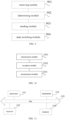
- FIG. 9 is a block diagram of a positioning apparatus according to an embodiment of the present disclosure.
- the apparatus may be implemented as a terminal device or a portion of a terminal device.
- the apparatus includes: a receiving module 901, a determining module 902 and a sending module 903.
- the receiving module 901 is configured to receive n synchronization signal blocks, n being an integer greater than or equal to 2.
- the determining module 902 is configured to determine n positioning random access resources corresponding to the n synchronization signal blocks.
- the positioning random access resources are random access resources for positioning.
- the sending module 903 is configured to send at least one positioning reference signal according to the n positioning random access resources.
- the sending module 903 is configured to send, with at least one random access channel resource corresponding to the n positioning random access resources, at least one preamble corresponding to the n positioning random access resources.
- n preambles are sent to different transmission reception points (TRPs) of different cells; or n preambles are sent to different TRPs of a same cell; or n preambles are sent to a same TRP of a same cell.
- TRPs transmission reception points
- the sending module 903 is configured to send, with the at least one random access channel resource corresponding to the n positioning random access resources, the at least one preamble corresponding to the n positioning random access resources by using different sending beams.
- the sending module 903 is configured to send, with the at least one random access channel recourse corresponding to the n positioning random access resources, the at least one preamble corresponding to the n positioning random access resources with identical or different transmission powers.
- the determining module 902 is configure to determine n random access feedback window durations corresponding to the n positioning random access resources; detect a random access feedback within the n random access feedback window durations, and determine at least one feedback timing, in which the at least one random access feedback is the feedback(s) for the at least one preamble, and the at least one feedback timing is the time at which the random access feedback is detected; and determine at least one time difference, in which the at least one time difference is the difference(s) between the feedback timing and a sending time of the preamble corresponding to the random access feedback, and the time difference is used for positioning calculation.
- the sending module 903 is configure to send the at least one time difference to one or more network devices; or send the at least one time difference to a location management function (LMF) network element.
- LMF location management function
- reference signal receiving powers (RSRPs) of the n synchronization signal blocks are greater than a threshold value of an RSRP.
- the n synchronization signal blocks are from different TRPs of different cells; or the n synchronization signal blocks are from different TRPs of a same cell; or the n synchronization signal blocks are from a same TRP of a same cell.
- the positioning random access resource includes: a random access time domain resource, a random access frequency domain resource, and a preamble. At least one of the random access time domain resource, the random access frequency domain resource or the preamble, corresponding to the n synchronization signal blocks, is different.
- a random access procedure of the synchronization signal block includes a 2-step random access procedure or a 4-step random access procedure.
- the random access procedure of the synchronization signal block includes the 2-step random access procedure
- the sending module 903 is further configured to send a notification message via an MsgA transmitted by a physical uplink shared channel (PUSCH).
- PUSCH physical uplink shared channel
- the random access procedure of the synchronization signal block includes the 4-step random access procedure
- the sending module 903 is further configured to send a notification message via an Msg3 transmitted by a PUSCH.
- the apparatus further includes a state switching module 904, configured to switch the terminal device back to an idle state after a random access procedure; or configured to switch the terminal device to a connected state to report a notification message after the random access procedure is completed and to switch the terminal device back to the idle state after the reporting; or configured to switch the terminal device to the connected state for service transmission after the random access procedure is completed.
- a state switching module 904 configured to switch the terminal device back to an idle state after a random access procedure; or configured to switch the terminal device to a connected state to report a notification message after the random access procedure is completed and to switch the terminal device back to the idle state after the reporting; or configured to switch the terminal device to the connected state for service transmission after the random access procedure is completed.
- the notification message includes at least one of a transmission power value for the preamble, a result value of positioning reference signal measurement, or an identification information of the terminal device.
- the result value of the positioning reference signal measurement includes at least one of a signal strength measurement value, a time measurement value or an angle measurement value acquired by measuring the positioning reference signal received by the terminal device.
- FIG. 10 is a block diagram of a positioning apparatus according to an embodiment of the present disclosure.
- the apparatus may be implemented as a network device or a portion of a network device.
- the apparatus includes: a transmission module 1001, configured to send n synchronization signal blocks to a terminal device, n being an integer greater than or equal to 2.
- the n synchronization signal blocks are provided for the terminal device to determine n positioning random access resources, and the positioning random access resources are random access resources for positioning.
- the apparatus further includes a reception module 1002 configured to receive, with at least one random access channel resource corresponding to the n positioning random access resources, at least one preamble corresponding to the n positioning random access resources.
- the reception module 1002 is configured to receive, with the at least one random access channel resource corresponding to the n positioning random access resources, the at least one preamble corresponding to the n positioning random access resources via different TRPs of different cells; or receive, with the at least one random access channel resource corresponding to the n positioning random access resources, the at least one preamble corresponding to the n positioning random access resources via different TRPs of a same cell; or receive, with the at least one random access channel resource corresponding to the n positioning random access resources, the at least one preamble corresponding to the n positioning random access resources via a same TRP of a same cell.
- the apparatus further includes: a measurement module 1003 configured to obtain a measurement value by measuring the at least one preamble corresponding to the n positioning random access resources.
- the measurement value includes at least one of a time measurement value, a signal strength measurement value or an angle measurement value of the preamble corresponding to the positioning random access resource.
- a random access procedure of the synchronization signal block includes a 2-step random access procedure
- the apparatus further includes a reception module 1002 configured to receive a notification message via an MsgA transmitted by a PUSCH.
- a random access procedure of the synchronization signal block includes: a 4-step random access procedure, and the apparatus further includes a reception module 1002 configured to receive a notification message via an Msg3 transmitted by a PUSCH.
- the notification message includes at least one of a transmission power value for the preamble, a result value of positioning reference signal measurement or an identification information of the terminal device.
- the result value of the positioning reference signal measurement includes at least one of a signal strength measurement value, a time measurement value or an angle measurement value acquired by measuring the positioning reference signal received by the terminal device.
- FIG. 11 is a block diagram of a communication device (a terminal device or a network device) according to an embodiment of the present disclosure.
- the communication device includes: a processor 101, a receiver 102, a transmitter 103, a memory 104, and a bus 105.
- the processor 101 includes one or more processing cores.
- the processor 101 performs various functional applications and processes information by running software programs and modules.
- the receiver 102 and the transmitter 103 may be implemented as a communication component, which may be a communication chip.
- the memory 104 is connected to the processor 101 via the bus 105.
- the memory 104 is configured to store at least one instruction.
- the processor 101 is configured to execute the at least one instruction to implement the operations in the method embodiments described above.
- the memory 104 may be implemented by any type of volatile or non-volatile storage device or a combination thereof.
- the volatile or non-volatile storage device includes, but is not limited to: a disk or an optical disk, an electrically erasable programmable read only memory (EEPROM), an erasable programmable read only memory (EPROM), a static random access memory (SRAM), a read-only memory (ROM), a magnetic memory, a flash memory, and a programmable read-only memory (PROM).
- a computer readable storage medium stores at least one instruction, at least one program, a code set or an instruction set.
- the at least one instruction, the at least one program, the code set or the instruction set are loaded and executed by the processor to allow the communication device to implement the positioning method as provided in each embodiment of the above method embodiments.
- a computer program product or a computer program is provided.
- the computer program product or the computer program includes computer instructions, and the computer instructions are stored in the computer readable storage medium.
- the processor of the computer device reads the computer instructions from the computer readable storage medium, and the processor executes the computer instructions such that the computer device can perform the positioning method provided in the above aspects of the present disclosure.
- the program may be stored in a computer readable storage medium, which may be a ROM, a disk or a CD-ROM.
Landscapes
- Engineering & Computer Science (AREA)
- Signal Processing (AREA)
- Computer Networks & Wireless Communication (AREA)
- Mobile Radio Communication Systems (AREA)
Applications Claiming Priority (1)
| Application Number | Priority Date | Filing Date | Title |
|---|---|---|---|
| PCT/CN2020/099779 WO2022000380A1 (zh) | 2020-07-01 | 2020-07-01 | 定位方法、装置、通信设备及存储介质 |
Publications (2)
| Publication Number | Publication Date |
|---|---|
| EP4178285A1 true EP4178285A1 (de) | 2023-05-10 |
| EP4178285A4 EP4178285A4 (de) | 2024-04-10 |
Family
ID=73387197
Family Applications (1)
| Application Number | Title | Priority Date | Filing Date |
|---|---|---|---|
| EP20942673.3A Pending EP4178285A4 (de) | 2020-07-01 | 2020-07-01 | Positionierungsverfahren und -vorrichtung sowie kommunikationsvorrichtung und speichermedium |
Country Status (4)
| Country | Link |
|---|---|
| US (1) | US20230292281A1 (de) |
| EP (1) | EP4178285A4 (de) |
| CN (1) | CN111972015B (de) |
| WO (1) | WO2022000380A1 (de) |
Cited By (1)
| Publication number | Priority date | Publication date | Assignee | Title |
|---|---|---|---|---|
| EP4181567A4 (de) * | 2020-07-07 | 2024-03-13 | Beijing Xiaomi Mobile Software Co., Ltd. | Positionierungsverfahren und -vorrichtung, kommunikationsvorrichtung und speichermedium |
Families Citing this family (8)
| Publication number | Priority date | Publication date | Assignee | Title |
|---|---|---|---|---|
| WO2022146213A1 (en) * | 2020-12-30 | 2022-07-07 | Telefonaktiebolaget Lm Ericsson (Publ) | Random access for wireless communication network |
| US12464570B2 (en) * | 2021-05-05 | 2025-11-04 | Qualcomm Incorporated | Multiple simultaneous SSBs with SSB-specific RACH occasions or preamble subsets |
| EP4376507A4 (de) * | 2021-07-20 | 2024-11-06 | Beijing Xiaomi Mobile Software Co., Ltd. | Ortungsverfahren und -vorrichtung |
| CN117716671A (zh) * | 2022-07-14 | 2024-03-15 | 北京小米移动软件有限公司 | 上行定位方法、装置及存储介质 |
| CN118042636A (zh) * | 2022-11-10 | 2024-05-14 | 维沃移动通信有限公司 | 随机接入方法、终端及网络侧设备 |
| CN120814322A (zh) * | 2023-03-08 | 2025-10-17 | 华为技术有限公司 | 利用2步rach进行早期感知和定位的方法、装置和介质 |
| CN119789224A (zh) * | 2023-09-28 | 2025-04-08 | 华为技术有限公司 | 通信方法及装置 |
| CN121604177A (zh) * | 2024-08-21 | 2026-03-03 | 华为技术有限公司 | 通信方法和通信装置 |
Family Cites Families (15)
| Publication number | Priority date | Publication date | Assignee | Title |
|---|---|---|---|---|
| CN101883423B (zh) * | 2009-05-07 | 2012-07-04 | 电信科学技术研究院 | 一种确定终端的位置信息的方法、系统和装置 |
| CN102231917B (zh) * | 2011-07-05 | 2015-05-20 | 电信科学技术研究院 | 一种随机接入的方法及装置 |
| CN102307387A (zh) * | 2011-09-07 | 2012-01-04 | 电信科学技术研究院 | 一种家庭基站定位方法、装置及系统 |
| US10143015B2 (en) * | 2016-03-18 | 2018-11-27 | Qualcomm Incorporated | Contention-based random access in unlicensed spectrum |
| US11122535B2 (en) * | 2016-07-15 | 2021-09-14 | Qualcomm Incorporated | Techniques for locating devices using narrowband positioning reference signals |
| US20190174456A1 (en) * | 2016-08-16 | 2019-06-06 | Telefonaktiebolaget Lm Ericsson (Publ) | Methods and Apparatus for Positioning of a Wireless Communication Device using Timing Advance Multilateration |
| KR102603689B1 (ko) * | 2017-04-01 | 2023-11-17 | 삼성전자 주식회사 | 랜덤 액세스 방법, 네트워크 노드 및 사용자 장치 |
| WO2019147010A1 (ko) * | 2018-01-24 | 2019-08-01 | 엘지전자 주식회사 | 비면허 대역에서 임의 접속 채널 및 상향링크 채널을 송수신하는 방법 및 이를 위한 장치 |
| US11057938B2 (en) * | 2018-05-23 | 2021-07-06 | Qualcomm Incorporated | Wireless communication including random access |
| US12108456B2 (en) * | 2018-08-07 | 2024-10-01 | Beijing Xiaomi Mobile Software Co., Ltd. | Information reporting method and apparatus, and terminal and storage medium |
| WO2020065894A1 (ja) * | 2018-09-27 | 2020-04-02 | 三菱電機株式会社 | 基地局、端末装置および測位方法 |
| CN111294787B (zh) * | 2018-12-10 | 2024-03-12 | 中兴通讯股份有限公司 | 一种用户设备ue定位方法及装置 |
| JP7659556B2 (ja) * | 2019-12-05 | 2025-04-09 | クゥアルコム・インコーポレイテッド | 複数の周波数領域スタガランダムアクセスチャネル(rach)リソースとのサウンディング基準信号(srs)の関連付け |
| US11832295B2 (en) * | 2020-05-20 | 2023-11-28 | Qualcomm Incorporated | Partial random access channel procedure |
| EP4191927A4 (de) * | 2020-08-03 | 2024-08-28 | LG Electronics, Inc. | Verfahren zum senden und empfangen eines signals in einem drahtloskommunikationssystem und vorrichtung zur unterstützung davon |
-
2020
- 2020-07-01 WO PCT/CN2020/099779 patent/WO2022000380A1/zh not_active Ceased
- 2020-07-01 EP EP20942673.3A patent/EP4178285A4/de active Pending
- 2020-07-01 CN CN202080001435.1A patent/CN111972015B/zh active Active
- 2020-07-01 US US18/013,897 patent/US20230292281A1/en active Pending
Cited By (1)
| Publication number | Priority date | Publication date | Assignee | Title |
|---|---|---|---|---|
| EP4181567A4 (de) * | 2020-07-07 | 2024-03-13 | Beijing Xiaomi Mobile Software Co., Ltd. | Positionierungsverfahren und -vorrichtung, kommunikationsvorrichtung und speichermedium |
Also Published As
| Publication number | Publication date |
|---|---|
| EP4178285A4 (de) | 2024-04-10 |
| US20230292281A1 (en) | 2023-09-14 |
| CN111972015A (zh) | 2020-11-20 |
| CN111972015B (zh) | 2022-10-25 |
| WO2022000380A1 (zh) | 2022-01-06 |
Similar Documents
| Publication | Publication Date | Title |
|---|---|---|
| JP7685648B2 (ja) | ビーム失敗決定方法、装置、デバイス及び記憶媒体 | |
| EP4178285A1 (de) | Positionierungsverfahren und -vorrichtung sowie kommunikationsvorrichtung und speichermedium | |
| US12082152B2 (en) | Paging occasion design in new radio | |
| US12010728B2 (en) | Random access method and device | |
| US12432028B2 (en) | Positioning method, communication device, and storage medium | |
| US11140706B2 (en) | Data transmissions during base station beamsweep | |
| US20250184878A1 (en) | Network guided initial network/cell-search | |
| US20190021040A1 (en) | Device and method for transmitting geographical information by d2d terminal in wireless communication system | |
| CN109417782B (zh) | 通信方法、通信装置、通信设备及计算机存储介质 | |
| US20180139775A1 (en) | Method for transmitting downlink in unlicensed band | |
| KR20230030650A (ko) | 업링크 신호 송수신 방법 및 장치 | |
| WO2022027335A1 (zh) | 用于终端的切换方法、装置、设备及介质 | |
| KR20250056951A (ko) | 스위치 제어 방법, 정보 표시 방법, 리피터 및 네트워크 디바이스 | |
| RU2810605C1 (ru) | Способ и устройство для определения отказа луча | |
| EP4485010B1 (de) | Positionierungsverfahren und -vorrichtung zur absoluten position, vorrichtung und medium | |
| US20250031140A1 (en) | Method and apparatus for performing rrc connection resumption in mobile wireless communication system | |
| EP4478800A1 (de) | Kommunikationssystem | |
| HK40002773A (en) | Communication method and communication apparatus |
Legal Events
| Date | Code | Title | Description |
|---|---|---|---|
| STAA | Information on the status of an ep patent application or granted ep patent |
Free format text: STATUS: THE INTERNATIONAL PUBLICATION HAS BEEN MADE |
|
| PUAI | Public reference made under article 153(3) epc to a published international application that has entered the european phase |
Free format text: ORIGINAL CODE: 0009012 |
|
| STAA | Information on the status of an ep patent application or granted ep patent |
Free format text: STATUS: REQUEST FOR EXAMINATION WAS MADE |
|
| 17P | Request for examination filed |
Effective date: 20230118 |
|
| AK | Designated contracting states |
Kind code of ref document: A1 Designated state(s): AL AT BE BG CH CY CZ DE DK EE ES FI FR GB GR HR HU IE IS IT LI LT LU LV MC MK MT NL NO PL PT RO RS SE SI SK SM TR |
|
| DAV | Request for validation of the european patent (deleted) | ||
| DAX | Request for extension of the european patent (deleted) | ||
| REG | Reference to a national code |
Ref country code: DE Ref legal event code: R079 Free format text: PREVIOUS MAIN CLASS: H04W0064000000 Ipc: H04L0005000000 |
|
| A4 | Supplementary search report drawn up and despatched |
Effective date: 20240311 |
|
| RIC1 | Information provided on ipc code assigned before grant |
Ipc: H04W 74/0833 20240101ALN20240304BHEP Ipc: H04W 64/00 20090101ALN20240304BHEP Ipc: G01S 5/02 20100101ALI20240304BHEP Ipc: H04L 5/00 20060101AFI20240304BHEP |
|
| STAA | Information on the status of an ep patent application or granted ep patent |
Free format text: STATUS: EXAMINATION IS IN PROGRESS |