EP4183247A1 - Procédé et appareil de tri de semences - Google Patents
Procédé et appareil de tri de semences Download PDFInfo
- Publication number
- EP4183247A1 EP4183247A1 EP21208719.1A EP21208719A EP4183247A1 EP 4183247 A1 EP4183247 A1 EP 4183247A1 EP 21208719 A EP21208719 A EP 21208719A EP 4183247 A1 EP4183247 A1 EP 4183247A1
- Authority
- EP
- European Patent Office
- Prior art keywords
- blue
- sample
- subset
- seed
- nir
- Prior art date
- Legal status (The legal status is an assumption and is not a legal conclusion. Google has not performed a legal analysis and makes no representation as to the accuracy of the status listed.)
- Withdrawn
Links
Images


Classifications
-
- A—HUMAN NECESSITIES
- A01—AGRICULTURE; FORESTRY; ANIMAL HUSBANDRY; HUNTING; TRAPPING; FISHING
- A01H—NEW PLANTS OR NON-TRANSGENIC PROCESSES FOR OBTAINING THEM; PLANT REPRODUCTION BY TISSUE CULTURE TECHNIQUES
- A01H1/00—Processes for modifying genotypes ; Plants characterised by associated natural traits
- A01H1/04—Processes of selection involving genotypic or phenotypic markers; Methods of using phenotypic markers for selection
-
- G—PHYSICS
- G01—MEASURING; TESTING
- G01N—INVESTIGATING OR ANALYSING MATERIALS BY DETERMINING THEIR CHEMICAL OR PHYSICAL PROPERTIES
- G01N21/00—Investigating or analysing materials by the use of optical means, i.e. using sub-millimetre waves, infrared, visible or ultraviolet light
- G01N21/17—Systems in which incident light is modified in accordance with the properties of the material investigated
- G01N21/25—Colour; Spectral properties, i.e. comparison of effect of material on the light at two or more different wavelengths or wavelength bands
- G01N21/31—Investigating relative effect of material at wavelengths characteristic of specific elements or molecules, e.g. atomic absorption spectrometry
- G01N21/35—Investigating relative effect of material at wavelengths characteristic of specific elements or molecules, e.g. atomic absorption spectrometry using infrared light
- G01N21/359—Investigating relative effect of material at wavelengths characteristic of specific elements or molecules, e.g. atomic absorption spectrometry using infrared light using near infrared light
-
- G—PHYSICS
- G16—INFORMATION AND COMMUNICATION TECHNOLOGY [ICT] SPECIALLY ADAPTED FOR SPECIFIC APPLICATION FIELDS
- G16B—BIOINFORMATICS, i.e. INFORMATION AND COMMUNICATION TECHNOLOGY [ICT] SPECIALLY ADAPTED FOR GENETIC OR PROTEIN-RELATED DATA PROCESSING IN COMPUTATIONAL MOLECULAR BIOLOGY
- G16B40/00—ICT specially adapted for biostatistics; ICT specially adapted for bioinformatics-related machine learning or data mining, e.g. knowledge discovery or pattern finding
- G16B40/10—Signal processing, e.g. from mass spectrometry [MS] or from PCR
-
- G—PHYSICS
- G01—MEASURING; TESTING
- G01N—INVESTIGATING OR ANALYSING MATERIALS BY DETERMINING THEIR CHEMICAL OR PHYSICAL PROPERTIES
- G01N21/00—Investigating or analysing materials by the use of optical means, i.e. using sub-millimetre waves, infrared, visible or ultraviolet light
- G01N21/84—Systems specially adapted for particular applications
- G01N2021/8466—Investigation of vegetal material, e.g. leaves, plants, fruits
Definitions
- the present invention relates to an improved method for categorizing/sorting seeds, particularly blue and white seeds in the basic seed production step of a BLue Aleurone (BLA) hybrid cereal system.
- BLA BLue Aleurone
- the present invention is also directed to an apparatus for categorizing/sorting seeds and a corresponding mobile device comprising said apparatus.
- WO 92/01366 A1 discloses a male sterility system which allows the maintenance of male sterility that can be used in the production of hybrid cereal plants, in particular hybrid wheat plants.
- Male sterility can be achieved by possessing a homozygous deletion on the short arm of chromosome 4B in wheat. The deletion typically used is the 'Probus' deletion ( Fossati A, Ingold M. 1970. A male sterile mutant in Triticum aestivum. Wheat Inform Serv 30:8-10 ).
- the ms1 gene located in the region concerned by the deletion has been identified as the causative gene. If this gene is deleted physically or knocked out/down by a mutation or targeted modification (e.g. WO 2016/048891 A1 ), then a reliable male sterility can be established. Fertility can then be easily restored when a wheat line carrying homozygously the deletion or the mutation/modification, is crossed with any normal wheat. Resulting progenies or hybrids are fertile as the deletion or the mutation/modification is only heterozygously present. Thus, plants or plant lines comprising the above deletion or mutation/modification are suitable for use in producing hybrid plants.
- a mutation or targeted modification e.g. WO 2016/048891 A1
- WO 92/01366 A1 teaches the use of a male parent that is isogenic to the female but having an alien addition chromosome bearing a dominant male fertility restorer gene from Triticum boeticum on the short arm and the BLue Aleurone (BLA) gene from Agropyron elongatum on the long arm, in a cross with the female parent for maintenance of the male sterile female parent, whereby the BLA gene, if expressed, confers a characteristic blue coloration of the progeny seed.
- BLA BLue Aleurone
- the BLA hybrid cereal system relies on the effect sorting of blue and normal colored seed, wherein the normal colored seed is subsequently referred to as "white” seed but covers the normal spectrum of seed color, produced during the basic seed production stage.
- blue seed is planted, and a mix of blue and white seed is harvested.
- the white seed will grow into male sterile seed and become the female component of hybrid seed production.
- the blue seed can be replanted for another round of blue-white seed production.
- the color of the blue seed is caused by a blue color marker, which is co-expressed with a fertility-related gene.
- the blue and white seed can be mechanically separated using commercially available seed sorters equipped with optical cameras that detect the seed color.
- normal environmental conditions can result in the white seed becoming mis-colored, and blue seed can lose some of their distinct blue color. Either of these can result in difficulties when a separation is made based on visual light spectrum.
- Seed purity directly affects the quality of seed breeding and subsequent processing products.
- the impurities or hybrids may be mixed in the normal seed, which results in the economic losses to agricultural production and processing. Therefore, it is crucial to sort impurities and hybrids to ensure that the seed purity meets the market criteria.
- double blue seed due to genetic defects, unwanted dark blue seed may be generated in some cases, which is subsequently referred to as double blue seed. Since such double blue seed cannot be used in breeding pool development, it is desired to discard the same.
- the invention is directed to a method for categorizing/sorting seeds, the method comprising the steps of: providing a sample including at least one seed (single kernel); obtaining a near infrared (NIR) spectrum of at least a subset of the sample; determining presence of an organic colorant in at least the subset of the sample based on the obtained NIR spectrum; and categorizing/sorting at least the subset of the sample based on the determination.
- NIR near infrared
- the present solution uses light in the NIR spectrum to determine whether an organic colorant is present.
- NIR spectroscopy is a spectroscopic method that uses the near infrared region of the electromagnetic spectrum (ranging from 780 nm to 2500 nm). Typical applications include medical and physiological diagnostics and research. NIR spectroscopy is based on molecular overtone and combination vibrations. Such transitions are forbidden by the selection rules of quantum mechanics. As a result, the molar absorptivity in the NIR region is typically quite small.
- One advantage is that NIR can typically penetrate much further into a sample than mid-infrared radiation. NIR spectroscopy is therefore very useful in probing bulk material with little or no sample preparation. Using NIR spectrometry for detecting colorants advantageously allows for identifying a well-defined target marker with quantitative precision in a destruction-free measurement that can be carried out in addition to visual inspection.
- Plant pigments are colored substances produced by plants and are important in controlling photosynthesis, growth, and development.
- the term plant pigment may have the same meaning as organic colorant.
- the organic colorant may comprise at least one colorant of the group including betalains, carotenoids, anthocyanins, flavonoids, anthraquinone and/or chlorophylls, and others known to the skilled person.
- the blue seed color may be a result of an anthocyanin in the aleurone layer of a cereal seed, wherein the present invention is not limited thereto.
- Anthocyanins are, for example, used as natural color pigment for the food industry and are a water-soluble flavonoid compound that is responsible for the appearance of certain colors in nature and may appear - depending on the pH - as red, purple, or blue.
- anthocyanins are susceptible to gradual degradation when exposed to certain food processing methods or even through prolonged/improper storage.
- Chemical assays exist, which allow to determine a total anthocyanin content but said assays often require destroying the sample.
- spectroscopy-based assays are simple, fast, and non-destructive analytical tools and hence, may be used in determining the total anthocyanin content e.g. in cereal grains. It was surprisingly found that anthocyanin content can be determined with high precision using NIR spectrometry even when gradual degradation impeded visual inspection.
- the present invention provides an approach for detecting and sorting seed having an elevated level of a certain organic colorant, such as (but not limited to) anthocyanin, which is caused by a blue color marker being co-expressed with a fertility-related gene. Since the presence of an organic colorant - such as anthocyanin - is determined, the present invention is also able to detect when e.g. a blue color fades. This is the case because there is a correlation between NIR spectra and the amount of anthocyanins in seed. Accordingly, by using the NIR spectrum, it is possible to detect a difference in concentration between single blue seed and double blue seed, particularly since the level of anthocyanins in double blue seed is approximately twice as high as in single blue seed.
- a certain organic colorant such as (but not limited to) anthocyanin
- the method may further comprise the step of identifying a signal associated with the organic colorant in the obtained NIR spectrum, wherein the categorizing/sorting of at least the subset of the sample is based on the identified signal. Since the identified signal corresponds to an NIR spectroscopy reflectance measurement, it is possible to determine whether a certain organic colorant is present. Alternatively, an absorption measurement may be likewise conducted to determine whether a certain organic colorant is present. Therein, the identified signal is in the range of 15500 cm -1 to 400 cm -1 , including sub-ranges of 15500 cm -1 to 6000 cm -1 and 6000 cm -1 to 400 cm -1 .
- the identified signal is in one of the ranges 15385 cm -1 to 10526 cm -1 (650-950 nm), 8547 cm -1 to 8000 cm -1 (1170-1250 nm), 7519 cm -1 to 7092 cm -1 (1330-1410 nm), 6250 cm -1 to 5917 cm -1 (1600-1690 nm) and 5263 cm -1 to 4167 cm -1 (1900-2400 nm).
- the method may further comprise the step of: determining an amount of the organic colorant in at least the subset of the sample based on the obtained NIR spectrum, wherein the categorizing/sorting of at least the subset of the sample is based on the determined amount of the organic colorant.
- determining an amount of the organic colorant in at least the subset of the sample based on the obtained NIR spectrum, wherein the categorizing/sorting of at least the subset of the sample is based on the determined amount of the organic colorant.
- the NIR spectrum is obtained for a bulk sample, wherein the method further comprises the steps of: normalizing the determined amount of the organic colorant with respect to a size of the bulk sample; comparing the normalized amount of organic colorant with a predefined threshold; and categorizing/sorting the bulk sample based on the comparison.
- bulk measurements can be carried out for quality control, so that it can be determined that less than a certain percentage or amount of e.g. blue seed, comprising single blue seed and double blue seed, is contained in a bag declared as white seed.
- the size of the bulk sample is preferably determined as a mass and/or a volume of the bulk sample.
- the predefined threshold preferably allows for meeting quality standards. It is also possible to measure an overall intensity (i.e. a total amount) of a colorant, for example by determining that ten blue seeds are present in 1000 seeds.
- a further aspect of the present disclosure requires the steps of: obtaining a first NIR spectrum of a first subset of the sample and a second NIR spectrum of a second subset of the sample; determining presence of the organic colorant in the first subset by classifying the first NIR spectrum and in the second subset by classifying the second NIR spectrum; categorizing/sorting the first subset and the second subset based on the classification, wherein the classification of the NIR spectrum is performed using at least one of a principal component analysis (PCA), a partial-least-squares-regression (PLS-R) or partial least squares discriminant analysis (PLS-DA) model based on labeled spectra, a trained support vector machine classification (SVM-C) or support vector machine regression (SVM-R) model, a trained artificial neural network (ANN), or a k-nearest neighbors algorithm (k-NN).
- PCA principal component analysis
- PLS-R partial-least-squares-regression
- PLS-DA partial least square
- a plurality of NIR spectra is obtained for a plurality of subsets of the sample, wherein presence of the organic colorant is determined for each of the plurality of subsets based on classifying the respective NIR spectrum of the plurality of NIR spectra using at least one of PCA, PLS-R, PLS-DA, SVM-C, SVM-R, ANN, or k-NN, wherein each of the plurality of subsets is categorized based on the respective classification, and wherein each of the plurality of subsets is sorted based on its categorization.
- the method of the present disclosure may further comprise the step of: sorting the first subset and the second subset based on the classification, wherein a subset of the sample preferably consists of a single seed.
- the method may further comprise the step of: obtaining an image of at least the subset of the sample, wherein the presence of an organic colorant in at least the subset of the sample is determined based on the obtained NIR spectrum and based on the image.
- the image may be a photometric image.
- the NIR spectroscopy can be used in combination with visible light with more than one camera for sorting the seed.
- seed will go through more than one cycle of sorting which could be a first cycle with visible light and a second cycle with NIR spectroscopy only.
- a combination of visible light and NIR spectroscopy may be applied in at least one of the cycles or only NIR spectroscopy may be used in the cycles.
- a further aspect of the present invention is to provide a method for precise seed sorting by using NIR in combination with other state of the art sorting methods including visual sorting or imaging sorting (e.g. by combination with at least one camera), x-ray sorting, Raman Spectroscopy and any other suitable spectroscopic methods.
- the invention is directed to an apparatus for categorizing/sorting seeds, said apparatus comprising: a near infrared (NIR) spectrometer, including a light source configured to emit light with a wavelength in between 650 nm and 2500 nm; a detector configured to detect a NIR spectrum in a range of 15500 cm -1 to 400 cm -1 ; a sample holder configured to hold a sample relative to the light source and the detector to perform NIR measurements in a transmission and/or reflection mode; and means adapted to execute the steps of the method described above.
- NIR near infrared
- the apparatus may further comprise an image sensor configured to obtain an image of at least the subset of the sample and means adapted to execute the steps of the above method and/or a feeder system configured to feed at least the subset of the sample to the NIR spectrometer, preferably configured to feed at least the subset of the sample to the NIR spectrometer and the image sensor.
- a feeder system configured to feed at least the subset of the sample to the NIR spectrometer, preferably configured to feed at least the subset of the sample to the NIR spectrometer and the image sensor.
- any suitable sensor may be combined with NIRS to facilitate and improve sorting efficiency as well as for assessing quality parameters with respect to necessary quality check.
- a computer program comprising instructions to cause the above apparatus to execute the steps of the above method.
- the invention is directed to a mobile device comprising the above apparatus.
- the invention is directed to the use of the above method and/or the above apparatus according for categorizing/sorting seeds of a hybrid seed system, the hybrid seed system comprising seeds including an organic colorant.
- the hybrid seed system is a hybrid wheat system comprising a monosomic alien addition chromosome carrying a male fertility restorer gene and a color marker gene as a selection marker gene and that the color marker gene is able to confer a characteristic coloration and is co-expressed with a fertility-related gene.
- the present invention may be applied during basic seed production as opposed to sorting male seed from hybrid seed, and allows for efficient separation of white and blue seed even when the color difference is not so clear in the visual light spectrum. Further, sorting single blue and double blue seed allows to distinguish the seed based on a concentration of e.g. anthocyanins. By using the NIR spectrum, it is possible to detect a difference between blue seed and white seed regardless of the variety even without using visual light.
- first and second are used to describe various elements, these elements should not be limited by these terms. These terms are only used to distinguish one element from another element. For example, a first element may be named a second element and, similarly, a second element may be named a first element, without departing from the scope of the present invention.
- the term “substantially”, “about,” and similar terms are used as terms of approximation and not as terms of degree, and are intended to account for the inherent deviations in measured or calculated values that would be recognized by those of ordinary skill in the art. Further, if the term “substantially” is used in combination with a feature that could be expressed using a numeric value, the term “substantially” denotes a range of +/- 5% of the value centered on the value.
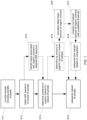
- Figure 1 schematically illustrates an embodiment of a method for categorizing/sorting seeds.
- a sample including a plurality of seeds is provided.
- a near infrared (NIR) spectrum of at least a subset of the sample is obtained.
- step S19 the method further comprises categorizing/sorting at least the subset of the sample based on the determination. It has to be noted that steps shown in dashed boxes in figure 1 represent optional steps.
- the method further comprises the step of identifying a signal associated with the organic colorant in the obtained NIR spectrum.
- the categorizing/sorting of at least the subset of the sample is based on the identified signal.
- the method may further comprise optional step S15 according to which an amount of the organic colorant in at least the subset of the sample is determined based on the obtained NIR spectrum.
- the categorizing/sorting of at least the subset of the sample can be based on the determined amount of the organic colorant.
- the method further comprises normalizing the determined amount of the organic colorant with respect to a size of the bulk sample as illustrated in step S16. Subsequently, according to step S17, the normalized amount of organic colorant is compared with a predefined threshold. After that, a categorization of the bulk sample is performed based on the comparison in step S18.
- Figure 2 illustrates the results of a principal component analysis (PCA) performed on a sample including a plurality of seeds/kernels.
- PCA principal component analysis
- the samples were measured using a Bruker MPA NIRS spectrometer and small beakers comprising 20g to 25g samples, which corresponds to about 500 seeds or kernels.
- the beakers were placed in a rotating holder of the spectrometer and measured in triplicate each (refilled and remeasured) and thus three spectra were recorded for each sample.
- Table 2 Spectrometer specification Detector type: Lead sulphide (PbS) Spectral range [nm]: 800 - 2780 Spectral range [wavenumber]: 12500 - 3600 Spectral resolution: 8 cm -1 Number of scans: 32
- the result of the PCA is used to determine the effectiveness/potential of different classification approaches.
- a classification of the samples was performed using a partial-least-squares-regression (PLS-R) model and a support vector machine regression (SVM-R) model, wherein no spectra pre-treatment was applied for both approaches.
- PLS-R partial-least-squares-regression
- SVM-R support vector machine regression
- a PLS-R model requires numbers as input and delivers numbers as predictions. Based on the labels 0 (for white), 1 (for single blue) and 2 (for double blue), predictions were classified using thresholds. For example, a prediction value smaller than 0,5 corresponds to white, a prediction value greater than or equal to 0,5 but smaller than 1,5 corresponds to single blue, and a prediction value greater than or equal to 1,5 corresponds to double blue. Accordingly, the thresholds are chosen in order to decide to which class a predicted spectrum belongs.
- the scores plot of figure 2 shows a clear difference between white seeds, which are represented by triangles, and blue seeds, which are represented by squares (single blue seed; sb) and circles (double blue seed; db).
- the numbers in the confusion matrix show the number of samples classified and misclassified with the respective percentage of classified and misclassified shown in brackets.
- 48 blue kernels are properly predicted as blue and 24 white kernels are properly predicted as white.
- the PLS-R classification model for white, single blue and double blue shows a 100% accuracy in predicting the white samples.
- Table 6 White/single blue/double blue classification confusion matrix of PLS-R model Predicted class single blue double blue white True class single blue 22 (91,7% classified) 2 (8,3% misclassified) double blue 4 (16,7% misclassified) 20 (83,3% classified) white 24 (100% classified)
- SVM-R uses a support vector which allows a finer classification if there are, for example, non-linearities in the data.
- the white and blue classification according to the SVM-R model also shows a 100% accuracy.
- Table 7 White/blue classification confusion matrix of SVM-R model Predicted class blue white True class blue 48 (100% classified) white 24 (100% classified)
- Figure 3 illustrates the results of a PCA performed on single seeds (kernels).
- the scores room shows the differences between white and blue kernels (comprising both, single blue and double blue kernels). Since the triangles (corresponding to the white kernels) are located in the lower part of the scores plot, whereas the squares/circles (corresponding to the blue kernels) are located in the upper part of the scores plot, white and blue kernels are visually separated.
- the separation is not as obvious as in the embodiment of figure 2 , which pertains to whole sample measurements, i.e. measurements performed on a subset including a plurality of seeds or kernels.
- Single blue and double blue kernels are more difficult to separate in comparison to the whole sample measurement of figure 2 although there are differences in the respective spectra.
- Table 10 White/single blue/double blue classification confusion matrix of PLS-R model for single kernel Predicted class single blue double blue white True class single blue 14 (58,3% classified) 7 (29,2% misclassified; overall: 41,7%) 3 (12,5% misclassified; overall: 41,7%) double blue 4 (16,7% misclassified) 20 (83,3% classified) white 4 (16,7% misclassified) 20 (83,3% classified)
- Said model has accuracies below 80% (i.e. 75% of the single blue kernels being properly classified and 79,2% of the double blue kernels being properly classified) and hence, is slightly inferior to the three-class PLS-R model described above in section f), which has accuracies of 83,3% for both single blue and double blue.
- the SVM-R model shows a comparable performance in comparison to the PLS-R model described in section e).
- Table 12 White/blue classification confusion matrix of SVM-R model for single kernel i) Single kernel; White, single blue and double blue; SVM-R Predicted class blue white True class blue 47 (95,8% classified) 1 (4,2% misclassified) white 1 (8,3% misclassified) 23 (91,7% classified)
- Table 13 White/single blue/double blue classification confusion matrix of SVM-R model for single kernel Predicted class single blue double blue white True class single blue 17 (70,8% classified) 6 (25,0% misclassified) 1 (4,2% misclassified) double blue 8 (33,3% misclassified) 16 (66,7% classified) white 2 (8,3% misclassified) 1 (4,2% misclassified) 21 (87,5% classified)
- the three-class model shows a 87,5% accuracy for white, a 70,8% accuracy for single blue and a 66,7% accuracy for double blue samples.
- a three-class model (comprising white, single blue and double blue) shows a better performance to distinguish between single blue and double blue kernels in comparison to a model that is based just on two classes, i.e. to distinguish single blue and double blue.
- the PLS-R and the SVM-R model both show that there is the potential to distinguish between white and blue samples with nearly 100% accuracy.
- adding extra information from NIR radiation improves existing color sorting techniques that are based on visual light only.
- FIG. 4 schematically illustrates at which stages of a seeding/harvesting cycle the present invention may be applied.
- step S21 blue seed is planted during a pre-basic seed production. This results in a mix of blue and white seed being harvested.
- the blue seed which can be replanted for blue-white seed production, is of particular interest.
- the presented method for categorizing/sorting seeds is applied in step S22 and hence, a seed sorting is performed. Subsequently, white seed and double blue seed are discarded in steps S23a and S23b, respectively.
- step S24 the single blue seed is kept and re-planted for blue-white basic seed production, which - again - results in a mix of blue and white seed being harvested.
- the white seed is of interest, which will grow into male sterile seed and become the female component of hybrid seed production.
- a further sorting is performed in step S25 by using the inventive method for categorizing/sorting seeds.
- step S26 blue seed, i.e. single and double blue seed, is discarded in step S26.
- step S27 white seed is kept and planted for hybrid seed production, e.g. for the actual production of wheat.
- the sorting in at least one of the steps S22 and S25 may be performed solely based on NIR spectroscopy but also based on a combination of NIR spectroscopy and an imaging in the visual light spectrum. Further, in at least one of the steps S22 and S25, the sorting may comprise more than one categorization cycle, wherein a categorization cycle includes NIR spectroscopy or NIR spectroscopy combined with a visual separation.
Landscapes
- Physics & Mathematics (AREA)
- Health & Medical Sciences (AREA)
- Life Sciences & Earth Sciences (AREA)
- Spectroscopy & Molecular Physics (AREA)
- Engineering & Computer Science (AREA)
- General Health & Medical Sciences (AREA)
- Medical Informatics (AREA)
- Genetics & Genomics (AREA)
- Bioinformatics & Cheminformatics (AREA)
- Theoretical Computer Science (AREA)
- Computer Vision & Pattern Recognition (AREA)
- Data Mining & Analysis (AREA)
- Databases & Information Systems (AREA)
- Epidemiology (AREA)
- Evolutionary Computation (AREA)
- Bioethics (AREA)
- Public Health (AREA)
- Software Systems (AREA)
- Artificial Intelligence (AREA)
- Bioinformatics & Computational Biology (AREA)
- Biotechnology (AREA)
- Evolutionary Biology (AREA)
- Signal Processing (AREA)
- Biophysics (AREA)
- Chemical & Material Sciences (AREA)
- Analytical Chemistry (AREA)
- Biochemistry (AREA)
- General Physics & Mathematics (AREA)
- Immunology (AREA)
- Pathology (AREA)
- Molecular Biology (AREA)
- Botany (AREA)
- Developmental Biology & Embryology (AREA)
- Environmental Sciences (AREA)
- Investigating Or Analysing Materials By Optical Means (AREA)
- Pretreatment Of Seeds And Plants (AREA)
- Sorting Of Articles (AREA)
Priority Applications (8)
| Application Number | Priority Date | Filing Date | Title |
|---|---|---|---|
| EP21208719.1A EP4183247A1 (fr) | 2021-11-17 | 2021-11-17 | Procédé et appareil de tri de semences |
| PCT/EP2022/081978 WO2023088892A1 (fr) | 2021-11-17 | 2022-11-15 | Procédé et appareil de tri de graines |
| US18/710,322 US20250003871A1 (en) | 2021-11-17 | 2022-11-15 | Method and apparatus for sorting seeds |
| CA3237218A CA3237218A1 (fr) | 2021-11-17 | 2022-11-15 | Procede et appareil de tri de graines |
| EP22818278.8A EP4432818A1 (fr) | 2021-11-17 | 2022-11-15 | Procédé et appareil de tri de graines |
| AU2022393131A AU2022393131A1 (en) | 2021-11-17 | 2022-11-15 | Method and apparatus for sorting seeds |
| CN202280076268.6A CN118265445A (zh) | 2021-11-17 | 2022-11-15 | 用于分选种子的方法和设备 |
| ARP220103161A AR127699A1 (es) | 2021-11-17 | 2022-11-16 | Método y aparato para clasificar semillas |
Applications Claiming Priority (1)
| Application Number | Priority Date | Filing Date | Title |
|---|---|---|---|
| EP21208719.1A EP4183247A1 (fr) | 2021-11-17 | 2021-11-17 | Procédé et appareil de tri de semences |
Publications (1)
| Publication Number | Publication Date |
|---|---|
| EP4183247A1 true EP4183247A1 (fr) | 2023-05-24 |
Family
ID=78822306
Family Applications (2)
| Application Number | Title | Priority Date | Filing Date |
|---|---|---|---|
| EP21208719.1A Withdrawn EP4183247A1 (fr) | 2021-11-17 | 2021-11-17 | Procédé et appareil de tri de semences |
| EP22818278.8A Pending EP4432818A1 (fr) | 2021-11-17 | 2022-11-15 | Procédé et appareil de tri de graines |
Family Applications After (1)
| Application Number | Title | Priority Date | Filing Date |
|---|---|---|---|
| EP22818278.8A Pending EP4432818A1 (fr) | 2021-11-17 | 2022-11-15 | Procédé et appareil de tri de graines |
Country Status (7)
| Country | Link |
|---|---|
| US (1) | US20250003871A1 (fr) |
| EP (2) | EP4183247A1 (fr) |
| CN (1) | CN118265445A (fr) |
| AR (1) | AR127699A1 (fr) |
| AU (1) | AU2022393131A1 (fr) |
| CA (1) | CA3237218A1 (fr) |
| WO (1) | WO2023088892A1 (fr) |
Families Citing this family (4)
| Publication number | Priority date | Publication date | Assignee | Title |
|---|---|---|---|---|
| WO2025181345A1 (fr) | 2024-03-01 | 2025-09-04 | Basf Se | Tri de graines de céréales |
| WO2025247995A1 (fr) | 2024-05-29 | 2025-12-04 | Basf Se | Procédé de tri de graines de céréales, dispositif de tri pour trier des graines de céréales, programme informatique correspondant, support de stockage lisible par ordinateur correspondant et utilisation du dispositif de tri |
| WO2026062237A1 (fr) * | 2024-09-20 | 2026-03-26 | KWS SAAT SE & Co. KGaA | Système stérile mâle à codage de couleur amélioré pour la sélection ciblée de plantes céréalières |
| CN120356566A (zh) * | 2025-04-18 | 2025-07-22 | 长春理工大学 | 一种基于中红外光谱检测技术的水稻储存年份分类方法、系统、设备以及存储介质 |
Citations (5)
| Publication number | Priority date | Publication date | Assignee | Title |
|---|---|---|---|---|
| WO1992001366A1 (fr) | 1990-07-17 | 1992-02-06 | Pacific Seeds Pty. Ltd. | Production de cultures de cereales hybrides |
| US20130080070A1 (en) * | 2011-09-23 | 2013-03-28 | Dow Agrosciences Llc | Chemometrics for near infrared spectral analysis |
| WO2016048891A1 (fr) | 2014-09-26 | 2016-03-31 | Pioneer Hi-Bred International, Inc. | Polynucléotides ms1 de blé, polypeptides et leurs procédés d'utilisation |
| WO2017160844A1 (fr) * | 2016-03-15 | 2017-09-21 | University Of Florida Research Foundation, Incorporated | Classification de graines haploïdes à l'aide d'une spectroscopie proche infrarouge d'une graine unique |
| US20200255856A1 (en) * | 2017-08-29 | 2020-08-13 | KWS SAAT SE & Co. KGaA | Improved blue aleurone and other segregation systems |
Family Cites Families (6)
| Publication number | Priority date | Publication date | Assignee | Title |
|---|---|---|---|---|
| CN1831515A (zh) * | 2006-04-03 | 2006-09-13 | 浙江大学 | 用可见光和近红外光谱技术无损鉴别作物种子品种的方法 |
| CN102179375B (zh) * | 2011-03-09 | 2013-03-13 | 中国科学院合肥物质科学研究院 | 一种基于近红外作物单籽粒成分无损检测筛选方法 |
| CN102645416A (zh) * | 2012-03-27 | 2012-08-22 | 北京林业大学 | 一种快速测定蓝莓中花青素含量的方法 |
| CN105699318B (zh) * | 2014-11-24 | 2018-10-16 | 严红兵 | 种子单籽粒无损检测方法及系统 |
| CN104588329A (zh) * | 2014-11-28 | 2015-05-06 | 中国科学院半导体研究所 | 基于近红外漫透射光谱的种子自动鉴别分选装置 |
| CN106018320B (zh) * | 2015-10-26 | 2019-02-12 | 沈阳农业大学 | 一种基于近红外光谱分析的类胡萝卜素检测方法 |
-
2021
- 2021-11-17 EP EP21208719.1A patent/EP4183247A1/fr not_active Withdrawn
-
2022
- 2022-11-15 EP EP22818278.8A patent/EP4432818A1/fr active Pending
- 2022-11-15 CN CN202280076268.6A patent/CN118265445A/zh active Pending
- 2022-11-15 CA CA3237218A patent/CA3237218A1/fr active Pending
- 2022-11-15 US US18/710,322 patent/US20250003871A1/en active Pending
- 2022-11-15 AU AU2022393131A patent/AU2022393131A1/en active Pending
- 2022-11-15 WO PCT/EP2022/081978 patent/WO2023088892A1/fr not_active Ceased
- 2022-11-16 AR ARP220103161A patent/AR127699A1/es unknown
Patent Citations (5)
| Publication number | Priority date | Publication date | Assignee | Title |
|---|---|---|---|---|
| WO1992001366A1 (fr) | 1990-07-17 | 1992-02-06 | Pacific Seeds Pty. Ltd. | Production de cultures de cereales hybrides |
| US20130080070A1 (en) * | 2011-09-23 | 2013-03-28 | Dow Agrosciences Llc | Chemometrics for near infrared spectral analysis |
| WO2016048891A1 (fr) | 2014-09-26 | 2016-03-31 | Pioneer Hi-Bred International, Inc. | Polynucléotides ms1 de blé, polypeptides et leurs procédés d'utilisation |
| WO2017160844A1 (fr) * | 2016-03-15 | 2017-09-21 | University Of Florida Research Foundation, Incorporated | Classification de graines haploïdes à l'aide d'une spectroscopie proche infrarouge d'une graine unique |
| US20200255856A1 (en) * | 2017-08-29 | 2020-08-13 | KWS SAAT SE & Co. KGaA | Improved blue aleurone and other segregation systems |
Non-Patent Citations (7)
| Title |
|---|
| BARBEDO JAYME G A ET AL: "DetectingFusariumhead blight in wheat kernels using hyperspectral imaging", BIOSYSTEMS ENGINEERING, ELSEVIER, AMSTERDAM, NL, vol. 131, 5 February 2015 (2015-02-05), pages 65 - 76, XP029200703, ISSN: 1537-5110, DOI: 10.1016/J.BIOSYSTEMSENG.2015.01.003 * |
| FOSS ANALYTICAL: "How NIR grain analysis protects durum wheat quality", 21 August 2015 (2015-08-21), XP055914176, Retrieved from the Internet <URL:https://www.youtube.com/watch?v=bHL0rSf7ZKI> [retrieved on 20220420] * |
| FOSSATI AINGOLD M: "A male sterile mutant in Triticum aestivum", WHEAT INFORM SERV, vol. 30, 1970, pages 8 - 10 |
| MILICA M POJIC ET AL: "Near Infrared Spectroscopy-Advanced Analytical Tool in Wheat Breeding, Trade, and Proces", FOOD AND BIOPROCESS TECHNOLOGY ; AN INTERNATIONAL JOURNAL, SPRINGER-VERLAG, NEW YORK, vol. 6, no. 2, 23 June 2012 (2012-06-23), pages 330 - 352, XP035165525, ISSN: 1935-5149, DOI: 10.1007/S11947-012-0917-3 * |
| P. SUNDHAKAR ET AL., PHENOTYPING CROP PLANTS FOR PHYSIOLOGICAL AND BIOCHEMICAL TRAITS |
| ZHANG TINGTING ET AL: "Non-destructive analysis of germination percentage, germination energy and simple vigour index on wheat seeds during storage by Vis/NIR and SWIR hyperspectral imaging", SPECTROCHIMICA ACTA PART A: MOLECULAR AND BIOMOLECULAR SPECTROSCOPY, ELSEVIER, AMSTERDAM, NL, vol. 239, 16 May 2020 (2020-05-16), XP086191359, ISSN: 1386-1425, [retrieved on 20200516], DOI: 10.1016/J.SAA.2020.118488 * |
| ZIEGLER JOCHEN U ET AL: "Near-infrared reflectance spectroscopy for the rapid discrimination of kernels and flours of different wheat species", JOURNAL OF FOOD COMPOSITION AND ANALYSIS, ELSEVIER, AMSTERDAM, NL, vol. 51, 11 July 2016 (2016-07-11), pages 30 - 36, XP029680532, ISSN: 0889-1575, DOI: 10.1016/J.JFCA.2016.06.005 * |
Also Published As
| Publication number | Publication date |
|---|---|
| EP4432818A1 (fr) | 2024-09-25 |
| US20250003871A1 (en) | 2025-01-02 |
| AU2022393131A1 (en) | 2024-05-02 |
| WO2023088892A1 (fr) | 2023-05-25 |
| CA3237218A1 (fr) | 2023-05-25 |
| CN118265445A (zh) | 2024-06-28 |
| AR127699A1 (es) | 2024-02-21 |
Similar Documents
| Publication | Publication Date | Title |
|---|---|---|
| EP4183247A1 (fr) | Procédé et appareil de tri de semences | |
| Huang et al. | UV excited fluorescence image-based non-destructive method for early detection of strawberry (Fragaria× ananassa) spoilage | |
| Mehl et al. | Detection of defects on selected apple cultivars using hyperspectral and multispectral image analysis | |
| Spielbauer et al. | High‐throughput near‐infrared reflectance spectroscopy for predicting quantitative and qualitative composition phenotypes of individual maize kernels | |
| CN100392376C (zh) | 分析农产品的方法和装置 | |
| Boote et al. | Haploid differentiation in maize kernels based on fluorescence imaging | |
| US8072605B2 (en) | Method and apparatus for determining quality of fruit and vegetable products | |
| De La Fuente et al. | Discrimination of haploid and diploid maize kernels via multispectral imaging | |
| KR20150104105A (ko) | 종자를 선별하기 위한 시스템 및 방법 | |
| CN109415753A (zh) | 鉴定细菌革兰氏类型的方法和系统 | |
| Sendin et al. | Hierarchical classification pathway for white maize, defect and foreign material classification using spectral imaging | |
| Pearson et al. | A multispectral sorting device for wheat kernels | |
| Zheng et al. | Automatic sorting of Chinese jujube (Zizyphus jujuba Mill. cv.‘hongxing’) using chlorophyll fluorescence and support vector machine | |
| US20190079006A1 (en) | Haploid seed classification using single seed near-infrared spectroscopy | |
| Delwiche et al. | Single kernel near‐infrared analysis of tetraploid (Durum) wheat for classification of the waxy condition | |
| Orth et al. | Multiblock spectral imaging for identification of pre-harvest sprouting in Hordeum vulgare | |
| Wang et al. | Predicting the Number of Dominant R Alleles in Single Wheat Kernels Using Visible and Near‐Infrared Reflectance Spectra | |
| JP2007071620A (ja) | 蚕蛹の雌雄を判別する方法と装置 | |
| JP2003023890A (ja) | 光学的手法を用いた植物個体の選別方法並びに光学的手法を用いて表現形質が選別された植物個体 | |
| KR102534006B1 (ko) | 밀의 발아율 예측 시스템 및 발아율 예측 방법 | |
| Ram et al. | Natural fluorescence of red and white wheat kernels | |
| Sobhani et al. | Collecting microplastics in gardens: Case study (ii) from ropes | |
| Dull et al. | Nondestructive evaluation of internal quality | |
| Gunasekaran | Delayed light emission as a means of quality evaluation of fruits and vegetables | |
| Gu et al. | Detection of Strigolactone-Treated wheat seeds via Dual-View hyperspectral data fusion and deep learning |
Legal Events
| Date | Code | Title | Description |
|---|---|---|---|
| PUAI | Public reference made under article 153(3) epc to a published international application that has entered the european phase |
Free format text: ORIGINAL CODE: 0009012 |
|
| STAA | Information on the status of an ep patent application or granted ep patent |
Free format text: STATUS: THE APPLICATION HAS BEEN PUBLISHED |
|
| AK | Designated contracting states |
Kind code of ref document: A1 Designated state(s): AL AT BE BG CH CY CZ DE DK EE ES FI FR GB GR HR HU IE IS IT LI LT LU LV MC MK MT NL NO PL PT RO RS SE SI SK SM TR |
|
| STAA | Information on the status of an ep patent application or granted ep patent |
Free format text: STATUS: THE APPLICATION IS DEEMED TO BE WITHDRAWN |
|
| 18D | Application deemed to be withdrawn |
Effective date: 20231125 |