EP4186877A2 - Gläser mit hohem dehnungspunkt und hohem elastizitätsmodul - Google Patents
Gläser mit hohem dehnungspunkt und hohem elastizitätsmodul Download PDFInfo
- Publication number
- EP4186877A2 EP4186877A2 EP23151934.9A EP23151934A EP4186877A2 EP 4186877 A2 EP4186877 A2 EP 4186877A2 EP 23151934 A EP23151934 A EP 23151934A EP 4186877 A2 EP4186877 A2 EP 4186877A2
- Authority
- EP
- European Patent Office
- Prior art keywords
- glass
- temperature
- mol
- mgo
- cao
- Prior art date
- Legal status (The legal status is an assumption and is not a legal conclusion. Google has not performed a legal analysis and makes no representation as to the accuracy of the status listed.)
- Granted
Links
Images


Classifications
-
- C—CHEMISTRY; METALLURGY
- C03—GLASS; MINERAL OR SLAG WOOL
- C03C—CHEMICAL COMPOSITION OF GLASSES, GLAZES OR VITREOUS ENAMELS; SURFACE TREATMENT OF GLASS; SURFACE TREATMENT OF FIBRES OR FILAMENTS MADE FROM GLASS, MINERALS OR SLAGS; JOINING GLASS TO GLASS OR OTHER MATERIALS
- C03C3/00—Glass compositions
- C03C3/04—Glass compositions containing silica
- C03C3/076—Glass compositions containing silica with 40% to 90% silica, by weight
- C03C3/095—Glass compositions containing silica with 40% to 90% silica, by weight containing rare earths
-
- C—CHEMISTRY; METALLURGY
- C03—GLASS; MINERAL OR SLAG WOOL
- C03C—CHEMICAL COMPOSITION OF GLASSES, GLAZES OR VITREOUS ENAMELS; SURFACE TREATMENT OF GLASS; SURFACE TREATMENT OF FIBRES OR FILAMENTS MADE FROM GLASS, MINERALS OR SLAGS; JOINING GLASS TO GLASS OR OTHER MATERIALS
- C03C3/00—Glass compositions
- C03C3/04—Glass compositions containing silica
- C03C3/076—Glass compositions containing silica with 40% to 90% silica, by weight
- C03C3/083—Glass compositions containing silica with 40% to 90% silica, by weight containing aluminium oxide or an iron compound
- C03C3/085—Glass compositions containing silica with 40% to 90% silica, by weight containing aluminium oxide or an iron compound containing an oxide of a divalent metal
- C03C3/087—Glass compositions containing silica with 40% to 90% silica, by weight containing aluminium oxide or an iron compound containing an oxide of a divalent metal containing calcium oxide, e.g. common sheet or container glass
-
- C—CHEMISTRY; METALLURGY
- C03—GLASS; MINERAL OR SLAG WOOL
- C03B—MANUFACTURE, SHAPING, OR SUPPLEMENTARY PROCESSES
- C03B17/00—Forming molten glass by flowing-out, pushing-out, extruding or drawing downwardly or laterally from forming slits or by overflowing over lips
- C03B17/06—Forming glass sheets
- C03B17/064—Forming glass sheets by the overflow downdraw fusion process; Isopipes therefor
-
- C—CHEMISTRY; METALLURGY
- C03—GLASS; MINERAL OR SLAG WOOL
- C03C—CHEMICAL COMPOSITION OF GLASSES, GLAZES OR VITREOUS ENAMELS; SURFACE TREATMENT OF GLASS; SURFACE TREATMENT OF FIBRES OR FILAMENTS MADE FROM GLASS, MINERALS OR SLAGS; JOINING GLASS TO GLASS OR OTHER MATERIALS
- C03C3/00—Glass compositions
- C03C3/04—Glass compositions containing silica
- C03C3/076—Glass compositions containing silica with 40% to 90% silica, by weight
- C03C3/089—Glass compositions containing silica with 40% to 90% silica, by weight containing boron
- C03C3/091—Glass compositions containing silica with 40% to 90% silica, by weight containing boron containing aluminium
-
- G—PHYSICS
- G02—OPTICS
- G02F—OPTICAL DEVICES OR ARRANGEMENTS FOR THE CONTROL OF LIGHT BY MODIFICATION OF THE OPTICAL PROPERTIES OF THE MEDIA OF THE ELEMENTS INVOLVED THEREIN; NON-LINEAR OPTICS; FREQUENCY-CHANGING OF LIGHT; OPTICAL LOGIC ELEMENTS; OPTICAL ANALOGUE/DIGITAL CONVERTERS
- G02F1/00—Devices or arrangements for the control of the intensity, colour, phase, polarisation or direction of light arriving from an independent light source, e.g. switching, gating or modulating; Non-linear optics
- G02F1/01—Devices or arrangements for the control of the intensity, colour, phase, polarisation or direction of light arriving from an independent light source, e.g. switching, gating or modulating; Non-linear optics for the control of the intensity, phase, polarisation or colour
- G02F1/13—Devices or arrangements for the control of the intensity, colour, phase, polarisation or direction of light arriving from an independent light source, e.g. switching, gating or modulating; Non-linear optics for the control of the intensity, phase, polarisation or colour based on liquid crystals, e.g. single liquid crystal display cells
- G02F1/133—Constructional arrangements; Operation of liquid crystal cells; Circuit arrangements
- G02F1/1333—Constructional arrangements; Manufacturing methods
-
- G—PHYSICS
- G02—OPTICS
- G02F—OPTICAL DEVICES OR ARRANGEMENTS FOR THE CONTROL OF LIGHT BY MODIFICATION OF THE OPTICAL PROPERTIES OF THE MEDIA OF THE ELEMENTS INVOLVED THEREIN; NON-LINEAR OPTICS; FREQUENCY-CHANGING OF LIGHT; OPTICAL LOGIC ELEMENTS; OPTICAL ANALOGUE/DIGITAL CONVERTERS
- G02F1/00—Devices or arrangements for the control of the intensity, colour, phase, polarisation or direction of light arriving from an independent light source, e.g. switching, gating or modulating; Non-linear optics
- G02F1/01—Devices or arrangements for the control of the intensity, colour, phase, polarisation or direction of light arriving from an independent light source, e.g. switching, gating or modulating; Non-linear optics for the control of the intensity, phase, polarisation or colour
- G02F1/13—Devices or arrangements for the control of the intensity, colour, phase, polarisation or direction of light arriving from an independent light source, e.g. switching, gating or modulating; Non-linear optics for the control of the intensity, phase, polarisation or colour based on liquid crystals, e.g. single liquid crystal display cells
- G02F1/133—Constructional arrangements; Operation of liquid crystal cells; Circuit arrangements
- G02F1/1333—Constructional arrangements; Manufacturing methods
- G02F1/133302—Rigid substrates, e.g. inorganic substrates
-
- G—PHYSICS
- G02—OPTICS
- G02F—OPTICAL DEVICES OR ARRANGEMENTS FOR THE CONTROL OF LIGHT BY MODIFICATION OF THE OPTICAL PROPERTIES OF THE MEDIA OF THE ELEMENTS INVOLVED THEREIN; NON-LINEAR OPTICS; FREQUENCY-CHANGING OF LIGHT; OPTICAL LOGIC ELEMENTS; OPTICAL ANALOGUE/DIGITAL CONVERTERS
- G02F2202/00—Materials and properties
- G02F2202/09—Materials and properties inorganic glass
-
- Y—GENERAL TAGGING OF NEW TECHNOLOGICAL DEVELOPMENTS; GENERAL TAGGING OF CROSS-SECTIONAL TECHNOLOGIES SPANNING OVER SEVERAL SECTIONS OF THE IPC; TECHNICAL SUBJECTS COVERED BY FORMER USPC CROSS-REFERENCE ART COLLECTIONS [XRACs] AND DIGESTS
- Y02—TECHNOLOGIES OR APPLICATIONS FOR MITIGATION OR ADAPTATION AGAINST CLIMATE CHANGE
- Y02P—CLIMATE CHANGE MITIGATION TECHNOLOGIES IN THE PRODUCTION OR PROCESSING OF GOODS
- Y02P40/00—Technologies relating to the processing of minerals
- Y02P40/50—Glass production, e.g. reusing waste heat during processing or shaping
- Y02P40/57—Improving the yield, e-g- reduction of reject rates
Definitions
- Embodiments of the present disclosure relate to display glass. More particularly, embodiments of the present disclosure relate to display glass for active matrix liquid crystal displays.
- AMLCDs active matrix liquid crystal display devices
- the glass substrates used in the production of AMLCD devices need to have their physical dimensions tightly controlled.
- the downdraw sheet drawing processes and, in particular, the fusion process described in U.S. Pat. Nos. 3,338,696 and 3,682,609 , both to Dockerty, are capable of producing glass sheets that can be used as substrates without requiring costly post-forming finishing operations such as lapping and polishing.
- the fusion process places rather severe restrictions on the glass properties, which require relatively high liquidus viscosities.
- TFTs thin film transistors
- poly-crystalline silicon transistors p-Si
- a-Si amorphous-silicon based transistors
- p-Si based transistors require higher process temperatures than those employed in the manufacture of a-Si transistors. These temperatures range from 450°C to 600°C compared to the 350°C peak temperatures employed in the manufacture of a-Si transistors. At these temperatures, most AMLCD glass substrates undergo a process known as compaction. Compaction, also referred to as thermal stability or dimensional change, is an irreversible dimensional change (shrinkage) in the glass substrate due to changes in the glass fictive temperature. "Fictive temperature” is a concept used to indicate the structural state of a glass. Glass that is cooled quickly from a high temperature is said to have a higher fictive temperature because of the "frozen in" higher temperature structure. Glass that is cooled more slowly, or that is annealed by holding for a time near its annealing point, is said to have a lower fictive temperature.
- the magnitude of compaction depends both on the process by which a glass is made and the viscoelastic properties of the glass.
- the glass sheet In the float process for producing sheet products from glass, the glass sheet is cooled relatively slowly from the melt and, thus, "freezes in” a comparatively low temperature structure into the glass.
- the fusion process results in very rapid quenching of the glass sheet from the melt, and freezes in a comparatively high temperature structure.
- a glass produced by the float process may undergo less compaction when compared to glass produced by the fusion process, since the driving force for compaction is the difference between the fictive temperature and the process temperature experienced by the glass during compaction.
- Another approach is to slow the rate of strain at the process temperature by increasing the viscosity of the glass. This can be accomplished by raising the viscosity of the glass.
- the annealing point represents the temperature corresponding to a fixed viscosity for a glass, and thus an increase in annealing point equates to an increase in viscosity at fixed temperature.
- the challenge with this approach is the production of high annealing point glass that is cost effective. The main factors impacting cost are defects and asset lifetime.
- Asset lifetime is determined mostly by the rate of wear or deformation of the various refractory and precious metal components of the melting and forming systems. Recent advances in refractory materials, platinum system design, and isopipe refractories have offered the potential to greatly extend the useful operational lifetime of a melter coupled to a fusion draw machine. As a result, the lifetime-limiting component of a modern fusion draw melting and forming platform is the electrodes used to heat the glass. Tin oxide electrodes corrode slowly over time, and the rate of corrosion is a strong function both of temperature and glass composition. To maximize asset lifetime, it is desirable to identify compositions that reduce the rate of electrode corrosion while maintaining the defect-limiting attributes described above.
- a significant attribute determining the suitability of a glass as a substrate is the variability, or lack thereof, in total pitch of the substrate during the manufacture of the TFT which can cause misalignment of the components of the TFT and result in bad pixels in the final display.
- This variability is most significantly due to variations in the compaction of the glass, variations in the elastic distortions of the glass under stress applied by the films deposited during the TFT manufacture, and variations in the relaxation of those same stresses during the TFT manufacturing.
- a glass possessing high dimensional stability will have reduced variability of compaction as well as reduced stress relaxation, and a glass with a high Young's modulus will help reduce the distortions due to film stress. Consequently, a glass possessing both a high modulus and high dimensional stability will minimize total pitch variability during the TFT process, making it an advantaged substrate for these applications.
- glasses having a high strain point and high Young's modulus glasses may also find use as a flexible organic light-emitting diode (OLED) carrier and as a substrate for hard drive disk made from heat-assisted magnetic recording (HAMR) technology.
- OLED organic light-emitting diode
- HAMR heat-assisted magnetic recording
- One or more embodiments of the present disclosure are directed to glass comprising, in mole percent on an oxide basis in the ranges: SiO 2 65-75%, Al 2 O 3 12-14%, B 2 O 3 0-3%, MgO 4-8%, CaO 5-10%, SrO 0-5% and other oxides including Y 2 O 3 , ZrO 2 , ZnO 0-2%.
- the glass comprises in mole percent on an oxide basis in the ranges: SiO 2 69-73%, Al 2 O 3 12-14%, B 2 O 3 0-3%, MgO 4-7%, CaO 5-6%, SrO 3-4% and other oxides including Y 2 O 3 , ZrO 2 , ZnO 0-1% and has a strain point greater than 760°C, a 200 poise temperature less than 1650 °C, a liquidus temperature below 1300 °C, a liquidus viscosity greater than 20,000 Poise, a Young's modulus greater than 85 GPa, and/or a specific modulus greater than 33 GPa/g/cm 3 .
- Exemplary glasses may be in the MgO-CaO-SrO-Al 2 O 3 -SiO 2 system plus a small amount of Y 2 O 3 , ZrO 2 , ZnO, to provide a strain point of 780 °C, a liquidus viscosity of greater than 68,000 Poise, and a 200 Poise (or typical melting temperature) of 1650 °C to offer higher strain point, energy savings during melting and provide an extended melting tank life, all of which contribute to significant cost savings.
- Additional glasses may be in the MgO-CaO-SrO-BaO-B2O3-Al 2 O 3 -SiO 2 system and provide a strain point of 757°C or greater, a liquidus viscosity of greater than 62,400 Poise, a specific modulus of greater than 32.18, a Young's modulus of greater than 83.56 GPa.
- One or more embodiments of the present disclosure are directed to glass comprising, in mole percent on an oxide basis in the ranges: 69-74% SiO 2 , 11-14% Al 2 O 3 , 0-3% B 2 O 3 , 4-7% MgO, 5-7% CaO, 0-3% SrO and 1-5% BaO.
- Additional embodiments of the present disclosure are directed to glass comprising, in mole percent on an oxide basis in the ranges: 70-73% SiO 2 , 11-13% Al 2 O 3 , 0-1% B 2 O 3 , 4-7% MgO, 5-7% CaO, 0-3% SrO and 1-5% BaO with strain points greater than 752°C, liquidus temperatures below 1300 °C, liquidus viscosities greater than 20,000 Poise, Young's modulus greater than 83.56 GPa, and/or specific modulus greater than 32 GPa/g/cm 3 .
- One or more embodiments of the present disclosure are directed to glass comprising, in mole percent on an oxide basis in the ranges: 68.84-74.07% SiO 2 , 10.41-14.87% Al 2 O 3 , 0-2% B 2 O 3 , 3.44-7.45% MgO, 4.19-8.23% CaO, 0-3.36% SrO, 0.91-5.59% BaO, and 0.09-0.2% SnO 2 .
- Additional embodiments of the present disclosure are directed to glass comprising, in mole percent on an oxide basis in the ranges: 69.86-72.13% SiO 2 , 11.58-13.01% Al 2 O 3 , 0-1% B 2 O 3 , 4.44-6.45% MgO, 5.53-7.23% CaO, 0.09-1.67% SrO, 2.92-4.57% BaO, and 0.09-0.1% SnO 2 .
- Additional embodiments of the disclosure are directed to an object comprising the glass produced by a downdraw sheet fabrication process. Further embodiments are directed to glass produced by the fusion process or variants thereof.
- Described herein are alkali-free glasses and methods for making the same that possess high annealing and/or strain points and high Young's moduli, allowing the glasses to possess excellent dimensional stability (i.e., low compaction) during the manufacture of TFTs, reducing variability during the TFT process.
- Glass with high annealing and/or strain points can help prevent panel distortion due to compaction/shrinkage during thermal processing subsequent to manufacturing of the glass.
- some embodiments of the present disclosure have high liquidus viscosities, thus reducing or eliminating the likelihood of devitrification on the relatively cold forming mandrel.
- exemplary glasses melt to good quality with very low levels of gaseous inclusions, and with minimal erosion to precious metals, refractories, and tin oxide electrode materials.
- the substantially alkali-free glasses can have high annealing points.
- the annealing point is greater than about 790 °C, 795 °C, 800 °C or 805 °C. Without being bound by any particular theory of operation, it is believed that such high annealing points result in low rates of relaxation-and hence comparatively small amounts of compaction-for exemplary glasses to be used as backplane substrate in a low-temperature polysilicon process.
- the liquidus temperature of a glass is the temperature above which no crystalline phases can coexist in equilibrium with the glass.
- a glass articles has a T liq in the range of about 1200°C to about 1350°C, or in the range of about 1220°C to about 1325°C.
- the viscosity corresponding to the liquidus temperature of the glass is greater than or equal to about 150,000 poise. In some embodiments, the viscosity corresponding to the liquidus temperature of the glass is greater than or equal to about 175,000 poise, 200,000 poise, 225,000 poise or 250,000 poise.
- an exemplary glass can provide T 35k - T liq > 0.25 T 35k -225°C. This ensures minimum tendency to devitrify on the forming mandrel of the fusion process.
- the glass includes a chemical fining agent.
- Such fining agents include, but are not limited to, SnO 2 , As 2 O 3 , Sb 2 O 3 , F, Cl and Br, and in which the concentrations of the chemical fining agents are kept at a level of 0.5 mol% or less.
- the chemical fining agent comprises one or more of SnO 2 , As 2 O 3 , Sb 2 O 3 , F, Cl or Br in a concentration less than or equal to about 0.5 mol%, 0.45 mol%, 0.4 mol%, 0.35 mol%, 0.3 mol% or 0.25 mol%.
- Chemical fining agents may also include CeO 2 , Fe 2 O 3 , and other oxides of transition metals, such as MnO 2 . These oxides may introduce color to the glass via visible absorptions in their final valence state(s) in the glass, and thus their concentration may be at a level of 0.2 mol% or less.
- the glass composition comprises one or more oxides of transition metals in a concentration less than or equal to about 0.2 mol%, 0.15 mol%, 0.1 mol% or 0.05 mol%.
- the glass composition comprises in the range of about 0.01 mol% to about 0.4 mol% of any one or combination of SnO 2 , As 2 O 3 , Sb 2 O 3 , F, Cl and/or Br. In specific embodiments, the glass composition comprises in the range of about 0.005 mol% to about 0.2 mol% of any one or combination of Fe 2 O 3 , CeO 2 and/or MnO 2 . In some embodiments, As 2 O 3 and Sb 2 O 3 comprises less than or equal to about 0.005 mol% of the glass composition.
- exemplary glasses are manufactured into sheet via the fusion process.
- the fusion draw process may result in a pristine, fire-polished glass surface that reduces surface-mediated distortion to high resolution TFT backplanes and color filters.
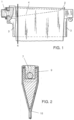
- Figure 1 is a schematic drawing of a forming mandrel, or isopipe, in a non-limiting fusion draw process.
- Figure 2 is a schematic cross-section of the isopipe near position 6 in Figure 1 . Glass is introduced from the inlet 1, flows along the bottom of the trough 4 formed by the weir walls 9 to the compression end 2. Glass overflows the weir walls 9 on either side of the isopipe (see Figure 2 ), and the two streams of glass join or fuse at the root 10.
- Edge directors 3 at either end of the isopipe serve to cool the glass and create a thicker strip at the edge called a bead.
- the bead is pulled down by pulling rolls, hence enabling sheet formation at high viscosity.
- By adjusting the rate at which sheet is pulled off the isopipe it is possible to use the fusion draw process to produce a very wide range of thicknesses at a fixed melting rate.
- Current glass substrate polishing is capable of producing glass substrates having an average surface roughness greater than about 0.5 nm (Ra), as measured by atomic force microscopy.
- the glass substrates produced by the fusion process have an average surface roughness as measured by atomic force microscopy of less than 0.5 nm.
- the substrates also have an average internal stress as measured by optical retardation which is less than or equal to 150 psi.
- the claims appended herewith should not be so limited to fusion processes as embodiments described herein are equally applicable to other forming processes such as, but not limited to, float forming processes.
- exemplary glasses are manufactured into sheet form using the fusion process. While exemplary glasses are compatible with the fusion process, they may also be manufactured into sheets or other ware through different manufacturing processes. Such processes include slot draw, float, rolling, and other sheet-forming processes known to those skilled in the art.
- the fusion process as discussed above is capable of creating very thin, very flat, very uniform sheets with a pristine surface.
- Slot draw also can result in a pristine surface, but due to change in orifice shape over time, accumulation of volatile debris at the orifice-glass interface, and the challenge of creating an orifice to deliver truly flat glass, the dimensional uniformity and surface quality of slot-drawn glass are generally inferior to fusion-drawn glass.
- the float process is capable of delivering very large, uniform sheets, but the surface is substantially compromised by contact with the float bath on one side, and by exposure to condensation products from the float bath on the other side. This means that float glass must be polished for use in high performance display applications.
- the fusion process may involve rapid cooling of the glass from high temperature, resulting in a high fictive temperature T f :
- the fictive temperature can be thought of as representing the discrepancy between the structural state of the glass and the state it would assume if fully relaxed at the temperature of interest.
- Reheating a glass with a glass transition temperature T g to a process temperature T p such that T p ⁇ T g ⁇ T f may be affected by the viscosity of the glass. Since T p ⁇ T f , the structural state of the glass is out of equilibrium at T p , and the glass will spontaneously relax toward a structural state that is in equilibrium at T p .
- the rate of this relaxation scales inversely with the effective viscosity of the glass at T p , such that high viscosity results in a slow rate of relaxation, and a low viscosity results in a fast rate of relaxation.
- the effective viscosity varies inversely with the fictive temperature of the glass, such that a low fictive temperature results in a high viscosity, and a high fictive temperature results in a comparatively low viscosity. Therefore, the rate of relaxation at T p scales directly with the fictive temperature of the glass. A process that introduces a high fictive temperature results in a comparatively high rate of relaxation when the glass is reheated at T p .
- the annealing point of a glass represents the temperature at which the glass has a viscosity of 10 13.2 poise. As temperature decreases below the annealing point, the viscosity of the supercooled melt increases. At a fixed temperature below T g , a glass with a higher annealing point has a higher viscosity than a glass with a lower annealing point. Therefore, increasing the annealing point may increase the viscosity of a substrate glass at T p . Generally, the composition changes necessary to increase the annealing point also increase viscosity at all other temperatures.
- the fictive temperature of a glass made by the fusion process corresponds to a viscosity of about 10 11 -10 12 poise, so an increase in annealing point for a fusion-compatible glass generally increases its fictive temperature as well.
- higher fictive temperature results in lower viscosity at temperature below T g , and thus increasing fictive temperature works against the viscosity increase that would otherwise be obtained by increasing the annealing point.
- T p To have a substantial change in the rate of relaxation at T p , it is generally necessary to make relatively large changes in the annealing point.
- An aspect of exemplary glasses is that it has an annealing point greater than or equal to about 790 °C, 795 °C, 800 °C or 805 °C. Without being bound by any particular theory of operation, it is believed that such high annealing points results in acceptably low rates of thermal relaxation during low-temperature TFT processing, e.g., typical low-temperature polysilicon rapid thermal anneal cycles.
- annealing point In addition to its impact on fictive temperature, increasing annealing point also increases temperatures throughout the melting and forming system, particularly the temperatures on the isopipe.
- Eagle XG ® glass and Lotus TM glass have annealing points that differ by about 50°C, and the temperature at which they are delivered to the isopipe also differ by about 50°C.
- zircon refractory forming the isopipe shows thermal creep, which can be accelerated by the weight of the isopipe itself plus the weight of the glass on the isopipe.
- a second aspect of exemplary glasses is that their delivery temperatures are less than or equal to about 1350°C, or 1345°C, or 1340°C, or 1335°C, or 1330°C, or 1325°C, or 1320°C, or 1315°C or 1310°C. Such delivery temperatures may permit extended manufacturing campaigns without a need to replace the isopipe or extend the time between isopipe replacements.
- Figure 3 shows blackbody spectra corresponding to 1140°C and 1200°C, approximately the temperature at the root of the isopipe (10 in Figure 2 ) for Eagle XG ® glass and Lotus TM glass, respectively.
- the vertical line at about 2.5 ⁇ m corresponds approximately with the start of the infrared cut-off, the region in the near infrared through which optical absorption in a borosilicate glass rises very steeply to a high, nearly constant value.
- a glass is sensibly transparent to a wavelength between 300 and 400nm, the UV cut-off.
- the 1200°C blackbody has a greater absolute energy, and a larger fraction of its total energy than the 1140°C blackbody. Since the glass is sensibly transparent through this wavelength range, the radiative heat loss from a glass at 1200°C is much greater than that of a glass at 1140°C.
- the liquidus temperature of a glass is defined as the highest temperature at which a crystalline phase would appear if a glass were held indefinitely at that temperature.
- the liquidus viscosity is the viscosity of a glass at the liquidus temperature. To completely avoid devitrification on an isopipe, it may be helpful for the liquidus viscosity to be high enough to ensure that glass is no longer on the isopipe refractory or edge director material at or near the liquidus temperature.
- T 35k - T liq For a particular delivery temperature, it may be useful to make T 35k - T liq as large possible, but for an amorphous silicon substrate such as Eagle XG ® glass, it is found that extended manufacturing campaigns can be conducted if T 35k - T liq is about 80° or more. As temperature increases, T 35k - T liq must increase as well, such that for T 35k near 1300°C, it may be helpful to have T 35k - T liq equal to or greater than about 100°C.
- the minimum useful value for T 35k - T liq varies approximately linearly with temperature from about 1200°C to about 1320°C, and can be expressed according to equation (1).
- T 35 k ⁇ T liq 0.25 T 35 k ⁇ 225 , where all temperatures are in °C.
- T 35k - T liq 0.25 T 35k - 225°C.
- the forming process may require glass with a high liquidus viscosity. This is necessary so as to avoid devitrification products at interfaces with glass and to minimize visible devitrification products in the final glass.
- adjusting the process so as to manufacture wider sheet or thicker sheet generally results in lower temperatures at either end of the isopipe.
- Some embodiments have higher liquidus viscosities to provide greater flexibility for manufacturing via the fusion process. In some embodiments, the liquidus viscosity is greater than or equal to about 150kP.
- one or more embodiments of the glass compositions have a liquidus viscosity greater than or equal to about 150,000 poises, or 175,000 poises, or 200,000 poises.
- a surprising result is that throughout the range of exemplary glasses, it is possible to obtain a liquidus temperature low enough, and a viscosity high enough, such that the liquidus viscosity of the glass is unusually high compared to other compositions.
- SiO 2 serves as the basic glass former.
- the concentration of SiO 2 can be greater than 60 mole percent to provide the glass with a density and chemical durability suitable for a flat panel display glass (e.g., an AMLCD glass), and a liquidus temperature (liquidus viscosity), which allows the glass to be formed by a downdraw process (e.g., a fusion process).
- the SiO 2 concentration can be less than or equal to about 80 mole percent to allow batch materials to be melted using conventional, high volume, melting techniques, e.g., Joule melting in a refractory melter.
- the SiO 2 concentration is adjusted so that the glass composition has a melting temperature less than or equal to 1,750°C.
- the SiO 2 concentration is in the range of about 65 mol% to about 75 mol%, or in the range of about 69 mol% to about 73 mol%, or in the range of about 69 mol% to about 74 mol% or in the range of about 70 mol% and 73 mol%, or in the range of about 68.84 to 74.07 mol%, or in the range of about 69.86 mol% to about 72.13 mol%.
- Al 2 O 3 is another glass former used to make the glasses described herein.
- An Al 2 O 3 concentration greater than or equal to 10 mole percent provides the glass with a low liquidus temperature and high viscosity, resulting in a high liquidus viscosity.
- the use of at least 10 mole percent Al 2 O 3 also improves the glass's annealing point and modulus.
- the Al 2 O 3 concentration may be below about 15 mole percent.
- the Al 2 O 3 concentration is in the range of about 12 and 14 mole percent, or in the range of about 11 to about 14 mol%, or in the range of about 11 mol% to about 13 mol%, or in the range of about 10.41 mol% to about 14.07 mol%, or in the range of about 11.58 mol% to about 13.01 mol%.
- the Al 2 O 3 concentration is greater than or equal to about 10.0 mol%, 10.5 mol%, 11.0 mol%, 11.5 mol%, 12.0 mol%, 12.5 mol% or 13.0 mol% while maintaining a ratio of (MgO+CaO+SrO+BaO)/Al 2 O 3 greater than or equal to about 1.0.
- Some embodiments of the disclosure have a modulus greater than about 83 GPa, or 83.5 GPa, or 84 GPa, or 84.5 GPa or 85 GPa.
- the density of some embodiments of aluminosilicate glass articles is less than about 2.7 g/cc, or 2.65 g/cc, or 2.61 g/cc. In various embodiments, the density is in the range of about 2.48 g/cc to about 2.65 g/cc.
- B 2 O 3 is both a glass former and a flux that aids melting and lowers the melting temperature. It has an impact on both liquidus temperature and viscosity. Increasing B 2 O 3 can be used to increase the liquidus viscosity of a glass. To achieve these effects, the glass compositions of one or more embodiments may have B 2 O 3 concentrations that are equal to or greater than 0.01 mole percent. As discussed above with regard to SiO 2 , glass durability is very important for LCD applications. Durability can be controlled somewhat by elevated concentrations of alkaline earth oxides, and significantly reduced by elevated B 2 O 3 content. Annealing point decreases as B 2 O 3 increases, so it may be helpful to keep B 2 O 3 content low relative to its typical concentration in amorphous silicon substrates.
- the glass composition has B 2 O 3 concentrations that are in the range of about 0.0 and 3 mole percent, or greater than 0 to about 3 mol%, or about 0.0 to about 1 mol%, or about 0 to about 2 mol%.
- the Al 2 O 3 and B 2 O 3 concentrations can be selected as a pair to increase annealing point, increase modulus, improve durability, reduce density, and reduce the coefficient of thermal expansion (CTE), while maintaining the melting and forming properties of the glass.
- an increase in B 2 O 3 and a corresponding decrease in Al 2 O 3 can be helpful in obtaining a lower density and CTE, while an increase in Al 2 O 3 and a corresponding decrease in B 2 O 3 can be helpful in increasing annealing point, modulus, and durability, provided that the increase in Al 2 O 3 does not reduce the (MgO+CaO+SrO+BaO)/Al 2 O 3 ratio below about 1.0.
- (MgO+CaO+SrO+BaO)/Al 2 O 3 ratios below about 1.0 it may be difficult or impossible to remove gaseous inclusions from the glass due to late-stage melting of the silica raw material.
- the glass composition has (MgO+CaO+SrO+BaO)/Al 2 O 3 ⁇ 1.0 (or greater than or equal to about 1.0). In various embodiments, the glass has (MgO+CaO+SrO+BaO)/Al 2 O 3 ⁇ 1.05 (or greater than or equal to about 1.05), or in the range of about 1 to about 1.25.
- glasses for use in AMLCD applications have coefficients of thermal expansion (CTEs) (22-300°C) in the range of about 3.0 ppm to about 4.0 ppm, or in the range of about 3.2 ppm to 3.9 ppm, or in the range of about 3.23 ppm to about 3.88 ppm.
- CTEs coefficients of thermal expansion
- the glasses described herein also include alkaline earth oxides.
- at least three alkaline earth oxides are part of the glass composition, e.g., MgO, CaO, and BaO, and, optionally, SrO.
- the alkaline earth oxides provide the glass with various properties important to melting, fining, forming, and ultimate use. Accordingly, to improve glass performance in these regards, in one embodiment, the (MgO+CaO+SrO+BaO)/Al 2 O 3 ratio is greater than or equal to about 1.0.
- ratio (MgO+CaO+SrO+BaO)/Al 2 O 3 is less than or equal to about 2.
- the (MgO+CaO+SrO+BaO)/Al 2 O 3 ratio is in the range of about 1 to about 1.2, or in the range of about 1 to about 1.16, or in the range of about 1.1 to about 1.6.
- the (MgO+CaO+SrO+BaO)/Al 2 O 3 ratio less than about 1.7, or 1.6, or 1.5.
- the alkaline earth oxides may be treated as what is in effect a single compositional component. This is because their impact upon viscoelastic properties, liquidus temperatures and liquidus phase relationships are qualitatively more similar to one another than they are to the glass forming oxides SiO 2 , Al 2 O 3 and B 2 O 3 .
- the alkaline earth oxides CaO, SrO and BaO can form feldspar minerals, notably anorthite (CaAl 2 Si 2 O 8 ) and celsian (BaAl 2 Si 2 O 8 ) and strontium-bearing solid solutions of same, but MgO does not participate in these crystals to a significant degree.
- a superaddition of MgO may serves to stabilize the liquid relative to the crystal and thus lower the liquidus temperature.
- the viscosity curve typically becomes steeper, reducing melting temperatures while having little or no impact on low-temperature viscosities.
- the glass composition comprises MgO in an amount in the range of about 4 mol% to about 8 mol%, or in the range of about 4 mol% to about 7 mol%, or in the range of about 3.44 mol% to about 7.45 mol%, or in the range of about 4.44 mol% to about 6.45 mol%.
- the inventors have surprisingly found that glasses with suitably high values of T 35k - T liq , the ratio of MgO to the other alkaline earths, MgO/( MgO+CaO+SrO+BaO), falls within a relatively narrow range.
- additions of MgO can destabilize feldspar minerals, and thus stabilize the liquid and lower liquidus temperature.
- mullite, Al 6 Si 2 O 13 may be stabilized, thus increasing the liquidus temperature and reducing the liquidus viscosity.
- MgO may be varied relative to the glass formers and the other alkaline earth oxides to maximize the value of T 35k - T liq consistent with obtaining other desired properties.
- calcium oxide present in the glass composition can produce low liquidus temperatures (high liquidus viscosities), high annealing points and moduli, and CTE's in the most desired ranges for flat panel applications, specifically, AMLCD applications. It also contributes favorably to chemical durability, and compared to other alkaline earth oxides, it is relatively inexpensive as a batch material.
- CaO increases the density and CTE.
- CaO may stabilize anorthite, thus decreasing liquidus viscosity. Accordingly, in one or more embodiment, the CaO concentration can be greater than or equal to 4.0 mol%.
- the CaO concentration of the glass composition is in the range of about 5 mol% to about 10 mol%, or in the range of about 5 mol% to about 6 mol%, or in the range of about 5 mol% to about 7 mol%, or in the range of about 4.19 mol% to about 8.23 mol%, or in the range of about 5.53 mol% to about 7.23 mol%.
- SrO and BaO can both contribute to low liquidus temperatures (high liquidus viscosities) and, thus, the glasses described herein will typically contain at least both of these oxides. However, the selection and concentration of these oxides are selected to avoid an increase in CTE and density and a decrease in modulus and annealing point. The relative proportions of SrO and BaO can be balanced so as to obtain a suitable combination of physical properties and liquidus viscosity such that the glass can be formed by a downdraw process.
- the glass comprises SrO in the range of about 0 to about 5 mol%, or about 3 to about 4 mol%, or greater than 0 to about 3 mol%, or in the range of about 0 mol% to about 3.36 mol%, or in the range of about 0.09 mol% to about 1.67 mol%.
- the glass comprises BaO in the range of about 0 to about 5 mol%, or from 1 to about 5 mol%, or about 0.91 to about 5.59 mol%, or about 2.92 mol% to about 4.57 mol%.
- SiO 2 is the basic glass former.
- the CTE of the glass should be compatible with that of silicon.
- exemplary glasses can control the RO content of the glass. For a given Al 2 O 3 content, controlling the RO content corresponds to controlling the RO/Al 2 O 3 ratio. In practice, glasses having suitable CTE's are produced if the RO/Al 2 O 3 ratio is below about 1.6.
- the glasses are preferably formable by a downdraw process, e.g., a fusion process, which means that the glass' liquidus viscosity needs to be relatively high.
- a downdraw process e.g., a fusion process
- Individual alkaline earths play an important role in this regard since they can destabilize the crystalline phases that would otherwise form.
- BaO and SrO are particularly effective in controlling the liquidus viscosity and are included in exemplary glasses for at least this purpose.
- various combinations of the alkaline earths will produce glasses having high liquidus viscosities, with the total of the alkaline earths satisfying the RO/Al 2 O 3 ratio constraints needed to achieve low melting temperatures, high annealing points, and suitable CTE's.
- the liquidus viscosity is greater than or equal to about 150kP.
- the glass compositions described herein can include various other oxides to adjust various physical, melting, fining, and forming attributes of the glasses.
- examples of such other oxides include, but are not limited to, TiO 2 , MnO, Fe 2 O 3 , ZnO, Nb 2 O 5 , MoO 3 , Ta 2 O 5 , WO 3 , Y 2 O 3 , La 2 O 3 and CeO 2 as well as other rare earth oxides and phosphates.
- the amount of each of these oxides can be less than or equal to 2.0 mole percent, and their total combined concentration can be less than or equal to 5.0 mole percent.
- the glass composition comprises ZnO, Y 2 O 3 , and/or ZrO 2 , in an amount in the range of about 0 to about 2 mol%, or about 0 to about 1 mol%.
- the glass compositions described herein can also include various contaminants associated with batch materials and/or introduced into the glass by the melting, fining, and/or forming equipment used to produce the glass, particularly Fe 2 O 2 and ZrO 2 .
- the glasses can also contain SnO 2 either as a result of Joule melting using tin-oxide electrodes and/or through the batching of tin containing materials, e.g., SnO 2 , SnO, SnCO 3 , SnC 2 O 2 , etc.
- the glass compositions are generally alkali free; however, the glasses can contain some alkali contaminants. In the case of AMLCD applications, it is desirable to keep the alkali levels below 0.1 mole percent to avoid having a negative impact on thin film transistor (TFT) performance through diffusion of alkali ions from the glass into the silicon of the TFT.
- an "alkali-free glass” is a glass having a total alkali concentration which is less than or equal to 0.1 mole percent, where the total alkali concentration is the sum of the Na 2 O, K 2 O, and Li 2 O concentrations. In one embodiment, the total alkali concentration is less than or equal to 0.1 mole percent.
- the glass compositions described herein can have one or more or all of the following compositional characteristics: (i) an As 2 O 3 concentration of at most 0.05 mole percent; (ii) an Sb 2 O 3 concentration of at most 0.05 mole percent; (iii) a SnO 2 concentration of at most 0.25 mole percent.
- As 2 O 3 is an effective high temperature fining agent for AMLCD glasses, and in some embodiments described herein, As 2 O 3 is used for fining because of its superior fining properties. However, As 2 O 3 is poisonous and requires special handling during the glass manufacturing process. Accordingly, in certain embodiments, fining is performed without the use of substantial amounts of As 2 O 3 , i.e., the finished glass has at most 0.05 mole percent As 2 O 3 . In one embodiment, no As 2 O 3 is purposely used in the fining of the glass. In such cases, the finished glass will typically have at most 0.005 mole percent As 2 O 3 as a result of contaminants present in the batch materials and/or the equipment used to melt the batch materials.
- Sb 2 O 3 is also poisonous and requires special handling.
- Sb 2 O 3 raises the density, raises the CTE, and lowers the annealing point in comparison to glasses that use As 2 O 3 or SnO 2 as a fining agent.
- fining is performed without the use of substantial amounts of Sb 2 O 3 , i.e., the finished glass has at most 0.05 mole percent Sb 2 O 3 .
- no Sb 2 O 3 is purposely used in the fining of the glass. In such cases, the finished glass will typically have at most 0.005 mole percent Sb 2 O 3 as a result of contaminants present in the batch materials and/or the equipment used to melt the batch materials.
- tin fining i.e., SnO 2 fining
- SnO 2 fining is less effective, but SnO 2 is a ubiquitous material that has no known hazardous properties.
- SnO 2 has been a component of AMLCD glasses through the use of tin oxide electrodes in the Joule melting of the batch materials for such glasses.
- the presence of SnO 2 in AMLCD glasses has not resulted in any known adverse effects in the use of these glasses in the manufacture of liquid crystal displays.
- high concentrations of SnO 2 are not preferred as this can result in the formation of crystalline defects in AMLCD glasses.
- the concentration of SnO 2 in the finished glass is less than or equal to 0.25 mole percent.
- higher viscosity glasses described herein can allow a higher concentration of SnO 2 without resulting in any deleterious effects to the glass.
- conventional wisdom would inform one that a glass having a high annealing point results in a high melting temperature. Such high melting temperatures can result in a worse inclusion quality in the respective glass.
- finers can be added; however, glasses having a low viscosity generally do not permit the addition of SnO 2 due to crystallization thereof in the glass.
- Exemplary glasses, as described herein can possess a higher viscosity resulting in higher forming temperatures and thus allowing a greater concentration of fining agent to be added to the glass thereby resulting in less inclusions.
- an exemplary glass can include SnO 2 at a concentration of between 0.001 mol% and 0.5 mol% and a T 35kP greater than or equal to about 1270 °C, greater than or equal to about 1280 °C, or greater than or equal to about 1290 °C.
- Another exemplary glass can include SnO 2 at a concentration of between 0.001 mol% and 0.5 mol% and a T 200P greater than or equal to about 1650 °C, greater than or equal to about 1660 °C, or greater than or equal to about 1670 °C.
- Another exemplary glass can include SnO 2 at a concentration of between 0.001 mol% and 0.5 mol% and a T 35kP greater than or equal to about 1270 °C, greater than or equal to about 1280 °C, or greater than or equal to about 1290 °C as well as a T 200P greater than or equal to about 1650 °C, greater than or equal to about 1660 °C, or greater than or equal to about 1670 °C.
- Further exemplary glasses can include include SnO 2 at a concentration of between 0.001 mol% and 0.5 mol% and a liquidus temperature of greater than about 1150 °C, greater than about 1165 °C, or greater than about 1170 °C.
- Such a glass can also have T 35kP and/or T 200P as discussed above.
- SnO 2 can be provided to the glass as a result of Joule melting using tin-oxide electrodes and/or through the batching of tin containing materials, e.g., SnO 2 , SnO, SnCOs, SnC 2 O 2 , etc.
- Tin fining can be used alone or in combination with other fining techniques if desired.
- tin fining can be combined with halide fining, e.g., bromine fining.
- halide fining e.g., bromine fining.
- Other possible combinations include, but are not limited to, tin fining plus sulfate, sulfide, cerium oxide, mechanical bubbling, and/or vacuum fining. It is contemplated that these other fining techniques can be used alone.
- maintaining the (MgO+CaO+SrO+BaO)/Al 2 O 3 ratio and individual alkaline earth concentrations within the ranges discussed above makes the fining process easier to perform and more effective.
- the glasses described herein can be manufactured using various techniques known in the art.
- the glasses are made using a downdraw process such as, for example, a fusion downdraw process.
- the glasses are made using a float process.
- described herein is a method for producing an alkali-free glass sheet manufacturing process comprising selecting, melting, and fining batch materials so that the glass making up the sheets comprises SiO 2 , Al 2 O 3 , B 2 O 3 , MgO, CaO and BaO, and, on an oxide basis, comprises a (MgO+CaO+SrO+BaO)/Al 2 O 3 ratio greater than or equal to 1.0.
- U.S. Pat. No. 5,785,726 (Dorfeld et al. ), U.S. Pat. No. 6,128,924 (Bange et al. ), U.S. Pat. No. 5,824,127 (Bange et al. ), and U.S. Pat. Nos. 7,628,038 and 7,628,039 (De Angelis, et al. ) disclose processes for manufacturing arsenic free glasses.
- U.S. Patent No. 7,696,113 discloses a process for manufacturing arsenic- and antimony-free glass using iron and tin to minimize gaseous inclusions.
- Some embodiments are directed to a glass comprising in mole percent on an oxide basis: SiO 2 65-75, Al 2 O 3 12-14, B 2 O 3 0-3, MgO 4-8, CaO 5-10, SrO 0-5, and other oxides including Y 2 O 3 , ZrO 2 , and ZnO 0-2.
- the glass comprises in mole percent on an oxide basis: SiO 2 69-73, Al 2 O 3 12-14, B 2 O 3 0-3, MgO 4-7, CaO 5-6, SrO 3-4, and other oxides including Y 2 O 3 , ZrO 2 , and ZnO 0-1.
- the glass has a strain point greater than 760°C.
- the glass has a 200 Poise temperature less than 1650 °C. In some embodiments, the glass has a liquidus temperature below 1300 °C. In some embodiments, the glass has a liquidus viscosity greater than 20,000 Poise. In some embodiments, the glass has a Young's modulus greater than 85 GPa. In some embodiments, the glass has a specific modulus greater than 33 GPa/g/cm 3 .
- Some embodiments are directed to a glass comprising in mole percent on an oxide basis: SiO 2 69-74, Al 2 O 3 11-14, B 2 O 3 0-3, MgO 4-7, CaO 5-7, SrO 0-3, and 1-5% BaO.
- the glass comprises in mole percent on an oxide basis: SiO 2 70-73, Al 2 O 3 11-14, B 2 O 3 0-1, MgO 4-7, CaO 5-7, SrO 0-3, and 1-5% BaO.
- the glass has a strain point greater than 752°C.
- the glass has a liquidus temperature below 1300 °C.
- the glass has a liquidus viscosity greater than 20,000 Poise.
- the glass has a Young's modulus greater than 83.56 GPa.
- the glass has a specific modulus greater than 32 GPa/g/cm 3 .
- Some embodiments are directed to a glass comprising in mole percent on an oxide basis: SiO 2 68.84-74.07, Al 2 O 3 10.41-14.87, B 2 O 3 0-2, MgO 3.44-7.45, CaO 4.19-8.23, SrO 0-3.36, BaO 0.91-5.59, and SnO 2 0.09-0.2%.
- the glass comprises in mole percent on an oxide basis: SiO 2 69.86-72.13, Al 2 O 3 11.58-13.01, B 2 O 3 0-1, MgO 4.44-6.45, CaO 5.53-7.23, SrO 0.09-1.67, BaO 2.92-4.57, and SnO 2 0.09-0.1%.
- the glass has a strain point greater than 760°C. In some embodiments, the glass has a 200 Poise temperature less than 1650 °C. In some embodiments, the glass has a liquidus temperature below 1300 °C. In some embodiments, the glass has a liquidus viscosity greater than 20,000 Poise. In some embodiments, the glass has a Young's modulus greater than 85 GPa. In some embodiments, the glass has a specific modulus greater than 33 GPa/g/cm 3 .
- Some embodiments are directed to a glass comprising SiO 2 , Al 2 O 3 , B 2 O 3 , MgO, CaO, SrO, and BaO in mole percent on an oxide basis and having a Young's modulus defined by the relationship: 78 GPa ⁇ 69.91973399947 + 0.803977834357368 ⁇ Al 2 O 3 - 0.906331789808018 ⁇ B2O3 + 0.773177760652988*MgO + 0.358794596568283*CaO + 0.0167545708595792*SrO - 0.382565908440928*BaO ⁇ 90 GPa.
- Some embodiments are directed to a glass comprising SiO 2 , Al 2 O 3 , B 2 O 3 , MgO, CaO, SrO, and BaO in mole percent on an oxide basis and having an annealing temperature defined by the relationship: 750 °C ⁇ 854.140323860904 + 4.46948220485465 ⁇ Al 2 O 3 - 14.4689626526177 ⁇ B2O3 - 5.91884532478309 ⁇ MgO -5.94752853843398 ⁇ CaO - 5.85611498931903 ⁇ SrO - 6.03112833503798 ⁇ BaO ⁇ 860 °C.
- Ranges can be expressed herein as from “about” one particular value, and/or to “about” another particular value. When such a range is expressed, examples include from the one particular value and/or to the other particular value. Similarly, when values are expressed as approximations, by use of the antecedent "about,” it will be understood that the particular value forms another aspect. It will be further understood that the endpoints of each of the ranges are significant both in relation to the other endpoint, and independently of the other endpoint.
- substantially is intended to note that a described feature is equal or approximately equal to a value or description. Moreover, “substantially similar” is intended to denote that two values are equal or approximately equal. In some embodiments, “substantially similar” may denote values within about 10% of each other, such as within about 5% of each other, or within about 2% of each other.
- the glass properties set forth in Table 1 were determined in accordance with techniques conventional in the glass art. Thus, the linear coefficient of thermal expansion (CTE) over the temperature range 25-300°C is expressed in terms of ppm and the annealing point is expressed in terms of °C. These were determined from fiber elongation techniques (ASTM references E228-85 and C336, respectively). The density in terms of grams/cm 3 was measured via the Archimedes method (ASTM C693). The melting temperature in terms of °C (defined as the temperature at which the glass melt demonstrates a viscosity of 200 poises) was calculated employing a Fulcher equation fit to high temperature viscosity data measured via rotating cylinders viscometry (ASTM C965-81).
- Strain point and annealing point were measured with beam bending viscometer (BBV), and the high temperature viscosity (HTV) above glass softening point (temperature corresponding to glass viscosity equal to 10 7.6 Poise) were measured by rotating cylinder viscometry according to the ASTM C 965 Procedure (B).
- the liquidus temperature of the glass in terms of °C was measured using the standard gradient boat liquidus method of ASTM C829-81. This involves placing crushed glass particles in a platinum boat, placing the boat in a furnace having a region of gradient temperatures, heating the boat in an appropriate temperature region for 24 hours, and determining by means of microscopic examination the highest temperature at which crystals appear in the interior of the glass. More particularly, the glass sample is removed from the Pt boat in one piece, and examined using polarized light microscopy to identify the location and nature of crystals which have formed against the Pt and air interfaces, and in the interior of the sample. Because the gradient of the furnace is very well known, temperature vs. location can be well estimated, within 5-10°C.
- the temperature at which crystals are observed in the internal portion of the sample is taken to represent the liquidus of the glass (for the corresponding test period). Testing is sometimes carried out at longer times (e.g. 72 hours), to observe slower growing phases.
- the liquidus viscosity in poises was determined from the liquidus temperature and the coefficients of the Fulcher equation.
- Young's modulus values in terms of GPa were determined using a resonant ultrasonic spectroscopy technique of the general type set forth in ASTM E1875-00e1.
- Exemplary glasses are shown in Table 1.
- the exemplary glasses have density, annealing point and Young's modulus values that make the glasses suitable for display applications, such as AMLCD substrate applications, and more particularly for low-temperature polysilicon and oxide thin film transistor applications.
- the glasses have durabilityities in acid and base media that are similar to those obtained from commercial AMLCD substrates, and thus are appropriate for AMLCD applications.
- the exemplary glasses can be formed using downdraw techniques, and in particular are compatible with the fusion process, via the aforementioned criteria.
- the exemplary glasses of Table 1 were prepared using a commercial sand as a silica source, milled such that 90% by weight passed through a standard U.S. 100 mesh sieve.
- Alumina was the alumina source
- periclase was the source for MgO
- limestone the source for CaO
- strontium carbonate strontium nitrate or a mix thereof was the source for SrO
- barium carbonate was the source for BaO
- tin (IV) oxide was the source for SnO 2 .
- the raw materials were thoroughly mixed, loaded into a platinum vessel suspended in a furnace heated by silicon carbide glowbars, melted and stirred for several hours at temperatures between 1600 and 1650°C to ensure homogeneity, and delivered through an orifice at the base of the platinum vessel.
- the resulting patties of glass were annealed at or near the annealing point, and then subjected to various experimental methods to determine physical, viscous and liquidus attributes.
- the glasses of Table 1 can be prepared using standard methods well-known to those skilled in the art.
- Such methods include a continuous melting process, such as would be performed in a continuous melting process, wherein the melter used in the continuous melting process is heated by gas, by electric power, or combinations thereof.
- Raw materials appropriate for producing exemplary glasses include commercially available sands as sources for SiO 2 ; alumina, aluminum hydroxide, hydrated forms of alumina, and various aluminosilicates, nitrates and halides as sources for Al 2 O 3 ; boric acid, anhydrous boric acid and boric oxide as sources for B 2 O 3 ; periclase, dolomite (also a source of CaO), magnesia, magnesium carbonate, magnesium hydroxide, and various forms of magnesium silicates, aluminosilicates, nitrates and halides as sources for MgO; limestone, aragonite, dolomite (also a source of MgO), wolastonite, and various forms of calcium silicates, aluminosilicates, nitrates and halides as sources for CaO; and oxides, carbonates, nitrates and halides of strontium and barium.
- tin can be added as SnO 2 , as a mixed oxide with another major glass component (e.g., CaSnOs), or in oxidizing conditions as SnO, tin oxalate, tin halide, or other compounds of tin known to those skilled in the art.
- another major glass component e.g., CaSnOs
- oxidizing conditions as SnO, tin oxalate, tin halide, or other compounds of tin known to those skilled in the art.
- the glasses in Table 1 contain SnO 2 as a fining agent, but other chemical fining agents could also be employed to obtain glass of sufficient quality for TFT substrate applications.
- exemplary glasses could employ any one or combinations of As 2 O 3 , Sb 2 O 3 , CeO 2 , Fe 2 O 3 , and halides as deliberate additions to facilitate fining, and any of these could be used in conjunction with the SnO 2 chemical fining agent shown in the examples.
- As 2 O 3 and Sb 2 O 3 are generally recognized as hazardous materials, subject to control in waste streams such as might be generated in the course of glass manufacture or in the processing of TFT panels. It is therefore desirable to limit the concentration of As 2 O 3 and Sb 2 O 3 individually or in combination to no more than 0.005 mol%.
- zirconium may be introduced as a contaminant via interaction with zirconium-rich refractories.
- platinum and rhodium may be introduced via interactions with precious metals.
- iron may be introduced as a tramp in raw materials, or deliberately added to enhance control of gaseous inclusions.
- manganese may be introduced to control color or to enhance control of gaseous inclusions.
- alkalis may be present as a tramp component at levels up to about 0.1 mol% for the combined concentration of Li 2 O, Na 2 O and K 2 O.
- Hydrogen is inevitably present in the form of the hydroxyl anion, OH - , and its presence can be ascertained via standard infrared spectroscopy techniques. Dissolved hydroxyl ions significantly and nonlinearly impact the annealing point of exemplary glasses, and thus to obtain the desired annealing point it may be necessary to adjust the concentrations of major oxide components so as to compensate. Hydroxyl ion concentration can be controlled to some extent through choice of raw materials or choice of melting system. For example, boric acid is a major source of hydroxyls, and replacing boric acid with boric oxide can be a useful means to control hydroxyl concentration in the final glass.
- hydroxyl ions can also be introduced through the combustion products from combustion of natural gas and related hydrocarbons, and thus it may be desirable to shift the energy used in melting from burners to electrodes to compensate.
- Sulfur is often present in natural gas, and likewise is a tramp component in many carbonate, nitrate, halide, and oxide raw materials.
- sulfur can be a troublesome source of gaseous inclusions.
- the tendency to form SO 2 -rich defects can be managed to a significant degree by controlling sulfur levels in the raw materials, and by incorporating low levels of comparatively reduced multivalent cations into the glass matrix. While not wishing to be bound by theory, it appears that SO 2 -rich gaseous inclusions arise primarily through reduction of sulfate (SO 4 - ) dissolved in the glass.
- the elevated barium concentrations of exemplary glasses appear to increase sulfur retention in the glass in early stages of melting, but as noted above, barium is required to obtain low liquidus temperature, and hence high T 35k -T liq and high liquidus viscosity.
- Deliberately controlling sulfur levels in raw materials to a low level is a useful means of reducing dissolved sulfur (presumably as sulfate) in the glass.
- sulfur is preferably less than 200ppm by weight in the batch materials, and more preferably less than 100ppm by weight in the batch materials.
- Reduced multivalents can also be used to control the tendency of exemplary glasses to form SO 2 blisters. While not wishing to be bound to theory, these elements behave as potential electron donors that suppress the electromotive force for sulfate reduction.
- Sulfate reduction can be written in terms of a half reaction such as SO 4 - ⁇ SO 2 + O 2 + 2e - where e - denotes an electron.
- Electrons may be "added” through reduced multivalents. For example, an appropriate electron-donating half reaction for ferrous iron (Fe 2+ ) is expressed as 2Fe 2+ ⁇ 2Fe 3+ + 2e -
- Suitable reduced multivalents include, but are not limited to, Fe 2+ , Mn 2+ , Sn 2+ , Sb 3+ , As 3+ , V 3+ , Ti 3+ , and others familiar to those skilled in the art. In each case, it may be important to minimize the concentrations of such components so as to avoid deleterious impact on color of the glass, or in the case of As and Sb, to avoid adding such components at a high enough level so as to complication of waste management in an end-user's process.
- halides may be present at various levels, either as contaminants introduced through the choice of raw materials, or as deliberate components used to eliminate gaseous inclusions in the glass.
- halides may be incorporated at a level of about 0.4 mol% or less, though it is generally desirable to use lower amounts if possible to avoid corrosion of off-gas handling equipment.
- the concentrations of individual halide elements are below about 200ppm by weight for each individual halide, or below about 800ppm by weight for the sum of all halide elements.
- Such oxides include, but are not limited to, TiO 2 , ZrO 2 , HfO 2 , NbzOs, Ta 2 O 5 , MoOs, WO 3 , ZnO, In 2 O 3 , Ga 2 O 3 , Bi 2 O 3 , GeO 2 , PbO, SeOs, TeO 2 , Y 2 O 3 , La 2 O 3 , Gd 2 O 3 , and others known to those skilled in the art.
- colorless oxides can be added to a level of up to about 2 mol% without unacceptable impact to annealing point, T 35k -T liq or liquidus viscosity.
- Table 1 shows examples of glasses according to some embodiments.
- Table 1 1 2 3 4 5 6 SiO 2 72.41 72.03 71.67 72.26 70.86 70.37 Al 2 O 3 12.53 12.48 12.35 13.09 12.29 12.23 MgO 4.68 4.63 6.13 5.67 6.98 7.05 CaO 5.85 5.85 9.73 8.87 5.77 5.80
- Example 3 provides a eutectic point for mullite, tridymite and anorthite in a MgO-CaO-SiO 2 -Al 2 O 3 (20wt%) system (see, e.g., FIG. 8 ).
- This embodiment provides many desirable properties, such as high strain point, high Young's modulus and low 200 Poise temperature, low CTE and low density.
- the liquidus temperature for Example 3 is high (1320 °C) and liquidus viscosity is low (17,000 Poise), which poses some difficulties for certain manufacturing processes.
- Example 17 provides an increase of about 1 mol% Al 2 O 3 relative to Example 3, which increases strain point, Young's modulus, further decreases 200 Poise temperature, decreases liquidus temperature and increases liquidus viscosity.
- Example 21 substitutes a portion of CaO in Example 17 with SrO to further improve liquidus and which successfully decreased liquidus temperature and doubled liquidus viscosity.
- Adding Y 2 O 3 and ZrO 2 (Examples 9 and 20) in Example 21 decreased the liquidus temperature more, and maintained a high strain point and high Young's modulus.
- the inclusion of Y 2 O 3 and ZrO 2 in some embodiments can be used to increase Young's modulus.
- Example 10 is a variant of Example 12 with a reduced concentration of Al 2 O 3 and increase in alkaline-earths to improve liquidus viscosity.
- a small amount of Y 2 O 3 , ZnO and ZrO 2 was added to decrease liquidus temperature in Example 10.
- the melting temperature 200 Poise temperature
- Example 5 is also a variant of Example 10 with a reduced SiO 2 and increase in alkaline-earths to improve melting temperature, which was decreased 40 °C from Example 10.
- a small amount of Y 2 O 3 , ZnO and ZrO 2 were added into Example 5 to improve other properties.
- Table 1 also provide an improved Young's modulus and reduced melting temperature.
- Table 2 shows further examples of glasses according to some embodiments.
- an exemplary composition may be described by a Convex Hull which can be defined as the smallest convex boundary that contains a set of points in a space of a given dimension. For example, if one considers the space bounded by the following: 68.64 - 74.07 mol% SiO 2 , 10.41 - 14.87 mol% Al 2 O 3 , 0 - 2 mol% B 2 O 3 , 3.44 - 7.45 mol% MgO, 4.19 - 8.23 mol% CaO, 0 - 3.36 mol% SrO, 0.91 - 5.59 mol% BaO, and 0.09 - 0.2 mol% SnO 2 , one can group Al2O3 and B2O3 into a group named Al2O3_B2O3 and the rest into a group named RO containing MgO, CaO, SrO, BaO and SnO2 in their respective ranges.
- a Convex Hull can be defined as the smallest convex
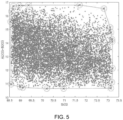
- a new ternary space can then defined by the space for which the boundary is set by the following compositions in mol%, as shown in Table 3, and FIGS. 4 and 5 .
- compositions in the Convex Hull delimited by the boundary made up with the compositions listed in Table 3 above have annealing points and Young's modulus given by Equations 2 and 3, respectively, in which the oxides are measured in mol%: 78 GPa ⁇ 69 .91973399947 + 0.803977834357368 * Al 2 O 3 ⁇ 0.906331789808018 * B 2 O 3 + 0.773177760652988 * MgO + 0.358794596568283 * CaO + 0.0167545708595792 * SrO ⁇ 0.382565908440928 * BaO ⁇ 90 GPa 750 ° C ⁇ 854 .140323860904 + 4.46948220485465 * Al 2 O 3 ⁇ 14.4689626526177 * B 2 O 3 ⁇ 5.91884532478309 * MgO ⁇ 5.94752853843398 * CaO ⁇ 5.85611498931903 * SrO ⁇ 6.0
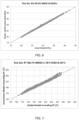
- FIGS. 6 and 7 are predicted Young's modulus and annealing points using equations (2) and (3) respectively against global models with a much larger composition set for a sample set of compositions randomly selected from the Convex Hull ( FIGS. 4 and 5 ) delimited by the composition boundary shown in Table 3.
- These figures illustrate an agreement between the simple linear models from the data inside the Convex Hull and the global models.
- Linear models can be built once a random extraction of 1000 data from the Convex Hull is performed with a prediction of their respective Young's modulus and Annealing points.
- Equations (2) and (3) are valid representations of the Young's modulus and Annealing Points within the Convex Hull.
Landscapes
- Chemical & Material Sciences (AREA)
- Engineering & Computer Science (AREA)
- Materials Engineering (AREA)
- Organic Chemistry (AREA)
- Life Sciences & Earth Sciences (AREA)
- Chemical Kinetics & Catalysis (AREA)
- General Chemical & Material Sciences (AREA)
- Geochemistry & Mineralogy (AREA)
- Physics & Mathematics (AREA)
- Nonlinear Science (AREA)
- Mathematical Physics (AREA)
- Crystallography & Structural Chemistry (AREA)
- General Physics & Mathematics (AREA)
- Optics & Photonics (AREA)
- Inorganic Chemistry (AREA)
- Glass Compositions (AREA)
- Polarising Elements (AREA)
- Liquid Crystal (AREA)
Applications Claiming Priority (3)
| Application Number | Priority Date | Filing Date | Title |
|---|---|---|---|
| US201862686850P | 2018-06-19 | 2018-06-19 | |
| EP19733376.8A EP3810558B1 (de) | 2018-06-19 | 2019-06-10 | Gläser mit hohem unterem kühlpunkt und hohem e-modul |
| PCT/US2019/036280 WO2019245777A1 (en) | 2018-06-19 | 2019-06-10 | High strain point and high young's modulus glasses |
Related Parent Applications (2)
| Application Number | Title | Priority Date | Filing Date |
|---|---|---|---|
| EP19733376.8A Division EP3810558B1 (de) | 2018-06-19 | 2019-06-10 | Gläser mit hohem unterem kühlpunkt und hohem e-modul |
| EP19733376.8A Division-Into EP3810558B1 (de) | 2018-06-19 | 2019-06-10 | Gläser mit hohem unterem kühlpunkt und hohem e-modul |
Publications (4)
| Publication Number | Publication Date |
|---|---|
| EP4186877A2 true EP4186877A2 (de) | 2023-05-31 |
| EP4186877A8 EP4186877A8 (de) | 2023-08-02 |
| EP4186877A3 EP4186877A3 (de) | 2023-08-23 |
| EP4186877B1 EP4186877B1 (de) | 2024-07-24 |
Family
ID=67003780
Family Applications (2)
| Application Number | Title | Priority Date | Filing Date |
|---|---|---|---|
| EP23151934.9A Active EP4186877B1 (de) | 2018-06-19 | 2019-06-10 | Gläser mit hohem dehnungspunkt und hohem elastizitätsmodul |
| EP19733376.8A Active EP3810558B1 (de) | 2018-06-19 | 2019-06-10 | Gläser mit hohem unterem kühlpunkt und hohem e-modul |
Family Applications After (1)
| Application Number | Title | Priority Date | Filing Date |
|---|---|---|---|
| EP19733376.8A Active EP3810558B1 (de) | 2018-06-19 | 2019-06-10 | Gläser mit hohem unterem kühlpunkt und hohem e-modul |
Country Status (7)
| Country | Link |
|---|---|
| US (4) | US11420897B2 (de) |
| EP (2) | EP4186877B1 (de) |
| JP (3) | JP7429655B2 (de) |
| KR (3) | KR20250083575A (de) |
| CN (4) | CN116813196A (de) |
| TW (3) | TW202525742A (de) |
| WO (1) | WO2019245777A1 (de) |
Families Citing this family (1)
| Publication number | Priority date | Publication date | Assignee | Title |
|---|---|---|---|---|
| CN116813196A (zh) * | 2018-06-19 | 2023-09-29 | 康宁股份有限公司 | 高应变点且高杨氏模量玻璃 |
Citations (6)
| Publication number | Priority date | Publication date | Assignee | Title |
|---|---|---|---|---|
| US3338696A (en) | 1964-05-06 | 1967-08-29 | Corning Glass Works | Sheet forming apparatus |
| US3682609A (en) | 1969-10-06 | 1972-08-08 | Corning Glass Works | Controlling thickness of newly drawn glass sheet |
| US5785726A (en) | 1996-10-28 | 1998-07-28 | Corning Incorporated | Method of reducing bubbles at the vessel/glass interface in a glass manufacturing system |
| US5824127A (en) | 1996-07-19 | 1998-10-20 | Corning Incorporated | Arsenic-free glasses |
| US7628039B2 (en) | 2005-04-27 | 2009-12-08 | Corning Incorporated | System and method for controlling the environmental around one or more vessels in a glass manufacturing system |
| US7696113B2 (en) | 2006-11-13 | 2010-04-13 | Corning Incorporated | Method of manufacturing alkali-free glasses containing iron and tin as fining agents |
Family Cites Families (33)
| Publication number | Priority date | Publication date | Assignee | Title |
|---|---|---|---|---|
| JP3800657B2 (ja) * | 1996-03-28 | 2006-07-26 | 旭硝子株式会社 | 無アルカリガラスおよびフラットディスプレイパネル |
| JPH11232636A (ja) | 1997-11-14 | 1999-08-27 | Hoya Corp | 情報記録媒体用基板及びその製造方法 |
| WO2007095115A1 (en) * | 2006-02-10 | 2007-08-23 | Corning Incorporated | Glass compositions having high thermal and chemical stability and methods of making thereof |
| US8187715B2 (en) * | 2008-05-13 | 2012-05-29 | Corning Incorporated | Rare-earth-containing glass material and substrate and device comprising such substrate |
| US8975199B2 (en) | 2011-08-12 | 2015-03-10 | Corsam Technologies Llc | Fusion formable alkali-free intermediate thermal expansion coefficient glass |
| EP2450319A4 (de) | 2009-07-02 | 2015-01-28 | Asahi Glass Co Ltd | Alkalifreies glas und verfahren zu seiner herstellung |
| US8598056B2 (en) * | 2010-10-06 | 2013-12-03 | Corning Incorporated | Alkali-free glass compositions having high thermal and chemical stability |
| KR101752033B1 (ko) * | 2010-12-07 | 2017-06-28 | 아사히 가라스 가부시키가이샤 | 무알칼리 유리 및 무알칼리 유리의 제조 방법 |
| CN103347830A (zh) * | 2011-01-25 | 2013-10-09 | 康宁股份有限公司 | 具有高热稳定性和化学稳定性的玻璃组合物 |
| JP5935471B2 (ja) | 2011-04-25 | 2016-06-15 | 日本電気硝子株式会社 | 液晶レンズ |
| US9162919B2 (en) | 2012-02-28 | 2015-10-20 | Corning Incorporated | High strain point aluminosilicate glasses |
| KR102077212B1 (ko) * | 2012-12-05 | 2020-02-13 | 에이지씨 가부시키가이샤 | 무알칼리 유리 기판 |
| CN110698057A (zh) * | 2012-12-21 | 2020-01-17 | 康宁股份有限公司 | 具有改进的总节距稳定性的玻璃 |
| CN104150767B (zh) | 2013-08-27 | 2016-09-14 | 东旭集团有限公司 | 碱土铝硅酸盐玻璃基板的组成 |
| CN104326662B (zh) * | 2013-12-31 | 2017-07-04 | 东旭集团有限公司 | 一种不含硼的无碱铝硅酸盐玻璃 |
| CN106488889A (zh) * | 2014-05-15 | 2017-03-08 | 康宁股份有限公司 | 铝硅酸盐玻璃 |
| JP6575223B2 (ja) * | 2014-08-27 | 2019-09-18 | Agc株式会社 | 無アルカリガラス |
| FR3025793B1 (fr) * | 2014-09-12 | 2016-12-02 | Eurokera | Plaque en vitroceramique |
| CN107001113B (zh) * | 2014-09-25 | 2021-09-10 | 康宁股份有限公司 | 用于具有改善的透光性的玻璃的uv阻隔 |
| KR102559221B1 (ko) * | 2014-10-31 | 2023-07-25 | 코닝 인코포레이티드 | 치수적으로 안정한 급속 에칭 유리 |
| US20170152170A1 (en) * | 2014-10-31 | 2017-06-01 | Corning Incorporated | Dimensionally stable fast etching glasses |
| KR102714914B1 (ko) | 2014-11-28 | 2024-10-14 | 에이지씨 가부시키가이샤 | 액정 디스플레이 패널 |
| JP7004488B2 (ja) * | 2015-03-10 | 2022-01-21 | 日本電気硝子株式会社 | ガラス基板 |
| US11773004B2 (en) * | 2015-03-24 | 2023-10-03 | Corning Incorporated | Laser cutting and processing of display glass compositions |
| CN113045197A (zh) | 2015-04-03 | 2021-06-29 | 日本电气硝子株式会社 | 玻璃 |
| CN114014537A (zh) * | 2015-05-18 | 2022-02-08 | 日本电气硝子株式会社 | 无碱玻璃基板 |
| JP6663010B2 (ja) * | 2015-12-01 | 2020-03-11 | コーナーストーン・マテリアルズ・テクノロジー・カンパニー・リミテッドKornerstone Materials Technology Company, Ltd. | 低ホウ素とバリウムフリーのアルカリ土類アルミノシリケートガラス及びその応用 |
| CN110494401A (zh) | 2017-03-30 | 2019-11-22 | 旭硝子欧洲玻璃公司 | 用于自主汽车的玻璃 |
| CN107032604A (zh) * | 2017-04-18 | 2017-08-11 | 东旭科技集团有限公司 | 玻璃用组合物、碱土铝硅酸盐玻璃及其制备方法和应用 |
| TWI809029B (zh) * | 2018-01-15 | 2023-07-21 | 美商康寧公司 | 尺度上穩定快速地蝕刻玻璃 |
| JP7392914B2 (ja) * | 2018-02-20 | 2023-12-06 | 日本電気硝子株式会社 | ガラス |
| US11554984B2 (en) * | 2018-02-22 | 2023-01-17 | Corning Incorporated | Alkali-free borosilicate glasses with low post-HF etch roughness |
| CN116813196A (zh) * | 2018-06-19 | 2023-09-29 | 康宁股份有限公司 | 高应变点且高杨氏模量玻璃 |
-
2019
- 2019-06-10 CN CN202310821586.7A patent/CN116813196A/zh active Pending
- 2019-06-10 KR KR1020257017025A patent/KR20250083575A/ko active Pending
- 2019-06-10 EP EP23151934.9A patent/EP4186877B1/de active Active
- 2019-06-10 KR KR1020247018774A patent/KR102813708B1/ko active Active
- 2019-06-10 KR KR1020217001190A patent/KR102673755B1/ko active Active
- 2019-06-10 CN CN201980046266.0A patent/CN112384484A/zh active Pending
- 2019-06-10 CN CN202310009794.7A patent/CN116062992A/zh active Pending
- 2019-06-10 WO PCT/US2019/036280 patent/WO2019245777A1/en not_active Ceased
- 2019-06-10 EP EP19733376.8A patent/EP3810558B1/de active Active
- 2019-06-10 CN CN202310009795.1A patent/CN116062993A/zh active Pending
- 2019-06-10 JP JP2020571359A patent/JP7429655B2/ja active Active
- 2019-06-10 US US17/254,237 patent/US11420897B2/en active Active
- 2019-06-19 TW TW114108909A patent/TW202525742A/zh unknown
- 2019-06-19 TW TW108121316A patent/TWI878229B/zh active
- 2019-06-19 TW TW113100870A patent/TWI909304B/zh active
-
2022
- 2022-08-12 US US17/886,690 patent/US11939260B2/en active Active
-
2023
- 2023-12-18 JP JP2023212987A patent/JP7807174B2/ja active Active
-
2024
- 2024-02-16 US US18/443,813 patent/US12421159B2/en active Active
-
2025
- 2025-08-15 US US19/301,339 patent/US20250376411A1/en active Pending
- 2025-10-20 JP JP2025176247A patent/JP2026009158A/ja active Pending
Patent Citations (8)
| Publication number | Priority date | Publication date | Assignee | Title |
|---|---|---|---|---|
| US3338696A (en) | 1964-05-06 | 1967-08-29 | Corning Glass Works | Sheet forming apparatus |
| US3682609A (en) | 1969-10-06 | 1972-08-08 | Corning Glass Works | Controlling thickness of newly drawn glass sheet |
| US5824127A (en) | 1996-07-19 | 1998-10-20 | Corning Incorporated | Arsenic-free glasses |
| US6128924A (en) | 1996-07-19 | 2000-10-10 | Corning Incorporated | Arsenic-free glasses |
| US5785726A (en) | 1996-10-28 | 1998-07-28 | Corning Incorporated | Method of reducing bubbles at the vessel/glass interface in a glass manufacturing system |
| US7628039B2 (en) | 2005-04-27 | 2009-12-08 | Corning Incorporated | System and method for controlling the environmental around one or more vessels in a glass manufacturing system |
| US7628038B2 (en) | 2005-04-27 | 2009-12-08 | Corning Incorporated | System and method for controlling the environment around one or more vessels in a glass manufacturing system |
| US7696113B2 (en) | 2006-11-13 | 2010-04-13 | Corning Incorporated | Method of manufacturing alkali-free glasses containing iron and tin as fining agents |
Also Published As
| Publication number | Publication date |
|---|---|
| JP7429655B2 (ja) | 2024-02-08 |
| EP4186877B1 (de) | 2024-07-24 |
| US20240317630A1 (en) | 2024-09-26 |
| JP2024019601A (ja) | 2024-02-09 |
| EP3810558B1 (de) | 2023-04-26 |
| WO2019245777A1 (en) | 2019-12-26 |
| KR20240096724A (ko) | 2024-06-26 |
| US20210269354A1 (en) | 2021-09-02 |
| KR20250083575A (ko) | 2025-06-10 |
| CN116062992A (zh) | 2023-05-05 |
| JP2021528351A (ja) | 2021-10-21 |
| KR102673755B1 (ko) | 2024-06-11 |
| TWI909304B (zh) | 2025-12-21 |
| EP4186877A3 (de) | 2023-08-23 |
| CN112384484A (zh) | 2021-02-19 |
| EP4186877A8 (de) | 2023-08-02 |
| US20220396518A1 (en) | 2022-12-15 |
| US12421159B2 (en) | 2025-09-23 |
| US20250376411A1 (en) | 2025-12-11 |
| TWI878229B (zh) | 2025-04-01 |
| TW202417393A (zh) | 2024-05-01 |
| JP7807174B2 (ja) | 2026-01-27 |
| CN116062993A (zh) | 2023-05-05 |
| CN116813196A (zh) | 2023-09-29 |
| TW202005922A (zh) | 2020-02-01 |
| US11420897B2 (en) | 2022-08-23 |
| JP2026009158A (ja) | 2026-01-19 |
| TW202525742A (zh) | 2025-07-01 |
| US11939260B2 (en) | 2024-03-26 |
| KR20210021532A (ko) | 2021-02-26 |
| EP3810558A1 (de) | 2021-04-28 |
| KR102813708B1 (ko) | 2025-05-28 |
Similar Documents
| Publication | Publication Date | Title |
|---|---|---|
| EP3212588B1 (de) | Formstabile rasch ätzende gläser | |
| US9604870B2 (en) | High strain point aluminosilicate glasses | |
| US11655180B2 (en) | Alkali-free boroalumino silicate glasses | |
| US10077205B2 (en) | Aluminosilicate glasses | |
| EP3740459B1 (de) | Formstabile rasch ätzende gläser | |
| US20170152170A1 (en) | Dimensionally stable fast etching glasses | |
| EP3856695A1 (de) | Dimensionsstabile gläser | |
| US20250376411A1 (en) | High strain point and high young's modulus glasses |
Legal Events
| Date | Code | Title | Description |
|---|---|---|---|
| PUAI | Public reference made under article 153(3) epc to a published international application that has entered the european phase |
Free format text: ORIGINAL CODE: 0009012 |
|
| STAA | Information on the status of an ep patent application or granted ep patent |
Free format text: STATUS: THE APPLICATION HAS BEEN PUBLISHED |
|
| AC | Divisional application: reference to earlier application |
Ref document number: 3810558 Country of ref document: EP Kind code of ref document: P |
|
| AK | Designated contracting states |
Kind code of ref document: A2 Designated state(s): AL AT BE BG CH CY CZ DE DK EE ES FI FR GB GR HR HU IE IS IT LI LT LU LV MC MK MT NL NO PL PT RO RS SE SI SK SM TR |
|
| PUAL | Search report despatched |
Free format text: ORIGINAL CODE: 0009013 |
|
| AK | Designated contracting states |
Kind code of ref document: A3 Designated state(s): AL AT BE BG CH CY CZ DE DK EE ES FI FR GB GR HR HU IE IS IT LI LT LU LV MC MK MT NL NO PL PT RO RS SE SI SK SM TR |
|
| RIC1 | Information provided on ipc code assigned before grant |
Ipc: C03C 3/091 20060101ALI20230720BHEP Ipc: C03C 3/087 20060101AFI20230720BHEP |
|
| STAA | Information on the status of an ep patent application or granted ep patent |
Free format text: STATUS: REQUEST FOR EXAMINATION WAS MADE |
|
| 17P | Request for examination filed |
Effective date: 20231012 |
|
| RBV | Designated contracting states (corrected) |
Designated state(s): AL AT BE BG CH CY CZ DE DK EE ES FI FR GB GR HR HU IE IS IT LI LT LU LV MC MK MT NL NO PL PT RO RS SE SI SK SM TR |
|
| GRAP | Despatch of communication of intention to grant a patent |
Free format text: ORIGINAL CODE: EPIDOSNIGR1 |
|
| STAA | Information on the status of an ep patent application or granted ep patent |
Free format text: STATUS: GRANT OF PATENT IS INTENDED |
|
| INTG | Intention to grant announced |
Effective date: 20240422 |
|
| GRAS | Grant fee paid |
Free format text: ORIGINAL CODE: EPIDOSNIGR3 |
|
| GRAA | (expected) grant |
Free format text: ORIGINAL CODE: 0009210 |
|
| STAA | Information on the status of an ep patent application or granted ep patent |
Free format text: STATUS: THE PATENT HAS BEEN GRANTED |
|
| P01 | Opt-out of the competence of the unified patent court (upc) registered |
Effective date: 20240524 |
|
| AC | Divisional application: reference to earlier application |
Ref document number: 3810558 Country of ref document: EP Kind code of ref document: P |
|
| AK | Designated contracting states |
Kind code of ref document: B1 Designated state(s): AL AT BE BG CH CY CZ DE DK EE ES FI FR GB GR HR HU IE IS IT LI LT LU LV MC MK MT NL NO PL PT RO RS SE SI SK SM TR |
|
| REG | Reference to a national code |
Ref country code: GB Ref legal event code: FG4D |
|
| REG | Reference to a national code |
Ref country code: CH Ref legal event code: EP |
|
| REG | Reference to a national code |
Ref country code: IE Ref legal event code: FG4D Ref country code: DE Ref legal event code: R096 Ref document number: 602019055969 Country of ref document: DE |
|
| REG | Reference to a national code |
Ref country code: LT Ref legal event code: MG9D |
|
| REG | Reference to a national code |
Ref country code: NL Ref legal event code: MP Effective date: 20240724 |
|
| PG25 | Lapsed in a contracting state [announced via postgrant information from national office to epo] |
Ref country code: PT Free format text: LAPSE BECAUSE OF FAILURE TO SUBMIT A TRANSLATION OF THE DESCRIPTION OR TO PAY THE FEE WITHIN THE PRESCRIBED TIME-LIMIT Effective date: 20241125 |
|
| REG | Reference to a national code |
Ref country code: AT Ref legal event code: MK05 Ref document number: 1706189 Country of ref document: AT Kind code of ref document: T Effective date: 20240724 |
|
| PG25 | Lapsed in a contracting state [announced via postgrant information from national office to epo] |
Ref country code: NL Free format text: LAPSE BECAUSE OF FAILURE TO SUBMIT A TRANSLATION OF THE DESCRIPTION OR TO PAY THE FEE WITHIN THE PRESCRIBED TIME-LIMIT Effective date: 20240724 |
|
| PG25 | Lapsed in a contracting state [announced via postgrant information from national office to epo] |
Ref country code: PT Free format text: LAPSE BECAUSE OF FAILURE TO SUBMIT A TRANSLATION OF THE DESCRIPTION OR TO PAY THE FEE WITHIN THE PRESCRIBED TIME-LIMIT Effective date: 20241125 Ref country code: NL Free format text: LAPSE BECAUSE OF FAILURE TO SUBMIT A TRANSLATION OF THE DESCRIPTION OR TO PAY THE FEE WITHIN THE PRESCRIBED TIME-LIMIT Effective date: 20240724 |
|
| PG25 | Lapsed in a contracting state [announced via postgrant information from national office to epo] |
Ref country code: NO Free format text: LAPSE BECAUSE OF FAILURE TO SUBMIT A TRANSLATION OF THE DESCRIPTION OR TO PAY THE FEE WITHIN THE PRESCRIBED TIME-LIMIT Effective date: 20241024 |
|
| PG25 | Lapsed in a contracting state [announced via postgrant information from national office to epo] |
Ref country code: FI Free format text: LAPSE BECAUSE OF FAILURE TO SUBMIT A TRANSLATION OF THE DESCRIPTION OR TO PAY THE FEE WITHIN THE PRESCRIBED TIME-LIMIT Effective date: 20240724 Ref country code: PL Free format text: LAPSE BECAUSE OF FAILURE TO SUBMIT A TRANSLATION OF THE DESCRIPTION OR TO PAY THE FEE WITHIN THE PRESCRIBED TIME-LIMIT Effective date: 20240724 Ref country code: GR Free format text: LAPSE BECAUSE OF FAILURE TO SUBMIT A TRANSLATION OF THE DESCRIPTION OR TO PAY THE FEE WITHIN THE PRESCRIBED TIME-LIMIT Effective date: 20241025 |
|
| PG25 | Lapsed in a contracting state [announced via postgrant information from national office to epo] |
Ref country code: BG Free format text: LAPSE BECAUSE OF FAILURE TO SUBMIT A TRANSLATION OF THE DESCRIPTION OR TO PAY THE FEE WITHIN THE PRESCRIBED TIME-LIMIT Effective date: 20240724 |
|
| PG25 | Lapsed in a contracting state [announced via postgrant information from national office to epo] |
Ref country code: LV Free format text: LAPSE BECAUSE OF FAILURE TO SUBMIT A TRANSLATION OF THE DESCRIPTION OR TO PAY THE FEE WITHIN THE PRESCRIBED TIME-LIMIT Effective date: 20240724 |
|
| PG25 | Lapsed in a contracting state [announced via postgrant information from national office to epo] |
Ref country code: AT Free format text: LAPSE BECAUSE OF FAILURE TO SUBMIT A TRANSLATION OF THE DESCRIPTION OR TO PAY THE FEE WITHIN THE PRESCRIBED TIME-LIMIT Effective date: 20240724 Ref country code: IS Free format text: LAPSE BECAUSE OF FAILURE TO SUBMIT A TRANSLATION OF THE DESCRIPTION OR TO PAY THE FEE WITHIN THE PRESCRIBED TIME-LIMIT Effective date: 20241124 |
|
| PG25 | Lapsed in a contracting state [announced via postgrant information from national office to epo] |
Ref country code: HR Free format text: LAPSE BECAUSE OF FAILURE TO SUBMIT A TRANSLATION OF THE DESCRIPTION OR TO PAY THE FEE WITHIN THE PRESCRIBED TIME-LIMIT Effective date: 20240724 |
|
| PG25 | Lapsed in a contracting state [announced via postgrant information from national office to epo] |
Ref country code: RS Free format text: LAPSE BECAUSE OF FAILURE TO SUBMIT A TRANSLATION OF THE DESCRIPTION OR TO PAY THE FEE WITHIN THE PRESCRIBED TIME-LIMIT Effective date: 20241024 Ref country code: ES Free format text: LAPSE BECAUSE OF FAILURE TO SUBMIT A TRANSLATION OF THE DESCRIPTION OR TO PAY THE FEE WITHIN THE PRESCRIBED TIME-LIMIT Effective date: 20240724 |
|
| PG25 | Lapsed in a contracting state [announced via postgrant information from national office to epo] |
Ref country code: RS Free format text: LAPSE BECAUSE OF FAILURE TO SUBMIT A TRANSLATION OF THE DESCRIPTION OR TO PAY THE FEE WITHIN THE PRESCRIBED TIME-LIMIT Effective date: 20241024 Ref country code: PL Free format text: LAPSE BECAUSE OF FAILURE TO SUBMIT A TRANSLATION OF THE DESCRIPTION OR TO PAY THE FEE WITHIN THE PRESCRIBED TIME-LIMIT Effective date: 20240724 Ref country code: NO Free format text: LAPSE BECAUSE OF FAILURE TO SUBMIT A TRANSLATION OF THE DESCRIPTION OR TO PAY THE FEE WITHIN THE PRESCRIBED TIME-LIMIT Effective date: 20241024 Ref country code: LV Free format text: LAPSE BECAUSE OF FAILURE TO SUBMIT A TRANSLATION OF THE DESCRIPTION OR TO PAY THE FEE WITHIN THE PRESCRIBED TIME-LIMIT Effective date: 20240724 Ref country code: IS Free format text: LAPSE BECAUSE OF FAILURE TO SUBMIT A TRANSLATION OF THE DESCRIPTION OR TO PAY THE FEE WITHIN THE PRESCRIBED TIME-LIMIT Effective date: 20241124 Ref country code: HR Free format text: LAPSE BECAUSE OF FAILURE TO SUBMIT A TRANSLATION OF THE DESCRIPTION OR TO PAY THE FEE WITHIN THE PRESCRIBED TIME-LIMIT Effective date: 20240724 Ref country code: GR Free format text: LAPSE BECAUSE OF FAILURE TO SUBMIT A TRANSLATION OF THE DESCRIPTION OR TO PAY THE FEE WITHIN THE PRESCRIBED TIME-LIMIT Effective date: 20241025 Ref country code: FI Free format text: LAPSE BECAUSE OF FAILURE TO SUBMIT A TRANSLATION OF THE DESCRIPTION OR TO PAY THE FEE WITHIN THE PRESCRIBED TIME-LIMIT Effective date: 20240724 Ref country code: ES Free format text: LAPSE BECAUSE OF FAILURE TO SUBMIT A TRANSLATION OF THE DESCRIPTION OR TO PAY THE FEE WITHIN THE PRESCRIBED TIME-LIMIT Effective date: 20240724 Ref country code: BG Free format text: LAPSE BECAUSE OF FAILURE TO SUBMIT A TRANSLATION OF THE DESCRIPTION OR TO PAY THE FEE WITHIN THE PRESCRIBED TIME-LIMIT Effective date: 20240724 Ref country code: AT Free format text: LAPSE BECAUSE OF FAILURE TO SUBMIT A TRANSLATION OF THE DESCRIPTION OR TO PAY THE FEE WITHIN THE PRESCRIBED TIME-LIMIT Effective date: 20240724 |
|
| PG25 | Lapsed in a contracting state [announced via postgrant information from national office to epo] |
Ref country code: RO Free format text: LAPSE BECAUSE OF FAILURE TO SUBMIT A TRANSLATION OF THE DESCRIPTION OR TO PAY THE FEE WITHIN THE PRESCRIBED TIME-LIMIT Effective date: 20240724 Ref country code: DK Free format text: LAPSE BECAUSE OF FAILURE TO SUBMIT A TRANSLATION OF THE DESCRIPTION OR TO PAY THE FEE WITHIN THE PRESCRIBED TIME-LIMIT Effective date: 20240724 Ref country code: SM Free format text: LAPSE BECAUSE OF FAILURE TO SUBMIT A TRANSLATION OF THE DESCRIPTION OR TO PAY THE FEE WITHIN THE PRESCRIBED TIME-LIMIT Effective date: 20240724 |
|
| PG25 | Lapsed in a contracting state [announced via postgrant information from national office to epo] |
Ref country code: EE Free format text: LAPSE BECAUSE OF FAILURE TO SUBMIT A TRANSLATION OF THE DESCRIPTION OR TO PAY THE FEE WITHIN THE PRESCRIBED TIME-LIMIT Effective date: 20240724 |
|
| PG25 | Lapsed in a contracting state [announced via postgrant information from national office to epo] |
Ref country code: CZ Free format text: LAPSE BECAUSE OF FAILURE TO SUBMIT A TRANSLATION OF THE DESCRIPTION OR TO PAY THE FEE WITHIN THE PRESCRIBED TIME-LIMIT Effective date: 20240724 |
|
| REG | Reference to a national code |
Ref country code: DE Ref legal event code: R097 Ref document number: 602019055969 Country of ref document: DE |
|
| PG25 | Lapsed in a contracting state [announced via postgrant information from national office to epo] |
Ref country code: IT Free format text: LAPSE BECAUSE OF FAILURE TO SUBMIT A TRANSLATION OF THE DESCRIPTION OR TO PAY THE FEE WITHIN THE PRESCRIBED TIME-LIMIT Effective date: 20240724 Ref country code: SK Free format text: LAPSE BECAUSE OF FAILURE TO SUBMIT A TRANSLATION OF THE DESCRIPTION OR TO PAY THE FEE WITHIN THE PRESCRIBED TIME-LIMIT Effective date: 20240724 |
|
| PLBE | No opposition filed within time limit |
Free format text: ORIGINAL CODE: 0009261 |
|
| STAA | Information on the status of an ep patent application or granted ep patent |
Free format text: STATUS: NO OPPOSITION FILED WITHIN TIME LIMIT |
|
| 26N | No opposition filed |
Effective date: 20250425 |
|
| PGFP | Annual fee paid to national office [announced via postgrant information from national office to epo] |
Ref country code: DE Payment date: 20250509 Year of fee payment: 7 |
|
| PGFP | Annual fee paid to national office [announced via postgrant information from national office to epo] |
Ref country code: FR Payment date: 20250512 Year of fee payment: 7 |
|
| PG25 | Lapsed in a contracting state [announced via postgrant information from national office to epo] |
Ref country code: SE Free format text: LAPSE BECAUSE OF FAILURE TO SUBMIT A TRANSLATION OF THE DESCRIPTION OR TO PAY THE FEE WITHIN THE PRESCRIBED TIME-LIMIT Effective date: 20240724 |
|
| REG | Reference to a national code |
Ref country code: CH Ref legal event code: H13 Free format text: ST27 STATUS EVENT CODE: U-0-0-H10-H13 (AS PROVIDED BY THE NATIONAL OFFICE) Effective date: 20260127 |
|
| PG25 | Lapsed in a contracting state [announced via postgrant information from national office to epo] |
Ref country code: MC Free format text: LAPSE BECAUSE OF FAILURE TO SUBMIT A TRANSLATION OF THE DESCRIPTION OR TO PAY THE FEE WITHIN THE PRESCRIBED TIME-LIMIT Effective date: 20240724 |
|
| PG25 | Lapsed in a contracting state [announced via postgrant information from national office to epo] |
Ref country code: LU Free format text: LAPSE BECAUSE OF NON-PAYMENT OF DUE FEES Effective date: 20250610 |
|
| GBPC | Gb: european patent ceased through non-payment of renewal fee |
Effective date: 20250610 |
|
| REG | Reference to a national code |
Ref country code: BE Ref legal event code: MM Effective date: 20250630 |
|
| PG25 | Lapsed in a contracting state [announced via postgrant information from national office to epo] |
Ref country code: GB Free format text: LAPSE BECAUSE OF NON-PAYMENT OF DUE FEES Effective date: 20250610 |
|
| PG25 | Lapsed in a contracting state [announced via postgrant information from national office to epo] |
Ref country code: IE Free format text: LAPSE BECAUSE OF NON-PAYMENT OF DUE FEES Effective date: 20250610 |
|
| PG25 | Lapsed in a contracting state [announced via postgrant information from national office to epo] |
Ref country code: BE Free format text: LAPSE BECAUSE OF NON-PAYMENT OF DUE FEES Effective date: 20250630 |
|
| PG25 | Lapsed in a contracting state [announced via postgrant information from national office to epo] |
Ref country code: CH Free format text: LAPSE BECAUSE OF NON-PAYMENT OF DUE FEES Effective date: 20250630 |