EP4189886B1 - Activation de mac-ce de relais de liaison latérale - Google Patents
Activation de mac-ce de relais de liaison latérale Download PDFInfo
- Publication number
- EP4189886B1 EP4189886B1 EP21755186.0A EP21755186A EP4189886B1 EP 4189886 B1 EP4189886 B1 EP 4189886B1 EP 21755186 A EP21755186 A EP 21755186A EP 4189886 B1 EP4189886 B1 EP 4189886B1
- Authority
- EP
- European Patent Office
- Prior art keywords
- mac
- response
- command
- activation
- ack
- Prior art date
- Legal status (The legal status is an assumption and is not a legal conclusion. Google has not performed a legal analysis and makes no representation as to the accuracy of the status listed.)
- Active
Links
Images






Classifications
-
- H—ELECTRICITY
- H04—ELECTRIC COMMUNICATION TECHNIQUE
- H04L—TRANSMISSION OF DIGITAL INFORMATION, e.g. TELEGRAPHIC COMMUNICATION
- H04L1/00—Arrangements for detecting or preventing errors in the information received
- H04L1/12—Arrangements for detecting or preventing errors in the information received by using return channel
- H04L1/16—Arrangements for detecting or preventing errors in the information received by using return channel in which the return channel carries supervisory signals, e.g. repetition request signals
- H04L1/18—Automatic repetition systems, e.g. Van Duuren systems
- H04L1/1829—Arrangements specially adapted for the receiver end
- H04L1/1854—Scheduling and prioritising arrangements
-
- H—ELECTRICITY
- H04—ELECTRIC COMMUNICATION TECHNIQUE
- H04L—TRANSMISSION OF DIGITAL INFORMATION, e.g. TELEGRAPHIC COMMUNICATION
- H04L1/00—Arrangements for detecting or preventing errors in the information received
- H04L1/12—Arrangements for detecting or preventing errors in the information received by using return channel
- H04L1/16—Arrangements for detecting or preventing errors in the information received by using return channel in which the return channel carries supervisory signals, e.g. repetition request signals
- H04L1/18—Automatic repetition systems, e.g. Van Duuren systems
- H04L1/1812—Hybrid protocols; Hybrid automatic repeat request [HARQ]
- H04L1/1819—Hybrid protocols; Hybrid automatic repeat request [HARQ] with retransmission of additional or different redundancy
-
- H—ELECTRICITY
- H04—ELECTRIC COMMUNICATION TECHNIQUE
- H04L—TRANSMISSION OF DIGITAL INFORMATION, e.g. TELEGRAPHIC COMMUNICATION
- H04L1/00—Arrangements for detecting or preventing errors in the information received
- H04L1/12—Arrangements for detecting or preventing errors in the information received by using return channel
- H04L1/16—Arrangements for detecting or preventing errors in the information received by using return channel in which the return channel carries supervisory signals, e.g. repetition request signals
- H04L1/18—Automatic repetition systems, e.g. Van Duuren systems
- H04L1/1867—Arrangements specially adapted for the transmitter end
- H04L1/1896—ARQ related signaling
-
- H—ELECTRICITY
- H04—ELECTRIC COMMUNICATION TECHNIQUE
- H04L—TRANSMISSION OF DIGITAL INFORMATION, e.g. TELEGRAPHIC COMMUNICATION
- H04L1/00—Arrangements for detecting or preventing errors in the information received
- H04L2001/0092—Error control systems characterised by the topology of the transmission link
- H04L2001/0097—Relays
-
- H—ELECTRICITY
- H04—ELECTRIC COMMUNICATION TECHNIQUE
- H04W—WIRELESS COMMUNICATION NETWORKS
- H04W80/00—Wireless network protocols or protocol adaptations to wireless operation
- H04W80/02—Data link layer protocols
-
- H—ELECTRICITY
- H04—ELECTRIC COMMUNICATION TECHNIQUE
- H04W—WIRELESS COMMUNICATION NETWORKS
- H04W92/00—Interfaces specially adapted for wireless communication networks
- H04W92/16—Interfaces between hierarchically similar devices
- H04W92/18—Interfaces between hierarchically similar devices between terminal devices
Definitions
- the present disclosure relates generally to communication systems, and more particularly, to a method and apparatus for activating a media access control (MAC) control element (CE) (MAC-CE) transmitted over a sidelink relay after waiting an activation time period.
- MAC media access control
- CE control element
- Wireless communication systems are widely deployed to provide various telecommunication services such as telephony, video, data, messaging, and broadcasts.
- Typical wireless communication systems may employ multiple-access technologies capable of supporting communication with multiple users by sharing available system resources. Examples of such multiple-access technologies include code division multiple access (CDMA) systems, time division multiple access (TDMA) systems, frequency division multiple access (FDMA) systems, orthogonal frequency division multiple access (OFDMA) systems, single-carrier frequency division multiple access (SC-FDMA) systems, and time division synchronous code division multiple access (TD-SCDMA) systems.
- CDMA code division multiple access
- TDMA time division multiple access
- FDMA frequency division multiple access
- OFDMA orthogonal frequency division multiple access
- SC-FDMA single-carrier frequency division multiple access
- TD-SCDMA time division synchronous code division multiple access
- the base stations 102 may wirelessly communicate with the UEs 104. Each of the base stations 102 may provide communication coverage for a respective geographic coverage area 110. There may be overlapping geographic coverage areas 110. For example, the small cell 102' may have a coverage area 110' that overlaps the coverage area 110 of one or more macro base stations 102.
- a network that includes both small cell and macrocells may be known as a heterogeneous network.
- a heterogeneous network may also include Home Evolved Node Bs (eNBs) (HeNBs), which may provide service to a restricted group known as a closed subscriber group (CSG).
- eNBs Home Evolved Node Bs
- CSG closed subscriber group
- the wireless communications system may further include a Wi-Fi access point (AP) 150 in communication with Wi-Fi stations (STAs) 152 via communication links 154, e.g., in a 5 GHz unlicensed frequency spectrum or the like.
- AP Wi-Fi access point
- STAs Wi-Fi stations
- communication links 154 e.g., in a 5 GHz unlicensed frequency spectrum or the like.
- the STAs 152 / AP 150 may perform a clear channel assessment (CCA) prior to communicating in order to determine whether the channel is available.
- CCA clear channel assessment
- the small cell 102' may operate in a licensed and/or an unlicensed frequency spectrum. When operating in an unlicensed frequency spectrum, the small cell 102' may employ NR and use the same unlicensed frequency spectrum (e.g., 5 GHz, or the like) as used by the Wi-Fi AP 150. The small cell 102', employing NR in an unlicensed frequency spectrum, may boost coverage to and/or increase capacity of the access network.
- the small cell 102' employing NR in an unlicensed frequency spectrum, may boost coverage to and/or increase capacity of the access network.
- the electromagnetic spectrum is often subdivided, based on frequency/wavelength, into various classes, bands, channels, etc.
- frequency range designations FR1 410 MHz - 7.125 GHz
- FR2 24.25 GHz - 52.6 GHz
- the frequencies between FR1 and FR2 are often referred to as mid-band frequencies.
- FR1 is often referred to (interchangeably) as a "sub-6 GHz" band in various documents and articles.
- FR2 which is often referred to (interchangeably) as a "millimeter wave” band in documents and articles, despite being different from the extremely high frequency (EHF) band (30 GHz - 300 GHz) which is identified by the International Telecommunications Union (ITU) as a "millimeter wave” band.
- EHF extremely high frequency
- ITU International Telecommunications Union
- sub-6 GHz or the like if used herein may broadly represent frequencies that may be less than 6 GHz, may be within FR1, or may include mid-band frequencies.
- millimeter wave or the like if used herein may broadly represent frequencies that may include mid-band frequencies, may be within FR2, or may be within the EHF band.
- a base station 102 may include and/or be referred to as an eNB, gNodeB (gNB), or another type of base station.
- Some base stations, such as gNB 180 may operate in a traditional sub 6 GHz spectrum, in millimeter wave frequencies, and/or near millimeter wave frequencies in communication with the UE 104.
- the gNB 180 may be referred to as a millimeter wave base station.
- the millimeter wave base station 180 may utilize beamforming 182 with the UE 104 to compensate for the path loss and short range.
- the base station 180 and the UE 104 may each include a plurality of antennas, such as antenna elements, antenna panels, and/or antenna arrays to facilitate the beamforming. Similarly, beamforming may be applied for sidelink communication, e.g., between UEs.
- the base station 180 may transmit a beamformed signal to the UE 104 in one or more transmit directions 182'.
- the UE 104 may receive the beamformed signal from the base station 180 in one or more receive directions 182".
- the UE 104 may also transmit a beamformed signal to the base station 180 in one or more transmit directions.
- the base station 180 may receive the beamformed signal from the UE 104 in one or more receive directions.
- the base station 180 / UE 104 may perform beam training to determine the best receive and transmit directions for each of the base station 180 / UE 104.
- the transmit and receive directions for the base station 180 may or may not be the same.
- the transmit and receive directions for the UE 104 may or may not be the same.
- the EPC 160 may include a Mobility Management Entity (MME) 162, other MMEs 164, a Serving Gateway 166, a Multimedia Broadcast Multicast Service (MBMS) Gateway 168, a Broadcast Multicast Service Center (BM-SC) 170, and a Packet Data Network (PDN) Gateway 172.
- MME Mobility Management Entity
- MBMS Multimedia Broadcast Multicast Service
- BM-SC Broadcast Multicast Service Center
- PDN Packet Data Network
- the MME 162 may be in communication with a Home Subscriber Server (HSS) 174.
- HSS Home Subscriber Server
- the MME 162 is the control node that processes the signaling between the UEs 104 and the EPC 160.
- the MME 162 provides bearer and connection management. All user Internet protocol (IP) packets are transferred through the Serving Gateway 166, which itself is connected to the PDN Gateway 172.
- IP Internet protocol
- the PDN Gateway 172 provides UE IP address allocation as well as other functions.
- the PDN Gateway 172 and the BM-SC 170 are connected to the IP Services 176.
- the IP Services 176 may include the Internet, an intranet, an IP Multimedia Subsystem (IMS), a PS Streaming Service, and/or other IP services.
- the BM-SC 170 may provide functions for MBMS user service provisioning and delivery.
- the BM-SC 170 may serve as an entry point for content provider MBMS transmission, may be used to authorize and initiate MBMS Bearer Services within a public land mobile network (PLMN), and may be used to schedule MBMS transmissions.
- PLMN public land mobile network
- Examples of UEs 104 include a cellular phone, a smart phone, a session initiation protocol (SIP) phone, a laptop, a personal digital assistant (PDA), a satellite radio, a global positioning system, a multimedia device, a video device, a digital audio player (e.g., MP3 player), a camera, a game console, a tablet, a smart device, a wearable device, a vehicle, an electric meter, a gas pump, a large or small kitchen appliance, a healthcare device, an implant, a sensor/actuator, a display, or any other similar functioning device.
- SIP session initiation protocol
- PDA personal digital assistant
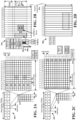
- FIG. 2A is a diagram 200 illustrating an example of a first subframe within a 5G NR frame structure.
- FIG. 2B is a diagram 230 illustrating an example of DL channels within a 5G NR subframe.
- FIG. 2C is a diagram 250 illustrating an example of a second subframe within a 5G NR frame structure.
- FIG. 2D is a diagram 280 illustrating an example of UL channels within a 5G NR subframe.
- the 5G NR frame structure may be frequency division duplexed (FDD) in which for a particular set of subcarriers (carrier system bandwidth), subframes within the set of subcarriers are dedicated for either DL or UL, or may be time division duplexed (TDD) in which for a particular set of subcarriers (carrier system bandwidth), subframes within the set of subcarriers are dedicated for both DL and UL.
- FDD frequency division duplexed
- TDD time division duplexed
- the 5G NR frame structure is assumed to be TDD, with subframe 4 being configured with slot format 28 (with mostly DL), where D is DL, U is UL, and F is flexible for use between DL/UL, and subframe 3 being configured with slot format 1 (with all UL). While subframes 3, 4 are shown with slot formats 1, 28, respectively, any particular subframe may be configured with any of the various available slot formats 0-61. Slot formats 0, 1 are all DL, UL, respectively. Other slot formats 2-61 include a mix of DL, UL, and flexible symbols.
- UEs are configured with the slot format (dynamically through DL control information (DCI), or semi-statically/statically through radio resource control (RRC) signaling) through a received slot format indicator (SFI).
- DCI DL control information
- RRC radio resource control
- SFI received slot format indicator
- the numerology 2 allows for 4 slots per subframe. Accordingly, for normal CP and numerology ⁇ , there are 14 symbols/slot and 2 ⁇ slots/subframe.
- the symbol length/duration is inversely related to the subcarrier spacing.
- the slot duration is 0.25 ms
- the subcarrier spacing is 60 kHz
- the symbol duration is approximately 16.67 ⁇ s.
- there may be one or more different bandwidth parts (BWPs) (see FIG. 2B ) that are frequency division multiplexed.
- Each BWP may have a particular numerology and CP (normal or extended).
- a resource grid may be used to represent the frame structure.
- Each time slot includes a resource block (RB) (also referred to as physical RBs (PRBs)) that extends 12 consecutive subcarriers.
- RB resource block
- PRBs physical RBs
- the resource grid is divided into multiple resource elements (REs). The number of bits carried by each RE depends on the modulation scheme.
- the RS may include demodulation RS (DM-RS) (indicated as R for one particular configuration, but other DM-RS configurations are possible) and channel state information reference signals (CSI-RS) for channel estimation at the UE.
- DM-RS demodulation RS
- CSI-RS channel state information reference signals
- the RS may also include beam measurement RS (BRS), beam refinement RS (BRRS), and phase tracking RS (PT-RS).
- BRS beam measurement RS
- BRRS beam refinement RS
- PT-RS phase tracking RS
- FIG. 2B illustrates an example of various DL channels within a subframe of a frame.
- the physical downlink control channel (PDCCH) carries DCI within one or more control channel elements (CCEs) (e.g., 1, 2, 4, 8, or 16 CCEs), each CCE including six RE groups (REGs), each REG including 12 consecutive REs in an OFDM symbol of an RB.
- CCEs control channel elements
- a PDCCH within one BWP may be referred to as a control resource set (CORESET).
- a UE is configured to monitor PDCCH candidates in a PDCCH search space (e.g., common search space, UE-specific search space) during PDCCH monitoring occasions on the CORESET, where the PDCCH candidates have different DCI formats and different aggregation levels.
- a PDCCH search space e.g., common search space, UE-specific search space
- a primary synchronization signal may be within symbol 2 of particular subframes of a frame.
- the PSS is used by a UE 104 to determine subframe/symbol timing and a physical layer identity.
- a secondary synchronization signal may be within symbol 4 of particular subframes of a frame.
- the SSS is used by a UE to determine a physical layer cell identity group number and radio frame timing. Based on the physical layer identity and the physical layer cell identity group number, the UE can determine a physical cell identifier (PCI). Based on the PCI, the UE can determine the locations of the DM-RS.
- PCI physical cell identifier
- the physical broadcast channel which carries a master information block (MIB), may be logically grouped with the PSS and SSS to form a synchronization signal (SS)/PBCH block (also referred to as SS block (SSB)).
- the MIB provides a number of RBs in the system bandwidth and a system frame number (SFN).
- the physical downlink shared channel (PDSCH) carries user data, broadcast system information not transmitted through the PBCH such as system information blocks (SIBs), and paging messages.
- SIBs system information blocks
- some of the REs carry DM-RS (indicated as R for one particular configuration, but other DM-RS configurations are possible) for channel estimation at the base station.
- the UE may transmit DM-RS for the physical uplink control channel (PUCCH) and DM-RS for the physical uplink shared channel (PUSCH).
- the PUSCH DM-RS may be transmitted in the first one or two symbols of the PUSCH.
- the PUCCH DM-RS may be transmitted in different configurations depending on whether short or long PUCCHs are transmitted and depending on the particular PUCCH format used.
- the UE may transmit sounding reference signals (SRS).
- the SRS may be transmitted in the last symbol of a subframe.
- the SRS may have a comb structure, and a UE may transmit SRS on one of the combs.
- the SRS may be used by a base station for channel quality estimation to enable frequency-dependent scheduling on the UL.
- FIG. 2D illustrates an example of various UL channels within a subframe of a frame.
- the PUCCH may be located as indicated in one configuration.
- the PUCCH carries uplink control information (UCI), such as scheduling requests, a channel quality indicator (CQI), a precoding matrix indicator (PMI), a rank indicator (RI), and hybrid automatic repeat request (HARQ) acknowledgment (ACK) (HARQ-ACK) feedback (i.e., one or more HARQ ACK bits indicating one or more ACK and/or negative ACK (NACK)).
- the PUSCH carries data, and may additionally be used to carry a buffer status report (BSR), a power headroom report (PHR), and/or UCI.
- BSR buffer status report
- PHR power headroom report
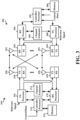
- Each stream may then be mapped to an OFDM subcarrier, multiplexed with a reference signal (e.g., pilot) in the time and/or frequency domain, and then combined together using an Inverse Fast Fourier Transform (IFFT) to produce a physical channel carrying a time domain OFDM symbol stream.
- the OFDM stream is spatially precoded to produce multiple spatial streams.
- Channel estimates from a channel estimator 374 may be used to determine the coding and modulation scheme, as well as for spatial processing.
- the channel estimate may be derived from a reference signal and/or channel condition feedback transmitted by the device 350.
- Each spatial stream may then be provided to a different antenna 320 via a separate transmitter 318TX.
- Each transmitter 318TX may modulate an RF carrier with a respective spatial stream for transmission.
- each receiver 354RX receives a signal through its respective antenna 352.
- Each receiver 354RX recovers information modulated onto an RF carrier and provides the information to the receive (RX) processor 356.
- the TX processor 368 and the RX processor 356 implement layer 1 functionality associated with various signal processing functions.
- the RX processor 356 may perform spatial processing on the information to recover any spatial streams destined for the device 350. If multiple spatial streams are destined for the device 350, they may be combined by the RX processor 356 into a single OFDM symbol stream.
- the RX processor 356 then converts the OFDM symbol stream from the time-domain to the frequency domain using a Fast Fourier Transform (FFT).
- FFT Fast Fourier Transform
- the symbols on each subcarrier, and the reference signal, are recovered and demodulated by determining the most likely signal constellation points transmitted by device 310. These soft decisions may be based on channel estimates computed by the channel estimator 358. The soft decisions are then decoded and deinterleaved to recover the data and control signals that were originally transmitted by device 310 on the physical channel. The data and control signals are then provided to the controller/processor 359, which implements layer 3 and layer 2 functionality.
- the controller/processor 359 can be associated with a memory 360 that stores program codes and data.
- the memory 360 may be referred to as a computer-readable medium.
- the controller/processor 359 may provide demultiplexing between transport and logical channels, packet reassembly, deciphering, header decompression, and control signal processing.
- the controller/processor 359 is also responsible for error detection using an ACK and/or NACK protocol to support HARQ operations.
- Channel estimates derived by a channel estimator 358 from a reference signal or feedback transmitted by device 310 may be used by the TX processor 368 to select the appropriate coding and modulation schemes, and to facilitate spatial processing.
- the spatial streams generated by the TX processor 368 may be provided to different antenna 352 via separate transmitters 354TX. Each transmitter 354TX may modulate an RF carrier with a respective spatial stream for transmission.
- the controller/processor 375 can be associated with a memory 376 that stores program codes and data.
- the memory 376 may be referred to as a computer-readable medium.
- the controller/processor 375 provides demultiplexing between transport and logical channels, packet reassembly, deciphering, header decompression, control signal processing.
- the controller/processor 375 is also responsible for error detection using an ACK and/or NACK protocol to support HARQ operations.
- the MAC-CE may be transmitted over sidelink communication.
- a sidelink (SL) buffer status report (BSR) MAC-CE (SL-BSR MAC-CE) may be transmitted on a Uu link to indicate buffer-status of the sidelink traffic.
- BSR buffer status report
- a CSI report may be agreed to be transmitted over a sidelink MAC-CE.
- the routing information may be removed, or some or all of it may be kept (e.g., a source ID) at the last leg.
- the last leg may be the Uu + PC5 link, and the routing information indication may be different compared to the Uu-only link.
- a 'header' MAC-CE may indicate which CBGs are transmitted through which link (the Uu link or the PC5 link).
- the header MAC-CE may also indicate locations of other MAC-CEs, particularly, whether they come from the Uu link or the PC5 link.
- the receiving UE may follow a timing dependent on the time delay caused by the hopping of the relayed MAC-CE, since a predetermined time delay may not be sufficient compared to the directly transmitted ACK.
- the receiving UE may use X ms for an activation time, where X depends on a number of hops. Since the number of hops may be dynamic and the receiving UE may not know the number of signal hops, this information may be separately indicated to the receiving UE (e.g., as a part of the ACK or in DCI/MAC-CE/RRC). For example, the receiving UE may use an 'expected' number of hops instead as preconfigured.
- the receiving UE may follow the timing of the last hop of an ACK.
- the receiving UE may know the timing based on when it receives the ACK. However, the originating UE may not know this time.
- the receiving UE may use a preconfigured/expected timing which is based on the number of the hops, and the preconfigured/expected timing may become equivalent to the option of configuring the X ms of activation time.
- the number of hops to determine the 'X ms' may be based on the shortest route or the longest route, where the length of the route refers to the number of hops.
- the receiving UE may determine an activation time to activate the command received in the MAC-CE from the originating UE via the relay UE.
- the receiving UE when the receiving UE sends the ACK straight back to the originating UE, the receiving UE may follow the approach proffered regarding the Uu link. In one example, when the receiving UE sends an ACK relayed via the relay UE to the originating UE, the receiving UE may determine the activation time. First, the receiving UE may wait for an activation time period of X milliseconds corresponding to the hops between the receiving UE and the originating UE. Second, the receiving UE may increase the activation time period by adding an additional offset of Y milliseconds configured to allow time to relay ACK from the relay UE to the originating UE.
- the second MAC-CE may also be ACKed (e.g., the relay UE may send an ACK to the receiving UE to indicate the receipt of the second MAC-CE), and further the relay UE may send an ACK to the receiving UE to indicate the successful relaying of the second MAC-CE to the originating UE.
- the MAC-CE from the originating UE may be activated after X' milliseconds after the transmission of a PSSCH carrying the MAC-CE based ACK (for the MAC-CE received from the originating UE) by the receiving UE.
- the MAC-CE from the originating UE may be activated after X'' milliseconds after the successful receipt of a HARQ-ACK for the successful transmission of the PSSCH transmitted to the originating UE.
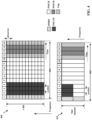
- FIG. 6 illustrates an example 600 of a wireless communication.
- the example 600 includes a first UE 602, a second UE 604, and a third UE 606.
- the third UE 606 (or UE3) may transmit a MAC-CE to a first UE 602 (or UE1) using a second UE 604 (or UE2) as a relay UE.
- the MAC-CE from the third UE 606 may request the first UE 602 to transmit a response MAC-CE based ACK to the third UE 606, instead of or in addition to the HARQ ACK.
- the response MAC-CE transmitted by the first UE 602 to the third UE 606 need not be an ACK.
- the third UE 606 may transmit a first MAC-CE (or a MAC-CE1) intended for the first UE 602 to the second UE 604.
- the second UE 604 in turn may relay the first MAC-CE to the first UE 602.
- the PSSCH 620 illustrates an example of the PSSCH transmitted from the first UE 602 including the second MAC-CE, the second MAC-CE including the MAC-CE based ACK for the first MAC-CE, indicating the successful reception of the first MAC-CE.
- the first UE 602 may transmit the PSSCH with the second MAC-CE to the third UE 606 by transmitting the PSSCH by relaying the second MAC-CE via the second UE 604.
- the second UE 604 may relay the PSSCH with the second MAC-CE to the third UE 606.
- the third UE 606 may transmit a HARQ ACK indicating the successful reception of the second MAC-CE.
- the third UE 606 may transmit the HARQ ACK indicating the successful reception of the second MAC-CE to the second UE 604.
- the second UE 604 may relay the HARQ ACK indicating the successful reception of the second MAC-CE to the first UE 602.
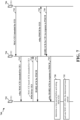
- FIG. 7 is a call-flow diagram 700 of wireless communication.
- the call-flow diagram 700 may include a first UE 702, a second UE 704, and a third UE 706.
- the first UE 702 may receive an activation request from the third UE 706 relayed via the second UE 704, and transmit an activation response to the third UE 706 and activate the received activation request after a time period.
- the third UE 706 may transmit a first MAC-CE (i.e., MAC-CE1) to the first UE 702 (or UE1; e.g., third UE 606) using the second UE 704 (or UE2; e.g., second UE 604) as a relay UE.
- the first MAC-CE from the third UE 706 may instruct the first UE 702 to transmit a MAC-CE based ACK to the third UE 706, instead of or in addition to the HARQ ACK.
- the third UE 706 may transmit, to the second UE 704, a first MAC-CE (or MAC-CE1) intended for the first UE 702 (e.g., at step 608).
- the first MAC-CE may include the activation request for a command associated with the first UE 702.
- the first UE 702 may transmit, to the second UE 704 and in response to the activation request, a second MAC-CE including an activation response to the third UE 706 (e.g., at step 612).
- the activation response may be transmitted through the PSSCH.
- the PSSCH may include a MAC-CE based ACK intended for the third UE 706 (e.g., the PSSCH 620). That is, the PSSCH transmitted from the first UE 702 may include the second MAC-CE including the MAC-CE based ACK for the first MAC-CE, indicating the successful reception of the first MAC-CE intended for the third UE 706.
- the third UE 706 may transmit a HARQ ACK indicating the successful reception of the PSSCH including the MAC-CE based ACK.
- the third UE 706 may transmit the HARQ ACK for the first UE 702 in response to the successful reception of the PSSCH from the first UE 702 relayed via the second UE 704 (e.g., at step 616).
- the time period for the first UE 702 to wait before activating the first MAC-CE may be determined based on the reception of the HARQ ACK in response to the PSSCH, the HARQ ACK transmitted from the third UE 706 via the second UE 704 at 722. That is, the first UE 702 may determine the time period as Y milliseconds. The first UE 702 may activate the command transmitted in the first MAC-CE after the time period of Y milliseconds after the reception of the HARQ ACK from the third UE 706 via the second UE 704 at 722, the HARQ ACK indicating the successful reception of the PSSCH at the third UE 706.
- the first UE 702 may activate the command after transmitting the activation response. That is, the first UE 702 may activate the first MAC-CE received from the third UE 706 at 712 after the time period determined at 730.
- the command may be activated after the time period from receiving the HARQ ACK in association with the third UE at 722. In another aspect, the command may be activated after the time period from receiving the HARQ ACK in association with the second UE at 716. In another aspect, the command may be activated after a time period from a transmission of the second MAC-CE including the activation response at 714. The command may be activated before the HARQ ACK is received, or the command may be activated after the HARQ ACK is received.
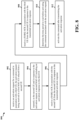
- FIG. 8 is a flowchart 800 of a method of wireless communication.
- the method may be performed by a UE (e.g., the UE 104; the first UE 602/702; the apparatus 1202).
- the UE may receive an activation request from a third UE relayed via a second UE, and transmit an activation response to the third UE and activate the received activation request after a time period.
- the UE receives the activation request for the command in association with the third UE, the activation request being received in the first MAC-CE relayed from the second UE.
- the activation request may be received through a PSSCH.
- the first UE 702 may receive the activation request for the command in association with the third UE 706, the activation request being received in the first MAC-CE relayed from the second UE 704.
- 802 may be performed by a MAC-CE managing component 1240.
- the UE upon successfully receiving the first MAC-CE from the third UE at, transmits, to the second UE and in response to the activation request, a second MAC-CE including an activation response to the third UE. That is, the PSSCH transmitted from the UE may include the second MAC-CE including the MAC-CE based ACK for the first MAC-CE, indicating the successful reception of the first MAC-CE intended for the third UE.
- the first UE 702 may, upon successfully receiving the first MAC-CE from the third UE at 802, transmit, to the second UE 704 and in response to the activation request, a second MAC-CE including an activation response to the third UE 706.
- 804 may be performed by the MAC-CE managing component 1240.
- the UE may receive a HARQ ACK in association with the second UE from the second UE in response to the activation response transmitted at 804.
- the first UE 702 may receive a HARQ ACK in association with the second UE 704 from the second UE 704 in response to the activation response transmitted at 714.
- 806 may be performed by a HARQ managing component 1242.
- the UE may receive the HARQ ACK in association with the third UE from the second UE 704 in response to the activation response transmitted at 804.
- the first UE 702 may receive the HARQ ACK in association with the third UE 706 from the second UE 704 in response to the activation response transmitted at 714.
- 808 may be performed by the HARQ managing component 1242.
- the UE may determine a time period before activating the first MAC-CE received at 802. In one aspect, the UE may determine the time period to wait after receiving the HARQ ACK in association with the third UE and before activating the command. In another aspect, the UE may determine the time period to wait after receiving the HARQ ACK in association with the second UE and before activating the command. In another aspect, the UE may determine the time period after the transmission of the second MAC-CE including the activation response and before activating the command based on a number of hops between the third UE and the UE through which the activation request traveled, the number of hops being greater than or equal to one. For example, at 730, the first UE 702 may determine a time period before activating the first MAC-CE received at 802. Furthermore, 810 may be performed by an activation time period component 1244.
- the time period for the UE to wait before activating the first MAC-CE may be determined based on the transmission of the PSSCH for the third UE at 804. That is, the UE may determine the time period as X milliseconds based on the number of hops from the UE to the third UE. The UE may activate the command transmitted in the first MAC-CE after the time period of X milliseconds after the transmission of the PSSCH containing the MAC-CE based ACK to the third UE at 804.
- the UE receives the activation request for the command in association with the third UE, the activation request being received in the first MAC-CE relayed from the second UE.
- the activation request may be received through a PSSCH.
- the first UE 702 may receive the activation request for the command in association with the third UE 706, the activation request being received in the first MAC-CE relayed from the second UE 704.
- 902 may be performed by a MAC-CE managing component 1240.
- the UE may receive, from the third UE, a first MAC-CE intended for the first UE.
- the first MAC-CE may include the activation request for a command associated with the first UE.
- the second UE 704 may receive, from the third UE 706, a first MAC-CE intended for the first UE 702.
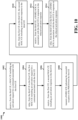
- 1002 may be performed by a MAC-CE managing component 1240.
- the UE may receive, from the first UE, a second MAC-CE including an activation response to the third UE.
- the activation response may be transmitted through the PSSCH.
- the PSSCH may include a MAC-CE based ACK intended for the third UE. That is, the PSSCH transmitted from the first UE may include the second MAC-CE including the MAC-CE based ACK for the first MAC-CE, indicating the successful reception of the first MAC-CE intended for the third UE.
- the second UE 704 may receive, from the first UE 702, a second MAC-CE including an activation response to the third UE 706.
- 1006 may be performed by the MAC-CE managing component 1240.
- the UE may receive the HARQ ACK for the first UE in response to the successful reception of the PSSCH from the first UE relayed via the second UE.
- the second UE 704 may receive the HARQ ACK for the first UE 702 in response to the successful reception of the PSSCH from the first UE 702 relayed via the second UE 704.
- 1012 may be performed by the HARQ managing component 1242.
- the UE may relay, from the third UE to the first UE, a HARQ ACK in association with the third UE in response to the activation response.
- the second UE 704 may relay, from the third UE 706 to the first UE 702, a HARQ ACK in association with the third UE 706 in response to the activation response.
- 1014 may be performed by the HARQ managing component 1242.
- FIG. 11 which is useful for an understanding of the invention, is a flowchart 1100 of a method of wireless communication.
- the method may be performed by a UE (e.g., the UE 104; the second UE 604/704; the apparatus 1202).
- the UE may relay an activation request from a third UE to a first UE, and relay an activation response from the first UE to the third UE.
- the UE may relay, from the third UE to the first UE, the first MAC-CE including the activation request for a command associated with the first UE.
- the activation request may be received through a PSSCH.
- the second UE 704 may relay, from the third UE 706 to the first UE 702, the first MAC-CE including the activation request for a command associated with the first UE 702.
- 1104 may be performed by the MAC-CE managing component 1240.
- FIG. 12 is a diagram 1200 illustrating an example of a hardware implementation for an apparatus 1202.
- the apparatus 1202 may be a UE, or another device configured to transmit and/or receive sidelink communication.
- the apparatus1202 includes a baseband processor 1204 (also referred to as a modem) coupled to a RF transceiver 1222.
- the baseband processor 1204 may be a cellular baseband processor and/or the RF transceiver 1222 may be a cellular RF transceiver.
- the apparatus 1202 may further include one or more subscriber identity modules (SIM) cards 1220, an application processor 1206 coupled to a secure digital (SD) card 1208 and a screen 1210, a Bluetooth module 1212, a wireless local area network (WLAN) module 1214, a Global Positioning System (GPS) module 1216, and/or a power supply 1218.
- SIM subscriber identity modules
- SD secure digital
- GPS Global Positioning System
- the baseband processor 1204 communicates through the RF transceiver 1222 with the UE 104 and/or BS 102/180.
- the baseband processor 1204 may include a computer-readable medium / memory.
- the computer-readable medium / memory may be non-transitory.
- the baseband processor 1204 is responsible for general processing, including the execution of software stored on the computer-readable medium / memory.
- the software when executed by the baseband processor 1204, causes the baseband processor 1204 to perform the various functions described in the present application.
- the computer-readable medium / memory may also be used for storing data that is manipulated by the baseband processor 1204 when executing software.
- the baseband processor 1204 further includes a reception component 1230, a communication manager 1232, and a transmission component 1234.
- the communication manager 1232 includes the one or more illustrated components.
- the components within the communication manager 1232 may be stored in the computer-readable medium / memory and/or configured as hardware within the baseband processor 1204.
- the baseband processor 1204 may be a component of the device 350 and may include the memory 360 and/or at least one of the TX processor 368, the RX processor 356, and the controller/processor 359.
- the apparatus 1202 may be a modem chip and include just the baseband processor 1204, and in another configuration, the apparatus 1202 may be the entire UE (e.g., see 350 of FIG. 3 ) and include the additional modules of the
- the communication manager 1232 includes a MAC-CE managing component 1240 that is configured to receive the activation request for the command in association with the third UE, transmit a second MAC-CE including an activation response to the third UE, receive, from the third UE, a first MAC-CE intended for the first UE, relay, from the third UE to the first UE, the first MAC-CE including the activation request for a command associated with the first UE, receive, from the first UE, a second MAC-CE including an activation response to the third UE, and relay, from the first UE to the third UE the second MAC-CE including the activation response to the third UE, e.g., as described in connection with 802, 804, 902, 904, 1002, 1004, 1006, 1010, 1104, and 1110.
- a MAC-CE managing component 1240 that is configured to receive the activation request for the command in association with the third UE, transmit a second MAC-CE including an activation response to the third UE, receive,
- the communication manager 1232 further includes a HARQ managing component 1242 that is configured to receive a HARQ ACK in association with the second UE from the second UE in response to the activation response, receive the HARQ ACK in association with the third UE from the second UE in response to the activation response transmitted, transmit a HARQ ACK indicating the successful reception of the PSSCH from the first UE, receive the HARQ ACK for the first UE in response to the successful reception of the PSSCH from the first UE relayed via the second UE, and relay a HARQ ACK in association with the third UE in response to the activation response, e.g., as described in connection with 806, 808, 1008, 1012, 1014.
- a HARQ managing component 1242 is configured to receive a HARQ ACK in association with the second UE from the second UE in response to the activation response, receive the HARQ ACK in association with the third UE from the second UE in response to the activation response transmitted, transmit
- the apparatus 1202 includes means for receiving a HARQ acknowledgment (ACK) in association with the third UE from the second UE in response to the transmitted activation response, and means for determining the time period to wait after receiving the HARQ ACK in association with the third UE and before activating the command, means for receiving a HARQ acknowledgment (ACK) in association with the second UE from the second UE in response to the transmitted activation response, and means for determining the time period to wait after receiving the HARQ ACK in association with the second UE and before activating the command.
- ACK HARQ acknowledgment
- the apparatus 1202 includes means for determining the time period after the transmission of the second MAC-CE including the activation response and before activating the command based on a number of hops between the third UE and the first UE through which the activation request traveled, the number of hops being greater than or equal to one, and the apparatus 1202 includes means for receiving a HARQ acknowledgment (ACK) in association with the third UE from the second UE in response to the transmitted activation response.
- ACK HARQ acknowledgment
- the apparatus 1202 includes means for relaying, from the third UE to the first UE, a first media access control (MAC) control element (CE) (MAC-CE) including an activation request for a command associated with the first UE, means for relaying, from the first UE to the third UE, a second MAC-CE including an activation response to the third UE, and means for relaying, from the third UE to the first UE, a HARQ ACK in association with the third UE in response to the relayed activation response.
- the means may be one or more of the components of the apparatus 1202 configured to perform the functions recited by the means.
- the apparatus 1202 may include the TX Processor 368, the RX Processor 356, and the controller/processor 359.
- the means may be the TX Processor 368, the RX Processor 356, and the controller/processor 359 configured to perform the functions recited by the means.
- the apparatus of wireless communication may include a UE configured to activate a MAC-CE transmitted over an SL relay after waiting a time period by receiving an activation request for a command in association with a second UE, the activation request being received in a first MAC-CE relayed from a third UE, transmitting, to the third UE and in response to the activation request, a second MAC-CE including an activation response to the second UE, and activating the command after transmitting the activation response.
- Combinations such as "at least one of A, B, or C,” “one or more of A, B, or C,” “at least one of A, B, and C,” “one or more of A, B, and C,” and "A, B, C, or any combination thereof” include any combination of A, B, and/or C, and may include multiples of A, multiples of B, or multiples of C.
- combinations such as “at least one of A, B, or C,” “one or more of A, B, or C,” “at least one of A, B, and C,” “one or more of A, B, and C,” and “A, B, C, or any combination thereof” may be A only, B only, C only, A and B, A and C, B and C, or A and B and C, where any such combinations may contain one or more member or members of A, B, or C.
- nothing disclosed herein is intended to be dedicated to the public regardless of whether such disclosure is explicitly recited in the claims.
Landscapes
- Engineering & Computer Science (AREA)
- Computer Networks & Wireless Communication (AREA)
- Signal Processing (AREA)
- Mobile Radio Communication Systems (AREA)
Claims (15)
- Un appareil de communication sans fil au niveau d'un premier équipement utilisateur, UE (602, 702), comprenant :un moyen pour recevoir une requête d'activation d'une commande en association avec un troisième UE (606, 706), la requête d'activation étant reçue dans un premier élément de contrôle, CE, de contrôle d'accès au support, MAC, MAC-CE (610, 712), relayé depuis un deuxième UE (604, 704) ;un moyen pour transmettre, au deuxième UE (604, 704) et en réponse à la requête d'activation, un second MAC-CE (612, 714) comportant une réponse d'activation au troisième UE (606, 706) ; etun moyen pour activer la commande après la transmission de la réponse d'activation, dans lequel la commande est activée après une période de temps à compter de la transmission du second MAC-CE (612, 714) comportant la réponse d'activation, et dans lequel la période de temps est basée sur un nombre de sauts entre le troisième UE (606, 706) et le premier UE (602, 702) par lesquels la requête d'activation est passée, le nombre de sauts étant supérieur ou égal à l'unité.
- L'appareil selon la revendication 1, comprenant en outre :
un moyen pour recevoir un accusé de réception, ACK, de requête automatique hybride, HARQ, (722), en association avec le troisième UE (606, 706) en provenance du deuxième UE (604, 704) en réponse à la réponse d'activation transmise, de préférence dans lequel la commande est activée après une période de temps à compter de la réception de l'ACK HARQ (722) en association avec le troisième UE (606, (706). - L'appareil selon la revendication 1, comprenant en outre :
un moyen pour recevoir un accusé de réception, ACK, de requête automatique hybride, HARQ, (716), en association avec le deuxième UE (604, 704) en provenance du deuxième UE (604, 704) en réponse à la réponse d'activation transmise, de préférence dans lequel la commande est activée après une période de temps à compter de la réception de l'ACK HARQ (716) en association avec le deuxième UE (604, 704). - L'appareil selon la revendication 1, comprenant en outre :
un moyen pour recevoir un accusé de réception, ACK, de requête automatique hybride, HARQ, (722), en association avec le troisième UE (606, 706) en provenance du deuxième UE (604, 704) en réponse à la réponse d'activation transmise, de préférence dans lequel la commande est activée avant la réception de l'ACK HARQ (722) ou dans lequel la commande est activée après que l'ACK HARQ (722) est reçu. - Un procédé de communication sans fil au niveau d'un premier équipement utilisateur, UE (602, 702), comprenant :la réception (802, 902) d'une requête d'activation d'une commande en association avec un troisième UE (606, 706), la requête d'activation étant reçue dans un premier élément de contrôle, CE, de contrôle d'accès au support, MAC, MAC-CE (610, 712), relayé depuis un deuxième UE (604, 704) ;la transmission (804, 904), au deuxième UE (604, 704) et en réponse à la requête d'activation, d'un second MAC-CE (612, 714) comportant une réponse d'activation au troisième UE (606, 706) ; etl'activation (812, 912) de la commande après la transmission (804, 904) de la réponse d'activation, dans lequel la commande est activée après une période de temps à compter de la transmission du second MAC-CE (612, 714) comportant la réponse d'activation, et dans lequel la période de temps est basée sur un nombre de sauts entre le troisième UE (606, 706) et le premier UE (602, 702) par lesquels la requête d'activation est passée, le nombre de sauts étant supérieur ou égal à l'unité.
- Le procédé selon la revendication 5, comprenant en outre la réception (808) d'un accusé de réception, ACK, de requête automatique hybride, HARQ, (722), en association avec le troisième UE (606, 706) en provenance du deuxième UE (604, 704) en réponse à la réponse d'activation transmise.
- Le procédé selon la revendication 6, dans lequel la commande est activée après une période de temps à compter de la réception de l'ACK HARQ (722) en association avec le troisième UE (606, 706).
- Le procédé selon la revendication 7, comprenant en outre la détermination (810) de la période de temps à attendre après la réception de l'ACK HARQ (722) en association avec le troisième UE (606, 706) et avant l'activation (812, 912) de la commande.
- Le procédé selon la revendication 5, comprenant en outre la réception (806) d'un accusé de réception, ACK, de requête automatique hybride, HARQ, (716) en association avec le deuxième UE (604, 704) en provenance du deuxième UE (604, 704) en réponse à la réponse d'activation transmise.
- Le procédé selon la revendication 9, dans lequel la commande est activée après une période de temps à compter de la réception de l'ACK HARQ (716) en association avec le deuxième UE (604, 704).
- Le procédé selon la revendication 10, comprenant en outre la détermination (810) de la période de temps à attendre après la réception de l'ACK HARQ (716) en association avec le deuxième UE (604, 704) et avant l'activation (812, 912) de la commande.
- Le procédé selon la revendication 5, comprenant en outre la détermination (730) de la période de temps après la transmission du second MAC-CE comportant la réponse d'activation et avant l'activation de la commande sur la base du nombre de sauts entre le troisième UE et le premier UE par lesquels la requête d'activation est passée.
- Le procédé selon la revendication 5, comprenant en outre la réception (808) d'un accusé de réception, ACK, de requête automatique hybride, HARQ, (722) en association avec le troisième UE (606, 706) en provenance du deuxième UE (604, 704) en réponse à la réponse d'activation transmise.
- Le procédé selon la revendication 13, dans lequel la commande est activée avant ou après que l'ACK HARQ (722) en association avec le troisième UE (606, 706) en provenance du deuxième UE (604, 704) est reçu.
- Le procédé selon la revendication 5, dans lequel la requête d'activation est reçue par le biais d'un canal physique partagé sidelink, PSSCH, et la réponse d'activation est transmise par le biais du PSSCH.
Applications Claiming Priority (3)
| Application Number | Priority Date | Filing Date | Title |
|---|---|---|---|
| US202063059503P | 2020-07-31 | 2020-07-31 | |
| US17/379,342 US11751282B2 (en) | 2020-07-31 | 2021-07-19 | Activating sidelink relay MAC-CE |
| PCT/US2021/042362 WO2022026246A1 (fr) | 2020-07-31 | 2021-07-20 | Activation de mac-ce de relais de liaison latérale |
Publications (2)
| Publication Number | Publication Date |
|---|---|
| EP4189886A1 EP4189886A1 (fr) | 2023-06-07 |
| EP4189886B1 true EP4189886B1 (fr) | 2025-04-16 |
Family
ID=80003759
Family Applications (1)
| Application Number | Title | Priority Date | Filing Date |
|---|---|---|---|
| EP21755186.0A Active EP4189886B1 (fr) | 2020-07-31 | 2021-07-20 | Activation de mac-ce de relais de liaison latérale |
Country Status (4)
| Country | Link |
|---|---|
| US (1) | US11751282B2 (fr) |
| EP (1) | EP4189886B1 (fr) |
| CN (1) | CN116158030B (fr) |
| WO (1) | WO2022026246A1 (fr) |
Family Cites Families (15)
| Publication number | Priority date | Publication date | Assignee | Title |
|---|---|---|---|---|
| US7167946B2 (en) * | 2003-09-30 | 2007-01-23 | Intel Corporation | Method and apparatus for implicit DRAM precharge |
| US8582638B2 (en) * | 2010-04-30 | 2013-11-12 | Blackberry Limited | System and method for channel state feedback in carrier aggregation |
| US10219178B2 (en) * | 2014-12-02 | 2019-02-26 | Cisco Technology, Inc. | Channel aggregation using Wi-Fi |
| US10271371B2 (en) * | 2015-03-09 | 2019-04-23 | Ofinno Technologies, Llc | Control channel of a secondary cell in a timing advance group |
| EP3125643B1 (fr) * | 2015-07-31 | 2019-04-03 | Panasonic Intellectual Property Corporation of America | Système d'allocation de resources amélioré pour des équipements utilisateurs agissant en relais de communication pour d'autres equipments distants |
| WO2018060804A1 (fr) * | 2016-09-29 | 2018-04-05 | Telefonaktiebolaget Lm Ericsson (Publ) | Gestion de temps active comportant une autorisation en deux étapes |
| US10869329B2 (en) * | 2016-09-30 | 2020-12-15 | Huawei Technologies Co., Ltd. | Resource request method and system, and device |
| KR102398842B1 (ko) | 2017-03-23 | 2022-05-17 | 삼성전자 주식회사 | 무선 통신 시스템에서 무선 경로 변경 방법 및 장치 |
| US11438965B2 (en) | 2018-01-19 | 2022-09-06 | Ntt Docomo, Inc. | User equipment in wireless communication system |
| EP3755038A4 (fr) * | 2018-02-14 | 2021-09-22 | Ntt Docomo, Inc. | Terminal utilisateur et procédé de communication sans fil |
| US11044058B2 (en) * | 2018-04-30 | 2021-06-22 | Qualcomm Incorporated | Methods and apparatuses for media access control (MAC)—control element (CE) activation timing |
| FI3811666T3 (fi) * | 2018-06-21 | 2023-09-20 | Zte Corp | Tekniikoita siirtonopeuden säätämiseksi |
| US11889514B2 (en) * | 2018-06-28 | 2024-01-30 | Interdigital Patent Holdings, Inc. | Sidelink buffer status reports and scheduling requests for new radio vehicle sidelink shared channel data transmissions |
| WO2021060936A1 (fr) * | 2019-09-26 | 2021-04-01 | Samsung Electronics Co., Ltd. | Attribution de ressources et procédé de commande de puissance pour système de communication de liaison latérale |
| KR102903758B1 (ko) * | 2020-04-10 | 2025-12-23 | 지티이 코포레이션 | 업링크 송신에서 기준 신호 경로 손실을 추적하기 위한 방법 및 시스템 |
-
2021
- 2021-07-19 US US17/379,342 patent/US11751282B2/en active Active
- 2021-07-20 CN CN202180060217.XA patent/CN116158030B/zh active Active
- 2021-07-20 WO PCT/US2021/042362 patent/WO2022026246A1/fr not_active Ceased
- 2021-07-20 EP EP21755186.0A patent/EP4189886B1/fr active Active
Also Published As
| Publication number | Publication date |
|---|---|
| WO2022026246A1 (fr) | 2022-02-03 |
| EP4189886A1 (fr) | 2023-06-07 |
| CN116158030B (zh) | 2025-11-21 |
| US20220039200A1 (en) | 2022-02-03 |
| CN116158030A (zh) | 2023-05-23 |
| US11751282B2 (en) | 2023-09-05 |
Similar Documents
| Publication | Publication Date | Title |
|---|---|---|
| US11616633B2 (en) | Half-duplex operation in new radio frequency division duplexing bands | |
| US11533740B2 (en) | Full-duplex mode dependent physical layer priority | |
| US11812431B2 (en) | Methods and apparatus for monitoring DL communication with timing offsets | |
| US11728959B2 (en) | Method and apparatus for managing mixed transmission | |
| US11616558B2 (en) | Procedural delays and scheduling restriction based on component carrier groups | |
| US11777583B2 (en) | Beam training resource selection by FR2 sidelink UE | |
| US20220182999A1 (en) | Fd mode dependent uci multiplexing | |
| US11923980B2 (en) | HARQ flush indicator for uplink transmissions and sidelink transmissions | |
| US12160876B2 (en) | Simultaneous Rx/Tx for multiple carriers | |
| US20230403715A1 (en) | User equipment cooperation | |
| US20260122661A1 (en) | Transmission coordination to mitigate interference | |
| US12058724B2 (en) | PHY-layer handling of multiple relayed transport blocks by an AF/DF-relay UE in sidelink | |
| US20220182970A1 (en) | Paging on sidelink | |
| US11825486B2 (en) | Semi-persistent configuration of SPS/CG parameter | |
| US11791971B2 (en) | Component carrier group based bandwidth part switching | |
| US12526851B2 (en) | Assisted connectivity | |
| WO2022077206A1 (fr) | Piles de protocoles et modélisation de porteuses pour connectivité uu assistée par rsu | |
| US20240236958A1 (en) | Inter-ue coordination - coordination resource configuration | |
| WO2022056665A1 (fr) | Optimisation de latence et fiabilité de communication vocale par duplexage par répartition dans le temps et relais | |
| US20230327821A1 (en) | Harmonization of multiple configured grant uplink with or without retransmission timer | |
| EP4189886B1 (fr) | Activation de mac-ce de relais de liaison latérale | |
| US11825512B2 (en) | Priority rule for half duplex UEs on preconfigured downlink symbols | |
| US20230120888A1 (en) | Feedback staggering or muting for network coding |
Legal Events
| Date | Code | Title | Description |
|---|---|---|---|
| STAA | Information on the status of an ep patent application or granted ep patent |
Free format text: STATUS: UNKNOWN |
|
| STAA | Information on the status of an ep patent application or granted ep patent |
Free format text: STATUS: THE INTERNATIONAL PUBLICATION HAS BEEN MADE |
|
| PUAI | Public reference made under article 153(3) epc to a published international application that has entered the european phase |
Free format text: ORIGINAL CODE: 0009012 |
|
| STAA | Information on the status of an ep patent application or granted ep patent |
Free format text: STATUS: REQUEST FOR EXAMINATION WAS MADE |
|
| 17P | Request for examination filed |
Effective date: 20221124 |
|
| AK | Designated contracting states |
Kind code of ref document: A1 Designated state(s): AL AT BE BG CH CY CZ DE DK EE ES FI FR GB GR HR HU IE IS IT LI LT LU LV MC MK MT NL NO PL PT RO RS SE SI SK SM TR |
|
| DAV | Request for validation of the european patent (deleted) | ||
| DAX | Request for extension of the european patent (deleted) | ||
| REG | Reference to a national code |
Ref country code: DE Free format text: PREVIOUS MAIN CLASS: H04L0001180000 Ipc: H04L0001182900 Ref country code: DE Ref legal event code: R079 Ref document number: 602021029273 Country of ref document: DE Free format text: PREVIOUS MAIN CLASS: H04L0001180000 Ipc: H04L0001182900 |
|
| GRAP | Despatch of communication of intention to grant a patent |
Free format text: ORIGINAL CODE: EPIDOSNIGR1 |
|
| STAA | Information on the status of an ep patent application or granted ep patent |
Free format text: STATUS: GRANT OF PATENT IS INTENDED |
|
| RIC1 | Information provided on ipc code assigned before grant |
Ipc: H04W 80/02 20090101ALN20241119BHEP Ipc: H04L 1/00 20060101ALN20241119BHEP Ipc: H04L 1/1829 20230101AFI20241119BHEP |
|
| INTG | Intention to grant announced |
Effective date: 20241127 |
|
| GRAS | Grant fee paid |
Free format text: ORIGINAL CODE: EPIDOSNIGR3 |
|
| GRAA | (expected) grant |
Free format text: ORIGINAL CODE: 0009210 |
|
| STAA | Information on the status of an ep patent application or granted ep patent |
Free format text: STATUS: THE PATENT HAS BEEN GRANTED |
|
| AK | Designated contracting states |
Kind code of ref document: B1 Designated state(s): AL AT BE BG CH CY CZ DE DK EE ES FI FR GB GR HR HU IE IS IT LI LT LU LV MC MK MT NL NO PL PT RO RS SE SI SK SM TR |
|
| REG | Reference to a national code |
Ref country code: GB Ref legal event code: FG4D |
|
| REG | Reference to a national code |
Ref country code: CH Ref legal event code: EP Ref country code: DE Ref legal event code: R096 Ref document number: 602021029273 Country of ref document: DE |
|
| REG | Reference to a national code |
Ref country code: IE Ref legal event code: FG4D |
|
| PGFP | Annual fee paid to national office [announced via postgrant information from national office to epo] |
Ref country code: GB Payment date: 20250612 Year of fee payment: 5 |
|
| PGFP | Annual fee paid to national office [announced via postgrant information from national office to epo] |
Ref country code: FR Payment date: 20250612 Year of fee payment: 5 |
|
| REG | Reference to a national code |
Ref country code: NL Ref legal event code: MP Effective date: 20250416 |
|
| PG25 | Lapsed in a contracting state [announced via postgrant information from national office to epo] |
Ref country code: NL Free format text: LAPSE BECAUSE OF FAILURE TO SUBMIT A TRANSLATION OF THE DESCRIPTION OR TO PAY THE FEE WITHIN THE PRESCRIBED TIME-LIMIT Effective date: 20250416 |
|
| REG | Reference to a national code |
Ref country code: AT Ref legal event code: MK05 Ref document number: 1786565 Country of ref document: AT Kind code of ref document: T Effective date: 20250416 |
|
| PG25 | Lapsed in a contracting state [announced via postgrant information from national office to epo] |
Ref country code: FI Free format text: LAPSE BECAUSE OF FAILURE TO SUBMIT A TRANSLATION OF THE DESCRIPTION OR TO PAY THE FEE WITHIN THE PRESCRIBED TIME-LIMIT Effective date: 20250416 Ref country code: PT Free format text: LAPSE BECAUSE OF FAILURE TO SUBMIT A TRANSLATION OF THE DESCRIPTION OR TO PAY THE FEE WITHIN THE PRESCRIBED TIME-LIMIT Effective date: 20250818 Ref country code: ES Free format text: LAPSE BECAUSE OF FAILURE TO SUBMIT A TRANSLATION OF THE DESCRIPTION OR TO PAY THE FEE WITHIN THE PRESCRIBED TIME-LIMIT Effective date: 20250416 |
|
| PGFP | Annual fee paid to national office [announced via postgrant information from national office to epo] |
Ref country code: DE Payment date: 20250616 Year of fee payment: 5 |
|
| REG | Reference to a national code |
Ref country code: LT Ref legal event code: MG9D |
|
| PG25 | Lapsed in a contracting state [announced via postgrant information from national office to epo] |
Ref country code: NO Free format text: LAPSE BECAUSE OF FAILURE TO SUBMIT A TRANSLATION OF THE DESCRIPTION OR TO PAY THE FEE WITHIN THE PRESCRIBED TIME-LIMIT Effective date: 20250716 Ref country code: GR Free format text: LAPSE BECAUSE OF FAILURE TO SUBMIT A TRANSLATION OF THE DESCRIPTION OR TO PAY THE FEE WITHIN THE PRESCRIBED TIME-LIMIT Effective date: 20250717 |
|
| PG25 | Lapsed in a contracting state [announced via postgrant information from national office to epo] |
Ref country code: PL Free format text: LAPSE BECAUSE OF FAILURE TO SUBMIT A TRANSLATION OF THE DESCRIPTION OR TO PAY THE FEE WITHIN THE PRESCRIBED TIME-LIMIT Effective date: 20250416 |
|
| PG25 | Lapsed in a contracting state [announced via postgrant information from national office to epo] |
Ref country code: BG Free format text: LAPSE BECAUSE OF FAILURE TO SUBMIT A TRANSLATION OF THE DESCRIPTION OR TO PAY THE FEE WITHIN THE PRESCRIBED TIME-LIMIT Effective date: 20250416 |
|
| PG25 | Lapsed in a contracting state [announced via postgrant information from national office to epo] |
Ref country code: HR Free format text: LAPSE BECAUSE OF FAILURE TO SUBMIT A TRANSLATION OF THE DESCRIPTION OR TO PAY THE FEE WITHIN THE PRESCRIBED TIME-LIMIT Effective date: 20250416 |
|
| PG25 | Lapsed in a contracting state [announced via postgrant information from national office to epo] |
Ref country code: AT Free format text: LAPSE BECAUSE OF FAILURE TO SUBMIT A TRANSLATION OF THE DESCRIPTION OR TO PAY THE FEE WITHIN THE PRESCRIBED TIME-LIMIT Effective date: 20250416 |
|
| PG25 | Lapsed in a contracting state [announced via postgrant information from national office to epo] |
Ref country code: RS Free format text: LAPSE BECAUSE OF FAILURE TO SUBMIT A TRANSLATION OF THE DESCRIPTION OR TO PAY THE FEE WITHIN THE PRESCRIBED TIME-LIMIT Effective date: 20250716 |
|
| PG25 | Lapsed in a contracting state [announced via postgrant information from national office to epo] |
Ref country code: IS Free format text: LAPSE BECAUSE OF FAILURE TO SUBMIT A TRANSLATION OF THE DESCRIPTION OR TO PAY THE FEE WITHIN THE PRESCRIBED TIME-LIMIT Effective date: 20250816 |
|
| PG25 | Lapsed in a contracting state [announced via postgrant information from national office to epo] |
Ref country code: LV Free format text: LAPSE BECAUSE OF FAILURE TO SUBMIT A TRANSLATION OF THE DESCRIPTION OR TO PAY THE FEE WITHIN THE PRESCRIBED TIME-LIMIT Effective date: 20250416 |
|
| PG25 | Lapsed in a contracting state [announced via postgrant information from national office to epo] |
Ref country code: SM Free format text: LAPSE BECAUSE OF FAILURE TO SUBMIT A TRANSLATION OF THE DESCRIPTION OR TO PAY THE FEE WITHIN THE PRESCRIBED TIME-LIMIT Effective date: 20250416 Ref country code: DK Free format text: LAPSE BECAUSE OF FAILURE TO SUBMIT A TRANSLATION OF THE DESCRIPTION OR TO PAY THE FEE WITHIN THE PRESCRIBED TIME-LIMIT Effective date: 20250416 |
|
| REG | Reference to a national code |
Ref country code: DE Ref legal event code: R097 Ref document number: 602021029273 Country of ref document: DE |
|
| PG25 | Lapsed in a contracting state [announced via postgrant information from national office to epo] |
Ref country code: CZ Free format text: LAPSE BECAUSE OF FAILURE TO SUBMIT A TRANSLATION OF THE DESCRIPTION OR TO PAY THE FEE WITHIN THE PRESCRIBED TIME-LIMIT Effective date: 20250416 |
|
| PG25 | Lapsed in a contracting state [announced via postgrant information from national office to epo] |
Ref country code: EE Free format text: LAPSE BECAUSE OF FAILURE TO SUBMIT A TRANSLATION OF THE DESCRIPTION OR TO PAY THE FEE WITHIN THE PRESCRIBED TIME-LIMIT Effective date: 20250416 |
|
| PG25 | Lapsed in a contracting state [announced via postgrant information from national office to epo] |
Ref country code: SK Free format text: LAPSE BECAUSE OF FAILURE TO SUBMIT A TRANSLATION OF THE DESCRIPTION OR TO PAY THE FEE WITHIN THE PRESCRIBED TIME-LIMIT Effective date: 20250416 |
|
| PG25 | Lapsed in a contracting state [announced via postgrant information from national office to epo] |
Ref country code: IT Free format text: LAPSE BECAUSE OF FAILURE TO SUBMIT A TRANSLATION OF THE DESCRIPTION OR TO PAY THE FEE WITHIN THE PRESCRIBED TIME-LIMIT Effective date: 20250416 |
|
| PLBE | No opposition filed within time limit |
Free format text: ORIGINAL CODE: 0009261 |
|
| STAA | Information on the status of an ep patent application or granted ep patent |
Free format text: STATUS: NO OPPOSITION FILED WITHIN TIME LIMIT |
|
| REG | Reference to a national code |
Ref country code: CH Ref legal event code: H13 Free format text: ST27 STATUS EVENT CODE: U-0-0-H10-H13 (AS PROVIDED BY THE NATIONAL OFFICE) Effective date: 20260224 |
|
| REG | Reference to a national code |
Ref country code: CH Ref legal event code: L10 Free format text: ST27 STATUS EVENT CODE: U-0-0-L10-L00 (AS PROVIDED BY THE NATIONAL OFFICE) Effective date: 20260225 |
|
| PG25 | Lapsed in a contracting state [announced via postgrant information from national office to epo] |
Ref country code: RO Free format text: LAPSE BECAUSE OF FAILURE TO SUBMIT A TRANSLATION OF THE DESCRIPTION OR TO PAY THE FEE WITHIN THE PRESCRIBED TIME-LIMIT Effective date: 20250416 |
|
| PG25 | Lapsed in a contracting state [announced via postgrant information from national office to epo] |
Ref country code: LU Free format text: LAPSE BECAUSE OF NON-PAYMENT OF DUE FEES Effective date: 20250720 |
|
| 26N | No opposition filed |
Effective date: 20260119 |
|
| REG | Reference to a national code |
Ref country code: BE Ref legal event code: MM Effective date: 20250731 |
|
| PG25 | Lapsed in a contracting state [announced via postgrant information from national office to epo] |
Ref country code: BE Free format text: LAPSE BECAUSE OF NON-PAYMENT OF DUE FEES Effective date: 20250731 |
|
| PG25 | Lapsed in a contracting state [announced via postgrant information from national office to epo] |
Ref country code: CH Free format text: LAPSE BECAUSE OF NON-PAYMENT OF DUE FEES Effective date: 20250731 |