EP4192044A1 - Procédé et appareil de communication pour un service de multidiffusion et de diffusion, ainsi que support et dispositif électronique - Google Patents
Procédé et appareil de communication pour un service de multidiffusion et de diffusion, ainsi que support et dispositif électronique Download PDFInfo
- Publication number
- EP4192044A1 EP4192044A1 EP22831540.4A EP22831540A EP4192044A1 EP 4192044 A1 EP4192044 A1 EP 4192044A1 EP 22831540 A EP22831540 A EP 22831540A EP 4192044 A1 EP4192044 A1 EP 4192044A1
- Authority
- EP
- European Patent Office
- Prior art keywords
- mbs
- assistance information
- application
- service
- communication method
- Prior art date
- Legal status (The legal status is an assumption and is not a legal conclusion. Google has not performed a legal analysis and makes no representation as to the accuracy of the status listed.)
- Pending
Links
- 238000004891 communication Methods 0.000 title claims abstract description 84
- 238000000034 method Methods 0.000 title claims abstract description 68
- 238000012545 processing Methods 0.000 claims abstract description 58
- 230000005540 biological transmission Effects 0.000 claims abstract description 49
- 238000004590 computer program Methods 0.000 claims description 20
- 230000008569 process Effects 0.000 claims description 18
- 230000003247 decreasing effect Effects 0.000 claims description 3
- 230000006870 function Effects 0.000 description 39
- 238000010586 diagram Methods 0.000 description 14
- 238000007726 management method Methods 0.000 description 8
- 230000003287 optical effect Effects 0.000 description 4
- 238000005516 engineering process Methods 0.000 description 3
- 230000003044 adaptive effect Effects 0.000 description 2
- 230000008901 benefit Effects 0.000 description 2
- 238000005265 energy consumption Methods 0.000 description 2
- 230000003993 interaction Effects 0.000 description 2
- 230000000644 propagated effect Effects 0.000 description 2
- 239000002699 waste material Substances 0.000 description 2
- 238000013475 authorization Methods 0.000 description 1
- 230000008859 change Effects 0.000 description 1
- 238000012790 confirmation Methods 0.000 description 1
- 238000013523 data management Methods 0.000 description 1
- 230000000694 effects Effects 0.000 description 1
- 239000004973 liquid crystal related substance Substances 0.000 description 1
- 230000007246 mechanism Effects 0.000 description 1
- 238000012986 modification Methods 0.000 description 1
- 230000004048 modification Effects 0.000 description 1
- 239000013307 optical fiber Substances 0.000 description 1
- 230000008520 organization Effects 0.000 description 1
- 238000013468 resource allocation Methods 0.000 description 1
- 239000004065 semiconductor Substances 0.000 description 1
- 238000012795 verification Methods 0.000 description 1
Images

Classifications
-
- H—ELECTRICITY
- H04—ELECTRIC COMMUNICATION TECHNIQUE
- H04W—WIRELESS COMMUNICATION NETWORKS
- H04W4/00—Services specially adapted for wireless communication networks; Facilities therefor
- H04W4/06—Selective distribution of broadcast services, e.g. multimedia broadcast multicast service [MBMS]; Services to user groups; One-way selective calling services
-
- H—ELECTRICITY
- H04—ELECTRIC COMMUNICATION TECHNIQUE
- H04W—WIRELESS COMMUNICATION NETWORKS
- H04W72/00—Local resource management
- H04W72/30—Resource management for broadcast services
-
- H—ELECTRICITY
- H04—ELECTRIC COMMUNICATION TECHNIQUE
- H04W—WIRELESS COMMUNICATION NETWORKS
- H04W28/00—Network traffic management; Network resource management
- H04W28/16—Central resource management; Negotiation of resources or communication parameters, e.g. negotiating bandwidth or QoS [Quality of Service]
- H04W28/18—Negotiating wireless communication parameters
-
- H—ELECTRICITY
- H04—ELECTRIC COMMUNICATION TECHNIQUE
- H04W—WIRELESS COMMUNICATION NETWORKS
- H04W64/00—Locating users or terminals or network equipment for network management purposes, e.g. mobility management
-
- H—ELECTRICITY
- H04—ELECTRIC COMMUNICATION TECHNIQUE
- H04W—WIRELESS COMMUNICATION NETWORKS
- H04W72/00—Local resource management
- H04W72/50—Allocation or scheduling criteria for wireless resources
- H04W72/53—Allocation or scheduling criteria for wireless resources based on regulatory allocation policies
-
- H—ELECTRICITY
- H04—ELECTRIC COMMUNICATION TECHNIQUE
- H04W—WIRELESS COMMUNICATION NETWORKS
- H04W8/00—Network data management
- H04W8/22—Processing or transfer of terminal data, e.g. status or physical capabilities
-
- H—ELECTRICITY
- H04—ELECTRIC COMMUNICATION TECHNIQUE
- H04W—WIRELESS COMMUNICATION NETWORKS
- H04W72/00—Local resource management
- H04W72/50—Allocation or scheduling criteria for wireless resources
- H04W72/51—Allocation or scheduling criteria for wireless resources based on terminal or device properties
Definitions
- This application relates to the field of computer and communication technologies, and specifically, to a communication method and apparatus for a multicast and broadcast service(MBS), a medium, and an electronic device.
- MMS multicast and broadcast service
- Multicast and Broadcast Service including a multicast service and a broadcast service, transmits the same content to multiple receivers.
- a broadcast service as an example, in order to reduce energy consumption of a terminal and network deployment costs, in a one-way broadcast service scenario, a network side can broadcast service content for a large quantity of terminal devices at the same time, such as TV or live streaming of events.
- Embodiments of this disclosure provide a communication method and apparatus for a multicast and broadcast service(MBS), a medium, and an electronic device, so as to resolve, at least to some extent, the problem that a network side in an MBS cannot obtain service-related data of a terminal device, to improve accuracy and rationality of resource configuration in the MBS.
- MBS multicast and broadcast service
- a communication method for an MBS including:
- a communication method for an MBS including:
- a communication apparatus for an MBS including:
- a communication apparatus for an MBS including:
- a computer-readable storage medium storing a computer program, the computer program, when executed by a processor, cause the processor to implement the communication method for an MBS according to the foregoing embodiments.
- an electronic device including: one or more processors; and a storage apparatus, configured to store one or more programs, the one or more programs, when executed by the one or more processors, causing the one or more processors to implement the communication method for an MBS according to the foregoing embodiments.
- a computer program product or a computer program is provided, the computer program product or the computer program including computer instructions, the computer instructions being stored in a computer-readable storage medium.
- a processor of a computer device reads the computer instructions from the computer-readable storage medium, and the processor executes the computer instructions, to cause the computer device to perform the communication method for an MBS provided in the foregoing embodiments.
- the AF performs communication negotiation of the MBS through the core network element to determine the transmission policy of the MBS application assistance information, and obtains, according to the transmission policy, service statistics data of the terminal device for processing the MBS, to generate the MBS application assistance information, and transmits the MBS application assistance information to the core network element, so that the core network element performs resource configuration processing of the MBS according to the MBS application assistance information, which can help address the problem that the network side cannot obtain the service-related data of the terminal device in the MBS, thereby improving accuracy and rationality of resource configuration in the MBS.
- the block diagrams shown in the accompanying drawings are merely functional entities and do not necessarily correspond to physically independent entities. That is, the functional entities may be implemented in a software form, or in one or more hardware modules or integrated circuits, or in different networks and/or processor apparatuses and/or microcontroller apparatuses.
- the communication manners between network nodes mainly include unicast, multicast and broadcast.
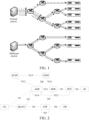
- "Unicast" is the most common one-to-one communication, with the advantage that a transmitting party may transmit different contents to different receivers. However, if the transmitting party needs to transmit the same content to multiple receivers, multiple copies of the same data need to be transmitted end-to-end, which is inefficient.
- FIG. 1 when a unicast source transmits data to multiple receivers in a unicast manner, multiple copies of the same data need to be transmitted in an end-to-end manner (in FIG. 1 , different line types represent different data streams).
- Multicast can also be referred to as “multicast”, where a transmitting party transmits the same content to multiple receivers. Multicast is especially applicable to online video conference and online video on demand. If unicast is adopted, there will be as many teleportation processes as receivers, which is inefficient. However, if the broadcast manner of transmitting all the data without distinguishing a target is adopted, although the data can be transmitted at one time, the purpose of distinguishing a specific data receiver cannot be achieved. It can be seen that, the multicast manner can not only transmit the same data to the multiple receivers at one time, but also achieve the purpose of transmitting data only to a specific object. Specifically, as shown in FIG. 1 , a multicast source may transmit the same data to multiple receivers at one time.
- the same content is also transmitted to multiple receivers, but receivers are not selected during transmission. Therefore, there may be a waste of network resources caused by data transmission to an unnecessary device.
- some receivers may not be “interested” in the broadcast content; in this case, after receiving the broadcast content, the receivers have to discard received data packets, which also causes a waste of terminal resources.
- a fundamental difference between the broadcast service and the multicast service is that a (user equipment (UE) in a system can participate in the broadcast service without signing up, while a UE of the multicast service needs to sign up and be authenticated before participating in the multicast service. It is also to be noted that there are many kinds of multicast services and broadcast services.
- the UE joins a multicast group of a corresponding service through an IP multicast address.
- a broadcast service corresponding to a broadcast group has a specific service area.
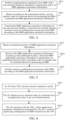
- FIG. 2 shows a 5G network architecture defined by the 3rd Generation Partnership Project (3GPP) organization, in which 5G core network elements include an access and mobility management function (AMF), a session management function (SMF), a user plane function (UPF), a policy control function (PCF), an authentication server function (AUSF), a unified data management function (UDM), and the like.
- AMF access and mobility management function
- SMF session management function
- UPF user plane function
- PCF policy control function
- AUSF authentication server function
- UDM unified data management function
- AF is an application function entity located outside the 5G core network
- UE may be a 5G terminal such as a mobile phone or a tablet computer
- an access network (AN) or a radio access network (RAN) may be a 5G base station
- DN data network
- the AMF is responsible for terminating an N2 interface of a control plane of the base station.
- the AMF is also responsible for terminating an N1 interface of the UE, to implement the encryption and integrity protection of a non-access stratum (NAS), and is responsible for functions of UE access verification, authorization management, registration, connection, reachability and mobility management, as well as a transparent transmission of a session management message between the UE and the SMF.
- NAS non-access stratum
- the (R) AN interacts with the UPF through an N3 interface; the UPFs can interact with each other through an N9 interface; the UPF interacts with the SMF through an N4 interface; the UPF interacts with the DN through an N6 interface; the SMF interacts with the AMF through an N11 interface; the SMF interacts with the PCF through an N7 interface; the SMF interacts with the UDM through an N10 interface; the PCF interacts with the AF through an N5 interface; the AMFs can interact with each other through an N14 interface; the AMF interacts with the PCF through an N15 interface; the AMF interacts with the UDM through an N8 interface; the AMF interacts with the AUSF through an N12 interface; and the AUSF interacts with the UDM through an N13 interface.
- the system architecture shown in FIG. 2 only supports the unicast service, but does not support a 5G broadcast and multicast service.
- the system architecture shown in FIG. 3 is introduced.
- the system architecture shown in FIG. 3 includes an application server (AF/AS), a network exposure function (NEF), a multicast/broadcast service function-control plane (MBSF-C), a multicast/broadcast service function-user plane (MBSF-U), a PCF, a multicast/broadcast-SMF (MB-SMF), a multicast/broadcast-UPF (MB-UPF SMF), an SMF, an AMF, a UPF, a RAN node and a UE connected to the RAN node.
- AF/AS application server
- NEF network exposure function
- MSF-C multicast/broadcast service function-control plane
- MSF-U multicast/broadcast service function-user plane
- PCF a multicast/broadcast-SMF
- MB-UPF SMF multicast/broadcast-UPF
- SMF multicast/broadcast-UPF
- the system architecture shown in FIG. 3 introduces new network elements MB-SMF and MB-UPF, which are specially used for supporting the 5G broadcast service and multicast service.
- the PCF, the AMF, the NEF and the RAN all need to be provided with new function enhancement to provide the 5G multicast and broadcast service.
- Npcf refers to an interface through which the PCF provides a service, and other network functions (NFs) transmit Npcf service request messages to the PCF through the Npcf interface, while the PCF responds to the requests and transmits notification service messages through the Npcf interface;
- Nmbsmf refers to an interface through which the MB-SMF provides a service, and other NFs transmit Nmbsmf service request messages to the MB-SMF through the Nmbsmf interface, while the MB-SMF responds to the requests and transmits notification service messages through the Nmbsmf interface.
- the AMF interacts with the RAN through the N2 interface; the UPF interacts with the RAN node through the N3 interface; the SMF interacts with the UPF through the N4 interface; the SMF interacts with the AMF through the N11 interface; the MB-UPF interacts with the RAN node through an MB-N3 interface; the MB-SMF interacts with the AMF through the N11 interface; the MB-SMF interacts with the SMF through an N16a interface; the PCF interacts with the AMF through the N15 interface; the PCF interacts with the MB-SMF through the N7 interface; the MB-SMF interacts with the MB-UPF through the N4 interface; the MB-UPF interacts with the MBSF-U through the N6 interface; the MB-UPF interacts with the AF/AS through an N6/MB2-U interface; the MBSF-U interacts with the AF/AS through an xMB-U/MB2-U interface; the MBSF-U
- the MBSF-C and the MBSF-U are not necessary.
- the MBSF-C and the MBSF-U are necessary under the following two conditions: 1. the service of the 5G MBS and 4G or 3G multimedia broadcast and multicast service (MBMS) are interconnected, that is, when the AF of the 5G and the AS of the 4G or 3G MBMS are the same entity; 2. the operator needs to process the MBS (such as transcoding a video or checking content).
- MBMS multimedia broadcast and multicast service
- a network side in order to reduce energy consumption of a terminal and network deployment costs, in a one-way broadcast service scenario, a network side can broadcast service content for a large quantity of UEs at the same time, such as TV or live streaming of events.
- the 5G network does not provide more radio resources for allocation due to the increase in the quantity of UEs, which achieves great scalability.
- the MBS broadcast service does not need to establish a connection in advance.
- the AF and the application server that is, AS
- the AF cannot know a current running status of the broadcast service through the 5G core network (5GC core).
- the 5G network when the 5G network provides the broadcast service, in order to support a large quantity of users, ACK confirmation is usually not supported, that is, one-way broadcast is adopted. If an ACK mechanism can be introduced, the efficiency of the broadcast service will be greatly affected. In this case, when providing the broadcast service, the 5G network cannot know service receiving information of a large quantity of terminal users, that is, although the 5G network provides the MBS broadcast service, it cannot obtain an actual effect and user experience of the service.
- the embodiments of this disclosure provide a new MBS communication solution to address the problem that the network side cannot obtain the service-related data of the terminal device in the MBS service. Implementation details of the technical solutions of the embodiments of this disclosure are described below in detail.
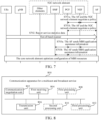
- FIG. 4 is a flowchart of a communication method for an MBS according to some embodiments of this disclosure.
- the communication method for an MBS may be performed by an AF.
- the communication method for an MBS includes at least step S410 to step S430.
- a detailed description is as follows: In step S410, communication negotiation of an MBS is performed with a core network element to determine a transmission policy of MBS application assistance information.
- the MBS application assistance information is used for optimizing configuration of 5G MBS resources by a 5G core network element.
- the transmission policy is used for determining content, type and transmission manner of the to-be-transmitted application assistance information.
- the core network element may be a PCF.
- an AF may perform communication negotiation of the MBS through a NEF and the PCF; or when the AF is in a trusted network environment, the AF may directly perform the communication negotiation of the MBS with the PCF.
- the transmission policy of the MBS application assistance information includes at least one of: content of the application assistance information, confidence of the application assistance information, a sample ratio of the application assistance information, an acquisition frequency of the application assistance information, granularity information of the application assistance information, and charging information of the application assistance information.
- the content of the application assistance information includes at least one of: a quantity of terminals processing a specified MBS obtained by the application function entity from an application layer, a state type of a terminal processing a specified MBS obtained by the application function entity from an application layer, location information of a terminal processing a specified MBS obtained by the application function entity from an application layer, and a service statistics characteristic of a specified MBS obtained by the application function entity from an application layer (for example, playing smoothness and user experience).
- the state type of a terminal processing a specified MBS obtained by the application function entity from an application layer may include: an active state, an inactive state, and an idle state.
- the location information of the terminal includes at least one of: cell information of the terminal, tracking area information of the terminal, or geographical location information of the terminal.
- the cell information of the terminal is information about a current serving cell of the terminal; the tracking area is also known as TA for short; the geographical location information of the terminal is actual location information of the terminal, such as location information obtained by using the Global Positioning System (GPS) or Beidou satellite system.
- GPS Global Positioning System
- Beidou satellite system Beidou satellite system
- the granularity information of the application assistance information includes at least one of: a user granularity (that is, per-user), a terminal device granularity (that is, per-UE), and a service flow granularity (that is, per-flow).
- the acquisition frequency of the application assistance information refers to the amount of application assistance information obtained per unit time.
- the transmission policy of the MBS application assistance information determined by the AF and the core network element may include information to be transmitted, a frequency at which the information is transmitted, and the like.
- step S420 according to the transmission policy, service statistics data of a terminal device for processing the MBS is obtained, to generate the MBS application assistance information, as shown in FIG. 4 .
- the AF may obtain service data fed back by the terminal device through a non-MBS serving cell, that is, the service data fed back by the terminal device in an out-of-band manner, and then generate the service statistics data according to the service data fed back by the terminal device.
- some or all of the service statistics data may be used as the MBS application assistance information.
- step S430 the MBS application assistance information is transmitted to the core network element, so that the core network element performs resource configuration processing of the MBS according to the MBS application assistance information.
- the AF may transmit the MBS application assistance information to the core network element in an out-of-band manner.
- the broadcast service in the specified area can be switched to a multicast service or a unicast service.
- the core network element can also perform resource configuration processing for the adjusted service type.
- a modulation order for a broadcast service in the specified area can be decreased.
- the core network element can also decrease the receiving bit error rate of the terminal device in the specified area by adjusting the resource configuration, for example, allocating more bandwidth resources for the broadcast service in the specified area.
- a broadcast area of the specified broadcast service is adjusted, so that a terminal device processing the specified broadcast service and having the mobile frequency higher than the set value is located in the broadcast area.
- the core network element can reallocate transmission resources for the adjusted broadcast area.
- FIG. 4 The technical solution of the embodiment shown in FIG. 4 is described from the perspective of the AF, and implementation details of the technical solution of the embodiments of this disclosure are described below with reference to FIG. 5 from the perspective of the core network element.
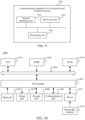
- FIG. 5 is a flowchart of a communication method for an MBS according to some embodiments of this disclosure; the communication method for an MBS may be performed by a core network element, in particular by an SMF.
- the communication method for an MBS includes at least step S510 to step S530.
- a detailed description is as follows: In step S510, a transmission policy of MBS application assistance information is obtained.
- the transmission policy of the MBS application assistance information can be determined through communication negotiation between the AF and the PCF. Reference may be made to the technical solution of the foregoing embodiment, and details are not described herein.
- step S520 the MBS application assistance information is received according to the transmission policy, where the MBS application assistance information is generated by an application function entity according to service statistics data of a terminal device for processing an MBS.
- the transmission policy of the MBS application assistance information includes at least one of: content of the application assistance information, confidence of the application assistance information, a sample ratio of the application assistance information, an acquisition frequency of the application assistance information, granularity information of the application assistance information, and charging information of the application assistance information.
- the content of the application assistance information includes at least one of: a quantity of terminals processing a specified MBS obtained by the AF, location information of a terminal processing a specified MBS obtained by the AF, and a service statistics characteristic of a specified MBS obtained by the AF.
- location information of the terminal includes at least one of: cell information of the terminal, tracking area information of the terminal, or geographical location information of the terminal.
- the cell information of the terminal is located is information about a current serving cell of the terminal; the tracking area is also known as TA for short; the geographical location information of the terminal is actual location information of the terminal, such as location information obtained by using the GPS or Beidou satellite system.
- the granularity information of the application assistance information includes at least one of: a user granularity (that is, per-user), a terminal device granularity (that is, per-UE), and a service flow granularity (that is, per-flow).
- step S530 resource configuration processing of the MBS if performed according to the MBS application assistance information.
- the core network element can also adjust the resource configuration in the specified area.
- a modulation order for the broadcast service in the specified area can be decreased.
- the core network element can also decrease the receiving bit error rate of the terminal device in the specified area by adjusting the resource configuration, for example, allocating more bandwidth resources for the broadcast service in the specified area.
- the core network element can also reallocate transmission resources for the adjusted broadcast area.
- negotiation processing of the MBS may be performed between the AF and the 5G network, and then MBS application assistance information is transmitted to the 5G core network element according to a transmission policy generated through the negotiation, thereby resolving the network resource allocation and user experience issues caused by the lack of actual user and terminal service data of the 5GC in the 5G MBS broadcast service.
- a communication method for an MBS includes the following steps: In step S610, an AF and a 5GC network element negotiate a policy.
- the negotiation processing between the AF and the 5GC network element may be performed through step S701a or step S701b.
- the AF can negotiate the policy with a PCF through a NEF; in step S701b, the AF can directly negotiate the policy with the PCF.
- the policy negotiated between the AF and the 5GC network element includes, but is not limited to: content of application assistance information that the AF can provide for the 5GC; a confidence and sample ratio information of application assistance information that the AF can provide for the 5GC; frequency and granularity information of application assistance information that the AF can provide for the 5GC; and charging information formed between a 5G MBS service operator and a third-party AF on application assistance information.
- the content of application assistance information that the AF can provide for the 5GC includes: a quantity of terminals of a certain SMBS and location information of the terminals that can be perceived from the application layer at present; statistics characteristics of a certain 5MBS that the AF can perceive from the application layer at present, for example, playing smoothness and user experience.
- the type of the terminal perceived by the AF from the application layer include: a terminal in the active state, the inactive state, and the idle state.
- the location information of the terminal may be location information associated with a serving cell or a TA, or may be geographical location information of the terminal.
- the confidence of application assistance information that the AF can provide for the 5GC is a confidence of the provided application assistance information.
- the sample ratio of application assistance information that the AF can provide for the 5GC refers to a sample ratio obtained according to big data statistics in spite of a limited quantity of terminals perceivable by the application layer.
- the frequency information of application assistance information that the AF can provide for the 5GC may be the amount of application assistance information obtained per unit time; the granularity information of application assistance information that the AF can provide for the 5GC includes per-user, per-UE, per-flow, and the like.
- step S620 the AF obtains service statistics data of the terminal from the application layer in an out-of-band manner.
- step S702 in FIG. 7 where the out-of-band manner refers to that after the UE establishes a connection with the AF through other manners than the current 5G MBS serving cell, the AF can obtain the service statistics data of the terminal from the terminal.
- the UE may have other 5G connections or Wi-Fi connections that can be used as a connection with the AF or a data channel for out-of-band feedback.
- the UE can report service statistics data in an out-of-band manner.
- the 5G MBS Radio Access Technology (RAT) of such a UE may be in an inactive state or idle state, but the UE can still receive the 5G MBS.
- RAT Radio Access Technology
- Step S630 The AF interacts with the 5GC, the application assistance information transmitted by the AF being used for optimizing configuration of MBS resources by the 5GC.
- the process may be as shown in step S703a or S703b in FIG. 7 .
- the AF reports the MBS application assistance information to the SMF; in other embodiments, the MBS application assistance information may also be reported to other core network elements such as the AMF.
- step S703a the AF transmits the MBS application assistance information to the SMF through the NEF and the PCF; in step S703b, the AF directly transmits the MBS application assistance information to the SMF through the PCF.
- the 5GC network element can perform resource configuration processing of the MBS according to the MBS application assistance information.
- the AF may also make an appropriate adjustment according to the MBS application assistance information. For example, if it is found in an out-of-band manner that the quantity of broadcast terminals in a certain area is extremely small, the broadcast can be switched to the unicast or the multicast, thereby improving resource utilization. If it is found in an out-of-band manner that the receiving bit error rate of the terminal in a certain broadcast area is excessively high, the modulation order can be reduced. If it is found in an out-of-band manner that a mobile frequency of a service terminal in a certain area is excessively high, the frequently moving terminal can be placed in one broadcast area by adjusting a range of the broadcast service area.
- the AF may perform the communication negotiation of the MBS with the core network element in the 5G network, and then transmit the MBS application assistance information to the core network element, so that the core network element performs resource configuration processing of the MBS according to the MBS application assistance information, which can help address the problem that the network side cannot obtain the service-related data of the terminal device in the MBS, thereby improving accuracy and rationality of resource configuration in the MBS.
- FIG. 8 is a block diagram of a communication apparatus for an MBS according to some embodiments of this disclosure.
- the communication apparatus may be disposed in an AF.
- a communication apparatus 800 for an MBS includes: a communication negotiation unit 802, a first obtaining unit 804, and a transmission unit 806.
- the communication negotiation unit 802 is configured to perform communication negotiation of an MBS with a core network element to determine a transmission policy of MBS application assistance information, where the MBS application assistance information is used for optimizing configuration of MBS resources by the core network element; the first obtaining unit 804 is configured to obtain, according to the transmission policy, service statistics data of a terminal device for processing the MBS, to generate the MBS application assistance information; and the transmission unit 806 is configured to transmit the MBS application assistance information to the core network element, so that the core network element performs resource configuration processing of the MBS according to the MBS application assistance information.
- the transmission policy of the MBS application assistance information includes at least one of: content of the application assistance information, confidence of the application assistance information, a sample ratio of the application assistance information, an acquisition frequency of the application assistance information, granularity information of the application assistance information, and charging information of the application assistance information.
- the content of the application assistance information includes at least one of: a quantity of terminals processing a specified MBS obtained by the application function entity, a state type of a terminal processing a specified MBS obtained by the application function entity, location information of a terminal processing a specified MBS obtained by the application function entity, and a service statistics characteristic of a specified MBS obtained by the application function entity.
- the state type includes: an active state, an inactive state, and an idle state.
- the location information of the terminal includes at least one of: cell information of the terminal is located, tracking area information of the terminal, and geographical location information of the terminal.
- the granularity information of the application assistance information includes at least one of: a user granularity, a terminal device granularity, and a service flow granularity.
- the first obtaining unit 804 is configured to:
- the transmission unit 806 is configured to: transmit the MBS application assistance information to the core network element in an out-of-band manner.
- the communication apparatus 800 further includes: a first processing unit 808 configured to switch a broadcast service in a specified area to a multicast service or a unicast service when it is determined according to the MBS application assistance information that a quantity of terminal devices processing the broadcast service in the specified area is less than a set quantity.
- the communication apparatus 800 further includes: a second processing unit 810 configured to decrease a modulation order for a broadcast service in a specified area when it is determined according to the MBS application assistance information that a receiving bit error rate of a terminal device processing the broadcast service in the specified area is higher than a set bit error rate.
- the communication apparatus 800 further includes: a third processing unit 812 configured to adjust a broadcast area of a specified broadcast service when it is determined according to the MBS application assistance information that a mobile frequency of a terminal device processing the specified broadcast service is higher than a set value, so that the terminal device processing the specified broadcast service and having the mobile frequency higher than the set value is located in the broadcast area.
- a third processing unit 812 configured to adjust a broadcast area of a specified broadcast service when it is determined according to the MBS application assistance information that a mobile frequency of a terminal device processing the specified broadcast service is higher than a set value, so that the terminal device processing the specified broadcast service and having the mobile frequency higher than the set value is located in the broadcast area.
- FIG. 9 is a block diagram of a communication apparatus for an MBS according to some embodiments of this disclosure.
- the communication apparatus may be disposed in a core network element, such as an SMF.
- a communication apparatus 900 for an MBS includes: a second obtaining unit 902, a receiving unit 904, and a processing unit 906.
- the second obtaining unit 902 is configured to obtain a transmission policy of MBS application assistance information, where the MBS application assistance information is used for optimizing configuration of MBS resources by a core network element; the receiving unit 904 is configured to receive the MBS application assistance information according to the transmission policy, where the MBS application assistance information is generated by an application function entity according to service statistics data of a terminal device for processing an MBS; and the processing unit 906 is configured to perform resource configuration processing of the MBS according to the MBS application assistance information.
- FIG. 10 is a schematic structural diagram of a computer system adapted to implement an electronic device according to an embodiment of this disclosure.
- a computer system 1000 of the electronic device shown in FIG. 10 is merely an example, and does not constitute any limitation on functions and use ranges of the embodiments of this disclosure.
- the computer system 1000 includes a central processing unit (CPU) 1001, which may perform various suitable actions and processing based on a program stored in a read-only memory (ROM) 1002 or a program loaded from a storage part 1008 into a random access memory (RAM) 1003, for example, perform the method described in the foregoing embodiments.
- the RAM 1003 further stores various programs and data required for operating the system.
- the CPU 1001, the ROM 1002, and the RAM 1003 are connected to each other through a bus 1004.
- An input/output (I/O) interface 1005 is also connected to the bus 1004.
- the following components are connected to the I/O interface 1005: an input part 1006 comprising a keyboard, a mouse, or the like, an output part 1007 comprising a cathode ray tube (CRT), a liquid crystal display (LCD), a speaker, or the like, a storage part 1008 comprising a hard disk, or the like, and a communication part 1009 comprising a network interface card such as a local area network (LAN) card or a modem.
- the communication part 1009 performs communication processing by using a network such as the Internet.
- a drive 1010 is also connected to the I/O interface 1005 as required.
- a removable medium 1011 such as a disk, an optical disc, a magneto-optical disc, or a semiconductor memory, is installed on the drive 1010 as required, so that a computer program read from the removable medium 1011 is installed in the storage part 1008 as required.
- an embodiment of this disclosure includes a computer program product.
- the computer program product includes a computer program stored in a computer-readable medium.
- the computer program includes a computer program used for performing a method shown in the flowchart.
- the computer program may be downloaded and installed through the communication part 1009 from a network, and/or installed from the removable medium 1011.
- the various functions defined in the system of this disclosure are executed.
- the computer-readable medium shown in the embodiments of this disclosure may be a computer-readable signal medium or a computer-readable storage medium or any combination thereof.
- the computer-readable storage medium may be, for example, but is not limited to, an electric, magnetic, optical, electromagnetic, infrared, or semi-conductive system, apparatus, or component, or any combination of the above.
- a more specific example of the computer-readable storage medium may include but is not limited to: an electrical connection having one or more wires, a portable computer magnetic disk, a hard disk, a random access memory (RAM), a read-only memory (ROM), an erasable programmable read-only memory (EPROM), a flash memory, an optical fiber, a compact disk read-only memory (CD-ROM), an optical storage device, a magnetic storage device, or any appropriate combination thereof.
- the computer-readable storage medium may be any tangible medium containing or storing a program, and the program may be used by or used in combination with an instruction execution system, an apparatus, or a device.
- a computer-readable signal medium may include a data signal in a baseband or propagated as a part of a carrier wave, the data signal carrying a computer-readable computer program.
- a data signal propagated in such a way may assume a plurality of forms, including, but not limited to, an electromagnetic signal, an optical signal, or any appropriate combination thereof.
- the computer-readable signal medium may be further any computer-readable medium in addition to a computer-readable storage medium.
- the computer-readable medium may send, propagate, or transmit a program that is used by or used in combination with an instruction execution system, apparatus, or device.
- the computer program comprised in the computer-readable medium may be transmitted by using any suitable medium, comprising but not limited to: a wireless medium, a wire, or the like, or any suitable combination thereof.
- Each box in a flowchart or a block diagram may represent a module, a program segment, or a part of code.
- the module, the program segment, or the part of code includes one or more executable instructions used for implementing designated logic functions.
- functions annotated in boxes may alternatively occur in a sequence different from that annotated in an accompanying drawing. For example, actually two boxes shown in succession may be performed basically in parallel, and sometimes the two boxes may be performed in a reverse sequence. This is determined by a related function.
- Each block in the block diagram or the flowchart, and a combination of blocks in the block diagram or the flowchart may be implemented by using a dedicated hardware-based system that performs a specified function or operation, or may be implemented by using a combination of dedicated hardware and computer instructions.
- this disclosure further provides a computer-readable medium.
- the computer-readable medium may be included in the electronic device described in the foregoing embodiments, or may exist alone and is not assembled in the electronic device.
- the computer-readable medium carries one or more programs, the one or more programs, when executed by the electronic device, causing the electronic device to implement the method described in the foregoing embodiments.
- the software product may be stored in a non-volatile storage medium (which may be a CD-ROM, a USB flash drive, a removable hard disk, or the like) or on the network, including several instructions for instructing a computing device (which may be a personal computer, a server, a touch terminal, a network device, or the like) to perform the methods according to the embodiments of this disclosure.
- a computing device which may be a personal computer, a server, a touch terminal, a network device, or the like
Landscapes
- Engineering & Computer Science (AREA)
- Computer Networks & Wireless Communication (AREA)
- Signal Processing (AREA)
- Multimedia (AREA)
- Quality & Reliability (AREA)
- Databases & Information Systems (AREA)
- Mobile Radio Communication Systems (AREA)
Applications Claiming Priority (2)
| Application Number | Priority Date | Filing Date | Title |
|---|---|---|---|
| CN202110750895.0A CN113490156B (zh) | 2021-07-01 | 2021-07-01 | 多播广播业务的通信方法、装置、介质及电子设备 |
| PCT/CN2022/095154 WO2023273717A1 (fr) | 2021-07-01 | 2022-05-26 | Procédé et appareil de communication pour un service de multidiffusion et de diffusion, ainsi que support et dispositif électronique |
Publications (2)
| Publication Number | Publication Date |
|---|---|
| EP4192044A1 true EP4192044A1 (fr) | 2023-06-07 |
| EP4192044A4 EP4192044A4 (fr) | 2024-04-03 |
Family
ID=77940448
Family Applications (1)
| Application Number | Title | Priority Date | Filing Date |
|---|---|---|---|
| EP22831540.4A Pending EP4192044A4 (fr) | 2021-07-01 | 2022-05-26 | Procédé et appareil de communication pour un service de multidiffusion et de diffusion, ainsi que support et dispositif électronique |
Country Status (6)
| Country | Link |
|---|---|
| US (1) | US20230081985A1 (fr) |
| EP (1) | EP4192044A4 (fr) |
| JP (1) | JP7511757B2 (fr) |
| KR (1) | KR20230056038A (fr) |
| CN (1) | CN113490156B (fr) |
| WO (1) | WO2023273717A1 (fr) |
Families Citing this family (3)
| Publication number | Priority date | Publication date | Assignee | Title |
|---|---|---|---|---|
| CN113490156B (zh) * | 2021-07-01 | 2024-03-12 | 腾讯科技(深圳)有限公司 | 多播广播业务的通信方法、装置、介质及电子设备 |
| CN117255096A (zh) * | 2022-06-10 | 2023-12-19 | 戴尔产品有限公司 | 在交换机上实现区块链系统的方法、电子设备和程序产品 |
| CN117354781A (zh) * | 2022-06-28 | 2024-01-05 | 腾讯科技(深圳)有限公司 | 业务数据包的处理方法、装置、介质及电子设备 |
Family Cites Families (21)
| Publication number | Priority date | Publication date | Assignee | Title |
|---|---|---|---|---|
| EP1631000A1 (fr) * | 2004-08-31 | 2006-03-01 | Matsushita Electric Industrial Co., Ltd. | Régulation par rétroaction pour des services multicast et broadcast |
| CN101447854B (zh) * | 2007-11-27 | 2012-11-07 | 上海华为技术有限公司 | 数据发送/转发/处理方法及装置 |
| US8654695B2 (en) * | 2007-12-14 | 2014-02-18 | Broadcom Corporation | Link adaptation of a broadcast system |
| CN101945368A (zh) * | 2009-07-06 | 2011-01-12 | 华为技术有限公司 | 群组计费方法、计费处理装置以及通信系统 |
| CN107750467A (zh) * | 2015-06-23 | 2018-03-02 | 瑞典爱立信有限公司 | 提前的多播广播多媒体服务(mbms)公告 |
| US10044098B2 (en) * | 2016-02-19 | 2018-08-07 | Facebook, Inc. | Modular base station |
| CN105898894B (zh) * | 2016-05-13 | 2021-08-20 | 华为技术有限公司 | Rrc状态的控制方法和装置 |
| CN110300006B (zh) * | 2018-03-21 | 2022-10-21 | 中国移动通信有限公司研究院 | 数据处理方法及装置、功能实体及存储介质 |
| CN110366206A (zh) * | 2018-03-26 | 2019-10-22 | 华为技术有限公司 | 一种信息传输方法和装置 |
| CN110972078A (zh) * | 2018-09-30 | 2020-04-07 | 华为技术有限公司 | 多播/广播业务传输的方法、核心网网元和终端设备 |
| US11678252B2 (en) * | 2018-10-05 | 2023-06-13 | Huawei Technologies Co., Ltd. | Quality of service information notification to user equipment, users, and application server |
| US11689916B2 (en) * | 2019-03-18 | 2023-06-27 | International Business Machines Corporation | Privacy enhanced location verification for improved transaction security |
| CN109922533B (zh) * | 2019-04-04 | 2022-07-22 | 海能达通信股份有限公司 | 数据传输方法、多播协调实体设备、基站设备及eMBMS系统 |
| EP4011044B1 (fr) * | 2019-08-06 | 2025-02-19 | Telefonaktiebolaget LM Ericsson (publ) | Technique de commande et de réalisation d'une gestion de trafic de données dans un domaine de réseau central |
| CN113676846B (zh) * | 2020-05-15 | 2023-04-11 | 大唐移动通信设备有限公司 | 一种传输方式确定方法、装置、设备及存储介质 |
| EP4173365B1 (fr) * | 2020-06-30 | 2024-12-25 | Telefonaktiebolaget LM Ericsson (publ) | Continuité de services de multidiffusion et de diffusion pour équipements utilisateurs en mobilité |
| CN114079617B (zh) * | 2020-08-11 | 2025-03-18 | 中国电信股份有限公司 | 网络数据分析方法、网络数据分析功能网元和通信系统 |
| EP4206987A4 (fr) * | 2020-10-09 | 2023-10-18 | Huawei Technologies Co., Ltd. | Procédé et appareil d'évaluation de modèle |
| US12260467B2 (en) * | 2020-12-23 | 2025-03-25 | Intel Corporation | Mobility-as-a-service for user experience |
| CN112954615B (zh) * | 2021-02-10 | 2023-05-23 | 腾讯科技(深圳)有限公司 | 多播广播业务的通信方法、装置、介质及电子设备 |
| CN113490156B (zh) * | 2021-07-01 | 2024-03-12 | 腾讯科技(深圳)有限公司 | 多播广播业务的通信方法、装置、介质及电子设备 |
-
2021
- 2021-07-01 CN CN202110750895.0A patent/CN113490156B/zh active Active
-
2022
- 2022-05-26 KR KR1020237009888A patent/KR20230056038A/ko active Pending
- 2022-05-26 JP JP2023525101A patent/JP7511757B2/ja active Active
- 2022-05-26 EP EP22831540.4A patent/EP4192044A4/fr active Pending
- 2022-05-26 WO PCT/CN2022/095154 patent/WO2023273717A1/fr not_active Ceased
- 2022-11-15 US US17/987,457 patent/US20230081985A1/en active Pending
Also Published As
| Publication number | Publication date |
|---|---|
| WO2023273717A1 (fr) | 2023-01-05 |
| US20230081985A1 (en) | 2023-03-16 |
| EP4192044A4 (fr) | 2024-04-03 |
| CN113490156A (zh) | 2021-10-08 |
| KR20230056038A (ko) | 2023-04-26 |
| CN113490156B (zh) | 2024-03-12 |
| JP7511757B2 (ja) | 2024-07-05 |
| JP2023547900A (ja) | 2023-11-14 |
Similar Documents
| Publication | Publication Date | Title |
|---|---|---|
| CN111586599B (zh) | 网络辅助信息提供方法及相关设备 | |
| EP4262248A1 (fr) | Procédé et appareil de communication pour un service de multidiffusion et de diffusion, ainsi que support et dispositif électronique | |
| US20230081985A1 (en) | Communication method and apparatus for multicast and broadcast service, medium, and electronic device | |
| US20230050709A1 (en) | Supporting switching between base stations that provide multicast and broadcast service | |
| CN111586601A (zh) | 网络辅助信息提供方法及相关设备 | |
| CN111586600B (zh) | 网络辅助信息提供方法及相关设备 | |
| US11234054B2 (en) | Edge network system for service-less video multicast | |
| JP2021527351A (ja) | ネットワーク容量に制約のあるシナリオにおける共同メディア制作のためのネットワーク制御上りリンクメディア伝送 | |
| US20250029117A1 (en) | Apparatus, method and computer program | |
| CN112804324A (zh) | 信息交互方法及装置 | |
| Noh et al. | Energy-efficient HTTP adaptive streaming system over SDN-enabled Wi-Fi APs | |
| Almowuena et al. | Mobile video streaming over dynamic single-frequency networks | |
| HK40053613A (en) | Communication method and apparatus for multicast broadcasting service, medium, and electronic device | |
| HK40053613B (zh) | 多播广播业务的通信方法、装置、介质及电子设备 | |
| CN117896813A (zh) | 数据流传输方法、装置、电子设备及存储介质 | |
| US11089442B2 (en) | System and method for dynamically switching eMBMS services | |
| HK40053614B (en) | Communication method and apparatus for multicast broadcasting service, medium, and electronic device | |
| HK40053614A (en) | Communication method and apparatus for multicast broadcasting service, medium, and electronic device | |
| US20240188043A1 (en) | Wireless communication systems for dynamically connecting to radio access network resources of multiple service providers | |
| US20240188116A1 (en) | Wireless communication systems for dynamically connecting to radio access network resources of multiple service providers | |
| HK40027912A (en) | Method for providing network auxiliary information and related apparatus | |
| WO2024008157A1 (fr) | Procédé et appareil de transmission d'informations, dispositif de réseau et système de communication | |
| HK40027912B (en) | Method for providing network auxiliary information and related apparatus | |
| CN118102378A (zh) | 数据传输优化方法、装置、计算机可读介质及电子设备 | |
| CN118102383A (zh) | 数据传输优化方法、装置、计算机可读介质及电子设备 |
Legal Events
| Date | Code | Title | Description |
|---|---|---|---|
| STAA | Information on the status of an ep patent application or granted ep patent |
Free format text: STATUS: THE INTERNATIONAL PUBLICATION HAS BEEN MADE |
|
| PUAI | Public reference made under article 153(3) epc to a published international application that has entered the european phase |
Free format text: ORIGINAL CODE: 0009012 |
|
| STAA | Information on the status of an ep patent application or granted ep patent |
Free format text: STATUS: REQUEST FOR EXAMINATION WAS MADE |
|
| 17P | Request for examination filed |
Effective date: 20230301 |
|
| AK | Designated contracting states |
Kind code of ref document: A1 Designated state(s): AL AT BE BG CH CY CZ DE DK EE ES FI FR GB GR HR HU IE IS IT LI LT LU LV MC MK MT NL NO PL PT RO RS SE SI SK SM TR |
|
| A4 | Supplementary search report drawn up and despatched |
Effective date: 20240304 |
|
| RIC1 | Information provided on ipc code assigned before grant |
Ipc: H04W 4/06 20090101AFI20240227BHEP |
|
| DAV | Request for validation of the european patent (deleted) | ||
| DAX | Request for extension of the european patent (deleted) |