EP4192154B1 - Procédé de communication sans fil, dispositif de terminal et dispositif de réseau - Google Patents
Procédé de communication sans fil, dispositif de terminal et dispositif de réseau Download PDFInfo
- Publication number
- EP4192154B1 EP4192154B1 EP20947897.3A EP20947897A EP4192154B1 EP 4192154 B1 EP4192154 B1 EP 4192154B1 EP 20947897 A EP20947897 A EP 20947897A EP 4192154 B1 EP4192154 B1 EP 4192154B1
- Authority
- EP
- European Patent Office
- Prior art keywords
- resource
- indication information
- data
- harq process
- terminal device
- Prior art date
- Legal status (The legal status is an assumption and is not a legal conclusion. Google has not performed a legal analysis and makes no representation as to the accuracy of the status listed.)
- Active
Links
Images


Classifications
-
- H—ELECTRICITY
- H04—ELECTRIC COMMUNICATION TECHNIQUE
- H04W—WIRELESS COMMUNICATION NETWORKS
- H04W72/00—Local resource management
- H04W72/12—Wireless traffic scheduling
- H04W72/1263—Mapping of traffic onto schedule, e.g. scheduled allocation or multiplexing of flows
-
- H—ELECTRICITY
- H04—ELECTRIC COMMUNICATION TECHNIQUE
- H04W—WIRELESS COMMUNICATION NETWORKS
- H04W74/00—Wireless channel access
- H04W74/08—Non-scheduled access, e.g. ALOHA
- H04W74/0808—Non-scheduled access, e.g. ALOHA using carrier sensing, e.g. carrier sense multiple access [CSMA]
-
- H—ELECTRICITY
- H04—ELECTRIC COMMUNICATION TECHNIQUE
- H04L—TRANSMISSION OF DIGITAL INFORMATION, e.g. TELEGRAPHIC COMMUNICATION
- H04L1/00—Arrangements for detecting or preventing errors in the information received
- H04L1/12—Arrangements for detecting or preventing errors in the information received by using return channel
- H04L1/16—Arrangements for detecting or preventing errors in the information received by using return channel in which the return channel carries supervisory signals, e.g. repetition request signals
- H04L1/18—Automatic repetition systems, e.g. Van Duuren systems
- H04L1/1812—Hybrid protocols; Hybrid automatic repeat request [HARQ]
-
- H—ELECTRICITY
- H04—ELECTRIC COMMUNICATION TECHNIQUE
- H04L—TRANSMISSION OF DIGITAL INFORMATION, e.g. TELEGRAPHIC COMMUNICATION
- H04L1/00—Arrangements for detecting or preventing errors in the information received
- H04L1/12—Arrangements for detecting or preventing errors in the information received by using return channel
- H04L1/16—Arrangements for detecting or preventing errors in the information received by using return channel in which the return channel carries supervisory signals, e.g. repetition request signals
- H04L1/18—Automatic repetition systems, e.g. Van Duuren systems
- H04L1/1822—Automatic repetition systems, e.g. Van Duuren systems involving configuration of automatic repeat request [ARQ] with parallel processes
-
- H—ELECTRICITY
- H04—ELECTRIC COMMUNICATION TECHNIQUE
- H04L—TRANSMISSION OF DIGITAL INFORMATION, e.g. TELEGRAPHIC COMMUNICATION
- H04L1/00—Arrangements for detecting or preventing errors in the information received
- H04L1/12—Arrangements for detecting or preventing errors in the information received by using return channel
- H04L1/16—Arrangements for detecting or preventing errors in the information received by using return channel in which the return channel carries supervisory signals, e.g. repetition request signals
- H04L1/18—Automatic repetition systems, e.g. Van Duuren systems
- H04L1/1829—Arrangements specially adapted for the receiver end
- H04L1/1854—Scheduling and prioritising arrangements
-
- H—ELECTRICITY
- H04—ELECTRIC COMMUNICATION TECHNIQUE
- H04L—TRANSMISSION OF DIGITAL INFORMATION, e.g. TELEGRAPHIC COMMUNICATION
- H04L1/00—Arrangements for detecting or preventing errors in the information received
- H04L1/12—Arrangements for detecting or preventing errors in the information received by using return channel
- H04L1/16—Arrangements for detecting or preventing errors in the information received by using return channel in which the return channel carries supervisory signals, e.g. repetition request signals
- H04L1/18—Automatic repetition systems, e.g. Van Duuren systems
- H04L1/1829—Arrangements specially adapted for the receiver end
- H04L1/1861—Physical mapping arrangements
-
- H—ELECTRICITY
- H04—ELECTRIC COMMUNICATION TECHNIQUE
- H04L—TRANSMISSION OF DIGITAL INFORMATION, e.g. TELEGRAPHIC COMMUNICATION
- H04L1/00—Arrangements for detecting or preventing errors in the information received
- H04L1/12—Arrangements for detecting or preventing errors in the information received by using return channel
- H04L1/16—Arrangements for detecting or preventing errors in the information received by using return channel in which the return channel carries supervisory signals, e.g. repetition request signals
- H04L1/18—Automatic repetition systems, e.g. Van Duuren systems
- H04L1/1867—Arrangements specially adapted for the transmitter end
- H04L1/1887—Scheduling and prioritising arrangements
-
- H—ELECTRICITY
- H04—ELECTRIC COMMUNICATION TECHNIQUE
- H04L—TRANSMISSION OF DIGITAL INFORMATION, e.g. TELEGRAPHIC COMMUNICATION
- H04L5/00—Arrangements affording multiple use of the transmission path
- H04L5/003—Arrangements for allocating sub-channels of the transmission path
- H04L5/0053—Allocation of signalling, i.e. of overhead other than pilot signals
- H04L5/0055—Physical resource allocation for ACK/NACK
-
- H—ELECTRICITY
- H04—ELECTRIC COMMUNICATION TECHNIQUE
- H04W—WIRELESS COMMUNICATION NETWORKS
- H04W72/00—Local resource management
- H04W72/04—Wireless resource allocation
- H04W72/115—Grant-free or autonomous transmission
Definitions
- the embodiments of this disclosure relate to the field of communications, and particularly to wireless communication methods, a terminal device and a network device.
- a network device may indicate, by means of a Downlink Feedback Indicator (DFI), an acknowledgement (ACK)/non-acknowledgement (NACK) indication of a Hybrid Automatic Repeat Request (HARQ) process corresponding to a pre-Configured Grant (CG) resource (that is, NRU CG resources) on a carrier wave.
- DFI Downlink Feedback Indicator
- NACK acknowledgement/non-acknowledgement
- HARQ Hybrid Automatic Repeat Request
- CG pre-Configured Grant
- the NACK means that the data on the HARQ process or the NRU CG resource is received, and it is not required to retransmit the data automatically.
- Document EP 3 240 223 A1 discloses a method and device for managing a resource in an unlicensed carrier.
- the method includes: a station acquiring a right to use the unlicensed carrier; the station determining a use policy of a resource occupied by the station in the unlicensed carrier; and the station transmitting and/or receiving data by using the occupied resource according to the use policy.
- a mobile communication system not only supports traditional communications, but also supports, for example, Device to Device (D2D) communication, Machine to Machine (M2M) communication, Machine Type Communication (MTC), and Vehicle to Vehicle (V2V) communication.
- D2D Device to Device
- M2M Machine to Machine
- MTC Machine Type Communication
- V2V Vehicle to Vehicle
- the communication system in the embodiments of this disclosure may be applied to a Carrier Aggregation (CA) scenario, or may be applied to a Dual Connectivity (DC) scenario, or may be applied to a Standalone (SA) networking scenario.
- CA Carrier Aggregation
- DC Dual Connectivity
- SA Standalone
- the spectrum applied is not limited in the embodiments of this disclosure.
- the embodiments of this disclosure may be applied to a licensed spectrum or an unlicensed spectrum.
- resources mentioned in this disclosure below may be NRU resources, or may be licensed spectrum resources, and this disclosure is not limited thereto.
- the communication system 100 may include a network device 110.
- the network device 110 may be a device communicating with a terminal device 120 (or called a communication terminal or a terminal).
- the network device 110 may provide communication coverage for a specific geographical region, and may communicate with the terminal device located in the coverage region.
- FIG. 1 exemplarily shows one network device and two terminal devices.
- the communication system 100 may include a plurality of network devices, and other number of terminal devices may be provided in the coverage of each network device, which is not limited in the embodiments of this disclosure.
- the communication system 100 may further include other network entities such as a network controller and a mobile management entity, which is not limited in the embodiments of this disclosure.
- network entities such as a network controller and a mobile management entity, which is not limited in the embodiments of this disclosure.
- a device having a communication function in a network/system in the embodiments of this disclosure may be called as a communication device.
- the communication device may include a network device 110 and a terminal device 120 having a communication function.
- the network device 110 and the terminal device 120 may be specific devices described above, which are not described herein again.
- the communication device may further include other devices, such as other network entities such as a network controller and a mobile management entity, in the communication system 100, which is not limited in the embodiments of this disclosure.
- the terminal device may also be called a User Equipment (UE), an access terminal, a user unit, a user station, a mobile station, a mobile platform, a remote station, a remote terminal, a mobile device, a user terminal, a terminal, a wireless communication device, a user agent, or a user device.
- UE User Equipment
- the terminal device may be a STAION (ST) in the WLAN, or may be a cellular phone, a cordless phone, a Session Initiation Protocol (SIP) phone, a Wireless Local Loop (WLL) station, a Personal Digital Assistant (PDA) device, a handheld device having a wireless communication function, a computing device, another processing device connected to a wireless modem, an in-vehicle device, a wearable device or a next generation of communication systems, for example, a terminal device in an NR network, or a terminal device in a future evolved Public Land Mobile Network (PLMN).
- ST STAION
- PDA Personal Digital Assistant
- the terminal device may also be the wearable device.
- the wearable device may also be called a wearable intelligent device, which is a generic term of daily wearable devices that are intelligently designed and developed by a wearable technology, for example, glasses, gloves, watches, clothing and shoes.
- the wearable device is a portable device that is directly worn on the body or integrated into the clothes or accessories of a user.
- the wearable device is not only a hardware device, but can also achieve powerful functions by means of software support, data interaction, and cloud interaction.
- the wearable intelligent device includes for example a smart watch or smart glasses that have entire function and large size, and implement complete or partial functions without relying on smart phones, and for example various smart bands or smart jewelries for monitoring physical signs that have a specific application function and are used by cooperating with other devices such as the smart phones.
- the network device may be a device configured to communicate with a mobile device.
- the network device may be an Access Point (AP) in the WLAN, a Base Transceiver Station (BTS) in the GSM or CDMA, or may be NodeB (NB) in the WCDMA, or may also be an Evolutional Node B (eNB or eNodeB) in the LTE, or a relay station or access point, or the in-vehicle device, the wearable device, and a network device or the gNBs in the NR network or a network device in a future evolved PLMN network, or the like.
- AP Access Point
- BTS Base Transceiver Station
- NB NodeB
- eNB Evolutional Node B
- gNB Evolutional Node B
- the network device provides a service for a cell.
- the terminal device communicates with the network device by a transmission resource (for example, a frequency domain resource, or to say, a spectrum resource) used by the cell.
- the cell may be a cell corresponding to the network device (such as the base station).
- the cell may belong to a macro base station, or may belong to the base station corresponding to a small cell.
- the small cell here may include a metro cell, a micro cell, a pico cell, a femto cell, and the like. These small cells have characteristics of small coverage and low transmitting power, and are suitable for providing high-speed data transmission services.
- resources mentioned in this disclosure below may be CG resources, or may be Dynamic Configure (DG) resources, which is not limited in this disclosure.
- CG resources may be CG resources, or may be Dynamic Configure (DG) resources, which is not limited in this disclosure.
- DG Dynamic Configure
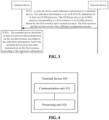
- FIG. 2 is an interaction flowchart of a wireless communication method according to an embodiment of this disclosure. The method includes the following operations S210 to S220.
- a network device sends indication information to a terminal device.
- the indication information is an ACK/NACK indication of at least one HARQ process.
- the HARQ process is an HARQ process corresponding to a first resource and/or a second resource.
- the first resource and the second resource have different configuration modes.
- the terminal device processes or does not process data transmission on the second resource according to the indication information, and/or the terminal device processes data transmission on the first resource according to the indication information.
- the indication information has any one of the following functions, but is not limited thereto.
- the indication information is an ACK/NACK indication of the at least one HARQ process for one carrier wave.
- the indication information is an ACK/NACK indication of the at least one HARQ process for a plurality of carrier waves.
- the indication information is an ACK/NACK indication of the at least one HARQ process for a plurality of BWPs.
- the network device may only configure the first resource or the second resource for the terminal device.
- the first resource may be the NRU CG resource
- the second resource may be the URLLC CG resource, but this disclosure is not limited thereto, as long as the first resource and the second resource have different configuration modes.
- the fifth resource should also be the URLLC CG resource.
- the first resource is the NRU CG resource
- the second resource is the URLLC CG resource
- the third resource is also the CG resource
- the first resource and the second resource share the second HARQ process.
- the HARQ process corresponding to the third resource is a shared HARQ process
- a previous one resource transmission of the shared HARQ process is of an NRU CG resource transmission mode
- the third resource is transmitted by means of the NRU CG transmission mode.
- the HARQ process corresponding to the third resource is the shared HARQ process, and the previous one resource transmission of the shared HARQ process is of an URLLC CG resource transmission mode
- the third resource is transmitted by means of the URLLC CG transmission mode.
- the terminal device does not transmit the data on the second resource may also be described as follows. If the indication information includes the ACK indication of the first HARQ process, the terminal device does not transmit the data on the second resource according to the first transmission mechanism or the second transmission mechanism.
- the terminal device processes, according to the indication information, data transmission on the second resource in accordance with the first transmission mechanism or the second transmission mechanism. If the first HARQ process corresponds to the second resource and the first resource, the terminal device processes or does not process, according to the indication information, data transmission on the second resource in a data transmission mode on the third resource which is used prior to receiving the indication information. Therefore, the indication information may not only be applied to the first resource, but also be applied to the second resource, thereby enlarging an application range of the indication information, and introducing a non-adaptive data transmission indication mode for the second resource to a certain extent.
- the operation S220 that the terminal device processes or does not process data transmission on the second resource according to the indication information is described in detail below.
- the operation that the terminal device processes, according to the indication information, data transmission on the second resource in accordance with the third transmission mechanism may be implemented by means of the following several optional manners, but is not limited thereto.
- the terminal device transmits the data on the second resource according to the third transmission mechanism. If the indication information includes the ACK indication of the first HARQ process, the terminal device does not transmit the data on the second resource.
- the terminal device transmits the data on the second resource according to the third transmission mechanism. If the indication information includes the ACK indication of the first HARQ process, the terminal device does not transmit the data on the second resource.
- the terminal device transmits the data on the second resource according to the third transmission mechanism. If the indication information includes the ACK indication of the first HARQ process, the terminal device does not transmit the data on the second resource.
- the terminal device transmits the data on the second resource according to the third transmission mechanism. If the indication information includes the ACK indication of the first HARQ process, the terminal device does not transmit the data on the second resource.
- the first optional manner aims to introduce how the terminal device processes data transmission on the second resource in a case that the indication information only includes the NACK indication of the first HARQ process, or the indication information includes the ACK indication of the first HARQ process.
- the second optional manner to the fourth optical manner aim to introduce how the terminal device processes data transmission on the first resource in a case that the indication information includes the NACK indications of the plurality of HARQ processes, the plurality of HARQ processes including the first HARQ process, or the indication information includes the ACK indication of the first HARQ process.
- transmission in the first to fourth optional manners may also be described as “automatic transmission” or “automatic repeat request”.
- the indication information includes the NACK indication of the first HARQ process corresponding to the second resource
- the terminal device needs to perform automatic transmission of the data on the second resource.
- the terminal device may perform automatic transmission of data according to the third transmission mechanism.
- the indication information includes the ACK indication of the first HARQ process corresponding to the second resource, it indicates that the data on the second resource is successfully received, and the terminal device does not need to perform automatic transmission of the data on the second resource.
- the plurality of HARQ processes have the following situations.
- the plurality of HARQ processes include the HARQ processes corresponding to a plurality of URLLC CG resources.
- the plurality of HARQ processes include the HARQ process corresponding to at least one URLLC CG resource, and at least one other HARQ process.
- the other HARQ process here may be any one of the HARQ process corresponding to the NRU CG resource, and the HARQ process that is shared by the URLLC CG resource and the NRU CG resource.
- the terminal device may select, according to the priority rule, the resource on which automatic transmission of the data is performed.
- the second resource is the resource, on which automatic transmission of the data is performed, selected by the terminal device according to the priority rule, the terminal device transmits the data on the second resource according to the first transmission mechanism.
- the number of determining the resource for automatic transmission of the above data is not limited. That is to say, for the HARQ process or resource, automatic transmission may be performed for a plurality of times.
- the priority rule includes, but is not limited to: a priority rule for a physical layer, a priority rule for a logic channel, or a priority rule for a resource type.
- the indication information includes the ACK indication of the first HARQ process corresponding to the second resource, it indicates that the data on the second resource is successfully received, and the terminal device does not perform automatic transmission of data on the second resource.
- the terminal device may select, according to the priority rule for the PDUs, the resource corresponding to the PDU on which automatic transmission of data is performed.
- the terminal device transmits the data on the second resource according to the third transmission mechanism.
- the priority rule for the PDUs includes but is not limited to: a priority rule of transmission according to the size of an identifier of the PDU, a priority rule of transmission according to the length of the PDU, a priority rule of transmission according to a data size carried by the PDU, and a priority rule determined according to the priority of the logic channel in the PDU.
- the indication information includes the ACK indication of the first HARQ process corresponding to the second resource, it indicates that the data on the second resource is successfully received, and the terminal device does not perform automatic transmission of data on the second resource.
- a difference between the fourth optional manner and the first optional manner lies in that, in the fourth optional manner, the indication information includes the NACK indications of the plurality of HARQ processes or includes the ACK indication of the first HARQ process, and the plurality of HARQ processes include the first HARQ process, but the first HARQ process is randomly selected by the terminal device.
- the indication information only includes the NACK indication of the first HARQ process, or includes the ACK indication of the first HARQ process. Therefore, regarding the fourth optional manner, reference may be made to the first optional manner, which is not described thereto again.
- the operation that the terminal device transmits the data on the second resource according to the third transmission mechanism includes an operation that the terminal device transmits the data on the second resource on a sixth resource followed after the indication information is received.
- the sixth resource is a resource, a time of data transmission on which after the indication information is received is closest to the time for receiving the indication information.
- the sixth resource may also be described as follows.
- the sixth resource is an available/effective resource, a time of data transmission on which is closest to the time when the indication information is received, after the indication information is received.
- the sixth resource is a resource which is the first after receiving the indication information.
- the sixth resource is an available/effective resource which is the first after receiving the indication information.
- the sixth resource is a resource which is the closest after the indication information is received.
- the sixth resource is an available/effective resource which is the closest after the indication information is received.
- the resource is the available/effective resource, or the resource when LBT succeeds.
- the sixth resource shares the first HARQ process with the second resource and has a different configuration from the second resource. That is to say, the sixth resource shares the first HARQ process with the second resource, and has a different configuration from the second resource.
- the sixth resource should be the NRU CG resource.
- the processing unit 420 is configured to transmit the data on the second resource by using the first HARQ process and a fourth resource having the same configuration as the second resource.
- the processing unit 420 is configured to transmit the data on the second resource by using a different HARQ process from the first HARQ process and/or a fifth resource having a different configuration from the second resource.
- the processing unit 420 is at least configured to: in response to that the indication information includes the NACK indication of the first HARQ process, transmit the data on the second resource according to the third transmission mechanism; and in response to that the indication information includes the ACK indication of the first HARQ process, not transmit the data on the second resource.
- the processing unit 420 is at least configured to: transmit the data on the second resource according to the third transmission mechanism in response to that the indication information includes the NACK indication of the plurality of HARQ processes, the plurality of HARQ processes include the first HARQ process, and the second resource is a resource, on which data transmission is performed, determined according to a priority rule in the resources corresponding to the plurality of HARQ processes; and not transmit the data on the second resource in response to that the indication information includes the ACK indication of the first HARQ process.
- the processing unit 420 is configured to transmit the data on the second resource on a sixth resource followed after the indication information is received.
- the communication unit 410 is further configured to: at least send an identifier of the first HARQ process to a network device.
- the processing unit 420 is configured to: process, according to the indication information, data transmission on the first resource in accordance with the third transmission mechanism.
- the third transmission mechanism is the transmission mechanism of the first resource.
- the processing unit 420 is at least configured to: transmit the data on the first resource according to the third transmission mechanism in response to that the indication information comprises the NACK indication of a second HARQ process corresponding to the first resource; and not transmit the data on the first resource in response to that the indication information includes the ACK indication of the second HARQ process.
- the processing unit 420 is at least configured to: transmit the data on the first resource according to the third transmission mechanism in response to that the indication information includes the NACK indication of a plurality of HARQ processes, the plurality of HARQ processes include the second HARQ process, and the first resource is a resource, on which data transmission is performed, determined according to a priority rule in resources corresponding to the plurality of HARQ processes; and not transmit the data on the first resource in response to that the indication information comprises the ACK indication of the first resource,.
- the processing unit 420 is at least configured to: transmit the data on the first resource according to the third transmission mechanism in response to that the indication information includes the NACK indication of the plurality of HARQ processes, the plurality of HARQ processes include the second HARQ process, and a PDU on the first resource is a PDU, on which data transmission is performed, determined according to a priority rule among PDUs on resources corresponding to the plurality of HARQ processes; and not transmit the data on the first resource in response to that the indication information includes the ACK indication of the second HARQ process.
- the processing unit 420 is at least configured to: transmit the data on the first resource according to the third transmission mechanism in response to that the indication information includes the NACK indication of a plurality of HARQ processes, and any one of the plurality of HARQ processes is selected as the second HARQ process; and not transmit the data on the first resource in response to that the indication information includes the ACK indication of the second HARQ process.
- the processing unit 420 is configured to: transmit the data on the first resource on a seventh resource followed after the indication information is received.
- the seventh resource is a resource, a time of data transmission on which after the indication information is received is closest to the time for receiving the indication information.
- the seventh resource shares the first HARQ process with the first resource and has the same or different configuration from the first resource.
- the seventh resource has a different configuration from the first resource.
- the communication unit may be a communication interface or a transceiver, or an input/output interface of a communication chip or system on chip.
- the processing unit may be one or more processors.
- the terminal device 400 may correspond to the terminal device in the first to fifth embodiments.
- the above and other operations and/or functions of each unit in the terminal device 400 are used for respectively implementing corresponding flows in the terminal device in the first to fifth embodiments.
- details are not described herein again.
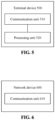
- FIG. 5 is a schematic block diagram of a terminal device 500 according to an embodiment not being part of the present invention. As shown in FIG. 5 , the terminal device 500 includes a communication unit and a processing unit.
- the communication unit 510 is configured to receive indication information.
- the indication information is an ACK/NACK indication for at least one HARQ process.
- the HARQ process is an HARQ process corresponding to a first resource or an HARQ process shared by the first resource and a second resource.
- the first resource and the second resource have different configuration modes.
- the processing unit 520 is configured to process or not process data transmission on the second resource according to the indication information, and/or the terminal device processes data transmission on the first resource according to the indication information.
- both the first resource and the second resource are resources in an unlicensed spectrum.
- both the first resource and the second resource are CG resources.
- the processing unit 520 is at least configured to: not process data transmission on the second resource or ignore the indication information in response to that the first HARQ process corresponds to the second resource; and in response to that the first HARQ process corresponds to the second resource and the first resource, process or not process, according to the indication information, data transmission on the second resource in a data transmission mode on the third resource which is used prior to receiving the indication information.
- the third resource is a resource, a time of data transmission on which before the indication information is received is closest to a time for receiving the indication information.
- the processing unit 520 is at least configured to: process, according to the indication information, data transmission on the first resource in accordance with the third transmission mechanism.
- the third transmission mechanism is a transmission mechanism of the first resource.
- the processing unit 520 is at least configured to: transmit the data on the first resource according to the third transmission mechanism in response to that the indication information includes a NACK indication of a second HARQ process corresponding to the first resource; and not transmit the data on the first resource in response to that the indication information includes an ACK indication of the second HARQ process.
- the processing unit 520 is at least configured to: transmit the data on the first resource according to the third transmission mechanism in response to that the indication information includes the NACK indication of a plurality of HARQ processes, the plurality of HARQ processes include the second HARQ process, and the first resource is a resource, on which data transmission is performed, determined according to a priority rule in resources corresponding to the plurality of HARQ processes; and not transmit the data on the first resource in response to that the indication information comprises the ACK indication of the first resource.
- the processing unit 520 is at least configured to: transmit the data on the first resource according to the third transmission mechanism in response to that the indication information includes the NACK indication of a plurality of HARQ processes, and any one of the plurality of HARQ processes is selected as the second HARQ process; and not transmit the data on the first resource in response to that the indication information includes the ACK indication of the second HARQ process.
- the processing unit 520 is configured to: transmit the data on the first resource on a seventh resource followed after the indication information is received.
- the seventh resource is a resource, a time of data transmission on which after the indication information is received is closest to the time for receiving the indication information.
- the seventh resource shares the first HARQ process with the first resource and has the same or different configuration from the first resource.
- the seventh resource has a different configuration from the first resource.
- the communication unit may be a communication interface or a transceiver, or an input/output interface of a communication chip or system on chip.
- the processing unit may be one or more processors.
- the terminal device 500 may correspond to the terminal device in the sixth embodiment, the second embodiment, and the third embodiment.
- the above and other operations and/or functions of each unit in the terminal device 500 are used for respectively implementing corresponding flows in the terminal device in the sixth embodiment, the second embodiment, and the third embodiment.
- details are not described herein again.
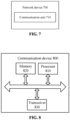
- FIG. 6 is a schematic block diagram of a network device 600 according to an embodiment not being part of the present invention.
- the network device 600 includes a communication unit 610.
- the communication unit is configured to send indication information.
- the indication information is an ACK/NACK indication of at least one HARQ process.
- the HARQ process is an HARQ process corresponding to a first resource and/or a second resource.
- the first resource and the second resource have different configuration modes.
Landscapes
- Engineering & Computer Science (AREA)
- Signal Processing (AREA)
- Computer Networks & Wireless Communication (AREA)
- Mobile Radio Communication Systems (AREA)
Claims (13)
- Procédé de communication sans fil, comprenant les étapes consistant à :recevoir, par un dispositif terminal, une information d'indication, l'information d'indication étant une indication d'acquittement, ACK/non-acquittement, NACK, d'au moins un processus de demande de répétition automatique hybride, HARQ, le processus HARQ étant un processus HARQ correspondant à au moins une ressource parmi une première ressource et une deuxième ressource, et la première ressource ayant un mode de configuration différent de celui de la deuxième ressource, et la première ressource n'étant pas configurée avec un paramètre autonomousTX, et la deuxième ressource étant configurée avec le paramètre autonomousTX ; eteffectuer au moins une des opérations suivantes (S220) :traiter ou ne pas traiter, par le dispositif terminal, une transmission de données sur la deuxième ressource selon l'information d'indication ; outraiter, par le dispositif terminal, une transmission de données sur la première ressource selon l'information d'indication,caractérisé en ce que le traitement ou le nontraitement, par le dispositif terminal, d'une transmission de données sur la deuxième ressource selon l'information d'indication comprend au moins une des opérations suivantes :en réponse au fait qu'un premier processus HARQ correspond à la deuxième ressource, traiter, par le dispositif terminal selon l'information d'indication,une transmission de données sur la deuxième ressource selon un deuxième mécanisme de transmission, le deuxième mécanisme de transmission étant un mécanisme de transmission automatique amélioré de la deuxième ressource,dans lequel le traitement, par le dispositif terminal selon l'information d'indication, d'une transmission de données sur la deuxième ressource selon le deuxième mécanisme de transmission comprend l'étape consistant à :
transmettre, par le dispositif terminal, des données sur la deuxième ressource selon le deuxième mécanisme de transmission, en réponse au fait que l'information d'indication comprend des indications NACK d'une pluralité de processus HARQ, la pluralité de processus HARQ comprenant le premier processus HARQ, et une unité de données en paquets, PDU, sur la deuxième ressource étant une PDU sur laquelle une transmission de données est effectuée, déterminée selon une règle de priorité parmi les PDU sur des ressources correspondant à la pluralité de processus HARQ. - Procédé selon la revendication 1, dans lequel chaque ressource parmi la première ressource et la deuxième ressource est une ressource dans un spectre sans licence.
- Procédé selon la revendication 1 ou 2, dans lequel chaque ressource parmi la première ressource et la deuxième ressource est une ressource d'autorisation préconfigurée (CG).
- Procédé selon l'une quelconque des revendications 1 à 3, dans lequel le traitement, par le dispositif terminal selon l'information d'indication, d'une transmission de données sur la deuxième ressource selon un deuxième mécanisme de transmission comprend également l'étape consistant à :
ne pas transmettre, par le dispositif terminal, les données sur la deuxième ressource, en réponse au fait que l'information d'indication comprend une indication ACK du premier processus HARQ. - Procédé selon la revendication 4, dans lequel la transmission, par le dispositif terminal, de données sur la deuxième ressource selon le deuxième mécanisme de transmission comprend l'étape consistant à :
transmettre, par le dispositif terminal, des données sur la deuxième ressource au moyen d'au moins un élément parmi un processus HARQ différent du premier processus HARQ et une cinquième ressource ayant une configuration différente de celle de la deuxième ressource. - Procédé selon la revendication 5, dans lequel la cinquième ressource est une ressource, dont un instant de transmission de données après la réception de l'information d'indication est le plus proche d'un instant de réception de l'information d'indication, parmi les ressources qui correspondent au moins à un processus HARQ différent de celui de la deuxième ressource ou qui ont une configuration différente de celle de la deuxième ressource.
- Procédé de communication sans fil, comprenant les étapes consistant à :envoyer, par un dispositif de réseau à un dispositif terminal, une information d'indication (S210), l'information d'indication étant une indication d'acquittement, ACK/non-acquittement, NACK, d'au moins un processus de demande de répétition automatique hybride, HARQ, le processus HARQ étant un processus HARQ correspondant à au moins une ressource parmi une première ressource et une deuxième ressource, et la première ressource ayant un mode de configuration différent de celui de la deuxième ressource, et la première ressource n'étant pas configurée avec un paramètre autonomousTX, et la deuxième ressource étant configurée avec le paramètre autonomousTX,caractérisé en ce que, en réponse au fait qu'un premier processus HARQ correspond à la deuxième ressource, l'information d'indication est utilisée pour indiquer que la transmission de données sur la deuxième ressource est traitée selon un deuxième mécanisme de transmission, le deuxième mécanisme de transmission étant un mécanisme de transmission automatique amélioré de la deuxième ressource, eten réponse au fait que l'information d'indication comprend des indications NACK d'une pluralité de processus HARQ, la pluralité de processus HARQ comprend le premier processus HARQ, et une unité de données en paquets, PDU, sur la deuxième ressource est une PDU sur laquelle une transmission de données est effectuée, déterminée selon une règle de priorité parmi les PDU sur des ressources correspondant à la pluralité de processus HARQ, le dispositif terminal transmettant les données sur la deuxième ressource selon le deuxième mécanisme de transmission.
- Procédé selon la revendication 7, dans lequel chaque ressource parmi la première ressource et la deuxième ressource est une ressource dans un spectre sans licence.
- Procédé selon la revendication 7 ou 8, dans lequel chaque ressource parmi la première ressource et la deuxième ressource est une ressource d'autorisation préconfigurée (CG).
- Procédé selon l'une quelconque des revendications 7 à 9, dans lequel
le dispositif terminal ne transmet pas les données sur la deuxième ressource, en réponse au fait que l'information d'indication comprend une indication ACK du premier processus HARQ. - Procédé selon la revendication 10, dans lequel le dispositif terminal transmet des données sur la deuxième ressource au moyen d'au moins un élément parmi un processus HARQ différent du premier processus HARQ et une cinquième ressource ayant une configuration différente de celle de la deuxième ressource.
- Dispositif terminal (1010), configuré pour exécuter le procédé selon l'une quelconque des revendications 1 à 6.
- Dispositif de réseau (1020), configuré pour exécuter le procédé selon l'une quelconque des revendications 7 à 11.
Applications Claiming Priority (1)
| Application Number | Priority Date | Filing Date | Title |
|---|---|---|---|
| PCT/CN2020/107458 WO2022027460A1 (fr) | 2020-08-06 | 2020-08-06 | Procédé de communication sans fil, dispositif de terminal et dispositif de réseau |
Publications (3)
| Publication Number | Publication Date |
|---|---|
| EP4192154A1 EP4192154A1 (fr) | 2023-06-07 |
| EP4192154A4 EP4192154A4 (fr) | 2023-08-16 |
| EP4192154B1 true EP4192154B1 (fr) | 2025-07-09 |
Family
ID=80118731
Family Applications (1)
| Application Number | Title | Priority Date | Filing Date |
|---|---|---|---|
| EP20947897.3A Active EP4192154B1 (fr) | 2020-08-06 | 2020-08-06 | Procédé de communication sans fil, dispositif de terminal et dispositif de réseau |
Country Status (4)
| Country | Link |
|---|---|
| US (1) | US12526087B2 (fr) |
| EP (1) | EP4192154B1 (fr) |
| CN (2) | CN116528376B (fr) |
| WO (1) | WO2022027460A1 (fr) |
Families Citing this family (2)
| Publication number | Priority date | Publication date | Assignee | Title |
|---|---|---|---|---|
| CA3153202A1 (fr) * | 2019-09-30 | 2021-04-08 | Nannan Liu | Procede et appareil de communication |
| CN121795017A (zh) * | 2023-09-26 | 2026-04-03 | 华为技术有限公司 | 无线通信中用于资源管理的方法、装置和设备 |
Family Cites Families (13)
| Publication number | Priority date | Publication date | Assignee | Title |
|---|---|---|---|---|
| WO2016101802A1 (fr) * | 2014-12-22 | 2016-06-30 | 中兴通讯股份有限公司 | Procédé et dispositif de gestion d'une ressource dans un support sans licence |
| US11540320B2 (en) | 2016-01-15 | 2022-12-27 | Ntt Docomo, Inc. | User terminal, radio base station and radio communication method |
| WO2018024946A1 (fr) * | 2016-08-05 | 2018-02-08 | Nokia Technologies Oy | Réémissions en aveugle sur ressources partagées |
| US11252717B2 (en) * | 2016-09-02 | 2022-02-15 | Huawei Technologies Co., Ltd. | Co-existence of latency tolerant and low latency communications |
| CN108024310B (zh) * | 2016-11-04 | 2020-09-11 | 华为技术有限公司 | 用于传输数据的方法、终端设备和网络设备 |
| US10511415B2 (en) | 2017-03-13 | 2019-12-17 | Qualcomm Incorporated | Uplink ACK resource allocation in new radio |
| CN108809541B (zh) * | 2017-05-05 | 2021-08-03 | 华为技术有限公司 | 上行数据的传输方法和装置 |
| CN109391372B (zh) * | 2017-08-11 | 2021-08-13 | 华为技术有限公司 | 通信方法与设备 |
| JP7189316B2 (ja) * | 2018-07-20 | 2022-12-13 | オッポ広東移動通信有限公司 | セッション管理方法、端末装置とネットワーク装置 |
| CN110536393B (zh) * | 2018-08-10 | 2022-07-15 | 中兴通讯股份有限公司 | 一种功率控制方法、装置及计算机可读存储介质 |
| US12302313B2 (en) * | 2018-09-27 | 2025-05-13 | Telefonaktiebolaget Lm Ericsson (Publ) | Radio network node, user equipment (UE) and methods performed in a wireless communication network |
| CN110972287B (zh) | 2018-09-28 | 2022-05-17 | 大唐移动通信设备有限公司 | 一种harq进程id的确定方法、装置、终端及介质 |
| CN109496400B (zh) * | 2018-10-16 | 2021-10-08 | 北京小米移动软件有限公司 | 重传信息的方法、装置、基站及终端 |
-
2020
- 2020-08-06 CN CN202310411068.8A patent/CN116528376B/zh active Active
- 2020-08-06 EP EP20947897.3A patent/EP4192154B1/fr active Active
- 2020-08-06 WO PCT/CN2020/107458 patent/WO2022027460A1/fr not_active Ceased
- 2020-08-06 CN CN202080102000.6A patent/CN115804185A/zh active Pending
-
2022
- 2022-12-28 US US18/147,237 patent/US12526087B2/en active Active
Also Published As
| Publication number | Publication date |
|---|---|
| US20230269035A1 (en) | 2023-08-24 |
| CN116528376B (zh) | 2025-01-03 |
| US12526087B2 (en) | 2026-01-13 |
| CN116528376A (zh) | 2023-08-01 |
| EP4192154A1 (fr) | 2023-06-07 |
| CN115804185A (zh) | 2023-03-14 |
| WO2022027460A1 (fr) | 2022-02-10 |
| EP4192154A4 (fr) | 2023-08-16 |
Similar Documents
| Publication | Publication Date | Title |
|---|---|---|
| US11963108B2 (en) | Power allocation method and terminal device | |
| EP3833128B1 (fr) | Procédé de transmission d'informations de harq, dispositif de réseau et dispositif terminal | |
| US9515780B2 (en) | Shifting HARQ feedback for cognitive-radio-based TD-LTE systems | |
| US12556320B2 (en) | Method for feeding back hybrid automatic repeat request acknowledgement (HARQ-ACK) and terminal device | |
| US12089260B2 (en) | Random access method, terminal device and network device | |
| EP4568354A1 (fr) | Procédé et appareil de communication | |
| US12580689B2 (en) | Wireless communication method, terminal device and network device | |
| US12506565B2 (en) | Transmission method and terminal device | |
| US12526087B2 (en) | Wireless communication method, terminal device, and network device | |
| WO2019237805A1 (fr) | Procédé et appareil d'accès aléatoire, et dispositif de communication | |
| US12308975B2 (en) | HARQ information feedback method and device | |
| US12501274B2 (en) | Method for using configured grant resources, terminal device, and network device | |
| WO2020051919A1 (fr) | Procédés et appareils de détermination et d'attribution de ressources, et terminal et dispositif de réseau | |
| US12021636B2 (en) | Method for determining HARQ codebook, terminal apparatus, and network apparatus | |
| US20240237057A1 (en) | Wireless communication method, terminal device, and network device | |
| EP4087347A1 (fr) | Procédé de communication sans fil, dispositif de terminal et dispositif de réseau | |
| US12075434B2 (en) | Method for information feedback, terminal device and network device | |
| CN116114197B (zh) | 无线通信的方法、终端设备和网络设备 | |
| CN115699864B (zh) | 无线通信方法、终端设备和网络设备 |
Legal Events
| Date | Code | Title | Description |
|---|---|---|---|
| STAA | Information on the status of an ep patent application or granted ep patent |
Free format text: STATUS: THE INTERNATIONAL PUBLICATION HAS BEEN MADE |
|
| PUAI | Public reference made under article 153(3) epc to a published international application that has entered the european phase |
Free format text: ORIGINAL CODE: 0009012 |
|
| STAA | Information on the status of an ep patent application or granted ep patent |
Free format text: STATUS: REQUEST FOR EXAMINATION WAS MADE |
|
| 17P | Request for examination filed |
Effective date: 20221222 |
|
| AK | Designated contracting states |
Kind code of ref document: A1 Designated state(s): AL AT BE BG CH CY CZ DE DK EE ES FI FR GB GR HR HU IE IS IT LI LT LU LV MC MK MT NL NO PL PT RO RS SE SI SK SM TR |
|
| A4 | Supplementary search report drawn up and despatched |
Effective date: 20230713 |
|
| RIC1 | Information provided on ipc code assigned before grant |
Ipc: H04W 72/232 20230101ALI20230707BHEP Ipc: H04L 1/1812 20230101ALI20230707BHEP Ipc: H04W 72/12 20230101ALI20230707BHEP Ipc: H04W 72/04 20230101AFI20230707BHEP |
|
| DAV | Request for validation of the european patent (deleted) | ||
| DAX | Request for extension of the european patent (deleted) | ||
| STAA | Information on the status of an ep patent application or granted ep patent |
Free format text: STATUS: EXAMINATION IS IN PROGRESS |
|
| 17Q | First examination report despatched |
Effective date: 20240313 |
|
| GRAP | Despatch of communication of intention to grant a patent |
Free format text: ORIGINAL CODE: EPIDOSNIGR1 |
|
| STAA | Information on the status of an ep patent application or granted ep patent |
Free format text: STATUS: GRANT OF PATENT IS INTENDED |
|
| INTG | Intention to grant announced |
Effective date: 20241016 |
|
| GRAJ | Information related to disapproval of communication of intention to grant by the applicant or resumption of examination proceedings by the epo deleted |
Free format text: ORIGINAL CODE: EPIDOSDIGR1 |
|
| STAA | Information on the status of an ep patent application or granted ep patent |
Free format text: STATUS: EXAMINATION IS IN PROGRESS |
|
| GRAP | Despatch of communication of intention to grant a patent |
Free format text: ORIGINAL CODE: EPIDOSNIGR1 |
|
| INTC | Intention to grant announced (deleted) | ||
| STAA | Information on the status of an ep patent application or granted ep patent |
Free format text: STATUS: GRANT OF PATENT IS INTENDED |
|
| INTG | Intention to grant announced |
Effective date: 20250213 |
|
| GRAS | Grant fee paid |
Free format text: ORIGINAL CODE: EPIDOSNIGR3 |
|
| GRAA | (expected) grant |
Free format text: ORIGINAL CODE: 0009210 |
|
| STAA | Information on the status of an ep patent application or granted ep patent |
Free format text: STATUS: THE PATENT HAS BEEN GRANTED |
|
| AK | Designated contracting states |
Kind code of ref document: B1 Designated state(s): AL AT BE BG CH CY CZ DE DK EE ES FI FR GB GR HR HU IE IS IT LI LT LU LV MC MK MT NL NO PL PT RO RS SE SI SK SM TR |
|
| REG | Reference to a national code |
Ref country code: GB Ref legal event code: FG4D |
|
| REG | Reference to a national code |
Ref country code: CH Ref legal event code: EP |
|
| REG | Reference to a national code |
Ref country code: IE Ref legal event code: FG4D |
|
| REG | Reference to a national code |
Ref country code: DE Ref legal event code: R096 Ref document number: 602020054425 Country of ref document: DE |
|
| P01 | Opt-out of the competence of the unified patent court (upc) registered |
Free format text: CASE NUMBER: UPC_APP_5165_4192154/2025 Effective date: 20250829 |
|
| PGFP | Annual fee paid to national office [announced via postgrant information from national office to epo] |
Ref country code: DE Payment date: 20250827 Year of fee payment: 6 |
|
| PGFP | Annual fee paid to national office [announced via postgrant information from national office to epo] |
Ref country code: GB Payment date: 20250826 Year of fee payment: 6 |
|
| PGFP | Annual fee paid to national office [announced via postgrant information from national office to epo] |
Ref country code: FR Payment date: 20250826 Year of fee payment: 6 |
|
| REG | Reference to a national code |
Ref country code: NL Ref legal event code: MP Effective date: 20250709 |
|
| PG25 | Lapsed in a contracting state [announced via postgrant information from national office to epo] |
Ref country code: PT Free format text: LAPSE BECAUSE OF FAILURE TO SUBMIT A TRANSLATION OF THE DESCRIPTION OR TO PAY THE FEE WITHIN THE PRESCRIBED TIME-LIMIT Effective date: 20251110 |
|
| PG25 | Lapsed in a contracting state [announced via postgrant information from national office to epo] |
Ref country code: NL Free format text: LAPSE BECAUSE OF FAILURE TO SUBMIT A TRANSLATION OF THE DESCRIPTION OR TO PAY THE FEE WITHIN THE PRESCRIBED TIME-LIMIT Effective date: 20250709 |
|
| REG | Reference to a national code |
Ref country code: AT Ref legal event code: MK05 Ref document number: 1813075 Country of ref document: AT Kind code of ref document: T Effective date: 20250709 |
|
| PG25 | Lapsed in a contracting state [announced via postgrant information from national office to epo] |
Ref country code: IS Free format text: LAPSE BECAUSE OF FAILURE TO SUBMIT A TRANSLATION OF THE DESCRIPTION OR TO PAY THE FEE WITHIN THE PRESCRIBED TIME-LIMIT Effective date: 20251109 |
|
| PG25 | Lapsed in a contracting state [announced via postgrant information from national office to epo] |
Ref country code: NO Free format text: LAPSE BECAUSE OF FAILURE TO SUBMIT A TRANSLATION OF THE DESCRIPTION OR TO PAY THE FEE WITHIN THE PRESCRIBED TIME-LIMIT Effective date: 20251009 |
|
| REG | Reference to a national code |
Ref country code: LT Ref legal event code: MG9D |
|
| PG25 | Lapsed in a contracting state [announced via postgrant information from national office to epo] |
Ref country code: AT Free format text: LAPSE BECAUSE OF FAILURE TO SUBMIT A TRANSLATION OF THE DESCRIPTION OR TO PAY THE FEE WITHIN THE PRESCRIBED TIME-LIMIT Effective date: 20250709 |
|
| PG25 | Lapsed in a contracting state [announced via postgrant information from national office to epo] |
Ref country code: FI Free format text: LAPSE BECAUSE OF FAILURE TO SUBMIT A TRANSLATION OF THE DESCRIPTION OR TO PAY THE FEE WITHIN THE PRESCRIBED TIME-LIMIT Effective date: 20250709 |
|
| PG25 | Lapsed in a contracting state [announced via postgrant information from national office to epo] |
Ref country code: HR Free format text: LAPSE BECAUSE OF FAILURE TO SUBMIT A TRANSLATION OF THE DESCRIPTION OR TO PAY THE FEE WITHIN THE PRESCRIBED TIME-LIMIT Effective date: 20250709 |
|
| PG25 | Lapsed in a contracting state [announced via postgrant information from national office to epo] |
Ref country code: GR Free format text: LAPSE BECAUSE OF FAILURE TO SUBMIT A TRANSLATION OF THE DESCRIPTION OR TO PAY THE FEE WITHIN THE PRESCRIBED TIME-LIMIT Effective date: 20251010 |
|
| PG25 | Lapsed in a contracting state [announced via postgrant information from national office to epo] |
Ref country code: SE Free format text: LAPSE BECAUSE OF FAILURE TO SUBMIT A TRANSLATION OF THE DESCRIPTION OR TO PAY THE FEE WITHIN THE PRESCRIBED TIME-LIMIT Effective date: 20250709 |
|
| PG25 | Lapsed in a contracting state [announced via postgrant information from national office to epo] |
Ref country code: LV Free format text: LAPSE BECAUSE OF FAILURE TO SUBMIT A TRANSLATION OF THE DESCRIPTION OR TO PAY THE FEE WITHIN THE PRESCRIBED TIME-LIMIT Effective date: 20250709 |
|
| PG25 | Lapsed in a contracting state [announced via postgrant information from national office to epo] |
Ref country code: BG Free format text: LAPSE BECAUSE OF FAILURE TO SUBMIT A TRANSLATION OF THE DESCRIPTION OR TO PAY THE FEE WITHIN THE PRESCRIBED TIME-LIMIT Effective date: 20250709 Ref country code: PL Free format text: LAPSE BECAUSE OF FAILURE TO SUBMIT A TRANSLATION OF THE DESCRIPTION OR TO PAY THE FEE WITHIN THE PRESCRIBED TIME-LIMIT Effective date: 20250709 |
|
| PG25 | Lapsed in a contracting state [announced via postgrant information from national office to epo] |
Ref country code: RS Free format text: LAPSE BECAUSE OF FAILURE TO SUBMIT A TRANSLATION OF THE DESCRIPTION OR TO PAY THE FEE WITHIN THE PRESCRIBED TIME-LIMIT Effective date: 20251009 |
|
| PG25 | Lapsed in a contracting state [announced via postgrant information from national office to epo] |
Ref country code: ES Free format text: LAPSE BECAUSE OF FAILURE TO SUBMIT A TRANSLATION OF THE DESCRIPTION OR TO PAY THE FEE WITHIN THE PRESCRIBED TIME-LIMIT Effective date: 20250709 |
|
| PG25 | Lapsed in a contracting state [announced via postgrant information from national office to epo] |
Ref country code: RO Free format text: LAPSE BECAUSE OF FAILURE TO SUBMIT A TRANSLATION OF THE DESCRIPTION OR TO PAY THE FEE WITHIN THE PRESCRIBED TIME-LIMIT Effective date: 20250709 |
|
| REG | Reference to a national code |
Ref country code: CH Ref legal event code: H13 Free format text: ST27 STATUS EVENT CODE: U-0-0-H10-H13 (AS PROVIDED BY THE NATIONAL OFFICE) Effective date: 20260324 |
|
| PG25 | Lapsed in a contracting state [announced via postgrant information from national office to epo] |
Ref country code: SM Free format text: LAPSE BECAUSE OF FAILURE TO SUBMIT A TRANSLATION OF THE DESCRIPTION OR TO PAY THE FEE WITHIN THE PRESCRIBED TIME-LIMIT Effective date: 20250709 |
|
| PG25 | Lapsed in a contracting state [announced via postgrant information from national office to epo] |
Ref country code: DK Free format text: LAPSE BECAUSE OF FAILURE TO SUBMIT A TRANSLATION OF THE DESCRIPTION OR TO PAY THE FEE WITHIN THE PRESCRIBED TIME-LIMIT Effective date: 20250709 |
|
| PG25 | Lapsed in a contracting state [announced via postgrant information from national office to epo] |
Ref country code: LU Free format text: LAPSE BECAUSE OF NON-PAYMENT OF DUE FEES Effective date: 20250806 Ref country code: IT Free format text: LAPSE BECAUSE OF FAILURE TO SUBMIT A TRANSLATION OF THE DESCRIPTION OR TO PAY THE FEE WITHIN THE PRESCRIBED TIME-LIMIT Effective date: 20250709 |
|
| PG25 | Lapsed in a contracting state [announced via postgrant information from national office to epo] |
Ref country code: CZ Free format text: LAPSE BECAUSE OF FAILURE TO SUBMIT A TRANSLATION OF THE DESCRIPTION OR TO PAY THE FEE WITHIN THE PRESCRIBED TIME-LIMIT Effective date: 20250709 Ref country code: CH Free format text: LAPSE BECAUSE OF NON-PAYMENT OF DUE FEES Effective date: 20250831 |
|
| PG25 | Lapsed in a contracting state [announced via postgrant information from national office to epo] |
Ref country code: SK Free format text: LAPSE BECAUSE OF FAILURE TO SUBMIT A TRANSLATION OF THE DESCRIPTION OR TO PAY THE FEE WITHIN THE PRESCRIBED TIME-LIMIT Effective date: 20250709 Ref country code: EE Free format text: LAPSE BECAUSE OF FAILURE TO SUBMIT A TRANSLATION OF THE DESCRIPTION OR TO PAY THE FEE WITHIN THE PRESCRIBED TIME-LIMIT Effective date: 20250709 |