EP4196281B1 - Procédé de flottation d'un minerai de fer contenant du silicate - Google Patents
Procédé de flottation d'un minerai de fer contenant du silicate Download PDFInfo
- Publication number
- EP4196281B1 EP4196281B1 EP21762642.3A EP21762642A EP4196281B1 EP 4196281 B1 EP4196281 B1 EP 4196281B1 EP 21762642 A EP21762642 A EP 21762642A EP 4196281 B1 EP4196281 B1 EP 4196281B1
- Authority
- EP
- European Patent Office
- Prior art keywords
- ore
- amine
- flotation
- formula
- compound
- Prior art date
- Legal status (The legal status is an assumption and is not a legal conclusion. Google has not performed a legal analysis and makes no representation as to the accuracy of the status listed.)
- Active
Links
Classifications
-
- B—PERFORMING OPERATIONS; TRANSPORTING
- B03—SEPARATION OF SOLID MATERIALS USING LIQUIDS OR USING PNEUMATIC TABLES OR JIGS; MAGNETIC OR ELECTROSTATIC SEPARATION OF SOLID MATERIALS FROM SOLID MATERIALS OR FLUIDS; SEPARATION BY HIGH-VOLTAGE ELECTRIC FIELDS
- B03D—FLOTATION; DIFFERENTIAL SEDIMENTATION
- B03D1/00—Flotation
- B03D1/001—Flotation agents
- B03D1/004—Organic compounds
- B03D1/01—Organic compounds containing nitrogen
-
- B—PERFORMING OPERATIONS; TRANSPORTING
- B03—SEPARATION OF SOLID MATERIALS USING LIQUIDS OR USING PNEUMATIC TABLES OR JIGS; MAGNETIC OR ELECTROSTATIC SEPARATION OF SOLID MATERIALS FROM SOLID MATERIALS OR FLUIDS; SEPARATION BY HIGH-VOLTAGE ELECTRIC FIELDS
- B03D—FLOTATION; DIFFERENTIAL SEDIMENTATION
- B03D2201/00—Specified effects produced by the flotation agents
- B03D2201/02—Collectors
-
- B—PERFORMING OPERATIONS; TRANSPORTING
- B03—SEPARATION OF SOLID MATERIALS USING LIQUIDS OR USING PNEUMATIC TABLES OR JIGS; MAGNETIC OR ELECTROSTATIC SEPARATION OF SOLID MATERIALS FROM SOLID MATERIALS OR FLUIDS; SEPARATION BY HIGH-VOLTAGE ELECTRIC FIELDS
- B03D—FLOTATION; DIFFERENTIAL SEDIMENTATION
- B03D2203/00—Specified materials treated by the flotation agents; Specified applications
- B03D2203/02—Ores
- B03D2203/04—Non-sulfide ores
-
- Y—GENERAL TAGGING OF NEW TECHNOLOGICAL DEVELOPMENTS; GENERAL TAGGING OF CROSS-SECTIONAL TECHNOLOGIES SPANNING OVER SEVERAL SECTIONS OF THE IPC; TECHNICAL SUBJECTS COVERED BY FORMER USPC CROSS-REFERENCE ART COLLECTIONS [XRACs] AND DIGESTS
- Y02—TECHNOLOGIES OR APPLICATIONS FOR MITIGATION OR ADAPTATION AGAINST CLIMATE CHANGE
- Y02P—CLIMATE CHANGE MITIGATION TECHNOLOGIES IN THE PRODUCTION OR PROCESSING OF GOODS
- Y02P10/00—Technologies related to metal processing
- Y02P10/20—Recycling
Definitions
- the present invention relates to a method for manufacturing a concentrate enriched in iron mineral content from an ore, which contains an iron mineral and silicate, by a reverse flotation using a first amine and particularly a mixture of the first amine and a second amine.
- a further embodiment is a use of the first amine as a flotation collector, particularly of the mixture of the first amine and the second amine as a flotation collector, and a composition of the first amine and the second amine as a flotation collector.
- a typical iron ore beneficiation process requires a flotation stage to remove silica (SiO 2 ) from the valuable iron mineral, e.g. oxides like hematite or magnetite, and thus to obtain a high-grade iron mineral concentrate.
- a high-grade iron mineral concentrate allows to make high quality steel.
- Removal of SiO 2 from different ores by froth flotation in combination with hydrophobic amines is a well-known process.
- Negatively charged silicate particles can be hydrophobized using suitable amines. Injection of air in a flotation cell leads to formation of hydrophobic gas bubbles, which can transport the hydrophobized silicate particles to the top of the flotation cell.
- the formed froth which can be stabilized by a suitable chemical acting as a froth regulator, contains the hydrophobized silicate particles. Finally, the froth will be removed from the top and the enriched mineral is left at the bottom of the flotation cell.
- GB 578695 relates to mineral concentrations and a class of reagents for selectively separating acidic minerals from other ore constituents.
- the reagents for froth flotation are represented by a compound of one of the following general formulae wherein y is an integer from 2 to 12, R is hydrogen or an alkyl group, R 1 is an alkyl group having from 8 to 30 carbon atoms, or a carboxylic acyl group having from 8 to 32 carbon atoms, R 2 is hydrogen or an alkyl group having from 8 to 30 carbon atoms or an alkylol ester or aralkyl group, R 3 is a carboxylic acyl group having from 8 to not more than 32 carbon atoms and R 4 is an alkyl, alkylol , alkylol ester or aralkyl group or of a salt of such a compound.
- Test No. 2 discloses a phosphate rock flotation with N-lauryl ethylene diamine hydrobromide and
- DE 1173041 relates to a flotation of oxidic minerals with aliphatic amines as collectors, which are branched aliphatic primary amines having at least 6 carbon atoms and their water- or oilsoluble salts alone or with usual collecting, foaming or regulating auxiliaries.
- Example 1A discloses a flotation of zinc carbonate and/or zinc phosphate with 2-ethylhexylamine acetate and sodium sulfide.
- Example 3 discloses a flotation of zinc carbonate and/or zinc silicate with a mixture of 2-ethylhexylamine acetate and 2-ethylhexylamine, an ethoxylated fatty alcohol as an emulgator and sodium sulfide.
- EP 0174866 relates to collectors and a process for recovering meal values from a metal ore by subjecting the metal ore, in the form of an aqueous pulp, to a froth flotation process in the presence of a collector, wherein the collector comprises a compound corresponding to the formula wherein R is -CH 2 -, -CH(OH)-, -CO-, or a combination thereof and n is an integer from 1 to 6 or -(R) n - is -(CH 2 ) m -C ⁇ , where m is an integer from 0 to 6, R 1 and each R 2 are independently C 1-22 hydrocarbyl or a C 1-22 hydrocarbyl substituted with one or more hydroxy, amino, phosphonyl, alkoxy, imino, carbamyl, carbonyl, thiocarbonyl, cyano, carboxyl, hydrocarbylthio, hydrocarbyloxy, hydrocarbylamino or hydrocarbylimino groups, with some proviso
- Example 1 discloses a froth flotation of a chalcopyrite copper sulfide ore with inter alia N',N'-dibutylethane-1,2-diamine, N',N'-diethylethane-1,2-diamine or N',N'-dihexylethane-1,2-diamine and Dowfroth 250 as a frother.
- Example 4 discloses a froth flotation of a chalcopyrite copper sulfide ore with inter alia N',N'-dibutylethane-1,2-diamine and Dowfroth as a frother.
- Example 6 discloses a froth flotation of a nickel/cobalt ore with inter alia N',N'-dibutylethane-1,2-diamine and a frother, e.g. triethoxybutane.
- US 2015-0096925 relates to collector compositions and methods for making and using same to purify one or more crude materials.
- the collector composition can include one or more amidoamines having the formula as depicted below and one or more amines having the formula R 6 -NH 2 , where a weight ratio of the amidoamine to the amine can be about 99:1 to about 1:99.
- a coconut fatty acid diethylenetriamine amidoamine neutralized with glacial acetic acid is used in an inverse flotation of a phosphate ore for removal of silica at a neutral pH.
- a coconut fatty oil diethylenetriamine amidoamine neutralized with glacial acetic acid is used in an inverse flotation of a phosphate ore for removal of silica at a neutral pH.
- a tall oil fatty acid diethylenetriamine neutralized with glacial acetic acid is used for an inverse flotation of a phosphate ore for removal of silica at a neutral pH.
- Other amidoamines similarly employed are lauric acid diethylenetriamine amidoamine and a rosin acid tetraethylenepentamine amidoamine.
- Some example provide also a combination of an amidoamine with an amine such as an etheramine composed of 95 wt.% of 3-(8-methylnonoxy)propan-1-amine and 3 wt.% of 8-methylnonan-1-ol, such as cocoamine or such as dodecylamine.
- an amine such as an etheramine composed of 95 wt.% of 3-(8-methylnonoxy)propan-1-amine and 3 wt.% of 8-methylnonan-1-ol, such as cocoamine or such as dodecylamine.
- US 2020/172767 discloses a dispersion composition containing an approximately 50:50 mixture of n-hexylamine and N,N-diethyl-1,3-diaminopropane, and comprising additionally terpineol and silver particles, said composition is used as an electroconductive adhesive composition and is therefore not suitable for the purpose of the present invention.
- a mine as an ore processing site will set a maximum level of residual SiO 2 content that is allowed to remain in the concentrate at the end of the flotation process. This may for instance be 2.5 % by weight, especially 2.0 % by weight.
- the target is generally to at least achieve this maximum silica level without significantly losing any of the iron mineral content. A better recovery in combination with a comparable or a better selectivity reduces iron mineral losses in the tailings and leads to economic benefits.
- the object is achieved, according to the invention, by a method for manufacturing a concentrate enriched in iron mineral content from an ore, which contains an iron mineral and silicate, by a reverse flotation, which method comprises the step of
- the method for manufacturing a concentrate enriched in iron mineral content from an ore, which contains an iron mineral and silicate comprises the steps of
- a second amine is further added at step (c), which is (B) a compound of formula II wherein R 3 is a C 5 -C 17 alkyl, which is branched or linear, or a C 5 -C 17 alkenyl, which is branched or linear, a salt of a protonated compound of formula II and a second anion or a mixture thereof.
- the ore which contains an iron mineral and silicate (SiO 2 ), is for example from a magmatic deposit or from a sedimentary deposit.
- the step (a) of providing an ore results in a provided ore.
- the step (a) of providing an ore comprises for example a crushing and/or a grinding of the ore.
- the step of providing the ore comprises for example also a crushing of the ore and a grinding of the ore.
- the step of providing the ore comprises for example a crushing of the ore, particularly a crushing of the ore and a wet grinding of the ore.
- a grounded and/or crushed ore is in the form of particles.
- magnetic parts of the ores can be removed by a magnetic treatment, preferably once the ore has been grounded and/or crushed and is in the form of particles.
- a correlation herein to a weight of the ore or weight parts of the ore refers to dry ore.
- the step (a) of providing of the ore results in a provided ore, which is in the form of particles.
- the provided ore is in the form of particles, which have a particle size allowing 60 wt.% to 100 wt.% of the particles based on the overall weight of the provided ore to pass a 100 ⁇ m steel mesh sieve as measured by standard dry sieving.
- the step (a) of providing of the ore results in a provided ore, which is in the form of particles and more than 90 wt.% of the particles have a particle size of 150 ⁇ m or below.
- the step (a) of providing of the ore results in a provided ore, which is in the form of particles, more than 90 wt.% of the particles have a particle size of 150 ⁇ m or below and more than 80 wt.% of the particles have a particle size of 106 ⁇ m or below.
- the step (a) of providing of the ore results in a provided ore, which is in the form of particles, more than 90 wt.% of the particles have a particle size of 150 ⁇ m or below, more than 80 wt.% of the particles have a particle size of 106 ⁇ m or below and more than 30 wt.% of the particles have a particle size of 38 ⁇ m or below.
- the step (a) of providing of the ore results in a provided ore, which is in the form of particles, more than 92 wt.% of the particles have a particle size of 150 ⁇ m or below, more than 82 wt.% of the particles have a particle size of 106 ⁇ m or below and more than 35 wt.% of the particles have a particle size of 38 ⁇ m or below.
- the ore contains preferably 20 wt.% to 65 wt.% iron atoms based on the overall weight of the ore.
- the weight content of iron atoms (Fe atoms) is similar to an iron content in weight.
- the content of iron atoms is determined for example by WDXRF.
- the ore contains very preferably 25 wt.% to 55 wt.% of iron atoms, particularly 30 wt.% to 50 wt.% and very particularly 35 wt.% to 47 wt.%.
- An iron mineral is for example an iron oxide.
- Typical iron oxides are hematite (Fe 2 O 3 with 69.9% by weight of iron content), magnetite (Fe 3 O 4 with 72.4% by weight of iron content), goethite (Fe(O)OH with 62.9 by weight of iron content) or a mixture thereof.
- the iron mineral consists out of less than 10 wt.% of an iron sulfide based on the overall weight of all iron minerals in the ore.
- all iron minerals in the ore are non-sulfidic iron minerals.
- the iron minerals in the ore consists preferably out of 90 wt.% to 100 wt.% of iron oxide based on the overall weight of all iron minerals in the ore.
- the iron minerals in the ore consists out of at least 97 wt.% to 100 wt.% of iron oxide, particularly out of 99 wt.% to 100 wt.%.
- the ore contains preferably 20 wt.% to 65 wt.% iron atoms and 20 wt.% to 70 wt.% of silicate calculated as SiO 2 , very preferably 25 wt.% to 55 wt.% iron atoms and 25 wt.% to 55 wt.% of silicate calculated as SiO 2 , particularly 30 wt.% to 50 wt.% iron atoms and 30 wt.% to 45 wt.% of silicate calculated as SiO 2 and very particularly 35 wt.% to 47 wt.% iron atoms and 32 wt.% to 43 wt.% of silicate calculated as SiO 2 .
- a typical ore comprises 40 wt.% to 70 wt.% of hematite and 30 wt.% to 50 wt.% of silicate calculated as SiO 2 , particularly 45 wt.% to 65 wt.% of hematite and 30 wt.% to 45 wt.% of silicate calculated as SiO 2 .
- 70 wt.% to 100 wt.% of the iron mineral, which is contained in the ore is an iron oxide, which is hematite.
- Preferred is a method, wherein the ore contains iron atoms in the range of 20 wt.% to 55 wt.% based on the weight of the ore.
- the compound of formula I and the compounds of formula II act in the method as a collector for froth flotation.
- the first amine (A) comprises also a mixture of two or more compounds of formula I.
- R 1 and R 2 are independently from each other methyl, ethyl, propyl, 1-methyl-ethyl, butyl or pentyl.
- R 1 and R 2 are independently from each other methyl, ethyl, propyl or 1-methyl-ethyl.
- R 1 and R 2 are independently from each other methyl, propyl or 1-methyl-ethyl.
- R 1 and R 2 are independently from each other methyl or propyl.
- R 1 and R 2 are the same.
- R 1 and R 2 are the same and methyl, ethyl, propyl, 1-methyl-ethyl, butyl or pentyl. Particularly, R 1 and R 2 are the same and methyl, ethyl, propyl or 1-methyl-ethyl. Very particularly, R 1 and R 2 are the same and methyl, propyl or 1-methyl-ethyl. Especially, R 1 and R 2 are the same and methyl or propyl. Very especially, R 1 and R 2 are propyl.
- a compound of formula I, wherein R 1 and R 2 are propyl, is N',N'-dibutylpropane-1,3-diamine and is depicted below
- a compound of formula I, wherein R 1 and R 2 are methyl, is N',N'-diethylpropane-1,3-diamine and is depicted below
- a compound of formula I, wherein R 1 and R 2 are ethyl, is N',N'-dipropylpropane-1,3-diamine and is depicted below
- a compound of formula I, wherein R 1 and R 2 are 1-methyl-ethyl, is N',N'-diisobutylpropane-1,3-diamine and is depicted below
- a compound of formula I, wherein R 1 and R 2 are butyl, is N',N'-dipentylpropane-1,3-diamine and is depicted below
- a compound of formula I, wherein R 1 and R 2 are pentyl, is N',N'-dihexylpropane-1,3-diamine and is depicted below
- a compound of formula I, wherein R 1 and R 2 are hexyl, is N',N'-diheptylpropane-1,3-diamine and is depicted below
- a compound of formula I, wherein R 1 and R 2 are heptyl, is N',N'-dioctylpropane-1,3-diamine and is depicted below
- a compound of formula I, wherein R 1 and R 2 are 2-methyl-hexyl, is N',N'-bis(3-methylheptyl)propane-1,3-diamine and is depicted below
- a compound of formula I, wherein R 1 is propyl and R 2 is methyl, is N'-butyl-N'-ethyl-propane-1,3-diamine and is depicted below
- R 1 and R 2 are independently from each other methyl, ethyl, propyl, 1-methyl-ethyl, butyl or pentyl.
- R 1 and R 2 are propyl.
- the second amine (A) comprises also a mixture of two or more compounds of formula II.
- R 3 is for example pentyl, hexyl, heptyl, 1-ethyl-pentyl, octyl, iso-octyl, nonyl, iso-nonyl, decyl, isodecyl, undecyl, iso-undecyl, dodecyl, iso-dodecyl, tridecyl, iso-tridecyl, tetradecyl, iso-tetradecyl, pentadecyl, iso-pentadecyl, hexadecyl, iso-hexadecyl, heptadecyl, iso-heptadecyl, dec-9-en-yl or (Z)-heptadec-8-en-yl.
- R 3 is C 5 -C 12 alkyl, which is branched or linear, or a C 10 -C 17 alkenyl, which is branched or linear.
- R 3 is C 5 -C 12 alkyl, which is branched or linear, or C 17 alkenyl, which is linear.
- R 3 is C 5 -C 12 alkyl, which is branched or linear.
- R 3 is C 5 -C 9 alkyl, which is branched or linear.
- R 3 is C 6 -C 8 alkyl, which is branched or linear. More especially, R 3 is C 7 alkyl, which is branched.
- R 3 is 1-ethyl-pentyl.
- R 3 is a C 7 -C 12 -alkyl, which is branched or linear.
- Preferred is a method, wherein R 3 is 1-ethyl-pentyl.
- R 1 and R 2 are propyl and R 3 is 1-ethyl-pentyl.
- the first anion is the deprotonated form of an acid A'(-H)p, wherein -H represents an acidic proton and p the number of acidic protons of the acid A'(-H)p.
- -H represents an acidic proton
- p the number of acidic protons of the acid A'(-H)p.
- some acidic protons of the acid A'(-H)p might not be deprotonated in a salt with a compound of formula I.
- a salt of a protonated compound of formula I and a first anion is also expressed by formulae It1-1+, I-t2-1+ or I-t1-2+ wherein A' represents the first anion, y is an integer, which is at least 1, and y represents the negative charge of the anion. y is not higher than p, which is the number of acidic protons of the acid A(-H)p.
- Formulae I-t1-1+ and I-t2-1+ describe tautomeric forms of the same salt.
- the first anion is for example C 1 -C 18 carboxylate, fluoride, chloride, bromide, iodide, sulfonate, hydrogensulfate, sulfate, dihydrogenphosphate, hydrogenphosphate, phosphate, nitrate, hydrofluorosilicate, fluorosilicate or a mixture thereof.
- C 1 -C 18 carboxylate is for example an aliphatic or olefinic carboxylate, preferably an aliphatic C 1 -C 13 carboxylate, very preferably an aliphatic C 1 -C 6 carboxylate and especially formate, acetate or proprionate.
- Sulfonate is for example methylsulfonate, ethylsulfonate, propylsulfonate or 1-methylethylsuflonate.
- the sulfonate is an alkyl sulfonate, very preferably a C 1 -C 6 sulfonate, particularly a C 1 -C 3 sulfonate and very particularly methylsulfonate.
- Preferred is C 1 -C 18 carboxylate, fluoride, chloride, sulfonate, hydrogensulfate, sulfate, dihydrogenphosphate, hydrogenphosphate, phosphate or nitrate.
- Very preferred is aliphatic or olefinic C 1 -C 18 carboxylate, particularly preferred is formate, acetate or proprionate.
- first anion is C 1 -C 18 carboxylate, fluoride, chloride, bromide, iodide, sulfonate, hydrogensulfate, sulfate, dihydrogenphosphate, hydrogenphosphate, phosphate, nitrate, hydrofluorosilicate, fluorosilicate or a mixture thereof.
- the second anion is the deprotonated form of an acid A"(-H)p, wherein -H represents an acidic proton and p the number of acidic protons of the acid A"(-H)p.
- -H represents an acidic proton
- p the number of acidic protons of the acid A"(-H)p.
- some acidic protons of the acid A"(-H)p might not be deprotonated in a salt with a compound of formula II.
- a salt of a protonated compound of formula II and a second anion is also expressed by formula II-t1-1+ wherein A" represents the second anion, y is an integer, which is at least 1, and y represents the negative charge of the anion. y is not higher than p, which is the number of acidic protons of the acid A"(-H)p.
- the second anion is for example C 1 -C 18 carboxylate, fluoride, chloride, bromide, iodide, sulfonate, hydrogensulfate, sulfate, dihydrogenphosphate, hydrogenphosphate, phosphate, nitrate, hydrofluorosilicate, fluorosilicate or a mixture thereof.
- C 1 -C 18 carboxylate is for example an aliphatic or olefinic carboxylate, preferably an aliphatic C 1 -C 13 carboxylate, very preferably an aliphatic C 1 -C 6 carboxylate and especially formate, acetate or proprionate.
- Sulfonate is for example methylsulfonate, ethylsulfonate, propylsulfonate or 1-methylethylsuflonate.
- the sulfonate is an alkyl sulfonate, very preferably a C 1 -C 6 sulfonate, particularly a C 1 -C 3 sulfonate and very particularly methylsulfonate.
- Preferred is C 1 -C 18 carboxylate, fluoride, chloride, sulfonate, hydrogensulfate, sulfate, dihydrogenphosphate, hydrogenphosphate, phosphate or nitrate.
- Very preferred is aliphatic or olefinic C 1 -C 18 carboxylate, particularly preferred is formate, acetate or proprionate.
- the first anion and the second anion are independently from each other C 1 -C 18 carboxylate, fluoride, chloride, bromide, iodide, sulfonate, hydrogensulfate, sulfate, dihydrogenphosphate, hydrogenphosphate, phosphate, nitrate, hydrofluorosilicate or fluorosilicate.
- the first anion and the second anion are the same. This includes also that in case of a mixture of specific anions, the mixture is the same.
- the weight ratio between the first amine (A) and the second amine (B) is preferably in a range from 0.1 to 10.
- a weight ratio of 0.1 corresponds to 1 weight part of the first amine (A) and 10 weight parts of the second amine (B).
- a weight ratio of 10 corresponds to 1 weight part of the first amine and 0.1 weight parts of the second amine (B).
- the weight ratio between the first amine (A) and the second amine (B) is in a range from 0.15 to 5, particularly in a range from 0.18 to 2, very particularly in a range from 0.2 to 1, especially in a range from 0.25 to 0.7 and very especially in a range from 0.3 to 0.5.
- the weight ratio between the first amine (A) and the second amine (B) is in a range from 0.1 to 10.
- the weight ratio between the first amine (A) and the second amine (B) is in a range from 0.2 to 1.
- the first amine (A) is added preferably in an amount of 10 g to 500 g per ton of the ore.
- the weight of the first amine (A) is added in an amount, which is in the range from 10 g to 500 g per ton of the ore.
- the amount is very preferably from 30 g to 300 g per ton of the ore, particularly preferably from 40 g to 250 g per ton of the ore, especially from 50 g to 200 g per ton of the ore and very especially from 60 g to 160 g per ton of the ore.
- the overall amount of the first amine (A) can be added at once or in portions.
- Preferred is a method, wherein the first amine (A) is added in an amount in the range from 10 g to 500 g per ton of the ore.
- the first amine (A) and the second amine (B) are added preferably in an amount of 10 g to 500 g per ton of the ore.
- the sum of the weights of the first amine (A) and of the second amine (B) is added in an amount, which is in the range from 10 g to 500 g per ton of the ore.
- the amount is very preferably from 30 g to 300 g per ton of the ore, particularly preferably from 40 g to 250 g per ton of the ore, especially from 50 g to 200 g per ton of the ore and very especially from 60 g to 160 g per ton of the ore.
- the overall amount of the first amine (A) and the second amine (B) can be added at once or in portions.
- Preferred is a method, wherein the sum of the weights of the first amine (A) and of the second amine (B) is added in an amount, which is in the range from 10 g to 500 g per ton of the ore.
- the first amine and the second amine are added at step (c) together in the form of a composition for a use as a flotation collector.
- the composition comprises
- the sum of the weights of the first amine (A) and of the second amine (B) in the composition is in the range from 50 wt.% to 100 wt.% based on the overall weight of the composition.
- the range is from 60 wt.% to 100 wt.%, particularly from 70 wt.% to 100 wt.% and very particularly from 80 wt.% to 95 wt.%.
- the pH value at the steps (c) and (d) of the method is preferably adjusted with a pH regulator to a specific pH value, typically to a pH value between 8 and 12, particularly between 9 and 11.
- a pH regulator is typically a strong base, for example sodium hydroxide, potassium hydroxide, sodium carbonate or potassium carbonate.
- the pH value of the aqueous pulp is between 8 and 12, particularly between 9 and 11.
- step (c) i.e. adding the first amine (A) and the second amine (B) to the aqueous pulp, takes place at a pH value between 8 and 12, particularly between 9 and 11.
- the pH value of the aqueous mixture is between 8 and 12, particularly between 9 and 11.
- step (d) i.e.
- aerating the aqueous mixture takes place at a pH value between 8 and 12, particularly between 9 and 11.
- (e) i.e. obtaining the concentrate enriched in iron mineral content, takes place at a pH value between 8 and 12, particularly between 9 and 11.
- a regulation of the pH value supports that the ore, especially the particles of the ore, exhibit the correct surface charge.
- Preferred is a method, wherein the pH value at step (c) is between 8 and 12.
- Preferred is a method, wherein the pH value at step (c) and at step (b) is between 8 and 12.
- Preferred is a method, wherein the pH value at step (c) and at step (d) is between 8 and 12.
- Preferred is a method, wherein the pH value at step (c), at step (b) and at step (d) is between 8 and 12.
- Preferred is a method, wherein the pH value at step (c), at step (b), at step (d) and at step (e) is between 8 and 12.
- a flotation auxiliary is different to a compound of formula I or a compound of formula II.
- the flotation auxiliary is for example a depressing agent, a froth regulator, a co-collector or an extender oil.
- a depressing agent helps to prevent flotation of an ingredient of the ore, which is not desired to get part of the froth or supports in general the selectivity of the method of manufacturing the concentrate.
- a depressing agent is for example a hydrophilic polysaccharide, particularly a starch, or sodium silicate.
- the starch is for example a native starch or a modified starch.
- a native starch is for example a starch from corn, wheat, oat, barley, rice, millet, potato, pea, tapioca or manioc.
- the native starch is preferably pregelatinized, i.e. warmed for starch gelatination in an aqueous solution, or caustified, i.e.
- a modified starch is either a degraded starch, which possesses a reduced weight-average molecular weight versus the original starch, a chemically modified starch or a degraded and chemically modified starch.
- a degradation of starch is for example possible by oxidation or treatment by acid, base or enzymes. The degradation leads typically to an increased content on oligosaccharides or dextrines.
- a chemical modification is a functionalization of a starch by covalent linkage of a chemical group to the starch.
- a chemically modified starch is for example obtainable by esterification or etherification of a starch.
- the esterification of an acid with a starch is for example performed with an anhydride of the acid or a chloride of the acid.
- the etherification of a starch is for example possible with an organic reagent, which contains a reactive epoxide functionality.
- a depressing agent which is a starch, very preferably a native starch, particularly a pregelatinized starch or a caustified starch, especially a caustified starch.
- a depressing agent is preferably added in an amount of 100 to 3000 g per ton of the ore. The calculation is performed on basis of dry ore.
- the amount is very preferably from 300 g to 2200 g per ton of the ore, particularly preferably from 400 g to 1500 g per ton of the ore, especially from 500 g to 1100 g per ton of the ore and very especially from 550 g to 800 g per ton of the ore.
- a froth regulator helps to improve the efficiency of the method of manufacturing by interfering with the froth generation.
- a froth property is for example the froth height respectively the volume of the froth or the stability of the froth, i.e. the time to collapse after stop of aerating.
- a froth regulator is for example pine oil, methylisobutyl carbinol, C 6 -C 12 alcohol, particularly 2-ethylhexanol or hexanol, an alcoholic ester, particularly a mixture comprising 2,2,4-trimethyl-1,3-pentandiol-monoisobutyrate, a distillation residue from an oxo-synthesis of 2-ethylhexanol, terpineol, triethoxybutane, an alkoxylated alcohol, particularly an ethoxylated and/or propoxylated alcohol, polyethylene glycol or polypropylene glycol.
- the method is free of using an alkoxylated alcohol, very preferably free of using an alkoxylated alcohol, polyethylene glycol or polypropylene glycol and particularly free of using a froth regulator. It is still attractive, if the method does not require the addition of a froth regulator.
- a co-collector is a surface-active compound, which is different to a compound of formula I or a compound formula II.
- a co-collector is for example cationic, non-ionic or anionic, preferably cationic or non-ionic and very preferably cationic.
- a cationic co-collector is for example a secondary or tertiary C 9 -C 18 alkylamine, which is different to a compound of formula I, 2-(C 9 -C 18 alkylamino)ethyl-1-amine, N'-(C 9 -C 18 alkyl)propane-1,3-diamine, 3-(C 9 -C 18 alkoxy)propyl-1-amine, N'-(3-(C 9 -C 18 alkoxy)propyl)propane-1,3-diamine.
- a non-ionic co-collector is for example C 9 -C 15 alkyl alcohol, which is branched, or ethoxylated C 9 -C 15 alkyl alcohol, which is branched and ethoxylated with 2 to 4 mole ethylene oxide.
- the co-collector might be added together with the first amine (A) and the second amine (B). In this case, this part of step (b) occurs simultaneously with step (c). It is still attractive, if the method does not require the addition of a co-collector.
- Preferred is a method, wherein a depressing agent is added as a flotation auxiliary and the depressing agent is a starch.
- the first amine (A) and optionally a flotation auxiliary, which is a co-collector is or are added to the aqueous pulp, which is already in the flotation cell, which is used for aerating the mixture in step (d).
- the first amine (A) and the second amine (B) and optionally a flotation auxiliary, which is a co-collector are added to the aqueous pulp, which is already in the flotation cell, which is used for aerating the mixture in step (d).
- the obtained aqueous mixture is preferably kept, particularly under stirring, for a conditioning period before aerating the aqueous mixture.
- a flotation auxiliary which is a co-collector, to condition the ore, particularly the ore particles, in the aqueous mixture.
- the obtained aqueous mixture is preferably kept, particularly under stirring, for a conditioning period before aerating the aqueous mixture.
- the conditioning period lasts for example for one minute or up to 10 or 15 minutes.
- air is typically injected into the base of the flotation cell. Air bubbles are formed and rise to the surface and generate the froth at the surface. The injection of air may be continued until no more froth is formed. This might last for example for one minute or up to 15 or 20 minutes. The froth is removed.
- the concentrate enriched in iron mineral content sinks typically to the bottom of the flotation cell.
- step (c) and (d) are repeated as step (d-c) followed by step (d-d) before step (e) is conducted.
- the concentrate enriched in iron mineral content contains preferably at least 60% by weight of Fe atoms based on the overall weight of the concentrate enriched in iron mineral content, very preferably at least 65% by weight.
- the weight of Fe atoms is similar to the weight of iron content.
- the concentrate enriched in iron mineral content contains preferably less than 2.5% by weight of SiO 2 based on the overall weight of the concentrate enriched in iron mineral, very preferably less than 2.1% by weight and particularly preferably 2.0% or less than 1.9% by weight of SiO 2 .
- the concentrate enriched in iron mineral content contains preferably at least 60% by weight of Fe atoms and less than 2.5% by weight of SiO 2 based on the overall weight of the concentrate enriched in iron mineral content, very preferably at least 65% by weight of Fe atoms and less than 2.1% by weight of SiO 2 .
- a further embodiment of the invention is a use of a first amine (A) as a flotation collector for manufacturing a concentrate enriched in iron mineral content from an ore, which contains an iron mineral and silicate, by a reverse flotation, characterized in that the first amine is
- the use comprises adding the first amine to a prepared aqueous pulp of the ore and optionally one or more flotation auxiliaries to obtain an aqueous mixture.
- the first amine (A) and the second amine (B) are preferably used together as a flotation collector.
- the use comprises adding the first amine and the second amine to a prepared aqueous pulp of the ore and optionally one or more flotation auxiliaries to obtain an aqueous mixture.
- a further embodiment of the invention is a composition for a use as a flotation collector, which comprises
- composition for a use as a flotation collector according to the present invention is a water-soluble composition.
- SE Separation Efficiency
- the desired element is iron (Fe) and the mineral being concentrated is haematite Fe 2 O 3 with an atom content of iron in the mineral of 69.9%.
- the gangue in an itabirite ore consists predominantly of quartz (SiO 2 ), which is determined as Si by WDXRF and recalculated as SiO 2 in the concentrate. For a calculation of Separation Efficiency, only the iron content of the fraction is used.
- a first itabirite type iron ore (45.03 wt.% Fe and 35.36 wt.% SiO 2 ) with iron mainly contained as haematite is ground to a particle size distribution as shown in table C-1-1.
- Table C-1-1 particle size distribution of ground itabirite type iron ore size range [ ⁇ m] >150 150-106 105-76 75-38 ⁇ 38 wt. fraction [%] 6.4 10.1 18.8 16.8 47.9 500 g ground itabirite type iron ore and 400 mL distilled water are placed in a 1.5 L flotation cell in a CDC flotation machine and agitated at 1000 rpm.
- the slurry is conditioned with the causticized starch solution St-1 corresponding to 665 g starch per ton of dry ore for 5 min.
- the pH is raised to 10.2 using an aqueous 5 wt.% NaOH solution.
- 7.5 g of an aqueous 1 wt.% solution of a collector as listed in table C-1-2, which corresponds to 150 g per ton of dry ore, is added to the slurry and conditioned for 1 min.
- further 550 mL distilled water is added and the slurry aerated at 1 L/min until the completion of the flotation (3 min).
- the froth fraction is collected and aeration is stopped.
- the water level is maintained during the entire flotation time.
- table C-1-2 shows that example C-1-4 with its two collectors shows a significantly increased Fe recovery, which is much higher than would be expected from the Fe recoveries of the single collectors at examples C-1-2 and C-1-3.
- the SiO 2 content stays at a low level, which is in a range as expected from the two single collectors. This is remarkable in view of the significantly increased Fe recovery and leads to the best separation efficiency.
- Example C-1-3 with its single collector shows still a remarkable separation efficiency.
- a second itabirite type iron ore (38.4 wt.% Fe and 41.0 wt.% SiO 2 ) with iron mainly contained as haematite is ground to a particle size distribution as shown in table C-2-1.
- Table C-2-1 particle size distribution of ground itabirite type iron ore size range [ ⁇ m] >400 400-213 212-151 150-107 106-64 63-38 ⁇ 38 wt. fraction [%] 0.7 0.3 3.9 8.1 21.2 25.0 40.8
- table C-2-2 shows that example C-2-4 with its two collectors shows an increased Fe recovery, which is higher than would be expected from the Fe recoveries of the single collectors at examples C-2-2 and C-2-3.
- the SiO 2 content stays at a low level, which would not have been expected from the single collector A-2 at example C-2-2. This is remarkable in view of the increased Fe recovery and leads to the best separation efficiency.
- Example C-2-3 with its single collector shows still a remarkable separation efficiency.
- Table C-3-1 particle size distribution of ground itabirite type iron ore size range [ ⁇ m] >400 400-213 212-151 150-107 106-64 63-38 ⁇ 38 wt. fraction [%] ⁇ 0.1 1.8 6.1 9.2 20.7 22.0 40.1
- Table C-3-2 example No. collector amount of collector [g/t] amount of causticized corn starch St-1 [g/t] Fe recovery c) [Fe atom weight in %] Fe conc. grade d) [Fe atom weight in %] Si recovery into concentrate e) [Si atom weight in %] SiO 2 conc.
- grade f [SiO 2 weight in %] separation efficiency [%] C-3-1 b) A-3 75 + 25 560 77 68 1.0 0.9 74 C-3-2 a) A-5 75 + 25 560 69 67 3.9 3.7 65 Footnotes: a) comparative b) according to invention c) Fe recovery is the ratio between the overall amount of Fe atom contained in the cell fraction and the overall amount of Fe atom contained in the ore employed as starting material d) Fe conc. grade means Fe atom content in cell fraction e) Si recovery is the ratio between the overall amount of Si atom contained in the cell fraction and the overall amount of Si atom contained in the ore employed as starting material f) SiO 2 conc. grade means SiO 2 content in cell fraction
- example C-3-1 with its single collector A-3 shows an increased Fe recovery in comparison to example C-3-2 with its single collector A-5.
- the SiO 2 content is lower. Both contribute to a better separation efficiency.
- A-3 is a propylene-1,3-diamine derivative and A-5 is an ethylene-1,2-diamine derivative.
- C-4-2 b) A-4 75 560 86.9 65.76 10.02 12,4 9,2 81.0 C-4-3 a) A-5 75 560 74.5 65.30 19.28 7,1 6,1 66.9 C-4-4 a) A-6 75 560 37.1 68.63 34.13 ⁇ 0 0,2 29.7 Footnotes: a) comparative b) according to invention c) Fe recovery is the ratio between the overall amount of Fe atom contained in the cell fraction and the overall amount of Fe atom contained in the ore employed as starting material d.1) Fe conc. grade means Fe atom content in cell fraction d.2) Fe conc.
- table C-4-2 shows that example C-4-1 with its single collector A-3 shows an increased Fe recovery in comparison to example C-4-3 with its single collector A-5.
- the SiO 2 content is lower. Both contribute to a better separation efficiency.
- A-6 is a powerful but unselective silica collector resulting in high grade iron concentrate but very high iron losses into tailings.
Landscapes
- Manufacture And Refinement Of Metals (AREA)
- Silicates, Zeolites, And Molecular Sieves (AREA)
- Organic Low-Molecular-Weight Compounds And Preparation Thereof (AREA)
Claims (15)
- Procédé pour la fabrication d'un concentré enrichi en un contenu de minéral de fer à partir d'un minerai, qui contient un minéral de fer et du silicate, par une flottation inverse, lequel procédé comprenant l'étape de (c) ajout d'une première amine à une pulpe aqueuse préparée du minerai et éventuellement un ou plusieurs auxiliaires de flottation pour obtenir un mélange aqueux, caractérisé en ce que la première amine est(A) un composé de formule I

- Procédé selon la revendication 1, lequel procédé comprenant les étapes de(a) fourniture du minerai, qui contient un minéral de fer et du silicate,(b) préparation, à partir du minerai fourni par ajout d'eau et éventuellement d'un ou plusieurs auxiliaires de flottation, d'une pulpe aqueuse,(c) ajout(A) d'une première amine, qui est un composé de formule I
 (d) aération du mélange aqueux dans une cellule de flottation pour générer une écume, qui est enrichie en contenu de silicate, et élimination de l'écume générée de la cellule de flottation,(e) obtention, à partir de la cellule de flottation, du concentré enrichi en contenu de minéral de fer.
 - Procédé selon la revendication 1 ou 2,à l'étape (c) une deuxième amine étant en outre ajoutée, qui est(B) un composé de formule II
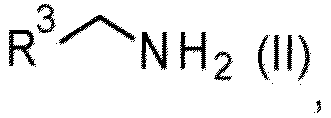 R3 étant un C5-C17 alkyle, qui est ramifié ou linéaire, ou un C5-C17 alcényle, qui est ramifié ou linéaire, un sel d'un composé de formule II protoné et un deuxième anion ou un mélange correspondant.
 - Procédé selon une quelconque revendication précédente, R1 et R2 étant indépendamment l'un de l'autre méthyle, éthyle, propyle, 1-méthyl-éthyle, butyle ou pentyle, préférablement propyle.
- Procédé selon l'une quelconque des revendications 3 à 5, R3 étant un C7-C12 alkyle, qui est ramifié ou linéaire, préférablement 1-éthyl-pentyle.
- Procédé selon une quelconque revendication précédente, le premier anion étant C1-C18 carboxylate, fluorure, chlorure, bromure, iodure, sulfonate, hydrogénosulfonate, sulfate, dihydrogénophosphate, hydrogénophosphate, phosphate, nitrate, hydrofluorosilicate, fluorosilicate ou un mélange correspondant.
- Procédé selon l'une quelconque des revendications 3 à 6, le deuxième anion étant C1-C18 carboxylate, fluorure, chlorure, bromure, iodure, sulfonate, hydrogénosulfonate, sulfate, dihydrogénophosphate, hydrogénophosphate, phosphate, nitrate, hydrofluorosilicate, fluorosilicate ou un mélange correspondant.
- Procédé selon une quelconque revendication précédente, tous les minéraux de fer dans le minerai étant des minéraux de fer non sulfidiques.
- Procédé selon une quelconque revendication précédente, le minéral de fer dans le minerai contenant un oxyde de fer.
- Procédé selon la revendication 9, le minéral de fer contenant de l'hématite, de la magnétite ou de la goethite ou un mélange de deux ou trois correspondant.
- Procédé selon une quelconque revendication précédente, à l'étape (b) un ou plusieurs auxiliaires de flottation étant ajoutés et l'un des auxiliaires de flottation étant un agent dépressant, un régulateur d'écume, un co-collecteur ou une huile d'extension.
- Procédé selon la revendication 11, un agent dépressant étant ajouté en tant qu'auxiliaire de flottation et l'agent dépressant étant un amidon.
- Utilisation d'une première amine (A) comme collecteur de flottation pour la fabrication d'un concentré enrichi en contenu de minéral de fer à partir d'un minerai, qui contient un minéral de fer et du silicate, par une flottation inverse, caractérisée en ce que la première amine (A) est un composé de formule I, un sel d'un composé de formule I protoné et un premier anion ou un mélange correspondant comme défini dans la revendication 1.
- Utilisation selon la revendication 13, une combinaison de la première amine (A) et d'une deuxième amine (B) étant utilisée comme collecteur de flottation pour la fabrication d'un concentré enrichi en contenu de minéral de fer à partir d'un minerai, qui contient un minéral de fer et du silicate, par une flottation inverse, et la deuxième amine (B) étant un composé de formule II, un sel d'un composé de formule II protoné ou un mélange correspondant comme défini dans la revendication 3.
- Composition non adhésive pour une utilisation comme collecteur de flottation, qui comprend(A) une première amine, qui est un composé de formule I, un sel d'un composé de formule I protoné et un premier anion ou un mélange correspondant comme défini dans la revendication 1, et(B) une deuxième amine, qui est un composé de formule II, un sel d'un composé de formule II protoné et un premier anion ou un mélange correspondant comme défini dans la revendication 3,le rapport en poids entre la première amine (A) et la deuxième amine (B) étant dans une plage de 0,2 à 1.
Applications Claiming Priority (2)
| Application Number | Priority Date | Filing Date | Title |
|---|---|---|---|
| EP20190413 | 2020-08-11 | ||
| PCT/EP2021/072215 WO2022034047A1 (fr) | 2020-08-11 | 2021-08-10 | Procédé de flottation d'un minerai de fer contenant du silicate |
Publications (2)
| Publication Number | Publication Date |
|---|---|
| EP4196281A1 EP4196281A1 (fr) | 2023-06-21 |
| EP4196281B1 true EP4196281B1 (fr) | 2024-10-09 |
Family
ID=72234629
Family Applications (1)
| Application Number | Title | Priority Date | Filing Date |
|---|---|---|---|
| EP21762642.3A Active EP4196281B1 (fr) | 2020-08-11 | 2021-08-10 | Procédé de flottation d'un minerai de fer contenant du silicate |
Country Status (9)
| Country | Link |
|---|---|
| US (1) | US20230249197A1 (fr) |
| EP (1) | EP4196281B1 (fr) |
| CN (1) | CN116209525B (fr) |
| AU (1) | AU2021324060A1 (fr) |
| CA (1) | CA3188495A1 (fr) |
| FI (1) | FI4196281T3 (fr) |
| MX (1) | MX2023001769A (fr) |
| UA (1) | UA130385C2 (fr) |
| WO (1) | WO2022034047A1 (fr) |
Families Citing this family (2)
| Publication number | Priority date | Publication date | Assignee | Title |
|---|---|---|---|---|
| CN117259014B (zh) * | 2023-10-10 | 2025-10-31 | 中南大学 | 酯基多胺类化合物在矿物浮选中的应用 |
| CN119140282A (zh) * | 2024-07-22 | 2024-12-17 | 辽宁翁泉硼镁股份有限公司 | 一种提高硼收率的浮选工艺 |
Family Cites Families (10)
| Publication number | Priority date | Publication date | Assignee | Title |
|---|---|---|---|---|
| GB578695A (en) | 1943-04-20 | 1946-07-09 | American Cyanamid Co | Improvements in or relating to methods of concentrating ores |
| DE1173041B (de) * | 1962-01-11 | 1964-07-02 | Basf Ag | Verfahren zur Schwimmaufbereitung oxydischer Mineralien |
| US3817972A (en) | 1970-01-02 | 1974-06-18 | Occidental Petroleum Corp | Amine flotation reagents |
| US4797202A (en) | 1984-09-13 | 1989-01-10 | The Dow Chemical Company | Froth flotation method |
| CN85107378A (zh) * | 1984-09-13 | 1987-03-18 | 陶氏化学公司 | 从原煤中回收有用煤的起泡剂组合物和泡沫浮选方法 |
| US4830739A (en) * | 1985-02-20 | 1989-05-16 | Berol Kemi Ab | Process and composition for the froth flotation beneficiation of iron minerals from iron ores |
| CA2205885A1 (fr) * | 1996-06-04 | 1997-12-04 | Witco Corporation | Melanges d'acides carboxyliques et d'amines organiques pour la flottation de minerai |
| US8701892B2 (en) * | 2010-12-28 | 2014-04-22 | Akzo Nobel Chemicals International B.V. | Amine-containing formulations for reverse froth flotation of silicates from iron ore |
| WO2015054381A1 (fr) * | 2013-10-09 | 2015-04-16 | Georgia-Pacific Chemicals Llc | Compositions de collecteurs et leurs procédés de fabrication et d'utilisation |
| WO2017204238A1 (fr) | 2016-05-26 | 2017-11-30 | 株式会社大阪ソーダ | Adhésif électroconducteur |
-
2021
- 2021-08-10 CN CN202180060711.6A patent/CN116209525B/zh active Active
- 2021-08-10 FI FIEP21762642.3T patent/FI4196281T3/fi active
- 2021-08-10 AU AU2021324060A patent/AU2021324060A1/en active Pending
- 2021-08-10 US US18/015,645 patent/US20230249197A1/en active Pending
- 2021-08-10 UA UAA202300986A patent/UA130385C2/uk unknown
- 2021-08-10 EP EP21762642.3A patent/EP4196281B1/fr active Active
- 2021-08-10 MX MX2023001769A patent/MX2023001769A/es unknown
- 2021-08-10 WO PCT/EP2021/072215 patent/WO2022034047A1/fr not_active Ceased
- 2021-08-10 CA CA3188495A patent/CA3188495A1/fr active Pending
Also Published As
| Publication number | Publication date |
|---|---|
| CA3188495A1 (fr) | 2022-02-17 |
| UA130385C2 (uk) | 2026-02-04 |
| US20230249197A1 (en) | 2023-08-10 |
| MX2023001769A (es) | 2023-02-23 |
| FI4196281T3 (fi) | 2024-12-12 |
| WO2022034047A1 (fr) | 2022-02-17 |
| CN116209525B (zh) | 2026-04-24 |
| CN116209525A (zh) | 2023-06-02 |
| AU2021324060A1 (en) | 2023-04-13 |
| BR112023002478A2 (pt) | 2023-03-28 |
| EP4196281A1 (fr) | 2023-06-21 |
Similar Documents
| Publication | Publication Date | Title |
|---|---|---|
| US10081021B2 (en) | Depressants for mineral ore flotation | |
| AU2013293041B2 (en) | Monothiophosphate containing collectors and methods | |
| US4168227A (en) | Flotation method for oxidized ores | |
| US4732667A (en) | Process and composition for the froth flotation beneficiation of iron minerals from iron ores | |
| US4830739A (en) | Process and composition for the froth flotation beneficiation of iron minerals from iron ores | |
| AU636496B2 (en) | Froth flotation of silica or siliceous gangue | |
| US8701892B2 (en) | Amine-containing formulations for reverse froth flotation of silicates from iron ore | |
| EP1949964A1 (fr) | Procédé de flottation des minéraux et minerais non-sulfureux | |
| AU2021324060A1 (en) | Method for flotation of a silicate-containing iron ore | |
| US6820746B2 (en) | Process for the beneficiation of sulfide minerals | |
| EP3962657B1 (fr) | Procédé de flottation d'un mineral de fer contenant du silicate à l'aide d'un collecteur cationique | |
| US6732867B2 (en) | Beneficiation of sulfide minerals | |
| CN114100863B (zh) | 一种α-烯醇酮在铅硫化矿物浮选中的应用 | |
| EP1556170B1 (fr) | Procede d'enrichissement de mineraux sulfures | |
| US2251217A (en) | Ore flotation | |
| US4337149A (en) | Promoters for use in the anionic circuit of froth flotation of mineral ores | |
| US4325821A (en) | Amine oxide promoters for froth flotation of mineral ores | |
| EA048737B1 (ru) | Способ производства концентрата, обогащенного железосодержащим минералом, из руды с использованием аминов, применение аминов и их неклейкая композиция | |
| BR112023002478B1 (pt) | Método para fabricar um concentrado enriquecido em teor de mineral de ferro a partir de um minério, uso de uma primeira amina como um coletor de flotação, e, composição não adesiva para um uso como um coletor de flotação | |
| US20240082854A1 (en) | Method for flotation of a silicate-containing iron ore | |
| EP4026620A1 (fr) | Procédé de flottation d'un minerai de fer contenant du silicate | |
| US4795578A (en) | Process and composition for the froth flotation beneficiation of iron minerals from iron ores | |
| US2776749A (en) | Alkoxy benzene in froth flotation process | |
| CA1163733A (fr) | Facilitateurs composes d'oxydes d'amines pour la flottation de minerais | |
| EP4438184A1 (fr) | Composition de collecteur |
Legal Events
| Date | Code | Title | Description |
|---|---|---|---|
| STAA | Information on the status of an ep patent application or granted ep patent |
Free format text: STATUS: UNKNOWN |
|
| STAA | Information on the status of an ep patent application or granted ep patent |
Free format text: STATUS: THE INTERNATIONAL PUBLICATION HAS BEEN MADE |
|
| PUAI | Public reference made under article 153(3) epc to a published international application that has entered the european phase |
Free format text: ORIGINAL CODE: 0009012 |
|
| STAA | Information on the status of an ep patent application or granted ep patent |
Free format text: STATUS: REQUEST FOR EXAMINATION WAS MADE |
|
| 17P | Request for examination filed |
Effective date: 20230313 |
|
| AK | Designated contracting states |
Kind code of ref document: A1 Designated state(s): AL AT BE BG CH CY CZ DE DK EE ES FI FR GB GR HR HU IE IS IT LI LT LU LV MC MK MT NL NO PL PT RO RS SE SI SK SM TR |
|
| DAV | Request for validation of the european patent (deleted) | ||
| DAX | Request for extension of the european patent (deleted) | ||
| GRAP | Despatch of communication of intention to grant a patent |
Free format text: ORIGINAL CODE: EPIDOSNIGR1 |
|
| STAA | Information on the status of an ep patent application or granted ep patent |
Free format text: STATUS: GRANT OF PATENT IS INTENDED |
|
| INTG | Intention to grant announced |
Effective date: 20240326 |
|
| GRAS | Grant fee paid |
Free format text: ORIGINAL CODE: EPIDOSNIGR3 |
|
| GRAA | (expected) grant |
Free format text: ORIGINAL CODE: 0009210 |
|
| STAA | Information on the status of an ep patent application or granted ep patent |
Free format text: STATUS: THE PATENT HAS BEEN GRANTED |
|
| AK | Designated contracting states |
Kind code of ref document: B1 Designated state(s): AL AT BE BG CH CY CZ DE DK EE ES FI FR GB GR HR HU IE IS IT LI LT LU LV MC MK MT NL NO PL PT RO RS SE SI SK SM TR |
|
| REG | Reference to a national code |
Ref country code: CH Ref legal event code: EP |
|
| REG | Reference to a national code |
Ref country code: DE Ref legal event code: R096 Ref document number: 602021020019 Country of ref document: DE |
|
| REG | Reference to a national code |
Ref country code: IE Ref legal event code: FG4D |
|
| REG | Reference to a national code |
Ref country code: NL Ref legal event code: FP |
|
| REG | Reference to a national code |
Ref country code: FI Ref legal event code: FGE |
|
| REG | Reference to a national code |
Ref country code: SE Ref legal event code: TRGR |
|
| REG | Reference to a national code |
Ref country code: LT Ref legal event code: MG9D |
|
| REG | Reference to a national code |
Ref country code: AT Ref legal event code: MK05 Ref document number: 1729998 Country of ref document: AT Kind code of ref document: T Effective date: 20241009 |
|
| PG25 | Lapsed in a contracting state [announced via postgrant information from national office to epo] |
Ref country code: PT Free format text: LAPSE BECAUSE OF FAILURE TO SUBMIT A TRANSLATION OF THE DESCRIPTION OR TO PAY THE FEE WITHIN THE PRESCRIBED TIME-LIMIT Effective date: 20250210 Ref country code: HR Free format text: LAPSE BECAUSE OF FAILURE TO SUBMIT A TRANSLATION OF THE DESCRIPTION OR TO PAY THE FEE WITHIN THE PRESCRIBED TIME-LIMIT Effective date: 20241009 Ref country code: IS Free format text: LAPSE BECAUSE OF FAILURE TO SUBMIT A TRANSLATION OF THE DESCRIPTION OR TO PAY THE FEE WITHIN THE PRESCRIBED TIME-LIMIT Effective date: 20250209 |
|
| PG25 | Lapsed in a contracting state [announced via postgrant information from national office to epo] |
Ref country code: BG Free format text: LAPSE BECAUSE OF FAILURE TO SUBMIT A TRANSLATION OF THE DESCRIPTION OR TO PAY THE FEE WITHIN THE PRESCRIBED TIME-LIMIT Effective date: 20241009 |
|
| PG25 | Lapsed in a contracting state [announced via postgrant information from national office to epo] |
Ref country code: ES Free format text: LAPSE BECAUSE OF FAILURE TO SUBMIT A TRANSLATION OF THE DESCRIPTION OR TO PAY THE FEE WITHIN THE PRESCRIBED TIME-LIMIT Effective date: 20241009 |
|
| PG25 | Lapsed in a contracting state [announced via postgrant information from national office to epo] |
Ref country code: NO Free format text: LAPSE BECAUSE OF FAILURE TO SUBMIT A TRANSLATION OF THE DESCRIPTION OR TO PAY THE FEE WITHIN THE PRESCRIBED TIME-LIMIT Effective date: 20250109 |
|
| PG25 | Lapsed in a contracting state [announced via postgrant information from national office to epo] |
Ref country code: AT Free format text: LAPSE BECAUSE OF FAILURE TO SUBMIT A TRANSLATION OF THE DESCRIPTION OR TO PAY THE FEE WITHIN THE PRESCRIBED TIME-LIMIT Effective date: 20241009 Ref country code: GR Free format text: LAPSE BECAUSE OF FAILURE TO SUBMIT A TRANSLATION OF THE DESCRIPTION OR TO PAY THE FEE WITHIN THE PRESCRIBED TIME-LIMIT Effective date: 20250110 Ref country code: LV Free format text: LAPSE BECAUSE OF FAILURE TO SUBMIT A TRANSLATION OF THE DESCRIPTION OR TO PAY THE FEE WITHIN THE PRESCRIBED TIME-LIMIT Effective date: 20241009 |
|
| PG25 | Lapsed in a contracting state [announced via postgrant information from national office to epo] |
Ref country code: PL Free format text: LAPSE BECAUSE OF FAILURE TO SUBMIT A TRANSLATION OF THE DESCRIPTION OR TO PAY THE FEE WITHIN THE PRESCRIBED TIME-LIMIT Effective date: 20241009 |
|
| PG25 | Lapsed in a contracting state [announced via postgrant information from national office to epo] |
Ref country code: RS Free format text: LAPSE BECAUSE OF FAILURE TO SUBMIT A TRANSLATION OF THE DESCRIPTION OR TO PAY THE FEE WITHIN THE PRESCRIBED TIME-LIMIT Effective date: 20250109 |
|
| PG25 | Lapsed in a contracting state [announced via postgrant information from national office to epo] |
Ref country code: SM Free format text: LAPSE BECAUSE OF FAILURE TO SUBMIT A TRANSLATION OF THE DESCRIPTION OR TO PAY THE FEE WITHIN THE PRESCRIBED TIME-LIMIT Effective date: 20241009 |
|
| PG25 | Lapsed in a contracting state [announced via postgrant information from national office to epo] |
Ref country code: DK Free format text: LAPSE BECAUSE OF FAILURE TO SUBMIT A TRANSLATION OF THE DESCRIPTION OR TO PAY THE FEE WITHIN THE PRESCRIBED TIME-LIMIT Effective date: 20241009 |
|
| REG | Reference to a national code |
Ref country code: DE Ref legal event code: R097 Ref document number: 602021020019 Country of ref document: DE |
|
| PG25 | Lapsed in a contracting state [announced via postgrant information from national office to epo] |
Ref country code: EE Free format text: LAPSE BECAUSE OF FAILURE TO SUBMIT A TRANSLATION OF THE DESCRIPTION OR TO PAY THE FEE WITHIN THE PRESCRIBED TIME-LIMIT Effective date: 20241009 |
|
| PG25 | Lapsed in a contracting state [announced via postgrant information from national office to epo] |
Ref country code: RO Free format text: LAPSE BECAUSE OF FAILURE TO SUBMIT A TRANSLATION OF THE DESCRIPTION OR TO PAY THE FEE WITHIN THE PRESCRIBED TIME-LIMIT Effective date: 20241009 |
|
| PG25 | Lapsed in a contracting state [announced via postgrant information from national office to epo] |
Ref country code: SK Free format text: LAPSE BECAUSE OF FAILURE TO SUBMIT A TRANSLATION OF THE DESCRIPTION OR TO PAY THE FEE WITHIN THE PRESCRIBED TIME-LIMIT Effective date: 20241009 |
|
| PG25 | Lapsed in a contracting state [announced via postgrant information from national office to epo] |
Ref country code: CZ Free format text: LAPSE BECAUSE OF FAILURE TO SUBMIT A TRANSLATION OF THE DESCRIPTION OR TO PAY THE FEE WITHIN THE PRESCRIBED TIME-LIMIT Effective date: 20241009 |
|
| PG25 | Lapsed in a contracting state [announced via postgrant information from national office to epo] |
Ref country code: IT Free format text: LAPSE BECAUSE OF FAILURE TO SUBMIT A TRANSLATION OF THE DESCRIPTION OR TO PAY THE FEE WITHIN THE PRESCRIBED TIME-LIMIT Effective date: 20241009 |
|
| PLBE | No opposition filed within time limit |
Free format text: ORIGINAL CODE: 0009261 |
|
| STAA | Information on the status of an ep patent application or granted ep patent |
Free format text: STATUS: NO OPPOSITION FILED WITHIN TIME LIMIT |
|
| PGFP | Annual fee paid to national office [announced via postgrant information from national office to epo] |
Ref country code: NL Payment date: 20250825 Year of fee payment: 5 |
|
| 26N | No opposition filed |
Effective date: 20250710 |
|
| PGFP | Annual fee paid to national office [announced via postgrant information from national office to epo] |
Ref country code: FI Payment date: 20250825 Year of fee payment: 5 |
|
| PGFP | Annual fee paid to national office [announced via postgrant information from national office to epo] |
Ref country code: DE Payment date: 20250827 Year of fee payment: 5 |
|
| PGFP | Annual fee paid to national office [announced via postgrant information from national office to epo] |
Ref country code: GB Payment date: 20250826 Year of fee payment: 5 |
|
| PGFP | Annual fee paid to national office [announced via postgrant information from national office to epo] |
Ref country code: FR Payment date: 20250825 Year of fee payment: 5 |
|
| PGFP | Annual fee paid to national office [announced via postgrant information from national office to epo] |
Ref country code: SE Payment date: 20250825 Year of fee payment: 5 |
|
| REG | Reference to a national code |
Ref country code: CH Ref legal event code: H13 Free format text: ST27 STATUS EVENT CODE: U-0-0-H10-H13 (AS PROVIDED BY THE NATIONAL OFFICE) Effective date: 20260324 |
|
| PG25 | Lapsed in a contracting state [announced via postgrant information from national office to epo] |
Ref country code: MC Free format text: LAPSE BECAUSE OF FAILURE TO SUBMIT A TRANSLATION OF THE DESCRIPTION OR TO PAY THE FEE WITHIN THE PRESCRIBED TIME-LIMIT Effective date: 20241009 |
|
| PG25 | Lapsed in a contracting state [announced via postgrant information from national office to epo] |
Ref country code: LU Free format text: LAPSE BECAUSE OF NON-PAYMENT OF DUE FEES Effective date: 20250810 |
|
| PG25 | Lapsed in a contracting state [announced via postgrant information from national office to epo] |
Ref country code: CH Free format text: LAPSE BECAUSE OF NON-PAYMENT OF DUE FEES Effective date: 20250831 |