EP4196473B1 - Antagonisten des muskarinischen acetylcholinrezeptors m4 - Google Patents
Antagonisten des muskarinischen acetylcholinrezeptors m4 Download PDFInfo
- Publication number
- EP4196473B1 EP4196473B1 EP21769541.0A EP21769541A EP4196473B1 EP 4196473 B1 EP4196473 B1 EP 4196473B1 EP 21769541 A EP21769541 A EP 21769541A EP 4196473 B1 EP4196473 B1 EP 4196473B1
- Authority
- EP
- European Patent Office
- Prior art keywords
- methyl
- compound
- alkyl
- pyridazin
- amine
- Prior art date
- Legal status (The legal status is an assumption and is not a legal conclusion. Google has not performed a legal analysis and makes no representation as to the accuracy of the status listed.)
- Active
Links
Classifications
-
- C—CHEMISTRY; METALLURGY
- C07—ORGANIC CHEMISTRY
- C07D—HETEROCYCLIC COMPOUNDS
- C07D401/00—Heterocyclic compounds containing two or more hetero rings, having nitrogen atoms as the only ring hetero atoms, at least one ring being a six-membered ring with only one nitrogen atom
- C07D401/02—Heterocyclic compounds containing two or more hetero rings, having nitrogen atoms as the only ring hetero atoms, at least one ring being a six-membered ring with only one nitrogen atom containing two hetero rings
- C07D401/06—Heterocyclic compounds containing two or more hetero rings, having nitrogen atoms as the only ring hetero atoms, at least one ring being a six-membered ring with only one nitrogen atom containing two hetero rings linked by a carbon chain containing only aliphatic carbon atoms
-
- C—CHEMISTRY; METALLURGY
- C07—ORGANIC CHEMISTRY
- C07D—HETEROCYCLIC COMPOUNDS
- C07D401/00—Heterocyclic compounds containing two or more hetero rings, having nitrogen atoms as the only ring hetero atoms, at least one ring being a six-membered ring with only one nitrogen atom
- C07D401/02—Heterocyclic compounds containing two or more hetero rings, having nitrogen atoms as the only ring hetero atoms, at least one ring being a six-membered ring with only one nitrogen atom containing two hetero rings
- C07D401/12—Heterocyclic compounds containing two or more hetero rings, having nitrogen atoms as the only ring hetero atoms, at least one ring being a six-membered ring with only one nitrogen atom containing two hetero rings linked by a chain containing hetero atoms as chain links
-
- C—CHEMISTRY; METALLURGY
- C07—ORGANIC CHEMISTRY
- C07D—HETEROCYCLIC COMPOUNDS
- C07D401/00—Heterocyclic compounds containing two or more hetero rings, having nitrogen atoms as the only ring hetero atoms, at least one ring being a six-membered ring with only one nitrogen atom
- C07D401/14—Heterocyclic compounds containing two or more hetero rings, having nitrogen atoms as the only ring hetero atoms, at least one ring being a six-membered ring with only one nitrogen atom containing three or more hetero rings
-
- C—CHEMISTRY; METALLURGY
- C07—ORGANIC CHEMISTRY
- C07D—HETEROCYCLIC COMPOUNDS
- C07D405/00—Heterocyclic compounds containing both one or more hetero rings having oxygen atoms as the only ring hetero atoms, and one or more rings having nitrogen as the only ring hetero atom
- C07D405/14—Heterocyclic compounds containing both one or more hetero rings having oxygen atoms as the only ring hetero atoms, and one or more rings having nitrogen as the only ring hetero atom containing three or more hetero rings
-
- C—CHEMISTRY; METALLURGY
- C07—ORGANIC CHEMISTRY
- C07D—HETEROCYCLIC COMPOUNDS
- C07D495/00—Heterocyclic compounds containing in the condensed system at least one hetero ring having sulfur atoms as the only ring hetero atoms
- C07D495/02—Heterocyclic compounds containing in the condensed system at least one hetero ring having sulfur atoms as the only ring hetero atoms in which the condensed system contains two hetero rings
- C07D495/04—Ortho-condensed systems
-
- C—CHEMISTRY; METALLURGY
- C07—ORGANIC CHEMISTRY
- C07B—GENERAL METHODS OF ORGANIC CHEMISTRY; APPARATUS THEREFOR
- C07B2200/00—Indexing scheme relating to specific properties of organic compounds
- C07B2200/05—Isotopically modified compounds, e.g. labelled
Definitions
- the present disclosure relates to compounds, compositions, and methods for treating disorders associated with muscarinic acetylcholine receptor dysfunction.
- Parkinson's disease is the second most common neurodegenerative disease with an increasing prevalence as a function of age. Moreover, early-onset PD is also increasing. A hallmark of PD is the progressive degeneration and loss of dopaminergic neurons in the substantia nigra (SN) and basal ganglia (BG), leading to pronounced motor symptoms including bradykinesia, tremor, rigidity, gait dysfunction and postural instability.
- SN substantia nigra
- BG basal ganglia
- L-DOPA levodopa
- LID L-DOPA induced dyskinesia
- Cholinergic neurons Prior to L-DOPA, compounds with anticholinergic activity represented the preferred mode of PD treatment Cholinergic neurons provide important neuromodulatory control of the BG motor circuit. While the actions of cholinergic pathways on basal ganglia pathways are complex, activation of muscarinic acetylcholine receptors (mAChRs) generally have actions that oppose dopamine (DA) signaling. For instance, mAChR agonists inhibit DA release, and inhibit multiple behavioral effects of drugs that increase DA levels and signaling. Interestingly, muscarinic acetylcholine receptor (mAChR) antagonists were the first available treatments for PD and are still widely used for treatment of this disorder.
- mAChRs muscarinic acetylcholine receptor
- mAChR antagonists While many studies of the actions of mAChR antagonists were carried out before randomized controlled trials were introduced, recent well controlled double-blind cross-over design studies demonstrate significant improvement in multiple aspects of motor function in patients receiving mAChR antagonists. Unfortunately, mAChR antagonists have a number of dose-limiting adverse effects that severely limit their clinical utility, including multiple peripheral adverse effects, as well as confusion and severe cognitive disturbances.
- mAChRs include five subtypes, termed M 1 - M 5 .
- Available mAChR antagonists, such as scopolamine, are nonselective across these subtypes, and many of their adverse effects are likely mediated by mAChR subtypes that are not involved in the antiparkinsonian activity.
- compounds possessing a more selective profile for individual mAChRs may offer an advantage in PD, as well as related disorders such as dystonia.
- some studies indicate that the M 4 mAChR subtype may play a dominant role in mAChR regulation of basal ganglia motor function.
- WO2019/079783 discloses compounds useful as antagonists of the muscarinic acetylcholine receptor M4 for treating a neurodegenerative disorder, a movement disorder or a brain disorder.
- references to methods of treatment in the subsequent paragraphs of this description are to be interpreted as references to the compounds, pharmaceutical compositions and medicaments of the present invention for use in a method for treatment of the human (or animal) body by therapy (or for diagnosis).
- One aspect of the invention provides compounds of formula (I), or a pharmaceutically acceptable salt thereof, wherein:
- the invention provides a pharmaceutical composition
- a pharmaceutical composition comprising a compound of formula (I), or a pharmaceutically acceptable salt thereof, and a pharmaceutically acceptable carrier.
- the invention provides a method of treating a disorder in a subject, wherein the subject would benefit from antagonism of mAChR M 4 , comprising administering to the subject a therapeutically effective amount of a compound of formula (I), or a pharmaceutically acceptable salt or composition thereof.
- alkoxy refers to a group -O-alkyl. Representative examples of alkoxy include, but are not limited to, methoxy, ethoxy, propoxy, 2-propoxy, butoxy and tert-butoxy.
- alkyl means a straight or branched, saturated hydrocarbon chain.
- lower alkyl or “C 1-6 alkyl” means a straight or branched chain hydrocarbon containing from 1 to 6 carbon atoms.
- C 1-4 alkyl means a straight or branched chain hydrocarbon containing from 1 to 4 carbon atoms.
- alkyl include, but are not limited to, methyl, ethyl, n -propyl, iso -propyl, n -butyl, sec -butyl, iso -butyl, tert -butyl, n- pentyl, isopentyl, neopentyl, n -hexyl, 3-methylhexyl, 2,2-dimethylpentyl, 2,3-dimethylpentyl, n- heptyl, n -octyl, n -nonyl, and n -decyl.
- alkenyl as used herein, means a straight or branched, hydrocarbon chain containing at least one carbon-carbon double bond.
- alkoxyalkyl refers to an alkoxy group, as defined herein, appended to the parent molecular moiety through an alkyl group, as defined herein.
- alkoxyfluoroalkyl refers to an alkoxy group, as defined herein, appended to the parent molecular moiety through a fluoroalkyl group, as defined herein.
- alkylene refers to a divalent group derived from a straight or branched chain saturated hydrocarbon.
- Representative examples of alkylene include, but are not limited to, -CH 2 -, -CD 2 -, -CH 2 CH 2 -, -C(CH 3 )(H)-, -C(CH 3 )(D)-, -CH 2 CH 2 CH 2 -, -CH 2 CH 2 CH 2 CH 2 -, and -CH 2 CH 2 CH 2 CH 2 CH 2 -.
- alkylamino means at least one alkyl group, as defined herein, is appended to the parent molecular moiety through an amino group, as defined herein.
- amide means -C(O)NR- or -NRC(O)-, wherein R may be hydrogen, alkyl, cycloalkyl, aryl, heteroaryl, heterocycle, alkenyl, or heteroalkyl.
- aminoalkyl means at least one amino group, as defined herein, is appended to the parent molecular moiety through an alkylene group, as defined herein.
- amino means -NR x R y , wherein R x and R y may be hydrogen, alkyl, cycloalkyl, aryl, heteroaryl, heterocycle, alkenyl, or heteroalkyl.
- R x and R y may be hydrogen, alkyl, cycloalkyl, aryl, heteroaryl, heterocycle, alkenyl, or heteroalkyl.
- amino may be -NR x -, wherein R x may be hydrogen, alkyl, cycloalkyl, aryl, heteroaryl, heterocycle, alkenyl, or heteroalkyl.
- aryl refers to a phenyl or a phenyl appended to the parent molecular moiety and fused to a cycloalkane group (e.g., the aryl may be indan-4-yl), fused to a 6-membered arene group (i.e., the aryl is naphthyl), or fused to a non-aromatic heterocycle (e.g., the aryl may be benzo[d][1,3]dioxol-5-yl).
- phenyl is used when referring to a substituent and the term 6-membered arene is used when referring to a fused ring.
- the 6-membered arene is monocyclic (e.g., benzene or benzo).
- the aryl may be monocyclic (phenyl) or bicyclic (e.g., a 9- to 12-membered fused bicyclic system).
- cyanoalkyl means at least one -CN group, is appended to the parent molecular moiety through an alkylene group, as defined herein.
- cyanofluoroalkyl means at least one -CN group, is appended to the parent molecular moiety through a fluoroalkyl group, as defined herein.
- cycloalkoxy refers to a cycloalkyl group, as defined herein, appended to the parent molecular moiety through an oxygen atom.
- cycloalkyl or "cycloalkane,” as used herein, refers to a saturated ring system containing all carbon atoms as ring members and zero double bonds.
- cycloalkyl is used herein to refer to a cycloalkane when present as a substituent.
- a cycloalkyl may be a monocyclic cycloalkyl (e.g., cyclopropyl), a fused bicyclic cycloalkyl (e.g., decahydronaphthalenyl), or a bridged cycloalkyl in which two non-adjacent atoms of a ring are linked by an alkylene bridge of 1, 2, 3, or 4 carbon atoms (e.g., bicyclo[2.2.1]heptanyl).
- a monocyclic cycloalkyl e.g., cyclopropyl
- a fused bicyclic cycloalkyl e.g., decahydronaphthalenyl
- a bridged cycloalkyl in which two non-adjacent atoms of a ring are linked by an alkylene bridge of 1, 2, 3, or 4 carbon atoms (e.g., bicyclo[2.2.1]heptanyl).
- cycloalkyl include, but are not limited to, cyclopropyl, cyclobutyl, cyclopentyl, cyclohexyl, cycloheptyl, cyclooctyl, cyclononyl, cyclodecyl, adamantyl, and bicyclo[1.1.1]pentanyl.
- cycloalkenyl or "cycloalkene,” as used herein, means a non-aromatic monocyclic or multicyclic ring system containing all carbon atoms as ring members and at least one carbon-carbon double bond and preferably having from 5-10 carbon atoms per ring.
- cycloalkenyl is used herein to refer to a cycloalkene when present as a substituent.
- a cycloalkenyl may be a monocyclic cycloalkenyl (e.g., cyclopentenyl), a fused bicyclic cycloalkenyl (e.g., octahydronaphthalenyl), or a bridged cycloalkenyl in which two non-adjacent atoms of a ring are linked by an alkylene bridge of 1, 2, 3, or 4 carbon atoms (e.g., bicyclo[2.2.1]heptenyl).
- Exemplary monocyclic cycloalkenyl rings include cyclopentenyl, cyclohexenyl or cycloheptenyl.
- Exemplary monocyclic cycloalkenyl rings include cyclopentenyl, cyclohexenyl or cycloheptenyl.
- Carbocyclyl means a “cycloalkyl” or a “cycloalkenyl.”
- carbocycle means a “cycloalkane” or a “cycloalkene.”
- carbocyclyl refers to a “carbocycle” when present as a substituent.
- 1,1-carbocyclylene means a geminal divalent group derived from a cycloalkyl.
- a representative example is 1,1-C 3-6 cycloalkylene (i.e., A further example is 1,1-cyclopropylene (i.e.,
- fluoroalkyl means an alkyl group, as defined herein, in which one, two, three, four, five, six, seven or eight hydrogen atoms are replaced by fluorine.
- Representative examples of fluoroalkyl include, but are not limited to, 2-fluoroethyl, 2,2,2-trifluoroethyl, trifluoromethyl, difluoromethyl, pentafluoroethyl, and trifluoropropyl such as 3,3,3-trifluoropropyl.
- fluoroalkoxy means at least one fluoroalkyl group, as defined herein, is appended to the parent molecular moiety through an oxygen atom.
- fluoroalkoxy include, but are not limited to, difluoromethoxy, trifluoromethoxy and 2,2,2-trifluoroethoxy.
- halogen or halo, means Cl, Br, I, or F.
- haloalkyl means an alkyl group, as defined herein, in which one, two, three, four, five, six, seven or eight hydrogen atoms are replaced by a halogen.
- haloalkoxy means at least one haloalkyl group, as defined herein, is appended to the parent molecular moiety through an oxygen atom.
- halocycloalkyl means a cycloalkyl group, as defined herein, in which one or more hydrogen atoms are replaced by a halogen.
- heteroalkyl means an alkyl group, as defined herein, in which one or more of the carbon atoms has been replaced by a heteroatom selected from S, O, P and N.
- Representative examples of heteroalkyls include, but are not limited to, alkyl ethers, secondary and tertiary alkyl amines, amides, and alkyl sulfides.
- heteroaryl refers to an aromatic monocyclic heteroatom-containing ring (monocyclic heteroaryl) or a bicyclic ring system containing at least one monocyclic heteroaromatic ring (bicyclic heteroaryl).
- heteroaryl is used herein to refer to a heteroarene when present as a substituent
- the monocyclic heteroaryl are five or six membered rings containing at least one heteroatom independently selected from the group consisting of N, O and S (e.g. 1, 2, 3, or 4 heteroatoms independently selected from O, S, and N).
- the five membered aromatic monocyclic rings have two double bonds and the six membered aromatic monocyclic rings have three double bonds.
- the bicyclic heteroaryl is an 8- to 12-membered ring system and includes a fused bicyclic heteroaromatic ring system (i.e., 10 ⁇ electron system) such as a monocyclic heteroaryl ring fused to a 6-membered arene (e.g., quinolin-4-yl, indol-1-yl), a monocyclic heteroaryl ring fused to a monocyclic heteroarene (e.g., naphthyridinyl), and a phenyl fused to a monocyclic heteroarene (e.g., quinolin-5-yl, indol-4-yl).
- a fused bicyclic heteroaromatic ring system i.e., 10 ⁇ electron system
- a monocyclic heteroaryl ring fused to a 6-membered arene e.g., quinolin-4-yl, indol-1-yl
- a bicyclic heteroaryl also includes a fused bicyclic ring system composed of one heteroaromatic ring and one non-aromatic ring such as a monocyclic heteroaryl ring fused to a monocyclic carbocyclic ring (e.g., 6,7-dihydro-5H-cyclopenta[b]pyridinyl), or a monocyclic heteroaryl ring fused to a monocyclic heterocycle (e.g., 2,3-dihydrofuro[3,2-b]pyridinyl).
- the bicyclic heteroaryl is attached to the parent molecular moiety at an aromatic ring atom.
- heteroaryl include, but are not limited to, indolyl (e.g., indol-1-yl, indol-2-yl, indol-4-yl), pyridinyl (including pyridin-2-yl, pyridin-3-yl, pyridin-4-yl), pyrimidinyl, pyrazinyl, pyridazinyl, pyrazolyl (e.g., pyrazol-4-yl), pyrrolyl, benzopyrazolyl, 1,2,3-triazolyl (e.g., triazol-4-yl), 1,3,4-thiadiazolyl, 1,2,4-thiadiazolyl, 1,3,4-oxadiazolyl, 1,2,4-oxadiazolyl, imidazolyl, thiazolyl (e.g., thiazol-4-yl), isothiazolyl, thienyl, benzimidazolyl (e.g
- heteroarylene refers to a divalent group derived from a heteroaromatic ring or ring system.
- a "6-membered 1,4-heteroarylene containing 1-2 nitrogen atoms” is a divalent group derived from a monocyclic 6-membered heteroaromatic ring having 1-2 nitrogen atoms and having points of attachment or substitution on two carbon ring atoms in 1,4 relation to each other, i.e., para substitution.
- Representative examples of a 6-membered 1,4-heteroarylene containing 1-2 nitrogen atoms are and
- heterocycle or “heterocyclic,” as used herein, means a monocyclic heterocycle, a bicyclic heterocycle, or a tricyclic heterocycle.
- heterocyclyl is used herein to refer to a heterocycle when present as a substituent
- the monocyclic heterocycle is a three-, four-, five-, six-, seven-, or eight-membered ring containing at least one heteroatom independently selected from the group consisting of O, N, and S.
- the three- or four-membered ring contains zero or one double bond, and one heteroatom selected from the group consisting of O, N, and S.
- the five-membered ring contains zero or one double bond and one, two or three heteroatoms selected from the group consisting of O, N and S.
- the six-membered ring contains zero, one or two double bonds and one, two, or three heteroatoms selected from the group consisting of O, N, and S.
- the seven- and eight-membered rings contains zero, one, two, or three double bonds and one, two, or three heteroatoms selected from the group consisting of O, N, and S.
- monocyclic heterocyclyls include, but are not limited to, azetidinyl, azepanyl, aziridinyl, diazepanyl, 1,3-dioxanyl, 1,3-dioxolanyl, 1,3-dithiolanyl, 1,3-dithianyl, imidazolinyl, imidazolidinyl, isothiazolinyl, isothiazolidinyl, isoxazolinyl, isoxazolidinyl, morpholinyl, 2-oxo-3-piperidinyl, 2-oxoazepan-3-yl, oxadiazolinyl, oxadiazolidinyl, oxazolinyl, oxazolidinyl, oxetanyl, oxepanyl, oxocanyl, piperazinyl, piperidinyl, pyranyl, pyrazolin
- the bicyclic heterocycle is a monocyclic heterocycle fused to a 6-membered arene, or a monocyclic heterocycle fused to a monocyclic cycloalkane, or a monocyclic heterocycle fused to a monocyclic cycloalkene, or a monocyclic heterocycle fused to a monocyclic heterocycle, or a monocyclic heterocycle fused to a monocyclic heteroarene, or a spiro heterocycle group, or a bridged monocyclic heterocycle ring system in which two non-adjacent atoms of the ring are linked by an alkylene bridge of 1, 2, 3, or 4 carbon atoms, or an alkenylene bridge of two, three, or four carbon atoms.
- bicyclic heterocyclyl is attached to the parent molecular moiety at a non-aromatic ring atom (e.g., indolin-1-yl).
- bicyclic heterocyclyls include, but are not limited to, chroman-4-yl, 2,3-dihydrobenzofuran-2-yl, 2,3-dihydrobenzothien-2-yl, 1,2,3,4-tetrahydroisoquinolin-2-yl, 2-azaspiro[3.3]heptan-2-yl, 2-oxa-6-azaspiro[3.3]heptan-6-yl, azabicyclo[2.2.1]heptyl (including 2-azabicyclo[2.2.1]hept-2-yl), azabicyclo[3.1.0]hexanyl (including 3-azabicyclo[3.1.0]hexan-3-yl), 2,3-dihydro-1 H -indol-1-yl, isoindolin-2-yl, o
- Tricyclic heterocycles are exemplified by a bicyclic heterocycle fused to a 6-membered arene, or a bicyclic heterocycle fused to a monocyclic cycloalkane, or a bicyclic heterocycle fused to a monocyclic cycloalkene, or a bicyclic heterocycle fused to a monocyclic heterocycle, or a bicyclic heterocycle in which two non-adjacent atoms of the bicyclic ring are linked by an alkylene bridge of 1, 2, 3, or 4 carbon atoms, or an alkenylene bridge of two, three, or four carbon atoms.
- tricyclic heterocycles include, but are not limited to, octahydro-2,5-epoxypentalene, hexahydro-2 H -2,5-methanocyclopenta[ b ]furan, hexahydro-1 H -1,4-methanocyclopenta[ c ]furan, aza-adamantane (1-azatricyclo[3.3.1.13,7]decane), and oxa-adamantane (2-oxatricyclo[3.3.1.13,7]decane).
- the monocyclic, bicyclic, and tricyclic heterocyclyls are connected to the parent molecular moiety at a non-aromatic ring atom.
- hydroxyl or "hydroxy,” as used herein, means an -OH group.
- hydroxyalkyl means at least one -OH group, is appended to the parent molecular moiety through an alkylene group, as defined herein.
- hydroxyfluoroalkyl means at least one -OH group, is appended to the parent molecular moiety through a fluoroalkyl group, as defined herein.
- C 1-4 alkyl is an alkyl group having from 1 to 4 carbon atoms, however arranged (i.e., straight chain or branched).
- substituted refers to a group that may be further substituted with one or more non-hydrogen substituent groups.
- groups and substituents thereof may be selected in accordance with permitted valence of the atoms and the substituents, such that the selections and substitutions result in a stable compound, e.g., which does not spontaneously undergo transformation such as by rearrangement, cyclization, elimination, etc.
- mAChR M 4 receptor antagonist refers to any exogenously administered compound or agent that directly or indirectly antagonizes mAChR M 4 , for example in an animal, in particular a mammal (e.g., a human).
- each intervening number there between with the same degree of precision is explicitly contemplated.
- the numbers 7 and 8 are contemplated in addition to 6 and 9, and for the range 6.0-7.0, the number 6.0, 6.1, 6.2, 6.3, 6.4, 6.5, 6.6, 6.7, 6.8, 6.9, and 7.0 are explicitly contemplated.
- the invention provides compounds of formula (I), wherein R, R 1a , R 2a , R 2b , R 3 , G 1 , and X 1 are as defined herein.
- haloalkyl may be fluoroalkyl (e.g., any C 1-4 haloalkyl may be C 1-4 fluoroalkyl).
- Unsubstituted or substituted rings such as aryl, heteroaryl, etc. are composed of both a ring system and the ring system's optional substituents. Accordingly, the ring system may be defined independently of its substituents, such that redefining only the ring system leaves any previous optional substituents present.
- a 5- to 12-membered heteroaryl with optional substituents may be further defined by specifying the ring system of the 5- to 12-membered heteroaryl is a 5- to 6-membered heteroaryl (i.e., 5- to 6-membered heteroaryl ring system), in which case the optional substituents of the 5- to 12-membered heteroaryl are still present on the 5- to 6-membered heteroaryl, unless otherwise expressly indicated.
- a 5- to 12-membered heteroaryl with optional substituents may be further defined by specifying the ring system of the 5- to 12-membered heteroaryl is a 5- to 6-membered heteroaryl (i.e., 5- to 6-membered heteroaryl ring system), in which case the optional substituents of the 5- to 12-membered heteroaryl are still present on the 5- to 6-membered heteroaryl, unless otherwise expressly indicated.
- the first embodiment is denoted E1
- the second embodiment is denoted E2 and so forth.
- E2 The compound of E1, or a pharmaceutically acceptable salt thereof, wherein R 3 is -L 1 -G 2 .
- E4 The compound of E3, or a pharmaceutically acceptable salt thereof, wherein the ring system of the 4- to 12-membered heterocyclyl at G 2 is a 4- to 8-membered monocyclic heterocyclyl ring system, a 6- to 10-membered bridged bicyclic heterocyclyl ring system, a 7- to 12-membered fused bicyclic heterocyclyl ring system, or a 7- to 12-membered spiro heterocyclyl ring system, wherein the heterocyclyl ring systems contain 1-2 heteroatoms independently selected from O, N, and S.
- E5. The compound of E4, or a pharmaceutically acceptable salt thereof, wherein the ring system of the 4- to 12-membered heterocyclyl at G 2 is oxetan-3-yl, tetrahydrofuran-3-yl, tetrahydropyran-2-yl, tetrahydropyran-3-yl, tetrahydropyran-4-yl, oxepan-4-yl, 7-oxabicyclo[2.2.1]heptan-2-yl, 1,4-dioxan-2-yl, hexahydro-2H-cyclopenta[b]furan-3-yl, 3-oxabicyclo[3.1.0]hexan-6-yl, 2-oxaspiro[3.3]heptan-6-yl, 3-oxaspiro[5.5]undecan-9-yl, 6-oxaspiro[2.5]octan-1-yl, or tetrahydro-2H-thiopyran-4
- E6 The compound of any of E3-E5, or a pharmaceutically acceptable salt thereof, wherein G 2 is optionally substituted with 1-4 substituents independently selected from the group consisting of hydroxy, oxo, C 1-4 alkyl, and -OC 1-4 alkyl.
- E10 The compound of E9, or a pharmaceutically acceptable salt thereof, wherein the ring system of the C 3-12 carbocyclyl optionally fused to a 6-membered arene at G 2 is a C 3-10 cycloalkyl.
- E11 The compound of E10, or a pharmaceutically acceptable salt thereof, wherein the ring system of the C 3-10 cycloalkyl at G 2 is a cyclobutyl, cyclopentyl, cyclohexyl cycloheptyl, or adamantyl.
- E12 The compound of any of E9-E11, or a pharmaceutically acceptable salt thereof, wherein G 2 is optionally substituted with 1-4 substituents independently selected from the group consisting of halogen, hydroxy, C 1-4 alkyl, and -OC 1-4 alkyl.
- E14 The compound of E1 or E2, or a pharmaceutically acceptable salt thereof, wherein G 2 is the 5- to 12-membered heteroaryl.
- E14.1 The compound of E14, or a pharmaceutically acceptable salt thereof, wherein the ring system of the 5- to 12-membered heteroaryl at G 2 is a 6-membered heteroaryl containing 1-3 nitrogen atoms.
- E15 The compound of E14, or a pharmaceutically acceptable salt thereof, wherein the ring system of the 5- to 12-membered heteroaryl at G 2 is a pyridinyl, pyridazinyl, or 6,7-dihydro-4H-pyrazolo[5,1-c][1,4]oxazin-2-yl.
- E16 The compound of E15, or a pharmaceutically acceptable salt thereof, wherein the ring system of the 5- to 12-membered heteroaryl at G 2 is a pyridin-2-yl, pyridazin-4-yl, or 6,7-dihydro-4H-pyrazolo[5,1-c][1,4]oxazin-2-yl.
- E17 The compound of any of E14-E16, or a pharmaceutically acceptable salt thereof, wherein G 2 is optionally substituted with 1-4 substituents independently selected from the group consisting of halogen, hydroxy, C 1-4 alkyl, C 1-4 haloalkyl, and -OC 1-4 alkyl.
- E19 The compound of any of E1-E18, or a pharmaceutically acceptable salt thereof, wherein L 1 is CH 2 , CD 2 , CH 2 CH 2 , C(CH 3 )(H), or C(CH 3 )(D).
- E20 The compound of E19, or a pharmaceutically acceptable salt thereof, wherein L 1 is CD 2 (i.e., L 1 is CH 2 and the CH 2 is C( 2 H) 2 ).
- E21 The compound of E1, or a pharmaceutically acceptable salt thereof, wherein R 3 is C 3-7 alkyl.
- E22 The compound of any of E1-E21, or a pharmaceutically acceptable salt thereof, wherein R is hydrogen.
- E23 The compound of any of E1-E21, or a pharmaceutically acceptable salt thereof, wherein R is C 1-4 alkyl.
- E25 The compound of E24, or a pharmaceutically acceptable salt thereof, wherein R is CD 3 (i.e., the CH 3 is C( 2 H) 3 .
- E26 The compound of any of E1-E25, or a pharmaceutically acceptable salt thereof, wherein G 1 is R 1b is hydrogen or the first optional substituent; and R 1c is hydrogen or the second optional substituent
- E26.1 The compound of any of E1-E26, or a pharmaceutically acceptable salt thereof, wherein the first optional subtituent is cyano, CH 3 , CHF 2 , CF 3 , CF 2 CH 3 , OCH 3 , SO 2 CH 3 , cyclopropyl, or cyclobutyl; and the second optional substituent is CH 3 or cyclopropyl; wherein the cyclopropyl and cyclobutyl are optionally substituted with CF 3 or 1-2 fluoro.
- E28 The compound of any of E1-E27, or a pharmaceutically acceptable salt thereof, wherein R 1a is G 1a .
- E29 The compound of E28, or a pharmaceutically acceptable salt thereof, wherein G 1a is the 6- to 12-membered aryl.
- E30 The compound of E29, or a pharmaceutically acceptable salt thereof, wherein the ring system of the 6- to 12-membered aryl at G 1a is phenyl.
- E31 The compound of E30, or a pharmaceutically acceptable salt thereof, wherein the phenyl is optionally substituted with 1-3 substituents independently selected from the group consisting of halogen, C 1-4 alkyl, C 1-4 fluoroalkyl, -OC 1-4 alkyl, and -NR 10 C(O)R 10 .
- E35 The compound of E28, or a pharmaceutically acceptable salt thereof, wherein G 1a is the 5- to 12-membered heteroaryl.
- E36 The compound of E35, or a pharmaceutically acceptable salt thereof, wherein the ring system of the 5- to 12-membered heteroaryl at G 1a is a 9-membered heteroaryl having 1-3 ring nitrogen atoms.
- E36.1 The compound of E35, or a pharmaceutically acceptable salt thereof, wherein the ring system of the 5- to 12-membered heteroaryl at G 1a is a 9- to 10-membered fused bicyclic heteroaryl containing 1-3 nitrogen atoms.
- E36.2 The compound of E36, or a pharmaceutically acceptable salt thereof, wherein the ring system of the 5- to 12-membered heteroaryl at G 1a is a phenyl fused to a 5-membered heteroarene containing 1-3 nitrogen atoms.
- E37 The compound of E36, or a pharmaceutically acceptable salt thereof, wherein the ring system of the 5- to 12-membered heteroaryl at G 1a is an indazolyl.
- E38 The compound of any of E35-E37, or a pharmaceutically acceptable salt thereof, wherein G 1a is optionally substituted with 1-3 substituents independently selected from the group consisting of halogen and C 1-4 alkyl.
- E42 The compound of E28, or a pharmaceutically acceptable salt thereof, wherein G 1a is the 4- to 12-membered heterocyclyl.
- E43 The compound of E42, or a pharmaceutically acceptable salt thereof, wherein the ring system of the 4- to 12-membered heterocyclyl at G 1a is a 4- to 8-membered monocyclic heterocyclyl containing 1-2 heteroatoms independently selected from the group consisting of N, S, and O.
- E43.1 The compound of E42 or E43, or a pharmaceutically acceptable salt thereof, wherein the 4- to 12-membered heterocyclyl or 4- to 8-membered monocyclic heterocyclyl at G 1a is attached to the parent molecular moiety through a ring nitrogen atom in G 1a .
- E44 The compound of any of E42-E43.1, or a pharmaceutically acceptable salt thereof, wherein G 1a is optionally substituted with 1-2 substituents independently selected from the group consisting of fluoro, oxo, and methyl.
- E47 The compound of any of E1-E27, or a pharmaceutically acceptable salt thereof, wherein R 1a is halogen.
- E48 The compound of any of E1-E47 of formula (I-A) or a pharmaceutically acceptable salt thereof.
- E51 The compound of any of E1-E50, or a pharmaceutically acceptable salt thereof, wherein the compound is isotopically labeled.
- a pharmaceutical composition comprising the compound of any of E1-E51, or a pharmaceutically acceptable salt thereof, and a pharmaceutically acceptable carrier.
- E53 A method for antagonizing mAChR M 4 in a subject, comprising administering to the subject a therapeutically effective amount of the compound of any of E1-E51, or a pharmaceutically acceptable salt thereof, or the pharmaceutical composition of E52.
- E54 A method for treating a disorder in a subject, wherein the subject would benefit from antagonism of mAChR M 4 , comprising administering to the mammal a therapeutically effective amount of the compound of any of E1-E51, or a pharmaceutically acceptable salt thereof, or the pharmaceutical composition of E52.
- E55 The method of E54, wherein the disorder is a neurodegenerative disorder, a movement disorder, or a brain disorder.
- E56 The method of E55, wherein the disorder is a movement disorder.
- E57 The method of E55, wherein the disorder is selected from Parkinson's disease, drug-induced Parkinsonism, dystonia, Tourette's syndrome, dyskinesias, schizophrenia, cognitive deficits associated with schizophrenia, excessive daytime sleepiness, attention deficit hyperactivity disorder (ADHD), Huntington's disease, chorea, cerebral palsy, and progressive supranuclear palsy.
- Parkinson's disease drug-induced Parkinsonism
- dystonia dystonia
- Tourette's syndrome dyskinesias
- schizophrenia cognitive deficits associated with schizophrenia
- excessive daytime sleepiness attention deficit hyperactivity disorder (ADHD), Huntington's disease, chorea, cerebral palsy, and progressive supranuclear palsy.
- ADHD attention deficit hyperactivity disorder
- E58 A method for treating motor symptoms in a subject, comprising administering to a subject in need thereof a therapeutically effective amount of the compound of any of E1-E51, or a pharmaceutically acceptable salt thereof, or the pharmaceutical composition of E52.
- E59 The method of E58, wherein the subject has a disorder selected from Parkinson's disease, drug-induced Parkinsonism, dystonia, Tourette's syndrome, dyskinesias, schizophrenia, cognitive deficits associated with schizophrenia, excessive daytime sleepiness, attention deficit hyperactivity disorder (ADHD), Huntington's disease, chorea, cerebral palsy, and progressive supranuclear palsy.
- a disorder selected from Parkinson's disease, drug-induced Parkinsonism, dystonia, Tourette's syndrome, dyskinesias, schizophrenia, cognitive deficits associated with schizophrenia, excessive daytime sleepiness, attention deficit hyperactivity disorder (ADHD), Huntington's disease, chorea, cerebral palsy, and progressive supranuclear palsy.
- ADHD attention deficit hyperactivity disorder
- E60 A compound of any of E1-E51, or a pharmaceutically acceptable salt thereof, or the pharmaceutical composition of E52, for use in the treatment of a neurodegenerative disorder, a movement disorder, or a brain disorder.
- E61 The use of a compound of any of E1-E51, or a pharmaceutically acceptable salt thereof, or the pharmaceutical composition of E52, for the preparation of a medicament for the treatment of a neurodegenerative disorder, a movement disorder, or a brain disorder.
- Stereoisomers include enantiomers and diastereomers, and mixtures of enantiomers or diastereomers.
- the compounds of formula (I) wherein no specific configuration is indicated at a stereogenic center (e.g., carbon), the compounds include all possible stereoisomers.
- Individual stereoisomers of the compounds may be prepared synthetically from commercially available starting materials, which contain asymmetric or chiral centers or by preparation of racemic mixtures followed by methods of resolution well-known to those of ordinary skill in the art These methods of resolution are exemplified by (1) attachment of a mixture of enantiomers to a chiral auxiliary, separation of the resulting mixture of diastereomers by recrystallization or chromatography and optional liberation of the optically pure product from the auxiliary as described in Furniss, Hannaford, Smith, and Tatchell, "Vogel's Textbook of Practical Organic Chemistry," 5th edition (1989), Longman Scientific & Technical, Essex CM20 2JE, England, or (2) direct separation of the mixture of optical enantiomers on chiral chromatographic columns, or (3) fractional recrystallization methods.
- the present disclosure also includes an isotopically-labeled compound, which is identical to those recited in formula (I) or any of its subformulas, but for the fact that one or more atoms are replaced by an atom having an atomic mass or mass number different from the atomic mass or mass number usually found in nature.
- isotopes suitable for inclusion in the compounds of the invention are hydrogen, carbon, nitrogen, oxygen, phosphorus, sulfur, fluorine, and chlorine, such as, but not limited to 2 H, 3 H, 13 C, 14 C, 15 N, 18 O, 17 O, 31 P, 32 P, 35 S, 18 F, and 36 Cl, respectively. Substitution with heavier isotopes such as deuterium, i.e.
- the compound may incorporate positron-emitting isotopes for medical imaging and positron-emitting tomography (PET) studies for determining the distribution of receptors.
- positron-emitting isotopes that can be incorporated in compounds of formula (1) are n C, 13 N, 15 O, and 18 F.
- Isotopically-labeled compounds of formula (I) or any of its subformulas can generally be prepared by conventional techniques known to those skilled in the art or by processes analogous to those described in the accompanying Examples using appropriate isotopically-labeled reagent in place of non-isotopically-labeled reagent.
- any "hydrogen” or “H,” whether explicitly recited or implicit in the structure, encompasses hydrogen isotopes 1 H (protium) and 2 H (deuterium).
- the disclosed compounds may exist as pharmaceutically acceptable salts.
- pharmaceutically acceptable salt refers to salts or zwitterions of the compounds which are water or oil-soluble or dispersible, suitable for treatment of disorders without undue toxicity, irritation, and allergic response, commensurate with a reasonable benefit/risk ratio and effective for their intended use.
- the salts may be prepared during the final isolation and purification of the compounds or separately by reacting an amino group of the compounds with a suitable acid.
- a compound may be dissolved in a suitable solvent, such as but not limited to methanol and water and treated with at least one equivalent of an acid, like hydrochloric acid.
- the resulting salt may precipitate out and be isolated by filtration and dried under reduced pressure.
- salts include acetate, adipate, alginate, citrate, aspartate, benzoate, benzenesulfonate, bisulfate, butyrate, camphorate, camphorsulfonate, digluconate, glycerophosphate, hemisulfate, heptanoate, hexanoate, formate, isethionate, fumarate, lactate, maleate, methanesulfonate, naphthylenesulfonate, nicotinate, oxalate, pamoate, pectinate, persulfate, 3-phenylpropionate, picrate, oxalate, maleate, pivalate, propionate, succinate, tartrate, trichloroacetate, trifluoroacetate, glutamate, para-toluenesulfonate, undecanoate, hydrochloric,
- amino groups of the compounds may also be quatemized with alkyl chlorides, bromides and iodides such as methyl, ethyl, propyl, isopropyl, butyl, lauryl, myristyl, stearyl and the like.
- Basic addition salts may be prepared during the final isolation and purification of the disclosed compounds by reaction of a carboxyl group with a suitable base such as the hydroxide, carbonate, or bicarbonate of a metal cation such as lithium, sodium, potassium, calcium, magnesium, or aluminum, or an organic primary, secondary, or tertiary amine.
- a suitable base such as the hydroxide, carbonate, or bicarbonate of a metal cation such as lithium, sodium, potassium, calcium, magnesium, or aluminum, or an organic primary, secondary, or tertiary amine.
- Quaternary amine salts can be prepared, such as those derived from methylamine, dimethylamine, trimethylamine, triethylamine, diethylamine, ethylamine, tributylamine, pyridine, N , N -dimethylaniline, N- methylpiperidine, N-methylmorpholine, dicyclohexylamine, procaine, dibenzylamine, N , N- dibenzylphenethylamine, 1-ephenamine and N , N '-dibenzylethylenediamine, ethylenediamine, ethanolamine, diethanolamine, piperidine, piperazine, and the like.
- Compounds of formula (I) or any of its subformulas may be prepared by synthetic processes or by metabolic processes. Preparation of the compounds by metabolic processes includes those occurring in the human or animal body (in vivo) or processes occurring in vitro.
- AcOH is acetic acid
- BMS is borane dimethyl sulfide complex
- Boc is tert -butyloxycarbonyl
- BrettPhos-Pd-G3 is [(2-di-cyclohexylphosphino-3,6-dimethoxy-2',4',6'-triisopropyl-1,1'-biphenyl)-2-(2'-amino-1,1'-biphenyl)]palladium(II) methanesulfonate ( CAS Number 1470372-59-8 );
- t-BuXPhos is 2-di- tert -butylphosphino-2',4',6'-triisopropylbiphenyl;
- DCE is 1,2-dichloroethane
- DCM is dichloromethane;
- DIAD is diispropylazodicarboxylate;
- DIBAL is diisobutylaluminum
- NMP N-methyl-2-pyrrolidone
- Pd(dppf)Cl 2 is [1,1'-Bis(diphenylphosphino)ferrocene]dichloropalladium(II)
- Pd 2 (dba) 3 is tris(dibenzylideneacetone)dipalladium(0)
- PPh 3 is triphenylphosphine
- RuPhos-Pd-G3 is (2-dicyclohexylphosphino-2',6'-diisopropoxy-1,1'-biphenyl)[2-(2'-amino-1,1'-biphenyl)]palladium(II) methanesulfonate ( CAS Number 1445085-77-7 );
- t-BuOH is tert -butyl alcohol;
- t-BuOK is potassium tert -butoxide;
- TBAI is tetrabutylammonium iod
- Carboxylic acids A may be reduced to the corresponding alcohol with borane, followed by Mitsunobu reaction with phthalimide to provide B. Reaction of B with hydrazine leads to deprotection of the primary amine and formation of C. Reaction of C under basic conditions with a 6-membered 1,4-dihaloheteroaryl G 1 D provides E. Deprotection of compound E under acid conditions, followed by reductive amination with suitable aldehydes or ketones corresponding to R 3 provides compounds F, wherein R 3 is as defined herein. In turn, reaction of compounds F with suitable boronic acids or esters may provide compounds G, wherein G 1a and R 3 are as defined herein. The sequence of steps in Scheme 1 may be conducted in different order by Suzuki coupling of E with the boronic acid or ester, followed by removal of the Boc protecting group and reductive amination to provide compounds G.
- compound H may be reacted with an appropriate carboxylic acid to form amide compound I , which may be coupled with a suitable boronic acid or ester to provide compound J, which may be reduced to generate compound K (or non-deuterium labeled analogs), wherein R 4 is G 2 , -C 1-2 alkylene-G 2 , or C 2-6 alkyl, wherein G 1 , G 1a , and G 2 are as defined herein.
- Amide coupling conditions are well known in the art and include treating the reactants with a coupling agent such as HATU, in the presence of a base (e.g., DIPEA) in a solvent such as DMF or DCM
- a base e.g., DIPEA
- Amide reduction conditions are well known in the art and include treating the amide substrate with a reducing agent like DIBAL in DCM or LiAlH 4 in THF.
- the reaction may be conducted anywhere from -78 °C to room temperature.
- Compound J may also be reacted with LiAlD 4 to introduce deuterium atoms in place of the carbonyl.
- the process of Scheme 2 may be modified by conducting the amide coupling on an intermediate followed by the reduction step.
- reaction of compounds L with a carboxylic acid R 20 CO 2 H under standard amide bond forming conditions may provide amides M.
- Suitable reaction conditions include reacting L (1 equiv.) with a carboxylic acid (1.2 equiv.) in the presence of DIPEA (3 equiv.) and HATU (1.5 equiv.) in DME at room temperature.
- Amides M may react with a titanacyclopropane generated in situ from an ethyl Grignard and Ti(OiPr) 4 (Kulinkovich-de Meijere reaction) to provide cyclopropyl compounds of formula N.
- Suitable reaction conditions include reacting a solution of ethylmagnesium bromide (5 equiv., 1.0 M solution) in THF with titanium(IV) isopropoxide (2.1 equiv.) at -78 °C for 30 min under an inert atmosphere, and adding compound M (1 equiv. in THF), followed by warming to r.t. and then stirring at reflux for 1 h.
- R 20 is G 2 , -L 1 -G 2 , an alkyl group (e.g., C 1-4 alkyl), -C 1-3 alkylene-OR 13 , or -C 1-3 alkylene-N(R1 3 ) 2 , wherein G 2 , L 1 , and R 13 are as defined herein.
- compounds of formula L may be alkylated using standard secondary amine alkylation conditions to provide tertiary amines O, wherein R 3 is -L 1 -G 2 , -C 2-6 alkylene-R 3a , or C 3-7 haloalkyl; L 3 is a C 2-6 alkylene group; LG is a leaving group (e.g., Cl, Br, I, mesylate, tosylate, triflate); and R 3a , L 1 , and G 2 are as defined herein.
- An exemplary set of conditions for alkylation is to heat the reactants to about 70 °C in a solvent such as DMF or DMSO in the presence of a base such as Cs 2 CO 3 .
- Another exemplary set of alkylation conditions is to heat the reactants to about >100 °C in a sealed vessel in a microwave reactor using a solvent such as acetonitrile, DMF or DMSO in the presence of a tertiary amine base such as DIPEA.
- a solvent such as acetonitrile, DMF or DMSO
- DIPEA tertiary amine base
- secondary amine compounds L may be reacted with epoxides under basic conditions to provide hydroxy compounds P, wherein R 30 are alkyl groups, together having 2-4 carbons, or two R 30 , together with the carbon to which they attach form the carbocyclyl or heterocyclyl of G 2 (e.g., tetrahydropyranyl, cyclohexyl).
- compounds F may provide compounds Q upon reaction with suitable cyclic secondary amines.
- compounds F may be reacted under Buchwald conditions (e.g., [Pd(allyl)(tBuBrettPhos)]OTf, tribasic potassium phosphate, 110 °C) with amide or sulfonamide heterocycles (e.g., 1,2-thiazinane 1,1-dioxide) to provide compounds Q.
- Buchwald conditions e.g., [Pd(allyl)(tBuBrettPhos)]OTf, tribasic potassium phosphate, 110 °C
- amide or sulfonamide heterocycles e.g., 1,2-thiazinane 1,1-dioxide
- compounds R may be N-alkylated to produce compounds S by reaction with an alkyl halide and sodium hydride in a solvent such as DMF, THF, etc.
- the alkylation may be carried out at other points in the processes described in Schemes 1-6, such as with intermediates E, F, I, and J.
- Various substituted dichloropyridazine intermediates may be prepared using the Minisci reaction outlined in Scheme 8, to introduce a subtituent R 1b , wherein R 1b is C 1-4 alkyl, C 1-4 difluoroalkyl, or optionally substituted C 3-6 cycloalkyl and R 1c is as defined herein.
- Scheme 9 shows a process for preparation of compounds wherein R 2a and R 2b form a cyclopropyl.
- the illustrated process may also be employed with Boc-protected intermediates, like compound A.
- Scheme 10 shows a process for preparing primary amine intermediates that may be used for synthesis of compounds wherein R 2a is alkyl or cycloalkyl.
- the illustrated process may also be employed with Boc-protected intermediates, like compound A.
- reagents x-CP-y that may be used to prepare compounds of the invention include: 3,6-dichloro-4-(trifluoromethyl)pyridazine; 3,6-dichloro-4-cyanopyridazine; methyl 3,6-dichloro-5-methylpyridazine-4-carboxylate; 3,6-dichloro-4-methylpyridazine; 3,6-dichloro-4-methoxypyridazine; 3,6-Dichloro-4-methylsulfonyl-pyridazine; 5-bromo-2-fluoropyrimidine; 2-bromo-5-chloropyrazine; and 3-bromo-6-fluoropyridine.
- Reductive amination conditions suitable for use in the processes of the foregoing Schemes are well known in the art
- Representative reaction conditions for aldehyde reductive amination include treating the reactants with NaBH(OAc) 3 in solvents such as DCM, THF, and MeOH, and mixtures thereof, optionally in the presence of a base (e.g., DIPEA).
- Aldehyde reductive amination may also be effected by treatment with NaBH 3 CN in EtOH with heating (e.g., to about 80 °C).
- Ketone reductive amination may be facilitated by addition of an acid like acetic acid to the solvent mixture (e.g., DCM-THF) and heating to 40 °C for about an hour.
- Ketone reductive amination may also be effected by treatment with Ti(OiPr) 4 and NaBH 3 CN or NaBH 4 in EtOH from room temperature to about 80 °C.
- NaBD 3 CN may be used instead of NaBH 3 CN to incorporate deuterium and provide compounds enriched in deuterium over protium.
- the compounds and intermediates may be isolated and purified by methods well-known to those skilled in the art of organic synthesis.
- Examples of conventional methods for isolating and purifying compounds can include, but are not limited to, chromatography on solid supports such as silica gel, alumina, or silica derivatized with alkylsilane groups, by recrystallization at high or low temperature with an optional pretreatment with activated carbon, thin-layer chromatography, distillation at various pressures, sublimation under vacuum, and trituration, as described for instance in " Vogel's Textbook of Practical Organic Chemistry," 5th edition (1989), by Furniss, Hannaford, Smith, and Tatchell, pub. Longman Scientific & Technical, Essex CM20 2JE, Engl and.
- a disclosed compound may have at least one basic nitrogen whereby the compound can be treated with an acid to form a desired salt
- a compound may be reacted with an acid at or above room temperature to provide the desired salt, which is deposited, and collected by filtration after cooling.
- acids suitable for the reaction include, but are not limited to tartaric acid, lactic acid, succinic acid, as well as mandelic, atrolactic, methanesulfonic, ethanesulfonic, toluenesulfonic, naphthalenesulfonic, benzenesulfonic, carbonic, fumaric, maleic, gluconic, acetic, propionic, salicylic, hydrochloric, hydrobromic, phosphoric, sulfuric, citric, hydroxybutyric, camphorsulfonic, malic, phenylacetic, aspartic, or glutamic acid, and the like.
- Reaction conditions and reaction times for each individual step can vary depending on the particular reactants employed and substituents present in the reactants used. Specific procedures are provided in the Examples section. Reactions can be worked up in the conventional manner, e.g. by eliminating the solvent from the residue and further purified according to methodologies generally known in the art such as, but not limited to, crystallization, distillation, extraction, trituration and chromatography. Unless otherwise described, the starting materials and reagents are either commercially available or can be prepared by one skilled in the art from commercially available materials using methods described in the chemical literature. Starting materials, if not commercially available, can be prepared by procedures selected from standard organic chemical techniques, techniques that are analogous to the synthesis of known, structurally similar compounds, or techniques that are analogous to the above described schemes or the procedures described in the synthetic examples section.
- an optically active form of a disclosed compound When an optically active form of a disclosed compound is required, it can be obtained by carrying out one of the procedures described herein using an optically active starting material (prepared, for example, by asymmetric induction of a suitable reaction step), or by resolution of a mixture of the stereoisomers of the compound or intermediates using a standard procedure (such as chromatographic separation, recrystallization or enzymatic resolution).
- an optically active starting material prepared, for example, by asymmetric induction of a suitable reaction step
- resolution of a mixture of the stereoisomers of the compound or intermediates using a standard procedure (such as chromatographic separation, recrystallization or enzymatic resolution).
- a pure geometric isomer of a compound when required, it can be obtained by carrying out one of the above procedures using a pure geometric isomer as a starting material, or by resolution of a mixture of the geometric isomers of the compound or intermediates using a standard procedure such as chromatographic separation.
- M 4 is the most highly expressed mAChR subtype in the striatum and its expression is similar in rodents and primates. Due to a lack of selective M 4 antagonists, mechanistic understanding of the role of M 4 has been guided by biochemical and genetic studies, as well as the use of highly selective M 4 positive allosteric modulators (PAMs). Highly selective M 4 PAMs induce robust decreases in behavioral responses to psychomotor stimulants that act by increasing striatal DA levels.
- PAMs highly selective M 4 positive allosteric modulators
- M 4 increases exploratory locomotor activity, potentiates locomotor responses to amphetamine and other stimulants, and eliminates effects of M 2 on locomotor activity and these effects are also observed with selective deletion of M 4 from striatal spiny projection neurons that express the D1 subtype of DA receptor (D1-SPNs).
- D1-SPNs D1 subtype of DA receptor
- CBV cerebral blood flow
- M 4 PAMs act, at least in part, by inhibition of DA release from presynaptic DA terminals in the striatum through release of an endocannabinoid from striatal spiny projection neurons (SPNs) and activation of CB2 cannabinoid receptors on DA terminals.
- SPNs striatal spiny projection neurons
- D 1 DR D i subtype of DA receptor
- D1-SPNs D i subtype of DA receptor
- SNr substantia nigra pars reticulata
- D 1 DRs activate a unique GTP-binding protein in D1-SPNs, termed G ⁇ olf that couples DiRs to activation of adenylyl cyclase, formation of cAMP, and activation of protein kinase A (PKA).
- G ⁇ olf GTP-binding protein in D1-SPNs
- M 4 couples to G ⁇ i/o G proteins, which inhibit adenylyl cyclase and have the potential to directly counteract inhibit D 1 receptor signaling and effects on motor function.
- M 4 PAMs may directly inhibit D1R-mediated signaling in Di-SPNs by direct inhibition of cAMP formation and this could also contribute to the powerful inhibitory effect of selective M 4 activation of DA signaling in the basal ganglia. Consistent with this, M 4 PAMs inhibit locomotor-stimulating effects of a direct acting D 1 agonist.
- M 4 is the dominant mAChR subtype involved in the antiparkinsonian effects of non-selective mAChR antagonists and provide support for discovery and development of selective M 4 antagonists for treatment of neurodegenerative disease such as PD, dystonia, tardive dyskinesia and other movement disorders.
- M 4 mAChR a new therapeutic approach for the treatment of neurodegenerative diseases including PD, dystonia, tardive dyskinesia and other movement disorders and may offer the clinical benefit of scopolamine, without the adverse effects mediated by pan -mAChR inhibition.
- the disclosed compounds are antagonists of mAChR M 4 .
- Such activity can be demonstrated by methodology known in the art.
- antagonism of mAChR M 4 activity can be determined by measurement of calcium flux in response to agonist, e.g. acetylcholine, in cells loaded with a Ca 2+ -sensitive fluorescent dye (e.g ., Fluo-4) and co-expression of a chimeric or promiscuous G protein.
- the calcium flux can be measured as an increase in fluorescent static ratio.
- antagonist activity can be analyzed as a concentration-dependent increase in the EC 80 acetylcholine response (i.e. the response of mAChR M 4 at a concentration of acetylcholine that yields 80% of the maximal response).
- the disclosed compounds antagonize mAChR M 4 as a decrease in calcium fluorescence in mAChR M 4 -transfected CHO-K1 cells in the presence of the compound, compared to the response of equivalent CHO-K1 cells in the absence of the compound.
- a disclosed compound antagonizes the mAChR M 4 response with an IC 50 of less than about 10 ⁇ M, less than about 5 ⁇ M, less than about 1 ⁇ M, less than about 500 nM, of less than about 100 nM, or less than about 50 nM
- the mAChR M 4 -transfected CHO-K1 cells are transfected with human mAChR M 4 .
- the mAChR M 4 -transfected CHO-K1 cells are transfected with rat mAChR M 4 . In some embodiments, the mAChR M 4 -transfected CHO-K1 cells are transfected with mAChR M 4 from dog or cynomolgus monkey.
- the disclosed compounds may antagonize mAChR M 4 response in mAChR M 4 - transfected CHO-K1 cells with an IC 50 less than the IC 50 for one or more of mAChR M 1 , M 2 , M 3 or M 5 -transfected CHO-K1 cells. That is, a disclosed compound can have selectivity for the mAChR M 4 receptor vis-à-vis one or more of the mAChR M 1 , M 2 , M 3 or M 5 receptors.
- a disclosed compound can antagonize mAChR M 4 response with an IC 50 of about 5-fold less, about 10-fold less, about 20-fold less, about 30-fold less, about 50-fold less, about 100-fold less, about 200-fold less, about 300-fold less, about 400-fold less, or greater than about 500-fold less than that for mAChR M 1 .
- a disclosed compound can antagonize mAChR M 4 response with an IC 50 of about 5-fold less, about 10-fold less, about 20-fold less, about 30-fold less, about 50-fold less, about 100-fold less, about 200-fold less, about 300-fold less, about 400-fold less, or greater than about 500-fold less than that for mAChR Mz.
- a disclosed compound can antagonize mAChR M 4 response with an IC 50 of about 5-fold less, about 10-fold less, about 20-fold less, about 30-fold less, about 50-fold less, about 100-fold less, about 200-fold less, about 300-fold less, about 400-fold less, or greater than about 500-fold less than that for mAChR M 3 .
- a disclosed compound can antagonize mAChR M 4 response with an IC 50 of about 5-fold less, about 10-fold less, about 20-fold less, about 30-fold less, about 50-fold less, about 100-fold less, about 200-fold less, about 300-fold less, about 400-fold less, or greater than about 500-fold less than that for mAChR M 5 .
- a disclosed compound can antagonize mAChR M 4 response with an IC 50 of 5-fold less, about 10-fold less, about 20-fold less, about 30-fold less than that for the M 2 -M 5 receptors, of about 50-fold less, about 100-fold less, about 200-fold less, about 300-fold less, about 400-fold less, or greater than about 500-fold less than that for the mAChR M 1 , M 2 , M 3 , or M 5 receptors.
- the disclosed compounds may antagonize mAChR M 4 response in M 4 -transfected CHO-K1 cells with an IC 50 of less than about 10 ⁇ M and exhibit a selectivity for the M 4 receptor vis-à-vis one or more of the mAChR M 1 , M 2 , M 3 , or M 5 receptors.
- the compound can have an IC 50 of less than about 10 ⁇ M, of less than about 5 ⁇ M, of less than about 1 ⁇ M, of less than about 500 nM, of less than about 100 nM, or of less than about 50 nM; and the compound can also antagonize mAChR M 4 response with an IC 50 of about 5-fold less, 10-fold less, 20-fold less, 30-fold less, 50-fold less, 100-fold less, 200-fold less, 300-fold less, 400-fold less, or greater than about 500-fold less than that for mAChR M 1 .
- the compound can have an IC 50 of less than about 10 ⁇ M, of less than about 5 ⁇ M, of less than about 1 ⁇ M, of less than about 500 nM, of less than about 100 nM, or of less than about 50 nM; and the compound can also antagonize mAChR M 4 response with an IC 50 of about 5-fold less, about 10-fold less, about 20-fold less, about 30-fold less, about 50-fold less, about 100-fold less, about 200-fold less, about 300-fold less, about 400-fold less, or greater than about 500-fold less than that for mAChR M 2 .
- the compound can have an IC 50 of less than about 10 ⁇ M, of less than about 5 ⁇ M, of less than about 1 ⁇ M, of less than about 500 nM, of less than about 100 nM, or of less than about 50 nM; and the compound can also antagonize mAChR M 4 response with an IC 50 of about 5-fold less, about 10-fold less, about 20-fold less, about 30-fold less, about 50-fold less, about 100-fold less, about 200-fold less, about 300-fold less, about 400-fold less, or greater than about 500-fold less than that for mAChR M 3 .
- the compound can have an IC 50 of less than about 10 ⁇ M, of less than about 5 ⁇ M, of less than about 1 ⁇ M, of less than about 500 nM, of less than about 100 nM, or of less than about 50 nM; and the compound can also antagonize mAChR M 4 response with an IC 50 of about 5-fold less, about 10-fold less, about 20-fold less, about 30-fold less, about 50-fold less, about 100-fold less, about 200-fold less, about 300-fold less, about 400-fold less, or greater than about 500-fold less than that for mAChR M 5 .
- the compound can have an IC 50 of less than about 10 ⁇ M, of less than about 5 ⁇ M, of less than about 1 ⁇ M, of less than about 500 nM, of less than about 100 nM, or of less than about 50 nM; and the compound can also antagonize mAChR M 4 response with IC 50 of 5-fold less, about 10-fold less, about 20-fold less, about 30-fold less than that for the M 2 -M 5 receptors, of about 50-fold less, about 100-fold less, about 200-fold less, about 300-fold less, about 400-fold less, M 2 , M 3 , or M 5 receptors, or greater than about 500-fold less than that for the mAChR M 1 , M 2 , M 3 , or M 5 receptors.
- disclosed compounds may reverse deficits in motor function induced by the dopamine receptor antagonist in mice or rats. Also, these compounds may reverse deficits in motor function that are observed with other manipulations that reduce dopaminergic signaling, such as selective lesions of dopamine neurons. In addition, it is possible that these compounds will have efficacy in animal models of dystonia and may increase attention, cognitive function, and measures of motivation in animal models.
- the disclosed compounds may be incorporated into pharmaceutical compositions suitable for administration to a subject (such as a patient, which may be a human or non-human).
- a subject such as a patient, which may be a human or non-human.
- the disclosed compounds may also be provided as formulations, such as spray-dried dispersion formulations.
- compositions and formulations may include a "therapeutically effective amount” or a “prophylactically effective amount” of the agent.
- a “therapeutically effective amount” refers to an amount effective, at dosages and for periods of time necessary, to achieve the desired therapeutic result.
- a therapeutically effective amount of the composition may be determined by a person skilled in the art and may vary according to factors such as the disease state, age, sex, and weight of the individual, and the ability of the composition to elicit a desired response in the individual.
- a therapeutically effective amount is also one in which any toxic or detrimental effects of a compound of the invention (e.g., a compound of formula (I) or any of its subformulas) are outweighed by the therapeutically beneficial effects.
- prophylactically effective amount refers to an amount effective, at dosages and for periods of time necessary, to achieve the desired prophylactic result. Typically, since a prophylactic dose is used in subjects prior to or at an earlier stage of disease, the prophylactically effective amount will be less than the therapeutically effective amount.
- a therapeutically effective amount of a compound of formula (I) or any of its subformulas may be about 1 mg/kg to about 1000 mg/kg, about 5 mg/kg to about 950 mg/kg, about 10 mg/kg to about 900 mg/kg, about 15 mg/kg to about 850 mg/kg, about 20 mg/kg to about 800 mg/kg, about 25 mg/kg to about 750 mg/kg, about 30 mg/kg to about 700 mg/kg, about 35 mg/kg to about 650 mg/kg, about 40 mg/kg to about 600 mg/kg, about 45 mg/kg to about 550 mg/kg, about 50 mg/kg to about 500 mg/kg, about 55 mg/kg to about 450 mg/kg, about 60 mg/kg to about 400 mg/kg, about 65 mg/kg to about 350 mg/kg, about 70 mg/kg to about 300 mg/kg, about 75 mg/kg to about 250 mg/kg, about 80 mg/kg to about 200 mg/kg, about 85 mg/kg to about 150 mg/kg, and about
- compositions and formulations may include pharmaceutically acceptable carriers.
- pharmaceutically acceptable carrier means a non-toxic, inert solid, semi-solid or liquid filler, diluent, encapsulating material or formulation auxiliary of any type.
- materials which can serve as pharmaceutically acceptable carriers are sugars such as, but not limited to, lactose, glucose and sucrose; starches such as, but not limited to, corn starch and potato starch; cellulose and its derivatives such as, but not limited to, sodium carboxymethyl cellulose, ethyl cellulose and cellulose acetate; powdered tragacanth; malt; gelatin; talc; excipients such as, but not limited to, cocoa butter and suppository waxes; oils such as, but not limited to, peanut oil, cottonseed oil, safflower oil, sesame oil, olive oil, corn oil and soybean oil; glycols; such as propylene glycol; esters such as, but not limited to, ethyl oleate and ethyl laurate; agar; buffering agents such as, but not limited to, magnesium hydroxide and aluminum hydroxide; alginic acid; pyrogen-free water; isotonic saline;
- the compounds and their physiologically acceptable salts may be formulated for administration by, for example, solid dosing, eye drop, in a topical oil-based formulation, injection, inhalation (either through the mouth or the nose), implants, or oral, buccal, parenteral, or rectal administration.
- Techniques and formulations may generally be found in " Remington's Pharmaceutical Sciences,” (Meade Publishing Co., Easton, Pa .).
- Therapeutic compositions must typically be sterile and stable under the conditions of manufacture and storage.
- compositions may be in a variety of forms, suitable, for example, for systemic administration (e.g., oral, rectal, nasal, sublingual, buccal, implants, or parenteral) or topical administration (e.g., dermal, pulmonary, nasal, aural, ocular, liposome delivery systems, or iontophoresis).
- systemic administration e.g., oral, rectal, nasal, sublingual, buccal, implants, or parenteral
- topical administration e.g., dermal, pulmonary, nasal, aural, ocular, liposome delivery systems, or iontophoresis.
- Carriers for systemic administration typically include at least one of diluents, lubricants, binders, disintegrants, colorants, flavors, sweeteners, antioxidants, preservatives, glidants, solvents, suspending agents, wetting agents, surfactants, combinations thereof, and others. All carriers are optional in the compositions.
- Suitable diluents include sugars such as glucose, lactose, dextrose, and sucrose; diols such as propylene glycol; calcium carbonate; sodium carbonate; sugar alcohols, such as glycerin; mannitol; and sorbitol.
- the amount of diluent(s) in a systemic or topical composition is typically about 50 to about 90%.
- Suitable lubricants include silica, talc, stearic acid and its magnesium salts and calcium salts, calcium sulfate; and liquid lubricants such as polyethylene glycol and vegetable oils such as peanut oil, cottonseed oil, sesame oil, olive oil, corn oil and oil of theobroma.
- the amount of lubricant(s) in a systemic or topical composition is typically about 5 to about 10%.
- Suitable binders include polyvinyl pyrrolidone; magnesium aluminum silicate; starches such as corn starch and potato starch; gelatin; tragacanth; and cellulose and its derivatives, such as sodium carboxymethylcellulose, ethyl cellulose, methylcellulose, microcrystalline cellulose, and sodium carboxymethylcellulose.
- the amount of binders) in a systemic composition is typically about 5 to about 50%.
- Suitable disintegrants include agar, alginic acid and the sodium salt thereof, effervescent mixtures, croscarmellose, crospovidone, sodium carboxymethyl starch, sodium starch glycolate, clays, and ion exchange resins.
- the amount of disintegrant(s) in a systemic or topical composition is typically about 0.1 to about 10%.
- Suitable colorants include a colorant such as an FD&C dye.
- the amount of colorant in a systemic or topical composition is typically about 0.005 to about 0.1%.
- Suitable flavors include menthol, peppermint, and fruit flavors.
- the amount of flavor(s), when used, in a systemic or topical composition is typically about 0.1 to about 1.0%.
- Suitable sweeteners include aspartame and saccharin.
- the amount of sweetener(s) in a systemic or topical composition is typically about 0.001 to about 1%.
- Suitable antioxidants include butylated hydroxyanisole (“BHA”), butylated hydroxytoluene (“BHT”), and vitamin E.
- BHA butylated hydroxyanisole
- BHT butylated hydroxytoluene
- the amount of antioxidant(s) in a systemic or topical composition is typically about 0.1 to about 5%.
- Suitable preservatives include benzalkonium chloride, methyl paraben and sodium benzoate.
- the amount of preservative(s) in a systemic or topical composition is typically about 0.01 to about 5%.
- Suitable glidants include silicon dioxide.
- the amount of glidant(s) in a systemic or topical composition is typically about 1 to about 5%.
- Suitable solvents include water, isotonic saline, ethyl oleate, glycerine, hydroxylated castor oils, alcohols such as ethanol, and phosphate buffer solutions.
- the amount of solvent(s) in a systemic or topical composition is typically from about 0 to about 100%.
- Suitable suspending agents include AVICEL RC-591 (from FMC Corporation of Philadelphia, PA) and sodium alginate.
- the amount of suspending agent(s) in a systemic or topical composition is typically about 1 to about 8%.
- Suitable surfactants include lecithin, Polysorbate 80, and sodium lauryl sulfate, and the TWEENS from Atlas Powder Company of Wilmington, Delaware.
- Suitable surfactants include those disclosed in the C.T.F.A. Cosmetic Ingredient Handbook, 1992, pp.587-592 ; Remington's Pharmaceutical Sciences, 15th Ed. 1975, pp. 335-337 ; and McCutcheon's Volume 1, Emulsifiers & Detergents, 1994, North American Edition, pp. 236-239 .
- the amount of surfactant(s) in the systemic or topical composition is typically about 0.1% to about 5%.
- systemic compositions include 0.01% to 50% of an active compound (e.g., a compound of formula (I) or any of its subformulas) and 50% to 99.99% of one or more carriers.
- Compositions for parenteral administration typically include 0.1% to 10% of actives and 90% to 99.9% of a carrier including a diluent and a solvent
- compositions for oral administration can have various dosage forms.
- solid forms include tablets, capsules, granules, and bulk powders.
- These oral dosage forms include a safe and effective amount, usually at least about 5%, and more particularly from about 25% to about 50% of actives.
- the oral dosage compositions include about 50% to about 95% of carriers, and more particularly, from about 50% to about 75%.
- Tablets can be compressed, tablet triturates, enteric-coated, sugar-coated, film-coated, or multiple-compressed. Tablets typically include an active component, and a carrier comprising ingredients selected from diluents, lubricants, binders, disintegrants, colorants, flavors, sweeteners, glidants, and combinations thereof.
- diluents include calcium carbonate, sodium carbonate, mannitol, lactose and cellulose.
- Specific binders include starch, gelatin, and sucrose.
- Specific disintegrants include alginic acid and croscarmellose.
- Specific lubricants include magnesium stearate, stearic acid, and talc.
- Specific colorants are the FD&C dyes, which can be added for appearance.
- Chewable tablets preferably contain sweeteners such as aspartame and saccharin, or flavors such as menthol, peppermint, fruit flavors, or a combination thereof.
- Capsules typically include an active compound (e.g., a compound of formula (I) or any of its subformulas), and a carrier including one or more diluents disclosed above in a capsule comprising gelatin.
- Granules typically comprise a disclosed compound, and preferably glidants such as silicon dioxide to improve flow characteristics.
- Implants can be of the biodegradable or the non-biodegradable type.
- ingredients in the carrier for oral compositions depends on secondary considerations like taste, cost, and shelf stability, which are not critical for the purposes of this invention.
- Solid compositions may be coated by conventional methods, typically with pH or time-dependent coatings, such that a disclosed compound is released in the gastrointestinal tract in the vicinity of the desired application, or at various points and times to extend the desired action.
- the coatings typically include one or more components selected from the group consisting of cellulose acetate phthalate, polyvinyl acetate phthalate, hydroxypropyl methyl cellulose phthalate, ethyl cellulose, EUDRAGIT ® coatings (available from Evonik Industries of Essen, Germany), waxes and shellac.
- compositions for oral administration can have liquid forms.
- suitable liquid forms include aqueous solutions, emulsions, suspensions, solutions reconstituted from non-effervescent granules, suspensions reconstituted from non-effervescent granules, effervescent preparations reconstituted from effervescent granules, elixirs, tinctures, syrups, and the like.
- Liquid orally administered compositions typically include a disclosed compound and a carrier, namely, a carrier selected from diluents, colorants, flavors, sweeteners, preservatives, solvents, suspending agents, and surfactants.
- Peroral liquid compositions preferably include one or more ingredients selected from colorants, flavors, and sweeteners.
- compositions useful for attaining systemic delivery of the subject compounds include sublingual, buccal and nasal dosage forms.
- Such compositions typically include one or more of soluble filler substances such as diluents including sucrose, sorbitol and mannitol; and binders such as acacia, microcrystalline cellulose, carboxymethyl cellulose, and hydroxypropyl methylcellulose.
- Such compositions may further include lubricants, colorants, flavors, sweeteners, antioxidants, and glidants.
- Topical compositions that can be applied locally to the skin may be in any form including solids, solutions, oils, creams, ointments, gels, lotions, shampoos, leave-on and rinse-out hair conditioners, milks, cleansers, moisturizers, sprays, skin patches, and the like.
- Topical compositions include: a disclosed compound (e.g., a compound of formula (I) or any of its subformulas), and a carrier.
- the carrier of the topical composition preferably aids penetration of the compounds into the skin.
- the carrier may further include one or more optional components.
- the amount of the carrier employed in conjunction with a disclosed compound is sufficient to provide a practical quantity of composition for administration per unit dose of the compound.
- Techniques and compositions for making dosage forms useful in the methods of this invention are described in the following references: Modern Pharmaceutics, Chapters 9 and 10, Banker & Rhodes, eds. (1979 ); Lieberman et al., Pharmaceutical Dosage Forms: Tablets (1981 ); and Ansel, Introduction to Pharmaceutical Dosage Forms, 2nd Ed., (1976 ).
- a carrier may include a single ingredient or a combination of two or more ingredients.
- the carrier includes a topical carrier.
- Suitable topical carriers include one or more ingredients selected from phosphate buffered saline, isotonic water, deionized water, monofunctional alcohols, symmetrical alcohols, aloe vera gel, allantoin, glycerin, vitamin A and E oils, mineral oil, propylene glycol, PPG-2 myristyl propionate, dimethyl isosorbide, castor oil, combinations thereof, and the like.
- carriers for skin applications include propylene glycol, dimethyl isosorbide, and water, and even more particularly, phosphate buffered saline, isotonic water, deionized water, monofunctional alcohols, and symmetrical alcohols.
- the carrier of a topical composition may further include one or more ingredients selected from emollients, propellants, solvents, humectants, thickeners, powders, fragrances, pigments, and preservatives, all of which are optional.
- Suitable emollients include stearyl alcohol, glyceryl monoricinoleate, glyceryl monostearate, propane-1,2-diol, butane-1,3-diol, mink oil, cetyl alcohol, isopropyl isostearate, stearic acid, isobutyl palmitate, isocetyl stearate, oleyl alcohol, isopropyl laurate, hexyl laurate, decyl oleate, octadecan-2-ol, isocetyl alcohol, cetyl palmitate, di-n-butyl sebacate, isopropyl myristate, isopropyl palmitate, isopropyl stearate, butyl stearate, polyethylene glycol, triethylene glycol, lanolin, sesame oil, coconut oil, arachis oil, castor oil, acetylated lanolin alcohols, petroleum, mineral oil, but
- Suitable propellants include propane, butane, isobutane, dimethyl ether, carbon dioxide, nitrous oxide, and combinations thereof.
- the amount of propellant(s) in a topical composition is typically about 0% to about 95%.
- Suitable solvents include water, ethyl alcohol, methylene chloride, isopropanol, castor oil, ethylene glycol monoethyl ether, diethylene glycol monobutyl ether, diethylene glycol monoethyl ether, dimethylsulfoxide, dimethyl formamide, tetrahydrofuran, and combinations thereof.
- Specific solvents include ethyl alcohol and homotopic alcohols.
- the amount of solvent(s) in a topical composition is typically about 0% to about 95%.
- Suitable humectants include glycerin, sorbitol, sodium 2-pyrrolidone-5-carboxylate, soluble collagen, dibutyl phthalate, gelatin, and combinations thereof. Specific humectants include glycerin. The amount of humectant(s) in a topical composition is typically 0% to 95%.
- the amount of thickener(s) in a topical composition is typically about 0% to about 95%.
- Suitable powders include beta-cyclodextrins, hydroxypropyl cyclodextrins, chalk, talc, fullers earth, kaolin, starch, gums, colloidal silicon dioxide, sodium polyacrylate, tetra alkyl ammonium smectites, trialkyl aryl ammonium smectites, chemically-modified magnesium aluminum silicate, organically-modified montmorillonite clay, hydrated aluminum silicate, fumed silica, carboxyvinyl polymer, sodium carboxymethyl cellulose, ethylene glycol monostearate, and combinations thereof.
- the amount of powder(s) in a topical composition is typically 0% to 95%.
- the amount of fragrance in a topical composition is typically about 0% to about 0.5%, particularly, about 0.001% to about 0.1 %.
- Suitable pH adjusting additives include HCl or NaOH in amounts sufficient to adjust the pH of a topical pharmaceutical composition.
- the pharmaceutical composition or formulation may antagonize mAChR M 4 with an IC 50 of less than about 10 ⁇ M, less than about 5 ⁇ M, less than about 1 ⁇ M, less than about 500 nM, or less than about 100 nM
- the pharmaceutical composition or formulation may antagonize mAChR M4 with an IC 50 of between about 10 ⁇ M and about 1 nM, about 1 ⁇ M and about 1 nM, about 100 nM and about 1 nM, or between about 10 nM and about 1 nM.
- the disclosed compounds may be formulated as a spray-dried dispersion (SDD).
- SDD is a single-phase, amorphous molecular dispersion of a drug in a polymer matrix. It is a solid solution with the compound molecularly "dissolved” in a solid matrix. SDDs are obtained by dissolving drug and a polymer in an organic solvent and then spray-drying the solution. The use of spray drying for pharmaceutical applications can result in amorphous dispersions with increased solubility of Biopharmaceutics Classification System (BCS) class II (high permeability, low solubility) and class IV (low permeability, low solubility) drugs.
- BCS Biopharmaceutics Classification System
- Formulation and process conditions are selected so that the solvent quickly evaporates from the droplets, thus allowing insufficient time for phase separation or crystallization.
- SDDs have demonstrated long-term stability and manufacturability. For example, shelf lives of more than 2 years have been demonstrated with SDDs.
- Advantages of SDDs include, but are not limited to, enhanced oral bioavailability of poorly water-soluble compounds, delivery using traditional solid dosage forms (e.g., tablets and capsules), a reproducible, controllable and scalable manufacturing process and broad applicability to structurally diverse insoluble compounds with a wide range of physical properties.
- the disclosure may provide a spray-dried dispersion formulation comprising a compound of formula (I) or any of its subformulas.
- the disclosed compounds, pharmaceutical compositions and formulations may be used in methods for treatment of disorders, such as neurological and/or psychiatric disorders, associated with muscarinic acetylcholine receptor dysfunction.
- the disclosed compounds and pharmaceutical compositions may also be used in methods for decreasing muscarinic acetylcholine receptor activity in a mammal.
- the methods further include cotherapeutic methods for improving treatment outcomes.
- additional therapeutic agent(s) may be administered simultaneously or sequentially with the disclosed compounds and compositions.
- the disclosed compounds, pharmaceutical compositions and formulations may be used in methods for treating, preventing, ameliorating, controlling, reducing, or reducing the risk of a variety of disorders, or symptoms of the disorders, in which a patient would benefit from antagonism of mAChR M 4 .
- the disorder may be a neurodegenerative disorder, a movement disorder, or a brain disorder.
- the methods may comprise administering to a subject in need of such treatment a therapeutically effective amount of the compound of formula (I) or any of its subformulas or a pharmaceutically acceptable salt thereof, or a pharmaceutical composition comprising a therapeutically effective amount of a compound of formula (I) or any of its subformulas or a pharmaceutically acceptable salt thereof.
- disorders in which a patient would benefit from antagonism of mAChR M 4 may include neurodegenerative disorders and movement disorders.
- exemplary disorders may include Parkinson's disease, drug-induced Parkinsonism, dystonia, Tourette's syndrome, dyskinesias (e.g., tardive dyskinesia or levodopa-induced dyskinesia), schizophrenia, cognitive deficits associated with schizophrenia, excessive daytime sleepiness (e.g., narcolepsy), attention deficit hyperactivity disorder (ADHD), Huntington's disease, chorea (e.g., chorea associated with Huntington's disease), cerebral palsy, and progressive supranuclear palsy.
- Parkinson's disease drug-induced Parkinsonism
- dystonia dystonia
- Tourette's syndrome dyskinesias
- schizophrenia cognitive deficits associated with schizophrenia
- excessive daytime sleepiness e.g., narcolepsy
- attention deficit hyperactivity disorder e.g., Huntington's disease
- chorea
- the disclosure provides a method for treating motor symptoms in a subject having Parkinson's disease, comprising administering to a subject in need thereof a therapeutically effective amount of the compound of formula (I) or any of its subformulas or a pharmaceutically acceptable salt thereof, or a pharmaceutical composition comprising a therapeutically effective amount of a compound of formula (I) or any of its subformulas or a pharmaceutically acceptable salt thereof.
- the motor symptoms are selected from bradykinesia, tremor, rigidity, gait dysfunction, and postural instability. The method may treat the motor symptoms, control the motor symptoms, and/or reduce the motor symptoms in the subject
- the disclosure provides a method for treating motor symptoms in a subject having dystonia, comprising administering to the subject a therapeutically effective amount of the compound of formula (I) or any of its subformulas or a pharmaceutically acceptable salt thereof, or a pharmaceutical composition comprising a therapeutically effective amount of a compound of formula (I) or any of its subformulas or a pharmaceutically acceptable salt thereof.
- the method may treat the motor symptoms, control the motor symptoms, and/or reduce the motor symptoms in the subject. For example, treatment may reduce muscle contractions or spasms in a subject having dystonia.
- the disclosure provides a method for treating motor symptoms in a subject having tardive dyskinesia, comprising administering to the subject a therapeutically effective amount of the compound of formula (I) or any of its subformulas or a pharmaceutically acceptable salt thereof, or a pharmaceutical composition comprising a therapeutically effective amount of a compound of formula (I) or any of its subformulas or a pharmaceutically acceptable salt thereof.
- the method may treat the motor symptoms, control the motor symptoms, and/or reduce the motor symptoms in the subject. For example, treatment may reduce involuntary movements in a subject having tardive dyskinesia.
- the disclosure provides a method of preventing or delaying tardive dyskinesia in a subject at risk of developing tardive dyskinesia, comprising administering to the subject a therapeutically effective amount of the compound of formula (I) or any of its subformulas or a pharmaceutically acceptable salt thereof, or a pharmaceutical composition comprising a therapeutically effective amount of a compound of formula (I) or any of its subformulas or a pharmaceutically acceptable salt thereof.
- the subject may be a subject being treated with a neuroleptic medication (e.g., a typical antipsychotic or an atypical antipsychotic), a dopamine antagonist, or an antiemetic.
- the disclosure provides a method of treating catalepsy in a subject suffering from schizophrenia, comprising administering to the subject a therapeutically effective amount of the compound of formula (I) or any of its subformulas or a pharmaceutically acceptable salt thereof, or a pharmaceutical composition comprising a therapeutically effective amount of a compound of formula (I) or any of its subformulas or a pharmaceutically acceptable salt thereof.
- a neuroleptic agent e.g., a typical antipsychotic or an atypical antipsychotic.
- the disclosure provides a method of treating a brain disorder characterized by altered dopamine and cholinergic signaling that could benefit from antagonism of mAChR M 4 , comprising administering to the subject a therapeutically effective amount of the compound of formula (I) or any of its subformulas or a pharmaceutically acceptable salt thereof, or a pharmaceutical composition comprising a therapeutically effective amount of a compound of formula (1) or any of its subformulas or a pharmaceutically acceptable salt thereof.
- the treatment may increase motivation or goal-directed behavior in patients suffering from disorders characterized by reduced motivation for goal-directed behavior, such as schizophrenia and other brain disorders.
- the disclosure provides a method for increasing wakefulness and/or reducing excessive daytime sleepiness in a subject in need thereof, comprising administering to the subject a therapeutically effective amount of the compound of formula (I) or any of its subformulas or a pharmaceutically acceptable salt thereof, or a pharmaceutical composition comprising a therapeutically effective amount of a compound of formula (I) or any of its subformulas or a pharmaceutically acceptable salt thereof.
- the subject is a subject suffering from narcolepsy.
- the disclosure provides a method of increasing attention in a subject (e.g., a subject suffering from an attention deficit disorder such as ADHD) in a subject in need thereof, comprising administering to the subject a therapeutically effective amount of the compound of formula (I) or any of its subformulas or a pharmaceutically acceptable salt thereof, or a pharmaceutical composition comprising a therapeutically effective amount of a compound of formula (I) or any of its subformulas or a pharmaceutically acceptable salt thereof.
- a subject e.g., a subject suffering from an attention deficit disorder such as ADHD
- a pharmaceutical composition comprising a therapeutically effective amount of a compound of formula (I) or any of its subformulas or a pharmaceutically acceptable salt thereof.
- the disclosure provides a method for treating motor symptoms in a subject having a drug-induced movement disorder, comprising administering the subject a therapeutically effective amount of the compound of formula (I) or any of its subformulas or a pharmaceutically acceptable salt thereof, or a pharmaceutical composition comprising a therapeutically effective amount of a compound of formula (I) or any of its subformulas or a pharmaceutically acceptable salt thereof.
- the drug-induced movement disorder is selected from drug-induced parkinsonism, tardive dyskinesia, tardive dystonia, akathisia, myoclonus, and tremor.
- the method may treat the motor symptoms, control the motor symptoms, and/or reduce the motor symptoms in the subject
- the compounds and compositions may be further useful in a method for the prevention, treatment, control, amelioration, or reduction of risk of the diseases, disorders and conditions noted herein.
- the compounds and compositions may be further useful in a method for the prevention, treatment, control, amelioration, or reduction of risk of the aforementioned diseases, disorders and conditions, in combination with other agents.
- an appropriate dosage level may be about 0.01 to 500 mg per kg patient body weight per day, which can be administered in single or multiple doses.
- the dosage level may be about 0.1 to about 250 mg/kg per day, or about 0.5 to about 100 mg/kg per day.
- a suitable dosage level can be about 0.01 to 250 mg/kg per day, about 0.05 to 100 mg/kg per day, or about 0.1 to 50 mg/kg per day. Within this range the dosage can be 0.05 to 0.5, 0.5 to 5 or 5 to 50 mg/kg per day.
- compositions may be provided in the form of tablets containing 1.0 to 1000 milligrams of the active ingredient, particularly 1.0, 5.0, 10, 15, 20, 25, 50, 75, 100, 150,200,250, 300, 400, 500, 600, 750, 800, 900, or 1000 milligrams of the active ingredient for the symptomatic adjustment of the dosage to the patient to be treated.
- the compounds can be administered on a regimen of 1 to 4 times per day, preferably once or twice per day. This dosage regimen can be adjusted to provide the optimal therapeutic response.
- the disclosure relates to a method for antagonizing the mAChR M 4 receptor in at least one cell, comprising the step of contacting the at least one cell with at least one disclosed compound or at least one product of a disclosed method in an amount effective to antagonize mAChR M 4 in the at least one cell.
- the cell is mammalian, for example, human.
- the cell has been isolated from a subject prior to the contacting step.
- contacting is via administration to a subject
- the invention relates to a method for antagonizing the mAChR M 4 receptor in a subject, comprising the step of administering to the subject at least one disclosed compound or at least one product of a disclosed method in a dosage and amount effective to antagonize the mAChR M 4 receptor in the subject.
- the subject is mammalian, for example, human.
- the mammal has been diagnosed with a need for mAChR M 4 antagonism prior to the administering step.
- the mammal has been diagnosed with a need for mAChR M 4 antagonism prior to the administering step.
- the method further comprises the step of identifying a subject in need of mAChR M 4 antagonism.
- the disclosure relates to a method for antagonizing mAChR M 4 in a mammal, comprising the step of administering to the mammal an effective amount of at least one disclosed compound or a pharmaceutically acceptable salt thereof, or a pharmaceutical composition comprising at least one disclosed compound or pharmaceutically acceptable salt thereof.
- antagonism of the muscarinic acetylcholine receptor decreases muscarinic acetylcholine receptor activity.
- the mammal is a human. In some embodiments, the mammal has been diagnosed with a need for reduction of muscarinic acetylcholine receptor activity prior to the administering step. In some embodiments, the method further comprises the step of identifying a mammal in need of reducing muscarinic acetylcholine receptor activity. In some embodiments, the antagonism of the muscarinic acetylcholine receptor treats a disorder associated with muscarinic acetylcholine receptor activity in the mammal. In some embodiments, the muscarinic acetylcholine receptor is mAChR M 4 .
- antagonism of the muscarinic acetylcholine receptor in a mammal is associated with the treatment of a disorder associated with a muscarinic receptor dysfunction, such as a disorder disclosed herein.
- the muscarinic receptor is mAChR M 4 .
- the disclosure provides a method for antagonizing the muscarinic acetylcholine receptor in a cell, comprising the step of contacting the cell with an effective amount of at least one disclosed compound or a pharmaceutically acceptable salt thereof.
- the cell is mammalian (e.g., human).
- the cell has been isolated from a mammal prior to the contacting step.
- contacting is via administration to a mammal.
- the present disclosure is further directed to administration of a mAChR M 4 antagonist, such as a selective mAChR M 4 antagonist, for improving treatment outcomes. That is, in some embodiments, the disclosure relates to a cotherapeutic method comprising a step of administering to a mammal an effective amount and dosage of at least one disclosed compound, or a pharmaceutically acceptable salt thereof.
- administration improves treatment outcomes in the context of cognitive or behavioral therapy.
- Administration in connection with cognitive or behavioral therapy can be continuous or intermittent Administration need not be simultaneous with therapy and can be before, during, and/or after therapy.
- cognitive or behavioral therapy can be provided within 1, 2, 3, 4, 5, 6, 7 days before or after administration of the compound.
- cognitive or behavioral therapy can be provided within 1, 2, 3, or 4 weeks before or after administration of the compound.
- cognitive or behavioral therapy can be provided before or after administration within a period of time of 1, 2, 3, 4, 5, 6, 7, 8, 9, or 10 half-lives of the administered compound.
- administration may improve treatment outcomes in the context of physical or occupational therapy.
- Administration in connection with physical or occupational therapy can be continuous or intermittent Administration need not be simultaneous with therapy and can be before, during, and/or after therapy.
- physical or occupational therapy can be provided within 1, 2, 3, 4, 5, 6, 7 days before or after administration of the compound.
- physical or occupational therapy can be provided within 1, 2, 3, or 4 weeks before or after administration of the compound.
- physical or occupational therapy can be provided before or after administration within a period of time of 1, 2, 3, 4, 5, 6, 7, 8, 9, or 10 half-lives of the administered compound.
- additional therapeutic agent(s) may be administered simultaneously or sequentially with the disclosed compounds and compositions. Sequential administration includes administration before or after the disclosed compounds and compositions. In some embodiments, the additional therapeutic agent or agents may be administered in the same composition as the disclosed compounds. In other embodiments, there may be an interval of time between administration of the additional therapeutic agent and the disclosed compounds. In some embodiments, administration of an additional therapeutic agent with a disclosed compound may allow lower doses of the other therapeutic agents and/or administration at less frequent intervals. When used in combination with one or more other active ingredients, the compounds of the present invention and the other active ingredients may be used in lower doses than when each is used singly.
- compositions of the present invention include those that contain one or more other active ingredients, in addition to a compound of Formula (I) or any of its subformulas.
- the above combinations include combinations of a compound of the present invention not only with one other active compound, but also with two or more other active compounds.
- the disclosed compounds can be used as single agents or in combination with one or more other drugs in the treatment, prevention, control, amelioration or reduction of risk of the aforementioned diseases, disorders and conditions for which the compound or the other drugs have utility, where the combination of drugs together are safer or more effective than either drug alone.
- the other drug(s) can be administered by a route and in an amount commonly used therefor, contemporaneously or sequentially with a disclosed compound.
- a pharmaceutical composition in unit dosage form containing such drugs and the disclosed compound may be used.
- the combination therapy can also be administered on overlapping schedules.
- the combination of one or more active ingredients and a disclosed compound can be more efficacious than either as a single agent.
- the disclosed compounds and the other active ingredients can be used in lower doses than when each is used singly.
- compositions and methods of the present invention can further comprise other therapeutically active compounds as noted herein which are usually applied in the treatment of the above-mentioned pathological conditions.
- the above combinations include combinations of a disclosed compound not only with one other active compound, but also with two or more other active compounds.
- disclosed compounds can be used in combination with other drugs that are used in the prevention, treatment, control, amelioration, or reduction of risk of the diseases or conditions for which disclosed compounds are useful.
- Such other drugs can be administered, by a route and in an amount commonly used therefor, contemporaneously or sequentially with a compound of the present invention.
- a pharmaceutical composition containing such other drugs in addition to a disclosed compound is preferred.
- the pharmaceutical compositions include those that also contain one or more other active ingredients, in addition to a compound of the present invention.
- the weight ratio of a disclosed compound to the second active ingredient can be varied and will depend upon the effective dose of each ingredient. Generally, an effective dose of each will be used. Thus, for example, when a compound of the present invention is combined with another agent, the weight ratio of a disclosed compound to the other agent will generally range from about 1000:1 to about 1: 1000, preferably about 200:1 to about 1:200. Combinations of a compound of the present invention and other active ingredients will generally also be within the aforementioned range, but in each case, an effective dose of each active ingredient should be used.
- a disclosed compound and other active agents can be administered separately or in conjunction.
- the administration of one element can be prior to, concurrent to, or subsequent to the administration of other agent(s).
- the disclosed compounds can be used alone or in combination with other agents which are known to be beneficial in the subject indications or other drugs that affect receptors or enzymes that either increase the efficacy, safety, convenience, or reduce unwanted side effects or toxicity of the disclosed compounds.
- the subject compound and the other agent can be coadministered, either in concomitant therapy or in a fixed combination.
- the compound can be employed in combination with any other agent that is used to treat a disorder described herein, such as a standard of care therapy for a disorder that would benefit from mAChR M 4 antagonism, such as a disorder described herein.
- the compound can be employed in combination with a Parkinsonian drug (e.g., L-DOPA, or carbidopa/levodopa) an mGlu 4 positive allosteric modulator, an mGlus negative allosteric modulator, an A 2 A inhibitor, a T-type calcium channel antagonist, a VMAT2 inhibitor, a muscle relaxant (e.g., baclofen), an anticholinergic agent, an antiemetic, a typical or atypical neuroleptic agent (e.g., risperidone, ziprasidone, haloperidol, pimozide, fluphenazine), an antihypertensive agent (e.g., clonidine or guanfacine), a tricyclic antidepressant (e.g., amitriptyline, butriptyline, clomipramine, desipramine, dosulepin, doxepin, imipramine, iprind
- Methods of treatment may include any number of modes of administering a disclosed composition.
- Modes of administration may include tablets, pills, dragees, hard and soft gel capsules, granules, pellets, aqueous, lipid, oily or other solutions, emulsions such as oil-in-water emulsions, liposomes, aqueous or oily suspensions, syrups, elixirs, solid emulsions, solid dispersions or dispersible powders.
- the agent may be admixed with commonly known and used adjuvants and excipients such as for example, gum arabic, talcum, starch, sugars (such as, e.g., mannitose, methyl cellulose, lactose), gelatin, surface-active agents, magnesium stearate, aqueous or nonaqueous solvents, paraffin derivatives, cross-linking agents, dispersants, emulsifiers, lubricants, conserving agents, flavoring agents (e.g., ethereal oils), solubility enhancers (e.g., benzyl benzoate or benzyl alcohol) or bioavailability enhancers (e.g. Gelucire TM ).
- the agent may also be dispersed in a microparticle, e.g. a nanoparticulate composition.
- the agent can be dissolved or suspended in a physiologically acceptable diluent, such as, e.g., water, buffer, oils with or without solubilizers, surface-active agents, dispersants or emulsifiers.
- a physiologically acceptable diluent such as, e.g., water, buffer, oils with or without solubilizers, surface-active agents, dispersants or emulsifiers.
- oils for example and without limitation, olive oil, peanut oil, cottonseed oil, soybean oil, castor oil and sesame oil may be used.
- the agent can be in the form of an aqueous, lipid, oily or other kind of solution or suspension or even administered in the form of liposomes or nano-suspensions.
- parenterally refers to modes of administration which include intravenous, intramuscular, intraperitoneal, intrasternal, subcutaneous and intraarticular injection and infusion.
- the disclosure provides a kit comprising at least one disclosed compound or a pharmaceutically acceptable salt thereof, or a pharmaceutical composition comprising at least one disclosed compound or a pharmaceutically acceptable salt thereof and one or more of
- kits can also comprise compounds and/or products co-packaged, co-formulated, and/or co-delivered with other components.
- a drug manufacturer, a drug reseller, a physician, a compounding shop, or a pharmacist can provide a kit comprising a disclosed compound and/or product and another component for delivery to a patient
- kits can be employed in connection with disclosed methods of use.
- kits may further comprise information, instructions, or both that use of the kit will provide treatment for medical conditions in mammals (particularly humans).
- the information and instructions may be in the form of words, pictures, or both, and the like.
- the kit may include the compound, a composition, or both; and information, instructions, or both, regarding methods of application of compound, or of composition, preferably with the benefit of treating or preventing medical conditions in mammals (e.g., humans).
- Reversed-phase LCMS analysis was performed using an Agilent 1200 system comprised of a binary pump with degasser, high-performance autosampler, thermostatted column compartment, C18 column, diode-array detector (DAD) and an Agilent 6150 MSD with the following parameters.
- the gradient conditions were 5% to 95% acetonitrile with the aqueous phase 0.1% TFA in water over 1.4 minutes.
- Samples were separated on a Waters Acquity UPLC BEH C18 column (1.7 ⁇ m, 1.0 ⁇ 50 mm) at 0.5 mL/min, with column and solvent temperatures maintained at 55 °C.
- the DAD was set to scan from 190 to 300 nm, and the signals used were 220 nm and 254 nm (both with a band width of 4 nm).
- the MS detector was configured with an electrospray ionization source, and the low-resolution mass spectra were acquired by scanning from 140 to 700 AMU with a step size of 0.2 AMU at 0.13 cycles/second, and peak width of 0.008 minutes.
- the drying gas flow was set to 13 liters per minute at 300 °C and the nebulizer pressure was set to 30 psi.
- the capillary needle voltage was set at 3000 V, and the fragmentor voltage was set at 100 V. Data acquisition was performed with Agilent Chemstation and Analytical Studio Reviewer software.
- tert-Butyl 5-(aminomethyl)-3,4-dihydroisoquinoline-2(1H)-carboxylate tert-Butyl 5-((1,3-dioxoisoindolin-2-yl)methyl)-3,4-dihydroisoquinoline-2(1H)-carboxylate (1.05 g, 2.66 mmol, 1 eq) was dissolved in EtOH (15 mL), and hydrazine (0.42 mL, 13.3 mmol, 5 eq) was added.
- tert-Butyl 5-(((6-chloropyridazin-3-yl)amino)methyl)-3,4-dihydroisoquinoline-2(1H)-carboxylate tert-Butyl 5-(aminomethyl)-3,4-dihydroisoquinoline-2(1H)-carboxylate (640 mg, 2.44 mmol, 1 eq) and 3,6-dichloropyridazine (1.82 g, 12.2 mmol, 5 eq) were dissolved in tert -butanol (8 mL), and DIPEA (2.13 mL, 12.2 mmol, 5 eq) was added.
- 6-Chloro- N -((2-((tetrahydro-2H-pyran-4-yl)methyl)-1,2,3,4-tetrahydroisoquinolin-5-yl)methyl)pyridazin-3-amine (14.9 mg, 0.040 mmol, 1 eq), potassium carbonate (17 mg, 0.12 mmol, 3 eq), 2,3,5-trifluorophenylboronic acid (11 mg, 0.060 mmol, 1.5 eq) and BrettPhos-Pd-G3 (3.6 mg, 0.004 mmol, 0.1 eq) were combined in a vial, which was sealed and placed under an inert atmosphere.
- tert-Butyl 5-(((6-(2-chloro-5-fluorophenyl)pyridazin-3-yl)amino)methyl)-3,4-dihydroisoquinoline-2(1H)-carboxylate 105 mg, 0.22 mmol, 1 eq
- 1,4-dioxane 2 mL
- MeOH 0.5 mL
- tert-Butyl 3-(aminomethyl)-4,7-dihydrothieno[2,3-c]pyridine-6(5H)-carboxylate tert-Butyl 3-((1,3-dioxoisoindolin-2-yl)methyl)-4,7-dihydrothieno[2,3-c]pyridine-6(5H)-carboxylate (1.12 g, 2.81 mmol) was dissolved in EtOH (15 mL) and hydrazine (0.44 mL, 14.1 mmol, 5 eq) was added. The resulting solution was heated to 80 °C and stirred for 1 h, after which time the reaction mixture was cooled to r.t.
- tert-Butyl 3-(((6-chloropyridazin-3-yl)amino)methyl)-4,7-dihydrothieno[2,3-c]pyridine-6(5H)-carboxylate tert-Butyl 3-(aminomethyl)-4,7-dihydrothieno[2,3-c]pyridine-6(5H)-carboxylate (187.3 mg, 0.70 mmol, 1 eq) and 3,6-dichloropyridazine (311.9 mg, 2.09 mmol, 3 eq) were dissolved in tert-butanol (3 mL), and DIPEA (0.61 mL, 3.49 mmol, 5 eq) was added.
- reaction mixture was cooled and purified by RP-HPLC (25-75% 0.05% aqueous NH 4 OH solution in MeCN over 6 min.). The fractions containing product were partially concentrated and extracted in DCM. The solvents were filtered through a phase separator and concentrated to yield the title compound as a yellow oil (7.4mg, 40%).
- the crude reaction mixture was purified by RP-HPLC (12-42% 0.1% aqueous TFA solution in MeCN over 4 min.). The fractions containing product were basified with sat. NaHCO 3 solution and extracted in DCM. The solvents were passed through a phase separator and concentrated to yield the title compound as a tan solid (1.7 mg, 15%).
- the compounds shown in Tables A and B may be prepared similarly to the compounds described above, with appropriate starting materials. Additional starting materials that may be used to prepare compounds of the invention include tetrahydro-2H-pyran-4-carbaldehyde, (S)-(1,4-dioxan-2-yl)methanol), (R)-(1,4-dioxan-2-yl)methanol), (S)-1,4-dioxane-2-carboxylic acid, (R)-1,4-dioxane-2-carboxylic acid, (S)-tetrahydro-2H-pyran-2-carboxylic acid, (R)-tetrahydro-2H-pyran-2-carboxylic acid, 4-methoxytetrahydro-2H-pyran-4-carboxylic acid, 3-methyltetrahydro-2H-pyran-3-carboxylic acid, 2-methyltetrahydro-2H-pyran-2-carboxylic acid, 4-ethylt
- CHO-K1 cells purchased from the American Type Culture Collection using Lipofectamine2000.
- FBS heat-inactivated fetal bovine serum
- 20mM HEPES 500 ⁇ g/mL G418 sulfate
- 200 ⁇ g/mL Hygromycin B 200 ⁇ g/mL Hygromycin B.
- CHO-K1 cells stably expressing muscarinic receptors were plated in growth medium lacking G418 and hygromycin at 15,000 cells/20 ⁇ L/well in Greiner 384-well black-walled, tissue culture (TC)-treated, clear-bottom plates (VWR). Cells were incubated overnight at 37 °C and 5% CO 2 . The next day, cells were washed using an ELX 405 (BioTek) with assay buffer; the final volume was then aspirated to 20 ⁇ L.
- Compound master plates were formatted in a 10 point concentration-response curve (CRC) format (1:3 dilutions) in 100% DMSO with a starting concentration of 10 or 1 mM using a BRAVO liquid handler (Agilent).
- Test compound CRCs were then transferred to daughter plates (240 nL) using the Echo acoustic plate reformatter (Labcyte, Sunnyvale, CA) and then diluted into assay buffer (40 ⁇ L) to a 2 ⁇ stock using a Thermo Fisher Combi (Thermo Fisher Scientific, Waltham, MA).
- Positive allosteric modulator activity was analyzed as a concentration-dependent increase in the EC 20 acetylcholine response.
- Antagonist activity was analyzed as a concentration-dependent decrease in the EC 80 acetylcholine response; for the purposes of the tables herein, an IC 50 (inhibitory concentration 50) was calculated as a concentration-dependent decrease of the response elicited by an EC 80 concentration of acetylcholine.
- Concentration-response curves were generated using a four-parameter logistical equation in XLFit curve fitting software (IDBS, Bridgewater, NJ) for Excel (Microsoft, Redmond, WA) or Prism (GraphPad Software, Inc., San Diego, CA) or the Dotmatics software platform (Dotmatics, Bishop's Stortford, UK).
- the above described assay was also operated in a second mode where an appropriate fixed concentration of the present compounds were added to the cells after establishment of a fluorescence baseline for about 3 seconds, and the response in cells was measured. 140 s later, a full concentration-response range consisting of increasing concentrations of agonist was added and the calcium response (maximum-local minima response) was measured.
- the EC 50 values for the agonist in the presence or absence of test compound were determined by nonlinear curve fitting. A decrease in the EC 50 value of the agonist with increasing concentrations of the present compounds (a leftward shift of the agonist concentration-response curve) is an indication of the degree of muscarinic positive allosteric modulation at a given concentration of the present compound.
- An increase in the EC 50 value of the agonist with increasing concentrations of the present compounds is an indication of the degree of muscarinic antagonism at a given concentration of the present compound.
- the second mode also indicates whether the present compounds also affect the maximum response of the muscarinic receptor to agonists.
Landscapes
- Chemical & Material Sciences (AREA)
- Organic Chemistry (AREA)
- Pharmaceuticals Containing Other Organic And Inorganic Compounds (AREA)
Claims (15)
- Verbindung der Formel (I)
 G1 ein 6-gliedriges 1,4-Heteroarylen ist, das 2 oder 1 Stickstoffatome enthält, wobei G1 unsubstituiert oder mit einem ersten Substituenten und einem zweiten Substituenten substituiert ist, wobei der erste Subtituent aus der Gruppe ausgewählt ist bestehend aus Halogen, Cyano, C1-4-Alkyl, C1-4-Fluoroalkyl, -OC1-4-Alkyl, -OC1-4-Fluoralkyl, -OC3-6-Cycloalkyl, -OCH2C3-6-Cycloalkyl, -SO2C1-4-Alkyl, -SO2C3-6-Cycloalkyl, Phenyl und C3-6-Cycloalkyl und der zweite Substituent aus der Gruppe ausgewählt ist bestehend aus C1-4-Alkyl, C1-4-Fluoralkyl und C3-6-Cycloalkyl, wobei das Phenyl und jedes C3-6-Cycloalkyl wahlweise mit 1-4 Substituenten substituiert sind, die unabhängig aus der Gruppe ausgewählt sind bestehend aus Halogen, Cyano, C1-4-Alkyl, C1-4-Haloalkyl, -OC1-4-Akyl und -OC1-4-Haloalkyl;R Wasserstoff, C1-4-Alkyl, C3-4-Cycloalkyl oder -C1-3-Alkylen-C3-4-cycloalkyl ist;R1a G1a oder Halogen ist;G1a ein 6- bis 12-gliedriges Aryl, ein 5- bis 12-gliedriges Heteroaryl, ein 4- bis 12-gliedriges Heterocyclyl oder ein C3-12-Carbocyclyl ist, wobei G1a mit 2, 1, 3, 4 oder 5 Substituenten substituiert ist, die unabhängig aus der Gruppe ausgewählt sind bestehend aus Halogen, Cyano, C1-4-Alkyl, C1-4-Haloalkyl, -OR10, -N(R10)2, -NR10C(O)R10, -CONR10R10, -NR10SO2R11, -C1-3-Alkylen-OR10, C3-6-Cycloalkyl und -C1-3-Alkylen-C3-6-cycloalkyl oder G1a unsubstituiert ist;R2a und R2b unabhängig Wasserstoff, C1-4-Alkyl, C1-4-Fluoroalkyl oder C3-4-Cycloalkyl sind oder R2a und R2b, zusammen mit dem Atom, an das sie angelagert sind, ein C3-6-Cycloalkyl bilden;R3 -L1-G2, G2, -L2-G2, -L2-L1-G2, -C2-6-Alkylen-R3a, C3-7-Alkyl oder C3-7-Haloalkyl ist;L1 C1-5-Alkylen ist;L2 1,1-Cyclopropylen ist;G2 ein 4- bis 12-gliedriges Heterocyclyl, 6- bis 12-gliedriges Aryl, ein 5- bis 12-gliedriges Heteroaryl oder ein C3-12-Carbocyclyl ist, das wahlweise an ein 6-gliedriges Aren anelliert ist, wobei G2 unsubstituiert oder mit 1-5 Substituenten substituiert ist, die unabhängig aus der Gruppe ausgewählt sind bestehend aus Halogen, Cyano, Oxo, C1-4-Alkyl, C1-4-Haloalkyl, -OR13, -N(R13)2, -C1-3-Alkylen-OR13 und -C1-3-Alkylen-N(R13)2;R3a -OR14 oder -N(R14)2 ist;X1 S oder -CH=CH- ist;R10, bei jedem Vorkommen, unabhängig Wasserstoff, C1-4-Alkyl, C1-4-Haloalkyl, C3-4-Cycloalkyl oder C1-3-Alkylen-C3-4-cycloalkyl ist, wobei alternativ zwei R10, zusammen mit einem Stickstoff, an den die beiden R10 angelagert sind, einen 4- bis 6-gliedrigen heterocyclischen Ring bilden, der wahlweise mit 1-4 Substituenten substituiert ist, die unabhängig aus der Gruppe ausgewählt sind bestehend aus Halogen und C1-4-Akyl;R11, bei jedem Vorkommen, unabhängig C1-4-Alkyl, C1-4-Haloalkyl, C3-4-Cycloalkyl oder -C1-3-Alkylen-C3-4-cycloalkyl ist;R13, bei jedem Vorkommen, unabhängig Wasserstoff, C1-4-Alkyl, C1-4-Haloalkyl, C3-4-Cycloalkyl oder -C1-3-Alkylen-C3-4-cycloalkyl ist, wobei alternativ zwei R13, zusammen mit einem Stickstoff, an den die beiden R13 angelagert sind, einen 4- bis 6-gliedrigen heterocyclischen Ring bilden, der wahlweise mit 1-4 Substituenten substituiert ist, die unabhängig aus der Gruppe ausgewählt sind bestehend aus Halogen and C1-4-Alkyl;R14, bei jedem Vorkommen, unabhängig Wasserstoff, C1-4-Alkyl, C1-4-Haloalkyl, G3 oder -C1-3-Alkylen-G3 ist, wobei alternativ zwei R14, zusammen mit einem Stickstoff, an den die beiden R14 angelagert sind, einen 4- bis 6-gliedrigen heterocyclischen Ring bilden, der wahlweise mit 1-4 Substituenten substituiert ist, die unabhängig aus der Gruppe ausgewählt sind bestehend aus Halogen und C1-4-Alkyl;G3 Phenyl, ein monocyclisches 5- bis 6-gliedriges Heteroaryl, ein monocyclisches 4- bis 8-gliedriges Heterocyclyl oder ein monocyclisches C3-8-Cycloalkyl ist, wobei G3 wahlweise mit 1-5 Substituenten substituiert ist, die unabhängig aus der Gruppe ausgewählt sind bestehend aus Halogen, Cyano, C1-4-Alkyl, C1-4-Haloalkyl, Oxo, -OR15 und -N(R15)2; undR15, bei jedem Vorkommen, unabhängig Wasserstoff, C1-4-Alkyl, C1-4-Haloalkyl, C3-4-Cycloalkyl oder -C1-3-Alkylen-C3-4-cycloalkyl ist, wobei alternativ zwei R15, zusammen mit einem Stickstoff, an den die beiden R15 angelagert sind, einen 4- bis 6-gliedrigen heterocyclischen Ring bilden, der wahlweise mit 1-4 Substituenten substituiert ist, die abhängig aus der Gruppe ausgewählt sind bestehend aus Halogen und C1-4-Alkyl.
 - Verbindung nach Anspruch 1 oder pharmazeutisch akzeptables Salz davon:(A) wobei G2 das 4- bis 12-gliedrige Heterocyclyl ist, wahlweise:(i) wobei das Ringsystem des 4- bis 12-gliedrigen Heterocyclyls bei G2 ein 4-bis 8-gliedriges monocyclisches Heterocyclylringsystem, ein 6- bis 10-gliedriges gebrücktes bicyclisches Heterocyclylringsystem, ein 7- bis 12-gliedriges anelliertes bicyclisches Heterocyclylringsystem oder ein 7- bis 12-gliedriges Spiroheterocyclylringsystem ist , wobei das Heterocyclylringsystems 1-2 Heteroatome enthält, die unabhängig ausgewählt sind unter O, N und S, wobei wahlweise das Ringsystem des 4- bis 12-gliedrigen Heterocyclyls bei G2 Tetrahydropyran-4-yl, Oxetan-3-yl, Tetrahydrofuran-3-yl, Tetrahydropyran-2-yl, Tetrahydropyran-3-yl, Oxepan-4-yl, 7-Oxabicyclo[2.2.1]heptan-2-yl, 1,4-Dioxan-2-yl, Hexahydro-2H-cyclopenta[b]furan-3-yl, 3-Oxabicyclo[3.1.0]hexan-6-yl, 2-Oxaspiro[3.3]heptan-6-yl, 3-Oxaspiro[5.5]undecan-9-yl, 6-Oxaspiro[2.5]octan-1-yl oder Tetrahydro-2H-thiopyran-4-yl ist;
und/oder(ii) G2 unsubstituiert oder mit 1-4 Substituenten substituiert ist, die unabhängig aus der Gruppe ausgewählt sind bestehend aus Hydroxy, Oxo, C1-4-Alkyl und -OC1-4-Alkyl, wobei wahlweise G2


wobei G2


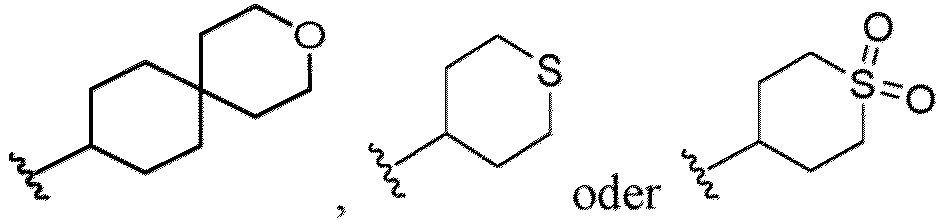
oder(B) wobei G2 das C3-12-Carbocyclyl ist, das wahlweise an ein 6-gliedriges Aren anelliert ist, wahlweise:(i) wobei das Ringsystem des C3-12-Carbocyclyls, das wahlweise an ein 6-gliedriges Aren an G2 anelliert ist, ein C3-10-Cycloalkyl ist, wobei wahlweise das Ringsystem des C3-10-Cycloalkyls an G2 ein Cyclobutyl, Cyclopentyl, Cyclohexyl, Cycloheptyl oder Adamantyl ist;
und/oder(ii) wobei G2 unsubstituiert oder mit 1-4 Substituenten substituiert ist, die unabhängig aus der Gruppe ausgewählt sind bestehend aus Halogen, Hydroxy, C1-4-Alkyl und -OC1-4-Alkyl, wobei wahlweise G2

oder(C) wobei G2 das 5- bis 12-gliedrige Heteroaryl ist:(i) wobei wahlweise das Ringsystem des 5- bis 12-gliedrigen Heteroaryls an G2 ein Pyridinyl, Pyridazinyl oder 6,7-Dihydro-4H-pyrazol[5,1-c][1,4]oxazin-2-yl ist, wobei wahlweise das Ringsystem des 5- bis 12-gliedrigen Heteroaryls an G2 ein Pyridin-2-yl, Pyridazin-4-yl oder 6,7-Dihydro-4H-pyrazol[5,1-c][1,4]oxazin-2-yl ist;
und/oder(ii) wobei G2 wahlweise mit 1-4 Substituenten substituiert ist, die unabhängig aus der Gruppe ausgewählt sind bestehend aus Halogen, Hydroxy, C1-4-Alkyl, C1-4-Haloalkyl und -OC1-4-Alkyl, wobei wahlweise G2


- Verbindung nach Anspruch 1 oder Anspruch 2 oder pharmazeutisch akzeptables Salz davon:(A) wobei R3 -L1-G2 ist; und/oder(B) wobei L1 CD2, CH2, CH2CH2, C(CH3)(H) oder C(CH3)(D) ist, wobei wahlweise L1 CD2 ist.
- Verbindung nach Anspruch 1 oder pharmazeutisch akzeptables Salz davon, wobei R3 C3-7-Alkyl ist.
- Verbindung nach einem der Ansprüche 1-4 oder pharmazeutisch akzeptables Salz davon:(A) wobei R Wasserstoff ist; oder(B) wobei R C1-4-Alkyl ist, wobei wahlweise R CH3 ist, wobei ferner wahlweise R CD3 ist; und/oder(C) wobei G1


- Verbindung nach einem der Ansprüche 1-5 oder pharmazeutisch akzeptables Salz davon, wobei R1a Halogen ist; oder
wobei R1a G1a ist, wahlweise:(A) wobei G1a das 6- bis 12-gliedrige Aryl ist, wobei wahlweise:(i) wobei das Ringsystem des 6- bis 12-gliedrigen Aryls an G1a Phenyl ist; wobei wahlweise das Phenyl mit 2, 1 oder 3 Substituenten substituiert ist, die unabhängig aus der Gruppe ausgewählt sind bestehend aus Halogen, C1-4-Alkyl, C1-4-Fluoroalkyl, -OC1-4-Alkyl und -NR10C(O)R10 oder das Phenyl unsubstituiert ist; wobei ferner wahlweise:(a) G1a

 (b) wobei G1a
 (c) wobei G1a
 (B) wobei G1a das 5- bis 12-gliedrige Heteroaryl ist, wahlweise:(i) wobei das Ringsystem des 5- bis 12-gliedrigen Heteroaryls an G1a ein 9-gliedriges Heteroaryl ist, das 1-3 Ringstickstoffatome aufweist, wobei wahlweise das Ringsystem des 5- bis 12-gliedrigen Heteroaryls an G1a ein Indazolyl ist;
und/oder(ii) wobei G1a wahlweise mit 1-3 Substituenten substituier ist, die unabhängig aus der Gruppe ausgewählt sind bestehend aus Halogen und C1-4-Alkyl, wobei wahlweise:(a) G1a
 (b) G1aoder
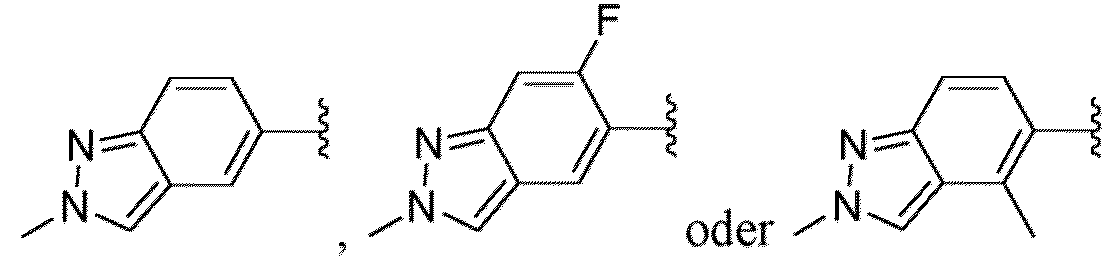 (C) wobei G1a das 4- bis 12-gliedrige Heterocyclyl ist, wahlweise:(i) wobei das Ringsystem des 4- bis 12-gliedrigen Heterocyclyls an G1a ein 4-bis 8-gliedriges monocyclisches Heterocyclyl ist, das 1-2 Heteroatome enthält, die unabhängig aus der Gruppe ausgewählt sind bestehend aus N, S und O;
und/oder(ii) wobei G1a wahlweise mit 1-2 Substituenten substituier ist, die unabhängig unter Fluor, Oxo und Methyl ausgewählt sind, wobei wahlweise G1a

- Verbindung nach einem der Ansprüche 1-6 entsprechend:(A) der Formel (I-A)
 (B) der Formel (I-B)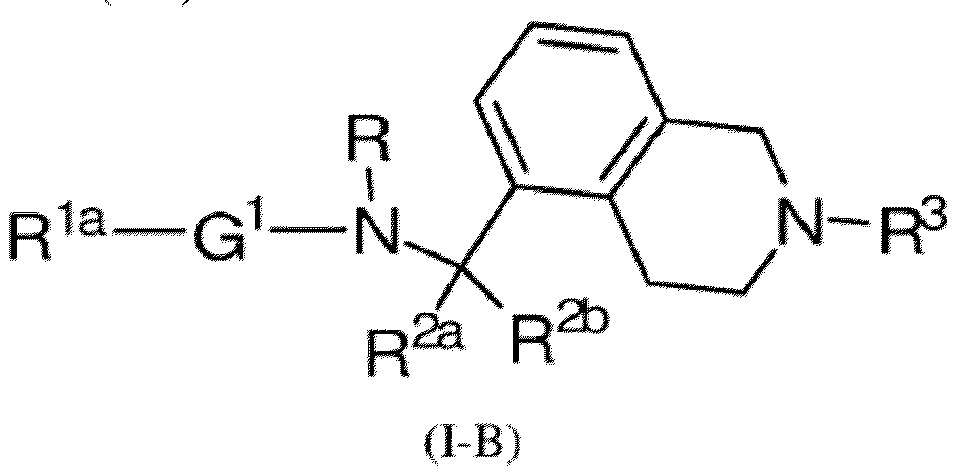
- Verbindung nach Anspruch 1, aus der Gruppe ausgewählt bestehend aus:N-((6-((Tetrahydro-2H-pyran-4-yl)methyl)-4,5,6,7-tetrahydrothieno[2,3-c]pyridin-3-yl)methyl)-6-(2,3,5-trifluorphenyl)pyridazin-3-amin;6-(2-Chlor-5-fluorphenyl)-N-((6-((tetrahydro-2H-pyran-4-yl)methyl)-4,5,6,7-tetrahydrothieno[2,3-c]pyridin-3-yl)methyl)pyridazin-3-amin;6-(2-Methyl-2H-indazol-5-yl)-N-((6-((tetrahydro-2H-pyran-4-yl)methyl)-4,5,6,7-tetrahydrothieno[2,3-c]pyridin-3-yl)methyl)pyridazin-3-amin;6-(2,5-Difluorphenyl)-N-((6-((tetrahydro-2H-pyran-4-yl)methyl)-4,5,6,7-tetrahydrothieno[2,3-c]pyridin-3-yl)methyl)pyridazin-3-amin;6-(5-Fluor-2-methylphenyl)-N-((6-((tetrahydro-2H-pyran-4-yl)methyl)-4,5,6,7-tetrahydrothieno[2,3-c]pyridin-3-yl)methyl)pyridazin-3-amin;6-(4,4-Difluorpiperidin-1-yl)-N-((6-((tetrahydro-2H-pyran-4-yl)methyl)-4, 5, 6,7-tetrahydrothieno[2,3-c]pyridin-3-yl)methyl)pyridazin-3-amin;6-Phenyl-N-((6-((tetrahydro-2H-pyran-4-yl)methyl)-4,5,6,7-tetrahydrothieno[2,3-c]pyridin-3-yl)methyl)pyridazin-3-amin;2-(6-(((6-((Tetrahydro-2H-pyran-4-yl)methyl)-4,5,6,7-tetrahydrothieno[2,3-c]pyridin-3 -yl)methyl)amino)pyridazin-3 -yl)-1,2-thiazinan-1, 1-dioxid;6-(2-Chlor-5-fluorphenyl)-N-((6-(cyclohexylmethyl)-4,5,6,7-tetrahydrothieno[2,3-c]pyridin-3-yl)methyl)pyridazin-3-amin;6-(2-Chlor-5-fluorphenyl)-N-((6-(3,3-dimethylbutyl)-4,5,6,7-tetrahydrothieno[2,3-c]pyridin-3-yl)methyl)pyridazin-3-amin;6-(2-Chlor-5-fluorphenyl)-N-((6-(pyridin-2-ylmethyl)-4,5,6,7-tetrahydrothieno[2,3-c]pyridin-3-yl)methyl)pyridazin-3-amin;6-(2-Chlor-5-fluorphenyl)-N-((6-((5-methylpyridin-2-yl)methyl)-4,5,6,7-tetrahydrothieno[2,3-c]pyridin-3-yl)methyl)pyridazin-3-amin;1-((3-(((6-(2-Chlor-5-fluorphenyl)pyridazin-3-yl)amino)methyl)-4,7-dihydrothieno[2,3-c]pyridin-6(5H)-yl)methyl)cyclohexan-1-ol;6-(2-Chlor-5-fluorphenyl)-N-methyl-N-((6-((tetrahydro-2H-pyran-4-yl)methyl)-4,5,6,7-tetrahydrothieno[2,3-c]pyridin-3-yl)methyl)pyridazin-3-amin;6-(2-Chlor-5-fluorphenyl)-N-(methyl-d3)-N-((6-((tetrahydro-2H-pyran-4-yl)methyl)-4,5,6,7-tetrahydrothieno[2,3-c]pyridin-3-yl)methyl)pyridazin-3-amin;6-(2-Chlor-5-fluorphenyl)-N-((6-((tetrahydro-2H-pyran-4-yl)methyl-d2)-4,5,6,7-tetrahydrothieno[2,3-c]pyridin-3-yl)methyl)pyridazin-3-amin;6-(2-Chlor-5-fluorphenyl)-N-((2-((tetrahydro-2H-pyran-4-yl)methyl)-1,2,3,4-tetrahydroisochinolin-5-yl)methyl)pyridazin-3-amin;6-(2-Chlor-5-fluorphenyl)-N-((2-(3,3-dimethylbutyl)-1,2,3,4-tetrahydroisochinolin-5-yl)methyl)pyridazin-3-amin;6-(2-Chlor-5-fluorphenyl)-N-((2-(cyclohexylmethyl)-1,2,3,4-tetrahydroisochinolin-5-yl)methyl)pyridazin-3-amin;6-(2-Chlor-5-fluorphenyl)-N-((2-(pyridin-2-ylmethyl)-1,2,3,4-tetrahydroisochinolin-5-yl)methyl)pyridazin-3-amin;6-(2-Chlor-5-fluorphenyl)-N-((2-(2-(tetrahydro-2H-pyran-4-yl)ethyl)-1,2,3,4-tetrahydroisochinolin-5-yl)methyl)pyridazin-3-amin;1-((5-(((6-(2-Chlor-5-fluorphenyl)pyridazin-3-yl)amino)methyl)-3,4-dihydroisochinolin-2(1H)-yl)methyl)cyclohexan- 1 -ol;N-((2-((Tetrahydro-2H-pyran-4-yl)methyl)-1,2,3,4-tetrahydroisochinolin-5-yl)methyl)-6-(2,3,5-trifluorophenyl)pyridazin-3-amin;6-(2,5-Difluorphenyl)-N-((2-((tetrahydro-2H-pyran-4-yl)methyl)-1,2,3,4-tetrahydroisochinolin-5-yl)methyl)pyridazin-3-amin;6-(2-Methyl-2H-indazol-5-yl)-N-((2-((tetrahydro-2H-pyran-4-yl)methyl)-1,2,3,4-tetrahydroisochinolin-5-yl)methyl)pyridazin-3-amin;6-(5-Fluor-2-methylphenyl)-N-((2-((tetrahydro-2H-pyran-4-yl)methyl)-1,2,3,4-tetrahydroisochinolin-5-yl)methyl)pyridazin-3-amin;N-(4-(6-(((2-((Tetrahydro-2H-pyran-4-yl)methyl)-1,2,3,4-tetrahydroisochinolin-5-yl)methyl)amino)pyridazin-3-yl)phenyl)acetamid;6-Phenyl-N-((2-((tetrahydro-2H-pyran-4-yl)methyl)-1,2,3,4-tetrahydroisochinolin-5-yl)methyl)pyridazin-3-amin;6-(2-Chlor-5-fluorphenyl)-N-((2-((tetrahydro-2H-pyran-4-yl)methyl-d2)-1,2,3,4-tetrahydroisochinolin-5-yl)methyl)pyridazin-3-amin;N-((2-((Tetrahydro-2H-pyran-4-yl)methyl-d2)-1,2,3,4-tetrahydroisochinolin-5-yl)methyl)-6-(2,3,5-trifluorphenyl)pyridazin-3-amin;oder pharmazeutisch akzeptables Salz davon.
- Verbindung nach einem der Ansprüche 1-8 oder pharmazeutisch akzeptables Salz davon, wobei die Verbindung isotop markiert ist.
- Pharmazeutische Zusammensetzung umfassend die Verbindung nach einem der Ansprüche 1-9 oder pharmazeutisch akzeptables Salz davon und pharmazeutisch akzeptablen Träger.
- Verbindung nach einem der Ansprüche 1-9 oder pharmazeutisch akzeptables Salz davon oder pharmazeutische Zusammensetzung nach Anspruch 10 zu Verwendung bei einem Verfahren zum Antagonisieren von mAChR M4 bei einem Subjekt, wobei das Verfahren das Verabreichen, dem Subjekt, einer therapeutisch wirksamen Menge der Verbindung, des pharmazeutisch akzeptablen Salzes davon oder der pharmazeutischen Zusammensetzung umfasst.
- Verbindung nach einem der Ansprüche 1-9 oder pharmazeutisch akzeptables Salz davon oder pharmazeutische Zusammensetzung nach Anspruch 10 zur Verwendung bei einem Verfahren zum Behandeln eines Leidens bei einem Subjekt, wobei das Subjekt von Antagonismus von mAChR M4 profitieren würde, wobei das Verfahren das Verabreichen, dem Säuger, eine therapeutisch wirksamen Menge der Verbindung, des pharmazeutisch akzeptablen Salzes davon oder der pharmazeutischen Zusammensetzung umfasst.
- Verbindung, pharmazeutisch akzeptables Salz davon oder pharmazeutische Zusammensetzung zur Verwendung nach Anspruch 12, wobei das Leiden ein neurodegeneratives Leiden, ein Bewegungsleiden oder ein Hirnleiden ist, wobei wahlweise das Leiden ein Bewegungsleiden ist oder wobei das Leiden unter Parkinsonkrankheit. arzneimittelinduzierem Parkinsonismus, Dystonie, Tourettesyndrom, Dyskinesien, Schizophrenie, mit Schizophrenie verbundenen Kognitionsdefiziten, ausgeprägter Tagesschläfrigkeit, Aufmerksamkeitsdefizit-Hyperaktivitätsleiden (ADHD), Huntington-Krankheit, Chorea, Cerebralparese und progressiver supranukleärer Blickparese ausgewählt wird.
- Verbindung nach einem der Ansprüche 1-9, oder pharmazeutisch akzeptables Salz davon oder pharmazeutische Zusammensetzung nach Anspruch 10 zu Verwendung bei einem Verfahren für das Behandeln von Motorsymptomen bei einem Subjekt, wobei das Verfahren das Verabreichen, einem Subjekt, das deren bedarf, einer therapeutisch wirksamen Menge der Verbindung, des pharmazeutisch akzeptablen Salzes davon oder der pharmazeutischen Zusammensetzung umfasst,
wobei wahlweise das Subjekt an einem Leiden leidet ausgewählt unter Parkinsonkrankheit, arzneimittelinduzierem Parkinsonismus, Dystonie, Tourettesyndrom, Dyskinesien, Schizophrenie, mit Schizophrenie verbundenen Kognitionsdefiziten, ausgeprägter Tagesschläfrigkeit, Aufmerksamkeitsdefizit-Hyperaktivitätsleiden (ADHD), Huntington-Krankheit, Chorea, Cerebralparese und progressiver supranukleärer Blickparese - Verbindung nach einem der Ansprüche 1-9 oder pharmazeutisch akzeptables Salz davon oder pharmazeutische Zusammensetzung nach Anspruch 10 zur Verwendung bei der Behandlung eines neurodegenerativen Leidens, eines Bewegungsleidens oder eines Hirnleidens.
Applications Claiming Priority (2)
| Application Number | Priority Date | Filing Date | Title |
|---|---|---|---|
| US202063065195P | 2020-08-13 | 2020-08-13 | |
| PCT/US2021/045879 WO2022036177A1 (en) | 2020-08-13 | 2021-08-13 | Antagonists of the muscarinic acetylcholine receptor m4 |
Publications (2)
| Publication Number | Publication Date |
|---|---|
| EP4196473A1 EP4196473A1 (de) | 2023-06-21 |
| EP4196473B1 true EP4196473B1 (de) | 2024-10-02 |
Family
ID=77726520
Family Applications (1)
| Application Number | Title | Priority Date | Filing Date |
|---|---|---|---|
| EP21769541.0A Active EP4196473B1 (de) | 2020-08-13 | 2021-08-13 | Antagonisten des muskarinischen acetylcholinrezeptors m4 |
Country Status (4)
| Country | Link |
|---|---|
| US (1) | US12516067B2 (de) |
| EP (1) | EP4196473B1 (de) |
| ES (1) | ES2991955T3 (de) |
| WO (1) | WO2022036177A1 (de) |
Families Citing this family (3)
| Publication number | Priority date | Publication date | Assignee | Title |
|---|---|---|---|---|
| AU2018300980A1 (en) | 2017-07-12 | 2020-01-02 | Vanderbilt University | Antagonists of the muscarinic acetylcholine receptor M4 |
| IL273924B2 (en) | 2017-10-20 | 2024-07-01 | Univ Vanderbilt | Antagonists of the muscarinic acetylcholine receptor m4 |
| US12486250B2 (en) | 2019-12-06 | 2025-12-02 | Neurocrine Biosciences, Inc. | Muscarinic receptor 4 antagonists and methods of use |
Family Cites Families (4)
| Publication number | Priority date | Publication date | Assignee | Title |
|---|---|---|---|---|
| CA2564356A1 (en) | 2004-04-26 | 2005-11-03 | Pfizer Inc. | Pyrrolopyridine derivatives and their use as hiv-integrase inhibitors |
| US9586964B2 (en) | 2011-10-28 | 2017-03-07 | Vanderbilt University | Substituted 2-(4-heterocyclylbenzyl)isoindolin-1-one analogs as positive allosteric modulators of the muscarinic acetylcholine receptor M1 |
| WO2014055955A1 (en) | 2012-10-05 | 2014-04-10 | Rigel Pharmaceuticals, Inc. | Gdf-8 inhibitors |
| IL273924B2 (en) * | 2017-10-20 | 2024-07-01 | Univ Vanderbilt | Antagonists of the muscarinic acetylcholine receptor m4 |
-
2021
- 2021-08-13 EP EP21769541.0A patent/EP4196473B1/de active Active
- 2021-08-13 ES ES21769541T patent/ES2991955T3/es active Active
- 2021-08-13 US US18/041,030 patent/US12516067B2/en active Active
- 2021-08-13 WO PCT/US2021/045879 patent/WO2022036177A1/en not_active Ceased
Also Published As
| Publication number | Publication date |
|---|---|
| WO2022036177A1 (en) | 2022-02-17 |
| EP4196473A1 (de) | 2023-06-21 |
| US20230322799A1 (en) | 2023-10-12 |
| US12516067B2 (en) | 2026-01-06 |
| ES2991955T3 (es) | 2024-12-05 |
Similar Documents
| Publication | Publication Date | Title |
|---|---|---|
| EP3697759B1 (de) | Antagonisten des muskarinischen acetylcholinrezeptors m4 | |
| EP3651762B1 (de) | Antagonisten des muskarinischen acetylcholinrezeptors m4 | |
| EP3703680B1 (de) | Antagonisten des muskarinischen acetylcholinrezeptors m4 | |
| EP4037677B1 (de) | Antagonisten des muskarinischen acetylcholinrezeptors m4 | |
| EP3665175B1 (de) | Antagonisten des muskarinischen acetylcholinrezeptors m4 | |
| WO2019126559A1 (en) | Antagonists of the muscarinic acetylcholine receptor m4 | |
| EP4139303A1 (de) | Kondensierte substituierte hydropyrrole als antagonisten des muskarinischen acetylcholinrezeptors m4 | |
| EP4267569B1 (de) | Antagonisten des muskarinischen acetylcholinrezeptors m4 | |
| EP4247803A1 (de) | Antagonisten des muskarinischen acetylcholinrezeptors m4 | |
| WO2022216655A1 (en) | N-(6-((octahydrocyclopenta[c]pyrrol-5-yi)amino)pyridazin-3-yl)phenyl)carboxamide and (6- ((octahydrocyclopenta[c]pyrrol-5-yl)amino)pyridazin-3-yl)benzamide derivatives as machr m4 antagonists for the treatment of neurodegenerative disorders | |
| US20230150986A1 (en) | Antagonists of the muscarinic acetylcholine receptor m4 | |
| EP4196473B1 (de) | Antagonisten des muskarinischen acetylcholinrezeptors m4 | |
| WO2022212819A1 (en) | Indazole derivatives as antagonists of the muscarinic acetylcholine receptor m4 | |
| CA3079188A1 (en) | Antagonists of the muscarinic acetylcholine receptor m4 | |
| EP4441046A1 (de) | Antagonisten des muskarinischen acetylcholinrezeptors m4 | |
| WO2022261427A1 (en) | (4-(6-((2-octahydrocyclopenta[c]pyrrol-5-yl)amino)pyridazin-3-yl)phenyl)(imino)(methyl)-lambda6- sulfanone derivatives and similar compounds as muscarinic acetylcholine receptor m4 antagonists for the treatment of neurodegenerative disorders |
Legal Events
| Date | Code | Title | Description |
|---|---|---|---|
| STAA | Information on the status of an ep patent application or granted ep patent |
Free format text: STATUS: UNKNOWN |
|
| STAA | Information on the status of an ep patent application or granted ep patent |
Free format text: STATUS: THE INTERNATIONAL PUBLICATION HAS BEEN MADE |
|
| PUAI | Public reference made under article 153(3) epc to a published international application that has entered the european phase |
Free format text: ORIGINAL CODE: 0009012 |
|
| STAA | Information on the status of an ep patent application or granted ep patent |
Free format text: STATUS: REQUEST FOR EXAMINATION WAS MADE |
|
| 17P | Request for examination filed |
Effective date: 20230203 |
|
| AK | Designated contracting states |
Kind code of ref document: A1 Designated state(s): AL AT BE BG CH CY CZ DE DK EE ES FI FR GB GR HR HU IE IS IT LI LT LU LV MC MK MT NL NO PL PT RO RS SE SI SK SM TR |
|
| DAV | Request for validation of the european patent (deleted) | ||
| DAX | Request for extension of the european patent (deleted) | ||
| GRAP | Despatch of communication of intention to grant a patent |
Free format text: ORIGINAL CODE: EPIDOSNIGR1 |
|
| STAA | Information on the status of an ep patent application or granted ep patent |
Free format text: STATUS: GRANT OF PATENT IS INTENDED |
|
| INTG | Intention to grant announced |
Effective date: 20240301 |
|
| GRAS | Grant fee paid |
Free format text: ORIGINAL CODE: EPIDOSNIGR3 |
|
| GRAA | (expected) grant |
Free format text: ORIGINAL CODE: 0009210 |
|
| STAA | Information on the status of an ep patent application or granted ep patent |
Free format text: STATUS: THE PATENT HAS BEEN GRANTED |
|
| AK | Designated contracting states |
Kind code of ref document: B1 Designated state(s): AL AT BE BG CH CY CZ DE DK EE ES FI FR GB GR HR HU IE IS IT LI LT LU LV MC MK MT NL NO PL PT RO RS SE SI SK SM TR |
|
| REG | Reference to a national code |
Ref country code: GB Ref legal event code: FG4D |
|
| REG | Reference to a national code |
Ref country code: CH Ref legal event code: EP |
|
| REG | Reference to a national code |
Ref country code: DE Ref legal event code: R096 Ref document number: 602021019663 Country of ref document: DE |
|
| P01 | Opt-out of the competence of the unified patent court (upc) registered |
Free format text: CASE NUMBER: APP_51749/2024 Effective date: 20240913 |
|
| REG | Reference to a national code |
Ref country code: IE Ref legal event code: FG4D |
|
| REG | Reference to a national code |
Ref country code: ES Ref legal event code: FG2A Ref document number: 2991955 Country of ref document: ES Kind code of ref document: T3 Effective date: 20241205 |
|
| REG | Reference to a national code |
Ref country code: LT Ref legal event code: MG9D |
|
| REG | Reference to a national code |
Ref country code: NL Ref legal event code: MP Effective date: 20241002 |
|
| REG | Reference to a national code |
Ref country code: AT Ref legal event code: MK05 Ref document number: 1728401 Country of ref document: AT Kind code of ref document: T Effective date: 20241002 |
|
| PG25 | Lapsed in a contracting state [announced via postgrant information from national office to epo] |
Ref country code: NL Free format text: LAPSE BECAUSE OF FAILURE TO SUBMIT A TRANSLATION OF THE DESCRIPTION OR TO PAY THE FEE WITHIN THE PRESCRIBED TIME-LIMIT Effective date: 20241002 |
|
| PG25 | Lapsed in a contracting state [announced via postgrant information from national office to epo] |
Ref country code: NL Free format text: LAPSE BECAUSE OF FAILURE TO SUBMIT A TRANSLATION OF THE DESCRIPTION OR TO PAY THE FEE WITHIN THE PRESCRIBED TIME-LIMIT Effective date: 20241002 |
|
| PG25 | Lapsed in a contracting state [announced via postgrant information from national office to epo] |
Ref country code: PT Free format text: LAPSE BECAUSE OF FAILURE TO SUBMIT A TRANSLATION OF THE DESCRIPTION OR TO PAY THE FEE WITHIN THE PRESCRIBED TIME-LIMIT Effective date: 20250203 Ref country code: IS Free format text: LAPSE BECAUSE OF FAILURE TO SUBMIT A TRANSLATION OF THE DESCRIPTION OR TO PAY THE FEE WITHIN THE PRESCRIBED TIME-LIMIT Effective date: 20250202 Ref country code: HR Free format text: LAPSE BECAUSE OF FAILURE TO SUBMIT A TRANSLATION OF THE DESCRIPTION OR TO PAY THE FEE WITHIN THE PRESCRIBED TIME-LIMIT Effective date: 20241002 |
|
| PG25 | Lapsed in a contracting state [announced via postgrant information from national office to epo] |
Ref country code: FI Free format text: LAPSE BECAUSE OF FAILURE TO SUBMIT A TRANSLATION OF THE DESCRIPTION OR TO PAY THE FEE WITHIN THE PRESCRIBED TIME-LIMIT Effective date: 20241002 |
|
| PG25 | Lapsed in a contracting state [announced via postgrant information from national office to epo] |
Ref country code: BG Free format text: LAPSE BECAUSE OF FAILURE TO SUBMIT A TRANSLATION OF THE DESCRIPTION OR TO PAY THE FEE WITHIN THE PRESCRIBED TIME-LIMIT Effective date: 20241002 |
|
| PG25 | Lapsed in a contracting state [announced via postgrant information from national office to epo] |
Ref country code: NO Free format text: LAPSE BECAUSE OF FAILURE TO SUBMIT A TRANSLATION OF THE DESCRIPTION OR TO PAY THE FEE WITHIN THE PRESCRIBED TIME-LIMIT Effective date: 20250102 |
|
| PG25 | Lapsed in a contracting state [announced via postgrant information from national office to epo] |
Ref country code: AT Free format text: LAPSE BECAUSE OF FAILURE TO SUBMIT A TRANSLATION OF THE DESCRIPTION OR TO PAY THE FEE WITHIN THE PRESCRIBED TIME-LIMIT Effective date: 20241002 Ref country code: LV Free format text: LAPSE BECAUSE OF FAILURE TO SUBMIT A TRANSLATION OF THE DESCRIPTION OR TO PAY THE FEE WITHIN THE PRESCRIBED TIME-LIMIT Effective date: 20241002 Ref country code: GR Free format text: LAPSE BECAUSE OF FAILURE TO SUBMIT A TRANSLATION OF THE DESCRIPTION OR TO PAY THE FEE WITHIN THE PRESCRIBED TIME-LIMIT Effective date: 20250103 |
|
| PG25 | Lapsed in a contracting state [announced via postgrant information from national office to epo] |
Ref country code: CZ Free format text: LAPSE BECAUSE OF FAILURE TO SUBMIT A TRANSLATION OF THE DESCRIPTION OR TO PAY THE FEE WITHIN THE PRESCRIBED TIME-LIMIT Effective date: 20241002 Ref country code: PL Free format text: LAPSE BECAUSE OF FAILURE TO SUBMIT A TRANSLATION OF THE DESCRIPTION OR TO PAY THE FEE WITHIN THE PRESCRIBED TIME-LIMIT Effective date: 20241002 |
|
| PG25 | Lapsed in a contracting state [announced via postgrant information from national office to epo] |
Ref country code: RS Free format text: LAPSE BECAUSE OF FAILURE TO SUBMIT A TRANSLATION OF THE DESCRIPTION OR TO PAY THE FEE WITHIN THE PRESCRIBED TIME-LIMIT Effective date: 20250102 |
|
| PG25 | Lapsed in a contracting state [announced via postgrant information from national office to epo] |
Ref country code: SM Free format text: LAPSE BECAUSE OF FAILURE TO SUBMIT A TRANSLATION OF THE DESCRIPTION OR TO PAY THE FEE WITHIN THE PRESCRIBED TIME-LIMIT Effective date: 20241002 |
|
| REG | Reference to a national code |
Ref country code: DE Ref legal event code: R097 Ref document number: 602021019663 Country of ref document: DE |
|
| PG25 | Lapsed in a contracting state [announced via postgrant information from national office to epo] |
Ref country code: DK Free format text: LAPSE BECAUSE OF FAILURE TO SUBMIT A TRANSLATION OF THE DESCRIPTION OR TO PAY THE FEE WITHIN THE PRESCRIBED TIME-LIMIT Effective date: 20241002 |
|
| PGFP | Annual fee paid to national office [announced via postgrant information from national office to epo] |
Ref country code: GB Payment date: 20250619 Year of fee payment: 5 |
|
| PG25 | Lapsed in a contracting state [announced via postgrant information from national office to epo] |
Ref country code: EE Free format text: LAPSE BECAUSE OF FAILURE TO SUBMIT A TRANSLATION OF THE DESCRIPTION OR TO PAY THE FEE WITHIN THE PRESCRIBED TIME-LIMIT Effective date: 20241002 |
|
| PGFP | Annual fee paid to national office [announced via postgrant information from national office to epo] |
Ref country code: FR Payment date: 20250610 Year of fee payment: 5 |
|
| PG25 | Lapsed in a contracting state [announced via postgrant information from national office to epo] |
Ref country code: RO Free format text: LAPSE BECAUSE OF FAILURE TO SUBMIT A TRANSLATION OF THE DESCRIPTION OR TO PAY THE FEE WITHIN THE PRESCRIBED TIME-LIMIT Effective date: 20241002 |
|
| PG25 | Lapsed in a contracting state [announced via postgrant information from national office to epo] |
Ref country code: SK Free format text: LAPSE BECAUSE OF FAILURE TO SUBMIT A TRANSLATION OF THE DESCRIPTION OR TO PAY THE FEE WITHIN THE PRESCRIBED TIME-LIMIT Effective date: 20241002 |
|
| PLBE | No opposition filed within time limit |
Free format text: ORIGINAL CODE: 0009261 |
|
| STAA | Information on the status of an ep patent application or granted ep patent |
Free format text: STATUS: NO OPPOSITION FILED WITHIN TIME LIMIT |
|
| PG25 | Lapsed in a contracting state [announced via postgrant information from national office to epo] |
Ref country code: SE Free format text: LAPSE BECAUSE OF FAILURE TO SUBMIT A TRANSLATION OF THE DESCRIPTION OR TO PAY THE FEE WITHIN THE PRESCRIBED TIME-LIMIT Effective date: 20241002 |
|
| 26N | No opposition filed |
Effective date: 20250703 |
|
| PGFP | Annual fee paid to national office [announced via postgrant information from national office to epo] |
Ref country code: ES Payment date: 20250909 Year of fee payment: 5 |
|
| PGFP | Annual fee paid to national office [announced via postgrant information from national office to epo] |
Ref country code: DE Payment date: 20250618 Year of fee payment: 5 |
|
| PGFP | Annual fee paid to national office [announced via postgrant information from national office to epo] |
Ref country code: IT Payment date: 20250722 Year of fee payment: 5 |
|
| REG | Reference to a national code |
Ref country code: CH Ref legal event code: H13 Free format text: ST27 STATUS EVENT CODE: U-0-0-H10-H13 (AS PROVIDED BY THE NATIONAL OFFICE) Effective date: 20260324 |
|
| PG25 | Lapsed in a contracting state [announced via postgrant information from national office to epo] |
Ref country code: MC Free format text: LAPSE BECAUSE OF FAILURE TO SUBMIT A TRANSLATION OF THE DESCRIPTION OR TO PAY THE FEE WITHIN THE PRESCRIBED TIME-LIMIT Effective date: 20241002 |
|
| PG25 | Lapsed in a contracting state [announced via postgrant information from national office to epo] |
Ref country code: LU Free format text: LAPSE BECAUSE OF NON-PAYMENT OF DUE FEES Effective date: 20250813 |
|
| PG25 | Lapsed in a contracting state [announced via postgrant information from national office to epo] |
Ref country code: CH Free format text: LAPSE BECAUSE OF NON-PAYMENT OF DUE FEES Effective date: 20250831 |