EP4196628B1 - Fil polymère, composition et procédé - Google Patents
Fil polymère, composition et procédé Download PDFInfo
- Publication number
- EP4196628B1 EP4196628B1 EP21755585.3A EP21755585A EP4196628B1 EP 4196628 B1 EP4196628 B1 EP 4196628B1 EP 21755585 A EP21755585 A EP 21755585A EP 4196628 B1 EP4196628 B1 EP 4196628B1
- Authority
- EP
- European Patent Office
- Prior art keywords
- herbal
- range
- masterbatch
- polymeric yarn
- composition
- Prior art date
- Legal status (The legal status is an assumption and is not a legal conclusion. Google has not performed a legal analysis and makes no representation as to the accuracy of the status listed.)
- Active
Links
Images
Classifications
-
- D—TEXTILES; PAPER
- D01—NATURAL OR MAN-MADE THREADS OR FIBRES; SPINNING
- D01F—CHEMICAL FEATURES IN THE MANUFACTURE OF ARTIFICIAL FILAMENTS, THREADS, FIBRES, BRISTLES OR RIBBONS; APPARATUS SPECIALLY ADAPTED FOR THE MANUFACTURE OF CARBON FILAMENTS
- D01F1/00—General methods for the manufacture of artificial filaments or the like
- D01F1/02—Addition of substances to the spinning solution or to the melt
- D01F1/10—Other agents for modifying properties
- D01F1/103—Agents inhibiting growth of microorganisms
-
- D—TEXTILES; PAPER
- D01—NATURAL OR MAN-MADE THREADS OR FIBRES; SPINNING
- D01F—CHEMICAL FEATURES IN THE MANUFACTURE OF ARTIFICIAL FILAMENTS, THREADS, FIBRES, BRISTLES OR RIBBONS; APPARATUS SPECIALLY ADAPTED FOR THE MANUFACTURE OF CARBON FILAMENTS
- D01F6/00—Monocomponent artificial filaments or the like of synthetic polymers; Manufacture thereof
- D01F6/58—Monocomponent artificial filaments or the like of synthetic polymers; Manufacture thereof from homopolycondensation products
- D01F6/60—Monocomponent artificial filaments or the like of synthetic polymers; Manufacture thereof from homopolycondensation products from polyamides
- D01F6/605—Monocomponent artificial filaments or the like of synthetic polymers; Manufacture thereof from homopolycondensation products from polyamides from aromatic polyamides
-
- D—TEXTILES; PAPER
- D01—NATURAL OR MAN-MADE THREADS OR FIBRES; SPINNING
- D01F—CHEMICAL FEATURES IN THE MANUFACTURE OF ARTIFICIAL FILAMENTS, THREADS, FIBRES, BRISTLES OR RIBBONS; APPARATUS SPECIALLY ADAPTED FOR THE MANUFACTURE OF CARBON FILAMENTS
- D01F6/00—Monocomponent artificial filaments or the like of synthetic polymers; Manufacture thereof
- D01F6/58—Monocomponent artificial filaments or the like of synthetic polymers; Manufacture thereof from homopolycondensation products
- D01F6/62—Monocomponent artificial filaments or the like of synthetic polymers; Manufacture thereof from homopolycondensation products from polyesters
-
- D—TEXTILES; PAPER
- D02—YARNS; MECHANICAL FINISHING OF YARNS OR ROPES; WARPING OR BEAMING
- D02G—CRIMPING OR CURLING FIBRES, FILAMENTS, THREADS, OR YARNS; YARNS OR THREADS
- D02G3/00—Yarns or threads, e.g. fancy yarns; Processes or apparatus for the production thereof, not otherwise provided for
- D02G3/02—Yarns or threads characterised by the material or by the materials from which they are made
-
- D—TEXTILES; PAPER
- D02—YARNS; MECHANICAL FINISHING OF YARNS OR ROPES; WARPING OR BEAMING
- D02G—CRIMPING OR CURLING FIBRES, FILAMENTS, THREADS, OR YARNS; YARNS OR THREADS
- D02G3/00—Yarns or threads, e.g. fancy yarns; Processes or apparatus for the production thereof, not otherwise provided for
- D02G3/02—Yarns or threads characterised by the material or by the materials from which they are made
- D02G3/04—Blended or other yarns or threads containing components made from different materials
- D02G3/045—Blended or other yarns or threads containing components made from different materials all components being made from artificial or synthetic material
-
- D—TEXTILES; PAPER
- D02—YARNS; MECHANICAL FINISHING OF YARNS OR ROPES; WARPING OR BEAMING
- D02G—CRIMPING OR CURLING FIBRES, FILAMENTS, THREADS, OR YARNS; YARNS OR THREADS
- D02G3/00—Yarns or threads, e.g. fancy yarns; Processes or apparatus for the production thereof, not otherwise provided for
- D02G3/44—Yarns or threads characterised by the purpose for which they are designed
- D02G3/449—Yarns or threads with antibacterial properties
-
- D—TEXTILES; PAPER
- D01—NATURAL OR MAN-MADE THREADS OR FIBRES; SPINNING
- D01F—CHEMICAL FEATURES IN THE MANUFACTURE OF ARTIFICIAL FILAMENTS, THREADS, FIBRES, BRISTLES OR RIBBONS; APPARATUS SPECIALLY ADAPTED FOR THE MANUFACTURE OF CARBON FILAMENTS
- D01F6/00—Monocomponent artificial filaments or the like of synthetic polymers; Manufacture thereof
- D01F6/02—Monocomponent artificial filaments or the like of synthetic polymers; Manufacture thereof from homopolymers obtained by reactions only involving carbon-to-carbon unsaturated bonds
- D01F6/04—Monocomponent artificial filaments or the like of synthetic polymers; Manufacture thereof from homopolymers obtained by reactions only involving carbon-to-carbon unsaturated bonds from polyolefins
- D01F6/06—Monocomponent artificial filaments or the like of synthetic polymers; Manufacture thereof from homopolymers obtained by reactions only involving carbon-to-carbon unsaturated bonds from polyolefins from polypropylene
-
- D—TEXTILES; PAPER
- D01—NATURAL OR MAN-MADE THREADS OR FIBRES; SPINNING
- D01F—CHEMICAL FEATURES IN THE MANUFACTURE OF ARTIFICIAL FILAMENTS, THREADS, FIBRES, BRISTLES OR RIBBONS; APPARATUS SPECIALLY ADAPTED FOR THE MANUFACTURE OF CARBON FILAMENTS
- D01F6/00—Monocomponent artificial filaments or the like of synthetic polymers; Manufacture thereof
- D01F6/58—Monocomponent artificial filaments or the like of synthetic polymers; Manufacture thereof from homopolycondensation products
- D01F6/60—Monocomponent artificial filaments or the like of synthetic polymers; Manufacture thereof from homopolycondensation products from polyamides
-
- D—TEXTILES; PAPER
- D10—INDEXING SCHEME ASSOCIATED WITH SUBLASSES OF SECTION D, RELATING TO TEXTILES
- D10B—INDEXING SCHEME ASSOCIATED WITH SUBLASSES OF SECTION D, RELATING TO TEXTILES
- D10B2321/00—Fibres made from polymers obtained by reactions only involving carbon-to-carbon unsaturated bonds
- D10B2321/02—Fibres made from polymers obtained by reactions only involving carbon-to-carbon unsaturated bonds polyolefins
- D10B2321/022—Fibres made from polymers obtained by reactions only involving carbon-to-carbon unsaturated bonds polyolefins polypropylene
-
- D—TEXTILES; PAPER
- D10—INDEXING SCHEME ASSOCIATED WITH SUBLASSES OF SECTION D, RELATING TO TEXTILES
- D10B—INDEXING SCHEME ASSOCIATED WITH SUBLASSES OF SECTION D, RELATING TO TEXTILES
- D10B2331/00—Fibres made from polymers obtained otherwise than by reactions only involving carbon-to-carbon unsaturated bonds, e.g. polycondensation products
- D10B2331/02—Fibres made from polymers obtained otherwise than by reactions only involving carbon-to-carbon unsaturated bonds, e.g. polycondensation products polyamides
-
- D—TEXTILES; PAPER
- D10—INDEXING SCHEME ASSOCIATED WITH SUBLASSES OF SECTION D, RELATING TO TEXTILES
- D10B—INDEXING SCHEME ASSOCIATED WITH SUBLASSES OF SECTION D, RELATING TO TEXTILES
- D10B2331/00—Fibres made from polymers obtained otherwise than by reactions only involving carbon-to-carbon unsaturated bonds, e.g. polycondensation products
- D10B2331/04—Fibres made from polymers obtained otherwise than by reactions only involving carbon-to-carbon unsaturated bonds, e.g. polycondensation products polyesters, e.g. polyethylene terephthalate [PET]
-
- D—TEXTILES; PAPER
- D10—INDEXING SCHEME ASSOCIATED WITH SUBLASSES OF SECTION D, RELATING TO TEXTILES
- D10B—INDEXING SCHEME ASSOCIATED WITH SUBLASSES OF SECTION D, RELATING TO TEXTILES
- D10B2401/00—Physical properties
- D10B2401/13—Physical properties anti-allergenic or anti-bacterial
Definitions
- the present disclosure relates especially to textile industries, and, more particularly, to a polymeric yarn and composition having antimicrobial and/or antibacterial properties.
- Textile industry has conventionally been using both natural and synthetic fibers for manufacture of various products. Each having their own advantages and shortcomings related to strength, comfort, softness, longevity and the like. With ever-increasing demand to provide enhanced quality fibers manufacturers apart from enhancing traditional properties, have started incorporating more functional elements to fibers to provide better comfort, freshness, and hygiene to users. In pursuit of meeting demands of modern hygienic lifestyle, there have been several attempts to add a variety of chemical agents to fabrics providing them with antimicrobial and antibacterial properties. These agents are normally applied on the surface to impart antimicrobial and antibacterial properties to the fabrics during finishing stage..
- EP3342902A1 discloses a non-natural fiber or filament composition
- a non-natural fiber or filament composition comprising an herbal masterbatch as an antimicrobial agent, a base polymer powder or a polymer, and one or more additives such as coupling agent, UV stabilizer, antioxidant, antistatic agent, colorants, pigments, and the like.
- CN109183176B discloses an antimicrobial fiber, which preparation involves using jade powder, an anti-microbial wetting agent, and plant extract toner.
- a purpose of the present disclosure is to provide a polymeric yarn and composition having antimicrobial and/or antibacterial properties, to include all advantages of the prior art, and to overcome the drawbacks inherent in the prior art.
- an object of the present disclosure is to provide a polymeric composition or polymeric yarn made from such composition, and method of making such polymeric composition or polymeric yarn that incorporates antimicrobial and/or antibacterial properties.
- the polymeric composition or polymeric yarn shows improved color fastness than previously exhibited.
- Another object of the present disclosure is to provide a polymeric composition or polymeric yarn having an herbal masterbatch with herbal component therein that incorporates antimicrobial and/or antibacterial properties.
- Another object of the present disclosure is to provide a method for preparing a polymeric yarn having an herbal masterbatch with herbal component therein that incorporates antimicrobial and/or antibacterial properties.
- a polymeric composition having antimicrobial and/or antibacterial properties e.g. for textile materials having the features of claim 1.
- the carrier polymer may be the same as the base polymer and may include at least one of: polybutylene terephthalate (PBT), polyethylene terephthalate (PET), or polyamides, polypropylene.
- PBT polybutylene terephthalate
- PET polyethylene terephthalate
- polyamides polypropylene
- the herbal component may be present in the final product in an amount of 0.01% to 0.9 % or from 0.02% to 0.8% in weight of the polymeric material.
- the herbal component is tetrahydrocurcumin (THC) or equivalent hydrogenated extract of turmeric.
- THC tetrahydrocurcumin
- Such extracts have been found to be more efficacious, allowing lower quantities to be used, while having better color fastness.
- Other items of manufacture requiring antimicrobial and/or antibacterial properties may also be produced using the polymeric composition by extrusion, molding, 3-D printing, spinning or the like.
- a method for preparing a polymeric yarn having antimicrobial and/or antibacterial properties for textile materials is provided according to claim 11.
- the herbal component may be present in the final product in an amount of from 0.01% to 0.9 % or from 0.02% to 0.8% in weight of the polymeric material.
- the herbal component is tetrahydrocurcumin (THC) or equivalent hydrogenated extract of turmeric.
- THC tetrahydrocurcumin
- Other items of manufacture requiring antimicrobial and/or antibacterial properties may also be produced using the polymeric composition by extrusion, molding, 3-D printing, spinning or the like.
- preparing the herbal masterbatch may include: (i) melting a mixture of the herbal component and the carrier polymer at a temperature in a range of 175°C to 300°C to obtain a melted homogeneous mixture of the herbal component and the carrier polymer, wherein the mixture of the herbal component and the carrier polymer comprises: Turmeric extract in the range of 1% w/w to 75% w/w, and the carrier polymer having at least one of the polybutylene terephthalate (PBT), or the poly(ethylene terephthalate) (PET), or the polyamides, or polypropylene, wherein the carrier polymer is preferably in the range of 25% w/w to 99% w/w; and (ii) solidifying the melted homogeneous mixture herbal component and the carrier polymer underwater at a temperature in a range of 4°C to 30°C to obtain the herbal masterbatch.
- PBT polybutylene terephthalate
- PET poly(ethylene terephthalate)
- an herbal masterbatch composition is provided according to claim 14.
- the herbal masterbatch may be used for making a polymeric yarn, fiber or filament for textile materials as described above and hereinafter.
- the yarn, polymeric composition, herbal masterbatch or item of manufacture may be colored in any suitable manner.
- a yarn, filament, fiber or other item of manufacture is colored by solution dyeing using a colored masterbatch.
- the colored masterbatch may be provided in an overall amount of between 0.1% and 20% by weight of the final product, preferably between 1% and 10% or between 2% and 4%.
- the colored masterbatch may be added separately or combined with the herbal masterbatch.
- yarns or textiles may be dyed by any other conventional process such as vat dyeing, using any suitably dye, including but not limited to acid dyes and dispersed dyes.
- the exemplary embodiments described herein detail for illustrative purposes are subject to many variations in implementation.
- the present disclosure provides a polymeric yarn and composition having antimicrobial and/or antibacterial properties. It is understood that the teachings may equally be applied to other polymeric items of manufacture, including but not limited to filaments, fibers and molded or 3-D printed items and that various omissions and substitutions of equivalents are contemplated as circumstances may suggest or render expedient, but these are intended to cover the application or implementation without departing from the scope of the present disclosure.
- % w / w or wt % used herein means grams of solute dissolved in 100 grams of solution or grams per 100 grams of the whole.
- the present disclosure provides a polymeric composition having antimicrobial and/or antibacterial properties that may be used in yarns, filaments and fibers for textile materials.
- the polymeric composition includes an herbal masterbatch and a base polymer.
- the polymeric composition includes the herbal masterbatch in a range of 0.01% w/w to 10% w/w, and the base polymer in a range of 90% w/w to 99.99% w/w, which means that if 0.01% w/w of herbal masterbatch is used than 99.99 w/w of the base polymer may be used, and if 10% w/w of herbal masterbatch is used then 90% w/w of the base polymer may be used.
- the polymeric composition may include the herbal masterbatch in a preferable range of 0.1% w/w to 8% w/w, and the base polymer may be in a preferable range of 99.9 w/w % to 92% w/w, which means that if 0.1%w/w of herbal masterbatch is used than 98% w/w of the base polymer may be used, and if 8% w/w of herbal masterbatch is used then 92% w/w of the base polymer may be used.
- the polymeric composition may include the herbal masterbatch in a more preferable range of 2% w/w to 5% w/w, and the base polymer may be in a most preferable range of 98% w/w to 95% w/w, which means that if 2% w/w of herbal masterbatch is used then 98% w/w of the base polymer may be used, and if 5% w/w of herbal masterbatch is used then 95% w/w of the base polymer may be used.
- the skilled person will be aware that the choice of the ratio of herbal masterbatch to base polymer will generally depend on the manufacturing process and the ability to accurately dose and mix the masterbatch. A more concentrated masterbatch, will require more accurate dosage and may be more susceptible to variations but will have the advantage of requiring smaller stocks of masterbatch.
- the herbal masterbatch includes the herbal component that has Turmeric extract in a range of 1% to 75% w/w, preferably in a range of 10% w/w to 40% w/w; more preferably in a range of 20% w/w to 30% w/w, for example about 25% w/w or 30% w/w.
- the herbal masterbatch in such embodiment of the polymeric composition, may include a carrier polymer in a range of 25% w/w to 99% w/w; preferably in a range of 90% w/w to 60% w/w; more preferably in a range of 80% w/w to 70% w/w, for example about 75% w/w or 70% w/w.
- the Turmeric extract may be used in a powder form having a size of the powder in a range of 0.001 microns to 25 microns to make the herbal masterbatch.
- the Turmeric extract may be used in a liquid form to make the herbal masterbatch.
- the skilled person will be aware that for herbal extracts of greater purity, a lower amount of the herbal component may be required. In particular, for THC, amounts below 1 wt % in the masterbatch may be sufficient.
- the herbal component may thus also be present in an amount from 0.2 wt % to 1.0 wt% or from 0.3 wt % to 1.0 wt% or around 0.5 wt %.
- the carrier polymer, in such herbal masterbatch may be one of polybutylene terephthalate (PBT), polyethylene terephthalate (PET), polyamides or polypropylene.
- a chemical extract of Turmeric may be used to make the herbal masterbatch.
- Such chemical extract that may be extracted from the Turmeric may include, but is not limited to, Curcuminoids or Curcumin in particular, tetrahydrocurcumin.
- One or other chemical extract of Turmeric may be used in combination or alone to obtain the effective result.
- the base polymer includes one of polybutylene terephthalate (PBT) or polyethylene terephthalate (PET), or polyamides, or polypropylene.
- the polyamides may generally include Polyamide 6 (PA6) or Polyamide 66 (PA66).
- the base polymer and the carrier polymer may generally be of the same polymer group in such polymeric composition.
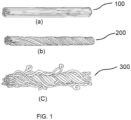
- the polymeric composition as described above may be utilized to manufacture a polymeric yarn 100 or a twisted continuous polymeric yarn 200 or a bulk continuous filament (BCF) polymeric yarn 300 as shown in FIGS. 1A, 1B and 1C .
- Such yarns made from the polymeric composition as described above exhibit antimicrobial and/or antibacterial properties.
- Those manufactured using THC also exhibit very favorable color and light fastness.
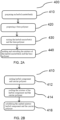
- FIG. 2A a block diagram of a method 400 for preparing such polymeric yarn 100 or the twisted continuous polymeric yarn 200 or the BCF yarn 300 having antimicrobial and/or antibacterial properties is illustrated in FIG. 2A .
- the method 400 may include, at 410, preparation of an herbal masterbatch, such as the herbal masterbatch as described above.
- preparation of the herbal masterbatch may include certain steps, such as steps 412, 414 and 416, as shown in FIG. 2B .
- Preparation of the herbal masterbatch may, at 412, include mixing the herbal component having chemical extract of Turmeric, and the carrier polymer, for example, PBT, PET, polyamides, or polypropylene, in desired proportion as mentioned above.
- the mixture of the herbal component and the carrier polymer are melted at a temperature in a range of 175°C to 300°C; preferably in a range of 200°C to 275°C; more preferably in a range of 220°C to 275°C, to obtain a melted homogeneous mixture of the herbal component and the carrier polymer.
- the melted homogeneous mixture of the herbal component and the carrier polymer may be solidified at a temperature in a range of 4°C to 30°C to obtain the herbal masterbatch.
- the herbal masterbatch may go under granulation, which involves cutting the masterbatch into granules of the size in the range of 40 chips per gram to 200 chips per gram; preferably in the range of 60 chips per gram to 100 chips per gram; more preferably in the range of 70 chips per gram to 90 chips per gram.
- the base polymer which includes one of PBT, PET, polyamides, polypropylene is prepared in the form of granules. Furthermore, at 430 the herbal masterbatch and the base polymer are mixed together in desired ranges such as described above.
- the mixture of the herbal masterbatch and the base polymer are melted and extruded at a temperature in a range of 175°C to 300°C; preferably in a range of 200°C to 290°C; more preferably in a range of 220°C to 280°C, to obtain the polymeric yarn having the herbal component in a range of 0.01% to 10%; preferably in the range of 0.01% to 1%; more preferably, in the range of 0.01% to 0.9%, by weight of the polymeric yarn.
- the polymeric yarn 100 may be formed by a single-step continuous process, on a single machine line, including the steps of: extruding, spinning, quenching, spin finish application, drawing, and/or texturing, cooling, intermingling and winding at the predetermined parameters.
- the mixture of the herbal masterbatch and the base polymer are melted and extruded at the gradual temperature having a range of 175°C to 300°C through a plurality of temperature zones, and at a pressure range of 60bars to 130bars.
- the step of spinning is performed, followed by a gradual quenching, at the predetermined parameters, via, an air flow, having a quenching air flow temperature in a range of 10°C to 25°C, quenching air flow rate in a range of 0.1 m/sec to 0.4 m/sec, and quenching air flow pressure in a range of 1bars to 4bars.
- spin finish application is performed.
- the spin finish application yarn is sequentially drawn at predetermined parameters, such as drawing speed and drawing temperature.
- the drawing speed may be in a range of 760mpm to 3500mpm
- the drawing temperature range may be in a range of 80°C to 190°C.
- the drawn yarn may be optionally textured at a texturing temperature range of 120°C to 190°C and a texturing vacuum pressure range of 50mbars to 150mbars.
- the drawn yarn may be cooled intermingled and wounded to obtain the polymeric yarn 100 having the herbal component in a range of 0.01% to 10%; preferably in a range of 1% to 8%; more preferably greater than 1% to up to 6%, on weight of the polymeric yarn.
- the method 400 may further include cabling or twisting the polymeric yarn in a range of 40 TPM (Twist Per Meter) to 350TPM; preferably in a range of 120TPM to 230TPM; more preferably in a range of 180TPM to 220TPM to obtain the polymeric yarn with twists 200 (hereafter may also be referred to as "twisted polymeric yarn 200"), as shown in FIG. 1B .
- Such twisted polymeric yarn 200 may also include the herbal component in the range of 0.01% to 10%; preferably in the range of 1% to 8%; more preferably, greater than 1% to up to 6%, on weight of the polymeric yarn.
- the method 400 may further include heat setting the twists of the polymeric yarn, such as the BCF yarn 300.
- Heat treating may be carried out by a fluid, such as air, steam, or any other compressible liquid or vapor capable of transferring heat to the twisted yarn as it continuously travels through a heat setting device.
- the temperature of such fluid must be such that the yarn does not melt. If the temperature of the yarn is above the melting point of the yarn it is necessary to shorten the time in which the yarn dwells in the heat setting device.
- This step of heat setting utilizes such stream capable of transferring heat to the twisted yarn as it continuously travels through the heat setting device, at a temperature 100°C to 200°C; preferably 120°C to 190°C; more preferably 125°C to 190°C.
- This process is affected by the length of time during which the twisted yarn is exposed to the heating medium (time/temperature effect). Generally, useful exposure times are from 30 seconds to 90 seconds; preferably from 40 seconds to 60seconds.
- a polymeric yarn such as the yarns 100, 200 and 300 may be made with an herbal component (not necessarily the herbal masterbatch) having the chemical extract of Turmeric; and the base polymer having one of PBT, PET, polyamides, polypropylene, wherein the herbal component in the polymeric yarn is in a range of 0.01% to 10%; preferably in the range of 0.01% to 1%; more preferably, in the range of 0.01% to 0.9%, by weight of the polymeric yarn.
- the production of pre-mixed polymeric compositions for use in manufacturing of components, including yarns, filaments, fibers and other items of manufacture, is sometimes referred to compounding.
- the polymeric composition is thus pre-mixed in the required proportions as disclosed above and hereinafter, including herbal component and any required color component for producing the end product.
- the polymeric yarns such as the yarns 100, 200 and 300 may exhibit a denier per filament (DPF) ratio measuring in a range of 0.5 DPF to 50 DPF; preferably in a range of 1 DPF to 40 DPF; more preferably in a range of 3 DPF to 20 DPF.
- DPF denier per filament
- the one or more of the polymeric yarns, fibers or filaments as described above may be used to make or be included in, various kind of textile materials, including but not limited to: floor coverings such as carpets, mats and rugs; seat coverings and upholstery; woven fabrics; knitted fabrics; tufted fabrics; fleeces; non-wovens; felts; and so forth.
- the present disclosure further relates to textile materials comprising fibers, filaments or yarns formed from a polymer composition comprising from 0.01 wt % to 10 wt% of a herbal component of Turmeric, in particular THC.
- the herbal component is by weight of the textile material, which may include, but is not limited to, either one of knitted, tufted, non-woven or woven textile materials.
- the textile material made from such yarns shows tremendous improvement in killing or controlling the growth of bacteria or microorganism that may flourish on textile materials. More specifically, use of the herbal composition shows tremendous improvement in killing or controlling the growth of bacteria, particularly gram positive and gram negative bacteria, or microorganism, on the textile materials by about 90% to 99.99%, as shown by various lab test presented in Table 1 below: Table 1 Polymeric Yarn Test done on Herbal Masterbatch % in Yarn Herbal component in Masterbatch (%) Herbal Component in yarn (%) Base Polymer in Yarn (%) Denier No of Filament % Reduction in gram positive and gram negative bacteria and microorganisms Herbal Masterbatch (Neem)+ Base polymer (PA6) Yarn 1.00% 20.00% 0.20% 99.80% 1288 66 fabric doesn't show any antibacterial activity Herbal Masterbatch (Neem)+ Base polymer (PA6) Yarn 2.00% 20.00% 0.40% 99.60% 1288 66 98%
- test protocol according to AATCC TM100-2012 is shown for reference below. Each test was performed on 4 swatches in the form of 48 mm disks of fabric using Staphylococcus aureus and Klebsiella pneumonia:
- the present disclosure is advantageous in providing such composition, yarn or textile material that may control the growth or kills bacteria or microorganism that may flourish on textile materials. More specifically, the present disclosure is advantageous in providing such textile material that may control the growth or kills bacteria or microorganism via the herbal means that may flourish on textile materials. Furthermore, the present disclosure is advantageous in providing a method of preparing such textile material that may control the growth or kills bacteria or microorganism via the herbal means that may flourish on textile materials.
- polyester yarns of 1250 denier/240 filaments were extruded to include 3% of a masterbatch incorporating 2% active curcumin.
- the curcumin masterbatch exhibits a natural dark yellow color, which gives the yarn a light yellow tone.
- the resulting yarns had a total curcumin content of 0.06 % by weight.
- Three shades of solution or dope dyed yarn were tested, together with an undyed version (colored only by the curcumin).
- Table 2 Polymer Type DEN/FIL SHADE Herbal component Test Method Test Results PET 1250 den / 240 Fil Raw White 2% Curcumin in masterbatch, and 3% loading in spinning, effective content of curcumin in final yarn 0.06% Colour Fastness to light (Up to grade 6) ISO 105 B02 1-2 1250 den / 240 Fil Light Shade (Pigment dope dyed) 1-2 1250 den / 240 Fil Medium Shade (Pigment dope dyed) 1-2 1250 den / 240 Fil Dark Shade (Pigment dope dyed) 1-2
- polyester yarns of 1325 denier/144 filaments were extruded to include 2% of a masterbatch incorporating 3% tetrahydrocurcumin.
- the resulting yarns had a total THC content of 0.3 % by weight.
- THC is white and the products made with THC, exhibit a natural white or light creamish color allowing colored yarns to be produced without any significant tonal deviation. Three shades of solution or dope dyed yarn were tested, together with an undyed version.
- Table 3 Polymer Type DEN/FIL SHADE Herbal Component Test Method Test Results PET 1325 den 144 fil Raw white 2% THC in masterbatch, and 3% loading in spinning, effective content of THC in final yarn 0.06% Colour Fastness to light (Up to grade 6) ISO 105 B02 6 1325 den 144 fil Light Shade (Pigment dope dyed) 6 1325 den 144 fil Medium Shade (Pigment dope dyed) 6 1325 den 144 fil Dark Shade (Pigment dope dyed) 6
Landscapes
- Engineering & Computer Science (AREA)
- Textile Engineering (AREA)
- Chemical & Material Sciences (AREA)
- Chemical Kinetics & Catalysis (AREA)
- General Chemical & Material Sciences (AREA)
- Mechanical Engineering (AREA)
- Manufacturing & Machinery (AREA)
- Artificial Filaments (AREA)
- Compositions Of Macromolecular Compounds (AREA)
Claims (15)
- Composition de fil polymère ayant des propriétés antimicrobiennes et/ou antibactériennes pour des matériaux textiles, la composition de fil polymère comprenant :(i) un mélange maître à base de plantes, de préférence dans une plage de 0,01 % p/p à 10 % p/p, le mélange maître à base de plantes comprenant :(a) un composant à base de plantes ayant un extrait hydrogéné de curcuma, de préférence dans une plage de 1 % p/p à 75 % p/p, et(b) un polymère porteur ayant au moins un parmi : du polybutylène téréphtalate (PBT), du polyéthylène téréphtalate (PET) ou des polyamides, ou du polypropylène, dans lequel le polymère porteur est de préférence dans une plage de 25 % p/p à 99 % p/p ; et(ii) un polymère de base ayant un parmi du polybutylène téréphtalate (PBT) ou du polyéthylène téréphtalate (PET), ou des polyamides, ou du polypropylène, de préférence dans une plage de 90 % p/p à 99,99 % p/p,dans laquelle le mélange maître à base de plantes et le polymère de base sont fondus et extrudés ensemble à une température dans une plage de 175°C à 300°C pour obtenir un fil polymère ayant le composant à base de plantes dans une plage de 0,01% à 10% en poids du fil polymère.
- Composition de fil polymère selon la revendication 1, dans laquelle le fil polymère est configuré pour réduire les bactéries à Gram positif et Gram négatif et les micro-organismes d'environ 85 % à 99,99 %.
- Composition de fil polymère selon la revendication 1, dans laquelle les matériaux textiles fabriqués à partir du fil polymère comprennent des matériaux de revêtement de sol.
- Composition de fil polymère selon la revendication 1, dans laquelle les matériaux textiles fabriqués à partir du fil polymère comprennent l'un de matériaux textiles tricotés, touffetés ou tissés.
- Composition de fil polymère selon la revendication 1, dans laquelle l'extrait hydrogéné de curcuma est utilisé sous forme de poudre, et dans laquelle une taille de la poudre est dans une plage de 0,001 micron à 25 microns.
- Composition de fil polymère selon la revendication 1, dans laquelle l'extrait hydrogéné de curcuma est utilisé sous une forme liquide.
- Composition de fil polymère selon la revendication 1, dans laquelle les polyamides comprennent du PA6 ou du PA66.
- Composition de fil polymère selon la revendication 1, dans laquelle le fil polymère présente un rapport denier par filament (DPF) mesuré dans une plage de 0,5 DPF à 50 DPF.
- Composition de fil polymère selon la revendication 1, dans laquelle le fil polymère est câblé avec au moins 1 brin entre 40 TPM (torsion par mètre) et 350 TPM pour obtenir un fil polymère avec des torsions.
- Composition de fil polymère selon la revendication 9, dans laquelle le fil polymère avec des torsions est thermofixé.
- Procédé de préparation d'un fil polymère ayant des propriétés antimicrobiennes et/ou antibactériennes pour des matériaux textiles, le procédé comprenant les étapes consistant à :préparer un mélange maître à base de plantes, dans lequel le mélange maître à base de plantes comprend : un composant à base de plantes ayant un extrait hydrogéné de curcuma, de préférence dans une plage de 1 % p/p à 75 % p/p, et un polymère porteur ayant au moins un parmi du polybutylène téréphtalate (PBT), ou du polyéthylène téréphtalate (PET), des polyamides ou du polypropylène, dans lequel le polymère porteur est de préférence dans une plage de 25 % p/p à 99 % p/p ;mélanger le mélange maître à base de plantes dans une plage préférée de 0,01 % p/p à 10 % p/p, et un polymère de base dans une plage préférée de 90 % p/p à 99,99 % p/p, dans lequel le polymère de base comprend un parmi du polybutylène téréphtalate (PBT) ou du polyéthylène téréphtalate (PET), ou des polyamides, ou du polypropylène ; etfaire fondre et extruder le mélange du mélange maître à base de plantes et du polymère de base à une température dans une plage de 175°C à 300°C pour obtenir le fil polymère ayant le composant à base de plantes dans une plage de 0,01% à 10% en poids du fil polymère.
- Procédé selon la revendication 11, dans lequel la préparation du mélange maître comprend les étapes consistant à :faire fondre un mélange du composant à base de plantes et du polymère porteur à une température dans la plage de 175°C à 300°C pour obtenir un mélange homogène fondu du composant à base de plantes et du polymère porteur, dans lequel le mélange du composant à base de plantes et du polymère porteur comprend : un extrait hydrogéné de curcuma dans la plage de 1 % p/p à 75 % p/p, et le polymère porteur ayant au moins un parmi du polybutylène téréphtalate (PBT), ou du polyéthylène téréphtalate (PET), ou des polyamides, ou du polypropylène, dans lequel le polymère porteur est dans la plage de 25 % p/p à 99 % p/p ; etsolidifier le composant à base de plantes de mélange homogène fondu et le polymère porteur sous l'eau à une température dans une plage de 4°C à 30°C pour obtenir le mélange maître à base de plantes.
- Procédé selon la revendication 12, comprenant en outre les étapes consistant à :câbler le fil polymère dans une plage de 40 TPM (torsion par mètre) à 350 TPM pour obtenir le fil polymère avec des torsions, etthermofixer les torsions du fil polymère.
- Composition de mélange maître à base de plantes pour la fabrication d'un fil polymère pour des matériaux textiles, la composition de mélange maître à base de plantes comprenant :un composant à base de plantes ayant un extrait hydrogéné de curcuma dans une plage de 1 % p/p à 75 % p/p ; etun polymère porteur ayant au moins un parmi :du polybutylène téréphtalate (PBT),du polyéthylène téréphtalate (PET), oudes polyamides, oudu polypropylène,dans lequel le polymère porteur est dans une plage de 25 % en poids à 99 % en poids.
- Composition de mélange maître à base de plantes selon la revendication 14, dans laquelle la composition à base de plantes ayant l'extrait hydrogéné de curcuma est sous forme de poudre, et la taille de la poudre est dans une plage de 0,001 micron à 25 microns.
Applications Claiming Priority (2)
| Application Number | Priority Date | Filing Date | Title |
|---|---|---|---|
| IN202021034915 | 2020-08-13 | ||
| PCT/IB2021/057357 WO2022034490A1 (fr) | 2020-08-13 | 2021-08-10 | Fil polymère, composition et procédé |
Publications (3)
| Publication Number | Publication Date |
|---|---|
| EP4196628A1 EP4196628A1 (fr) | 2023-06-21 |
| EP4196628B1 true EP4196628B1 (fr) | 2024-07-31 |
| EP4196628C0 EP4196628C0 (fr) | 2024-07-31 |
Family
ID=72964469
Family Applications (2)
| Application Number | Title | Priority Date | Filing Date |
|---|---|---|---|
| EP20202333.9A Withdrawn EP3954812A1 (fr) | 2020-08-13 | 2020-10-16 | Fil polymère, composition et procédé |
| EP21755585.3A Active EP4196628B1 (fr) | 2020-08-13 | 2021-08-10 | Fil polymère, composition et procédé |
Family Applications Before (1)
| Application Number | Title | Priority Date | Filing Date |
|---|---|---|---|
| EP20202333.9A Withdrawn EP3954812A1 (fr) | 2020-08-13 | 2020-10-16 | Fil polymère, composition et procédé |
Country Status (8)
| Country | Link |
|---|---|
| US (1) | US20230313419A1 (fr) |
| EP (2) | EP3954812A1 (fr) |
| JP (1) | JP2022032928A (fr) |
| CN (1) | CN112796013A (fr) |
| AU (2) | AU2021201250A1 (fr) |
| CA (1) | CA3187842A1 (fr) |
| NZ (1) | NZ797051A (fr) |
| WO (1) | WO2022034490A1 (fr) |
Families Citing this family (4)
| Publication number | Priority date | Publication date | Assignee | Title |
|---|---|---|---|---|
| WO2021222877A1 (fr) * | 2020-05-01 | 2021-11-04 | Atex Technologies, Inc. | Structure résistante à l'effilochage |
| JP7658303B2 (ja) | 2022-03-03 | 2025-04-08 | 株式会社デンソー | バルブ装置 |
| TWI852580B (zh) * | 2023-05-24 | 2024-08-11 | 捷立康生物科技股份有限公司 | 手術線材、其用途與製法 |
| CN117344398B (zh) * | 2023-12-04 | 2024-03-19 | 潍坊瑞银纺织科技有限公司 | 一种含植物活性成分的大生物锦纶纤维及其制备方法 |
Family Cites Families (6)
| Publication number | Priority date | Publication date | Assignee | Title |
|---|---|---|---|---|
| US6531218B2 (en) * | 1996-09-16 | 2003-03-11 | Basf Corporation | Dyed sheath/core fibers and methods of making same |
| GB2362568B (en) * | 2000-05-25 | 2003-06-18 | Walk Off Mats Ltd | Mat & process for manufacturing mats |
| KR20110135793A (ko) * | 2010-06-11 | 2011-12-19 | 석명호 | 항균성 합성섬유 및 그 제조방법 |
| EP3233068B1 (fr) * | 2014-12-15 | 2021-06-16 | Aurea Biolabs Private Limited | Procédé de préparation de curcumine blanche biodisponible, un mélange unique de curcuminoïdes hydrogénés |
| US20180177740A1 (en) * | 2016-12-27 | 2018-06-28 | Abhishek Mandawewala | Non-natural fiber or filament with herbal residue and method of making the same |
| CN109183176B (zh) * | 2018-06-29 | 2021-03-02 | 中润科技股份有限公司 | 一种高弹性高收缩耐磨色丝纤维的制备工艺 |
-
2020
- 2020-10-16 EP EP20202333.9A patent/EP3954812A1/fr not_active Withdrawn
-
2021
- 2021-01-27 JP JP2021011525A patent/JP2022032928A/ja active Pending
- 2021-01-29 CN CN202110128616.7A patent/CN112796013A/zh active Pending
- 2021-02-25 AU AU2021201250A patent/AU2021201250A1/en not_active Abandoned
- 2021-08-10 NZ NZ797051A patent/NZ797051A/en unknown
- 2021-08-10 WO PCT/IB2021/057357 patent/WO2022034490A1/fr not_active Ceased
- 2021-08-10 AU AU2021326058A patent/AU2021326058A1/en active Pending
- 2021-08-10 EP EP21755585.3A patent/EP4196628B1/fr active Active
- 2021-08-10 CA CA3187842A patent/CA3187842A1/fr active Pending
- 2021-08-10 US US18/018,892 patent/US20230313419A1/en active Pending
Also Published As
| Publication number | Publication date |
|---|---|
| WO2022034490A1 (fr) | 2022-02-17 |
| EP4196628A1 (fr) | 2023-06-21 |
| EP3954812A1 (fr) | 2022-02-16 |
| JP2022032928A (ja) | 2022-02-25 |
| CN112796013A (zh) | 2021-05-14 |
| CA3187842A1 (fr) | 2022-02-17 |
| NZ797051A (en) | 2026-03-27 |
| AU2021201250A1 (en) | 2022-03-03 |
| US20230313419A1 (en) | 2023-10-05 |
| EP4196628C0 (fr) | 2024-07-31 |
| AU2021326058A1 (en) | 2023-03-02 |
Similar Documents
| Publication | Publication Date | Title |
|---|---|---|
| EP4196628B1 (fr) | Fil polymère, composition et procédé | |
| DE68926284T2 (de) | Fleckenabweisende, pigmentierte Nylonfasern und Verfahren zur Herstellung derselben | |
| DE69106530T2 (de) | Polyamide pigmentdispersion. | |
| DE69414562T2 (de) | Mischfasern für verbesserte teppichstrukturaufrechterhaltung | |
| KR101390865B1 (ko) | 염색 폴리올레핀사 및 이를 이용한 직물 | |
| EP2878715B1 (fr) | Procédé de préparation de fibre antibactérienne de stockage thermique, fibre préparée par ce procédé et tissus utilisant ladite fibre | |
| DE69224323T2 (de) | Säure-Farbstoffresistente Polyamidprodukte und Verfahren zu ihrer Herstellung | |
| EP0684326A1 (fr) | Procédé pour la production d'un fil phosphorescent et fil produit par ce procédé | |
| EP3382069A1 (fr) | Fabrication de filaments continus à deux composants et articles fabriqués à partir de ceux-ci | |
| EP1598454B1 (fr) | Fibres et fils polymériques pigmentés susceptibles d'être surcolorés et articles préparés à partir de ceux-ci. | |
| JP2008111221A (ja) | 抗菌性染色布帛 | |
| DE69509762T2 (de) | Verfahren zur herstellung von polycarbonat enthaltenden gefärbten polyamidfasern sowie die hergestellten fasern | |
| DE2126290A1 (de) | Unifarbiges Mischgewebe und Verfahren zu dessen Herstellung | |
| US20210310159A1 (en) | Polymeric yarn, composition and method | |
| DE69910925T2 (de) | Gefärbte Fasern mit Ozon-Fading Beständigkeit | |
| EP0052268A1 (fr) | Fil retors, procédé pour le fabriquer et son utilisation | |
| CA3105836A1 (fr) | Fil polymere, composition et methode | |
| DE202017106911U1 (de) | Bekleidungsstoff mit vorbestimmter Farbe, vorbestimmtem Mustereffekt und vorbestimmten Stoffeigenschaften | |
| US20150361615A1 (en) | Dyed Olefin Yarns And Textile Fabrics Using Such Yarns | |
| KR102783663B1 (ko) | 자외선 차단 기능과 항균.방취 기능을 동시에 만족하는 다기능성 섬유제품 적용되는 해도형 섬유 및 이를 제조 하는 방법 | |
| CA2893416C (fr) | Fils teints a base d'olefine et tissus textiles utilisant de tels fils | |
| DE2710496A1 (de) | Antimykotisch wirksame fasern und faeden | |
| TR202010917A2 (tr) | Anti̇-bakteri̇yel i̇pli̇k üreti̇m yöntemi̇ ve i̇lgi̇li̇ i̇pli̇k | |
| KR19980050080A (ko) | 항균 카페트용 폴리아미드 권축사의 제조방법 | |
| WO2015167423A1 (fr) | Fils à base d'oléfine teints à basse température et tissus textiles utilisant de tels fils |
Legal Events
| Date | Code | Title | Description |
|---|---|---|---|
| STAA | Information on the status of an ep patent application or granted ep patent |
Free format text: STATUS: UNKNOWN |
|
| STAA | Information on the status of an ep patent application or granted ep patent |
Free format text: STATUS: THE INTERNATIONAL PUBLICATION HAS BEEN MADE |
|
| PUAI | Public reference made under article 153(3) epc to a published international application that has entered the european phase |
Free format text: ORIGINAL CODE: 0009012 |
|
| STAA | Information on the status of an ep patent application or granted ep patent |
Free format text: STATUS: REQUEST FOR EXAMINATION WAS MADE |
|
| 17P | Request for examination filed |
Effective date: 20230227 |
|
| AK | Designated contracting states |
Kind code of ref document: A1 Designated state(s): AL AT BE BG CH CY CZ DE DK EE ES FI FR GB GR HR HU IE IS IT LI LT LU LV MC MK MT NL NO PL PT RO RS SE SI SK SM TR |
|
| DAV | Request for validation of the european patent (deleted) | ||
| DAX | Request for extension of the european patent (deleted) | ||
| REG | Reference to a national code |
Ref country code: DE Ref legal event code: R079 Free format text: PREVIOUS MAIN CLASS: D01F0001100000 Ipc: D01F0006060000 Ref country code: DE Ref legal event code: R079 Ref document number: 602021016531 Country of ref document: DE Free format text: PREVIOUS MAIN CLASS: D01F0001100000 Ipc: D01F0006060000 |
|
| GRAP | Despatch of communication of intention to grant a patent |
Free format text: ORIGINAL CODE: EPIDOSNIGR1 |
|
| STAA | Information on the status of an ep patent application or granted ep patent |
Free format text: STATUS: GRANT OF PATENT IS INTENDED |
|
| RIC1 | Information provided on ipc code assigned before grant |
Ipc: D01F 1/10 20060101ALI20240201BHEP Ipc: D01F 6/62 20060101ALI20240201BHEP Ipc: D01F 6/60 20060101ALI20240201BHEP Ipc: D01F 6/06 20060101AFI20240201BHEP |
|
| INTG | Intention to grant announced |
Effective date: 20240227 |
|
| GRAS | Grant fee paid |
Free format text: ORIGINAL CODE: EPIDOSNIGR3 |
|
| GRAA | (expected) grant |
Free format text: ORIGINAL CODE: 0009210 |
|
| STAA | Information on the status of an ep patent application or granted ep patent |
Free format text: STATUS: THE PATENT HAS BEEN GRANTED |
|
| AK | Designated contracting states |
Kind code of ref document: B1 Designated state(s): AL AT BE BG CH CY CZ DE DK EE ES FI FR GB GR HR HU IE IS IT LI LT LU LV MC MK MT NL NO PL PT RO RS SE SI SK SM TR |
|
| REG | Reference to a national code |
Ref country code: CH Ref legal event code: EP Ref country code: GB Ref legal event code: FG4D |
|
| REG | Reference to a national code |
Ref country code: DE Ref legal event code: R096 Ref document number: 602021016531 Country of ref document: DE |
|
| REG | Reference to a national code |
Ref country code: IE Ref legal event code: FG4D |
|
| U01 | Request for unitary effect filed |
Effective date: 20240826 |
|
| U07 | Unitary effect registered |
Designated state(s): AT BE BG DE DK EE FI FR IT LT LU LV MT NL PT RO SE SI Effective date: 20240904 |
|
| U20 | Renewal fee for the european patent with unitary effect paid |
Year of fee payment: 4 Effective date: 20240905 |
|
| PG25 | Lapsed in a contracting state [announced via postgrant information from national office to epo] |
Ref country code: NO Free format text: LAPSE BECAUSE OF FAILURE TO SUBMIT A TRANSLATION OF THE DESCRIPTION OR TO PAY THE FEE WITHIN THE PRESCRIBED TIME-LIMIT Effective date: 20241031 |
|
| PG25 | Lapsed in a contracting state [announced via postgrant information from national office to epo] |
Ref country code: GR Free format text: LAPSE BECAUSE OF FAILURE TO SUBMIT A TRANSLATION OF THE DESCRIPTION OR TO PAY THE FEE WITHIN THE PRESCRIBED TIME-LIMIT Effective date: 20241101 Ref country code: PL Free format text: LAPSE BECAUSE OF FAILURE TO SUBMIT A TRANSLATION OF THE DESCRIPTION OR TO PAY THE FEE WITHIN THE PRESCRIBED TIME-LIMIT Effective date: 20240731 |
|
| PG25 | Lapsed in a contracting state [announced via postgrant information from national office to epo] |
Ref country code: IS Free format text: LAPSE BECAUSE OF FAILURE TO SUBMIT A TRANSLATION OF THE DESCRIPTION OR TO PAY THE FEE WITHIN THE PRESCRIBED TIME-LIMIT Effective date: 20241130 |
|
| PG25 | Lapsed in a contracting state [announced via postgrant information from national office to epo] |
Ref country code: HR Free format text: LAPSE BECAUSE OF FAILURE TO SUBMIT A TRANSLATION OF THE DESCRIPTION OR TO PAY THE FEE WITHIN THE PRESCRIBED TIME-LIMIT Effective date: 20240731 |
|
| PG25 | Lapsed in a contracting state [announced via postgrant information from national office to epo] |
Ref country code: RS Free format text: LAPSE BECAUSE OF FAILURE TO SUBMIT A TRANSLATION OF THE DESCRIPTION OR TO PAY THE FEE WITHIN THE PRESCRIBED TIME-LIMIT Effective date: 20241031 Ref country code: ES Free format text: LAPSE BECAUSE OF FAILURE TO SUBMIT A TRANSLATION OF THE DESCRIPTION OR TO PAY THE FEE WITHIN THE PRESCRIBED TIME-LIMIT Effective date: 20240731 |
|
| PG25 | Lapsed in a contracting state [announced via postgrant information from national office to epo] |
Ref country code: RS Free format text: LAPSE BECAUSE OF FAILURE TO SUBMIT A TRANSLATION OF THE DESCRIPTION OR TO PAY THE FEE WITHIN THE PRESCRIBED TIME-LIMIT Effective date: 20241031 Ref country code: PL Free format text: LAPSE BECAUSE OF FAILURE TO SUBMIT A TRANSLATION OF THE DESCRIPTION OR TO PAY THE FEE WITHIN THE PRESCRIBED TIME-LIMIT Effective date: 20240731 Ref country code: NO Free format text: LAPSE BECAUSE OF FAILURE TO SUBMIT A TRANSLATION OF THE DESCRIPTION OR TO PAY THE FEE WITHIN THE PRESCRIBED TIME-LIMIT Effective date: 20241031 Ref country code: IS Free format text: LAPSE BECAUSE OF FAILURE TO SUBMIT A TRANSLATION OF THE DESCRIPTION OR TO PAY THE FEE WITHIN THE PRESCRIBED TIME-LIMIT Effective date: 20241130 Ref country code: HR Free format text: LAPSE BECAUSE OF FAILURE TO SUBMIT A TRANSLATION OF THE DESCRIPTION OR TO PAY THE FEE WITHIN THE PRESCRIBED TIME-LIMIT Effective date: 20240731 Ref country code: GR Free format text: LAPSE BECAUSE OF FAILURE TO SUBMIT A TRANSLATION OF THE DESCRIPTION OR TO PAY THE FEE WITHIN THE PRESCRIBED TIME-LIMIT Effective date: 20241101 Ref country code: ES Free format text: LAPSE BECAUSE OF FAILURE TO SUBMIT A TRANSLATION OF THE DESCRIPTION OR TO PAY THE FEE WITHIN THE PRESCRIBED TIME-LIMIT Effective date: 20240731 |
|
| REG | Reference to a national code |
Ref country code: CH Ref legal event code: PL |
|
| PG25 | Lapsed in a contracting state [announced via postgrant information from national office to epo] |
Ref country code: SM Free format text: LAPSE BECAUSE OF FAILURE TO SUBMIT A TRANSLATION OF THE DESCRIPTION OR TO PAY THE FEE WITHIN THE PRESCRIBED TIME-LIMIT Effective date: 20240731 |
|
| PG25 | Lapsed in a contracting state [announced via postgrant information from national office to epo] |
Ref country code: MC Free format text: LAPSE BECAUSE OF FAILURE TO SUBMIT A TRANSLATION OF THE DESCRIPTION OR TO PAY THE FEE WITHIN THE PRESCRIBED TIME-LIMIT Effective date: 20240731 Ref country code: CH Free format text: LAPSE BECAUSE OF NON-PAYMENT OF DUE FEES Effective date: 20240831 |
|
| PG25 | Lapsed in a contracting state [announced via postgrant information from national office to epo] |
Ref country code: CZ Free format text: LAPSE BECAUSE OF FAILURE TO SUBMIT A TRANSLATION OF THE DESCRIPTION OR TO PAY THE FEE WITHIN THE PRESCRIBED TIME-LIMIT Effective date: 20240731 |
|
| PG25 | Lapsed in a contracting state [announced via postgrant information from national office to epo] |
Ref country code: SK Free format text: LAPSE BECAUSE OF FAILURE TO SUBMIT A TRANSLATION OF THE DESCRIPTION OR TO PAY THE FEE WITHIN THE PRESCRIBED TIME-LIMIT Effective date: 20240731 |
|
| PLBE | No opposition filed within time limit |
Free format text: ORIGINAL CODE: 0009261 |
|
| STAA | Information on the status of an ep patent application or granted ep patent |
Free format text: STATUS: NO OPPOSITION FILED WITHIN TIME LIMIT |
|
| 26N | No opposition filed |
Effective date: 20250501 |
|
| PG25 | Lapsed in a contracting state [announced via postgrant information from national office to epo] |
Ref country code: IE Free format text: LAPSE BECAUSE OF NON-PAYMENT OF DUE FEES Effective date: 20240810 |
|
| U20 | Renewal fee for the european patent with unitary effect paid |
Year of fee payment: 5 Effective date: 20250812 |
|
| PGFP | Annual fee paid to national office [announced via postgrant information from national office to epo] |
Ref country code: GB Payment date: 20250826 Year of fee payment: 5 |
|
| PG25 | Lapsed in a contracting state [announced via postgrant information from national office to epo] |
Ref country code: CY Free format text: LAPSE BECAUSE OF FAILURE TO SUBMIT A TRANSLATION OF THE DESCRIPTION OR TO PAY THE FEE WITHIN THE PRESCRIBED TIME-LIMIT; INVALID AB INITIO Effective date: 20210810 |
|
| PG25 | Lapsed in a contracting state [announced via postgrant information from national office to epo] |
Ref country code: HU Free format text: LAPSE BECAUSE OF FAILURE TO SUBMIT A TRANSLATION OF THE DESCRIPTION OR TO PAY THE FEE WITHIN THE PRESCRIBED TIME-LIMIT; INVALID AB INITIO Effective date: 20210810 |