EP4198929B1 - Système de commande d'une barrière de place de stationnement et procédé de commande d'une barrière de place de stationnement - Google Patents
Système de commande d'une barrière de place de stationnement et procédé de commande d'une barrière de place de stationnement Download PDFInfo
- Publication number
- EP4198929B1 EP4198929B1 EP21461636.9A EP21461636A EP4198929B1 EP 4198929 B1 EP4198929 B1 EP 4198929B1 EP 21461636 A EP21461636 A EP 21461636A EP 4198929 B1 EP4198929 B1 EP 4198929B1
- Authority
- EP
- European Patent Office
- Prior art keywords
- barrier
- server
- token
- driver
- parking space
- Prior art date
- Legal status (The legal status is an assumption and is not a legal conclusion. Google has not performed a legal analysis and makes no representation as to the accuracy of the status listed.)
- Active
Links
Images



Classifications
-
- G—PHYSICS
- G07—CHECKING-DEVICES
- G07C—TIME OR ATTENDANCE REGISTERS; REGISTERING OR INDICATING THE WORKING OF MACHINES; GENERATING RANDOM NUMBERS; VOTING OR LOTTERY APPARATUS; ARRANGEMENTS, SYSTEMS OR APPARATUS FOR CHECKING NOT PROVIDED FOR ELSEWHERE
- G07C9/00—Individual registration on entry or exit
- G07C9/10—Movable barriers with registering means
-
- G—PHYSICS
- G07—CHECKING-DEVICES
- G07B—TICKET-ISSUING APPARATUS; FARE-REGISTERING APPARATUS; FRANKING APPARATUS
- G07B15/00—Arrangements or apparatus for collecting fares, tolls or entrance fees at one or more control points
- G07B15/02—Arrangements or apparatus for collecting fares, tolls or entrance fees at one or more control points taking into account a variable factor such as distance or time, e.g. for passenger transport, parking systems or car rental systems
- G07B15/04—Arrangements or apparatus for collecting fares, tolls or entrance fees at one or more control points taking into account a variable factor such as distance or time, e.g. for passenger transport, parking systems or car rental systems comprising devices to free a barrier, turnstile, or the like
-
- G—PHYSICS
- G08—SIGNALLING
- G08G—TRAFFIC CONTROL SYSTEMS
- G08G1/00—Traffic control systems for road vehicles
- G08G1/01—Detecting movement of traffic to be counted or controlled
-
- G—PHYSICS
- G08—SIGNALLING
- G08G—TRAFFIC CONTROL SYSTEMS
- G08G1/00—Traffic control systems for road vehicles
- G08G1/14—Traffic control systems for road vehicles indicating individual free spaces in parking areas
- G08G1/149—Traffic control systems for road vehicles indicating individual free spaces in parking areas coupled to means for restricting the access to the parking space, e.g. authorization, access barriers, indicative lights
-
- H—ELECTRICITY
- H04—ELECTRIC COMMUNICATION TECHNIQUE
- H04L—TRANSMISSION OF DIGITAL INFORMATION, e.g. TELEGRAPHIC COMMUNICATION
- H04L63/00—Network architectures or network communication protocols for network security
- H04L63/10—Network architectures or network communication protocols for network security for controlling access to devices or network resources
- H04L63/102—Entity profiles
-
- H—ELECTRICITY
- H04—ELECTRIC COMMUNICATION TECHNIQUE
- H04W—WIRELESS COMMUNICATION NETWORKS
- H04W12/00—Security arrangements; Authentication; Protecting privacy or anonymity
- H04W12/08—Access security
-
- H—ELECTRICITY
- H04—ELECTRIC COMMUNICATION TECHNIQUE
- H04W—WIRELESS COMMUNICATION NETWORKS
- H04W12/00—Security arrangements; Authentication; Protecting privacy or anonymity
- H04W12/08—Access security
- H04W12/084—Access security using delegated authorisation, e.g. open authorisation [OAuth] protocol
-
- H—ELECTRICITY
- H04—ELECTRIC COMMUNICATION TECHNIQUE
- H04W—WIRELESS COMMUNICATION NETWORKS
- H04W12/00—Security arrangements; Authentication; Protecting privacy or anonymity
- H04W12/10—Integrity
-
- H—ELECTRICITY
- H04—ELECTRIC COMMUNICATION TECHNIQUE
- H04W—WIRELESS COMMUNICATION NETWORKS
- H04W12/00—Security arrangements; Authentication; Protecting privacy or anonymity
- H04W12/10—Integrity
- H04W12/102—Route integrity, e.g. using trusted paths
-
- H—ELECTRICITY
- H04—ELECTRIC COMMUNICATION TECHNIQUE
- H04W—WIRELESS COMMUNICATION NETWORKS
- H04W12/00—Security arrangements; Authentication; Protecting privacy or anonymity
- H04W12/60—Context-dependent security
- H04W12/63—Location-dependent; Proximity-dependent
-
- H—ELECTRICITY
- H04—ELECTRIC COMMUNICATION TECHNIQUE
- H04W—WIRELESS COMMUNICATION NETWORKS
- H04W4/00—Services specially adapted for wireless communication networks; Facilities therefor
- H04W4/30—Services specially adapted for particular environments, situations or purposes
- H04W4/40—Services specially adapted for particular environments, situations or purposes for vehicles, e.g. vehicle-to-pedestrians [V2P]
- H04W4/44—Services specially adapted for particular environments, situations or purposes for vehicles, e.g. vehicle-to-pedestrians [V2P] for communication between vehicles and infrastructures, e.g. vehicle-to-cloud [V2C] or vehicle-to-home [V2H]
-
- H—ELECTRICITY
- H04—ELECTRIC COMMUNICATION TECHNIQUE
- H04W—WIRELESS COMMUNICATION NETWORKS
- H04W4/00—Services specially adapted for wireless communication networks; Facilities therefor
- H04W4/80—Services using short range communication, e.g. near-field communication [NFC], radio-frequency identification [RFID] or low energy communication
-
- G—PHYSICS
- G07—CHECKING-DEVICES
- G07C—TIME OR ATTENDANCE REGISTERS; REGISTERING OR INDICATING THE WORKING OF MACHINES; GENERATING RANDOM NUMBERS; VOTING OR LOTTERY APPARATUS; ARRANGEMENTS, SYSTEMS OR APPARATUS FOR CHECKING NOT PROVIDED FOR ELSEWHERE
- G07C9/00—Individual registration on entry or exit
- G07C9/20—Individual registration on entry or exit involving the use of a pass
- G07C9/27—Individual registration on entry or exit involving the use of a pass with central registration
Definitions
- the object of the invention is a solution related to an intelligent system for controlling a along parking space barrier with a method for controlling a parking space barrier in such a system.
- US Patent Application No. US2018061145A1 relates to a system of managing a parking space, comprising: a) a server for managing and controlling the access of vehicles into the parking space; b) at least one beacon associated with a passage gate at a passage point for transmitting a wireless signal(s); c) an access control module adapted to open/close said passage gate and accordingly to notify the state of said passage gate; and d) a user terminal communication device adapted to receive and identify said wireless signals, and accordingly to notify said server and/or said access control module upon the identification of said at least one beacon, thereby enabling said server and/or said access control module to perform parking related tasks.
- US2020153631A1 discloses an access control system which relies at least in part on a non-networked path for permitting an entity access to a secured location; the entity identified by the system by means of a unique entity identifier accorded the entity; entry to said secured location secured by a barrier; said barrier identified by the system by means of a unique barrier identifier accorded the barrier; said system including a local access unit located local to the barrier; said system including a barrier controller for actuation of the barrier; said local access unit issuing an open signal to the barrier controller whereby the barrier permits the entity access to the secured location if and only if data contained in a token communicated from an un-trusted communications device to the local access unit is verified by the local access unit with respect to at least a first parameter by the local access unit.
- US2021043021A1 is directed to a vehicle authorization system for a parking facility.
- the system includes a gate assembly and a communication system.
- the gate assembly includes a gate, a gate actuator configured to move the gate, and a gate controller that receives and transmits wireless long range signals.
- the gate controller is configured to actuate the gate actuator to move the gate.
- the communication system includes a remote server computing device that is positioned offsite of the parking facility and a gateway device positioned at the parking facility and communicatively coupled to the gate controller and to the remote server computing device.
- the remote server computing device provides the wireless long range signals to the gate controller via the gateway device such that a construction material of the parking facility and the housing of the gate assembly minimally interferes with the wireless long range signals.
- the international patent application published as WO2021086299A1 describes a system for monitoring and controlling public paid parking spaces.
- the solution comprises an operating terminal, a telephone application, a server connecting to the terminal, a method for locking parking spaces, and it can additionally comprise a module utilised to charge electric cars.
- this system focuses on applying to autonomous cars, and their identification the system uses the vehicle registration number, furthermore, this solution requires an additional stationary terminal used to operate the bollards.
- Polish patent application no. P.424117 describes an intelligent parking bollard, provided with vision and sensory modules, allowing for identification of the vehicle, monitoring the duration of parking, charging and collecting fees, issuing fines in the event of an unpaid fee, as well as sending and receiving data from a communications centre.
- the system is intended to manage parking spaces, primarily in urban agglomerations.
- the bollard identifies the vehicle and not the user's smartphone, also not providing for a number of scenarios, such as sharing, managing a parking lot, company parking, etc.
- the commercially available Parklio solution is a remotely controlled parking barrier, which can be controlled by an application on a smartphone.
- the barrier connects with the telephone by means of Bluetooth; it enables integration with parking systems, renting parking spaces by sending a virtual key to other users, and it enables the user to find the parking space.
- Differences with respect to the present solution exist in terms of network operation, and more precisely, Parklio communication proceeds directly between the barrier and the telephone, without the use of a server, an administration part and a base station of the barriers, which renders it impossible to remotely open the barriers and safely share the parking spaces with other users. Therefore, in the Parklio solution, it is not possible to implement various scenarios of use and billings provided by the present invention, e.g. remote opening of barriers, sharing of a parking space, controlling multiple barriers including controlling various types of barriers, e.g. a bollard in a specific parking space and a boom gate at the entrance to a parking lot in which there are numerous parking spaces.
- the invention defines a system and a method according to claims 1 and 10 respectively. Further detailed embodiments are defined in the dependent claims.
- the solution comprises a parking bollard comprising a control system, which enables detection of a vehicle, including detection of occupying a parking space and vacating it, without distinguishing between vehicles.
- a car is only identified by the user's application, not via a physical marker or identification, due to which the opening of the parking bollard is controlled by detecting the distance of the smartphone with the authorisation, not the vehicle itself.
- the parking bollard communicates with the client's smartphone, which enables its automatic opening when approached by a client having the authorisation to park.
- the system comprises a base station serving to communicate the bollards by a LoRA-type low-power wide-area wireless communication protocol with the Internet, and more precisely with a server in a cloud, where the server is used to store the data of the drivers, companies or organisations, as well as data related to managing a group of parking spaces, their reservation, renting or handing over authorisation by the drivers, companies or organisations.
- the base station is an intermediary in communication, communicating with a bollard (a plurality of bollards) via LoRa, and with the Internet via GSM/LTE/WiFi/Ethernet, or in another standard manner.
- the system consists of a series of modules, communicating using various network protocols:
- the structure of the database is generated by ORM tools (object-relational mapping). It allows for adding, downloading and converting various types of data, and it enables communication with the base station. It is also possible to use any other relational or nonrelational database.
- the database stores data about the drivers and the barriers as well as information about the authorisation of a given driver to change the position of a given barrier.
- a driver is identified with a specific user of the system, and they are identified by a unique username in the system.
- Said authorisation results from one or more of the following events:
- This supertoken (supersecret) is granted analogically to the access to the individual bollards - a given user may simply use it or not (then the authorisation occurs online), or the user may acquire a copy of the second secret key on their own terminal, and then the authorisation occurs offline.
- a server with a REST architecture Representational State Transfer
- REST architecture Representational State Transfer
- API interface application programming interface
- the used server is based on the Loopback 4 framework; however, it is possible to use a server based on another framework.
- a JSON web token is used to authenticate the users.
- the server shares an endpoint in a websocket protocol - used by the base stations.
- the endpoint software is made in NodeJS.
- the server is capable of communicating with at least one portable device, with at least two PCs and at least one base station, this communication working both ways. Communication with the PC and with the end user proceeds by means of an HTTPS protocol. Communication with the base station proceeds by means of a websocket.
- the application allows the owner of parking spaces for:
- the application can also be used by a driver not having a parking space, with the option of:
- the application is not intended solely for the owner of the spaces. It can also be used by a driver not having a space - they can rent them.
- the application does not charge fees - the fees are charged by the server.
- the application is operated by the Apache www server. By means of the software, the administrator sees a series of barrier statuses. The application allows for granting authorisation, establishing prices for various users, and remotely opening the barriers, e.g. on demand of emergency vehicles. This allows for implementing several parking scenarios in a single parking lot. Alternatively, the administrator has the ability to control a boom gate blocking a group of parking spaces for groups or individual users.
- the administrator's application and the driver's application can also be connected and operate on the same hardware, e.g. a smartphone, or they can be completely separate applications, operating on separate hardware.
- the administration application is installed on a www server, and it is downloaded on the administrator's terminal after entering a proper www page, for the duration of using this page.
- the base station is based on the ChirpStack system, with which a program written in NodeJS communicates locally using an MQTT protocol. On the other hand, communication with the REST server proceeds using a WebSocket protocol.
- the base station comprises a router, using which it communicates with the blocking bollards using a LoRA wireless network.
- the controller software is written in the C++ language.
- the controller program exists in two versions - the one intended for the barrier implements communication both via BluetoothLE (BLE), WiFi or NFC (with the user's application), as well as via wireless standards, such as WiFi, LoRA, ZigBee, Z-wave, LTE-M, NB-IOT and wired LAN networks, and in particular via Ethernet (with the base station).
- BLE BluetoothLE
- WiFi or NFC with the user's application
- wireless standards such as WiFi, LoRA, ZigBee, Z-wave, LTE-M, NB-IOT and wired LAN networks, and in particular via Ethernet (with the base station).
- the barrier can be bollards, boom gates, spike strips, gates or other similar methods for mechanically stopping a vehicle against unauthorised entry. They can be powered by batteries, accumulators or in a wired manner. Said barriers can communicate exclusively with the end user by means of BluetoothLE, and with the base station via LoRa, Bluetooth, BluetoothLE, ZigBee, Z-wave, LTE-M, NB-IOT or WiFi. It is also possible for the barrier to communicate with the base station by means of wired communication, e.g. by means of Ethernet. In addition, the barriers are provided with mechanisms allowing for automatic detection of an approaching vehicle and automatic marking of the end of parking when receiving information by a vehicle presence sensor, which can be, e.g. a laser, ultrasound or optical sensor.
- a vehicle presence sensor which can be, e.g. a laser, ultrasound or optical sensor.
- the barrier can also have a system for detecting an attempt to force the barrier open, which system in the case of such an attempt communicates with the base station and/or with the driver's terminal, and optionally via them with the administration application (administrator), the owner of the parking space or the server, informing them about such an attempt.
- a system for detecting an attempt to force the barrier open which system in the case of such an attempt communicates with the base station and/or with the driver's terminal, and optionally via them with the administration application (administrator), the owner of the parking space or the server, informing them about such an attempt.
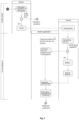
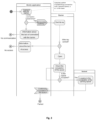
- Control of the described parking space barrier proceeds according to the following steps.
- the user can receive and grant authorisation to other users by the function of providing access, sharing, granting authorisation permanently and/or reservation of the parking space.
- the parking space barrier can be controlled in the following manner
- Another alternative method, not claimed in the present application, for controlling the parking space barrier for communication without the use of a server comprises the following steps
- the token and the secret can also be connected to each other (concatenation of the token and the secret), transforming the produced resulting series of bytes by the selected cryptographic hash function - in particular: calculate the value of the selected hash function for a series of bytes in the form of the concatenated token and secret.
- the hashes produced in the server/driver's terminal and in the application can be compared. Then a hash transmission can be put wherever the transmission of the encrypted token occurs. In both cases, functionality and the level of safety are the same.
Landscapes
- Engineering & Computer Science (AREA)
- Computer Security & Cryptography (AREA)
- Computer Networks & Wireless Communication (AREA)
- Signal Processing (AREA)
- Physics & Mathematics (AREA)
- General Physics & Mathematics (AREA)
- Business, Economics & Management (AREA)
- Finance (AREA)
- Computer Hardware Design (AREA)
- Computing Systems (AREA)
- General Engineering & Computer Science (AREA)
- Traffic Control Systems (AREA)
Claims (14)
- Un système de contrôle d'une barrière de place de parking, qui comprend :- au moins une barrière de place de parking, comprenant un système pour changer la position de la barrière afin de contrôler la possibilité pour un véhicule d'entrer dans la place de parking, un système pour détecter la présence d'un véhicule dans la place de parking, un système pour communiquer la barrière avec un terminal du conducteur, un système pour communiquer la barrière avec une station de base et un dispositif informatique,- la station de base, qui comprend un système pour communiquer la station de base avec la barrière et un système pour communiquer la station de base avec un serveur,- le serveur, configuré et destiné à gérer une ou plusieurs barrières de place de parking, ayant accès à une base de données qui stocke au moinsdes données sur les conducteurs, l'entreprise ou l'organisation
et les barrières, ainsi que des informations sur l'autorisation d'un conducteur donné à modifier la position d'une barrière donnée, et équipé en outre d'un système pour communiquer le serveur avec une application pour conducteur, d'un système pour communiquer le serveur avec une application d'administration et d'un système pour communiquer le serveur avec la station de base,- une application pour conducteur, installée sur un terminal du conducteur, qui est de préférence un smartphone, une tablette ou un ordinateur, permettant de communiquer avec la barrière et avec le serveur,- une application d'administration, configurée et destinée à faire fonctionner les barrières de parking et à gérer les autorisations des conducteurs à modifier la position des barrières de parking, fonctionnant de préférence sur un terminal d'administrateur, notamment un ordinateur, une tablette ou un smartphone, à l'aide d'une application www,et dans lequel le système est configuré pour effectuer les étapes suivantes :- l'attribution d'une chaîne secrète à chaque barrière équipée d'un dispositif informatique et l'enregistrement de cette chaîne dans la barrière et sur le serveur,- à la demande de l'utilisateur de modifier la position de la barrière, l'envoi d'un token depuis la barrière vers le serveur, par l'intermédiaire du terminal du conducteur,- la vérification, par le serveur dans la base de données, de l'autorisation à modifier la position de la barrière donnée et, en cas de confirmation de cette autorisation, le cryptage du token par le serveur en utilisantladite chaîne secrète comme clé de cryptage, ou le calcul, par le serveur,de la consigne de fonction de hachagepour une série de symboles comprenant le token et ladite chaîne secrète,- le cryptage du même token par la barrière en utilisant ladite chaîne secrète comme clé de cryptage, ou le calcul, par la barrière, de la consigne de fonction de hachage pour une chaîne comprenant le token et ladite chaîne secrète,- la fourniture à la barrière du token crypté ou de la consigne de fonction de hachage calculée par le serveur, de préférence au moyen du terminal du conducteur,- la vérification par la barrière si le résultat du cryptage effectué par la barrière et le cryptage effectué par le serveur est identique, en comparant les tokens cryptés par le serveur et cryptés par la barrière, ou en comparant la consigne de la fonction de hachage calculée par le serveur et calculée par la barrière pour le même secret et le même token, et si oui, - la modification de la position de la barrière afin de permettre l'entrée d'un véhicule dans la place de parking. - Le système selon la revendication 1, caractérisé en ce que la barrière est un bollard, une barrière à flèche, une herse, une barricade ou un portail.
- Le système selon la revendication 1 ou 2, caractérisé en ce que le système pour détecter un véhicule dans la place de parking comprend un laser, un ultrason, un radar ou un capteur optique.
- Le système selon la revendication 1, 2 ou 3, caractérisé en ce que le système de barrière pour communiquer avec le terminal du conducteur est configuré pour une communication sans fil, notamment en utilisant un protocole Bluetooth, une communication en champ proche, NFC, ou un réseau informatique sans fil WiFi.
- Le système selon la revendication 1, 2, 3 ou 4, caractérisé en ce que le système de barrière pour communiquer avec la station de base est configuré pour communiquer au moyen d'un standard de communication sans fil, notamment de communication étendue à basse consommation LoRa, Bluetooth, ZigBee, Z-wave, LTE-M, NB-IOT ou WiFi.
- Le système selon l'une des revendications 1 à 5, caractérisé en ce que le serveur est un logiciel capable de fonctionner sur un serveur traditionnel, sur un hôte virtuel dans un cloud, ou en tant que service dispersé utilisant une plateforme cloud PAAS, Platform As A Service.
- Le système selon l'une des revendications 1 à 6, caractérisé en ce que l'application d'administration est installée sur un serveur www, et le terminal de l'administrateur est configuré pour télécharger l'application après avoir accédé à une page www correcte pendant la durée d'utilisation de cette page.
- Le système selon l'une des revendications 1 à 7, caractérisé en ce que la barrière a en outre un système pour détecter une tentative de forcer à ouvrir la barrière, de préférence configuré pour envoyer des informations sur un tel événement à la station de base et/ou au terminal du conducteur.
- Le système selon l'une des revendications 1 à 8, caractérisé en ce qu'il comprend un système pour détecter une tentative de forcer à ouvrir la barrière, lequel système est configuré pour communiquer avec le serveur, le propriétaire ou l'administrateur de la barrière, en les informant d'une telle tentative.
- Un procédé de contrôle d'une barrière de place de parking dans le système selon l'une quelconque des revendications précédentes de 1 à 9, lequel procédé comprend les étapes suivantes :- l'attribution d'une chaîne secrète à chaque barrière équipée d'un dispositif informatique et l'enregistrement de cette chaîne dans la barrière et sur le serveur,- à la demande de l'utilisateur de modifier la position de la barrière, l'envoi d'un token depuis la barrière vers le serveur, par l'intermédiaire du terminal du conducteur,- la vérification, par le serveur dans la base de données, de l'autorisation à modifier la position de la barrière donnée et, en cas de confirmation de cette autorisation, le cryptage du token par le serveur en utilisantladite chaîne secrète comme clé de cryptage, ou le calcul, par le serveur, de la consigne de fonction de hachagepour une série de symboles comprenant le token et ladite chaîne secrète,- le cryptage du même token par la barrière en utilisant ladite chaîne secrète comme clé de cryptage, ou le calcul, par la barrière, de la consigne de fonction de hachage pour une chaîne comprenant le token et ladite chaîne secrète,- la fourniture à la barrière du token crypté ou de la consigne de fonction de hachage calculée par le serveur, de préférence au moyen du terminal du conducteur,- la vérification par la barrière si le résultat du cryptage effectué par la barrière et le cryptage effectué par le serveur est identique, en comparant les tokens cryptés par le serveur et cryptés par la barrière, ou en comparant la consigne de la fonction de hachage calculée par le serveur et calculée par la barrière pour le même secret et le même token, et si oui,- la modification de la position de la barrière afin de permettre l'entrée d'un véhicule dans la place de parking.
- Le procédé selon la revendication 10, caractérisé en ce que le token est un token à usage unique, ladite chaîne secrète est unique et différente pour chaque barrière, tandis que le procédé comprend les étapes suivantes :- l'envoi d'une demande d'ouverture de la barrière de place de parking depuis le terminal du conducteur vers ladite barrière,- l'envoi d'un token à usage unique depuis la barrière de place de parking jusqu'au terminal du conducteur,- la remise de ce token par le terminal du conducteur au serveur pour son cryptage,- la vérification, par le serveur dans la base de données, de l'autorisation d'un conducteur donné à modifier la position d'une barrière donnée et, en cas de confirmation de cette autorisation :- le cryptage de ce token par le serveur en utilisant ladite chaîne secrète comme clé de cryptage, ou le calcul, par le serveur, de la consigne de fonction de hachage pour une chaîne comprenant le token et ladite chaîne secrète,- le renvoi au terminal du conducteur de ce token crypté ou de la consigne de fonction de hachage calculée par le serveur,- la remise de ce token crypté ou de la consigne de fonction de hachage calculée par le terminal du conducteur à la barrière de place de parking,- le cryptage de la forme originale du token par la barrière de place de parking en utilisant ladite chaîne secrète comme clé de cryptage, ou le calcul, par la barrière, de la consigne de fonction de hachage pour une chaîne comprenant le token et ladite chaîne secrète,- la comparaison, par la barrière de place de parking, de la forme du token crypté par la barrière avec la forme cryptée du token reçu du serveur via le terminal du conducteur, ou de la consigne de fonction de hachage calculée par le serveur et calculée par la barrière pour le même secret et le même token,- en cas de conformité avec ces formes ou de conformité avec les consignes de fonction de hachage - la modification de la position de la barrière afin de permettre l'entrée d'un véhicule dans la place de parking.
- Le procédé selon la revendication 10, caractérisé en ce qu'il comprend en outre les étapes suivantes :- l'envoi d'une demande d'ouverture de la barrière de place de parking par le serveur vers la station de base,- l'envoi d'une demande d'ouverture de la barrière de place de parking par la station de base vers la barrière de place de parking,- la modification de la position de la barrière afin de permettre l'entrée d'un véhicule dans la place de parking.
- Le procédé selon la revendication 10, 11 ou 12, caractérisé en ce que, dans la base de données qui stocke au moins les données sur les conducteurs et les barrières ainsi que les informations sur l'autorisation d'un conducteur donné à modifier la position d'une barrière donnée, cette autorisation résulte d'un ou de plusieurs des événements suivants : l'octroi d'une autorisation par un autre conducteur au moyen de l'application du conducteur, en particulier de manière permanente, pour une durée déterminée ou une seule fois ; l'octroi d'une autorisation par l'application d'administration, en particulier de manière permanente, pour une durée déterminée ou une seule fois ; le paiement par le conducteur pour l'utilisation d'une place de parking donnée ; l'octroi d'une autorisation par l'application du conducteur ou par l'application d'administration, ou au moyen d'un supertoken, pour un véhicule d'intervention d'urgence, par exemple un véhicule des services de secours, par une entreprise ou une organisation qui dispose d'une autorisation pour un groupe de sites ou de barrières.
- Le procédé selon la revendication 10, 11, 12 ou 13, caractérisé en ce qu'il comprend en outre l'étape de validation de parking, impliquant la confirmation de la présence physique du conducteur dans un lieu spécifié, par exemple dans un magasin ou dans une entreprise de services, en photographiant un code QR placé dans ce lieu, ou en recevant un signal d'une balise placée dans ce lieu par le terminal du conducteur.
Priority Applications (4)
| Application Number | Priority Date | Filing Date | Title |
|---|---|---|---|
| PL21461636.9T PL4198929T3 (pl) | 2021-12-16 | 2021-12-16 | Układ do sterowania blokadą miejsca parkingowego oraz sposób sterowania blokadą miejsca parkingowego |
| EP21461636.9A EP4198929B1 (fr) | 2021-12-16 | 2021-12-16 | Système de commande d'une barrière de place de stationnement et procédé de commande d'une barrière de place de stationnement |
| US18/720,465 US20250087038A1 (en) | 2021-12-16 | 2022-12-15 | A system for controlling a parking space barrier and a method for controlling a parking space barrier |
| PCT/EP2022/086185 WO2023111194A1 (fr) | 2021-12-16 | 2022-12-15 | Système pour commander une barrière d'espace de stationnement et procédé pour commander une barrière d'espace de stationnement |
Applications Claiming Priority (1)
| Application Number | Priority Date | Filing Date | Title |
|---|---|---|---|
| EP21461636.9A EP4198929B1 (fr) | 2021-12-16 | 2021-12-16 | Système de commande d'une barrière de place de stationnement et procédé de commande d'une barrière de place de stationnement |
Publications (3)
| Publication Number | Publication Date |
|---|---|
| EP4198929A1 EP4198929A1 (fr) | 2023-06-21 |
| EP4198929C0 EP4198929C0 (fr) | 2024-01-31 |
| EP4198929B1 true EP4198929B1 (fr) | 2024-01-31 |
Family
ID=79316836
Family Applications (1)
| Application Number | Title | Priority Date | Filing Date |
|---|---|---|---|
| EP21461636.9A Active EP4198929B1 (fr) | 2021-12-16 | 2021-12-16 | Système de commande d'une barrière de place de stationnement et procédé de commande d'une barrière de place de stationnement |
Country Status (4)
| Country | Link |
|---|---|
| US (1) | US20250087038A1 (fr) |
| EP (1) | EP4198929B1 (fr) |
| PL (1) | PL4198929T3 (fr) |
| WO (1) | WO2023111194A1 (fr) |
Families Citing this family (1)
| Publication number | Priority date | Publication date | Assignee | Title |
|---|---|---|---|---|
| BE1032821B1 (nl) * | 2024-10-01 | 2026-02-25 | Lowist Toegangsbeheer | Verkeersbarrièresysteem, beheersysteem hiervoor en werkwijze voor het beheren hiervan |
Family Cites Families (12)
| Publication number | Priority date | Publication date | Assignee | Title |
|---|---|---|---|---|
| DE3737890A1 (de) | 1987-11-07 | 1989-05-18 | Basf Ag | Verfahren zur vorbehandlung von textilen materialien |
| US8831970B2 (en) * | 2000-08-24 | 2014-09-09 | Martin Herman Weik, III | Virtual attendant system and parking management system |
| ES2270725B1 (es) * | 2005-09-20 | 2008-02-01 | Tuplaza Movilidad Y Desarrollo, S.L. | Sistema, dispositivo de control de acceso y metodo para permitir el intercambio y uso compartido de plazas de aparcamiento. |
| DE102008056786A1 (de) | 2008-11-11 | 2010-05-20 | Continental Automotive Gmbh | Verfahren, Vorrichtung und System zur Bereitstellung verfügbarer Parkplätze unter Verwendung einer in einem Fahrzeug vorhandenen Mauterhebungs- oder Telematikeinheit |
| US8330624B2 (en) | 2009-08-10 | 2012-12-11 | Eric Groft | Enhancements to meterless remote parking monitoring systems |
| ES2751980T3 (es) * | 2009-12-11 | 2020-04-02 | Stationnement Urbain Dev Et Etudes | Provisión de servicios municipales usando dispositivos móviles y una red de sensores |
| WO2016178220A1 (fr) * | 2015-05-04 | 2016-11-10 | Pink Park Ltd. | Système et procédé de gestion d'espace de stationnement |
| PH12017000044B1 (en) * | 2017-02-13 | 2018-08-20 | Samsung Electronics Co Ltd | Vehicle parking area access management system and method |
| CA3062199A1 (fr) * | 2017-05-04 | 2018-11-08 | Hangar Holdings Pty Ltd | Systeme de commande d'acces |
| PL424117A1 (pl) | 2017-12-29 | 2019-07-01 | Prking Spółka Z Ograniczoną Odpowiedzialnością | Inteligentny system kontroli parkingowej |
| US11842591B2 (en) * | 2019-08-07 | 2023-12-12 | SpotHero, Inc. | Parking facility communication systems and methods |
| WO2021086299A1 (fr) | 2019-11-01 | 2021-05-06 | Владимир Александрович МИКУЛЕНКО | Système de stationnement intelligent (smart parking) «parking points» |
-
2021
- 2021-12-16 EP EP21461636.9A patent/EP4198929B1/fr active Active
- 2021-12-16 PL PL21461636.9T patent/PL4198929T3/pl unknown
-
2022
- 2022-12-15 US US18/720,465 patent/US20250087038A1/en active Pending
- 2022-12-15 WO PCT/EP2022/086185 patent/WO2023111194A1/fr not_active Ceased
Also Published As
| Publication number | Publication date |
|---|---|
| EP4198929A1 (fr) | 2023-06-21 |
| EP4198929C0 (fr) | 2024-01-31 |
| US20250087038A1 (en) | 2025-03-13 |
| PL4198929T3 (pl) | 2024-04-22 |
| WO2023111194A1 (fr) | 2023-06-22 |
Similar Documents
| Publication | Publication Date | Title |
|---|---|---|
| US11304057B2 (en) | Authorized access to vehicle data | |
| CN105847282B (zh) | 车辆控制方法、服务器及系统 | |
| EP3576378B1 (fr) | Transfert de commande de véhicules | |
| JP5997858B1 (ja) | 車両レンタル・システムおよび車両レンタル管理方法 | |
| US20160042575A1 (en) | Automated facility access and payment processing systems and methods | |
| EP3362995B1 (fr) | Système et procédé de contrôle d'accès | |
| CN105389866A (zh) | 安全的基于短距离的通信和访问控制系统 | |
| PH12017000044A1 (en) | Vehicle parking area access management system and method | |
| CN105931485A (zh) | 一种共享车位预约使用服务系统 | |
| TWI747260B (zh) | 用於進出控制系統的系統、方法和電腦程式 | |
| US11263558B2 (en) | Method for monitoring access to electronically controllable devices | |
| US9437061B2 (en) | Arrangement for the authorised access of at least one structural element located in a building | |
| EP3720085A1 (fr) | Procédé et appareil de partage d'objets mobiles utilisant le calcul de bord dans un système de flottes | |
| EP4198929B1 (fr) | Système de commande d'une barrière de place de stationnement et procédé de commande d'une barrière de place de stationnement | |
| KR101795451B1 (ko) | 보안 터널을 이용하여 타겟 장치의 보안을 제어하는 방법 및 장치 | |
| KR101638585B1 (ko) | 스마트폰을 이용한 주차장 출입시스템 | |
| JP2004140779A (ja) | システムおよび通信方法 | |
| JP4655367B2 (ja) | 共用車輌運用システム | |
| US20180261018A1 (en) | Motorway toll system and method for granting access of a user vehicle to a motorway | |
| CN109523712A (zh) | 一种基于光通信的车辆租赁系统及其租赁方法 | |
| US12613945B2 (en) | User authentication by means of vehicle-specific data | |
| KR20190024240A (ko) | 보안기능이 포함된 카 하이어링 서비스 시스템 | |
| NL1041353B1 (en) | Method and system for access control using mobile telecommunication devices. | |
| WO2024125750A1 (fr) | Procédé de commande de laissez-passer de moyens de transport dans des territoires à protéger | |
| KR20230036049A (ko) | 임시출입을 허용하는 스마트키 발급서비스 제공장치 |
Legal Events
| Date | Code | Title | Description |
|---|---|---|---|
| STAA | Information on the status of an ep patent application or granted ep patent |
Free format text: STATUS: EXAMINATION IS IN PROGRESS |
|
| PUAI | Public reference made under article 153(3) epc to a published international application that has entered the european phase |
Free format text: ORIGINAL CODE: 0009012 |
|
| 17P | Request for examination filed |
Effective date: 20211222 |
|
| AK | Designated contracting states |
Kind code of ref document: A1 Designated state(s): AL AT BE BG CH CY CZ DE DK EE ES FI FR GB GR HR HU IE IS IT LI LT LU LV MC MK MT NL NO PL PT RO RS SE SI SK SM TR |
|
| GRAP | Despatch of communication of intention to grant a patent |
Free format text: ORIGINAL CODE: EPIDOSNIGR1 |
|
| STAA | Information on the status of an ep patent application or granted ep patent |
Free format text: STATUS: GRANT OF PATENT IS INTENDED |
|
| INTG | Intention to grant announced |
Effective date: 20230718 |
|
| GRAS | Grant fee paid |
Free format text: ORIGINAL CODE: EPIDOSNIGR3 |
|
| GRAA | (expected) grant |
Free format text: ORIGINAL CODE: 0009210 |
|
| STAA | Information on the status of an ep patent application or granted ep patent |
Free format text: STATUS: THE PATENT HAS BEEN GRANTED |
|
| AK | Designated contracting states |
Kind code of ref document: B1 Designated state(s): AL AT BE BG CH CY CZ DE DK EE ES FI FR GB GR HR HU IE IS IT LI LT LU LV MC MK MT NL NO PL PT RO RS SE SI SK SM TR |
|
| REG | Reference to a national code |
Ref country code: GB Ref legal event code: FG4D Ref country code: CH Ref legal event code: EP |
|
| REG | Reference to a national code |
Ref country code: DE Ref legal event code: R096 Ref document number: 602021008982 Country of ref document: DE |
|
| REG | Reference to a national code |
Ref country code: IE Ref legal event code: FG4D |
|
| U01 | Request for unitary effect filed |
Effective date: 20240220 |
|
| U07 | Unitary effect registered |
Designated state(s): AT BE BG DE DK EE FI FR IT LT LU LV MT NL PT SE SI Effective date: 20240229 |
|
| REG | Reference to a national code |
Ref country code: LT Ref legal event code: MG9D |
|
| PG25 | Lapsed in a contracting state [announced via postgrant information from national office to epo] |
Ref country code: IS Free format text: LAPSE BECAUSE OF FAILURE TO SUBMIT A TRANSLATION OF THE DESCRIPTION OR TO PAY THE FEE WITHIN THE PRESCRIBED TIME-LIMIT Effective date: 20240531 |
|
| PG25 | Lapsed in a contracting state [announced via postgrant information from national office to epo] |
Ref country code: GR Free format text: LAPSE BECAUSE OF FAILURE TO SUBMIT A TRANSLATION OF THE DESCRIPTION OR TO PAY THE FEE WITHIN THE PRESCRIBED TIME-LIMIT Effective date: 20240501 |
|
| PG25 | Lapsed in a contracting state [announced via postgrant information from national office to epo] |
Ref country code: RS Free format text: LAPSE BECAUSE OF FAILURE TO SUBMIT A TRANSLATION OF THE DESCRIPTION OR TO PAY THE FEE WITHIN THE PRESCRIBED TIME-LIMIT Effective date: 20240430 Ref country code: HR Free format text: LAPSE BECAUSE OF FAILURE TO SUBMIT A TRANSLATION OF THE DESCRIPTION OR TO PAY THE FEE WITHIN THE PRESCRIBED TIME-LIMIT Effective date: 20240131 |
|
| PG25 | Lapsed in a contracting state [announced via postgrant information from national office to epo] |
Ref country code: ES Free format text: LAPSE BECAUSE OF FAILURE TO SUBMIT A TRANSLATION OF THE DESCRIPTION OR TO PAY THE FEE WITHIN THE PRESCRIBED TIME-LIMIT Effective date: 20240131 |
|
| PG25 | Lapsed in a contracting state [announced via postgrant information from national office to epo] |
Ref country code: RS Free format text: LAPSE BECAUSE OF FAILURE TO SUBMIT A TRANSLATION OF THE DESCRIPTION OR TO PAY THE FEE WITHIN THE PRESCRIBED TIME-LIMIT Effective date: 20240430 Ref country code: NO Free format text: LAPSE BECAUSE OF FAILURE TO SUBMIT A TRANSLATION OF THE DESCRIPTION OR TO PAY THE FEE WITHIN THE PRESCRIBED TIME-LIMIT Effective date: 20240430 Ref country code: IS Free format text: LAPSE BECAUSE OF FAILURE TO SUBMIT A TRANSLATION OF THE DESCRIPTION OR TO PAY THE FEE WITHIN THE PRESCRIBED TIME-LIMIT Effective date: 20240531 Ref country code: HR Free format text: LAPSE BECAUSE OF FAILURE TO SUBMIT A TRANSLATION OF THE DESCRIPTION OR TO PAY THE FEE WITHIN THE PRESCRIBED TIME-LIMIT Effective date: 20240131 Ref country code: GR Free format text: LAPSE BECAUSE OF FAILURE TO SUBMIT A TRANSLATION OF THE DESCRIPTION OR TO PAY THE FEE WITHIN THE PRESCRIBED TIME-LIMIT Effective date: 20240501 Ref country code: ES Free format text: LAPSE BECAUSE OF FAILURE TO SUBMIT A TRANSLATION OF THE DESCRIPTION OR TO PAY THE FEE WITHIN THE PRESCRIBED TIME-LIMIT Effective date: 20240131 |
|
| PG25 | Lapsed in a contracting state [announced via postgrant information from national office to epo] |
Ref country code: SM Free format text: LAPSE BECAUSE OF FAILURE TO SUBMIT A TRANSLATION OF THE DESCRIPTION OR TO PAY THE FEE WITHIN THE PRESCRIBED TIME-LIMIT Effective date: 20240131 |
|
| PG25 | Lapsed in a contracting state [announced via postgrant information from national office to epo] |
Ref country code: CZ Free format text: LAPSE BECAUSE OF FAILURE TO SUBMIT A TRANSLATION OF THE DESCRIPTION OR TO PAY THE FEE WITHIN THE PRESCRIBED TIME-LIMIT Effective date: 20240131 |
|
| PG25 | Lapsed in a contracting state [announced via postgrant information from national office to epo] |
Ref country code: SK Free format text: LAPSE BECAUSE OF FAILURE TO SUBMIT A TRANSLATION OF THE DESCRIPTION OR TO PAY THE FEE WITHIN THE PRESCRIBED TIME-LIMIT Effective date: 20240131 |
|
| PG25 | Lapsed in a contracting state [announced via postgrant information from national office to epo] |
Ref country code: SM Free format text: LAPSE BECAUSE OF FAILURE TO SUBMIT A TRANSLATION OF THE DESCRIPTION OR TO PAY THE FEE WITHIN THE PRESCRIBED TIME-LIMIT Effective date: 20240131 Ref country code: SK Free format text: LAPSE BECAUSE OF FAILURE TO SUBMIT A TRANSLATION OF THE DESCRIPTION OR TO PAY THE FEE WITHIN THE PRESCRIBED TIME-LIMIT Effective date: 20240131 Ref country code: RO Free format text: LAPSE BECAUSE OF FAILURE TO SUBMIT A TRANSLATION OF THE DESCRIPTION OR TO PAY THE FEE WITHIN THE PRESCRIBED TIME-LIMIT Effective date: 20240131 Ref country code: CZ Free format text: LAPSE BECAUSE OF FAILURE TO SUBMIT A TRANSLATION OF THE DESCRIPTION OR TO PAY THE FEE WITHIN THE PRESCRIBED TIME-LIMIT Effective date: 20240131 |
|
| REG | Reference to a national code |
Ref country code: DE Ref legal event code: R097 Ref document number: 602021008982 Country of ref document: DE |
|
| PLBE | No opposition filed within time limit |
Free format text: ORIGINAL CODE: 0009261 |
|
| STAA | Information on the status of an ep patent application or granted ep patent |
Free format text: STATUS: NO OPPOSITION FILED WITHIN TIME LIMIT |
|
| 26N | No opposition filed |
Effective date: 20241101 |
|
| U20 | Renewal fee for the european patent with unitary effect paid |
Year of fee payment: 4 Effective date: 20241205 |
|
| PG25 | Lapsed in a contracting state [announced via postgrant information from national office to epo] |
Ref country code: MC Free format text: LAPSE BECAUSE OF FAILURE TO SUBMIT A TRANSLATION OF THE DESCRIPTION OR TO PAY THE FEE WITHIN THE PRESCRIBED TIME-LIMIT Effective date: 20240131 |
|
| REG | Reference to a national code |
Ref country code: CH Ref legal event code: U11 Free format text: ST27 STATUS EVENT CODE: U-0-0-U10-U11 (AS PROVIDED BY THE NATIONAL OFFICE) Effective date: 20260101 |
|
| U20 | Renewal fee for the european patent with unitary effect paid |
Year of fee payment: 5 Effective date: 20251210 |
|
| PGFP | Annual fee paid to national office [announced via postgrant information from national office to epo] |
Ref country code: IE Payment date: 20251211 Year of fee payment: 5 |
|
| PGFP | Annual fee paid to national office [announced via postgrant information from national office to epo] |
Ref country code: PL Payment date: 20251210 Year of fee payment: 5 |
|
| PGFP | Annual fee paid to national office [announced via postgrant information from national office to epo] |
Ref country code: CH Payment date: 20260101 Year of fee payment: 5 |