EP4199218A1 - Batterie, elektrische vorrichtung und herstellungsverfahren und vorrichtung für batterie - Google Patents
Batterie, elektrische vorrichtung und herstellungsverfahren und vorrichtung für batterie Download PDFInfo
- Publication number
- EP4199218A1 EP4199218A1 EP21955388.0A EP21955388A EP4199218A1 EP 4199218 A1 EP4199218 A1 EP 4199218A1 EP 21955388 A EP21955388 A EP 21955388A EP 4199218 A1 EP4199218 A1 EP 4199218A1
- Authority
- EP
- European Patent Office
- Prior art keywords
- battery cell
- battery
- bracket
- limiting portion
- side wall
- Prior art date
- Legal status (The legal status is an assumption and is not a legal conclusion. Google has not performed a legal analysis and makes no representation as to the accuracy of the status listed.)
- Granted
Links
Images





Classifications
-
- H—ELECTRICITY
- H01—ELECTRIC ELEMENTS
- H01M—PROCESSES OR MEANS, e.g. BATTERIES, FOR THE DIRECT CONVERSION OF CHEMICAL ENERGY INTO ELECTRICAL ENERGY
- H01M50/00—Constructional details or processes of manufacture of the non-active parts of electrochemical cells other than fuel cells, e.g. hybrid cells
- H01M50/20—Mountings; Secondary casings or frames; Racks, modules or packs; Suspension devices; Shock absorbers; Transport or carrying devices; Holders
- H01M50/289—Mountings; Secondary casings or frames; Racks, modules or packs; Suspension devices; Shock absorbers; Transport or carrying devices; Holders characterised by spacing elements or positioning means within frames, racks or packs
- H01M50/291—Mountings; Secondary casings or frames; Racks, modules or packs; Suspension devices; Shock absorbers; Transport or carrying devices; Holders characterised by spacing elements or positioning means within frames, racks or packs characterised by their shape
-
- H—ELECTRICITY
- H01—ELECTRIC ELEMENTS
- H01M—PROCESSES OR MEANS, e.g. BATTERIES, FOR THE DIRECT CONVERSION OF CHEMICAL ENERGY INTO ELECTRICAL ENERGY
- H01M50/00—Constructional details or processes of manufacture of the non-active parts of electrochemical cells other than fuel cells, e.g. hybrid cells
- H01M50/20—Mountings; Secondary casings or frames; Racks, modules or packs; Suspension devices; Shock absorbers; Transport or carrying devices; Holders
- H01M50/244—Secondary casings; Racks; Suspension devices; Carrying devices; Holders characterised by their mounting method
-
- H—ELECTRICITY
- H01—ELECTRIC ELEMENTS
- H01M—PROCESSES OR MEANS, e.g. BATTERIES, FOR THE DIRECT CONVERSION OF CHEMICAL ENERGY INTO ELECTRICAL ENERGY
- H01M10/00—Secondary cells; Manufacture thereof
- H01M10/60—Heating or cooling; Temperature control
- H01M10/61—Types of temperature control
- H01M10/613—Cooling or keeping cold
-
- H—ELECTRICITY
- H01—ELECTRIC ELEMENTS
- H01M—PROCESSES OR MEANS, e.g. BATTERIES, FOR THE DIRECT CONVERSION OF CHEMICAL ENERGY INTO ELECTRICAL ENERGY
- H01M10/00—Secondary cells; Manufacture thereof
- H01M10/60—Heating or cooling; Temperature control
- H01M10/64—Heating or cooling; Temperature control characterised by the shape of the cells
- H01M10/643—Cylindrical cells
-
- H—ELECTRICITY
- H01—ELECTRIC ELEMENTS
- H01M—PROCESSES OR MEANS, e.g. BATTERIES, FOR THE DIRECT CONVERSION OF CHEMICAL ENERGY INTO ELECTRICAL ENERGY
- H01M10/00—Secondary cells; Manufacture thereof
- H01M10/60—Heating or cooling; Temperature control
- H01M10/65—Means for temperature control structurally associated with the cells
- H01M10/655—Solid structures for heat exchange or heat conduction
- H01M10/6556—Solid parts with flow channel passages or pipes for heat exchange
-
- H—ELECTRICITY
- H01—ELECTRIC ELEMENTS
- H01M—PROCESSES OR MEANS, e.g. BATTERIES, FOR THE DIRECT CONVERSION OF CHEMICAL ENERGY INTO ELECTRICAL ENERGY
- H01M50/00—Constructional details or processes of manufacture of the non-active parts of electrochemical cells other than fuel cells, e.g. hybrid cells
- H01M50/10—Primary casings; Jackets or wrappings
- H01M50/102—Primary casings; Jackets or wrappings characterised by their shape or physical structure
- H01M50/107—Primary casings; Jackets or wrappings characterised by their shape or physical structure having curved cross-section, e.g. round or elliptic
-
- H—ELECTRICITY
- H01—ELECTRIC ELEMENTS
- H01M—PROCESSES OR MEANS, e.g. BATTERIES, FOR THE DIRECT CONVERSION OF CHEMICAL ENERGY INTO ELECTRICAL ENERGY
- H01M50/00—Constructional details or processes of manufacture of the non-active parts of electrochemical cells other than fuel cells, e.g. hybrid cells
- H01M50/20—Mountings; Secondary casings or frames; Racks, modules or packs; Suspension devices; Shock absorbers; Transport or carrying devices; Holders
- H01M50/204—Racks, modules or packs for multiple batteries or multiple cells
- H01M50/207—Racks, modules or packs for multiple batteries or multiple cells characterised by their shape
- H01M50/213—Racks, modules or packs for multiple batteries or multiple cells characterised by their shape adapted for cells having curved cross-section, e.g. round or elliptic
-
- H—ELECTRICITY
- H01—ELECTRIC ELEMENTS
- H01M—PROCESSES OR MEANS, e.g. BATTERIES, FOR THE DIRECT CONVERSION OF CHEMICAL ENERGY INTO ELECTRICAL ENERGY
- H01M50/00—Constructional details or processes of manufacture of the non-active parts of electrochemical cells other than fuel cells, e.g. hybrid cells
- H01M50/20—Mountings; Secondary casings or frames; Racks, modules or packs; Suspension devices; Shock absorbers; Transport or carrying devices; Holders
- H01M50/249—Mountings; Secondary casings or frames; Racks, modules or packs; Suspension devices; Shock absorbers; Transport or carrying devices; Holders specially adapted for aircraft or vehicles, e.g. cars or trains
-
- H—ELECTRICITY
- H01—ELECTRIC ELEMENTS
- H01M—PROCESSES OR MEANS, e.g. BATTERIES, FOR THE DIRECT CONVERSION OF CHEMICAL ENERGY INTO ELECTRICAL ENERGY
- H01M50/00—Constructional details or processes of manufacture of the non-active parts of electrochemical cells other than fuel cells, e.g. hybrid cells
- H01M50/20—Mountings; Secondary casings or frames; Racks, modules or packs; Suspension devices; Shock absorbers; Transport or carrying devices; Holders
- H01M50/262—Mountings; Secondary casings or frames; Racks, modules or packs; Suspension devices; Shock absorbers; Transport or carrying devices; Holders with fastening means, e.g. locks
- H01M50/264—Mountings; Secondary casings or frames; Racks, modules or packs; Suspension devices; Shock absorbers; Transport or carrying devices; Holders with fastening means, e.g. locks for cells or batteries, e.g. straps, tie rods or peripheral frames
-
- H—ELECTRICITY
- H01—ELECTRIC ELEMENTS
- H01M—PROCESSES OR MEANS, e.g. BATTERIES, FOR THE DIRECT CONVERSION OF CHEMICAL ENERGY INTO ELECTRICAL ENERGY
- H01M2220/00—Batteries for particular applications
- H01M2220/20—Batteries in motive systems, e.g. vehicle, ship, plane
-
- Y—GENERAL TAGGING OF NEW TECHNOLOGICAL DEVELOPMENTS; GENERAL TAGGING OF CROSS-SECTIONAL TECHNOLOGIES SPANNING OVER SEVERAL SECTIONS OF THE IPC; TECHNICAL SUBJECTS COVERED BY FORMER USPC CROSS-REFERENCE ART COLLECTIONS [XRACs] AND DIGESTS
- Y02—TECHNOLOGIES OR APPLICATIONS FOR MITIGATION OR ADAPTATION AGAINST CLIMATE CHANGE
- Y02E—REDUCTION OF GREENHOUSE GAS [GHG] EMISSIONS, RELATED TO ENERGY GENERATION, TRANSMISSION OR DISTRIBUTION
- Y02E60/00—Enabling technologies; Technologies with a potential or indirect contribution to GHG emissions mitigation
- Y02E60/10—Energy storage using batteries
Definitions
- the present application relates to the technical field of batteries, and specifically to a battery, an electrical device, and a method and device for manufacturing a battery.
- a lithium-ion battery is generally the one used much more in a vehicle.
- the lithium-ion battery has advantages of a small volume, high energy density, high power density, many cycles of use, and a long storage time, etc.
- the battery generally includes a box body, a bracket and a battery cell, and the bracket is used for limiting a position of the battery cell to prevent the battery cell from moving in the box body.
- the bracket is used for limiting a position of the battery cell to prevent the battery cell from moving in the box body.
- the designed position of the bracket is unreasonable, it is easy to affect the safety performance of the battery cell. Therefore, it is an urgent problem to be solved in the battery field how to reduce the impact of the bracket on the safety performance of the battery cell.
- An embodiment of the present application provides a battery, an electrical device, and a method and device for manufacturing a battery, so as to reduce the influence of a bracket on the safety performance of a battery cell.
- an embodiment of the present application provides a battery including a battery cell and a bracket.
- the battery cell comprises a case and an end cover that are hermetically connected, with a first position-limiting portion being provided on a side wall of the case.
- the bracket is provided with a second position-limiting portion that is configured to be snap fitted with the first position-limiting portion to limit a position of the battery cell at least in an axial direction of the battery cell.
- the first position-limiting portion on the side wall of the battery cell and the second position-limiting portion on the bracket are snap fitted, so that not only the axial position limitation of the battery cell can be realized, but also the second position-limiting portion can give place to the end cover to give a space of the battery cell in the axial direction so that the end cover can be actuated to relieve the internal pressure of the battery cell when the internal pressure or temperature of the battery cell reaches a threshold.
- the end cover can be actuated to realize pressure relief without the need of overcoming the limitation of the second position-limiting portion on the bracket that limits the position of the battery cell in the axial direction, and the bracket is prevented from affecting the pressure relief of the battery cell, thereby relieving the pressure of the battery cell in time, reducing the risk of explosion caused by excessive internal pressure of the battery cell and the like, and improving the safety performance of the battery.
- one of the first position-limiting portion and the second position-limiting portion is a clamping groove, and the other is a first protrusion.
- the first position-limiting portion and the second position-limiting portion form a concave-convex fit to realize the position limitation of the battery cell in the axial direction
- the first position-limiting portion and the second position-limiting portion are simple in structure and simple in fitting manner.
- the clamping groove is an annular groove disposed on an outer surface of the side wall.
- the clamping groove is an annular groove disposed on an outer surface of the side wall, so that when the battery cell is mounted on the bracket, the difficulty of positioning the clamping groove and the first protrusion is reduced, thereby reducing the difficulty in mounting the battery cell and the bracket.
- a convex portion protruding toward the interior of the battery cell is formed at a position on an inner surface of the side wall corresponding to the annular groove; and the convex portion is configured to limit the end cover from moving in a direction towards the interior of the battery cell.
- the convex portion protruding toward the interior of the battery cell is formed at the position on the inner surface of the side wall corresponding to the annular groove; and the convex portion can limit the end cover from moving in the direction towards the interior of the battery cell, so that the formation of the annular groove on the side wall of the battery cell not only will not reduce the structural strength of the side wall of the battery cell, but also enables the annular groove and the first protrusion to cooperate to limit the position of the battery cell in the axial direction, and the convex portion for limiting the position of the end cover is correspondingly formed while the annular groove is formed, which simplifies the manufacturing procedure of the battery cell and reduces the difficulty of manufacturing the battery cell.
- the second position-limiting portion is disposed at an end portion of the bracket along the axial direction.
- the bracket by disposing the second position-limiting portion at the end portion of the bracket along the axial direction of the battery cell, the bracket can be reasonably used, and by making the position of the second position-limiting portion close to an end portion of the battery cell along the axial direction as much as possible, the position limitation of the battery cell in the axial direction can be conducted better.
- the bracket further includes a body part connected with the second position-limiting portion, the body part is disposed corresponding to the side wall, and the second position-limiting portion and the body part encloses an accommodating part which is configured to accommodate at least part of the side wall.
- the second position-limiting portion and the body part encloses the accommodating part which can accommodate at least part of the side wall of the battery cell, so that the accommodating part can limit a position of the battery cell from the side of the battery cell, thereby reducing the movement of the battery cell relative to the bracket and improving the mounting stability of the battery cell.
- one end of the body part along the axial direction is provided with two of the second position-limiting portions which extend in opposite directions to form two of the accommodating parts with the body part, the two of the accommodating parts are disposed on two opposite sides of the bracket, and each of the accommodating parts is provided with one of the battery cells correspondingly.
- the two second position-limiting portions extend in opposite directions to form two accommodating parts with the body part, and each accommodating part can accommodate one battery cell correspondingly, so that the bracket is fully utilized, and the number of brackets of the battery can be reduced, thereby reducing the weight of the battery.
- the accommodating part has a fitting surface configured to fit a contour of the outer surface of the side wall.
- the accommodating part has a fitting surface that fits the contour of the outer surface of the side wall, so that the accommodating part can better limit the position of the battery cell and reduce the possibility of the battery cell moving relative to the bracket.
- the fitting surface is an arc surface, and the fitting surface is configured to limit a position of the battery cell along a radial direction of the battery cell.
- the fitting surface limits the position of the battery cell along the radial direction of the battery cell, so that the battery cell can be stably mounted on the bracket, and the possibility of the battery cell moving relative to the bracket is reduced.
- the battery comprises two of the brackets, and the two of the brackets are buckled on an outer periphery of one of the battery cells.
- the two brackets are buckled on the outer periphery of one battery cell, and the two brackets can completely limit the position of the battery cell in the radial and axial directions, so that the battery can be mounted on the bracket more stably, and the possibility of the battery cell moving relative to the bracket is reduced.
- the two of the brackets are connected fixedly.
- the two brackets are fixedly connected, so that the two brackets remain the state of being buckled on the outer periphery of one battery cell, and thus the battery is more stably mounted on the bracket, and the possibility of the battery cell moving relative to the bracket is reduced.
- the battery comprises a plurality of the brackets that are arranged side by side and integrally formed.
- the battery comprises the plurality of brackets that are arranged side by side, and thus a plurality of battery cells can be mounted, which can increase the electric energy of the battery.
- a plurality of brackets is integrally formed and are easy to manufacture, and the plurality of brackets arranged side by side do not need to be connected when assembled into the battery, which simplifies the manufacturing procedure of the battery and reduces the manufacturing difficulty of the battery.
- a side of the bracket opposite to the corresponding battery cell is a plane.
- the side of the bracket opposite to the corresponding battery cell is a plane, which facilitates the mounting of the bracket and enables the bracket to better cooperate with other structures.
- two of the first position-limiting portions are disposed on the side wall, and the two of the first position-limiting portions are arranged at intervals along the axial direction on the side wall of the case; and each of the second position-limiting portions is configured to be snap fitted with one of the first position-limiting portions.
- the two of the first position-limiting portions are disposed on the side wall, and each of the second position-limiting portions is configured to be snap fitted with one of the first position-limiting portions, so as to limit the position of the battery cell in the axial direction more firmly.
- the case is cylindrical.
- the case of the battery cell is cylindrical, that is, the case has a regular structure, which is more convenient for the battery cell to be mounted on the bracket.
- the battery further includes a box body, wherein the battery cell is accommodated in the box body, and the bracket is fixed in the box body.
- the bracket is fixed in the box body to prevent the bracket from moving in the box body, thereby reducing the possibility of the battery cell moving in the box body.
- the bracket is further provided with a flow channel configured to accommodate a fluid for regulating the temperature of the battery cell.
- the fluid contained in the flow channel can regulate the temperature of the battery cell.
- the fluid contained in the flow channel increases the temperature of the battery cell to make the battery cell operate normally when the environmental temperature is relatively lower, and reduces the temperature of the battery cell to make the battery cell operate normally and ensure the safety of the battery when the environmental temperature or the temperature of the battery cell is too high.
- the flow channel not only can accommodate the fluid that regulates the temperature of the battery cell to regulate the temperature of the battery cell, but also can reduce the weight of the bracket, thereby reducing the weight of the battery.
- the flow channel runs through both ends of the bracket, along the axial direction of the battery cell.
- the flow channel runs through both ends of the bracket, which facilitates the heat exchange between the fluid flowing through the flow channel and the battery cell, and improves the temperature regulation efficiency of the battery cell.
- an embodiment of the present application provides an electrical device including the battery provided by the embodiment of the first aspect.
- the first position-limiting portion on the side wall of the battery cell and the second position-limiting portion on the bracket are snap fitted, so that not only the axial position limitation of the battery cell can be realized, but also the second position-limiting portion can give place to the end cover to give a space of the battery cell in the axial direction so that the end cover can be actuated to relieve the internal pressure of the battery cell when the internal pressure or temperature of the battery cell reaches a threshold.
- the end cover can be actuated to realize pressure relief without the need of overcoming the limitation of the second position-limiting portion on the bracket that limits the position of the battery cell in the axial direction, and the bracket is prevented from affecting the pressure relief of the battery cell, thereby relieving the pressure of the battery cell in time, reducing the risk of explosion caused by excessive internal pressure of the battery cell and the like, improving the safety performance of the battery cell, and thus improving the safety of electricity utilization.
- an embodiment of the present application provides a method for manufacturing a battery, including:
- the first position-limiting portion on the battery cell and the second position-limiting portion on the bracket are snap fitted, so that not only the axial position limitation of the battery cell can be realized, but also the second position-limiting portion can give place to the end cover to give a space of the battery cell in the axial direction so that the end cover can be actuated to relieve the internal pressure of the battery cell when the internal pressure or temperature of the battery cell reaches a threshold.
- the end cover can be actuated to realize pressure relief without the need of overcoming the limitation of the second position-limiting portion on the bracket that limits the position of the battery cell in the axial direction, and the bracket is prevented from affecting the pressure relief of the battery cell, thereby relieving the pressure of the battery cell in time, reducing the risk of explosion caused by excessive internal pressure of the battery cell and the like, and improving the safety performance of the battery cell.
- an embodiment of the present application provides a device for manufacturing a battery, including a providing means and an assembling means.
- the providing means is configured to provide a battery cell and a bracket.
- the battery cell comprises a case and an end cover that are hermetically connected, with a first position-limiting portion being provided on a side wall of the case.
- the bracket is provided with a second position-limiting portion; the assembling means is configured to mount the battery cell on the bracket, so that the second position-limiting portion is snap fitted with the first position-limiting portion to limit a position of the battery cell at least in an axial direction of the battery cell.
- the indicated orientation or positional relationship is based on the orientation or positional relationship shown in the accompanying drawings, or is the orientation or positional relationship that the product of the present application is commonly placed in use, or is the orientation or positional relationship that is commonly understood by those skilled in the art. It is only for the convenience of describing the present application and simplifying the description, rather than indicating or implying that the referred means or elements must have a specific orientation, be constructed and operated in a specific orientation, and therefore cannot be understood as a limitation of the present application. Moreover, the terms “first”, “second” and “third” etc. are only used for distinguishable description, and cannot be understood as indicating or implying relative importance.
- a lithium-ion battery has become a mainstream product of secondary battery due to its outstanding advantages such as high energy density and good cycling performance, and is widely applied in portable electrical appliances, power vehicles, mobile phones, spacecrafts and the like fields.
- a battery generally includes a battery cell and a bracket for limiting a position of the battery cell.
- the battery cell comprises a case, an end cover and an electrode assembly.
- the end cover is hermetically connected to one end of the battery cell in an axial direction.
- the case and the end cover jointly define an accommodating cavity for accommodating the electrode assembly.
- the pressure relief mechanism is generally disposed on the end cover.
- the battery cell may also be provided with no special pressure relief mechanism and instead the end cover itself is used as the pressure relief mechanism.
- the end cover is actuated, so that the connection relationship between the end cover and the case is broken, and thus the internal pressure of the battery can be relieved.
- the pressure relief position is on at least one end of the battery cell in the axial direction.
- the position limitation of the battery cell by the bracket includes an axial position limitation, wherein the axial position limitation of the battery cell is achieved by abutting at least one end of the battery cell in the axial direction against the position-limiting portion on the bracket.
- the position-limiting portion of the bracket will block the actuation of the pressure relief mechanism or the end cover.
- the pressure relief mechanism or the end cover needs to overcome the obstacle of the position-limiting portion of the bracket first before relief of the internal pressure of the battery cell is realized, so that the pressure relief of the battery cell is not timely or cannot be realized, resulting in fire, explosion and the like safety accidents.
- the inventor has made an in-depth study in which a battery is involved.
- the first position-limiting portion on the side wall of the battery cell and the second position-limiting portion on the bracket are snap fitted, so that not only the axial position limitation of the battery cell can be realized, but also the second position-limiting portion can give place to the end cover to give a space of the battery cell in the axial direction so that the end cover can be actuated to relieve the internal pressure of the battery cell when the internal pressure or temperature of the battery cell reaches a threshold.
- the end cover can be actuated to realize pressure relief without the need of overcoming the limitation of the second position-limiting portion on the bracket that limits the position of the battery cell in the axial direction, and the bracket is prevented from affecting the pressure relief of the battery cell, thereby relieving the pressure of the battery cell in time, reducing the risk of explosion caused by excessive internal pressure of the battery cell and the like, and improving the safety performance of the battery.
- the battery described in the embodiments of the present application is suitable for an electrical device using a battery.
- the electrical device may be a vehicle, a mobile phone, a portable device, a laptop, a ship, a spacecraft, an electric toy, an electric tool, and the like.
- the vehicle may be a fuel vehicle, a gas vehicle or a new energy vehicle.
- the new energy vehicle may be an all-electric vehicle, a hybrid electric vehicle, an extended range electric vehicle, or the like.
- the spacecraft includes airplanes, rockets, space shuttles, spaceships, and the like.
- the electric toy includes fixed or mobile electric toys, such as game consoles, electric car toys, electric ship toys and electric airplane toys.
- the electric tool includes metal cutting electric tools, grinding electric tools, assembly electric tools and railway electric tools, such as electric drills, electric grinders, electric wrenches, electric screwdrivers, electric hammers, electric impact drills, concrete vibrators, electric planers, and the like.
- the embodiments of the present application have no special limitation on the aforementioned electrical device.
- Fig. 1 is a schematic structural diagram of a vehicle 1000 provided by some examples of the present application.
- the interior of the vehicle 1000 is provided with a battery 100, which can be disposed at the bottom or head or tail of the vehicle 1000.
- the battery 100 can be used for powering the vehicle 1000, for example, the battery 100 can serve as an operating power source for the vehicle 1000.
- the vehicle 1000 may further include a controller 200 and a motor 300.
- the controller 200 is used for controlling the battery 100 to power the motor 300, for example, for the operating power demand during starting, navigating and driving of the vehicle 1000.
- the battery 100 not only can serve as an operating power source of the vehicle 1000, but also can serve as a driving power source of the vehicle 1000, thereby replacing or partially replacing fuel or natural gas to provide driving power for the vehicle 1000.
- Fig. 2 is a schematic structural view of the battery 100 provided by some examples of the present application
- Fig. 3 is an explosion diagram of a battery cell 10 provided by some examples of the present application.
- the battery 100 includes the battery cell 10 and a bracket 20.
- the battery cell 10 includes a case 11 and an end cover 12 that are hermetically connected, with a first position-limiting portion 13 being disposed on a side wall 111 of the case 11.
- the bracket 20 is provided with a second position-limiting portion 21 that is configured to be snap fitted with the first position-limiting portion 13 to limit a position of the battery cell 10 at least in an axial direction of the battery cell 10.
- the battery cell 10 may include a case 11, an end cover 12, and an electrode assembly 14.
- the case 11 has an opening 112, the electrode assembly 14 is accommodated in the case 11, and the end cover 12 is used for covering the opening 112.
- the side wall 111 of the case 11 of the battery cell 10 refers to a wall disposed surrounding an outer periphery of an axis of the battery cell 10.
- the first position-limiting portion 13 is disposed on an outer surface of the side wall 111.
- the case 11 may be in various shapes, such as a cylinder, a cuboid, or the like.
- the shape of the case 11 may be determined according to the specific shape of the electrode assembly 14. For example, if the electrode assembly 14 has a cylindrical structure, the case 11 can be selected as a cylindrical structure; and if the electrode assembly 14 has a cuboid structure, the case 11 can be selected as a cuboid structure.
- Figs. 2 and 3 exemplarily show the case where the case 11 and the electrode assembly 14 are cylindrical.
- the case 11 may be made of various materials, such as copper, iron, aluminum, stainless steel, aluminum alloy, and the like, which is not particularly limited in the examples of the present application.
- the electrode assembly 14 may include a positive electrode sheet (not shown), a negative electrode sheet (not shown) and a separator (not shown).
- the electrode assembly 14 may be a wound structure formed by winding a positive electrode sheet, a separator and a negative electrode sheet, or a laminated structure formed by a stacked arrangement of a positive electrode sheet, a separator and a negative electrode sheet.
- the electrode assembly 14 further includes a positive tab (not shown) and a negative tab (not shown), wherein a positive electrode current collector that is not coated with a positive electrode active material layer in the positive electrode sheet may serve as the positive tab, and a negative electrode current collector that is not coated with a negative electrode active material layer in the negative electrode sheet may serve as the positive tab.
- the end cover 12 is used for covering the opening 112 of the case 11 to form a closed accommodating cavity (not shown) which is used for accommodating the electrode assembly 14.
- the accommodating space is also used for accommodating an electrolyte, such as an electrolyte solution.
- the end cover 12 is used as a component for outputting the electrical energy of the electrode assembly 14, and an electrode terminal in the end cover 12 is used for electrical connection with the electrode assembly 14. That is, the electrode terminal is electrically connected with the tab of the electrode assembly 14.
- the electrode terminal and the tab are connected through a current collector (not shown) to realize the electrical connection between the electrode terminal and the tab.
- the case 11 there may be one or two openings 112 of the case 11. As shown in Fig. 3 , if there is one opening 112 of the case 11, there may be also one end cover 12, and thus two electrode terminals can be disposed in the end cover 12 and respectively used for electrical connection with the positive and negative tabs of the electrode assembly 14.
- the two electrode terminals in the assembly of the end cover 12 are respectively a positive electrode terminal and a negative electrode terminal, or alternatively the positive tab of the electrode assembly 14 is electrically connected to the electrode terminal of the end cover 12, the negative tab of the electrode assembly 14 is electrically connected to the case 11, and the end cover 12 is in insulation connection with the case 11.
- the battery cell 10 further includes an insulator 15 disposed between the end cover 12 and the case 11 to separate the end cover 12 from the case 11, thereby realizing the insulation connection between the end cover 12 and the case 11.
- an insulator 15 disposed between the end cover 12 and the case 11 to separate the end cover 12 from the case 11, thereby realizing the insulation connection between the end cover 12 and the case 11.
- the two openings 112 are disposed on opposite sides of the case 11, there may be also two end covers 12, and the two end covers 12 are respectively covered on the two openings 112 of the case 11.
- the case may be that the electrode terminal in one end cover 12 is a positive electrode terminal for electrical connection with the positive tab of the electrode assembly 14; and the electrode terminal in the other end cover 12 is a negative electrode terminal for electrical connection with the negative electrode sheet of the electrode assembly 14.
- the second position-limiting portion 21 is disposed on the bracket 20, and the snap fit between the first position-limiting portion 13 and the second position-limiting portion 21 can be realized in such a manner that the first position-limiting portion 13 and the second position-limiting portion 21 are abutted against each other along the axial direction of the battery cell 10, or alternatively the first position-limiting portion 13 and the second position-limiting portion 21 are in concave-convex fit along the axial direction of the battery cell 10.
- the first position-limiting portion 13 on the side wall 111 of the battery cell 10 and the second position-limiting portion 21 on the bracket 20 are snap fitted, so that not only the axial position limitation of the battery cell 10 can be realized, but also the second position-limiting portion 21 can give place to the end cover 12 to give a space of the battery cell 10 in the axial direction so that the end cover 12 can be actuated to relieve the internal pressure of the battery cell 10 when the internal pressure or temperature of the battery cell 10 reaches a threshold.
- the end cover 12 can be actuated to realize pressure relief without the need of overcoming the limitation of the second position-limiting portion 21 on the bracket 20 that limits the position of the battery cell 10 in the axial direction, and the bracket 20 is prevented from affecting the pressure relief of the battery cell 10, thereby relieving the pressure of the battery cell 10 in time, reducing the risk of explosion caused by excessive internal pressure of the battery cell 10 and the like, and improving the safety performance of the battery 100.
- one of the first position-limiting portion 13 and the second position-limiting portion 21 is a clamping groove, and the other is a first protrusion.
- the orientation of the groove mouth of the clamping groove should be arranged at an acute or obtuse angle with the axial direction of the battery cell 10.
- the groove mouth of the clamping groove is consistent with the lateral direction of the battery cell 10
- the lateral direction of the battery cell 10 refers to a direction perpendicular to the axial direction of the battery cell 10.
- the lateral direction of the battery cell 10 may be the radial direction of the battery cell 10.
- the width of the clamping groove is the same as the dimension of the first protrusion along the axial direction of the battery cell 10, so as to avoid the axial movement of the battery cell 10 relative to the bracket 20.
- the first position-limiting portion 13 and the second position-limiting portion 21 form a concave-convex fit to realize the position limitation of the battery cell 10 in the axial direction, and the first position-limiting portion 13 and the second position-limiting portion 21 are simple in structure and simple in fitting manner.
- the clamping groove is an annular groove disposed on the outer surface of the side wall 111.
- the annular groove refers to a closed structure extending along a circumferential direction of the side wall 111 of the case 11 and ending in the circumferential direction of the side wall 111 of the case 11.
- the annular groove is a circular structure with a constant radius
- the annular groove is a square structure that is consistent with the circumferential contour of the side wall 111 of the case 11.
- the clamping groove is an annular groove disposed on the outer surface of the side wall 111, and thus the clamping groove can form a snap fit with the second position-limiting portion 21 at any position along the circumferential direction of the battery cell 10, so that when the battery cell 10 is mounted on the bracket 20, the positioning difficulty of the clamping groove and the first protrusion is reduced, thereby reducing the mounting difficulty of the battery cell 10 and the bracket 20.
- the clamping groove may be disposed on the bracket 20, and the first protrusion is disposed on the outer surface of the side wall 111 of the case 11.
- Fig. 4 is a schematic view of the battery cell 10 mounted on the bracket 20 as provided by some examples of the present application
- Fig. 5 is an enlarged view of I in Fig. 4 .
- the second position-limiting portion 21 is inserted in the first position-limiting portion 13, and two groove walls of the first position-limiting portion 13 along the axial direction of the battery cell 10 are used for abutting against two sides of the second position-limiting portion 21 respectively, so as to limit the position of the battery cell 10 in the axial direction.
- Fig. 6 is a cross-sectional view of the battery cell 10 provided by some examples of the present application
- Fig. 7 is an enlarged view of II in Fig. 6
- a convex portion 113 protruding toward the interior of the battery cell 10 is formed at a position on the inner surface of the side wall 111 corresponding to the annular groove; and the convex portion 113 is configured to limit the end cover 12 from moving in a direction towards the interior of the battery cell 10.
- the end cover 12 is disposed at an end of the case 11 in the axial direction.
- the convex portion 113 is disposed on the inner surface of the case 11, and the convex portion 113 is located on the side of the end cover 12 facing the interior of the battery cell 10.
- the convex portion 113 is abutted against the end cover 12 on the side of the end cover 12 facing the interior of the battery cell 10, and the convex portion 113 can be in insulation connection with the end cover 12.
- the convex portion 113 is formed at a position on the inner surface of the side wall 111 corresponding to the annular groove box, then the convex portion 113 is an annular structure matching the annular groove.
- the annular convex portion 113 can increase the area of the abutting surface 24 against the end cover 12, so as to better limit the end cover 12 from moving along a direction towards the interior of the battery cell 10.
- the convex portion 113 protruding toward the interior of the battery cell 10 is formed at the position on the inner surface of the side wall 111 corresponding to the annular groove; and the convex portion 113 can limit the end cover 12 from moving in the direction towards the interior of the battery cell 10, so that the formation of the annular groove on the side wall 111 of the battery cell 10 not only will not reduce the structural strength of the side wall 111 of the battery cell 10, but also enables the annular groove and the first protrusion to cooperate to limit the position of the battery cell 10 in the axial direction, and the convex portion 113 for limiting the position of the end cover 12 is correspondingly formed while the annular groove is formed, which simplifies the manufacturing procedure of the battery cell 10 and reduces the difficulty of manufacturing the battery cell 10.
- Fig. 8 is a schematic structural view of a bracket 20 provided by some examples of the present application
- Fig. 9 is an enlarged view of III in Fig. 8
- the end face at which the second position-limiting portion 21 is inserted in the first position-limiting portion 13 is provided with a notch 211.
- the notch 211 runs through both sides of the second position-limiting portion 21 along the axial direction of the battery cell 10, and the notch 211 has an abutting surface which matches the bottom wall of the annular groove opposite to the notch 211.
- the second position-limiting portion 21 is disposed at the end portion of the bracket 20 along the axial direction.
- the second position-limiting portion 21 is disposed at the end portion of the bracket 20 along the axial direction
- the first position-limiting portion 13 is disposed on the side wall 111 of the case 11, and along the axial direction of the battery cell 10
- the battery cell 10 is disposed in such a manner that one end of the end cover 12 can extend out of the bracket 20 so as to facilitate the output of electric energy of the battery cell 10.
- the second position-limiting portion 21 may also be disposed at other positions of the bracket 20, for example, the second position-limiting portion 21 is disposed in the middle of the bracket 20.
- the second position-limiting portion 21 is disposed at the end of the bracket 20 along the axial direction of the battery cell 10, so that the convex portion 113 can give place to the area of the electrode assembly 14 (as shown in Figs. 3 and 6 ), so as to improve the energy density of the battery cell 10.
- the bracket 20 further includes a body part 22 connected to the second position-limiting portion 21, the body part 22 is disposed corresponding to the side wall 111, the second position-limiting portion 21 and the body part 22 encloses an accommodating part 23 that is configured to accommodate at least part of the side wall 111.
- the accommodating part 23 is communicated with the notch 211.
- the accommodating part 23 has an inlet for allowing the side wall 111 of the case 11 to enter the accommodating part 23.
- the fact that the accommodating part 23 is configured to accommodate at least part of the side wall 111 refers to that part of the side wall 111 may be limited in the accommodating part 23, or alternatively the entire side wall 111 may be limited in the accommodating part 23.
- the body part 22 is disposed corresponding to the side wall 111, the body part 22 may be disposed opposite to the side wall 111, and the extending direction of the body part 22 is consistent with the axial direction of the side wall 111.
- the second position-limiting portion 21 and the body part 22 encloses an accommodating part 23 that can accommodate at least part of the side wall 111 of the battery cell 10, so that the accommodating part 23 can limit the position of the battery cell 10 from the side of the battery cell 10, thereby reducing the movement of the battery cell 10 relative to the bracket 20 and improving the mounting stability of the battery cell 10.
- Fig. 10 is a schematic structural view of the bracket 20 provided by other examples of the present application from a first perspective
- Fig. 11 is a schematic structural view of the bracket 20 provided by other examples of the present application from a second perspective.
- the end of the body part 22 along the axial direction is provided with two second position-limiting portions 21, and the two second position-limiting portions 21 extend in opposite directions to form two accommodating parts 23 with the body part 22,
- the two accommodating parts 23 are disposed on opposite sides of the bracket 20, and each accommodating part 23 is provided with one battery cell 10 correspondingly.
- the two second position-limiting portions 21 extend in opposite directions to form two accommodating parts 23 with the body part 22, and each accommodating part 23 can accommodate one battery cell 10 correspondingly, so that the bracket 20 is fully utilized, and the number of brackets 20 of the battery 100 can be reduced, thereby reducing the weight of the battery 100.
- the accommodating part 23 has a fitting surface 231 that is configured to fit the contour of the outer surface of the side wall 111.
- the fitting surface 231 is configured to fit the contour of the outer surface of the side wall 111 refers to that after the battery cell 10 is mounted on the bracket 20, the part of the outer surface of the side wall 111 facing the accommodating part 23 fits the fitting surface 231.
- the outer surface of the side wall 111 is a cylindrical surface
- the fitting surface 231 is an arc surface with a radius equal to that of the side wall 111.
- the outer surface of the side wall 111 is a square surface, and then the fitting surface 231 is of a shape that matches the part of the outer surface of the side wall 111 facing the accommodating part 23.
- the first protrusion protrudes from the fitting surface 231, that is, the second position-limiting portion 21 protrudes from the fitting surface 231.
- the dimension of the first protrusion protruding from the fitting surface 231 is the same as the depth of the clamping groove along the radial direction of the battery cell 10, so that after the first protrusion is inserted into the clamping groove, the outer surface of the side wall 111 of the case 11 fits the fitting surface 231, and the end of the first protrusion opposite to the fitting surface 231 is abutted against the bottom wall of the clamping groove.
- the accommodating part 23 has a fitting surface 231 that fits the contour of the outer surface of the side wall 111, so that the accommodating part 23 can better limit the position of the battery cell 10 and reduce the possibility of the battery cell 10 moving relative to the bracket 20.
- the fitting surface 231 is an arc surface, and the fitting surface 231 is configured to limit the position of the battery cell 10 along the radial direction of the battery cell 10.
- the fitting surface 231 is configured to limit the position of the battery cell 10 along the radial direction of the battery cell 10, and then the fitting surface 231 extends along the circumferential direction of the side wall 111 and clads part of the outer surface of the side wall 111.
- the fitting surface 231 limits the position of the battery cell 10 along the radial direction of the battery cell 10, so that the battery cell 10 can be stably mounted on the bracket 20, and the possibility of the battery cell 10 moving relative to the bracket 20 is reduced.
- Fig. 12 is a structural view after assembly of the battery cell 10 and two brackets 20 provided by some examples of the present application
- Fig. 13 is a structural view before assembly of the battery cell 10 and two brackets 20 provided by some examples of the present application.
- the battery 100 includes two brackets 20, and the two brackets 20 are buckled on the outer periphery of one battery cell 10.
- the two brackets 20 are buckled on the outer periphery of one battery cell 10, which may be the situation in which after buckled, the two brackets 20 are cladded on partial region of the outer surface of the side wall 111 of the battery cell 10, or alternatively a closed region formed by buckling the two brackets 20 along the circumferential direction of the battery cell 10 is cladded on the outer surface of the side wall 111 of the battery cell 10.
- each bracket 20 has an abutting surface 24 on which the accommodating part 23 is formed, and the abutting surface 24 of one of the two brackets 20 is configured to abut against the abutting surface 24 of the other bracket 20, so that the accommodating part 23 of one of the two brackets 20 and the accommodating part 23 of the other bracket 20 together define an accommodating space with two opening ends, and the accommodating space is configured to accommodate at least part of the side wall 111 of the case 11.
- the two brackets 20 are buckled on the outer periphery of one battery cell 10, and the two brackets 20 can completely limit the position of the battery cell 10 in the radial and axial directions, so that the battery 100 can be mounted on the bracket 20 more stably, and the possibility of the battery cell 10 moving relative to the bracket 20 is reduced.
- the two brackets 20 are connected fixedly.
- the two brackets 20 can be fixedly connected by means of bonding, bolt fastening and the like.
- an adhesive is disposed between the abutting surfaces 24 of the two brackets 20, so that the two brackets 20 are fixedly connected through the adhesive, or alternatively the two brackets 20 are fixedly connected by allowing a bolt to passing through the two brackets 20 sequentially.
- the two brackets 20 may have no connection relationship, as long as the abutting surfaces 24 of the two brackets 20 fit.
- the two brackets 20 are fixedly connected, so that the two brackets 20 remain the state of being buckled on the outer periphery of one battery cell 10, and thus the battery 100 is more stably mounted on the bracket 20, and the possibility of the battery cell 10 moving relative to the bracket 20 is reduced.
- Fig. 14 is a schematic structural view of a plurality of brackets 20 arranged side by side as provided by some examples of the present application.
- the battery 100 includes a plurality of brackets 20 arranged side by side and integrally formed.
- the plurality of brackets 20 are arranged side by side along a first direction A.
- the plurality of brackets 20 are arranged side by side, and when a battery cell 10 is mounted on each bracket 20, the axial direction of the battery cell 10 corresponding to each bracket 20 is consistent.
- the integral forming of the plurality of brackets 20 refers to that the plurality of brackets 20 is an integrally formed structure formed by employing an integral forming method.
- the integral forming method includes pouring, injection molding, stamping, and the like.
- the plurality of brackets 20 may also be connected by means of bolts, screws, adhesives, or the like.
- the battery 100 includes the plurality of brackets 20 that are arranged side by side, and thus a plurality of battery cells 10 can be mounted, which can increase the electric energy of the battery 100. According to actual needs, the battery 100 may also include only one bracket 20.
- the plurality of brackets 20 are integrally formed and are easy to manufacture, and the plurality of brackets 20 arranged side by side do not need to be connected when assembled into the battery 100, which simplifies the manufacturing procedure of the battery 100 and reduces the manufacturing difficulty of the battery 100.
- the battery 100 includes multiple rows of brackets 20 arranged along a second direction B.
- the arrangement direction of the multiple rows of brackets 20 is perpendicular to the side-by-side direction of the plurality of brackets 20, that is, the first direction A is perpendicular to the second direction B.
- Each row of brackets 20 includes a plurality of brackets 20 arranged side by side along the first direction A. Two adjacent rows of brackets 20 are buckled on the outer periphery of one row of battery cells 10 to limit the position of the battery cells 10 along the radial position.
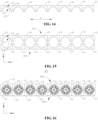
- Fig. 15 is a schematic diagram of an arrangement of the two rows of brackets 20 provided by some examples of the present application
- Fig. 16 is a schematic structure view of a battery 100 including two rows of brackets 20 provided by some examples of the present application.
- the battery 100 includes two rows of brackets 20 arranged along the second direction B.
- the two rows of brackets 20 are respectively defined as a first row 20a and a second row 20b.
- Each row of brackets 20 includes a plurality of brackets 20 arranged side by side along the first direction A.
- the number of brackets 20 in the first row 20a is the same as that in the second row 20b, and the brackets 20 in the first row 20a are disposed in one-to-one correspondence with the brackets 20 in the second row 20b.
- Each bracket 20 is provided with an accommodating part 23.
- the inlet of the accommodating part 23 of each bracket 20 in the first row 20a is disposed opposite to the inlet of the accommodating part 23 of the corresponding bracket 20 in the second row 20b, and each bracket 20 in the first row 20a and the corresponding bracket 20 in the second row 20b jointly limit the position of the corresponding battery cell 10.
- the battery 100 includes at least three rows of brackets 20 arranged along the first direction A.
- Fig. 17 is a schematic diagram of the arrangement of the three rows of brackets 20 provided by some examples of the present application
- Fig. 18 is a schematic structural view of a battery 100 including the three rows of brackets 20 as provided by some examples of the present application.
- the at least three rows of brackets 20 two rows of brackets 20 located at the end portion are defined as the first row 20a and the second row 20b respectively, and the rest are the middle row 20c.
- Each row of brackets 20 includes a plurality of brackets 20 arranged side by side along the second direction B, and the number of brackets 20 in each row is the same.
- Each bracket 20 is provided with an accommodating part 23, and the corresponding brackets 20 in two adjacent rows jointly limit the battery cell 10.
- brackets 20 of the first row 20a and the second row 20b are each provided with one accommodating part 23, and each bracket 20 of the middle row 20c is provided with two accommodating parts 23 that are opposite to each other.
- the side of the bracket 20 opposite to the corresponding battery cell 10 is a plane.
- the side of each bracket 20 opposite to the battery cell 10 is a plane.
- the battery cell 10 includes at least three rows of brackets 20, the sides of the brackets 20 opposite to the battery cell 10 in the first row 20a and the second row 20b located at two ends of the battery cell are each a plane.
- the side of the bracket 20 opposite to the corresponding battery cell 10 is a plane, which facilitates the mounting of the bracket 20 and enables the bracket 20 to better cooperate with other structures.
- first position-limiting portions 13 are disposed on the side wall 111, and the two first position-limiting portions 13 are arranged at intervals on the side wall 111 of the case 11 along the axial direction; and each of the second position-limiting portions 21 is configured to be snap fitted with one of the first position-limiting portions 13.
- the two first position-limiting portions 13 are arranged at intervals along the axial direction of the battery cell 10, and the structures of the two first position-limiting portions 13 may be the same or different.
- the two first position-limiting portions 13 are both annular grooves disposed on the side wall 111.
- one of the two first position-limiting portions 13 is a clamping groove, and the other is a second protrusion (not shown).
- the distance between the two first position-limiting portions 13 does not exceed the dimension of the bracket 20 along the axial direction of the battery cell 10.
- the two first position-limiting portions 13 are arranged at intervals along the axial direction of the battery cell 10, and correspondingly, two second position-limiting portions 21 are provided on the bracket 20 at intervals along the axial direction of the battery cell 10.
- the second position-limiting portions 21 are disposed in one-to-one correspondence with the first position-limiting portions 13, and each second position-limiting portion 21 is configured to be snap fitted with one of the first position-limiting portions 13, so as to more firmly limit the position of the battery cell 10 in the axial direction.
- the case 11 is cylindrical. Of course, the case 11 can also be a rectangular structure.
- the case 11 of the battery cell 10 is cylindrical, that is, the case 11 has a regular structure, which is more convenient for the battery cell 10 to be mounted on the bracket 20.
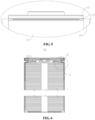
- Fig. 19 is a schematic structural view of a battery 100 provided by some examples of the present application.
- the battery 100 further includes a box body 30, the battery cell 10 is accommodated in the box body 30, and the bracket 20 is fixed in the box body 30.
- the box body 30 is used for providing a mounting space 31 for the battery cell 10 and the bracket 20.
- the box body 30 may include a first part 32 and a second part 33 that cover each other to define a mounting space 31 for accommodating the battery cell 10.
- the connection between the first part 32 and the second part 33 may be sealed by a sealing member (not shown), and the sealing member may be a sealing ring, a sealing glue or the like.
- the first part 32 and the second part 33 may have various shapes, such as cuboid, cylinder, etc.
- the first part 32 may be a hollow structure with one side open
- the second part 33 may also be a hollow structure with one side open
- the open side of the second part 33 covers the open side of the first part 32, so as to form a box body 30 having a mounting space 31.
- the first part 32 is a hollow structure with one side open
- the second part 33 is a plate structure, and the second part 33 covers the open side of the first part 32 to form the box body 30 having the mounting space 31.
- the bracket 20 may be fixed in the mounting space 31 of the box body 30 by means of bolts, screws, adhesives, or the like.
- the bracket 20 is fixed in the box body 30 to prevent the bracket 20 from moving in the box body 30, thereby reducing the possibility of the battery cell 10 moving in the box body 30.
- the battery 100 there may be one or more battery cells 10. If there are a plurality of battery cells 10, the plurality of battery cells 10 can be connected in series or parallel or in a parallel-series connection manner, and the parallel-series connection refers to that there are both series and parallel connections among the plurality of battery cells 10.
- the plurality of battery cells 10 can be directly connected in series or parallel or in a parallel-series connection manner, and then the entirety of the plurality of battery cells 10 is accommodated in the box body 30; and of course, it may also be the situation that the plurality of battery cells 10 are first connected in series or parallel or in a parallel-series connection manner to form a module of the battery 100, and then a plurality of modules of the battery 100 are connected in series or parallel or in a parallel-series connection manner to form a whole that is accommodated in the box body 30.
- the battery 100 may further include a bus member (not shown), and the electrical connection among the plurality of battery cells 10 can be achieved through the bus member, so as to realize the series connection or parallel connection or parallel-series connection of the plurality of battery cells 10.
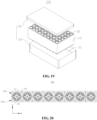
- Fig. 20 is a schematic structural view of a battery 100 provided by yet still other examples of the present application.
- the bracket 20 is further provided with a flow channel 25 configured to accommodate a fluid for regulating the temperature of the battery cell 10.
- the fluid is accommodated in the flow channel 25 and can exchange heat with the battery cell 10 through the bracket 20, thereby regulating the temperature of the battery cell 10.
- the fluid may be a gas or liquid.
- the temperature of the battery cell 10 can be regulated according to the temperature required for the normal operation of the battery 100.
- the fluid contained in the flow channel 25 increases the temperature of the battery cell 10 to make the battery cell 10 operate normally when the environmental temperature is relatively lower, and the fluid contained in the flow channel 25 reduces the temperature of the battery cell 10 to make the battery cell 10 operate normally and ensure the safety of the battery 100 when the environmental temperature or the temperature of the battery cell 10 is too high.
- the flow channel 25 not only can accommodate the fluid that regulates the temperature of the battery cell 10 to regulate the temperature of the battery cell 10, but also can reduce the weight of the bracket 20, thereby reducing the weight of the battery 100.
- the flow channel 25 runs through both ends of the bracket 20, along the axial direction of the battery cell 10.
- the flow channel 25 runs through both ends of the bracket 20 along the axial direction of the battery cell 10.
- the fluid can flow into the flow channel 25 from one end of the flow channel 25 and flow out of the flow channel 25 from the other end of the flow channel 25, and during the process of flowing in the flow channel 25, the fluid exchanges heat with the battery cell 10 through the bracket 20, so as to regulate the temperature of the battery cell 10.
- Each bracket 20 is correspondingly provided with at least one flow channel 25.
- the flow channel runs through both ends of the bracket 20, which facilitates the heat exchange between the fluid flowing through the flow channel 25 and the battery cell 10, and improves the temperature regulation efficiency of the battery cell 10.
- the battery 100 includes a battery cell 10 and two brackets 20.
- the battery cell 10 is cylindrical, and along the axial direction of the battery cell 10, two first position-limiting portions 13 are arranged on the side wall 111 of the case 11 at intervals, and each first position-limiting portion 13 is an annular groove.
- Each bracket 20 is formed with an accommodating part 23, and the fitting surface 231 of the accommodating part 23 is an arc surface.
- both ends of each accommodating part 23 are provided with second position-limiting portions 21.
- Each second position-limiting portion 21 is provided with a notch 211, and the battery cell 10 is clamped into the notch 211, so that the second position-limiting portion 21 is inserted in the first position-limiting portion 13.
- the two brackets 20 are buckled on the outer periphery of the battery cell 10 from the radial direction of the battery cell 10 oppositely, and form a circumferentially closed cladding space with two axial ends open.
- the two axial ends of the battery cell 10 extend out of the closed space and are respectively located outside the two second position-limiting portions 21, so that the end cover 12 is located outside the sealed space.
- An example of the present application further provides an electrical device including the battery 100 provided by any of the aforementioned examples.
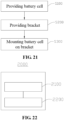
- FIG. 21 is a flowchart of a method for manufacturing a battery 100 as provided by some examples of the present application.
- a method for manufacturing a battery 100 includes:
- the first position-limiting portion 13 on the battery cell 10 and the second position-limiting portion 21 on the bracket 20 are snap fitted, so that not only the axial position limitation of the battery cell 10 can be realized, but also the second position-limiting portion 21 can give place to the end cover 12 to give a space of the battery cell 10 in the axial direction so that the end cover 12 can be actuated to relieve the internal pressure of the battery cell 10 when the internal pressure or temperature of the battery cell 10 reaches a threshold.
- the end cover 12 can be actuated to realize pressure relief without the need of overcoming the limitation of the second position-limiting portion 21 on the bracket 20 that limits the position of the battery cell 10 in the axial direction, and the bracket 20 is prevented from affecting the pressure relief of the battery cell 10, thereby relieving the pressure of the battery cell 10 in time, reducing the risk of explosion caused by excessive internal pressure of the battery cell 10 and the like, and improving the safety performance of the battery cell 10.
- FIG. 22 is a schematic structural view of a device 2000 for manufacturing a battery as provided by examples of the present application.
- the device 2000 for manufacturing a battery includes a providing means 2100 and an assembling means 2200.
- the providing means 2100 is configured to provide a battery cell 10 and a bracket 20.
- the battery cell 10 includes a case 11 and an end cover 12 that are hermetically connected, with a first position-limiting portion 13 being disposed on a side wall 111 of the case 11.
- the bracket 20 is provided with a second position-limiting portion 21; and the assembling means 2200 is configured to mount the battery cell 10 on the bracket 20, so that the second position-limiting portion 21 is snap fitted with the first position-limiting portion 13 to limit the position of the battery cell 10 at least in the axial direction of the battery cell 10.
Landscapes
- Chemical & Material Sciences (AREA)
- Chemical Kinetics & Catalysis (AREA)
- Electrochemistry (AREA)
- General Chemical & Material Sciences (AREA)
- Engineering & Computer Science (AREA)
- Manufacturing & Machinery (AREA)
- Aviation & Aerospace Engineering (AREA)
- Battery Mounting, Suspending (AREA)
- Secondary Cells (AREA)
- Sealing Battery Cases Or Jackets (AREA)
Applications Claiming Priority (1)
| Application Number | Priority Date | Filing Date | Title |
|---|---|---|---|
| PCT/CN2021/115578 WO2023028816A1 (zh) | 2021-08-31 | 2021-08-31 | 电池、用电设备、电池的制造方法及设备 |
Publications (3)
| Publication Number | Publication Date |
|---|---|
| EP4199218A1 true EP4199218A1 (de) | 2023-06-21 |
| EP4199218A4 EP4199218A4 (de) | 2024-11-27 |
| EP4199218B1 EP4199218B1 (de) | 2026-03-18 |
Family
ID=85410675
Family Applications (1)
| Application Number | Title | Priority Date | Filing Date |
|---|---|---|---|
| EP21955388.0A Active EP4199218B1 (de) | 2021-08-31 | 2021-08-31 | Batterie, elektrisches gerät sowie verfahren und vorrichtung zur herstellung einer batterie |
Country Status (6)
| Country | Link |
|---|---|
| US (1) | US20230223638A1 (de) |
| EP (1) | EP4199218B1 (de) |
| JP (1) | JP7602023B2 (de) |
| KR (1) | KR102811128B1 (de) |
| CN (1) | CN116601824A (de) |
| WO (1) | WO2023028816A1 (de) |
Families Citing this family (1)
| Publication number | Priority date | Publication date | Assignee | Title |
|---|---|---|---|---|
| CN118367268B (zh) * | 2024-06-19 | 2024-08-20 | 深圳市泰科动力系统有限公司 | 高功率锂离子电池装置 |
Family Cites Families (17)
| Publication number | Priority date | Publication date | Assignee | Title |
|---|---|---|---|---|
| JPH10106520A (ja) * | 1996-09-26 | 1998-04-24 | Matsushita Electric Ind Co Ltd | 蓄電池電源装置 |
| JPH11167908A (ja) * | 1997-11-10 | 1999-06-22 | Yoshinori Karasuno | 電池及び電池ボックス |
| JP3869733B2 (ja) * | 2002-01-30 | 2007-01-17 | 三洋電機株式会社 | 組電池 |
| JP4182451B1 (ja) * | 2007-07-23 | 2008-11-19 | トヨタ自動車株式会社 | 組電池 |
| TWI433377B (zh) * | 2010-11-29 | 2014-04-01 | Ind Tech Res Inst | 電池盒組 |
| WO2012132186A1 (ja) * | 2011-03-31 | 2012-10-04 | パナソニック株式会社 | 電池モジュール及びその製造方法 |
| WO2012147134A1 (ja) * | 2011-04-28 | 2012-11-01 | トヨタ自動車株式会社 | 組電池及び車両 |
| CN203103373U (zh) * | 2013-01-11 | 2013-07-31 | 深圳市丰达电池配件有限公司 | 锂系列电池组合支架 |
| CN106601950A (zh) * | 2016-12-03 | 2017-04-26 | 深圳市沃特玛电池有限公司 | 一种电池安装结构 |
| JP6994682B2 (ja) * | 2017-03-31 | 2022-02-04 | パナソニックIpマネジメント株式会社 | 電池 |
| JP7094080B2 (ja) * | 2017-05-26 | 2022-07-01 | 昭和電工株式会社 | 円筒型電池冷却用熱交換器 |
| KR102369773B1 (ko) * | 2018-05-04 | 2022-03-02 | 주식회사 엘지에너지솔루션 | 스몰전지팩 쉘 어셈블리 |
| CN208385495U (zh) * | 2018-07-11 | 2019-01-15 | 宁德时代新能源科技股份有限公司 | 电池模组 |
| CN112534627B (zh) * | 2018-08-06 | 2024-03-01 | 株式会社村田制作所 | 电池支架、电池组、电子设备及电动车辆 |
| CN112018302B (zh) * | 2020-10-19 | 2021-05-04 | 江苏时代新能源科技有限公司 | 电池、用电装置、制备电池的方法和设备 |
| CN113300037B (zh) * | 2020-12-01 | 2023-12-08 | 江苏时代新能源科技有限公司 | 电池、用电设备及电池的制造方法 |
| CN113258124B (zh) * | 2021-07-06 | 2021-12-28 | 江苏时代新能源科技有限公司 | 电池单体、电池、用电设备及电池单体的制造方法和设备 |
-
2021
- 2021-08-31 WO PCT/CN2021/115578 patent/WO2023028816A1/zh not_active Ceased
- 2021-08-31 CN CN202180082918.3A patent/CN116601824A/zh active Pending
- 2021-08-31 JP JP2023515783A patent/JP7602023B2/ja active Active
- 2021-08-31 KR KR1020237009071A patent/KR102811128B1/ko active Active
- 2021-08-31 EP EP21955388.0A patent/EP4199218B1/de active Active
-
2023
- 2023-03-21 US US18/187,185 patent/US20230223638A1/en active Pending
Also Published As
| Publication number | Publication date |
|---|---|
| JP7602023B2 (ja) | 2024-12-17 |
| KR20230051559A (ko) | 2023-04-18 |
| EP4199218A4 (de) | 2024-11-27 |
| EP4199218B1 (de) | 2026-03-18 |
| WO2023028816A1 (zh) | 2023-03-09 |
| US20230223638A1 (en) | 2023-07-13 |
| KR102811128B1 (ko) | 2025-05-21 |
| JP2023543680A (ja) | 2023-10-18 |
| CN116601824A (zh) | 2023-08-15 |
Similar Documents
| Publication | Publication Date | Title |
|---|---|---|
| EP4167368B1 (de) | Batteriezelle, batterie, stromverbrauchsgerät, verfahren und vorrichtung zur herstellung einer batteriezelle | |
| CN216085077U (zh) | 用于电池单体的端盖组件、电池单体、电池和用电装置 | |
| US11710872B2 (en) | Battery cell, battery, power consumption device and manufacturing device and method for battery cell | |
| US20240283099A1 (en) | Battery cell, battery, power consumption device, and method and device for producing battery cell | |
| EP4235919A2 (de) | Batteriezelle, batterie, stromverbrauchsvorrichtung sowie batterieherstellungsverfahren und -vorrichtung | |
| US20230216077A1 (en) | Spirally wound electrode assembly, battery cell, battery and electric apparatus | |
| US20240283059A1 (en) | Battery cell, method and system for manufacturing battery cell, battery, and electrical device | |
| CN216720146U (zh) | 电池和用电设备 | |
| US20240356116A1 (en) | Battery cell, battery, electrical device, and manufacturing device and method for battery cell | |
| US20240297401A1 (en) | Battery cell, battery, electrical device, and method and device for preparing battery | |
| US20230369711A1 (en) | End cap, battery cell, battery and power consuming device | |
| US20250226546A1 (en) | Battery cell, battery, and electrical device | |
| EP4181281A1 (de) | Batterie, elektrische vorrichtung sowie verfahren und vorrichtung zur herstellung der batterie | |
| US20230223638A1 (en) | Battery, electrical device, and method and device for manufacturing battery | |
| CN217485645U (zh) | 端盖组件、电池单体、电池和用电设备 | |
| KR102896570B1 (ko) | 배터리 셀 및 그 제조 방법, 제조 장치, 배터리, 전기 장치 | |
| US20240429504A1 (en) | Battery cell and manufacturing method therefor and battery | |
| US20240413495A1 (en) | Battery cell, battery, electric device, and manufacturing method | |
| US20240347824A1 (en) | End cover assembly, battery cell, battery, and electrical device | |
| EP4518008A1 (de) | Batteriezelle, batterie und elektrische vorrichtung | |
| EP4354614B1 (de) | Batteriezelle, batterie, elektrische vorrichtung und herstellungsverfahren für batteriezelle | |
| WO2022226964A1 (zh) | 连接部件、电池单体、电池及用电设备 | |
| CN223967344U (zh) | 电池单体、电池装置以及用电装置 | |
| CN118867538B (zh) | 电池装置以及用电装置 | |
| CA3183528C (en) | Pressure relief apparatus, battery cell, battery, and electrical device |
Legal Events
| Date | Code | Title | Description |
|---|---|---|---|
| STAA | Information on the status of an ep patent application or granted ep patent |
Free format text: STATUS: THE INTERNATIONAL PUBLICATION HAS BEEN MADE |
|
| PUAI | Public reference made under article 153(3) epc to a published international application that has entered the european phase |
Free format text: ORIGINAL CODE: 0009012 |
|
| STAA | Information on the status of an ep patent application or granted ep patent |
Free format text: STATUS: REQUEST FOR EXAMINATION WAS MADE |
|
| 17P | Request for examination filed |
Effective date: 20230314 |
|
| AK | Designated contracting states |
Kind code of ref document: A1 Designated state(s): AL AT BE BG CH CY CZ DE DK EE ES FI FR GB GR HR HU IE IS IT LI LT LU LV MC MK MT NL NO PL PT RO RS SE SI SK SM TR |
|
| RAP1 | Party data changed (applicant data changed or rights of an application transferred) |
Owner name: CONTEMPORARY AMPEREX TECHNOLOGY(HONG KONG) LIMITED |
|
| A4 | Supplementary search report drawn up and despatched |
Effective date: 20241024 |
|
| RIC1 | Information provided on ipc code assigned before grant |
Ipc: H01M 50/244 20210101AFI20241018BHEP |
|
| DAV | Request for validation of the european patent (deleted) | ||
| DAX | Request for extension of the european patent (deleted) | ||
| GRAP | Despatch of communication of intention to grant a patent |
Free format text: ORIGINAL CODE: EPIDOSNIGR1 |
|
| STAA | Information on the status of an ep patent application or granted ep patent |
Free format text: STATUS: GRANT OF PATENT IS INTENDED |
|
| INTG | Intention to grant announced |
Effective date: 20251015 |
|
| GRAS | Grant fee paid |
Free format text: ORIGINAL CODE: EPIDOSNIGR3 |
|
| GRAA | (expected) grant |
Free format text: ORIGINAL CODE: 0009210 |
|
| STAA | Information on the status of an ep patent application or granted ep patent |
Free format text: STATUS: THE PATENT HAS BEEN GRANTED |
|
| AK | Designated contracting states |
Kind code of ref document: B1 Designated state(s): AL AT BE BG CH CY CZ DE DK EE ES FI FR GB GR HR HU IE IS IT LI LT LU LV MC MK MT NL NO PL PT RO RS SE SI SK SM TR |
|
| REG | Reference to a national code |
Ref country code: CH Ref legal event code: F10 Free format text: ST27 STATUS EVENT CODE: U-0-0-F10-F00 (AS PROVIDED BY THE NATIONAL OFFICE) Effective date: 20260318 Ref country code: GB Ref legal event code: FG4D |