EP4199500A1 - Procédé destiné à de multiples applications afin de partager une caméra, et dispositif électronique - Google Patents
Procédé destiné à de multiples applications afin de partager une caméra, et dispositif électronique Download PDFInfo
- Publication number
- EP4199500A1 EP4199500A1 EP21863541.5A EP21863541A EP4199500A1 EP 4199500 A1 EP4199500 A1 EP 4199500A1 EP 21863541 A EP21863541 A EP 21863541A EP 4199500 A1 EP4199500 A1 EP 4199500A1
- Authority
- EP
- European Patent Office
- Prior art keywords
- image
- camera
- application
- instance
- parameter set
- Prior art date
- Legal status (The legal status is an assumption and is not a legal conclusion. Google has not performed a legal analysis and makes no representation as to the accuracy of the status listed.)
- Pending
Links
Images







Classifications
-
- H—ELECTRICITY
- H04—ELECTRIC COMMUNICATION TECHNIQUE
- H04N—PICTORIAL COMMUNICATION, e.g. TELEVISION
- H04N21/00—Selective content distribution, e.g. interactive television or video on demand [VOD]
- H04N21/20—Servers specifically adapted for the distribution of content, e.g. VOD servers; Operations thereof
- H04N21/21—Server components or server architectures
- H04N21/218—Source of audio or video content, e.g. local disk arrays
- H04N21/21805—Source of audio or video content, e.g. local disk arrays enabling multiple viewpoints, e.g. using a plurality of cameras
-
- H—ELECTRICITY
- H04—ELECTRIC COMMUNICATION TECHNIQUE
- H04N—PICTORIAL COMMUNICATION, e.g. TELEVISION
- H04N23/00—Cameras or camera modules comprising electronic image sensors; Control thereof
- H04N23/60—Control of cameras or camera modules
-
- H—ELECTRICITY
- H04—ELECTRIC COMMUNICATION TECHNIQUE
- H04N—PICTORIAL COMMUNICATION, e.g. TELEVISION
- H04N5/00—Details of television systems
- H04N5/222—Studio circuitry; Studio devices; Studio equipment
- H04N5/262—Studio circuits, e.g. for mixing, switching-over, change of character of image, other special effects ; Cameras specially adapted for the electronic generation of special effects
-
- B—PERFORMING OPERATIONS; TRANSPORTING
- B60—VEHICLES IN GENERAL
- B60R—VEHICLES, VEHICLE FITTINGS, OR VEHICLE PARTS, NOT OTHERWISE PROVIDED FOR
- B60R1/00—Optical viewing arrangements; Real-time viewing arrangements for drivers or passengers using optical image capturing systems, e.g. cameras or video systems specially adapted for use in or on vehicles
-
- H—ELECTRICITY
- H04—ELECTRIC COMMUNICATION TECHNIQUE
- H04N—PICTORIAL COMMUNICATION, e.g. TELEVISION
- H04N21/00—Selective content distribution, e.g. interactive television or video on demand [VOD]
- H04N21/20—Servers specifically adapted for the distribution of content, e.g. VOD servers; Operations thereof
- H04N21/21—Server components or server architectures
- H04N21/218—Source of audio or video content, e.g. local disk arrays
- H04N21/2187—Live feed
-
- H—ELECTRICITY
- H04—ELECTRIC COMMUNICATION TECHNIQUE
- H04N—PICTORIAL COMMUNICATION, e.g. TELEVISION
- H04N23/00—Cameras or camera modules comprising electronic image sensors; Control thereof
- H04N23/60—Control of cameras or camera modules
- H04N23/62—Control of parameters via user interfaces
-
- H—ELECTRICITY
- H04—ELECTRIC COMMUNICATION TECHNIQUE
- H04N—PICTORIAL COMMUNICATION, e.g. TELEVISION
- H04N21/00—Selective content distribution, e.g. interactive television or video on demand [VOD]
- H04N21/40—Client devices specifically adapted for the reception of or interaction with content, e.g. set-top-box [STB]; Operations thereof
- H04N21/41—Structure of client; Structure of client peripherals
- H04N21/422—Input-only peripherals, i.e. input devices connected to specially adapted client devices, e.g. global positioning system [GPS]
- H04N21/4223—Cameras
-
- H—ELECTRICITY
- H04—ELECTRIC COMMUNICATION TECHNIQUE
- H04N—PICTORIAL COMMUNICATION, e.g. TELEVISION
- H04N23/00—Cameras or camera modules comprising electronic image sensors; Control thereof
- H04N23/90—Arrangement of cameras or camera modules, e.g. multiple cameras in TV studios or sports stadiums
Definitions
- a plurality of applications may request to use a same target camera, but require different image parameter sets.
- image parameters of which common parts are maximized and that are in the image parameter sets may be obtained based on the image parameter sets of the plurality of applications that use the same target camera, and sent to the corresponding camera, to control the camera to collect data based on the image parameters.
- the maximized image parameter needs to match a capability of the target camera, and in another aspect, the maximized image parameter is an image parameter that meets a maximization requirement and that is in the image parameter sets of the plurality of applications that use the same target camera, so that image data collected by the camera may meet an image parameter requirement of a corresponding application directly or after image processing is performed.
- the method further includes: in response to an image obtaining request sent by a fourth application, where the image obtaining request is used to request to obtain, from a second camera, image data that meets a third image parameter set, performing the following operations: creating a fourth image consumer instance corresponding to the fourth application; obtaining a corresponding third image provider instance based on the second camera and the third image parameter set that are requested by the image obtaining request sent by the fourth application, where the third image parameter set is the same as or different from the first image parameter set; and establishing an association between the fourth image consumer instance and the third image provider instance; and in response to receiving image data from the second camera, performing the following operations: The third image provider instance processes, based on the fourth image parameter set, the received image data collected by the second camera, and sends processed image data to the fourth image consumer instance associated with the third image provider instance; and the fourth image consumer instance sends the received image data to the fourth application.
- the different applications need to be associated with different image provider instances.
- the different image provider instances obtain image data from corresponding cameras based on cameras and image parameter sets corresponding to the different applications, and process image data based on the corresponding image parameter sets, to meet a requirement that the different applications use the different cameras and require the different image parameters.
- the method further includes: sending a control instruction to the first camera, where the control instruction carries an image parameter that is used to control the first camera to collect image data, and the image parameter matches an image parameter supported by the first camera, and is an image parameter that is in the first image parameter set and the third image parameter set and that meets a maximization requirement.
- an electronic device includes one or more processors and one or more memories.
- the one or more memories store one or more computer programs, the one or more computer programs include instructions, and when the instructions are executed by the one or more processors, the electronic device is enabled to perform the technical solution according to any one of the first aspect and the possible designs of the first aspect.
- a computer-readable storage medium includes a computer program, and when the computer program is run on an electronic device, the electronic device is enabled to perform the technical solution according to any one of the first aspect and the possible designs of the first aspect.
- a program product is further provided.
- the program product includes instructions.
- the instructions When the instructions are run on a computer, the computer is enabled to perform the technical solution according to any one of the first aspect and the possible designs of the first aspect.
- the instructions when the instructions are run on a computer, the computer is enabled to perform the technical solution according to any one of the second aspect and the possible designs of the second aspect.
- an instance in the field of computer technologies, an instance is obtained by instantiating an object or a class.
- a class is a reflection of an entity in the real world or the thinking world in a computer, and encapsulates data and operations on the data.
- An object is a variable with a class type.
- the class and the object are most basic concepts in object-oriented programming technologies. The object or the class cannot be directly used after being defined, and can be used only after being instantiated.
- An instance can be obtained by instantiating an object or a class, to implement a function.
- An object or a class may be instantiated into a plurality of instances, and different instances run independently of each other.
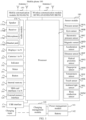
- the processor 110 may include one or more processing units.
- the processor 110 may include an application processor (application processor, AP), a modem processor, a graphics processing unit (graphics processing unit, GPU), an image signal processor (image signal processor, ISP), a controller, a memory, a video codec, a digital signal processor (digital signal processor, DSP), a baseband processor, and/or a neural-network processing unit (neural-network processing unit, NPU).
- Different processing units may be independent components, or may be integrated into one or more processors.
- the controller may be a nerve center and a command center of the electronic device 100. The controller may generate an operation control signal based on an instruction operation code and a time sequence signal, to complete control of instruction reading and instruction execution.
- the USB interface 130 is an interface that conforms to a USB standard specification, and may be specifically a mini USB interface, a micro USB interface, a USB type-C interface, or the like.
- the USB interface 130 may be configured to connect to a charger to charge the electronic device 100, or may be configured to transmit data between the electronic device 100 and a peripheral device.
- the charging management module 140 is configured to receive a charging input from a charger.
- the power management module 141 is configured to connect the battery 142 and the charging management module 140 to the processor 110.
- the power management module 141 receives an input from the battery 142 and/or the charging management module 140, to supply power to the processor 110, the internal memory 121, an external memory, the display 194, the camera 193, the wireless communication module 160, and the like.
- a wireless communication function of the electronic device 100 may be implemented by using the antenna 1, the antenna 2, the mobile communication module 150, the wireless communication module 160, the modem processor, the baseband processor, and the like.
- the antenna 1 and the antenna 2 are configured to transmit and receive an electromagnetic wave signal.
- Each antenna in the electronic device 100 may be configured to cover one or more communication frequency bands. Different antennas may be further multiplexed to improve antenna utilization.
- the antenna 1 may be multiplexed as a diversity antenna of a wireless local area network.
- the antenna may be used in combination with a tuning switch.
- the mobile communication module 150 may provide a solution that is applied to the electronic device 100 and that includes wireless communication such as 2G, 3G, 4G, and 5G.
- the mobile communication module 150 may include at least one filter, a switch, a power amplifier, a low noise amplifier (low noise amplifier, LNA), and the like.
- the mobile communication module 150 may receive an electromagnetic wave through the antenna 1, perform processing such as filtering or amplification on the received electromagnetic wave, and transmit a processed electromagnetic wave to the modem processor for demodulation.
- the mobile communication module 150 may further amplify a signal modulated by the modem processor, and convert an amplified signal into an electromagnetic wave for radiation through the antenna 1.
- at least some function modules in the mobile communication module 150 may be disposed in the processor 110.
- at least some function modules in the mobile communication module 150 may be disposed in a same device as at least some modules in the processor 110.
- the wireless communication module 160 may provide a solution that is applied to the electronic device 100 and that includes wireless communication such as a wireless local area network (wireless local area network, WLAN) (for example, a wireless fidelity (wireless fidelity, Wi-Fi) network), Bluetooth (Bluetooth, BT), a global navigation satellite system (global navigation satellite system, GNSS), frequency modulation (frequency modulation, FM), near field communication (near field communication, NFC), and an infrared (infrared, IR) technology.
- the wireless communication module 160 may be one or more components integrating at least one communication processing module.
- the wireless communication module 160 receives an electromagnetic wave through the antenna 2, performs frequency modulation and filtering processing on an electromagnetic wave signal, and sends a processed signal to the processor 110.
- the wireless communication module 160 may further receive a to-be-sent signal from the processor 110, perform frequency modulation and amplification on the signal, and convert a processed signal into an electromagnetic wave for radiation through the antenna 2.
- the antenna 1 and the mobile communication module 150 are coupled, and the antenna 2 and the wireless communication module 160 are coupled, so that the electronic device 100 can communicate with a network and another device by using a wireless communication technology.
- the wireless communication technology may include a global system for mobile communications (global system for mobile communications, GSM), a general packet radio service (general packet radio service, GPRS), code division multiple access (code division multiple access, CDMA), wideband code division multiple access (wideband code division multiple access, WCDMA), time-division code division multiple access (time-division code division multiple access, TD-SCDMA), long term evolution (long term evolution, LTE), BT, a GNSS, a WLAN, NFC, FM, an IR technology, and/or the like.
- GSM global system for mobile communications
- GPRS general packet radio service
- code division multiple access code division multiple access
- CDMA wideband code division multiple access
- WCDMA wideband code division multiple access
- time-division code division multiple access time-division code
- the GNSS may include a global positioning system (global positioning system, GPS), a global navigation satellite system (global navigation satellite system, GLONASS), a BeiDou navigation satellite system (BeiDou navigation satellite system, BDS), a quasi-zenith satellite system (quasi-zenith satellite system, QZSS), and/or a satellite based augmentation system (satellite based augmentation system, SBAS).
- GPS global positioning system
- GLONASS global navigation satellite system
- BeiDou navigation satellite system BeiDou navigation satellite system
- BDS BeiDou navigation satellite system
- QZSS quasi-zenith satellite system
- SBAS satellite based augmentation system
- the display 194 is configured to display a display interface of an application, for example, a viewfinder interface of a camera application.
- the display 194 includes a display panel.
- the display panel may be a liquid crystal display (liquid crystal display, LCD), an organic light-emitting diode (organic light-emitting diode, OLED), an active-matrix organic light-emitting diode (active-matrix organic light-emitting diode, AMOLED), a flexible light-emitting diode (flexible light-emitting diode, FLED), a mini-LED, a micro-LED, a micro-OLED, a quantum dot light-emitting diode (quantum dot light-emitting diode, QLED), or the like.
- the electronic device 100 may include one or N displays 194, where N is a positive integer greater than 1.
- the electronic device 100 may implement a photographing function by using the ISP, the camera 193, the video codec, the GPU, the display 194, the application processor, and the like.
- the ISP is configured to process data fed back by the camera 193. For example, during photographing, a shutter is pressed, and light is transmitted to a photosensitive element of the camera through a lens. An optical signal is converted into an electrical signal, and the photosensitive element of the camera transmits the electrical signal to the ISP for processing, to convert the electrical signal into a visible image.
- the ISP may further perform algorithm optimization on noise, brightness, and complexion of the image.
- the ISP may further optimize parameters such as exposure and a color temperature of a photographing scenario.
- the ISP may be disposed in the camera 193.
- the camera 193 is configured to capture a static image or a video. An optical image of an object is generated through the lens, and is projected onto the light-sensitive element.
- the photosensitive element may be a charge coupled device (charge coupled device, CCD) or a complementary metal-oxide-semiconductor (complementary metal-oxide-semiconductor, CMOS) phototransistor.
- CCD charge coupled device
- CMOS complementary metal-oxide-semiconductor
- the photosensitive element converts an optical signal into an electrical signal, and then transmits the electrical signal to the ISP to convert the electrical signal into a digital image signal.
- the ISP outputs the digital image signal to the DSP for processing.
- the DSP converts the digital image signal into an image signal in a standard format such as RGB or YUV.
- the electronic device 100 may include one or N cameras 193, where N is a positive integer greater than 1.
- the video codec is configured to compress or decompress a digital video.
- the electronic device 100 may support one or more video codecs. In this way, the electronic device 100 may play or record videos in a plurality of coding formats, for example, moving picture experts group (moving picture experts group, MPEG)-1, MPEG-2, MPEG-3, and MPEG-4.
- MPEG moving picture experts group
- the internal memory 121 may be configured to store computer-executable program code.
- the executable program code includes instructions.
- the processor 110 runs the instructions stored in the internal memory 121, to perform various function applications and data processing of the electronic device 100.
- the internal memory 121 may include a program storage area and a data storage area.
- the program storage area may store an operating system, software code of at least one application, and the like.
- the data storage area may store data (for example, a shot image or a recorded video) or the like generated when the electronic device 100 is used.
- the internal memory 121 may include a high-speed random access memory, or may include a nonvolatile memory such as at least one magnetic disk storage device, a flash memory device, or a universal flash storage (universal flash storage, UFS).
- the external memory interface 120 may be configured to connect to an external storage card, for example, a micro SD card, to extend a storage capability of the electronic device.
- the external storage card communicates with the processor 110 through the external memory interface 120, to implement a data storage function. For example, a file such as a picture or a video is stored in the external storage card.
- the distance sensor 180F is configured to measure a distance.
- the electronic device 100 may measure a distance in an infrared manner or a laser manner. In some embodiments, in a photographing scenario, the electronic device 100 may measure a distance by using the distance sensor 180F to implement quick focusing.
- the optical proximity sensor 180G may include, for example, a light-emitting diode (LED), and an optical detector, for example, a photodiode.
- the light-emitting diode may be an infrared light-emitting diode.
- the electronic device 100 emits infrared light by using the light-emitting diode.
- the electronic device 100 detects infrared reflected light from a nearby object by using the photodiode.
- the electronic device 100 may detect, by using the optical proximity sensor 180G, that a user holds the electronic device 100 close to an ear for a call, to automatically turn off a screen for power saving.
- the optical proximity sensor 180G may also be used in a smart cover mode or a pocket mode to automatically perform screen unlocking or locking.
- the temperature sensor 180J is configured to detect a temperature.
- the electronic device 100 executes a temperature processing policy through the temperature detected by the temperature sensor 180J. For example, when the temperature reported by the temperature sensor 180J exceeds a threshold, the electronic device 100 lowers performance of a processor nearby the temperature sensor 180J, to reduce power consumption for thermal protection.
- the electronic device 100 heats the battery 142 to prevent the electronic device 100 from being shut down abnormally due to a low temperature.
- the electronic device 100 boosts an output voltage of the battery 142, to avoid abnormal shutdown caused by a low temperature.
- the touch sensor 180K is also referred to as a touch panel.
- the touch sensor 180K may be disposed on the display 194, and the touch sensor 180K and the display 194 constitute a touchscreen, which is also referred to as a "touch screen”.
- the touch sensor 180K is configured to detect a touch operation performed on or near the touch sensor.
- the touch sensor may transfer the detected touch operation to the application processor, to determine a type of a touch event.
- a visual output related to the touch operation may be provided through the display 194.
- the touch sensor 180K may also be disposed on a surface of the electronic device 100 at a location different from that of the display 194.
- the bone conduction sensor 180M may obtain a vibration signal.
- the bone conduction sensor 180M may obtain a vibration signal of a vibration bone of a human vocal-cord part.
- the bone conduction sensor 180M may also be in contact with a body pulse to receive a blood pressure beating signal.
- the indicator 192 may be an indicator light, and may be configured to indicate a charging status and a power change, or may be configured to indicate a message, a missed call, a notification, and the like.
- the SIM card interface 195 is configured to connect to a SIM card. The SIM card may be inserted into the SIM card interface 195 or removed from the SIM card interface 195, to implement contact with or separation from the electronic device 100.
- FIG. 1 do not constitute a specific limitation on the electronic device 100.
- a mobile phone may further include more or fewer components than those shown in the figure, or combine some components, or split some components, or have different component arrangements.
- a combination/connection relationship between the components in FIG. 1 may also be adjusted and modified.
- FIG. 2 is a block diagram of a software structure of an electronic device according to an embodiment of this application.
- the software structure of the electronic device may be a layered architecture.
- software may be divided into several layers, and each layer has a clear role and responsibility.
- the layers communicate with each other through a software interface.
- an Android system is divided into four layers: an application layer, an application framework (framework, FWK) layer, an Android runtime (Android runtime) and system library, and a kernel layer from top to bottom.
- the application layer may include a series of application packages. As shown in FIG. 2 , the application layer may include Camera, Settings, a skin module, a user interface (user interface, UI), a third-party application, and the like.
- the third-party application may include Gallery, Calendar, Phone, Map, Navigation, WLAN, Bluetooth, Music, Videos, and Messages.
- the application framework layer provides an application programming interface (application programming interface, API) and a programming framework for an application at the application layer.
- the application framework layer may include some predefined functions. As shown in FIG. 2 , the application framework layer may include a window manager, a content provider, a view system, a phone manager, a resource manager, a notification manager, and the like.
- the window manager is used to manage a window program.
- the window manager may obtain a size of a display, determine whether there is a status bar, perform screen locking, take a screenshot, and the like.
- the content provider is used to store and obtain data, and enable the data to be accessed by an application.
- the data may include a video, an image, audio, calls that are made and answered, a browsing history, a bookmark, a phone book, and the like.
- the phone manager is used to provide a communication function of the electronic device, for example, management of a call status (including answering, declining, or the like).
- the resource manager provides various resources such as a localized character string, an icon, an image, a layout file, and a video file for an application.
- the notification manager enables an application to display notification information in a status bar, and may be used to convey a notification message.
- the notification manager may automatically disappear after a short pause without requiring a user interaction.
- the notification manager is used to notify download completion, give a message notification, and the like.
- the notification manager may alternatively be a notification that appears in a top status bar of the system in a form of a graph or a scroll bar text, for example, a notification of an application that is run in a background, or may be a notification that appears on a screen in a form of a dialog window.
- text information is displayed in the status bar, an announcement is given, the electronic device vibrates, or the indicator light blinks.
- the system library may include a plurality of function modules, for example, a surface manager (surface manager), a media library (media library), a three-dimensional graphics processing library (for example, an OpenGL ES), and a 2D graphics engine (for example, an SGL).
- a surface manager surface manager
- media library media library
- three-dimensional graphics processing library for example, an OpenGL ES
- 2D graphics engine for example, an SGL
- the media library supports playback and recording in a plurality of frequently used audio and video formats, a static image file, and the like.
- the media library may support a plurality of audio and video encoding formats, for example, MPEG-4, H.264, MP3, AAC, AMR, JPG, and PNG.
- the three-dimensional graphics processing library is used to implement three-dimensional graphics drawing, image rendering, composition, layer processing, and the like.
- the 2D graphics engine is a drawing engine for 2D drawing.
- the kernel layer is a layer between hardware and software.
- the kernel layer includes at least a display driver, a camera driver, an audio driver, and a sensor driver.
- FIG. 3 is an example of a schematic diagram of an architecture for sharing a camera by a plurality of applications according to an embodiment of this application.
- an application A, an application B, and an application C are all applications that can use a camera.
- the application A, the application B, and the application C are connected to a camera virtualization engine 301, the camera virtualization engine 301 is connected to a data transmission module 302, and the data transmission module 302 is connected to a camera A and a camera B.
- the data transmission module 302 may be directly connected to the camera A and the camera B, or may be connected to the camera A and the camera B by using a camera adaptation module.
- the data transmission module 302 is connected to adaptation modules of the camera A and the camera B, and the adaptation modules may control the camera A and the camera B.
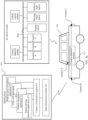
- FIG. 4a shows a vehicle driving scenario.
- a fatigue driving detection application 411, a gesture recognition application 412, a video call application 413, and a parking space recognition application 414 are installed in a mobile phone 410.
- a camera A that can collect an image of a driver is disposed on a dashboard of a vehicle 510.
- a front-facing camera B that can collect a front-facing exterior image of the vehicle is disposed on the front of the vehicle.
- a camera C that can collect a rear-facing exterior image of the vehicle is disposed on the tail of the vehicle.
- the camera A, the camera B, and the camera C are all connected to a camera adaptation module 511 in an in-vehicle system, and working states of the camera A, the camera B, and the camera C may be controlled by the camera adaptation module 511.
- a camera virtualization engine 415 and a data transmission module 416 are further disposed in the mobile phone 410.
- the camera virtualization engine 415 is equivalent to the camera virtualization engine 301 in FIG. 3
- the data transmission module 416 is equivalent to the data transmission module 302 in FIG. 3 .
- the data transmission module 416 may communicate with the in-vehicle system, for example, may send a request for a camera to the in-vehicle system, so that the in-vehicle system controls the camera.
- the data transmission module 416 may further receive, from the in-vehicle system, image or video data collected by the camera.
- the in-vehicle system forms an in-vehicle integrated information processing system based on a vehicle body bus system and an internet service by using a dedicated in-vehicle central processing unit.
- the in-vehicle system may implement a series of applications, including three-dimensional navigation, live traffic, network protocol television (internet protocol television, IPTV), assisted driving, fault detection, vehicle information, vehicle body control, mobile office, wireless communication, an online entertainment function, and a vehicle remote service provider (telematics service provider, TSP) service.
- FIG. 4a shows an example of a partial structure of the in-vehicle system.
- the cameras (for example, the camera A, the camera B, and the camera C) disposed in various parts of the vehicle are connected to the camera adaptation module 511 in the in-vehicle system through a bus.
- the camera adaptation module 511 may send, based on the bus, a control instruction to a corresponding camera, or may receive image or video data collected and sent by the corresponding camera.
- the camera adaptation module 511 may be a function module in a central processing unit, and the function module may be implemented by an SDK of a camera.
- various components such as sensors disposed in the vehicle are also connected to a corresponding control module (for example, a vehicle control module in the figure) through the bus, to exchange information and data, so as to implement a corresponding control function.
- the application A, the application B, the application C, the camera virtualization engine 301, the data transmission module 302, the camera A and the camera B are disposed in an electronic device, that is, the camera A and the camera B are built-in cameras of the electronic device.
- FIG. 4b shows a scenario in which a mobile phone performs network video live broadcasting.
- a first network video live broadcast application 421 and a second network video live broadcast application 422 are installed in a mobile phone 420, and a camera virtualization engine 423 and a data transmission module 424 are disposed.
- a front-facing camera A and two rear-facing cameras are disposed in the mobile phone 420 in a built-in manner.
- quantities of the front-facing camera and the rear-facing camera may be in other cases, and are not limited by the quantity shown in FIG. 4b .
- a plurality of front-facing cameras and a plurality of rear-facing cameras may also be disposed in the mobile phone 420 in a built-in manner.
- the camera virtualization engine 423 is equivalent to the camera virtualization engine 301 in FIG. 3
- the data transmission module 424 is equivalent to the data transmission module 302 in FIG. 3 .
- the application A, the application B, the application C, the camera virtualization engine 301, the data transmission module 302, and the camera A are disposed in an electronic device, and the camera B is independent of the electronic device, for example, disposed in another apparatus.
- connection refers to a communication connection, and two modules, units, components, or the like that are in a communication connection may exchange information, specifically including signaling and/or data exchange.
- a dashed line represents signaling transmission
- a solid line represents data transmission.
- the application A may send an image obtaining request to the camera virtualization engine 301 to request to obtain an image or a video collected by the camera A.
- the camera virtualization engine 301 may send, to the data transmission module 302 based on the image obtaining request sent by the application A, a request for controlling the camera A.
- the data transmission module 302 may send a control instruction to the camera Abased on the request for controlling the camera A, to enable the camera A.
- the camera A may send the data to the data transmission module 302.
- the data transmission module 302 may send the data to the camera virtualization engine 301.
- the camera virtualization engine 301 may send the data to the application A.
- each camera corresponds to one data channel. Therefore, there may be a plurality of data channels between the electronic device and a plurality of cameras at the same time.
- an image obtaining request sent by an application may carry an image parameter set required by the application.
- the camera virtualization engine 301 may perform processing (for example, image format conversion and color space conversion) based on an image parameter required by an application, and send processed data to the corresponding application. If a plurality of applications require a same image parameter, the camera virtualization engine 301 may perform an image processing operation only once for these applications, to obtain image/video data that meets requirements of these applications, and separately send the image/video data to these applications, to avoid repeated operations caused by separately performing data processing for each application, and avoid waste of resource overheads.
- An image parameter set required by an application may include at least one of the following image parameters.
- image parameters are merely examples, and types of the image parameters are not limited in this embodiment of this application. In actual application, more types of image parameters may be included.
- the camera virtualization engine 301 may summarize image parameter sets of a plurality of applications to obtain an image parameter that is used to control a camera to collect data, so that the camera collects image/video data based on the image parameter.
- a plurality of applications may request to use a same target camera, but require different image parameter sets.
- the camera virtualization engine 301 may obtain, based on the image parameter sets of the plurality of applications that use the same target camera, image parameters of which common parts are maximized and that are in the image parameter sets, and send the image parameters to the corresponding camera by using the data transmission module 302, to control the camera to collect data based on the image parameters.
- the maximized image parameter needs to match a capability of the target camera, and in another aspect, the maximized image parameter is an image parameter that meets a maximization requirement and that is in the image parameter sets of the plurality of applications that use the same target camera.
- a matched image parameter or a closest image parameter may be selected from image parameters supported by the target camera and is used as an image collection configuration parameter of the target camera.
- a parameter having a high image requirement may be selected as the image collection configuration parameter of the target camera.
- the camera virtualization engine 301 may perform processing such as format conversion and/or color space conversion, so that processed image/video data meets an application having a relatively low image requirement.
- the application A and the application B request to use a same target camera, an image resolution required by the application A is 480p, an image resolution required by the application B is 720p, and a maximum resolution supported by the target camera is 1080p.
- the camera virtualization engine 301 selects, based on the foregoing case, the resolution 720p as a resolution based on which the target camera collects data (that is, a resolution of an image collected by the camera is 720p).
- the resolution 720p selected by the camera virtualization engine 301 is adaptive to the capability of the target camera, and meets a requirement of the application B. A requirement of the application A may also be met after the resolution is reduced to 480p.
- an image format required by the application A is jpg
- an image format required by the application B is raw (raw is an uncompressed format, and jpg is a lossy compression format)
- image formats supported by the target camera include jpg and raw.
- the camera virtualization engine 301 selects, based on the foregoing case, the image format raw as an image format based on which the target camera collects data (that is, image data collected by the camera is stored in a raw format).
- the image format raw selected by the camera virtualization engine 301 is adaptive to the capability of the target camera, and meets a requirement of the application B.
- a requirement of the application A may also be met by converting an image in a raw format into an image in a jpg format.
- the plurality of APPs inside the mobile phone may simultaneously obtain images of an internal camera or an external camera of the mobile phone, and do not affect each other.
- the image parameter set may further include one or more pieces of editing operation indication information, and one piece of editing operation indication information is used to indicate an editing operation.
- the editing operation indication information may include at least one of the following:
- editing operation type indicated by the foregoing editing operation indication information is merely an example.
- a type of an image editing operation is not limited in this embodiment of this application. In actual application, more types of image editing operations may be included.
- the image parameter set may further include rotation angle indication information.
- the image parameter set may further include a cropping manner or cropping policy information, to indicate a cropping location, a cropping size, and/or the like.
- an image consumer instance (ImageConsumer) and an image provider instance (ImageProvider).
- the image provider instance is mainly configured to receive data (which includes image data and/or video data) collected by the camera, process the received data, and send processed data to the image consumer instance.
- the image consumer instance is mainly configured to consume the data collected by the camera, that is, send the data collected by the camera to an application corresponding to the image consumer instance.
- Creation and management of the image consumer instance and the image provider instance may be implemented by the camera virtualization engine 301.
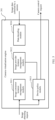
- FIG. 5 shows an example of a schematic diagram of a structure of the camera virtualization engine 301.
- a process of creating an image consumer instance and an image provider instance may include: When an application requests to use a camera (that is, requests to obtain data collected by the camera), the device policy module determines, based on the request, whether a new image provider instance needs to be created; and if the new image provider instance needs to be created, the image provider instance management module 3012 is triggered to create the image provider instance, and the image consumer instance management module 3011 may create, based on the request, the image consumer instance corresponding to the application, and establishes an association between the image consumer instance and the corresponding image provider instance.
- the image consumer instance is in a one-to-one correspondence with the application, and the image provider instance corresponds to the camera requested by the application and an image parameter set required by the application.
- An implementation of establishing the association between the image consumer instance and the image provider instance may be: establishing a mapping relationship table between the image consumer instance and the image provider instance, where the mapping relationship table includes identification information of the image consumer instance and identification information of an image provider instance that has an association relationship with the image consumer instance, and one image provider instance may correspond to one image consumer instance list.
- the mapping relationship table includes identification information of the image consumer instance and identification information of an image provider instance that has an association relationship with the image consumer instance, and one image provider instance may correspond to one image consumer instance list.
- another method may be used to establish the association between the image consumer instance and the image provider instance. This is not limited in this embodiment of this application.
- the device policy module 3013 determines, based on a target camera and an image parameter set that are requested by the request, that an image provider instance corresponding to the target camera and the image parameter set already exists, a new image provider instance does not need to be created, but the image provider instance corresponding to the target camera and the image parameter set is associated with a created image consumer instance. For example, in the mapping relationship table between the image consumer instance and the image provider instance, identification information of an image consumer instance corresponding to the application is added to an image consumer instance list corresponding to the image provider instance corresponding to the target camera and the image parameter set.
- the image consumer instance management module 3011 may delete an image consumer instance corresponding to the application. Further, if determining that an image provider instance associated with the image consumer instance is no longer associated with any image consumer instance after the image consumer instance is deleted, the device policy module 3013 may indicate the image provider instance management module 3012 to delete the image provider instance. Storage resources may be released by deleting the image consumer instance and/or the image provider instance.
- the data decoding module 3014 is mainly configured to decode the data collected by the camera. Specifically, the data decoding module 3014 receives original image/video data (for example, data in H264, H265, or another format) collected by the camera and sent by a data transmission module, and decodes the data into image frame data (for example, data in a YUV or RGB color space) that can be used for image processing, so that the image provider instance performs further image processing.
- original image/video data for example, data in H264, H265, or another format
- image frame data for example, data in a YUV or RGB color space
- the device policy module 3013 may obtain, based on image parameter sets of a plurality of applications that use a same target camera, image parameters of which common parts are maximized and that are in the image parameter sets, and send the image parameters to the corresponding camera by using the data transmission module 302, to control the camera to collect data based on the image parameters.
- image parameters For a specific implementation method, refer to the foregoing content.
- FIG. 6 shows an example of a schematic diagram of a relationship between an application, an image consumer instance, an image provider instance, and a camera.
- one image consumer instance is in a one-to-one correspondence with one application
- one image provider instance may be associated with one or more image consumer instances, one image provider instance corresponds to only one camera, and different image provider instances may correspond to a same camera.
- Each image provider instance corresponds to a combination of an image parameter set and an identifier of a camera, and combinations of image parameter sets and identifiers of cameras corresponding to different image provider instances are different from each other.
- FIG. 6 is used as an example.
- An application A, an application B, and an application C request to use a camera 1, and an application D requests to use a camera 2.
- An image parameter set required by the application A is an image parameter set 1
- an image parameter set required by the application B and the application C is an image parameter set 2
- an image parameter set required by the application D is an image parameter set 3.
- the relationship between the application, the image consumer instance, the image provider instance, and the camera is as follows.
- the application A corresponds to an image consumer instance A
- the application B corresponds to an image consumer instance B
- the application C corresponds to an image consumer instance C
- the application D corresponds to an image consumer instance D.
- An image provider instance 1 corresponds to the camera 1 and the image parameter set 1, and is associated with the image consumer instance A.
- An image provider instance 2 corresponds to the camera 1 and the image parameter set 2, and is associated with the image consumer instance B and the image consumer instance C.
- An image provider instance 3 corresponds to the camera 2 and the image parameter set 3, and is associated with the image consumer instance D.
- Phase 3 Data transmission phase. In this phase, image/video data collected by the camera is transmitted to the application based on the data transmission channel established in Phase 2.
- the data decoding module separately sends the image data frame to the plurality of image provider instances.
- one application corresponds to one image consumer instance (ImageConsumer)
- one camera and one image parameter set correspond to one image provider instance (ImageProvider)
- one image provider instance corresponds to one or more image consumer instances (ImageConsumer).
- the foregoing "provider-consumer" mechanism may be used to share data of one camera with a plurality of applications for use. Therefore, by establishing respective data channels for a plurality of cameras, the electronic device can simultaneously control and obtain data collected by the plurality of cameras.
- the plurality of applications at the electronic device side simultaneously obtain image data collected by the plurality of cameras, so that the plurality of applications simultaneously use, at a same moment, image data that is obtained by the one or more cameras and that meets different image parameter requirements, to improve user experience.
- This embodiment of this application may be applied to a plurality of operating systems, and may be used across operating system platforms.
- the mobile phone and a vehicle-mounted terminal separately use different operating system platforms.
- both an operating system of the mobile phone and an operating system of the vehicle-mounted terminal are a Huawei HarmonyOS.
- the operating system of the mobile phone is an Android (Android) system
- the operating system of the vehicle-mounted terminal is the Huawei HarmonyOS.
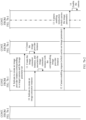
- FIG. 8b-1 and FIG. 8b-2 show an example in which the in-vehicle system is a Huawei HiCar in-car infotainment system, and describes a process in which a plurality of applications in a mobile phone share a plurality of cameras disposed in a vehicle.
- a dashed line represents signaling transmission, and a solid line represents data transmission.
- a fatigue driving detection application sends an image obtaining request to request to obtain image data collected by a dashboard camera (namely, a camera disposed on a dashboard).
- An image parameter set carried in the image obtaining request is ⁇ 480p, 30 fps, nv21 ⁇ .
- An application agent instance management module in a camera virtualization engine creates a fatigue driving detection application agent instance (AppAgent) corresponding to the application.
- the fatigue driving detection AppAgent sends an image obtaining request to a device policy module (DevicePolicy).
- the device policy module (DevicePolicy) sends an instruction for creating an image provider instance to an image provider instance management module.
- the image provider instance management module creates, based on the instruction, an image provider instance 1 corresponding to the dashboard camera and the image parameter set ⁇ 480p, 30 fps, nv21 ⁇ .
- the fatigue driving detection AppAgent further indicates an image consumer instance management module to create an image consumer instance (ImageConsumer) 1 corresponding to the application.
- the image consumer instance management module creates the image consumer instance 1 based on an indication of the application agent instance, and establishes an association between the image consumer instance 1 and the image provider instance 1.
- the data transmission module at the mobile phone side After the data transmission module at the mobile phone side receives a data flow 2 collected by the front-side camera of the vehicle, the data flow 2 is stored in a video call request queue of an image consumer instance 3 along the second data channel by using the data decoding module, an image provider instance 2, and the image consumer instance 3 associated with the image provider instance 2. Therefore, a video call AppAgent obtains image data from the video call request queue and sends the image data to the corresponding video call application.
- FIG. 4b , FIG. 9 , and FIG. 10 show examples of application of this embodiment of this application in a network video live broadcasting scenario.
- a user needs to simultaneously start the first network video live broadcast application 421 and the second network video live broadcast application 422 in the mobile phone to perform network video live broadcasting.
- a screen splitting operation may be performed on the mobile phone, so that a screen of the mobile phone displays two windows, the first network video live broadcast application is started in a first split-screen window, and the second network video live broadcast application is started in a second split-screen window.
- the data transmission module 424 in the mobile phone transmits the data to an image provider instance 1.
- the image provider instance 1 processes the received data into a data format that is required by the first network video live broadcast application 421 and the second network video live broadcast application 422, and separately sends processed data to an image consumer instance 1 and an image consumer instance 2.
- the image consumer instance 1 and the image consumer instance 2 respectively send the data to the first network video live broadcast application 421 and the second network video live broadcast application 422.
- the first network video live broadcast application 421 and the second network video live broadcast application 422 share the built-in camera A of the mobile phone at the same time.
- a user interface may be shown in FIG. 10 .
- the term "when" or “after" used in the foregoing embodiments may be interpreted as a meaning of "if", “after", “in response to determining", or “in response to detecting".
- the phrase “when it is determined that" or “if (a stated condition or event) is detected” may be interpreted as a meaning of "if it is determined that", “in response to determining", “when (a stated condition or event) is detected”, or “in response to detecting (a stated condition or event)”.
- relationship terms such as first and second are used to distinguish one entity from another entity, but do not limit any actual relationship and sequence between these entities.
- All or some of the foregoing embodiments may be implemented by using software, hardware, firmware, or any combination thereof.
- software is used to implement embodiments, all or some of the embodiments may be implemented in a form of a computer program product.
- the computer program product includes one or more computer instructions.
- the computer may be a general-purpose computer, a dedicated computer, a computer network, or another programmable apparatus.
- the computer instructions may be stored in a computer-readable storage medium or may be transmitted from a computer-readable storage medium to another computer-readable storage medium.
- the computer instructions may be transmitted from a website, computer, server, or data center to another website, computer, server, or data center in a wired (for example, a coaxial cable, an optical fiber, or a digital subscriber line (DSL)) or wireless (for example, infrared, radio, or microwave) manner.
- the computer-readable storage medium may be any usable medium accessible by the computer, or a data storage device, for example, a server or a data center, integrating one or more usable media.
Landscapes
- Engineering & Computer Science (AREA)
- Multimedia (AREA)
- Signal Processing (AREA)
- Databases & Information Systems (AREA)
- Human Computer Interaction (AREA)
- Mechanical Engineering (AREA)
- Studio Devices (AREA)
Applications Claiming Priority (2)
| Application Number | Priority Date | Filing Date | Title |
|---|---|---|---|
| CN202010911343.9A CN113556479B (zh) | 2020-09-02 | 2020-09-02 | 一种多应用共享摄像头的方法与电子设备 |
| PCT/CN2021/114331 WO2022048474A1 (fr) | 2020-09-02 | 2021-08-24 | Procédé destiné à de multiples applications afin de partager une caméra, et dispositif électronique |
Publications (2)
| Publication Number | Publication Date |
|---|---|
| EP4199500A1 true EP4199500A1 (fr) | 2023-06-21 |
| EP4199500A4 EP4199500A4 (fr) | 2024-01-31 |
Family
ID=78101620
Family Applications (1)
| Application Number | Title | Priority Date | Filing Date |
|---|---|---|---|
| EP21863541.5A Pending EP4199500A4 (fr) | 2020-09-02 | 2021-08-24 | Procédé destiné à de multiples applications afin de partager une caméra, et dispositif électronique |
Country Status (4)
| Country | Link |
|---|---|
| US (1) | US12149754B2 (fr) |
| EP (1) | EP4199500A4 (fr) |
| CN (1) | CN113556479B (fr) |
| WO (1) | WO2022048474A1 (fr) |
Families Citing this family (11)
| Publication number | Priority date | Publication date | Assignee | Title |
|---|---|---|---|---|
| CN114205529A (zh) * | 2021-12-20 | 2022-03-18 | 北京鸿合爱学教育科技有限公司 | 一种单摄像头的调用方法、装置、终端和可读存储介质 |
| CN114302040B (zh) * | 2021-12-24 | 2024-03-19 | 展讯半导体(成都)有限公司 | 多应用共享单一摄像头的方法及相关产品 |
| CN116360915A (zh) * | 2021-12-28 | 2023-06-30 | 鼎桥通信技术有限公司 | 多应用访问相机的方法及设备 |
| CN114363654B (zh) * | 2022-01-12 | 2023-12-19 | 北京字节跳动网络技术有限公司 | 一种视频推流方法、装置、终端设备及存储介质 |
| CN114422837B (zh) * | 2022-01-25 | 2023-08-18 | 成都鼎桥通信技术有限公司 | 多应用共享媒体数据的方法、装置、设备及介质 |
| CN114866686B (zh) * | 2022-03-25 | 2024-09-17 | 惠州华阳通用电子有限公司 | 一种摄像头视频处理方法及系统 |
| CN115185711B (zh) * | 2022-09-06 | 2023-10-10 | 湖北芯擎科技有限公司 | 基于虚拟摄像头的数据交互方法、装置、电子设备及介质 |
| CN116233595A (zh) * | 2022-12-13 | 2023-06-06 | 深圳创维-Rgb电子有限公司 | 基于摄像头的数据处理方法、装置、设备及存储介质 |
| CN116887032B (zh) * | 2023-07-05 | 2024-06-21 | 荣耀终端有限公司 | 跨端图像数据采集系统、方法、客户端、服务端 |
| CN118394451B (zh) * | 2024-06-24 | 2024-09-17 | 广东朝歌智慧互联科技有限公司 | 基于多实例虚拟摄像头的多应用共享摄像头的方法、系统、智能终端设备 |
| CN120281880A (zh) * | 2025-06-03 | 2025-07-08 | 常州星宇车灯股份有限公司 | 一种多系统共享前视图像采集与数据分发装置及方法 |
Family Cites Families (10)
| Publication number | Priority date | Publication date | Assignee | Title |
|---|---|---|---|---|
| US6539441B1 (en) * | 1999-11-10 | 2003-03-25 | Logitech Europe, S.A. | Multi-instance input device control |
| US6918118B2 (en) * | 1999-11-10 | 2005-07-12 | Logitech Europe S.A. | Multi-instance input device control |
| EP2136562B1 (fr) * | 2003-07-11 | 2020-01-08 | Hitachi, Ltd. | Système de caméra de traitement d'images et procédé de commande de caméra de traitement d'images |
| US20100122165A1 (en) * | 2008-11-10 | 2010-05-13 | Google Inc. | Mechanism for displaying external video in playback engines |
| CN101833520B (zh) * | 2009-03-11 | 2013-01-16 | 凹凸电子(武汉)有限公司 | 多个应用程序同时使用一个摄像头的系统和方法 |
| US8284267B2 (en) * | 2009-03-11 | 2012-10-09 | O2Micro Inc. | Virtual camera for sharing a physical camera |
| CN106791356A (zh) * | 2016-11-10 | 2017-05-31 | 北京智能管家科技有限公司 | 用于摄像头数据分发的方法及装置 |
| US20180146139A1 (en) * | 2016-11-18 | 2018-05-24 | Microsoft Technology Licensing, Llc | Dynamically switching control sharing of camera resources |
| CN107659768A (zh) * | 2017-08-08 | 2018-02-02 | 珠海全志科技股份有限公司 | 一种基于Android多应用共享摄像头的系统及方法 |
| EP3736667A1 (fr) * | 2019-05-09 | 2020-11-11 | XRSpace CO., LTD. | Équipement de réalité virtuelle capable de mettre en uvre une fonction de remplacement et une fonction de superposition et son procédé de commande |
-
2020
- 2020-09-02 CN CN202010911343.9A patent/CN113556479B/zh active Active
-
2021
- 2021-08-24 EP EP21863541.5A patent/EP4199500A4/fr active Pending
- 2021-08-24 US US18/043,678 patent/US12149754B2/en active Active
- 2021-08-24 WO PCT/CN2021/114331 patent/WO2022048474A1/fr not_active Ceased
Also Published As
| Publication number | Publication date |
|---|---|
| EP4199500A4 (fr) | 2024-01-31 |
| CN113556479A (zh) | 2021-10-26 |
| US12149754B2 (en) | 2024-11-19 |
| US20230379510A1 (en) | 2023-11-23 |
| WO2022048474A1 (fr) | 2022-03-10 |
| CN113556479B (zh) | 2022-07-29 |
Similar Documents
| Publication | Publication Date | Title |
|---|---|---|
| US12149754B2 (en) | Method for sharing camera by plurality of applications and electronic device | |
| US12231812B2 (en) | Device interaction method and electronic device | |
| US20250036167A1 (en) | Video Call Display Method Applied to Electronic Device and Related Apparatus | |
| US11669242B2 (en) | Screenshot method and electronic device | |
| EP3926576B1 (fr) | Procédé et appareil de réglage de fréquence appliqués à un terminal, et dispositif électronique | |
| CN111316598B (zh) | 一种多屏互动方法及设备 | |
| EP4415339B1 (fr) | Procédé de gestion de notification et dispositif électronique | |
| WO2020253719A1 (fr) | Procédé de d'enregistrement d'écran et dispositif électronique | |
| EP4273687B1 (fr) | Procédé de partage d'image et dispositif électronique | |
| CN114006625A (zh) | 一种分屏显示方法与电子设备 | |
| EP4086780A1 (fr) | Procédé et système de partage de fichiers et dispositif associé | |
| US12353359B2 (en) | File sharing method and electronic device | |
| CN115119048B (zh) | 一种视频流处理方法及电子设备 | |
| CN112328941A (zh) | 基于浏览器的应用投屏方法及相关装置 | |
| EP4280596A1 (fr) | Procédé d'appel vidéo et dispositif associé | |
| WO2023160224A1 (fr) | Procédé pour photographier et dispositif associé | |
| WO2023005900A1 (fr) | Procédé de projection d'écran, dispositif électronique et système | |
| US20250047974A1 (en) | Image processing method and electronic device | |
| EP4276618A1 (fr) | Procédé de traitement d'images, dispositif électronique et support de stockage | |
| US12517693B2 (en) | Method for invoking capability of another device, electronic device, and system | |
| WO2024041006A1 (fr) | Procédé de commande de fréquence de trames d'une caméra, et dispositif électronique | |
| US20260057556A1 (en) | Image processing method and electronic device | |
| EP4202618B1 (fr) | Procédé de commande de dispositif, dispositif électronique et système | |
| EP4542383A1 (fr) | Procédé de migration de tâche, dispositif électronique et système | |
| US20260024182A1 (en) | Device-cloud collaborative image enhancement method and related apparatus |
Legal Events
| Date | Code | Title | Description |
|---|---|---|---|
| STAA | Information on the status of an ep patent application or granted ep patent |
Free format text: STATUS: THE INTERNATIONAL PUBLICATION HAS BEEN MADE |
|
| PUAI | Public reference made under article 153(3) epc to a published international application that has entered the european phase |
Free format text: ORIGINAL CODE: 0009012 |
|
| STAA | Information on the status of an ep patent application or granted ep patent |
Free format text: STATUS: REQUEST FOR EXAMINATION WAS MADE |
|
| 17P | Request for examination filed |
Effective date: 20230315 |
|
| AK | Designated contracting states |
Kind code of ref document: A1 Designated state(s): AL AT BE BG CH CY CZ DE DK EE ES FI FR GB GR HR HU IE IS IT LI LT LU LV MC MK MT NL NO PL PT RO RS SE SI SK SM TR |
|
| DAV | Request for validation of the european patent (deleted) | ||
| DAX | Request for extension of the european patent (deleted) | ||
| REG | Reference to a national code |
Ref country code: DE Ref legal event code: R079 Free format text: PREVIOUS MAIN CLASS: H04N0005262000 Ipc: G06F0009540000 |
|
| A4 | Supplementary search report drawn up and despatched |
Effective date: 20240105 |
|
| RIC1 | Information provided on ipc code assigned before grant |
Ipc: H04N 21/4223 20110101ALI20231222BHEP Ipc: B60R 1/00 20220101ALI20231222BHEP Ipc: H04N 23/60 20230101ALI20231222BHEP Ipc: G06F 9/54 20060101AFI20231222BHEP |
|
| STAA | Information on the status of an ep patent application or granted ep patent |
Free format text: STATUS: EXAMINATION IS IN PROGRESS |
|
| 17Q | First examination report despatched |
Effective date: 20250702 |