EP4199550B1 - Procédé de transmission d'un contenu de message sous forme chiffrée entre un premier participant à la communication et au moins un deuxième participant à la communication, système, réseau de télécommunications, programme informatique et support lisible par ordinateur - Google Patents
Procédé de transmission d'un contenu de message sous forme chiffrée entre un premier participant à la communication et au moins un deuxième participant à la communication, système, réseau de télécommunications, programme informatique et support lisible par ordinateur Download PDFInfo
- Publication number
- EP4199550B1 EP4199550B1 EP21214622.9A EP21214622A EP4199550B1 EP 4199550 B1 EP4199550 B1 EP 4199550B1 EP 21214622 A EP21214622 A EP 21214622A EP 4199550 B1 EP4199550 B1 EP 4199550B1
- Authority
- EP
- European Patent Office
- Prior art keywords
- communication
- message
- session
- communication subscriber
- die
- Prior art date
- Legal status (The legal status is an assumption and is not a legal conclusion. Google has not performed a legal analysis and makes no representation as to the accuracy of the status listed.)
- Active
Links
Images


Classifications
-
- H—ELECTRICITY
- H04—ELECTRIC COMMUNICATION TECHNIQUE
- H04W—WIRELESS COMMUNICATION NETWORKS
- H04W4/00—Services specially adapted for wireless communication networks; Facilities therefor
- H04W4/06—Selective distribution of broadcast services, e.g. multimedia broadcast multicast service [MBMS]; Services to user groups; One-way selective calling services
-
- H—ELECTRICITY
- H04—ELECTRIC COMMUNICATION TECHNIQUE
- H04L—TRANSMISSION OF DIGITAL INFORMATION, e.g. TELEGRAPHIC COMMUNICATION
- H04L9/00—Cryptographic mechanisms or cryptographic arrangements for secret or secure communications; Network security protocols
- H04L9/32—Cryptographic mechanisms or cryptographic arrangements for secret or secure communications; Network security protocols including means for verifying the identity or authority of a user of the system or for message authentication, e.g. authorization, entity authentication, data integrity or data verification, non-repudiation, key authentication or verification of credentials
- H04L9/3247—Cryptographic mechanisms or cryptographic arrangements for secret or secure communications; Network security protocols including means for verifying the identity or authority of a user of the system or for message authentication, e.g. authorization, entity authentication, data integrity or data verification, non-repudiation, key authentication or verification of credentials involving digital signatures
-
- H—ELECTRICITY
- H04—ELECTRIC COMMUNICATION TECHNIQUE
- H04L—TRANSMISSION OF DIGITAL INFORMATION, e.g. TELEGRAPHIC COMMUNICATION
- H04L9/00—Cryptographic mechanisms or cryptographic arrangements for secret or secure communications; Network security protocols
- H04L9/32—Cryptographic mechanisms or cryptographic arrangements for secret or secure communications; Network security protocols including means for verifying the identity or authority of a user of the system or for message authentication, e.g. authorization, entity authentication, data integrity or data verification, non-repudiation, key authentication or verification of credentials
- H04L9/3263—Cryptographic mechanisms or cryptographic arrangements for secret or secure communications; Network security protocols including means for verifying the identity or authority of a user of the system or for message authentication, e.g. authorization, entity authentication, data integrity or data verification, non-repudiation, key authentication or verification of credentials involving certificates, e.g. public key certificate [PKC] or attribute certificate [AC]; Public key infrastructure [PKI] arrangements
-
- H—ELECTRICITY
- H04—ELECTRIC COMMUNICATION TECHNIQUE
- H04W—WIRELESS COMMUNICATION NETWORKS
- H04W12/00—Security arrangements; Authentication; Protecting privacy or anonymity
- H04W12/03—Protecting confidentiality, e.g. by encryption
- H04W12/033—Protecting confidentiality, e.g. by encryption of the user plane, e.g. user's traffic
-
- H—ELECTRICITY
- H04—ELECTRIC COMMUNICATION TECHNIQUE
- H04W—WIRELESS COMMUNICATION NETWORKS
- H04W4/00—Services specially adapted for wireless communication networks; Facilities therefor
- H04W4/70—Services for machine-to-machine communication [M2M] or machine type communication [MTC]
-
- H—ELECTRICITY
- H04—ELECTRIC COMMUNICATION TECHNIQUE
- H04L—TRANSMISSION OF DIGITAL INFORMATION, e.g. TELEGRAPHIC COMMUNICATION
- H04L2209/00—Additional information or applications relating to cryptographic mechanisms or cryptographic arrangements for secret or secure communication H04L9/00
- H04L2209/84—Vehicles
-
- H—ELECTRICITY
- H04—ELECTRIC COMMUNICATION TECHNIQUE
- H04W—WIRELESS COMMUNICATION NETWORKS
- H04W12/00—Security arrangements; Authentication; Protecting privacy or anonymity
- H04W12/04—Key management, e.g. using generic bootstrapping architecture [GBA]
- H04W12/041—Key generation or derivation
-
- H—ELECTRICITY
- H04—ELECTRIC COMMUNICATION TECHNIQUE
- H04W—WIRELESS COMMUNICATION NETWORKS
- H04W12/00—Security arrangements; Authentication; Protecting privacy or anonymity
- H04W12/06—Authentication
- H04W12/069—Authentication using certificates or pre-shared keys
-
- H—ELECTRICITY
- H04—ELECTRIC COMMUNICATION TECHNIQUE
- H04W—WIRELESS COMMUNICATION NETWORKS
- H04W4/00—Services specially adapted for wireless communication networks; Facilities therefor
- H04W4/30—Services specially adapted for particular environments, situations or purposes
- H04W4/40—Services specially adapted for particular environments, situations or purposes for vehicles, e.g. vehicle-to-pedestrians [V2P]
Definitions
- the invention relates to a method for transmitting a message content in encrypted form between a first communication participant and at least one second communication participant, wherein the transmission of the message content takes place by means of broadcast messages of a PC5 sidelink functionality, in particular using the Mode 4 functionality, wherein both the first communication participant and the at least one second communication participant are client computing devices for executing software code of a software client application, wherein the software client application of both the first communication participant and the software client application of the at least one second communication participant are configured to communicate with an application server entity, in particular via a telecommunications network.
- US 2021/211870 A1 discloses a method for V2X communication using PC5 sidelink broadcast messages.
- the invention further relates to a system for transmitting a message content in encrypted form between a first communication participant and at least one second communication participant, wherein the message content is transmitted by means of broadcast messages of a PC5 sidelink functionality, in particular using the Mode 4 functionality, wherein both the first communication participant and the at least one second communication participant are client computing devices for executing software code of a software client application, wherein the software client application of both the first communication participant and the software client application of the at least one second communication participant are configured to communicate with an application server entity, in particular via a telecommunications network.
- the invention further relates to a telecommunications network, in particular comprising an application server entity, for use in a system according to the invention or in a method according to the invention.
- the invention relates to a computer program comprising instructions with the aid of which the steps of a method according to the invention can be carried out, and a computer-readable medium provided for storing a computer program, or a data carrier signal provided for transmitting a computer program, wherein the computer-readable medium or the data carrier signal stores or transmits the computer program according to the invention.
- ITS traffic system
- V2V communication vehicles among themselves (V2V communication), but also between vehicles and parts of the infrastructure (V2I, vehicle-to-infrastructure), the communication network (V2N, vehicle-to-network) and other road users (V2P, vehicle-to-pedestrian).
- V2I vehicle-to-infrastructure
- V2N vehicle-to-network
- V2P vehicle-to-pedestrian
- V2X vehicle-to-pedestrian
- V2X Voice over IP
- C-V2X Cellular V2X
- PC5 Sidelink direct communication
- the focus here is on individual vehicles/road users in particular notifying other road users about relevant information for the area.
- direct communication via multicast or broadcast messages is necessary, with the authenticity and authorization of the messages as well as the anonymity and data protection of the vehicles or participants being the main focus.
- Such use cases relate, for example, to road safety, where a message (usually broadcast messages) can in principle be received and read by all road users, i.e. confidentiality does not have to be protected (by encryption); however, it must be ensured that the integrity of the message and authorization of the sender is guaranteed.
- This is typically done by the sender signing the messages, which is usually done by a so-called Pseudonym Certificate Authority (PCA) issuing road users short-term, i.e. very time-limited, certificates, so-called Pseudonymous Authorization Certificates, which eliminates the need to revoke certificates.
- PCA Pseudonym Certificate Authority
- Pseudonymous Authorization Certificates which eliminates the need to revoke certificates.
- the following requirements are particularly important: authorization of messages, anonymity of the sender (through pseudonymization), network coverage, latency, etc.
- the invention is based on the object of providing a method for transmitting a message content in encrypted form between a first communication participant and at least one second communication participant, wherein the message content is transmitted by means of broadcast messages of a PC5 sidelink functionality, in particular using the Mode 4 functionality, and wherein both the first communication participant and the at least one second communication participant are client computer devices for executing software code of a software client application, wherein the software client application of both the first communication participant and the software client application of the at least one second communication participant are designed to communicate with an application server entity, in particular via a telecommunications network.
- a service provider it is therefore advantageously possible for a service provider to be able to offer a service or communication service via a V2X application for registered vehicles or communication participants in a comparatively simple manner, wherein the vehicles (or communication participants) are within mutual range for V2X communication and wherein the communication with regard to the service or Communication service authenticated (based in particular on a V2X application ID) and encrypted.
- a vehicle or a communication participant
- All other vehicles (or communication participants) that have also registered with the service are within range and want to take part in the communication session (or message session) can then register with the V2X application to participate.
- the V2X application provides, for example, a session key (or session key information) for encrypting the communication and, if required, other information about the individual vehicles.
- the vehicles can then communicate securely directly via the PC5 interface.
- V2X applications in which mutually authenticated and encrypted communication between two or a defined group of road users or communication participants is important, it is necessary to implement appropriate security solutions/functionalities at the application level.
- the key management for authentication and encryption for (V2X) applications not via the (complex architecture of the) application level of V2X communication, i.e. in particular the (standardized) V2X applications (i.e. the V2X application component specified in the V2X standards as part of the V2X architecture), but via mobile radio communication in accordance with the available radio access technology such as 2G, 3G, 4G or 5G.
- the key management for the authentication of the V2X communication participants and for the encryption of the V2X communication is implemented via a mobile radio app (cf. apps for mobile operating systems such as Android or iOS), hereinafter also referred to as a V2X application.
- apps for mobile operating systems such as Android or iOS
- a method is thus provided in which a message content is transmitted in encrypted form between a first communication participant and at least one second communication participant by means of broadcast messages of a PC5 sidelink functionality, in particular using the Mode 4 functionality.
- Both the first communication participant and the at least one second communication participant are client computer devices for executing software code of a software client application, wherein the software client application of both the first communication participant and the software client application of the at least one second communication participant is designed to communicate with an application server entity (V2X application), in particular via a telecommunications network.
- V2X application application server entity
- registration data is sent according to the invention from the application server entity to the communication participants and/or from the communication participants to the application server entity in such a way that the communication participants have at least one item of service identification information.
- session identification information is generated by the first communication participant to start a message session of broadcast messages initiated by the first communication participant.
- the first communication participant sends a Request broadcast message for the participation of the second communication participant in the message session and the first communication participant receives a response message for the participation of the second communication participant in the message session, wherein the request broadcast message and/or the response message is secured, in particular signed, using at least part of the registration data.
- broadcast messages are transmitted between the first and second communication participants to transmit the message content in a secure form.
- the registration data comprise, in addition to the service identification information, certificate information of a public key infrastructure and/or a certificate authority, wherein the registration data comprise, in particular for each communication participant, an associated certificate information and a private key information.
- the application server entity generates session key information in a fourth step preceding the first step and sends it to the first communication participant.
- the first communication participant receives the response message for the participation of the second communication participant in the message session as a message sent by the application server entity, in particular as an encrypted and signed message.
- the response message for the participation of the second communication participant in the message session is a response message using transport encryption and encrypted on the basis of the registration data.
- a telecommunications network in particular comprising an application server entity, for use in a system according to the invention or a method according to the invention.
- a computer program comprising instructions with the aid of which the steps of a method according to the invention can be carried out when the computer program is executed on a programmable device, in particular on a programmable device of the communication participants and/or a network node of the telecommunications network.
- the object is achieved by a computer-readable medium, provided for storing a computer program, or data carrier signal, provided for transmitting a computer program, wherein the computer-readable Medium or the data carrier signal stores or transmits the computer program according to the invention or wherein the computer-readable medium or the data carrier signal stores or transmits the part of the computer program according to the invention to be executed on a programmable device, in particular on a programmable device of the vehicle and/or a network node of the telecommunications network.
- first, second, third, and the like are used in the specification and claims to distinguish between similar elements and not necessarily to describe a sequential or chronological order. It is to be understood that the terms so used are interchangeable under appropriate circumstances and that the embodiments of the invention described herein may function in a different order than that described or illustrated herein.
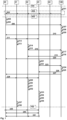
- FIG 1 is a schematic communication diagram of a first variant of the method according to the invention for transmitting a message content in encrypted form between a first communication participant 20 and at least one second communication participant 21.
- Figure 2 a communication diagram of a second variant of such a method according to the invention is shown and in Figure 3 a communication diagram of a third variant of such a method according to the invention is shown.
- the figures each show a communication diagram between the first communication participant 20 (or first vehicle 20), the second communication participant 21 (or second vehicle 21), a third communication participant 22 (or third vehicle 22), a fourth communication participant 23 (or fourth vehicle 23) and a fifth communication participant 24 (or fifth vehicle 24).
- These communication participants 20, 21, 22, 23, 24 are in particular road users, in particular vehicles or telecommunications terminals which are typically used in vehicles or are either installed in vehicles or are at least partially used in vehicles.
- the communication participants 20, 21, 22, 23 or the vehicles 20, 21, 22, 23 are here considered to be in a spatial environment (or in geographical proximity) are assumed to be such that messages, in particular broadcast messages, can be successfully transmitted or are transmittable by means of PC5 sidelink functionality (in particular using the Mode 4 functionality) from one of the communication participants to at least one other, but preferably to several other communication participants (the fifth communication participant 24 is assumed to be too far away spatially, ie broadcast messages are no longer (reliably) received).
- the communication diagrams shown in the figures each comprise an application server entity 120 which is provided for communication with the communication participants 20, 21, 22, 23, 24 or, conversely, the communication participants 20, 21, 22, 23, 24 are provided for communication with the application server entity 120.
- the communication or data exchange between the application server entity 120 and the communication participants 20, 21, 22, 23, 24 or each of the communication participants 20, 21, 22, 23, 24 takes place according to a mobile radio communication protocol or according to a mobile radio standard, such as a mobile radio standard of the third, fourth or fifth generation (3G, 4G, 5G, etc.), i.e. using corresponding base station devices or mobile radio access network devices located in the area or in the vicinity of the geographical area of the communication participants 20, 21, 22, 23, 24.
- a mobile radio standard such as a mobile radio standard of the third, fourth or fifth generation (3G, 4G, 5G, etc.
- the communication or the communication diagram of the method according to the invention is essentially divided into the various sections 500, 600 and 700.
- the prerequisites for the inventive transmission of a message content in encrypted form are created, in particular the provision by the application server entity 120 (and by means of the software client applications of the communication participants 20, 21, 22, 23, 24) of registration data to the communication participants 20, 21, 22, 23, 24 and/or from the communication participants 20, 21, 22, 23, 24 to the application server entity 120; the minimum result of this, according to all variants according to the invention, is that the communication participants 20, 21, 22, 23, 24 have at least one item of service identification information.
- this service identification information serves as identification of the V2X application; the service identification information should be unambiguous; if this is not the case, however, this does not lead to a reduction in the security of the process or to a reduction in the level of protection when exchanging or transmitting the message contents.
- current certificates are also provided (in particular by PKI components); this corresponds in particular to the basic willingness of a vehicle or a communication participant or one of the other vehicles 21, 22, 23, 24 to participate in the transmission of message contents according to the invention.
- the second section 600 includes (according to all variants of the method according to the invention) the trigger for or the establishment of the message session of broadcast messages initiated by the first communication participant.
- the third section 700 includes (according to all variants of the method according to the invention) the operational implementation of the transmission of message contents between the communication participants 20, 21, 22, 23, 24.
- the communication participants 20, 21, 22, 23, 24 each comprise a client computer device for executing software code of a software client application.
- These software client applications, each of the communication participants 20, 21, 22, 23, 24, are designed to communicate with the application server entity 120, in particular via a telecommunications network 100 or mobile network.
- a public key infrastructure i.e. corresponding certificate data
- a certificate is generated and a certificate is exchanged.
- the generation of the session identification information generated in the first step of the method by the communication participant initiating the message session takes place in the fourth process step 204.
- the initiating communication participant By communicating with the application server entity 120 in the sixth to tenth process steps 206 - 210, the initiating communication participant receives the session identification information, which is subsequently part of the request broadcast message (eleventh process step 211) for the participation of the other communication participants and part of the response message or response messages (twentieth process step 220 or twenty-seventh process step 227) of the participating communication participants.
- the response message is secured using certificate information from the public key infrastructure, in particular encrypted and signed.
- the initiating communication participant receives the session identification information, which is subsequently part of the request broadcast message (eleventh process step 311) for the participation of the other communication participants and part of the response message or response messages (twentieth process step 320 or twenty-seventh process step 327) of the participating communication participants.
- the response message is secured only by using mechanisms of the mobile network, in particular as a message using transport encryption and encrypted on the basis of registration data.
- a public key infrastructure i.e. corresponding certificate data
- a certificate is generated and a certificate is exchanged.
- the generation of the session identification information generated in the first step of the method by the communication participant initiating the message session takes place in the fourth process step 404.
- the request broadcast message corresponds to the sixth process step 406 and the response messages correspond to the thirteenth process step 413 or the twentieth process step 420.
- the key management for authentication and encryption for (V2X) applications is not carried out via the (complex architecture of the) application level of V2X communication, i.e. in particular the (standardized) V2X applications, but via "normal" mobile communications (2G/3G/4G/5G).
- This means that the key management for the authentication of the V2X communication participants and for the encryption of the V2X communication is implemented via a mobile communications app (cf. apps for mobile operating systems such as Android or iOS or the V2X application).
- FIG. 1 an implementation is presented in which mutual authentication and encryption is carried out while maintaining anonymity using the public key infrastructure PKI /CA (using asymmetric procedures and communication with the V2X application, ie the application server entity 120).
- FIG. 2 an implementation is presented in which (only) encryption is used for the communication of the VT, whereby only symmetrical methods are used, i.e. more complex mechanisms are dispensed with and the public key infrastructure PKI/CA and asymmetrical methods are not used; here too, communication with the V2X application, i.e. the application server entity 120, is necessary.
- the third variant cf.
- FIG. 3 a PKI/CA-based implementation is presented in which the communication participants (VT) can send encrypted messages to other (individual) communication participants (VT) (encrypted peer-to-peer V2X communication within a group).
- the V2X application user IDs (IDs) of the VT and their certificates are visible to others in the V2X communication.
- the VT can therefore set up and use the session without communicating with the V2X application (ie the application server entity 120).
- the following application (according to the first variant) is presented as an example: As soon as a VT or a communication participant has started the V2X application wants to use (trigger), it sends out a V2X broadcast message, sending out a V2X application ID (ServID) and a (randomly generated) session ID (SID). At the same time, it informs the server component of the V2X application via mobile radio about its subscriber ID and the new session ID. Since the VT is authenticated with the server component and communicates with it in encrypted form (cf. other smartphone apps), the server component knows which VT wants to start the session.
- V2X application ID a V2X application ID
- SID randomly generated session ID
- VTs that also use the V2X application and want to take part in the session also report to the server component via mobile radio using the session ID.
- the server component then knows which VTs want to take part in the V2X communication (session ID) and can send/exchange the necessary keys and information to/between the VTs via mobile radio.
- the messages belonging to the current session of the V2X application are identified using the session ID (can be read by all VTs in the area).
- the rest of the message content is encrypted and can only be decrypted by the VTs "registered" in the server component for the session.
- the VTs can also authenticate themselves to the other VTs.
- V2X application-specific public key infrastructure PKI / Certificate Authority (CA)
- PKI public key infrastructure
Landscapes
- Engineering & Computer Science (AREA)
- Computer Security & Cryptography (AREA)
- Computer Networks & Wireless Communication (AREA)
- Signal Processing (AREA)
- Multimedia (AREA)
- Mobile Radio Communication Systems (AREA)
Claims (9)
- Procédé pour transmettre, sous forme chiffrée, un contenu de message, concernant un service, entre un premier abonné de communication (20) et au moins un second abonné de communication (21), dans lequel la transmission du contenu de message s'effectue au moyen de messages de diffusion d'une fonctionnalité PC5-Sidelink, en particulier en utilisant la fonctionnalité Mode-4, dans lequel le premier abonné de communication (20) et le au moins un second abonné de communication (21) sont tous deux un dispositif informatique client pour exécuter un code de logiciel d'une application cliente logicielle, dans lequel l'application cliente logicielle du premier abonné de communication (20) et l'application cliente logicielle du au moins un second abonné de communication (21) sont toutes deux conçues pour communiquer avec une entité de serveur d'applications (120), en particulier via un réseau de télécommunications (100),dans lequel des données d'enregistrement sont envoyées de l'entité de serveur d'applications (120) aux abonnés de communication (20, 21) et/ou des abonnés de communication (20, 21) à l'entité de serveur d'applications (120) au moyen des applications clientes logicielles, de sorte qu'au moins une information d'identification de service, correspondant au service, est présente pour les abonnés de communication (20, 21), dans lequel le procédé comporte les étapes de procédé suivantes :- dans une première étape, pour lancer une session de messagerie de messages de diffusion initiée par le premier abonné de communication (20), une information d'identification de session est générée par le premier abonné de communication (20),- dans une deuxième étape qui suit la première étape, le premier abonné de communication (20) envoie un message de diffusion de demande contenant l'information d'identification de service et l'information d'identification de session en vue de la participation du second abonné de communication (21) à la session de messagerie, dans lequel le second abonné de communication (21) reçoit le message de diffusion de demande et le premier abonné de communication (20) reçoit un message de réponse à la participation du second abonné de communication (21) à la session de messagerie, dans lequel le message de diffusion de demande et/ou le message de réponse est sécurisé, en particulier signé, en utilisant au moins une partie des données d'enregistrement,- dans une troisième étape qui suit la deuxième étape, une transmission de messages de diffusion s'effectue entre les premier et second abonnés de communication (20, 21) pour transmettre le contenu de message sous forme sécurisée,dans lequel les messages de diffusion transmis dans la troisième étape entre les premier et second abonnés de communication (20, 21) sont chiffrés, caractérisé en ce que- soit une information de clé de session est utilisée pour le chiffrement, l'entité de serveur d'applications (120) générant l'information de clé de session dans une quatrième étape qui suit la première étape et l'envoyant au premier abonné de communication (20),- soit une information de certificat du second abonné de communication (21) est utilisée pour le chiffrement, les données d'enregistrement comprenant, en plus de l'information d'identification de service comprenant l'information de certificat du second abonné de communication, une infrastructure à clé publique et/ou une autorité de certification, les données d'enregistrement pour chaque abonné de communication comprenant une information de certificat associée et une information de clé privée.
- Procédé selon la revendication 1, caractérisé en ce que le premier abonné de communication (20) reçoit le message de réponse à la participation du second abonné de communication (21) à la session de messagerie sous la forme d'un message envoyé par l'entité de serveur d'applications (120), en particulier sous la forme d'un message chiffré et signé.
- Procédé selon l'une des revendications précédentes, caractérisé en ce que le message de réponse à la participation du second abonné de communication (21) à la session de messagerie est un message de réponse utilisant un chiffrement de transport et chiffré sur la base des données d'enregistrement.
- Procédé selon l'une des revendications précédentes, caractérisé en ce que :
les messages de diffusion transmis dans la troisième étape entre les premier et second abonnés de communication (20, 21) sont non seulement chiffrés mais aussi signés, dans lequel l'information de clé privée est utilisée pour la signature. - Système pour transmettre, sous forme chiffrée, un contenu de message, concernant un service, entre un premier abonné de communication (20) et au moins un second abonné de communication (21), dans lequel la transmission du contenu de message s'effectue au moyen de messages de diffusion d'une fonctionnalité PC5-Sidelink, en particulier en utilisant la fonctionnalité Mode-4, dans lequel le premier abonné de communication (20) et le au moins un second abonné de communication (21) sont tous deux un dispositif informatique client pour exécuter un code de logiciel d'une application cliente logicielle, dans lequel l'application cliente logicielle du premier abonné de communication (20) et l'application cliente logicielle du au moins un second abonné de communication (21) sont toutes deux conçues pour communiquer avec une entité de serveur d'applications (120),dans lequel des données d'enregistrement sont envoyées de l'entité de serveur d'applications (120) aux abonnés de communication (20, 21) et/ou des abonnés de communication (20, 21) à l'entité de serveur d'applications (120) au moyen des applications clientes logicielles, de sorte qu'au moins une information d'identification de service correspondant au service est présente pour les abonnés de communication (20, 21),dans lequel le système est configuré de telle sorte que :- pour lancer une session de messagerie de messages de diffusion initiée par le premier abonné de communication (20), une information d'identification de session est générée par le premier abonné de communication (20),- le premier abonné de communication (20) envoie un message de diffusion de demande contenant l'information d'identification de service et l'information d'identification de session en vue de la participation du second abonné de communication (21) à la session de messagerie, dans lequel le second abonné de communication (21) reçoit le message de diffusion de demande et le premier abonné de communication (20) reçoit un message de réponse à la participation du second abonné de communication (21) à la session de messagerie, dans lequel le message de diffusion de demande et/ou le message de réponse est sécurisé, en particulier signé, en utilisant au moins une partie des données d'enregistrement,- une transmission de messages de diffusion s'effectue entre les premier et second abonnés de communication (20, 21) pour transmettre le contenu de message sous forme sécurisée,dans lequel le système est configuré de telle sorte que les messages de diffusion transmis sont chiffrés pour transmettre le contenu de message, caractérisé en ce que- soit une information de clé de session est utilisée pour le chiffrement, l'entité de serveur d'applications (120) générant l'information de clé de session dans une quatrième étape qui suit la première étape et l'envoyant au premier abonné de communication (20),- soit une information de certificat du second abonné de communication (21) est utilisée pour le chiffrement, les données d'enregistrement comprenant, en plus de l'information d'identification de service comprenant l'information de certificat du second abonné de communication, une infrastructure à clé publique et/ou une autorité de certification, les données d'enregistrement pour chaque abonné de communication comprenant une information de certificat associée et une information de clé privée.
- Système selon la revendication 5, dans lequel l'application cliente logicielle du premier abonné de communication (20) et l'application cliente logicielle du au moins un second abonné de communication (21) sont toutes deux conçues pour communiquer avec l'entité de serveur d'applications (120) via un réseau de télécommunications (100).
- Réseau de télécommunication (100) comprenant le système selon la revendication 5.
- Programme informatique comprenant des instructions au moyen desquelles les étapes d'un procédé selon l'une des revendications 1 à 4 peuvent être réalisés lorsque le programme informatique est exécuté dans un système selon la revendication 5 ou 6.
- Support lisible par ordinateur, destiné à stocker un programme informatique, ou signal porteur de données, destiné à transmettre un programme informatique, dans lequel le support lisible par ordinateur ou le signal porteur de données stocke ou transmet le programme informatique selon la revendication 8, ou dans lequel le support lisible par ordinateur ou le signal porteur données mémorise ou transmet la partie du programme informatique selon la revendication 8 à exécuter sur un dispositif programmable, en particulier sur un dispositif programmable des abonnés de communication (20, 21) et/ou un nœud de réseau du réseau de télécommunication (100).
Priority Applications (1)
| Application Number | Priority Date | Filing Date | Title |
|---|---|---|---|
| EP21214622.9A EP4199550B1 (fr) | 2021-12-15 | 2021-12-15 | Procédé de transmission d'un contenu de message sous forme chiffrée entre un premier participant à la communication et au moins un deuxième participant à la communication, système, réseau de télécommunications, programme informatique et support lisible par ordinateur |
Applications Claiming Priority (1)
| Application Number | Priority Date | Filing Date | Title |
|---|---|---|---|
| EP21214622.9A EP4199550B1 (fr) | 2021-12-15 | 2021-12-15 | Procédé de transmission d'un contenu de message sous forme chiffrée entre un premier participant à la communication et au moins un deuxième participant à la communication, système, réseau de télécommunications, programme informatique et support lisible par ordinateur |
Publications (2)
| Publication Number | Publication Date |
|---|---|
| EP4199550A1 EP4199550A1 (fr) | 2023-06-21 |
| EP4199550B1 true EP4199550B1 (fr) | 2024-08-28 |
Family
ID=78916702
Family Applications (1)
| Application Number | Title | Priority Date | Filing Date |
|---|---|---|---|
| EP21214622.9A Active EP4199550B1 (fr) | 2021-12-15 | 2021-12-15 | Procédé de transmission d'un contenu de message sous forme chiffrée entre un premier participant à la communication et au moins un deuxième participant à la communication, système, réseau de télécommunications, programme informatique et support lisible par ordinateur |
Country Status (1)
| Country | Link |
|---|---|
| EP (1) | EP4199550B1 (fr) |
Family Cites Families (4)
| Publication number | Priority date | Publication date | Assignee | Title |
|---|---|---|---|---|
| CN118632212A (zh) * | 2018-06-22 | 2024-09-10 | 交互数字专利控股公司 | 使用pc5通信为wtru保护隐私的方法 |
| CN110971397B (zh) * | 2018-09-28 | 2021-09-14 | 华为技术有限公司 | 一种通信的方法、通信装置、服务器和系统 |
| CN111385746B (zh) * | 2018-12-28 | 2023-07-11 | 华为技术有限公司 | 一种通信方法及通信设备 |
| US11076262B2 (en) * | 2019-05-03 | 2021-07-27 | Blackberry Limited | Method and system for vehicle location tracking using V2X communication |
-
2021
- 2021-12-15 EP EP21214622.9A patent/EP4199550B1/fr active Active
Also Published As
| Publication number | Publication date |
|---|---|
| EP4199550A1 (fr) | 2023-06-21 |
Similar Documents
| Publication | Publication Date | Title |
|---|---|---|
| AT513016B1 (de) | Verfahren und Vorrichtung zur Steuerung eines Schließmechanismus mit einem mobilen Endgerät | |
| EP3157281B1 (fr) | Procédé de communication protégée dans un véhicule | |
| DE102011016513B4 (de) | Verfahren und Fahrzeug-zu-Fahrzeug-Kommunikationssystem zum Erhalten einer Zertifikatsperrliste | |
| EP1943808B1 (fr) | Serveur et procede pour fournir une cle de mobilite | |
| EP3787222B1 (fr) | Procédé de communication protégée d'un véhicule avec un serveur externe, dispositif de mise en uvre de la dérivation de clé dans le procédé ainsi que véhicule | |
| DE102008008970B4 (de) | Bordnetz-System eines Kraftfahrzeugs mit austauschbarem kryptografischen Schlüssel und/oder Zertifikat | |
| DE102018102608A1 (de) | Verfahren zur Benutzerverwaltung eines Feldgeräts | |
| WO2008074621A1 (fr) | Procédé et serveur pour fournir une liaison de données protégée | |
| DE112008002860T5 (de) | Verfahren und Vorrichtung für das Bereitstellen einer sicheren Verknüpfung mit einer Benutzeridentität in einem System für digitale Rechteverwaltung | |
| EP1673921B1 (fr) | Procédé de sécurisation du trafic de données entre un réseau de téléphonie mobile et un réseau ims | |
| DE60208909T2 (de) | Verfahren zur steuerung einer netzwerkeinheit und einer mobilstation | |
| DE102015107745B4 (de) | Verfahren zur Bereitstellung von Kommunikationsressourcen in intelligenten Transportsysteme | |
| EP4199550B1 (fr) | Procédé de transmission d'un contenu de message sous forme chiffrée entre un premier participant à la communication et au moins un deuxième participant à la communication, système, réseau de télécommunications, programme informatique et support lisible par ordinateur | |
| DE10238928B4 (de) | Verfahren zur Authentifizierung eines Nutzers eines Kommunikationsendgerätes bei Nutzung eines Dienstnetzes | |
| EP3304957A1 (fr) | Procédé permettant de transmettre des paramètres entre un réseau de télécommunication et un terminal de télécommunication et permettant d'activer et/ou de modifier et/ou de désactiver un profil de communication défini ou désigné par des paramètres sur le terminal de télécommunication, système permettant de transmettre des paramètres, terminal permettant de transmettre des paramètres, programme informatique et produit-programme informatique | |
| EP4099624A1 (fr) | Procédé de transfert | |
| DE102006002892A1 (de) | Verfahren, System, Computerprogramm, Datenträger und Computerprogramm-Produkt zum Übertragen von Mediendaten eines Multicast-Dienstes | |
| EP3989504B1 (fr) | Procédé de communication authentifiée entre un premier partenaire de communication et un second partenaire de communication, le premier partenaire de communication et/ou le second partenaire de communication étant un abonné du trafic ou une partie d'une infrastructure du trafic, système, partenaire de communication, programme informatique et support lisible par ordinateur | |
| EP3599738B1 (fr) | Premier terminal coté véhicule, procédé de fonctionnement du premier terminal, second terminal coté véhicule et procédé de fonctionnement du second terminal coté véhicule | |
| EP3557837A1 (fr) | Fourniture de données de configuration de sécurité d'une liaison d'accès | |
| DE102020000635A1 (de) | Perfekt sichere Kommunikation zwischen Teilnehmern in Mobilfunknetzen | |
| EP1985086B1 (fr) | Procédé pour transmettre des données dans un réseau de communication | |
| DE102024207780A1 (de) | Verfahren und Vorrichtungen für ein Kommunikationssystem | |
| EP3669508B1 (fr) | Transmission protégée des messages | |
| DE102009019864A1 (de) | Verfahren zur Mitbenutzung drahtloser Zugangspunkte zu einem Kommunikationsnetzwerk |
Legal Events
| Date | Code | Title | Description |
|---|---|---|---|
| PUAI | Public reference made under article 153(3) epc to a published international application that has entered the european phase |
Free format text: ORIGINAL CODE: 0009012 |
|
| STAA | Information on the status of an ep patent application or granted ep patent |
Free format text: STATUS: REQUEST FOR EXAMINATION WAS MADE |
|
| 17P | Request for examination filed |
Effective date: 20221115 |
|
| AK | Designated contracting states |
Kind code of ref document: A1 Designated state(s): AL AT BE BG CH CY CZ DE DK EE ES FI FR GB GR HR HU IE IS IT LI LT LU LV MC MK MT NL NO PL PT RO RS SE SI SK SM TR |
|
| GRAP | Despatch of communication of intention to grant a patent |
Free format text: ORIGINAL CODE: EPIDOSNIGR1 |
|
| STAA | Information on the status of an ep patent application or granted ep patent |
Free format text: STATUS: GRANT OF PATENT IS INTENDED |
|
| RIC1 | Information provided on ipc code assigned before grant |
Ipc: H04W 12/033 20210101ALI20240408BHEP Ipc: H04L 9/32 20060101ALI20240408BHEP Ipc: H04W 4/70 20180101ALI20240408BHEP Ipc: H04L 9/40 20220101ALI20240408BHEP Ipc: H04W 12/06 20210101ALI20240408BHEP Ipc: H04W 4/06 20090101AFI20240408BHEP |
|
| INTG | Intention to grant announced |
Effective date: 20240423 |
|
| GRAS | Grant fee paid |
Free format text: ORIGINAL CODE: EPIDOSNIGR3 |
|
| GRAA | (expected) grant |
Free format text: ORIGINAL CODE: 0009210 |
|
| STAA | Information on the status of an ep patent application or granted ep patent |
Free format text: STATUS: THE PATENT HAS BEEN GRANTED |
|
| AK | Designated contracting states |
Kind code of ref document: B1 Designated state(s): AL AT BE BG CH CY CZ DE DK EE ES FI FR GB GR HR HU IE IS IT LI LT LU LV MC MK MT NL NO PL PT RO RS SE SI SK SM TR |
|
| REG | Reference to a national code |
Ref country code: CH Ref legal event code: EP |
|
| REG | Reference to a national code |
Ref country code: DE Ref legal event code: R096 Ref document number: 502021004938 Country of ref document: DE |
|
| REG | Reference to a national code |
Ref country code: IE Ref legal event code: FG4D Free format text: LANGUAGE OF EP DOCUMENT: GERMAN |
|
| REG | Reference to a national code |
Ref country code: LT Ref legal event code: MG9D |
|
| PG25 | Lapsed in a contracting state [announced via postgrant information from national office to epo] |
Ref country code: NO Free format text: LAPSE BECAUSE OF FAILURE TO SUBMIT A TRANSLATION OF THE DESCRIPTION OR TO PAY THE FEE WITHIN THE PRESCRIBED TIME-LIMIT Effective date: 20241128 |
|
| PG25 | Lapsed in a contracting state [announced via postgrant information from national office to epo] |
Ref country code: NL Free format text: LAPSE BECAUSE OF FAILURE TO SUBMIT A TRANSLATION OF THE DESCRIPTION OR TO PAY THE FEE WITHIN THE PRESCRIBED TIME-LIMIT Effective date: 20240828 Ref country code: PL Free format text: LAPSE BECAUSE OF FAILURE TO SUBMIT A TRANSLATION OF THE DESCRIPTION OR TO PAY THE FEE WITHIN THE PRESCRIBED TIME-LIMIT Effective date: 20240828 Ref country code: GR Free format text: LAPSE BECAUSE OF FAILURE TO SUBMIT A TRANSLATION OF THE DESCRIPTION OR TO PAY THE FEE WITHIN THE PRESCRIBED TIME-LIMIT Effective date: 20241129 Ref country code: FI Free format text: LAPSE BECAUSE OF FAILURE TO SUBMIT A TRANSLATION OF THE DESCRIPTION OR TO PAY THE FEE WITHIN THE PRESCRIBED TIME-LIMIT Effective date: 20240828 Ref country code: PT Free format text: LAPSE BECAUSE OF FAILURE TO SUBMIT A TRANSLATION OF THE DESCRIPTION OR TO PAY THE FEE WITHIN THE PRESCRIBED TIME-LIMIT Effective date: 20241230 |
|
| PG25 | Lapsed in a contracting state [announced via postgrant information from national office to epo] |
Ref country code: BG Free format text: LAPSE BECAUSE OF FAILURE TO SUBMIT A TRANSLATION OF THE DESCRIPTION OR TO PAY THE FEE WITHIN THE PRESCRIBED TIME-LIMIT Effective date: 20240828 |
|
| PG25 | Lapsed in a contracting state [announced via postgrant information from national office to epo] |
Ref country code: LV Free format text: LAPSE BECAUSE OF FAILURE TO SUBMIT A TRANSLATION OF THE DESCRIPTION OR TO PAY THE FEE WITHIN THE PRESCRIBED TIME-LIMIT Effective date: 20240828 |
|
| REG | Reference to a national code |
Ref country code: NL Ref legal event code: MP Effective date: 20240828 |
|
| PG25 | Lapsed in a contracting state [announced via postgrant information from national office to epo] |
Ref country code: IS Free format text: LAPSE BECAUSE OF FAILURE TO SUBMIT A TRANSLATION OF THE DESCRIPTION OR TO PAY THE FEE WITHIN THE PRESCRIBED TIME-LIMIT Effective date: 20241228 |
|
| PG25 | Lapsed in a contracting state [announced via postgrant information from national office to epo] |
Ref country code: HR Free format text: LAPSE BECAUSE OF FAILURE TO SUBMIT A TRANSLATION OF THE DESCRIPTION OR TO PAY THE FEE WITHIN THE PRESCRIBED TIME-LIMIT Effective date: 20240828 |
|
| PG25 | Lapsed in a contracting state [announced via postgrant information from national office to epo] |
Ref country code: ES Free format text: LAPSE BECAUSE OF FAILURE TO SUBMIT A TRANSLATION OF THE DESCRIPTION OR TO PAY THE FEE WITHIN THE PRESCRIBED TIME-LIMIT Effective date: 20240828 Ref country code: RS Free format text: LAPSE BECAUSE OF FAILURE TO SUBMIT A TRANSLATION OF THE DESCRIPTION OR TO PAY THE FEE WITHIN THE PRESCRIBED TIME-LIMIT Effective date: 20241128 |
|
| PG25 | Lapsed in a contracting state [announced via postgrant information from national office to epo] |
Ref country code: RS Free format text: LAPSE BECAUSE OF FAILURE TO SUBMIT A TRANSLATION OF THE DESCRIPTION OR TO PAY THE FEE WITHIN THE PRESCRIBED TIME-LIMIT Effective date: 20241128 Ref country code: PT Free format text: LAPSE BECAUSE OF FAILURE TO SUBMIT A TRANSLATION OF THE DESCRIPTION OR TO PAY THE FEE WITHIN THE PRESCRIBED TIME-LIMIT Effective date: 20241230 Ref country code: PL Free format text: LAPSE BECAUSE OF FAILURE TO SUBMIT A TRANSLATION OF THE DESCRIPTION OR TO PAY THE FEE WITHIN THE PRESCRIBED TIME-LIMIT Effective date: 20240828 Ref country code: NO Free format text: LAPSE BECAUSE OF FAILURE TO SUBMIT A TRANSLATION OF THE DESCRIPTION OR TO PAY THE FEE WITHIN THE PRESCRIBED TIME-LIMIT Effective date: 20241128 Ref country code: NL Free format text: LAPSE BECAUSE OF FAILURE TO SUBMIT A TRANSLATION OF THE DESCRIPTION OR TO PAY THE FEE WITHIN THE PRESCRIBED TIME-LIMIT Effective date: 20240828 Ref country code: LV Free format text: LAPSE BECAUSE OF FAILURE TO SUBMIT A TRANSLATION OF THE DESCRIPTION OR TO PAY THE FEE WITHIN THE PRESCRIBED TIME-LIMIT Effective date: 20240828 Ref country code: IS Free format text: LAPSE BECAUSE OF FAILURE TO SUBMIT A TRANSLATION OF THE DESCRIPTION OR TO PAY THE FEE WITHIN THE PRESCRIBED TIME-LIMIT Effective date: 20241228 Ref country code: HR Free format text: LAPSE BECAUSE OF FAILURE TO SUBMIT A TRANSLATION OF THE DESCRIPTION OR TO PAY THE FEE WITHIN THE PRESCRIBED TIME-LIMIT Effective date: 20240828 Ref country code: GR Free format text: LAPSE BECAUSE OF FAILURE TO SUBMIT A TRANSLATION OF THE DESCRIPTION OR TO PAY THE FEE WITHIN THE PRESCRIBED TIME-LIMIT Effective date: 20241129 Ref country code: FI Free format text: LAPSE BECAUSE OF FAILURE TO SUBMIT A TRANSLATION OF THE DESCRIPTION OR TO PAY THE FEE WITHIN THE PRESCRIBED TIME-LIMIT Effective date: 20240828 Ref country code: ES Free format text: LAPSE BECAUSE OF FAILURE TO SUBMIT A TRANSLATION OF THE DESCRIPTION OR TO PAY THE FEE WITHIN THE PRESCRIBED TIME-LIMIT Effective date: 20240828 Ref country code: BG Free format text: LAPSE BECAUSE OF FAILURE TO SUBMIT A TRANSLATION OF THE DESCRIPTION OR TO PAY THE FEE WITHIN THE PRESCRIBED TIME-LIMIT Effective date: 20240828 |
|
| PG25 | Lapsed in a contracting state [announced via postgrant information from national office to epo] |
Ref country code: RO Free format text: LAPSE BECAUSE OF FAILURE TO SUBMIT A TRANSLATION OF THE DESCRIPTION OR TO PAY THE FEE WITHIN THE PRESCRIBED TIME-LIMIT Effective date: 20240828 Ref country code: DK Free format text: LAPSE BECAUSE OF FAILURE TO SUBMIT A TRANSLATION OF THE DESCRIPTION OR TO PAY THE FEE WITHIN THE PRESCRIBED TIME-LIMIT Effective date: 20240828 Ref country code: SM Free format text: LAPSE BECAUSE OF FAILURE TO SUBMIT A TRANSLATION OF THE DESCRIPTION OR TO PAY THE FEE WITHIN THE PRESCRIBED TIME-LIMIT Effective date: 20240828 |
|
| PG25 | Lapsed in a contracting state [announced via postgrant information from national office to epo] |
Ref country code: EE Free format text: LAPSE BECAUSE OF FAILURE TO SUBMIT A TRANSLATION OF THE DESCRIPTION OR TO PAY THE FEE WITHIN THE PRESCRIBED TIME-LIMIT Effective date: 20240828 |
|
| PG25 | Lapsed in a contracting state [announced via postgrant information from national office to epo] |
Ref country code: CZ Free format text: LAPSE BECAUSE OF FAILURE TO SUBMIT A TRANSLATION OF THE DESCRIPTION OR TO PAY THE FEE WITHIN THE PRESCRIBED TIME-LIMIT Effective date: 20240828 |
|
| PG25 | Lapsed in a contracting state [announced via postgrant information from national office to epo] |
Ref country code: SK Free format text: LAPSE BECAUSE OF FAILURE TO SUBMIT A TRANSLATION OF THE DESCRIPTION OR TO PAY THE FEE WITHIN THE PRESCRIBED TIME-LIMIT Effective date: 20240828 Ref country code: IT Free format text: LAPSE BECAUSE OF FAILURE TO SUBMIT A TRANSLATION OF THE DESCRIPTION OR TO PAY THE FEE WITHIN THE PRESCRIBED TIME-LIMIT Effective date: 20240828 |
|
| REG | Reference to a national code |
Ref country code: DE Ref legal event code: R097 Ref document number: 502021004938 Country of ref document: DE |
|
| PLBE | No opposition filed within time limit |
Free format text: ORIGINAL CODE: 0009261 |
|
| STAA | Information on the status of an ep patent application or granted ep patent |
Free format text: STATUS: NO OPPOSITION FILED WITHIN TIME LIMIT |
|
| PG25 | Lapsed in a contracting state [announced via postgrant information from national office to epo] |
Ref country code: MC Free format text: LAPSE BECAUSE OF FAILURE TO SUBMIT A TRANSLATION OF THE DESCRIPTION OR TO PAY THE FEE WITHIN THE PRESCRIBED TIME-LIMIT Effective date: 20240828 |
|
| REG | Reference to a national code |
Ref country code: CH Ref legal event code: PL |
|
| 26N | No opposition filed |
Effective date: 20250530 |
|
| PG25 | Lapsed in a contracting state [announced via postgrant information from national office to epo] |
Ref country code: LU Free format text: LAPSE BECAUSE OF NON-PAYMENT OF DUE FEES Effective date: 20241215 |
|
| PG25 | Lapsed in a contracting state [announced via postgrant information from national office to epo] |
Ref country code: SE Free format text: LAPSE BECAUSE OF FAILURE TO SUBMIT A TRANSLATION OF THE DESCRIPTION OR TO PAY THE FEE WITHIN THE PRESCRIBED TIME-LIMIT Effective date: 20240828 |
|
| REG | Reference to a national code |
Ref country code: BE Ref legal event code: MM Effective date: 20241231 |
|
| PG25 | Lapsed in a contracting state [announced via postgrant information from national office to epo] |
Ref country code: BE Free format text: LAPSE BECAUSE OF NON-PAYMENT OF DUE FEES Effective date: 20241231 |
|
| PG25 | Lapsed in a contracting state [announced via postgrant information from national office to epo] |
Ref country code: CH Free format text: LAPSE BECAUSE OF NON-PAYMENT OF DUE FEES Effective date: 20241231 |
|
| PG25 | Lapsed in a contracting state [announced via postgrant information from national office to epo] |
Ref country code: IE Free format text: LAPSE BECAUSE OF NON-PAYMENT OF DUE FEES Effective date: 20241215 |
|
| PGFP | Annual fee paid to national office [announced via postgrant information from national office to epo] |
Ref country code: GB Payment date: 20251218 Year of fee payment: 5 |
|
| PGFP | Annual fee paid to national office [announced via postgrant information from national office to epo] |
Ref country code: AT Payment date: 20260113 Year of fee payment: 5 |
|
| PGFP | Annual fee paid to national office [announced via postgrant information from national office to epo] |
Ref country code: FR Payment date: 20251218 Year of fee payment: 5 |
|
| PGFP | Annual fee paid to national office [announced via postgrant information from national office to epo] |
Ref country code: DE Payment date: 20251222 Year of fee payment: 5 |