EP4199624A1 - Betriebsverfahren, übertragungsverfahren und zugehörige vorrichtung - Google Patents
Betriebsverfahren, übertragungsverfahren und zugehörige vorrichtung Download PDFInfo
- Publication number
- EP4199624A1 EP4199624A1 EP21857583.5A EP21857583A EP4199624A1 EP 4199624 A1 EP4199624 A1 EP 4199624A1 EP 21857583 A EP21857583 A EP 21857583A EP 4199624 A1 EP4199624 A1 EP 4199624A1
- Authority
- EP
- European Patent Office
- Prior art keywords
- window
- resource
- target
- sensing
- following
- Prior art date
- Legal status (The legal status is an assumption and is not a legal conclusion. Google has not performed a legal analysis and makes no representation as to the accuracy of the status listed.)
- Pending
Links
Images


Classifications
-
- H—ELECTRICITY
- H04—ELECTRIC COMMUNICATION TECHNIQUE
- H04W—WIRELESS COMMUNICATION NETWORKS
- H04W74/00—Wireless channel access
- H04W74/08—Non-scheduled access, e.g. ALOHA
- H04W74/0808—Non-scheduled access, e.g. ALOHA using carrier sensing, e.g. carrier sense multiple access [CSMA]
-
- H—ELECTRICITY
- H04—ELECTRIC COMMUNICATION TECHNIQUE
- H04W—WIRELESS COMMUNICATION NETWORKS
- H04W52/00—Power management, e.g. Transmission Power Control [TPC] or power classes
- H04W52/02—Power saving arrangements
- H04W52/0209—Power saving arrangements in terminal devices
- H04W52/0261—Power saving arrangements in terminal devices managing power supply demand, e.g. depending on battery level
-
- H—ELECTRICITY
- H04—ELECTRIC COMMUNICATION TECHNIQUE
- H04W—WIRELESS COMMUNICATION NETWORKS
- H04W52/00—Power management, e.g. Transmission Power Control [TPC] or power classes
- H04W52/02—Power saving arrangements
- H04W52/0209—Power saving arrangements in terminal devices
- H04W52/0212—Power saving arrangements in terminal devices managed by the network, e.g. network or access point is leader and terminal is follower
- H04W52/0216—Power saving arrangements in terminal devices managed by the network, e.g. network or access point is leader and terminal is follower using a pre-established activity schedule, e.g. traffic indication frame
-
- H—ELECTRICITY
- H04—ELECTRIC COMMUNICATION TECHNIQUE
- H04L—TRANSMISSION OF DIGITAL INFORMATION, e.g. TELEGRAPHIC COMMUNICATION
- H04L5/00—Arrangements affording multiple use of the transmission path
- H04L5/003—Arrangements for allocating sub-channels of the transmission path
- H04L5/0044—Allocation of payload; Allocation of data channels, e.g. PDSCH or PUSCH
-
- H—ELECTRICITY
- H04—ELECTRIC COMMUNICATION TECHNIQUE
- H04L—TRANSMISSION OF DIGITAL INFORMATION, e.g. TELEGRAPHIC COMMUNICATION
- H04L5/00—Arrangements affording multiple use of the transmission path
- H04L5/003—Arrangements for allocating sub-channels of the transmission path
- H04L5/0048—Allocation of pilot signals, i.e. of signals known to the receiver
-
- H—ELECTRICITY
- H04—ELECTRIC COMMUNICATION TECHNIQUE
- H04L—TRANSMISSION OF DIGITAL INFORMATION, e.g. TELEGRAPHIC COMMUNICATION
- H04L5/00—Arrangements affording multiple use of the transmission path
- H04L5/003—Arrangements for allocating sub-channels of the transmission path
- H04L5/0053—Allocation of signalling, i.e. of overhead other than pilot signals
-
- H—ELECTRICITY
- H04—ELECTRIC COMMUNICATION TECHNIQUE
- H04W—WIRELESS COMMUNICATION NETWORKS
- H04W24/00—Supervisory, monitoring or testing arrangements
-
- H—ELECTRICITY
- H04—ELECTRIC COMMUNICATION TECHNIQUE
- H04W—WIRELESS COMMUNICATION NETWORKS
- H04W48/00—Access restriction; Network selection; Access point selection
- H04W48/16—Discovering, processing access restriction or access information
-
- H—ELECTRICITY
- H04—ELECTRIC COMMUNICATION TECHNIQUE
- H04W—WIRELESS COMMUNICATION NETWORKS
- H04W52/00—Power management, e.g. Transmission Power Control [TPC] or power classes
- H04W52/02—Power saving arrangements
- H04W52/0209—Power saving arrangements in terminal devices
- H04W52/0225—Power saving arrangements in terminal devices using monitoring of external events, e.g. the presence of a signal
- H04W52/0245—Power saving arrangements in terminal devices using monitoring of external events, e.g. the presence of a signal according to signal strength
-
- H—ELECTRICITY
- H04—ELECTRIC COMMUNICATION TECHNIQUE
- H04W—WIRELESS COMMUNICATION NETWORKS
- H04W52/00—Power management, e.g. Transmission Power Control [TPC] or power classes
- H04W52/02—Power saving arrangements
- H04W52/0209—Power saving arrangements in terminal devices
- H04W52/0251—Power saving arrangements in terminal devices using monitoring of local events, e.g. events related to user activity
- H04W52/0258—Power saving arrangements in terminal devices using monitoring of local events, e.g. events related to user activity controlling an operation mode according to history or models of usage information, e.g. activity schedule or time of day
-
- H—ELECTRICITY
- H04—ELECTRIC COMMUNICATION TECHNIQUE
- H04W—WIRELESS COMMUNICATION NETWORKS
- H04W72/00—Local resource management
- H04W72/02—Selection of wireless resources by user or terminal
-
- H—ELECTRICITY
- H04—ELECTRIC COMMUNICATION TECHNIQUE
- H04W—WIRELESS COMMUNICATION NETWORKS
- H04W76/00—Connection management
- H04W76/10—Connection setup
- H04W76/14—Direct-mode setup
-
- H—ELECTRICITY
- H04—ELECTRIC COMMUNICATION TECHNIQUE
- H04W—WIRELESS COMMUNICATION NETWORKS
- H04W72/00—Local resource management
- H04W72/40—Resource management for direct mode communication, e.g. D2D or sidelink
-
- H—ELECTRICITY
- H04—ELECTRIC COMMUNICATION TECHNIQUE
- H04W—WIRELESS COMMUNICATION NETWORKS
- H04W76/00—Connection management
- H04W76/10—Connection setup
- H04W76/11—Allocation or use of connection identifiers
-
- H—ELECTRICITY
- H04—ELECTRIC COMMUNICATION TECHNIQUE
- H04W—WIRELESS COMMUNICATION NETWORKS
- H04W92/00—Interfaces specially adapted for wireless communication networks
- H04W92/16—Interfaces between hierarchically similar devices
- H04W92/18—Interfaces between hierarchically similar devices between terminal devices
-
- Y—GENERAL TAGGING OF NEW TECHNOLOGICAL DEVELOPMENTS; GENERAL TAGGING OF CROSS-SECTIONAL TECHNOLOGIES SPANNING OVER SEVERAL SECTIONS OF THE IPC; TECHNICAL SUBJECTS COVERED BY FORMER USPC CROSS-REFERENCE ART COLLECTIONS [XRACs] AND DIGESTS
- Y02—TECHNOLOGIES OR APPLICATIONS FOR MITIGATION OR ADAPTATION AGAINST CLIMATE CHANGE
- Y02D—CLIMATE CHANGE MITIGATION TECHNOLOGIES IN INFORMATION AND COMMUNICATION TECHNOLOGIES [ICT], I.E. INFORMATION AND COMMUNICATION TECHNOLOGIES AIMING AT THE REDUCTION OF THEIR OWN ENERGY USE
- Y02D30/00—Reducing energy consumption in communication networks
- Y02D30/70—Reducing energy consumption in communication networks in wireless communication networks
Definitions
- This application relates to the field of communications technologies, and in particular, to an operating method, a sending method, and a related device.
- Sidelink may include two resource allocation modes (mode). One is a mode 1, in which a base station schedules resources; and the other one is a mode 2, in which what resources to use for transmission depends on a terminal.
- mode 2 during a resource selection, a terminal first performs sensing, and selects a resource based on a sensing result, to perform a resource reservation.
- a configuration of a partial sensing window may be adopted. Because the partial sensing window is semi-statically configured and cannot perform matching according to a real-time service requirement in a system, a location where the sensing window is configured needs not to be sensed, which increases unnecessary energy consumption of the terminal and causes a relatively high power consumption of the terminal.
- Embodiments of this application provide an operating method, a sending method, and a related device, which can solve the problem of the relatively high power consumption of a terminal caused by that a location where the sensing windows are configured needs not to be sensed.
- a first aspect provides an operating method, performed by a terminal.
- the method includes:
- a second aspect provides a sending method, performed by a network-side device.
- the method includes: sending a first object.
- a third aspect provides an operating apparatus.
- the operating apparatus includes:
- a fourth aspect provides a sending apparatus.
- the sending apparatus includes: a sending module, configured to send a first object.
- a communication device including a processor, a memory, and a program or an instruction stored in the memory and executable on the processor, where the program or instruction, when executed by the processor, implements the steps of the method according to the first aspect, or implements the steps of the method according to the second aspect.
- a readable storage medium storing a program or instruction, where the program or instruction, when executed by a processor, implements the steps of the method according to the first aspect, or implements the steps of the method according to the second aspect.
- a chip including a processor and a communication interface, where the communication interface is coupled to the processor, and the processor is configured to run a program or an instruction on a network-side device to implement the method according to the first aspect, or implement the method according to the second aspect.
- the terminal may sense a first object, to obtain a first sensing result, and perform a first operation correlated with N windows according to the first sensing result, where N is a positive integer.
- the first operation performed by the terminal in the N windows is correlated with the sensing result of the first object.
- the terminal may not perform sensing in the N windows. In other words, sensing in a configured window is not an operation that needs to be performed. Therefore, the power consumption of the terminal can be reduced.
- first and second are used to distinguish similar objects, but are unnecessarily used to describe a specific sequence or order. It may be understood that the data used in such a way is interchangeable in proper circumstances, so that the embodiments of this application can be implemented in other sequences than the sequence illustrated or described herein.
- objects distinguished by “first” and “second” are usually of a type, and the number of objects is not limited. For example, a first object may be one or more than one.
- “and/or” means at least one of the connected objects, and the character “/" generally indicates an "or” relationship between associated objects.
- the technology described in this embodiment of this application is not limited to a long term evolution (Long Term Evolution, LTE)/LTE evolution (LTE-Advanced, LTE-A) system, but may further be used in other wireless communication systems, such as code division multiple access (Code Division Multiple Access, CDMA), time division multiple access (Time Division Multiple Access, TDMA), frequency division multiple access (Frequency Division Multiple Access, FDMA), orthogonal frequency division multiple access, (Orthogonal Frequency Division Multiple Access, OFDMA), single-carrier frequency-division multiple access (Single-carrier Frequency-Division Multiple Access, SC-FDMA), and other systems.
- code division multiple access Code Division Multiple Access
- TDMA time division multiple access
- FDMA frequency division multiple access
- OFDMA Orthogonal Frequency Division Multiple Access
- SC-FDMA single-carrier Frequency-Division Multiple Access
- system and “network” in this embodiment of this application are often used interchangeably, and the described technologies may be used both for the systems and radio technologies mentioned above and may also be used for other systems and radio technologies.
- NR New Radio
- the following descriptions describe a new radio (New Radio, NR) system for the objective of being used as an example, and NR terms are used in most of the descriptions below.
- NR 6th generation
- 6G 6th Generation
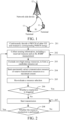
- FIG. 1 is a block diagram of an applicable radio communication system according to an embodiment of this application.
- the radio communication system includes a terminal 11 and a network-side device 12.
- the terminal 11 may also be referred to as a terminal device or a user equipment (User Equipment, UE).
- UE User Equipment
- the terminal 11 may be a terminal-side device such as a mobile phone, a tablet computer (Tablet Personal Computer), a laptop computer (Laptop Computer) or referred to as a notebook computer, a personal digital assistant (Personal Digital Assistant, PDA), a palm computer, a netbook, an ultra-mobile personal computer (ultra-mobile personal computer, UMPC), a mobile Internet device (Mobile Internet Device, MID), a wearable device (Wearable Device) or in-vehicle equipment (VUE), or a pedestrian terminal (PUE).
- the wearable device includes: a bracelet, a headphone, glasses, or the like. It should be noted that the embodiments of this application are not limited to the specific type of the terminal 11.
- the network-side device 12 may be a base station or a core network.
- the base station may be referred to as a node B, an evolved node B, an access point, a base transceiver station (Base Transceiver Station, BTS), a radio base station, a radio transceiver, a basic service set (Basic Service Set, BSS), an extended service set (Extended Service Set, ESS), a B node, an evolved B node (eNB), a home B node, a home evolved B node, a WLAN access point, a Wi-Fi node, a transmitting receiving point (Transmitting Receiving Point, TRP) or another suitable term in the field, as long as the same technical effect is achieved, and the base station is not limited to specific technical terms.
- SL transmission For direct data transmission between UEs on a physical layer. In other words, the UEs perform direct data transmission therebetween without using a network-side device. As shown in FIG. 1 , UE may communicate with a network-side device, or may communicate with other UE through an SL.
- SLs may include two resource allocation modes (mode).
- mode 1 In which a base station schedules resources, and in this case, resource information may come from a broadcast message of the base station or pre-configured information; and the other one is a mode 2, in which what resources to use for transmission depends on UE.
- RRC Radio Resource Control
- the UE may operate in the mode 1 and/or the mode 2.
- the UE If the UE operates within a coverage of the base station but does not have an RRC connection with the base station, the UE can only operate in the mode 2. If the UE is beyond a coverage of the base station, the UE can only operate in the mode 2 and perform SL transmission according to the pre-configured information.
- RRC Radio Resource Control
- sensing and a resource selection/reselection process may include the following steps:
- step 202 If the reselection is triggered, perform step 202. If the reselection is not triggered, perform step 207.
- Step 207 Begin transmitting (Begin transmitting).
- Step 208 Whether the resource reselection is performed (Resource re-selection?).
- step 202 If the resource reselection is performed, the process is restarted (Restart process) and step 202 is performed. If the resource reselection is not performed, the reserved transmission resource is continuously used (Continue using reservation) and step 207 is performed.
- PUE pedestrian user equipment
- LTE Long Term Evolution
- partial sensing is mainly designed to save power and to support the PUE.
- the PUE supports two modes of resource selection methods. One is random resource selection; and the other mode is to first perform partial sensing (partial sensing), select a resource based on a result of the partial sensing, and perform semi-static resource reservation.
- the PUE selects which mode is configured for an RRC, and in a case that the RRC is configured to support the resource selections of the two modes, which resource selection mode to use depends on UE implementation.
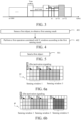
- the method for the terminal to perform partial sensing and resource sensing may be referred to in FIG. 3 .
- a window not filled with a pattern may be regarded as a PUE sensing window, which is within a range of [n-1000, n].
- a sensing window an interval obtained by pushing backwards by 100*k using the selection window filled with a pattern as a location reference and 100 as a step length is a location that can be sensed.
- a location of the selection window and a length Y depends on terminal implementation, k is a parameter configured by the RRC, and k may be in a value range of 10 bitmaps (bitmap) and indicates a location of the sensing window.
- the terminal After sensing sidelink control information (Sidelink Control information, SCI) sent by another terminal in the sensing window, the terminal deduces a resource reservation situation of the another terminal in the selection window according to the sensed SCI and a reservation period.
- the UE may exclude a resource that does not satisfy a condition from the selection window according to the information. At least 20% (20% of the window length Y) of the remaining resources are selected as a candidate resource set, the candidate resource set is reported to a Media Access Control (Media Access Control, MAC) layer, and the MAC layer randomly selects a resource from the candidate resource set as a candidate resource of the UE.
- the UE periodically reserves the selected resource and the reservation period is indicated in the SCI.
- New Radio New Radio, NR dynamic sensing window.
- a dynamic sensing window may be started, and the dynamic sensing window is dynamically configured/enabled according to a requirement of a terminal.
- FIG. 4 is a flowchart of an operating method according to an embodiment of this application.
- the operating method in this embodiment of this application may be performed by a first terminal.
- the first terminal may be a terminal that requires a resource selection, but is not limited thereto.
- the operating method may include the following steps: Step 401: Sense a first object, to obtain a first sensing result.
- the first object may include one or more objects, which may be a signal or a channel.
- the first object may satisfy at least one of the following:
- the resource may include at least one of a time domain resource, a frequency domain resource, a code domain resource, or a space domain resource.
- the resource of the first object and the resource of the first channel satisfying the FDM relationship may be understood as: the resource of the first object and the resource of the first channel are FDM resources.
- the resource of the first object and the resource of the first channel satisfying the CDM relationship may be understood as: the resource of the first object and the resource of the first channel are CDM resources.
- the resource of the first object and the resource of the first channel satisfying the frequency division multiplexing FDM or the code division multiplexing CDM relationship may be regarded as: the resource of the first object and an SL resource satisfy an FDM or CDM relationship.
- the M symbols occupied by the first object may be continuous or may be discontinuous, which may be specifically determined according to an actual condition, and is not limited in this embodiment of this application.
- the resource of the first object being correlated with the resource configuration of the PSFCH may include at least one of the following: the resource of the first object occupies at least a part of symbols of the PSFCH; the resource of the first object and a frequency domain resource of the PSFCH satisfy an FDM relationship; the resource of the first object is at least partially overlapped with a resource occupied by the PSFCH; or the resource of the first object and the PSFCH satisfy a CDM relationship.
- the resource of the first object may be a periodicity resource.
- the first object may occur periodically in a resource pool.
- a time domain resource of the first object may be an offset value at a specific location in a resource pool.
- the time domain resource of the first object is first n slots relative to particular window locations, where n is a positive integer.
- the first sensing result may include at least one of the following:
- the demodulation result of the first object may be any of the following: the first object is successfully demodulated; or the first object is not successfully demodulated.
- the sensing the first object may be specifically embodied as: sensing a type of indication information carried by the first object.
- the type of the indication information includes: first indication information and second indication information, where the first indication information is used for instructing to activate a window, and therefore, in some implementations, the first indication information may also be referred to as an activation signaling; and the second indication information is used for instructing to deactivate a window, and therefore, in some implementations, the second indication information may also be referred to as a deactivation signaling.
- the information carrying result of the first object may be any of the following: the first indication information; and the second indication information.
- the sensing the first object may be specifically embodied as: sensing an energy of the first object.
- the energy sensing result of the first object may include at least one of the following: a reference signal received power (Reference Signal Received Power, RSRP); a received signal strength indication (Received Signal Strength Indication, RSSI); a reference signal received quality (Reference Signal Received Quality, RSRQ); a signal-to-noise and interference ratio (Signal-to-Noise and Interference Ratio, SINR); a block error rate (Block Error Rate, BLER); an energy or an average of energies of at least one resource element (Resource Element, RE); or energy or an average of energies on at least one symbol.
- the RSRP may be a linear average of RSRPs on a part or all REs that carry the first object; and the RSSI may be a linear average of RSSIs on all or a part of
- the sensing the first object may be specifically embodied as any of the following: sensing a sequence; or blind sensing the first object by using a pre-defined, pre-configured or configured sequence.
- the sequence sensing result of the first object may include any of the following: a sequence is sensed; or a type of a sensed sequence.
- the type of the sensed sequence may include: a first sequence and a second sequence, where the first sequence corresponds to an operation of activating a window and the second sequence corresponds to an operation of deactivating a window.
- the sequence sensing result of the first object may include: a type of a sequence of the first object is sensed.
- the blind sensed type of the sequence of the first object may include: a third sequence and a fourth sequence, where the third sequence corresponds to an operation of activating a window and the fourth sequence corresponds to an operation of deactivating a window.
- Step 402 Perform a first operation correlated with N windows according to the first sensing result, where N is a positive integer.
- the window in this embodiment of this application may be a sensing window or a resource selection window (or referred to as a selection window), and may be specifically determined according to an actual situation, which is not limited in this embodiment of this application.
- the first terminal may perform the first operation according to the first sensing result.
- the first operation is correlated with the N windows.
- the first operation may act on: a part or all of the N windows.
- a window on which the first operation specifically acts may be determined according to an actual situation, which is not limited in this embodiment of this application.
- the first operation may directly act on the N windows, or may act only on a part of the N windows under other constraints.
- an initial state of the N windows may be an activated state, namely, an enabled state or an available state, and in this case, if the state of the N windows does not change, the first terminal performs operations such as sensing and a resource selection in the N windows. In this way, in a case that the N windows do not match a service requirement, unnecessary energy loss of the terminal is increased, resulting in a high power consumption of the terminal.
- the initial state of the N windows may be a deactivated state, namely, an unavailable state, and in this case, if the state of the N windows does not change, the first terminal does not perform operations such as sensing and a resource selection in the N windows.
- the terminal needs to perform a resource selection based on the sensing result of the N windows, because there is no activated window to sense an interference situation, effective information for the resource selection cannot be provided, which may cause collision between a selected resource and a resource of another terminal. Consequently, an increase in the number of retransmissions is caused, further leading to an increase in energy consumption, and the primary purpose of power saving is not achieved; or data packet transmission failure is caused, leading to a severe packet loss problem in the system.
- the terminal may perform the first operation in the N windows according to the first sensing result, so as to reduce the power consumption of the terminal and improve the reliability of data transmission.
- the first operation may include at least one of the following:
- the first operation includes activating a target window
- the target window is in an activated state, namely, an enabled state or an available state. Therefore, further, the first terminal may perform a second operation in the target window. Hence, the first operation may further include performing the second operation in the target window.
- the first operation may include only performing the second operation in the target window, after obtaining the first sensing result, the first terminal may directly perform the second operation in the target window.
- the first operation includes deactivating the target window, after the first terminal performs the first operation, the target window is in a deactivated state, namely, an unavailable state. Therefore, further, the first terminal may stop performing the second operation in the target window, so that the power consumption of the terminal can be reduced.
- the first operation may further include stopping performing the second operation in the target window.
- the first operation may include only stopping performing the second operation in the target window, after obtaining the first sensing result, the first terminal may directly stop performing the second operation in the target window, without performing a deactivation operation in the target window.
- the first resource selection may be regarded as a conventional resource selection, and during implementation, a terminal may first perform sensing in a window and then perform a resource selection according to a sensing result of the window; and the second resource selection may be regarded as a random resource selection, and during implementation, a terminal may directly perform a random selection of a resource without sensing a window.
- the first terminal may skip the target window and re-perform a sensing operation on the first object.
- the first operation may include at least one of the following: deactivating the target window; stopping performing the second operation in the target window; or ignoring the target window.
- the initial state of the N windows is an activated state, namely, an enabled state or an available state and the target window does not match a service requirement, unnecessary sensing of the terminal can be reduced or omitted, so that the effect of reducing the power consumption of the terminal can be achieved.
- the first operation may include at least one of the following: activating the target window; or performing the second operation in the target window.
- the first terminal may sense an interference state in a second window to provide effective information for the resource selection, so as to reduce or avoid collision between a selected resource and a resource of another terminal, or reduce or avoid data packet transmission failure, so that the reliability of the resource selection or data packet transmission can be improved, and further the power consumption of the terminal can be reduced.
- the terminal may sense a first object, to obtain a first sensing result, and perform a first operation correlated with N windows according to the first sensing result, where N is a positive integer.
- the first operation performed by the terminal in the N windows is correlated with the sensing result of the first object.
- the terminal may not perform sensing in the N windows. In other words, sensing in a configured window is not an operation that needs to be performed. Therefore, the power consumption of the terminal can be reduced.
- the first object has a first correspondence with a resource selection or a resource selection configuration, and the first correspondence satisfies at least one of the following:
- the periodicity information may be a periodicity value or a periodicity value set.
- a plurality of sequences respectively correspond to different periodicity values, or correspond to different periodicity value sets.
- a sequence 1 corresponds to a periodicity value of 0
- a sequence 2 corresponds to a periodicity value ⁇ 100
- a sequence 3 corresponds to a periodicity value > 100.
- a plurality of sensing locations respectively correspond to different given periodicity values, or correspond to different periodicity value sets.
- a sensing location 1 corresponds to a periodicity value of 0
- a sensing location 2 corresponds to a periodicity value of non-zero.
- QoS Quality of Service
- QoS associated with one/more of the first objects may correspond to one/more resource selections or resource selection configurations.
- a target priority associated with one/more first objects may correspond to one/more resource selections or resource selection configurations.
- the unit of the resource may include at least one of the following: slot, symbol, subframe, frame, millisecond, period (PSFCH period, sensing step length, discontinuous reception (Discontinuous Reception, DRX) period), or the like.
- a may be a processing time for sensing the first object or a quantitative value of the processing time, or may be pre-defined, pre-configured or configured, which may be specifically determined according to an actual situation, and is not limited in this embodiment of this application.
- the first terminal may further determine at least one of a resource selection and/or a resource selection configuration according to the sensed first object, so that the utilization rate of the first object can be improved.
- the first operation is determined based on a result of this sensing of the first object, that is, the first sensing result.
- the first sequence and the second sequence may be pre-defined, pre-configured or configured.
- the second sequence is a cyclic offset of the first sequence.
- the third sequence and the fourth sequence may be pre-defined, pre-configured or configured.
- the fourth sequence is a cyclic offset of the third sequence.
- the first operation satisfies: in a case that the sequence sensing result of the first object indicates that a sequence is sensed, the first operation includes at least one of the following: activating the target window; and in a case that the second operation is performed in the target window and the sequence sensing result of the first object indicates that no sequence is sensed, the first operation may include at least one of the following: deactivating the target window; stopping performing the second operation in the target window; or ignoring the target window.
- the first operation is determined based on a comparison result of the energy sensing result of the first object and R energy thresholds, where R is a positive integer.
- the R energy thresholds may be pre-defined, pre-configured or configured.
- the R energy thresholds may correspond to at least one of the following: a resource pool; a terminal; a logical channel; a logical channel group; QoS; a channel occupancy ratio (Channel Occupancy Ratio, CR); a channel busy ratio (Channel Busy Ratio, CBR); and a target priority, where the target priority is a priority carried by a physical layer, a logical channel priority, or a logical channel group priority.
- a configuration method of the R energy thresholds is at least one of the following: configured by each resource pool; configured by each terminal; configured according to a logical channel; configured according to a logical channel group; configured according to a QoS; configured according to a CR/CBR; or configured according to a target priority.
- the first operation satisfies any of the following:
- the energy sensing result of the first object is a situation of an energy measurement result of an RSSI.
- the first operation satisfies c
- the first terminal may perform at least one of the following: deactivating the target window; stopping performing the second operation in the target window; or ignoring the target window, so that the effect of reducing the power consumption of the terminal can be achieved.
- results of sensing the first object may be the same or different.
- first operations performed by the first terminal may be different or the same.
- a behavior of performing the first operation by the first terminal according to the first sensing result may be pre-defined, pre-configured or configured, or may be determined based on a pre-defined, pre-configured or configured correspondence.
- the method also includes:
- the second correspondence satisfies at least one of the following:
- That a demodulation result of the first object corresponds to at least one operation optionally may include:
- That information carrying result of the first object corresponds to at least one operation optionally may include at least one of the following:
- That a sequence sensing result of the first object corresponds to at least one operation optionally may include any of the following:
- That the target comparison result corresponds to at least one operation optionally may include any of the following:
- the first sensing result is represented by any of the following:
- the M bits may be carried in indication information, or may be carried in a bitmap or a bit string.
- the first value and the second value may be pre-defined, pre-configured or configured.
- Both the first value and the second value include at least one value, which may be determined according to an actual situation, and is not limited in this embodiment of this application.
- the first value or the second value includes two or more values
- the first value or the second value may alternatively be used for indicating other information, such as the foregoing periodicity information of the resource reservations, and information indicated by different values is different.
- the M bits include four values, respectively, 00, 01, 10, and 11.
- the three values 00, 01, and 10 may be regarded as the first value, and 11 may be regarded as the second value. Further, 00 may indicate that the periodicity value of the resource reservations is 0, 01 may indicate that the periodicity value of the resource reservations is 50, and 10 may indicate that the periodicity value of the resource reservations is 100.
- the first terminal may perform at least one of the following according to the first sensing result: activating a target window; and performing a second operation in a target window.
- the first terminal may determine that the periodicity value of the resource reservations of the resource selection window corresponding to the first object is 50.
- the M bits may correspond to one window; and in a second implementation, the M bits may correspond to two or more windows. Further, in the second implementation, one bit of the M bits may correspond to two or more windows; or a bitmap including the M bits may correspond to a window, where each bit indicates an activated state of one or more windows.
- the correspondence between M bits and a window may be pre-defined, pre-configured or configured, which may be specifically determined according to an actual situation, and is not limited in this embodiment of this application.
- the first sensing result is represented by a code point
- implementation thereof is the same as that of representing the first sensing result by M bits.
- some or a particular code point instructs to activate a window
- some other or another particular code point instructs to deactivate a window.
- the N windows are determined based on a third correspondence between the first object and a window, where the third correspondence is pre-defined, pre-configured or configured.
- the first terminal may perform the first operation correlated with the N windows according to the first sensing result based on the correspondence between the first object and the sensing window and/or the resource selection window.
- the first object is an activation/deactivation signaling for exemplary description.
- the first terminal may obtain a location of a sensing window according to a correspondence between the activation/deactivation signaling and the sensing window and a location of the activation/deactivation signaling, and perform sensing in the sensing window.
- the first terminal may obtain a location of a resource selection window/resource selection according to a correspondence between the activation/deactivation signaling and a location of the resource selection window/resource selection and a location of the activation/deactivation signaling, perform a resource selection in the resource selection window, or send information on the location of the resource selection.
- the third correspondence may satisfy at least one of the following:
- a representation form of the first object or a sensing location of the first object may change, windows corresponding to the first object may be different or the same.
- a corresponding window may be determined by looking up the third correspondence.
- configurations of the N windows are determined based on the third correspondence, where
- the third correspondence may include at least one of a start location of a window (for example, a slot interval from a sensed PSCCH), a window length, an end location, and a period.
- a start location of a window for example, a slot interval from a sensed PSCCH
- a window length for example, a slot interval from a sensed PSCCH
- an end location for example, a window length
- a period for example, a start location of a window (for example, a slot interval from a sensed PSCCH), a window length, an end location, and a period.
- the N windows satisfy at least one of the following:
- the first terminal may directly perform the first operation, or may perform the first operation only in a case that some conditions are satisfied.
- performing the first operation corresponding to the sensing result in the N windows may include:
- that the second information satisfies the first condition may include at least one of the following:
- the second information satisfies that the first condition includes that the first distance is less than the target value, it indicates that the distance between the first terminal and the target end is excessively large, a possibility of interference between the first terminal and the target end is small, and therefore, the first operation may not be performed.
- the first terminal may regard the sensed first object as a valid first object, and may perform the first operation. Otherwise, the first terminal may regard the sensed first object as an invalid first object, may ignore the first object, or may not perform the first operation, so that the effect of further saving power is achieved.
- performing the first operation corresponding to the sensing result in the N windows may include: In a case that the fourth condition is satisfied, the first operation corresponding to the sensing result is performed in the N windows, where
- the first terminal may autonomously trigger the resource selection, or the target end may trigger the first terminal to perform the resource selection, which may be specifically determined according to an actual situation, and is not limited in this embodiment of this application.
- the first terminal may actively sense the first object, or may be conditionally triggered to sense the first object.
- the sensing the first object includes:
- the second condition may also include any of the following:
- the first terminal senses the first object only in a case that the second condition is satisfied, so that the number of times that the first terminal senses the first object can be reduced, thereby reducing the power consumption of the terminal.
- the first object may be sent by a target end, and the target end is a network-side device or a second terminal.
- FIG. 5 is a flowchart of a sending method according to an embodiment of this application.
- the sending method in this embodiment of this application is performed by a target end.
- the target end is a network-side device or a second terminal, and the second terminal may be a terminal of data to be sent, or a terminal of scheduling.
- the sending method may include the following steps: Step 501: Send a first object.
- the first object may be independent of a resource reservation signaling, or may be carried in a resource reservation signaling.
- the sending a first object includes:
- the first object is sent based on a correspondence between the first object and a window.
- the first object is an activation/deactivation signaling for exemplary description.
- the second terminal may obtain (optional) a location of the activation/deactivation signaling according to the correspondence between the activation/deactivation signaling and the sensing window and a location of the sensing window, and send the activation/deactivation signaling at the (optional) location.
- the second terminal may obtain (optional) a location of the activation/deactivation signaling according to the correspondence between the activation/deactivation signaling and the resource selection window/resource selection location, and send the activation/deactivation signaling at the (optional) location.
- the first object includes at least one of the following: a physical sidelink control channel PSCCH; a physical sidelink shared channel PSSCH; a physical sidelink feedback channel PSFCH; a demodulation reference signal DMRS; a sequence; sidelink control information SCI; a channel state information reference signal CSI-RS; or a phase tracking reference signal PTRS.
- the first object is at least one of the following: an object in a target format; an object scrambled by a target radio network temporary identifier RNTI; an object scrambled by a target sequence; or an object initialized by a target value.
- a resource of the first object satisfies at least one of the following:
- the first object has a first correspondence with a resource selection or a resource selection configuration, and the first correspondence satisfies at least one of the following:
- the target end may send a first object to a first terminal, and in this way, the terminal may perform a first operation correlated with N windows according to a first sensing result obtained by sensing the first object, where N is a positive integer.
- the first operation performed by the terminal is correlated with the sensing result of the first object, and therefore, the terminal does not necessarily perform the sensing in the N windows, so that the power consumption of the terminal can be reduced.
- this embodiment serves as an embodiment of the target end corresponding to the method embodiment of FIG. 4 , and therefore, reference may be made to related descriptions in the method embodiment of FIG. 4 ; and in addition, the same beneficial effect can be achieved, and to avoid repetition, details are not described herein again.
- the terminal (for example, a terminal that needs to select a resource) senses a specific signal/channel, obtains a sensing result, and activates/deactivates a sensing window according to the sensing result.
- sensing is performed in an activated sensing window.
- Embodiment 1 may be referred to in FIG. 6a.
- FIG. 6a illustrates a (de-)activation signaling ((de-)activation signal); a sensing window (sensing window); f indicative of frequency; and t indicative of time.
- a sensing window 1, a sensing window 2, and a sensing window 3 each include 16 slots.
- Embodiment 1 may include the following implementations:
- FIG. 6b illustrates a (de-)activation signaling ((de-)activation signal); a sensing window (sensing window); f indicative of frequency; and t indicative of time.
- a sensing window 1, a sensing window 2, and a sensing window 3 each include 16 slots, and a sensing window 4 includes 32 slots.
- FIG. 6c illustrates a (de-)activation signaling ((de-)activation signal); a sensing window (sensing window); f indicative of frequency; and t indicative of time.
- a sensing window 1, a sensing window 2, and a sensing window 3 each include 16 slots.
- a symbol in which the PSFCH is located carries activation/deactivation indication information for triggering the dynamic sensing window.
- This embodiment of this application may be applied to the internet of vehicles, or wearable devices, and some pedestrian-to-pedestrian (Pedestrian-to-Pedestrian, P2P) scenarios.
- P2P pedestrian-to-pedestrian
- the terminal senses a specific signal/channel, obtains a sensing result, activates/deactivates a sensing window according to the sensing result, and performs sensing in the sensing window.
- the sensing window is triggered based on the activation/deactivation signaling, which is beneficial for the terminal to implement power saving.
- an execution entity of the operating method provided in this embodiment of this application may be an operating apparatus, or a control module, in the operating apparatus, for performing the operating method.
- the operating apparatus provided in this embodiment of this application is described by an example in which the operating apparatus performs the operating method.
- FIG. 7 is a structural diagram of an operating apparatus according to an embodiment of this application.
- an operating apparatus 700 includes:
- the first operation includes at least one of the following:
- the first object includes at least one of the following: a physical sidelink control channel PSCCH; a physical sidelink shared channel PSSCH; a physical sidelink feedback channel PSFCH; a demodulation reference signal DMRS; a sequence; sidelink control information SCI; a channel state information reference signal CSI-RS; or a phase tracking reference signal PTRS.
- the first object is at least one of the following: an object in a target format; an object scrambled by a target radio network temporary identifier RNTI; an object scrambled by a target sequence; or an object initialized by a target value.
- a resource of the first object satisfies at least one of the following:
- the first object has a first correspondence with a resource selection or a resource selection configuration, and the first correspondence satisfies at least one of the following:
- the operating apparatus 700 further includes:
- the second correspondence satisfies at least one of the following:
- a demodulation result of the first object corresponds to at least one operation includes at least one of the following:
- an information carrying result of the first object corresponds to at least one operation includes:
- a sequence sensing result of the first object corresponds to at least one operation includes any of the following:
- a target comparison result corresponds to at least one operation includes any of the following:
- the first sensing result is represented by any of the following:
- the first sensing result may include at least one of the following:
- the first operation satisfies any of the following:
- the first operation satisfies:
- the first operation satisfies any of the following:
- the first operation is determined based on a comparison result of the energy sensing result of the first object and R energy thresholds, where R is a positive integer.
- the first operation satisfies any of the following:
- the N windows are determined based on a third correspondence between the first object and a window, where the third correspondence is pre-defined, pre-configured or configured.
- the third correspondence satisfies at least one of the following:
- configurations of the N windows are determined based on the third correspondence, where
- the N windows satisfy at least one of the following:
- the first execution module 702 is further configured to:
- the first object be sent by a target end, and the target end is a network-side device or a second terminal.
- the operating apparatus 700 further includes:
- the sensing module 701 is further configured to: in a case that a second condition is satisfied, sense the first object, where
- the operating apparatus in this embodiment of this application may be an apparatus, or may be a component, an integrated circuit, or a chip in a terminal.
- the apparatus may be a mobile terminal or a non-mobile terminal.
- the mobile terminal may include, but is not limited to, the types of the terminal 11 listed above, and the non-mobile terminal may be a server, a network attached storage (Network Attached Storage, NAS), a personal computer (personal computer, PC), a television (television, TV), an automatic teller machine, a self-service machine, or the like, which are not specifically limited in this embodiment of this application.
- Network Attached Storage Network Attached Storage
- the operating apparatus in this embodiment of this application may be an apparatus having an operating system.
- the operating system may be an Android (Android) operating system, may be an ios operating system, or may be another possible operating system, which is not specifically limited in this embodiment of this application.
- the operating apparatus 700 provided in this embodiment of this application can implement the processes implemented in the method embodiment of FIG. 4 , and in addition the same technical effect can be achieved, which are not repeated herein in order to avoid duplication.
- an execution entity of the sending method provided in this embodiment of this application may be a sending apparatus, or a control module, in the sending apparatus, for performing the sending method.
- the sending apparatus provided in this embodiment of this application is described by an example in which the sending apparatus performs the sending method.
- FIG. 8 is a structural diagram of a sending apparatus according to an embodiment of this application.
- a sending apparatus 800 includes: a sending module 801, configured to send a first object.
- the sending module 801 is further configured to: in a case that the third condition is satisfied, send the first object, where
- the first object is sent based on at least one of the following:
- the first object includes at least one of the following: a physical sidelink control channel PSCCH; a physical sidelink shared channel PSSCH; a physical sidelink feedback channel PSFCH; a demodulation reference signal DMRS; a sequence; sidelink control information SCI; a channel state information reference signal CSI-RS; or a phase tracking reference signal PTRS.
- the first object is at least one of the following: an object in a target format; an object scrambled by a target radio network temporary identifier RNTI; an object scrambled by a target sequence; or an object initialized by a target value.
- a resource of the first object satisfies at least one of the following:
- the first object has a first correspondence with a resource selection or a resource selection configuration, and the first correspondence satisfies at least one of the following:
- the sending apparatus in this embodiment of this application may be an apparatus, or may be a component, an integrated circuit, or a chip in a network-side device.
- the network-side device may include but is not limited to the type of the network-side device 12 listed above, which is not specifically limited in this embodiment of this application.
- the sending apparatus 800 provided in this embodiment of this application can implement the processes implemented in the method embodiment of FIG. 5 , and in addition the same technical effect can be achieved, which are not repeated herein in order to avoid duplication.
- an embodiment of this application further provides a communication device 900, including a processor 901, a memory 902, a program or instructions stored on the memory 902 and capable of being run on the processor 901.
- a communication device 900 including a processor 901, a memory 902, a program or instructions stored on the memory 902 and capable of being run on the processor 901.
- the communication device 900 is a terminal
- the program or the instructions, when executed by the processor 901 implement the processes of the foregoing method embodiment in FIG. 4 , and in addition the same technical effect can be achieved.
- the communication device 900 is a network-side device
- the program or the instructions, when executed by the processor 901 implement the processes of the foregoing method embodiment in FIG. 5 , and in addition the same technical effect can be achieved, which are not repeated herein in order to avoid duplication.
- FIG. 10 is a second structural diagram of a communication device according to an embodiment of this application.
- a communication device 1000 is a schematic structural diagram of a hardware structure of a communication device that implements the embodiments of this application. As shown in FIG. 10 , the communication device 1000 includes: a processor 1001, a memory 1002, a user interface 1003, a transceiver 1004, and a bus interface.
- a bus architecture may include any number of interconnected buses and bridges, specifically linked together by various circuits of one or more processors represented by a processor 1001 and memories represented by a memory 1002.
- the bus architecture may further link various other circuits such as peripheral devices, voltage regulators, and power management circuits together, which are well known in the art, and therefore is not further described herein.
- the bus interface provides an interface.
- the transceiver 1004 may be a plurality of elements, that is, including a transmitter and a receiver, for providing units for communicating with various other apparatuses on a transmission medium.
- the user interface 1003 may alternatively be an interface that can be externally/internally connected to a required device, and the connected device includes but is not limited to a keypad, a display, a speaker, a microphone, a joystick, or the like.
- the processor 1001 is responsible for managing the bus architecture and general processing, and the memory 1002 may store data used by a processor 2601 during operations.
- the communication device 1000 further includes: a program or an instruction stored on the memory 1002 and capable of running on the processor 1001.
- the processor 1001 invokes the program or the instructions in the memory 1002 to perform the processes in the method embodiment in FIG. 4 or FIG. 5 , and in addition the same technical effect can be achieved, which are not repeated herein in order to avoid duplication.
- This embodiment of this application further provides a computer-readable storage medium, storing therein a program or an instruction, where the program or instruction, when executed by a processor, implements various processes of the operation method embodiment, and may implement the same technical effects, which will not be described in detail herein again to avoid repetition.
- the computer-readable storage medium may include a flash drive, a read-only memory (Read-Only Memory, ROM), a random access memory (Random Access Memory, RAM), a magnetic disk, or an optical disc.
- This embodiment of this application further provides a readable storage medium, storing therein a program or an instruction, where the program or instruction, when executed by a processor, implements various processes of the method embodiment in FIG. 4 or FIG. 5 , and may implement the same technical effects, which will not be described in detail herein again to avoid repetition.
- the processor is a processor in the terminal described in the foregoing embodiment.
- the readable storage medium includes a computer-readable storage medium, for example, a Read-Only Memory (Read-Only Memory, ROM), a Random Access Memory (Random Access Memory, RAM), a magnetic disk, an optical disc or the like.
- This embodiment of this application further provides a chip, including a processor and a communication interface, where the communication interface is coupled to the processor.
- the processor is configured to run a program or an instruction on a network-side device to implement various processes of the method embodiment in FIG. 4 or FIG. 5 , and may implement the same technical effects, which will not be described in detail herein again to avoid repetition.
- the chip mentioned in this embodiment of this application may further be referred to as a system-level chip, a system chip, a chip system, a system on chip, or the like.
- a module, a unit, a sub-module, and a subunit may be implemented in one or more application-specific integrated circuits (Application Specific Integrated Circuits, ASIC), a digital signal processor (Digital Signal Processing, DSP), a digital signal processing device (DSP Device, DSPD), a programmable logic device (Programmable Logic Device, PLD), a field-programmable gate array (Field-Programmable Gate Array, FPGA), a general purpose processor, a controller, a micro-controller, a microprocessor, and other electronic units configured to execute the functions described in this application, or a combination of the above.
- ASIC Application Specific Integrated Circuits
- DSP Digital Signal Processing
- DSP Device digital signal processing device
- PLD programmable logic device
- FPGA field-programmable gate array
- a general purpose processor a controller, a micro-controller, a microprocessor, and other electronic units configured to execute the functions described in this application, or a combination of the above.
- the foregoing embodiment methods may be implemented by using software in combination with a necessary universal hardware platform. Certainly, the embodiment methods may also be implemented by using hardware, but the former is a better implementation in many cases. Based on such an understanding, the technical solutions of this application essentially, or the part contributing to the prior art, may be presented in the form of a software product.
- the computer software product is stored in a storage medium (for example, a ROM/RAM, a magnetic disk, or an optical disc) including several instructions to enable a terminal (which may be a mobile phone, a computer, a server, an air conditioner, a network device, or the like) to perform the methods described in the embodiments of this application.
Landscapes
- Engineering & Computer Science (AREA)
- Signal Processing (AREA)
- Computer Networks & Wireless Communication (AREA)
- Computer Security & Cryptography (AREA)
- Mobile Radio Communication Systems (AREA)
Applications Claiming Priority (2)
| Application Number | Priority Date | Filing Date | Title |
|---|---|---|---|
| CN202010828074.XA CN114080010B (zh) | 2020-08-17 | 2020-08-17 | 操作方法、发送方法及相关设备 |
| PCT/CN2021/112459 WO2022037488A1 (zh) | 2020-08-17 | 2021-08-13 | 操作方法、发送方法及相关设备 |
Publications (2)
| Publication Number | Publication Date |
|---|---|
| EP4199624A1 true EP4199624A1 (de) | 2023-06-21 |
| EP4199624A4 EP4199624A4 (de) | 2024-01-10 |
Family
ID=80281071
Family Applications (1)
| Application Number | Title | Priority Date | Filing Date |
|---|---|---|---|
| EP21857583.5A Pending EP4199624A4 (de) | 2020-08-17 | 2021-08-13 | Betriebsverfahren, übertragungsverfahren und zugehörige vorrichtung |
Country Status (5)
| Country | Link |
|---|---|
| US (1) | US20230199837A1 (de) |
| EP (1) | EP4199624A4 (de) |
| JP (1) | JP7703645B2 (de) |
| CN (1) | CN114080010B (de) |
| WO (1) | WO2022037488A1 (de) |
Families Citing this family (5)
| Publication number | Priority date | Publication date | Assignee | Title |
|---|---|---|---|---|
| WO2020204642A1 (ko) * | 2019-04-02 | 2020-10-08 | 엘지전자 주식회사 | Pscch 및 pssch를 전송하는 방법 및 장치 |
| BR112022019160A2 (pt) * | 2020-03-24 | 2022-11-08 | Lenovo Beijing Ltd | Método e aparelho para reavaliação de recursos de enlace lateral |
| MX2023007798A (es) * | 2020-12-31 | 2023-07-11 | Huawei Tech Co Ltd | Metodo y aparato de comunicacion. |
| WO2023206010A1 (zh) * | 2022-04-25 | 2023-11-02 | Oppo广东移动通信有限公司 | 通信方法、装置、设备、存储介质、芯片、产品及程序 |
| CN121753395A (zh) * | 2023-09-04 | 2026-03-27 | Oppo广东移动通信有限公司 | 信道传输方法、装置、设备及存储介质 |
Family Cites Families (15)
| Publication number | Priority date | Publication date | Assignee | Title |
|---|---|---|---|---|
| CN102843328B (zh) * | 2012-08-02 | 2014-11-26 | 北京中科晶上科技有限公司 | Tdd lte系统中的prach序列的检测方法 |
| US11240783B2 (en) * | 2016-03-04 | 2022-02-01 | Lg Electronics Inc. | V2X transmission resource selecting method implemented by terminal in wireless communication system and terminal using same |
| CN108781436A (zh) * | 2016-03-31 | 2018-11-09 | 株式会社Ntt都科摩 | 用户装置及感测控制方法 |
| CA3033450C (en) | 2016-08-12 | 2023-03-28 | Huawei Technologies Co., Ltd. | Resource selection method, apparatus, and device |
| GB2554644B (en) * | 2016-09-29 | 2018-10-10 | Tcl Communication Ltd | Sensing methods for wireless communication devices |
| CN107889157B (zh) * | 2016-09-30 | 2023-07-28 | 北京三星通信技术研究有限公司 | 功率控制的方法及设备 |
| US10736077B2 (en) * | 2017-05-05 | 2020-08-04 | Qualcomm Incorporated | Configuration of remaining system information transmission window |
| US11218901B2 (en) * | 2018-08-13 | 2022-01-04 | Lg Electronics Inc. | Method and device for mapping between traffic class and proximity-based service per packet priority in wireless communication system |
| US10856227B2 (en) * | 2018-09-28 | 2020-12-01 | Mediatek Inc. | Triggering adaptation mechanisms for UE power-saving |
| CN110972101A (zh) * | 2018-09-28 | 2020-04-07 | 展讯半导体(南京)有限公司 | 副链路资源的分配和获取方法及装置、以及计算机可读介质 |
| CN111263442B (zh) * | 2018-11-30 | 2023-05-02 | 中国信息通信研究院 | 一种车联网业务信道资源确定方法和终端设备 |
| CN111385765B (zh) * | 2018-12-28 | 2022-07-22 | 大唐移动通信设备有限公司 | 信息传输的方法及终端 |
| US20200229195A1 (en) * | 2019-01-10 | 2020-07-16 | Industrial Technology Research Institute | Method of configuring resource pool for sidelink communication by receiver ue, by transmitter ue, and by base station, ue using the same and base station using the same |
| US20200229171A1 (en) * | 2019-04-02 | 2020-07-16 | Intel Corporation | Methods of autonomous resource selection in new radio (nr) vehicle-to-everything (v2x) sidelink communication |
| US20210337519A1 (en) * | 2020-04-22 | 2021-10-28 | Samsung Electronics Co., Ltd. | Assisted sensing for sidelink resource selection |
-
2020
- 2020-08-17 CN CN202010828074.XA patent/CN114080010B/zh active Active
-
2021
- 2021-08-13 EP EP21857583.5A patent/EP4199624A4/de active Pending
- 2021-08-13 JP JP2023511988A patent/JP7703645B2/ja active Active
- 2021-08-13 WO PCT/CN2021/112459 patent/WO2022037488A1/zh not_active Ceased
-
2023
- 2023-02-16 US US18/110,708 patent/US20230199837A1/en active Pending
Also Published As
| Publication number | Publication date |
|---|---|
| US20230199837A1 (en) | 2023-06-22 |
| CN114080010B (zh) | 2024-12-17 |
| CN114080010A (zh) | 2022-02-22 |
| EP4199624A4 (de) | 2024-01-10 |
| WO2022037488A1 (zh) | 2022-02-24 |
| JP2023539095A (ja) | 2023-09-13 |
| JP7703645B2 (ja) | 2025-07-07 |
Similar Documents
| Publication | Publication Date | Title |
|---|---|---|
| US12185321B2 (en) | Sidelink communication method, terminal device and network device | |
| CN115866741B (zh) | 参考信号的传输方法、装置及相关设备 | |
| US20230199837A1 (en) | Operating method, sending method, and related device | |
| US11576157B2 (en) | NR V2X sidelink resource selection and reselection using scheduling window | |
| US20220232532A1 (en) | Methods and devices of assigning resource for sidelink communication system | |
| EP4195813B1 (de) | Informationssendeverfahren, ressourcenbestimmungsverfahren und -vorrichtung | |
| US12439439B2 (en) | Method for transmission resource monitoring, method for transmission resource determination, and communications device | |
| WO2019237832A1 (zh) | 一种请求信号的发送、接收方法及设备、装置 | |
| CN108633065A (zh) | 数据发送方法和相应的用户设备 | |
| US12262359B2 (en) | Partial sensing-based resource selection method and user equipment | |
| US20260032584A1 (en) | Methods and apparatuses for radio communication | |
| US20240231950A9 (en) | Resource reselection method and apparatus, device, and storage medium | |
| US20250330275A1 (en) | Harq process allocation method, base station, and storage medium | |
| EP3914003A1 (de) | Verfahren und vorrichtung zur ressourcenzuweisung | |
| CN114286443B (zh) | 一种时隙确定方法、装置及终端 | |
| CN115734293B (zh) | 资源选择方法、装置及终端 | |
| CN111867080A (zh) | 一种下行信道指示方法和设备 | |
| EP3900461B1 (de) | Vorrichtung, verfahren und computerprogramm | |
| CN107041006A (zh) | 传输数据的方法和装置 | |
| US20230209508A1 (en) | Information transmission method, resource selection method, apparatus, and electronic device | |
| WO2026025452A1 (zh) | 信息上报方法、装置、设备及存储介质 |
Legal Events
| Date | Code | Title | Description |
|---|---|---|---|
| STAA | Information on the status of an ep patent application or granted ep patent |
Free format text: STATUS: THE INTERNATIONAL PUBLICATION HAS BEEN MADE |
|
| PUAI | Public reference made under article 153(3) epc to a published international application that has entered the european phase |
Free format text: ORIGINAL CODE: 0009012 |
|
| STAA | Information on the status of an ep patent application or granted ep patent |
Free format text: STATUS: REQUEST FOR EXAMINATION WAS MADE |
|
| 17P | Request for examination filed |
Effective date: 20230317 |
|
| AK | Designated contracting states |
Kind code of ref document: A1 Designated state(s): AL AT BE BG CH CY CZ DE DK EE ES FI FR GB GR HR HU IE IS IT LI LT LU LV MC MK MT NL NO PL PT RO RS SE SI SK SM TR |
|
| DAV | Request for validation of the european patent (deleted) | ||
| DAX | Request for extension of the european patent (deleted) | ||
| REG | Reference to a national code |
Ref country code: DE Ref legal event code: R079 Free format text: PREVIOUS MAIN CLASS: H04W0072080000 Ipc: H04L0005000000 |
|
| A4 | Supplementary search report drawn up and despatched |
Effective date: 20231211 |
|
| RIC1 | Information provided on ipc code assigned before grant |
Ipc: H04W 74/08 20090101ALN20231205BHEP Ipc: H04W 72/40 20230101ALN20231205BHEP Ipc: H04W 76/11 20180101ALN20231205BHEP Ipc: H04W 92/18 20090101ALN20231205BHEP Ipc: H04W 72/02 20090101ALI20231205BHEP Ipc: H04W 52/02 20090101ALI20231205BHEP Ipc: H04W 48/16 20090101ALI20231205BHEP Ipc: H04L 5/00 20060101AFI20231205BHEP |