EP4200401B1 - Anreicherung von t-zellen mit einem anti-cbeta-antikörper - Google Patents
Anreicherung von t-zellen mit einem anti-cbeta-antikörper Download PDFInfo
- Publication number
- EP4200401B1 EP4200401B1 EP21765616.4A EP21765616A EP4200401B1 EP 4200401 B1 EP4200401 B1 EP 4200401B1 EP 21765616 A EP21765616 A EP 21765616A EP 4200401 B1 EP4200401 B1 EP 4200401B1
- Authority
- EP
- European Patent Office
- Prior art keywords
- cells
- antibody
- tcr
- chain
- cell
- Prior art date
- Legal status (The legal status is an assumption and is not a legal conclusion. Google has not performed a legal analysis and makes no representation as to the accuracy of the status listed.)
- Active
Links
Images


Classifications
-
- C—CHEMISTRY; METALLURGY
- C12—BIOCHEMISTRY; BEER; SPIRITS; WINE; VINEGAR; MICROBIOLOGY; ENZYMOLOGY; MUTATION OR GENETIC ENGINEERING
- C12N—MICROORGANISMS OR ENZYMES; COMPOSITIONS THEREOF; PROPAGATING, PRESERVING, OR MAINTAINING MICROORGANISMS; MUTATION OR GENETIC ENGINEERING; CULTURE MEDIA
- C12N5/00—Undifferentiated human, animal or plant cells, e.g. cell lines; Tissues; Cultivation or maintenance thereof; Culture media therefor
- C12N5/0081—Purging biological preparations of unwanted cells
- C12N5/0087—Purging against subsets of blood cells, e.g. purging alloreactive T cells
-
- C—CHEMISTRY; METALLURGY
- C12—BIOCHEMISTRY; BEER; SPIRITS; WINE; VINEGAR; MICROBIOLOGY; ENZYMOLOGY; MUTATION OR GENETIC ENGINEERING
- C12N—MICROORGANISMS OR ENZYMES; COMPOSITIONS THEREOF; PROPAGATING, PRESERVING, OR MAINTAINING MICROORGANISMS; MUTATION OR GENETIC ENGINEERING; CULTURE MEDIA
- C12N5/00—Undifferentiated human, animal or plant cells, e.g. cell lines; Tissues; Cultivation or maintenance thereof; Culture media therefor
- C12N5/06—Animal cells or tissues; Human cells or tissues
- C12N5/0602—Vertebrate cells
- C12N5/0634—Cells from the blood or the immune system
- C12N5/0636—T lymphocytes
-
- A—HUMAN NECESSITIES
- A61—MEDICAL OR VETERINARY SCIENCE; HYGIENE
- A61K—PREPARATIONS FOR MEDICAL, DENTAL OR TOILETRY PURPOSES
- A61K40/00—Cellular immunotherapy
- A61K40/10—Cellular immunotherapy characterised by the cell type used
- A61K40/11—T-cells, e.g. tumour infiltrating lymphocytes [TIL] or regulatory T [Treg] cells; Lymphokine-activated killer [LAK] cells
-
- A—HUMAN NECESSITIES
- A61—MEDICAL OR VETERINARY SCIENCE; HYGIENE
- A61K—PREPARATIONS FOR MEDICAL, DENTAL OR TOILETRY PURPOSES
- A61K40/00—Cellular immunotherapy
- A61K40/30—Cellular immunotherapy characterised by the recombinant expression of specific molecules in the cells of the immune system
- A61K40/32—T-cell receptors [TCR]
-
- A—HUMAN NECESSITIES
- A61—MEDICAL OR VETERINARY SCIENCE; HYGIENE
- A61K—PREPARATIONS FOR MEDICAL, DENTAL OR TOILETRY PURPOSES
- A61K40/00—Cellular immunotherapy
- A61K40/40—Cellular immunotherapy characterised by antigens that are targeted or presented by cells of the immune system
- A61K40/41—Vertebrate antigens
- A61K40/42—Cancer antigens
-
- C—CHEMISTRY; METALLURGY
- C07—ORGANIC CHEMISTRY
- C07K—PEPTIDES
- C07K14/00—Peptides having more than 20 amino acids; Gastrins; Somatostatins; Melanotropins; Derivatives thereof
- C07K14/435—Peptides having more than 20 amino acids; Gastrins; Somatostatins; Melanotropins; Derivatives thereof from animals; from humans
- C07K14/705—Receptors; Cell surface antigens; Cell surface determinants
- C07K14/70503—Immunoglobulin superfamily
- C07K14/7051—T-cell receptor (TcR)-CD3 complex
-
- C—CHEMISTRY; METALLURGY
- C12—BIOCHEMISTRY; BEER; SPIRITS; WINE; VINEGAR; MICROBIOLOGY; ENZYMOLOGY; MUTATION OR GENETIC ENGINEERING
- C12N—MICROORGANISMS OR ENZYMES; COMPOSITIONS THEREOF; PROPAGATING, PRESERVING, OR MAINTAINING MICROORGANISMS; MUTATION OR GENETIC ENGINEERING; CULTURE MEDIA
- C12N5/00—Undifferentiated human, animal or plant cells, e.g. cell lines; Tissues; Cultivation or maintenance thereof; Culture media therefor
- C12N5/06—Animal cells or tissues; Human cells or tissues
- C12N5/0602—Vertebrate cells
- C12N5/0634—Cells from the blood or the immune system
- C12N5/0636—T lymphocytes
- C12N5/0638—Cytotoxic T lymphocytes [CTL] or lymphokine activated killer cells [LAK]
-
- A—HUMAN NECESSITIES
- A61—MEDICAL OR VETERINARY SCIENCE; HYGIENE
- A61K—PREPARATIONS FOR MEDICAL, DENTAL OR TOILETRY PURPOSES
- A61K39/00—Medicinal preparations containing antigens or antibodies
- A61K2039/51—Medicinal preparations containing antigens or antibodies comprising whole cells, viruses or DNA/RNA
- A61K2039/515—Animal cells
- A61K2039/5156—Animal cells expressing foreign proteins
-
- A—HUMAN NECESSITIES
- A61—MEDICAL OR VETERINARY SCIENCE; HYGIENE
- A61K—PREPARATIONS FOR MEDICAL, DENTAL OR TOILETRY PURPOSES
- A61K39/00—Medicinal preparations containing antigens or antibodies
- A61K2039/51—Medicinal preparations containing antigens or antibodies comprising whole cells, viruses or DNA/RNA
- A61K2039/515—Animal cells
- A61K2039/5158—Antigen-pulsed cells, e.g. T-cells
-
- A—HUMAN NECESSITIES
- A61—MEDICAL OR VETERINARY SCIENCE; HYGIENE
- A61K—PREPARATIONS FOR MEDICAL, DENTAL OR TOILETRY PURPOSES
- A61K39/00—Medicinal preparations containing antigens or antibodies
- A61K39/0005—Vertebrate antigens
- A61K39/0011—Cancer antigens
-
- C—CHEMISTRY; METALLURGY
- C12—BIOCHEMISTRY; BEER; SPIRITS; WINE; VINEGAR; MICROBIOLOGY; ENZYMOLOGY; MUTATION OR GENETIC ENGINEERING
- C12N—MICROORGANISMS OR ENZYMES; COMPOSITIONS THEREOF; PROPAGATING, PRESERVING, OR MAINTAINING MICROORGANISMS; MUTATION OR GENETIC ENGINEERING; CULTURE MEDIA
- C12N2501/00—Active agents used in cell culture processes, e.g. differentation
- C12N2501/50—Cell markers; Cell surface determinants
- C12N2501/505—CD4; CD8
-
- C—CHEMISTRY; METALLURGY
- C12—BIOCHEMISTRY; BEER; SPIRITS; WINE; VINEGAR; MICROBIOLOGY; ENZYMOLOGY; MUTATION OR GENETIC ENGINEERING
- C12N—MICROORGANISMS OR ENZYMES; COMPOSITIONS THEREOF; PROPAGATING, PRESERVING, OR MAINTAINING MICROORGANISMS; MUTATION OR GENETIC ENGINEERING; CULTURE MEDIA
- C12N2510/00—Genetically modified cells
Definitions
- the present invention describes methods and uses of antibodies targeting the C ⁇ 1 or the C ⁇ 2 chain of a T cell receptor (TCR), in particular an anti-C ⁇ 1 antibody, for enrichment and stimulation of T cells expressing a desired antigen-specific recombinant T cell receptor.
- TCR T cell receptor
- T lymphocytes are part of the adaptive immune response and originate from hematopoietic stem cells located in the bone marrow. T lymphocytes express a unique antigen binding receptor on their membrane, the T cell receptor (TCR), which recognizes antigens in association with major histocompatibility complex (MHC) molecules.
- TCR T cell receptor
- T cells With their central role in the immune system, T cells typically provide protection from pathogens or malignant cells. Each T cell expresses a single form of a T cell receptor, a structure which is used by the T cell to recognize infected or altered cells.
- the concept of immunotherapy is based on the specificity of the adaptive immune response for the recognition and elimination of pathogens as well as tumor cells.
- the aim of a successful immunotherapy is the manipulation or reprogramming of the patient's immune response in order to specifically target pathogen-infected cells or tumor cells for destruction by the immune system.
- Therapeutic approaches used to reprogram the immune system in the treatment of infectious diseases and cancer include active immunotherapy comprising the use of vaccination strategies, including dendritic cell (DC) vaccines, as well as passive immunotherapy comprising the application of specific antibodies or genetically engineered lymphocytes or the adoptive transfer of T cells specifically recognizing target antigens displayed by pathogen-infected cells or cancers.
- active immunotherapy comprising the use of vaccination strategies, including dendritic cell (DC) vaccines
- DC dendritic cell
- passive immunotherapy comprising the application of specific antibodies or genetically engineered lymphocytes or the adoptive transfer of T cells specifically recognizing target antigens displayed by pathogen-infected cells or cancers.
- TILs tumor-infiltrating lymphocytes
- T cells can for example be created by transduction of autologous T cells with the a and ⁇ chains of target-specific TCRs, i.e. with recombinant TCRs.
- target-specific TCRs i.e. with recombinant TCRs.
- virus-specific T cells for example to combat Epstein-Barr-Virus- and Cytomegalovirus-driven infections in immunecompromised individuals. This is a pathway that could also be pursued for treatment of COVID-19 patients in dire situations.
- T cells and their corresponding TCRs can be obtained by culturing autologous T cells and autologous DCs expressing the human leukocyte antigens (HLAs) of choice and loaded with foreign antigens, such as those expressed by pathogenic viruses in infected cells.
- HLAs human leukocyte antigens
- T cell cultivation and expansion of individual T cell clones is laborious and requires repeated rounds of restimulation, it is an advantage to rapidly acquire the sequences of the TCRs at an early time point in order to allow their rapid characterization by introducing them into recipient peripheral blood lymphocyte-containing T cells. This allows the characterization of the TCRs regarding antigen specificity, peptide/MHC-avidity and functionality before they are selected for further use in therapeutic applications in patients.
- Clauss et al. describe a method to prepare T cells expressing a recombinant TCR comprising depleting V ⁇ 3-expressing T cells with the anti-V ⁇ 3 antibody JOVI-3 followed by the electroporation of the construct to express a recombinant V ⁇ 3 TCR.
- Efficiency of transfection is measured with the same anti-V ⁇ 3 antibody ( 2018, Efficient non-viral T-cell engineering by sleeping beauty minicircles diminishing DNA toxicity and miRNAs silencing the endogenous T-cell receptors. Human Gene Therapy, 29(5), 569-584 ).
- T cell already comprises an endogenous TCR
- selection of T cells in which a desired recombinant TCR has successfully been introduced and expressed at the cell surface remains difficult. So far, this has been achieved either using antigen-driven selection (e.g. with the use of peptide/MHC multimers), of through use of engineered tags (e.g. addition of a Strep-tag) that are introduced with the recombinant TCR sequence.
- Antigen-driven selection is tedious and does not permit a universal screening protocol, since each TCR, which targets a different antigen presented by a potentially different HLA molecule, requires a specific enrichment protocol. Selection tags which are engineered into the TCR might cause unwanted immune responses against the tag.
- TCR TCR
- the specificity of a TCR is defined by two chains, namely the alpha ( ⁇ ) chain and the beta ( ⁇ ) chain.
- Each chain is composed of two domains, namely the variable region and the constant region.
- TCR chains are formed by the genomic recombination of a single variable (V), diversity (D, only for beta chains), joining (J) and constant (C) segment.
- the genome contains two highly homologous and functionally equivalent C loci for the beta chain (TRBC) termed TRBC1 and TRBC2 (wherein the locus is located on Chr7:q34). Accordingly, the beta-chain constant region of a TCR in a T cell is either coded by TRBC1 or TRBC2, wherein the two regions differ in 4 amino acids.
- the beta-chain regions coded by either TRBC1 or TRBC2 are termed C ⁇ 1 (C beta 1) and C ⁇ 2 (C beta 2).
- the amino acid sequence of the C ⁇ 1 chain is set out in SEQ ID NO: 9.
- the amino acid sequence of the C ⁇ 2 chain is set out in SEQ ID NO: 10.
- the beta-chain region variants can be exchanged with each other without changing the specificity or functional avidity of the TCR.
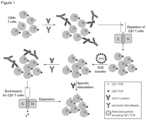
- the present invention provides strategies for generating a T cell population enriched for T cells expressing a recombinant TCR, comprising the steps:
- the present invention provides strategies for generating a T cell population enriched for T cells expressing a recombinant TCR, comprising the steps:
- T cells containing a C ⁇ 1 chain By depletion of T cells containing a C ⁇ 1 chain from the starting T cell population and subsequently introducing a desired recombinant TCR containing a C ⁇ 1 chain into the depleted T cell population, it is possible to specifically select, isolate and enrich the T cells containing the desired recombinant TCR, based on a naturally inherent TCR C ⁇ 1 chain which is used as a universal marker to allow antigen-independent selection.
- the C ⁇ 2 chain can be exchanged for the C ⁇ 1 chain so that the system is easy adaptable to any TCR.
- a universal, cost- and time-saving approach is provided for generating a T cell population enriched for T cells expressing a recombinant TCR of choice.
- the TCR C ⁇ 1 chain that is used for selection is a natural part of TCRs and therefore no manipulation of the TCR is necessary to allow selection of the TCR-expressing T cells.
- the C ⁇ 2 chain may be exchanged for the C ⁇ 1 chain. Since the exchange of the C ⁇ 2 chain by the C ⁇ 1 only generates naturally occurring sequences, potential neoepitopes that could generate an unwanted unspecific immune response can be also avoided. Thereby, potential unwanted immune responses directed against foreign selection tags artificially engineered into the TCR can be avoided.
- an anti-C ⁇ 2 antibody i.e. an antibody binds to C ⁇ 2 and that does substantially not bind to C ⁇ 1 which can be used for the enrichment of an a TCR containing a C ⁇ 2 chain.
- the claimed method allows for a universal enrichment for any and all TCRs comprising a C ⁇ 1 chain, independent of their antigen-specificities.
- the recombinant TCR does not contain any engineered selection tag which is not present in a natural TCR (e.g. the recombinant TCR does not contain a Strep-tag).
- At least 60%, preferably at least 70%, more preferably at least 80%, most preferably at least 90% of the T cell population obtained in step d) express the recombinant TCR.
- step d) at least 60%, preferably at least 70%, more preferably at least 80%, most preferably at least 90% of T cells of the total population obtained after step d) express the recombinant TCR.
- step d) comprises the steps
- step d) further comprises the step of
- step d) may comprise the step
- step c) a retroviral particle is used for the introduction of the recombinant TCR.
- the composition of T cells comprises a population of T cells expressing a C ⁇ 1 chain and a population of T cells expressing a C ⁇ 2 chain.
- the composition comprising T cells may be obtained from a human.
- the composition of T cells comprises peripheral blood mononuclear cells (PBMCs).
- PBMCs peripheral blood mononuclear cells
- the T cell may be a CD4+ or a CD8+ T cell.
- the T cell is a CD8+ T-cell.
- the recombinant TCR has a desired antigen-specificity.
- the anti-C ⁇ 1 antibody of step a) is biotinylated. Then the selection is carried out with a molecule having an anti-biotin binding domain, such as MicroBeads.
- the anti-C ⁇ 1 antibody is biotinylated and anti-biotin MicroBeads are used for isolating the T cells bound to the anti-C ⁇ 1 antibody.
- the anti-C ⁇ 1 antibody may be a monoclonal mouse IgG2a antibody.
- the anti-C ⁇ 1 antibody is the JOVI.1 antibody, which is commercially available, e.g. from SantaCruz Biotechnology or ThermoFisher Scientific.
- Another aspect refers to the use of an anti-C ⁇ 1 antibody for the enrichment of T cells expressing a recombinant TCR.
- kits for carrying out the method of the invention are contemplated.
- the present invention provides strategies for generating a T cell population enriched for T cells expressing a recombinant TCR, comprising the steps:
- anti-C ⁇ antibody used for the method of the invention is selected from the group consisting of an anti-C ⁇ 1 antibody and anti-C ⁇ 2 antibody.
- the anti-C ⁇ antibody is an antibody which is specific for either the C ⁇ 1 chain (i.e. the anti-C ⁇ 1 antibody binds to the C ⁇ 1 chain of the TCR and does not bind or does substantially not bind to the C ⁇ 2 chain of the TCR) of the TCR or is specific for the C ⁇ 2 of the TCR (i.e. the anti-C ⁇ 2 antibody binds to the C ⁇ 2 chain of the TCR and does not bind or does substantially not bind to the C ⁇ 1 chain of the TCR).
- step a) anti-C ⁇ 1 antibody when used also steps c) and d) also steps c) and d) refer to an anti-C ⁇ 1 antibody.
- step b) anti-C ⁇ 2 antibody when used also steps c) and d) refer to an anti-C ⁇ 2 antibody.
- the present invention provides strategies for generating a T cell population enriched for T cells expressing a recombinant TCR, comprising the steps:
- a TCR is composed of two different and separate protein chains, namely the TCR alpha ( ⁇ ) and the TCR beta ( ⁇ ) chain.
- the TCR ⁇ chain comprises variable (V), joining (J) and constant (C) regions.
- the TCR ⁇ chain comprises variable (V), diversity (D), joining (J) and constant (C) regions.
- the rearranged V(D)J regions of both the TCR ⁇ and the TCR ⁇ chain contain hypervariable regions (CDR, complementarity determining regions), among which the CDR3 region determines the specific epitope recognition.
- CDR hypervariable regions
- the constant region of the TCR ⁇ chain occurs naturally either in the C ⁇ 1 version or in the C ⁇ 2 version which are typically equally distributed in a population of natural unstimulated T cells.
- the anti-C ⁇ 1 antibody may be a monoclonal mouse IgG2a antibody.
- the skilled person understands that the anti-C ⁇ 1 antibody binds to the C ⁇ 1 chain of the TCR and does not bind or does substantially not bind to the C ⁇ 2 chain of the TCR.
- the anti-C ⁇ 1 antibody may comprise a light chain variable region and a heavy chain variable region, wherein the light chain variable region comprises a CDR1 set forth in SEQ ID No: 1, a CDR2 set forth in SEQ ID No: 2, a CDR3 set forth in SEQ ID No: 3; wherein the heavy chain variable region comprises a CDR1 set forth in SEQ ID No: 4, a CDR2 set forth in SEQ ID No: 5 identical thereto, and a CDR3 set forth in SEQ ID No: 6.
- the anti-C ⁇ 1 antibody is the JOVI.1 antibody, which is commercially available, e.g. from SantaCruz Biotechnology or ThermoFisher Scientific.
- an anti-C ⁇ 1 antibody comprising a light chain and a heavy chain, wherein the light chain variable region and has a sequence which is 75%, 80%, 81%, 82%, 83%, 84%, 85%, 86%, 87%, 88%, 89%, 90%, 91%, 92%, 93%, 94%, 95%, 96%, 97%, 98%, or 99% identical to SEQ ID NO: 8 and wherein the heavy chain variable region and has a sequence which is 75%, 80%, 81%, 82%, 83%, 84%, 85%, 86%, 87%, 88%, 89%, 90%, 91%, 92%, 93%, 94%, 95%, 96%, 97%, 98%, or 99% identical to SEQ ID NO: 9.
- the determination of percent identity between multiple sequences is preferably accomplished using the AlignX application of the Vector NTI Advance TM 10 program (Invitrogen Corporation, Carlsbad CA, USA). This program uses a modified Clustal W algorithm ( Thompson et al., 1994. Nucl Acids Res. 22: pp. 4673-4680 ; Invitrogen Corporation; Vector NTI AdvanceTM 10 DNA and protein sequence analysis software. User's Manual, 2004, pp.389-662 ). The determination of percent identity is performed with the standard parameters of the AlignX application.
- recombinant and “recombinant TCR” as used in the present application refers to TCRs that have been introduced by any of the genetic engineering techniques into the T cells.
- the "recombinant TCR” also termed “exogenous TCR” may be engineered or may be a naturally occurring TCR which has a desired antigen specificity and which was isolated.
- these recombinant TCRs which were not endogenous to the T cell population, i.e. were not naturally expressed in the T cell population, i.e. were not expressed in the T cell population before transfer of the recombinant TCR.
- At least 60%, 65%, 70%, 75%, 80%, 85%, 90%, 95% of the T cell population obtained in step d) express the recombinant TCR.
- At least 60%, preferably at least 70%, more preferably at least 80%, most preferably at least 90% of the T cell population obtained in step d) express the recombinant TCR.
- step d) at least 60%, preferably at least 70%, more preferably at least 80%, most preferably at least 90% of T cells of the total population obtained after step d) express the recombinant TCR.
- step d) comprises the steps
- step d) further comprises the step of
- a specific embodiment refers to a method comprising the steps
- any method useful for separating antibody-cell complexes may be used.
- sorting techniques such as fluorescent activated cell sorting (FACS) or magnetic-activated cell sorting (MACS) may be used.
- the antibody of step a) may be modified to facilitate depletion in step b), e.g. the antibody may be biotinylated.
- the antibody may be biotinylated.
- molecules or complexes binding to the modified antibody may be used, such as anti-biotin Microbeads or Streptavidin-PE.
- a biotinylated anti-C ⁇ 1 antibody is used for the incubation in step a).
- the depletion then is carried out with a molecule binding to biotin, such as anti-biotin Microbeads.
- the sorting process is carried out by FACS or MACS. Thereby the complex of T cells comprising the recombinant TCR, the biotinylated anti-C ⁇ 1 antibody and the anti-biotin microbeads is retained on the column, wherein the desired C ⁇ 1 chain negative fraction of T cells are obtained in the flow-through.
- a biotinylated anti-C ⁇ 1 antibody is used for the incubation in step a) and the depletion is carried out by MACS with anti-biotin Microbeads.
- a biotinylated anti-C ⁇ 1 antibody is used for the incubation in step a) and the depletion is carried out by FACS with Streptavidin-PE.
- a biotinylated anti-C ⁇ 1 antibody is used for the enrichment in step d).
- the isolation of the T cells bound to the anti-C ⁇ 1 antibody is then carried out with anti-biotin microbeads and MACS.
- the complex of T cells comprising the recombinant TCR, the biotinylated anti-C ⁇ 1 antibody and the anti-biotin microbeads bound to the column is eluted thereby obtaining the population enriched for T cells comprising the recombinant TCR.
- the claimed method as described is capable of generating T cell populations highly enriched for T cells expressing a recombinant TCR, such as a content of over 90% of T cells expressing a recombinant TCR in the total T cell population after the enrichment of step d).
- step d) may comprise the step
- the introduction of the recombinant TCR containing a C ⁇ 1 chain may occur by any appropriate method known to the skilled person. Typically, the introduction occurs by transduction.
- transduction refers to the process by which an exogenous nucleic acid sequence is introduced into a host cell, e.g. into a T cell. It is noted that introduction or transfer of nucleic acid sequences is not limited to the mentioned methods but can be achieved by any number of means including electroporation, microinjection, gene gun delivery, lipofection, superfection, infection by retroviruses or other suitable viruses for transduction or transfection.
- step c) a nucleic acid encoding a recombinant TCR is typically transduced by a vector into the T cell.
- a retroviral particle is used for introducing the TCR.
- Nucleic acid generally means a polymer of DNA or RNA, which can be singlestranded or double-stranded, synthesized or obtained (e.g., isolated and/or purified) from natural sources, which can contain natural, non-natural or altered nucleotides, and which can contain a natural, non-natural or altered internucleotide linkage, such as a phosphoroamidate linkage or a phosphorothioate linkage, instead of the phosphodiester found between the nucleotides of an unmodified oligonucleotide.
- the nucleic acids described herein are recombinant.
- the term "recombinant” refers to (i) molecules that are constructed outside living cells by joining natural or synthetic nucleic acid segments to nucleic acid molecules that can replicate in a living cell, or (ii) molecules that result from the replication of those described in (i) above.
- the replication can be in vitro replication or in vivo replication.
- the nucleic acids can be constructed based on chemical synthesis and/or enzymatic ligation reactions using procedures known in the art or commercially available (e.g. from Genscript, Thermo Fisher and similar companies).
- nucleic acid can be chemically synthesized using naturally occurring nucleotides or variously modified nucleotides designed to increase the biological stability of the molecules or to increase the physical stability of the duplex formed upon hybridization (e.g., phosphorothioate derivatives and acridine substituted nucleotides).
- the nucleic acid can comprise any nucleotide sequence which encodes any of the recombinant TCRs, polypeptides, or proteins, or functional portions or functional variants thereof.
- the nucleic acid encoding the TCR may be modified. Useful modifications in the overall nucleic acid sequence may be codon optimization. Alterations may be made which lead to conservative substitutions within the expressed amino acid sequence. These variations can be made in complementarity determining and non-complementarity determining regions of the amino acid sequence of the TCR chain that do not affect function. Usually, additions and deletions should not be performed in the CDR3 region.
- a "vector” is any molecule or composition that has the ability to carry a nucleic acid sequence into a suitable host cell where synthesis of the encoded polypeptide can take place.
- a vector is a nucleic acid that has been engineered, using recombinant DNA techniques that are known in the art, to incorporate a desired nucleic acid sequence (e.g. a nucleic acid of the invention).
- the vector may comprise DNA or RNA and/or comprise liposomes.
- the vector may be a plasmid, shuttle vector, phagemide, cosmid, expression vector, retroviral vector, lentiviral vector, adenoviral vector or particle.
- a vector may include nucleic acid sequences that permit it to replicate in a host cell, such as an origin of replication.
- a vector may also include one or more selectable marker genes and other genetic elements known to those of ordinary skill in the art.
- a vector preferably is an expression vector that includes a nucleic acid according to the present invention operably linked to sequences allowing for the expression of said nucleic acid.
- the vector is a retroviral particle.
- the composition comprising T cells comprises a population of T cells expressing a C ⁇ 1 chain and a population of T cells expressing a C ⁇ 2 chain.
- T cells expressing a C ⁇ 1 chain By the depletion of T cells expressing a C ⁇ 1 chain, a population of C ⁇ 1 chain negative T cells, which are typically T cells expressing a C ⁇ 2 chain, is obtained.
- composition comprising T cells may be obtained from a human.
- the composition comprising T cells comprises peripheral blood lymphocytes (PBL) or peripheral blood mononuclear cells (PBMC).
- PBL peripheral blood lymphocytes
- PBMC peripheral blood mononuclear cells
- the composition may essentially consist of T cells.
- the T cell may be a CD4+ or a CD8+ T cell.
- the T cell is a CD8+ T cell.
- the cell is a stem cell-like memory T cell.
- Stem cell-like memory T cells are a less-differentiated subpopulation of CD8+ or CD4+ T cells, which are characterized by the capacity of self-renewal and to persist long-term. Once these cells encounter their antigen in vivo, they differentiate further into central memory T cells (TCM), effector memory T cells (TEM) and terminally differentiated effector memory T cells (TEMRA) with some TSCM remaining quiescent ( Flynn et al., Clinical & Translational Immunology (2014 )).
- TCM central memory T cells
- TEM effector memory T cells
- TEMRA terminally differentiated effector memory T cells
- TSCM cells show the capacity to build a durable immunological memory in vivo and therefore are considered an important T cell subpopulation for adoptive T cell therapy ( Lugli et al., Nature Protocols 8, 33-42 (2013 ) Gattinoni et al., Nat. Med. 2011 Oct; 17(10): 1290-1297 ).
- Immunemagnetic selection can be used in order to restrict the T cell pool to the stem cell memory T cell subtype see ( Riddell et al. 2014, Cancer Journal 20(2): 141-44 ).
- the TCR has a desired antigen-specificity. This means that the TCR is selected because it binds to a specific antigen or to a specific epitope.
- the TCR may be engineered in order to exhibit a desired antigen-specificity.
- the variable chain, in particular the CDR1, CDR2 or CDR3 are engineered in order to bind to a specific antigen.
- Another aspect refers to the use of an anti-C ⁇ 1 antibody for the enrichment of T cells expressing a recombinant TCR.
- antibody also binding fragments of said antibody are included.
- Binding fragments may include portions of an intact full-length antibody, such as an antigen binding or variable region of the complete antibody.
- antibody fragments include Fab, F(ab')2, Id and Fv fragments; diabodies; linear antibodies; single-chain antibody molecules (e.g., scFv); multispecific antibody fragments such as bispecific, trispecific, and multispecific antibodies (e.g., diabodies, triabodies, tetrabodies); minibodies; chelating recombinant antibodies; tribodies or bibodies; intrabodies; nanobodies; small modular immunopharmaceuticals (SMIP), bindingdomain immunoglobulin fusion proteins; camelized antibodies; VHH containing antibodies;); and any other polypeptides formed from antibody fragments.
- SMIP small modular immunopharmaceuticals
- a Fab fragment consists of the VL, VH, CL and CH1 domains.
- An F(ab')2 fragment comprises two Fab fragments linked by a disulfide bridge at the hinge region.
- An Fd is the VH and CH1 domains of a single arm of an antibody.
- An Fv fragment is the VL and VH domains of a single arm of an antibody.
- anti-C ⁇ 1 antibody also applies to an anti-C ⁇ 2 antibody (i.e. an antibody binds to C ⁇ 2 and that does substantially not bind to C ⁇ 1) which can be used for the enrichment of a TCR comprising a C ⁇ 2 chain.
- an anti-C ⁇ 2 antibody i.e. an antibody binds to C ⁇ 2 and that does substantially not bind to C ⁇ 1 which can be used for the enrichment of a TCR comprising a C ⁇ 2 chain.
- the present invention also provides strategies for generating a T cell population enriched for T cells expressing a recombinant TCR, comprising the steps:
- the present invention provides strategies for generating a T cell population enriched for T cells expressing a recombinant TCR, comprising the steps:
- the invention also refers to a kit comprising
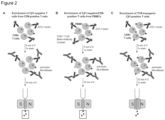
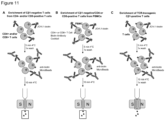
- CD8-positive T cells (enriched from PBMCs by standard protocol) were depleted for C ⁇ 1-positive T cells.
- C ⁇ 1-depleted CD8-enriched T cells were isolated in one step from PBMCs.
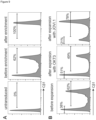
- the flow through contains the C ⁇ 1-depleted CD8-enriched T cells. Samples were analyzed by flow cytometry for CD3, CD8 and C ⁇ 1 before enrichment and after C ⁇ 1 depletion and CD8 enrichment. ( Figure 3B )
- TCR-transgenic T cells were transduced with three different recombinant TCRs.
- TCR-transgenic T cells were enriched by MACS using JOVI.1 antibody and expanded.
- C ⁇ 1-positive TCR-transgenic T cells are enriched in the MACS column and can be eluted after removal of the magnet.
- T cells were analyzed by flow cytometry for C ⁇ 1 expression before enrichment, after enrichment and after expansion. ( Figure 4 )
- TCR-transgenic T cells were enriched by FACS using JOVI.1 mAb and CD8 mAb and expanded.
- C ⁇ 1-depleted CD8-enriched T cells were transduced with two different recombinant TCRs and analyzed for C ⁇ 1-positive cells by flow cytometry. Cells were then expanded by stimulation with either the CD3 mAb OKT3 or JOVI.1 mAb. The specific expansion of C ⁇ 1-positive cells after activation with JOVI. 1 mAb was confirmed by flow cytometry. ( Figure 6 )
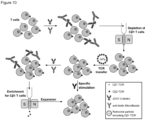
- CD4-positive T cells (enriched from PBMCs by standard protocol) were depleted for C ⁇ 1-positive T cells.
- C ⁇ 1-depleted CD4-enriched T cells were isolated in one step from PBMCs.
- the flow through contains the C ⁇ 1-depleted CD4-enriched T cells. Samples were analyzed by flow cytometry for CD3, CD4 and C ⁇ 1 before enrichment and after C ⁇ 1 depletion and CD4 enrichment. ( Figure 8B )
- TCR-transgenic T cells were transduced with a recombinant TCR containing C ⁇ 1.
- TCR-transgenic T cells were enriched by FACS using JOVI.1 mAb and CD4 mAb.
- T cells were analyzed by flow cytometry for C ⁇ 1 and CD4 expression before enrichment and after enrichment in comparison to untransduced T cells. ( Figure 9A )
- TCR-transduced T cells were activated using the JOVI.1 mAb in comparison to the unspecific stimulation with the anti-CD3 mAb OKT3.
- C ⁇ 1-depleted CD4-enriched T cells were transduced with a recombinant TCR containing C ⁇ 1 and analyzed for C ⁇ 1-positive cells by flow cytometry. Cells were then expanded by stimulation with either OKT3 or JOVI.1 mAb.
- C ⁇ 1-positive cells were specifically expanded after activation with JOVI.1 mAb as the fraction of C ⁇ 1-positive T cells increased compared to the unspecific stimulation with OKT3.
Landscapes
- Health & Medical Sciences (AREA)
- Life Sciences & Earth Sciences (AREA)
- Engineering & Computer Science (AREA)
- Chemical & Material Sciences (AREA)
- Immunology (AREA)
- Biomedical Technology (AREA)
- Organic Chemistry (AREA)
- Genetics & Genomics (AREA)
- Zoology (AREA)
- Bioinformatics & Cheminformatics (AREA)
- General Health & Medical Sciences (AREA)
- Biotechnology (AREA)
- Wood Science & Technology (AREA)
- Biochemistry (AREA)
- Cell Biology (AREA)
- General Engineering & Computer Science (AREA)
- Hematology (AREA)
- Microbiology (AREA)
- Epidemiology (AREA)
- Veterinary Medicine (AREA)
- Public Health (AREA)
- Animal Behavior & Ethology (AREA)
- Molecular Biology (AREA)
- Biophysics (AREA)
- Proteomics, Peptides & Aminoacids (AREA)
- Medicinal Chemistry (AREA)
- Gastroenterology & Hepatology (AREA)
- Toxicology (AREA)
- Micro-Organisms Or Cultivation Processes Thereof (AREA)
Claims (15)
- In-vitro-Verfahren zum Erzeugen einer T-Zell-Population, die mit T-Zellen angereichert ist, die einen rekombinanten T-Zell-Rezeptor (TZR) exprimieren, das folgende Schritte umfasst:a) Inkubieren einer Zusammensetzung, die T-Zellen umfasst, mit einem anti-Cβ-Antikörper, der aus der Gruppe ausgewählt ist, die aus einem anti-Cβ1-Antikörper und einem anti-Cβ2-Antikörper besteht,b) Abtrennen von T-Zellen, die an den anti-Cβ-Antikörper gebunden sind,c) Einbringen eines rekombinanten TZR, der eine Cβ-Kette enthält, an die der anti-Cβ-Antikörper bindet, in die T-Zell-Population, die in Schritt b) erhalten wurde,d) Anreichern von T-Zellen, die den rekombinanten TZR exprimieren, in der Population, die in Schritt c) erhalten wurde, unter Verwendung des anti-Cβ-Antikörpers.
- Verfahren nach Anspruch 1, wobei mindestens 60%, vorzugsweise mindestens 70%, bevorzugter mindestens 80%, am meisten bevorzugt mindestens 90% der T-Zell-Population, die in Schritt d) erhalten wurde, den rekombinanten TZR exprimieren.
- Verfahren nach einem der Ansprüche 1 und 2, wobei Schritt d) folgende Schritte umfasst:- Inkubieren der Zellen mit dem Cβ-Antikörper und- Isolieren der T-Zellen, die an den anti-Cβ-Antikörper gebunden sind, wobei Schritt d) optional ferner folgenden Schritt umfasst:- Expandieren der isolierten T-Zellen.
- Verfahren nach einem der Ansprüche 1 und 2, wobei Schritt d) folgenden Schritt umfasst:- Inkubieren der Zellen mit dem Cβ-Antikörper, wobei durch die Inkubation mit dem anti-Cβ-Antikörper die Proliferation von T-Zellen stimuliert wird, die den TZR exprimieren, der eine Cβ-Kette enthält, an die der anti-Cβ-Antikörper bindet.
- Verfahren nach einem der vorhergehenden Ansprüche, wobei in Schritt c) zum Einbringen des TZR ein retrovirales Partikel verwendet wird.
- Verfahren nach einem der vorhergehenden Ansprüche, wobei die Zusammensetzung, die T-Zellen umfasst, eine Population von T-Zellen, die eine Cβ1-Kette exprimieren, und eine Population von T-Zellen umfasst, die eine Cβ2-Kette exprimieren.
- Verfahren nach einem der vorhergehenden Ansprüche, wobei die Zusammensetzung, die T-Zellen umfasst, von einem Menschen gewonnen wird.
- Verfahren nach einem der vorhergehenden Ansprüche, wobei die Zusammensetzung, die T-Zellen umfasst, PBMC umfasst.
- Verfahren nach einem der vorhergehenden Ansprüche, wobei der TZR eine erwünschte Antigenspezifität aufweist.
- Verfahren nach einem der vorhergehenden Ansprüche, wobei die T-Zelle eine CD8+-T-Zelle oder eine CD4+-T-Zelle ist.
- Verfahren nach einem der vorhergehenden Ansprüche, wobei der anti-Cβ-Antikörper von Schritt a) biotinyliert ist, wobei optional in Schritt b) anti-Biotin-MicroBeads verwendet werden.
- Verfahren nach Anspruch 3, wobei in Schritt d) der anti-Cβ-Antikörper biotinyliert ist und wobei zum Isolieren der T-Zellen, die an den anti-Cβ-Antikörper gebunden sind, anti-Biotin-MicroBeads verwendet werden.
- Verfahren nach Anspruch 1 bis 12, wobei der anti-Cβ-Antikörper ein anti-Cβ1-Antikörper ist, wobei der anti-Cβ1-Antikörper JOVI.1 ist.
- Verwendung eines anti-Cβ-Antikörpers zum Anreichern von T-Zellen, die einen rekombinanten TZR exprimieren, wobei der anti-Cβ-Antikörper aus der Gruppe ausgewählt ist, die aus einem anti-Cβ1-Antikörper und einem anti-Cβ2-Antikörper besteht.
- Kit, umfassend:- einen anti-Cβ-Antikörper,- eine Nukleotidsäure, die einen TZR kodiert, der eine Cβ-Kette enthält, an die der anti-Cβ-Antikörper bindet.
Applications Claiming Priority (2)
| Application Number | Priority Date | Filing Date | Title |
|---|---|---|---|
| EP20191622 | 2020-08-18 | ||
| PCT/EP2021/072792 WO2022038115A1 (en) | 2020-08-18 | 2021-08-17 | ENRICHMENT OF T CELLS USING AN ANTI-Cß ANTIBODY |
Publications (3)
| Publication Number | Publication Date |
|---|---|
| EP4200401A1 EP4200401A1 (de) | 2023-06-28 |
| EP4200401C0 EP4200401C0 (de) | 2024-07-24 |
| EP4200401B1 true EP4200401B1 (de) | 2024-07-24 |
Family
ID=72147922
Family Applications (1)
| Application Number | Title | Priority Date | Filing Date |
|---|---|---|---|
| EP21765616.4A Active EP4200401B1 (de) | 2020-08-18 | 2021-08-17 | Anreicherung von t-zellen mit einem anti-cbeta-antikörper |
Country Status (3)
| Country | Link |
|---|---|
| US (1) | US12173318B2 (de) |
| EP (1) | EP4200401B1 (de) |
| WO (1) | WO2022038115A1 (de) |
Families Citing this family (7)
| Publication number | Priority date | Publication date | Assignee | Title |
|---|---|---|---|---|
| WO2025056679A1 (en) | 2023-09-15 | 2025-03-20 | Medigene Immunotherapies Gmbh | T-CELL RECEPTOR AGAINST mKRAS7-16 G12V |
| WO2025056672A1 (en) | 2023-09-15 | 2025-03-20 | Medigene Immunotherapies Gmbh | T-CELL RECEPTOR VARIANT AGAINST mKRAS7-16 G12V |
| WO2025056681A1 (en) | 2023-09-15 | 2025-03-20 | Medigene Immunotherapies Gmbh | T-CELL RECEPTOR AGAINST mKRAS7-16 G12V AND G12C |
| WO2025056656A1 (en) | 2023-09-15 | 2025-03-20 | Medigene Immunotherapies Gmbh | T-CELL RECEPTOR VARIANT AGAINST mKRAS7-16 G12V |
| WO2025056659A1 (en) | 2023-09-15 | 2025-03-20 | Medigene Immunotherapies Gmbh | T-CELL RECEPTOR VARIANT AGAINST mKRAS7-16 G12V AND G12C |
| WO2025056685A1 (en) | 2023-09-15 | 2025-03-20 | Medigene Immunotherapies Gmbh | T-CELL RECEPTOR AGAINST mKRAS7-16 G12V |
| EP4737476A1 (de) | 2024-09-12 | 2026-05-06 | Medigene Immunotherapies GmbH | T-zell-rezeptorvariante gegen mkras 7-16 g12d |
Family Cites Families (4)
| Publication number | Priority date | Publication date | Assignee | Title |
|---|---|---|---|---|
| DK1910521T3 (da) | 2005-08-05 | 2011-02-07 | Helmholtz Zentrum Muenchen | Generering af allo-begrænsede, antigenspecifikke T-celler |
| DK3241561T3 (da) | 2014-03-05 | 2025-06-30 | Autolus Ltd | Konjugeret antistof eller bispecifik t-celle-engager, som selektivt binder enten tcr-beta konstant region 1 (trbc1) eller trbc2 |
| GB201800298D0 (en) * | 2018-01-09 | 2018-02-21 | Autolus Ltd | Method |
| GB201817822D0 (en) | 2018-10-31 | 2018-12-19 | Autolus Ltd | Binding domain |
-
2021
- 2021-08-17 EP EP21765616.4A patent/EP4200401B1/de active Active
- 2021-08-17 WO PCT/EP2021/072792 patent/WO2022038115A1/en not_active Ceased
- 2021-08-17 US US18/020,303 patent/US12173318B2/en active Active
Also Published As
| Publication number | Publication date |
|---|---|
| US12173318B2 (en) | 2024-12-24 |
| EP4200401C0 (de) | 2024-07-24 |
| EP4200401A1 (de) | 2023-06-28 |
| US20230287345A1 (en) | 2023-09-14 |
| WO2022038115A1 (en) | 2022-02-24 |
Similar Documents
| Publication | Publication Date | Title |
|---|---|---|
| EP4200401B1 (de) | Anreicherung von t-zellen mit einem anti-cbeta-antikörper | |
| Eshhar et al. | Functional expression of chimeric receptor genes in human T cells | |
| JP7053053B2 (ja) | 初代細胞のためのトランスポゾンに基づく転移システム | |
| US20200216805A1 (en) | Gene editing t cell and use thereof | |
| KR20200113211A (ko) | 키메라 항원 수용체를 발현하는 조절 t 세포 | |
| CN106074601A (zh) | 用于细胞免疫治疗的方法和组合物 | |
| CN109055380B (zh) | 一种通用型car-t细胞的制备方法 | |
| KR20200078497A (ko) | 신규의 t-세포 수용체 | |
| JP2022513390A (ja) | Tcr及びペプチド | |
| CN111826353B (zh) | 调节t细胞功能和反应的方法 | |
| US20250333762A1 (en) | Cell-specific transcriptional regulatory sequences and uses thereof | |
| CN113122503B (zh) | 一种靶向t细胞淋巴瘤细胞的通用型car-t及其制备方法和应用 | |
| EP4086341A1 (de) | Verfahren zur reinigung von ucart-zelle und deren verwendung | |
| CN113122504A (zh) | 一种纯化ucart细胞的方法与应用 | |
| EP4086340A1 (de) | Gegen universelle car-t gerichtete t-zell-lymphomzelle, verfahren zu ihrer herstellung und ihre verwendung | |
| CN116829161A (zh) | 嵌合抗原受体t细胞及方法 | |
| US20240075061A1 (en) | Cell therapy activating lymphocyte in tme | |
| RU2822196C2 (ru) | Способы получения клеток, экспрессирующих химерный антигенный рецептор | |
| US20230019849A1 (en) | Method for Preparing CD7-Negative, CD3-Positive T Cells | |
| HK40051601A (en) | Universal car-t targeting t-cell lymphoma cell and preparation method therefor and use thereof | |
| HK40051601B (en) | Universal car-t targeting t-cell lymphoma cell and preparation method therefor and use thereof | |
| WO2025125363A1 (en) | Host cells engineered to bypass the cd28 co-stimulation pathway and uses thereof for inducing durable immune responses under non-inflammatory conditions | |
| HK40051603A (en) | Method for purifying ucart cell and use thereof | |
| Longinotti | Isolation and characterization of a TCR specific for a new unconventional NY-ESO-1 epitope |
Legal Events
| Date | Code | Title | Description |
|---|---|---|---|
| STAA | Information on the status of an ep patent application or granted ep patent |
Free format text: STATUS: UNKNOWN |
|
| STAA | Information on the status of an ep patent application or granted ep patent |
Free format text: STATUS: THE INTERNATIONAL PUBLICATION HAS BEEN MADE |
|
| PUAI | Public reference made under article 153(3) epc to a published international application that has entered the european phase |
Free format text: ORIGINAL CODE: 0009012 |
|
| STAA | Information on the status of an ep patent application or granted ep patent |
Free format text: STATUS: REQUEST FOR EXAMINATION WAS MADE |
|
| 17P | Request for examination filed |
Effective date: 20230316 |
|
| AK | Designated contracting states |
Kind code of ref document: A1 Designated state(s): AL AT BE BG CH CY CZ DE DK EE ES FI FR GB GR HR HU IE IS IT LI LT LU LV MC MK MT NL NO PL PT RO RS SE SI SK SM TR |
|
| DAV | Request for validation of the european patent (deleted) | ||
| DAX | Request for extension of the european patent (deleted) | ||
| REG | Reference to a national code |
Ref country code: DE Ref legal event code: R079 Free format text: PREVIOUS MAIN CLASS: C12N0005000000 Ipc: A61K0039000000 Ref document number: 602021016216 Country of ref document: DE |
|
| GRAP | Despatch of communication of intention to grant a patent |
Free format text: ORIGINAL CODE: EPIDOSNIGR1 |
|
| STAA | Information on the status of an ep patent application or granted ep patent |
Free format text: STATUS: GRANT OF PATENT IS INTENDED |
|
| RIC1 | Information provided on ipc code assigned before grant |
Ipc: C07K 14/725 20060101ALI20240123BHEP Ipc: C12N 5/0783 20100101ALI20240123BHEP Ipc: C12N 5/00 20060101ALI20240123BHEP Ipc: A61K 39/00 20060101AFI20240123BHEP |
|
| INTG | Intention to grant announced |
Effective date: 20240215 |
|
| GRAS | Grant fee paid |
Free format text: ORIGINAL CODE: EPIDOSNIGR3 |
|
| GRAA | (expected) grant |
Free format text: ORIGINAL CODE: 0009210 |
|
| STAA | Information on the status of an ep patent application or granted ep patent |
Free format text: STATUS: THE PATENT HAS BEEN GRANTED |
|
| AK | Designated contracting states |
Kind code of ref document: B1 Designated state(s): AL AT BE BG CH CY CZ DE DK EE ES FI FR GB GR HR HU IE IS IT LI LT LU LV MC MK MT NL NO PL PT RO RS SE SI SK SM TR |
|
| REG | Reference to a national code |
Ref country code: GB Ref legal event code: FG4D |
|
| REG | Reference to a national code |
Ref country code: CH Ref legal event code: EP |
|
| REG | Reference to a national code |
Ref country code: IE Ref legal event code: FG4D Ref country code: DE Ref legal event code: R096 Ref document number: 602021016216 Country of ref document: DE |
|
| U01 | Request for unitary effect filed |
Effective date: 20240809 |
|
| U07 | Unitary effect registered |
Designated state(s): AT BE BG DE DK EE FI FR IT LT LU LV MT NL PT SE SI Effective date: 20240823 |
|
| U20 | Renewal fee for the european patent with unitary effect paid |
Year of fee payment: 4 Effective date: 20240809 |
|
| PGFP | Annual fee paid to national office [announced via postgrant information from national office to epo] |
Ref country code: CH Payment date: 20240901 Year of fee payment: 4 |
|
| PG25 | Lapsed in a contracting state [announced via postgrant information from national office to epo] |
Ref country code: NO Free format text: LAPSE BECAUSE OF FAILURE TO SUBMIT A TRANSLATION OF THE DESCRIPTION OR TO PAY THE FEE WITHIN THE PRESCRIBED TIME-LIMIT Effective date: 20241024 |
|
| PG25 | Lapsed in a contracting state [announced via postgrant information from national office to epo] |
Ref country code: PL Free format text: LAPSE BECAUSE OF FAILURE TO SUBMIT A TRANSLATION OF THE DESCRIPTION OR TO PAY THE FEE WITHIN THE PRESCRIBED TIME-LIMIT Effective date: 20240724 Ref country code: GR Free format text: LAPSE BECAUSE OF FAILURE TO SUBMIT A TRANSLATION OF THE DESCRIPTION OR TO PAY THE FEE WITHIN THE PRESCRIBED TIME-LIMIT Effective date: 20241025 |
|
| PG25 | Lapsed in a contracting state [announced via postgrant information from national office to epo] |
Ref country code: IS Free format text: LAPSE BECAUSE OF FAILURE TO SUBMIT A TRANSLATION OF THE DESCRIPTION OR TO PAY THE FEE WITHIN THE PRESCRIBED TIME-LIMIT Effective date: 20241124 |
|
| PG25 | Lapsed in a contracting state [announced via postgrant information from national office to epo] |
Ref country code: HR Free format text: LAPSE BECAUSE OF FAILURE TO SUBMIT A TRANSLATION OF THE DESCRIPTION OR TO PAY THE FEE WITHIN THE PRESCRIBED TIME-LIMIT Effective date: 20240724 |
|
| PG25 | Lapsed in a contracting state [announced via postgrant information from national office to epo] |
Ref country code: RS Free format text: LAPSE BECAUSE OF FAILURE TO SUBMIT A TRANSLATION OF THE DESCRIPTION OR TO PAY THE FEE WITHIN THE PRESCRIBED TIME-LIMIT Effective date: 20241024 Ref country code: ES Free format text: LAPSE BECAUSE OF FAILURE TO SUBMIT A TRANSLATION OF THE DESCRIPTION OR TO PAY THE FEE WITHIN THE PRESCRIBED TIME-LIMIT Effective date: 20240724 |
|
| PG25 | Lapsed in a contracting state [announced via postgrant information from national office to epo] |
Ref country code: RS Free format text: LAPSE BECAUSE OF FAILURE TO SUBMIT A TRANSLATION OF THE DESCRIPTION OR TO PAY THE FEE WITHIN THE PRESCRIBED TIME-LIMIT Effective date: 20241024 Ref country code: PL Free format text: LAPSE BECAUSE OF FAILURE TO SUBMIT A TRANSLATION OF THE DESCRIPTION OR TO PAY THE FEE WITHIN THE PRESCRIBED TIME-LIMIT Effective date: 20240724 Ref country code: NO Free format text: LAPSE BECAUSE OF FAILURE TO SUBMIT A TRANSLATION OF THE DESCRIPTION OR TO PAY THE FEE WITHIN THE PRESCRIBED TIME-LIMIT Effective date: 20241024 Ref country code: IS Free format text: LAPSE BECAUSE OF FAILURE TO SUBMIT A TRANSLATION OF THE DESCRIPTION OR TO PAY THE FEE WITHIN THE PRESCRIBED TIME-LIMIT Effective date: 20241124 Ref country code: HR Free format text: LAPSE BECAUSE OF FAILURE TO SUBMIT A TRANSLATION OF THE DESCRIPTION OR TO PAY THE FEE WITHIN THE PRESCRIBED TIME-LIMIT Effective date: 20240724 Ref country code: GR Free format text: LAPSE BECAUSE OF FAILURE TO SUBMIT A TRANSLATION OF THE DESCRIPTION OR TO PAY THE FEE WITHIN THE PRESCRIBED TIME-LIMIT Effective date: 20241025 Ref country code: ES Free format text: LAPSE BECAUSE OF FAILURE TO SUBMIT A TRANSLATION OF THE DESCRIPTION OR TO PAY THE FEE WITHIN THE PRESCRIBED TIME-LIMIT Effective date: 20240724 |
|
| PG25 | Lapsed in a contracting state [announced via postgrant information from national office to epo] |
Ref country code: RO Free format text: LAPSE BECAUSE OF FAILURE TO SUBMIT A TRANSLATION OF THE DESCRIPTION OR TO PAY THE FEE WITHIN THE PRESCRIBED TIME-LIMIT Effective date: 20240724 Ref country code: SM Free format text: LAPSE BECAUSE OF FAILURE TO SUBMIT A TRANSLATION OF THE DESCRIPTION OR TO PAY THE FEE WITHIN THE PRESCRIBED TIME-LIMIT Effective date: 20240724 |
|
| PG25 | Lapsed in a contracting state [announced via postgrant information from national office to epo] |
Ref country code: MC Free format text: LAPSE BECAUSE OF FAILURE TO SUBMIT A TRANSLATION OF THE DESCRIPTION OR TO PAY THE FEE WITHIN THE PRESCRIBED TIME-LIMIT Effective date: 20240724 |
|
| PG25 | Lapsed in a contracting state [announced via postgrant information from national office to epo] |
Ref country code: CZ Free format text: LAPSE BECAUSE OF FAILURE TO SUBMIT A TRANSLATION OF THE DESCRIPTION OR TO PAY THE FEE WITHIN THE PRESCRIBED TIME-LIMIT Effective date: 20240724 |
|
| PG25 | Lapsed in a contracting state [announced via postgrant information from national office to epo] |
Ref country code: SK Free format text: LAPSE BECAUSE OF FAILURE TO SUBMIT A TRANSLATION OF THE DESCRIPTION OR TO PAY THE FEE WITHIN THE PRESCRIBED TIME-LIMIT Effective date: 20240724 |
|
| PLBE | No opposition filed within time limit |
Free format text: ORIGINAL CODE: 0009261 |
|
| STAA | Information on the status of an ep patent application or granted ep patent |
Free format text: STATUS: NO OPPOSITION FILED WITHIN TIME LIMIT |
|
| 26N | No opposition filed |
Effective date: 20250425 |
|
| PG25 | Lapsed in a contracting state [announced via postgrant information from national office to epo] |
Ref country code: IE Free format text: LAPSE BECAUSE OF NON-PAYMENT OF DUE FEES Effective date: 20240817 |
|
| PG25 | Lapsed in a contracting state [announced via postgrant information from national office to epo] |
Ref country code: CY Free format text: LAPSE BECAUSE OF FAILURE TO SUBMIT A TRANSLATION OF THE DESCRIPTION OR TO PAY THE FEE WITHIN THE PRESCRIBED TIME-LIMIT; INVALID AB INITIO Effective date: 20210817 |
|
| PG25 | Lapsed in a contracting state [announced via postgrant information from national office to epo] |
Ref country code: HU Free format text: LAPSE BECAUSE OF FAILURE TO SUBMIT A TRANSLATION OF THE DESCRIPTION OR TO PAY THE FEE WITHIN THE PRESCRIBED TIME-LIMIT; INVALID AB INITIO Effective date: 20210817 |
|
| REG | Reference to a national code |
Ref country code: CH Ref legal event code: H13 Free format text: ST27 STATUS EVENT CODE: U-0-0-H10-H13 (AS PROVIDED BY THE NATIONAL OFFICE) Effective date: 20260324 |
|
| U90 | Renewal fees not paid: noting of loss of rights |
Free format text: RENEWAL FEE NOT PAID FOR YEAR 05 Effective date: 20260323 |
|
| PG25 | Lapsed in a contracting state [announced via postgrant information from national office to epo] |
Ref country code: CH Free format text: LAPSE BECAUSE OF NON-PAYMENT OF DUE FEES Effective date: 20250831 |