EP4201458A1 - Appareil et méthode d'assistance respiratoire - Google Patents
Appareil et méthode d'assistance respiratoire Download PDFInfo
- Publication number
- EP4201458A1 EP4201458A1 EP21858672.5A EP21858672A EP4201458A1 EP 4201458 A1 EP4201458 A1 EP 4201458A1 EP 21858672 A EP21858672 A EP 21858672A EP 4201458 A1 EP4201458 A1 EP 4201458A1
- Authority
- EP
- European Patent Office
- Prior art keywords
- air
- oxygen
- solenoid valve
- pressure
- patient
- Prior art date
- Legal status (The legal status is an assumption and is not a legal conclusion. Google has not performed a legal analysis and makes no representation as to the accuracy of the status listed.)
- Pending
Links
Images




Classifications
-
- A—HUMAN NECESSITIES
- A61—MEDICAL OR VETERINARY SCIENCE; HYGIENE
- A61M—DEVICES FOR INTRODUCING MEDIA INTO, OR ONTO, THE BODY; DEVICES FOR TRANSDUCING BODY MEDIA OR FOR TAKING MEDIA FROM THE BODY; DEVICES FOR PRODUCING OR ENDING SLEEP OR STUPOR
- A61M16/00—Devices for influencing the respiratory system of patients by gas treatment, e.g. ventilators; Tracheal tubes
- A61M16/10—Preparation of respiratory gases or vapours
- A61M16/1005—Preparation of respiratory gases or vapours with O2 features or with parameter measurement
-
- A—HUMAN NECESSITIES
- A61—MEDICAL OR VETERINARY SCIENCE; HYGIENE
- A61M—DEVICES FOR INTRODUCING MEDIA INTO, OR ONTO, THE BODY; DEVICES FOR TRANSDUCING BODY MEDIA OR FOR TAKING MEDIA FROM THE BODY; DEVICES FOR PRODUCING OR ENDING SLEEP OR STUPOR
- A61M16/00—Devices for influencing the respiratory system of patients by gas treatment, e.g. ventilators; Tracheal tubes
- A61M16/021—Devices for influencing the respiratory system of patients by gas treatment, e.g. ventilators; Tracheal tubes operated by electrical means
- A61M16/022—Control means therefor
- A61M16/024—Control means therefor including calculation means, e.g. using a processor
-
- A—HUMAN NECESSITIES
- A61—MEDICAL OR VETERINARY SCIENCE; HYGIENE
- A61M—DEVICES FOR INTRODUCING MEDIA INTO, OR ONTO, THE BODY; DEVICES FOR TRANSDUCING BODY MEDIA OR FOR TAKING MEDIA FROM THE BODY; DEVICES FOR PRODUCING OR ENDING SLEEP OR STUPOR
- A61M16/00—Devices for influencing the respiratory system of patients by gas treatment, e.g. ventilators; Tracheal tubes
- A61M16/08—Bellows; Connecting tubes ; Water traps; Patient circuits
- A61M16/0816—Joints or connectors
- A61M16/0841—Joints or connectors for sampling
- A61M16/085—Gas sampling
-
- A—HUMAN NECESSITIES
- A61—MEDICAL OR VETERINARY SCIENCE; HYGIENE
- A61M—DEVICES FOR INTRODUCING MEDIA INTO, OR ONTO, THE BODY; DEVICES FOR TRANSDUCING BODY MEDIA OR FOR TAKING MEDIA FROM THE BODY; DEVICES FOR PRODUCING OR ENDING SLEEP OR STUPOR
- A61M16/00—Devices for influencing the respiratory system of patients by gas treatment, e.g. ventilators; Tracheal tubes
- A61M16/10—Preparation of respiratory gases or vapours
- A61M16/1075—Preparation of respiratory gases or vapours by influencing the temperature
- A61M16/109—Preparation of respiratory gases or vapours by influencing the temperature the humidifying liquid or the beneficial agent
-
- A—HUMAN NECESSITIES
- A61—MEDICAL OR VETERINARY SCIENCE; HYGIENE
- A61M—DEVICES FOR INTRODUCING MEDIA INTO, OR ONTO, THE BODY; DEVICES FOR TRANSDUCING BODY MEDIA OR FOR TAKING MEDIA FROM THE BODY; DEVICES FOR PRODUCING OR ENDING SLEEP OR STUPOR
- A61M16/00—Devices for influencing the respiratory system of patients by gas treatment, e.g. ventilators; Tracheal tubes
- A61M16/10—Preparation of respiratory gases or vapours
- A61M16/12—Preparation of respiratory gases or vapours by mixing different gases
- A61M16/122—Preparation of respiratory gases or vapours by mixing different gases with dilution
- A61M16/125—Diluting primary gas with ambient air
-
- A—HUMAN NECESSITIES
- A61—MEDICAL OR VETERINARY SCIENCE; HYGIENE
- A61M—DEVICES FOR INTRODUCING MEDIA INTO, OR ONTO, THE BODY; DEVICES FOR TRANSDUCING BODY MEDIA OR FOR TAKING MEDIA FROM THE BODY; DEVICES FOR PRODUCING OR ENDING SLEEP OR STUPOR
- A61M16/00—Devices for influencing the respiratory system of patients by gas treatment, e.g. ventilators; Tracheal tubes
- A61M16/10—Preparation of respiratory gases or vapours
- A61M16/14—Preparation of respiratory gases or vapours by mixing different fluids, one of them being in a liquid phase
- A61M16/16—Devices to humidify the respiration air
-
- A—HUMAN NECESSITIES
- A61—MEDICAL OR VETERINARY SCIENCE; HYGIENE
- A61M—DEVICES FOR INTRODUCING MEDIA INTO, OR ONTO, THE BODY; DEVICES FOR TRANSDUCING BODY MEDIA OR FOR TAKING MEDIA FROM THE BODY; DEVICES FOR PRODUCING OR ENDING SLEEP OR STUPOR
- A61M16/00—Devices for influencing the respiratory system of patients by gas treatment, e.g. ventilators; Tracheal tubes
- A61M16/0051—Devices for influencing the respiratory system of patients by gas treatment, e.g. ventilators; Tracheal tubes with alarm devices
-
- A—HUMAN NECESSITIES
- A61—MEDICAL OR VETERINARY SCIENCE; HYGIENE
- A61M—DEVICES FOR INTRODUCING MEDIA INTO, OR ONTO, THE BODY; DEVICES FOR TRANSDUCING BODY MEDIA OR FOR TAKING MEDIA FROM THE BODY; DEVICES FOR PRODUCING OR ENDING SLEEP OR STUPOR
- A61M16/00—Devices for influencing the respiratory system of patients by gas treatment, e.g. ventilators; Tracheal tubes
- A61M16/0057—Pumps therefor
- A61M16/0063—Compressors
-
- A—HUMAN NECESSITIES
- A61—MEDICAL OR VETERINARY SCIENCE; HYGIENE
- A61M—DEVICES FOR INTRODUCING MEDIA INTO, OR ONTO, THE BODY; DEVICES FOR TRANSDUCING BODY MEDIA OR FOR TAKING MEDIA FROM THE BODY; DEVICES FOR PRODUCING OR ENDING SLEEP OR STUPOR
- A61M16/00—Devices for influencing the respiratory system of patients by gas treatment, e.g. ventilators; Tracheal tubes
- A61M16/06—Respiratory or anaesthetic masks
-
- A—HUMAN NECESSITIES
- A61—MEDICAL OR VETERINARY SCIENCE; HYGIENE
- A61M—DEVICES FOR INTRODUCING MEDIA INTO, OR ONTO, THE BODY; DEVICES FOR TRANSDUCING BODY MEDIA OR FOR TAKING MEDIA FROM THE BODY; DEVICES FOR PRODUCING OR ENDING SLEEP OR STUPOR
- A61M16/00—Devices for influencing the respiratory system of patients by gas treatment, e.g. ventilators; Tracheal tubes
- A61M16/08—Bellows; Connecting tubes ; Water traps; Patient circuits
- A61M16/0816—Joints or connectors
- A61M16/0833—T- or Y-type connectors, e.g. Y-piece
-
- A—HUMAN NECESSITIES
- A61—MEDICAL OR VETERINARY SCIENCE; HYGIENE
- A61M—DEVICES FOR INTRODUCING MEDIA INTO, OR ONTO, THE BODY; DEVICES FOR TRANSDUCING BODY MEDIA OR FOR TAKING MEDIA FROM THE BODY; DEVICES FOR PRODUCING OR ENDING SLEEP OR STUPOR
- A61M16/00—Devices for influencing the respiratory system of patients by gas treatment, e.g. ventilators; Tracheal tubes
- A61M16/08—Bellows; Connecting tubes ; Water traps; Patient circuits
- A61M16/0816—Joints or connectors
- A61M16/0841—Joints or connectors for sampling
- A61M16/0858—Pressure sampling ports
-
- A—HUMAN NECESSITIES
- A61—MEDICAL OR VETERINARY SCIENCE; HYGIENE
- A61M—DEVICES FOR INTRODUCING MEDIA INTO, OR ONTO, THE BODY; DEVICES FOR TRANSDUCING BODY MEDIA OR FOR TAKING MEDIA FROM THE BODY; DEVICES FOR PRODUCING OR ENDING SLEEP OR STUPOR
- A61M16/00—Devices for influencing the respiratory system of patients by gas treatment, e.g. ventilators; Tracheal tubes
- A61M16/08—Bellows; Connecting tubes ; Water traps; Patient circuits
- A61M16/0875—Connecting tubes
-
- A—HUMAN NECESSITIES
- A61—MEDICAL OR VETERINARY SCIENCE; HYGIENE
- A61M—DEVICES FOR INTRODUCING MEDIA INTO, OR ONTO, THE BODY; DEVICES FOR TRANSDUCING BODY MEDIA OR FOR TAKING MEDIA FROM THE BODY; DEVICES FOR PRODUCING OR ENDING SLEEP OR STUPOR
- A61M16/00—Devices for influencing the respiratory system of patients by gas treatment, e.g. ventilators; Tracheal tubes
- A61M16/08—Bellows; Connecting tubes ; Water traps; Patient circuits
- A61M16/0883—Circuit type
-
- A—HUMAN NECESSITIES
- A61—MEDICAL OR VETERINARY SCIENCE; HYGIENE
- A61M—DEVICES FOR INTRODUCING MEDIA INTO, OR ONTO, THE BODY; DEVICES FOR TRANSDUCING BODY MEDIA OR FOR TAKING MEDIA FROM THE BODY; DEVICES FOR PRODUCING OR ENDING SLEEP OR STUPOR
- A61M16/00—Devices for influencing the respiratory system of patients by gas treatment, e.g. ventilators; Tracheal tubes
- A61M16/20—Valves specially adapted to medical respiratory devices
- A61M16/201—Controlled valves
- A61M16/202—Controlled valves electrically actuated
- A61M16/203—Proportional
- A61M16/204—Proportional used for inhalation control
-
- A—HUMAN NECESSITIES
- A61—MEDICAL OR VETERINARY SCIENCE; HYGIENE
- A61M—DEVICES FOR INTRODUCING MEDIA INTO, OR ONTO, THE BODY; DEVICES FOR TRANSDUCING BODY MEDIA OR FOR TAKING MEDIA FROM THE BODY; DEVICES FOR PRODUCING OR ENDING SLEEP OR STUPOR
- A61M16/00—Devices for influencing the respiratory system of patients by gas treatment, e.g. ventilators; Tracheal tubes
- A61M16/20—Valves specially adapted to medical respiratory devices
- A61M16/201—Controlled valves
- A61M16/202—Controlled valves electrically actuated
- A61M16/203—Proportional
- A61M16/205—Proportional used for exhalation control
-
- A—HUMAN NECESSITIES
- A61—MEDICAL OR VETERINARY SCIENCE; HYGIENE
- A61M—DEVICES FOR INTRODUCING MEDIA INTO, OR ONTO, THE BODY; DEVICES FOR TRANSDUCING BODY MEDIA OR FOR TAKING MEDIA FROM THE BODY; DEVICES FOR PRODUCING OR ENDING SLEEP OR STUPOR
- A61M16/00—Devices for influencing the respiratory system of patients by gas treatment, e.g. ventilators; Tracheal tubes
- A61M16/0003—Accessories therefor, e.g. sensors, vibrators, negative pressure
- A61M2016/0027—Accessories therefor, e.g. sensors, vibrators, negative pressure pressure meter
-
- A—HUMAN NECESSITIES
- A61—MEDICAL OR VETERINARY SCIENCE; HYGIENE
- A61M—DEVICES FOR INTRODUCING MEDIA INTO, OR ONTO, THE BODY; DEVICES FOR TRANSDUCING BODY MEDIA OR FOR TAKING MEDIA FROM THE BODY; DEVICES FOR PRODUCING OR ENDING SLEEP OR STUPOR
- A61M16/00—Devices for influencing the respiratory system of patients by gas treatment, e.g. ventilators; Tracheal tubes
- A61M16/0003—Accessories therefor, e.g. sensors, vibrators, negative pressure
- A61M2016/003—Accessories therefor, e.g. sensors, vibrators, negative pressure with a flowmeter
- A61M2016/0033—Accessories therefor, e.g. sensors, vibrators, negative pressure with a flowmeter electrical
- A61M2016/0039—Accessories therefor, e.g. sensors, vibrators, negative pressure with a flowmeter electrical in the inspiratory circuit
-
- A—HUMAN NECESSITIES
- A61—MEDICAL OR VETERINARY SCIENCE; HYGIENE
- A61M—DEVICES FOR INTRODUCING MEDIA INTO, OR ONTO, THE BODY; DEVICES FOR TRANSDUCING BODY MEDIA OR FOR TAKING MEDIA FROM THE BODY; DEVICES FOR PRODUCING OR ENDING SLEEP OR STUPOR
- A61M2202/00—Special media to be introduced, removed or treated
- A61M2202/02—Gases
- A61M2202/0208—Oxygen
-
- A—HUMAN NECESSITIES
- A61—MEDICAL OR VETERINARY SCIENCE; HYGIENE
- A61M—DEVICES FOR INTRODUCING MEDIA INTO, OR ONTO, THE BODY; DEVICES FOR TRANSDUCING BODY MEDIA OR FOR TAKING MEDIA FROM THE BODY; DEVICES FOR PRODUCING OR ENDING SLEEP OR STUPOR
- A61M2205/00—General characteristics of the apparatus
- A61M2205/10—General characteristics of the apparatus with powered movement mechanisms
-
- A—HUMAN NECESSITIES
- A61—MEDICAL OR VETERINARY SCIENCE; HYGIENE
- A61M—DEVICES FOR INTRODUCING MEDIA INTO, OR ONTO, THE BODY; DEVICES FOR TRANSDUCING BODY MEDIA OR FOR TAKING MEDIA FROM THE BODY; DEVICES FOR PRODUCING OR ENDING SLEEP OR STUPOR
- A61M2205/00—General characteristics of the apparatus
- A61M2205/33—Controlling, regulating or measuring
- A61M2205/3331—Pressure; Flow
- A61M2205/3334—Measuring or controlling the flow rate
-
- A—HUMAN NECESSITIES
- A61—MEDICAL OR VETERINARY SCIENCE; HYGIENE
- A61M—DEVICES FOR INTRODUCING MEDIA INTO, OR ONTO, THE BODY; DEVICES FOR TRANSDUCING BODY MEDIA OR FOR TAKING MEDIA FROM THE BODY; DEVICES FOR PRODUCING OR ENDING SLEEP OR STUPOR
- A61M2205/00—General characteristics of the apparatus
- A61M2205/33—Controlling, regulating or measuring
- A61M2205/3331—Pressure; Flow
- A61M2205/3344—Measuring or controlling pressure at the body treatment site
-
- A—HUMAN NECESSITIES
- A61—MEDICAL OR VETERINARY SCIENCE; HYGIENE
- A61M—DEVICES FOR INTRODUCING MEDIA INTO, OR ONTO, THE BODY; DEVICES FOR TRANSDUCING BODY MEDIA OR FOR TAKING MEDIA FROM THE BODY; DEVICES FOR PRODUCING OR ENDING SLEEP OR STUPOR
- A61M2205/00—General characteristics of the apparatus
- A61M2205/35—Communication
- A61M2205/3576—Communication with non implanted data transmission devices, e.g. using external transmitter or receiver
- A61M2205/3584—Communication with non implanted data transmission devices, e.g. using external transmitter or receiver using modem, internet or Bluetooth®
-
- A—HUMAN NECESSITIES
- A61—MEDICAL OR VETERINARY SCIENCE; HYGIENE
- A61M—DEVICES FOR INTRODUCING MEDIA INTO, OR ONTO, THE BODY; DEVICES FOR TRANSDUCING BODY MEDIA OR FOR TAKING MEDIA FROM THE BODY; DEVICES FOR PRODUCING OR ENDING SLEEP OR STUPOR
- A61M2205/00—General characteristics of the apparatus
- A61M2205/35—Communication
- A61M2205/3576—Communication with non implanted data transmission devices, e.g. using external transmitter or receiver
- A61M2205/3592—Communication with non implanted data transmission devices, e.g. using external transmitter or receiver using telemetric means, e.g. radio or optical transmission
-
- A—HUMAN NECESSITIES
- A61—MEDICAL OR VETERINARY SCIENCE; HYGIENE
- A61M—DEVICES FOR INTRODUCING MEDIA INTO, OR ONTO, THE BODY; DEVICES FOR TRANSDUCING BODY MEDIA OR FOR TAKING MEDIA FROM THE BODY; DEVICES FOR PRODUCING OR ENDING SLEEP OR STUPOR
- A61M2205/00—General characteristics of the apparatus
- A61M2205/36—General characteristics of the apparatus related to heating or cooling
- A61M2205/3666—General characteristics of the apparatus related to heating or cooling using heat loss of a motor
-
- A—HUMAN NECESSITIES
- A61—MEDICAL OR VETERINARY SCIENCE; HYGIENE
- A61M—DEVICES FOR INTRODUCING MEDIA INTO, OR ONTO, THE BODY; DEVICES FOR TRANSDUCING BODY MEDIA OR FOR TAKING MEDIA FROM THE BODY; DEVICES FOR PRODUCING OR ENDING SLEEP OR STUPOR
- A61M2205/00—General characteristics of the apparatus
- A61M2205/50—General characteristics of the apparatus with microprocessors or computers
- A61M2205/502—User interfaces, e.g. screens or keyboards
- A61M2205/505—Touch-screens; Virtual keyboard or keypads; Virtual buttons; Soft keys; Mouse touches
-
- A—HUMAN NECESSITIES
- A61—MEDICAL OR VETERINARY SCIENCE; HYGIENE
- A61M—DEVICES FOR INTRODUCING MEDIA INTO, OR ONTO, THE BODY; DEVICES FOR TRANSDUCING BODY MEDIA OR FOR TAKING MEDIA FROM THE BODY; DEVICES FOR PRODUCING OR ENDING SLEEP OR STUPOR
- A61M2209/00—Ancillary equipment
- A61M2209/08—Supports for equipment
- A61M2209/084—Supporting bases, stands for equipment
-
- A—HUMAN NECESSITIES
- A61—MEDICAL OR VETERINARY SCIENCE; HYGIENE
- A61M—DEVICES FOR INTRODUCING MEDIA INTO, OR ONTO, THE BODY; DEVICES FOR TRANSDUCING BODY MEDIA OR FOR TAKING MEDIA FROM THE BODY; DEVICES FOR PRODUCING OR ENDING SLEEP OR STUPOR
- A61M2230/00—Measuring parameters of the user
- A61M2230/40—Respiratory characteristics
- A61M2230/43—Composition of exhalation
- A61M2230/432—Composition of exhalation partial CO2 pressure (P-CO2)
Definitions
- the present invention belongs to the technical field of human needs, specifically, to the field of health; and medical sciences, more specifically to devices for introducing or administering gases into a human body, in an even more specific aspect to devices for influencing the respiratory system of patients by gas treatment by stimulating respiratory movement by mechanical means , pneumatic, electric and even more specifically, the present invention relates to an assisted breathing apparatus and method.
- ventilators refer generally to mechanical fans that incorporate a generally low inertia, variable speed airflow thrust means that are specifically tailored to provide the full functionality of the fan; the prior art includes a wide variety of mechanical ventilators for patients requiring respiratory support.
- mechanical ventilators have achieved improved functionality with respect to their ability to deliver a variety of modes of respiration to the patient through the use of rotary drive compressors that operate at low pressure to deliver the breath to the patient.
- Such drag compressors can operate in variable speed or constant speed mode.
- variable speed mode provides inspiratory support (i.e., inhalation assist) to a patient by rapidly accelerating the compressor from a standstill followed by rapid deceleration during the expiratory (i.e., exhalation) phase of the breathing cycle. breathing.
- inspiratory support i.e., inhalation assist
- deceleration i.e., exhalation phase of the breathing cycle. breathing.
- rapid acceleration and deceleration require complex drive circuitry for the compressor and the consumption of high electrical currents.
- the current draw is relatively high for such variable speed drive compressors which adds to the overall cost of the mechanical fan.
- the high current requirement requires the addition of bulky and heavy batteries to provide backup battery power for emergency backup when the ventilator is not connected to a stationary power source.
- rotary drag compressors can be run in constant speed mode to remove the limitations imposed by the high current requirements of variable speed compressors.
- constant speed drive compressors have their own set of inherent shortcomings that detract from the overall usefulness of the mechanical ventilator. For example, because the compressor runs at a constant speed, power is continuously consumed even during the expiratory phase (ii, exhalation) when no air or gas is supplied to the patient. Although power consumption can be reduced by recirculating the airflow during exhalation to a compressor inlet, a considerable amount of battery backup power is still required to operate the mechanical ventilator when not connected to a stationary power source.
- a mechanical ventilator that is small in size and low in weight to improve its portability.
- a portable mechanical ventilator that can provide respiratory support to a patient for extended periods without the limitations of a stationary power source.
- a portable mechanical ventilator that provides respiratory support in volume and pressure control modes and that can be operated safely and quietly in the noise sensitive environments of operating rooms, intensive care units, intensive care and patient recovery rooms.
- This information could be processed and available on the internet worldwide, to improve medical protocols and procedures.
- a ventilation synchronizer is broadly described in which the rising edge of an impedance signal is detected to indicate the start of spontaneous inspiration and a gas supply is available through a ventilator that is synchronized by a ventilation synchronizer to a selected point during the spontaneously inspired time period.
- apnea conditions are detected to activate a backup system to deliver gas to the patient periodically despite the lack of spontaneous breathing, and if desired, ventilator triggering and weaning need not be timed to be simultaneous with start. of inspiration and exhalation; instead, this can be accomplished at selected times after the start of inhalation or exhalation.
- Ventilator activation and deactivation can also be accomplished in a manner that minimizes the effects of a wandering baseline.
- other signals may also be used which may be, for example, electromyograms, signals indicating chest muscle contractions, signals from pneumatic devices that indicate the movement of the patient's abdomen and ultrasound signals that indicate the movement of the patient's diaphragm.
- FIG. 1 Another document belonging to the state of the art of the present invention is the portable mechanical ventilator with a drag compressor detailed in US patent application US20030230307A1 , which describes a ventilation device and system that includes a rotary compressor, preferably a rotary compressor, drag, which, at the start of each phase of inspiratory ventilation, is accelerated to a rate sufficient to deliver the desired inspiratory gas flow, and is subsequently stopped or decelerated to a basal flow level to allow the phase of expiratory ventilation to occur.
- the ventilation device is small and light enough to be used in portable applications.
- the ventilation device is efficient enough to run for long periods of time on internal or external batteries.
- an oxygen mixing apparatus that uses solenoid valves having specific orifice sizes to mix desired amounts of oxygen into the inspiratory gas flow.
- an exhalation valve having an exhalation flow transducer that incorporates a radio frequency database to provide an auxiliary controller with specific calibration information for the exhalation flow transducer.
- US patent US9925346B2 is known, which mentions ventilation systems and methods with unknown exhalation flow, where ventilation systems and methods are provided that allow the patient to activate or initiate the delivery of a breath.
- systems and methods are provided to activate ventilation when the exhalation flow is unknown or unreliable by the ventilator, in the same way a series of methods and devices to vary the backup rate of a ventilator are disclosed in the document US8051852B2 in wherein a ventilation device provides ventilatory support to a patient in a timed back-up mode when the patient's breath is not detected or a spontaneous mode when the patient's breath is detected.
- the time threshold governing the backup mode is chosen to deviate from the expected normal breath time for the patient to promote patient-initiated ventilation in the spontaneous mode but allow backup ventilation in the event of apnea.
- Automated adjustments to the time threshold during the timed mode are made from the less vigilant time threshold to a more vigilant threshold at or near the time of the patient's expected normal respiration. These adjustments can be made from a minimum to a maximum watchdog time setting or incrementally between them as a function of time in timed mode, which is preferably the number of delivered machine breaths.
- a mechanical ventilator that includes a dashboard screen that identifies the current ventilatory status. of a patient within a global or universal ventilatory mechanic's map.
- This dashboard screen dynamically updates with the patient's condition and shows trends in the patient's ventilation over time.
- the map identifies the regions of safe and unsafe instructions are suggested for the patient, and the ventilator can display informational text, activate audio and/or visual alarms, and transmit alarm communications in response to a determination that the patient is approaching or has entered an unsafe region.
- the present invention has the task of presenting a device and method that solves the previously described drawbacks and offers significant advantages in its utility, since it is a respiratory assistance device with characteristics similar to those described in the aforementioned documents. , with a series of components in its structure that allow an easy and simple operation of the same, with integrated circuits and functions for data processing, without neglecting at any given moment the safety of both the operability and the device.
- this respiratory assistance device comprises a minimum number of components and sensors
- the processing of the sensed parameters sent to the microprocessor allows its response to be immediate, since at an average rate of one evaluation every thousandth of a second, the response sent to a solenoid valve to correct the parameter, it will only take the mechanical time of said component to carry out the correction, and that movement takes a fraction of a second.
- a respiratory assistance apparatus that has an inlet section made up of a normal air channel fed by an air compressor and an oxygen channel where an oxygen tank supplies this gas and in where both connections are arranged in parallel and preferably horizontally, and where these fluid inlet channels have, in a first aspect, an air connector made up of a normal air inlet channel while the second channel has the inlet of oxygen integrated in the same way by an oxygen conductor that connects with an oxygen inlet nozzle, characterized in that the air inlet has a primary channel defined by a cylindrical conductor that has a preferably hexagonal-shaped connector where this is continuously connected to a pressure regulator and this in turn is connected to a first initial air tube, arranged horizontally and with a preferential length of at least two orders greater than the normal air inlet, guides the air until it is deposited in an On/Off air solenoid valve; while for the oxygen inlet there is a continuous oxygen inlet nozzle coupled with an initial oxygen tube at each of its ends with a threaded rib that eventually
- a method of respiratory assistance comprises the steps of: receiving a flow of oxygen from an oxygen source through an oxygen inlet nozzle; receiving a flow of air from a compressed air source through an air inlet; regulate the flow of oxygen using an oxygen pressure regulator; regulate the air flow using an air pressure regulator; preset through a plurality of graphical user interfaces displayed by one user interface, values related to tidal volume, positive end-expiratory pressure, trigger pressure, fraction of inspired oxygen, respiratory rate, and inspiration ratio / expiration, according to the needs required by a patient; control the passage of the oxygen flow regulated by means of an oxygen On/Off solenoid valve; control the passage of the regulated air flow by means of an On/Off air solenoid valve; mix the oxygen and air provided by the On/Off oxygen and air solenoid valves; humidify and increase the temperature of the moisture air/oxygen mixture by means of a humidifier; Sensing the value related to the amount of liters of air per minute (volume) of the wet mix by means of a humidifier; Sen
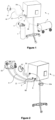
- the present invention refers to a assisted breathing apparatus (1) that provides respiratory support to patients when they are unable to do it on their own or have difficulties in doing so, in general, having to configure and program the flow of breathing gases for the patient, only the patient's weight expressed in kilograms, the patient's height expressed in centimeters and the patient's gender (male or female) are required as input data.
- the apparatus object of the present invention provides an air/oxygen mixture so that it can be introduced into the patient's lungs, it is generally made up of a gas inlet section, a gas conduction section inside the apparatus, a portion for the admission of gases to the patient through a gas expulsion arrangement and a control and administration arrangement for the fluids contained inside the device, where it has a control card that includes a microcontroller which allows selecting the modes of operation of the device, being controlled from a user interface that displays a plurality of graphic selection interfaces where the personnel in charge of the operation of the equipment enters the values corresponding to the data required so that the air/oxygen flow from the device to the patient is the optimum.
- respirator inlet section (5) which has a normal air channel (8a) fed by an air compressor (6), and an oxygen channel (9) where an oxygen tank (7) supplies this gas.
- Said air and oxygen channels (8a, 9) are coupled to the inlet section (5) by means of an air (8) and oxygen (12) connection, which are arranged in parallel and preferably horizontally.
- the present invention Located at one of the ends of the respirator inlet section (5), the present invention also has an air/oxygen outlet channel (16) that is located attached to the respirator inlet section (5) by means of from an outlet connection (16a), where once the mixture has traveled through the interior of the apparatus (1), it is expelled to be admitted to a patient through a mask (17) or an endotracheal tube (not shown).
- an air/oxygen outlet channel (16) that is located attached to the respirator inlet section (5) by means of from an outlet connection (16a), where once the mixture has traveled through the interior of the apparatus (1), it is expelled to be admitted to a patient through a mask (17) or an endotracheal tube (not shown).
- the air/oxygen outlet channel (16) is kept coupled with the respirator inlet section (5) by means of the connection (16a), and the free end of the channel (16) is enabled to couple the mask (17) or the endotracheal tube (not shown).
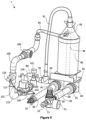
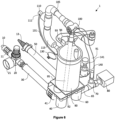
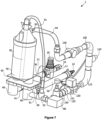
- a primary channel (10) defined by a preferably cylindrical conductor, emptied in its internal part and which has a connector (11) preferably hexagonal in shape where it is continuously connected with a pressure regulator (20) where it manages pressure values that are determined by the doctor or medical personnel in charge of programming the device and which in turn has a manometer (21) to display the pressure readings adjusted, where this pressure regulator is connected to a first initial air tube (30), arranged horizontally and with a preferential length of at least two orders greater than the normal air inlet (10) that conducts the air normal inside until it is deposited in an On/Off air solenoid valve (40), which for its coupling is assisted with an air On/Off solenoid valve connection (41) that provides a hermetic seal by means of a m mechanical that is adjusted by means of a thread present in the first initial air tube (30) and the solenoid valve (40).
- the oxygen inlet there is a continuous oxygen inlet tube (50) from the oxygen connector (12) of an oxygen inlet nozzle (13), which at each of its ends has a threaded rib that eventually became connected to the oxygen inlet nozzle (13) and at the opposite end of this connection, and through a connection with an oxygen On/Off solenoid valve (61), it is fixed with an oxygen On/Off solenoid valve (60).
- an air/oxygen mixture is developed inside, where said mixture is sent to a humidifier (90) by means of a pressure control solenoid valve (70) that is coupled to an air/oxygen outlet (65), where said pressure control solenoid valve (70), in turn, is controlled by a servomotor (80), which in one embodiment of the invention uses a stepper motor, which regulates each respiratory cycle.
- said pressure control solenoid valve (70) is a solenoid valve that is connected to the humidifier (90) by means of a connection means (91), where the humidifier (90) is integrated by a container cylindrical in shape, without being limited to this shape, which is arranged centrally in the upper part of a container plate (92) whose position is in turn above the On/Off air solenoid valve arrangement (40) and the oxygen On/Off solenoid valve (60) so that the heat generated by the latter is transferred to the humidifier (90) and its contents, generating an increase in the water temperature that allows raising the temperature of the water in the interior of the humidifier (90) and in this way provide the air/oxygen mixture with humidity and also an increase in temperature, since it has an upward path through the humidifier (90) every time a connector is inserted inside (95) that runs through all its height and where, in turn, it has a mixing outlet (93) arranged in an area close to the upper part of said humidifier (90), which is connected by means of a connector (94)
- the flow sensor (100) is connected to a means of driving the air/oxygen mixture (105) that has a downward orientation that finally leads the mixture towards an air/oxygen outlet (110) arranged in the middle zone, between the fluid inlet conductors and the flow sensor, and arranged vertically with respect to an outlet (111) arranged perpendicular to the axial axis of the air/oxygen outlet (110) directed towards the patient during the inspiration process.
- differential pressure sensor (130) interconnected at one end to a primary differential pressure conductor (131) which, in turn, is coupled to a through bore (111) that is located at the air outlet. /oxygen (110), and at its opposite end to a secondary differential pressure conductor (132) that is arranged in the gas outlet tube (125), at the inlet of the PEEP valve (140), where this sensor of differential pressure (130), several times per second, checks the inspiration and expiration and inlet/outlet gas pressures so that, if necessary, by means of the solenoid valve pressure control (70), the pressures are increased or decreased to maintain the programmed levels and required by the patient's condition.
- the gas outlet tube (125) internally has an air quality sensor to monitor CO2 on expiration.
- the process of managing the gas mixture and conduction towards a user is given by the microcontroller that controls the opening and closing of the Air On/Off solenoid valve (40) and the oxygen on/Off solenoid valve (60). through a double action relay (not shown), as well as controlling the CO 2 output solenoid valve (120) that controls the expiration output, which is also controlled by this same relay, as follows:
- the microcontroller determines the closure of the CO 2 outlet solenoid valve (120)
- the microcontroller Upon reaching the point of expiration, the microcontroller closes the arrangement of the air On/Off solenoid valve (40) and the oxygen On/Off solenoid valve (60), and opens the CO 2 output solenoid valve (120), allowing the air to expired leaves through the CO2 outlet (115) and cannot be diverted or returned through the air/oxygen mixture conduction means (105).
- the respiratory support method (300) comprising the steps of: receiving a flow of oxygen (301a) through from an oxygen source through an oxygen inlet nozzle; receiving a flow of air (301b) from a source of compressed air through an air inlet; regulating the flow of oxygen (302a) by means of an oxygen pressure regulator; regulating the air flow (302b) by means of an air pressure regulator; control the passage of the regulated oxygen flow (303a) by means of an oxygen On/Off solenoid valve; control the passage of the regulated air flow (303b) by means of an air On/Off solenoid valve; presetting (304) through a plurality of graphical user interfaces displayed by a user interface, the values related to the tidal volume, positive end-expiratory pressure, trigger pressure, fraction of inspired oxygen, the respiratory rate, and the inspiration/expiration ratio according to the patient's needs; mix (305) the oxygen and air provided by the oxygen and air On/Off solenoid valves; humidifying and increasing the temperature (306) of the moisture
- the programmed values should be absolute and constant to keep the patient's breathing in optimal conditions. However, in practice this is not the case, since the patient's conditions are by no means stable and due to these variations, the programmed values become relative and variable as well.
- the microprocessor is programmed with control algorithms which a person with expertise in the matter can understand that are not typical of a computer program that runs any conventional computer. Said algorithms were specially designed for the operation of the apparatus of the present invention, to modify in real time said values, which without complicated equations, only decide to increase or decrease the pressures, flow and times based on the differences between what is programmed and what is expected which is sensed in each respiratory cycle, and in this way, the microprocessor will send the corrections to the solenoid valves, in order to compensate the differences that could arise between the programmed values and the real values necessary.
- the microprocessor through the sensed parameters (approximately 1000 times per second) by the differential pressure and flow sensors, in each respiratory cycle it performs the steps of: control, by means of the air and oxygen solenoid valves, the flow and pressure of air and oxygen supplied to the patient in each respiratory cycle at starting from the preset values related to inspiration, plateau and expiration, as well as the positive pressure at the end of expiration; process the sensed values related to the pressure of the inspiration and expiration gases to determine in real time from said result the real value of the pressure of the wet mixture supplied to the patient; processing the sensed values related to the volume of the wet mix to determine in real time the amount of volume of the wet mix delivered to the patient; process the sensed values related to the pressure of the inspiration and expiration gases, and determine in real time from said result the real value of the pressure of the humid mixture; process and determine the values related to the CO 2 contained in the exhaled gases to define the opening and closing of a CO 2 outlet solenoid valve that releases the gases produced by the patient's exhal
- the microprocessor closes the CO 2 outlet solenoid valve, opens the air on/Off solenoid valve and the oxygen on/Off solenoid valve, allowing a previously programmed amount to pass to the patient. of air/oxygen, avoiding the loss of pressure through the outlet, thus guaranteeing that the air/oxygen mixture directed to the patient can only exit through the air/oxygen outlet towards the lungs.
- the microprocessor closes the arrangement of the air On/Off solenoid valve and the oxygen On/Off solenoid valve and opens the CO 2 outlet solenoid valve, with the exhaled air leaving through the CO 2 outlet and cannot be diverted or returned by the air/oxygen mixture conduction medium.
- oximeter that measures oxygen saturation and heart rate, so the vital signs monitored are:
- the sequence in the microcontroller is arranged to provide a constant flow of air/oxygen mixture, and to be able to control the solenoid valves of the arrangement, for which only the gender and weight of the patient expressed in kilograms is required, so the steps executed by the microcontroller are the following:
- a user interface which, according to the preferred embodiment of the invention, consists of a touch screen (not limited to it) that displays a first graphical interface where the parameters to be monitored within the device are displayed, Tidal Volume, Positive End Expiratory Pressure (PEEP), trigger pressure (disp), fraction of inspired oxygen (Fio2), respiratory rate (f), and inspiration/expiration (I:E) ratio, as well as a start button.
- PEEP Positive End Expiratory Pressure
- disp trigger pressure
- F fraction of inspired oxygen
- f respiratory rate
- I:E inspiration/expiration ratio
- FIG 11 there is a second graphic interface that displays the user interface (200) where the data related to: gender (201) (MALE OR FEMALE), height (202) expressed in centimeters and the weight (203) expressed in kilograms where the input of the information can be adjusted by means of two buttons (204) to increase or decrease the flow generation parameters; when these parameters have been entered the enter button (205) is pressed.
- gender (201) MALE OR FEMALE
- height (202) expressed in centimeters and the weight (203) expressed in kilograms
- the input of the information can be adjusted by means of two buttons (204) to increase or decrease the flow generation parameters; when these parameters have been entered the enter button (205) is pressed.
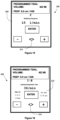
- figures 12 to 16 show other graphical interfaces displayed by the user interface (200) that eventually display the data of Tidal Volume, Positive end-expiratory pressure (PEEP) (206), pressure trigger (disp) (207 ), fraction of inspired oxygen (Fio2) (208), respiratory rate (f) (209), and inspiration/expiration ratio (I:E) (210).
- PEEP Positive end-expiratory pressure
- disp pressure trigger
- disp fraction of inspired oxygen
- f respiratory rate
- I:E inspiration/expiration ratio
- the data is compiled on a screen for final review (211) and the generation of a graph (212) that is displayed to show the patient's respiratory rate, as shown in figure 17 .
- an additional circuit is included to provide storage, where it is connected in a wired or wireless manner, to a network, by means of which it provides information to be stored in the cloud, in where it is integrated by a data storage and distribution unit to transfer this data in order to deposit it in an integrated storage, including local storage and cloud storage; It also has a storage management unit that connects with the integrated storage in order to arrange the data and provide information on the parameters monitored in the respiratory support device, where the storage levels are related to the amount of data stored; it also has a data handling unit to provide integrated storage as virtual data storage regardless of the location in which the data is stored and a storage connection unit to provide a user interface for data storage virtual as a single virtual storage unit; furthermore this data handling unit provides a write buffer function or a read
- the above scheme is developed by a method for providing storage for providing a cloud service, performed by an apparatus for providing storage for providing a cloud service, which is integrated by a data distributor to store data in integrated storage, including local storage and cloud storage; and manage data by providing embedded storage as virtual data storage, regardless of the cloud location of this data.
- an alarm detection device configured to compare physiological data received through the patient monitoring unit, wherein the alarm detection device responds to a predefined measurement of physiological data as They are hypertension or hypotension, heart rhythm outside the parameter, hypoxia, hyperventilation, where in turn, an alarm detection device is configured to initiate an alarm that comprises at least one speaker with a first frequency, waveform or duty cycle configured to output a first alarm signal and a second alarm signal having a second frequency, waveform, or duty cycle different from the first frequency, for wave ma or duty cycle, there is also an alarm device that emits the second signal if the first signal is emitted and the alarm confirmation mechanism is not activated before the specified event, where the alarm device is configured to gradually increase the second frequency of the second alarm signal until the second frequency reaches a peak frequency or a confirmation notification mechanism is activated.
- a notification device in case of electrical failure, where in addition to activating a backup battery, it includes an acoustic sensor configured to generate a sensor signal in response to an acoustic alarm indicative of electrical failure, a unit signal processing in communication with the acoustic sensor and configured to generate an identification signal when the sensor signal of the acoustic sensor satisfies an identification criterion.
- the alarm system is connected to an interface unit in communication with the signal processing unit and configured to produce and send a message signal to a medical center call system, in response to the processing identification signal.
Landscapes
- Health & Medical Sciences (AREA)
- Emergency Medicine (AREA)
- Pulmonology (AREA)
- Engineering & Computer Science (AREA)
- Anesthesiology (AREA)
- Biomedical Technology (AREA)
- Heart & Thoracic Surgery (AREA)
- Hematology (AREA)
- Life Sciences & Earth Sciences (AREA)
- Animal Behavior & Ethology (AREA)
- General Health & Medical Sciences (AREA)
- Public Health (AREA)
- Veterinary Medicine (AREA)
- Respiratory Apparatuses And Protective Means (AREA)
- Measurement Of The Respiration, Hearing Ability, Form, And Blood Characteristics Of Living Organisms (AREA)
- Pharmaceuticals Containing Other Organic And Inorganic Compounds (AREA)
- Percussion Or Vibration Massage (AREA)
- Measuring And Recording Apparatus For Diagnosis (AREA)
Applications Claiming Priority (2)
| Application Number | Priority Date | Filing Date | Title |
|---|---|---|---|
| MX2020008822A MX392216B (es) | 2020-08-19 | 2020-08-19 | Aparato y método de asistencia respiratoria. |
| PCT/MX2021/050047 WO2022039586A1 (fr) | 2020-08-19 | 2021-08-19 | Appareil et méthode d'assistance respiratoire |
Publications (2)
| Publication Number | Publication Date |
|---|---|
| EP4201458A1 true EP4201458A1 (fr) | 2023-06-28 |
| EP4201458A4 EP4201458A4 (fr) | 2024-08-14 |
Family
ID=80322900
Family Applications (1)
| Application Number | Title | Priority Date | Filing Date |
|---|---|---|---|
| EP21858672.5A Pending EP4201458A4 (fr) | 2020-08-19 | 2021-08-19 | Appareil et méthode d'assistance respiratoire |
Country Status (12)
| Country | Link |
|---|---|
| US (1) | US20230321388A1 (fr) |
| EP (1) | EP4201458A4 (fr) |
| CN (1) | CN116457045A (fr) |
| AU (1) | AU2021326637A1 (fr) |
| BR (1) | BR112023003131A2 (fr) |
| CO (1) | CO2023003337A2 (fr) |
| CR (1) | CR20230134A (fr) |
| DO (1) | DOP2023000033A (fr) |
| EC (1) | ECSP23018924A (fr) |
| MX (1) | MX392216B (fr) |
| WO (1) | WO2022039586A1 (fr) |
| ZA (1) | ZA202306342B (fr) |
Families Citing this family (5)
| Publication number | Priority date | Publication date | Assignee | Title |
|---|---|---|---|---|
| CN114504708B (zh) * | 2022-03-28 | 2024-10-29 | 中山大学 | 一种制氧呼吸一体机 |
| US12171939B2 (en) * | 2022-05-06 | 2024-12-24 | Baylor University | Emergency-use respiratory device |
| MX2022016601A (es) * | 2022-12-16 | 2024-06-17 | Iquantum Patent Factory S A De C V | Aparato y metodo de asistencia respiratoria. |
| CN118718189A (zh) * | 2024-07-11 | 2024-10-01 | 南通大学附属医院 | 一种心胸血管外科护理用的肺部呼吸辅助装置 |
| CN119097802A (zh) * | 2024-09-30 | 2024-12-10 | 苏州科贝翔科技有限公司 | 一种浓度调节式麻醉装置 |
Family Cites Families (16)
| Publication number | Priority date | Publication date | Assignee | Title |
|---|---|---|---|---|
| IT1200044B (it) * | 1986-12-31 | 1989-01-05 | Elmed Ginevri Srl | Respiratore pressumetrico a flusso costante e ventilazione controllata |
| US4915103A (en) | 1987-12-23 | 1990-04-10 | N. Visveshwara, M.D., Inc. | Ventilation synchronizer |
| US5161525A (en) * | 1990-05-11 | 1992-11-10 | Puritan-Bennett Corporation | System and method for flow triggering of pressure supported ventilation |
| US5237987A (en) * | 1990-06-07 | 1993-08-24 | Infrasonics, Inc. | Human lung ventilator system |
| DE69533597T2 (de) | 1994-10-14 | 2005-10-06 | Bird Products Corporation, Palm Springs | Ausatmungsventil mit Messwertaufnehmer für die Ausatmungsströmung |
| AU2003901042A0 (en) | 2003-03-07 | 2003-03-20 | Resmed Limited | Back-up rate for a ventilator |
| US9586018B2 (en) * | 2007-01-26 | 2017-03-07 | Cs Medical, Inc. | System for providing flow-targeted ventilation synchronized to a patients breathing cycle |
| US8393323B2 (en) * | 2008-09-30 | 2013-03-12 | Covidien Lp | Supplemental gas safety system for a breathing assistance system |
| US20120065533A1 (en) * | 2010-05-28 | 2012-03-15 | Carrillo Jr Oscar | Positive Airway Pressure System and Method |
| DE102012024672A1 (de) * | 2012-12-18 | 2014-06-18 | Dräger Medical GmbH | Beatmungsgerät und Verfahren zum Betrieb eines Beatmungsgerätes |
| US20140254305A1 (en) * | 2013-03-06 | 2014-09-11 | Richard Brand Caso | Auto-controlled air-oxygen blender |
| US9925346B2 (en) | 2015-01-20 | 2018-03-27 | Covidien Lp | Systems and methods for ventilation with unknown exhalation flow |
| US20160287824A1 (en) * | 2015-04-03 | 2016-10-06 | Invent Medical Corporation | Ventilator |
| EP3525857B1 (fr) * | 2017-11-14 | 2020-01-29 | Covidien LP | Systèmes de ventilation spontanée par pression de commande |
| CN110801563B (zh) * | 2019-11-05 | 2023-05-23 | 塔城市人民医院 | 一种呼吸机及呼吸机的氧传感器自动校准方法 |
| WO2021231363A1 (fr) * | 2020-05-11 | 2021-11-18 | The United States Of America As Represented By The Secretary Of The Navy | Ventilateur médical et procédé d'utilisation |
-
2020
- 2020-08-19 MX MX2020008822A patent/MX392216B/es unknown
-
2021
- 2021-08-19 BR BR112023003131A patent/BR112023003131A2/pt not_active IP Right Cessation
- 2021-08-19 US US18/021,608 patent/US20230321388A1/en active Pending
- 2021-08-19 CN CN202180071601.XA patent/CN116457045A/zh active Pending
- 2021-08-19 EP EP21858672.5A patent/EP4201458A4/fr active Pending
- 2021-08-19 CR CR20230134A patent/CR20230134A/es unknown
- 2021-08-19 AU AU2021326637A patent/AU2021326637A1/en not_active Abandoned
- 2021-08-19 WO PCT/MX2021/050047 patent/WO2022039586A1/fr not_active Ceased
-
2023
- 2023-02-17 DO DO2023000033A patent/DOP2023000033A/es unknown
- 2023-03-15 EC ECSENADI202318924A patent/ECSP23018924A/es unknown
- 2023-03-17 CO CONC2023/0003337A patent/CO2023003337A2/es unknown
- 2023-06-19 ZA ZA2023/06342A patent/ZA202306342B/en unknown
Also Published As
| Publication number | Publication date |
|---|---|
| CN116457045A (zh) | 2023-07-18 |
| BR112023003131A2 (pt) | 2023-04-04 |
| MX392216B (es) | 2025-03-21 |
| ZA202306342B (en) | 2024-01-31 |
| CO2023003337A2 (es) | 2023-04-17 |
| AU2021326637A1 (en) | 2023-03-16 |
| CR20230134A (es) | 2023-07-07 |
| MX2020008822A (es) | 2022-05-06 |
| DOP2023000033A (es) | 2023-06-15 |
| EP4201458A4 (fr) | 2024-08-14 |
| WO2022039586A1 (fr) | 2022-02-24 |
| ECSP23018924A (es) | 2023-05-31 |
| US20230321388A1 (en) | 2023-10-12 |
Similar Documents
| Publication | Publication Date | Title |
|---|---|---|
| US20230321388A1 (en) | Assisted breathing apparatus and method | |
| EP3871720B1 (fr) | Appareil de thérapie de ventilation | |
| CN109069782B (zh) | 一种麻醉机及系统 | |
| EP1986723B1 (fr) | Configuration matérielle pour dispositif de commande de pression | |
| EP0050125B1 (fr) | Ventilateur volumique | |
| US11596753B2 (en) | Automatic patient ventilator system and method | |
| US8931478B2 (en) | Patient interface assembly for respiratory therapy | |
| CN1330392C (zh) | 用于正气压治疗仪的双气压供气机 | |
| JP6431033B2 (ja) | デュアル圧力センサ患者用換気装置 | |
| EP4289459A1 (fr) | Appareil respiratoire à fonction de compensation de dioxyde de carbone | |
| EP2337603A1 (fr) | Connexion accessoire et synchronisation de données dans un ventilateur | |
| US20180154094A1 (en) | Artificial ventilation apparatus able to deliver ventilation and monitoring which are specific to the patients receiving cardiac massage | |
| US11020554B2 (en) | Artificial ventilation apparatus with ventilation modes suited to cardiac massage | |
| CN113940781A (zh) | 一种动物用呼吸通气设备及其智能触发方法 | |
| WO2024128907A1 (fr) | Appareil et méthode d'assistance respiratoire | |
| CN210933251U (zh) | 压力控制装置、麻醉机及呼吸机 | |
| US20250001108A1 (en) | Displaying A Maintenance Reminder On An Apparatus For Supplying Medical Nitric Oxide | |
| US20230112422A1 (en) | Improvements relating to provision of gas-flow | |
| WO2021225993A1 (fr) | Système et méthode de ventilation d'une personne | |
| CN108525095A (zh) | 一种呼吸辅助设备 | |
| CN118076288A (zh) | 监视氧气的方法和系统 | |
| US20250345549A1 (en) | No supply apparatus suitable for land or air transport | |
| Chatburn et al. | INTRODUCTION TO VENTILATORS | |
| Street | Ventilation in the intensive care unit | |
| US20180318532A1 (en) | Mechanical ventilation based on alveolar ventilation |
Legal Events
| Date | Code | Title | Description |
|---|---|---|---|
| STAA | Information on the status of an ep patent application or granted ep patent |
Free format text: STATUS: THE INTERNATIONAL PUBLICATION HAS BEEN MADE |
|
| PUAI | Public reference made under article 153(3) epc to a published international application that has entered the european phase |
Free format text: ORIGINAL CODE: 0009012 |
|
| STAA | Information on the status of an ep patent application or granted ep patent |
Free format text: STATUS: REQUEST FOR EXAMINATION WAS MADE |
|
| 17P | Request for examination filed |
Effective date: 20230317 |
|
| AK | Designated contracting states |
Kind code of ref document: A1 Designated state(s): AL AT BE BG CH CY CZ DE DK EE ES FI FR GB GR HR HU IE IS IT LI LT LU LV MC MK MT NL NO PL PT RO RS SE SI SK SM TR |
|
| DAV | Request for validation of the european patent (deleted) | ||
| DAX | Request for extension of the european patent (deleted) | ||
| A4 | Supplementary search report drawn up and despatched |
Effective date: 20240717 |
|
| RIC1 | Information provided on ipc code assigned before grant |
Ipc: A61M 16/12 20060101ALI20240711BHEP Ipc: A61M 16/00 20060101AFI20240711BHEP |
|
| GRAP | Despatch of communication of intention to grant a patent |
Free format text: ORIGINAL CODE: EPIDOSNIGR1 |
|
| STAA | Information on the status of an ep patent application or granted ep patent |
Free format text: STATUS: GRANT OF PATENT IS INTENDED |
|
| INTG | Intention to grant announced |
Effective date: 20260421 |