EP4201950A1 - Stéroïdes époxy - Google Patents
Stéroïdes époxy Download PDFInfo
- Publication number
- EP4201950A1 EP4201950A1 EP21217028.6A EP21217028A EP4201950A1 EP 4201950 A1 EP4201950 A1 EP 4201950A1 EP 21217028 A EP21217028 A EP 21217028A EP 4201950 A1 EP4201950 A1 EP 4201950A1
- Authority
- EP
- European Patent Office
- Prior art keywords
- sup
- alkyl
- cells
- aryl
- methyl
- Prior art date
- Legal status (The legal status is an assumption and is not a legal conclusion. Google has not performed a legal analysis and makes no representation as to the accuracy of the status listed.)
- Pending
Links
Images

Classifications
-
- A—HUMAN NECESSITIES
- A61—MEDICAL OR VETERINARY SCIENCE; HYGIENE
- A61K—PREPARATIONS FOR MEDICAL, DENTAL OR TOILETRY PURPOSES
- A61K31/00—Medicinal preparations containing organic active ingredients
- A61K31/56—Compounds containing cyclopenta[a]hydrophenanthrene ring systems; Derivatives thereof, e.g. steroids
- A61K31/58—Compounds containing cyclopenta[a]hydrophenanthrene ring systems; Derivatives thereof, e.g. steroids containing heterocyclic rings, e.g. danazol, stanozolol, pancuronium or digitogenin
-
- A—HUMAN NECESSITIES
- A61—MEDICAL OR VETERINARY SCIENCE; HYGIENE
- A61K—PREPARATIONS FOR MEDICAL, DENTAL OR TOILETRY PURPOSES
- A61K31/00—Medicinal preparations containing organic active ingredients
- A61K31/33—Heterocyclic compounds
- A61K31/395—Heterocyclic compounds having nitrogen as a ring hetero atom, e.g. guanethidine or rifamycins
- A61K31/435—Heterocyclic compounds having nitrogen as a ring hetero atom, e.g. guanethidine or rifamycins having six-membered rings with one nitrogen as the only ring hetero atom
- A61K31/47—Quinolines; Isoquinolines
- A61K31/475—Quinolines; Isoquinolines having an indole ring, e.g. yohimbine, reserpine, strychnine, vinblastine
-
- A—HUMAN NECESSITIES
- A61—MEDICAL OR VETERINARY SCIENCE; HYGIENE
- A61K—PREPARATIONS FOR MEDICAL, DENTAL OR TOILETRY PURPOSES
- A61K31/00—Medicinal preparations containing organic active ingredients
- A61K31/70—Carbohydrates; Sugars; Derivatives thereof
- A61K31/7042—Compounds having saccharide radicals and heterocyclic rings
- A61K31/7052—Compounds having saccharide radicals and heterocyclic rings having nitrogen as a ring hetero atom, e.g. nucleosides, nucleotides
- A61K31/706—Compounds having saccharide radicals and heterocyclic rings having nitrogen as a ring hetero atom, e.g. nucleosides, nucleotides containing six-membered rings with nitrogen as a ring hetero atom
- A61K31/7064—Compounds having saccharide radicals and heterocyclic rings having nitrogen as a ring hetero atom, e.g. nucleosides, nucleotides containing six-membered rings with nitrogen as a ring hetero atom containing condensed or non-condensed pyrimidines
- A61K31/7068—Compounds having saccharide radicals and heterocyclic rings having nitrogen as a ring hetero atom, e.g. nucleosides, nucleotides containing six-membered rings with nitrogen as a ring hetero atom containing condensed or non-condensed pyrimidines having oxo groups directly attached to the pyrimidine ring, e.g. cytidine, cytidylic acid
-
- A—HUMAN NECESSITIES
- A61—MEDICAL OR VETERINARY SCIENCE; HYGIENE
- A61P—SPECIFIC THERAPEUTIC ACTIVITY OF CHEMICAL COMPOUNDS OR MEDICINAL PREPARATIONS
- A61P17/00—Drugs for dermatological disorders
-
- A—HUMAN NECESSITIES
- A61—MEDICAL OR VETERINARY SCIENCE; HYGIENE
- A61P—SPECIFIC THERAPEUTIC ACTIVITY OF CHEMICAL COMPOUNDS OR MEDICINAL PREPARATIONS
- A61P17/00—Drugs for dermatological disorders
- A61P17/06—Antipsoriatics
-
- A—HUMAN NECESSITIES
- A61—MEDICAL OR VETERINARY SCIENCE; HYGIENE
- A61P—SPECIFIC THERAPEUTIC ACTIVITY OF CHEMICAL COMPOUNDS OR MEDICINAL PREPARATIONS
- A61P29/00—Non-central analgesic, antipyretic or antiinflammatory agents, e.g. antirheumatic agents; Non-steroidal antiinflammatory drugs [NSAID]
-
- A—HUMAN NECESSITIES
- A61—MEDICAL OR VETERINARY SCIENCE; HYGIENE
- A61P—SPECIFIC THERAPEUTIC ACTIVITY OF CHEMICAL COMPOUNDS OR MEDICINAL PREPARATIONS
- A61P31/00—Antiinfectives, i.e. antibiotics, antiseptics, chemotherapeutics
- A61P31/04—Antibacterial agents
-
- A—HUMAN NECESSITIES
- A61—MEDICAL OR VETERINARY SCIENCE; HYGIENE
- A61P—SPECIFIC THERAPEUTIC ACTIVITY OF CHEMICAL COMPOUNDS OR MEDICINAL PREPARATIONS
- A61P31/00—Antiinfectives, i.e. antibiotics, antiseptics, chemotherapeutics
- A61P31/10—Antimycotics
-
- A—HUMAN NECESSITIES
- A61—MEDICAL OR VETERINARY SCIENCE; HYGIENE
- A61P—SPECIFIC THERAPEUTIC ACTIVITY OF CHEMICAL COMPOUNDS OR MEDICINAL PREPARATIONS
- A61P31/00—Antiinfectives, i.e. antibiotics, antiseptics, chemotherapeutics
- A61P31/12—Antivirals
-
- A—HUMAN NECESSITIES
- A61—MEDICAL OR VETERINARY SCIENCE; HYGIENE
- A61P—SPECIFIC THERAPEUTIC ACTIVITY OF CHEMICAL COMPOUNDS OR MEDICINAL PREPARATIONS
- A61P33/00—Antiparasitic agents
- A61P33/02—Antiprotozoals, e.g. for leishmaniasis, trichomoniasis, toxoplasmosis
-
- A—HUMAN NECESSITIES
- A61—MEDICAL OR VETERINARY SCIENCE; HYGIENE
- A61P—SPECIFIC THERAPEUTIC ACTIVITY OF CHEMICAL COMPOUNDS OR MEDICINAL PREPARATIONS
- A61P33/00—Antiparasitic agents
- A61P33/10—Anthelmintics
-
- A—HUMAN NECESSITIES
- A61—MEDICAL OR VETERINARY SCIENCE; HYGIENE
- A61P—SPECIFIC THERAPEUTIC ACTIVITY OF CHEMICAL COMPOUNDS OR MEDICINAL PREPARATIONS
- A61P33/00—Antiparasitic agents
- A61P33/14—Ectoparasiticides, e.g. scabicides
-
- A—HUMAN NECESSITIES
- A61—MEDICAL OR VETERINARY SCIENCE; HYGIENE
- A61P—SPECIFIC THERAPEUTIC ACTIVITY OF CHEMICAL COMPOUNDS OR MEDICINAL PREPARATIONS
- A61P35/00—Antineoplastic agents
-
- C—CHEMISTRY; METALLURGY
- C07—ORGANIC CHEMISTRY
- C07J—STEROIDS
- C07J71/00—Steroids in which the cyclopenta(a)hydrophenanthrene skeleton is condensed with a heterocyclic ring
- C07J71/0005—Oxygen-containing hetero ring
-
- A—HUMAN NECESSITIES
- A61—MEDICAL OR VETERINARY SCIENCE; HYGIENE
- A61K—PREPARATIONS FOR MEDICAL, DENTAL OR TOILETRY PURPOSES
- A61K2300/00—Mixtures or combinations of active ingredients, wherein at least one active ingredient is fully defined in groups A61K31/00 - A61K41/00
-
- C—CHEMISTRY; METALLURGY
- C07—ORGANIC CHEMISTRY
- C07J—STEROIDS
- C07J9/00—Normal steroids containing carbon, hydrogen, halogen or oxygen substituted in position 17 beta by a chain of more than two carbon atoms, e.g. cholane, cholestane, coprostane
Definitions
- the present invention relates to novel drugs based on steroids.
- cytotoxic treatment methods such as B. chemotherapy, radiation therapy and hyperthermia
- chemotherapeutic agents currently used in clinical practice exert their effects by inducing apoptosis (programmed cell death) (Hannun, 1997).
- apoptosis programmeed cell death
- some patients suffering from malignant tumors develop resistance to chemotherapy or radiation at an early stage or are primarily refractory to therapy (Hickman, 1996).
- primary tumors and metastases often respond quite differently to cytotoxic therapies.
- the therapies for relapses in childhood leukemia, lymphoma and solid tumors still do not show satisfactory survival rates.
- ALL acute lymphatic leukemia
- other tumor diseases some of which are difficult to treat, such as e.g. As brain tumors, lymphomas, sarcomas such as soft tissue sarcomas, Ewing's or osteosarcoma, germ cell tumors, kidney or liver tumors and carcinomas such.
- B. the thyroid carcinoma or the colon carcinomas and breast carcinomas which are very common in adulthood.
- difficult rare tumors such.
- desmoblastic round cell tumors or malignant peripheral nerve sheath tumors in the event of metastasis appropriate chemotherapy is required, since these malignant cells are resistant to cytostatics.
- psoriasis is one of the most common skin diseases (two to four percent of people suffer from it), and the therapy for it still needs improvement.
- cytostatic agents which can penetrate into the central nervous system because they show a high volume of distribution. This is of great importance, especially for the treatment of various brain tumors (grade 1 - grade 4), since many conventional cytostatics cannot sufficiently cross the blood-brain barrier, so that the necessary concentration of active substances in the tumor tissue cannot be achieved during chemotherapy.
- Conventional steroids can easily cross the blood-brain barrier, but they show no or insufficient cytostatic effect in brain tumors, other solid tumors or in steroid-resistant leukemias and lymphomas.
- the object of the present invention is to provide medicaments which overcome these disadvantages of the prior art.
- the formula A therefore includes the basic frameworks A1 and A2:
- the compounds according to the invention are based on the basic structure of steroids, which have been well researched both synthetically and medically/pharmacologically.
- these substances initiate apoptotic cell death not only in leukemia and lymphoma cells but also in solid tumor cells and in steroid- or polychemotherapy-resistant leukemia or lymphoma cells. Because of their lipophilicity, these compounds of general formula A can be used against tumor diseases of the bone marrow, but also against tumors of a different provenance, such as. B. epithelial tumors, sarcomas or malignancies of the skin, etc., are used.
- malignant brain tumors grade 1 - grade 4
- malignant brain tumors grade 1 - grade 4
- gliomas astrocytomas
- medulloblastomas astrocytomas
- medulloblastomas astrocytomas
- novel steroids By studying the apoptosis signaling cascade, the development of novel steroids was possible according to the invention, which, in contrast to conventional glucocorticoids, induces apoptosis in malignant cells and thus via all three known pathways of the apoptosis signaling cascade (receptor-mediated, mitochondrial and mediated via the endoplasmic reticulum). Can destroy leukemia, lymphoma and solid tumor cells that are resistant to glucocorticoids or polycytostatics. The effect is selective on malignant cells.
- R x H
- alkyl and R 2 is 4-methyl-pentyl.
- Preferred substituents for R 1 are H or methyl.
- Each R 4 , R 5 and R x independently of one another preferably has up to 10 carbon atoms.
- R x is alkyl or substituted alkyl.
- the invention also relates to a process for preparing compounds of the formula A , comprising step a and subsequent conversion of the functional groups: step a being carried out under basic conditions, preferably by heating the substrate in the presence of Li 2 CO 3 and LiBr in N,N-dimethylformamide at temperatures of 80 to 120°C.
- the invention also relates to the use of the medicaments according to the invention in the therapy of malignant diseases, benign or semi-malignant skin diseases.
- Typical malignant diseases are diseases that affect the bone marrow or other blood-forming organs or are solid tumors or epithelial tumors, the solid tumors being in particular brain tumors such as glioblastoma and medulloblastoma.
- Typical benign or semi-malignant diseases are skin diseases such as psoriasis vulgaris, keloids or basalioma.
- the medicaments according to the invention are also suitable for use in the therapy of inflammatory and chronically inflammatory diseases, for use in immunosuppressive therapy, for antiviral, antibacterial, antimycotic, antiprotozoal or antihelminthic therapy.
- the compounds are preferably administered intravenously in the concentration range between 0.1 and 100 ⁇ g/ml, based on the blood volume of the patient.
- the compounds according to the invention are distinguished by the following properties:
- the new group of 7,19-epoxy steroids shows a cytostatic effect in solid tumor cells, in various brain tumor cells and in steroid-resistant leukemia and lymphoma cells, which are co-resistant to a wide variety of conventional cytostatics used in therapy .
- An effect in cytostatic-resistant solid tumor cells is also detectable.
- the novel class of steroids specifically induces apoptosis in malignant cells while not damaging primary human leukocytes.
- novel steroids show a synergistic effect in vitro with conventional cytostatics used in the therapy of malignant diseases.
- Steps a - c Synthesis of 3 ⁇ -acetoxy-cholest- ⁇ 5 -en-19 ⁇ -ol (4)
- the crude product ( 2 , beige solid) - with significant amounts (>40%) of regioisomeric bromohydrin - was used in the following step without further purification.
- a small amount of bromohydrin 2 was purified by column chromatography for detailed analysis.
- Step d Synthesis of 3 ⁇ -acetoxy-19-methoxymethyloxy-cholestane- ⁇ 5 -ene (5)
- Step e Synthesis of 3 ⁇ -acetoxy- 5 ⁇ -hydroxy-19-methoxymethyloxy-cholestan-6-one (6)
- Step f Synthesis of 3 ⁇ -acetoxy- 7 ⁇ -bromo- 5 ⁇ , 6 ⁇ - dihydroxy- 6 ⁇ ,19-epoxy-cholestane (7)
- Step g Synthesis of 3 ⁇ -acetoxy- 5 ⁇ -hydroxy- 7 ⁇ ,19-epoxy-cholestan-6-one (8) (WIL-232)
- Step h Synthesis of 3 ⁇ , 5 ⁇ -dihydroxy- 7 ⁇ ,19-epoxy-cholestan-6-one (9) (WIL-071)
- Example 2 Inhibition of proliferation in leukemia cells (Nalm-6 cells).
- Example 3 Overcoming resistance to steroids and polycytostatics in NaKu cells
- Example 5 Overcoming polycytostatic resistance in 7-CCA cells
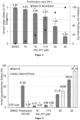
- Treatment with the steroid WIL 071 induces just as much apoptosis in polycytostatic-resistant lymphoma cells (7-CCA cells) as in non-resistant lymphoma cells (BJAB (Burkitt-like lymphoma cells)), regardless of the concentration, see figure 4 .
- the experiments were carried out three times independently. The error bars show the standard deviations of the measurements from three independent experiments.
- the steroid WIL 071 overcomes steroid resistance in lymphoma cells (7-CCA cells).
- LDH lactate dehydrogenase
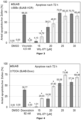
- WIL 071 Treatment with the steroid WIL 071 induces concentration-dependent apoptosis in leukemia cells (Nalm-6 cells) and in lymphoma cells (BJAB cells). WIL 071 acts selectively in malignant cells that are proliferating. In contrast, no apoptosis is induced in human primary leukocytes. The DNA fragmentation was measured by flow cytometry, see figure 7 . The experiments were carried out three times independently. The error bars show the standard deviations of the measurements from three independent experiments.
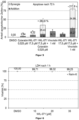
- the steroid WIL 071 can also induce apoptosis in solid tumor cells. Resistance to cytostatics is also overcome in neuroblastoma cells (SKNAS cells) (LiOn cells - cisplatin-resistant SKNAS cells with underexpression of caspase-8.
- SKNAS cells neuroblastoma cells
- the DNA fragmentation was measured by flow cytometry), see figure 8 .
- the experiments were carried out three times independently.
- the error bars show the standard deviations of the measurements from three independent experiments.
- the steroid WIL 071 can also induce apoptosis in brain tumor cells.
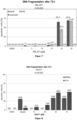
- the steroid WIL 071 also significantly induces apoptosis in glioblastoma cells (DBTRG05MG cells).
- the DNA fragmentation was measured by flow cytometry, see figure 9 . The experiments were carried out three times independently. The error bars show the standard deviations of the measurements from three independent experiments.
- the steroid WIL 071 can also induce apoptosis in primary human brain tumor cells. Also in primary glioblastoma cells of a patient with glioblastoma (grade 4) the steroid WIL 071 significantly induces apoptosis.
- the DNA fragmentation was measured by flow cytometry, see figure 10 .
- the experiments were carried out three times independently.
- the error bars show the standard deviations of the measurements from three independent experiments.
- the cells were incubated in 6-well plates at 1.0 ⁇ 10 5 cells/mL in two milliliters of medium with the respective steroid derivative in various concentrations.
- the solvent control (DMSO) that was carried along served as a control, which was subtracted from all other measured values in order not to take into account the spontaneous apoptosis of the cells, which takes place independently of the drug concentration.
- DMSO solvent control
- the means ⁇ standard deviations, n 3 ( ⁇ : p ⁇ 0.05 vs. DMSO, T-test) were determined for each concentration of the steroid.
- the steroid concentration at which apoptosis was triggered in 50% of the tested leukemia cells was read off with the aid of the curve of the dose-response relationship (steroid concentration-apoptosis induction) arising from these measured values.
- Glucocorticoids for the therapy of malignant diseases :
Landscapes
- Health & Medical Sciences (AREA)
- Chemical & Material Sciences (AREA)
- Life Sciences & Earth Sciences (AREA)
- General Health & Medical Sciences (AREA)
- Veterinary Medicine (AREA)
- Public Health (AREA)
- Medicinal Chemistry (AREA)
- Pharmacology & Pharmacy (AREA)
- Animal Behavior & Ethology (AREA)
- Organic Chemistry (AREA)
- Chemical Kinetics & Catalysis (AREA)
- Nuclear Medicine, Radiotherapy & Molecular Imaging (AREA)
- General Chemical & Material Sciences (AREA)
- Epidemiology (AREA)
- Oncology (AREA)
- Communicable Diseases (AREA)
- Tropical Medicine & Parasitology (AREA)
- Molecular Biology (AREA)
- Engineering & Computer Science (AREA)
- Bioinformatics & Cheminformatics (AREA)
- Dermatology (AREA)
- Virology (AREA)
- Pain & Pain Management (AREA)
- Rheumatology (AREA)
- Steroid Compounds (AREA)
- Pharmaceuticals Containing Other Organic And Inorganic Compounds (AREA)
Priority Applications (8)
| Application Number | Priority Date | Filing Date | Title |
|---|---|---|---|
| EP21217028.6A EP4201950A1 (fr) | 2021-12-22 | 2021-12-22 | Stéroïdes époxy |
| KR1020247024577A KR20240125979A (ko) | 2021-12-22 | 2022-12-22 | 에폭시 스테로이드 |
| US18/722,018 US20240398836A1 (en) | 2021-12-22 | 2022-12-22 | Epoxy steroids |
| PCT/EP2022/087575 WO2023118484A1 (fr) | 2021-12-22 | 2022-12-22 | Stéroïdes époxy |
| CA3240464A CA3240464A1 (fr) | 2021-12-22 | 2022-12-22 | Steroides epoxy |
| CN202280085751.0A CN118510789A (zh) | 2021-12-22 | 2022-12-22 | 环氧类固醇 |
| JP2024536403A JP2024547027A (ja) | 2021-12-22 | 2022-12-22 | エポキシステロイド |
| EP22844092.1A EP4452996A1 (fr) | 2021-12-22 | 2022-12-22 | Stéroïdes époxy |
Applications Claiming Priority (1)
| Application Number | Priority Date | Filing Date | Title |
|---|---|---|---|
| EP21217028.6A EP4201950A1 (fr) | 2021-12-22 | 2021-12-22 | Stéroïdes époxy |
Publications (1)
| Publication Number | Publication Date |
|---|---|
| EP4201950A1 true EP4201950A1 (fr) | 2023-06-28 |
Family
ID=79024700
Family Applications (2)
| Application Number | Title | Priority Date | Filing Date |
|---|---|---|---|
| EP21217028.6A Pending EP4201950A1 (fr) | 2021-12-22 | 2021-12-22 | Stéroïdes époxy |
| EP22844092.1A Pending EP4452996A1 (fr) | 2021-12-22 | 2022-12-22 | Stéroïdes époxy |
Family Applications After (1)
| Application Number | Title | Priority Date | Filing Date |
|---|---|---|---|
| EP22844092.1A Pending EP4452996A1 (fr) | 2021-12-22 | 2022-12-22 | Stéroïdes époxy |
Country Status (7)
| Country | Link |
|---|---|
| US (1) | US20240398836A1 (fr) |
| EP (2) | EP4201950A1 (fr) |
| JP (1) | JP2024547027A (fr) |
| KR (1) | KR20240125979A (fr) |
| CN (1) | CN118510789A (fr) |
| CA (1) | CA3240464A1 (fr) |
| WO (1) | WO2023118484A1 (fr) |
Citations (1)
| Publication number | Priority date | Publication date | Assignee | Title |
|---|---|---|---|---|
| US20180231556A1 (en) * | 2014-09-05 | 2018-08-16 | INSERM (Institut National de la Santé et de la Recherche Médicale) | Methods of diagnosing and treating cancer |
Family Cites Families (1)
| Publication number | Priority date | Publication date | Assignee | Title |
|---|---|---|---|---|
| CA2362917C (fr) * | 1999-02-12 | 2003-08-05 | Compass Pharmaceuticals, Llc | Therapie antitumorale |
-
2021
- 2021-12-22 EP EP21217028.6A patent/EP4201950A1/fr active Pending
-
2022
- 2022-12-22 EP EP22844092.1A patent/EP4452996A1/fr active Pending
- 2022-12-22 WO PCT/EP2022/087575 patent/WO2023118484A1/fr not_active Ceased
- 2022-12-22 CN CN202280085751.0A patent/CN118510789A/zh active Pending
- 2022-12-22 KR KR1020247024577A patent/KR20240125979A/ko active Pending
- 2022-12-22 JP JP2024536403A patent/JP2024547027A/ja active Pending
- 2022-12-22 US US18/722,018 patent/US20240398836A1/en active Pending
- 2022-12-22 CA CA3240464A patent/CA3240464A1/fr active Pending
Patent Citations (1)
| Publication number | Priority date | Publication date | Assignee | Title |
|---|---|---|---|---|
| US20180231556A1 (en) * | 2014-09-05 | 2018-08-16 | INSERM (Institut National de la Santé et de la Recherche Médicale) | Methods of diagnosing and treating cancer |
Non-Patent Citations (24)
| Title |
|---|
| ALMOND JBSNOWDEN RTHUNTER ADINSDALE DCAIN KCOHEN GM: "Proteasome inhibitor-induced apoptosis of B-chronic lymphocytic leukaemia cells involves cytochrome c release and caspase activation, accompanied by formation of an approximately 700 kDa Apaf-1 containing apoptosome complex", LEUKEMIA, vol. 15, 2001, pages 1388 - 1397 |
| AOKI S, MORITA M, HIRAO T, YAMAGUCHI M, SHIRATORI R, KIKUYA M, CHIBANA H, ITO K: "Shift in energy metabolism caused by glucocorticoids enhances the effect of cytotoxic anti-cancer drugs against acute lymphoblastic leukemia cells", ONCOTARGET, vol. 8, 2017, pages 94271 - 94285 |
| DÖRDELMANN MREITER ABORKHARDT ALUDWIG WDGÖTZ NVIEHMANN SGADNER HRIEHM HSCHRAPPE M: "Prednisone response is the strongest predictor of treatment outcome in infant acute lymphoblastic leukemia", BLOOD, vol. 94, 1999, pages 1209 - 1217 |
| F. ESSMANNT. WIEDERA. OTTOE.-C. MÜLLERB. DÖRKENP. T. DANIEL: "The GDP dissociation inhibitor, D4-GDI (Rho-GDI 2), but not the homologous Rho-GDI 1, is cleaved by caspase-3 during drug-induced apoptosis", BIOCHEM. J., vol. 346, 2000, pages 777 - 783 |
| G. M. COHEN: "Caspases: the executioners of apoptosis", BIOCHEM. J., vol. 326, 1997, pages 1 - 16, XP002107845 |
| GELEY SFIEGL MHARTMANN BLKOFLER R: "Genes mediating glucocorticoid effects and mechanisms of their regulation", REVIEWS OF PHYSIOLOGY, BIOCHEMISTRY AND PHARMACOLOGY, vol. 128, 1996, pages 1 - 97 |
| GIGUERE VHOLLENBERG SMROSENFELD MGEVANS RM: "Functional domains of the human glucocorticoid receptor", CELL, vol. 46, 1986, pages 645 - 652, XP023883006, DOI: 10.1016/0092-8674(86)90339-9 |
| GREENSTEIN SGHIAS KKRETT NLROSEN ST: "Mechanisms of glucocorticoid-mediated apoptosis in hematological malignancies", CLIN CANCER RES, vol. 8, 2002, pages 1681 - 1694 |
| HERRLICH P: "Cross-talk between glucocorticoid receptor and AP-1", ONCOGENE, vol. 20, 2001, pages 2465 - 2475, XP055009783, DOI: 10.1038/sj.onc.1204388 |
| J. A. HICKMAN: "Apoptosis and chemotherapy resistance", EUR. J. CANCER, vol. 32A, 1996, pages 921 - 926 |
| KEITH BD: "Systematic review of the clinical effect of glucocorticoids on nonhematologic malignancy", BMC CANCER, vol. 8, 2008, pages 84, XP021034720 |
| KUIDA KHAYDAR TFKUAN C-YGU YTAYA CKARASUYAMA HSU MS-SRAKIC PFLAVELL RA: "Reduced Apoptosis and Cytochrome c-Mediated Caspase Activation in Mice Lacking Caspase 9", CELL, vol. 94, 1998, pages 325 - 337, XP002116497, DOI: 10.1016/S0092-8674(00)81476-2 |
| LIU WZHAO ZNA YMENG CWANG JBAI R: "Dexamethasone-induced production of reactive oxygen species promotes apoptosis via endoplasmic reticulum stress and autophagy in MC3T3-E1 cells", INT J MOL MED, vol. 41, 2018, pages 2028 - 2036 |
| M. RAISOVAM. BEKTAST. WIEDERP. T. DANIELJ. EBERLEC. E. ORFANOSC. C. GEILEN: "Resistance to CD95/Fas-induced and ceramide-mediated apoptosis of human melanoma cells is caused by a defective mitochondrial cytochrome c release", FEBS LETT., vol. 473, 2000, pages 27 - 32, XP004337099, DOI: 10.1016/S0014-5793(00)01491-5 |
| MATTERN JBÜCHLER MWHERR I: "Cell cycle arrest by glucocorticoids may protect normal tissue and solid tumors from cancer therapy", CANCER BIOL THER, vol. 6, 2007, pages 1345 - 1354 |
| MIYASHITA TNAGAO KKRAJEWSKI SSALVESEN GSREED JCINOUE TYAMADA M: "Investigation of glucocorticoid-induced apoptotic pathway: processing of caspase-6 but not caspase-3", CELL DEATH AND DIFFERENTIATION, vol. 5, 1998, pages 1034 - 1041 |
| MUNCK AGUYRE PM: "Physiological functions of glucocorticoids in stress and their relation to pharmacological actions", ENDOCR REV, vol. 5, 1984, pages 25 - 44 |
| PIANEY SLABRAMS MTROBERTSON NMLITWACK G: "Role of apical caspases and glucocorticoid-regulated genes in glucocorticoid-induced apoptosis of pre-B leukemic cells", CANCER RES, vol. 63, 2003, pages 172 - 178 |
| PUFALL MA: "Glucocorticoids and Cancer", ADV EXP MED BIOL, vol. 872, 2015, pages 315 - 333 |
| RATHMELL JCLINDSTEN TZONG W-XCINALLI RMTHOMPSON CB: "Deficiency in Bak and Bax perturbs thymic selection and lymphoid homeostasis", NAT IMMUNOL, vol. 3, 2002, pages 932 - 939, XP055004595, DOI: 10.1038/ni834 |
| ROGATSKY ITROWBRIDGE JMGARABEDIAN MJ: "Glucocorticoid receptormediated cell cycle arrest is achieved through distinct cell-specific transcriptional regulatory mechanisms", MOL CELL BIOL, vol. 17, 1997, pages 3181 - 3193, XP001180462 |
| TASPINAR �MER ET AL: "Synthesis of the 8,19-Epoxysteroid Eurysterol A", vol. 26, no. 19, 9 March 2020 (2020-03-09), DE, pages 4256 - 4260, XP055929171, ISSN: 0947-6539, Retrieved from the Internet <URL:https://onlinelibrary.wiley.com/doi/full-xml/10.1002/chem.202000585> DOI: 10.1002/chem.202000585 * |
| Y. A. HANNUN: "Apoptosis and the dilemma of cancer therapy", BLOOD, vol. 89, 1997, pages 1845 - 1853 |
| YANG JWU QLV JNIE H, 4-PHENYL BUTYRIC ACID PREVENTS GLUCOCORTICOID-INDUCED STEOBLAST APOPTOSIS BY ATTENUATING ENDOPLASMIC RETICULUM STRESS. JOURNAL OF BONE AND MINERAL METABOLISM, vol. 35, 2017, pages 366 - 374 |
Also Published As
| Publication number | Publication date |
|---|---|
| EP4452996A1 (fr) | 2024-10-30 |
| WO2023118484A1 (fr) | 2023-06-29 |
| JP2024547027A (ja) | 2024-12-26 |
| CA3240464A1 (fr) | 2023-06-29 |
| CN118510789A (zh) | 2024-08-16 |
| US20240398836A1 (en) | 2024-12-05 |
| KR20240125979A (ko) | 2024-08-20 |
Similar Documents
| Publication | Publication Date | Title |
|---|---|---|
| DE69628353T2 (de) | Benzopyran enthaltende Verbindungen und deren Prodrugformen | |
| DE2400931C2 (fr) | ||
| WO1998042729A2 (fr) | Sulfamate de steroide, procede de production et utilisation de cette substance | |
| EP0174542B1 (fr) | Cis-complexes du platine avec un dérivé de pentaérythritol à titre de ligand, procédé de leur préparation et agent pharmaceutique les contenant | |
| JPS63500661A (ja) | 新規ビタミンd類似体 | |
| DE2526981A1 (de) | 1alpha,24-dihydroxycholecalciferol- derivate und verfahren zu ihrer herstellung | |
| KR20020092914A (ko) | 5-β-사포게닌 및 유사 사포게닌 유도체 및 치매치료에서의 이들의 사용법 | |
| DE2451934A1 (de) | 1,9-dihydroxy- oder dialkanoyloxy-3alkyl-6a,7,8,9,10,10a-hexahydro-6h-dibenzo eckige klammer auf b,d eckige klammer zu pyrane und verfahren zu ihrer herstellung | |
| DE3873870T2 (de) | Androstan-17-carbonsaeureester, verfahren zu ihrer herstellung und arzneimittel, die sie enthalten. | |
| DE60030410T2 (de) | Steroidsulfatase-Inhibitoren, Verfahren zu ihrer Herstellung und ihre Verwendung | |
| EP1763534B1 (fr) | NOUVEAUX D-HOMO-ESTRA-1,3,5(10)-TRIENES 2-SUBSTITUES SERVANT D'INHIBITEURS DE LA 17ß-HYDROXYSTEROIDE-DESHYDROGENASE DE TYPE 1 | |
| DE102004032674A1 (de) | Neue 2-substituierte Estra-1,3,5(10)-trien-17-one als Inhibitoren der 17β-Hydroxysteroiddehydrogenase Typ 1 | |
| DE2333847A1 (de) | Tetrahydronaphthole, ihre salze und diese verbindungen enthaltende arzneimittel | |
| EP1599493B1 (fr) | Sulfamate estra-1,3,5(10)-triene-3-yle 2-substitue a effet antitumeur | |
| DE69318153T2 (de) | Antihypercholesterämisch-wirksame verbindungen, pharmazeutische präparate und verwendungen davon | |
| DE60012750T2 (de) | Neue xanthon derivate, deren herstellung und verwendung als arzneimittel | |
| DE2426779A1 (de) | 1.3-oxygenierte 8 alpha-oestratriene | |
| EP1594886B1 (fr) | Sulfamates d-homoestra-1,3,5(10)-triene-3-yle 2-substitues a effet antitumeur | |
| Huang et al. | Synthesis and biological evaluation of diosgenin derivatives as potential anti-breast cancer agents | |
| EP4452996A1 (fr) | Stéroïdes époxy | |
| CH621560A5 (en) | Process for the preparation of 3-ketosteroids disubstituted in position 16 | |
| WO2004106358A1 (fr) | Chimiotherapie orientee cible de tumeurs des organes sexuels | |
| EP1594884B1 (fr) | Sulfamates 18a-homoestra-1,3,5(10)-triene-3-yle 2-substitues a effet antitumeur | |
| CN111574580B (zh) | 一种人参皂苷衍生物及其合成方法与应用 | |
| EP0030331B1 (fr) | Glycosides de cardénolides ramifiés en position 3, leur préparation et leur utilisation |
Legal Events
| Date | Code | Title | Description |
|---|---|---|---|
| PUAI | Public reference made under article 153(3) epc to a published international application that has entered the european phase |
Free format text: ORIGINAL CODE: 0009012 |
|
| STAA | Information on the status of an ep patent application or granted ep patent |
Free format text: STATUS: THE APPLICATION HAS BEEN PUBLISHED |
|
| AK | Designated contracting states |
Kind code of ref document: A1 Designated state(s): AL AT BE BG CH CY CZ DE DK EE ES FI FR GB GR HR HU IE IS IT LI LT LU LV MC MK MT NL NO PL PT RO RS SE SI SK SM TR |
|
| STAA | Information on the status of an ep patent application or granted ep patent |
Free format text: STATUS: REQUEST FOR EXAMINATION WAS MADE |
|
| 17P | Request for examination filed |
Effective date: 20231222 |
|
| RBV | Designated contracting states (corrected) |
Designated state(s): AL AT BE BG CH CY CZ DE DK EE ES FI FR GB GR HR HU IE IS IT LI LT LU LV MC MK MT NL NO PL PT RO RS SE SI SK SM TR |
|
| STAA | Information on the status of an ep patent application or granted ep patent |
Free format text: STATUS: EXAMINATION IS IN PROGRESS |
|
| 17Q | First examination report despatched |
Effective date: 20251029 |