EP4202071A1 - Métal d'apport à base d'alliage d'aluminium, structure soudée en alliage d'aluminium et procédé de soudage de matériau d'aluminium - Google Patents
Métal d'apport à base d'alliage d'aluminium, structure soudée en alliage d'aluminium et procédé de soudage de matériau d'aluminium Download PDFInfo
- Publication number
- EP4202071A1 EP4202071A1 EP21858103.1A EP21858103A EP4202071A1 EP 4202071 A1 EP4202071 A1 EP 4202071A1 EP 21858103 A EP21858103 A EP 21858103A EP 4202071 A1 EP4202071 A1 EP 4202071A1
- Authority
- EP
- European Patent Office
- Prior art keywords
- aluminum alloy
- welding
- aluminum
- filler metal
- welded
- Prior art date
- Legal status (The legal status is an assumption and is not a legal conclusion. Google has not performed a legal analysis and makes no representation as to the accuracy of the status listed.)
- Pending
Links
Images







Classifications
-
- B—PERFORMING OPERATIONS; TRANSPORTING
- B23—MACHINE TOOLS; METAL-WORKING NOT OTHERWISE PROVIDED FOR
- B23K—SOLDERING OR UNSOLDERING; WELDING; CLADDING OR PLATING BY SOLDERING OR WELDING; CUTTING BY APPLYING HEAT LOCALLY, e.g. FLAME CUTTING; WORKING BY LASER BEAM
- B23K26/00—Working by laser beam, e.g. welding, cutting or boring
- B23K26/20—Bonding
- B23K26/21—Bonding by welding
- B23K26/24—Seam welding
- B23K26/242—Fillet welding, i.e. involving a weld of substantially triangular cross section joining two parts
-
- B—PERFORMING OPERATIONS; TRANSPORTING
- B23—MACHINE TOOLS; METAL-WORKING NOT OTHERWISE PROVIDED FOR
- B23K—SOLDERING OR UNSOLDERING; WELDING; CLADDING OR PLATING BY SOLDERING OR WELDING; CUTTING BY APPLYING HEAT LOCALLY, e.g. FLAME CUTTING; WORKING BY LASER BEAM
- B23K35/00—Rods, electrodes, materials, or media, for use in soldering, welding, or cutting
- B23K35/22—Rods, electrodes, materials, or media, for use in soldering, welding, or cutting characterised by the composition or nature of the material
- B23K35/24—Selection of soldering or welding materials proper
- B23K35/28—Selection of soldering or welding materials proper with the principal constituent melting at less than 950°C
- B23K35/286—Al as the principal constituent
-
- B—PERFORMING OPERATIONS; TRANSPORTING
- B23—MACHINE TOOLS; METAL-WORKING NOT OTHERWISE PROVIDED FOR
- B23K—SOLDERING OR UNSOLDERING; WELDING; CLADDING OR PLATING BY SOLDERING OR WELDING; CUTTING BY APPLYING HEAT LOCALLY, e.g. FLAME CUTTING; WORKING BY LASER BEAM
- B23K26/00—Working by laser beam, e.g. welding, cutting or boring
- B23K26/20—Bonding
- B23K26/32—Bonding taking account of the properties of the material involved
-
- B—PERFORMING OPERATIONS; TRANSPORTING
- B23—MACHINE TOOLS; METAL-WORKING NOT OTHERWISE PROVIDED FOR
- B23K—SOLDERING OR UNSOLDERING; WELDING; CLADDING OR PLATING BY SOLDERING OR WELDING; CUTTING BY APPLYING HEAT LOCALLY, e.g. FLAME CUTTING; WORKING BY LASER BEAM
- B23K26/00—Working by laser beam, e.g. welding, cutting or boring
- B23K26/346—Working by laser beam, e.g. welding, cutting or boring in combination with welding or cutting covered by groups B23K5/00 - B23K25/00, e.g. in combination with resistance welding
- B23K26/348—Working by laser beam, e.g. welding, cutting or boring in combination with welding or cutting covered by groups B23K5/00 - B23K25/00, e.g. in combination with resistance welding in combination with arc heating, e.g. tungsten inert gas [TIG], metal inert gas [MIG] or plasma welding
-
- B—PERFORMING OPERATIONS; TRANSPORTING
- B23—MACHINE TOOLS; METAL-WORKING NOT OTHERWISE PROVIDED FOR
- B23K—SOLDERING OR UNSOLDERING; WELDING; CLADDING OR PLATING BY SOLDERING OR WELDING; CUTTING BY APPLYING HEAT LOCALLY, e.g. FLAME CUTTING; WORKING BY LASER BEAM
- B23K35/00—Rods, electrodes, materials, or media, for use in soldering, welding, or cutting
- B23K35/22—Rods, electrodes, materials, or media, for use in soldering, welding, or cutting characterised by the composition or nature of the material
- B23K35/24—Selection of soldering or welding materials proper
- B23K35/30—Selection of soldering or welding materials proper with the principal constituent melting at less than 1550°C
- B23K35/3053—Fe as the principal constituent
- B23K35/3073—Fe as the principal constituent with Mn as next major constituent
-
- B—PERFORMING OPERATIONS; TRANSPORTING
- B23—MACHINE TOOLS; METAL-WORKING NOT OTHERWISE PROVIDED FOR
- B23K—SOLDERING OR UNSOLDERING; WELDING; CLADDING OR PLATING BY SOLDERING OR WELDING; CUTTING BY APPLYING HEAT LOCALLY, e.g. FLAME CUTTING; WORKING BY LASER BEAM
- B23K9/00—Arc welding or cutting
- B23K9/23—Arc welding or cutting taking account of the properties of the materials to be welded
-
- C—CHEMISTRY; METALLURGY
- C22—METALLURGY; FERROUS OR NON-FERROUS ALLOYS; TREATMENT OF ALLOYS OR NON-FERROUS METALS
- C22C—ALLOYS
- C22C21/00—Alloys based on aluminium
-
- C—CHEMISTRY; METALLURGY
- C22—METALLURGY; FERROUS OR NON-FERROUS ALLOYS; TREATMENT OF ALLOYS OR NON-FERROUS METALS
- C22C—ALLOYS
- C22C21/00—Alloys based on aluminium
- C22C21/02—Alloys based on aluminium with silicon as the next major constituent
-
- C—CHEMISTRY; METALLURGY
- C22—METALLURGY; FERROUS OR NON-FERROUS ALLOYS; TREATMENT OF ALLOYS OR NON-FERROUS METALS
- C22C—ALLOYS
- C22C21/00—Alloys based on aluminium
- C22C21/02—Alloys based on aluminium with silicon as the next major constituent
- C22C21/04—Modified aluminium-silicon alloys
-
- C—CHEMISTRY; METALLURGY
- C22—METALLURGY; FERROUS OR NON-FERROUS ALLOYS; TREATMENT OF ALLOYS OR NON-FERROUS METALS
- C22C—ALLOYS
- C22C38/00—Ferrous alloys, e.g. steel alloys
- C22C38/002—Ferrous alloys, e.g. steel alloys containing In, Mg, or other elements not provided for in one single group C22C38/001 - C22C38/60
-
- B—PERFORMING OPERATIONS; TRANSPORTING
- B23—MACHINE TOOLS; METAL-WORKING NOT OTHERWISE PROVIDED FOR
- B23K—SOLDERING OR UNSOLDERING; WELDING; CLADDING OR PLATING BY SOLDERING OR WELDING; CUTTING BY APPLYING HEAT LOCALLY, e.g. FLAME CUTTING; WORKING BY LASER BEAM
- B23K2101/00—Articles made by soldering, welding or cutting
- B23K2101/18—Sheet panels
-
- B—PERFORMING OPERATIONS; TRANSPORTING
- B23—MACHINE TOOLS; METAL-WORKING NOT OTHERWISE PROVIDED FOR
- B23K—SOLDERING OR UNSOLDERING; WELDING; CLADDING OR PLATING BY SOLDERING OR WELDING; CUTTING BY APPLYING HEAT LOCALLY, e.g. FLAME CUTTING; WORKING BY LASER BEAM
- B23K2103/00—Materials to be soldered, welded or cut
- B23K2103/08—Non-ferrous metals or alloys
- B23K2103/10—Aluminium or alloys thereof
-
- B—PERFORMING OPERATIONS; TRANSPORTING
- B23—MACHINE TOOLS; METAL-WORKING NOT OTHERWISE PROVIDED FOR
- B23K—SOLDERING OR UNSOLDERING; WELDING; CLADDING OR PLATING BY SOLDERING OR WELDING; CUTTING BY APPLYING HEAT LOCALLY, e.g. FLAME CUTTING; WORKING BY LASER BEAM
- B23K35/00—Rods, electrodes, materials, or media, for use in soldering, welding, or cutting
- B23K35/02—Rods, electrodes, materials, or media, for use in soldering, welding, or cutting characterised by mechanical features, e.g. shape
- B23K35/0255—Rods, electrodes, materials, or media, for use in soldering, welding, or cutting characterised by mechanical features, e.g. shape for use in welding
- B23K35/0261—Rods, electrodes or wires
Definitions
- the present invention relates to an aluminum alloy filler metal that can be used for fusion welding such as arc welding, an aluminum alloy welded structure manufactured by using the aluminum alloy filler metal, and a method for welding aluminum materials by using the aluminum alloy filler metal, and particularly relates to an aluminum alloy filler metal suitable for welding at a high welding speed.
- filler metal used for welding aluminum materials it is necessary to consider the degree of cracking generated during welding, mechanical properties, corrosion resistance, high temperature properties, and the like in combination with the base metal. Specific guidelines are shown in JIS Z 3604, and filler metals made of aluminum alloys such as 4000 series, 5000 series and 6000 series are used depending on the application.
- the filler metal made of a 4000 series aluminum alloy has two types of filler metals: 4043 with a standard composition of Al and 5% by mass of Si, and 4047 with a standard composition of Al and 12% by mass of Si, and the 4043 is used for welding aluminum alloys and castings that are easy to occur weld cracking because of a high resistance to hot cracking of the weld metal.
- Patent Literature 1 Japanese Patent Unexamined Publication No. 2006-218491
- a material for welding aluminum alloys contains, in mass ratio, 10 to 400 ppm of Sr together with 4.5 to 13.0% of Si, remaining being Al and inevitable impurities.
- Patent Literature 1 Japanese Patent Unexamined Publication No. 2006-218491
- weld cracks in the welded portion are easy to occur when increasing the welding speed, even if the 4043 filler metal of the 4000 series is used, weld cracks cannot be sufficiently suppressed. In particular, this tendency is remarkable when the welding speed exceeds 1 m/min as in hybrid laser welding.
- Patent Literature 1 the welding speed studied in Patent Literature 1 is 0.75 m/min, but in actual situation, there is no filler metal where, in addition to forming a joint portion having excellent mechanical properties, weld cracks do not occur even if the welding is performed at a high speed like hybrid laser welding.
- the object of the present invention is to provide an aluminum alloy filler metal which is less likely to cause welding cracks and from which a joint portion having excellent strength and toughness is formed, in high-speed joining of an aluminum alloy; an aluminum alloy welded structure manufactured using the aluminum alloy filler metal; and a method for joining an aluminum material using the aluminum alloy filler metal. More specifically, the object of the present invention is to provide an aluminum alloy filler metal in which weld cracks are unlikely to occur even when high-speed joining is performed at a welding speed exceeding 1 m/min, and an aluminum alloy welded structure manufactured using the aluminum alloy filler metal, and a method for joining an aluminum material using the aluminum alloy filler metal.
- the present inventors have extensively studied the composition of the aluminum alloy filler metal and the relationship between the composition and weld cracks, and then the inventors have found that it is extremely effective that a surface-active element that lowers the surface tension of molten aluminum is included in an appropriate amount, and have arrived at the present invention.
- the present invention can provide an aluminum alloy filler metal for high-speed joining characterized by comprising an aluminum containing a surface-active element that lowers the surface tension of molten aluminum, wherein
- the surface tension of the molten aluminum can be reduced, and the fluidity is improved due to the improved wettability of the molten filler metal, so that the weld cracks can be suppressed even when the high-speed joining is performed.
- Ca, Sr and Ba belong to Group 2, Period 4-6 in the Periodic Table of the Elements.
- the amount of the surface-active element added is extremely important, and when 0.05 to 0.50 % by mass of the surface-active element is contained, it is possible to efficiently suppress the weld cracks even when a high-speed joining at a welding speed of exceeding 1 m/min. This effect becomes remarkable at a welding speed of 2 m/min, and becomes even more remarkable at 4 m/min.
- the surface-active element is Sr.
- Sr is added as the surface-active element
- the surface tension of the molten aluminum can be reduced more efficiently than when Ca is added.
- the eutectic Si phase is made granulated and fine more efficient than when Ba is added, and it is possible to improve the ductility and toughness of the weld portion.
- the aluminum alloy filler metal for high-speed joining of the present invention it is preferable to further contains 4 to 13% by mass of Si.
- the Si content When setting the Si content to 4% by mass or more, the melting point is sufficiently lowered, and in addition, the fluidity of the molten aluminum at the time of joining can be ensured. Further, when setting the Si content to 13% by mass or less, it is possible to suppress the decrease in the elongation of the joint portion due to the formation of crystallized substances that are starting points of fracture.
- the present invention also provides an aluminum alloy filler metal for hybrid laser welding, characterized by having the composition of the aluminum alloy filler metal for high-speed joining of the present invention.
- the aluminum alloy filler metal for hybrid laser welding of the present invention is an aluminum alloy filler metal used in a joining process where laser welding and arc welding are combined.
- the hybrid laser welding is a welding technology that induces an arc to the cathode spot generated by a preceding laser, which can realize the improvement of welding stability, the suppression of defect formation, the increase of welding speed, and the increase of penetration depth.
- the hybrid laser joining there is a case that a joining speed of 5 m/min or more may be set, but even under such high-speed joining conditions, by using the aluminum alloy filler metal for hybrid laser joining of the present invention, it is possible to suppress the weld cracks extremely effectively.
- the present invention also provides an aluminum alloy welded structure, characterized in that the Sr content of the welded portion is 0.03% by mass or more.
- the aluminum alloy welded structure of the present invention can be easily obtained by welding aluminum alloy materials by using the aluminum alloy filler metal for high-speed joining of the present invention.
- the aluminum alloy filler metal for high-speed joining of the present invention contains 0.05 to 0.50% by mass of Sr, and the Sr is present in the joint portion, but with respect to the final Sr content in the joint portion, it is necessary to consider the influence of dilution due to the aluminum alloy material to be joined.
- the Sr content of the joint portion may be greater than the Sr content of the aluminum alloy filler metal for high-speed joining.
- equiaxed grains formed in the vicinity of the surface of the welded portion have an average grain size of 150 pm or less. It is possible to endow the welded portion with preferable mechanical properties (strength, ductility, reliability, and the like) by making the welded portion into a structure composed of fine equiaxed grains.
- columnar crystals are formed in the solidification direction of the molten pool from the boundary between the welded portion and the base material (material to be joined), and an equiaxed microstructure is continuously formed from the columnar crystals. That is, the equiaxed grains are formed in the vicinity of the surface of the finally solidified welded portion.
- the present invention also provides a method for welding aluminum materials, characterized by performing welding by using the aluminum alloy filler metal for high-speed joining of the present invention.
- the method for welding aluminum materials of the present invention it is preferable to use the hybrid laser welding.
- the welding speed it is preferable to set the welding speed to 1 m/min or more.
- the welding speed is increased, though it becomes difficult to suppress the weld cracks in the welded portion, when the hybrid laser welding is performed by using the aluminum alloy filler metal for high-speed joining of the present invention, it is possible to form the welded portion extremely efficiently.
- an aluminum alloy filler metal which is less likely to cause welding cracks and from which a joint portion having excellent strength and toughness is formed, in high-speed joining of an aluminum alloy; an aluminum alloy welded structure manufactured using the aluminum alloy filler metal; and a method for joining an aluminum material using the aluminum alloy filler metal. More specifically, it is possible to provide an aluminum alloy filler metal in which weld cracks are unlikely to occur even when high-speed joining is performed at a welding speed exceeding 1 m/min, and an aluminum alloy welded structure manufactured using the aluminum alloy filler metal, and a method for joining an aluminum material using the aluminum alloy filler metal.
- the aluminum alloy filler metal of the present invention is the an aluminum alloy filler metal for high-speed joining characterized by comprising an aluminum containing a surface-active element that lowers the surface tension of molten aluminum, wherein the surface-active element is at least any one of Ca, Sr and Ba, and the content of the surface-active element is 0.05 to 0.50% by mass. Further, the aluminum alloy filler metal can be suitably used as the aluminum alloy filler metal for hybrid laser welding. Each component will be described in detail below.
- the Sr content is preferably 0.15% by mass or more.
- Sr may form a coarse compound when added in a large amount.
- air is likely to be entrained during the high-speed welding, and blowholes are likely to be formed.
- the Sr content is preferably 0.30% by mass or less, more preferably 0.20% by mass or less.
- the wettability is improved due to the decrease in the surface tension of the molten aluminum, and it is possible to suppress the weld cracks in the high-speed joining. Further, the addition of Ca refines the eutectic Si structure, which mainly contributes to the elongation. On the other hand, when containing excessively, crystallized substances become coarse to affect adversely the toughness.
- the wettability is improved due to the decrease in the surface tension of the molten aluminum, and it is possible to suppress the weld cracks in the high-speed joining. Further, although the effect is smaller than that of Ca, when contained excessively, crystallized substances become coarse to affect adversely the toughness.
- the total content of the additive elements is 0.05 to 0.50% by mass, thereby preventing weld cracks during the high-speed welding, and at the same time, formation of coarse compounds and blowholes can be suppressed.
- compositions of various conventionally known aluminum filler metals can be employed.
- the composition where the surface-active element described above may be added to the composition of the 4000 series filler metal, 5000 series filler metal, and 6000 series filler metal.
- the melting point and the fluidity of the molten metal it is preferable to use the composition of the 4000 series filler metal. Further, it is preferable to contain an appropriate amount of Si.
- the melting point is sufficiently lowered, and in addition, the fluidity of the molten aluminum at the time of joining can be ensured. Further, when setting the Si content to 13% by mass or less, it is possible to suppress the decrease in the elongation of the joint portion due to the formation of crystallized substances that are starting points of fracture.
- the specific form of the aluminum alloy filler metal of the present invention is not particularly limited as long as the effect of the present invention is not impaired, and it can be in the form of conventionally known various filler metals.
- it can be rod-like, continuous wire-like, powdery, granular, and the like.
- the aluminum alloy welded structure of the present invention is an aluminum alloy welded structure characterized in that the Sr content of the welded portion is 0.03% by mass or more.
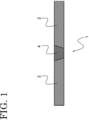
- FIG. 1 shows a schematic cross-sectional view of the vicinity of the welded portion in one embodiment of the aluminum alloy welded structure of the present invention.
- FIG. 1 shows a cross section perpendicular to the weld line, and an aluminum alloy structure 1 has a structure in which aluminum alloy materials 2 are joined together by a welded portion 4.
- the Sr content of the welded portion 4 is 0.03% by mass or more.
- the Sr content of the welded portion 4 is preferably 0.05% by mass or more, more preferably 0.10% by mass or more.
- a method for measuring the Sr content of the welded portion 4 is not particularly limited, and various conventionally known measuring methods can be used. For example, it is possible to calculate from the dilution ratio obtained from the welded cross-sectional area, or to use SEM-EDS measurement, EPMA measurement, emission spectroscopic analysis, or the like.
- the composition of the welded portion 4 other than Sr is not particularly limited as long as the effect of the present invention is not impaired, and the composition of various conventionally known aluminum filler metals can be employed.
- the shape and size of the welded portion 4 are not particularly limited as long as the effect of the present invention is not impaired, and may be appropriately adjusted according to the shape and size of the aluminum alloy material 2 and the desired joint characteristics.
- the welded portion 4 is preferably formed over the entire interface to be joined, but may be formed partially if the mechanical properties of the joint are not highly demanded.
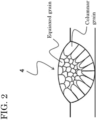
- FIG. 2 schematically shows the microstructure of the welded portion 4 in FIG. 1 .
- a structure composed of the columnar crystals is formed in the direction of solidification from the boundary with the unmelted aluminum alloy material 2, and a structure composed of the equiaxed crystal grains is formed as the solidification progresses.
- the average grain size of the equiaxed grains formed in the vicinity of the surface of the welded portion 4 (on the final solidification side) is 150 pm or less.
- the method for determining the average grain size of the equiaxed grains formed in the vicinity of the surface of the welded portion 4 is not particularly limited, it can be determined, for example, by the intersection point method where a cross-sectional photograph including the welded portion 4 is used. Specifically, a straight line of arbitrary length is drawn on the cross-sectional photograph, the number of intersections between the crystal grains and the straight line is counted, and then the length of the straight line divided by the number of intersections can be taken as the average grain size. In this case, it is preferable to draw the straight line so that the number of intersections is 100 or more.
- composition, size and shape of the aluminum alloy material 2 are not particularly limited as long as the effect of the present invention is not impaired, and conventionally known aluminum alloy materials having various compositions, sizes and shapes can be used.
- the aluminum alloy structure 1 may have a structure in which the aluminum alloy materials 2 are joined together by the welded portion 4, and may have a region made of a material other than the aluminum alloy.
- the aluminum alloy material 2 and a steel material, a magnesium alloy material, a titanium alloy material, or the like may be joined.
- the method for welding aluminum materials of the present invention will be described by taking the case of manufacturing the aluminum alloy structure 1 as an example.
- the aluminum alloy structure 1 can be easily manufactured by welding the aluminum alloy materials 2 together by using the aluminum alloy filler metal for high-speed joining of the present invention.
- the welding method is not particularly limited as long as the effect of the present invention is not impaired, and conventionally known welding methods can be used.
- the welding method for aluminum materials of the present invention is characterized by performing the hybrid laser welding by using the aluminum alloy filler metal for high-speed joining of the present invention.
- the aluminum alloy filler metal for high-speed joining of the present invention it is possible to suppress the weld cracks even if the welding speed is increased.
- the hybrid laser welding it is possible to realize the improvement of welding stability, the suppression of defect formation, the increase of welding speed, and the increase of penetration depth. Further, since the aluminum alloy filler metal for high-speed joining of the present invention is used, it is possible to suppress the weld cracks even if the joining speed is increased, and obtain the merits of the hybrid laser welding fully.
- the welding speed in addition to the use of the aluminum alloy filler metal for high-speed joining of the present invention, by setting the welding speed to 11 m/min or more, it is possible to make the structure of the welded portion 4 finer. Further, by setting the welding speed to 5 m/min or more, it is possible to set the average grain size of the equiaxed grains formed in the vicinity of the surface of the welded portion 4 to 150 pm or less.
- the welding speed is set to 5 m/min or more, though it becomes difficult to suppress the weld cracks in the welded portion 4, when the hybrid laser welding is performed by using the aluminum alloy filler metal for high-speed joining of the present invention, it is possible to form the welded portion 4 extremely efficiently.
- FIG. 5 shows an appearance photograph of the welded bead formed by hybrid laser welding.
- the weld cracks along the welding direction were generated on the surface of the welded bead by the Varestraint test, and the length of the weld cracks was measured by color check.
- Table 3 shows the length of the weld cracks obtained by the measurement as a ratio of crack length (crack rate) per 100 mm of weld length. It can be seen that the crack rate decreases as the Sr content of the aluminum alloy weld wire increases. Table 3 also shows the obtained results of calculating the amount of Sr in the central portion of the welded bead based on the dilution rate determined from the cross-sectional area of the welded bead. It can be seen that when the aluminum alloy weld wires having the compositions of Examples 2 and Example 3 were used, the Sr content of the welded portion were 0.03% by mass or more. [Table 3] Crack rate (%) Sr content (wt%) Ex. 1 67.2 0.012 Ex. 2 47.8 0.032 Ex. 3 28.4 0.064 Com. Ex. 1 84.2 0.000 Com. Ex. 2 83.5 0.006
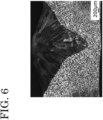
- FIG. 6 shows a cross-sectional photograph of the welded bead obtained by using the aluminum alloy weld wire having the composition of Example 2. Further, FIG. 7 shows an enlarged photograph of the apex of the welded portion in FIG. 6 . Although the slight crack occurs at the apex of the welded portion, it can be seen that the expansion and propagation of the crack are suppressed even in the Varestraint test.
- FIG. 8 shows a microstructure (optical microphotograph) of the welded bead obtained by using the aluminum alloy weld wire having the composition of Example 3.
- FIG. 8 shows the observation result of the longitudinal cross-section parallel to the longitudinal direction of the welded bead at the center of the welded bead width. It can be seen that the welded portion (welded bead) is formed on the surface of the unmelted aluminum alloy plate, the structure of the columnar crystals is formed in the vicinity of the boundary between the aluminum alloy plate and the welded portion, and the equiaxed grains are formed in the vicinity of the surface of the welded portion.
- the average grain size of the equiaxed grains in the vicinity of the joint surface was calculated by the intersection point method by using the structure photograph shown in FIG. 8 , the average grain size was 139 pm. More specifically, two 10 mm lines were drawn (shown in FIG. 8 ), and the number of intersections with crystal grains was counted to calculate the "line length (20 mm)/number of intersections"
- FIG. 9 shows the cross-sectional photograph of the welded bead.
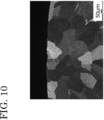
- FIG. 10 shows the enlarged photograph of the apex of the welded portion in FIG. 9 , no crack was observed.
- FIG. 11 shows the appearance photograph of the obtained welded bead.
- the crack rate in the welded bead and the Sr content at the center portion of the welded bead are shown in Table 3. It can be seen that a large amount of the weld cracks occurred in the welded bead obtained in the Comparative Example as compared with the welded bead obtained in the Example. Further, when a small amount of Sr is added (Comparative Example 2), the crack rate is higher than when Sr is not added (Comparative Example 1). This result means that the suppression of the weld cracks by the addition of Sr greatly depends on the amount of Sr added.
- FIG. 12 shows the microstructure (optical microphotograph) of the welded bead obtained with the aluminum alloy weld wire having the composition of Comparative Example 1.
- FIG. 12 shows the observation result of the longitudinal cross-section parallel to the longitudinal direction of the welded bead at the center of the welded bead width. Similar to the welded bead obtained in the Example, although the structure composed of the columnar crystals and the structure composed of the equiaxed grains are observed, the proportion of the structure composed of columnar crystals is large.
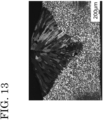
- FIG. 13 shows the longitudinal cross-sectional photograph of the welded bead obtained with the aluminum alloy weld wire having the composition of Comparative Example 1.
- FIG. 14 is the enlarged photograph of the apex of the welded portion in FIG. 13 , however, the deep crack is formed at the apex of the welded portion. Since in the photographs of FIG. 9 and FIG. 10 where the aluminum weld wire having the composition of Example 2 is used, no crack is observed at all, it can be seen that the weld cracks can be effectively suppressed in the high-speed joining by using the aluminum alloy filler metal of the present invention.
Landscapes
- Engineering & Computer Science (AREA)
- Mechanical Engineering (AREA)
- Physics & Mathematics (AREA)
- Chemical & Material Sciences (AREA)
- Optics & Photonics (AREA)
- Plasma & Fusion (AREA)
- Materials Engineering (AREA)
- Metallurgy (AREA)
- Organic Chemistry (AREA)
- Laser Beam Processing (AREA)
- Arc Welding In General (AREA)
Applications Claiming Priority (2)
| Application Number | Priority Date | Filing Date | Title |
|---|---|---|---|
| JP2020139833 | 2020-08-21 | ||
| PCT/JP2021/027264 WO2022038954A1 (fr) | 2020-08-21 | 2021-07-21 | Métal d'apport à base d'alliage d'aluminium, structure soudée en alliage d'aluminium et procédé de soudage de matériau d'aluminium |
Publications (2)
| Publication Number | Publication Date |
|---|---|
| EP4202071A1 true EP4202071A1 (fr) | 2023-06-28 |
| EP4202071A4 EP4202071A4 (fr) | 2024-01-24 |
Family
ID=80350352
Family Applications (1)
| Application Number | Title | Priority Date | Filing Date |
|---|---|---|---|
| EP21858103.1A Pending EP4202071A4 (fr) | 2020-08-21 | 2021-07-21 | Métal d'apport à base d'alliage d'aluminium, structure soudée en alliage d'aluminium et procédé de soudage de matériau d'aluminium |
Country Status (7)
| Country | Link |
|---|---|
| US (1) | US20230286083A1 (fr) |
| EP (1) | EP4202071A4 (fr) |
| JP (1) | JP7371789B2 (fr) |
| KR (1) | KR102850451B1 (fr) |
| CN (1) | CN115989332B (fr) |
| TW (1) | TWI876079B (fr) |
| WO (1) | WO2022038954A1 (fr) |
Families Citing this family (1)
| Publication number | Priority date | Publication date | Assignee | Title |
|---|---|---|---|---|
| CN117086507A (zh) * | 2023-10-07 | 2023-11-21 | 湖南大学苏州研究院 | 一种低钪铝合金焊丝 |
Family Cites Families (22)
| Publication number | Priority date | Publication date | Assignee | Title |
|---|---|---|---|---|
| JPS60250893A (ja) * | 1984-05-25 | 1985-12-11 | Sumitomo Light Metal Ind Ltd | アルミニウム製熱交換器用アルミニウム合金ろう |
| JPH089112B2 (ja) * | 1987-11-30 | 1996-01-31 | 古河電気工業株式会社 | 成形金型用アルミニウム合金溶加材 |
| JPH05208296A (ja) * | 1992-01-30 | 1993-08-20 | Kobe Steel Ltd | 金型用アルミニウム合金溶加材 |
| JPH0847788A (ja) * | 1994-08-03 | 1996-02-20 | Sumitomo Heavy Ind Ltd | アルミニウム合金のyagレーザ溶接方法 |
| JPH1143792A (ja) | 1997-07-23 | 1999-02-16 | Asahi Kagaku Kogyo Co Ltd | 酸洗促進剤、酸洗促進剤を含んだ酸洗液組成物およびこれを用いる酸洗方法 |
| JP4623639B2 (ja) | 2005-02-09 | 2011-02-02 | 日産自動車株式会社 | アルミニウム合金用溶接材料及び溶接方法 |
| US8758529B2 (en) * | 2010-06-30 | 2014-06-24 | GM Global Technology Operations LLC | Cast aluminum alloys |
| KR20140098844A (ko) * | 2011-12-02 | 2014-08-08 | 가부시키가이샤 유에이씨제이 | 알루미늄 합금과 구리 합금과의 접합체 및 그 접합 방법 |
| BR112014017965B1 (pt) * | 2012-01-27 | 2022-07-12 | Uacj Corporation | Material de liga de alumínio para barbatana de trocador de calor, método de sua fabricação e trocador de calor que utiliza o mencionado material de liga de alumínio |
| JP2015093313A (ja) * | 2013-11-13 | 2015-05-18 | 近畿車輌株式会社 | アルミニウム押出形材の突合せ溶接接合方法及び鉄道車両用構体 |
| JP5816317B2 (ja) * | 2014-03-28 | 2015-11-18 | 株式会社神戸製鋼所 | 電縫溶接用アルミニウム合金ブレージングシート |
| JPWO2016056306A1 (ja) * | 2014-10-09 | 2017-08-17 | 株式会社Uacj | アルミニウム合金ブレージングシートおよびろう付け方法 |
| JP6523681B2 (ja) * | 2014-12-25 | 2019-06-05 | 株式会社Uacj | ケース用アルミニウム合金板及びケース |
| CN104630576B (zh) * | 2014-12-29 | 2017-01-11 | 江苏中色锐毕利实业有限公司 | 一种导热性能优异的亚共晶铝硅合金及其制备方法与应用 |
| US10421159B2 (en) * | 2015-02-25 | 2019-09-24 | Hobart Brothers Llc | Systems and methods for additive manufacturing using aluminum metal-cored wire |
| JP6713861B2 (ja) * | 2015-07-08 | 2020-06-24 | 株式会社デンソー | アルミニウム合金クラッド材及びその製造方法、ならびに、当該アルミニウム合金クラッド材を用いた熱交換器 |
| JP2017018996A (ja) * | 2015-07-13 | 2017-01-26 | 株式会社Uacj | アルミニウム合金ブレージングシート |
| JP2017074610A (ja) * | 2015-10-16 | 2017-04-20 | 株式会社Uacj | アルミニウム合金ブレージングシート及びろう付け方法 |
| CN105331856B (zh) * | 2015-12-04 | 2018-05-22 | 江苏亨通电力特种导线有限公司 | 一种微合金化的Al-Si合金及其铝合金杆的制备方法 |
| US20190032175A1 (en) * | 2017-02-01 | 2019-01-31 | Hrl Laboratories, Llc | Aluminum alloys with grain refiners, and methods for making and using the same |
| CN107081536A (zh) | 2017-05-09 | 2017-08-22 | 安徽飞弧焊业股份有限公司 | 一种城轨列车用抗疲劳高韧性铝合金焊丝 |
| CN110497115B (zh) | 2018-05-16 | 2022-08-09 | 林肯环球股份有限公司 | 具有碱土金属的焊接电极焊丝 |
-
2021
- 2021-07-21 CN CN202180051580.5A patent/CN115989332B/zh active Active
- 2021-07-21 EP EP21858103.1A patent/EP4202071A4/fr active Pending
- 2021-07-21 US US18/019,955 patent/US20230286083A1/en active Pending
- 2021-07-21 JP JP2022543334A patent/JP7371789B2/ja active Active
- 2021-07-21 WO PCT/JP2021/027264 patent/WO2022038954A1/fr not_active Ceased
- 2021-07-21 KR KR1020237009180A patent/KR102850451B1/ko active Active
- 2021-08-02 TW TW110128284A patent/TWI876079B/zh active
Also Published As
| Publication number | Publication date |
|---|---|
| JPWO2022038954A1 (fr) | 2022-02-24 |
| JP7371789B2 (ja) | 2023-10-31 |
| KR20230051690A (ko) | 2023-04-18 |
| TW202208645A (zh) | 2022-03-01 |
| TWI876079B (zh) | 2025-03-11 |
| US20230286083A1 (en) | 2023-09-14 |
| WO2022038954A1 (fr) | 2022-02-24 |
| CN115989332B (zh) | 2024-06-14 |
| CN115989332A (zh) | 2023-04-18 |
| KR102850451B1 (ko) | 2025-08-26 |
| EP4202071A4 (fr) | 2024-01-24 |
Similar Documents
| Publication | Publication Date | Title |
|---|---|---|
| CN104981319B (zh) | 气体保护电弧焊接用实心焊丝、气体保护电弧焊接金属、焊接接头、焊接部件、焊接方法以及焊接接头的制造方法 | |
| JP2014180685A (ja) | 異材接合用溶加材及び異材溶接構造体の製造方法 | |
| JP2010279982A (ja) | Al合金溶加材 | |
| EP4299777A1 (fr) | Matériau d'alliage d'aluminium corroyé pour soudage, corps soudé en alliage d'aluminium et son procédé de soudage | |
| JP6080391B2 (ja) | Zn−Al−Mg系めっき鋼板アーク溶接構造部材の製造法 | |
| EP3587614A1 (fr) | Procédé de brasage au laser et procédé de production d'un élément d'assemblage à recouvrement | |
| WO2017077929A1 (fr) | Plaque d'alliage d'aluminium pour barres omnibus, qui présente une excellente aptitude au soudage à laser | |
| JP3592052B2 (ja) | アルミニウム合金溶接用溶加材及びそれを使用したアルミニウム合金材の溶接方法 | |
| CN101151120A (zh) | 金属系药芯焊丝、以及使用它的焊接方法与渣量少的高疲劳强度焊接接头的制作方法 | |
| US20050220660A1 (en) | Al-Si based alloy and alloy member made therefrom | |
| JP3219293B2 (ja) | アルミニウム合金溶加材とその製造方法 | |
| JP6632839B2 (ja) | アルミニウム合金溶加材及びアルミニウム合金の溶接方法 | |
| US20230286083A1 (en) | Aluminum alloy filler metal, aluminum alloy welded structure, and method for welding aluminum material | |
| EP3587018A1 (fr) | Procédé de brasage mig, procédé de fabrication d'un élément joint de recouvrement, et élément joint de recouvrement | |
| JP3794400B2 (ja) | アルミニウム溶接構造物 | |
| EP4299779A1 (fr) | Matériau expansé en alliage d'aluminium pour utilisation de soudage, corps assemblé par soudage d'alliage d'aluminium et son procédé de soudage | |
| TWI917557B (zh) | 熔接用鋁合金延展材、熔接接合體及鋁合金材的熔接方法 | |
| TWI917562B (zh) | 熔接用鋁合金延展材、熔接接合體及鋁合金材的熔接方法 | |
| JP6619473B2 (ja) | アルミニウム合金溶加材の製造方法 | |
| JP2017110272A (ja) | 高エネルギービーム溶接用Al合金材及びその製造方法 | |
| JPS597493A (ja) | アルミニウム合金溶加材 | |
| WO2019026192A1 (fr) | Fil de soudage de matériaux dissemblables, et procédé de fabrication dudit fil | |
| JP6925189B2 (ja) | アルミニウム材の溶接接合体及びその製造方法 | |
| JP2017082254A (ja) | 高エネルギービーム溶接用Al合金材 | |
| JP2005034896A (ja) | アルミニウム合金溶接用溶加材及びそれを使用したアルミニウム合金材の溶接方法 |
Legal Events
| Date | Code | Title | Description |
|---|---|---|---|
| STAA | Information on the status of an ep patent application or granted ep patent |
Free format text: STATUS: THE INTERNATIONAL PUBLICATION HAS BEEN MADE |
|
| PUAI | Public reference made under article 153(3) epc to a published international application that has entered the european phase |
Free format text: ORIGINAL CODE: 0009012 |
|
| STAA | Information on the status of an ep patent application or granted ep patent |
Free format text: STATUS: REQUEST FOR EXAMINATION WAS MADE |
|
| 17P | Request for examination filed |
Effective date: 20230127 |
|
| AK | Designated contracting states |
Kind code of ref document: A1 Designated state(s): AL AT BE BG CH CY CZ DE DK EE ES FI FR GB GR HR HU IE IS IT LI LT LU LV MC MK MT NL NO PL PT RO RS SE SI SK SM TR |
|
| DAV | Request for validation of the european patent (deleted) | ||
| DAX | Request for extension of the european patent (deleted) | ||
| REG | Reference to a national code |
Ref country code: DE Ref legal event code: R079 Free format text: PREVIOUS MAIN CLASS: C22C0021020000 Ipc: B23K0035280000 |
|
| A4 | Supplementary search report drawn up and despatched |
Effective date: 20231222 |
|
| RIC1 | Information provided on ipc code assigned before grant |
Ipc: C22C 21/04 20060101ALI20231218BHEP Ipc: B23K 103/10 20060101ALI20231218BHEP Ipc: B23K 101/18 20060101ALI20231218BHEP Ipc: B23K 35/02 20060101ALI20231218BHEP Ipc: B23K 26/32 20140101ALI20231218BHEP Ipc: B23K 26/242 20140101ALI20231218BHEP Ipc: B23K 9/23 20060101ALI20231218BHEP Ipc: B23K 26/348 20140101ALI20231218BHEP Ipc: C22C 21/02 20060101ALI20231218BHEP Ipc: B23K 35/28 20060101AFI20231218BHEP |