EP4207677A1 - Procédés et dispositifs de compression de données multimédias signées - Google Patents
Procédés et dispositifs de compression de données multimédias signées Download PDFInfo
- Publication number
- EP4207677A1 EP4207677A1 EP21217983.2A EP21217983A EP4207677A1 EP 4207677 A1 EP4207677 A1 EP 4207677A1 EP 21217983 A EP21217983 A EP 21217983A EP 4207677 A1 EP4207677 A1 EP 4207677A1
- Authority
- EP
- European Patent Office
- Prior art keywords
- signature
- fingerprints
- units
- fingerprint
- data units
- Prior art date
- Legal status (The legal status is an assumption and is not a legal conclusion. Google has not performed a legal analysis and makes no representation as to the accuracy of the status listed.)
- Pending
Links
Images




Classifications
-
- H—ELECTRICITY
- H04—ELECTRIC COMMUNICATION TECHNIQUE
- H04N—PICTORIAL COMMUNICATION, e.g. TELEVISION
- H04N21/00—Selective content distribution, e.g. interactive television or video on demand [VOD]
- H04N21/20—Servers specifically adapted for the distribution of content, e.g. VOD servers; Operations thereof
- H04N21/23—Processing of content or additional data; Elementary server operations; Server middleware
- H04N21/234—Processing of video elementary streams, e.g. splicing of video streams or manipulating encoded video stream scene graphs
- H04N21/2347—Processing of video elementary streams, e.g. splicing of video streams or manipulating encoded video stream scene graphs involving video stream encryption
-
- H—ELECTRICITY
- H04—ELECTRIC COMMUNICATION TECHNIQUE
- H04L—TRANSMISSION OF DIGITAL INFORMATION, e.g. TELEGRAPHIC COMMUNICATION
- H04L63/00—Network architectures or network communication protocols for network security
- H04L63/12—Applying verification of the received information
- H04L63/123—Applying verification of the received information received data contents, e.g. message integrity
-
- H—ELECTRICITY
- H04—ELECTRIC COMMUNICATION TECHNIQUE
- H04L—TRANSMISSION OF DIGITAL INFORMATION, e.g. TELEGRAPHIC COMMUNICATION
- H04L9/00—Cryptographic mechanisms or cryptographic arrangements for secret or secure communications; Network security protocols
- H04L9/32—Cryptographic mechanisms or cryptographic arrangements for secret or secure communications; Network security protocols including means for verifying the identity or authority of a user of the system or for message authentication, e.g. authorization, entity authentication, data integrity or data verification, non-repudiation, key authentication or verification of credentials
- H04L9/3247—Cryptographic mechanisms or cryptographic arrangements for secret or secure communications; Network security protocols including means for verifying the identity or authority of a user of the system or for message authentication, e.g. authorization, entity authentication, data integrity or data verification, non-repudiation, key authentication or verification of credentials involving digital signatures
-
- H—ELECTRICITY
- H04—ELECTRIC COMMUNICATION TECHNIQUE
- H04N—PICTORIAL COMMUNICATION, e.g. TELEVISION
- H04N21/00—Selective content distribution, e.g. interactive television or video on demand [VOD]
- H04N21/40—Client devices specifically adapted for the reception of or interaction with content, e.g. set-top-box [STB]; Operations thereof
- H04N21/43—Processing of content or additional data, e.g. demultiplexing additional data from a digital video stream; Elementary client operations, e.g. monitoring of home network or synchronising decoder's clock; Client middleware
- H04N21/433—Content storage operation, e.g. storage operation in response to a pause request, caching operations
- H04N21/4335—Housekeeping operations, e.g. prioritizing content for deletion because of storage space restrictions
-
- G—PHYSICS
- G06—COMPUTING OR CALCULATING; COUNTING
- G06F—ELECTRIC DIGITAL DATA PROCESSING
- G06F16/00—Information retrieval; Database structures therefor; File system structures therefor
- G06F16/10—File systems; File servers
- G06F16/13—File access structures, e.g. distributed indices
- G06F16/137—Hash-based
-
- H—ELECTRICITY
- H03—ELECTRONIC CIRCUITRY
- H03M—CODING; DECODING; CODE CONVERSION IN GENERAL
- H03M7/00—Conversion of a code where information is represented by a given sequence or number of digits to a code where the same, similar or subset of information is represented by a different sequence or number of digits
- H03M7/30—Compression; Expansion; Suppression of unnecessary data, e.g. redundancy reduction
- H03M7/3068—Precoding preceding compression, e.g. Burrows-Wheeler transformation
-
- H—ELECTRICITY
- H03—ELECTRONIC CIRCUITRY
- H03M—CODING; DECODING; CODE CONVERSION IN GENERAL
- H03M7/00—Conversion of a code where information is represented by a given sequence or number of digits to a code where the same, similar or subset of information is represented by a different sequence or number of digits
- H03M7/30—Compression; Expansion; Suppression of unnecessary data, e.g. redundancy reduction
- H03M7/3084—Compression; Expansion; Suppression of unnecessary data, e.g. redundancy reduction using adaptive string matching, e.g. the Lempel-Ziv method
-
- H—ELECTRICITY
- H04—ELECTRIC COMMUNICATION TECHNIQUE
- H04L—TRANSMISSION OF DIGITAL INFORMATION, e.g. TELEGRAPHIC COMMUNICATION
- H04L63/00—Network architectures or network communication protocols for network security
- H04L63/12—Applying verification of the received information
- H04L63/126—Applying verification of the received information the source of the received data
-
- H—ELECTRICITY
- H04—ELECTRIC COMMUNICATION TECHNIQUE
- H04L—TRANSMISSION OF DIGITAL INFORMATION, e.g. TELEGRAPHIC COMMUNICATION
- H04L9/00—Cryptographic mechanisms or cryptographic arrangements for secret or secure communications; Network security protocols
- H04L9/06—Cryptographic mechanisms or cryptographic arrangements for secret or secure communications; Network security protocols the encryption apparatus using shift registers or memories for block-wise or stream coding, e.g. DES systems or RC4; Hash functions; Pseudorandom sequence generators
- H04L9/0643—Hash functions, e.g. MD5, SHA, HMAC or f9 MAC
-
- H—ELECTRICITY
- H04—ELECTRIC COMMUNICATION TECHNIQUE
- H04N—PICTORIAL COMMUNICATION, e.g. TELEVISION
- H04N21/00—Selective content distribution, e.g. interactive television or video on demand [VOD]
- H04N21/20—Servers specifically adapted for the distribution of content, e.g. VOD servers; Operations thereof
- H04N21/23—Processing of content or additional data; Elementary server operations; Server middleware
- H04N21/234—Processing of video elementary streams, e.g. splicing of video streams or manipulating encoded video stream scene graphs
- H04N21/2343—Processing of video elementary streams, e.g. splicing of video streams or manipulating encoded video stream scene graphs involving reformatting operations of video signals for distribution or compliance with end-user requests or end-user device requirements
-
- H—ELECTRICITY
- H04—ELECTRIC COMMUNICATION TECHNIQUE
- H04N—PICTORIAL COMMUNICATION, e.g. TELEVISION
- H04N21/00—Selective content distribution, e.g. interactive television or video on demand [VOD]
- H04N21/20—Servers specifically adapted for the distribution of content, e.g. VOD servers; Operations thereof
- H04N21/25—Management operations performed by the server for facilitating the content distribution or administrating data related to end-users or client devices, e.g. end-user or client device authentication, learning user preferences for recommending movies
- H04N21/266—Channel or content management, e.g. generation and management of keys and entitlement messages in a conditional access system, merging a VOD unicast channel into a multicast channel
- H04N21/26613—Channel or content management, e.g. generation and management of keys and entitlement messages in a conditional access system, merging a VOD unicast channel into a multicast channel for generating or managing keys in general
-
- H—ELECTRICITY
- H04—ELECTRIC COMMUNICATION TECHNIQUE
- H04N—PICTORIAL COMMUNICATION, e.g. TELEVISION
- H04N21/00—Selective content distribution, e.g. interactive television or video on demand [VOD]
- H04N21/40—Client devices specifically adapted for the reception of or interaction with content, e.g. set-top-box [STB]; Operations thereof
- H04N21/43—Processing of content or additional data, e.g. demultiplexing additional data from a digital video stream; Elementary client operations, e.g. monitoring of home network or synchronising decoder's clock; Client middleware
- H04N21/44—Processing of video elementary streams, e.g. splicing a video clip retrieved from local storage with an incoming video stream or rendering scenes according to encoded video stream scene graphs
- H04N21/4402—Processing of video elementary streams, e.g. splicing a video clip retrieved from local storage with an incoming video stream or rendering scenes according to encoded video stream scene graphs involving reformatting operations of video signals for household redistribution, storage or real-time display
-
- H—ELECTRICITY
- H04—ELECTRIC COMMUNICATION TECHNIQUE
- H04N—PICTORIAL COMMUNICATION, e.g. TELEVISION
- H04N21/00—Selective content distribution, e.g. interactive television or video on demand [VOD]
- H04N21/40—Client devices specifically adapted for the reception of or interaction with content, e.g. set-top-box [STB]; Operations thereof
- H04N21/43—Processing of content or additional data, e.g. demultiplexing additional data from a digital video stream; Elementary client operations, e.g. monitoring of home network or synchronising decoder's clock; Client middleware
- H04N21/44—Processing of video elementary streams, e.g. splicing a video clip retrieved from local storage with an incoming video stream or rendering scenes according to encoded video stream scene graphs
- H04N21/4405—Processing of video elementary streams, e.g. splicing a video clip retrieved from local storage with an incoming video stream or rendering scenes according to encoded video stream scene graphs involving video stream decryption
-
- H—ELECTRICITY
- H04—ELECTRIC COMMUNICATION TECHNIQUE
- H04N—PICTORIAL COMMUNICATION, e.g. TELEVISION
- H04N21/00—Selective content distribution, e.g. interactive television or video on demand [VOD]
- H04N21/40—Client devices specifically adapted for the reception of or interaction with content, e.g. set-top-box [STB]; Operations thereof
- H04N21/45—Management operations performed by the client for facilitating the reception of or the interaction with the content or administrating data related to the end-user or to the client device itself, e.g. learning user preferences for recommending movies, resolving scheduling conflicts
- H04N21/462—Content or additional data management e.g. creating a master electronic programme guide from data received from the Internet and a Head-end or controlling the complexity of a video stream by scaling the resolution or bit-rate based on the client capabilities
- H04N21/4627—Rights management associated to the content
-
- H—ELECTRICITY
- H04—ELECTRIC COMMUNICATION TECHNIQUE
- H04N—PICTORIAL COMMUNICATION, e.g. TELEVISION
- H04N21/00—Selective content distribution, e.g. interactive television or video on demand [VOD]
- H04N21/80—Generation or processing of content or additional data by content creator independently of the distribution process; Content per se
- H04N21/83—Generation or processing of protective or descriptive data associated with content; Content structuring
- H04N21/835—Generation of protective data, e.g. certificates
-
- H—ELECTRICITY
- H04—ELECTRIC COMMUNICATION TECHNIQUE
- H04N—PICTORIAL COMMUNICATION, e.g. TELEVISION
- H04N5/00—Details of television systems
- H04N5/76—Television signal recording
- H04N5/91—Television signal processing therefor
- H04N5/913—Television signal processing therefor for scrambling ; for copy protection
-
- H—ELECTRICITY
- H04—ELECTRIC COMMUNICATION TECHNIQUE
- H04N—PICTORIAL COMMUNICATION, e.g. TELEVISION
- H04N5/00—Details of television systems
- H04N5/76—Television signal recording
- H04N5/91—Television signal processing therefor
- H04N5/913—Television signal processing therefor for scrambling ; for copy protection
- H04N2005/91307—Television signal processing therefor for scrambling ; for copy protection by adding a copy protection signal to the video signal
- H04N2005/91342—Television signal processing therefor for scrambling ; for copy protection by adding a copy protection signal to the video signal the copy protection signal being an authentication signal
Definitions
- the present disclosure relates to the field of security arrangements for protecting data against unauthorized activity. It proposes methods and devices for storing and validating signed media data, and video data in particular, with a reduced usage of storage space and/or transmission capacity.
- An audio bitstream, video bitstream or other media bitstream may be associated with various types of metadata.
- the metadata may include documentation indicating the time, place, content type and other conditions of its acquisition, it may contain settings that assist the playback of the media bitstream, information about the media coding format that has been used, or other indications of potential interest to a recipient of the media bitstream. It is a common practice to make the metadata available to the recipient by periodically inserting data units with the metadata into the media bitstream. Because of the open-ended nature of media bitstreams, it is difficult to predict whether the recipient will consume a short or long segment of the bitstream (e.g., play, send or save a copy of the segment), and where the segment will be located timewise in the bitstream. This leads the producer of the media bitstream to insert the data units with metadata at relatively short intervals, even though the metadata that they contain does not change in the meantime. The inserted data units represent overhead that consumes storage and communication resources unnecessarily.
- One objective of the present disclosure is to make available methods and devices for reducing the overhead in a signed media bitstream, which contains repeating data units in addition to generic data units and signature units. This objective may include, in particular, reducing the overhead in a definite segment of the media bitstream. It may further include carrying out the overhead reduction without any significant detriment to the data security of the originally signed media bitstream.
- a further objective of the present disclosure is to enable overhead reduction without re-signing the media bitstream, that is, without any need to obtain access to the cryptographic facilities by which the media bitstream was originally signed.
- a still further objective is to make methods and devices available for validating a media bitstream which has undergone overhead reduction in the proposed way.
- a method of storing a signed media bitstream composed of data units I, O, P and signature units S k , which signature units are associated with one or more nearby data units could relate to permanent, long-term and short-term storage, and even ephemeral storage, such as the preparation of a digital datafile suitable for being transmitted over a communication network.
- the signature units enable a recipient of the media bitstream to validate the media bitstream, that is, to verify with reasonable confidence that the signature units are unaltered and to verify that the data units are in agreement with the signature units.
- each signature unit may include at least one fingerprint derived from the associated data units and a digital signature of the at least one fingerprint.
- the agreement of data units to signature units may include that an independent fingerprint calculation at the recipient side will produce fingerprints identical to the fingerprints in the signature units.
- the method according to the first aspect comprises: receiving a segment of the media bitstream; identifying N ⁇ 2 instances of a repeating data unit O in the received segment; pruning up to N - 1 of the identified instances of the repeating data unit; and storing the received segment after pruning.
- the size of the stored segment of the media bitstream will be smaller than the size of the received segment, which conserves memory and communication resources. Further, because at least one repeating unit remains in the stored segment, the recipient's access to the metadata is ensured. Furthermore, the inventors have realized that procedures can be designed by which recipients can validate the stored segment of the media bitstream at a comparable security level as they could validate the received segment. This allows the stored segment to be deposited in a non-secure memory or shared over a non-secure communication channel without introducing new uncertainty about its authenticity or integrity, as long as validation is successful at the recipient side.
- Each signature unit contains, as a minimum, at least one fingerprint derived from the associated data units and a digital signature of the at least one fingerprint.
- the method includes receiving a stored segment of the media bitstream; and validating a signature unit using any of the digital signature(s) contained therein.
- the received associated data units are then validated either directly or indirectly, which can be taken as a confirmation of the authenticity and/or integrity of the stored segment.
- At least one of the signature units includes: fingerprints of all associated data units, a digital signature of said fingerprints, and a minor digital signature, which is independent of the fingerprints of prunable ones of the associated data units.
- the method comprises: receiving a stored segment of the media bitstream; validating a signature unit using the minor digital signature; and validating the received associated data units with respect to the fingerprints in the validated signature unit.
- At least one of the signature units includes: a fingerprint of fingerprints of all associated data units, a minor fingerprint of fingerprints, which is independent of the fingerprints of prunable ones of the associated data units (it is recalled that the signature unit has normally been prepared on the basis of the original media bitstream, before any instances of the repeating data unit have been pruned), and a digital signature of the fingerprint of fingerprints and of the minor fingerprint of fingerprints.
- the validation method comprises: receiving a stored segment of the media bitstream; validating a signature unit using the digital signature; computing fingerprints of the received associated data units; computing a fingerprint of the computed fingerprints units; and validating the computed fingerprint of fingerprints with respect to the minor fingerprint of fingerprints.
- At least one of the signature units includes: at least one fingerprint of the associated data units, and a digital signature of the at least one fingerprint.
- the method then comprises: receiving a stored segment of the media bitstream; receiving a pruning log for the stored segment, the pruning log indicating the positions in the bitstream of pruned instances of a repeating data unit O; validating a signature unit using the digital signature; and validating the received associated data units with respect to the signature unit, while ignoring fingerprints of absent data units indicated by the pruning log.
- At least two of the signature units include: fingerprints of all associated data units, and a digital signature of the at least one fingerprint.
- the method then suitably comprises: receiving a stored segment of the media bitstream; validating the signature units using the respective digital signatures; locating an instance of a repeating data unit O associated with a first one of the signature units; and validating the received data units associated with a second one of the signature units with respect to the fingerprints therein, while any fingerprint coinciding with the fingerprint of the located instance of the repeating data unit is ignored.
- this embodiment also includes a step of validating the received data units associated with the first one of the signature units with respect to the fingerprints therein.
- At least one of the signature units includes: a fingerprint of fingerprints of all associated data units, and a digital signature of the fingerprint of fingerprints and of the minor fingerprint of fingerprints.
- the media bitstream is in accordance with a format where positions of a repeating data unit O are fixed (i.e., in the sense of being reproducible at the recipient side).
- the method comprises: receiving a stored segment of the media bitstream; validating a signature unit using the digital signature; computing fingerprints of the received associated data units; computing a fingerprint of an instance, not associated with the signature unit, of the repeating data unit and reinstating this in accordance with said fixed positions; computing a fingerprint of the computed fingerprints; and validating the computed fingerprint of fingerprints with respect to the fingerprint of fingerprints in the signature unit.
- any of these outlined embodiments ensures, for a respective configuration of the media bitstream format, that the stored segment of the media bitstream can be validated at a recipient side. Accordingly, the pruning of the repeating data units O achieves an overhead reduction that does not undo the usefulness of the signing. The signing-validation chain remains intact.
- a method of generating a signed media bitstream for which data compression is enabled in connection with the storing of a segment of the media bitstream generates a bitstream composed of data units I, O, P and signature units S k associated with one or more nearby data units, and each signature unit includes at least one fingerprint derived from the associated data units and a digital signature of the at least one fingerprint.
- at least one of the signature units includes:
- the invention further relates to devices configured to carry out the above methods, as well as a computer program containing instructions for causing a computer to carry out these methods.
- the computer program may be stored or distributed on a data carrier.
- a “data carrier” may be a transitory data carrier, such as modulated electromagnetic or optical waves, or a non-transitory data carrier.
- Non-transitory data carriers include volatile and non-volatile memories, such as permanent and non-permanent storage media of magnetic, optical or solid-state type. Still within the scope of "data carrier”, such memories may be fixedly mounted or portable.
- Figure 1 shows connected entities which exchange (e.g., store/retrieve, send/receive) segments of a signed media bitstream.
- Figure 1 illustrates one presently contemplated use case, in which a video acquisition system 110 generates a signed video bitstream, which a first device 120 stores in order to render it suitable for a channel 130, thereby allowing a recipient to obtain it.
- the channel 130 may be constituted by a communication network 131, a portable memory 132 and/or a memory 133.
- the act of "storing" the bitstream segment can, in some embodiments, relate to ephemeral storage, such as the preparation of a digital datafile suitable for being transmitted over the communication network 131, in addition to conventional long- or short-term storage in memories 132, 133.
- the recipient has at its disposal a second device 140 configured to retrieve and validate the stored segment of the video bitstream from the channel 130, and optionally uses a playback device 150 to render the video sequence. It is noted, especially in the use case of storage in memories 132, 133, that the entity performing the storing of the video bitstream may coincide with the recipient. In this case, say, when the first device 120 and second device 140 coincide, the validation of the video bitstream segment serves to verify that the segment has not been altered after it was deposited in one of the memories 132, 133.
- the video acquisition system 110 more precisely includes a camera 111, a metadata insertion stage 112 and a cryptographic element 113.
- the camera 111 is configured to acquire a video sequence, which it outputs represented as a video bitstream including video data units. At least some of the video data units may correspond to respective frames of the video sequence. The correspondence may entail that all data which is specific to one frame is contained in the respective video data unit.
- the video bitstream may further include non-frame data units, such as messages, signature units or other data structures.
- the camera 111 may be configured to apply various types of data compression, such as lossless or lossy compression, which is optionally combined with prediction coding.
- data compression such as lossless or lossy compression
- the present invention is applicable to generic media bitstreams, including video bitstreams to which no prediction coding is being applied.
- Prediction coding may be described as a data compression technique specifically adapted for video data.
- a segment of a prediction-coded video sequence may be composed of I-frames and P-frames.
- the I-frame and P-frame are not to be confused with the plaintext video frames that these data structures encode.
- An I-frame is a data structure with independently decodable video data, which can be decoded into a plaintext video frame (or a block of a video frame) by means of a predefined associated decoding operation.
- a P-frame for its part, is a data structure whose associated decoding operation makes reference not only to the video data of the P-frame itself but also to at least one other I- or P-frame.
- the video data in a P-frame expresses the change or movement relative to the video frame that its preceding I- or P-frame encodes. Normally, if the decoding operations are successful, video frames decoded from P-frames and I-frames cannot be distinguished.
- An example fragment of the video bitstream may have the following appearance: IPPIPPPPIPPPIPPP.
- each P-frame refers to the immediately preceding I- or P-frame.
- a leading P-frame refers to a preceding P-frame
- the preceding P-frame necessarily refers to at least one further I- or P-frame.
- the combination of an I-frame and the subsequent P-frames which refer to the I-frame directly or indirectly can be referred to as a group of pictures (GOP).
- GOPs can be discerned: IPP, IPPPP, IPPP, IPPP.
- IBBPBBIBBPBBI Two further developments of prediction coding may be illustrated by a second example frame sequence: IBBPBBIBBPBBI.
- the B-frames refer (bidirectionally) to their nearest I- or P-frame neighbors, and each P-frame refers (unidirectionally) to the nearest preceding I-frame.
- a bidirectionally predicted B-frame can be used in prediction coding.
- the underlying bidirectional prediction operation may include interpolation between the referenced frames, such as smoothing.
- the second example IBBPBBIBBPBBI furthermore shows that a P-frame can refer to a I-, P- or B-frame that need not be immediately preceding but can be located two or more steps away.
- IBBPBBIBBPBBI The fragment of the second example, IBBPBBIBBPBBI, may be characterized as a GOP since it can be decoded without reference to any other I-, P- or B-frames.
- the metadata insertion stage 112 is configured to insert data units O which contain metadata applicable to the entirety of the video bitstream.
- this metadata may include documentation indicating the time, place and other conditions of (the start or end of) the acquisition of the video bitstream, it may contain settings that enable optimal playback, information about the video coding format that has been used, a certificate or a (public) cryptographic key to be used for validation, or other indications of potential use to a recipient of the video bitstream.
- the metadata is unchanged too, and the data units O may thus be qualified as repeating. Accordingly, a recipient of the video bitstream may choose to obtain the metadata from any one data unit O of the recipient's choice. In a functioning system, there is generally no additional benefit to be expected from reading a further data unit O in the video bitstream.
- the cryptographic element 113 is configured to insert signature units S 1 , S2, S 3 into the video bitstream.
- each signature unit includes at least one fingerprint derived from associated data units located before, after or around the signature unit, as well as a digital signature of the at least one fingerprint.
- the collection of fingerprints may be referred to as a document.
- the cryptographic element 113 may have stored therein a private key.
- the recipient may hold a public key belonging to the same key pair, which enables the recipient to verify that the signature produced by the cryptographic element 113 is authentic but not to generate new signatures.
- the public key is held in the cryptographic element 143.
- the public key could also be included as metadata of the media bitstream, in which case it is not necessary to store it at the recipient side.
- the signature unit may be included as a Supplemental Enhancement Information (SEI) message in the video bitstream.
- SEI Supplemental Enhancement Information
- the signature may be included in a Metadata Open Bitstream Unit (OBU).
- Each one of the signature units S 1 , S2, S 3 may either include fingerprints of all associated data units, or it may include a fingerprint of the fingerprints of all associated data units.
- Each of the fingerprints may be a hash or a salted hash.
- a salted hash may be a hash of a combination of the data unit (or a portion of the data unit) and a cryptographic salt; the presence of the salt may stop an unauthorized party who has access to multiple hashes from guessing what hash function is being used.
- Potentially useful cryptographic salts include a value of an active internal counter, a random number, and a time and place of signing.
- the hashes may be generated by a hash function (or one-way function) h, which is a cryptographic function that provides a safety level considered adequate in view of the sensitivity of the video data to be signed and/or in view of the value that would be at stake if the video data was manipulated by an unauthorized party.
- a hash function or one-way function
- h is a cryptographic function that provides a safety level considered adequate in view of the sensitivity of the video data to be signed and/or in view of the value that would be at stake if the video data was manipulated by an unauthorized party.
- Three examples are SHA-256, SHA3-512 and RSA-1024.
- the hash function shall be predefined (e.g., it shall be reproducible) so that the fingerprints can be regenerated when the recipient is going to verify the fingerprints.
- the first device 120 in which the storing of video bitstream segments is performed in accordance with the storing method 200 of figure 2 , may be any suitable local or distributed processing resource, functionally composed of processing circuitry 121 and a memory 122.
- the first device maybe a component of a so-called video management system, or VMS.
- the first device 120 is configured to process live video bitstreams or offline video bitstreams, or both.
- the second device 140 may be implemented as any suitable form of local or distributed processing resource, functionally composed of processing circuitry 141, a memory 142 and an optional cryptographic element 143 in which a public key is deposited.
- the second device 140 is configured to carry out the validation method 300 of figure 3 , according to any of the embodiments to be described next.
- Table 1 indicates the applicability of the embodiments of the storing method 200 and validation method 300 respectively depicted in figures 2 and 3 .
- Media bitstream format has variable O positions Individual fingerprints (hashes) 2A.1 2A.2 Fingerprints of fingerprints (hash of hashes) 2B.1 2B.2
- dashed boxes represent steps that are optional or occur only in certain embodiments. It is emphasized that the order of the steps shown in figures 2 and 3 is not necessarily significant. Rather, as those skilled in the art will realize, the order of certain steps can be modified and/or certain steps can be executed in parallel.
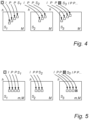
- a media bitstream format which contains data units I, P and where the repeating data unit O occupies fixed positions, indicated by rectangles. Because the bitstream format specifies such fixed positions, the second device 140 will be able to figure out between which data units in the stored bitstream segment the first device 120 has pruned instances of the repeating data unit O, if any. It is noted that the data units I, P in figure 4 precede the associated signature units S 1 , S2, S 3 ; in other embodiments, however, the data units I, P could succeed the signature units S 1 , S2, S 3 , or they could be located both before and after.
- the signature units S 1 , S2, S 3 each contain a document of individual fingerprints (hashes) of the associated data units and further contain a signature M.
- the signature unit can be validated at the recipient side using the signature M.
- the media bitstream is a video bitstream
- the I and P data units may represent I- and P-frames and there is one signature unit per GOP.
- Embodiment 1A.1 of the storing method 200 includes receiving 210 a segment of the media bitstream; identifying 212 N ⁇ 2 instances of a repeating data unit O in the received segment; pruning 214 up to N - 1 of the identified instances of the repeating data unit; and storing 216 the received segment after pruning. It is understood that the signature units S 1 , S2, S 3 are stored intact, i.e., in the same condition as they were received 210.
- the step of receiving 210 the segment may include having the segment delivered in a message sent over a local or external communication network, wherein the communication may have been self-requested by initiated by a different entity than the one performing the method 200. "Receiving" in the sense of step 210 could also include retrieving the segment from a memory.
- the step of pruning 214 a number of the identified instances of the repeating data unit O could include deleting data units from the segment before it is stored. It could also include indirect various types of deletion requests, such as adding a marker (flag) to the instances indicating that they shall not be saved and/or not transmitted, or that they are free to be overwritten in memory once stored.
- the step of storing 216 the received segment after pruning may include instantiating or editing a file, object, database item or another data structure.
- the stored segment can be an ephemeral file to be used for imminent transmission or relaying, which can be discarded afterwards.
- a file representing the entirety of the segment exists at one point in time; rather, network transmission of the earlier parts of the segment can begin before the later parts of the segment are created. This allows the overhead-reducing method 200 to be integrated in a processing chain suitable for live streaming and similar applications.
- the method 200 can be successfully performed by an entity that is not authorized to generate new digital signatures, i.e., without access to the private key. Accordingly, the method 200 can be implemented by the first device 120 in figure 1 .
- Embodiment 1A.1 of the validation method 300 includes receiving 310 a stored segment of the media bitstream; validating 314 the signature units using the respective digital signatures; locating 326 an instance of a repeating data unit O associated with a first one of the signature units; validating 328 the received data units associated with the first one of the signature units with respect to the fingerprints therein; and validating 330 the received data units associated with a second one of the signature units with respect to the fingerprints therein.
- step 330 any fingerprint coinciding with the fingerprint of the located instance of the repeating data unit is ignored. This ignoring is neutral from the point of view of security, because the repeating data unit O has already been validated. The ignoring also allows the validation method 300 to proceed even though some instances of the repeating data unit O have been pruned, whereby the corresponding fingerprints cannot be paired with data units in the received segment of the media bitstream.
- the step of receiving 310 the stored segment may include receiving the segment in a message transmitted over the communication network 131 and/or reading the segment from a memory 132, 133, etc.
- the step of validating 314 the signature units S 1 , S2, S 3 may include using the public key of the key pair to verify that the fingerprints contained therein are authentic, in a per se known manner.
- This can be described as an asymmetric signature setup, where signing and verification are distinct cryptographic operations corresponding to private/public keys. Other combinations of symmetric and/or asymmetric verification operations are possible without departing from the scope of the invention.
- the steps of validating 328 and 330 the received data unit I, P may include replicating a fingerprinting operation deemed to have been performed at the source of the media bitstream, i.e., recomputing the fingerprints using the same hash function h. If all fingerprints in a signature unit are successfully verified, it may be concluded that the corresponding data units of the segment are authentic (validation).
- a media bitstream format is considered where the repeating data unit O occupies fixed positions, indicated by rectangles. If the first device 120 has pruned one instance of the repeating data units O, the second device 140 will be able to determine between which data units in the stored bitstream segment these instances were located. It is seen in figure 5 that the signature units S 1 , S2, S 3 contain individual hashes of the associated data units. The signature units S 1 , S2, S 3 further contain a signature (major signature) M and a minor signature m. The major signature M is used to validate the original signature unit, i.e., in its condition when leaving the video acquisition system 110. The minor signature m is independent of the fingerprints of any prunable instances of the repeating data unit O.
- An instance of the repeating data unit O is generally prunable unless it is the sole instance in a segment, in which case the recipient cannot replace it by reading the metadata from another instance.
- the second signature unit S 2 does not contain any fingerprint of a prunable instance of the repeating data unit, so there is no need to include a minor signature m, although this could optionally be done to enhance the uniformity of the bitstream format.
- the minor signature m is independent of the fingerprints of any prunable instances of the repeating data unit O.
- This formulation of the major signature M has a dependence on the fingerprints of all data units associated with the first signature unit S 1 . Since cryptographic signing is a computationally complex operation, the alternative setup could enable a perceivable computational saving. It also establishes a link between the minor and major signatures which could render it more difficult for an unauthorized party to replace the minor signature m to fake a positive validation outcome.
- Embodiment 1A.2 of the storing method 200 includes receiving 210 a segment of the media bitstream; identifying 212 N ⁇ 2 instances of a repeating data unit O in the received segment; pruning 214 up to N - 1 of the identified instances of the repeating data unit; pruning 214.1 the fingerprints of the pruned up to N - 1 instances of the repeating data unit; and storing 216 the received segment after pruning.
- the major signature M in those signature units that are associated with at least one pruned repeating data unit can be pruned 220 to further reduce overhead.
- Embodiment 1A.2 of the validation method 300 includes receiving 310 a stored segment of the media bitstream; validating 314 a signature unit using the minor digital signature m; and validating 316a the received associated data units with respect to the fingerprints in the validated signature unit.
- Those signature units which do not include a minor signature m are validated in the conventional manner, using the major signature M.
- the first signature unit S 1 which contains a minor and a major signature unit but is not associated with any pruned instance of the repeating data unit O, can be validated using the major digital signature M.
- the second device 140 can be configured to initially attempt to validate each signature unit using the minor signature m; if this fails or the minor signature m is absent, it attempts to validate the signature unit using the major signature M; if both attempts are unsuccessful, the signature unit is rejected.
- the second device 140 is configured to initially attempt to validate each signature unit using the major signature M; if this fails, it checks whether a minor signature m exists and, if so, attempts to validate the signature unit using the minor signature m; if both attempts are unsuccessful, the signature unit is rejected.
- the alternative way of configuring the second device 140 may be marginally more efficient if the signature units associated with pruned instances of the repeating data unit O constitute a relatively small fraction. It is noted that the knowledge of the fixed positions, at which the pruned instances of the repeating data unit O were located in the original media bitstream, is not utilized in this embodiment.
- a media bitstream format is considered where the repeating data unit O occupies fixed positions, indicated by rectangles. If the first device 120 has pruned one instance of the repeating data units O, the second device 140 will be able to determine the data units in the stored bitstream segment between which these instances were located.
- the signature units S 1 , S2, S 3 contain fingerprints of fingerprints, i.e., obtained by applying the hash function h in a multi-level fashion.
- the fingerprint in the first signature unit S 1 can be h( ⁇ h(O), h(I), h(P), h(P) ⁇ ), where ⁇ denotes concatenation, such as bitwise juxtaposition.
- h 1 h ( O )
- h 2 h ( ⁇ h 1 , I ⁇ )
- h 3 h( ⁇ h 2 , P ⁇ ) (first P-frame)
- h 4 h( ⁇ h 2 , P ⁇ ) (second P-frame).
- the fingerprint h 4 which has an at least indirect dependence on all associated data units O, I, P, P, is included in the first signature unit S 1 . This is not illustrated in figure 6 .
- the signature units S 1 , S 2 , S 3 it is sufficient for the signature units S 1 , S 2 , S 3 to contain only the major signature M.
- Embodiment 1B of the storing method 200 includes receiving 210 a segment of the media bitstream; identifying 212 N ⁇ 2 instances of a repeating data unit O in the received segment; pruning 214 up to N - 1 of the identified instances of the repeating data unit; and storing 216 the received segment after pruning. It is understood that the signature units S 1 , S 2 , S 3 are stored intact, i.e., in the same condition as they were received 210.
- Embodiment 1B of the validation method 300 includes receiving 310 a stored segment of the media bitstream; validating 314 a signature unit using the digital signature; computing 318 fingerprints of the received associated data units; computing 320b a fingerprint of an instance, not associated with the signature unit, of the repeating data unit and reinstating this (as suggested by the lower dashed line 601) in accordance with said fixed positions; computing 322 a fingerprint of the computed fingerprints; and validating 324b the computed fingerprint of fingerprints with respect to the fingerprint of fingerprints in the signature unit.
- An equivalent alternative to computing 320b the fingerprint of said instance of the repeating data unit is to retrieve the fingerprint from its associated signature unit (upper dashed line 602); it is uncertain, however, whether the media bitstream format allows this particular fingerprint, which constitutes an intermediate result of the computation of the fingerprints of fingerprints, to be stored in the signature unit. If the fingerprint is retrieved along the upper dashed line 602, there is no need to apply the calculate-reinstate procedure illustrated by the lower dashed line 601.
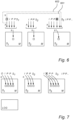
- a media bitstream format is considered where the repeating data unit O occupies variable positions. It is seen in figure 7 that the signature units S 1 , S 2 , S 3 contain individual hashes of the associated data units and further contain a signature M, using which the signature unit can be validated at the recipient side.
- the data structure LOG is not part of the media bitstream format.
- Embodiment 2A.1 of the storing method 200 includes receiving 210 a segment of the media bitstream; identifying 212 N ⁇ 2 instances of a repeating data unit O in the received segment; pruning 214 up to N - 1 of the identified instances of the repeating data unit; storing 216 the received segment after pruning; and storing 218 a pruning log LOG indicating the positions in the bitstream of the pruned instances of the repeating data unit O.
- the signature units S 1 , S 2 , S 3 are stored intact, i.e., in the same condition as they were received 210.
- the pruning log will occupy relatively less space than the pruned instances of the repeating data unit O, so that a net saving is attained.
- Embodiment 2A.1 of the validation method 300 includes receiving 310 a stored segment of the media bitstream; receiving 312 a pruning log for the stored segment, the pruning log indicating the positions in the bitstream of pruned instances of a repeating data unit O; validating 314 a signature unit using the digital signature; and validating 316b the received associated data units with respect to the signature unit, while ignoring fingerprints of absent data units indicated by the pruning log, illustrated as LOG in figure 7 .
- a media bitstream format is considered where the repeating data unit O occupies variable positions.
- the signature units S 1 , S 2 , S 3 contain individual hashes of the associated data units.
- the signature units S 1 , S 2 , S 3 further contain a signature (major signature) M and a minor signature m.
- the major signature M is used to validate the original signature unit, i.e., in its condition when leaving the video acquisition system 110.
- the minor signature m is independent of the fingerprints of any prunable instances of the repeating data unit O.
- An instance of the repeating data unit O is generally prunable unless it is the sole instance in a segment, in which case the recipient cannot replace it by reading the metadata from another instance.
- the second signature unit S 2 does not contain any fingerprint of a prunable instance of the repeating data unit, so there is no need to include a minor signature m.
- Embodiment 2A.2 of the storing method 200 includes receiving 210 a segment of the media bitstream; identifying 212 N ⁇ 2 instances of a repeating data unit O in the received segment; pruning 214 up to N - 1 of the identified instances of the repeating data unit; pruning 214.1 the fingerprints of the pruned up to N - 1 instances of the repeating data unit; and storing 216 the received segment after pruning.
- the major signature M in those signature units that are associated with at least one pruned repeating data unit can be pruned 220 to further reduce overhead.
- Embodiment 2A.2 of the validation method 300 includes receiving 310 a stored segment of the media bitstream; validating 314 a signature unit using the minor digital signature m; and validating 316a the received associated data units with respect to the fingerprints in the validated signature unit.
- Those signature units which do not include a minor signature m are validated in the conventional manner, using the major signature M.
- the first signature unit S 1 which contains a minor and a major signature unit but is not associated with any pruned instance of the repeating data unit O, can be validated using the major digital signature M.
- the second device 140 can be configured to initially attempt to validate each signature unit using the minor signature m; if this fails or the minor signature m is absent, it attempts to validate the signature unit using the major signature M; if both attempts are unsuccessful, the signature unit is rejected.
- the second device 140 is configured to initially attempt to validate each signature unit using the major signature M; if this fails, it checks whether a minor signature m exists and, if so, attempts to validate the signature unit using the minor signature m; if both attempts are unsuccessful, the signature unit is rejected.
- the signature units S 1 , S 2 , S 3 contain fingerprints of fingerprints, i.e., obtained by applying the hash function h in a multi-level fashion.
- the fingerprint in the first signature unit S 1 can be h( ⁇ h(O), h(I), h(P), h(P) ⁇ ), where ⁇ denotes concatenation.
- a cascading application of the hash function is possible, as was described above with reference to figure 6 .
- Embodiment 2B.1 of the storing method 200 includes receiving 210 a segment of the media bitstream; identifying 212 N ⁇ 2 instances of a repeating data unit O in the received segment; pruning 214 up to N - 1 of the identified instances of the repeating data unit; storing 216 the received segment after pruning; and storing 218 a pruning log LOG indicating the positions in the bitstream of the pruned instances of the repeating data unit O.
- the signature units S 1 , S 2 , S 3 are stored intact, i.e., in the same condition as they were received 210.
- the pruning log will occupy relatively less space than the pruned instances of the repeating data unit O.
- Embodiment 2B.1 of the validation method 300 includes receiving 310 a stored segment of the media bitstream; receiving 312 a pruning log for the stored segment, the pruning log indicating the positions in the bitstream of pruned instances of a repeating data unit O; validating 314 a signature unit using the digital signature; and validating 316b the received associated data units with respect to the signature unit, while ignoring fingerprints of absent data units indicated by the pruning log; computing 318 a fingerprint of the received data units associated with the signature unit; computing 320a a fingerprint of an instance, not associated with the signature unit, of the repeating data unit and reinstating said computed fingerprint (as suggested by the lower dashed line 901) in accordance with the pruning log; computing 322 a fingerprint of the computed fingerprints; and validating 324b the computed fingerprint of fingerprints with respect to the fingerprint of fingerprints in the signature unit.
- a fingerprint of a pruned instance of the repeating data unit O can be retrieved from a signature unit associated with a not-pruned instance of the repeating data unit O, as illustrated by the upper dashed line 902.
- the signature units S 1 , S 2 , S 3 contain fingerprints of fingerprints, i.e., obtained by applying the hash function h in a multi-level fashion.
- the fingerprint in the first signature unit S 1 can be h( ⁇ h(O), h(I), h(P), h(P) ⁇ ), where ⁇ denotes concatenation.
- a cascading application of the hash function is possible, as was described above with reference to figure 6 .
- those signature units S 1 , S 3 which are associated with at least one instance of the repeating data unit O contain not only a (major) fingerprint of fingerprints of all associated data units, denoted F, but also a minor fingerprint of fingerprints, denoted f, which is independent of the fingerprints of the associated prunable instances of the repeating data unit O.
- the (major) signature M has been generated based on both F and f, and can thus be used for simultaneous validation of F and f.
- Embodiment 2B.2 of the storing method 200 includes receiving 210 a segment of the media bitstream; identifying 212 N ⁇ 2 instances of a repeating data unit (O) in the received segment; pruning 214 up to N - 1 of the identified instances of the repeating data unit; and storing 216 the received segment after pruning.
- O repeating data unit
- Embodiment 2B.2 of the validation method 300 includes receiving 310 a stored segment of the media bitstream; validating 314 a signature unit using the digital signature; computing 318 fingerprints of the received associated data units; computing 322 a fingerprint of the computed fingerprints units; and validating 324a the computed fingerprint of fingerprints with respect to the minor fingerprint of fingerprints, f.
Landscapes
- Engineering & Computer Science (AREA)
- Signal Processing (AREA)
- Computer Security & Cryptography (AREA)
- Multimedia (AREA)
- Computer Networks & Wireless Communication (AREA)
- Databases & Information Systems (AREA)
- Theoretical Computer Science (AREA)
- General Engineering & Computer Science (AREA)
- Computer Hardware Design (AREA)
- Computing Systems (AREA)
- Power Engineering (AREA)
- Data Mining & Analysis (AREA)
- Physics & Mathematics (AREA)
- General Physics & Mathematics (AREA)
- Storage Device Security (AREA)
- Two-Way Televisions, Distribution Of Moving Picture Or The Like (AREA)
- Compression Or Coding Systems Of Tv Signals (AREA)
- Compression, Expansion, Code Conversion, And Decoders (AREA)
Priority Applications (6)
| Application Number | Priority Date | Filing Date | Title |
|---|---|---|---|
| EP21217983.2A EP4207677A1 (fr) | 2021-12-28 | 2021-12-28 | Procédés et dispositifs de compression de données multimédias signées |
| KR1020220152593A KR102877347B1 (ko) | 2021-12-28 | 2022-11-15 | 서명된 미디어 데이터를 압축하는 방법 및 장치 |
| TW111146272A TWI924967B (zh) | 2021-12-28 | 2022-12-02 | 用於壓縮簽名媒體資料之方法及裝置 |
| CN202211572590.6A CN116366912B (zh) | 2021-12-28 | 2022-12-08 | 用于压缩经签名的媒体数据的方法和装置 |
| US18/084,905 US12149634B2 (en) | 2021-12-28 | 2022-12-20 | Methods and devices for compressing signed media data |
| JP2022206369A JP2023098680A (ja) | 2021-12-28 | 2022-12-23 | 署名付きメディアデータを圧縮するための方法およびデバイス |
Applications Claiming Priority (1)
| Application Number | Priority Date | Filing Date | Title |
|---|---|---|---|
| EP21217983.2A EP4207677A1 (fr) | 2021-12-28 | 2021-12-28 | Procédés et dispositifs de compression de données multimédias signées |
Publications (1)
| Publication Number | Publication Date |
|---|---|
| EP4207677A1 true EP4207677A1 (fr) | 2023-07-05 |
Family
ID=79024973
Family Applications (1)
| Application Number | Title | Priority Date | Filing Date |
|---|---|---|---|
| EP21217983.2A Pending EP4207677A1 (fr) | 2021-12-28 | 2021-12-28 | Procédés et dispositifs de compression de données multimédias signées |
Country Status (5)
| Country | Link |
|---|---|
| US (1) | US12149634B2 (fr) |
| EP (1) | EP4207677A1 (fr) |
| JP (1) | JP2023098680A (fr) |
| KR (1) | KR102877347B1 (fr) |
| CN (1) | CN116366912B (fr) |
Citations (2)
| Publication number | Priority date | Publication date | Assignee | Title |
|---|---|---|---|---|
| US20120166448A1 (en) * | 2010-12-28 | 2012-06-28 | Microsoft Corporation | Adaptive Index for Data Deduplication |
| US20160197939A1 (en) * | 2012-09-28 | 2016-07-07 | Futurewei Technologies, Inc. | Segment Authentication for Dynamic Adaptive Streaming |
Family Cites Families (18)
| Publication number | Priority date | Publication date | Assignee | Title |
|---|---|---|---|---|
| US5907619A (en) * | 1996-12-20 | 1999-05-25 | Intel Corporation | Secure compressed imaging |
| US6381367B1 (en) * | 1997-05-29 | 2002-04-30 | Macrovision Corp. | Method and apparatus for compression compatible video fingerprinting |
| AU2002307765A1 (en) * | 2001-04-11 | 2002-10-28 | Nice Systems Ltd. | Digital video protection for authenticity verification |
| US7197143B2 (en) * | 2002-01-18 | 2007-03-27 | The Johns Hopkins University | Digital video authenticator |
| US20060136728A1 (en) * | 2003-08-15 | 2006-06-22 | Gentry Craig B | Method and apparatus for authentication of data streams with adaptively controlled losses |
| US7336841B2 (en) * | 2004-03-25 | 2008-02-26 | Intel Corporation | Fingerprinting digital video for rights management in networks |
| JP4477678B2 (ja) * | 2008-01-21 | 2010-06-09 | 富士通株式会社 | 電子署名方式、電子署名プログラムおよび電子署名装置 |
| JP5230792B2 (ja) * | 2009-02-26 | 2013-07-10 | 富士通株式会社 | 画像管理方法、画像管理プログラム、画像管理システム |
| GB0917417D0 (en) * | 2009-10-05 | 2009-11-18 | Mitsubishi Elec R&D Ct Europe | Multimedia signature coding and decoding |
| CN102413313A (zh) | 2010-09-26 | 2012-04-11 | 索尼公司 | 数据完整性验证信息生成方法和装置、数据完整性验证方法和装置 |
| US10162553B2 (en) | 2010-11-24 | 2018-12-25 | Western Digital Technologies, Inc. | Methods and systems for object level de-duplication for solid state devices |
| EP2817917B1 (fr) * | 2012-02-20 | 2018-04-11 | KL Data Security Pty Ltd | Système et procédé de cryptographie |
| US9258127B2 (en) | 2012-07-09 | 2016-02-09 | Cisco Technology, Inc. | System and method for providing cryptographic video verification |
| DE102014226772A1 (de) * | 2014-12-22 | 2016-06-23 | Siemens Aktiengesellschaft | Vorrichtung und Verfahren zum Senden und Verfifizieren einer Signatur |
| US10244071B2 (en) * | 2016-11-21 | 2019-03-26 | Intel Corporation | Data management in an edge network |
| US10715498B2 (en) * | 2017-07-18 | 2020-07-14 | Google Llc | Methods, systems, and media for protecting and verifying video files |
| CN110427781A (zh) | 2019-07-16 | 2019-11-08 | 浙江大华技术股份有限公司 | 媒体数据的防篡改方法、终端设备及存储介质 |
| US12002127B2 (en) * | 2020-03-10 | 2024-06-04 | Samsung Electronics Co., Ltd. | Robust selective image, video, and audio content authentication |
-
2021
- 2021-12-28 EP EP21217983.2A patent/EP4207677A1/fr active Pending
-
2022
- 2022-11-15 KR KR1020220152593A patent/KR102877347B1/ko active Active
- 2022-12-08 CN CN202211572590.6A patent/CN116366912B/zh active Active
- 2022-12-20 US US18/084,905 patent/US12149634B2/en active Active
- 2022-12-23 JP JP2022206369A patent/JP2023098680A/ja active Pending
Patent Citations (2)
| Publication number | Priority date | Publication date | Assignee | Title |
|---|---|---|---|---|
| US20120166448A1 (en) * | 2010-12-28 | 2012-06-28 | Microsoft Corporation | Adaptive Index for Data Deduplication |
| US20160197939A1 (en) * | 2012-09-28 | 2016-07-07 | Futurewei Technologies, Inc. | Segment Authentication for Dynamic Adaptive Streaming |
Also Published As
| Publication number | Publication date |
|---|---|
| KR20230100605A (ko) | 2023-07-05 |
| US20230208614A1 (en) | 2023-06-29 |
| CN116366912B (zh) | 2025-06-06 |
| CN116366912A (zh) | 2023-06-30 |
| JP2023098680A (ja) | 2023-07-10 |
| US12149634B2 (en) | 2024-11-19 |
| TW202345603A (zh) | 2023-11-16 |
| KR102877347B1 (ko) | 2025-10-27 |
Similar Documents
| Publication | Publication Date | Title |
|---|---|---|
| US12322002B2 (en) | Signed video data with linked hashes | |
| US20150131965A1 (en) | Signature device and signature method | |
| US12445636B2 (en) | Method and device for signing an encoded video sequence | |
| US12418672B2 (en) | Transmitter, a receiver and methods. therein for validation of a video sequence | |
| US12149634B2 (en) | Methods and devices for compressing signed media data | |
| TWI924967B (zh) | 用於壓縮簽名媒體資料之方法及裝置 | |
| US20240214206A1 (en) | Method for issuing non-fungible token | |
| EP4387158A1 (fr) | Données vidéo signées modifiable | |
| WO2024122601A1 (fr) | Dispositif et procédé de traitement d'image | |
| CN118018743B (zh) | 可转码的签名的视频数据 | |
| TWI919143B (zh) | 經簽署在解壓縮資料上之可編輯視訊資料 | |
| US12609833B2 (en) | Signing video for reduced bit rate | |
| CN115086730B (zh) | 签约视频生成方法、系统、计算机设备及介质 | |
| EP4387247A1 (fr) | Données vidéo modifiables signées sur des données décomprimées | |
| US20260121865A1 (en) | System for verifying original and source of security image |
Legal Events
| Date | Code | Title | Description |
|---|---|---|---|
| PUAI | Public reference made under article 153(3) epc to a published international application that has entered the european phase |
Free format text: ORIGINAL CODE: 0009012 |
|
| STAA | Information on the status of an ep patent application or granted ep patent |
Free format text: STATUS: REQUEST FOR EXAMINATION WAS MADE |
|
| 17P | Request for examination filed |
Effective date: 20220921 |
|
| AK | Designated contracting states |
Kind code of ref document: A1 Designated state(s): AL AT BE BG CH CY CZ DE DK EE ES FI FR GB GR HR HU IE IS IT LI LT LU LV MC MK MT NL NO PL PT RO RS SE SI SK SM TR |
|
| STAA | Information on the status of an ep patent application or granted ep patent |
Free format text: STATUS: EXAMINATION IS IN PROGRESS |
|
| 17Q | First examination report despatched |
Effective date: 20240823 |