EP4209085B1 - Verwendung einer koordinationsnachricht zwischen benutzergeräten - Google Patents
Verwendung einer koordinationsnachricht zwischen benutzergeräten Download PDFInfo
- Publication number
- EP4209085B1 EP4209085B1 EP20957108.2A EP20957108A EP4209085B1 EP 4209085 B1 EP4209085 B1 EP 4209085B1 EP 20957108 A EP20957108 A EP 20957108A EP 4209085 B1 EP4209085 B1 EP 4209085B1
- Authority
- EP
- European Patent Office
- Prior art keywords
- resources
- inter
- sidelink
- preferred
- coordination message
- Prior art date
- Legal status (The legal status is an assumption and is not a legal conclusion. Google has not performed a legal analysis and makes no representation as to the accuracy of the status listed.)
- Active
Links
Images





Classifications
-
- H—ELECTRICITY
- H04—ELECTRIC COMMUNICATION TECHNIQUE
- H04W—WIRELESS COMMUNICATION NETWORKS
- H04W72/00—Local resource management
- H04W72/02—Selection of wireless resources by user or terminal
-
- H—ELECTRICITY
- H04—ELECTRIC COMMUNICATION TECHNIQUE
- H04W—WIRELESS COMMUNICATION NETWORKS
- H04W72/00—Local resource management
- H04W72/50—Allocation or scheduling criteria for wireless resources
- H04W72/56—Allocation or scheduling criteria for wireless resources based on priority criteria
- H04W72/563—Allocation or scheduling criteria for wireless resources based on priority criteria of the wireless resources
-
- H—ELECTRICITY
- H04—ELECTRIC COMMUNICATION TECHNIQUE
- H04W—WIRELESS COMMUNICATION NETWORKS
- H04W4/00—Services specially adapted for wireless communication networks; Facilities therefor
- H04W4/30—Services specially adapted for particular environments, situations or purposes
- H04W4/40—Services specially adapted for particular environments, situations or purposes for vehicles, e.g. vehicle-to-pedestrians [V2P]
-
- H—ELECTRICITY
- H04—ELECTRIC COMMUNICATION TECHNIQUE
- H04W—WIRELESS COMMUNICATION NETWORKS
- H04W72/00—Local resource management
- H04W72/20—Control channels or signalling for resource management
-
- H—ELECTRICITY
- H04—ELECTRIC COMMUNICATION TECHNIQUE
- H04W—WIRELESS COMMUNICATION NETWORKS
- H04W76/00—Connection management
- H04W76/10—Connection setup
- H04W76/14—Direct-mode setup
-
- H—ELECTRICITY
- H04—ELECTRIC COMMUNICATION TECHNIQUE
- H04W—WIRELESS COMMUNICATION NETWORKS
- H04W92/00—Interfaces specially adapted for wireless communication networks
- H04W92/16—Interfaces between hierarchically similar devices
- H04W92/18—Interfaces between hierarchically similar devices between terminal devices
Definitions
- the invention relates to wireless communications, and more particularly to apparatuses, systems, and methods for utilization of an inter-UE coordination message, e.g., for V2X Mode 2 resource allocation.
- V2X vehicle-to-everything
- V2X systems allow for communication between vehicles (e.g., via communications devices housed in or otherwise carried by vehicles), pedestrian UEs (including UEs carried by other persons such as cyclists, and so forth), and other wireless communications devices for various purposes, such as to coordinate traffic activity, facilitate autonomous driving, and perform collision avoidance.
- the increased communication requirements of certain V2X systems may strain the power and resource capabilities of portable, battery-powered UE devices.
- some UEs are more power limited than others and communicating with a host of UEs may present decreased battery life, increased latency, and degraded communication issues. Accordingly, improvements in the field would be desirable.
- the TCL Communication: "Feasibility and benefits for Mode 2 enhancements", 3GPP Draft, R1-2005774 discusses power saving and enhanced reliability and reduced latency for NR sidelink enhancements.
- WO 2020/028662 A1 discusses systems and methods for unified channel access for broadcast, groupcast, and unicast communication in NR V2X sidelink communication.
- WO 2020/019871 A1 discusses a data transmission method that reduces interference in multi-mode collaborative transmission.
- Embodiments relate to wireless communications, including apparatuses, systems, and methods for utilization of an inter-UE coordination message, e.g., for V2X Mode 2 resource allocation.
- UAVs unmanned aerial vehicles
- UACs unmanned aerial controllers
- UTM server base stations
- access points cellular phones
- tablet computers wearable computing devices
- portable media players portable media players
- Various components may be described as “configured to” perform a task or tasks.
- “configured to” is a broad recitation generally meaning “having structure that" performs the task or tasks during operation.
- the component can be configured to perform the task even when the component is not currently performing that task (e.g., a set of electrical conductors may be configured to electrically connect a module to another module, even when the two modules are not connected).
- “configured to” may be a broad recitation of structure generally meaning “having circuitry that" performs the task or tasks during operation.
- the component can be configured to perform the task even when the component is not currently on.
- the circuitry that forms the structure corresponding to "configured to” may include hardware circuits.
- FIG. 1 V2X Communication System
- FIG. 1 illustrates an example vehicle-to-everything (V2X) communication system, according to some embodiments. It is noted that the system of Figure 1 is merely one example of a possible system, and that features of this disclosure may be implemented in any of various systems, as desired.
- V2X vehicle-to-everything
- V2X communication systems may be characterized as networks in which vehicles, UEs, and/or other devices and network entities exchange communications in order to coordinate traffic activity, among other possible purposes.
- V2X communications include communications conveyed between a vehicle (e.g., a wireless device or communication device constituting part of the vehicle, or contained in or otherwise carried along by the vehicle, including a UE) and various other devices.
- V2X communications include vehicle-to-pedestrian (V2P), vehicle-to-infrastructure (V2I), vehicle-to-network (V2N), and vehicle-to-vehicle (V2V) communications, as well as communications between vehicles and other possible network entities or devices.
- V2X communications may also refer to communications between other non-vehicle devices participating in a V2X network for the purpose of sharing V2X-related information.
- the example V2X system includes a number of user devices.
- user devices may refer generally to devices that are associated with mobile actors or traffic participants in the V2X system, e.g., mobile (able-to-move) communication devices such as vehicles and pedestrian user equipment (PUE) devices.
- User devices in the example V2X system include the PUEs 103A and 103B and the vehicles 105A and 105B. Note that in various embodiments, the PUEs 103A and 103B and/or the vehicles 105A and 105B may each be a UE 106, e.g., as further described herein.
- the vehicles 105 may constitute various types of vehicles.
- the vehicle 105A may be a road vehicle or automobile, a mass transit vehicle, or another type of vehicle.
- the vehicles 105 may conduct wireless communications by various means.
- the vehicle 105A may include communications equipment as part of the vehicle or housed in the vehicle, or may communicate through a wireless communications device currently contained within or otherwise carried along by the vehicle, such as a user equipment (UE) device (e.g., a smartphone or similar device) carried or worn by a driver, passenger, or other person on board the vehicle, among other possibilities.
- UE user equipment
- the term "vehicle” as used herein may include the wireless communications equipment which represents the vehicle and conducts its communications.
- the vehicle 105A is said to conduct wireless communications, it is understood that, more specifically, certain wireless communications equipment associated with and carried along by the vehicle 105A is performing the wireless communications.
- the pedestrian UEs (PUEs) 103 may constitute various types of user equipment (UE) devices, e.g., portable devices capable of wireless communication, such as smartphones, smartwatches, and so forth, and may be associated with various types of users.
- UE user equipment
- the PUEs 103 are UEs, e.g., such as UE 106, and may be referred to as UEs and/or UE devices.
- PUEs peer-UEs
- the PUEs 103 may not necessarily be carried by persons who are actively walking near roads or streets.
- PUEs may refer to UEs participating in a V2X system that are carried by stationary persons, by persons walking or running, or by persons on vehicles that may not substantially bolster the devices' power capabilities, such as bicycles, scooters, or certain motor vehicles. Note also that not all UEs participating in a V2X system are necessarily PUEs.
- the user devices may be capable of communicating using multiple wireless communication standards.
- the PUE 103A may be configured to communicate using a wireless networking (e.g., Wi-Fi) and/or peer-to-peer wireless communication protocol (e.g., Bluetooth, Wi-Fi peer-to-peer, and so forth) in addition to at least one cellular communication protocol (e.g., GSM, UMTS, LTE, LTE-A, LTE-V, HSPA, 3GPP2 CDMA2000, 5G NR, and so forth).
- a wireless networking e.g., Wi-Fi
- peer-to-peer wireless communication protocol e.g., Bluetooth, Wi-Fi peer-to-peer, and so forth
- at least one cellular communication protocol e.g., GSM, UMTS, LTE, LTE-A, LTE-V, HSPA, 3GPP2 CDMA2000, 5G NR, and so forth.
- the PUE 103A may also and/or alternatively be configured to communicate using one or more global navigational satellite systems (GNSS, e.g., GPS or GLONASS), one or more mobile television broadcasting standards (e.g., ATSC-M/H or DVB-H), and/or any other wireless communication protocol, as desired.
- GNSS global navigational satellite systems
- mobile television broadcasting standards e.g., ATSC-M/H or DVB-H
- any other wireless communication protocol e.g., ATSC-M/H or DVB-H
- Other combinations of wireless communication standards including more than two wireless communication standards are also possible.
- PC5/Uu interfaces are used only as an example, and PC5 as used herein may represent various other possible wireless communications technologies that allow for direct sidelink communications between user devices, while Uu in turn may represent cellular communications conducted between user devices and infrastructure devices, such as base stations.
- Some user devices in a V2X system e.g., PUE 103A, may be unable to perform sidelink communications, e.g., because they lack certain hardware necessary to perform such communications.
- the base station (BS) 102A may be a base transceiver station (BTS) or cell site (a "cellular base station"), and may include hardware that enables wireless communication with user devices, e.g., with the user devices 103A and 105A.
- BTS base transceiver station
- cellular base station a base station
- the base station 102A may also be equipped to communicate with a network 100 (e.g., the V2X network, as well as a core network of a cellular service provider, a telecommunication network such as a public switched telephone network (PSTN), and/or the Internet, among various possibilities).
- a network 100 e.g., the V2X network, as well as a core network of a cellular service provider, a telecommunication network such as a public switched telephone network (PSTN), and/or the Internet, among various possibilities.
- PSTN public switched telephone network
- the base station 102A may facilitate communication between user devices and/or between user devices and the network 100.
- the base station 102A may provide user devices, such as PUE 103A, with various telecommunication capabilities, such as voice, SMS and/or data services.
- the base station 102A may provide connected user devices, such as PUE 103A and vehicle 105A, with access to the V2X network.
- the base station 102A may act as a "serving cell" for user devices 103A and 105A as illustrated in Figure 1
- the user devices 103B and 105B may also be capable of communicating with the base station 102A.
- the user devices shown, e.g., user devices 103A, 103B, 105A, and 105B may also be capable of receiving signals from (and may possibly be within communication range of) one or more other cells (which might be provided by base stations 102B-N and/or any other base stations), which may be referred to as "neighboring cells".
- Such cells may also be capable of facilitating communication between user devices and/or between user devices and the network 100.
- Such cells may include “macro” cells, “micro” cells, “pico” cells, and/or cells which provide any of various other granularities of service area size.
- base stations 102A-B illustrated in Figure 1 might be macro cells, while base station 102N might be a micro cell. Other configurations are of course also possible.
- Roadside unit (RSU) 110A constitutes another infrastructure device usable for providing certain user devices with access to the V2X network.
- RSU 110A may be one of various types of devices, such as a base station, e.g., a transceiver station (BTS) or cell site (a "cellular base station"), or another type of device that includes hardware that enables wireless communication with user devices and facilitates their participation in the V2X network.
- BTS transceiver station
- cellular base station a transceiver station
- RSU 110A may be configured to communicate using one or more wireless networking communication protocols (e.g., Wi-Fi), cellular communication protocols (e.g., LTE, LTE-V, 5G NR and so forth), and/or other wireless communication protocols.
- Wi-Fi wireless networking communication protocols
- cellular communication protocols e.g., LTE, LTE-V, 5G NR and so forth
- RSU 110A may be able to communicate with devices using a "sidelink" technology such as PC5.
- RSU 110A may communicate directly with user devices, such as the vehicles 106A and 106B as shown. RSU 110A may also communicate with the base station 102A. In some cases, RSU 110A may provide certain user devices, e.g., vehicle 106B, with access to the base station 102A. While RSU 110A is shown communicating with vehicles 106, it may also (or otherwise) be able to communicate with PUEs 104. Similarly, RSU 110A may not necessarily forward user device communications to the base station 102A. In some embodiments, the RSU 110A and may constitute a base station itself, and/or may forward communications to the server 120.
- the server 120 constitutes a network entity of the V2X system, as shown, and may be referred to as a cloud server.
- Base station 102A and/or RSU 110A may relay certain V2X-related communications between the user devices 104 and 106 and the server 120.
- the server 120 may be used to process certain information collected from multiple user devices, and may administer V2X communications to the user devices in order to coordinate traffic activity.
- various functions of the cloud server 120 may be performed by an infrastructure device such as the base station 102A or RSU 110A, performed by one or more user devices, and/or not performed at all.
- FIG 2 illustrates a user equipment (UE) device 106 (e.g., one of the PUEs 103A or 103B and/or vehicles 105A or 105B in Figure 1 ) in communication with a base station 102 (e.g., the base station 102A in Figure 1 ), according to some embodiments.
- the UE 106 may be a device with cellular communication capability such as a mobile phone, a hand-held device, a computer or a tablet, or virtually any type of portable wireless device.
- the UE 106 may include a processor that is configured to execute program instructions stored in memory. The UE 106 may perform any of the method embodiments described herein by executing such stored instructions. Alternatively, and/or in addition, the UE 106 may include a programmable hardware element such as an FPGA (field-programmable gate array) that is configured to perform any of the method embodiments described herein, or any portion of any of the method embodiments described herein.
- a programmable hardware element such as an FPGA (field-programmable gate array) that is configured to perform any of the method embodiments described herein, or any portion of any of the method embodiments described herein.
- the UE 106 may include one or more antennas for communicating using one or more wireless communication protocols or technologies.
- the UE 104 may be configured to communicate using, for example, CDMA2000 (1xRTT / 1xEV-DO / HRPD / eHRPD) LTE, and/or 5G NR using a single shared radio and/or 5G NR or LTE using the single shared radio.
- the shared radio may couple to a single antenna, or may couple to multiple antennas (e.g., for MIMO) for performing wireless communications.
- a radio may include any combination of a baseband processor, analog RF signal processing circuitry (e.g., including filters, mixers, oscillators, amplifiers, etc.), or digital processing circuitry (e.g., for digital modulation as well as other digital processing).
- the radio may implement one or more receive and transmit chains using the aforementioned hardware.
- the UE 106 may share one or more parts of a receive and/or transmit chain between multiple wireless communication technologies, such as those discussed above.
- the UE 106 may include separate transmit and/or receive chains (e.g., including separate antennas and other radio components) for each wireless communication protocol with which it is configured to communicate.
- the UE 106 may include one or more radios which are shared between multiple wireless communication protocols, and one or more radios which are used exclusively by a single wireless communication protocol.
- the UE 106 might include a shared radio for communicating using any of 5G NR, LTE, and/or 1xRTT (or LTE or GSM), and separate radios for communicating using each of Wi-Fi and Bluetooth. Other configurations are also possible.
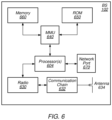
- Figure 3 Block Diagram of a UE
- FIG. 3 illustrates an example simplified block diagram of a communication device 106, according to some embodiments. It is noted that the block diagram of the communication device of Figure 3 is only one example of a possible communication device.
- communication device 106 may be a user equipment (UE) device (e.g., such as PUEs 103 and/or vehicles 105), a mobile device or mobile station, a wireless device or wireless station, a desktop computer or computing device, a mobile computing device (e.g., a laptop, notebook, or portable computing device), a tablet, an unmanned aerial vehicle (UAV), a UAV controller (UAC) and/or a combination of devices, among other devices.
- the communication device 106 may include a set of components 300 configured to perform core functions.
- this set of components may be implemented as a system on chip (SOC), which may include portions for various purposes.
- SOC system on chip
- this set of components 300 may be implemented as separate components or groups of components for the various purposes.
- the set of components 300 may be coupled (e.g., communicatively; directly or indirectly) to various other circuits of the communication device 106.
- the communication device 106 may include various types of memory (e.g., including NAND flash 310), an input/output interface such as connector I/F 320 (e.g., for connecting to a computer system; dock; charging station; input devices, such as a microphone, camera, keyboard; output devices, such as speakers; and so forth), the display 360, which may be integrated with or external to the communication device 106, and cellular communication circuitry 330 such as for 5G NR, LTE, GSM, and so forth, and short to medium range wireless communication circuitry 329 (e.g., Bluetooth TM and WLAN circuitry).
- communication device 106 may include wired communication circuitry (not shown), such as a network interface card, e.g., for Ethernet.
- the cellular communication circuitry 330 may couple (e.g., communicatively; directly or indirectly) to one or more antennas, such as antennas 335 and 336 as shown.
- the short to medium range wireless communication circuitry 329 may also couple (e.g., communicatively; directly or indirectly) to one or more antennas, such as antennas 337 and 338 as shown.
- the short to medium range wireless communication circuitry 329 may couple (e.g., communicatively; directly or indirectly) to the antennas 335 and 336 in addition to, or instead of, coupling (e.g., communicatively; directly or indirectly) to the antennas 337 and 338.
- the short to medium range wireless communication circuitry 329 and/or cellular communication circuitry 330 may include multiple receive chains and/or multiple transmit chains for receiving and/or transmitting multiple spatial streams, such as in a multiple-input multiple output (MIMO) configuration.
- MIMO multiple-input multiple output
- cellular communication circuitry 330 may include dedicated receive chains (including and/or coupled to, e.g., communicatively; directly or indirectly. dedicated processors and/or radios) for multiple RATs (e.g., a first receive chain for LTE and a second receive chain for 5G NR).
- cellular communication circuitry 330 may include a single transmit chain that may be switched between radios dedicated to specific RATs.
- the communication device 106 may further include one or more smart cards 345 that include SIM (Subscriber Identity Module) functionality, such as one or more UICC(s) (Universal Integrated Circuit Card(s)) cards 345.
- SIM Subscriber Identity Module
- UICC Universal Integrated Circuit Card
- SIM entity is intended to include any of various types of SIM implementations or SIM functionality, such as the one or more UICC(s) cards 345, one or more eUICCs, one or more eSIMs, either removable or embedded, and so forth.
- the UE 106 may include at least two SIMs. Each SIM may execute one or more SIM applications and/or otherwise implement SIM functionality.
- each SIM may be a single smart card that may be embedded, e.g., may be soldered onto a circuit board in the UE 106, or each SIM 310 may be implemented as a removable smart card.
- the SIM(s) may be one or more removable smart cards (such as UICC cards, which are sometimes referred to as "SIM cards"), and/or the SIMs 310 may be one or more embedded cards (such as embedded UICCs (eUICCs), which are sometimes referred to as “eSIMs” or “eSIM cards”).
- one or more of the SIM(s) may implement embedded SIM (eSIM) functionality; in such an embodiment, a single one of the SIM(s) may execute multiple SIM applications.
- Each of the SIMs may include components such as a processor and/or a memory; instructions for performing SIM/eSIM functionality may be stored in the memory and executed by the processor.
- the UE 106 may include a combination of removable smart cards and fixed/non-removable smart cards (such as one or more eUICC cards that implement eSIM functionality), as desired.
- the UE 106 may comprise two embedded SIMs, two removable SIMs, or a combination of one embedded SIMs and one removable SIMs.
- Various other SIM configurations are also contemplated.
- the UE 106 may include two or more SIMs.
- the inclusion of two or more SIMs in the UE 106 may allow the UE 106 to support two different telephone numbers and may allow the UE 106 to communicate on corresponding two or more respective networks.
- a first SIM may support a first RAT such as LTE
- a second SIM 310 support a second RAT such as 5G NR.
- Other implementations and RATs are of course possible.
- the UE 106 may support Dual SIM Dual Active (DSDA) functionality.
- DSDA Dual SIM Dual Active
- the DSDA functionality may allow the UE 106 to be simultaneously connected to two networks (and use two different RATs) at the same time, or to simultaneously maintain two connections supported by two different SIMs using the same or different RATs on the same or different networks.
- the DSDA functionality may also allow the UE 106 to simultaneously receive voice calls or data traffic on either phone number.
- the voice call may be a packet switched communication.
- the voice call may be received using voice over LTE (VoLTE) technology and/or voice over NR (VoNR) technology.
- the UE 106 may support Dual SIM Dual Standby (DSDS) functionality.
- the DSDS functionality may allow either of the two SIMs in the UE 106 to be on standby waiting for a voice call and/or data connection. In DSDS, when a call/data is established on one SIM, the other SIM is no longer active.
- DSDx functionality (either DSDA or DSDS functionality) may be implemented with a single SIM (e.g., a eUICC) that executes multiple SIM applications for different carriers and/or RATs.
- the SOC 300 may include processor(s) 302, which may execute program instructions for the communication device 106 and display circuitry 304, which may perform graphics processing and provide display signals to the display 360.
- the processor(s) 302 may also be coupled to memory management unit (MMU) 340, which may be configured to receive addresses from the processor(s) 302 and translate those addresses to locations in memory (e.g., memory 306, read only memory (ROM) 350, NAND flash memory 310) and/or to other circuits or devices, such as the display circuitry 304, short to medium range wireless communication circuitry 329, cellular communication circuitry 330, connector I/F 320, and/or display 360.
- the MMU 340 may be configured to perform memory protection and page table translation or set up. In some embodiments, the MMU 340 may be included as a portion of the processor(s) 302.
- the communication device 106 may be configured to communicate using wireless and/or wired communication circuitry.
- the communication device 106 may be configured to perform methods for utilization of an inter-UE coordination message, e.g., for V2X Mode 2 resource allocation, as further described herein.
- the communication device 106 may include hardware and software components for implementing the above features for a communication device 106 to communicate a scheduling profile for power savings to a network.
- the processor 302 of the communication device 106 may be configured to implement part or all of the features described herein, e.g., by executing program instructions stored on a memory medium (e.g., a non-transitory computer-readable memory medium).
- processor 302 may be configured as a programmable hardware element, such as an FPGA (Field Programmable Gate Array), or as an ASIC (Application Specific Integrated Circuit).
- the processor 302 of the communication device 106 in conjunction with one or more of the other components 300, 304, 306, 310, 320, 329, 330, 340, 345, 350, 360 may be configured to implement part or all of the features described herein.
- cellular communication circuitry 330 and short to medium range wireless communication circuitry 329 may each include one or more processing elements.
- one or more processing elements may be included in cellular communication circuitry 330 and, similarly, one or more processing elements may be included in short to medium range wireless communication circuitry 329.
- cellular communication circuitry 330 may include one or more integrated circuits (ICs) that are configured to perform the functions of cellular communication circuitry 330.
- each integrated circuit may include circuitry (e.g., first circuitry, second circuitry, and so forth) configured to perform the functions of cellular communication circuitry 330.
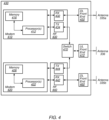
- FIG. 4 Block Diagram of Cellular Communication Circuitry
- FIG. 4 illustrates an example simplified block diagram of cellular communication circuitry, according to some embodiments. It is noted that the block diagram of the cellular communication circuitry of Figure 4 is only one example of a possible cellular communication circuit.
- cellular communication circuitry 430 which may be cellular communication circuitry 430, may be included in a communication device, such as communication device 106 described above.
- communication device 106 may be a user equipment (UE) device, a mobile device or mobile station, a wireless device or wireless station, a desktop computer or computing device, a mobile computing device (e.g., a laptop, notebook, or portable computing device), a tablet and/or a combination of devices, among other devices.
- UE user equipment
- the cellular communication circuitry 430 may couple (e.g., communicatively; directly or indirectly) to one or more antennas, such as antennas 435a-b and 436 as shown (in Figure 4 ).
- cellular communication circuitry 430 may include dedicated receive chains (including and/or coupled to, e.g., communicatively; directly or indirectly. dedicated processors and/or radios) for multiple RATs (e.g., a first receive chain for LTE and a second receive chain for 4G NR).
- cellular communication circuitry 430 may include a modem 410 and a modem 420.
- Modem 410 may be configured for communications according to a first RAT, e.g., such as LTE or LTE-A, and modem 420 may be configured for communications according to a second RAT, e.g., such as 4G NR.
- a first RAT e.g., such as LTE or LTE-A
- modem 420 may be configured for communications according to a second RAT, e.g., such as 4G NR.
- Embodiments described herein provide systems, methods, and mechanisms for utilization of an inter-UE coordination message, e.g., for V2X Mode 2 resource allocation.
- a UE such as UE 106
- the UE's behavior may depend on a category of the coordinating UE. For example, if the coordinating UE is a helper UE, e.g., which sends the set of resources for the UE's reference, the UE may have flexibility in its resource selection procedure.
- the UE may be required to follow the set of resources indicated in the inter-UE coordination message.
- the UE's behavior may depend on contents of the inter-UE coordination message. For example, if and/or when the inter-UE coordination message includes assistance information (e.g., such as cause of not preferring certain resources) along with the set of resources, then UE may have flexibility in its resource selection procedure (e.g., the UE may not be restricted to following the recommended resources in the inter-UE coordination message). Further, upon receipt of the inter-UE coordination message, the UE's behavior may depend on a time of receipt of the inter-UE coordination message.
- assistance information e.g., such as cause of not preferring certain resources
- UE may not have enough time to process and apply the resources in the inter-UE coordination message. Hence, the UE may not perform resource re-evaluation and/or resource pre-emption operations.
- a UE such as UE 106, may receive an inter-UE coordination message that includes an indication of non-preferred resources. Based on the indication of non-preferred resources, the UE may perform resource selection and/or resource reselection, e.g., via a re-evaluation procedure.
- Figures 8 and 9 illustrate block diagrams of examples of such procedures, according to some embodiments. Note that the methods shown in Figures 8 and 9 may be used in conjunction with one another as well as with any of the systems, methods, or devices shown in the Figures, among other devices.
- the inter-UE coordination message may be transmitted from a coordinating UE to the UE, where the coordinating UE determines a set of resources to indicate via the inter-UE coordination message. and where the set of resources are used by the UE for sidelink transmissions.
- FIG. 8 illustrated is a block diagram of an example of method for a UE to perform resource selection with non-preferred resources indicated in an inter-UE coordination message, according to some embodiments.
- the method shown in Figure 8 may be used in conjunction with one another as well as with any of the systems, methods, or devices shown in the Figures, among other devices.
- some of the method elements shown may be performed concurrently, in a different order than shown, or may be omitted. Additional method elements may also be performed as desired. As shown, this method may operate as follows.
- a UE such as UE 106 may receive, from a coordinating UE, a set of non-preferred resources via an inter-UE coordination message.
- the UE may not have selected sidelink resources, thus the UE may apply the set of-non-preferred resources as part of a resource selection procedure.
- the UE may identify a set of resources within a resource selection window.
- the UE may exclude the non-preferred resources from the set of resources for sidelink transmission to generate a set of candidate resources.
- a physical layer of the UE may identify the set of resources within the resource selection window (e.g., based on sensing) and pass the set of resources to a MAC layer of the UE. The MAC layer may then generate the set of candidate resources, e.g., via exclusion on the non-preferred resources.
- the physical layer of the UE may identify the set of resources within the resource selection window (e.g., based on sensing) and receive the non-preferred resources from the MAC layer of the UE which are indicated in the inter-UE coordination message. The physical layer may then generate the set of candidate resources, e.g., via exclusion on the non-preferred resources and pass the candidate resources to the MAC layer.
- FIG. 9 illustrated is a block diagram of an example of a method for a UE to perform resource re-selection with non-preferred resources indicated in an inter-UE coordination message, according to some embodiments.
- the method shown in Figure 9 may be used in conjunction with any of the systems, methods, or devices shown in the Figures, among other devices.
- some of the method elements shown may be performed concurrently, in a different order than shown, or may be omitted. Additional method elements may also be performed as desired. As shown, this method may operate as follows.
- a UE such as UE 106 may receive, from a coordinating UE, a set of non-preferred resources via an inter-UE coordination message.
- the UE may have previously selected a set of resources, e.g., based on a prior and/or previous set of resources indicated via a previous and/or prior inter-UE coordination message.
- the UE may have not yet reserved the selected resources prior to receipt of the inter-UE coordination message.
- the UE may have reserved the selected resources prior to receipt of the inter-UE coordination message.
- the inter-UE coordination message may include assistance information.
- the UE may update a set of selected resources based on the inter-UE coordination message and whether the UE has already reserved the selected resources. For example, if the UE has not reserved the selected resources, the UE may exclude the non-preferred resources from the selected set of resources to generate a set of updated resources. In other words, the UE may update the selected resources by excluding intersections between the selected set of resources and the set of non-preferred resources. Note that if after, exclusion the updated set of resources is a strict subset of selected set of resources, then the UE may trigger a resource selection procedure at 906. Note further, that if assistance information is included in the inter-UE coordination message, the UE may take the assistance information into account during the exclusion process, e.g., as described above.
- the UE may pass the selected and reserved resources to the physical layer as well as the set of non-preferred resources. Then, the physical layer may perform a pre-emption check on the selected resources at 906, wherein the set of non-preferred resources may be treated as reserved resources by other UEs, with RSRP level and data priority in an associated SCI being provided via the inter-UE coordination message.
- the UE may perform a resource selection procedure on the set of updated resources, e.g., to determine a set of resources to use for sidelink communications.
- a UE such as UE 106, may receive an inter-UE coordination message that includes an indication of preferred resources. Based on the indication of preferred resources, the UE may perform resource selection and/or resource reselection, e.g., via a re-evaluation procedure.
- Figures 10 and 11 illustrate block diagrams of examples of such procedures, according to some embodiments. Note that the methods shown in Figures 10 and 11 may be used in conjunction with one another as well as with any of the systems, methods, or devices shown in the Figures, among other devices.
- the inter-UE coordination message may be transmitted from a coordinating UE to the UE, where the coordinating UE determines a set of resources to indicate via the inter-UE coordination message. and where the set of resources are used by the UE for sidelink transmissions.
- FIG. 10 illustrated is a block diagram of an example of method for a UE to perform resource selection with preferred resources indicated in an inter-UE coordination message, according to some embodiments.
- the method shown in Figure 10 may be used in conjunction with one another as well as with any of the systems, methods, or devices shown in the Figures, among other devices.
- some of the method elements shown may be performed concurrently, in a different order than shown, or may be omitted. Additional method elements may also be performed as desired. As shown, this method may operate as follows.
- a UE such as UE 106 may receive, from a coordinating UE, a set of preferred resources via an inter-UE coordination message.
- the UE may not have selected sidelink resources, thus the UE may apply the set of-non-preferred resources as part of a resource selection procedure.
- the UE may identify a set of resources within a resource selection window at 1004.
- the UE may perform a candidate resource selection procedure based on a resource selection window to generate a set of candidate resources.
- a physical layer of the UE may perform the resource selection procedure, e.g., based on sensing (measurement) of resources at the UE.
- the UE may determine an interaction set of resources based on a comparison of the set of preferred resources to the set of candidate resources.
- the physical layer may pass the set of candidate resources to a MAC layer of the UE and the MAC layer may determine the interaction set.
- the UE may perform a resource selection procedure on the interaction set of resources, e.g., to determine a set of resources to use for sidelink communications.
- the determined set of resources may be the interaction set of resources.
- additional resources up to the number of resources to be selected, may be randomly selected from the set of candidate resources excluding the interaction set of resources.
- the determined set of resources may be randomly selected from the interaction set of resources.
- assistance information included in the inter-UE coordination message includes ranking of the set of preferred resources, then the determined set of resources may be selected in order of ranking, with higher ranked resources selected prior to lower ranked resources.
- a UE such as UE 106 may receive, from a coordinating UE, a set of preferred resources via an inter-UE coordination message.
- the UE may have previously selected a set of resources, e.g., based on a prior and/or previous set of resources indicated via a previous and/or prior inter-UE coordination message. Note that in some embodiments, the UE may have not yet reserved the selected resources prior to receipt of the inter-UE coordination message. In some embodiments, the UE may have reserved the selected resources prior to receipt of the inter-UE coordination message.
- the inter-UE coordination message may include assistance information.
- the UE may perform a resource re-evaluation and/or re-selection procedure based on the set of preferred resources. For example, the UE may treat the preferred set of resources as selected resources which need re-evaluation.
- the UE may select a desired number of resources from the preferred resource set.
- the UE may rank the set of preferred resources based on sensing, e.g., as performed by the UE. The UE may then select the desired number of highest ranked preferred resources, e.g., to determine a set of resources to use for sidelink communications. Alternatively, the UE may randomly select the desired number of resources from the preferred resource set.
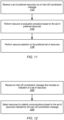
- Figure 12 illustrates a block diagram of an example of a method for utilization of an inter-UE coordination message, according to some embodiments.
- the method shown in Figure 12 may be used in conjunction with any of the systems, methods, or devices shown in the Figures, among other devices.
- some of the method elements shown may be performed concurrently, in a different order than shown, or may be omitted. Additional method elements may also be performed as desired. As shown, this method may operate as follows.
- a UE such as UE 106 may receive, from a first UE, an inter-UE coordination message.
- the inter-UE coordination message may include an indication of a set of resources and an indication of whether the set of resources are preferred resources or non-preferred resources.
Landscapes
- Engineering & Computer Science (AREA)
- Computer Networks & Wireless Communication (AREA)
- Signal Processing (AREA)
- Mobile Radio Communication Systems (AREA)
Claims (14)
- Verfahren zur Nutzung einer Koordinationsnachricht zwischen Benutzergeräten, Inter-UE, umfassend: Durch ein UE (106), empfangen (1202), einer ersten Inter-UE-Koordinationsnachricht von einem ersten UE, wobei die erste Inter-UE-Koordinationsnachricht eine Angabe eines ersten Satzes von Ressourcen und eine Angabe, ob der erste Satz von Ressourcen bevorzugte Ressourcen oder nicht bevorzugte Ressourcen ist, enthält; und Auswählen (1204) von Ressourcen für Sidelink-Kommunikationen basierend auf dem ersten Satz von Ressourcen, der in der Inter-UE-Koordinationsnachricht angegeben ist, dadurch gekennzeichnet, dass das Verfahren ferner umfasst: Durch das UE (106), empfangen einer zweiten Inter-UE-Koordinationsnachricht von dem ersten UE vor dem Reservieren der ausgewählten Sidelink-Ressourcen, wobei die zweite Inter-UE-Koordinationsnachricht eine Angabe eines zweiten Satzes von Ressourcen und eine Angabe, dass der zweite Satz von Ressourcen nicht bevorzugte Ressourcen ist, enthält; und Ausschließen, basierend auf einem Vergleich der ausgewählten Sidelink-Ressourcen und des zweiten Satzes von Ressourcen, von Ressourcen in den ausgewählten Sidelink-Ressourcen, die durch den zweiten Satz von Ressourcen als nicht bevorzugt angegeben sind.
- Verfahren nach Anspruch 1, ferner umfassend: Durch das UE (106), bestimmen von Ressourcen, die für Sidelink-Kommunikation verfügbar sind; und wenn der erste Satz von Ressourcen als nicht bevorzugt angegeben ist, ausschließen mindestens eines Teils des ersten Satzes von Ressourcen aus den bestimmten Ressourcen, die für Sidelink-Kommunikation verfügbar sind, um einen Kandidatenressourcensatz zu erzeugen, wobei das Auswählen von Ressourcen für Sidelink-Kommunikationen umfasst, dass das UE (106) Ressourcen aus dem Kandidatenressourcensatz zufällig auswählt.
- Verfahren nach Anspruch 2, wobei eine physikalische Schicht des UE (106) die Ressourcen bestimmt, die für Sidelink-Kommunikation verfügbar sind, und die Ressourcen, die für Sidelink-Kommunikation verfügbar sind, an eine Medienzugriffssteuerungs-, MAC-, Schicht des UE (106) weiterleitet; und wobei die MAC-Schicht des UE (106) den Kandidatenressourcensatz erzeugt und eine Auswahl der Ressourcen für Sidelink-Kommunikationen ausführt.
- Verfahren nach Anspruch 2, wobei eine physikalische Schicht des UE (106) die Ressourcen bestimmt, die für Sidelink-Kommunikation verfügbar sind, und den ersten Satz von Ressourcen von einer Medienzugriffssteuerungs-, MAC-, Schicht des UE empfängt, wobei die physikalische Schicht des UE (106) den Kandidatenressourcensatz erzeugt und den Kandidatenressourcensatz an die MAC-Schicht weiterleitet, und wobei die MAC-Schicht eine Auswahl der Ressourcen für Sidelink-Kommunikationen ausführt.
- Verfahren nach einem der Ansprüche 1 bis 4, ferner umfassend: Durch das UE (106), bestimmen von Ressourcen, die für Sidelink-Kommunikation verfügbar sind; und wenn der erste Satz von Ressourcen als bevorzugt angegeben ist, bestimmen eines Interaktionssatzes von Ressourcen basierend auf einem Vergleich der Ressourcen, die für Sidelink-Kommunikation verfügbar sind, und des ersten Satzes von Ressourcen, wobei das Auswählen von Ressourcen für Sidelink-Kommunikationen umfasst, dass das UE (106) Ressourcen aus dem Interaktionssatz von Ressourcen zufällig auswählt.
- Verfahren nach Anspruch 5, wobei, wenn eine Anzahl von auszuwählenden Ressourcen kleiner ist als die Anzahl von Ressourcen in dem Interaktionssatz von Ressourcen und die Inter-UE-Koordinationsnachricht eine Angabe einer Rangfolge von Ressourcen innerhalb des Satzes von Ressourcen enthält, um Ressourcen für Sidelink-Kommunikation auszuwählen, das Verfahren ferner umfasst, dass das UE (106) Ressourcen aus dem Interaktionssatz von Ressourcen basierend auf einer angegebenen Rangfolge von Ressourcen innerhalb des ersten Satzes von Ressourcen auswählt, wobei die Ressourcen von der höchsten Rangfolge in abnehmender Reihenfolge bis zu der Anzahl von auszuwählenden Ressourcen ausgewählt werden.
- Verfahren nach Anspruch 5, wobei eine physikalische Schicht des UE (106) die Ressourcen bestimmt, die für Sidelink-Kommunikation verfügbar sind, und die Ressourcen, die für Sidelink-Kommunikation verfügbar sind, an eine Medienzugriffssteuerungs-, MAC-, Schicht des UE (106) weiterleitet, und wobei die MAC-Schicht des UE (106) den Interaktionssatz erzeugt und eine Auswahl der Ressourcen für Sidelink-Kommunikationen ausführt.
- Verfahren nach Anspruch 1, ferner umfassend: Durch das UE (106), zufälliges Auswählen von Ressourcen aus den ausgeschlossenen Ressourcen bis zu einer Anzahl von Ressourcen, die zur Auswahl erforderlich sind, wenn der zweite Satz von Ressourcen eine strikte Teilmenge der ausgewählten Ressourcen ist; und Auswählen von Ressourcen aus den ausgeschlossenen Ressourcen bis zu einer Anzahl von Ressourcen, die zur Auswahl erforderlich sind, basierend, mindestens teilweise, auf Unterstützungsinformationen, wenn der zweite Satz von Ressourcen eine strikte Teilmenge der ausgewählten Ressourcen ist und Unterstützungsinformationen durch das erste UE (106) bereitgestellt werden, wobei die Unterstützungsinformationen mindestens eine Referenzsignalempfangsleistung (RSRP) für jede Ressource in dem zweiten Satz von Ressourcen enthalten.
- Verfahren nach einem der Ansprüche 1 bis 8, ferner umfassend: Durch das UE (106), Empfangen einer dritten Inter-UE-Koordinationsnachricht von dem ersten UE nach dem Reservieren der ausgewählten Sidelink-Ressourcen, wobei die dritte Inter-UE-Koordinationsnachricht eine Angabe eines dritten Satzes von Ressourcen und eine Angabe, dass der dritte Satz von Ressourcen nicht bevorzugte Ressourcen ist, enthält; und Ausschließen, basierend auf einem Vergleich der ausgewählten Sidelink-Ressourcen und des dritten Satzes von Ressourcen, von Ressourcen in den ausgewählten Sidelink-Ressourcen, die durch den dritten Satz von Ressourcen als nicht bevorzugt angegeben sind, wobei die dritte Inter-UE-Koordinationsnachricht ferner Unterstützungsinformationen für den dritten Satz von Ressourcen enthält.
- Verfahren nach einem der Ansprüche 1 bis 9, ferner umfassend: Durch das UE (106), Empfangen einer dritten Inter-UE-Koordinationsnachricht von dem ersten UE nach dem Auswählen der Sidelink-Ressourcen, wobei die dritte Inter-UE-Koordinationsnachricht eine Angabe dritter bevorzugter Ressourcen enthält; und Auswählen von Ressourcen in den dritten bevorzugten Ressourcen basierend auf einem Interferenzpegel bis zu einer Anzahl von erforderlichen Ressourcen in der Reihenfolge abnehmender Rangfolge oder zufälliges Auswählen von Ressourcen aus den dritten bevorzugten Ressourcen bis zu einer Anzahl von erforderlichen Ressourcen; und Reservieren der aus den dritten bevorzugten Ressourcen ausgewählten Ressourcen.
- Verfahren nach einem der Ansprüche 1 bis 10, ferner umfassend: Durch das UE (106), Empfangen einer dritten Inter-UE-Koordinationsnachricht von dem ersten UE vor dem Reservieren der ausgewählten Sidelink-Ressourcen, wobei die dritte Inter-UE-Koordinationsnachricht eine Angabe dritter nicht bevorzugter Ressourcen enthält; und Ausschließen, basierend auf einem Vergleich der ausgewählten Sidelink-Ressourcen und der dritten nicht bevorzugten Ressourcen, von Ressourcen in den ausgewählten Sidelink-Ressourcen, die durch die dritten nicht bevorzugten Ressourcen als nicht bevorzugt angegeben sind.
- Verfahren nach einem der Ansprüche 1 bis 11, ferner umfassend: Durch das UE (106), Empfangen einer dritten Inter-UE-Koordinationsnachricht von dem ersten UE nach dem Reservieren der ausgewählten Sidelink-Ressourcen, wobei die dritte Inter-UE-Koordinationsnachricht eine Angabe dritter nicht bevorzugter Ressourcen enthält; und Ausschließen, basierend auf einem Vergleich der ausgewählten Sidelink-Ressourcen und der dritten nicht bevorzugten Ressourcen, von Ressourcen in den ausgewählten Sidelink-Ressourcen, die durch die dritten nicht bevorzugten Ressourcen als nicht bevorzugt angegeben sind.
- Benutzergerät, UE, (106), umfassend: mindestens eine Antenne (335, 336); mindestens ein Funkgerät (330), wobei das mindestens eine Funkgerät konfiguriert ist, um eine drahtlose Kommunikation unter Verwendung mindestens einer Funkzugriffstechnologie, RAT, auszuführen; und einen oder mehrere Prozessoren (302), die mit dem mindestens einen Funkgerät (330) gekoppelt sind und konfiguriert sind, um das UE (106) zu veranlassen, ein Verfahren nach einem der Ansprüche 1 bis 12 auszuführen.
- Nichtflüchtiges computerlesbares Speichermedium, das Programmanweisungen speichert, die durch eine Verarbeitungsschaltung (302, 330) ausführbar sind, um ein Benutzergerät, UE, (106) zu veranlassen, ein Verfahren nach einem der Ansprüche 1 bis 12 auszuführen.
Applications Claiming Priority (1)
| Application Number | Priority Date | Filing Date | Title |
|---|---|---|---|
| PCT/CN2020/121119 WO2022077329A1 (en) | 2020-10-15 | 2020-10-15 | Utilization of inter-ue coordination message |
Publications (3)
| Publication Number | Publication Date |
|---|---|
| EP4209085A1 EP4209085A1 (de) | 2023-07-12 |
| EP4209085A4 EP4209085A4 (de) | 2023-10-25 |
| EP4209085B1 true EP4209085B1 (de) | 2025-07-09 |
Family
ID=81207427
Family Applications (1)
| Application Number | Title | Priority Date | Filing Date |
|---|---|---|---|
| EP20957108.2A Active EP4209085B1 (de) | 2020-10-15 | 2020-10-15 | Verwendung einer koordinationsnachricht zwischen benutzergeräten |
Country Status (5)
| Country | Link |
|---|---|
| US (1) | US12402162B2 (de) |
| EP (1) | EP4209085B1 (de) |
| JP (2) | JP7511085B2 (de) |
| CN (1) | CN116391371B (de) |
| WO (1) | WO2022077329A1 (de) |
Families Citing this family (14)
| Publication number | Priority date | Publication date | Assignee | Title |
|---|---|---|---|---|
| KR102835505B1 (ko) * | 2020-05-22 | 2025-07-17 | 프라운호퍼 게젤샤프트 쭈르 푀르데룽 데어 안겐반텐 포르슝 에. 베. | Ue 간 자원 할당의 조정 |
| WO2022077312A1 (en) * | 2020-10-15 | 2022-04-21 | Apple Inc. | Sidelink wake-up signal for wireless device |
| WO2022122422A1 (en) * | 2020-12-11 | 2022-06-16 | Telefonaktiebolaget Lm Ericsson (Publ) | Systems and methods for mac ce based inter-device coordination of sidelink transmissions |
| WO2022141645A1 (zh) * | 2021-01-04 | 2022-07-07 | Oppo广东移动通信有限公司 | 资源确定方法、装置、设备、存储介质、芯片及程序产品 |
| US12414083B2 (en) * | 2021-01-14 | 2025-09-09 | Kt Corporation | Method and apparatus for transmitting and receiving coordination information for sidelink communication |
| US20240089803A1 (en) * | 2021-02-05 | 2024-03-14 | Lenovo (Beijing) Limited | Methods and apparatuses for a pre-emption check procedure for a sidelink transmission |
| CN115190604A (zh) * | 2021-04-02 | 2022-10-14 | 北京三星通信技术研究有限公司 | 一种旁路资源确定方法 |
| US12069713B2 (en) * | 2021-04-05 | 2024-08-20 | Ofinno, Llc | Sidelink resource selection procedure |
| WO2022235018A1 (ko) * | 2021-05-07 | 2022-11-10 | 현대자동차주식회사 | 사이드링크 통신에서 인터-ue 조정 정보 기반의 자원 할당을 위한 방법 및 장치 |
| WO2022238314A1 (en) * | 2021-05-10 | 2022-11-17 | Fraunhofer-Gesellschaft zur Förderung der angewandten Forschung e.V. | Ue-a determination in inter-ue coordination |
| US20220369288A1 (en) * | 2021-05-11 | 2022-11-17 | Qualcomm Incorporated | Inter user equipment coordination for resource pools |
| US12028887B2 (en) * | 2021-08-27 | 2024-07-02 | Qualcomm Incorporated | Sensing report quantization for inter-user equipment coordination |
| US20260025837A1 (en) * | 2022-07-15 | 2026-01-22 | Zte Corporation | Systems and methods for managing sidelink communications |
| US20240292374A1 (en) * | 2023-02-23 | 2024-08-29 | Qualcomm Incorporated | Full duplex sidelink communication |
Family Cites Families (16)
| Publication number | Priority date | Publication date | Assignee | Title |
|---|---|---|---|---|
| US9591623B2 (en) * | 2011-04-04 | 2017-03-07 | Qualcomm Incorporated | System and method for supporting concurrent deployment of multiple transmission time intervals for uplink transmissions by user equipment in a non-dedicated channel state |
| US10454999B2 (en) * | 2013-03-14 | 2019-10-22 | Red Hat, Inc. | Coordination of inter-operable infrastructure as a service (IAAS) and platform as a service (PAAS) |
| US10064212B2 (en) | 2015-05-14 | 2018-08-28 | Blackberry Limited | Transmitting a scheduling request for a device-to-device transmission |
| JP6783377B2 (ja) | 2016-08-12 | 2020-11-11 | エルジー エレクトロニクス インコーポレイティド | 無線通信システムにおいてリソースプール構成を基盤として端末が自律的にリソースを再選択する方法及び装置 |
| FI3603293T3 (fi) | 2017-03-23 | 2023-04-03 | Apple Inc | Priorisoitu viestinvälitys ja resurssin valinta ajoneuvojen välistä (v2v) sivuyhteysviestintää varten |
| EP4344325A3 (de) | 2017-05-04 | 2024-12-11 | Koninklijke Philips N.V. | Intragruppenkommunikation |
| EP3860239B1 (de) * | 2017-06-15 | 2026-01-07 | Malikie Innovations Limited | Konfigurieren von sidelink-kommunikationen |
| EP3665995B1 (de) * | 2017-08-11 | 2025-10-15 | ZTE Corporation | Verfahren und vorrichtung zur bereitstellung von funkressourceninformationen für sidelink-steuerung |
| CN110768760B (zh) | 2018-07-26 | 2024-02-02 | 华为技术有限公司 | 数据发送的方法及装置 |
| TWI711327B (zh) | 2018-04-03 | 2020-11-21 | 美商Idac控股公司 | 合作車間有效資源使用方法 |
| US11601789B2 (en) | 2018-08-01 | 2023-03-07 | Intel Corporation | UE configured to determine slots and resource blocks for V2X sidelink communication based on SCI format |
| US11191074B2 (en) | 2018-08-29 | 2021-11-30 | Hyundai Motor Company | Method and apparatus for configuring sidelink resources in communication system |
| CN110972290B (zh) * | 2018-09-29 | 2022-10-11 | 中国信息通信研究院 | 一种终端直通通信的资源分配方法 |
| CN116567707A (zh) * | 2019-02-13 | 2023-08-08 | 苹果公司 | 网络辅助的新无线电v2x侧链路资源分配的无线电资源管理 |
| CN111083785B (zh) | 2019-07-19 | 2025-09-02 | 中兴通讯股份有限公司 | 资源配置的确定、指示方法及装置 |
| US20220361213A1 (en) * | 2021-05-07 | 2022-11-10 | Qualcomm Incorporated | Indication of unavailable resources |
-
2020
- 2020-10-15 WO PCT/CN2020/121119 patent/WO2022077329A1/en not_active Ceased
- 2020-10-15 CN CN202080106266.8A patent/CN116391371B/zh active Active
- 2020-10-15 JP JP2023522562A patent/JP7511085B2/ja active Active
- 2020-10-15 EP EP20957108.2A patent/EP4209085B1/de active Active
- 2020-10-15 US US17/438,977 patent/US12402162B2/en active Active
-
2024
- 2024-06-24 JP JP2024101373A patent/JP7713565B2/ja active Active
Also Published As
| Publication number | Publication date |
|---|---|
| JP7713565B2 (ja) | 2025-07-25 |
| US20220322360A1 (en) | 2022-10-06 |
| EP4209085A1 (de) | 2023-07-12 |
| JP2024150452A (ja) | 2024-10-23 |
| JP2023545164A (ja) | 2023-10-26 |
| JP7511085B2 (ja) | 2024-07-04 |
| US12402162B2 (en) | 2025-08-26 |
| CN116391371B (zh) | 2025-04-18 |
| EP4209085A4 (de) | 2023-10-25 |
| WO2022077329A1 (en) | 2022-04-21 |
| CN116391371A (zh) | 2023-07-04 |
Similar Documents
| Publication | Publication Date | Title |
|---|---|---|
| EP4209022B1 (de) | Auslösung und signalisierung einer koordinationsnachricht zwischen benutzergeräten | |
| EP4209085B1 (de) | Verwendung einer koordinationsnachricht zwischen benutzergeräten | |
| EP4233420B1 (de) | Energieeinsparung für benutzergeräte durch sidelink-ressourcenzuweisung | |
| WO2022082496A1 (en) | Power saving for user equipment through sidelink scheduling offloading | |
| EP4173400B1 (de) | Schlitzaggregation und selektive priorisierung für uplink- und sidelink-feedbackkommunikationen | |
| WO2022077391A1 (en) | Sidelink paging for a wireless device | |
| WO2021056505A1 (en) | Dual-mode sidelink operation | |
| EP4165928B1 (de) | Zellulare sidelink-kommunikation mit flexibler sidelink-ressourcenkonfiguration | |
| WO2022082587A1 (en) | Sidelink resource collision handling and resource allocation through user equipment coordination | |
| WO2022027363A1 (en) | Cellular sidelink communication using a sidelink control channel with frequency hopping and multi-beam diversity | |
| US12052694B2 (en) | Configuring cellular sidelink resources in a flexible manner | |
| US12041583B2 (en) | Slot aggregation and selective prioritization for physical sidelink feedback channel communications | |
| KR102959201B1 (ko) | Ue간 조정 메시지의 트리거링 및 시그널링 | |
| WO2022027372A1 (en) | Configuring cellular sidelink control channel with frequency hopping and multi-beam diversity |
Legal Events
| Date | Code | Title | Description |
|---|---|---|---|
| STAA | Information on the status of an ep patent application or granted ep patent |
Free format text: STATUS: THE INTERNATIONAL PUBLICATION HAS BEEN MADE |
|
| PUAI | Public reference made under article 153(3) epc to a published international application that has entered the european phase |
Free format text: ORIGINAL CODE: 0009012 |
|
| STAA | Information on the status of an ep patent application or granted ep patent |
Free format text: STATUS: REQUEST FOR EXAMINATION WAS MADE |
|
| 17P | Request for examination filed |
Effective date: 20230406 |
|
| AK | Designated contracting states |
Kind code of ref document: A1 Designated state(s): AL AT BE BG CH CY CZ DE DK EE ES FI FR GB GR HR HU IE IS IT LI LT LU LV MC MK MT NL NO PL PT RO RS SE SI SK SM TR |
|
| REG | Reference to a national code |
Ref country code: DE Ref legal event code: R079 Free format text: PREVIOUS MAIN CLASS: H04W0072040000 Ipc: H04W0072020000 Ref document number: 602020054431 Country of ref document: DE |
|
| A4 | Supplementary search report drawn up and despatched |
Effective date: 20230921 |
|
| RIC1 | Information provided on ipc code assigned before grant |
Ipc: H04W 92/18 20090101ALI20230915BHEP Ipc: H04W 4/46 20180101ALI20230915BHEP Ipc: H04W 4/40 20180101ALI20230915BHEP Ipc: H04W 72/20 20230101ALI20230915BHEP Ipc: H04W 72/04 20230101ALI20230915BHEP Ipc: H04W 72/02 20090101AFI20230915BHEP |
|
| DAV | Request for validation of the european patent (deleted) | ||
| DAX | Request for extension of the european patent (deleted) | ||
| GRAP | Despatch of communication of intention to grant a patent |
Free format text: ORIGINAL CODE: EPIDOSNIGR1 |
|
| STAA | Information on the status of an ep patent application or granted ep patent |
Free format text: STATUS: GRANT OF PATENT IS INTENDED |
|
| INTG | Intention to grant announced |
Effective date: 20250130 |
|
| GRAS | Grant fee paid |
Free format text: ORIGINAL CODE: EPIDOSNIGR3 |
|
| GRAA | (expected) grant |
Free format text: ORIGINAL CODE: 0009210 |
|
| STAA | Information on the status of an ep patent application or granted ep patent |
Free format text: STATUS: THE PATENT HAS BEEN GRANTED |
|
| AK | Designated contracting states |
Kind code of ref document: B1 Designated state(s): AL AT BE BG CH CY CZ DE DK EE ES FI FR GB GR HR HU IE IS IT LI LT LU LV MC MK MT NL NO PL PT RO RS SE SI SK SM TR |
|
| REG | Reference to a national code |
Ref country code: GB Ref legal event code: FG4D |
|
| REG | Reference to a national code |
Ref country code: CH Ref legal event code: EP |
|
| P01 | Opt-out of the competence of the unified patent court (upc) registered |
Free format text: CASE NUMBER: APP_28037/2025 Effective date: 20250611 |
|
| REG | Reference to a national code |
Ref country code: IE Ref legal event code: FG4D |
|
| REG | Reference to a national code |
Ref country code: DE Ref legal event code: R096 Ref document number: 602020054431 Country of ref document: DE |
|
| REG | Reference to a national code |
Ref country code: NL Ref legal event code: MP Effective date: 20250709 |
|
| PG25 | Lapsed in a contracting state [announced via postgrant information from national office to epo] |
Ref country code: PT Free format text: LAPSE BECAUSE OF FAILURE TO SUBMIT A TRANSLATION OF THE DESCRIPTION OR TO PAY THE FEE WITHIN THE PRESCRIBED TIME-LIMIT Effective date: 20251110 |
|
| PG25 | Lapsed in a contracting state [announced via postgrant information from national office to epo] |
Ref country code: NL Free format text: LAPSE BECAUSE OF FAILURE TO SUBMIT A TRANSLATION OF THE DESCRIPTION OR TO PAY THE FEE WITHIN THE PRESCRIBED TIME-LIMIT Effective date: 20250709 |
|
| REG | Reference to a national code |
Ref country code: AT Ref legal event code: MK05 Ref document number: 1813069 Country of ref document: AT Kind code of ref document: T Effective date: 20250709 |
|
| PG25 | Lapsed in a contracting state [announced via postgrant information from national office to epo] |
Ref country code: IS Free format text: LAPSE BECAUSE OF FAILURE TO SUBMIT A TRANSLATION OF THE DESCRIPTION OR TO PAY THE FEE WITHIN THE PRESCRIBED TIME-LIMIT Effective date: 20251109 |
|
| PGFP | Annual fee paid to national office [announced via postgrant information from national office to epo] |
Ref country code: DE Payment date: 20251021 Year of fee payment: 6 |
|
| PG25 | Lapsed in a contracting state [announced via postgrant information from national office to epo] |
Ref country code: NO Free format text: LAPSE BECAUSE OF FAILURE TO SUBMIT A TRANSLATION OF THE DESCRIPTION OR TO PAY THE FEE WITHIN THE PRESCRIBED TIME-LIMIT Effective date: 20251009 |
|
| REG | Reference to a national code |
Ref country code: LT Ref legal event code: MG9D |
|
| PG25 | Lapsed in a contracting state [announced via postgrant information from national office to epo] |
Ref country code: AT Free format text: LAPSE BECAUSE OF FAILURE TO SUBMIT A TRANSLATION OF THE DESCRIPTION OR TO PAY THE FEE WITHIN THE PRESCRIBED TIME-LIMIT Effective date: 20250709 |
|
| PG25 | Lapsed in a contracting state [announced via postgrant information from national office to epo] |
Ref country code: FI Free format text: LAPSE BECAUSE OF FAILURE TO SUBMIT A TRANSLATION OF THE DESCRIPTION OR TO PAY THE FEE WITHIN THE PRESCRIBED TIME-LIMIT Effective date: 20250709 |
|
| PG25 | Lapsed in a contracting state [announced via postgrant information from national office to epo] |
Ref country code: HR Free format text: LAPSE BECAUSE OF FAILURE TO SUBMIT A TRANSLATION OF THE DESCRIPTION OR TO PAY THE FEE WITHIN THE PRESCRIBED TIME-LIMIT Effective date: 20250709 |
|
| PG25 | Lapsed in a contracting state [announced via postgrant information from national office to epo] |
Ref country code: GR Free format text: LAPSE BECAUSE OF FAILURE TO SUBMIT A TRANSLATION OF THE DESCRIPTION OR TO PAY THE FEE WITHIN THE PRESCRIBED TIME-LIMIT Effective date: 20251010 |
|
| PG25 | Lapsed in a contracting state [announced via postgrant information from national office to epo] |
Ref country code: SE Free format text: LAPSE BECAUSE OF FAILURE TO SUBMIT A TRANSLATION OF THE DESCRIPTION OR TO PAY THE FEE WITHIN THE PRESCRIBED TIME-LIMIT Effective date: 20250709 |
|
| PG25 | Lapsed in a contracting state [announced via postgrant information from national office to epo] |
Ref country code: LV Free format text: LAPSE BECAUSE OF FAILURE TO SUBMIT A TRANSLATION OF THE DESCRIPTION OR TO PAY THE FEE WITHIN THE PRESCRIBED TIME-LIMIT Effective date: 20250709 |
|
| PG25 | Lapsed in a contracting state [announced via postgrant information from national office to epo] |
Ref country code: BG Free format text: LAPSE BECAUSE OF FAILURE TO SUBMIT A TRANSLATION OF THE DESCRIPTION OR TO PAY THE FEE WITHIN THE PRESCRIBED TIME-LIMIT Effective date: 20250709 Ref country code: PL Free format text: LAPSE BECAUSE OF FAILURE TO SUBMIT A TRANSLATION OF THE DESCRIPTION OR TO PAY THE FEE WITHIN THE PRESCRIBED TIME-LIMIT Effective date: 20250709 |
|
| PG25 | Lapsed in a contracting state [announced via postgrant information from national office to epo] |
Ref country code: RS Free format text: LAPSE BECAUSE OF FAILURE TO SUBMIT A TRANSLATION OF THE DESCRIPTION OR TO PAY THE FEE WITHIN THE PRESCRIBED TIME-LIMIT Effective date: 20251009 |
|
| PG25 | Lapsed in a contracting state [announced via postgrant information from national office to epo] |
Ref country code: ES Free format text: LAPSE BECAUSE OF FAILURE TO SUBMIT A TRANSLATION OF THE DESCRIPTION OR TO PAY THE FEE WITHIN THE PRESCRIBED TIME-LIMIT Effective date: 20250709 |
|
| PG25 | Lapsed in a contracting state [announced via postgrant information from national office to epo] |
Ref country code: RO Free format text: LAPSE BECAUSE OF FAILURE TO SUBMIT A TRANSLATION OF THE DESCRIPTION OR TO PAY THE FEE WITHIN THE PRESCRIBED TIME-LIMIT Effective date: 20250709 |
|
| PG25 | Lapsed in a contracting state [announced via postgrant information from national office to epo] |
Ref country code: SM Free format text: LAPSE BECAUSE OF FAILURE TO SUBMIT A TRANSLATION OF THE DESCRIPTION OR TO PAY THE FEE WITHIN THE PRESCRIBED TIME-LIMIT Effective date: 20250709 |
|
| PG25 | Lapsed in a contracting state [announced via postgrant information from national office to epo] |
Ref country code: DK Free format text: LAPSE BECAUSE OF FAILURE TO SUBMIT A TRANSLATION OF THE DESCRIPTION OR TO PAY THE FEE WITHIN THE PRESCRIBED TIME-LIMIT Effective date: 20250709 |
|
| PG25 | Lapsed in a contracting state [announced via postgrant information from national office to epo] |
Ref country code: IT Free format text: LAPSE BECAUSE OF FAILURE TO SUBMIT A TRANSLATION OF THE DESCRIPTION OR TO PAY THE FEE WITHIN THE PRESCRIBED TIME-LIMIT Effective date: 20250709 |
|
| PG25 | Lapsed in a contracting state [announced via postgrant information from national office to epo] |
Ref country code: CZ Free format text: LAPSE BECAUSE OF FAILURE TO SUBMIT A TRANSLATION OF THE DESCRIPTION OR TO PAY THE FEE WITHIN THE PRESCRIBED TIME-LIMIT Effective date: 20250709 |
|
| PG25 | Lapsed in a contracting state [announced via postgrant information from national office to epo] |
Ref country code: SK Free format text: LAPSE BECAUSE OF FAILURE TO SUBMIT A TRANSLATION OF THE DESCRIPTION OR TO PAY THE FEE WITHIN THE PRESCRIBED TIME-LIMIT Effective date: 20250709 Ref country code: EE Free format text: LAPSE BECAUSE OF FAILURE TO SUBMIT A TRANSLATION OF THE DESCRIPTION OR TO PAY THE FEE WITHIN THE PRESCRIBED TIME-LIMIT Effective date: 20250709 |