EP4209227A1 - Composition pharmaceutique pour la prévention et/ou le traitement du prurit en dialyse contenant comme principe actif un antagoniste de l'il-31 - Google Patents
Composition pharmaceutique pour la prévention et/ou le traitement du prurit en dialyse contenant comme principe actif un antagoniste de l'il-31 Download PDFInfo
- Publication number
- EP4209227A1 EP4209227A1 EP20952354.7A EP20952354A EP4209227A1 EP 4209227 A1 EP4209227 A1 EP 4209227A1 EP 20952354 A EP20952354 A EP 20952354A EP 4209227 A1 EP4209227 A1 EP 4209227A1
- Authority
- EP
- European Patent Office
- Prior art keywords
- weeks
- cim331
- pruritus
- antagonist
- administered
- Prior art date
- Legal status (The legal status is an assumption and is not a legal conclusion. Google has not performed a legal analysis and makes no representation as to the accuracy of the status listed.)
- Withdrawn
Links
Images








Classifications
-
- C—CHEMISTRY; METALLURGY
- C07—ORGANIC CHEMISTRY
- C07K—PEPTIDES
- C07K16/00—Immunoglobulins [IG], e.g. monoclonal or polyclonal antibodies
- C07K16/18—Immunoglobulins [IG], e.g. monoclonal or polyclonal antibodies against material from animals or humans
- C07K16/28—Immunoglobulins [IG], e.g. monoclonal or polyclonal antibodies against material from animals or humans against receptors, cell surface antigens or cell surface determinants
- C07K16/2866—Immunoglobulins [IG], e.g. monoclonal or polyclonal antibodies against material from animals or humans against receptors, cell surface antigens or cell surface determinants against receptors for cytokines, lymphokines, interferons
-
- C—CHEMISTRY; METALLURGY
- C07—ORGANIC CHEMISTRY
- C07K—PEPTIDES
- C07K16/00—Immunoglobulins [IG], e.g. monoclonal or polyclonal antibodies
- C07K16/18—Immunoglobulins [IG], e.g. monoclonal or polyclonal antibodies against material from animals or humans
- C07K16/24—Immunoglobulins [IG], e.g. monoclonal or polyclonal antibodies against material from animals or humans against cytokines, lymphokines or interferons
- C07K16/244—Interleukins [IL]
-
- A—HUMAN NECESSITIES
- A61—MEDICAL OR VETERINARY SCIENCE; HYGIENE
- A61P—SPECIFIC THERAPEUTIC ACTIVITY OF CHEMICAL COMPOUNDS OR MEDICINAL PREPARATIONS
- A61P17/00—Drugs for dermatological disorders
- A61P17/04—Antipruritics
-
- A—HUMAN NECESSITIES
- A61—MEDICAL OR VETERINARY SCIENCE; HYGIENE
- A61K—PREPARATIONS FOR MEDICAL, DENTAL OR TOILETRY PURPOSES
- A61K39/00—Medicinal preparations containing antigens or antibodies
- A61K2039/505—Medicinal preparations containing antigens or antibodies comprising antibodies
-
- A—HUMAN NECESSITIES
- A61—MEDICAL OR VETERINARY SCIENCE; HYGIENE
- A61K—PREPARATIONS FOR MEDICAL, DENTAL OR TOILETRY PURPOSES
- A61K39/00—Medicinal preparations containing antigens or antibodies
- A61K2039/54—Medicinal preparations containing antigens or antibodies characterised by the route of administration
-
- A—HUMAN NECESSITIES
- A61—MEDICAL OR VETERINARY SCIENCE; HYGIENE
- A61K—PREPARATIONS FOR MEDICAL, DENTAL OR TOILETRY PURPOSES
- A61K39/00—Medicinal preparations containing antigens or antibodies
- A61K2039/545—Medicinal preparations containing antigens or antibodies characterised by the dose, timing or administration schedule
-
- C—CHEMISTRY; METALLURGY
- C07—ORGANIC CHEMISTRY
- C07K—PEPTIDES
- C07K2317/00—Immunoglobulins specific features
- C07K2317/50—Immunoglobulins specific features characterized by immunoglobulin fragments
- C07K2317/56—Immunoglobulins specific features characterized by immunoglobulin fragments variable (Fv) region, i.e. VH and/or VL
-
- C—CHEMISTRY; METALLURGY
- C07—ORGANIC CHEMISTRY
- C07K—PEPTIDES
- C07K2317/00—Immunoglobulins specific features
- C07K2317/50—Immunoglobulins specific features characterized by immunoglobulin fragments
- C07K2317/56—Immunoglobulins specific features characterized by immunoglobulin fragments variable (Fv) region, i.e. VH and/or VL
- C07K2317/565—Complementarity determining region [CDR]
-
- C—CHEMISTRY; METALLURGY
- C07—ORGANIC CHEMISTRY
- C07K—PEPTIDES
- C07K2317/00—Immunoglobulins specific features
- C07K2317/70—Immunoglobulins specific features characterized by effect upon binding to a cell or to an antigen
- C07K2317/76—Antagonist effect on antigen, e.g. neutralization or inhibition of binding
-
- C—CHEMISTRY; METALLURGY
- C07—ORGANIC CHEMISTRY
- C07K—PEPTIDES
- C07K2317/00—Immunoglobulins specific features
- C07K2317/90—Immunoglobulins specific features characterized by (pharmaco)kinetic aspects or by stability of the immunoglobulin
- C07K2317/94—Stability, e.g. half-life, pH, temperature or enzyme-resistance
Definitions
- the present disclosure relates to, for example, a pharmaceutical composition for prevention and/or treatment of uremic pruritus comprising an IL-31 antagonist as an active ingredient.
- Pruritus in dialysis patients is one of the symptoms daily afflicting dialysis patients. It is generally found more often in patients receiving long-term dialysis (NPL 1), but it varies in terms of the area it occurs, frequency, duration, and how badly it affects the lives of patients. Apparent symptoms of the skin are not usually observed even at the area pruritus is occurring (NPL 2). According to the study carried out in Japan in the year 2000, 72.8% of hemodialysis patients experienced pruritus and about a half of them had sleep disturbance (NPL 3). The severity of insomnia has been reported to be higher in patients with severe pruritus (NPL 4).
- DOPPS Dialysis Outcomes and Practice Patterns Study
- IL-31 (interleukin-31) is a T-cell cytokine. It is known that dermatitis-like symptoms similar to pruritus or atopic dermatitis occur in transgenic mice overexpressing IL-31 ( Nat Immunol (2004) 5, 752-760 ). It has also been found that the receptor to which IL-31 binds is a heterodimer of IL-31RA (interleukin-31 receptor A) and OSMR (oncostatin M receptor) ( WO2004/003140 ), and IL-31 transduces signals into cells through this receptor.
- IL-31RA interleukin-31 receptor A
- OSMR oncostatin M receptor
- IL-31 neutralizing antibodies and IL-31RA neutralizing antibodies as IL-31 antagonists have been reported (for example, WO2005/079566 ; WO2006/063864 ; WO2006/063865 ; WO2009/071696 ; WO2006/088855 ; WO2006/088955 ; WO2006/088956 ; WO2007/133816 ; WO2007/142325 ; WO2009/072598 ; WO2006/122079 ; WO2007/143231 ; WO2008/028192 ; WO2009/072604 ; WO2010/064697 ).
- the present disclosure relates to the following:
- IL-31 (interleukin-31) is a T-cell cytokine. It is known that IL-31 is involved in pruritus, and in transgenic mice overexpressing IL-31, dermatitis-like symptoms similar to atopic dermatitis occur, and persistent scratching behavior is observed.
- nucleic acid sequence and amino acid sequence of human IL-31 are also known as RefSeq accession number NM_001014336 and RefSeq accession number NP_001014358, respectively.
- the receptor for IL-31 is formed of a heterodimer of IL-31 receptor A (IL-3 1RA) and oncostatin M receptor (OSMR) ( Nat Immunol (2004) 5, 752-60 ).
- IL-31RA also referred to as NR10
- NR10 is known to have a plurality of splicing variants ( WO 00/075314 ).
- splicing variants are NR10.1 (652 amino acids), NR10.2 (252 amino acids), NR10.3 (662 amino acids, also referred to as IL-31RAv4), and IL-31RAv3 (764 amino acids).
- Examples of preferred II-31RA include NR10.3 (IL-31RAv4) and IL-31RAv3.
- the nucleic acid sequence and amino acid sequence of human IL-31RA are also known as RefSeq accession number NM_001242638 and RefSeq accession number NP_001229567, respectively.
- the nucleic acid sequence and the amino acid sequence of human IL-31RA are also known as RefSeq accession number NM_139017 and RefSeq accession number NP_620586, respectively.
- the nucleic acid sequence and the amino acid sequence of human OSMR are also known as RefSeq accession number NM_003999 and RefSeq accession number NP_003990, respectively.
- the IL-31 antagonist of the present disclosure refers to a compound that suppresses or blocks IL-31-induced intracellular signaling.
- This compound can also be expressed as a compound that inhibits IL-31 signaling.
- Such a compound may be a naturally occurring compound or an artificially synthesized compound.
- such a compound may be a low-molecular-weight compound or a high-molecular-weight compound such as a protein.
- IL-31 that is present extracellularly triggers intracellular signaling via the IL-31 receptor (heterodimer of IL-31RA and OSMR) present on the cell surface ( Nat Immunol (2004) 5, 752-760 ).
- the extracellular domain of the IL-31 receptor includes an IL-31-binding domain, and binding of IL-31 thereto causes a change in the conformation of the IL-31 receptor.
- intracellular signaling is initiated from the intracellular domain of the IL-31 receptor.
- whether a certain compound inhibits IL-31 signaling can be verified by examining whether the compound inhibits binding of IL-31 to the IL-31 receptor.
- methods for making such a determination include an assay using ELISA or flow cytometry and an assay using surface plasmon resonance.
- ELISA for example, whether the compound inhibits the binding of IL-31 to the IL-31 receptor can be evaluated by immobilizing the IL-31 receptor (or IL-31RA) protein onto a plate, preparing a system for detecting the amount of IL-31 protein that binds thereto through the use of a secondary antibody such as an enzyme-labeled anti-IL-31 antibody, and determining whether or not the addition of the compound reduces the amount of detected IL-31 protein.
- a secondary antibody such as an enzyme-labeled anti-IL-31 antibody
- whether a certain compound inhibits IL-31 signaling can be verified by examining whether the bioactivity induced by the action of IL-31 on cells is inhibited by the compound.
- the bioactivity is not particularly limited as long as it can be quantitatively or qualitatively determined using any method, and examples of such bioactivities include cell proliferative activity, protein phosphorylation activity, and gene/protein expression-inducing activity.
- whether the compound inhibits IL-31 signaling can be evaluated by preparing cells that express the IL-31 receptor on the surface, and whose proliferative activity is induced in response to external IL-31 stimulation, and determining whether or not the addition of the compound reduces the IL-31-induced cell proliferative activity.
- IL-31 receptor naturally occurring cells inherently expressing the IL-31 receptor may be used, or recombinant cells artificially synthesized to express the IL-31 receptor may be used.
- a suitable example of recombinant cells includes Ba/F3 cells expressing the IL-31 receptor.
- the method described in the document of Dillon et al. may be used.
- the degree of inhibition of IL-31 signaling by the IL-31 antagonist may be, but not limited to, at least 10% or more, preferably 20% or more, 30% or more, 40% or more, 50% or more, 60% or more, 70% or more, and 80% or more, 90% or more, 95% or more, or 98% or more.
- a preferred embodiment of the compound that inhibits IL-31 signaling includes a protein that inhibits IL-31 signaling.
- the protein used herein is not particularly limited as long as it has the property of specifically binding to IL-31 or the IL-31 receptor. Examples of preferred proteins include antibodies and antibody-like molecules ( Curr Opin Biotechnol (2006) 17, 653-658 ; Curr Opin Struct Biol (1997) 7, 463-469 ; and Protein Sci (2006) 15, 14-27 ).
- Antibodies include any antibodies such as monoclonal antibodies (e.g., IgG, IgM, IgE, IgA, and IgD), polyclonal antibodies, engineered antibodies (e.g., chimeric antibodies, humanized antibodies, and glycoengineered antibodies ( WO 99/54342 and WO 00/61739 )), antibody fragments (e.g., Fab, F(ab')2, Fv, and CDR), multi-specific antibodies (e.g., bispecific antibodies), and conjugated antibodies (e.g., antibodies conjugated with polyethylene glycol (PEG), radioactive isotopes, or drugs).
- monoclonal antibodies e.g., IgG, IgM, IgE, IgA, and IgD
- polyclonal antibodies e.g., engineered antibodies (e.g., chimeric antibodies, humanized antibodies, and glycoengineered antibodies ( WO 99/54342 and WO 00/61739 )), antibody fragments (e.g
- antibody-like molecules include DARPin ( WO 2002/020565 ), Affibody ( WO 1995/001937 ), Avimer ( WO 2004/044011 ), and Adnectin ( WO 2002/032925 ). More preferred is an antibody that inhibits IL-31 signaling.
- examples of other preferred proteins that inhibit IL-31 signaling include a protein containing the extracellular domain of IL-31RA and a protein containing each extracellular domain of the IL-31 receptor (heterodimer of IL-31RA and OSMR).
- preferred embodiments of the antibody that inhibits IL-31 signaling include an antibody that inhibits IL-31 signaling by binding to IL-31 (anti-IL-31 neutralizing antibody) and an antibody that inhibits IL-31 signaling by binding to the IL-31 receptor (anti-IL-31 receptor neutralizing antibody).
- Anti-IL-31 receptor neutralizing antibodies include an antibody that inhibits IL-31 signaling by binding to IL-31RA (anti-IL-31RA neutralizing antibody), an antibody that inhibits IL-31 signaling by binding to OSMR (anti-OSMR neutralizing antibody), and an antibody that inhibits IL-31 signaling by binding to the heterodimer of IL-31RA and OSMR (anti-IL-31RA/OSMR heterodimer neutralizing antibody).
- anti-IL-31 receptor neutralizing antibodies preferred is an anti-IL-3 1RA neutralizing antibody or anti-IL-31RA/OSMR heterodimer neutralizing antibody, and more preferred is an anti-IL-31RA neutralizing antibody.
- the antibody that inhibits IL-31 signaling of the present disclosure in one embodiment or another embodiment, preferably does not (substantially) exhibit cross-reactivity with IL-31RA from any of mouse, rat, and rabbit, although it has cross-reactivity with IL-31RA from humans and cynomolgus monkeys.
- antibodies can be prepared using the hybridoma method ( Nature (1975) 256, 495 ) or the phage antibody library method ( Nature (1991) 352, 624-628 , J Mol Biol (1991) 222, 581-597 ), for example.
- a large number of anti-IL-31 antibodies or anti-IL-31 receptor antibodies can be obtained by these methods.
- screening of these antibodies using any of the above-described methods for detecting the compound that inhibits IL-31 signaling allows an anti-IL-31 neutralizing antibody or an anti-IL-31 receptor neutralizing antibody to be obtained.
- a protein such as IL-31 or the IL-31 receptor may also be prepared using a genetic engineering technology known to those skilled in the art. Specifically, such a protein can be prepared by inserting a gene encoding a desired protein into an expression vector, introducing the vector into an appropriate host cell, and then purifying the target protein expressed in the host cell or in the culture supernatant of the host cell.
- anti-IL-31 neutralizing antibodies examples include the anti-IL-31 antibodies described in WO 2006/122079 , WO 2008/028192 , and WO 2009/071696 .
- anti-IL-31RA neutralizing antibodies examples include, but are not limited to, the anti-IL-31RA (NR10) antibody described in WO 2007/142325 , the anti-IL-31RA (NR10) antibody described in WO 2009/072604 , and the anti-II,-31RA (NR10) antibody described in WO 2010/064697 .
- examples of other preferred anti-IL-31RA neutralizing antibodies include anti-human IL-31RA (neutralizing) antibodies, specifically including an anti-IL-31RA (neutralizing) antibody that recognizes domain 1 and/or domain 2 of human IL-31RA.
- domain 1 of human IL-31RA designates the region from amino acid at position 53 to amino acid at position 152 (LPAKP to LENIA) in the amino acid sequence as set forth in SEQ ID NO: 11.
- Domain 2 designates the region from amino acid at position 153 to amino acid at position 259 (KTEPP to EEEAP) in the amino acid sequence as set forth in SEQ ID NO: 11.
- an anti-IL-31RA antibody comprising an H chain (heavy chain) variable region comprising CDR1 as set forth in SEQ ID NO: 1, CDR2 as set forth in SEQ ID NO: 2, and CDR3 as set forth in SEQ ID NO: 3, and an L chain (light chain) variable region comprising CDR1 as set forth in SEQ ID NO: 4, CDR2 as set forth in SEQ ID NO: 5, and CDR3 as set forth in SEQ ID NO: 6.
- an anti-IL-3 1RA antibody comprising an H chain variable region as set forth in SEQ ID NO: 7 and an L chain variable region as set forth in SEQ ID NO: 8.
- an anti-IL-3 1RA antibody comprising an H chain as set forth in SEQ ID NO: 9 and an L chain as set forth in SEQ ID NO: 10.
- a pharmaceutical composition comprising any of:
- the serum IL-31 concentration in the subject may be equal to or higher than a predetermined value (for example, 0.15 pg/mL or higher, 0.2 pg/mL or higher, 0.3 pg/mL or higher, 0.4 pg/mL or higher, 0.5 pg/mL or higher, 0.6 pg/mL or higher, 0.7 pg/mL or higher, 0.8 pg/mL or higher, 0.86 pg/mL or higher, 0.9 pg/mL or higher, 1.0 pg/mL or higher, 1.1 pg/mL or higher, 1.25 pg/mL or higher, 1.5 pg/mL or higher, 1.75 pg/mL or higher, 2 pg/mL or higher, 2.25 pg/mL or higher, or 2.5 pg/mL or higher, or higher, as measured using, for example, ultrasensitive enzyme-linked immunosorbent assay (ELISA; SiMoATM
- CDRs Known methods for defining CDRs include the method according to Kabat et al. (Sequences of Proteins of Immunological Interest, 5th Ed (1991), Bethesda, MD ), the method according to Chothia et al. (Science (1986) 233, 755-758 ), and the method based on antigen-antibody contact regions ( J Mol Biol (1996) 262, 732-745 ).
- each of the methods defines CDRs as follows: CDR Kabat Chothia Contact L1 L24-L34 L24-L34 L30-L36 L2 L50-L56 L50-L56 L46-L55 L3 L89-L97 L89-L97 L89-L96 H1 H31-H35B H26-H32/34 H30-H35B (Kabat numbering) H1 H31-H35 H26-H32 H30-H35 (Chothia numbering) H2 H50-H65 H52-H56 H47-H58 H3 H95-H102 H95-H102 H93-H101
- An example of a preferred anti-IL-31RA neutralizing antibody of the present disclosure includes an anti-IL-31RA antibody comprising CDR1, CDR2, and CDR3 contained in the H chain variable region as set forth in SEQ ID NO: 7, and CDR1, CDR2, and CDR3 contained in the L chain variable region as set forth in SEQ ID NO: 8, as H chain CDR1, CDR2, and CDR3, and L chain CDR1, CDR2, and CDR3, respectively.
- the CDRs in such an antibody may be defined in accordance with any of the method according to Kabat et al., the method according to Chothia et al., and the method based on antigen-antibody contact regions, or in accordance with a combination of these methods.
- an anti-IL-31RA neutralizing antibody is an anti-IL-31RA antibody that binds to the same epitope as that of the anti-IL-3 1RA antibody defined by the above-described sequences of CDRs of the H chain and L chain, H chain variable region and L chain variable region sequences, and full-length H chain and L chain sequences.
- An epitope refers to a specific structural unit of an antigen to which an antibody recognizes and binds. When the antigen is a polypeptide, the epitope typically consists of about 6 to 10 amino acids.
- Epitope identification can be performed using a method known to those skilled in the art, for example, a method of synthesizing peptides by fragmentation of the antigen, a method of introducing site-directed mutagenesis into the antigen (e.g., arginine/glutamic acid scanning, J Biol Chem (1995) 270, 21619-21625 , J Biol Chem (2006) 281, 20464-20473 ), and a method of crystallizing an antigen-antibody complex ( Using Antibodies: A Laboratory Manual (1999), Cold Spring Harbor Laboratory Press, New York ).
- the recitation "binds to the same epitope” means that the epitopes to which two antibodies bind at least partially overlap each other. The degree of the overlap is, but not limited to, at least 10% or more, preferably 20% or more, 30% or more, 40% or more, 50% or more, 60% or more, 70% or more, and 80% or more, particularly preferably 90% or more, and most preferably 100%.
- anti-IL-31RA neutralizing antibody is an anti-IL-31RA antibody that competes for binding to IL-31RA with the anti-IL-31RA antibody defined by the above-described sequences of CDRs of the H chain and L chain, H chain variable region and L chain variable region sequences, and full-length H chain and L chain sequences. Whether the two antibodies compete with each other can be evaluated by using a competition binding assay utilizing ELISA, for example. A specific method is as follows: One of the two antibodies is pre-labeled with, for example, fluorescence. A system for detecting the binding of the antibody (labeled antibody) to the antigen is prepared.
- the degree of competition is, but not particularly limited to, at least 10% or more, preferably 20% or more, 30% or more, 40% or more, 50% or more, 60% or more, 70% or more, and 80% or more, and particularly preferably 90% or more, 95% or more, and 98% or more (that is, the level of binding of the other antibody is decreased).
- a nucleotide sequence or amino acid sequence encoding the antibody that inhibits IL-31 signaling (e.g., the anti-IL-31 neutralizing antibody or the anti-IL-31RA neutralizing antibody) of the present disclosure can be obtained using a method known to those skilled in the art.
- Amino acids contained in the amino acid sequence of the antibody described in the present disclosure may undergo a post-translational modification (e.g., a modification involving the conversion of N-terminal glutamine to pyroglutamate by pyroglutamylation is well known to those skilled in the art). Even if the amino acids are thus post-translationally modified, the resulting amino acid sequence is naturally included in the amino acid sequences described in the present disclosure.
- Uremic pruritus in the present disclosure is not limited and may preferably be uremic pruritus that results from IL-31 signaling or that is caused by IL-31.
- uremic pruritus may be an uremic pruritus that is responsive to prevention and/or treatment by an IL-31 antagonist.
- Such uremic pruritus may be uremic pruritus in a patient whose serum IL-31 concentration before starting the IL-31 antagonist administration is equal to or higher than a predetermined value. In this case, the IL-31 antagonist administration is expected to result in exertion of higher pruritus-improving effect.
- Such a predetermined serum IL-31 concentration that may serve as a baseline at which the exertion of high pruritus-improving effect can be expected may be, for example, 0.86 pg/mL.
- the present inventors surprisingly demonstrated that a group of uremic pruritus patients who showed significant reduction of itching as a result of IL-31 antagonist administration had higher serum IL-31 concentrations than a group of uremic pruritus patients who did not.
- serum IL-31 concentration may be used as an index to predict the effectiveness of treatment or prevention of uremic pruritus and/or itching thereof using an IL-31 antagonist (e.g. nemolizumab).
- the predetermined serum IL-31 concentration may be, for example, 0.15 pg/mL or higher, 0.2 pg/mL or higher, 0.3 pg/mL or higher, 0.4 pg/mL or higher, 0.5 pg/mL or higher, 0.6 pg/mL or higher, 0.7 pg/mL or higher, 0.8 pg/mL or higher, 0.86 pg/mL or higher, 0.9 pg/mL or higher, 1.0 pg/mL or higher, 1.1 pg/mL or higher, 1.25 pg/mL or higher, 1.5 pg/mL or higher, 1.75 pg/mL or higher, 2 pg/mL or higher, 2.25 pg/mL or higher, or 2.5 pg/mL or higher, or higher, as measured using ultrasensitive enzyme-linked immunosorbent assay (ELISA; SiMoATM, Quanterix, Billerica, MA,
- Uremic pruritus in the present disclosure is not limited, and may be pruritus for which a systemic therapy (such as antihistamine agents and antiallergic agents) or topical therapy (such as moisturizing agents and steroids), excluding nalfurafine hydrochloride, has been carried out but not sufficiently effective.
- a systemic therapy such as antihistamine agents and antiallergic agents
- topical therapy such as moisturizing agents and steroids
- Pruritus in dialysis patients is considered to be caused by various factors, such as accumulation of uremic substances, aberrance of calcium and phosphorus metabolisms, secondary hyperparathyroidism, complement activation by the dialysis membrane or effects by heparin, drying of the skin, involvement of pruritic mediators such as amines (histamine, serotonin, etc.) and neuropeptides (substance P, etc.), aberrance of the immune system, and aberrance of endogenous opioids.
- pruritic mediators such as amines (histamine, serotonin, etc.) and neuropeptides (substance P, etc.)
- the mechanism of disease development has not been revealed. Therefore, there is no unified guideline for the treatment of pruritus in dialysis patients.
- nalfurafine hydrochloride is orally administered once a day after an evening meal or before going to bed.
- the dose may be increased depending on the symptoms but up to 5 ⁇ g once a day.
- the severity of uremic pruritus can be graded according to grading methods known to those skilled in the art which score the intensity of itching a subject feels, which methods include, for example, Shiratori severity scores, Visual Analogue Scale (VAS), and pruritus Verbal Rating Scale (VRS).
- VAS Visual Analogue Scale
- VRS pruritus Verbal Rating Scale
- a subject whose intensity of itching has been measured using VAS and graded as "50 mm or more" may be determined to have uremic pruritus.
- the subject is not particularly limited as long as the uremic pruritus is pruritus for which a systemic therapy (such as antihistamine agents and antiallergic agents) or topical therapy (such as moisturizing agents and steroids), excluding nalfurafine hydrochloride, has been carried out but not sufficiently effective.
- a systemic therapy such as antihistamine agents and antiallergic agents
- topical therapy such as moisturizing agents and steroids
- the "subject” may preferably be an animal, more preferably a mammal (which may be a mouse, a rat, a rabbit, a dog, a monkey (e.g., a cynomolgus monkey), or the like), and particularly preferably a human, but not limited thereto.
- the human may be an adult (18 years or older) or a child (0 to younger than 18 years, for example, 6 months to younger than 18 years).
- the present disclosure relates to a pharmaceutical composition for prevention and/or treatment of atopic dermatitis (the "pharmaceutical composition for prevention and/or treatment” may also be expressed as "a prophylactic agent and/or a therapeutic agent") comprising an IL-31 antagonist as an active ingredient.
- the IL-31 antagonist be administered at a predetermined dosing interval and a predetermined dose (dosage), repeatedly at the same dose and the same dosing interval, as described in detail below.
- the pharmaceutical composition of the present disclosure may be used for prevention and/or treatment of uremic pruritus.
- the pharmaceutical composition of the present disclosure may be used for prevention and/or treatment of uremic pruritus in a patient whose serum IL-31 concentration before starting IL-31 antagonist administration is equal to or higher than a predetermined value.
- the pharmaceutical composition of the present disclosure may be for administration only to a subject that has been determined to be a responder to prevention and/or treatment with an IL-31 antagonist by a method for predicting the response of a subject to prevention and/or treatment with an IL-31 antagonist, the method comprising:
- the administration of the pharmaceutical composition of the present disclosure is expected to result in exertion of higher pruritus-improving effect.
- a predetermined serum IL-31 concentration that may serve as a baseline at which the exertion of high pruritus-improving effect can be expected may be, for example, 0.86 pg/mL.
- the concentration of IL-31 in a serum obtained from a patient can be measured by any method known to persons skilled in the art.
- the predetermined serum IL-31 concentration may be measured using ultrasensitive enzyme-linked immunosorbent assay (ELISA; SiMoATM, Quanterix, Billerica, MA, USA).
- the pharmaceutical composition of the present disclosure may be used for improvement of sleep disturbance caused by uremic pruritus.
- the improvement of sleep disturbance may be characterized by, for example, an increase in the time from falling asleep to awakening, and/or a decrease in sleep latency (the time from going to bed to falling asleep).
- the prevention and/or treatment of uremic pruritus may refer to, but not limited to, for example, administering a drug or the like to a subject who exhibits uremic pruritus to suppress the symptoms thereof, and/or, for example, administering a drug or the like to a subject who has previously developed uremic pruritus to eliminate the development or reduce the incidence rate of the symptoms thereof.
- pruritus it is expected that, for example, the QOL, quality of sleep, or vital prognosis of the dialysis patent is improved.
- the subject potentially with uremic pruritus may be a subject who has had uremic pruritus in the past, and may have a risk of recurrence of the symptoms, or may be a subject with suspected uremic pruritus before a doctor or the like makes a diagnosis or determination that the subject has uremic pruritus, but not limited thereto.
- the prevention and treatment of uremic pruritus may be interpreted synonymously.
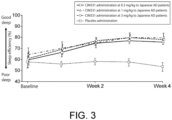
- an IL-31 antagonist-treated group demonstrated an improvement in sleep efficiency.
- uremic pruritus is important for the improvement of the QOL, quality of sleep, or vital prognosis of the patient.
- the present disclosure relates to a pharmaceutical composition for prevention and/or treatment of uremic pruritus comprising an IL-31 antagonist as an active ingredient, which is further for improvement of sleep disturbance caused by uremic pruritus.
- the improvement of sleep disturbance may be characterized by, for example, an increase in the time from falling asleep to awakening, and/or a decrease in sleep latency (the time from going to bed to falling asleep).
- the present disclosure relates to a pharmaceutical composition for improving the QOL caused by uremic pruritus.
- the present disclosure relates to a pharmaceutical composition for improving the vital prognosis caused by uremic pruritus.
- administered repeatedly at the same dose and the same dosing interval is intended to mean that the dose of the IL-31 antagonist of the present disclosure initially administered to a subject (initial dose) is equal to its maintenance dose subsequently administered (namely, the dose at which the IL-31 antagonist continues to be administered after the administration of the initial dose), and the IL-31 antagonist is administered at equal dosing intervals (intervals between doses).
- the above-described recitation means that the interval between the administration of the initial dose and the administration of the first continued dose, every interval between the administration of the ...
- n-th (n is an integer of 1 or more) continued dose and the administration of the (n + 1)-th continued dose is equal, and the doses are equal.
- each dosing interval has a "tolerable range", and the skilled person can decide the tolerable range, as appropriate.
- the repeated administration may mean that, for example, the number of continued doses subsequent to the initial dose is 1 to 10000 or more, for example, and more specifically, 1, 2, 3, 4, 5, 6, 7, 8, 9, 10, 11, ... 15, ... 20, ... 25, ... 35, ... 40, ... 50, ... 60, ... 70, ... 80, ... 90, ... 100, ... 500, ... 1000, ... 10000, ... , for example, but not limited thereto.
- the dosing interval of the pharmaceutical composition or the IL-31 antagonist of the present disclosure is a minimum period of 1 day or longer and a maximum period of 12 weeks or shorter, and may specifically be 1 day, 2 days, 3 days, 4 days, 5 days, 6 days, 1 week, 10 days, 2 weeks, 3 weeks, 4 weeks, 5 weeks, 6 weeks, 7 weeks, 8 weeks, 9 weeks, 10 weeks, 11 weeks, 12 weeks, 1 month, 2 months, or 3 months, for example.
- the dosing interval may also be expressed differently, and may be specified as once daily or once in 12 weeks, or may be specified as every day or every 12 weeks, for example.
- the dosage may be expressed in terms of units other than mg/kg, for example, a fixed dose (mg/body) corresponding to a dose calculated in terms of body weight, or a dose calculated in terms of body surface area (mg/m 2 ).
- the IL-31 antagonist of the present disclosure when it is intended that the IL-31 antagonist of the present disclosure be administered at a fixed dose (mg/body) to a subject with or potentially with uremic pruritus, dosages in mg/kg of the IL-31 antagonist of the present disclosure may be converted to dosages in mg/body, and an appropriate dosage (mg/body) may be selected and administered to the subject.
- an appropriate dosage mg/body
- a dosage in mg/body may be determined as appropriate, using a logic known to those skilled in the art.
- One possible example of such a logic is as follows:
- a dosage in mg/kg into a dosage in mg/body may be considered such that a serum concentration of the IL-31 antagonist is achieved within this range of concentrations, regardless of body weight.
- the subject may be a subject having a body weight below 100 kg or below 120 kg, for example.
- a dosage in mg/body for a subject with a high body weight e.g., a body weight over 100 kg or over 120 kg
- a dosage in mg/kg may be considered.
- the fixed dose may be calculated to be 30 mg/body from a dosage per body weight of 0.5 mg/kg.
- the fixed dose may be calculated to be 15 mg/body from a dosage per body weight of 0.5 mg/kg.
- the IL-31 antagonist of the present disclosure may be administered at one dosage selected from 0.1 mg to 1000 mg/body, for example, 0.2 mg to 360 mg/body, and preferably, for example, 5 mg to 100 mg/body, 5 mg to 75 mg/body, 5 mg to 50 mg/body, 5 mg to 25 mg/body, 5 mg to 20 mg/body, 10 mg to 100 mg/body, 10 mg to 75 mg/body, 10 mg to 50 mg/body, 10 mg to 40 mg/body, 10 mg to 39.5 mg/body, 10 mg to 39 mg/body, 10 mg to 38.5 mg/body, 10 mg to 38 mg/body, 10 mg to 37.5 mg/body, 15 mg to 100 mg/body, 15 mg to 75 mg/body, 15 mg to 50 mg/body, 15 mg to 40 mg/body, 15 mg to 39.5 mg/body, 15 mg to 39 mg/body, 15 mg to 38.5 mg/body, 15 mg to 38.5 mg/body, 10 mg to 38 mg/body, 10 mg to 37.5 mg/body, 15 mg to 100 mg/body, 15
- the IL-31 antagonist of the present disclosure may be administered at one dosage selected from 0.01 mg to 10 mg/kg, for example, 0.05 mg to 7.5 mg/kg, 0.075 mg to 5 mg/kg, or 0.1 mg to 3 mg/kg, and preferably, for example, 0.1 mg to 0.25 mg/kg, 0.1 mg to 0.3 mg/kg, 0.1 mg to 0.5 mg/kg, 0.1 mg to 0.75 mg/kg, 0.1 mg to 1 mg/kg, 0.1 mg to 1.5 mg/kg, 0.1 mg to 2 mg/kg, 0.1 mg to 3 mg/kg, 0.125 mg to 0.25 mg/kg, 0.125 mg to 0.3 mg/kg, 0.125 mg to 0.5 mg/kg, 0.125 mg to 0.75 mg/kg, 0.125 mg to 1 mg/kg, 0.125 mg to 1.5 mg/kg, 0.125 mg to 2 mg/kg, 0.125 mg to 3 mg/kg,
- 0.1 mg to 3 mg/kg will naturally understand that it directly and unambiguously refers to, for example, specific individual values such as 0.1 mg/kg, 0.11 mg/kg, 0.12 mg/kg, 0.125 mg/kg, 0.13 mg/kg, 0.14 mg/kg, 0.15 mg/kg, 0.16 mg/kg, 0.17 mg/kg, 0.18 mg/kg, 0.19 mg/kg, 0.2 mg/kg, 0.21 mg/kg, 0.22 mg/kg, 0.23 mg/kg, 0.24 mg/kg, 0.25 mg/kg, 0.26 mg/kg, 0.27 mg/kg, 0.28 mg/kg, 0.29 mg/kg, 0.3 mg/kg, 0.31 mg/kg, 0.32 mg/kg, 0.33 mg/kg, 0.34 mg/kg, 0.35 mg/kg, 0.36 mg/kg, 0.37 mg/kg, 0.38 mg/kg, 0.39 mg/kg, 0.4 mg/kg, 0.41 mg
- the IL-31 antagonist of the present disclosure may be administered at "0.1 mg to 1000 mg/body/1 day to 12 weeks".
- 0.1 mg to 1000 mg/body/1 day to 12 weeks is contemplated to mean that one dosage is selected from 0.1 mg to 1000 mg as the dosage (e.g., 100 mg/body) of the IL-31 antagonist of the present disclosure, and any one dosing interval is selected from 1 day to 12 weeks as the dosing interval (e.g., 4 weeks) of the IL-31 antagonist of the present disclosure, and the IL-31 antagonist is administered to a subject repeatedly at the same dosage and the same dosing interval.
- “100 mg/body/4 weeks” is contemplated to mean that 100 mg/body of the IL-31 antagonist of the present disclosure is administered to a subject every 4 weeks repeatedly at the same dosage and the same dosing interval.
- the IL-31 antagonist of the present disclosure is preferably administered at 0.1 mg to 1000 mg/body/2 to 8 weeks, and may be administered at, for example, 0.1 mg to 1000 mg/body/2 weeks, 0.1 mg to 1000 mg/body/4 weeks, 0.1 mg to 1000 mg/body/6 weeks, or 0.1 mg to 1000 mg/body/8 weeks, but not limited thereto.
- the IL-31 antagonist of the present disclosure is more preferably administered at 0.2 mg to 360 mg/body/2 to 8 weeks, and may be administered at, for example, 0.2 mg to 360 mg/body/2 weeks, 0.2 mg to 360 mg/body/4 weeks, 0.2 mg to 360 mg/body/6 weeks, or 0.2 mg to 360 mg/body/8 weeks.
- the IL-31 antagonist of the present disclosure is still more preferably administered at 10 mg to 200 mg/body/2 to 8 weeks, and may be administered at, for example, 10 mg to 200 mg/body/2 weeks, 10 mg to 200 mg/body/4 weeks, 10 mg to 200 mg/body/6 weeks, or 10 mg to 200 mg/body/8 weeks.
- the IL-31 antagonist of the present disclosure is even more preferably administered at 10 mg to 100 mg/body/2 to 8 weeks, and may be administered at, for example, 10 mg to 100 mg/body/2 weeks, 10 mg to 100 mg/body/4 weeks, 10 mg to 100 mg/body/6 weeks, or 10 mg to 100 mg/body/8 weeks.
- the IL-31 antagonist of the present disclosure may be administered at 25 mg to 100 mg/body/4 weeks, 25 mg to 80 mg/body/4 weeks, 25 mg to 75 mg/body/4 weeks, 50 mg to 100 mg/body/4 weeks, 50 mg to 80 mg/body/4 weeks, or 50 mg to 75 mg/body/4 weeks, or at 10 mg to 50 mg/body/2 weeks or 20 mg to 40 mg/body/2 weeks.
- the IL-31 antagonist of the present disclosure may be administered at, for example, 5 mg/body/4 weeks, 10 mg mg/body/4 weeks, 15 mg/body/4 weeks, 20 mg/body/4 weeks, 25 mg/body/4 weeks, 30 mg/body/4 weeks, 50 mg/body/4 weeks, 50.5 mg/body/4 weeks, 51 mg/body/4 weeks, 51.5 mg/body/4 weeks, 52 mg/body/4 weeks, 52.5 mg/body/4 weeks, 53 mg/body/4 weeks, 53.5 mg/body/4 weeks, 54 mg/body/4 weeks, 54.5 mg/body/4 weeks, 55 mg/body/4 weeks, 55.5 mg/body/4 weeks, 56 mg/body/4 weeks, 56.5 mg/body/4 weeks, 57 mg/body/4 weeks, 57.5 mg/body/4 weeks, 58 mg/body/4 weeks, 58.5 mg/body/4 weeks, 59 mg/body/4 weeks, 59.5 mg/body/4 weeks, 60 mg/body/4 weeks, 60.5 mg/body/4 weeks, 61 mg/body/4 weeks, 61.5 mg/body/4 weeks, 62
- the IL-31 antagonist of the present disclosure may be administered at, for example, 50 mg/body/6 weeks, 50.5 mg/body/6 weeks, 51 mg/body/6 weeks, 51.5 mg/body/6 weeks, 52 mg/body/6 weeks, 52.5 mg/body/6 weeks, 53 mg/body/6 weeks, 53.5 mg/body/6 weeks, 54 mg/body/6 weeks, 54.5 mg/body/6 weeks, 55 mg/body/6 weeks, 55.5 mg/body/6 weeks, 56 mg/body/6 weeks, 56.5 mg/body/6 weeks, 57 mg/body/6 weeks, 57.5 mg/body/6 weeks, 58 mg/body/6 weeks, 58.5 mg/body/6 weeks, 59 mg/body/6 weeks, 59.5 mg/body/6 weeks, 60 mg/body/6 weeks, 60.5 mg/body/6 weeks, 61 mg/body/6 weeks, 61.5 mg/body/6 weeks, 62 mg/body/6 weeks, 62.5 mg/body/6 weeks, 63 mg/body/6 weeks, 63.5 mg/body/6 weeks, 64 mg/body/6 weeks, 64.5 mg/body/6 weeks, 55 mg/body/6
- the IL-31 antagonist of the present disclosure may be administered at, for example, 50 mg/body/8 weeks, 50.5 mg/body/8 weeks, 51 mg/body/8 weeks, 51.5 mg/body/8 weeks, 52 mg/body/8 weeks, 52.5 mg/body/8 weeks, 53 mg/body/8 weeks, 53.5 mg/body/8 weeks, 54 mg/body/8 weeks, 54.5 mg/body/8 weeks, 55 mg/body/8 weeks, 55.5 mg/body/8 weeks, 56 mg/body/8 weeks, 56.5 mg/body/8 weeks, 57 mg/body/8 weeks, 57.5 mg/body/8 weeks, 58 mg/body/8 weeks, 58.5 mg/body/8 weeks, 59 mg/body/8 weeks, 59.5 mg/body/8 weeks, 60 mg/body/8 weeks, 60.5 mg/body/8 weeks, 61 mg/body/8 weeks, 61.5 mg/body/8 weeks, 62 mg/body/8 weeks, 62.5 mg/body/8 weeks, 63 mg/body/8 weeks, 63.5 mg/body/8 weeks, 64 mg/body/8 weeks, 64.5 mg
- the IL-31 antagonist of the present disclosure may be administered at, for example, 50 mg/body/10 weeks, 50.5 mg/body/10 weeks, 51 mg/body/10 weeks, 51.5 mg/body/10 weeks, 52 mg/body/10 weeks, 52.5 mg/body/10 weeks, 53 mg/body/10 weeks, 53.5 mg/body/10 weeks, 54 mg/body/10 weeks, 54.5 mg/body/10 weeks, 55 mg/body/10 weeks, 55.5 mg/body/10 weeks, 56 mg/body/10 weeks, 56.5 mg/body/10 weeks, 57 mg/body/10 weeks, 57.5 mg/body/10 weeks, 58 mg/body/10 weeks, 58.5 mg/body/10 weeks, 59 mg/body/10 weeks, 59.5 mg/body/10 weeks, 60 mg/body/10 weeks, 60.5 mg/body/10 weeks, 61 mg/body/10 weeks, 61.5 mg/body/10 weeks, 62 mg/body/10 weeks, 62.5 mg/body/10 weeks, 63 mg/body/10 weeks, 63.5 mg/body/10 weeks, 64 mg/body/10 weeks, 64.5 mg
- the IL-31 antagonist of the present disclosure may be administered at, for example, 50 mg/body/12 weeks, 50.5 mg/body/12 weeks, 51 mg/body/12 weeks, 51.5 mg/body/12 weeks, 52 mg/body/12 weeks, 52.5 mg/body/12 weeks, 53 mg/body/12 weeks, 53.5 mg/body/12 weeks, 54 mg/body/12 weeks, 54.5 mg/body/12 weeks, 55 mg/body/12 weeks, 55.5 mg/body/12 weeks, 56 mg/body/12 weeks, 56.5 mg/body/12 weeks, 57 mg/body/12 weeks, 57.5 mg/body/12 weeks, 58 mg/body/12 weeks, 58.5 mg/body/12 weeks, 59 mg/body/12 weeks, 59.5 mg/body/12 weeks, 60 mg/body/12 weeks, 60.5 mg/body/12 weeks, 61 mg/body/12 weeks, 61.5 mg/body/12 weeks, 62 mg/body/12 weeks, 62.5 mg/body/12 weeks, 63 mg/body/12 weeks, 63.5 mg/body/12 weeks, 64 mg/body/12 weeks, 64.5 mg
- the IL-31 antagonist of the present disclosure may be administered at 25 mg to 100 mg/body/4 weeks, 50 mg to 100 mg/body/4 weeks, or 50 mg to 75 mg/body/4 weeks. In another non-limiting embodiment, the IL-31 antagonist of the present disclosure may be administered at 10 mg to 50 mg/body/2 weeks or 20 mg to 40 mg/body/2 weeks.
- the administration of a dose of the IL-31 antagonist of the present disclosure first administered to a subject may be followed by administration of a continued dose (i.e. a dose that continues to be administered after administration of the initial dose).
- a continued dose i.e. a dose that continues to be administered after administration of the initial dose.
- the initial dose may be twice the continued dose.
- the initial dose may be 60 mg/body, and the dosing interval between the initial dose and the first continued dose may be 4 weeks, and the continued dose may be 30 mg/body/4 weeks.
- the IL-31 antagonist of the present disclosure may be administered at "0.01 mg to 10 mg/kg/1 day to 12 weeks".
- 0.01 mg to 10 mg/kg/1 day to 12 weeks is contemplated to mean that one dosage is selected from 0.01 mg to 10 mg as the dosage of the IL-31 antagonist of the present disclosure, and any one dosing interval is selected from 1 day to 12 weeks as the dosing interval (e.g., 4 weeks) of the IL-31 antagonist of the present disclosure, and the IL-31 antagonist is repeatedly administered to a subject at the same dose and the same dosing interval.
- the IL-31 antagonist of the present disclosure is preferably administered at 0.01 mg to 10 mg/kg/2 to 8 weeks, and may be administered at, for example, 0.01 mg to 10 mg/kg/2 weeks, 0.01 mg to 10 mg/kg/4 weeks, 0.01 mg to 10 mg/kg/6 weeks, or 0.01 mg to 10 mg/kg/8 weeks, but not limited thereto.
- the IL-31 antagonist of the present disclosure is more preferably administered at 0.1 mg to 3 mg/body/2 to 8 weeks, and may be administered at, for example, 0.1 mg to 3 mg/kg/2 weeks, 0.1 mg to 3 mg/kg/4 weeks, 0.1 mg to 3 mg/kg/6 weeks, or 0.1 mg to 3 mg/kg/8 weeks.
- the IL-31 antagonist of the present disclosure is more preferably administered at 0.2 mg to 2 mg/body/2 to 8 weeks, and may be administered at, for example, 0.2 mg to 2 mg/kg/2 weeks, 0.2 mg to 2 mg/kg/4 weeks, 0.2 mg to 2 mg/kg/6 weeks, or 0.2 mg to 2 mg/kg/8 weeks.
- the IL-31 antagonist of the present disclosure is more preferably administered at 0.5 mg to 1.5 mg/body/4 to 8 weeks, and may be administered at, for example, 0.5 mg to 1.5 mg/kg/4 weeks, 0.5 mg to 1.5 mg/kg/6 weeks, or 0.5 mg to 1.5 mg/kg/8 weeks.
- the IL-31 antagonist of the present disclosure may be administered at, for example, 0.1 mg/kg/4 weeks, 0.11 mg/kg/4 weeks, 0.12 mg/kg/4 weeks, 0.125 mg/kg/4 weeks, 0.13 mg/kg/4 weeks, 0.14 mg/kg/4 weeks, 0.15 mg/kg/4 weeks, 0.16 mg/kg/4 weeks, 0.17 mg/kg/4 weeks, 0.18 mg/kg/4 weeks, 0.19 mg/kg/4 weeks, 0.2 mg/kg/4 weeks, 0.21 mg/kg/4 weeks, 0.22 mg/kg/4 weeks, 0.23 mg/kg/4 weeks, 0.24 mg/kg/4 weeks, 0.25 mg/kg/4 weeks, 0.26 mg/kg/4 weeks, 0.27 mg/kg/4 weeks, 0.28 mg/kg/4 weeks, 0.29 mg/kg/4 weeks, 0.3 mg/kg/4 weeks, 0.31 mg/kg/4 weeks, 0.32 mg/kg/4 weeks, 0.33 mg/kg/4 weeks, 0.34 mg/kg/4 weeks, 0.35 mg/kg/4 weeks, 0.36 mg/kg/4 weeks, 0.37 mg/kg/kg
- the IL-31 antagonist of the present disclosure may be administered at, for example, 0.1 mg/kg/6 weeks, 0.11 mg/kg/6 weeks, 0.12 mg/kg/6 weeks, 0.125 mg/kg/6 weeks, 0.13 mg/kg/6 weeks, 0.14 mg/kg/6 weeks, 0.15 mg/kg/6 weeks, 0.16 mg/kg/6 weeks, 0.17 mg/kg/6 weeks, 0.18 mg/kg/6 weeks, 0.19 mg/kg/6 weeks, 0.2 mg/kg/6 weeks, 0.21 mg/kg/6 weeks, 0.22 mg/kg/6 weeks, 0.23 mg/kg/6 weeks, 0.24 mg/kg/6 weeks, 0.25 mg/kg/6 weeks, 0.26 mg/kg/6 weeks, 0.27 mg/kg/6 weeks, 0.28 mg/kg/6 weeks, 0.29 mg/kg/6 weeks, 0.3 mg/kg/6 weeks, 0.31 mg/kg/6 weeks, 0.32 mg/kg/6 weeks, 0.33 mg/kg/6 weeks, 0.34 mg/kg/6 weeks, 0.35 mg/kg/6 weeks, 0.36 mg/kg/6 weeks, 0.37
- the IL-31 antagonist of the present disclosure may be administered at, for example, 0.1 mg/kg/8 weeks, 0.11 mg/kg/8 weeks, 0.12 mg/kg/8 weeks, 0.125 mg/kg/8 weeks, 0.13 mg/kg/8 weeks, 0.14 mg/kg/8 weeks, 0.15 mg/kg/8 weeks, 0.16 mg/kg/8 weeks, 0.17 mg/kg/8 weeks, 0.18 mg/kg/8 weeks, 0.19 mg/kg/8 weeks, 0.2 mg/kg/8 weeks, 0.21 mg/kg/8 weeks, 0.22 mg/kg/8 weeks, 0.23 mg/kg/8 weeks, 0.24 mg/kg/8 weeks, 0.25 mg/kg/8 weeks, 0.26 mg/kg/8 weeks, 0.27 mg/kg/8 weeks, 0.28 mg/kg/8 weeks, 0.29 mg/kg/8 weeks, 0.3 mg/kg/8 weeks, 0.31 mg/kg/8 weeks, 0.32 mg/kg/8 weeks, 0.33 mg/kg/8 weeks, 0.34 mg/kg/8 weeks, 0.35 mg/kg/8 weeks, 0.36 mg/kg/8 weeks, 0.37
- the IL-31 antagonist of the present disclosure may be administered at, for example, 0.1 mg/kg/10 weeks, 0.11 mg/kg/10 weeks, 0.12 mg/kg/10 weeks, 0.125 mg/kg/10 weeks, 0.13 mg/kg/10 weeks, 0.14 mg/kg/10 weeks, 0.15 mg/kg/10 weeks, 0.16 mg/kg/10 weeks, 0.17 mg/kg/10 weeks, 0.18 mg/kg/10 weeks, 0.19 mg/kg/10 weeks, 0.2 mg/kg/10 weeks, 0.21 mg/kg/10 weeks, 0.22 mg/kg/10 weeks, 0.23 mg/kg/10 weeks, 0.24 mg/kg/10 weeks, 0.25 mg/kg/10 weeks, 0.26 mg/kg/10 weeks, 0.27 mg/kg/10 weeks, 0.28 mg/kg/10 weeks, 0.29 mg/kg/10 weeks, 0.3 mg/kg/10 weeks, 0.31 mg/kg/10 weeks, 0.32 mg/kg/10 weeks, 0.33 mg/kg/10 weeks, 0.34 mg/kg/10 weeks, 0.35 mg/kg/10 weeks, 0.36 mg/kg/10 weeks, 0.37
- the IL-31 antagonist of the present disclosure may be administered at, for example, 0.1 mg/kg/12 weeks, 0.11 mg/kg/12 weeks, 0.12 mg/kg/12 weeks, 0.125 mg/kg/12 weeks, 0.13 mg/kg/12 weeks, 0.14 mg/kg/12 weeks, 0.15 mg/kg/12 weeks, 0.16 mg/kg/12 weeks, 0.17 mg/kg/12 weeks, 0.18 mg/kg/12 weeks, 0.19 mg/kg/12 weeks, 0.2 mg/kg/12 weeks, 0.21 mg/kg/12 weeks, 0.22 mg/kg/12 weeks, 0.23 mg/kg/12 weeks, 0.24 mg/kg/12 weeks, 0.25 mg/kg/12 weeks, 0.26 mg/kg/12 weeks, 0.27 mg/kg/12 weeks, 0.28 mg/kg/12 weeks, 0.29 mg/kg/12 weeks, 0.3 mg/kg/12 weeks, 0.31 mg/kg/12 weeks, 0.32 mg/kg/12 weeks, 0.33 mg/kg/12 weeks, 0.34 mg/kg/12 weeks, 0.35 mg/kg/12 weeks, 0.36 mg/kg/12 weeks, 0.37
- the IL-31 antagonist of the present disclosure When the IL-31 antagonist of the present disclosure is administered at the above-described predetermined dosing interval and predetermined dose (dosage) to a subject with or potentially with uremic pruritus repeatedly at the same dose and the same dosing interval, it can continuously suppress or improve uremic pruritus and possibly further the various symptoms caused by uremic pruritus (e.g., decrease in QOL, decrease in the quality of sleep, decrease in vital prognosis).
- the dosage and the dosing interval at which the IL-31 antagonist is repeatedly administered are determined, for example, in view of effect and safety.
- oral or parenteral administration can be selected as the method of administering the pharmaceutical composition of present disclosure to a subject.
- oral or parenteral administration may be selected, and when the active ingredient is a high-molecular-weight compound, parenteral administration is preferred, but not limited thereto.
- parenteral administration include injection, nasal, pulmonary, and percutaneous administrations. Additionally, examples of injections include intravenous, intramuscular, intraperitoneal, and subcutaneous injections. Using these methods of administration, the pharmaceutical composition of present disclosure can be systemically or topically administered.
- the pharmaceutical composition of the present disclosure can be prepared by combining the IL-31 antagonist as an active ingredient with pharmaceutically acceptable carriers.
- the IL-31 antagonist may be combined, as appropriate, with pharmaceutically acceptable carriers or media such as sterilized water or saline solution, vegetable oils, emulsifiers, suspensions, surfactants, stabilizers, flavoring agents, excipients, vehicles, preservatives, and binders, for example, and formulated into a pharmaceutical preparation.
- Examples of carriers include light anhydrous silicic acid, lactose, crystalline cellulose, mannitol, starch, carmellose calcium, carmellose sodium, hydroxypropylcellulose, hydroxypropylmethylcellulose, polyvinylacetal diethylaminoacetate, polyvinyl pyrrolidone, gelatin, medium chain fatty acid triglycerides, polyoxyethylene hydrogenated castor oil 60, sucrose, carboxymethyl cellulose, corn starch, and inorganic salts.
- the amount of the active ingredient in these preparations can be set as appropriate within the designated range of doses.
- the present disclosure relates to a method for preventing and/or treating uremic pruritus comprising administering an IL-31 antagonist to a subject with or potentially with uremic pruritus.
- the IL-31 antagonist may be administered to the subject with or potentially with uremic pruritus at 0.1 mg to 1000 mg/body/1 day to 12 weeks, preferably at 0.1 mg to 1000 mg/body/2 weeks, 0.1 mg to 1000 mg/body/4 weeks, or 0.1 mg to 1000 mg/body/8 weeks, repeatedly at the same dose and the same dosing interval.
- the IL-31 antagonist may be administered to the subject with or potentially with uremic pruritus at 0.01 mg to 10 mg/kg/1 day to 12 weeks, preferably at 0.01 mg to 10 mg/kg/2 weeks, 0.01 mg to 10 mg/kg/4 weeks, or 0.01 mg to 10 mg/kg/8 weeks, repeatedly at the same dose and the same dosing interval.
- the IL-31 antagonist may be administered to a subject with or potentially with uremic pruritus having a serum IL-31 concentration equal to or higher than a predetermined value.
- the prevention and/or treatment method of the present disclosure may further comprise selecting, before administering an IL-31 antagonist, a subject as a subject for the prevention/treatment if the IL-31 concentration in a serum obtained from the subject is equal to or higher than a predetermined value.
- the present disclosure provides a method for preventing and/or treating uremic pruritus, comprising selecting a subject if the IL-31 concentration in a serum obtained from the subject is equal to or higher than a predetermined value, and administering an IL-31 antagonist to the selected subject.
- This embodiment of the disclosure may further comprise, before the aforementioned selecting, measuring IL-31 concentration in a serum obtained from a subject with or potentially with uremic pruritus.
- the present disclosure may provide a method for preventing and/or treating uremic pruritus comprising measuring IL-31 concentration in a serum obtained from a subject with or potentially with uremic pruritus; determining the subject to be a responder to prevention and/or treatment with an IL-31 antagonist if the IL-31 concentration is equal to or higher than a predetermined value; and administering an IL-31 antagonist to the subject determined to be a responder.
- a subject with or potentially with uremic pruritus whose serum IL-31 concentration has been measured in advance may be determined to be a responder to prevention and/or treatment with an IL-31 antagonist if the IL-31 concentration is equal to or higher than a predetermined value.
- the present disclosure provides a product comprising at least (i) a container (e.g., an injection); (ii) a pharmaceutical composition comprising an IL-31 antagonist as an active ingredient within the container; and (iii) a document instructing that the IL-31 antagonist be administered at 0.1 mg to 1000 mg/body/1 day to 12 weeks or 0.01 mg to 10 mg/kg/1 day to 12 weeks to a subject with or potentially with uremic pruritus repeatedly at the same dose and the same dosing interval.
- a label, a syringe, an injection needle, a pharmacologically acceptable medium, an alcohol cotton cloth, plaster, and the like may be packaged, as appropriate, with this product.
- the container may be a bottle, a glass bottle, or a syringe, for example, and may be made of any of various materials such as glass and plastics.
- the container contains the pharmaceutical composition, and has an outlet sealed with a rubber stopper, for example.
- the container is provided with, for example, a label indicating that the pharmaceutical composition is for use in preventing or treating a selected pathological condition.
- a numerical value recited herein may be understood to have a certain range of variations in light of the common general knowledge in the art, unless it is contradictory in the context.
- the recitation “1 mg” is understood to be recited as “about 1 mg”, and is understood to include a certain range of variations based on the disclosure of the present specification and the common general knowledge in the art.
- the recitation “1 to 5 times”, for example, as used herein may be understood to recite “1, 2, 3, 4, or 5 times” as if to specifically and individually recite each value, unless it is contradictory in the context.
- 25 times for example, as used herein may be understood to recite “20, 21, 22, 23, 24, or 25 times” as if to specifically and individually recite each value, unless it is contradictory in the context.
- the recitation " 1 to 5000 pg/mL”, for example, as used herein may be understood to recite, for example, "1 pg/mL, 2 pg/mL, 3 pg/mL, 4 pg/mL, 5 pg/mL, 6 pg/mL, 7 pg/mL, 8 pg/mL, 9 pg/mL, 10 pg/mL, ... 15 pg/mL, ... 20 pg/mL, ...
- 15 pg/mL for example, as used herein may be understood to recite “10 pg/mL, 11 pg/mL, 12 pg/mL, 13 pg/mL, 14 pg/mL, or 15 pg/mL” as if it recites specifically and individually each value, unless it is contradictory in the context.
- the recitation "1 to 5000 pg/mL”, for example is meant to specifically and individually recite values such as 100 pg/mL, 224 pg/ml, and 1500 pg/mL, for example.
- the same interpretation applies, as appropriate, to numerical values recited herein, unless it is contradictory in the context, and likewise, a person skilled in the art may naturally understand directly and unambiguously that each value is specifically and individually recited.
- the anti-human IL-31RA antibody CIM331 (nemolizumab) (defined by the amino acid sequences of H chain: SEQ ID NO: 9; L chain: SEQ ID NO: 10) was prepared using a method known to those skilled in the art, in accordance with the disclosure of the aforementioned patent document. As disclosed in WO 2010/064697 , CIM331 has neutralizing activity against human IL-31RA and cynomolgus monkey IL-31RA.
- the effect of subcutaneous administration of CIM331 on pruritus induced by intravenous administration of cynomolgus monkey IL-31 to cynomolgus monkeys was studied.
- the frequency of pruritic behavior was measured as an index of reactivity to pruritus.
- the frequency of pruritic behavior was measured visually by watching the video recordings (2 hours) of each monkey's behavior, and the movement of scratching a part of the body with a forelimb or hindlimb was counted as one occurrence of pruritic behavior.
- pruritic behaviors that ended in one or two scratching movements were excluded from the frequency of pruritic behavior because they were considered to be coincidental events.
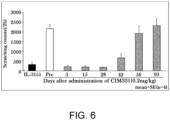
- a single subcutaneous dose of 0.2 or 1 mg/kg of CIM331 was administered to cynomolgus monkeys, and the frequency of pruritic behavior after the administration of cynomolgus monkey IL-31 was measured as follows, to evaluate the effect of subcutaneous administration of CIM331.
- a single subcutaneous dose of 0.2 mg/kg of CIM331 was administered to cynomolgus monkeys, and 1 ⁇ g/kg of cynomolgus monkey IL-31 was intravenously administered before the subcutaneous administration of CIM331 and on days 3, 15, 28, 42, 56, and 93 after the subcutaneous administration of CIM331.
- cynomolgus monkey IL-31 After the administration of cynomolgus monkey IL-31, the individual behavior was recorded with a video camera (2 hours). Likewise, a single subcutaneous dose of 1 mg/kg of CIM331 was administered to cynomolgus monkeys, and 1 ⁇ g/kg of cynomolgus monkey IL-31 was intravenously administered before the subcutaneous administration of CIM331 and on days 28, 42, 56, 77, 79, 81, 84, and 93 after the subcutaneous administration of CIM331. After the administration of cynomolgus monkey IL-31, the individual behavior was recorded with a video camera (2 hours). The individual behavior was subsequently observed by playing the video, and the frequency of pruritic behavior after the administration of cynomolgus monkey IL-31 was measured using the above-described method.
- the administration of a single subcutaneous dose of 0.2 mg/kg of CIM331 to cynomolgus monkeys was shown to reduce the mean value of the frequency of pruritic behavior after the administration of cynomolgus monkey IL-31 in the evaluation on day 3 after the CIM331 administration, compared to that before the CIM331 administration; and was shown to reduce the mean value of the frequency of pruritic behavior after the administration of cynomolgus monkey IL-31 even on day 42 after the CIM331 administration ( Figure 6 ).
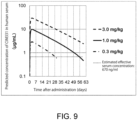
- the effective plasma concentration of CIM331 was determined from the outcome of a study using an in vivo cynomolgus monkey IL-31-induced pruritus model in which systemic pruritus was induced by the administration of cynomolgus monkey IL-31 to a cynomolgus monkey.
- CIM331 was intravenously administered to the same cynomolgus monkey individual while gradually increasing the dosage from 3 to 100 ⁇ g/kg (3, 10, 40, 60, and 100 ⁇ g/kg) to increase the plasma concentration.
- blood was collected to measure the plasma concentration of CIM331.
- pruritic behavior induced by intravenous administration of 1 ⁇ g/kg of cynomolgus monkey IL-31 was recorded with a video camera for 2 hours after the administration, and the frequency of pruritic behavior was measured.
- the behavior of the monkey recorded with a video camera (2 hours) was visually observed, and the movement of scratching a part of the body with a forelimb or hindlimb was counted as one occurrence of pruritic behavior.
- pruritic behaviors that ended in one or two scratching movements were excluded from the frequency of pruritic behavior because they were considered to be coincidental events.
- CIM331 By intravenously administering CIM331 while gradually increasing the dosage, the mean plasma concentration of CIM331 on the day following the CIM331 administration was gradually increased, depending on the dosage.
- CIM331 demonstrated an evident suppressive effect on cynomolgus monkey IL-31-induced pruritus subsequent to the administration of 40 ⁇ g/kg of CIM331 (the mean plasma concentration on the day following the administration was 670 ng/mL).
- a mean plasma concentration of 670 ng/mL was defined as the estimated effective serum concentration of CIM331 in humans. It has been reported that the in vivo pharmacokinetics of antibodies is similar between human and cynomolgus monkey ( Jennifer Q.
- patients with atopic dermatitis were selected who met the following criteria although they underwent treatment with a topical steroid for a duration of 12 weeks or longer:
- a preparation was obtained by filling a vial with 1 mL of a solution containing 100 mg of the CIM331 antibody per milliliter, or by diluting the solution to an intended concentration for administration. Saline solution was used as the placebo.
- the intensity of pruritus was evaluated using the Visual Analog Scale (VAS).
- VAS Visual Analog Scale
- the VAS consists of a 100-mm straight line, on which the patients themselves indicate the intensity of itchiness when awakening and when going to bed by drawing a line between 0 to 100 mm, where 0 mm represents no itchiness and 100 mm represents the severest itchiness that patients with atopic dermatitis experienced in the past.
- the patients kept records every day during the period of the study.
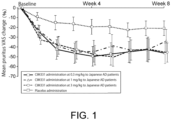
- the placebo group showed a change in VAS that is approximately a 20% decrease
- all dose groups of the CIM331-administered groups showed a decrease in VAS from week 1 after the administration, and maintained approximately a 50% decrease even at week 4 after the administration and thereafter ( Fig. 1 ).
- the Eczema Area Severity Index (EASI) score is a tool for assessing the severity and the range of atopic dermatitis.
- the extent and the proportion of eczema in representative affected areas were evaluated for each of the four areas, i.e., the head and neck, the upper limb, the trunk, and the lower limb, and the degrees of redness (erythema), thickness (induration, papules, and edema), excoriations (scratch marks), and lichenification were evaluated on a scale of (0) none, (1) mild, (2) moderate, and (3) severe.
- a doctor made assessments at a frequency of once in 1 or 2 weeks.
- the mean variation in the EASI score was -11.5 points, and the decrease in the EASI score was greater than that in the placebo group or the group showing a percent decrease of less than 50% in the pruritus VAS score ( Fig. 2 ).
- the Dermatology Life Quality Index is a dermatologic tool DLQI for evaluating the QOL (Finlay et al. 1994), and consists of 10 questions.
- the DLQI questions can be grouped under the following six items: symptoms and feelings, daily activities, leisure, work and school, personal relationships, and treatment.
- the DLQI is determined by adding the scores for all the items of the questionnaire. The maximum score is 30, and the minimum score is 0. A higher score indicates lower QOL.
- the patients kept records every 2 or 4 weeks.
- the placebo group showed a 0.7-point decrease on average
- the CIM331 groups showed a 5.4- to 6.3-point decrease on average.
- a topical steroid (Locoid (registered trademark); hydrocortisone butyrate) was used in combination in all the patients.
- the amount of the topical steroid used could be varied as appropriate, depending on the condition of the patient.
- the amount of Locoid used tended to increase in the placebo-treated group, whereas the amount of Locoid used tended to decrease from week 1 after the administration in all dose groups of the CIM331-administered groups ( Fig. 4 ).
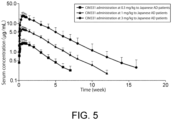
- Fig. 5 shows serum concentration_time course of CIM331 in Japanese patients with atopic dermatitis
- Table 1 shows pharmacokinetic parameters.
- CIM331 reached its maximum serum concentration, and thereafter showed mild elimination with serum elimination half-lives (t 1/2 ) of days 12.6 to 14.6.
- the C max for the 0.3 mg/kg group, 1 mg/kg group, and 3 mg/kg group were 2.20, 6.50, and 19.4 ⁇ g/mL, respectively, and the AUC inf were 49.2, 161, and 489 day ⁇ ⁇ g/mL, respectively.
- the AUC inf , AUC last , and C max upon administration of single subcutaneous doses of CIM331 increased dose-proportionally.
- the serum concentration of CIM331 dose-dependently showed a tendency to prolong the period during which the concentration was maintained at a certain level or higher. Meanwhile, the relation between the pruritus-suppressing effect of the CIM331 administration and exposure was not clear in this study.
- CIM331 improved the pruritus, dermatitis, and QOL of the patients with atopic dermatitis.
- This study is the first clinical study outcome report showing that the IL-31 antagonist is effective against pruritus which occurs due to atopic dermatitis.
- CIM331 can thus be expected to provide improvements not only in pruritus which occurs due to atopic dermatitis, but also in dermatitis and QOL, based on the novel mechanism of action that blocks the itch-scratch cycle. It is known that scratching caused by pruritus is an exacerbating factor that aggravates rash. Scratching mechanically damages the skin and reduces the barrier function.
- the investigational drug is prepared as follows: A preparation obtained by filling each vial with 1.53 mL of a solution containing 100 mg of the CIM331 antibody per mL, and freeze-drying the solution, is dissolved in water for injection to provide a solution for administration. This solution for administration is further diluted with a separately dissolved placebo solution to an intended concentration for administration. [Table 2] CIM331 Dose (mg/kg) Concentration of CIM331 Solution for Administration (mg/mL) 0.1 5 0.5 25 2.0 100
- patients with atopic dermatitis were selected for which the administration of a topical steroid or a topical calcineurin inhibitor at a fixed dosage for a duration of 4 weeks or longer was not sufficiently effective, or for which standard topical therapy was intolerable, or for which standard topical therapy could not be carried out (due to contraindications and the like), and who met the following criteria:
- Part A was a randomized, double-blind, placebo-controlled, parallel-group comparison study (weeks 0 to 12).
- Part B was a double-blind administration extension period, during which the CIM331 administration to the subjects was continued for additional 52 weeks (weeks 12 to 64).
- About 250 subjects in Part A were randomly allocated to one of four test drug groups (about 50 subjects per group) and a placebo group (about 50 subjects) at a ratio of 1:1:1:1:1.
- the subjects who were allocated to the placebo group in Part A were randomly reallocated to groups to which CIM331 (0.1 mg/kg, 0.5 mg/kg, and 2.0 mg/kg) was subcutaneously administered every 4 weeks in Part B.
- the subjects who were randomly allocated to the test drug groups in Part A were reallocated to the same dose groups as in Part A, and continued to receive the same treatment from week 12 and thereafter.
- Actiwatch is a noninvasive measurement device designed to be worn around a wrist, and capture, record, and store movements of the wrist that serve as an index of systemic movement while the user can behave freely.
- the subjects wear this device from the start of the preobservation period until week 4.
- Other parameters including the actual time from falling asleep to awakening, sleep latency, and sleep efficiency are measured using an objective method.
- the percent improvement in pruritus VAS at week 12 after the start of administration compared to that at the start of administration is used as the primary endpoint to verify the superiority and efficacy of each dose group to which CIM331 is administered once every 4 weeks, compared to the placebo group.
- Analysis of covariance is used as the primary analysis method. Specifically, a model is fitted in which the percent improvement in pruritus VAS at week 12 after the start of administration compared to that at the start of administration is used as a response variable, the treated groups are used as fixed effects, and pruritus VAS at the start of administration and the regions (Japan, Europe, and the United States) are used as covariates.
- the primary analysis using a one-sided significance level of 0.025 as the significance level of the test, multiplicity due to the repetition of tests is considered by performing comparisons between two groups successively from a high dose, based on the principle of the closed testing procedure.
- the per-protocol (PP) set is used which excludes, for example, some subjects who demonstrated a serious deviation from the protocol, subjects who withdrew from the clinical study in an early stage, and subjects who were administered with an investigational drug different from those allocated. Data measured after the receipt of rescue therapy are all excluded, and missing values are complemented using LOCF (Last Observation value Carrying Forward after baseline).
- the primary analysis set included 46, 46, 45, 47, or 45 patients, respectively, in the placebo group, the groups to which CIM331 was subcutaneously administered every 4 weeks at 0.1 mg/kg, 0.5 mg/kg, or 2.0 mg/kg, or the group to which CIM331 was subcutaneously administered every 8 weeks at 2.0 mg/kg.
- the difference (least square mean) in the percent improvement in pruritus VAS at week 12 after the start of administration compared to that at the start of administration, which was used as the primary endpoint, was -21.39% (p 0.0027), -41.16% (p ⁇ 0.0001), or -40.39% (p ⁇ 0.0001) in the 0.1 mg/kg, 0.5 mg/kg, or 2.0 mg/kg group, respectively.
- this study is an exploratory dose-finding study, secondary analysis besides the primary analysis can be performed to make a comprehensive investigation of dosages.
- a one-sided significance level of 0.025 as the significance level of the test is used as a guide.
- MMRM mixed-effects model repeated measures approach
- ITT Intent-to-Treat
- the results of analysis without compensation of missing values may be checked as appropriate, and comprehensively studied.
- analysis of a model using the proportion of improved cases based on their continuous quantity or a certain threshold as a response variable may be evaluated. Important subpopulations may be considered for this analysis.
- a secondary efficacy endpoint besides the pruritus VAS may be similarly analyzed.
- the proportion of subjects who demonstrated an improvement of 50% in EASI at week 12 after the start of administration was 43%, 51%, or 41% in the 0.1 mg/kg group, 0.5 mg/kg group, or 2.0 mg/kg group, respectively, compared to 33% in the placebo group.
- the proportion of subjects who demonstrated an improvement of 75% was 23%, 37%, or 22% in the 0.1 mg/kg group, 0.5 mg/kg group, or 2.0 mg/kg group, respectively, compared to 14% in the placebo group.
- the proportion of subjects who demonstrated an improvement of 50% in SCORAD at week 12 after the start of administration was 18%, 39%, or 31% in the 0.1 mg/kg group, 0.5 mg/kg group, or 2.0 mg/kg group, respectively, compared to 15% in the placebo group.
- the proportion of subjects who demonstrated an improvement of 75% was 0%, 15%, or 17% in the 0.1 mg/kg group, 0.5 mg/kg group, or 2.0 mg/kg group, respectively, compared to 3% in the placebo group.
- the proportion of subjects who demonstrated an improvement by 2 points or more in sIGA at week 12 after the start of administration was 21%, 30%, or 22% in the 0.1 mg/kg group, 0.5 mg/kg group, or 2.0 mg/kg group, respectively, compared to 12% in the placebo group.
- the proportion of subjects who demonstrated an improvement by 2 points or more in pruritus VRS at week 12 after the start of administration was 14%, 47%, or 30% in the 0.1 mg/kg group, 0.5 mg/kg group, or 2.0 mg/kg group, respectively, compared to 5% in the placebo group.
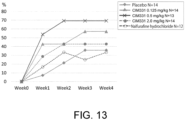
- the percent improvement in pruritus VAS at week 4 after the administration was 39%, 55%, or 46% in the 0.1 mg/kg group, 0.5 mg/kg group, or 2.0 mg/kg group, respectively, compared to 12% in the placebo group.
- the percent improvement at week 12 after the administration was 47%, 68%, or 67% in the 0.1 mg/kg group, 0.5 mg/kg group, or 2.0 mg/kg group, respectively, compared to 24% in the placebo group.
- the percent improvement in EASI at week 12 after the administration was 34%, 54%, or 48% in the 0.1 mg/kg, 0.5 mg/kg, or 2.0 mg/kg group, respectively, compared to 38% in the placebo group.
- the percent improvement in SCORAD at week 12 after the administration was 37%, 45%, or 47% in the 0.1 mg/kg, 0.5 mg/kg, or 2.0 mg/kg group, respectively, compared to 22% in the placebo group.
- the percent improvement in sIGA at week 12 after the administration was 25%, 34%, or 28% in the 0.1 mg/kg, 0.5 mg/kg, or 2.0 mg/kg group, respectively, compared to 13% in the placebo group.
- the percent improvement in BSA at week 12 after the administration was 25%, 26%, or 33% in the 0.1 mg/kg, 0.5 mg/kg, or 2.0 mg/kg group, respectively, compared to 31% in the placebo group.
- the percent improvement in pruritus VRS at week 12 after the administration was 42%, 58%, or 58% in the 0.1 mg/kg, 0.5 mg/kg, or 2.0 mg/kg group, respectively, compared to 18% in the placebo group.
- the percent improvement in sleep disturbance VAS at week 12 after the administration was 57%, 65%, or 67% in the 0.1 mg/kg, 0.5 mg/kg, or 2.0 mg/kg group, respectively, compared to 31% in the placebo group.
- the time from baseline until 50% of patients achieved an improvement of 25%, 50%, or 75% in pruritus VAS was as follows: 2 weeks, 4 weeks, or not achieved, respectively, in the 0.1 mg/kg group; 2 weeks, 2 weeks, or 5 weeks, respectively, in the 0.5 mg/kg group; and 2 weeks, 4 weeks, or not achieved, respectively, in the 2.0 mg/kg group; compared to 11 weeks, not achieved, or not achieved, respectively, in the placebo group.
- the percent achievement in the improvement of 25%, 50%, or 75% from baseline at week 12 after the start of administration as determined using Kaplan-Meier estimates was as follows: 84%, 66%, or 38%, respectively, in the 0.1 mg/kg group; 95%, 80%, or 68%, respectively, in the 0.5 mg/kg group; and 94%, 71%, or 48%, respectively, in the 2.0 mg/kg group; compared to 52%, 38%, or 22%, respectively, in the placebo group.
- the time from baseline until 50% of patients achieved an improvement of 25%, 50%, or 75% in EASI was as follows: 2 weeks, 4 weeks, or not achieved, respectively, in the 0.1 mg/kg group; 2 weeks, 4 weeks, or 12 weeks, respectively, in the 0.5 mg/kg group; and 2 weeks, 6 weeks, or not achieved, respectively, in the 2.0 mg/kg group; compared to 6 weeks, 12 weeks, or not achieved, respectively, in the placebo group.
- the percent achievement in the improvement of 25%, 50%, or 75% from baseline at week 12 after the start of administration as determined using Kaplan-Meier estimates was as follows: 71%, 66%, or 37%, respectively, in the 0.1 mg/kg group; 84%, 73%, or 53%, respectively, in the 0.5 mg/kg group; and 93%, 67%, or 28%, respectively, in the 2.0 mg/kg group; compared to 68%, 51%, or 23%, respectively, in the placebo group.
- the time from baseline until 50% of patients achieved an improvement of 25%, 50%, or 75% in SCORAD was as follows: 2 weeks, not achieved, or not achieved, respectively, in the 0.1 mg/kg group; 3 weeks, 10 weeks, or not achieved, respectively, in the 0.5 mg/kg group; and 2 weeks, not achieved, or not achieved, respectively, in the 2.0 mg/kg group; compared to 6 weeks, not achieved, or not achieved, respectively, in the placebo group.
- the percent achievement in the improvement of 25%, 50%, or 75% from baseline at week 12 after the start of administration as determined using Kaplan-Meier estimates was as follows: 78%, 46%, or 9%, respectively, in the 0.1 mg/kg group; 78%, 55%, or 30%, respectively, in the 0.5 mg/kg group; and NE (not evaluable), 46%, or 25%, respectively, in the 2.0 mg/kg group; compared to 57%, 40%, or 6%, respectively, in the placebo group.
- the time from baseline until 50% of patients received rescue therapy was not achieved by week 12 in any of the placebo group, 0.1 mg/kg group, 0.5 mg/kg group, and 2.0 mg/kg group.
- the time from baseline until 25% of patients received rescue therapy was 5 weeks, 9 weeks, not achieved, or 9 weeks, respectively, in the placebo group, 0.1 mg/kg group, 0.5 mg/kg group, or 2.0 mg/kg group.
- the proportion of subjects who received rescue therapy was 26.1% in the 0.1 mg/kg group, 24.4% in the 0.5 mg/kg group, or 29.8% in the 2.0 mg/kg group, compared to 39.1% in the placebo group.
- the results of actigraphy in the groups to which CIM331 was administered every 4 weeks in Part A showed that the actual time from falling asleep to awakening at week 4 after the administration was increased by 49.5 minutes in the 0.1 mg/kg group, increased by 53.1 minutes in the 0.5 mg/kg group, or increased by 48.2 minutes in the 2.0 mg/kg group, compared to an increase by 7.3 minutes in the placebo group.
- the sleep latency (the time from going to bed to falling asleep) at week 4 after the administration was decreased by 17.6 minutes in the 0.1 mg/kg group, decreased by 14.8 minutes in the 0.5 mg/kg group, or decreased by 12.7 minutes in the 2.0 mg/kg group, compared to a decrease by 4.3 minutes in the placebo group.
- Fig. 10 shows relationships between the body weight and exposure.
- the graph A shows estimated exposure by administration at 0.5 mg/kg or 2 mg/kg
- the graphs B, C, and D show estimated exposure by administration at 50, 75, and 100 mg/body, respectively.
- the reference curves in each graph indicate an estimated upper limit of exposure (1060 ⁇ g ⁇ day/mL) at 2 mg/kg and an estimated lower limit of exposure (44 ⁇ g ⁇ day/mL) at 0.5 mg/kg.
- Figure 11 shows estimated pruritus VAS at 1 year after the administration of CIM331.
- pruritus VAS When the fixed dosage per 4 weeks was 25 mg/body or more, and preferably 50 mg/body or more, pruritus VAS was estimated to show values similar to those at 0.5 mg/kg or 2 mg/kg.
- a therapeutic embodiment involving repeatedly administering CIM331 every 4 or 8 weeks can be expected to markedly alleviate the patient's burden of taking the medicine or visiting the hospital, for example, and can further contribute to improving the patient's QOL.
- nalfurafine hydrochloride capsule was orally administered every day for 12 weeks at one capsule (2.5 ⁇ g) per time per day after an evening meal or before going to bed.
- the dose per body weight and the concentration of administration solution for CIM331 were adjusted as specified below and a volume of 20 ⁇ L per body weight was slowly administered.
- the preparation of the investigational drug prepared by filling a vial with 1.53 mL of a solution containing the CIM331 antibody at 100 mg per 1 mL and freeze-drying it, was dissolved in injection water to prepare an administration solution and it was further diluted using a solution of placebo dissolved separately to give the desired concentration for administration.
- Dose of CIM331 (mg/kg) Concentration of CIM331 administration solution (mg/mL) 0.125 6.25 0.5 25 2.0 100
- Uremic pruritus patients selected for CIM331 administration were those who had been receiving an antihistamine agent or antiallergic agent, excluding nalfurafine hydrochloride, for two or more weeks without sufficient effect, or had received anti-pruritus treatment with nalfurafine hydrochloride during the last one year (irrespective of the duration of the treatment), and who satisfied the following criteria:
- test subjects were assigned randomly to any one of the following five groups at 1:1:1:1:1.
- Actiwatch is a noninvasive measurement device designed to be worn around a wrist, and capture, record, and store movements of the wrist that serve as an index of systemic movement while the user can behave freely. Other parameters including the actual time from falling asleep to awakening, sleep latency, and sleep efficiency were measured using an objective method.
- the placebo group and each dosage group of CIM331 were compared by analysis of covariance (ANCOVA), selecting the change in pruritus VAS at four weeks after the administration from the baseline as an objective variable and the pruritus VAS at the baseline as a covariate.
- the 95% confidence interval of the difference in average values was calculated by ANCOVA. Missing values were complemented using LOCF (Last Observation Carried Forward after baseline).
- the nalfurafine hydrochloride group was exploratorily compared with each CIM331 administration group and the placebo group. Similar analysis was carried out as the primary analysis for each CIM331 administration group and the placebo group. Other exploratory analyses were as described in the SAP (statistical analysis plan).
- the primary analysis set from the patients who received administration of placebo, CIM331, or nalfurafine hydrochloride capsule was the placebo group, CIM331 0.125 mg/kg group, CIM331 0.5 mg/kg group, CIM331 2.0 mg/kg group, and nalfurafine hydrochloride group which consisted of 14 cases, 14 cases, 13 cases, 14 cases, and 12 cases, respectively.
- the change in pruritus VAS at one week after the start of administration from the baseline was -18.6 mm in the placebo group and -17.4 mm in the nalfurafine hydrochloride group, and, in contrast thereto, was -27.4 mm in the CIM331 0.125 mg/kg group, -30.3 mm in the CIM331 0.5 mg/kg group, and -25.9 mm in the CIM331 2.0 mg/kg group, showing quick improvement effect on pruritus in every CIM331 groups.
- the change in pruritus VAS at four weeks after the start of administration was -32.8 mm in the placebo group and -27.3 mm in the nalfurafine hydrochloride group, and, in contrast thereto, was -34.7 mm in the CIM331 0.125 mg/kg group, - 40.1 mm in the CIM331 0.5 mg/kg group, and -31.5 mm in the CIM331 2.0 mg/kg group, with the largest change being observed in the CIM331 0.5 mg/kg group ( Fig. 12 ).
- the change in Shiratori score (daytime) at four weeks after the start of administration was -0.89 in the placebo group and -0.67 in the nalfurafine hydrochloride group, and, in contrast thereto, was -1.00 in the CIM331 0.125 mg/kg group, -1.30 in the CIM331 0.5 mg/kg group, and -0.79 in the CIM331 2.0 mg/kg group, with the largest improvement being observed in the CIM331 0.5 mg/kg group.
- the change in Shiratori score (nighttime) at four weeks after the start of administration was -0.81 in the placebo group and -0.51 in the nalfurafine hydrochloride group, and, in contrast thereto, was -0.64 in the CIM331 0.125 mg/kg group, -1.16 in the CIM331 0.5 mg/kg group, and -0.79 in the CIM331 2.0 mg/kg group, with the largest improvement being observed in the CIM331 0.5 mg/kg group.
- the change in 5-D itch scale score at four weeks after the start of administration was -5.4 in the placebo group and -3.7 in the nalfurafine hydrochloride group, and, in contrast thereto, was -5.6 in the CIM331 0.125 mg/kg group, -6.5 in the CIM331 0.5 mg/kg group and -3.1 in the CIM331 2.0 mg/kg group, with the largest improvement being observed in the CIM331 0.5 mg/kg group.
- Biomarker evaluation was performed to evaluate correlation between the serum IL-31 concentration before CIM331 administration and the clinical trial results after CIM331 administration.
- the serum samples cryopreserved at or below -70°C were thawed at room temperature, and serum IL-31 concentration was measured using ultrasensitive enzyme-linked immunosorbent assay (ELISA; SiMoA TM , Quanterix, Billerica, MA, USA).
- ELISA ultrasensitive enzyme-linked immunosorbent assay
- SiMoA TM Quanterix, Billerica, MA, USA
- the samples from the test patients were also compared with commercially available healthy volunteer-derived samples by post
- Fig. 14 The result of the biomarker analysis of IL-31 distribution by post hoc analysis is shown in Fig. 14 .
- UP uremic pruritus
- Fig. 14 serum IL-31 levels
- those with a serum IL-31 level of 0.86 pg/mL or higher showed significant reduction in pruritus VAS as a result of CIM331 administration, compared to those with a serum IL-31 level lower than 0.86 pg/mL ( Fig. 15 ). This trend was not observed in the placebo-administered group or the nalfurafine hydrochloride-administered group.
- a therapeutic embodiment that can suppress pruritus over four weeks or more by single subcutaneous administration of CIM331, for example, can be expected to markedly alleviate the patient's burden of taking the medicine or visiting the hospital, for example, and can further contribute to improving the patient's QOL.
- uremic pruritus patients who have IL-31 concentrations equal to or higher than a predetermined value before starting CIM331 administration the administration of CIM331 can be expected to exert higher pruritus-improving effect.
- a predetermined serum IL-31 concentration that may serve as a baseline at which the exertion of high pruritus-improving effect can be expected is, for example, 0.86 pg/mL.
- Administering CIM331 to uremic pruritus patients with serum IL-31 concentration equal to or higher than such a predetermined value may further contribute to improvement of patients' QOL.
- CIM331 may be administered to dialysis patients for whom existing treatment against pruritus other than nalfurafine hydrochloride does not work sufficiently well, although it is not limited to such embodiments.
- CIM331 may be subcutaneously administered repeatedly in equal dosages at the same dosing interval, for example, once every 2 to 12 weeks, and specifically, for example, every 2, 3, 4, 5, 6, 7, 8, 9, 10, 11, or 12 weeks, or once every 1, 2, or 3 months.
- the dosage of CIM331 per body weight and the concentration of the CIM331 solution for administration may be determined as appropriate, based on the results of the phase II clinical trial or the results of other studies, for example. For example, when the body weight of a patient with uremic pruritus exceeds 120 kg, an investigational drug may be prepared on the assumption that the body weight is 120 kg. Furthermore, when it is intended that CIM331 be administered in mg/body to a patient with uremic pruritus, dosages in mg/kg of CIM331 may be converted to dosages in mg/body, based on the results of the phase II clinical trial, for example, and an appropriate dosage (mg/body) may be selected and administered. In this case, although the logic for converting mg/kg to mg/body is not limited, it will be understood that a person skilled in the art can determine a dosage in mg/body, as appropriate, by using the following logic.
- CIM331 may be subcutaneously administered at one dosage selected from 0.1 mg to 1000 mg/body, for example, 0.2 mg to 360 mg/body, and preferably 10 mg to 200 mg/body, 10 mg to 100 mg/body, 25 mg to 100 mg/body, 50 mg to 100 mg/body, or 50 mg to 75 mg/body, and at a dosing interval described above, repeatedly at the same dosage and the same dosing interval.
- CIM331 may be subcutaneously administered at one dosage selected from 0.01 mg to 10 mg/kg, for example, 0.1 mg to 3 mg/kg, preferably 0.2 mg to 2 mg/kg, and more preferably 0.5 mg to 1.5 mg/kg, and at a dosing interval described above, repeatedly at the same dosage and the same dosing interval.
- Human fetal renal cancer cell-derived HEK293H cell line (Invitrogen) was suspended in DMEM medium (Invitrogen) supplemented with 10% Fetal Bovine Serum (Invitrogen).
- the cells were plated at 10 mL per dish for adherent cells (10 cm in diameter; CORNING) at a cell density of 5 to 6 x 10 5 cells/mL, and cultured in a CO 2 incubator (37°C, 5% CO 2 ) for one whole day and night.
- the medium was then removed by aspiration, and 6.9 mL of CHO-S-SFM-II (Invitrogen) medium was added.
- the prepared plasmid was introduced into the cells by the lipofection method.
- the resulting culture supernatants were collected and centrifuged (about 2000 g, 5 min, room temperature) to remove the cells, and sterilized by filtering through 0.22- ⁇ m filter MILLEX (R)-GV (Millipore) to obtain culture supernatants.
- Antibodies were purified from the obtained culture supernatants by a method known to those skilled in the art using rProtein A SepharoseTM Fast Flow (Amersham Biosciences). To determine concentrations of the purified antibodies, absorbance was measured at 280 nm using a spectrophotometer. The antibody concentrations were calculated from the determined value, using an absorbance coefficient calculated by the method described in Protein Science 1995; 4: 2411-2423 .
Landscapes
- Health & Medical Sciences (AREA)
- Chemical & Material Sciences (AREA)
- Organic Chemistry (AREA)
- Life Sciences & Earth Sciences (AREA)
- General Health & Medical Sciences (AREA)
- Medicinal Chemistry (AREA)
- Immunology (AREA)
- Biochemistry (AREA)
- Biophysics (AREA)
- Genetics & Genomics (AREA)
- Molecular Biology (AREA)
- Proteomics, Peptides & Aminoacids (AREA)
- Engineering & Computer Science (AREA)
- Animal Behavior & Ethology (AREA)
- Dermatology (AREA)
- Chemical Kinetics & Catalysis (AREA)
- General Chemical & Material Sciences (AREA)
- Nuclear Medicine, Radiotherapy & Molecular Imaging (AREA)
- Pharmacology & Pharmacy (AREA)
- Bioinformatics & Cheminformatics (AREA)
- Public Health (AREA)
- Veterinary Medicine (AREA)
- Medicines Containing Antibodies Or Antigens For Use As Internal Diagnostic Agents (AREA)
- Medicines That Contain Protein Lipid Enzymes And Other Medicines (AREA)
- Peptides Or Proteins (AREA)
- Pharmaceuticals Containing Other Organic And Inorganic Compounds (AREA)
Applications Claiming Priority (1)
| Application Number | Priority Date | Filing Date | Title |
|---|---|---|---|
| PCT/JP2020/032987 WO2022049614A1 (fr) | 2020-09-01 | 2020-09-01 | Composition pharmaceutique pour la prévention et/ou le traitement du prurit en dialyse contenant comme principe actif un antagoniste de l'il-31 |
Publications (2)
| Publication Number | Publication Date |
|---|---|
| EP4209227A1 true EP4209227A1 (fr) | 2023-07-12 |
| EP4209227A4 EP4209227A4 (fr) | 2024-05-29 |
Family
ID=73741045
Family Applications (1)
| Application Number | Title | Priority Date | Filing Date |
|---|---|---|---|
| EP20952354.7A Withdrawn EP4209227A4 (fr) | 2020-09-01 | 2020-09-01 | Composition pharmaceutique pour la prévention et/ou le traitement du prurit en dialyse contenant comme principe actif un antagoniste de l'il-31 |
Country Status (10)
| Country | Link |
|---|---|
| US (1) | US20230391878A1 (fr) |
| EP (1) | EP4209227A4 (fr) |
| JP (2) | JP6799831B1 (fr) |
| KR (2) | KR102269716B1 (fr) |
| CN (1) | CN116096411A (fr) |
| AU (1) | AU2020466800A1 (fr) |
| CA (1) | CA3189847A1 (fr) |
| IL (1) | IL300694A (fr) |
| MX (1) | MX2023002482A (fr) |
| WO (1) | WO2022049614A1 (fr) |
Families Citing this family (4)
| Publication number | Priority date | Publication date | Assignee | Title |
|---|---|---|---|---|
| JP5954916B1 (ja) | 2015-04-14 | 2016-07-20 | 中外製薬株式会社 | Il−31アンタゴニストを有効成分として含有する、アトピー性皮膚炎の予防用及び/又は治療用医薬組成物 |
| US10093731B2 (en) | 2017-02-24 | 2018-10-09 | Kindred Biosciences, Inc. | Anti-IL31 antibodies for veterinary use |
| MX2022005654A (es) | 2019-11-20 | 2022-06-22 | Chugai Pharmaceutical Co Ltd | Preparacion que contiene anticuerpo. |
| CN120441701A (zh) * | 2024-02-07 | 2025-08-08 | 武汉人福创新药物研发中心有限公司 | 一种靶向il-31ra的抗体或其抗原结合片段及其应用 |
Family Cites Families (27)
| Publication number | Priority date | Publication date | Assignee | Title |
|---|---|---|---|---|
| FR2707189B1 (fr) | 1993-07-09 | 1995-10-13 | Gradient Ass | Procédé de traitement de résidus de combustion et installation de mise en Óoeuvre dudit procédé. |
| DK1071700T3 (da) | 1998-04-20 | 2010-06-07 | Glycart Biotechnology Ag | Glykosylerings-modifikation af antistoffer til forbedring af antistofafhængig cellulær cytotoksicitet |
| CA2704600C (fr) | 1999-04-09 | 2016-10-25 | Kyowa Kirin Co., Ltd. | Methode de production d'anticorps avec activite adcc accrue |
| EP2325316B8 (fr) | 1999-06-02 | 2017-04-19 | Chugai Seiyaku Kabushiki Kaisha | Protéine réceptrice d'hémopoïétine, NR10 |
| EP1332209B1 (fr) | 2000-09-08 | 2009-11-11 | Universität Zürich | Groupes de proteines a domaines de repetition comprenant des modules de repetition |
| EP2141243A3 (fr) | 2000-10-16 | 2010-01-27 | Brystol-Myers Squibb Company | Supports de protéine pour mimer des anticorps et d'autres protéines de liaison |
| US20030157561A1 (en) | 2001-11-19 | 2003-08-21 | Kolkman Joost A. | Combinatorial libraries of monomer domains |
| JP2002338476A (ja) * | 2001-05-21 | 2002-11-27 | Health Factor Kenkyusho:Kk | 腎透析に伴う痒みの予防治療剤 |
| EP2840089A1 (fr) | 2002-01-18 | 2015-02-25 | ZymoGenetics, Inc. | Multimères Zcytor17 du récepteur de la cytokine |
| WO2005079566A2 (fr) | 2004-02-12 | 2005-09-01 | Lexicon Genetics Incorporated | Nouvelles disruptions geniques, compositions et procedes associes |
| EP1671642A1 (fr) | 2004-12-15 | 2006-06-21 | Universite D'angers | Composés contenant des (ant)agonistes de l'oncostatin M (OSM), IL-31 et IFN-gamma pour moduler la migration et fonction de keratinocytes au moyen d'un recepteur comprenant l'OSMRbeta comme sousunité, et applications correspondantes |
| EP1858924A1 (fr) | 2005-02-14 | 2007-11-28 | ZymoGenetics, Inc. | Methodes de traitement d'affections de la peau en employant un antagoniste de il-31ra |
| WO2006088955A2 (fr) | 2005-02-14 | 2006-08-24 | Zymogenetics, Inc. | Methodes de traitement des maladies mediees par des cellules positives a l'egard de l'antigene lymphocytaire cutane |
| KR101443050B1 (ko) | 2005-05-06 | 2014-09-22 | 지모제넥틱스, 인코포레이티드 | Il-31 단클론성 항체 및 사용법 |
| CN101589060A (zh) * | 2006-01-10 | 2009-11-25 | 津莫吉尼蒂克斯公司 | 使用il-31拮抗剂在神经元性组织中治疗疼痛和炎症的方法 |
| EP2749571A3 (fr) * | 2006-01-10 | 2014-08-13 | ZymoGenetics, Inc. | Procédés de traitement de la douleur et de l'inflammation dans des tissus neuronaux au moyen d'antagonistes IL-31RA et OSMRb |
| ES2429407T3 (es) | 2006-06-08 | 2013-11-14 | Chugai Seiyaku Kabushiki Kaisha | Agente preventivo o remedio para enfermedades inflamatorias |
| ES2548714T3 (es) | 2006-09-01 | 2015-10-20 | Zymogenetics, Inc. | Anticuerpos monoclonales IL-31 y procedimientos de uso |
| TW201634479A (zh) | 2007-12-05 | 2016-10-01 | 中外製藥股份有限公司 | 抗nr10抗體及其應用 |
| CA2708065C (fr) | 2007-12-05 | 2015-02-24 | Chugai Seiyaku Kabushiki Kaisha | Agent therapeutique contre le prurit |
| ME03057B (fr) | 2007-12-07 | 2019-01-20 | Zymogenetics Inc | Molécules d'anticorps humanisés spécifiques pour l'IL-31 |
| JP2010210772A (ja) | 2009-03-13 | 2010-09-24 | Dainippon Screen Mfg Co Ltd | 液晶表示装置の製造方法 |
| TW201537175A (zh) * | 2013-06-28 | 2015-10-01 | Chugai Pharmaceutical Co Ltd | 預測罹患具皮膚搔癢之疾病的患者對il-31拮抗劑之治療的反應之方法 |
| WO2015025767A1 (fr) * | 2013-08-21 | 2015-02-26 | 久光製薬株式会社 | Patch adhésif |
| US20190135804A1 (en) * | 2017-11-03 | 2019-05-09 | The United States Of America,As Represented By The Secretary,Department Of Health And Human Services | Compositions and methods for the inhibition of pruritus |
| KR102156932B1 (ko) * | 2017-11-23 | 2020-09-17 | 주식회사 헬릭스미스 | 천연추출물을 포함하는 소양증의 예방 또는 치료용 조성물 |
| BR112020021739A2 (pt) * | 2018-04-25 | 2021-01-26 | Kiniksa Phamaceuticals, Ltd. | tratamento de doenças ou distúrbios de pele pela liberação do anticorpo anti-osmrbeta |
-
2020
- 2020-09-01 US US18/023,246 patent/US20230391878A1/en active Pending
- 2020-09-01 CA CA3189847A patent/CA3189847A1/fr active Pending
- 2020-09-01 MX MX2023002482A patent/MX2023002482A/es unknown
- 2020-09-01 KR KR1020207030800A patent/KR102269716B1/ko active Active
- 2020-09-01 AU AU2020466800A patent/AU2020466800A1/en not_active Withdrawn
- 2020-09-01 EP EP20952354.7A patent/EP4209227A4/fr not_active Withdrawn
- 2020-09-01 KR KR1020217018823A patent/KR102800698B1/ko active Active
- 2020-09-01 IL IL300694A patent/IL300694A/en unknown
- 2020-09-01 CN CN202080103639.6A patent/CN116096411A/zh active Pending
- 2020-09-01 JP JP2020551453A patent/JP6799831B1/ja active Active
- 2020-09-01 WO PCT/JP2020/032987 patent/WO2022049614A1/fr not_active Ceased
- 2020-11-11 JP JP2020187708A patent/JP7548784B2/ja active Active
Also Published As
| Publication number | Publication date |
|---|---|
| US20230391878A1 (en) | 2023-12-07 |
| CA3189847A1 (fr) | 2022-03-10 |
| MX2023002482A (es) | 2023-03-08 |
| IL300694A (en) | 2023-04-01 |
| CN116096411A (zh) | 2023-05-09 |
| JP2022041802A (ja) | 2022-03-11 |
| EP4209227A4 (fr) | 2024-05-29 |
| KR20230048233A (ko) | 2023-04-11 |
| JP7548784B2 (ja) | 2024-09-10 |
| WO2022049614A1 (fr) | 2022-03-10 |
| KR102269716B1 (ko) | 2021-06-28 |
| JP6799831B1 (ja) | 2020-12-16 |
| KR102800698B1 (ko) | 2025-04-24 |
| JPWO2022049614A1 (fr) | 2022-03-10 |
| AU2020466800A1 (en) | 2023-03-23 |
Similar Documents
| Publication | Publication Date | Title |
|---|---|---|
| US12441804B2 (en) | Pharmaceutical composition for prevention and/or treatment of atopic dermatitis comprising IL-31 antagonist as active ingredient | |
| EP4209227A1 (fr) | Composition pharmaceutique pour la prévention et/ou le traitement du prurit en dialyse contenant comme principe actif un antagoniste de l'il-31 | |
| TWI871349B (zh) | 含有il-31拮抗劑作為有效成分之透析搔癢症的預防用及/或治療用醫藥組合物 | |
| RU2806304C1 (ru) | Фармацевтическая композиция для профилактики и/или лечения атопического дерматита, включающая антагонист ил-31 в качестве активного ингредиента | |
| HK40084397A (en) | Pharmaceutical composition for prevention and/or treatment of dialysis pruritus containing il-31 antagonist as active ingredient |
Legal Events
| Date | Code | Title | Description |
|---|---|---|---|
| STAA | Information on the status of an ep patent application or granted ep patent |
Free format text: STATUS: THE INTERNATIONAL PUBLICATION HAS BEEN MADE |
|
| PUAI | Public reference made under article 153(3) epc to a published international application that has entered the european phase |
Free format text: ORIGINAL CODE: 0009012 |
|
| STAA | Information on the status of an ep patent application or granted ep patent |
Free format text: STATUS: REQUEST FOR EXAMINATION WAS MADE |
|
| 17P | Request for examination filed |
Effective date: 20230220 |
|
| AK | Designated contracting states |
Kind code of ref document: A1 Designated state(s): AL AT BE BG CH CY CZ DE DK EE ES FI FR GB GR HR HU IE IS IT LI LT LU LV MC MK MT NL NO PL PT RO RS SE SI SK SM TR |
|
| DAV | Request for validation of the european patent (deleted) | ||
| DAX | Request for extension of the european patent (deleted) | ||
| A4 | Supplementary search report drawn up and despatched |
Effective date: 20240430 |
|
| RIC1 | Information provided on ipc code assigned before grant |
Ipc: A61P 17/04 20060101ALI20240424BHEP Ipc: A61P 25/20 20060101ALI20240424BHEP Ipc: A61K 45/00 20060101ALI20240424BHEP Ipc: A61K 39/395 20060101AFI20240424BHEP |
|
| STAA | Information on the status of an ep patent application or granted ep patent |
Free format text: STATUS: THE APPLICATION HAS BEEN WITHDRAWN |
|
| 18W | Application withdrawn |
Effective date: 20260126 |