EP4209442A1 - Verwaltung eines aufzugsdienstes - Google Patents
Verwaltung eines aufzugsdienstes Download PDFInfo
- Publication number
- EP4209442A1 EP4209442A1 EP23156147.3A EP23156147A EP4209442A1 EP 4209442 A1 EP4209442 A1 EP 4209442A1 EP 23156147 A EP23156147 A EP 23156147A EP 4209442 A1 EP4209442 A1 EP 4209442A1
- Authority
- EP
- European Patent Office
- Prior art keywords
- elevator
- secondary user
- user
- account
- floor
- Prior art date
- Legal status (The legal status is an assumption and is not a legal conclusion. Google has not performed a legal analysis and makes no representation as to the accuracy of the status listed.)
- Granted
Links
Images


Classifications
-
- B—PERFORMING OPERATIONS; TRANSPORTING
- B66—HOISTING; LIFTING; HAULING
- B66B—ELEVATORS; ESCALATORS OR MOVING WALKWAYS
- B66B1/00—Control systems of elevators in general
- B66B1/24—Control systems with regulation, i.e. with retroactive action, for influencing travelling speed, acceleration, or deceleration
- B66B1/2408—Control systems with regulation, i.e. with retroactive action, for influencing travelling speed, acceleration, or deceleration where the allocation of a call to an elevator car is of importance, i.e. by means of a supervisory or group controller
-
- B—PERFORMING OPERATIONS; TRANSPORTING
- B66—HOISTING; LIFTING; HAULING
- B66B—ELEVATORS; ESCALATORS OR MOVING WALKWAYS
- B66B1/00—Control systems of elevators in general
- B66B1/34—Details, e.g. call counting devices, data transmission from car to control system, devices giving information to the control system
- B66B1/46—Adaptations of switches or switchgear
- B66B1/468—Call registering systems
-
- B—PERFORMING OPERATIONS; TRANSPORTING
- B66—HOISTING; LIFTING; HAULING
- B66B—ELEVATORS; ESCALATORS OR MOVING WALKWAYS
- B66B1/00—Control systems of elevators in general
- B66B1/24—Control systems with regulation, i.e. with retroactive action, for influencing travelling speed, acceleration, or deceleration
- B66B1/28—Control systems with regulation, i.e. with retroactive action, for influencing travelling speed, acceleration, or deceleration electrical
-
- B—PERFORMING OPERATIONS; TRANSPORTING
- B66—HOISTING; LIFTING; HAULING
- B66B—ELEVATORS; ESCALATORS OR MOVING WALKWAYS
- B66B1/00—Control systems of elevators in general
- B66B1/34—Details, e.g. call counting devices, data transmission from car to control system, devices giving information to the control system
- B66B1/3415—Control system configuration and the data transmission or communication within the control system
- B66B1/3423—Control system configuration, i.e. lay-out
-
- B—PERFORMING OPERATIONS; TRANSPORTING
- B66—HOISTING; LIFTING; HAULING
- B66B—ELEVATORS; ESCALATORS OR MOVING WALKWAYS
- B66B1/00—Control systems of elevators in general
- B66B1/34—Details, e.g. call counting devices, data transmission from car to control system, devices giving information to the control system
- B66B1/3415—Control system configuration and the data transmission or communication within the control system
- B66B1/3446—Data transmission or communication within the control system
-
- B—PERFORMING OPERATIONS; TRANSPORTING
- B66—HOISTING; LIFTING; HAULING
- B66B—ELEVATORS; ESCALATORS OR MOVING WALKWAYS
- B66B1/00—Control systems of elevators in general
- B66B1/34—Details, e.g. call counting devices, data transmission from car to control system, devices giving information to the control system
- B66B1/3415—Control system configuration and the data transmission or communication within the control system
- B66B1/3446—Data transmission or communication within the control system
- B66B1/3461—Data transmission or communication within the control system between the elevator control system and remote or mobile stations
-
- B—PERFORMING OPERATIONS; TRANSPORTING
- B66—HOISTING; LIFTING; HAULING
- B66B—ELEVATORS; ESCALATORS OR MOVING WALKWAYS
- B66B5/00—Applications of checking, fault-correcting, or safety devices in elevators
- B66B5/0006—Monitoring devices or performance analysers
- B66B5/0018—Devices monitoring the operating condition of the elevator system
-
- G—PHYSICS
- G07—CHECKING-DEVICES
- G07C—TIME OR ATTENDANCE REGISTERS; REGISTERING OR INDICATING THE WORKING OF MACHINES; GENERATING RANDOM NUMBERS; VOTING OR LOTTERY APPARATUS; ARRANGEMENTS, SYSTEMS OR APPARATUS FOR CHECKING NOT PROVIDED FOR ELSEWHERE
- G07C9/00—Individual registration on entry or exit
- G07C9/20—Individual registration on entry or exit involving the use of a pass
- G07C9/27—Individual registration on entry or exit involving the use of a pass with central registration
-
- G—PHYSICS
- G07—CHECKING-DEVICES
- G07C—TIME OR ATTENDANCE REGISTERS; REGISTERING OR INDICATING THE WORKING OF MACHINES; GENERATING RANDOM NUMBERS; VOTING OR LOTTERY APPARATUS; ARRANGEMENTS, SYSTEMS OR APPARATUS FOR CHECKING NOT PROVIDED FOR ELSEWHERE
- G07C9/00—Individual registration on entry or exit
- G07C9/20—Individual registration on entry or exit involving the use of a pass
- G07C9/29—Individual registration on entry or exit involving the use of a pass the pass containing active electronic elements, e.g. smartcards
-
- B—PERFORMING OPERATIONS; TRANSPORTING
- B66—HOISTING; LIFTING; HAULING
- B66B—ELEVATORS; ESCALATORS OR MOVING WALKWAYS
- B66B2201/00—Aspects of control systems of elevators
- B66B2201/20—Details of the evaluation method for the allocation of a call to an elevator car
- B66B2201/23—Other aspects of the evaluation method
-
- B—PERFORMING OPERATIONS; TRANSPORTING
- B66—HOISTING; LIFTING; HAULING
- B66B—ELEVATORS; ESCALATORS OR MOVING WALKWAYS
- B66B2201/00—Aspects of control systems of elevators
- B66B2201/40—Details of the change of control mode
- B66B2201/46—Switches or switchgear
- B66B2201/4607—Call registering systems
- B66B2201/4653—Call registering systems wherein the call is registered using portable devices
-
- B—PERFORMING OPERATIONS; TRANSPORTING
- B66—HOISTING; LIFTING; HAULING
- B66B—ELEVATORS; ESCALATORS OR MOVING WALKWAYS
- B66B2201/00—Aspects of control systems of elevators
- B66B2201/40—Details of the change of control mode
- B66B2201/46—Switches or switchgear
- B66B2201/4607—Call registering systems
- B66B2201/4676—Call registering systems for checking authorization of the passengers
Definitions
- the embodiments herein relate to managing elevator service.
- elevator systems allow passengers unlimited access to all floors of a building.
- Other elevator systems may use keycards or other user identifiers to control access to floors of a building.
- Such systems require interaction with an access control entity, such as building management and/or building security.
- an access control entity such as building management and/or building security.
- each user typically meets with the access control entity to receive a key card, encode the key card, update privileges in an access system, etc.
- the key card When the user loses access to floors of the building, the key card must be deactivated and the access system updated, again involving resources of the access control entity.
- a method includes creating an account with an elevator system; assigning a primary user to the account; assigning a secondary user to the account; associating elevator access privileges to the secondary user, the elevator access privileges including floors of a building that the secondary user can access via the elevator system.
- further embodiments may include wherein the elevator access privileges associated with the secondary user include floors of the building that the secondary user cannot access via the elevator system.
- further embodiments may include associating an identifier with the secondary user.
- further embodiments may include receiving a request for elevator service from the secondary user; providing the floors of the building that the secondary user can access via the elevator system to a mobile device associated with the secondary user.
- further embodiments may include wherein receiving a selection of a destination floor from the mobile device associated with the secondary user; initiating elevator service to the destination floor for the secondary user.
- further embodiments may include wherein receiving a selection of a starting floor and a destination floor from the mobile device associated with the secondary user; initiating elevator service from the starting floor to the destination floor for the secondary user.
- further embodiments may include associating a home floor with the secondary user; receiving a selection of the home floor from a mobile device associated with the secondary user; initiating elevator service to the home floor for the secondary user.
- further embodiments may include associating monitored elevator services with the secondary user.
- further embodiments may include receiving a request for elevator service from the secondary user; assigning an elevator car to the secondary user; enabling a camera within the elevator car assigned to the secondary user.
- further embodiments may include wherein the assigning the elevator car to the secondary user comprises disabling further elevator calls for the elevator car.
- further embodiments may include wherein the assigning the elevator car to the secondary user comprises confirming that the elevator car is empty.
- further embodiments may include enabling further elevator calls for the elevator car upon the secondary user exiting the elevator car.
- further embodiments may include providing video from the camera to a first device.
- further embodiments may include wherein the first device is associated with the primary user.
- further embodiments may include wherein the account includes an address of the first device.
- further embodiments may include terminating providing the video from the camera to the first device upon the secondary user exiting the elevator car.
- further embodiments may include wherein associating the monitored elevator services with the secondary user comprises accessing the account and verifying that a monitored elevator services field associated with the secondary user is enabled.
- further embodiments may include deleting the secondary user from the account.
- an elevator system includes a processor configured to execute operations including: creating an account with the elevator system; assigning a primary user to the account; assigning a secondary user to the account; associating elevator access privileges to the secondary user, the elevator access privileges including floors of a building that the secondary user can access via the elevator system.
- a computer program product is tangibly embodied on a computer readable medium, the computer program product including instructions that, when executed by a processor, cause the processor to perform operations for providing elevator services, the operations comprising: creating an account with an elevator system; assigning a primary user to the account; assigning a secondary user to the account; associating elevator access privileges to the secondary user, the elevator access privileges including floors of a building that the secondary user can access via the elevator system.
- a non-transitory computer-readable medium may comprise instructions that, when executed by a processor, cause the processor to carry out the method outlined hereinabove.
- the third aspect of the disclosure extends to a non-transitory computer-readable medium comprising instructions that, when executed by a processor, cause the processor to carry out a method comprising: creating an account with an elevator system; assigning a primary user to the account; assigning a secondary user to the account; associating elevator access privileges to the secondary user, the elevator access privileges including floors of a building that the secondary user can access via the elevator system.
- Technical effects of embodiments of the present disclosure include the ability to assign elevator access privileges to users and to provide monitored elevator service to users.
- FIG. 1 is a perspective view of an elevator system 101 including an elevator car 103, a counterweight 105, a tension member 107, a guide rail 109, a machine 111, a position reference system 113, and a controller 115.
- the elevator car 103 and counterweight 105 are connected to each other by the tension member 107.
- the tension member 107 may include or be configured as, for example, ropes, steel cables, and/or coated-steel belts.
- the counterweight 105 is configured to balance a load of the elevator car 103 and is configured to facilitate movement of the elevator car 103 concurrently and in an opposite direction with respect to the counterweight 105 within an elevator hoistway 117 and along the guide rail 109.
- the tension member 107 engages the machine 111, which is part of an overhead structure of the elevator system 101.
- the machine 111 is configured to control movement between the elevator car 103 and the counterweight 105.
- the position reference system 113 may be mounted on a fixed part at the top of the elevator hoistway 117, such as on a support or guide rail, and may be configured to provide position signals related to a position of the elevator car 103 within the elevator hoistway 117. In other embodiments, the position reference system 113 may be directly mounted to a moving component of the machine 111, or may be located in other positions and/or configurations as known in the art.
- the position reference system 113 can be any device or mechanism for monitoring a position of an elevator car and/or counter weight, as known in the art.
- the position reference system 113 can be an encoder, sensor, or other system and can include velocity sensing, absolute position sensing, etc., as will be appreciated by those of skill in the art.
- the controller 115 is located, as shown, in a controller room 121 of the elevator hoistway 117 and is configured to control the operation of the elevator system 101, and particularly the elevator car 103.
- the controller 115 may provide drive signals to the machine 111 to control the acceleration, deceleration, leveling, stopping, etc. of the elevator car 103.
- the controller 115 may also be configured to receive position signals from the position reference system 113 or any other desired position reference device.
- the elevator car 103 may stop at one or more landings 125 as controlled by the controller 115.
- the controller 115 can be located and/or configured in other locations or positions within the elevator system 101. In one embodiment, the controller may be located remotely or in the cloud.
- the machine 111 may include a motor or similar driving mechanism.
- the machine 111 is configured to include an electrically driven motor.
- the power supply for the motor may be any power source, including a power grid, which, in combination with other components, is supplied to the motor.
- the machine 111 may include a traction sheave that imparts force to tension member 107 to move the elevator car 103 within elevator hoistway 117.
- FIG. 1 is merely a non-limiting example presented for illustrative and explanatory purposes.
- the elevator system 200 may include one or more mobile devices 202, such as a phone, a laptop, a tablet, smartwatch, etc.
- One or more of the mobile devices 202 may be associated with a particular user 204.
- the user 204 may use his/her mobile device(s) 202 to request a service, such as an elevator service at a building 236.
- the mobile device 202 may request service in an affirmative or active manner. For example, the user 204 may enter an explicit request for elevator service using an I/O interface of the mobile device 202.
- the request for service may be conveyed or transmitted from the mobile device 202 over one or more networks.
- a request for service may be sent from mobile a device 202 to an elevator controller 222 over a local network.
- the request for service may be transmitted via the Internet 206 and/or a cellular network 208.
- the service request may then be routed through a device 228, such as a gateway or modem at the building 236.
- the device 228 may be configured to monitor for service requests.
- the device 228 may be coupled to an access server 210 and/or the networks 206, 208 via one or more mediums, such as a phone line, a cable, a fiber optic line, etc.
- the service request once received at the device 228 is forwarded to an elevator controller 222.
- the elevator controller(s) 222 may be configured to communicate with the device 228 and/or one another to fulfill service requests.
- service requests might not only originate from mobile devices 202 but may also originate locally (e.g., within a building 236 in which the controllers 222 may be located or in which the requested service(s) may be provided).
- the controllers 222 may select a resource (e.g., an elevator system or elevator car) that is suited to fulfill a service request, potentially based on one or more considerations, such as power consumption/efficiency, quality of service (e.g., reduction in waiting time until a user or passenger arrives at a destination floor or landing), etc.
- the access server 210 may be implemented using known computing equipment (processor, memory, I/O devices, network communications, etc.).
- the access server 210 stores a user profile for users.
- the user profile contains elevator access privileges such as floor permissions and floor restrictions for each user.
- a method of configuring a user profile is depicted in FIG. 3 .
- a process for configuring a user profile begins at 300 where a user is designated as a primary user. This may be achieved by the user interacting with the access server 210 to create an account, provide identifying data, login identifier, password, etc.
- a mobile device identifier e.g., phone number, MIN
- the access server 210 stores the account information and the name of the primary user associated with the account.
- the primary user has the right to assign elevator access privileges to other users.
- the primary user may be, for example, a parent who wants to control which floors in the building 236 their child may access.
- the primary user may be a supervisor of a team (e.g., cleaning crew, maintenance, etc.) who wants to control which floors in the building 236 their team may access.
- the primary user may register with a security system used in the building 236.
- There may be more than one primary user e.g., a husband and wife).
- the access server 210 stores the account information along with the identity of the primary user.
- the method flow proceeds to 302 where one or more secondary users are designated by the primary user.
- secondary users may be designated through a building security system or staff.
- the primary user may be the children of the parent residing in the building 236.
- the primary user interacts with the access server 210 to identify secondary users for the account.
- One or more identifiers is associated with each secondary user, such as account number, name, relationship to primary user, mobile device identifier (e.g., phone number), etc.
- the secondary users associated with the account are stored in the access server 210.
- a primary user, and/or building security system or staff may also delete a secondary user from the account.
- the elevator access privileges may include floors of the building 236 and include floor permissions (e.g., floors that the secondary user can access via the elevator system) and floor restrictions (floors the secondary user cannot access via the elevator system).
- the elevator access privileges for each secondary user are stored on the access server 210, along with the associated secondary user identifiers.
- FIG. 4 depicts a user interface for managing elevator access privileges in an example embodiment.
- the primary user logs into their account on the access server 210, the primary user can view all the secondary users associated with that account, as shown at graphical user interface 402 in FIG. 4 .
- the graphical user interface 404 is presented.
- the graphical user interface 404 depicts all the possible floors in the building 236 with floor indicators 405.
- no elevator access privileges have been associated with the secondary user.
- the graphical user interface 404 indicates default settings in which the secondary user, Reiner S. in this example, has access to all floors of the building 236.
- a home floor indicator 406 may also be used to indicate a home floor associated with the secondary user. This home floor may be assigned by the primary user.
- the home floor is stored on the access server 210, along with the associated secondary user identifiers.
- the primary user can select floors that the secondary user is permitted to visit (e.g., floor permissions) and floors that the secondary user is prohibited from visiting (e.g., floor restrictions).
- the primary user may toggle a floor indicator 405 on and off to change state from permitted to restricted.
- the primary user has selected floors L, 8, 15 and 16 as floors that the secondary user is permitted to visit.
- the remaining floors are greyed-out as being corresponding to floors the secondary user is prohibited from visiting.
- the resultant floor listing is shown in the user interface 408.
- the primary user may also select the home floor indicator 406 and edit the floor associated with the home floor for this secondary user.
- the graphical user interfaces 402, 404 and 408 are simply examples of how a primary user may assign elevator access privileges for a secondary user.
- the floors that the secondary user is permitted to visit (e.g., floor permissions) and the floors that the secondary user is prohibited from visiting (e.g., floor restrictions) may be stored on the access server 210, along with the associated secondary user identifiers. It is understood that a variety of other graphical user interfaces may be used and embodiments are not limited to those shown in FIG. 4 .
- Graphical user interface 410 in FIG. 4 depicts the user interface on the secondary user's mobile device 202 when requesting elevator service.
- the secondary user's mobile device communicates with the access server 210 to retrieve the floors that the secondary user is permitted to visit.
- the graphical user interface 410 only lists floors L, 8, 15 and 16, as these floors are the floors that the secondary user is permitted to visit.
- the user can select a starting floor and a destination floor from the list of floors that the secondary user is permitted to visit.
- the request for elevator service is sent to the elevator controller 222 to initiate elevator service.
- the secondary user may also select the home indicator 406 to initiate a request for elevator service to the home floor.
- FIG. 5 depicts an elevator system 500 for providing monitored elevator services in an example embodiment.
- Monitored elevator services allow a first user to view live video of a second user as the second user travels in an elevator car 103.
- a second user 502 has requested elevator service using a device 504, such as a phone, a laptop, a tablet, smartwatch, destination entry terminal, kiosk, etc.
- the second user may request monitored elevator service through a user interface on the device 504.
- the second user may be a secondary user having a user profile that designates monitored elevator services.
- a primary user may create a user profile for a secondary user.
- the user profile of the secondary user may include a monitored elevator service option so that when the monitored elevator service option is enabled, elevator service for the second user is monitored.
- a monitoring server 510 is connected to a network 512.
- the monitoring server 510 may be implemented using known computing equipment (processor, memory, I/O devices, network communications, etc.).
- the monitoring server 510 may be implemented using the same equipment the access server 210 or may be a separate component.
- the network 512 may be a local network (e.g., 802.xx) or a wide range network (e.g., cellular) and may be implemented using known wired and/or wireless network protocols.
- An elevator controller 514 is in communication with the network 512 and a camera 518 installed in the elevator car 103. In other embodiments, the camera 518 operates separately from the elevator controller 514.
- the elevator controller 514 may control operation of the elevator car 103 including travel up and down, door open/close, etc.
- the elevator controller 514 may be the same as controller 115 of FIG. 1 .
- the camera 518 is mounted in the elevator car 103 and is in communication with the monitoring server 510 over network 512.
- a first device 516 is also in communication with the network 512.
- the first device 516 may be a mobile device, such as a phone, a laptop, a tablet, smartwatch, etc. or may be a stationary device, such as a network enabled television, desktop computer, etc.
- the first device 516 may be associated with a first user, for example, a primary user that has created the user profile for the second user 502, a secondary user.
- the first user is a parent of the second user, and has configured the user profile of the second user so that the second user is provided with monitored elevator service.
- the first user is a caregiver of the second user, and has configured the user profile of the second user so that the second user is provided with monitored elevator service.
- the system may include multiple first devices 516, each of which can receive video from the interior of the elevator car 103.
- FIG. 6 depicts a process for providing monitored elevator services in an example embodiment.
- the second user 502 requests elevator service.
- the monitoring server 510 determines if the elevator service should be monitored elevator service. This may be accomplished by accessing the user profile of the second user and determining if the monitored elevator services option is enabled. Monitored elevator services may also be requested by the second user 502, through the device 504 or some other input (e.g., a kiosk for entering elevator calls).
- monitored elevator service is not indicated, then flow proceeds to 606 where standard elevator service is provided to the second user. If monitored elevator service is indicated, then flow proceeds to 608 where the monitoring server 510 sends a command to the elevator controller 514 to initiate monitored elevator service for the second user 502.
- the elevator controller 514 assigns a monitored elevator car 103 to the second user 502.
- the monitored elevator car 103 may, optionally, be required to be empty, so no other passengers are assigned to the monitored elevator car 103 during travel by the second user 502.
- the camera 518 (or other occupancy detectors) may be used to detect if other passengers are in the monitored elevator car 103.
- the monitored elevator car 103 may also be selected as one having high reliability and/or low noise.
- One or more sensors may be mounted on the elevator cars 103 to record noise and/or overall ride quality of the elevator cars 103.
- the elevator controller 514 may also disable any further elevator calls for the monitored elevator car 103 so that the second user 502 travel alone (or with companions, if applicable).
- the camera 518 is activated to provides a live stream video of the interior of the elevator car 103 to the monitoring server 510.
- the elevator controller 514 or the monitoring server 510 may send a command to the camera 518 to begin capturing video.
- the monitoring server 510 directs the video to the first device 516.
- the monitoring server 510 can access the user profile of the second user 502 and/or the user profile of the first user to retrieve an address of the first device 516 (e.g., an IP address, MAC address, phone number, email address, etc.).
- the monitoring server 510 can direct the video to multiple first devices 516.
- the monitoring server 510 may also direct the video to security personnel for monitoring of the second user 502.
- the elevator controller 514 may also use sensor data from the elevator car 103 to detect the second user exiting the elevator car 103 (e.g., people counter, weight sensor, occupancy sensor, etc.).
- the monitoring server 510 may use video analytics to detect when the second user 502 has exited the elevator car 103.
- the elevator controller 514 may keep the elevator cars doors open until it is confirmed the second user has exited the elevator car 103.
- the monitoring server 510 continues providing the video of the interior of the elevator car 103 to the first device 516 until the second user exits the elevator car as determined at 616. Upon the second user 502 exiting the elevator car 103, the process ends at 618 and the elevator controller 514 terminates the monitored elevator services for the elevator car 103.
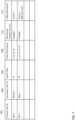
- FIG. 7 depicts user profiles for secondary users associated with an account in an example embodiment.
- a primary user identification field 702 includes a primary user identifier associated with the primary user of the elevator services account.
- the primary user identifier may be a user-generated identifier and/or an identifier of a mobile device associated with the primary user.
- a secondary user identification field 704 includes a secondary user identifier associated with the secondary user of the elevator services account.
- the secondary user identifier may be a user-generated identifier and/or an identifier of a mobile device associated with the secondary user.
- a home floor field 706 identifies a floor to which a user can automatically travel upon selection of the home floor indicator 406 ( FIG. 4 ).
- a floor permissions field 708 indicates the floors that the secondary user is permitted to visit.
- a monitored elevator services field 710 indicates whether monitored elevator services are enabled for a secondary user. The monitored elevator services field 710 may toggled between enabled and disabled, so that the monitored elevator services can be turned on and off.
- a video destination field 712 indicates an address of the first device 516 (e.g., an IP address, MAC address, phone number, email address, etc.) to which video from the interior of the elevator car is directed. The video destination field 712 may include multiple addresses.
- Embodiments allow a primary user, such as a parent, to establish elevator access privileges, such as floor permissions and floor restrictions, for one or more secondary users.
- Embodiments also allow a primary user to receive live video from an elevator car when a secondary user is traveling in the elevator system.
- embodiments can be in the form of processorimplemented processes and devices for practicing those processes, such as the elevator controller, the access server and/or the monitoring server.
- Embodiments can also be in the form of computer program code containing instructions embodied in tangible media, such as network cloud storage, SD cards, flash drives, floppy diskettes, CD ROMs, hard drives, or any other computer-readable storage medium.
- Embodiments can also be in the form of computer program code transmitted over some transmission medium, such as over electrical wiring or cabling, through fiber optics, or via electromagnetic radiation. When implemented on a general-purpose microprocessor, the computer program code configures the microprocessor to create specific logic circuits.
Landscapes
- Engineering & Computer Science (AREA)
- Automation & Control Theory (AREA)
- Computer Networks & Wireless Communication (AREA)
- Physics & Mathematics (AREA)
- General Physics & Mathematics (AREA)
- Elevator Control (AREA)
- Indicating And Signalling Devices For Elevators (AREA)
- Maintenance And Inspection Apparatuses For Elevators (AREA)
Applications Claiming Priority (2)
| Application Number | Priority Date | Filing Date | Title |
|---|---|---|---|
| US16/381,880 US12049382B2 (en) | 2019-04-11 | 2019-04-11 | Management of elevator service |
| EP19215409.4A EP3722238B1 (de) | 2019-04-11 | 2019-12-11 | Verwaltung eines aufzugdienstes |
Related Parent Applications (2)
| Application Number | Title | Priority Date | Filing Date |
|---|---|---|---|
| EP19215409.4A Division-Into EP3722238B1 (de) | 2019-04-11 | 2019-12-11 | Verwaltung eines aufzugdienstes |
| EP19215409.4A Division EP3722238B1 (de) | 2019-04-11 | 2019-12-11 | Verwaltung eines aufzugdienstes |
Publications (2)
| Publication Number | Publication Date |
|---|---|
| EP4209442A1 true EP4209442A1 (de) | 2023-07-12 |
| EP4209442B1 EP4209442B1 (de) | 2025-02-26 |
Family
ID=68886946
Family Applications (2)
| Application Number | Title | Priority Date | Filing Date |
|---|---|---|---|
| EP23156147.3A Active EP4209442B1 (de) | 2019-04-11 | 2019-12-11 | Verwaltung eines aufzugsdienstes |
| EP19215409.4A Active EP3722238B1 (de) | 2019-04-11 | 2019-12-11 | Verwaltung eines aufzugdienstes |
Family Applications After (1)
| Application Number | Title | Priority Date | Filing Date |
|---|---|---|---|
| EP19215409.4A Active EP3722238B1 (de) | 2019-04-11 | 2019-12-11 | Verwaltung eines aufzugdienstes |
Country Status (3)
| Country | Link |
|---|---|
| US (1) | US12049382B2 (de) |
| EP (2) | EP4209442B1 (de) |
| CN (1) | CN111807174A (de) |
Families Citing this family (5)
| Publication number | Priority date | Publication date | Assignee | Title |
|---|---|---|---|---|
| AU2015412518B2 (en) * | 2015-10-19 | 2021-07-22 | Kone Corporation | Smartwatch and elevator and guide system |
| US12049382B2 (en) * | 2019-04-11 | 2024-07-30 | Otis Elevator Company | Management of elevator service |
| CN113173466B (zh) * | 2021-03-23 | 2023-01-06 | 上海新时达电气股份有限公司 | 电梯接口板和电梯服务设备接入方法 |
| CN117383369A (zh) * | 2023-10-24 | 2024-01-12 | 日立楼宇技术(广州)有限公司 | 一种基于无物管的梯控管理方法、设备和系统 |
| CN119389892B (zh) * | 2025-01-02 | 2025-04-04 | 西子电梯科技有限公司 | 电梯访客授权管理方法、装置、系统和存储介质 |
Citations (4)
| Publication number | Priority date | Publication date | Assignee | Title |
|---|---|---|---|---|
| WO2017058715A1 (en) * | 2015-09-30 | 2017-04-06 | MasterCard International Incorported | Methods, systems, and computer readable media for causing a mechanical action based on transient user data |
| EP3382658A1 (de) * | 2017-03-31 | 2018-10-03 | Otis Elevator Company | Gruppenzugangsverwaltung für besuchersteuerung |
| EP3401259A1 (de) * | 2017-03-31 | 2018-11-14 | Otis Elevator Company | Benutzerverwaltung einer tür- und aufzugszugangskontrolle |
| WO2018224426A1 (de) * | 2017-06-07 | 2018-12-13 | Inventio Ag | Aufzugssystem mit besucherbetriebsmodus |
Family Cites Families (43)
| Publication number | Priority date | Publication date | Assignee | Title |
|---|---|---|---|---|
| US20050077348A1 (en) * | 2003-08-11 | 2005-04-14 | Colin Hendrick | Intelligent ID card holder |
| CN101356108B (zh) * | 2006-01-12 | 2012-12-12 | 奥蒂斯电梯公司 | 视频辅助电梯控制系统 |
| US7945951B2 (en) * | 2006-01-30 | 2011-05-17 | Microsoft Corporation | Rights-context elevator |
| KR20080086206A (ko) * | 2007-03-22 | 2008-09-25 | 최경돈 | 엘리베이터 보안 장치 |
| US8817761B2 (en) * | 2011-08-29 | 2014-08-26 | Randal Gruberman | System and method for remotely controlling features of wireless mobile devices |
| US10035679B2 (en) * | 2012-02-27 | 2018-07-31 | Otis Elevator Company | Elevator control system using meeting information to control car destinations |
| GB2518328B (en) * | 2012-06-22 | 2018-05-09 | Otis Elevator Co | System and method for controlling elevator system access |
| PT3105159T (pt) * | 2014-02-13 | 2018-08-10 | Inventio Ag | Processo para operar uma instalação de elevador, dispositivo de controlo de elevador e terminal móvel para executar o processo, bem como sistema com um tal dispositivo de controlo de elevador e um terminal móvel |
| CN106660739B (zh) * | 2014-07-24 | 2019-11-19 | 奥的斯电梯公司 | 电梯乘客进入检测 |
| US9957132B2 (en) * | 2015-02-04 | 2018-05-01 | Thyssenkrupp Elevator Ag | Elevator control systems |
| US9896305B2 (en) * | 2015-05-07 | 2018-02-20 | International Business Machines Corporation | Personalized elevator dispatch |
| EP3356271A1 (de) * | 2015-09-30 | 2018-08-08 | Inventio AG | Verfahren und vorrichtung zum generieren von steuerdaten zum steuern einer aufzuganlage durch wärmebildüberwachung einer bedienfläche |
| AU2016277598A1 (en) * | 2015-12-22 | 2017-07-06 | Otis Elevator Company | User-customized elevator floor selection |
| WO2017175023A1 (en) * | 2016-04-06 | 2017-10-12 | Otis Elevator Company | Elevator assignment to mobile devices and fixed displays |
| EP3440854B1 (de) * | 2016-04-06 | 2020-09-16 | Otis Elevator Company | Verwaltung eines mobilen besuchers |
| US20180118511A1 (en) * | 2016-10-28 | 2018-05-03 | Otis Elevator Company | Elevator service request using user device |
| US10294071B2 (en) * | 2016-10-28 | 2019-05-21 | Otis Elevator Company | Elevator activity level management of mobile device access |
| US20180282113A1 (en) * | 2017-03-31 | 2018-10-04 | Otis Elevator Company | Elevator service request using user device with transfer floor |
| US20180282115A1 (en) * | 2017-03-31 | 2018-10-04 | Otis Elevator Company | Elevator service request using user device with app-retained floor pairs |
| WO2018213253A1 (en) * | 2017-05-16 | 2018-11-22 | Carrier Corporation | Access control system with wireless communication |
| CN109019197B (zh) * | 2017-06-09 | 2022-05-17 | 奥的斯电梯公司 | 用于管理电梯系统的装置及方法 |
| US10647545B2 (en) * | 2017-06-30 | 2020-05-12 | Otis Elevator Company | Dispatching optimization based on presence |
| US10589960B2 (en) * | 2017-07-31 | 2020-03-17 | Otis Elevator Company | User device including secondary-touch elevator service request interface |
| US20190084794A1 (en) * | 2017-09-20 | 2019-03-21 | Otis Elevator Company | Elevator request authorization system |
| US10875741B2 (en) * | 2017-09-29 | 2020-12-29 | Otis Elevator Company | Elevator request authorization system for a third party |
| US10875742B2 (en) * | 2017-11-09 | 2020-12-29 | Otis Elevator Company | Elevator service request using user device with filtered destination floor selection |
| US20190168993A1 (en) * | 2017-12-05 | 2019-06-06 | Otis Elevator Company | Method of dispatching optimization based on sensing |
| US11919742B2 (en) * | 2018-06-19 | 2024-03-05 | Otis Elevator Company | Mobile car operating panel |
| EP3587320B1 (de) * | 2018-06-25 | 2021-03-24 | Otis Elevator Company | Drahtloskonnektivität in einem aufzugssystem |
| US11157931B2 (en) * | 2018-08-21 | 2021-10-26 | International Business Machines Corporation | Predicting the crowdedness of a location |
| EP3867185B1 (de) * | 2018-10-16 | 2024-09-18 | KONE Corporation | Schnittstellenvorrichtung, aufzugsystem und verfahren zur steuerung der anzeige eines zielrufes |
| EP3643663B1 (de) * | 2018-10-26 | 2025-05-14 | Otis Elevator Company | System und verfahren zur automatischen bereitstellung eines aufzugsdienstes in einem gebäude an einen fahrgast, wenn der fahrgast ein zimmer im gebäude verlässt |
| US12116241B2 (en) * | 2018-11-22 | 2024-10-15 | Otis Elevator Company | Methods of decreasing the elevator wait time by integrating with calendar server |
| US12049382B2 (en) * | 2019-04-11 | 2024-07-30 | Otis Elevator Company | Management of elevator service |
| US20210323789A1 (en) * | 2020-04-18 | 2021-10-21 | braXos Security Software LLC | Remote elevator destination dispatch and authorization system and method with secured ble beacons and security fall-back |
| US12534335B2 (en) * | 2020-05-06 | 2026-01-27 | Techdayafter Inc. | System and method for hands-free operation of elevator |
| US20220073316A1 (en) * | 2020-07-15 | 2022-03-10 | Leandre Adifon | Systems and methods for operation of elevators and other devices |
| US11319186B2 (en) * | 2020-07-15 | 2022-05-03 | Leandre Adifon | Systems and methods for operation of elevators and other devices |
| US20220017327A1 (en) * | 2020-07-15 | 2022-01-20 | Leandre Adifon | Systems and methods for operation of elevators and other devices |
| US11305964B2 (en) * | 2020-07-15 | 2022-04-19 | Leandre Adifon | Systems and methods for operation of elevators and other devices |
| US10991185B1 (en) * | 2020-07-20 | 2021-04-27 | Abbott Laboratories | Digital pass verification systems and methods |
| US20230298416A1 (en) * | 2020-07-20 | 2023-09-21 | Abbott Laboratories | Digital pass verification systems and methods |
| WO2022144488A1 (en) * | 2020-12-31 | 2022-07-07 | Kone Corporation | A method and an apparatus for elevator system |
-
2019
- 2019-04-11 US US16/381,880 patent/US12049382B2/en active Active
- 2019-12-11 EP EP23156147.3A patent/EP4209442B1/de active Active
- 2019-12-11 EP EP19215409.4A patent/EP3722238B1/de active Active
- 2019-12-31 CN CN201911410211.1A patent/CN111807174A/zh active Pending
Patent Citations (4)
| Publication number | Priority date | Publication date | Assignee | Title |
|---|---|---|---|---|
| WO2017058715A1 (en) * | 2015-09-30 | 2017-04-06 | MasterCard International Incorported | Methods, systems, and computer readable media for causing a mechanical action based on transient user data |
| EP3382658A1 (de) * | 2017-03-31 | 2018-10-03 | Otis Elevator Company | Gruppenzugangsverwaltung für besuchersteuerung |
| EP3401259A1 (de) * | 2017-03-31 | 2018-11-14 | Otis Elevator Company | Benutzerverwaltung einer tür- und aufzugszugangskontrolle |
| WO2018224426A1 (de) * | 2017-06-07 | 2018-12-13 | Inventio Ag | Aufzugssystem mit besucherbetriebsmodus |
Also Published As
| Publication number | Publication date |
|---|---|
| EP3722238A1 (de) | 2020-10-14 |
| EP3722238B1 (de) | 2023-03-29 |
| EP4209442B1 (de) | 2025-02-26 |
| CN111807174A (zh) | 2020-10-23 |
| US20200324998A1 (en) | 2020-10-15 |
| US12049382B2 (en) | 2024-07-30 |
Similar Documents
| Publication | Publication Date | Title |
|---|---|---|
| EP3722238B1 (de) | Verwaltung eines aufzugdienstes | |
| KR102548844B1 (ko) | 모바일 디바이스 사용자를 위한 엘리베이터의 재할당 | |
| AU2016377566B2 (en) | Elevator service request using user device | |
| KR102470972B1 (ko) | 방문객 제어를 위한 그룹 액세스 관리 | |
| US10766738B2 (en) | Out-of-group operations for multicar hoistway systems | |
| CN113454013A (zh) | 电梯的自动呼梯登记系统 | |
| EP3569544B1 (de) | Nahtloser aufzugsruf von mobilvorrichtungsanwendung aus | |
| US11535490B2 (en) | System and method for calling elevator | |
| JP6608482B1 (ja) | 位置表示システム | |
| CN121376748A (zh) | 呼叫电梯的乘客搭乘的验证 | |
| US11174128B2 (en) | Elevator door control for deboarding passengers in multi-door elevators | |
| CN113767058A (zh) | 电梯的自动呼梯登记系统 | |
| CN117105027A (zh) | 机器人专用电梯系统 | |
| CN112607533B (zh) | 以媒体选项助操作电梯轿厢的移动接口、通信及控制系统 | |
| EP3800151A1 (de) | Aufzugsystem | |
| JP2013170080A (ja) | マルチカーエレベーター制御システム | |
| KR102107318B1 (ko) | 엘리베이터용 호출 입력 장치 | |
| US20200207577A1 (en) | System and method for assigning elevator service based on a desired location of a plurality of passengers | |
| CN113353747B (zh) | 无接收器装置定位 | |
| JP2023121163A (ja) | エレベータシステム、運転制御方法及びプログラム | |
| KR20190109928A (ko) | 엘리베이터 그룹의 원격 보수 관리 시스템 | |
| US20210147176A1 (en) | Elevator system with mesh network having proxy-transceiver | |
| CN121376749A (zh) | 用于在封闭期间操作电梯系统的系统和方法 | |
| CN116062575A (zh) | 用于基于乘客使用来分配电梯服务的系统和方法 | |
| WO2026017410A1 (en) | Building system and method for user registration for content publishing |
Legal Events
| Date | Code | Title | Description |
|---|---|---|---|
| PUAI | Public reference made under article 153(3) epc to a published international application that has entered the european phase |
Free format text: ORIGINAL CODE: 0009012 |
|
| STAA | Information on the status of an ep patent application or granted ep patent |
Free format text: STATUS: THE APPLICATION HAS BEEN PUBLISHED |
|
| AC | Divisional application: reference to earlier application |
Ref document number: 3722238 Country of ref document: EP Kind code of ref document: P |
|
| AK | Designated contracting states |
Kind code of ref document: A1 Designated state(s): AL AT BE BG CH CY CZ DE DK EE ES FI FR GB GR HR HU IE IS IT LI LT LU LV MC MK MT NL NO PL PT RO RS SE SI SK SM TR |
|
| STAA | Information on the status of an ep patent application or granted ep patent |
Free format text: STATUS: REQUEST FOR EXAMINATION WAS MADE |
|
| 17P | Request for examination filed |
Effective date: 20231123 |
|
| RBV | Designated contracting states (corrected) |
Designated state(s): AL AT BE BG CH CY CZ DE DK EE ES FI FR GB GR HR HU IE IS IT LI LT LU LV MC MK MT NL NO PL PT RO RS SE SI SK SM TR |
|
| GRAP | Despatch of communication of intention to grant a patent |
Free format text: ORIGINAL CODE: EPIDOSNIGR1 |
|
| STAA | Information on the status of an ep patent application or granted ep patent |
Free format text: STATUS: GRANT OF PATENT IS INTENDED |
|
| INTG | Intention to grant announced |
Effective date: 20241118 |
|
| GRAS | Grant fee paid |
Free format text: ORIGINAL CODE: EPIDOSNIGR3 |
|
| GRAA | (expected) grant |
Free format text: ORIGINAL CODE: 0009210 |
|
| STAA | Information on the status of an ep patent application or granted ep patent |
Free format text: STATUS: THE PATENT HAS BEEN GRANTED |
|
| AC | Divisional application: reference to earlier application |
Ref document number: 3722238 Country of ref document: EP Kind code of ref document: P |
|
| AK | Designated contracting states |
Kind code of ref document: B1 Designated state(s): AL AT BE BG CH CY CZ DE DK EE ES FI FR GB GR HR HU IE IS IT LI LT LU LV MC MK MT NL NO PL PT RO RS SE SI SK SM TR |
|
| REG | Reference to a national code |
Ref country code: GB Ref legal event code: FG4D |
|
| REG | Reference to a national code |
Ref country code: CH Ref legal event code: EP |
|
| REG | Reference to a national code |
Ref country code: DE Ref legal event code: R096 Ref document number: 602019066720 Country of ref document: DE |
|
| REG | Reference to a national code |
Ref country code: IE Ref legal event code: FG4D |
|
| REG | Reference to a national code |
Ref country code: NL Ref legal event code: MP Effective date: 20250226 |
|
| PG25 | Lapsed in a contracting state [announced via postgrant information from national office to epo] |
Ref country code: RS Free format text: LAPSE BECAUSE OF FAILURE TO SUBMIT A TRANSLATION OF THE DESCRIPTION OR TO PAY THE FEE WITHIN THE PRESCRIBED TIME-LIMIT Effective date: 20250526 |
|
| PG25 | Lapsed in a contracting state [announced via postgrant information from national office to epo] |
Ref country code: FI Free format text: LAPSE BECAUSE OF FAILURE TO SUBMIT A TRANSLATION OF THE DESCRIPTION OR TO PAY THE FEE WITHIN THE PRESCRIBED TIME-LIMIT Effective date: 20250226 |
|
| PG25 | Lapsed in a contracting state [announced via postgrant information from national office to epo] |
Ref country code: PL Free format text: LAPSE BECAUSE OF FAILURE TO SUBMIT A TRANSLATION OF THE DESCRIPTION OR TO PAY THE FEE WITHIN THE PRESCRIBED TIME-LIMIT Effective date: 20250226 |
|
| PG25 | Lapsed in a contracting state [announced via postgrant information from national office to epo] |
Ref country code: ES Free format text: LAPSE BECAUSE OF FAILURE TO SUBMIT A TRANSLATION OF THE DESCRIPTION OR TO PAY THE FEE WITHIN THE PRESCRIBED TIME-LIMIT Effective date: 20250226 |
|
| REG | Reference to a national code |
Ref country code: LT Ref legal event code: MG9D |
|
| PG25 | Lapsed in a contracting state [announced via postgrant information from national office to epo] |
Ref country code: IS Free format text: LAPSE BECAUSE OF FAILURE TO SUBMIT A TRANSLATION OF THE DESCRIPTION OR TO PAY THE FEE WITHIN THE PRESCRIBED TIME-LIMIT Effective date: 20250626 Ref country code: NO Free format text: LAPSE BECAUSE OF FAILURE TO SUBMIT A TRANSLATION OF THE DESCRIPTION OR TO PAY THE FEE WITHIN THE PRESCRIBED TIME-LIMIT Effective date: 20250526 |
|
| PG25 | Lapsed in a contracting state [announced via postgrant information from national office to epo] |
Ref country code: NL Free format text: LAPSE BECAUSE OF FAILURE TO SUBMIT A TRANSLATION OF THE DESCRIPTION OR TO PAY THE FEE WITHIN THE PRESCRIBED TIME-LIMIT Effective date: 20250226 |
|
| PG25 | Lapsed in a contracting state [announced via postgrant information from national office to epo] |
Ref country code: HR Free format text: LAPSE BECAUSE OF FAILURE TO SUBMIT A TRANSLATION OF THE DESCRIPTION OR TO PAY THE FEE WITHIN THE PRESCRIBED TIME-LIMIT Effective date: 20250226 |
|
| PG25 | Lapsed in a contracting state [announced via postgrant information from national office to epo] |
Ref country code: PT Free format text: LAPSE BECAUSE OF FAILURE TO SUBMIT A TRANSLATION OF THE DESCRIPTION OR TO PAY THE FEE WITHIN THE PRESCRIBED TIME-LIMIT Effective date: 20250626 Ref country code: LV Free format text: LAPSE BECAUSE OF FAILURE TO SUBMIT A TRANSLATION OF THE DESCRIPTION OR TO PAY THE FEE WITHIN THE PRESCRIBED TIME-LIMIT Effective date: 20250226 |
|
| PG25 | Lapsed in a contracting state [announced via postgrant information from national office to epo] |
Ref country code: GR Free format text: LAPSE BECAUSE OF FAILURE TO SUBMIT A TRANSLATION OF THE DESCRIPTION OR TO PAY THE FEE WITHIN THE PRESCRIBED TIME-LIMIT Effective date: 20250527 Ref country code: BG Free format text: LAPSE BECAUSE OF FAILURE TO SUBMIT A TRANSLATION OF THE DESCRIPTION OR TO PAY THE FEE WITHIN THE PRESCRIBED TIME-LIMIT Effective date: 20250226 |
|
| REG | Reference to a national code |
Ref country code: AT Ref legal event code: MK05 Ref document number: 1770484 Country of ref document: AT Kind code of ref document: T Effective date: 20250226 |
|
| PG25 | Lapsed in a contracting state [announced via postgrant information from national office to epo] |
Ref country code: SE Free format text: LAPSE BECAUSE OF FAILURE TO SUBMIT A TRANSLATION OF THE DESCRIPTION OR TO PAY THE FEE WITHIN THE PRESCRIBED TIME-LIMIT Effective date: 20250226 |
|
| PG25 | Lapsed in a contracting state [announced via postgrant information from national office to epo] |
Ref country code: SM Free format text: LAPSE BECAUSE OF FAILURE TO SUBMIT A TRANSLATION OF THE DESCRIPTION OR TO PAY THE FEE WITHIN THE PRESCRIBED TIME-LIMIT Effective date: 20250226 |
|
| PG25 | Lapsed in a contracting state [announced via postgrant information from national office to epo] |
Ref country code: DK Free format text: LAPSE BECAUSE OF FAILURE TO SUBMIT A TRANSLATION OF THE DESCRIPTION OR TO PAY THE FEE WITHIN THE PRESCRIBED TIME-LIMIT Effective date: 20250226 |
|
| PG25 | Lapsed in a contracting state [announced via postgrant information from national office to epo] |
Ref country code: IT Free format text: LAPSE BECAUSE OF FAILURE TO SUBMIT A TRANSLATION OF THE DESCRIPTION OR TO PAY THE FEE WITHIN THE PRESCRIBED TIME-LIMIT Effective date: 20250226 |
|
| PG25 | Lapsed in a contracting state [announced via postgrant information from national office to epo] |
Ref country code: AT Free format text: LAPSE BECAUSE OF FAILURE TO SUBMIT A TRANSLATION OF THE DESCRIPTION OR TO PAY THE FEE WITHIN THE PRESCRIBED TIME-LIMIT Effective date: 20250226 |
|
| PG25 | Lapsed in a contracting state [announced via postgrant information from national office to epo] |
Ref country code: CZ Free format text: LAPSE BECAUSE OF FAILURE TO SUBMIT A TRANSLATION OF THE DESCRIPTION OR TO PAY THE FEE WITHIN THE PRESCRIBED TIME-LIMIT Effective date: 20250226 Ref country code: EE Free format text: LAPSE BECAUSE OF FAILURE TO SUBMIT A TRANSLATION OF THE DESCRIPTION OR TO PAY THE FEE WITHIN THE PRESCRIBED TIME-LIMIT Effective date: 20250226 |
|
| PG25 | Lapsed in a contracting state [announced via postgrant information from national office to epo] |
Ref country code: RO Free format text: LAPSE BECAUSE OF FAILURE TO SUBMIT A TRANSLATION OF THE DESCRIPTION OR TO PAY THE FEE WITHIN THE PRESCRIBED TIME-LIMIT Effective date: 20250226 |
|
| PG25 | Lapsed in a contracting state [announced via postgrant information from national office to epo] |
Ref country code: SK Free format text: LAPSE BECAUSE OF FAILURE TO SUBMIT A TRANSLATION OF THE DESCRIPTION OR TO PAY THE FEE WITHIN THE PRESCRIBED TIME-LIMIT Effective date: 20250226 |
|
| REG | Reference to a national code |
Ref country code: DE Ref legal event code: R097 Ref document number: 602019066720 Country of ref document: DE |
|
| PLBE | No opposition filed within time limit |
Free format text: ORIGINAL CODE: 0009261 |
|
| STAA | Information on the status of an ep patent application or granted ep patent |
Free format text: STATUS: NO OPPOSITION FILED WITHIN TIME LIMIT |
|
| PGFP | Annual fee paid to national office [announced via postgrant information from national office to epo] |
Ref country code: DE Payment date: 20251126 Year of fee payment: 7 |
|
| PGFP | Annual fee paid to national office [announced via postgrant information from national office to epo] |
Ref country code: FR Payment date: 20251120 Year of fee payment: 7 |
|
| 26N | No opposition filed |
Effective date: 20251127 |