EP4212151B1 - Stilben-, flavonol- oder curcuminverbindungen zur verwendung in der behandlung altersbedingter makuladegeneration (amd) - Google Patents
Stilben-, flavonol- oder curcuminverbindungen zur verwendung in der behandlung altersbedingter makuladegeneration (amd) Download PDFInfo
- Publication number
- EP4212151B1 EP4212151B1 EP23151383.9A EP23151383A EP4212151B1 EP 4212151 B1 EP4212151 B1 EP 4212151B1 EP 23151383 A EP23151383 A EP 23151383A EP 4212151 B1 EP4212151 B1 EP 4212151B1
- Authority
- EP
- European Patent Office
- Prior art keywords
- amd
- curcumin
- drusen
- rqc
- resveratrol
- Prior art date
- Legal status (The legal status is an assumption and is not a legal conclusion. Google has not performed a legal analysis and makes no representation as to the accuracy of the status listed.)
- Active
Links
Images



Classifications
-
- A—HUMAN NECESSITIES
- A61—MEDICAL OR VETERINARY SCIENCE; HYGIENE
- A61K—PREPARATIONS FOR MEDICAL, DENTAL OR TOILETRY PURPOSES
- A61K31/00—Medicinal preparations containing organic active ingredients
- A61K31/045—Hydroxy compounds, e.g. alcohols; Salts thereof, e.g. alcoholates
- A61K31/05—Phenols
-
- A—HUMAN NECESSITIES
- A61—MEDICAL OR VETERINARY SCIENCE; HYGIENE
- A61K—PREPARATIONS FOR MEDICAL, DENTAL OR TOILETRY PURPOSES
- A61K31/00—Medicinal preparations containing organic active ingredients
- A61K31/12—Ketones
-
- A—HUMAN NECESSITIES
- A61—MEDICAL OR VETERINARY SCIENCE; HYGIENE
- A61K—PREPARATIONS FOR MEDICAL, DENTAL OR TOILETRY PURPOSES
- A61K31/00—Medicinal preparations containing organic active ingredients
- A61K31/33—Heterocyclic compounds
- A61K31/335—Heterocyclic compounds having oxygen as the only ring hetero atom, e.g. fungichromin
- A61K31/35—Heterocyclic compounds having oxygen as the only ring hetero atom, e.g. fungichromin having six-membered rings with one oxygen as the only ring hetero atom
- A61K31/352—Heterocyclic compounds having oxygen as the only ring hetero atom, e.g. fungichromin having six-membered rings with one oxygen as the only ring hetero atom condensed with carbocyclic rings, e.g. methantheline
-
- A—HUMAN NECESSITIES
- A61—MEDICAL OR VETERINARY SCIENCE; HYGIENE
- A61P—SPECIFIC THERAPEUTIC ACTIVITY OF CHEMICAL COMPOUNDS OR MEDICINAL PREPARATIONS
- A61P27/00—Drugs for disorders of the senses
- A61P27/02—Ophthalmic agents
Definitions
- Age-related macular degeneration is a disease that causes blurred or reduced vision due to the thinning of the macula, a part of retina responsible for clear vision in direct line of sight. AMD affects about 50 million individuals worldwide. In the United States, an estimated 1.75 million individuals currently suffer from AMD.
- the cause of the dry form is multifactorial with genetic, epigenetic, and immunological components.
- the vitamin and supplement formulations described in Age Related Eye Disease Studies (AREDS and AREDS2) have some benefit in reducing progression rates; however, the results are mixed [Chew, 2009].
- the late or advanced form of AMD has two types: the dry form with geographic atrophy and the wet form with choroidal neovascularization, which hemorrhage and can cause significant visual loss.
- the wet form currently is treated with intraocular injections of anti-vascular endothelial growth factor (VEGF) antibodies.
- VEGF anti-vascular endothelial growth factor
- Drusen are small, yellow deposits of fatty proteins that accumulate under the retina and are associated with the onset of AMD. Drusen are disruptive to the retinal pigment epithelium (RPE) and create a pro-inflammatory and toxic environment to the macula.
- RPE retinal pigment epithelium
- TLR4 Toll-like receptor 4
- DAMPs toxic or damage-associated proteins
- FIGURE 1 The five-year risk of progression is 3.8% in early AMD, 10.8% in intermediate AMD, and 25.4% in intermediate-large AMD as determined by the AREDS study [Davis, 2005].
- FIGURE 2 shows the relationship between aging and prevalence of early (drusen only) and late [advanced geographic atrophy (GA) or choroidal neovascularization] AMD.
- Prevalence numbers are based on the total number of early, intermediate, and large AMD subjects (13 million) and the relative proportions of patients with drusen 63-124 ⁇ m, 125-249 ⁇ m, and ⁇ 250 ⁇ m reported in large populations.
- ⁇ Prevalence numbers for geographic atrophy and choroidal neovascularization estimated using the known total of Advanced AMD cases and the proportion of geographic atrophy (60%) to choroidal neovascularization cases (40%).
- Dry AMD is treated by oral administration to a patient afflicted with AMD a therapeutically effective amount of a synergistic combination of a stilbene, a flavonol, and a curcumin compound as active ingredients, as further defined in the claims.
- the stilbene according to the present invention is resveratrol (R)
- the flavonol is quercetin (Q)
- the curcumin compound is curcumin (C).
- Resveratrol, quercetin and curcumin are administered daily in the following amounts: 20 to 5,000 milligrams of resveratrol, 24 to 5,000 milligrams of quercetin, and 20 to 12,000 milligrams (such as 200 to 12,000 milligrams) of curcumin, preferably 200 to 5,000 milligrams of resveratrol, 240 to 5,000 milligrams of quercetin, and 2,000 to 12,000 milligrams of curcumin.
- Any reference to a method of treatment of the human or animal body by therapy using a certain compound or composition is to be understood as a reference to said compound or composition for use in said treatment.
- treatment or “treating” or “ameliorating” as used in the specification and claims refer to an approach for achieving beneficial or desired results, including but not limited to a therapeutic benefit and/or a prophylactic benefit.
- therapeutic benefit means eradication or amelioration of the underlying disorder being treated.
- a therapeutic benefit is achieved with the eradication or amelioration of one or more of the physiological symptoms associated with the underlying disorder such that an improvement is observed in the subject, notwithstanding that the subject may still be afflicted with the underlying disorder.
- the present compositions may be administered to a subject at risk of developing a particular affliction or disease, or to a subject reporting one or more of the physiological symptoms of a disease even though a diagnosis of the disease may not have been made.
- antagonist refers to a compound having the ability to inhibit a biological function of a target protein or receptor. Accordingly, the term “antagonist” is defined in the context of the biological role of the target protein or receptor.
- an effective amount refers to that amount of active ingredients described herein that is sufficient to achieve the intended effect.
- the effective amount may vary depending upon the intended application or the subject and disease condition being treated, e.g., the weight and age of the subject, the severity of the disease condition, the manner of administration and the like, which can be determined readily by one skilled in the art.
- the specific dose may vary depending on the particular compounds that constitute the composition, the dosing regimen to be followed, timing of administration, and the physical delivery system in which the composition is carried.
- the "effective amount” or “therapeutically effective amount” is determined using methods known in the art such as the evaluation of drug synergy based on a flow cytometry assay to measure platelet activation and superactivation. This method can be used to determine optimal dose ranges for a group of patients by identifying the most effective dose combination on average. This method can also be used to determine optimal doses and/or optimal dose ranges for individual patients.
- pharmaceutically acceptable excipient includes any and all solvents, dispersion media, coatings, antibacterial and antifungal agents, isotonic and absorption retarding agents, and the like. The use of such agents and media for pharmaceutically-active substances is well known in the art. Supplementary active ingredients can also be incorporated into the compositions described herein.
- Dosage forms comprise the above-described compounds and a pharmaceutically acceptable carrier therefor.
- suitable pharmaceutically acceptable carriers include solids, gels, solutions, emulsions, dispersions, micelles, liposomes, and the like.
- Pharmaceutically acceptable carriers are those which render the active ingredients amenable to oral delivery and the like.
- compositions embodying the present invention can be prepared in the form of a solid, a gel, a solution, an emulsion, a dispersion, a micelle, a liposome, and the like.
- the active ingredients are compounded, for example, with a non-toxic, pharmaceutically acceptable carrier for tablets, pellets, capsules, and the like.
- the carriers include glucose, lactose, gum acacia, gelatin, mannitol, starch paste, magnesium trisilicate, talc, corn starch, keratin, colloidal silica, potato starch, urea, medium chain length triglycerides, dextrans, and other carriers suitable for use in manufacturing preparations, in solid, semisolid, or liquid form.
- compositions containing the active ingredients in a form suitable for oral use are, for example, tablets, troches, lozenges, aqueous or oily suspensions, dispersible powders or granules, emulsions, hard or soft capsules, or syrups or elixirs.
- Compositions for oral use can be prepared according to any method known to the art for the manufacture of pharmaceutical compositions.
- Such formulations may contain one or more agents selected from the group consisting of a sweetening agent such as sucrose, lactose, or saccharin, flavoring agents such as peppermint, oil of wintergreen or cherry, coloring agents and preserving agents in order to provide pharmaceutically elegant and palatable preparations.
- Non-toxic, pharmaceutically acceptable excipients can be, for example (1) inert diluents such as calcium carbonate, lactose, calcium phosphate or sodium phosphate; (2) granulating and disintegrating agents such as corn starch, potato starch or alginic acid; (3) binding agents such as gum tragacanth, corn starch, gelatin or acacia, and (4) lubricating agents such as magnesium stearate, steric acid or talc.
- the tablets may be uncoated or they may be coated by known techniques to delay disintegration and absorption in the gastrointestinal tract and thereby provide a sustained action over a longer period.
- a time delay material such as glyceryl monostearate or glyceryl distearate can be utilized as well.
- compositions for oral use are in the form of hard gelatin capsules wherein the active ingredient is mixed with inert solid diluent(s), for example, calcium carbonate, calcium phosphate or kaolin.
- inert solid diluent(s) for example, calcium carbonate, calcium phosphate or kaolin.
- the active ingredients are mixed with water or an oil medium, for example, peanut oil, liquid paraffin, olive oil, and the like.
- unit dosage form refers to physically discrete units suitable as unitary dosages for human subjects, each unit containing a predetermined quantity of active material calculated to produce the desired therapeutic effect in association with the required pharmaceutical diluent, carrier, or vehicle.
- the specifications for the novel unit dosage forms of this invention are dictated by and directly dependent on (a) the unique characteristics of the active material and the particular therapeutic effect to be achieved, and (b) the limitations inherent in the art of compounding such active material for therapeutic use in humans and animals, as disclosed in detail in the specification, these being features of the present invention.
- suitable unit dosage forms in accord with this invention are tablets, capsules, pills, powder packets, granules, wafers, sachets, segregated multiples of any of the foregoing, and other forms as herein described.
- ⁇ M denotes the micromolar concentration (10 -6 mol/L) of the indicated compound, e.g., the stilbene, the flavonol, curcumin, and biologically active analogs of curcumin.
- the resveratrol, the quercetin and the curcumin preferably are present in the composition as a synergistic combination.
- the description and composition of each preferred component is shown below.
- Resveratrol (trans-resveratrol; 5-[(1E)2-(4-hydroxyphenyl)ethenyl]-1,3-benzenediol) is a naturally occurring stilbenoid polyphenol found in foods such as grapes (wine), certain berries, and peanuts. In plants, resveratrol is produced as a primary response to oxidative stress, injury, and infection. Resveratrol is found in both the trans- and cis- configurations, however the trans- form is more stable and is the predominant form consumed in the average diet. Resveratrol and trans-resveratrol are used synonymously in this document.
- Resveratrol has a range of targets including inflammation, oxidative stress, and angiogenesis.
- the molecule also has other biological effects including vasodilation and ⁇ -amyloid plaque clearance.
- Resveratrol is a known dietary supplement in a variety of formulations and has been determined to be GRAS by the FDA (GRAS Notice 224). The average daily consumption of resveratrol is estimated to be between 0.1-2.0 mg/day. It has undergone safety and efficacy testing in numerous clinical trials and has been found to be well-tolerated with low toxicity at doses as high as 5 g per day.
- Quercetin (5,7,3',4'-flavon-3-ol) is a polyphenol flavonoid found in onions, blueberries, kale, and a variety of other fruits and vegetables. Quercetin, one of the most common plant flavonoids, is the aglycone form of a number of other flavonoid glycosides such as rutin. Quercetin is safe for consumption in humans and has been declared as GRAS by the FDA (GRAS Notices 341, 826, and 916). The average daily consumption of quercetin in the U.S. is estimated to be 10-16 mg. The primary therapeutic effects of quercetin reported in the literature include anti-inflammatory activity, neuroprotective activity, and anti-oxidant activity.
- Quercetin is sold as a dietary supplement in a variety of formulations and has undergone safety and efficacy testing in numerous clinical trials. It has been found to be well tolerated and without toxicity in doses as high as 5 g per day.
- Curcumin ((1E,6E)-1,7-bis(4-Hydroxy-3-methoxyphenyl)-1,6-heptadiene-3,5-dione) is a naturally occurring diarylheptanoid polyphenol. It is the major curcuminoid found in the roots of turmeric ( Curcuma longa L. ), which is a member of the ginger family Zingaberaceae. Curcumin is a polyphenol with anti-inflammatory, anti-oxidant, anti-apoptotic, and neuroprotective effects.
- Curcumin in a variety of formulations, has been determined to be GRAS by the FDA (GRAS Notices 400, 686, and 822). The average daily consumption of curcumin is estimated to be 2.7-14.8 mg. Curcumin has undergone multiple clinical trials, which have all concluded that curcumin is safe for use in humans at high doses. A review of clinical trials with curcumin indicates that it is safe and well tolerated at doses up to 8-12 g/day with only minimal side effects which are most often gastrointestinal in nature and resolved naturally or by ingestion with or after meals. No maximum tolerable dose has been reported using curcumin.
- Suitable stilbenes for the present compositions are resveratrol (3,5,4'-trihydroxy- trans -stilbene), ⁇ , ⁇ -dihydroresveratrol (3,4',5-trihydroxybibenzyl), pterostilbene (3',5'-dimethoxy resveratrol), pinosylvin (3',5-dihydroxy-trans-stilbene), piceatannol (3,5,3',4'-tetrahydroxy-trans-stilbene), and the like.
- the preferred stilbene which is also the one used in the present invention, is resveratrol.
- Illustrative covalently binding biologically active derivatives of stilbenes are 3,5-dihydroxy-4-fluorosulfonyl-trans-stilbene, 3,5-dihydroxy-4-fluorosulfonyloxy-trans-stilbene, 3,4'-dihydroxy-5-fluorosulfonyl-trans-stilbene, 3,4'-dihydroxy-5-fluorosulfonyloxy-trans-stilbene, and the like.
- Suitable flavonols are quercetin (3,3',4',5,7-pentahydroxy-2-phenylchromen-4-one), 3-hydroxyflavone, azaleatin, fisetin, galangin, gossypetin, kaempferide, kaempferol, isorhamnetin, morin, myricetin, natsudaidain, pachypodol, zhamnazin, zhamnetin, and the like.
- the preferred flavonol which is also the one used in the present invention, is quercetin.
- Illustrative covalently binding biologically active derivatives of flavonols are 3,4',5,7-tetrahydroxy-3'-fluorosulfonyl-2-phenylchromen-4-one, 3,4',5,7-tetrahydroxy-3'-fluorosulfonyloxy-2-phenylchromen-4-one, and the like.
- curcumin compound means curcumin and its biologically active analogs.
- the curcumin compound according to the present invention is the compound curcumin.
- Suitable biologically active curcumin analogs outside the scope of the present invention are compounds represented by Formula I below, Ar 1 - L - Ar 2 I wherein Ar 1 is a phenyl group or a substituted phenyl group represented by Formula II: Ar 2 is a phenyl group represented by Formula III: and L is a divalent linking group.
- each of R 1 through R 10 is independently hydrogen, hydroxyl, methyl, methoxyl, dimethylamine, trifluoromethyl, chloro, fluoro, acetoxyl, cyano, or carboxymethyl.
- the divalent linking group L is an alkylene or an alkenylene having 3 to 7 backbone carbon atoms wherein one or more of the backbone carbon atoms is part of a carbonyl or a secondary alcohol.
- the linking group can be saturated or unsaturated.
- linking group L contains at least one unsaturated carbon-carbon bond.
- R is an alkyl or aryl group including 10 carbon atoms or less.
- Illustrative covalently binding biologically active derivatives of TLR4/MD2 receptor antagonists are 17-(cyclopropylmethyl)-4,5 ⁇ -epoxy-3-hydroxy-14-fluorosulfonyl-morphinan-6-one, 17-(cyclopropylmethyl)-4,5 ⁇ -epoxy-3-hydroxy-14-fluorosulfonyloxy-morphinan-6-one, fluorosulfate derivatives of curcumin, and the like.
- Fluorosulfate derivatives of curcumin can be produced by treating available phenolic OH groups of curcumin with sulfuryl fluoride (SO 2 F 2 ) as described in U.S. Patent No. 10,117,840 to Dong et al.
- the foresaid active ingredients can be administered as oral dosage forms such as tablets, capsules (each of which can include sustained release or timed release formulations), pills, and the like.
- the dosage regimen utilizing the active ingredients of the present invention is selected in accordance with a variety of factors including type, species, age, weight, sex and medical condition of the patient; the severity of the condition to be treated and the route of administration; the renal and hepatic function of the patient; and the particular composition employed.
- An ordinarily skilled physician or clinician can readily determine and prescribe the effective amount of the drug required to prevent, counter or arrest the progress of the condition.
- the minimum effective dose concentration for each component of RQC is 0.1 ⁇ M R, 0.1 ⁇ M Q, and 0.001 ⁇ M (preferably 0.01 ⁇ M) C, corresponding to daily doses of 20 mg/day R, 24 mg/day, and 20 mg (preferably 200 mg) C based on the bioavailability calculations shown in TABLE 7, below.
- the maximum dose is defined as the highest dose of each component evaluated in a repeated-dose clinical trial and found to be safe and tolerable.
- the maximum dose for each component of RQC is 5000 mg/day R, 5000 mg/day Q, and 12000 mg/day C, corresponding to estimated plasma concentrations of 25 ⁇ M R, 21 ⁇ M Q, and 0.6 ⁇ M C based on the bioavailability calculations in TABLE 7, below.
- the minimum dose and the maximum dose for each component therefore form the following range of effective doses:
- RQC Component Daily dose (mg/day) Plasma concentration ( ⁇ M) Resveratrol 20 - 5,000 0.1 - 25 Quercetin 24 - 5,000 0.1 - 21 Curcumin 20 - 12,000 (preferably 200 - 12,000) 0.001 - 0.6 (preferably 0.01 - 0.6)
- Optimal dosing for the treatment and/or prevention of age-related macular degeneration is determined by an evaluation of synergistic drug interactions and considerations for tolerability and/or experimental findings regarding tolerability.
- Synergistic drug interactions are determined using the in-vitro flow cytometry platelet assay described below.
- SAPs are defined as positive for surface fibrinogen and negative for activated integrin ⁇ IIb ⁇ 3
- activated platelets are defined as negative for surface fibrinogen and positive for activated integrin ⁇ IIb ⁇ 3.
- Surface fibrinogen is detected by pre-treating platelets with biotinylated-fibrinogen (5 ⁇ g/mL) followed by staining with any common fluorophore conjugated to streptavidin.
- the streptavidin-fluorophore complex binds to the biotin-fibrinogen complex present on SAPs but not activated platelets due to the differing composition of charged surface proteins.
- Activated integrin ⁇ IIb ⁇ 3 - characteristic of activated platelets - is detected using the PAC-1 antibody conjugated to any compatible fluorophore.
- PAC-1 does not bind to the de-activated form of integrin ⁇ IIb ⁇ 3 present on the surface of SAPs and is therefore used to distinguish SAPs from the larger population of activated platelets.
- the effect of RQC on SAPs is determined by pre-treating diluted PRP samples with combinations of R, Q, and/or C for 5 minutes at 37°C followed by challenge with thrombin and convulxin for 5 minutes at 37°C. The samples are then stained with the fluorophore-conjugates and fixed in 3% formalin before analysis using a flow cytometer. SAP percentage is calculated as a percentage of all platelets.
- the effect size of RQC is determined by the change ion SAP percentage before and after treatment with RQC and is used as input to calculate drug synergy using the CompuSyn software developed by Chou, et al.
- Drug synergy, additivism, and antagonism are defined as a combination index (CI) score less than, equal to, or greater than 1, respectively.
- the level of drug synergy can be further stratified by quantile, tertile, or quartile in cases where numerous synergistic doses are compared.
- dry AMD is a common disease characterized by retinal pathology.
- a typical finding of dry AMD is the presence of drusen and/or geographic atrophy.
- TABLE 1 below depicts drusen volume at baseline and after 18 months according to drusen size in all participants (C or RQC).
- TABLE 2 below depicts drusen volume at baseline and after 18 months according to drusen size in participants taking oral curcumin (2660 mg/day).
- TABLE 3 depicts drusen volume at baseline and after 18 months according to drusen size in participants taking oral RQC (resveratrol: 200 mg/day, quercetin: 240 mg/day, curcumin: 2660 mg/day).
- OCT optical coherence tomography
- Standard deviation (SD) is expressed in mm 3 .
- Statistical significance was determined by Wilcoxon Rank Sum test.
- Drusen volume was measured by manual segmentation using ImageJ software.
- Drusen size was determined by the widest width of the drusen and expressed in ⁇ m. Drusen formation was decreased by C or RQC in all drusen, extra-large drusen ⁇ 250 ⁇ m, large drusen 125-249 ⁇ m, but not medium drusen 63-124 ⁇ m. Therefore extra-large drusen ⁇ 250 ⁇ m are highly decreased by 14.8% and large drusen 125-249 ⁇ m are highly decreased by 9.2%.
- Drusen Volume in Dry AMD Subjects Treated with Oral Curcumin (n 18) for 18 Months.
- Drusen size Baseline 18 Months Volume (mm 3 ) ⁇ SD Volume (mm 3 ) ⁇ SD % Change p-value All drusen 10.1 1.60 8.70 1.60 -13.0% 0.02 ⁇ 250 ⁇ m 7.50 1.30 6.00 1.30 -20.0% 0.009 125-249 ⁇ m 3.80 0.05 3.70 0.05 -1.6% 0.21 63-124 ⁇ m 0.08 0.01 0.08 0.01 0.0% 0.84
- Drusen volume is expressed in mm 3 .
- Standard deviation (SD) is expressed in mm3.
- Statistical significance was determined by Wilcoxon Rank Sum test.
- Drusen volume was measured by manual segmentation using ImageJ software.
- Drusen size was determined by the widest width of the drusen and expressed in ⁇ m.
- AMD subjects taking RQC exhibited greater reductions in total drusen volume (-13.0% vs.
- RQC was more effective than C at reducing drusen volume. All drusen and drusen ⁇ 250 ⁇ m were significantly decreased by RQC treatment.
- Drusen volume is expressed in mm 3 Standard deviation (SD) is expressed in mm 3 .
- SD Standard deviation
- Drusen size was determined by the widest width of the drusen and expressed in ⁇ m.
- AMD subjects taking RQC exhibited greater reductions in total drusen volume (-13.0% vs.
- Geographic atrophy is an advanced form of dry AMD.
- the clinical manifestations are variable with characteristic circular, cookie cutter-like areas of atrophy.
- the retinal atrophy is through the full thickness of the retina including the retinal pigment epithelium (RPE) and involves the choriocapillaris.
- RPE retinal pigment epithelium
- the choriocapillaris commonly affects the wet form of AMD.
- Nascent GA defined as baseline lesion size ⁇ 150 mm2, was present in 4 eyes from 3 subjects (1 subject taking curcumin, 2 subjects taking RQC). The growth rate of nascent GA is unknown, although nascent GA is known to progress to GA within 1-2 years. Nascent GA was found to have a slower growth rate than GA. The nascent GA growth rate was 0.02 mm 2 /year (0.03 mm/year adjusted) in subjects taking RQC and 0.005 mm 2 /year (0.01 mm/year adjusted) in subjects taking curcumin. There was no statistical difference between growth rate of nascent GA in subjects taking RQC and curcumin.
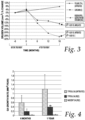
- the expected untreated GA growth rate reported in the literature is 1.20 mm 2 /year (or 0.18 mm/year adjusted for baseline lesion area). After 12 months of treatment with RQC, the GA growth rate was found to be 0.19 mm 2 /year (or 0.06 mm/year adjusted for baseline lesion area), representing a change of -79% in adjusted growth rate (mm/year). See TABLE 6, below and Figure 4 .
- RQC in triple combinations has been found to be synergistic at all dose levels evaluated including all possible combinations of each component at low, medium, and high doses (27 possible combinations).
- the optimal in vivo dose therefore corresponds to an available dose (i.e. plasma concentration) of 1 ⁇ M R, 1 ⁇ M Q, and 0.1 ⁇ M C.
- an in vivo dose of 1 ⁇ M R corresponds to about 200 mg consumed
- 1 ⁇ M Q corresponds to about 240 mg consumed
- 0.1 ⁇ M C corresponds to about 2000 mg consumed.
- curcumin which has a low bioavailability relative to resveratrol and quercetin
- two capsules 1000 mg each
- the in-vitro dose with the highest average level of synergy was found to be 1 ⁇ M R, 1 ⁇ M Q, and 0.1 ⁇ M C.
- the given doses of 200 mg R, 240 mg Q, and 2000 mg C per day correspond to approximately 1 ⁇ M R, 1 ⁇ M Q, and 0.1 ⁇ M C, respectively.
- the average combination index values of low, medium, and high doses of RQC for the inhibition of SAPs in AMD subjects was determined.
- the Combination Index (CI) theorem derived by Chou-Talalay [Chou, 2010] was calculated for each combination drug treatment of R, Q, and C.
- the CI is useful in quantifying levels of synergism and antagonism.
- the theorem is based on the median-effect equation to provide a common link between a single entity and multiple entities.
- a CI value ⁇ 1 indicates synergism
- a CI equal to 1 indicates additivity
- a CI > 1 indicates antagonism.
- RQC was very effective in low, medium, and high doses.
- Low dose corresponds to 1 ⁇ M R, 1 ⁇ M Q, and 0.01 ⁇ M C
- Medium dose corresponds 5 ⁇ M R, 5 ⁇ M Q, and 0.1 ⁇ M C
- High dose corresponds to 10 ⁇ M R, 10 ⁇ M Q, and 1 ⁇ M C.
- RQC exhibits strong synergy in triple combinations at all tested dose levels.
- the synergy of RQC ranged from 0.22 to 0.75.
- the doses tested were R (1, 5, and 10 ⁇ M), Q (1, 5, and 10 ⁇ M), and C (0.01, 0.1, and 1 ⁇ M) and the effect was based on the inhibition of SAPs.
- the average CI score for each dose combination was calculated within each cohort, producing a set of 27 double combination CI scores and 27 triple combination CI scores per cohort. Out of each set of 27 dose combinations, the number of CI scores under 0.8 (highly synergistic) was counted and reported here.
- the TLR4 receptor has three pathways leading to downstream activation: (1) ligand-induced receptor dimerization, (2) the myeloid differentiation primary response gene 88-(MyD88-) dependent pathway, and (3) the TIR-domain-containing adapter-inducing interferon- ⁇ - (TRIF-) dependent pathway.
- RQC targets each of these pathways through various mechanisms.
- resveratrol binds to TRIF complex adaptor proteins TANK-binding kinase 1 (TBK1) and receptor-interacting serine/threonine-protein kinase 1 (RIPK1).
- quercetin binds TOLL-interacting protein (TOLLIP).
- curcumin binds directly to the TLR4/MD2 complex as well as downstream IKK activity in the MyD88-dependant pathway. See FIGURE 6 .
- SAPs superactivated platelets
- TLR4 inhibitors reduce SAPs more effectively in subjects with AMD than in healthy controls as shown in Tables 10 and 11, below.
- TLR4 inhibitors have inhibitory effects on the complement system through cross-talk mechanisms with TLR4. Evidence suggests that RQC also inhibits complement activity directly.
- a "dual-blockade" of TLR4 and complement activity is a highly efficient therapeutic strategy for disease with an inflammatory component such as AMD.
- RQC acts on TLR4 to reduce formation of SAPs.
- the IC50s of R, Q, and C for the reduction of SAPs are 36 ⁇ M, 31 ⁇ M, and 3.6 ⁇ M, respectively.
- EXAMPLE 4 Plasmalemma Vesicle Associated Protein-1 (PLVAP) in AMD
- a key pathogenic mechanism in AMD is the breakdown of the choroid and RPE.
- the dry form of AMD is characterized by drusen and geographic atrophy.
- the initial pathology involves the formation of drusen and/or choroidal abnormalities.
- the typical choroid changes in the dry form include (1) decrease in the number of choroidal vessels and (2) abnormal vessel formation.
- PLVAP is significantly altered in the disease process.
- PLVAP is a type II integral membrane glycoprotein with a molecular weight of ⁇ 70 kDa. It consists of three sections: a short intracellular tail with a caveolin-1 binding domain, a transmembrane domain, and a long 358 amino acid extracellular C-terminal domain with four N-glycosylation sites and two large coiled-coil domains.
- the coiled-coil domain forms an alpha helix and is hydrophobic to facilitate the formation of an intermolecular superhelix.
- the helix forms fenestral diaphragms and consist of radial fibrils on their luminal side.
- PLVAP expression is known to be induced by VEGF through VEGFR-2 and is regulated by the canonical Wnt pathway through ⁇ -catenin.
- PLVAP is involved in AD, cancer, traumatic spinal cord injury, acute ischemic brain disease, transplant glomerulopathy, Norrie disease, and diabetic retinopathy [Wisniewska-Kruk et al. 2016; Guo, 2016].
- PLVAP is upregulated and associated with angiogenesis and inflammation - also key pathogenic mechanisms in AMD.
- upregulated PLVAP is associated with VEGF-induced breakdown of the blood-brain and blood-retinal barriers [Bosma, 2018].
- Loss of PLVAP results in a failure to form diaphragms in fenestrated capillaries, caveolae, and transendothelial junctions.
Landscapes
- Health & Medical Sciences (AREA)
- Veterinary Medicine (AREA)
- Chemical & Material Sciences (AREA)
- Medicinal Chemistry (AREA)
- Pharmacology & Pharmacy (AREA)
- Life Sciences & Earth Sciences (AREA)
- Animal Behavior & Ethology (AREA)
- General Health & Medical Sciences (AREA)
- Public Health (AREA)
- Epidemiology (AREA)
- Ophthalmology & Optometry (AREA)
- Engineering & Computer Science (AREA)
- Bioinformatics & Cheminformatics (AREA)
- Chemical Kinetics & Catalysis (AREA)
- General Chemical & Material Sciences (AREA)
- Nuclear Medicine, Radiotherapy & Molecular Imaging (AREA)
- Organic Chemistry (AREA)
- Acyclic And Carbocyclic Compounds In Medicinal Compositions (AREA)
- Pharmaceuticals Containing Other Organic And Inorganic Compounds (AREA)
Claims (4)
- Verbindung, ausgewählt aus der Gruppe, bestehend aus Resveratrol, Quercetin, Curcumin und einer Kombination davon, zur Verwendung in einem Verfahren zum Behandeln von altersbedingter Makula-Degeneration (AMD), wobei das Verfahren ein Verabreichen an ein menschliches Lebewesen, das unter AMD leidet, pro Tag von 20 bis 5 000 Milligramm Resveratrol, 24 bis 5 000 Milligramm Quercetin und 20 bis 12 000 Milligramm Curcumin umfasst.
- Verbindung zur Verwendung gemäß Anspruch 1, wobei das Verfahren ein Verabreichen an das menschliche Lebewesen, das unter AMD leidet, pro Tag von 20 bis 5 000 Milligramm Resveratrol, 24 bis 5 000 Milligramm Quercetin und 200 bis 12 000 Milligramm Curcumin umfasst.
- Verbindung zur Verwendung gemäß Anspruch 1 oder 2, wobei das Verfahren ein Verabreichen an das menschliche Lebewesen, das unter AMD leidet, pro Tag von 200 Milligramm Resveratrol, 240 Milligramm Quercetin und 200 Milligramm Curcumin umfasst.
- Verbindung zur Verwendung gemäß Anspruch 1 oder 2, wobei das Verfahren ein Verabreichen an das menschliche Lebewesen, das unter AMD leidet, pro Tag von 200 Milligramm Resveratrol, 240 Milligramm Quercetin und 2000 Milligramm Curcumin umfasst.
Applications Claiming Priority (1)
| Application Number | Priority Date | Filing Date | Title |
|---|---|---|---|
| US17/574,705 US12551453B2 (en) | 2015-08-20 | 2022-01-13 | Compositions and methods of treating age-related macular degeneration |
Publications (3)
| Publication Number | Publication Date |
|---|---|
| EP4212151A2 EP4212151A2 (de) | 2023-07-19 |
| EP4212151A3 EP4212151A3 (de) | 2023-09-27 |
| EP4212151B1 true EP4212151B1 (de) | 2025-03-12 |
Family
ID=84943221
Family Applications (1)
| Application Number | Title | Priority Date | Filing Date |
|---|---|---|---|
| EP23151383.9A Active EP4212151B1 (de) | 2022-01-13 | 2023-01-12 | Stilben-, flavonol- oder curcuminverbindungen zur verwendung in der behandlung altersbedingter makuladegeneration (amd) |
Country Status (1)
| Country | Link |
|---|---|
| EP (1) | EP4212151B1 (de) |
Family Cites Families (4)
| Publication number | Priority date | Publication date | Assignee | Title |
|---|---|---|---|---|
| WO2009089011A2 (en) * | 2008-01-08 | 2009-07-16 | Sirtris Pharmaceuticals, Inc. | Resveratrol formulations |
| US20110281957A1 (en) * | 2008-11-26 | 2011-11-17 | Lipoprotein Technologies, Inc. | Enhanced bioactive formulations of resveratrol |
| GB201014340D0 (en) * | 2010-08-27 | 2010-10-13 | Piraee Mahmood | Nutritional supplement formulation comprising saffron and resveratrol |
| JP6738326B2 (ja) | 2014-06-06 | 2020-08-12 | ザ スクリプス リサーチ インスティテュート | フッ化硫黄(vi)化合物およびそれの製造方法 |
-
2023
- 2023-01-12 EP EP23151383.9A patent/EP4212151B1/de active Active
Also Published As
| Publication number | Publication date |
|---|---|
| EP4212151A3 (de) | 2023-09-27 |
| EP4212151A2 (de) | 2023-07-19 |
Similar Documents
| Publication | Publication Date | Title |
|---|---|---|
| JP7116490B2 (ja) | 眼の炎症性障害および疾患の組合せ処置 | |
| JP6868014B2 (ja) | 翼状片を治療するための組成物及び方法 | |
| JP7801201B2 (ja) | ヘテロシクリデンアセトアミド誘導体含有医薬 | |
| KR20180051561A (ko) | 특정 환자 집단에서 신경퇴행성 장애를 치료하는 방법 | |
| JP2018104414A (ja) | タウタンパク質凝集阻害用組成物 | |
| US12576044B2 (en) | Treatment of Alzheimer's disease | |
| US20200188405A1 (en) | Composition for treating ocular disorders such as macular degeneration, retinopathy and glaucoma | |
| US20220071924A1 (en) | Treatment of ocular diseases with ophthalmic tapinarof compositions | |
| EP4212151B1 (de) | Stilben-, flavonol- oder curcuminverbindungen zur verwendung in der behandlung altersbedingter makuladegeneration (amd) | |
| HK1225971A1 (zh) | 使用拉喹莫德治疗青光眼 | |
| US12551453B2 (en) | Compositions and methods of treating age-related macular degeneration | |
| KR20100008548A (ko) | 클로로겐산을 포함하는 맥락막 혈관신생 관련질환 치료용조성물 | |
| EP3924051B1 (de) | Zusammensetzung und verfahren zur hemmung der thrombozytenaggregation | |
| EP2709643B1 (de) | Zusammensetzungen mit extrakten oder materialien aus palmölvegetationsflüssigkeit zur hemmung von sichtverlust durch makuladegeneration | |
| CN117731721B (zh) | 植物提取物组合物及其应用 | |
| JP2022509552A (ja) | 抗がん用組成物 | |
| US20240058308A1 (en) | Treatment and prevention of dry macular degeneration | |
| US20210275468A1 (en) | Method of Treatment Or Alleviating Symptoms Of A Disorder With Curcumin | |
| WO2023076930A1 (en) | Methods of treating head and neck cancers with hemp extract | |
| CN117959316A (zh) | 一种包含恩格列净的药物组合物及其制备方法与制药用途 | |
| WO2026067059A1 (zh) | Jak2抑制剂在制备治疗慢性肾脏病的药物中的用途 | |
| CN117860755A (zh) | 一种含有恩噻芬汀的药物组合物及其应用 | |
| Undre et al. | P970 Itraconazole does not affect the pharmacokinetics of micafungin (FK463) | |
| BENJAMIN | The importance of pachymetry and CCT | |
| HK1135020A (en) | Gel useful for the delivery of ophthalmic drugs |
Legal Events
| Date | Code | Title | Description |
|---|---|---|---|
| PUAI | Public reference made under article 153(3) epc to a published international application that has entered the european phase |
Free format text: ORIGINAL CODE: 0009012 |
|
| STAA | Information on the status of an ep patent application or granted ep patent |
Free format text: STATUS: THE APPLICATION HAS BEEN PUBLISHED |
|
| AK | Designated contracting states |
Kind code of ref document: A2 Designated state(s): AL AT BE BG CH CY CZ DE DK EE ES FI FR GB GR HR HU IE IS IT LI LT LU LV MC ME MK MT NL NO PL PT RO RS SE SI SK SM TR |
|
| PUAL | Search report despatched |
Free format text: ORIGINAL CODE: 0009013 |
|
| AK | Designated contracting states |
Kind code of ref document: A3 Designated state(s): AL AT BE BG CH CY CZ DE DK EE ES FI FR GB GR HR HU IE IS IT LI LT LU LV MC ME MK MT NL NO PL PT RO RS SE SI SK SM TR |
|
| RIC1 | Information provided on ipc code assigned before grant |
Ipc: A61P 27/02 20060101ALI20230818BHEP Ipc: A61K 31/352 20060101ALI20230818BHEP Ipc: A61K 31/12 20060101ALI20230818BHEP Ipc: A61K 31/05 20060101AFI20230818BHEP |
|
| STAA | Information on the status of an ep patent application or granted ep patent |
Free format text: STATUS: REQUEST FOR EXAMINATION WAS MADE |
|
| 17P | Request for examination filed |
Effective date: 20240318 |
|
| RBV | Designated contracting states (corrected) |
Designated state(s): AL AT BE BG CH CY CZ DE DK EE ES FI FR GB GR HR HU IE IS IT LI LT LU LV MC ME MK MT NL NO PL PT RO RS SE SI SK SM TR |
|
| GRAP | Despatch of communication of intention to grant a patent |
Free format text: ORIGINAL CODE: EPIDOSNIGR1 |
|
| STAA | Information on the status of an ep patent application or granted ep patent |
Free format text: STATUS: GRANT OF PATENT IS INTENDED |
|
| RIC1 | Information provided on ipc code assigned before grant |
Ipc: A61P 27/02 20060101ALI20240917BHEP Ipc: A61K 31/352 20060101ALI20240917BHEP Ipc: A61K 31/12 20060101ALI20240917BHEP Ipc: A61K 31/05 20060101AFI20240917BHEP |
|
| INTG | Intention to grant announced |
Effective date: 20241016 |
|
| GRAS | Grant fee paid |
Free format text: ORIGINAL CODE: EPIDOSNIGR3 |
|
| GRAA | (expected) grant |
Free format text: ORIGINAL CODE: 0009210 |
|
| STAA | Information on the status of an ep patent application or granted ep patent |
Free format text: STATUS: THE PATENT HAS BEEN GRANTED |
|
| P01 | Opt-out of the competence of the unified patent court (upc) registered |
Free format text: CASE NUMBER: APP_4876/2025 Effective date: 20250129 |
|
| AK | Designated contracting states |
Kind code of ref document: B1 Designated state(s): AL AT BE BG CH CY CZ DE DK EE ES FI FR GB GR HR HU IE IS IT LI LT LU LV MC ME MK MT NL NO PL PT RO RS SE SI SK SM TR |
|
| REG | Reference to a national code |
Ref country code: GB Ref legal event code: FG4D |
|
| REG | Reference to a national code |
Ref country code: CH Ref legal event code: EP |
|
| REG | Reference to a national code |
Ref country code: DE Ref legal event code: R096 Ref document number: 602023002330 Country of ref document: DE |
|
| REG | Reference to a national code |
Ref country code: IE Ref legal event code: FG4D |
|
| PG25 | Lapsed in a contracting state [announced via postgrant information from national office to epo] |
Ref country code: RS Free format text: LAPSE BECAUSE OF FAILURE TO SUBMIT A TRANSLATION OF THE DESCRIPTION OR TO PAY THE FEE WITHIN THE PRESCRIBED TIME-LIMIT Effective date: 20250612 |
|
| PG25 | Lapsed in a contracting state [announced via postgrant information from national office to epo] |
Ref country code: FI Free format text: LAPSE BECAUSE OF FAILURE TO SUBMIT A TRANSLATION OF THE DESCRIPTION OR TO PAY THE FEE WITHIN THE PRESCRIBED TIME-LIMIT Effective date: 20250312 |
|
| PG25 | Lapsed in a contracting state [announced via postgrant information from national office to epo] |
Ref country code: ES Free format text: LAPSE BECAUSE OF FAILURE TO SUBMIT A TRANSLATION OF THE DESCRIPTION OR TO PAY THE FEE WITHIN THE PRESCRIBED TIME-LIMIT Effective date: 20250312 |
|
| REG | Reference to a national code |
Ref country code: LT Ref legal event code: MG9D |
|
| PG25 | Lapsed in a contracting state [announced via postgrant information from national office to epo] |
Ref country code: NO Free format text: LAPSE BECAUSE OF FAILURE TO SUBMIT A TRANSLATION OF THE DESCRIPTION OR TO PAY THE FEE WITHIN THE PRESCRIBED TIME-LIMIT Effective date: 20250612 |
|
| PG25 | Lapsed in a contracting state [announced via postgrant information from national office to epo] |
Ref country code: HR Free format text: LAPSE BECAUSE OF FAILURE TO SUBMIT A TRANSLATION OF THE DESCRIPTION OR TO PAY THE FEE WITHIN THE PRESCRIBED TIME-LIMIT Effective date: 20250312 |
|
| REG | Reference to a national code |
Ref country code: NL Ref legal event code: MP Effective date: 20250312 |
|
| PG25 | Lapsed in a contracting state [announced via postgrant information from national office to epo] |
Ref country code: LV Free format text: LAPSE BECAUSE OF FAILURE TO SUBMIT A TRANSLATION OF THE DESCRIPTION OR TO PAY THE FEE WITHIN THE PRESCRIBED TIME-LIMIT Effective date: 20250312 |
|
| PG25 | Lapsed in a contracting state [announced via postgrant information from national office to epo] |
Ref country code: BG Free format text: LAPSE BECAUSE OF FAILURE TO SUBMIT A TRANSLATION OF THE DESCRIPTION OR TO PAY THE FEE WITHIN THE PRESCRIBED TIME-LIMIT Effective date: 20250312 Ref country code: GR Free format text: LAPSE BECAUSE OF FAILURE TO SUBMIT A TRANSLATION OF THE DESCRIPTION OR TO PAY THE FEE WITHIN THE PRESCRIBED TIME-LIMIT Effective date: 20250613 |
|
| REG | Reference to a national code |
Ref country code: AT Ref legal event code: MK05 Ref document number: 1774459 Country of ref document: AT Kind code of ref document: T Effective date: 20250312 |
|
| PG25 | Lapsed in a contracting state [announced via postgrant information from national office to epo] |
Ref country code: NL Free format text: LAPSE BECAUSE OF FAILURE TO SUBMIT A TRANSLATION OF THE DESCRIPTION OR TO PAY THE FEE WITHIN THE PRESCRIBED TIME-LIMIT Effective date: 20250312 |
|
| PG25 | Lapsed in a contracting state [announced via postgrant information from national office to epo] |
Ref country code: SE Free format text: LAPSE BECAUSE OF FAILURE TO SUBMIT A TRANSLATION OF THE DESCRIPTION OR TO PAY THE FEE WITHIN THE PRESCRIBED TIME-LIMIT Effective date: 20250312 |
|
| PG25 | Lapsed in a contracting state [announced via postgrant information from national office to epo] |
Ref country code: SM Free format text: LAPSE BECAUSE OF FAILURE TO SUBMIT A TRANSLATION OF THE DESCRIPTION OR TO PAY THE FEE WITHIN THE PRESCRIBED TIME-LIMIT Effective date: 20250312 |
|
| PG25 | Lapsed in a contracting state [announced via postgrant information from national office to epo] |
Ref country code: PT Free format text: LAPSE BECAUSE OF FAILURE TO SUBMIT A TRANSLATION OF THE DESCRIPTION OR TO PAY THE FEE WITHIN THE PRESCRIBED TIME-LIMIT Effective date: 20250714 |
|
| PG25 | Lapsed in a contracting state [announced via postgrant information from national office to epo] |
Ref country code: PL Free format text: LAPSE BECAUSE OF FAILURE TO SUBMIT A TRANSLATION OF THE DESCRIPTION OR TO PAY THE FEE WITHIN THE PRESCRIBED TIME-LIMIT Effective date: 20250312 |
|
| PG25 | Lapsed in a contracting state [announced via postgrant information from national office to epo] |
Ref country code: AT Free format text: LAPSE BECAUSE OF FAILURE TO SUBMIT A TRANSLATION OF THE DESCRIPTION OR TO PAY THE FEE WITHIN THE PRESCRIBED TIME-LIMIT Effective date: 20250312 |
|
| PG25 | Lapsed in a contracting state [announced via postgrant information from national office to epo] |
Ref country code: EE Free format text: LAPSE BECAUSE OF FAILURE TO SUBMIT A TRANSLATION OF THE DESCRIPTION OR TO PAY THE FEE WITHIN THE PRESCRIBED TIME-LIMIT Effective date: 20250312 Ref country code: CZ Free format text: LAPSE BECAUSE OF FAILURE TO SUBMIT A TRANSLATION OF THE DESCRIPTION OR TO PAY THE FEE WITHIN THE PRESCRIBED TIME-LIMIT Effective date: 20250312 |
|
| PG25 | Lapsed in a contracting state [announced via postgrant information from national office to epo] |
Ref country code: RO Free format text: LAPSE BECAUSE OF FAILURE TO SUBMIT A TRANSLATION OF THE DESCRIPTION OR TO PAY THE FEE WITHIN THE PRESCRIBED TIME-LIMIT Effective date: 20250312 |
|
| PG25 | Lapsed in a contracting state [announced via postgrant information from national office to epo] |
Ref country code: SK Free format text: LAPSE BECAUSE OF FAILURE TO SUBMIT A TRANSLATION OF THE DESCRIPTION OR TO PAY THE FEE WITHIN THE PRESCRIBED TIME-LIMIT Effective date: 20250312 |
|
| PG25 | Lapsed in a contracting state [announced via postgrant information from national office to epo] |
Ref country code: IS Free format text: LAPSE BECAUSE OF FAILURE TO SUBMIT A TRANSLATION OF THE DESCRIPTION OR TO PAY THE FEE WITHIN THE PRESCRIBED TIME-LIMIT Effective date: 20250712 |
|
| REG | Reference to a national code |
Ref country code: DE Ref legal event code: R097 Ref document number: 602023002330 Country of ref document: DE |
|
| PG25 | Lapsed in a contracting state [announced via postgrant information from national office to epo] |
Ref country code: DK Free format text: LAPSE BECAUSE OF FAILURE TO SUBMIT A TRANSLATION OF THE DESCRIPTION OR TO PAY THE FEE WITHIN THE PRESCRIBED TIME-LIMIT Effective date: 20250312 |
|
| PLBE | No opposition filed within time limit |
Free format text: ORIGINAL CODE: 0009261 |
|
| STAA | Information on the status of an ep patent application or granted ep patent |
Free format text: STATUS: NO OPPOSITION FILED WITHIN TIME LIMIT |
|
| REG | Reference to a national code |
Ref country code: CH Ref legal event code: L10 Free format text: ST27 STATUS EVENT CODE: U-0-0-L10-L00 (AS PROVIDED BY THE NATIONAL OFFICE) Effective date: 20260121 |
|
| 26N | No opposition filed |
Effective date: 20251215 |
|
| PGFP | Annual fee paid to national office [announced via postgrant information from national office to epo] |
Ref country code: DE Payment date: 20260127 Year of fee payment: 4 |
|
| PGFP | Annual fee paid to national office [announced via postgrant information from national office to epo] |
Ref country code: IT Payment date: 20260131 Year of fee payment: 4 |
|
| PGFP | Annual fee paid to national office [announced via postgrant information from national office to epo] |
Ref country code: FR Payment date: 20260129 Year of fee payment: 4 |