EP4213266A1 - Wasserfreier elektrolyt für lithiumsekundärbatterie und lithiumsekundärbatterie damit - Google Patents
Wasserfreier elektrolyt für lithiumsekundärbatterie und lithiumsekundärbatterie damit Download PDFInfo
- Publication number
- EP4213266A1 EP4213266A1 EP22877678.7A EP22877678A EP4213266A1 EP 4213266 A1 EP4213266 A1 EP 4213266A1 EP 22877678 A EP22877678 A EP 22877678A EP 4213266 A1 EP4213266 A1 EP 4213266A1
- Authority
- EP
- European Patent Office
- Prior art keywords
- lithium secondary
- electrolyte
- carbonate
- secondary battery
- lithium
- Prior art date
- Legal status (The legal status is an assumption and is not a legal conclusion. Google has not performed a legal analysis and makes no representation as to the accuracy of the status listed.)
- Pending
Links
Images
Classifications
-
- H—ELECTRICITY
- H01—ELECTRIC ELEMENTS
- H01M—PROCESSES OR MEANS, e.g. BATTERIES, FOR THE DIRECT CONVERSION OF CHEMICAL ENERGY INTO ELECTRICAL ENERGY
- H01M4/00—Electrodes
- H01M4/02—Electrodes composed of, or comprising, active material
- H01M4/36—Selection of substances as active materials, active masses, active liquids
- H01M4/38—Selection of substances as active materials, active masses, active liquids of elements or alloys
-
- H—ELECTRICITY
- H01—ELECTRIC ELEMENTS
- H01M—PROCESSES OR MEANS, e.g. BATTERIES, FOR THE DIRECT CONVERSION OF CHEMICAL ENERGY INTO ELECTRICAL ENERGY
- H01M10/00—Secondary cells; Manufacture thereof
- H01M10/05—Accumulators with non-aqueous electrolyte
- H01M10/056—Accumulators with non-aqueous electrolyte characterised by the materials used as electrolytes, e.g. mixed inorganic/organic electrolytes
- H01M10/0564—Accumulators with non-aqueous electrolyte characterised by the materials used as electrolytes, e.g. mixed inorganic/organic electrolytes the electrolyte being constituted of organic materials only
- H01M10/0566—Liquid materials
- H01M10/0567—Liquid materials characterised by the additives
-
- H—ELECTRICITY
- H01—ELECTRIC ELEMENTS
- H01M—PROCESSES OR MEANS, e.g. BATTERIES, FOR THE DIRECT CONVERSION OF CHEMICAL ENERGY INTO ELECTRICAL ENERGY
- H01M10/00—Secondary cells; Manufacture thereof
- H01M10/05—Accumulators with non-aqueous electrolyte
- H01M10/052—Li-accumulators
- H01M10/0525—Rocking-chair batteries, i.e. batteries with lithium insertion or intercalation in both electrodes; Lithium-ion batteries
-
- H—ELECTRICITY
- H01—ELECTRIC ELEMENTS
- H01M—PROCESSES OR MEANS, e.g. BATTERIES, FOR THE DIRECT CONVERSION OF CHEMICAL ENERGY INTO ELECTRICAL ENERGY
- H01M10/00—Secondary cells; Manufacture thereof
- H01M10/05—Accumulators with non-aqueous electrolyte
- H01M10/056—Accumulators with non-aqueous electrolyte characterised by the materials used as electrolytes, e.g. mixed inorganic/organic electrolytes
- H01M10/0564—Accumulators with non-aqueous electrolyte characterised by the materials used as electrolytes, e.g. mixed inorganic/organic electrolytes the electrolyte being constituted of organic materials only
- H01M10/0566—Liquid materials
- H01M10/0568—Liquid materials characterised by the solutes
-
- H—ELECTRICITY
- H01—ELECTRIC ELEMENTS
- H01M—PROCESSES OR MEANS, e.g. BATTERIES, FOR THE DIRECT CONVERSION OF CHEMICAL ENERGY INTO ELECTRICAL ENERGY
- H01M10/00—Secondary cells; Manufacture thereof
- H01M10/05—Accumulators with non-aqueous electrolyte
- H01M10/056—Accumulators with non-aqueous electrolyte characterised by the materials used as electrolytes, e.g. mixed inorganic/organic electrolytes
- H01M10/0564—Accumulators with non-aqueous electrolyte characterised by the materials used as electrolytes, e.g. mixed inorganic/organic electrolytes the electrolyte being constituted of organic materials only
- H01M10/0566—Liquid materials
- H01M10/0569—Liquid materials characterised by the solvents
-
- H—ELECTRICITY
- H01—ELECTRIC ELEMENTS
- H01M—PROCESSES OR MEANS, e.g. BATTERIES, FOR THE DIRECT CONVERSION OF CHEMICAL ENERGY INTO ELECTRICAL ENERGY
- H01M4/00—Electrodes
- H01M4/02—Electrodes composed of, or comprising, active material
- H01M4/36—Selection of substances as active materials, active masses, active liquids
-
- H—ELECTRICITY
- H01—ELECTRIC ELEMENTS
- H01M—PROCESSES OR MEANS, e.g. BATTERIES, FOR THE DIRECT CONVERSION OF CHEMICAL ENERGY INTO ELECTRICAL ENERGY
- H01M4/00—Electrodes
- H01M4/02—Electrodes composed of, or comprising, active material
- H01M4/36—Selection of substances as active materials, active masses, active liquids
- H01M4/362—Composites
- H01M4/364—Composites as mixtures
-
- H—ELECTRICITY
- H01—ELECTRIC ELEMENTS
- H01M—PROCESSES OR MEANS, e.g. BATTERIES, FOR THE DIRECT CONVERSION OF CHEMICAL ENERGY INTO ELECTRICAL ENERGY
- H01M4/00—Electrodes
- H01M4/02—Electrodes composed of, or comprising, active material
- H01M4/36—Selection of substances as active materials, active masses, active liquids
- H01M4/362—Composites
- H01M4/366—Composites as layered products
-
- H—ELECTRICITY
- H01—ELECTRIC ELEMENTS
- H01M—PROCESSES OR MEANS, e.g. BATTERIES, FOR THE DIRECT CONVERSION OF CHEMICAL ENERGY INTO ELECTRICAL ENERGY
- H01M4/00—Electrodes
- H01M4/02—Electrodes composed of, or comprising, active material
- H01M4/36—Selection of substances as active materials, active masses, active liquids
- H01M4/48—Selection of substances as active materials, active masses, active liquids of inorganic oxides or hydroxides
- H01M4/483—Selection of substances as active materials, active masses, active liquids of inorganic oxides or hydroxides for non-aqueous cells
-
- H—ELECTRICITY
- H01—ELECTRIC ELEMENTS
- H01M—PROCESSES OR MEANS, e.g. BATTERIES, FOR THE DIRECT CONVERSION OF CHEMICAL ENERGY INTO ELECTRICAL ENERGY
- H01M4/00—Electrodes
- H01M4/02—Electrodes composed of, or comprising, active material
- H01M4/62—Selection of inactive substances as ingredients for active masses, e.g. binders, fillers
- H01M4/624—Electric conductive fillers
- H01M4/625—Carbon or graphite
-
- H—ELECTRICITY
- H01—ELECTRIC ELEMENTS
- H01M—PROCESSES OR MEANS, e.g. BATTERIES, FOR THE DIRECT CONVERSION OF CHEMICAL ENERGY INTO ELECTRICAL ENERGY
- H01M10/00—Secondary cells; Manufacture thereof
- H01M10/05—Accumulators with non-aqueous electrolyte
- H01M10/052—Li-accumulators
-
- H—ELECTRICITY
- H01—ELECTRIC ELEMENTS
- H01M—PROCESSES OR MEANS, e.g. BATTERIES, FOR THE DIRECT CONVERSION OF CHEMICAL ENERGY INTO ELECTRICAL ENERGY
- H01M4/00—Electrodes
- H01M4/02—Electrodes composed of, or comprising, active material
- H01M2004/021—Physical characteristics, e.g. porosity, surface area
-
- H—ELECTRICITY
- H01—ELECTRIC ELEMENTS
- H01M—PROCESSES OR MEANS, e.g. BATTERIES, FOR THE DIRECT CONVERSION OF CHEMICAL ENERGY INTO ELECTRICAL ENERGY
- H01M4/00—Electrodes
- H01M4/02—Electrodes composed of, or comprising, active material
- H01M2004/026—Electrodes composed of, or comprising, active material characterised by the polarity
- H01M2004/027—Negative electrodes
-
- H—ELECTRICITY
- H01—ELECTRIC ELEMENTS
- H01M—PROCESSES OR MEANS, e.g. BATTERIES, FOR THE DIRECT CONVERSION OF CHEMICAL ENERGY INTO ELECTRICAL ENERGY
- H01M2300/00—Electrolytes
- H01M2300/0017—Non-aqueous electrolytes
- H01M2300/0025—Organic electrolyte
-
- H—ELECTRICITY
- H01—ELECTRIC ELEMENTS
- H01M—PROCESSES OR MEANS, e.g. BATTERIES, FOR THE DIRECT CONVERSION OF CHEMICAL ENERGY INTO ELECTRICAL ENERGY
- H01M4/00—Electrodes
- H01M4/02—Electrodes composed of, or comprising, active material
- H01M4/13—Electrodes for accumulators with non-aqueous electrolyte, e.g. for lithium-accumulators; Processes of manufacture thereof
- H01M4/133—Electrodes based on carbonaceous material, e.g. graphite-intercalation compounds or CFx
-
- H—ELECTRICITY
- H01—ELECTRIC ELEMENTS
- H01M—PROCESSES OR MEANS, e.g. BATTERIES, FOR THE DIRECT CONVERSION OF CHEMICAL ENERGY INTO ELECTRICAL ENERGY
- H01M4/00—Electrodes
- H01M4/02—Electrodes composed of, or comprising, active material
- H01M4/13—Electrodes for accumulators with non-aqueous electrolyte, e.g. for lithium-accumulators; Processes of manufacture thereof
- H01M4/134—Electrodes based on metals, Si or alloys
-
- H—ELECTRICITY
- H01—ELECTRIC ELEMENTS
- H01M—PROCESSES OR MEANS, e.g. BATTERIES, FOR THE DIRECT CONVERSION OF CHEMICAL ENERGY INTO ELECTRICAL ENERGY
- H01M4/00—Electrodes
- H01M4/02—Electrodes composed of, or comprising, active material
- H01M4/36—Selection of substances as active materials, active masses, active liquids
- H01M4/38—Selection of substances as active materials, active masses, active liquids of elements or alloys
- H01M4/386—Silicon or alloys based on silicon
-
- H—ELECTRICITY
- H01—ELECTRIC ELEMENTS
- H01M—PROCESSES OR MEANS, e.g. BATTERIES, FOR THE DIRECT CONVERSION OF CHEMICAL ENERGY INTO ELECTRICAL ENERGY
- H01M4/00—Electrodes
- H01M4/02—Electrodes composed of, or comprising, active material
- H01M4/36—Selection of substances as active materials, active masses, active liquids
- H01M4/48—Selection of substances as active materials, active masses, active liquids of inorganic oxides or hydroxides
- H01M4/50—Selection of substances as active materials, active masses, active liquids of inorganic oxides or hydroxides of manganese
- H01M4/505—Selection of substances as active materials, active masses, active liquids of inorganic oxides or hydroxides of manganese of mixed oxides or hydroxides containing manganese for inserting or intercalating light metals, e.g. LiMn2O4 or LiMn2OxFy
-
- H—ELECTRICITY
- H01—ELECTRIC ELEMENTS
- H01M—PROCESSES OR MEANS, e.g. BATTERIES, FOR THE DIRECT CONVERSION OF CHEMICAL ENERGY INTO ELECTRICAL ENERGY
- H01M4/00—Electrodes
- H01M4/02—Electrodes composed of, or comprising, active material
- H01M4/36—Selection of substances as active materials, active masses, active liquids
- H01M4/48—Selection of substances as active materials, active masses, active liquids of inorganic oxides or hydroxides
- H01M4/52—Selection of substances as active materials, active masses, active liquids of inorganic oxides or hydroxides of nickel, cobalt or iron
- H01M4/525—Selection of substances as active materials, active masses, active liquids of inorganic oxides or hydroxides of nickel, cobalt or iron of mixed oxides or hydroxides containing iron, cobalt or nickel for inserting or intercalating light metals, e.g. LiNiO2, LiCoO2 or LiCoOxFy
-
- H—ELECTRICITY
- H01—ELECTRIC ELEMENTS
- H01M—PROCESSES OR MEANS, e.g. BATTERIES, FOR THE DIRECT CONVERSION OF CHEMICAL ENERGY INTO ELECTRICAL ENERGY
- H01M4/00—Electrodes
- H01M4/02—Electrodes composed of, or comprising, active material
- H01M4/36—Selection of substances as active materials, active masses, active liquids
- H01M4/58—Selection of substances as active materials, active masses, active liquids of inorganic compounds other than oxides or hydroxides, e.g. sulfides, selenides, tellurides, halogenides or LiCoFy; of polyanionic structures, e.g. phosphates, silicates or borates
- H01M4/583—Carbonaceous material, e.g. graphite-intercalation compounds or CFx
- H01M4/587—Carbonaceous material, e.g. graphite-intercalation compounds or CFx for inserting or intercalating light metals
-
- Y—GENERAL TAGGING OF NEW TECHNOLOGICAL DEVELOPMENTS; GENERAL TAGGING OF CROSS-SECTIONAL TECHNOLOGIES SPANNING OVER SEVERAL SECTIONS OF THE IPC; TECHNICAL SUBJECTS COVERED BY FORMER USPC CROSS-REFERENCE ART COLLECTIONS [XRACs] AND DIGESTS
- Y02—TECHNOLOGIES OR APPLICATIONS FOR MITIGATION OR ADAPTATION AGAINST CLIMATE CHANGE
- Y02E—REDUCTION OF GREENHOUSE GAS [GHG] EMISSIONS, RELATED TO ENERGY GENERATION, TRANSMISSION OR DISTRIBUTION
- Y02E60/00—Enabling technologies; Technologies with a potential or indirect contribution to GHG emissions mitigation
- Y02E60/10—Energy storage using batteries
Definitions
- It relates a non-aqueous electrolyte for a lithium secondary battery and a lithium secondary battery including the same.
- Lithium secondary batteries are attracting attention as power sources for various electronic devices because of high discharge voltage and high energy density.
- lithium-transition metal oxide having a structure capable of intercalating lithium ions such as LiCoO 2 , LiMn 2 O 4 , LiNi 1-x Co x O 2 (0 ⁇ x ⁇ 1), and the like has been used.
- One embodiment provides a non-aqueous electrolyte for a lithium secondary battery suppressing increases in battery resistance at a high temperature storage, thereby improving the battery performances and the cycle-life characteristics at a room temperature.
- Another embodiment provides a lithium secondary battery including the non-aqueous electrolyte.
- a non-aqueous electrolyte for a lithium secondary battery including a non-aqueous organic solvent; a lithium salt; and an additive represented by Chemical Formula 1.
- the l, m, and n are each an integer from 0 to 6, provided that at least one of l, m, and n may be an integer from 1 to 5. In another embodiment, the l, m, and n are each an integer from 0 to 3, provided that at least one of l, m, and n may be an integer from 1 to 3, and the l, m, and n are each an integer from 0 to 2, provided that at least one of l, m, and n may be an integer from 1 to 2.
- An amount of the additive may be 0.1 parts by weight to 3 parts by weight based on the total, 100 parts by weight of the non-aqueous electrolyte.
- the additive may be at least one represented by Chemical Formulas 1a to 1e.
- the electrolyte may further include one additive for improving cycle-life selected from fluoroethylene carbonate, difluoro ethylene carbonate, chloroethylene carbonate, dichloroethylene carbonate, bromoethylene carbonate, dibromoethylene carbonate, nitroethylene carbonate, or cyanoethylene carbonate; at least one additional additive selected from vinyl ethylene carbonate (VEC), adiponitrile (AN), succinonitrile (SN), 1,3,6-hexane tricyanide (HTCN), propene sultone (PST), propane sultone (PS), lithium tetrafluoroborate (LiBF 4 ), lithium difluorophosphate (LiPO 2 F 2 ), or 2-fluoro biphenyl (2-FBP) ; or combinations thereof.
- VEC vinyl ethylene carbonate
- AN adiponitrile
- SN succinonitrile
- HTCN 1,3,6-hexane tricyanide
- PST propene sultone
- PS propane
- a lithium secondary battery including the non-aqueous electrolyte; a positive electrode including a positive active material comprising a lithium, nickel and cobalt; and a negative electrode including a negative active material.
- the positive active material may be represented by Chemical Formula 2.
- Chemical Formula 2 Li a Ni x Co y M1 z M2 w O 2-b X b
- M1 is at least one element selected from Al or Mn
- M2 is at least one element selected from B, Ba, Ca, Ce, Cr, Fe, Mg, Mn, Mo, Nb, Si, Sr, Ti, V, W, or Zr
- X is at least one element selected from S, F, or P.
- the negative active material may be graphite, or may include a Si composite and graphite.
- the Si composite may include a core including Si-based particles and an amorphous carbon coating layer.
- the Si-based particle may include at least one of a Si-C composite, SiO x (0 ⁇ x ⁇ 2) and a Si alloy.
- the Si-C composite may include a core including Si particles and crystalline carbon and an amorphous carbon coating layer positioned on the surface of the core and the Si particle may have an average particle diameter of 50 nm to 200 nm.
- An electrolyte for a lithium secondary battery may suppress increases in battery resistance at a high temperature storage, thereby improving the battery performances and improving the cycle-life characteristics at a room temperature.
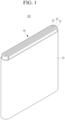
- FIG. 1 is a schematic view of a lithium secondary battery according to an embodiment.
- a non-aqueous electrolyte for a lithium secondary battery includes a non-aqueous organic solvent; a lithium salt; and an additive represented by Chemical Formula 1.
- l, m, and n are each an integer from 0 to 10, provided that at least one of l, m, and n is an integer from 1 to 10.
- a main chain only consists of C and H, except for an ending functional group, R a , R b , and R c .
- n are each an integer of 0 to 5, but at least one of l, m, and n may be an integer of 1 to 5.
- l, m, and n are each an integer from 0 to 3, provided that at least one of l, m, and n may be an integer from 1 to 3.
- n are each an integer from 0 to 2, provided that at least one of l, m, and n may be an integer from 1 to 2.
- R a , R b , and R c are each hydrogen or SCN, provided that at least two of R a , R b , and R c are SCN.
- the additive may be at least one represented by Chemical Formulas 1a to 1e.
- the additive is represented by Chemical Formula 1 of which a bonding group between carbon and SCN of a main chain is an unsubstituted alkyl, and it may reduce internal resistance compared to that with a substituted alkyl. If it includes a substituted alkyl or a functional group including hetero elements such as alkoxy, internal resistance may be increased.
- the additive includes two or more SCN at a terminal end and an inclusion of two or more SCN may occur to more effectively complexation to an active reaction site of the positive electrode and may effectively reduce the oxidation decomposition of the electrolyte.
- the electrolyte reacts with the positive active material to thinly form a generated CEI (cathode electrolyte interphase) film, thereby inhibiting damage by gas generation and an elution of metal elute, so that the safety of a high voltage positive active material may be secured and the battery performances may be improved.
- CEI cathode electrolyte interphase
- an amount of the additive may be 0.1 parts by weight to 2 parts by weight, 0.3 parts by weight to 2 parts by weight, 0.3 parts by weight to 1.5 parts by weight, 0.3 parts by weight to 1 part by weight, or 0.5 parts by weight to 1 part by weight based on the total, 100 parts by the non-aqueous electrolyte.
- the effects using the additive may be suitably obtained.
- the non-aqueous organic solvent serves as a medium for transmitting ions taking part in the electrochemical reaction of a battery.
- the non-aqueous organic solvent may include a carbonate-based, ester-based, ether-based, ketone-based, alcohol-based, or aprotic solvent.
- the carbonate-based solvent may be dimethyl carbonate (DMC), diethyl carbonate (DEC), dipropyl carbonate (DPC), methylpropyl carbonate (MPC), ethylpropyl carbonate (EPC), methylethyl carbonate (MEC), ethylene carbonate (EC), propylene carbonate (PC), butylene carbonate (BC), or combinations thereof.
- DMC dimethyl carbonate
- DEC diethyl carbonate
- DPC dipropyl carbonate
- MPC methylpropyl carbonate
- EPC ethylpropyl carbonate
- MEC methylethyl carbonate
- EC ethylene carbonate
- PC propylene carbonate
- BC butylene carbonate
- the ester-based solvent may include methyl acetate, ethyl acetate, n-propyl acetate, t-butyl acetate, methyl propionate, ethyl propionate, propyl propionate, ⁇ -butyrolactone, decanolide, valerolactone, mevalonolactone, caprolactone, and the like.
- the ether-based solvent may include dibutyl ether, tetraglyme, diglyme, dimethoxyethane, 2-methyltetrahydrofuran, tetrahydrofuran, and the like, and the ketone-based solvent may include cyclohexanone, and the like.
- the alcohol-based solvent may include ethyl alcohol, isopropyl alcohol, and the like
- examples of the aprotic solvent may include nitriles such as T-CN (where T is a C2 to C20 linear, branched, or cyclic hydrocarbon, or may include a double bond, an aromatic ring, or an ether bond), amides such as dimethylformamide, dioxolanes such as 1,3-dioxolane, sulfolanes, and the like.
- the organic solvent may be used alone or in a mixture.
- the mixture ratio may be controlled in accordance with a desirable battery performance and it may be well understood to one of ordinary skill in the related art.
- the carbonate-based solvent may include a mixture of a cyclic carbonate and a linear carbonate.
- the mixture of cyclic carbonate and linear carbonate mixed together in a volume ratio of 1:1 to 1:9 is used as an electrolyte, it may have enhanced performance.
- the non-aqueous organic solvent may further include an aromatic hydrocarbon-based organic solvent in addition to the carbonate-based solvent.
- the carbonate-based solvent and the aromatic hydrocarbon-based organic solvent may be mixed at a 1:1 to 30:1 by volume ratio.
- the aromatic hydrocarbon-based organic solvent may be an aromatic hydrocarbon-based compound of Chemical Formula 3.
- R 1 to R 6 are the same or different and are selected from hydrogen, a halogen, a C1 to C10 alkyl group, a haloalkyl group, and a combination thereof.
- aromatic hydrocarbon-based organic solvent may be selected from benzene, fluorobenzene, 1,2-difluorobenzene, 1,3-difluorobenzene, 1,4-difluorobenzene, 1,2,3-trifluorobenzene, 1,2,4-trifluorobenzene, chlorobenzene, 1,2-dichlorobenzene, 1,3-dichlorobenzene, 1,4-dichlorobenzene, 1,2,3-trichlorobenzene, 1,2,4-trichlorobenzene, iodobenzene, 1,2-diiodobenzene, 1,3-diiodobenzene, 1,4-diiodobenzene, 1,2,3-triiodobenzene, 1,2,4-triiodobenzene, toluene, fluorotoluene, 2,3-difluorotoluene, 2,4-di
- the electrolyte may further include an ethylene carbonate-based compound of Chemical Formula 4, as an additive for improving a cycle-life in order to improve the cycle-life characteristics.
- R 7 and R 8 are the same or different, and are selected from hydrogen, a halogen, a cyano group (CN), a nitro group (NO 2 ), and a fluorinated C1 to C5 alkyl group, provided that at least one of R 7 and R 8 is selected from a halogen, a cyano group (CN), a nitro group (NO 2 ), and a fluorinated C1 to C5 alkyl group, and R 7 and R 8 are not hydrogen.
- Examples of the ethylene carbonate-based compound may include fluoroethylene carbonate, difluoro ethylene carbonate, chloroethylene carbonate, dichloroethylene carbonate, bromoethylene carbonate, dibromoethylene carbonate, nitroethylene carbonate, cyanoethylene carbonate, and the like.
- the electrolyte may further include at least one additional additive selected from vinyl ethylene carbonate (VEC), adiponitrile (AN), succinonitrile (SN), 1,3,6-hexane tricyanide (HTCN), propene sultone (PST), propane sultone (PS), lithium tetrafluoroborate (LiBF 4 ), lithium difluorophosphate (LiPO 2 F 2 ), and 2-fluoro biphenyl (2-FBP).
- VEC vinyl ethylene carbonate
- AN adiponitrile
- SN succinonitrile
- HTCN 1,3,6-hexane tricyanide
- PST propene sultone
- PS propane sultone
- LiBF 4 lithium tetrafluoroborate
- LiPO 2 F 2 lithium difluorophosphate
- 2-fluoro biphenyl (2-FBP 2-fluoro biphenyl
- the amount thereof may be 1 part by weight to 20 parts by weight based on the total, 100 parts by weight of the electrolyte, but is not limited thereto.
- the lithium salt dissolved in an organic solvent supplies a battery with lithium ions, basically operates the lithium secondary battery, and improves transportation of the lithium ions between positive and negative electrodes.
- the lithium salt include one or two or more supporting salt selected from LiPF 6 , LiSbF 6 , LiAsF 6 , LiN(SO 2 C 2 F 5 ) 2 , Li(CF 3 SO 2 ) 2 N, LiN(SO 3 C 2 F 5 ) 2 , Li(FSO 2 ) 2 N (lithium bis(fluorosulfonyl)imide: LiFSI), LiC 4 F 9 SO 3 , LiClO 4 , LiAlO 2 , LiAlCl 4 , LiN(C x F 2x+1 SO 2 )(C y F 2y+1 SO 2 ), wherein x and y are natural numbers, for example an integer ranging from 1 to 20, lithium difluoro(bisoxalato) phosphate), LiCl, Lil, LiB(C 2 O 4
- the non-aqueous electrolyte including the additive for the lithium secondary battery When the non-aqueous electrolyte including the additive for the lithium secondary battery is applied into a lithium secondary battery using a compound including lithium, nickel, and cobalt as a positive active material, it may be more effective.
- the shortcomings such as resistance increases and capacity fading derived from the positive active material including nickel and cobalt has may be effectively solved by effectively suppressing resistance increases using an electrolyte including the additive represented by Chemical Formula 1 and by mainly positioning the additive on the surface of the positive active material, thereby more effectively suppressing the decomposition of the electrolyte.
- the compound including lithium, nickel, and cobalt according to one embodiment may be represented by Chemical Formula 2.
- Chemical Formula 2 Li a Ni x Co y M1 z M2 w O 2-b X b
- M1 is at least one element selected from Al or Mn
- M2 is at least one element selected from B, Ba, Ca, Ce, Cr, Fe, Mg, Mn, Mo, Nb, Si, Sr, Ti, V, W, or Zr
- X is at least one element selected from S, F, or P.
- the x may be 0.6 ⁇ y ⁇ 1.
- the Chemical Formula 2 may be represented by Chemical Formula 2-1.
- Chemical Formula 2-1 Li a Ni x1 CO y1 Al z1 M2 w1 O 2-b X b
- M2 is at least one element selected from B, Ba, Ca, Ce, Cr, Fe, Mg, Mn, Mo, Nb, Si, Sr, Ti, V, W, or Zr, and X is at least one element selected from S, F, or P.
- x1 may be 0.6 ⁇ x1 ⁇ 0.9
- y1 may be 0.1 ⁇ y1 ⁇ 0.3
- z1 may be 0.01 ⁇ z1 ⁇ 0.1
- the lithium secondary battery including the electrolyte includes the electrolyte, the positive electrode including the positive active material, and a negative electrode.
- the positive electrode includes a current collector, and a positive active material layer formed on the current collector and including the positive active material.
- an amount of the positive active material may be 90 wt% to 98 wt% based on the total weight of the positive active material layer.
- the positive active material layer may further include a binder and a conductive material.
- the amount of the binder and the conductive material may be 1 wt% to 5 wt%, respectively based on the total amount of the positive active material layer.
- the binder improves binding properties of positive electrode active material particles with one another and with a current collector
- examples of the binder may be polyvinyl alcohol, carboxymethyl cellulose, hydroxypropyl cellulose, diacetyl cellulose, polyvinyl chloride, carboxylated polyvinyl chloride, polyvinyl fluoride, an ethylene oxide-containing polymer, polyvinyl pyrrolidone, polyurethane, polytetrafluoroethylene, polyvinylidene fluoride, polyethylene, polypropylene, styrene-butadiene rubber, acrylated styrene-butadiene rubber, an epoxy resin, nylon, and the like, but is not limited thereto.
- the conductive material is included to provide electrode conductivity, and any electrically conductive material may be used as a conductive material unless it causes a chemical change.
- the conductive material include a carbon-based material such as natural graphite, artificial graphite, carbon black, acetylene black, ketjen black, a carbon fiber, and the like; a metal-based material of a metal powder or a metal fiber including copper, nickel, aluminum, silver, and the like; a conductive polymer such as a polyphenylene derivative; or a mixture thereof.
- the current collector may use aluminum foil, nickel foil, or a combination thereof, but is not limited thereto.
- the negative electrode includes a current collector and a negative active material layer formed on the current collector and including the negative active material.
- the negative active material includes a material that reversibly intercalates/deintercalates lithium ions, a lithium metal, a lithium metal alloy, a material capable of doping/dedoping lithium, or a transition metal oxide.
- the material that reversibly intercalates/deintercalates lithium ions may be a carbon material, that is, a generally-used carbon-based negative active material used in a lithium secondary battery.
- the carbon-based negative active material may be crystalline carbon, amorphous carbon, or a combination thereof.
- the crystalline carbon may be unspecified shaped, sheet, flake, spherical, or fiber shaped natural graphite or artificial graphite, and the amorphous carbon may be a soft carbon, a hard carbon, a mesophase pitch carbonization product, fired coke, and the like.
- the lithium metal alloy includes an alloy of lithium and a metal selected from Na, K, Rb, Cs, Fr, Be, Mg, Ca, Sr, Si, Sb, Pb, In, Zn, Ba, Ra, Ge, Al, and Sn.
- the material capable of doping/dedoping lithium may be a silicon-based material or a Sn-based active material.
- Examples thereof may be Si, SiO x (0 ⁇ x ⁇ 2), a Si-Q alloy (wherein Q is an element selected from an alkali metal, an alkaline-earth metal, a Group 13 element, a Group 14 element, a Group 15 element, a Group 16 element, a transition metal, a rare earth element, and a combination thereof, and not Si), a Si-carbon composite, Sn, SnO 2 , a Sn-R alloy (wherein R is an element selected from an alkali metal, an alkaline-earth metal, a Group 13 element, a Group 14 element, a Group 15 element, a Group 16 element, a transition metal, a rare earth element, and a combination thereof, and not Sn), a Sn-carbon composite, and the like, and at least one of these materials may be mixed with SiO 2 .
- the elements Q and R may be selected from Mg, Ca, Sr, Ba, Ra, Sc, Y, Ti, Zr, Hf, Rf, V, Nb, Ta, Db, Cr, Mo, W, Sg, Tc, Re, Bh, Fe, Pb, Ru, Os, Hs, Rh, Ir, Pd, Pt, Cu, Ag, Au, Zn, Cd, B, Al, Ga, Sn, In, Ge, P, As, Sb, Bi, S, Se, Te, Po, and a combination thereof.
- the transition metal oxide includes a lithium titanium oxide.
- the negative active material may be a crystalline carbon.
- the negative active material may further include a Si composite together with crystalline carbon.
- the negative active material may include both the Si-C composite and crystalline carbon in a mixture of the Si-C composite and crystalline carbon, and herein, the Si composite and crystalline carbon may be included at a 1:99 to 50:50 by weight ratio. More specifically, the Si-C composite and crystalline carbon may be included at 3:97 to 20:80 by weight ratio.
- the Si composite may include a core including Si-based particles and an amorphous carbon coating layer. According to one embodiment, the Si composite may also include a core including Si-based particles and crystalline carbon and an amorphous carbon coating layer positioned on the core.
- the Si-based active material Si Si, SiO x (0 ⁇ x ⁇ 2), Si-Q alloy (wherein Q is an element selected from an alkali metal, an alkaline-earth metal, a Group 13 element, a Group 14 element, a Group 15 element, a Group 16 element, a transition metal, a rare earth element, and a combination thereof, and not Si), or combinations thereof. If the Si-based particle is SiO x or Si-Q alloy, Si may be further included.
- the Si-based active material may have an average particle diameter of 50 nm to 200 nm.
- the particle diameter of the Si particle is within the range, the volume expansion caused during charge and discharge may be suppressed, and a breakage of the conductive path due to crushing of particle may be prevented.
- the Si particle may be included in an amount of 1 wt% to 60 wt% based on the total weight of the Si-C composite, for example, 3 wt% to 60 wt%.
- the crystalline carbon may include, for example, graphite, and more specifically, natural graphite, artificial graphite, or a mixture thereof.
- the crystalline carbon may have an average particle diameter of 5 ⁇ m to 30 ⁇ m.
- an average particle diameter refers to a particle diameter (D50) where a cumulative volume is 50 volume% in a cumulative size-distribution curve).
- the Si-C composite may further include a shell surrounded on the surface of the Si-C composite, and the shell may include amorphous carbon.
- a thickness of the shell may be 5 nm to 100 nm.
- the amorphous carbon may include soft carbon, hard carbon, mesophase pitch carbide, sintered cokes, or a mixture thereof.
- the amorphous carbon may be included in an amount of 1 part by weight to 50 parts by weight based on 100 parts by weight of the carbon-based active material, for example, 5 parts by weight to 50 parts by weight, or 10 parts by weight to 50 parts by weight.
- the negative active material layer includes a negative active material and a binder, and may optionally include a conductive material.
- an amount of the negative active material may be 95 wt% to 99 wt% based on the total weight of the negative active material layer.
- an amount of the binder may be 1 wt% to 5 wt% based on the total weight of the negative active material layer.
- the negative active material may be included in an amount of 90 wt% to 98 wt%
- the binder may be included in an amount of 1 wt% to 5 wt%
- the conductive material may be included in an amount of 1 wt% to 5 wt%.
- the binder improves binding properties of anode active material particles with one another and with a current collector.
- the binder may be a non-aqueous binder, an aqueous binder, or a combination thereof.
- the non-aqueous binder may be an ethylene propylene copolymer, polyacrylonitrile, polystyrene, polyvinylchloride, carboxylated polyvinylchloride, polyvinylfluoride, polyurethane, polytetrafluoroethylene, polyvinylidene fluoride, polyethylene, polypropylene, polyamideimide, polyimide, or combinations thereof.
- the aqueous binder may include a styrene-butadiene rubber, an acrylated styrene-butadiene rubber, an acrylonitrile-butadiene rubber, an acrylic rubber, a butyl rubber, a fluorine rubber, an ethylene oxide-containing polymer, polyvinyl pyrrolidone, polyepichlorohydrin, polyphosphazene, an ethylene propylene diene copolymer, polyvinyl pyridine, chlorosulfonated polyethylene, latex, a polyester resin, an acrylic resin, a phenol resin, an epoxy resin, polyvinyl alcohol, or combinations thereof.
- a cellulose-based compound may be further used to provide viscosity as a thickener.
- the cellulose-based compound includes one or more of carboxymethyl cellulose, hydroxypropyl methyl cellulose, methyl cellulose, or alkali metal salts thereof.
- the alkali metal may be Na, K, or Li.
- the thickener may be included in an amount of 0.1 parts by weight to 3 parts by weight based on 100 parts by weight of the negative active material.
- the conductive material is included to provide electrode conductivity, and any electrically conductive material may be used as a conductive material unless it causes a chemical change.
- the conductive material may be a carbon-based material such as natural graphite, artificial graphite, carbon black, acetylene black, ketjen black, a carbon fiber, and the like; a metal-based material of a metal powder or a metal fiber including copper, nickel, aluminum, silver, and the like; a conductive polymer such as a polyphenylene derivative; or a mixture thereof.
- the current collector may include one selected from a copper foil, a nickel foil, a stainless steel foil, a titanium foil, a nickel foam, a copper foam, a polymer substrate coated with a conductive metal, and a combination thereof, but is not limited thereto.
- the positive active material layer and the negative active material layer may be formed by mixing an active material, binder, and optionally a conductive material in a solvent to prepare an active material composition and coating the active material composition on a current collector.
- a solvent includes N-methyl pyrrolidone and the like, but is not limited thereto.
- the binder is a water-soluble binder in the negative active material layer
- the solvent used for preparing the negative active material composition may be water.
- a separator may be also disposed between the positive electrode and the negative electrode depending on a type of a rechargeable lithium battery.
- the separator may use polyethylene, polypropylene, polyvinylidene fluoride or multi-layers thereof having two or more layers and may be a mixed multilayer such as a polyethylene/polypropylene double-layered separator, a polyethylene/polypropylene/polyethylene triple-layered separator, a polypropylene/polyethylene/polypropylene triple-layered separator, and the like.
- FIG. 1 is an exploded perspective view of a rechargeable lithium battery according to an embodiment of the present invention.
- the lithium secondary battery according to an embodiment is illustrated as a prismatic battery, but is not limited thereto and may include variously-shaped batteries such as a cylindrical battery, a pouch battery.
- a rechargeable lithium battery 100 includes an electrode assembly 40 manufactured by winding a separator 30 interposed between a positive electrode 10 and a negative electrode 20, and a case 50 housing the electrode assembly 40.
- An electrolyte (not shown) may be impregnated in the positive electrode 10, the negative electrode 20, and the separator 30.
- LiPF 6 1.5 M LiPF 6 was dissolved in a non-aqueous organic solvent in which ethylene carbonate, ethyl methyl carbonate, and dimethyl carbonate were mixed at a 20:10:70 by volume% to prepare a mixed liquid, and fluoroethylene carbonate and an additive of Chemical Formula 1a were added to the mixed liquid, thereby preparing an electrolyte for a lithium secondary battery.
- an amount of fluoroethylene carbonate was used to be 3 parts by weight based on 100 parts by weight of the electrolyte for the lithium secondary battery
- the amount of the additive of Chemical Formula 1a was used to be 0.5 parts by weight based on 100 parts by weight of the electrolyte for the lithium secondary battery.
- 96 wt% of a LiNi 0.88 Co 0.105 Al 0.015 O 2 positive active material, 2 wt% of a ketjen black conductive material, and 2 wt% of polyvinylidene fluoride were mixed in an N-methylpyrrolidone solvent to prepare a positive active material slurry.
- the positive active material slurry was coated in an aluminum foil, dried and pressurized to prepare a positive electrode.
- the Si-carbon composite includes a core including artificial graphite and silicon particles and a soft carbon coated on the surface of the core, and an amount of artificial graphite was 40 wt%, an amount of the silicon particles was 40 wt%, and an amount of the amorphous carbon was 20 wt% based on the total weight of the Si-carbon composite.
- the soft carbon coating layer had a thickness of 20 nm, and the silicon particle had an average particle diameter D50 of 100 nm.
- the negative active material slurry was coated on a copper foil, dried, followed by pressurizing to prepare a negative electrode.
- a 4.2 V grade cylindrical lithium secondary cell was fabricated according to the convention procedure.
- An electrolyte was prepared by the same procedure as in Example 1, except that 1.0 parts by weight of the compound represented by Chemical Formula 1a was used as the additive, instead of using 0.5 parts by weight of the compound represented by Chemical Formula 1a.
- Example 2 Using the electrolyte and the positive electrode and the negative electrode of Example 1, a 4.2 V grade cylindrical lithium secondary cell was fabricated by the same procedure as in Example 1.
- a 4.2 V grade cylindrical lithium secondary cell was fabricated by the same procedure as in Example 1, except that an electrolyte using no additive of Chemical Formula 1, that is, an electrolyte in which 1.5M LiPF 6 was dissolved in a mixed non-aqueous organic solvent of ethylene carbonate, ethyl methyl carbonate, and dimethyl carbonate at a 20:10:70 by volume% and 3 parts by weight of fluoroethylene carbonate was added thereto, was used.
- an electrolyte using no additive of Chemical Formula 1 that is, an electrolyte in which 1.5M LiPF 6 was dissolved in a mixed non-aqueous organic solvent of ethylene carbonate, ethyl methyl carbonate, and dimethyl carbonate at a 20:10:70 by volume% and 3 parts by weight of fluoroethylene carbonate was added thereto, was used.
- An electrolyte was prepared by the same procedure as in Example 1, except that 1.0 parts by weight of hexane tricyanide (HTCN) was used as the additive, instead of using the compound represented by Chemical Formula 1a.
- HTCN hexane tricyanide
- An electrolyte was prepared by the same procedure as in Example 1, except that 1.0 parts by weight of a compound of Chemical Formula 5 was used as the additive, instead of using hexane tricyanide. Using the electrolyte and the positive electrode and the negative electrode of Example 1, a 4.2 V grade cylindrical lithium secondary cell was fabricated by the same procedure as in Example 1.
- the lithium secondary cells according to Examples 1 and 2, and Comparative Examples 1 to 3 was constant-discharged at 10 A for 10 seconds under a SOC100 (state of chare, fully charged state, charge to be 100 % of charge capacity based on 100 % of the entire battery charge capacity) at 60 °C, constant-discharged at 10 A for 10 seconds, constant-discharged at 1 A for 10 seconds, and constant-discharged at 10 A for 4 seconds, a voltage value and a current value were measured right before storage, and furthermore, the cell was stored at 60 °C for 30 days, and then a voltage value and a current value were measured.
- SOC100 state of chare, fully charged state, charge to be 100 % of charge capacity based on 100 % of the entire battery charge capacity
- DCIR increase rate DCIR 30 d . ⁇ DCIR 0 d . / DCIR 0 d . ⁇ 100 % (Table 1) Additive Amount of additive (parts by weight) Initial DC-IR (m ⁇ ) DC-IR after storage at 60 °C for 30 days DC-IR (m ⁇ ) DC-IR increase rate (%) Comparative Example 1 - 0 2.94 4.61 56.80 Comparative Example 2 HTCN 1 2.90 4.51 55.5 Comparative Example 3 Chemical Formula 5 1 3.19 4.59 43.9 Example 1 Chemical Formula 1a 0.5 3.14 4.37 39.17 Example 2 Chemical Formula 1a 1 3.16 4.50 42.4
- the lithium secondary cells according to Examples 1 and 2 using the electrolyte including the additive of Chemical Formula 1a exhibited a lower DC-IR increase rate at high-temperature storage than Comparative Example 1 using the electrolyte with no additive, which indicated excellent effects for reducing the resistance increase.
- the lithium secondary cells according to Examples 1 and 2 and Comparative Examples 1 to 3 were charged and discharged from 200 cycles under the condition of constant current-constant voltage at 1 C, 4.2 V, and a 0.05 C cutoff charging and constant current at 1.0 C and 3.0 V discharging at 45 °C, to measure a discharge capacity, and then a ratio (capacity retention) of capacity at 200 cycles to discharge capacity at the 1 st cycle, thereby producing the results in Table 2. (Table 2) Recovery capacity (%) Comparative Example 1 93.9 Comparative Example 2 94.2 Comparative Example 3 93.5 Example 1 95.5 Example 2 94.8
- the lithium secondary cells according to Examples 1 and 2 using the electrolyte including the additive of Chemical Formula 1a exhibited excellent recovery capacity.
- Comparative Example 1 using the electrolyte with no additive Comparative Example 2 using the electrolyte including HTCN, and Comparative Example 5 using the electrolyte including the compound of Chemical Formula 5 with one SCN exhibited deteriorated recovery capacity.
- the lithium secondary cells according to Examples 1 and 2 using the electrolyte including the additive of Chemical Formula 1a effectively exhibited reduced gas generation at a high temperature, compared to Comparative Example 1 using no additive.
Landscapes
- Chemical & Material Sciences (AREA)
- Chemical Kinetics & Catalysis (AREA)
- Electrochemistry (AREA)
- General Chemical & Material Sciences (AREA)
- Engineering & Computer Science (AREA)
- Manufacturing & Machinery (AREA)
- Inorganic Chemistry (AREA)
- Physics & Mathematics (AREA)
- Condensed Matter Physics & Semiconductors (AREA)
- General Physics & Mathematics (AREA)
- Composite Materials (AREA)
- Materials Engineering (AREA)
- Secondary Cells (AREA)
Applications Claiming Priority (2)
| Application Number | Priority Date | Filing Date | Title |
|---|---|---|---|
| KR1020210166123A KR20230084338A (ko) | 2021-11-26 | 2021-11-26 | 리튬 이차 전지용 비수 전해질 및 이를 포함하는 리튬 이차 전지 |
| PCT/KR2022/004778 WO2023096036A1 (ko) | 2021-11-26 | 2022-04-04 | 리튬 이차 전지용 비수 전해질 및 이를 포함하는 리튬 이차 전지 |
Publications (2)
| Publication Number | Publication Date |
|---|---|
| EP4213266A1 true EP4213266A1 (de) | 2023-07-19 |
| EP4213266A4 EP4213266A4 (de) | 2025-04-09 |
Family
ID=86539865
Family Applications (1)
| Application Number | Title | Priority Date | Filing Date |
|---|---|---|---|
| EP22877678.7A Pending EP4213266A4 (de) | 2021-11-26 | 2022-04-04 | Wasserfreier elektrolyt für lithiumsekundärbatterie und lithiumsekundärbatterie damit |
Country Status (5)
| Country | Link |
|---|---|
| US (1) | US12614755B2 (de) |
| EP (1) | EP4213266A4 (de) |
| KR (1) | KR20230084338A (de) |
| CN (1) | CN117044004A (de) |
| WO (1) | WO2023096036A1 (de) |
Family Cites Families (8)
| Publication number | Priority date | Publication date | Assignee | Title |
|---|---|---|---|---|
| JP3209319B2 (ja) | 1995-12-19 | 2001-09-17 | 日本電信電話株式会社 | 非水溶媒電解液を有する二次電池 |
| JP5239473B2 (ja) * | 2008-04-14 | 2013-07-17 | ソニー株式会社 | 二次電池用電解液、二次電池および電子機器 |
| WO2013100081A1 (ja) | 2011-12-28 | 2013-07-04 | 三菱化学株式会社 | 非水系電解液及び非水系電解液二次電池 |
| KR20140069410A (ko) | 2012-11-28 | 2014-06-10 | 현대자동차주식회사 | 차량용 염료감응 태양전지 |
| KR102234380B1 (ko) | 2014-10-28 | 2021-03-30 | 삼성에스디아이 주식회사 | 리튬 이차 전지용 전해액 및 이를 포함하는 리튬 이차 전지 |
| KR101800499B1 (ko) | 2014-10-31 | 2017-11-22 | 주식회사 엘지화학 | 비수 전해액 및 비수전해액 리튬 이차전지 |
| KR20170028676A (ko) | 2015-09-04 | 2017-03-14 | 삼성에스디아이 주식회사 | 리튬 전지용 전해질, 및 이를 포함하는 리튬 전지 |
| KR102294961B1 (ko) | 2016-04-04 | 2021-08-26 | 삼성에스디아이 주식회사 | 리튬 이차 전지용 전해질 및 이를 포함하는 리튬 이차 전지 |
-
2021
- 2021-11-26 KR KR1020210166123A patent/KR20230084338A/ko active Pending
-
2022
- 2022-04-04 US US18/003,690 patent/US12614755B2/en active Active
- 2022-04-04 WO PCT/KR2022/004778 patent/WO2023096036A1/ko not_active Ceased
- 2022-04-04 CN CN202280019266.3A patent/CN117044004A/zh active Pending
- 2022-04-04 EP EP22877678.7A patent/EP4213266A4/de active Pending
Also Published As
| Publication number | Publication date |
|---|---|
| US12614755B2 (en) | 2026-04-28 |
| CN117044004A (zh) | 2023-11-10 |
| EP4213266A4 (de) | 2025-04-09 |
| KR20230084338A (ko) | 2023-06-12 |
| US20240120538A1 (en) | 2024-04-11 |
| WO2023096036A1 (ko) | 2023-06-01 |
Similar Documents
| Publication | Publication Date | Title |
|---|---|---|
| US11539075B2 (en) | Electrolyte for lithium secondary battery, and lithium secondary battery comprising same | |
| EP3709399A1 (de) | Negativelektrode für eine lithiumsekundärbatterie und lithiumsekundärbatterie damit | |
| US10985404B2 (en) | Electrolyte for lithium secondary battery, and lithium secondary battery comprising electrolyte | |
| EP3249721A1 (de) | Positivelektrode für eine wiederaufladbare lithiumbatterie und wiederaufladbare lithiumbatterie damit | |
| EP4210143A1 (de) | Additiv, elektrolyt damit für eine wiederaufladbare lithiumbatterie und wiederaufladbare lithiumbatterie | |
| EP4216332A1 (de) | Elektrolyt für eine wiederaufladbare lithiumbatterie und wiederaufladbare lithiumbatterie damit | |
| EP4142008A1 (de) | Wiederaufladbare lithiumbatterie | |
| EP4220803A1 (de) | Elektrolyt für eine wiederaufladbare lithiumbatterie und wiederaufladbare lithiumbatterie damit | |
| US11784347B2 (en) | Electrolyte for rechargeable lithium battery and rechargeable lithium battery including same | |
| EP4142005A1 (de) | Wiederaufladbare lithiumbatterie | |
| EP4131547A1 (de) | Zusatz für elektrolyt einer lithiumsekundärbatterie, elektrolyt für lithiumsekundärbatterie und lithiumsekundärbatterie damit | |
| EP4261975A1 (de) | Wiederaufladbare lithiumbatterie | |
| EP4254584A1 (de) | Elektrolyt für eine wiederaufladbare lithiumbatterie und wiederaufladbare lithiumbatterie damit | |
| EP4328220A1 (de) | Additiv für elektrolyt und elektrolyt für wiederaufladbare lithiumbatterie und wiederaufladbare lithiumbatterie damit | |
| EP4254583A1 (de) | Elektrolyt für eine wiederaufladbare lithiumbatterie und wiederaufladbare lithiumbatterie damit | |
| EP3817121B1 (de) | Elektrolyt für eine wiederaufladbare lithiumbatterie, und wiederaufladbare lithiumbatterie denselben umfassend | |
| EP4243147A1 (de) | Wasserfreier elektrolyt für lithiumsekundärbatterie und lithiumsekundärbatterie damit | |
| US20230109373A1 (en) | Lithium secondary battery | |
| EP4517900A1 (de) | Additiv und wiederaufladbare lithiumbatterie damit | |
| EP4239747A1 (de) | Elektrolyt für eine wiederaufladbare lithiumbatterie und wiederaufladbare lithiumbatterie damit | |
| EP4138168A1 (de) | Elektrolyt für lithiumsekundärbatterie und lithiumsekundärbatterie damit | |
| EP4213266A1 (de) | Wasserfreier elektrolyt für lithiumsekundärbatterie und lithiumsekundärbatterie damit | |
| US11557791B2 (en) | Non-aqueous electrolyte for lithium secondary battery and lithium secondary battery comprising same | |
| EP4358185A1 (de) | Wiederaufladbare lithiumbatterie | |
| EP4435922B1 (de) | Wiederaufladbare lithiumbatterie |
Legal Events
| Date | Code | Title | Description |
|---|---|---|---|
| STAA | Information on the status of an ep patent application or granted ep patent |
Free format text: STATUS: UNKNOWN |
|
| STAA | Information on the status of an ep patent application or granted ep patent |
Free format text: STATUS: THE INTERNATIONAL PUBLICATION HAS BEEN MADE |
|
| PUAI | Public reference made under article 153(3) epc to a published international application that has entered the european phase |
Free format text: ORIGINAL CODE: 0009012 |
|
| STAA | Information on the status of an ep patent application or granted ep patent |
Free format text: STATUS: REQUEST FOR EXAMINATION WAS MADE |
|
| 17P | Request for examination filed |
Effective date: 20230413 |
|
| AK | Designated contracting states |
Kind code of ref document: A1 Designated state(s): AL AT BE BG CH CY CZ DE DK EE ES FI FR GB GR HR HU IE IS IT LI LT LU LV MC MK MT NL NO PL PT RO RS SE SI SK SM TR |
|
| DAV | Request for validation of the european patent (deleted) | ||
| DAX | Request for extension of the european patent (deleted) | ||
| A4 | Supplementary search report drawn up and despatched |
Effective date: 20250311 |
|
| RIC1 | Information provided on ipc code assigned before grant |
Ipc: H01M 4/38 20060101ALI20250305BHEP Ipc: H01M 4/505 20100101ALI20250305BHEP Ipc: H01M 4/525 20100101ALI20250305BHEP Ipc: H01M 10/052 20100101ALI20250305BHEP Ipc: H01M 10/0567 20100101AFI20250305BHEP |