EP4213416A1 - Procédé de communication sans fil, dispositif de terminal et dispositif de réseau - Google Patents
Procédé de communication sans fil, dispositif de terminal et dispositif de réseau Download PDFInfo
- Publication number
- EP4213416A1 EP4213416A1 EP20955780.0A EP20955780A EP4213416A1 EP 4213416 A1 EP4213416 A1 EP 4213416A1 EP 20955780 A EP20955780 A EP 20955780A EP 4213416 A1 EP4213416 A1 EP 4213416A1
- Authority
- EP
- European Patent Office
- Prior art keywords
- terminal device
- information
- pdc
- time
- terminal
- Prior art date
- Legal status (The legal status is an assumption and is not a legal conclusion. Google has not performed a legal analysis and makes no representation as to the accuracy of the status listed.)
- Granted
Links
Images



Classifications
-
- H—ELECTRICITY
- H04—ELECTRIC COMMUNICATION TECHNIQUE
- H04W—WIRELESS COMMUNICATION NETWORKS
- H04W56/00—Synchronisation arrangements
- H04W56/004—Synchronisation arrangements compensating for timing error of reception due to propagation delay
- H04W56/0045—Synchronisation arrangements compensating for timing error of reception due to propagation delay compensating for timing error by altering transmission time
-
- H—ELECTRICITY
- H04—ELECTRIC COMMUNICATION TECHNIQUE
- H04W—WIRELESS COMMUNICATION NETWORKS
- H04W56/00—Synchronisation arrangements
- H04W56/004—Synchronisation arrangements compensating for timing error of reception due to propagation delay
-
- H—ELECTRICITY
- H04—ELECTRIC COMMUNICATION TECHNIQUE
- H04W—WIRELESS COMMUNICATION NETWORKS
- H04W56/00—Synchronisation arrangements
- H04W56/0055—Synchronisation arrangements determining timing error of reception due to propagation delay
Definitions
- Embodiments of this application relate to the field of communications, and in particular, to a wireless communication method, a terminal device, and a network device.
- TSN time sensitive network
- IIoT industrial Internet of things
- 5G 5th Generationан ⁇ о ⁇ оло ⁇ ение
- the communication system acts as a TSN bridge to provide services of clock synchronization and service transmission for nodes in the TSN system. Therefore, the communication system needs to provide lower delay guarantee and higher clock synchronization accuracy. Specifically, it may need to meet the time synchronization accuracy requirement of less than 900 ns. How to achieve high-precision time synchronization between terminals and the network by performing propagation delay compensation (PDC) is an urgent problem to be solved.
- PDC propagation delay compensation
- Embodiments of this application provide a wireless communication method, a terminal device, and a network device, which are conducive to realizing high-precision time synchronization between the terminal and the network.
- a method of wireless communication including: performing, by a terminal device, a related operation used for propagation delay compensation (PDC) in response to that a first PDC execution condition is satisfied.
- PDC propagation delay compensation
- a method of wireless communication including: performing, by a network device, a related operation used for PDC in response to that a second PDC execution condition is satisfied.
- a terminal device for performing the method according to the first aspect or any possible embodiment thereof.
- the terminal device includes a unit for performing the method according to the first aspect or any possible embodiment thereof.
- a network device for performing the method according to the second aspect or any possible embodiment thereof.
- the network device includes a unit for performing the method according to the second aspect or any possible embodiment thereof.
- a terminal device in a fifth aspect, includes: a processor and a memory.
- the memory is configured to store a computer program
- the processor is configured to invoke and run the computer program stored in the memory to perform the method according to the first aspect or any embodiment thereof.
- a network device in a sixth aspect, includes: a processor and a memory.
- the memory is configured to store a computer program
- the processor is configured to invoke and run the computer program stored in the memory to perform the method according to the second aspect or any embodiment thereof.
- a chip is provided for performing the method according to any one of the first aspect and the second aspect as described above or any embodiment thereof.
- the chip includes: a processor configured to invoke and run a computer program from a memory, causing a device installed with the chip to perform the method according to any one of the first aspect and the second aspect as described above or any embodiment thereof.
- a computer-readable storage medium for storing a computer program, and the computer program causes a computer to perform the method according to any one of the first aspect and the second aspect as described above or any embodiment thereof.
- a computer program product including computer program instructions, where the computer program instructions cause a computer to perform the method according to any one of the first aspect and the second aspect as described above or any embodiment thereof.
- a computer program which, when run on a computer, causes the computer to perform the method according to any one of the first aspect and the second aspect as described above or any embodiment thereof.
- the PDC can be triggered by the terminal device.
- the terminal device can execute the PDC process, or send auxiliary information for determining the PDC to the network device, which is beneficial for the terminal device to execute the PDC at an appropriate time, thereby achieving accurate synchronization between the terminal device and the network device.
- the PDC can be trigged by the network device, so that network device can execute the PDC at an appropriate time, thereby achieving accurate synchronization between the terminal device and the network device.
- GSM Global System of Mobile communication
- CDMA Code Division Multiple Access
- WCDMA Wideband Code Division Multiple Access
- GPRS General Packet Radio Service
- LTE Long Term Evolution
- LTE-A Advanced long term evolution
- NR New Radio
- NTN Non-Terrestrial Networks
- UMTS Universal Mobile Telecommunication System
- WLAN Wireless Local Area Networks
- WiFi Wireless Fidelity
- 5G 5th-Generation
- D2D Device to Device
- M2M Machine to Machine
- MTC Machine Type Communication
- V2V Vehicle to Vehicle
- V2X Vehicle to everything
- the communication system in some embodiments of this application may be applied to a carrier aggregation (CA) scenario, a dual connectivity (DC) scenario, or a standalone (SA) networking scenario.
- CA carrier aggregation
- DC dual connectivity
- SA standalone
- the communication system in some embodiments of this application may be applied to an unlicensed spectrum, where the unlicensed spectrum may also be considered as a shared spectrum.
- the communication system in some embodiments of this application may also be applied to a licensed spectrum, where the licensed spectrum may also be considered unshared spectrum.
- terminal device may also be referred to as user equipment (UE), access terminal, subscriber unit, subscriber station, mobile station, mobile site, remote station, remote terminal, mobile device, user terminal, terminal, wireless communication device, user agent, user device, or the like.
- UE user equipment
- the terminal device may be a station (ST) in the WLAN, a cellular phone, a cordless phone, a Session Initiation Protocol (SIP) phone, a Wireless Local Loop (WLL) station, a personal digital processing (PDA) device, a handheld device with wireless communication capabilities, a computing device or other processing devices connected to wireless modems, an in-vehicle device, a wearable device, or a terminal device in the next-generation communication system such as the NR network, or a terminal device in a future-evolved network of the public land mobile network (PLMN), or the like.
- ST station
- PDA personal digital processing
- the terminal device may be deployed on land, including indoor or outdoor, handheld, wearable, or vehicle-mounted; or may also be deployed on water (such as ships, etc.); or may also be deployed in the air (such as airplanes, balloons, and satellites).
- the terminal device may be a mobile phone, a tablet computer (Pad), a computer with a wireless transceiver function, a virtual reality (VR) terminal device, an augmented reality (AR) terminal device, a wireless terminal device in industrial control, a wireless terminal device in self driving, a wireless terminal device in remote medical, a wireless terminal device in smart grid, a wireless terminal device in transportation safety, a wireless terminal device in smart city, a wireless terminal device in smart home, or the like.
- a virtual reality (VR) terminal device an augmented reality (AR) terminal device
- a wireless terminal device in industrial control a wireless terminal device in self driving, a wireless terminal device in remote medical, a wireless terminal device in smart grid, a wireless terminal device in transportation safety, a wireless terminal device in smart city, a wireless terminal device in smart home, or the like.
- VR virtual reality
- AR augmented reality
- the terminal device may also be a wearable device.
- Wearable devices may also be called wearable smart devices, which are the general term for the intelligent design of daily wear and the development of wearable devices using wearable technology, such as glasses, gloves, watches, clothing and shoes.
- Wearable device is a portable device that is worn directly on the body or integrated into the user's clothing or accessories. Wearable device is not only a hardware device, but also realizes powerful functions through software support, data interaction, and cloud interaction.
- wearable smart devices may be of full-feature, large-scale, with complete or partial functions without relying on smart phones, including such as smart watches or smart glasses; or may only focus on a certain type of application function, which needs to cooperate with other devices such as smart phones, including such as various smart bracelets, and smart jewelry for physical sign monitoring.
- the network device may be a device for communicating with a mobile device.
- the network device may be an access point (AP) in WLAN, or a base transceiver station (BTS) in GSM or CDMA, a NodeB (NB) in WCDMA, an evolutional Node B (eNB or eNodeB) in LTE, a relay station, an access point, an in-vehicle device, a wearable device, a network device (gNB) in NR network, a network device in the future-evolved PLMN network, a network device in NTN network, or the like.
- AP access point
- BTS base transceiver station
- NB NodeB
- eNB or eNodeB evolutional Node B
- gNB network device
- gNB network device in the future-evolved PLMN network
- NTN network or the like.
- the network device may have a mobile feature, for example, the network device may be a mobile device.
- the network device may be a satellite or a balloon station.
- the satellite may be a low earth orbit (LEO) satellite, a medium earth orbit (MEO) satellite, a geostationary earth orbit (GEO) satellite, a high elliptical orbit (HEO) satellite, or the like.
- the network device may also be a base station provided in a location such as land or water.
- the network device may provide services for a cell, and the terminal device communicates with the network device through transmission resources (for example, frequency domain resources, or spectrum resources) used by the cell.
- the cell may correspond to the network device (e.g., a base station), and the cell may belong to a macro base station, or a base station corresponding to a small cell.
- the small cell may include a metro cell, a micro cell, a pico cell, a femto cell, and the like. These small cells have the characteristics of small coverage and low transmission power, and are suitable for providing high-speed data transmission services.
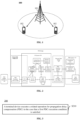
- the communication system 100 may include a network device 101, and the network device 101 may be a device that communicates with a terminal device 102 (or referred to as a communication terminal, a terminal).
- the network device 101 may provide communication coverage for a specific geographic area, and may communicate with terminal devices located within the coverage area.
- FIG. 1 exemplarily shows one network device and two terminal devices.
- the communication system 100 may include multiple network devices and the coverage of each network device may include other numbers of terminal devices. Embodiments of this application are not limited thereto.
- the communication system 100 may further include other network entities such as a network controller and a mobility management entity, which are not limited in some embodiments of this application.
- network entities such as a network controller and a mobility management entity, which are not limited in some embodiments of this application.
- a device having a communication function in the network/system may be referred to as a communication device.
- the communication device may include a network device 101 and a terminal device 102 with communication function, and the network device 101 and the terminal device 102 may be the specific devices described above, which will not be repeated here.
- the communication device may also include other devices in the communication system 100, for example, other network entities such as a network controller, a mobility management entity, and the like, which are not limited in some embodiments of this application.
- system and “network” are often used interchangeably herein.
- the term “and/or” in this disclosure refers to only an association relationship for describing associated objects, indicating that there may be three kinds of relationships. For example, A and/or B may refer to three cases, A exists alone, A and B exist at the same time, and B exists alone.
- the character "/" in this disclosure generally indicates that the related objects are in an "or” relationship.
- the "indication" mentioned in some embodiments of this application may be a direct indication, an indirect indication, or an associated relationship. For example, if A indicates B, it may represent that A directly indicates B, for example, B may be obtained through A; it may also represent that A indicates B indirectly, such as A indicates C, and B may be obtained through C; it may also represent that there is an association relation between A and B.
- corresponding may indicate that there is a direct or indirect corresponding relationship between two objects, or may indicate that there is an associated relationship between the objects.
- the relationship may also include indicating and being indicated, configuring and being configured.
- time sensitive network or time sensitive control (TSC) has been introduced in the industrial Internet of things (IIoT) system for supporting transmission of services including factory automation, transport industry, electrical power distribution and the like through 5G system.
- IIoT time sensitive network
- the communication system acts 100 as a TSN bridge to provide services of clock synchronization and service transmission for nodes in the TSN system. Therefore, the communication system 100 needs to provide lower delay guarantee and higher clock synchronization accuracy.
- FIG. 2 is a network architecture diagram of a TSN network where a 5G network acts as a TSN bridge.
- the network architecture includes a TSN system 110, a network side bridge 120, a 5G system 130, a device side bridge 140 and a TSN bridge/end device 150.
- the TSN system 110 includes: a centralized user configuration (CUC), a centralized network configuration (CNC) and at least one TSN bridge or end device.
- the TSN system 110 is connected to the network side bridge 120.
- the network side bridge 120 includes: a control plane TSN translator and a user plane TSN translator.
- the control plane TSN translator is acted by the application function (AF), which is in communication connection with the centralized network configuration in the TSN system 110.
- the user plane TSN translator is in a communication connection with the TSN bridge or end device in the TSN system 110.
- the 5G system 130 includes: a core network, a radio access network (RAN), and a terminal.
- the user plane of the core network includes user plane function (UPF);
- the control plane of the core network includes unified data management (UDM), network exposure function (NEF), access and mobility management function (AMF) entity, session management function (SMF), and policy control function (PCF).
- UPF user plane function
- NEF network exposure function
- AMF access and mobility management function
- PCF policy control function
- N1 interface is a reference point between the terminal and AMF
- N2 interface is a reference point between RAN and AMF, which is used for sending NAS messages
- N3 interface is a reference point between RAN and UPF, which is used for transmitting user plane data
- N4 interface is a reference point between SMF and UPF, which is used for transmitting information such as tunnel identification information of N3 connection, data buffer indication information, and downlink data notification messages
- N6 interface is a reference point between UPF and user plane TSN translator, which is used for transmitting the user plane data
- N8 is a reference point between UDM and AMF
- N10 is a reference point between UDM and SMF
- N11 is a reference point between AMF and SMF.
- the device side bridge 140 has a communication connection with the terminal in the 5G system 130.
- the device side bridge 140 includes a device side TSN translator.
- the device side bridge 140 also has a communication connection with the TSN bridge/end device 150.
- the 5G system 130 is a path for transmitting TSN services, so the 5G system needs to support the transmission of TSN services and the time synchronization requirements of the TSN network, thereby enabling the services to be transmitted within the required time.
- the 5G system 130 needs to provide lower delay guarantee and higher clock synchronization accuracy, so that when industrial automation services are transmitted in the 5G network, the operation and subsequent operation of each point of the mechanical operation are accurate, all in line with the time requirements.
- the TSN time is obtained through a reference time information field (referenceTimeInfo-r16) in the system information block (SIB) signaling.
- the reference time information field includes system frame number (SFN) information, absolute time information, and the like, with an indication accuracy of 10ns.
- FIG. 3 is a schematic flowchart of a wireless communication method 200 according to some embodiments of this application.
- the method 200 may be performed by the terminal device in the communication system shown in FIG. 1 .
- the method 200 may include at least some of the following contents.
- the terminal device performs a related operation used for PDC in response to that a first PDC execution condition is satisfied.
- the terminal device may be a terminal in any state, for example, an idle state, a connected state, or an inactive state.
- whether the first PDC execution condition is satisfied may be determined according to information such as requirements, capabilities of the terminal device, or an indication of the network device.
- the requirements of the terminal device may include, but are not limited to, at least one of the following: whether the terminal device requires high time accuracy; whether it needs to transmit TSN services; whether there is a requirement for a generalized precision time protocol (gPTP message); whether the time synchronization information of the terminal device has changed (if yes, in a sense, there is a need to perform PDC); whether the location of the terminal device has changed significantly (if yes, then the propagation delay between the terminal device and the network may vary, therefore, there may also be a need to perform PDC); whether a protocol data unit (PDU) session corresponding to specific services (e.g., delay sensitive services, such as ultra-reliable and low latency communication (URLLC) service) of the terminal device is established (if yes, it may be considered that there is a need to perform PDC); whether a PDU session corresponding to specific slices (e.g., a slice that supports delay sensitive services, such as URLLC service) is established (if yes, it may be considered that there is a need to need to
- the capabilities of the terminal device may include, but are not limited to, at least one of the following: the capability to support high precision time or high time precision, support TSN services, support the transmission of gPTP messages, support the transmission of specific services, such as URLLC services, support specific slices, or the like.
- the indication of the network device may include an explicit indication.
- the network device may send first indication information to the terminal device, indicating the terminal device to perform the related operation of PDC.
- the indication may also include an implicit indication.
- the network device may send to the terminal device assistance information or configuration information used for performing PDC; in this case, the terminal device may consider that the PDC execution condition is satisfied, or there is a need to perform the PDC.
- the terminal device may also determine whether the PDC execution condition is satisfied according to other information, and this application is not limited thereto.
- the first PDC execution condition includes at least one of the following:
- the terminal device when referring to that the terminal device is the specific terminal, it includes at least one of the following:
- the terminal device when referring to that the terminal device receives time information for time synchronization, it may include, for example, that the terminal device receives an SIB 9.
- the SIB9 may include reference information for time synchronization, such as absolute time information, and the absolute time information may be an absolute time relative to a certain system frame number (SFN), such as a time point at a certain year, a certain month, a certain day, a certain hour, a certain minute, a certain second, a certain millisecond, and the like.
- SFN system frame number
- the terminal device when referring to that the terminal device receives time information for time synchronization, it may include, for example, that the terminal device receives a downlink information transfer message (DLinformationtransfer).
- the downlink information transfer message may include reference information for time synchronization.
- the absolute time information may be an absolute time relative to a certain SFN, such as a time point at a certain year, a certain month, a certain day, a certain hour, a certain minute, a certain second, a certain millisecond, and the like.
- the information used for time synchronization may also be carried in other messages, and this application is not limited thereto.
- the terminal device receives the information used for time synchronization, it may be considered that the PDC execution condition is satisfied, and the execution of PDC related operations may be further triggered.
- the time information used for time synchronization of the terminal device is updated, it may be considered that time alignment needs to be performed again. In this case, it may be considered that the PDC execution condition is satisfied, and further, the execution of the related operations of PDC may be triggered.
- the time information used for time synchronization of the terminal device when referring to that the time information used for time synchronization of the terminal device is updated, it includes at least one of the following situations:
- the first threshold may be determined according to a crystal oscillator precision, and the crystal oscillator precision may be, for example, parts per million (PPM).
- PPM parts per million
- the second time information is sent through at least one of the following signaling: SIB9, and the downlink information transfer message.
- the second time information may also be information used for time synchronization.
- the difference between the first time information and the second time information indicates that the reference time has changed. In this case, it may be considered that clock synchronization is required, and correspondingly the execution of PDC is required.
- the location information of the terminal device when referring to that the location information of the terminal device satisfies the preset condition, it indicates that the location of the terminal device is changed and may cause any situation where PDC needs to be performed.
- it may include but not limited to, the location update of the terminal device occurs, and a distance between the terminal device and the network device is greater than or equal to a third threshold.
- the terminal device moves out of a certain cell, or move out of a certain area, or the like.
- a path loss between the terminal device and the current cell is greater than or equal to a certain threshold, or a measurement result of the terminal device on the current cell is less than or equal to a certain threshold.
- the path loss between the terminal device and the neighboring cell is less than or equal to a certain threshold, or the measurement result of the terminal device on the neighboring cell is greater than or equal to a certain threshold.
- the measurement result mentioned here may include, but is not limited to, reference signal receiving power (RSRP), reference signal receiving quality (RSRQ), signal to interference plus noise ratio (SINR), or the like.
- the first indication information may be transmitted through at least one of radio resource control (RRC) signaling, media access control (MAC) control element (CE), downlink control information (DCI).
- RRC radio resource control
- MAC media access control
- CE control element
- DCI downlink control information
- the first information may include any information used in the process of PDC (Propagate Delay Compensation).
- the first information may be used for determining the amount of transmission delay compensation in the PDC process.
- the PDC may be determined based on the manner of receive-transmit (RX-TX) positioning.
- RX-TX receive-transmit
- the round trip time (RTT) between the terminal device and the network device may be determined by sending and receiving reference signals.
- the terminal device may send an uplink reference signal to the network device, and the network device may receive the uplink reference signal sent by the terminal device. Further, the network device may send a downlink reference signal to the terminal device, and the terminal device may receive the downlink reference signal sent by the network device. Accordingly, the network device may determine the first time interval information T1 based on the receiving time of the uplink reference signal and the sending time of the downlink reference signal, and the terminal device may determine the second time interval information T2 based on the sending time of the uplink reference signal and the receiving time of the downlink reference signal.
- the first information may include the first time interval information T1 and reference time information corresponding to the first time interval information T1.
- the reference time information may be, for example, absolute time, such as a time point at a certain year, a certain month, a certain day, a certain hour, a certain minute, a certain second, a certain millisecond; or other time identifiers, such as a time slot sequence number, an SFN sequence number, and the like.
- the PDC may be determined based on a timing advance (TA).
- the first information may include the TA.
- the first information may also include a PDC value determined by the network device.
- the network device may directly send the PDC value to the terminal device.
- the PDC value may be determined according to the first time interval information T1 and the second time interval information T2, for example, the PDC value is (T2-T1)/2 or (T1-T2)/2.
- the PDC value may be determined according to the TA, for example, the PDC value is TA/2.
- the first information includes at least one of the following:
- the possible implementation of the first PDC execution condition is described above, and the following describes related operations for PDC that may be performed by the terminal device when the first PDC execution condition is satisfied.
- the terminal device when the first PDC execution condition is satisfied, performs at least one of the following:
- the first request message is used for triggering the network device to perform at least one of the following:
- the first request message is sent through at least one of RRC message, MAC CE, and uplink control information (UCI).
- RRC message e.g., RRC message
- MAC CE e.g., MAC CE
- UCI uplink control information
- the RRC message may be, for example, an RRC connection establishment request, an RRC resume request, or other dedicated RRC messages, which is not limited in this application.
- a terminal device in the idle state may indicate, through a cause value (cause) in the RRC connection establishment request, that the RRC connection establishment request includes the first request message.
- a terminal device in the inactive state may indicate, through a cause value (cause) in the RRC resume request, that the RRC resume request includes the first request message.
- a terminal device in the connected state may indicate, through a specific information element (IE) in another dedicated RRC message, that the first request message is included in the RRC message.
- IE specific information element
- the first configuration information may include any configuration information for performing PDC, which is not limited in this application.
- the network device may configure the terminal device with a reference signal used for determining the PDC, for example, the downlink positioning reference signal (PRS) and/or the sounding reference signal (SRS). Alternatively, it may also be other uplink or downlink reference signals, which are not limited here. Accordingly, the terminal device and the network device may perform signal measurement based on the reference signal, and determine the aforementioned first time interval T1 or second time interval T2 or PDC value according to the measurement result.
- a reference signal used for determining the PDC for example, the downlink positioning reference signal (PRS) and/or the sounding reference signal (SRS).
- PRS downlink positioning reference signal
- SRS sounding reference signal
- the terminal device and the network device may perform signal measurement based on the reference signal, and determine the aforementioned first time interval T1 or second time interval T2 or PDC value according to the measurement result.
- the network device may configure the terminal device with information for determining the PDC, for example, a preamble or an uplink SRS. Accordingly, the terminal device and the network device may perform the random access procedure, or send and receive SRS based on the above information, so as to further determine the PDC value.
- information for determining the PDC for example, a preamble or an uplink SRS.
- the terminal device and the network device may perform the random access procedure, or send and receive SRS based on the above information, so as to further determine the PDC value.
- the second information sent by the terminal device to the network device includes at least one of the following:
- the terminal device may send the first request message to the network device to trigger the network device to perform the related operations of PDC, or may also send to the network device auxiliary information used for performing PDC, or perform the PDC process by itself.
- performing the PDC process by the terminal device may include, for example, that the terminal device determines the PDC value according to the first information and/or the second information, and performs propagation delay compensation.
- the terminal device determines that the first PDC execution condition is satisfied.
- the terminal device in response to that the first PDC execution condition is satisfied, sends the first request message to the network device, where the first request message is used for triggering the network device to perform the related operation used for PDC.
- the network device receives the first request message sent by the terminal device.
- the network device performs the related operation used for PDC.
- the first configuration information is sent to the terminal device, or the first information is sent to the terminal device, or the PDC procedure is performed.
- the process of performing the PDC by the network device reference may be made to the related implementation of the terminal device performing the PDC, and details are not repeated here.
- the execution process of the PDC is triggered by the terminal device.
- the network device may be requested to obtain the relevant information used for PDC, for example, the first configuration information or the first information, which is conducive to obtaining the PDC value at an appropriate time, thereby achieving precise synchronization between the terminal device and the network device.
- the terminal device determines that the first PDC execution condition is satisfied.
- the terminal device in response to that the first PDC execution condition is satisfied, the terminal device sends second information to the network device, where the specific content of the second information may be understood by referring to the foregoing related description.
- the second information may also be used for triggering the network device to perform the related operation used for the PDC, that is, the second information may be regarded as an implicit first request message.
- the network device may also perform the related operation of PDC based on the second information.
- the terminal device may also perform the PDC process in response to that the first PDC execution condition is satisfied.
- the process of PDC is triggered by the terminal device.
- the terminal device may perform the PDC process, or send to the network device the auxiliary information used for determining the PDC, which is beneficial to perform the PDC at an appropriate time, so that the precise synchronization can be achieved between the terminal device and the network device.
- FIG. 7 is a schematic flowchart of a method 500 for wireless communication according to some other embodiments of this application.
- the method 500 may be performed by the network device in the communication system shown in FIG. 1 .
- the method 500 includes following content.
- the network device performs a related operation used for PDC under the condition that a second PDC execution condition is satisfied.
- the terminal device may be a terminal in any state, such as an idle state, a connected state, or an inactive state.
- whether the second PDC execution condition is satisfied may be determined according to information such as requirements, capabilities, and a current state of the terminal device.
- the requirements of the terminal device may include, but are not limited to, at least one of the following: whether the terminal device requires high time accuracy; whether it needs to transmit TSN services; whether there is a requirement for a generalized precision time protocol (gPTP message); whether the time synchronization information of the terminal device has changed (if yes, in a sense, there is a need to perform PDC); whether the location of the terminal device has changed significantly (if yes, then the propagation delay between the terminal device and the network may vary, therefore, there may also be a need to perform PDC); whether a protocol data unit (PDU) session corresponding to specific services (e.g., delay sensitive services, such as URLLC service) of the terminal device is established (if yes, it may be considered that there is a need to perform PDC); whether a PDU session corresponding to specific slices (e.g., a slice that supports delay sensitive services, such as URLLC service) is established (if yes, it may be considered that there is a need to perform PDC); whether the terminal device has uplink
- the capabilities of the terminal device may include, but are not limited to, at least one of the following: the capability to support high precision time or high time precision, support TSN services, support the transmission of gPTP messages, support the transmission of specific services, such as URLLC services, support specific slices, or the like.
- the current state of the terminal device may include, for example, whether the current position of the terminal device is greatly changed, whether the time synchronization information of the terminal device is changed, or the like.
- the network device may also determine whether the PDC execution condition is satisfied according to other information, and this application is not limited thereto.
- the second PDC execution condition includes at least one of the following:
- the terminal device when referring to that the terminal device is the specific terminal, it includes at least one of the following:
- the sending the time information for time synchronization to the terminal device may include, for example, sending a system information block (SIB) 9 to the terminal device.
- SIB9 may include reference information for time synchronization, such as absolute time information, which may be an absolute time relative to a certain SFN, such as a time point at a certain year, a certain month, a certain day, a certain hour, a certain minute, a certain second, a certain millisecond, and the like.
- the sending the time information for time synchronization to the terminal device may include, for example, sending a downlink information transfer (DLinformationtransfer) message to the terminal device.
- the message may include reference information for time synchronization.
- it includes absolute time information, and the absolute time information may be an absolute time relative to a certain SFN, such as a time point at a certain year, a certain month, a certain day, a certain hour, a certain minute, a certain second, a certain millisecond, and the like.
- the information for time synchronization may also be sent to the terminal device through other messages or signaling, but this application is not limited thereto.
- the time information used for time synchronization of the terminal device when referring to that the time information used for time synchronization of the terminal device is updated, it includes at least one of the following situations:
- the first threshold may be determined according to a crystal oscillator precision, and the crystal oscillator precision may be, for example, parts per million (PPM).
- PPM parts per million
- the second time information is sent through at least one of the following signaling: SIB9, and the downlink information transfer message.
- the second time information may also be information used for time synchronization.
- the difference between the first time information and the second time information indicates that the reference time has changed. In this case, it may be considered that clock synchronization is required, and correspondingly the execution of PDC is required.
- the location information of the terminal device when referring to that the location information of the terminal device satisfies the preset condition, it indicates that the location of the terminal device is changed and may cause any situation where PDC needs to be performed.
- it may include but not limited to, the location update of the terminal device occurs, and a distance between the terminal device and the network device is greater than or equal to a third threshold.
- the terminal device moves out of a certain cell, or move out of a certain area, or the like.
- a path loss between the terminal device and the current cell is greater than or equal to a certain threshold, or a measurement result of the terminal device on the current cell is less than or equal to a certain threshold.
- the path loss between the terminal device and the neighboring cell is less than or equal to a certain threshold, or the measurement result of the terminal device on the neighboring cell is greater than or equal to a certain threshold.
- the measurement result mentioned here may include, but is not limited to, RSRP, RSRQ, SINR, or the like.
- the network device when the second PDC execution condition is satisfied, performs at least one of the following:
- specific implementations of the first request message, the first configuration information, the first information, and the second information may refer to the relevant implementations in the foregoing embodiments, which are not repeated here for brevity.
- the network device determines that the second PDC execution condition is satisfied.
- the network device receives the first request message or the second information sent by the terminal device. In this case, the network device may consider that the second PDC execution condition is satisfied.
- the network device may perform the related operation used for PDC.
- the first configuration information is sent to the terminal device, the first indication information is sent to the terminal device, the first information is sent to the terminal device, the PDC process is performed, or the like.
- the process of triggering the PDC is determined by the network device, so that the network device may perform PDC at an appropriate timing to achieve precise synchronization between the terminal device and the network device.
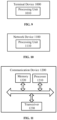
- FIG. 9 shows a schematic block diagram of a terminal device 1000 according to some embodiments of this application.
- the terminal device 1000 includes a processing unit.
- the processing unit 1010 is configured to perform a related operation used for PDC in response to that a first PDC execution condition is satisfied.
- the first PDC execution condition includes at least one of following:
- the terminal device is the specific terminal including at least one of following:
- the time information used for time synchronization of the terminal device is updated includes at least one of following:
- the first time information is sent through at least one of following signaling: a SIB9, a downlink information transfer message.
- the second time information is sent through at least one of following signaling: a SIB9, a downlink information transfer message.
- the first threshold is determined according to a crystal oscillator precision.
- the location information of the terminal device satisfies the preset condition includes: a location of the terminal device is updated, and a distance between the terminal device and the network device is greater than or equal to a third threshold.
- the first indication information is sent through at least one of following signaling: RRC signaling, MAC CE, DCI.
- performing, by the first device, the related operation used for PDC in response to that the first PDC execution condition is satisfied includes: performing, by the terminal device, at least one of following in response to that the first PDC execution condition is satisfied:
- the first request message is used for triggering the network device to perform at least one of following:
- the first configuration information is used for configuring at least one of following:
- the second information includes at least one of following:
- the first information includes at least one of following:
- the above-mentioned communication unit may be a communication interface or a transceiver, or an input/output interface of a communication chip or a system-on-chip.
- the aforementioned processing unit may be one or more processors.
- terminal device 1000 may correspond to the terminal device in the method embodiments of this application, and the above-mentioned and other operations and/or functions of each unit in the terminal device 1000 are for the purpose of implementing processes corresponding to the terminal device in the method as shown in FIG. 3 to FIG. 6 , respectively, which will not be repeated here for the sake of brevity.
- FIG. 10 is a schematic block diagram of a network device according to some embodiments of this application.
- the network device 1100 of FIG. 10 includes a processing unit.
- the processing unit 1110 is configured to perform a related operation used for PDC in response to that a second PDC execution condition is satisfied. 44.
- the second PDC execution condition includes at least one of following:
- the terminal device is the specific terminal including at least one of following:
- the time information used for time synchronization of the terminal device is updated includes at least one of following:
- the first time information is sent through at least one of following signaling: a SIB9, a downlink information transfer message.
- the second time information is sent through at least one of following signaling: a SIB9, a downlink information transfer message.
- the first threshold is determined according to a crystal oscillator precision.
- the location information of the terminal device satisfies the preset condition includes: a location of the terminal device is updated, and a distance between the terminal device and the network device is greater than or equal to a third threshold.
- the first request message is used for triggering the network device to perform at least one of following:
- the second information includes at least one of following:
- performing, by the network device, the related operation used for PDC in response to that the second PDC execution condition is satisfied includes: performing, by the network device, at least one of following in response to that the second PDC execution condition is satisfied:
- the first configuration information is used for configuring at least one of following:
- the first information includes at least one of following:
- the first indication information is sent through at least one of following signaling: radio resource control (RRC) signaling, medium access control (MAC) control element (CE), downlink control information (DCI).
- RRC radio resource control
- MAC medium access control
- CE control element
- DCI downlink control information
- the above-mentioned communication unit may be a communication interface or a transceiver, or an input/output interface of a communication chip or a system-on-chip.
- the aforementioned processing unit may be one or more processors.
- the network device 1100 may correspond to the network device in the method embodiments of this application, and the above-mentioned and other operations and/or functions of each unit in the network device 1100 are for the purpose of implementing processes corresponding to the network device in the method as shown in FIG. 7 or FIG. 8 , respectively, which will not be repeated here for the sake of brevity.
- FIG. 11 is a schematic block diagram of a communication device 1200 according to some embodiments of this application.
- the communication device 1200 shown in FIG. 11 includes a processor 1210, and the processor 1210 may call and run a computer program from a memory, so as to implement the methods in the embodiments of this application.
- the communication device 1200 may further include a memory 1220.
- the processor 1210 may call and run the computer program from the memory 1220 to implement the methods in the embodiments of this application.
- the memory 1220 may be a separate device independent of the processor 1210, or may be integrated in the processor 1210.
- the communication device 1200 may further include a transceiver 1230, and the processor 1210 may control the transceiver 1230 to communicate with other devices, specifically, may send information or data to other devices, or receive information or data sent by other devices.
- the transceiver 1230 may include a transmitter and a receiver.
- the transceiver 1230 may further include antennas, and the number of the antennas may be one or more.
- the communication device 1200 may specifically be the network device according to some embodiments of this application, and the communication device 1200 may implement the corresponding processes implemented by the network device in each method according to some embodiments of this application. For brevity, details are not repeated here.
- the communication device 1200 may specifically be a mobile terminal/terminal device according to some embodiments of this application, and the communication device 1200 may implement the corresponding processes implemented by the mobile terminal/terminal device in each method according to some embodiments of this application. For brevity, details are not repeated here.
- FIG. 12 is a schematic block diagram of a chip according to some embodiments of this application.
- the chip 1300 shown in FIG. 12 includes a processor 1310, and the processor 1310 may call and run a computer program from a memory to implement the method according to some embodiments of this application.
- the chip 1300 may further include a memory 1320.
- the processor 1310 may call and run the computer program from the memory 1320 to implement the methods in the embodiments of this application.
- the memory 1320 may be a separate device independent of the processor 1310, or may be integrated in the processor 1310.
- the chip 1300 may further include an input interface 1330.
- the processor 1310 may control the input interface 1330 to communicate with other devices or chips, and specifically, may obtain information or data sent by other devices or chips.
- the chip 1300 may further include an output interface 1340.
- the processor 1310 may control the output interface 1340 to communicate with other devices or chips, and specifically, may output information or data to other devices or chips.
- the chip may be applied to the network device according to some embodiments of this application, and the chip may implement the corresponding processes implemented by the network device in each method according to some embodiments of this application, which is not repeated here for brevity.
- the chip may be applied to the mobile terminal/terminal device according to some embodiments of this application, and the chip may implement the corresponding processes implemented by the mobile terminal/terminal device in each method according to some embodiments of this application, which is not repeated here for brevity.
- the chip mentioned in the embodiments of this application may also be referred to as a system-level chip, a system chip, a chip system, a system-on-a-chip, or the like.
- FIG. 13 is a schematic block diagram of a communication system 900 according to some embodiments of this application. As shown in FIG. 13 , the communication system 900 includes a terminal device 910 and a network device 920.
- the terminal device 910 may be configured to implement the corresponding functions implemented by the terminal device in the above method
- the network device 920 may be configured to implement the corresponding functions implemented by the network device in the above method. For brevity, details are not repeated here.
- the processor in some embodiments of this application may be an integrated circuit chip, which has a signal processing capability.
- each step of the above method embodiments may be completed by a hardware integrated logic circuit in a processor or an instruction in the form of software.
- the above-mentioned processor may be a general-purpose processor, a digital signal processor (DSP), an application specific integrated circuit (ASIC), a field programmable gate array (FPGA) or other available programming logic devices, discrete gate or transistor logic devices, discrete hardware components, thereby implementing or performing the methods, steps, and logic block diagrams disclosed in the embodiments of this application.
- the general purpose processor may be a microprocessor or may be any conventional processor or the like.
- the steps of the method disclosed in conjunction with the embodiments of this application may be directly embodied as executed by a hardware decoding processor, or executed by a combination of hardware and software modules in the decoding processor.
- the software modules may be located in random access memory, flash memory, read-only memory, programmable read-only memory or electrically erasable programmable memory, registers and other storage medium well known in the art.
- the storage medium is located in the memory, and the processor reads the information in the memory, and completes the steps of the above method in combination with its hardware.
- the memory in some embodiments of this application may be a volatile memory or a non-volatile memory, or may include both volatile and non-volatile memory.
- the non-volatile memory may be a read-only memory (ROM), a programmable ROM (PROM), an erasable PROM (EPROM), an electrically EPROM (EEPROM) or flash memory.
- the volatile memory may be a random access memory (RAM), which acts as an external cache.
- RAM direct Rambus RAM
- SRAM static RAM
- DRAM dynamic RAM
- SDRAM synchronous DRAM
- DDR SDRAM double data rate SDRAM
- ESDRAM enhanced SDRAM
- SLDRAM synchlink DRAM
- DR RAM direct Rambus RAM
- the memory in the embodiment of this application may also be a static RAM (SRAM), a dynamic (DRAM), a synchronous DRAM (SDRAM), a double data rate SDRAM (DDR SDRAM), an enhanced SDRAM (ESDRAM), a synch link DRAM (SLDRAM), a direct Rambus RAM (DR RAM), or the like.
- SRAM static RAM
- DRAM dynamic RAM
- SDRAM synchronous DRAM
- DDR SDRAM double data rate SDRAM
- ESDRAM enhanced SDRAM
- SLDRAM synch link DRAM
- DR RAM direct Rambus RAM
- Embodiments of this application further provide a computer-readable storage medium for storing a computer program.
- the computer-readable storage medium may be applied to the network device in the embodiments of this application, and the computer program enables the computer to execute the corresponding processes implemented by the network device in the various methods according to some embodiments of this application, which is not repeated here for brevity.
- the computer-readable storage medium may be applied to the mobile terminal/terminal device in the embodiments of this application, and the computer program enables the computer to execute the corresponding processes implemented by the mobile terminal/terminal device in each method according to some embodiments of this application, which is not repeated here for brevity.
- Embodiments of this application also provide a computer program product, including computer program instructions.
- the computer program product may be applied to the network device in the embodiments of this application, and the computer program instructions cause the computer to execute the corresponding processes implemented by the network device in each method according to some embodiments of this application, which is not repeated here for brevity.
- the computer program product may be applied to the mobile terminal/terminal device in the embodiments of this application, and the computer program instructions cause the computer to execute the corresponding processes implemented by the mobile terminal/terminal device in each method according to some embodiments of this application, which is not repeated here for brevity.
- Embodiments of this application also provide a computer program.
- the computer program may be applied to the network device in the embodiments of this application.
- the computer program When the computer program is run on the computer, it causes the computer to execute the corresponding processes implemented by the network device in each method according to some embodiments of this application, which is not repeated here for brevity.
- the computer program may be applied to the mobile terminal/terminal device in the embodiments of this application, and when the computer program is run on the computer, the mobile terminal/terminal device implements corresponding processes implemented by the network device in each method according to some embodiments of this application, which is not repeated here for brevity.
- the disclosed system, device and method may be implemented in other manners.
- the device embodiments described above are only illustrative.
- the division of the units is only a logical function division.
- multiple units or components may be combined or may be integrated into another system, or some features may be ignored, or not implemented.
- the shown or discussed mutual coupling or direct coupling or communication connection may be through some interfaces, indirect coupling or communication connection of devices or units, and may be in electrical, mechanical or other forms.
- the units described as separate components may be or may not be physically separated, and components displayed as units may be or may not be physical units, that is, may be located in one place, or may be distributed to multiple network units. Some or all of the units may be selected according to actual needs to achieve the purpose of the solution in some embodiments.
- each functional unit in various embodiments of this application may be integrated into one processing unit, or each unit may exist physically alone, or two or more units may be integrated into one unit.
- the functions, if implemented in the form of software functional units and sold or used as independent products, may be stored in a computer-readable storage medium.
- the computer software product is stored in a storage medium, including several instructions causing a computer device (which may be a personal computer, a server, or a network device, or the like) to implement all or part of the steps of the methods described in the various embodiments of this application.
- the aforementioned storage medium includes: U disk, mobile hard disk, read-only memory (ROM), random access memory (RAM), magnetic disk, optical disk and other medium that may store program codes.
Landscapes
- Engineering & Computer Science (AREA)
- Computer Networks & Wireless Communication (AREA)
- Signal Processing (AREA)
- Mobile Radio Communication Systems (AREA)
Applications Claiming Priority (1)
| Application Number | Priority Date | Filing Date | Title |
|---|---|---|---|
| PCT/CN2020/119649 WO2022067757A1 (fr) | 2020-09-30 | 2020-09-30 | Procédé de communication sans fil, dispositif de terminal et dispositif de réseau |
Publications (3)
| Publication Number | Publication Date |
|---|---|
| EP4213416A1 true EP4213416A1 (fr) | 2023-07-19 |
| EP4213416A4 EP4213416A4 (fr) | 2023-11-08 |
| EP4213416B1 EP4213416B1 (fr) | 2026-01-28 |
Family
ID=80951163
Family Applications (1)
| Application Number | Title | Priority Date | Filing Date |
|---|---|---|---|
| EP20955780.0A Active EP4213416B1 (fr) | 2020-09-30 | 2020-09-30 | Procédé de communication sans fil, dispositif de terminal et dispositif de réseau |
Country Status (4)
| Country | Link |
|---|---|
| US (1) | US12574880B2 (fr) |
| EP (1) | EP4213416B1 (fr) |
| CN (1) | CN116114324B (fr) |
| WO (1) | WO2022067757A1 (fr) |
Cited By (1)
| Publication number | Priority date | Publication date | Assignee | Title |
|---|---|---|---|---|
| US20240236892A1 (en) * | 2021-05-04 | 2024-07-11 | Canon Kabushiki Kaisha | Controlling time synchronisation in a wireless network |
Families Citing this family (2)
| Publication number | Priority date | Publication date | Assignee | Title |
|---|---|---|---|---|
| CN114374988A (zh) * | 2020-10-15 | 2022-04-19 | 华为技术有限公司 | 一种更新参数的方法以及相关装置 |
| CN118714636A (zh) * | 2023-03-27 | 2024-09-27 | 华为技术有限公司 | 通信方法、装置及系统 |
Family Cites Families (18)
| Publication number | Priority date | Publication date | Assignee | Title |
|---|---|---|---|---|
| US6937872B2 (en) * | 2002-04-15 | 2005-08-30 | Qualcomm Incorporated | Methods and apparatuses for measuring frequencies of basestations in cellular networks using mobile GPS receivers |
| CN101848414B (zh) | 2009-03-24 | 2013-04-17 | 电信科学技术研究院 | 确定信号传播时延的方法、对移动台定位的方法 |
| US8837307B2 (en) * | 2010-05-26 | 2014-09-16 | Qualcomm Incorporated | Two-way ranging messaging scheme |
| CN104244397B (zh) * | 2014-08-08 | 2018-11-13 | 厦门雷克通信技术工程有限公司 | 一种用于td-lte光纤拉远设备时延补偿的方法 |
| US20170048812A1 (en) * | 2015-08-14 | 2017-02-16 | Alcatel-Lucent Usa Inc. | Methods, apparatuses and systems for enhancing measurement gap in asynchronous networks |
| WO2018017468A1 (fr) * | 2016-07-18 | 2018-01-25 | Phluido, Inc. | Synchronisation d'unités radio dans des réseaux d'accès radio |
| CN108988972B (zh) * | 2017-06-02 | 2020-04-28 | 华为技术有限公司 | 一种时钟同步方法及设备 |
| US11838151B1 (en) * | 2017-11-09 | 2023-12-05 | Verana Networks, Inc. | Wireless mesh network |
| JP7189316B2 (ja) * | 2018-07-20 | 2022-12-13 | オッポ広東移動通信有限公司 | セッション管理方法、端末装置とネットワーク装置 |
| EP3834513A1 (fr) * | 2018-08-08 | 2021-06-16 | Nokia Technologies Oy | Amélioration de synchronisation temporelle pour un groupe d'ue |
| CN112970284B (zh) * | 2018-09-29 | 2023-02-21 | 中兴通讯股份有限公司 | 使用多个分组数据单元会话的超可靠通信 |
| WO2020077577A1 (fr) * | 2018-10-17 | 2020-04-23 | Oppo广东移动通信有限公司 | Procédé et dispositif de transmission de paquets de données |
| US12041569B2 (en) * | 2018-11-02 | 2024-07-16 | Apple Inc. | Time synchronization accuracy enhancements |
| US11563768B2 (en) * | 2019-01-31 | 2023-01-24 | Keysight Technologies, Inc. | Methods, systems, and computer readable media for detecting and mitigating effects of timing attacks in time sensitive networks |
| CN111565083B (zh) * | 2019-02-14 | 2026-01-13 | 北京三星通信技术研究有限公司 | 时间同步的方法、ue、基站、设备及计算机可读存储介质 |
| WO2020167013A1 (fr) * | 2019-02-14 | 2020-08-20 | Samsung Electronics Co., Ltd. | Procédé de synchronisation temporelle, ue, station de base, dispositif et support de stockage lisible par ordinateur |
| KR20230048243A (ko) * | 2020-08-06 | 2023-04-11 | 지티이 코포레이션 | 무선 통신 네트워크에서 전파 지연 보상을 위한 방법 및 시스템 |
| CN116097874B (zh) * | 2020-08-07 | 2025-11-07 | 中兴通讯股份有限公司 | 服务质量和体验质量监控 |
-
2020
- 2020-09-30 CN CN202080104427.XA patent/CN116114324B/zh active Active
- 2020-09-30 WO PCT/CN2020/119649 patent/WO2022067757A1/fr not_active Ceased
- 2020-09-30 EP EP20955780.0A patent/EP4213416B1/fr active Active
-
2023
- 2023-03-30 US US18/128,482 patent/US12574880B2/en active Active
Cited By (1)
| Publication number | Priority date | Publication date | Assignee | Title |
|---|---|---|---|---|
| US20240236892A1 (en) * | 2021-05-04 | 2024-07-11 | Canon Kabushiki Kaisha | Controlling time synchronisation in a wireless network |
Also Published As
| Publication number | Publication date |
|---|---|
| US12574880B2 (en) | 2026-03-10 |
| CN116114324B (zh) | 2025-11-25 |
| CN116114324A (zh) | 2023-05-12 |
| EP4213416B1 (fr) | 2026-01-28 |
| WO2022067757A1 (fr) | 2022-04-07 |
| EP4213416A4 (fr) | 2023-11-08 |
| US20230239822A1 (en) | 2023-07-27 |
Similar Documents
| Publication | Publication Date | Title |
|---|---|---|
| US12574880B2 (en) | Wireless communication method, terminal device, and network device | |
| US12323933B2 (en) | Method for wireless communication and network device | |
| WO2021238766A1 (fr) | Procédé et appareil de communication | |
| JP7685515B2 (ja) | セルハンドオーバー方法、電子デバイス及び記憶媒体 | |
| US20230362869A1 (en) | Wireless communication method and device | |
| CN114731672A (zh) | 信息传输方法、终端设备和网络设备 | |
| US12309728B2 (en) | Methods for sending and receiving sounding reference signal, terminal device and network device | |
| CN116488759B (zh) | 授时方法及装置 | |
| WO2023050094A1 (fr) | Procédé d'indication d'information, premier périphérique de réseau d'accès et élément de réseau central | |
| US20240259904A1 (en) | Wireless communication method, terminal device, and network device | |
| US12004113B2 (en) | Method for processing a non-access stratum request, and network devices | |
| WO2022206688A1 (fr) | Procédé et appareil de positionnement | |
| WO2021253455A1 (fr) | Procédé de communication sans fil, dispositif terminal, et dispositif de réseau | |
| US20240306108A1 (en) | Wireless communication method, terminal device, and network device | |
| US20250167878A1 (en) | Communication method and apparatus, device, and storage medium | |
| US12604288B2 (en) | Wireless communication method, terminal device, and network device | |
| CN116349254A (zh) | 无线通信的方法及设备 | |
| CN113518420A (zh) | 通信方法以及通信装置 | |
| EP4657942A1 (fr) | Procédé de communication et appareil de communication | |
| CN117835431A (zh) | 一种通信方法、通信装置及通信系统 | |
| CN117203924A (zh) | 无线通信的方法、终端设备和网络设备 | |
| WO2022077214A1 (fr) | Procédé de transmission d'avance temporelle ta commune, dispositif terminal et dispositif de réseau | |
| US12484003B2 (en) | Wireless communication method, first device and second device | |
| US20250374232A1 (en) | Communication method and communication apparatus | |
| US20250380242A1 (en) | Positioning Method and Apparatus |
Legal Events
| Date | Code | Title | Description |
|---|---|---|---|
| STAA | Information on the status of an ep patent application or granted ep patent |
Free format text: STATUS: THE INTERNATIONAL PUBLICATION HAS BEEN MADE |
|
| PUAI | Public reference made under article 153(3) epc to a published international application that has entered the european phase |
Free format text: ORIGINAL CODE: 0009012 |
|
| STAA | Information on the status of an ep patent application or granted ep patent |
Free format text: STATUS: REQUEST FOR EXAMINATION WAS MADE |
|
| 17P | Request for examination filed |
Effective date: 20230413 |
|
| AK | Designated contracting states |
Kind code of ref document: A1 Designated state(s): AL AT BE BG CH CY CZ DE DK EE ES FI FR GB GR HR HU IE IS IT LI LT LU LV MC MK MT NL NO PL PT RO RS SE SI SK SM TR |
|
| REG | Reference to a national code |
Ref country code: DE Ref legal event code: R079 Free format text: PREVIOUS MAIN CLASS: H99Z9999999999 Ipc: H04W0056000000 Ref country code: DE Ref legal event code: R079 Ref document number: 602020066430 Country of ref document: DE Free format text: PREVIOUS MAIN CLASS: H99Z9999999999 Ipc: H04W0056000000 |
|
| A4 | Supplementary search report drawn up and despatched |
Effective date: 20231010 |
|
| RIC1 | Information provided on ipc code assigned before grant |
Ipc: H04W 56/00 20090101AFI20231004BHEP |
|
| DAV | Request for validation of the european patent (deleted) | ||
| DAX | Request for extension of the european patent (deleted) | ||
| STAA | Information on the status of an ep patent application or granted ep patent |
Free format text: STATUS: EXAMINATION IS IN PROGRESS |
|
| 17Q | First examination report despatched |
Effective date: 20240703 |
|
| GRAP | Despatch of communication of intention to grant a patent |
Free format text: ORIGINAL CODE: EPIDOSNIGR1 |
|
| STAA | Information on the status of an ep patent application or granted ep patent |
Free format text: STATUS: GRANT OF PATENT IS INTENDED |
|
| INTG | Intention to grant announced |
Effective date: 20251020 |
|
| GRAS | Grant fee paid |
Free format text: ORIGINAL CODE: EPIDOSNIGR3 |
|
| GRAA | (expected) grant |
Free format text: ORIGINAL CODE: 0009210 |
|
| STAA | Information on the status of an ep patent application or granted ep patent |
Free format text: STATUS: THE PATENT HAS BEEN GRANTED |
|
| AK | Designated contracting states |
Kind code of ref document: B1 Designated state(s): AL AT BE BG CH CY CZ DE DK EE ES FI FR GB GR HR HU IE IS IT LI LT LU LV MC MK MT NL NO PL PT RO RS SE SI SK SM TR |
|
| REG | Reference to a national code |
Ref country code: CH Ref legal event code: F10 Free format text: ST27 STATUS EVENT CODE: U-0-0-F10-F00 (AS PROVIDED BY THE NATIONAL OFFICE) Effective date: 20260128 Ref country code: GB Ref legal event code: FG4D |
|
| REG | Reference to a national code |
Ref country code: IE Ref legal event code: FG4D |
|
| REG | Reference to a national code |
Ref country code: DE Ref legal event code: R096 Ref document number: 602020066430 Country of ref document: DE |