EP4213546A1 - Procédé d'accès au réseau, appareil d'accès au réseau, terminal, et dispositif côté réseau - Google Patents
Procédé d'accès au réseau, appareil d'accès au réseau, terminal, et dispositif côté réseau Download PDFInfo
- Publication number
- EP4213546A1 EP4213546A1 EP21874457.1A EP21874457A EP4213546A1 EP 4213546 A1 EP4213546 A1 EP 4213546A1 EP 21874457 A EP21874457 A EP 21874457A EP 4213546 A1 EP4213546 A1 EP 4213546A1
- Authority
- EP
- European Patent Office
- Prior art keywords
- cell
- reference signal
- terminal
- specific
- sfn
- Prior art date
- Legal status (The legal status is an assumption and is not a legal conclusion. Google has not performed a legal analysis and makes no representation as to the accuracy of the status listed.)
- Pending
Links
Images



Classifications
-
- H—ELECTRICITY
- H04—ELECTRIC COMMUNICATION TECHNIQUE
- H04W—WIRELESS COMMUNICATION NETWORKS
- H04W48/00—Access restriction; Network selection; Access point selection
- H04W48/16—Discovering, processing access restriction or access information
-
- H—ELECTRICITY
- H04—ELECTRIC COMMUNICATION TECHNIQUE
- H04W—WIRELESS COMMUNICATION NETWORKS
- H04W48/00—Access restriction; Network selection; Access point selection
- H04W48/08—Access restriction or access information delivery, e.g. discovery data delivery
-
- H—ELECTRICITY
- H04—ELECTRIC COMMUNICATION TECHNIQUE
- H04L—TRANSMISSION OF DIGITAL INFORMATION, e.g. TELEGRAPHIC COMMUNICATION
- H04L5/00—Arrangements affording multiple use of the transmission path
- H04L5/003—Arrangements for allocating sub-channels of the transmission path
- H04L5/0048—Allocation of pilot signals, i.e. of signals known to the receiver
-
- H—ELECTRICITY
- H04—ELECTRIC COMMUNICATION TECHNIQUE
- H04W—WIRELESS COMMUNICATION NETWORKS
- H04W36/00—Hand-off or reselection arrangements
- H04W36/0005—Control or signalling for completing the hand-off
- H04W36/0011—Control or signalling for completing the hand-off for data sessions of end-to-end connection
- H04W36/0016—Hand-off preparation specially adapted for end-to-end data sessions
-
- H—ELECTRICITY
- H04—ELECTRIC COMMUNICATION TECHNIQUE
- H04W—WIRELESS COMMUNICATION NETWORKS
- H04W48/00—Access restriction; Network selection; Access point selection
- H04W48/20—Selecting an access point
-
- H—ELECTRICITY
- H04—ELECTRIC COMMUNICATION TECHNIQUE
- H04W—WIRELESS COMMUNICATION NETWORKS
- H04W48/00—Access restriction; Network selection; Access point selection
- H04W48/18—Selecting a network or a communication service
-
- H—ELECTRICITY
- H04—ELECTRIC COMMUNICATION TECHNIQUE
- H04W—WIRELESS COMMUNICATION NETWORKS
- H04W52/00—Power management, e.g. Transmission Power Control [TPC] or power classes
- H04W52/02—Power saving arrangements
- H04W52/0209—Power saving arrangements in terminal devices
- H04W52/0225—Power saving arrangements in terminal devices using monitoring of external events, e.g. the presence of a signal
- H04W52/0229—Power saving arrangements in terminal devices using monitoring of external events, e.g. the presence of a signal where the received signal is a wanted signal
-
- Y—GENERAL TAGGING OF NEW TECHNOLOGICAL DEVELOPMENTS; GENERAL TAGGING OF CROSS-SECTIONAL TECHNOLOGIES SPANNING OVER SEVERAL SECTIONS OF THE IPC; TECHNICAL SUBJECTS COVERED BY FORMER USPC CROSS-REFERENCE ART COLLECTIONS [XRACs] AND DIGESTS
- Y02—TECHNOLOGIES OR APPLICATIONS FOR MITIGATION OR ADAPTATION AGAINST CLIMATE CHANGE
- Y02D—CLIMATE CHANGE MITIGATION TECHNOLOGIES IN INFORMATION AND COMMUNICATION TECHNOLOGIES [ICT], I.E. INFORMATION AND COMMUNICATION TECHNOLOGIES AIMING AT THE REDUCTION OF THEIR OWN ENERGY USE
- Y02D30/00—Reducing energy consumption in communication networks
- Y02D30/70—Reducing energy consumption in communication networks in wireless communication networks
Definitions
- This application belongs to the field of communications technologies, and specifically, to a network access method, a network access apparatus, a terminal, and a network-side device.
- a future communication system deploys an increasingly higher frequency band, the coverage of a single cell (cell) or a transmission reception point (Transmission Reception Point, TRP) is getting increasingly smaller.
- TRP Transmission Reception Point
- a future mobile communication system will support more high-speed scenarios. This brings frequent mobility to a terminal, thereby introducing more terminal measurements, resulting in relatively high network overhead and power consumption of the terminal.
- An objective of embodiments of this application is to provide a network access method, a network access apparatus, a terminal, and a network-side device, which may resolve the problem of relatively high network overhead and power consumption of a terminal due to frequent mobility of the terminal.
- a network access method applied to a terminal and including:
- a network access apparatus including:
- a network access method applied to a network-side device and including: transmitting a reference signal to a terminal, where the reference signal includes a first reference signal, or includes a first reference signal and a second reference signal; and the first reference signal is a single-frequency network SFN-specific reference signal, or the second reference signal is a cell or transmission reception point-specific reference signal.
- a network access apparatus including: a first transmitting module, configured to transmit a reference signal to a terminal, where the reference signal includes a first reference signal, or includes a first reference signal and a second reference signal; and the first reference signal is a single-frequency network SFN-specific reference signal, or the second reference signal is a cell or transmission reception point-specific reference signal.
- a terminal including a processor, a memory, and a program or an instruction stored in the memory and executable on the processor, where the program or instruction, when executed by the processor, implements steps of the method according to the first aspect.
- a network-side device including a processor, a memory, and a program or an instruction stored in the memory and executable on the processor, where the program or instruction, when executed by the processor, implements steps of the method according to the third aspect.
- a readable storage medium storing a program or an instruction, where the program or instruction, when executed by a processor, implements steps of the method according to the first aspect; or implements steps of the method according to the third aspect.
- a chip including a processor and a communication interface, where the communication interface is coupled to the processor, and the processor is configured to run a program or an instruction to implement the method according to the first aspect, or implement the method according to the third aspect.
- a computer program product being stored in a non-volatile readable storage medium, where the computer program product, when executed by at least one processor, implements the method according to the first aspect; or implements the method according to the third aspect.
- a network access apparatus configured to perform the method according to the first aspect, or the method according to the third aspect.
- a system design deployed through the single-frequency network provides a technical solution for the terminal to perform network access based on an SFN-specific reference signal, so that the terminal may successfully access the SFN. Because the terminal does not need to frequently perform cell selection, reselection, or switching between cells in an SFN range, and a measurement frequency of the terminal is reduced, network overhead and power consumption of the terminal may be reduced.
- first and second are used to distinguish similar objects, but are unnecessarily used to describe a specific sequence or order. It may be understood that the data used in such a way is interchangeable in proper circumstances, so that the embodiments of this application can be implemented in other sequences than the sequence illustrated or described herein.
- objects distinguished by “first” and “second” are usually of a type, and the number of objects is not limited. For example, a first object may be one or more than one.
- “and/or” means at least one of the connected objects, and the character “/" generally indicates an "or” relationship between associated objects.
- the technology described in this embodiment of this application is not limited to a long term evolution (Long Term Evolution, LTE)/LTE evolution (LTE-Advanced, LTE-A) system, but may further be used in other wireless communication systems, such as code division multiple access (Code Division Multiple Access, CDMA), time division multiple access (Time Division Multiple Access, TDMA), frequency division multiple access (Frequency Division Multiple Access, FDMA), orthogonal frequency division multiple access, (Orthogonal Frequency Division Multiple Access, OFDMA), single-carrier frequency-division multiple access (Single-carrier Frequency-Division Multiple Access, SC-FDMA), and other systems.
- code division multiple access Code Division Multiple Access
- TDMA time division multiple access
- FDMA frequency division multiple access
- OFDMA Orthogonal Frequency Division Multiple Access
- SC-FDMA single-carrier Frequency-Division Multiple Access
- system and “network” in this embodiment of this application are often used interchangeably, and the described technologies may be used both for the systems and radio technologies mentioned above and may also be used for other systems and radio technologies.
- NR New Radio
- the following descriptions describe a new radio (New Radio, NR) system for the objective of being used as an example, and NR terms are used in most of the descriptions below.
- NR 6th generation
- 6G 6th Generation
- FIG. 1 is a block diagram of a wireless communication system to which an embodiment of this application may be applied.
- the wireless communication system includes a terminal 11 and a network-side device 12.
- the terminal 11 may also be referred to as a terminal device or user equipment (User Equipment, UE).
- UE User Equipment
- the terminal 11 may be a terminal-side device such as a mobile phone, a tablet personal computer (Tablet Personal Computer), a laptop computer (Laptop Computer), or referred to as a notebook computer, a personal digital assistant (Personal Digital Assistant, PDA), a palmtop computer, a netbook, an ultra-mobile personal computer (ultra-mobile personal computer, UMPC), a mobile Internet device (Mobile Internet Device, MID), a wearable device (Wearable Device), or vehicle user equipment (VUE), and pedestrian user equipment, (PUE).
- the wearable device includes: a bracelet, headphones, glasses, or the like. It is to be noted that, in this embodiment of this application, a specific type of the terminal 11 is not limited.
- the network-side device 12 may be a base station or a core network, where the base station may be referred to as a node B, an evolved node B, an access point, a base transceiver station (Base Transceiver Station, BTS), a radio base station, a radio transceiver, a basic service set (Basic Service Set, BSS), an extended service set (Extended Service Set, ESS), a node B, an evolved node B (eNB), a household node B, a household evolved node B, a WLAN access point, a WiFi node, a transmission reception point (Transmission Reception Point, TRP) or some other proper terms in the field.
- the base station is not limited to a specific technical vocabulary. It should be noted that, in this embodiment of this application, only a base station in the NR system is used as an example, but a specific type of the base station is not limited.
- FIG. 2 is a flowchart of a network access method according to an embodiment of this application. As shown in FIG. 2 , the network access method is applied to a terminal, and the method includes the following steps:
- FIG. 3 is a schematic diagram of a terminal moving in a dense network (dense network).
- a low-frequency (for example, FR1) cell has a larger coverage than a high-frequency (for example, FR2) cell does.
- FR1 coverage When a terminal moves in an FR1 coverage, an FR2 cell may be continuously replaced, but an FR1 cell is not replaced.
- the terminal When initially activating an FR2 cell or switch the FR2 cell, the terminal needs to continuously measure the signal quality of each beam, and a cell activation time or cell switching time is excessively long due to a relatively large quantity of beams.
- a measurement time may reach a level of seconds, as follows: 8 ms + 24 * T rs + T uncertainty , MAC + T L 1 ⁇ RSRP , measure + T L 1 ⁇ RSRP , report + T HARQ + T FineTiming
- the relatively long measurement time leads to relatively high network overhead and power consumption of the terminal.
- the network During the movement of the terminal in the idle mode or inactive mode, the network provides a priority of each frequency.
- a measurement evaluation value of a target (or neighboring) cell (calculated according to a measurement result of the target (or neighboring) cell after adding an offset) is better than a measurement evaluation value of a serving cell (calculated according to a measurement result of the serving cell after adding an offset), and lasts for a period of time (for example, a period of time of network configuration), and the terminal camps on a current serving cell for more than a period of time (for example, 1s specified in a protocol), the terminal reselects to the target (or neighboring) cell.
- inter-frequency that is, inter-frequency
- inter-technology that is, inter-RAT
- the terminal For a low-priority inter-frequency (that is, inter-frequency) or an inter-technology (that is, inter-RAT) neighboring cell, if the measurement evaluation value of the target (or neighboring) cell is greater than a threshold and the measurement evaluation value of the current serving cell is less than the threshold, and lasts for a period of time (for example, a period of time of network configuration), the terminal reselects to the target (or neighboring) cell.
- a threshold for example, a period of time of network configuration
- a method for cell reselection is the same as a method for cell reselection of the same-frequency cell.
- a terminal in an idle mode or inactive mode triggers a connection establishment process by receiving a paging message transmitted by the network-side device, so as to transmit and receive data.
- cell free (cell free) or the SFN is the main deployment in a dense network or a high-speed scenario.
- a plurality of cells or a plurality of transmission points may transmit the same signal, there is no same-frequency interference between different cells, and a plurality of signals may improve the signal to interference plus noise ratio (Signal to Interference plus Noise Ratio, SINR), transmission quality, and coverage effect.
- SINR Signal to Interference plus Noise Ratio
- a plurality of cells forming the SFN may share a same cell identifier (cell ID), that is, an ID of a super cell (super cell).
- a plurality of cells may transmit signals in a manner of SFN transmission.
- the plurality of cells transmit with wide beams
- the terminal may receive the wide beams transmitted by the plurality of cells at a specific moment, thereby obtaining diversity gain.
- the terminal does not need to frequently perform cell reselection or switching between cells.
- the terminal does not need to frequently perform handover (handover) in a connected mode (connected mode) between cells, and also does not need to frequently perform cell selection/reselection (cell selection/reselection) in an idle mode (idle mode) or in an inactive mode (inactive mode) between cells.
- FIG. 4 is an SFN super cell including seven cells.
- the terminal performs network access (or referred to as system access) by using the following basic processes: first, the terminal performs an initial network search, which includes reception of a reference signal, and completes cell selection or reselection according to measurement on the reference signal, and then camps on a corresponding cell. Next, the terminal receives broadcast system information (System Information, SI), which includes information required for accessing a system. Finally, random access is performed according to the obtained information required for accessing the system, so as to implement radio resource control (Radio Resource Control, RRC) connection to the network-side device.
- SI System Information
- RRC Radio Resource Control
- the terminal does not need to frequently perform cell selection, reselection, or switching between cells, if the terminal still performs network access according to an existing network access manner, the terminal still needs to receive a cell-specific reference signal between different cells or transmission reception points in an SFN range. In this way, the terminal still needs to perform relatively more measurements, and there is still relatively high network overhead and relatively high power consumption of the terminal.
- the reference signal transmitted by the network-side device to the terminal includes at least the first reference signal, and the first reference signal is an SFN-specific reference signal.
- the first reference signal is an SFN-specific reference signal.
- related configuration of the reference signal of each cell is the same as related configuration of the first reference signal.
- the reference signal transmitted by the network-side device to the terminal may further include a second reference signal, that is, the cell or the transmission reception point-specific reference signal.
- the cell or transmission reception point refers to a cell or transmission reception point in the SFN or super cell range.
- SFN-specific and “cell or transmission reception point-specific” involved in this embodiment of this application are respectively explained as follows:
- SFN-specific SFN/super cell-specific
- SFN/super cell-specific that is, related configuration corresponding to each SFN or super cell is independent, and the configuration in the SFN range or the super cell range is the same.
- Cell/TRP-specific that is, related configuration corresponding to each cell or transmission reception point is independent, and the configuration in a range of the cell or transmission reception point is the same.
- the terminal in the idle mode or inactive mode, may receive the reference signal transmitted by the network-side device. After receiving the reference signal transmitted by the network-side device, the terminal may perform an initial access-related operation based on the reference signal, and the related technical solution for the initial access-related operation will be described subsequently.
- a system design deployed through the SFN provides a technical solution for the terminal to perform network access based on an SFN-specific reference signal, so that the terminal may successfully access the SFN. Because the terminal does not need to frequently perform cell selection, reselection, or switching between cells in an SFN range, and a measurement frequency of the terminal is reduced, network overhead and power consumption of the terminal may be reduced, which is suitable for a dense network or a high-speed scenario.
- the successfully accessing the network in this application includes camping on a corresponding cell through cell selection or reselection (that is, an idle mode or an inactive mode), or establishing a connection to a network-side device through an RRC connection (that is, an RRC connected mode).
- the reference signal includes at least one of a synchronization signal block (Synchronization Signal Block, SSB), a CSI reference signal (CSI Reference Signal, CSI-RS), a cell-specific reference signal (Cell-specific Reference Signals, CRS), a sounding reference signal (Sounding Reference Signal, SRS), or a demodulation reference signal (Demodulation Reference Signal, DMRS).
- SSB Synchronization Signal Block
- CSI-RS CSI Reference Signal
- CRS Cell-specific Reference Signals
- SRS Sounding Reference Signal
- DMRS demodulation Reference Signal
- the reference signal may include a cell/TRP-specific SSB and an SFN-specific SSB, or only include an SFN-specific SSB.
- the related configuration of the SSB of each cell/TRP is independent, and for the SFN-specific SSB, the related configuration of the SSB of all cells/TRPs in the SFN range is the same.
- the related configuration of the SSB may include an SSB sequence (sequence), an SSB index (index), an SS/PBCH block measurement timing configuration (SS/PBCH block Measurement Timing Configuration, SMTC), or the like.
- the performing an initial access-related operation based on the received reference signal includes at least one of the following:
- the system information may include a master information block (Master Information Block, MIB) and a system information block (System Information Block, SIB).
- MIB Master Information Block
- SIB System Information Block
- the advance indication information may include messages such as a wake-up signal (Wake-up signal, WUS), a go-to-sleep signal (Go-to-sleep signal, GTS), a signal of downlink control information scrambled by PS-RNTI (DCI with CRC scrambled by PS-RNTI, DCP), a paging indication (paging indication), or the like.
- WUS wake-up signal
- GTS go-to-sleep signal
- DCI with CRC scrambled by PS-RNTI, DCP a paging indication
- paging indication paging indication
- the random access is random access channel (Random Access Channel, RACH) random access.
- RACH Random Access Channel
- the terminal when the terminal receives the paging (paging) message transmitted by the network-side device, it may be understood that, the terminal monitors the paging message transmitted by the network-side device.
- the terminal receives the advance indication information transmitted by the network-side device, it may be understood that, the terminal monitors the advance indication information transmitted by the network-side device.
- the performing cell selection or reselection includes:
- the terminal may measure the reference signal in the idle mode or inactive mode. For example, the terminal may measure a cell/TRP-specific SSB and an SFN specific-SSB, or only measure an SFN-specific SSB. The terminal may perform cell selection or reselection according to a measurement result, and camp on a cell selected or reselected by the terminal according to a result of the cell selection or reselection.
- the measurement result may include at least one of the following: a reference signal received power (Reference Signal Received Power, RSRP), reference signal received quality (Reference Signal Received Quality, RSRQ), SINR, block error rate (Block Error Rate, BLER), or a received signal strength indication (Received Signal Strength Indication, RSSI).
- RSRP Reference Signal Received Power
- RSRQ reference signal received quality
- SINR SINR
- Block Error Rate Block Error Rate
- RSSI received Signal Strength Indication
- a cell on which the terminal camps may be an SFN-specific cell, and may also be a cell or transmission reception point-specific cell or transmission reception point.
- the cell or transmission reception point-specific cell or transmission reception point may be a cell-specific cell, a cell-specific transmission reception point, a transmission reception point-specific cell, or a transmission reception point-specific transmission reception point, which is not limited in this application.
- the terminal receives the system information transmitted by the network-side device at a layer on which the terminal camps;
- the terminal may receive related information and initiate random access at a layer on which the terminal camps.
- the terminal may perform at least one of the following operations:
- the terminal may perform at least one of the following operations:
- the SFN is a scope of a super cell, which includes several cells or TRPs.
- An SFN super cell is usually referred to as an SFN layer.
- a cell corresponding to the super cell or the SFN layer is an SFN-specific (specific) cell; and several cells or TRPs included in an SFN range are cell/TRP layers.
- the cell/TRP corresponding to the layer is the cell/TRP-specific (specific) cell or TRP.
- a reference signal RS, a system message SI, a paging message Paging, or the like at the SFN layer are all referred to as SFN-specific RS, SI, paging, or the like.
- a reference signal RS, a system message SI, a paging message Paging, or the like at the cell/TRP layer are all referred to as cell/TRP-specific RS, SI, paging, or the like.
- the method further includes: receiving a third reference signal transmitted by the network-side device, where the third reference signal is a cell or transmission reception point-specific reference signal.
- the third reference signal may be the same as or different from the second reference signal.
- the terminal may further receive a cell or transmission reception point-specific reference signal transmitted by the network-side device.
- the successfully accessing, by the terminal, the network may include successful connection in the connected mode, or successful camping in the idle mode or inactive mode.
- the receiving, by the terminal, the reference signal transmitted by the network-side device may include the following cases:
- the third reference signal may be, for example, the cell/TRP-specific SSB, and certainly may further be other reference signals, such as various reference signals such as a CSI-RS, a CRS, an SRS, and a DMRS.
- various reference signals such as a CSI-RS, a CRS, an SRS, and a DMRS.
- the third reference signal is transmitted through an SFN-specific system message, or through a cell or transmission reception point-specific system message, or through dedicated RRC information, or through a message 2 or a message 4 (msg. 2/4 during RACH) in a random access process.
- the dedicated RRC information may be RRC indication information (RRC dedicated signaling), such as RRC configuration/reconfiguration with sync/HO command, or the like.
- At least one of the paging message or the system message is SFN-specific.
- both the paging message and the system message may be cell or transmission reception point-specific. That is, the paging message is cell or transmission reception point-specific, and the system message is also cell or transmission reception point-specific.
- the paging message and the system message are SFN-specific; or
- the initiating random access to the network-side device includes: in a case that the system message indicates that there is an SFN-specific random access resource, initiating, by the terminal, the random access to the network-side device by using the random access resource.
- the terminal may perform RACH access by using the cell or transmission reception point-specific random access resource.
- the random access resource may also be understood as an initial access resource, which may include at least one of the following:
- a resource of the first reference signal and a resource of the second reference signal are independent of each other; or a resource of the first reference signal is a subset of a resource of the second reference signal.
- a resource of the SFN-specific SSB and a resource of the cell/TRP-specific SSB in the SFN range may be independent of each other.
- the resource of the SFN-specific SSB may also be a subset of the cell/TRP-specific SSB in the SFN range.
- a specific cell/TRP SSB index is used as an SFN SSB index.
- the first reference signal and the second reference signal have at least one of the following relations:
- the first reference signal and the second reference signal may be respectively mapped on different time domain resources, that is, time division multiplexing (Time Division Multiplexing, TDM).
- TDM Time Division Multiplexing
- the first reference signal and the second reference signal use different SMTCs.
- the first reference signal and the second reference signal may also be respectively mapped on different code domain resources, that is, code division multiplexing (Code Division Multiplexing, CDM).
- CDM Code Division Multiplexing
- the first reference signal and the second reference signal use different sequences (Sequence).
- the first reference signal and the second reference signal may further be respectively mapped on different frequency domain resources, that is, frequency division multiplexing (Frequency Division Multiplexing, FDM).
- FDM frequency division multiplexing
- the first reference signal and the second reference signal use different synchronization rasters (Sync Raster or sync raster).
- the terminal identifies the first reference signal by using at least one of a reference signal identifier, a physical cell identifier (Physical Cell Identifier, PCI), frequency domain configuration information, time domain configuration information, or code domain configuration information.
- a reference signal identifier Physical Cell Identifier, PCI
- PCI Physical Cell Identifier
- frequency domain configuration information time domain configuration information
- code domain configuration information code domain configuration information
- first reference signal as the SFN-specific SSB and the second reference signal as the cell/TRP-specific SSB as an example:
- a first physical cell identifier is the same as a second physical cell identifier
- the first physical cell identifier may also be understood as a PCI ID corresponding to the SFN layer, and an SFN layer PCI ID may be the same as a current cell/TRP PCI ID, or may be different from a current cell/TRP PCI ID.
- the terminal may determine a cell/TRP range in which the terminal is located by using the SFN layer PCI ID and the cell/TRP PCI ID, which may be applied to operations such as measurement, switching, cell selection or reselection, RRC connection establishment, RRC connection re-establishment, and resumption (resume) of the inactive mode.
- the first physical cell identifier is transmitted to the terminal by the network-side device through the system message.
- the first physical cell identifier is different from the second physical cell identifier in a case that the SFN-specific cell and the cell or transmission reception point-specific cell are deployed on a same frequency (that is, intra-frequency); or the first physical cell identifier is the same as or different from the second physical cell identifier in a case that the SFN-specific cell and the cell or transmission reception point-specific cell are deployed on different frequencies (that is, inter-frequency).
- the same frequency may refer to the same frequency or the same frequency band or the same carrier, and different frequencies may refer to different frequencies or different frequency bands or different carriers.
- An SFN-specific cell may be understood as a cell corresponding to the SFN layer (or a super cell), and a cell or transmission reception point-specific cell may be understood as a cell corresponding to the cell/TRP layer.
- the frequency may be a frequency band, a frequency point, or a carrier.
- the SFN-specific cell in a case that a network is deployed with a high frequency range and a low frequency range, the SFN-specific cell includes a cell in the low frequency range, and the cell or transmission reception point-specific cell includes a cell in the high frequency range; or in a case that a network includes a satellite communication network, the SFN-specific cell includes a high altitude platform station (High Altitude Platform Station, HAPS) cell or a high-orbit satellite cell, and the cell or transmission reception point-specific cell includes a low-orbit satellite cell or a cell covered by a ground base station.
- HAPS High Altitude Platform Station
- a high-frequency range may also be referred to as a high-frequency layer (high-frequency layer), and a low-frequency range may also be referred to as a low-frequency layer (low-frequency layer).
- the cell/TRP corresponding to the low-frequency range may be used as an SFN or a super cell
- the cell/TRP corresponding to the high-frequency range may be used as the cell/TRP in the SFN/super cell.
- the HAPS/satellite cell may be used as the SFN or super cell
- the low-orbit satellite in the range may be used as the cell/TRP in the SFN/super cell
- other ordinary cells/TRPs in the range may be used as cells/TRPs in the SFN/super cell.
- the method before the receiving a paging message transmitted by the network-side device, the method further includes at least one of the following:
- the uplink signal may be, for example, an RACH or a paging indication (Paging indication).
- An objective of the message is to assist the network-side device to confirm a paging range in which the terminal or a group of the terminal is located.
- the method further includes:
- the response message carries at least one of the advance indication signal or indication information, where the indication information is used for indicating information about a transmission reception point that receives the paging message.
- the advance indication signal is SFN-specific, or cell or transmission reception point-specific; or the response message is SFN-specific, or cell or transmission reception point-specific.
- a WUS message may be cell/TRP-specific or SFN-specific, and the UL signaling response may be cell/TRP-specific or SFN-specific.
- the signaling process includes at least one of the following cases:
- the method further includes: obtaining SFN-related configuration information, where the SFN-related configuration information includes at least one of the SFN-specific reference signal, SFN-specific system information, the SFN-specific paging message, or an SFN random access channel.
- the SFN-specific reference signal may be, for example, the SFN-specific SSB.
- the terminal obtains the SFN-related configuration information through at least one of system broadcast, an RRC dedicated message, or the paging message.
- the system broadcast may be, for example, MIB, SIB, or the like.
- the paging message may be, for example, a paging RNTI (Paging RNTI, P-RNTI) PDCCH and/or a physical downlink shared channel (Physical downlink shared channel, PDSCH) paging message.
- a paging RNTI Paging RNTI, P-RNTI
- PDCCH Physical downlink shared channel
- PDSCH Physical downlink shared channel
- the network-side device may notify the terminal through the RRC dedicated message, such as an RRC release message and an RRC suspend message. Further, when the terminal is released from the cell/TRP-specific cell, or is released from the SFN layer, the network-side device may notify the terminal through the RRC dedicated message.
- the RRC dedicated message such as an RRC release message and an RRC suspend message.
- the terminal uses the SFN-specific cell as an access-barring (bar) cell, that is, the terminal is barred from accessing the SFN-specific cell.
- the execution entity may be a network access apparatus, or a control module configured to perform the network access method in the network access apparatus.
- the network access apparatus performing the network access method is used as an example to describe the network access apparatus provided in this embodiment of this application.
- FIG. 5 is a structural diagram of a network access apparatus according to an embodiment of this application. As shown in FIG. 5 , a network access apparatus 300 includes:
- the execution module 302 is configured to execute at least one of the following:
- the execution module 302 includes:
- execution module 302 is further configured to:
- the network access apparatus 300 further includes: a second receiving module, configured to receive a third reference signal transmitted by the network-side device after the terminal successfully accesses a network, where the third reference signal is a cell or transmission reception point-specific reference signal.
- the third reference signal is transmitted through an SFN-specific system message, or through a cell or transmission reception point-specific system message, or through dedicated RRC information, or through a message 2 or a message 4 in a random access process.
- At least one of the paging message or the system message is SFN-specific.
- the paging message and the system message are SFN-specific; or
- the execution module 302 includes: a random access submodule, configured to, in a case that the system message indicates that there is an SFN-specific random access resource, cause the terminal to initiate the random access to the network-side device by using the random access resource.
- a random access submodule configured to, in a case that the system message indicates that there is an SFN-specific random access resource, cause the terminal to initiate the random access to the network-side device by using the random access resource.
- a resource of the first reference signal and a resource of the second reference signal are independent of each other; or a resource of the first reference signal is a subset of a resource of the second reference signal.
- the first reference signal and the second reference signal have at least one of the following relations:
- the terminal identifies the first reference signal by using at least one of a reference signal identifier, a physical cell identifier, frequency domain configuration information, time domain configuration information, or code domain configuration information.
- a first physical cell identifier is the same as a second physical cell identifier
- the first physical cell identifier is transmitted to the terminal by the network-side device through the system message.
- the first physical cell identifier is different from the second physical cell identifier in a case that the SFN-specific cell and the cell or transmission reception point-specific cell are deployed on a same frequency; or the first physical cell identifier is the same as or different from the second physical cell identifier in a case that the SFN-specific cell and the cell or transmission reception point-specific cell are deployed on different frequencies.
- the SFN-specific cell in a case that a network is deployed with a high frequency range and a low frequency range, the SFN-specific cell includes a cell in the low frequency range, and the cell or transmission reception point-specific cell includes a cell in the high frequency range; or in a case that a network includes a satellite communication network, the SFN-specific cell includes a high altitude platform station cell or a high-orbit satellite cell, and the cell or transmission reception point-specific cell includes a low-orbit satellite cell or a cell covered by a ground base station.
- the network access apparatus 300 further includes at least one of the following:
- the network access apparatus 300 further includes: a fourth receiving module, configured to receive a response message transmitted by the network-side device, where the response message is used for indicating at least one of the following:
- the response message carries at least one of the advance indication signal or indication information, where the indication information is used for indicating information about a transmission reception point that receives the paging message.
- the advance indication signal is SFN-specific, or cell or transmission reception point-specific; or the response message is SFN-specific, or cell or transmission reception point-specific.
- the reference signal includes at least one of a synchronization signal block SSB, a CSI reference signal CSI-RS, a cell reference signal CRS, a sounding reference signal SRS, or a demodulation reference signal DMRS.
- the network access apparatus 300 further includes: an obtaining module, configured to obtain SFN-related configuration information, where the SFN-related configuration information includes at least one of the SFN-specific reference signal, SFN-specific system information, the SFN-specific paging message, or an SFN random access channel.
- an obtaining module configured to obtain SFN-related configuration information, where the SFN-related configuration information includes at least one of the SFN-specific reference signal, SFN-specific system information, the SFN-specific paging message, or an SFN random access channel.
- the terminal obtains the SFN-related configuration information through at least one of system broadcast, an RRC dedicated message, or the paging message.
- the network access apparatus 300 further includes: an access barring module, configured to regard, by the terminal, an SFN-specific cell as a cell that is barred from being accessed in a case that the terminal does not support an SFN.
- an access barring module configured to regard, by the terminal, an SFN-specific cell as a cell that is barred from being accessed in a case that the terminal does not support an SFN.
- the network access apparatus in this embodiment of this application may be an apparatus, and may also be a component in a terminal, an integrated circuit, or a chip.
- the apparatus may be a mobile terminal, or may be a non-mobile terminal.
- the mobile terminal may include, but is not limited to, a type of the terminal 11 listed above, and a non-mobile terminal may be a server, a network attached storage (Network Attached Storage, NAS), a personal computer (personal computer, PC), a television (television, TV), a cash machine, a self-service machine, or the like, which is not specifically limited in this embodiment of this application.
- Network Attached Storage Network Attached Storage
- the network access apparatus in this embodiment of this application may be an apparatus having an operating system.
- the operating system may be an Android (Android) operating system, may be an iOS operating system, and may further be another possible operating system, which is not specifically limited in this embodiment of this application.
- the network access apparatus provided in this embodiment of this application may implement various processes of the method embodiment in FIG. 2 , and implement the same technical effect, which will not be described in detail herein again to avoid repetition.
- a system design deployed through the SFN provides a technical solution for the terminal to perform network access based on an SFN-specific reference signal, so that the terminal may successfully access the SFN. Because the terminal does not need to frequently perform cell selection, reselection, or switching between cells in an SFN range, and a measurement frequency of the terminal is reduced, network overhead and power consumption of the terminal may be reduced.
- FIG. 6 is a flowchart of a network access method according to an embodiment of this application. As shown in FIG. 6 , the network access method is applied to a network-side device, and the method includes the following steps:
- Step 401 Transmit a reference signal to a terminal, where the reference signal includes a first reference signal, or includes a first reference signal and a second reference signal; and the first reference signal is a single-frequency network SFN-specific reference signal, or the second reference signal is a cell or transmission reception point-specific reference signal.
- a system design deployed through the SFN provides a technical solution in which the SFN-specific reference signal is transmitted to the terminal. Therefore, the terminal may perform network access based on the SFN-specific reference signal, so that the terminal may successfully access the SFN. Because the terminal does not need to frequently perform cell selection, reselection, or switching between cells in an SFN range, and a measurement frequency of the terminal is reduced, network overhead and power consumption of the terminal may be reduced.
- the method further includes:
- the method further includes: transmitting a third reference signal to the terminal, where the third reference signal is a cell or transmission reception point-specific reference signal.
- the third reference signal is transmitted through an SFN-specific system message, or through a cell or transmission reception point-specific system message, or through dedicated RRC information, or through a message 2 or a message 4 in a random access process.
- At least one of the paging message or the system message is SFN-specific.
- the paging message and the system message are SFN-specific; or
- a resource of the first reference signal and a resource of the second reference signal are independent of each other; or a resource of the first reference signal is a subset of a resource of the second reference signal.
- the first reference signal and the second reference signal have at least one of the following relations:
- the terminal identifies the first reference signal by using at least one of a reference signal identifier, a physical cell identifier, frequency domain configuration information, time domain configuration information, or code domain configuration information.
- a first physical cell identifier is the same as a second physical cell identifier
- the first physical cell identifier is transmitted to the terminal by the network-side device through the system message.
- the first physical cell identifier is different from the second physical cell identifier in a case that the SFN-specific cell and the cell or transmission reception point-specific cell are deployed on a same frequency; or the first physical cell identifier is the same as or different from the second physical cell identifier in a case that the SFN-specific cell and the cell or transmission reception point-specific cell are deployed on different frequencies.
- the SFN-specific cell in a case that a network is deployed with a high frequency range and a low frequency range, the SFN-specific cell includes a cell in the low frequency range, and the cell or transmission reception point-specific cell includes a cell in the high frequency range; or in a case that a network includes a satellite communication network, the SFN-specific cell includes a high altitude platform station cell or a high-orbit satellite cell, and the cell or transmission reception point-specific cell includes a low-orbit satellite cell or a cell covered by a ground base station.
- the method before the transmitting a paging message to the terminal, the method further includes at least one of the following:
- the method further includes: transmitting a response message to the terminal, where the response message is used for indicating at least one of the following:
- the response message carries at least one of the advance indication signal or indication information, where the indication information is used for indicating information about a transmission reception point that receives the paging message.
- the advance indication signal is SFN-specific, or cell or transmission reception point-specific; or the response message is SFN-specific, or cell or transmission reception point-specific.
- the reference signal includes at least one of a synchronization signal block SSB, a CSI reference signal CSI-RS, a cell reference signal CRS, a sounding reference signal SRS, or a demodulation reference signal DMRS.
- the method further includes: transmitting SFN-related configuration information to the terminal, where the SFN-related configuration information includes at least one of the SFN-specific reference signal, SFN-specific system information, the SFN-specific paging message, or an SFN random access channel.
- the network-side device transmits the SFN-related configuration information to the terminal through at least one of system broadcast, an RRC dedicated message, or the paging message.
- the method further includes: barring the terminal from accessing an SFN-specific cell in a case that the terminal does not support an SFN.
- the execution entity may be a network access apparatus, or a control module configured to perform the network access method in the network access apparatus.
- the network access apparatus performing the network access method is used as an example to describe the network access apparatus provided in this embodiment of this application.
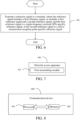
- FIG. 7 is a structural diagram of a network access apparatus according to an embodiment of this application.
- a network access apparatus 500 includes: a first transmitting module 501, configured to transmit a reference signal to a terminal, where the reference signal includes a first reference signal, or includes a first reference signal and a second reference signal; and the first reference signal is a single-frequency network SFN-specific reference signal, or the second reference signal is a cell or transmission reception point-specific reference signal.
- the network access apparatus 500 further includes a second transmitting module, configured to:
- the network access apparatus 500 further includes: a third transmitting module, configured to transmit a third reference signal to the terminal after the terminal successfully accesses a network, where the third reference signal is a cell or transmission reception point-specific reference signal.
- a third transmitting module configured to transmit a third reference signal to the terminal after the terminal successfully accesses a network, where the third reference signal is a cell or transmission reception point-specific reference signal.
- the third reference signal is transmitted through an SFN-specific system message, or through a cell or transmission reception point-specific system message, or through dedicated RRC information, or through a message 2 or a message 4 in a random access process.
- At least one of the paging message or the system message is SFN-specific.
- the paging message and the system message are SFN-specific; or
- a resource of the first reference signal and a resource of the second reference signal are independent of each other; or a resource of the first reference signal is a subset of a resource of the second reference signal.
- the first reference signal and the second reference signal have at least one of the following relations:
- the terminal identifies the first reference signal by using at least one of a reference signal identifier, a physical cell identifier, frequency domain configuration information, time domain configuration information, or code domain configuration information.
- a first physical cell identifier is the same as a second physical cell identifier
- the first physical cell identifier is transmitted to the terminal by the network-side device through the system message.
- the first physical cell identifier is different from the second physical cell identifier in a case that the SFN-specific cell and the cell or transmission reception point-specific cell are deployed on a same frequency; or the first physical cell identifier is the same as or different from the second physical cell identifier in a case that the SFN-specific cell and the cell or transmission reception point-specific cell are deployed on different frequencies.
- the SFN-specific cell in a case that a network is deployed with a high frequency range and a low frequency range, the SFN-specific cell includes a cell in the low frequency range, and the cell or transmission reception point-specific cell includes a cell in the high frequency range; or in a case that a network includes a satellite communication network, the SFN-specific cell includes a high altitude platform station cell or a high-orbit satellite cell, and the cell or transmission reception point-specific cell includes a low-orbit satellite cell or a cell covered by a ground base station.
- the network access apparatus 500 further includes at least one of the following:
- the network access apparatus 500 further includes: a fifth transmitting module, configured to transmit a response message to the terminal after receiving the uplink signal transmitted by the terminal, where the response message is used for indicating at least one of the following:
- the response message carries at least one of the advance indication signal or indication information, where the indication information is used for indicating information about a transmission reception point that receives the paging message.
- the advance indication signal is SFN-specific, or cell or transmission reception point-specific; or the response message is SFN-specific, or cell or transmission reception point-specific.
- the reference signal includes at least one of a synchronization signal block SSB, a CSI reference signal CSI-RS, a cell reference signal CRS, a sounding reference signal SRS, or a demodulation reference signal DMRS.
- the network access apparatus 500 further includes: a sixth transmitting module, configured to transmit SFN-related configuration information to the terminal, where the SFN-related configuration information includes at least one of the SFN-specific reference signal, SFN-specific system information, the SFN-specific paging message, or an SFN random access channel.
- a sixth transmitting module configured to transmit SFN-related configuration information to the terminal, where the SFN-related configuration information includes at least one of the SFN-specific reference signal, SFN-specific system information, the SFN-specific paging message, or an SFN random access channel.
- the network-side device transmits the SFN-related configuration information to the terminal through at least one of system broadcast, an RRC dedicated message, or the paging message.
- the network access apparatus 500 further includes: an access barring module, configured to bar the terminal from accessing an SFN-specific cell in a case that the terminal does not support an SFN.
- an access barring module configured to bar the terminal from accessing an SFN-specific cell in a case that the terminal does not support an SFN.
- this embodiment of this application further provides a communication device 600, including a processor 601, a memory 602, and a program or an instruction stored in the memory 602 and executable on the processor 601.
- a communication device 600 including a processor 601, a memory 602, and a program or an instruction stored in the memory 602 and executable on the processor 601.
- the communication device 600 is a terminal
- the program or instruction is executed by the processor 601 to implement various processes of the network access method embodiment, and may implement the same technical effect.
- the communication device 600 is a network-side device
- the program or the instruction is executed by the processor 601 to implement the various processes of the network access method embodiment, and may implement the same technical effect, which will not be described in detail herein again to avoid repetition.
- FIG. 9 is a schematic diagram of a hardware structure of a terminal according to an embodiment of this application.
- the terminal 1000 includes, but is not limited to, components such as a radio frequency unit 1001, a network module 1002, an audio output unit 1003, an input unit 1004, a sensor 1005, a display unit 1006, a user input unit 1007, an interface unit 1008, a memory 1009, and a processor 1010.
- components such as a radio frequency unit 1001, a network module 1002, an audio output unit 1003, an input unit 1004, a sensor 1005, a display unit 1006, a user input unit 1007, an interface unit 1008, a memory 1009, and a processor 1010.
- the terminal 1000 may further include a power supply (such as a battery) for supplying power to the components.
- the power supply may be logically connected to the processor 1010 by a power management system, thereby implementing functions such as charging, discharging, and power consumption management by using the power management system.
- a terminal structure shown in FIG. 9 does not constitute a limitation to the terminal, and the terminal may include more or fewer components than those shown in the figure, or some components may be combined, or a different component deployment may be used, and details are not repeated herein.
- the input unit 1004 may include a graphics processing unit (Graphics Processing Unit, GPU) 10041 and a microphone 10042.
- the graphics processing unit 10041 performs processing on image data of a static picture or a video that is obtained by an image acquisition apparatus (for example, a camera) in a video acquisition mode or an image acquisition mode.
- the display unit 1006 may include a display panel 10061, and the display panel 10061 may be configured by using a liquid crystal display, an organic light-emitting diode, or the like.
- the user input unit 1007 includes a touch panel 10071 and another input device 10072.
- the touch panel 10071 is also referred to as a touchscreen.
- the touch panel 10071 may include two parts: a touch detection apparatus and a touch controller.
- the another input device 10072 may include, but not limited to, a physical keyboard, a functional key (such as a volume control key or a switch key), a track ball, a mouse, and a joystick, which are not described herein in detail.
- the radio frequency unit 1001 receives downlink data from a network-side device and transmits the downlink data to the processor 1010 for processing; and transmits uplink data to the network-side device.
- the radio frequency unit 1001 includes, but is not limited to, an antenna, at least one amplifier, a transceiver, a coupler, a low noise amplifier, a duplexer, and the like.
- the memory 1009 may be configured to store a software program or an instruction and various data.
- the memory 1009 may mainly include a program or instruction storage area and a data storage area.
- the program or instruction storage area may store an operating system, an application program or instruction required by at least one function (such as a sound playback function and an image display function), and the like.
- the memory 1009 may include a high-speed random access memory, and may further include a non-volatile memory, where the non-volatile memory may be a read-only memory (Read-Only Memory, ROM), a programmable ROM (Programmable ROM, PROM), an erasable PROM (Erasable PROM, EPROM), an electrically EPROM (Electrically EPROM, EEPROM), or a flash memory.
- ROM Read-Only Memory
- PROM programmable ROM
- PROM erasable PROM
- EPROM Erasable PROM
- EPROM electrically EPROM
- EEPROM Electrically EPROM
- flash memory such as at least one magnetic disk storage device, a flash memory device, or other non-volatile solid-state storage devices.
- the processor 1010 may include one or more processing units.
- the processor 1010 may integrate an application processor and a modem, where the application processor mainly processes an operating system, a user interface, and an application program or instruction, and the modem mainly processes wireless communication, such as a baseband processor. It may be understood that the foregoing modem may either not be integrated into the processor 1010.
- the radio frequency unit 1001 or the processor 1010 is configured to:
- the radio frequency unit 1001 or the processor 1010 is further used for at least one of the following:
- the radio frequency unit 1001 or the processor 1010 is further configured to:
- the radio frequency unit 1001 or the processor 1010 is further configured to:
- the radio frequency unit 1001 or the processor 1010 is further configured to: receive a third reference signal transmitted by the network-side device after the terminal successfully accesses a network, where the third reference signal is a cell or transmission reception point-specific reference signal.
- the third reference signal is transmitted through an SFN-specific system message, or through a cell or transmission reception point-specific system message, or through dedicated RRC information, or through a message 2 or a message 4 in a random access process.
- At least one of the paging message or the system message is SFN-specific.
- the paging message and the system message are SFN-specific; or
- the radio frequency unit 1001 or the processor 1010 is further configured to, in a case that the system message indicates that there is an SFN-specific random access resource, cause the terminal to initiate the random access to the network-side device by using the random access resource.
- a resource of the first reference signal and a resource of the second reference signal are independent of each other; or a resource of the first reference signal is a subset of a resource of the second reference signal.
- the first reference signal and the second reference signal have at least one of the following relations:
- the terminal identifies the first reference signal by using at least one of a reference signal identifier, a physical cell identifier, frequency domain configuration information, time domain configuration information, or code domain configuration information.
- a first physical cell identifier is the same as a second physical cell identifier
- the first physical cell identifier is transmitted to the terminal by the network-side device through the system message.
- the first physical cell identifier is different from the second physical cell identifier in a case that the SFN-specific cell and the cell or transmission reception point-specific cell are deployed on a same frequency; or the first physical cell identifier is the same as or different from the second physical cell identifier in a case that the SFN-specific cell and the cell or transmission reception point-specific cell are deployed on different frequencies.
- the SFN-specific cell in a case that a network is deployed with a high frequency range and a low frequency range, the SFN-specific cell includes a cell in the low frequency range, and the cell or transmission reception point-specific cell includes a cell in the high frequency range; or in a case that a network includes a satellite communication network, the SFN-specific cell includes a high altitude platform station cell or a high-orbit satellite cell, and the cell or transmission reception point-specific cell includes a low-orbit satellite cell or a cell covered by a ground base station.
- the radio frequency unit 1001 or the processor 1010 is further used for at least one of the following:
- the radio frequency unit 1001 or the processor 1010 is further configured to: receive a response message transmitted by the network-side device, where the response message is used for indicating at least one of the following:
- the response message carries at least one of the advance indication signal or indication information, where the indication information is used for indicating information about a transmission reception point that receives the paging message.
- the advance indication signal is SFN-specific, or cell or transmission reception point-specific; or the response message is SFN-specific, or cell or transmission reception point-specific.
- the reference signal includes at least one of a synchronization signal block SSB, a CSI reference signal CSI-RS, a cell reference signal CRS, a sounding reference signal SRS, or a demodulation reference signal DMRS.
- the radio frequency unit 1001 or the processor 1010 is further configured to: obtain SFN-related configuration information, where the SFN-related configuration information includes at least one of the SFN-specific reference signal, SFN-specific system information, the SFN-specific paging message, or an SFN random access channel.
- the terminal obtains the SFN-related configuration information through at least one of system broadcast, an RRC dedicated message, or the paging message.
- the radio frequency unit 1001 or the processor 1010 is further configured to: regard, by the terminal, an SFN-specific cell as a cell that is barred from being accessed in a case that the terminal does not support an SFN.
- a system design deployed through the SFN provides a technical solution for the terminal to perform network access based on an SFN-specific reference signal, so that the terminal may successfully access the SFN. Because the terminal does not need to frequently perform cell selection, reselection, or switching between cells in an SFN range, and a measurement frequency of the terminal is reduced, network overhead and power consumption of the terminal may be reduced.
- the network-side device 700 includes: an antenna 71, a radio frequency apparatus 72, and a baseband apparatus 73.
- the antenna 71 is connected with the radio frequency apparatus 72.
- the radio frequency apparatus 72 receives information through the antenna 71, and transmits the received information to the baseband apparatus 73 for processing.
- the baseband apparatus 73 performs processing on the to-be- transmitted information, and transmits the to-be-transmitted information to the radio frequency apparatus 72. After performing processing on the received information, the radio frequency apparatus 72 transmits the received information out through the antenna 71.
- the frequency band processing apparatus may be located in the baseband apparatus 73, and the method performed by the network-side device in the foregoing embodiments may be implemented in the baseband apparatus 73.
- the baseband apparatus 73 includes a processor 74 and a memory 75.
- the baseband apparatus 73 may include, for example, at least one baseband board, and a plurality of chips are arranged on the baseband board. As shown in FIG. 10 , for example, one of the chips is a processor 74, and is connected with the memory 75, to invoke a program in the memory 75, and to perform the network device operation shown in the foregoing method embodiments.
- the baseband apparatus 73 may further include a network interface 76 used for exchanging information with the radio frequency apparatus 72.
- the interface is a common public radio interface (common public radio interface, CPRI).
- the network-side device of this embodiment of the present invention further includes: an instruction or a program stored in the memory 75 and executable on the processor 74.
- the processor 74 invokes the instruction or program in the memory 75 to perform the method performed by each module shown in FIG. 7 , and implements the same technical effect, which will not be described in detail herein again to avoid repetition.
- This embodiment of this application further provides a readable storage medium storing therein a program or an instruction.
- the program or instruction when executed by a processor, implements various processes of the network access method embodiment, and may implement the same technical effects, which will not be described in detail herein again to avoid repetition.
- the processor is a processor in the terminal or network-side device described in the foregoing embodiment.
- the readable storage medium includes a computer-readable storage medium, for example, a Read-Only Memory (Read-Only Memory, ROM), a Random Access Memory (Random Access Memory, RAM), a magnetic disk, an optical disc or the like.
- This embodiment of this application further provides a chip, including a processor and a communication interface, where the communication interface is coupled to the processor.
- the processor is configured to run a program or an instruction to implement various processes of the network access method embodiment, and may implement the same technical effects, which will not be described in detail herein again to avoid repetition.
- the chip mentioned in this embodiment of this application may further be referred to as a system-level chip, a system chip, a chip system, a system on chip, or the like.
- the foregoing embodiment methods may be implemented by using software in combination with a necessary universal hardware platform. Certainly, the embodiment methods may also be implemented by using hardware, but the former is a better implementation in many cases. Based on such an understanding, the technical solutions of this application essentially, or the part contributing to the prior art, may be presented in the form of a software product.
- the computer software product is stored in a storage medium (for example, a ROM/RAM, a magnetic disk, or an optical disc) including several instructions to enable a terminal (which may be a mobile phone, a computer, a server, an air conditioner, a network device, or the like) to perform the methods described in the embodiments of this application.
- each module of the device is only a division of logical functions, and may be fully or partially integrated into a physical entity in actual implementation, and may also be physically separated.
- the modules may all be implemented in the form of software invoked by a processing element, or implemented in the form of hardware, and some modules may further be implemented in the form of software invoked by a processing element, and some modules may be implemented in the form of hardware.
- the receiving module may be an independently disposed processing element, or may be integrated in a chip of the foregoing apparatus.
- the receiving module may also be stored in a memory of the foregoing apparatus in the form of program code, and a processing element of the foregoing apparatus invokes and executes a function of the receiving module.
- the implementation of other modules is similar.
- all or some of the modules may be integrated together, or may be implemented independently.
- the processing element may be an integrated circuit and has a signal processing capability.
- steps in the foregoing methods or the foregoing modules can be implemented by using a hardware integrated logical circuit in a processor element, or by using instructions in a form of software.
- each module, unit, subunit, or submodule may be one or more integrated circuits configured to implement the foregoing methods, for example, one or more application specific integrated circuits (Application Specific Integrated Circuit, ASIC), or one or more digital signal processors (digital signal processor, DSP), or one or more field programmable gate arrays (field programmable gate array, FPGA).
- ASIC Application Specific Integrated Circuit
- DSP digital signal processor
- FPGA field programmable gate array
- FPGA field programmable gate array
- a module described above is implemented in a form of a processing element scheduling program code
- the processing element may be a general-purpose processor, for example, a central processing unit (Central Processing Unit, CPU) or another processor that can invoke program code.
- such modules may be integrated together and implemented in a form of a system-on-a-chip (system-on-a-chip, SOC).
Landscapes
- Engineering & Computer Science (AREA)
- Signal Processing (AREA)
- Computer Networks & Wireless Communication (AREA)
- Computer Security & Cryptography (AREA)
- Mobile Radio Communication Systems (AREA)
Applications Claiming Priority (2)
| Application Number | Priority Date | Filing Date | Title |
|---|---|---|---|
| CN202011057997.6A CN114339958B (zh) | 2020-09-29 | 2020-09-29 | 网络接入方法、网络接入装置、终端和网络侧设备 |
| PCT/CN2021/121247 WO2022068797A1 (fr) | 2020-09-29 | 2021-09-28 | Procédé d'accès au réseau, appareil d'accès au réseau, terminal, et dispositif côté réseau |
Publications (2)
| Publication Number | Publication Date |
|---|---|
| EP4213546A1 true EP4213546A1 (fr) | 2023-07-19 |
| EP4213546A4 EP4213546A4 (fr) | 2024-03-06 |
Family
ID=80949716
Family Applications (1)
| Application Number | Title | Priority Date | Filing Date |
|---|---|---|---|
| EP21874457.1A Pending EP4213546A4 (fr) | 2020-09-29 | 2021-09-28 | Procédé d'accès au réseau, appareil d'accès au réseau, terminal, et dispositif côté réseau |
Country Status (4)
| Country | Link |
|---|---|
| US (1) | US20230239767A1 (fr) |
| EP (1) | EP4213546A4 (fr) |
| CN (1) | CN114339958B (fr) |
| WO (1) | WO2022068797A1 (fr) |
Families Citing this family (10)
| Publication number | Priority date | Publication date | Assignee | Title |
|---|---|---|---|---|
| CN114340031B (zh) * | 2020-09-29 | 2025-07-11 | 维沃移动通信有限公司 | 随机接入方法、装置、终端及可读存储介质 |
| US12052626B2 (en) * | 2021-12-23 | 2024-07-30 | T-Mobile Usa, Inc. | Steering non-mobile connected-mode user equipment to higher capacity radio cells |
| CN117440395A (zh) * | 2022-07-15 | 2024-01-23 | 维沃移动通信有限公司 | 测量控制方法、终端及网络侧设备 |
| WO2024060072A1 (fr) * | 2022-09-21 | 2024-03-28 | 华为技术有限公司 | Procédé et appareil de communication |
| CN120239979A (zh) * | 2023-02-28 | 2025-07-01 | 北京小米移动软件有限公司 | 网络通信方法及装置 |
| CN119071860A (zh) * | 2023-06-02 | 2024-12-03 | 华为技术有限公司 | 一种通信方法及装置 |
| WO2025124453A1 (fr) * | 2023-12-12 | 2025-06-19 | Mediatek Inc. | Procédés de gestion de ressources radio à plusieurs niveaux avec gestion de mobilité en mode connecté dans des communications mobiles |
| CN118201041B (zh) * | 2024-02-06 | 2025-03-18 | 荣耀终端股份有限公司 | 一种通信方法及相关设备 |
| WO2025209441A1 (fr) * | 2024-04-03 | 2025-10-09 | Mediatek Inc. | Procédés pour des améliorations de mobilité en mode connecté avec gestion de ressources radio en niveaux |
| WO2026020436A1 (fr) * | 2024-07-25 | 2026-01-29 | 北京小米移动软件有限公司 | Procédé de communication, terminal, dispositif de réseau et support de stockage |
Family Cites Families (14)
| Publication number | Priority date | Publication date | Assignee | Title |
|---|---|---|---|---|
| WO2013105820A1 (fr) * | 2012-01-11 | 2013-07-18 | Samsung Electronics Co., Ltd. | Appareil et procédé de transmission/réception d'informations d'émission de signal de canal de données de liaison descendante dans un système de radiocommunication cellulaire utilisant un système multipoint coordonné |
| EP3767972B1 (fr) * | 2014-09-18 | 2023-11-29 | Sony Group Corporation | Appareil et procédé pour une réception multicast améliorée |
| US9641371B2 (en) * | 2014-12-31 | 2017-05-02 | Motorola Solutions, Inc | Methods and systems for dynamic single-frequency-network-multicast symbol synchronization |
| WO2017003235A1 (fr) * | 2015-06-30 | 2017-01-05 | 엘지전자(주) | Procédé de transmission de message de groupe dans un système de communication sans fil, et appareil correspondant |
| US10219259B2 (en) * | 2016-05-13 | 2019-02-26 | Qualcomm Incorporated | Uplink-based cell selection |
| US11115172B2 (en) * | 2016-06-14 | 2021-09-07 | Lg Electronics Inc. | Method for transmitting and receiving multicast/broadcast data in wireless communication system, and apparatus therefor |
| US10028129B2 (en) * | 2016-09-26 | 2018-07-17 | Qualcomm Incorporated | Techniques for mobility mode selection in uplink-based and downlink-based mobility |
| CN108024259B (zh) * | 2016-11-02 | 2020-01-24 | 电信科学技术研究院 | 新一代无线通信系统传输点或波束指示、传输方法及装置 |
| WO2018085374A1 (fr) * | 2016-11-04 | 2018-05-11 | Intel IP Corporation | Informations de système spécifiques à un point d'émission/réception |
| US10951285B2 (en) * | 2017-01-06 | 2021-03-16 | Futurewei Technologies, Inc. | Hybrid mobility and radio resource management mechanisms |
| US10834760B2 (en) * | 2017-03-24 | 2020-11-10 | Qualcomm Incorporated | Mobility enhancement with channel state information reference signals (CSI-RS) |
| ES3062885T3 (en) * | 2019-04-30 | 2026-04-14 | Zte Corp | System and method for downlink control signaling |
| CN110769478B (zh) * | 2019-11-07 | 2022-01-11 | 武汉虹信科技发展有限责任公司 | 小区接入方法及终端 |
| CN111245591B (zh) * | 2020-01-21 | 2023-04-07 | 展讯半导体(南京)有限公司 | 参考信号发送和接收方法及装置、存储介质、基站、终端 |
-
2020
- 2020-09-29 CN CN202011057997.6A patent/CN114339958B/zh active Active
-
2021
- 2021-09-28 EP EP21874457.1A patent/EP4213546A4/fr active Pending
- 2021-09-28 WO PCT/CN2021/121247 patent/WO2022068797A1/fr not_active Ceased
-
2023
- 2023-03-27 US US18/126,999 patent/US20230239767A1/en active Pending
Also Published As
| Publication number | Publication date |
|---|---|
| CN114339958B (zh) | 2023-07-07 |
| WO2022068797A1 (fr) | 2022-04-07 |
| US20230239767A1 (en) | 2023-07-27 |
| EP4213546A4 (fr) | 2024-03-06 |
| CN114339958A (zh) | 2022-04-12 |
Similar Documents
| Publication | Publication Date | Title |
|---|---|---|
| US20230239767A1 (en) | Network access method, network access apparatus, terminal, and network-side device | |
| US20240365239A1 (en) | Signal sending method, signal receiving method, configuration sending method, and related device | |
| JP7753343B2 (ja) | ページング受信の改善のためにアイドル/非アクティブモードのueによってcsi-rs/trs指示を受信するシステム及び方法 | |
| US12550182B2 (en) | Random access method and apparatus, terminal, and readable storage medium | |
| US20230224788A1 (en) | Cell selection and reselection method, apparatus, terminal, and readable storage medium | |
| US20230217512A1 (en) | Connection establishment method, apparatus, device, and storage medium | |
| WO2022028455A1 (fr) | Procédé de transfert intercellulaire et terminal | |
| JP2023540639A (ja) | ネットワーク切り替え方法、装置と機器 | |
| CN116367247A (zh) | Bwp切换方法及装置、终端 | |
| EP4344114B1 (fr) | Procédé et appareil de surveillance de pdcch, ainsi que dispositif, et support de stockage | |
| US20230239933A1 (en) | Random access method and apparatus, and related device | |
| WO2022143808A1 (fr) | Procédé et dispositif pour mise en correspondance de taux | |
| US20230232295A1 (en) | Method for changing working area, terminal, and network-side device | |
| US20260052478A1 (en) | Transmission method and apparatus, and terminal and network-side device | |
| CN118474886A (zh) | 条件切换方法、装置、终端及网络侧设备 | |
| CN120201522A (zh) | 通信方法及装置、计算机可读存储介质 | |
| CN121463133A (zh) | 系统信息传输方法、装置、终端及网络侧设备 | |
| CN118555629A (zh) | 传输方法、装置、终端、中继设备及网络侧设备 | |
| CN117835378A (zh) | 通信方法、网络设备及终端 | |
| WO2026040900A1 (fr) | Procédés et appareil de gestion de mobilité, terminal et dispositif côté réseau | |
| WO2025082325A1 (fr) | Procédé et appareil d'exécution d'opération, terminal, dispositif côté réseau et support | |
| WO2025007900A1 (fr) | Procédé de surveillance lp-wus, terminal et dispositif côté réseau | |
| CN120547696A (zh) | 信号测量的触发方法、终端及网络侧设备 | |
| CN119545420A (zh) | 侧链路sl测量上报、配置方法、终端、设备及介质 | |
| CN121771894A (zh) | 传输方法、装置、终端、第一基站及第二基站 |
Legal Events
| Date | Code | Title | Description |
|---|---|---|---|
| STAA | Information on the status of an ep patent application or granted ep patent |
Free format text: STATUS: THE INTERNATIONAL PUBLICATION HAS BEEN MADE |
|
| PUAI | Public reference made under article 153(3) epc to a published international application that has entered the european phase |
Free format text: ORIGINAL CODE: 0009012 |
|
| STAA | Information on the status of an ep patent application or granted ep patent |
Free format text: STATUS: REQUEST FOR EXAMINATION WAS MADE |
|
| 17P | Request for examination filed |
Effective date: 20230411 |
|
| AK | Designated contracting states |
Kind code of ref document: A1 Designated state(s): AL AT BE BG CH CY CZ DE DK EE ES FI FR GB GR HR HU IE IS IT LI LT LU LV MC MK MT NL NO PL PT RO RS SE SI SK SM TR |
|
| DAV | Request for validation of the european patent (deleted) | ||
| DAX | Request for extension of the european patent (deleted) | ||
| REG | Reference to a national code |
Ref country code: DE Ref legal event code: R079 Free format text: PREVIOUS MAIN CLASS: H04W0048180000 Ipc: H04W0048160000 |
|
| A4 | Supplementary search report drawn up and despatched |
Effective date: 20240206 |
|
| RIC1 | Information provided on ipc code assigned before grant |
Ipc: H04W 52/02 20090101ALN20240131BHEP Ipc: H04W 48/18 20090101ALN20240131BHEP Ipc: H04W 48/16 20090101AFI20240131BHEP |