EP4214914B1 - Premier noeud, second noeud, et procédés exécutés par ceux-ci pour configurer la gestion de deux flux d'éléments d'entrée ou plus - Google Patents
Premier noeud, second noeud, et procédés exécutés par ceux-ci pour configurer la gestion de deux flux d'éléments d'entrée ou plus Download PDFInfo
- Publication number
- EP4214914B1 EP4214914B1 EP20776251.9A EP20776251A EP4214914B1 EP 4214914 B1 EP4214914 B1 EP 4214914B1 EP 20776251 A EP20776251 A EP 20776251A EP 4214914 B1 EP4214914 B1 EP 4214914B1
- Authority
- EP
- European Patent Office
- Prior art keywords
- node
- flow
- ingress
- indication
- ingress member
- Prior art date
- Legal status (The legal status is an assumption and is not a legal conclusion. Google has not performed a legal analysis and makes no representation as to the accuracy of the status listed.)
- Active
Links
Images



Classifications
-
- H—ELECTRICITY
- H04—ELECTRIC COMMUNICATION TECHNIQUE
- H04L—TRANSMISSION OF DIGITAL INFORMATION, e.g. TELEGRAPHIC COMMUNICATION
- H04L47/00—Traffic control in data switching networks
- H04L47/10—Flow control; Congestion control
- H04L47/24—Traffic characterised by specific attributes, e.g. priority or QoS
- H04L47/2483—Traffic characterised by specific attributes, e.g. priority or QoS involving identification of individual flows
-
- H—ELECTRICITY
- H04—ELECTRIC COMMUNICATION TECHNIQUE
- H04L—TRANSMISSION OF DIGITAL INFORMATION, e.g. TELEGRAPHIC COMMUNICATION
- H04L45/00—Routing or path finding of packets in data switching networks
- H04L45/50—Routing or path finding of packets in data switching networks using label swapping, e.g. multi-protocol label switch [MPLS]
-
- H—ELECTRICITY
- H04—ELECTRIC COMMUNICATION TECHNIQUE
- H04L—TRANSMISSION OF DIGITAL INFORMATION, e.g. TELEGRAPHIC COMMUNICATION
- H04L47/00—Traffic control in data switching networks
- H04L47/10—Flow control; Congestion control
- H04L47/34—Flow control; Congestion control ensuring sequence integrity, e.g. using sequence numbers
-
- H—ELECTRICITY
- H04—ELECTRIC COMMUNICATION TECHNIQUE
- H04L—TRANSMISSION OF DIGITAL INFORMATION, e.g. TELEGRAPHIC COMMUNICATION
- H04L47/00—Traffic control in data switching networks
- H04L47/10—Flow control; Congestion control
- H04L47/41—Flow control; Congestion control by acting on aggregated flows or links
Definitions
- the present disclosure relates generally to a first node and methods performed thereby for configuring a second node to handle two or more ingress member flows split from a flow of packets.
- the present disclosure also relates generally to a second node, and methods performed thereby for handling two or more ingress member flows split from a flow of packets.
- the present disclosure further also relates generally to computer programs and computer-readable storage mediums, having stored thereon the computer programs to carry out these methods.
- Computer systems in a communications network may comprise one or more nodes.
- a node may comprise one or more processors which, together with computer program code may perform different functions and actions, a memory, a receiving and a sending port.
- a node may be, for example, a router.
- Standard Information Technology infrastructure may not be able to handle extreme latency-sensitive data with a required level of efficiency.
- Switches and routers may process packets and/or flows in such a way that data flow may be sporadic.
- Deterministic Networking (DetNet) is an effort by the IETF DetNet Working Group to study providing support for real-time applications by implementing reservation of data plane resources in intermediate nodes along a data flow path, calculation of explicit routes which may be independent, and redistribution of data packets over time and/or space to deliver data even with the loss of one path.
- Deterministic data paths may be understood to aim to support real-time applications, such as audio and video streaming, industrial automation, and vehicle control, by guaranteeing extremely low data loss rates, packet delay variation (jitter), and bounded latency.
- Layer 3 data plane technologies that may be used in DetNet networks may include: the Internet Protocol (IP) and Multi-protocol label switching (MPLS).
- IP Internet Protocol
- MPLS Multi-protocol label switching
- MPLS Multiprotocol Label Switching
- MPLS may be understood as a routing technique in telecommunications networks that may enable to direct data from one node to the next based on short path labels rather than long network addresses, thereby enabling to speed up traffic flows.
- the labels may be understood to identify virtual links (paths) between distant nodes rather than endpoints.
- MPLS may encapsulate packets of various network protocols. MPLS encapsulation may be understood to already provide a solid foundation of building blocks to enable the DetNet service and forwarding sub-layer functions.
- the DetNet MPLS data plane may be, for example, as described in https://tools.ietf.org/html/draft-ietf-detnet-mpls-09.
- a flow may be understood as a sequence of packets that may conform uniquely to a flow identifier and to which a DetNet service may be to be provided.
- a DetNet service may require two parameters associated with each packet of a DetNet flow: a DetNet Flow identifier, which may identify the DetNet flow a packet may belong to, and a sequence number, which may allow the recognition of packet duplicates and the order of packets in a DetNet Flow.
- flows When routed between different nodes in a network, flows may be understood to be encapsulated. Encapsulation may be understood to enable proper forwarding behavior across an MPLS network.
- the DetNet MPLS data plane encapsulation may contain an identifying service label (S-Label) and a DetNet control word (d-CW).
- S-Label may be understood to represent the DetNet Flow identifier
- d-CW may be understood to contain the sequence number of the packet.
- the IETF DetNet Work Group has specified the Packet Replication, Elimination, and Ordering Functions (PREOF), as for example described in section 3.2.2.2 in RFC8655 "Deterministic Networking Architecture".
- PREOF may be understood to be targeted to avoid packet loss due to equipment failure.
- PREOF may be practically understood as a per-packet 1+1 (or 1+n) redundancy function.
- a DetNet Flow may be divided into one or more linked member flows, thus making the original flow, a compound flow.
- a DetNet compound flow may be understood as a DetNet flow that may have been separated into multiple duplicate DetNet member flows for service protection at the DetNet service sub-layer.
- Member flows may be merged back into a single DetNet compound flow such that there may be no duplicate packets.
- “Compound” and “member” may be understood to be strictly relative to each other, not absolutes; a DetNet compound flow comprising multiple DetNet member flows may, in turn, be a member of a higher-order compound.
- the object is achieved by a method performed by the second node.
- the method is for handling the two or more ingress member flows split from the flow of packets.
- Each of the two or more ingress member flows comprise a plurality of packets.
- the second node supports the at least one elimination function, and the at least one replication function.
- the second node operates in the communications network.
- the second node receives a configuration from the first node operating in the communications network.
- the configuration configures the second node to use the first indication for the first ingress member flow to be input into the at least one elimination function.
- the first indication identifies the first ingress member flow as being comprised in the flow of packets.
- the first indication is further configured to uniquely identify the first ingress member flow from at least one of: i) the second ingress member flow, of the two or more ingress member flows, to be input into the at least one replication function, and ii) any other ingress member flow, of the two or more ingress member flows to be input into the second node.
- the first node is also configured to configure the second node to use the allocated first indication.
- the indication is further configured to uniquely identify the first ingress member flow from at least one of: i) the second ingress member flow, of the two or more ingress member flows, to be input into the at least one replication function, and ii) any other ingress member flow, of the two or more ingress member flows, to be input into the second node.
- the second node is further configured to assign the first indication to the first ingress member flow to be input into the at least one elimination function.
- LTE Frequency Division Duplex (FDD), LTE Time Division Duplex (TDD), LTE Half-Duplex Frequency Division Duplex (HD-FDD), LTE operating in an unlicensed band, Wideband Code Division Multiple Access (WCDMA), Universal Terrestrial Radio Access (UTRA) TDD, GSM/Enhanced Data Rate for GSM Evolution (EDGE) Radio Access Network (GERAN) network, Ultra-Mobile Broadband (UMB), EDGE network, network comprising of any combination of Radio Access Technologies (RATs) such as e.g.
- RATs Radio Access Technologies
- Multi-Standard Radio (MSR) base stations multi-RAT base stations etc., any 3rd Generation Partnership Project (3GPP) cellular network, Wireless Local Area Network/s (WLAN) or WiFi network/s, Worldwide Interoperability for Microwave Access (WiMax), IEEE 802.15.4-based low-power short-range networks such as IPv6 over Low-Power Wireless Personal Area Networks (6LowPAN), Zigbee, Z-Wave , Bluetooth Low Energy (BLE), or any cellular network or system.
- 3GPP 3rd Generation Partnership Project
- WLAN Wireless Local Area Network/s
- WiFi Worldwide Interoperability for Microwave Access
- WiMax Worldwide Interoperability for Microwave Access
- IEEE 802.15.4-based low-power short-range networks such as IPv6 over Low-Power Wireless Personal Area Networks (6LowPAN), Zigbee, Z-Wave , Bluetooth Low Energy (BLE), or any cellular network or system.
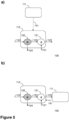
- the first node 111 may be understood as a node capable of allocating indications to identify two or more ingress member flows 121, 122 of a flow of packets routed via the second node 112 from a source entity to a destination entity.
- the two or more ingress member flows 121, 122 may be comprised in a plurality of member flows comprising other member flows 123, 124, 125 split from the flow of packets.
- the first node 111 may be understood to manage an allocation entity for service labels, such as e.g., DetNet Service Labels. That is, in some examples, the first node 111 may manage a DetNet Service Label allocation Entity.
- the second node 112 may be understood as a node capable of processing a compound flow of packets routed via the second node 112 from a source entity to a destination entity.
- a compound flow e.g., a DetNet compound flow
- Member flows may be merged back into a single compound flow such that there may be no duplicate packets.
- Compound and “member” may be understood to be strictly relative to each other, not absolutes; a compound flow comprising multiple member flows may, in turn, be a member of a higher-order compound. Different flows may comprise different numbers of packets.
- the two or more ingress member flows 121, 122 comprise a first ingress member flow 121 and a second ingress member flow 122.
- each of the member flows 121, 122, 123, 124, 125 is depicted by an arrow, representing the direction of the member flow.
- the second node 112 may comprise one or more functions.
- the second node 112 supports at least one elimination function (E) 131 and at least one replication function (R) 132 to process the member flows 121, 122, 123, 124, 125 of the flow of packets routed via the second node 112 from the source entity to the destination entity.
- the non-limiting examples of Figure 5 depict the second node 112 comprising a first elimination function 131, depicted with a solid white circle, and a first replication function 132, depicted by a striped circle.
- the first node 111 may be configured to communicate within the communications network 100 with the second node 112 over a link 141 or connection, which may be a wired link, a radio link, an infrared link, etc...
- the connection may be understood to be able to be comprised of a plurality of individual links.
- the connection may be a direct link or it may go via one or more computer systems or one or more core networks in the communications network 100, which are not depicted in Figure 5 , or it may go via an optional intermediate network.
- the intermediate network may be one of, or a combination of more than one of, a public, private or hosted network; the intermediate network, if any, may be a backbone network or the Internet; in particular, the intermediate network may comprise two or more sub-networks, which is not shown in Figure 5 .
- first and/or “second” herein may be understood to be an arbitrary way to denote different elements or entities, and may be understood to not confer a cumulative or chronological character to the nouns they modify.
- the method is for configuring the second node 112 to handle two or more ingress member flows 121, 122 split from a flow of packets.
- Each of the two or more ingress member flows 121, 122 comprises a plurality of packets.
- the configuring is to handle the two or more ingress member flows 121, 122 via the at least one elimination function 131, and the at least one replication function 132 supported by the second node 112.
- the first node 111 and the second node 112 operate in the communications network 100.
- the communications network 100 may be a Deterministic Network (DetNet).
- DetNet Deterministic Network
- the first node 111 may manage a DetNet Service Label allocation Entity.
- the second node 112 may support Multi Protocol Label Switching (MPLS).
- MPLS Multi Protocol Label Switching
- the second node 112 in some particular embodiments, may support multi-stage Packet Replication, Elimination, and Ordering Functions (PREOF).
- PREOF Ordering Functions
- the method may comprise some of the following actions. In some embodiments all the actions may be performed. Several embodiments are comprised herein. One or more embodiments may be combined, where applicable. All possible combinations are not described to simplify the description. It should be noted that the examples herein are not mutually exclusive. Components from one example may be tacitly assumed to be present in another example and it will be obvious to a person skilled in the art how those components may be used in the other examples. In Figure 6 , an optional action is indicated with dashed boxes.
- the first node 111 allocates a first indication to the first ingress member flow 121 to be input into the at least one elimination function 131.
- the first indication identifies the first ingress member flow 121 as being comprised in the flow of packets.
- the indication uniquely identifies the first ingress member flow 121 from at least one of: i) the second ingress member flow 122, of the two or more ingress member flows 121, 122, to be input into the at least one replication function 132, and ii) any other ingress member flow, of the two or more ingress member flows 121, 122, to be input into the second node 112, that is, any other ingress member flow than the second ingress member flow 122.
- the allocating in this Action 601 may further comprise allocating a second indication to the second ingress member flow 122 to be input into the at least one replication function 132.
- the second indication may identify the second ingress member flow 122 as being comprised in the flow of packets.
- the indication may uniquely identify the second ingress member flow 122 from at least one of: i) the first ingress member flow 121, of the two or more ingress member flows 121, 122, to be input into the at least one elimination function 131, and ii) any other ingress member flow, of the two or more ingress member flows 121, 122, to be input into the second node 112, that is, any other ingress member flow than the first ingress member flow 121.
- the label may be an Ingress Service label (S-label).
- S-label Ingress Service label
- Any of the first indication and the second indication may be e.g., values of a "DetNet Flow ID (S-Label)" in a multi stage PREOF node.
- the first node 111 is enabled to then configure the second node 112 with the allocated first indication and/or second indication, thereby enabling to distinguish different ingress member flows, e.g., ingress DetNet flow segments, as they may no longer need to use the same identification, e.g., S-Label. Therefore, the first node 111 may be understood to provide support for multi-stage PREOF in the second node 112.
- the communications network 100 may be a DetNet
- the communications network 100 may be a DetNet
- the DetNet service setup may be enabled to be more flexible.
- PREOF implementation may be concentrated on selected nodes, as opposed to in all nodes. The reliability over a given topology may therefore be enabled, e.g., to cope with multiple simultaneous failures.
- this new label allocation approach it may be ensured that the implementation complexity of PEF, that is, the number of table lookups, may not be increased, and it may remain the same as in the current specifications.
- the first node 111 configures the second node 112 to use the allocated first indication.
- the configuring in this Action 602 may further comprise configuring the second node 112 to use the allocated second indication.
- Configuring in this Action 602 may be understood as sending a configuration.
- the at least one elimination function 131 may comprise a first elimination function 131 having the first ingress member flow 121 as input, and the at least one replication function 132 may comprise a first replication function 132.
- the configuring in this Action 602 may further comprise configuring the first replication function 132 to use the first indication to identify a member flow 123 to be output from the first replication function 132 and input into the first elimination function 131.
- the first node 111 By configuring the second node 112 with the first indication and/or the second indication, the first node 111 enables the second node 112 to distinguish different ingress member flows, e.g., ingress DetNet flow segments, as they may be understood to no longer need to use the same identification, e.g., S-Label. Therefore, the first node 111 may be understood to provide support for multi-stage PREOF in the second node 112.
- the communications network 100 may be a DetNet
- the first node 111 may be the same as the second node 112.
- the at least one elimination function 131 may comprise the first elimination function 131
- the at least one replication function 132 comprise the first replication function 132.
- the first node 111 may receive at least one of: i) at the first elimination function 131, the first ingress member flow 121 as input, as identified by the first indication, and ii) at the first replication function 132, the second ingress member flow 122as input, as identified by the second indication.
- the first node 111 may be understood to be enabled to distinguish between the different ingress flow segments. Therefore, the first node 111 may provide support for multi-stage PREOF in the communications network 100.
- the communications network 100 may be a DetNet
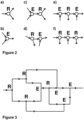
- the problem of the existing methods illustrated in Figure 4 may be solved by embodiments herein, by implementing the following improvement in a label allocation entity: first by allocating multiple different S-Label values for the ingress DetNet Member Flows when their first applied PREOF stages may be different; second, by configuring the PRF function before the PEF stage so that its internal DetNet Member Flow output(s) may become the same S-Label as the ingress DetNet Member flows of the PEF stage.
- Embodiments of a method performed by the second node 112 will now be described with reference to the flowchart depicted in Figure 7 .
- the method may be understood to be for handling the two or more ingress member flows 121, 122 split from the flow of packets.
- Each of the two or more ingress member flows 121, 122 may comprise a plurality of packets.
- the second node 112 supports the at least one elimination function 131, and the at least one replication function 132 to process the ingress member flows.
- the second node 112 operates in the communications network 100.
- the communications network 100 may be a Deterministic Network (DetNet).
- DetNet Deterministic Network
- the second node 112 may support Multi Protocol Label Switching (MPLS).
- MPLS Multi Protocol Label Switching
- the second node 112 in some particular embodiments, may support multi-stage Packet Replication, Elimination, and Ordering Functions (PREOF).
- PREOF Ordering Functions
- the first node 111 may manage a DetNet Service Label allocation Entity.
- the method may comprise the actions described below. Several embodiments are comprised herein. In some embodiments all the actions may be performed. In some embodiments some of the actions may be performed. One or more embodiments may be combined, where applicable. All possible combinations are not described to simplify the description. It should be noted that the examples herein are not mutually exclusive. Components from one example may be tacitly assumed to be present in another example and it will be obvious to a person skilled in the art how those components may be used in the other examples. In Figure 7 , an optional action is indicated with a dashed box.
- the first node 111 may be the same as the second node 112.
- the second node 112 receives a configuration from the first node 111 operating in the communications network 100.
- the configuration configures the second node 112 to use the first indication for the first ingress member flow 121 to be input into the at least one elimination function 131.
- the first indication identifies the first ingress member flow 121 as being comprised in the flow of packets.
- the indication uniquely identifies the first ingress member flow 121 from at least one of: i) the second ingress member flow 122, of the two or more ingress member flows 121, 122, to be input into the at least one replication function 132, and ii) any other ingress member flow, of the two or more ingress member flows 121, 122, to be input into the second node 112, that is, other than the second ingress member flow 122.
- the receiving in this Action 701 may be implemented, e.g., via the link 141.
- the configuration may further configure the second node 112 to use the second indication for the second ingress member flow 122 to be input into the at least one replication function 132.
- the second indication may identify the second ingress member flow 122 as being comprised in the flow of packets.
- the second indication may uniquely identify the second ingress member flow 122 from at least one of: i) the first ingress member flow 121, of the two or more ingress member flows 121, 122, to be input into the at least one elimination function 131, and ii) any other ingress member flow, of the two or more ingress member flows 121, 122, to be input into the second node 112, that is, any other ingress member flow than the first ingress member flow 121.
- the at least one elimination function 131 may comprise the first elimination function 131 having the first ingress member flow 121 as input, and the at least one replication function 132 may comprise the first replication function 132.
- the configuration may further configure the first replication function 132 to use the first indication to identify a member flow 123 to be output from the first replication function 132 and input into the first elimination function 131.
- the label may be an Ingress Service label (S-label).
- the second node 112 may be understood to be enabled to distinguish different ingress member flows, e.g., ingress DetNet flow segments, as they no longer need to use the same identification, e.g., S-Label. Therefore, the second node 112 may be understood to provide support for multi-stage PREOF in the communications network 100.
- the communications network 100 may be a DetNet
- the second node 112 assigns the first indication to the first ingress member flow 121 to be input into the at least one elimination function 131.
- the assigning in this Action 702 may further comprise assigning the second indication to the second ingress member flow 122 to be input into the at least one replication function 132.
- the assigned first indication may be used by local PREOF functions according to their configuration.
- the assigned first indication may be communicated to the upstream DetNet neighbour to use it as egress S-Label on its appropriate egress member flow.
- first indications e.g., labels
- both may be communicated to their respective upstream neighbour.
- the two or more ingress member flows 121, 122 e.g., the first ingress member flow 121 and the second ingress member flow 122, may have different nodes as upstream neighbour.
- the second node 112 may receive at least one of: i) at the first function 131, the first ingress member flow 121as input, as identified by the first indication, and ii) at the second function 132, the second ingress member flow 122as input, as identified by the second indication.
- the second node 112 may be enabled to distinguish between the different ingress member flows. Therefore, the second node 112 may provide support for multi-stage PREOF in the communications network 100.
- the communications network 100 may be a DetNet
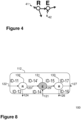
- FIG. 8 is a schematic diagram depicting a non-limiting example of the second node 112, according to embodiments herein, wherein the communication network 100 is a DetNet.
- the second node 112 as a multi PREOF stage node, there may be understood to be a need to enhance the allocation entity of the incoming S-Label value, that is, to allow multiple S-Labels in some cases, when PEF may be configured on a DetNet node.
- the second node 122 supports a three stage PREOF scenario and comprises the at least one elimination function 131, the at least one replication function 132 and a second replication function 133.
- the DetNet Flow IDs for the three stage PREOF scenario of Figure 8 are depicted.
- ingress member flows 122, 121 There are two ingress member flows 122, 121, with ID-11 and ID-14, respectively, and there are three egress member flows 124, 136, 127, with ID-12, ID-16, and ID-17, respectively.
- Member flows with ID-14' and ID-15 are internal member flows, that is, they are not visible outside of the second node 112.
- applying the methods according to embodiments herein may be understood to mean that the first ingress member flow121 may be assigned the first indication, as ID-14, which is different from the second indication assigned to the second ingress member flow 122, which is ID-11.
- the member flow with ID-14' may be configured to have the same S-Label as the member flow with ID-14.
- One advantage of embodiments herein is that they allow the implementation of multi stage PREOF functions in a DetNet node such as the second node 112, which may be understood to be a requirement in complex DetNet network topologies, including but not limited to DetNet networks with radio links. Replication and Elimination functions and their enhancements may be understood to play an important role in adding radio links and/or 5G systems to DetNet networks, e.g., for industrial verticals.
- a further advantage of embodiments herein is that the implementation of the PEF functions may be kept simple via minimizing the table lookups that may be needed during the elimination packet processing.
- Another advantage of embodiments herein is that they enable easy addition of the disclosed functionality to existing PREOF implementations.
- Figure 9 depicts two different examples in panels a) and b), respectively, of the arrangement that the first node 111 may comprise to perform the method actions described above in relation to Figure 6 .
- the first node 111 may comprise the following arrangement depicted in Figure 9a .
- the first node 111 is for configuring the second node 112 to handle the two or more ingress member flows 121, 122 split from the flow of packets.
- Each of the two or more ingress member flows 121, 122 are configured to comprise a plurality of packets.
- the configuring is configured to be to handle the two or more ingress member flows 121, 122 via at least one elimination function 131, and at least one replication function 132 configured to be supported by the second node 112.
- the first node 111 and the second node 112 are configured to operate in the communications network 100.
- first node 111 may be the same as the second node 112.
- the first node 111 is configured to, e.g. by means of an allocating unit 901 within the first node 111 configured to, allocate the first indication to the first ingress member flow 121 to be input into the at least one elimination function 131.
- the first indication is configured to identify the first ingress member flow 121 as being comprised in the flow of packets.
- the first indication is further configured to uniquely identify the first ingress member flow 121 from at least one of: i) the second ingress member flow 122, of the two or more ingress member flows 121, 122, to be input into the at least one replication function 132, and ii) any other ingress member flow, of the two or more ingress member flows 121, 122, to be input into the second node 112.
- to allocate may be further configured to comprise allocating the second indication to the second ingress member flow 122 to be input into the at least one replication function 132.
- the second indication may be configured to identify the second ingress member flow 122 as being comprised in the flow of packets.
- the second indication may be further configured to uniquely identify the second ingress member flow 122 from at least one of: i) the first ingress member flow 121, of the two or more ingress member flows 121, 122, to be input into the at least one elimination function 131, and ii) any other ingress member flow, of the two or more ingress member flows 121, 122, to be input into the second node 112.
- the at least one elimination function 131 may be configured to comprise the first elimination function 131 having the first ingress member flow 121 as input, and the at least one replication function 132 may be configured to comprise the first replication function 132.
- to configure may further comprise to configure the first replication function 132 to use the first indication to identify the member flow 123 configured to be output from the first replication function 132 and input into the first elimination function 131.
- the first node 111 is further configured to, e.g. by means of a configuring unit 902 within the first node 111 further configured to, configure the second node 112 to use the allocated first indication.
- to configure may be further configured to comprise configuring the second node 112 to use the second indication configured to be allocated.
- any of the first indication and the second indication may be configured to be a label.
- the label may be configured to be an Ingress Service label (S-label).
- S-label Ingress Service label
- the first node 111 may be configured to be the same as the second node 112.
- the first node 111 may be further configured to, e.g. by means of a receiving unit 903 within the first node 111 configured to, receive at least one of: i) at the first function 131, the first ingress member flow 121 as input, as identified by the first indication, and ii) at the second function 132, the second ingress member flow 122 as input, as identified by the second indication.
- the first node 111 may be configured to manage a DetNet Service Label allocation Entity.
- the second node 112 may be configured to support Multi Protocol Label Switching (MPLS).
- MPLS Multi Protocol Label Switching
- the communications network 100 may be configured to be a Deterministic Network (DetNet).
- DetNet Deterministic Network
- the units 901-903 described above may refer to a combination of analog and digital circuits, and/or one or more processors configured with software and/or firmware, e.g., stored in memory, that, when executed by the one or more processors such as the processor 904, perform as described above.
- processors as well as the other digital hardware, may be included in a single Application-Specific Integrated Circuit (ASIC), or several processors and various digital hardware may be distributed among several separate components, whether individually packaged or assembled into a System-on-a-Chip (SoC).
- ASIC Application-Specific Integrated Circuit
- SoC System-on-a-Chip
- the first node 111 may comprise the following arrangement depicted in Figure 9b .
- the first node 111 may comprise a processing circuitry 904, e.g., one or more processors such as the processor 904, in the first node 111 and the memory 905.
- the first node 111 may also comprise a radio circuitry 910, which may comprise e.g., the receiving port 906 and the sending port 907.
- the processing circuitry 904 may be configured to, or operable to, perform the method actions according to Figure 6 , in a similar manner as that described in relation to Figure 9a .
- the radio circuitry 910 may be configured to set up and maintain at least a wireless connection with the second node 112, and/or any of the other nodes in the communications network 100. Circuitry may be understood herein as a hardware component.
- the at least one elimination function 131 may be configured to comprise the first elimination function 131 having the first ingress member flow 121 as input, and the at least one replication function 132 may be configured to comprise the first replication function 132.
- the configuration may further configure the first replication function 132 to use the first indication to identify the member flow 123 to be output from the first replication function 132 and input into the first elimination function 131.
- the second node 112 may further comprise a memory 1004 comprising one or more memory units.
- the memory 1004 is arranged to be used to store obtained information, store data, configurations, schedulings, and applications etc. to perform the methods herein when being executed in the second node 112.
Landscapes
- Engineering & Computer Science (AREA)
- Computer Networks & Wireless Communication (AREA)
- Signal Processing (AREA)
- Computer Security & Cryptography (AREA)
- Data Exchanges In Wide-Area Networks (AREA)
Claims (15)
- Procédé exécuté par un premier noeud (111), le procédé étant destiné à configurer un second noeud (112) pour gérer deux flux d'éléments d'entrée (121, 122) ou plus, divisés à partir d'un flux de paquets, chacun des deux flux d'éléments d'entrée ou plus (121, 122) comprenant une pluralité de paquets, dans lequel la configuration est destinée à gérer les deux flux d'éléments d'entrée (121, 122) ou plus par l'intermédiaire d'au moins une fonction d'élimination (131) et d'au moins une fonction de réplication (132), prises en charge par le second noeud (112), le premier noeud (111) et le second noeud (112) fonctionnant dans un réseau de communication (100), le procédé comprenant :- l'attribution (601) d'une première indication à un premier flux d'éléments d'entrée (121) à entrer dans l'au moins une fonction d'élimination (131), la première indication identifiant le premier flux d'éléments d'entrée (121) comme étant compris dans le flux de paquets, et la première indication identifiant de manière unique le premier flux d'éléments d'entrée (121) à partir d'au moins l'un :i. d'un second flux d'éléments d'entrée (122), parmi les deux flux d'éléments d'entrée ou plus (121, 122), à entrer dans l'au moins une fonction de réplication (132), etii. de tout autre flux d'éléments d'entrée, parmi les deux flux d'éléments d'entrée (121, 122) ou plus, à entrer dans le second noeud (112), et- la configuration (602) du second noeud (112) pour utiliser la première indication attribuée.
- Procédé selon la revendication 1, dans lequel l'au moins une fonction d'élimination (131) comprend une première fonction d'élimination (131) présentant le premier flux d'éléments d'entrée (121) comme entrée, et l'au moins une fonction de réplication (132) comprend une première fonction de réplication (132), et dans lequel la configuration (602) comprend en outre la configuration de la première fonction de réplication (132) pour utiliser la première indication pour identifier un flux d'éléments (123) à sortir de la première fonction de réplication (132) et à entrer dans la première fonction d'élimination (131).
- Procédé selon l'une quelconque des revendications 1 et 2, dans lequel :- l'attribution (601) comprend en outre l'attribution d'une seconde indication au second flux d'éléments d'entrée (122) à entrer dans l'au moins une fonction de réplication (132), la seconde indication identifiant le second flux d'éléments d'entrée (122) comme étant compris dans le flux de paquets, et la seconde indication identifiant de manière unique le second flux d'éléments d'entrée (122) à partir d'au moins l'un :i. du premier flux d'éléments d'entrée (121), parmi les deux flux d'éléments d'entrée ou plus (121, 122), à entrer dans l'au moins une fonction d'élimination (131), etii. de tout autre flux d'éléments d'entrée, parmi les deux flux d'éléments d'entrée (121, 122) ou plus, à entrer dans le second noeud (112), et- la configuration comprend en outre la configuration du second noeud (112) pour utiliser la seconde indication attribuée.
- Procédé selon la revendication 3, dans lequel l'une quelconque de la première indication et de la seconde indication est une étiquette, et dans lequel l'étiquette est une étiquette de service d'entrée, étiquette S.
- Procédé selon l'une quelconque des revendications 1 à 4, dans lequel le premier noeud (111) est le même que le second noeud (112), dans lequel l'au moins une fonction d'élimination (131) comprend une première fonction d'élimination (131), et l'au moins une fonction de réplication (132) comprend une première fonction de réplication (132), et dans lequel le procédé comprend en outre :- la réception (603) d'au moins l'un :i. au niveau de la première fonction d'élimination (131), du premier flux d'éléments d'entrée (121) comme entrée, tel qu'identifié par la première indication, etii. au niveau de la première fonction de réplication (132), du second flux d'éléments d'entrée (122) comme entrée, tel qu'identifié par la seconde indication.
- Procédé selon l'une quelconque des revendications 1 à 5, dans lequel le premier noeud (111) gère une entité d'attribution d'étiquette de service DetNet, et dans lequel le réseau de communication (100) est un réseau déterministe, DetNet.
- Procédé exécuté par un second noeud (112), le procédé étant destiné à gérer deux flux d'éléments d'entrée (121, 122) ou plus, divisés à partir d'un flux de paquets, chacun des deux flux d'éléments d'entrée ou plus (121, 122) comprenant une pluralité de paquets, le second noeud (112) prenant en charge au moins une fonction d'élimination (131) et au moins une fonction de réplication (132), le second noeud (112) fonctionnant dans un réseau de communication (100), le procédé comprenant :- la réception (701) d'une configuration en provenance d'un premier noeud (111) fonctionnant dans le réseau de communications (100), la configuration configurant le second noeud (112) pour utiliser une première indication pour un premier flux d'éléments d'entrée (121) à entrer dans l'au moins une fonction d'élimination (131), la première indication identifiant le premier flux d'éléments d'entrée (121) comme étant compris dans le flux de paquets, et l'indication identifiant de manière unique le premier flux d'éléments d'entrée (121) à partir d'au moins l'un :i. d'un second flux d'éléments d'entrée (122), parmi les deux flux d'éléments d'entrée ou plus (121, 122), à entrer dans l'au moins une fonction de réplication (132), etii. de tout autre flux d'éléments d'entrée, parmi les deux flux d'éléments d'entrée (121, 122) ou plus, à entrer dans le second noeud (112), et- l'affectation (702) de la première indication au premier flux d'éléments d'entrée (121) à entrer dans l'au moins une fonction d'élimination (131).
- Procédé selon la revendication 7, dans lequel l'au moins une fonction d'élimination (131) comprend une première fonction d'élimination (131) présentant le premier flux d'éléments d'entrée (121) comme entrée, et l'au moins une fonction de réplication (132) comprend une première fonction de réplication (132), et dans lequel la configuration configure en outre la première fonction de réplication (132) pour utiliser la première indication pour identifier un flux d'éléments (123) à sortir de la première fonction de réplication (132) et à entrer dans la première fonction d'élimination (131).
- Procédé selon l'une quelconque des revendications 7 et 8, dans lequel :- la configuration configure en outre le second noeud (112) pour utiliser une seconde indication pour le second flux d'éléments d'entrée (122) à entrer dans l'au moins une fonction de réplication (132), la seconde indication identifiant le second flux d'éléments d'entrée (122) comme étant compris dans le flux de paquets, et la seconde indication identifiant de manière unique le second flux d'éléments d'entrée (122) à partir d'au moins l'un :i. du premier flux d'éléments d'entrée (121), parmi les deux flux d'éléments d'entrée ou plus (121, 122), à entrer dans l'au moins une fonction d'élimination (131), etii. de tout autre flux d'éléments d'entrée, parmi les deux flux d'éléments d'entrée (121, 122) ou plus, à entrer dans le second noeud (112), et- dans lequel l'affectation (702) comprend en outre l'affectation de la seconde indication au second flux d'éléments d'entrée (122) à entrer dans l'au moins une fonction de réplication (132).
- Procédé selon l'une quelconque des revendications 7 à 9, dans lequel l'une quelconque de la première indication et de la seconde indication est une étiquette, et dans lequel l'étiquette est une étiquette de service d'entrée, étiquette S.
- Procédé selon l'une quelconque des revendications 7 à 10, comprenant en outre :- la réception (703) d'au moins l'un :i. au niveau de la première fonction (131), du premier flux d'éléments d'entrée (121) comme entrée, tel qu'identifié par la première indication, etii. au niveau de la seconde fonction (132), du second flux d'éléments d'entrée (122) comme entrée, tel qu'identifié par la seconde indication.
- Procédé selon l'une quelconque des revendications 7 à 11, dans lequel le second noeud (112) prend en charge les fonctions de réplication, d'élimination et de classement de paquets à plusieurs étages, PREOF, et/ou prend en charge la commutation d'étiquettes multiprotocoles, MPLS.
- Procédé selon l'une quelconque des revendications 7 à 12, dans lequel le premier noeud (111) gère une entité d'attribution d'étiquette de service DetNet, et dans lequel le réseau de communication est un réseau déterministe, DetNet.
- Premier noeud (111), destiné à configurer un second noeud (112) pour gérer deux flux d'éléments d'entrée (121, 122) ou plus, configurés pour être divisés à partir d'un flux de paquets, chacun des deux flux d'éléments d'entrée (121, 122) ou plus tant configurés pour comprendre une pluralité de paquets, dans lequel la configuration est configurée pour gérer les deux flux d'éléments d'entrée (121, 122) ou plus par l'intermédiaire d'au moins une fonction d'élimination (131) et d'au moins une fonction de réplication (132) configurées pour être prises en charge par le second noeud (112), le premier noeud (111) et le second noeud (112) étant configurés pour fonctionner dans un réseau de communication (100), le premier noeud étant en outre configuré pour :- attribuer une première indication à un premier flux d'éléments d'entrée (121) à entrer dans l'au moins une fonction d'élimination (131), la première indication étant configurée pour identifier le premier flux d'éléments d'entrée (121) comme étant compris dans le flux de paquets, et la première indication étant en outre configurée pour identifier de manière unique le premier flux d'éléments d'entrée (121) à partir d'au moins l'un :i. d'un second flux d'éléments d'entrée (122), parmi les deux flux d'éléments d'entrée ou plus (121, 122), à entrer dans l'au moins une fonction de réplication (132), etii. de tout autre flux d'éléments d'entrée, parmi les deux flux d'éléments d'entrée (121, 122) ou plus, à entrer dans le second noeud (112), et- configurer le second noeud (112) pour utiliser la première indication attribuée.
- Second noeud (112), destiné à gérer deux flux d'éléments d'entrée (121, 122) ou plus, configurés pour être divisés à partir d'un flux de paquets, chacun des deux flux d'éléments d'entrée ou plus (121, 122) étant configuré pour comprendre une pluralité de paquets, le second noeud (112) étant configuré pour prendre en charge au moins une fonction d'élimination (131) et au moins une fonction de réplication (132), le second noeud (112) étant configuré pour fonctionner dans un réseau de communication (100), le second noeud étant en outre configuré pour :- recevoir une configuration en provenance d'un premier noeud (111) configuré pour fonctionner dans le réseau de communications (100), la configuration étant configurée pour configurer le second noeud (112) pour utiliser une première indication pour un premier flux d'éléments d'entrée (121) à entrer dans l'au moins une fonction d'élimination (131), la première indication étant configurée pour identifier le premier flux d'éléments d'entrée (121) comme étant compris dans le flux de paquets, et l'indication étant en outre configurée pour identifier de manière unique le premier flux d'éléments d'entrée (121) à partir d'au moins l'un :i. d'un second flux d'éléments d'entrée (122), parmi les deux flux d'éléments d'entrée ou plus (121, 122), à entrer dans l'au moins une fonction de réplication (132), etii. de tout autre flux d'éléments d'entrée, parmi les deux flux d'éléments d'entrée (121, 122) ou plus, à entrer dans le second noeud (112), et- affecter la première indication au premier flux d'éléments d'entrée (121) à entrer dans l'au moins une fonction d'élimination (131).
Applications Claiming Priority (1)
| Application Number | Priority Date | Filing Date | Title |
|---|---|---|---|
| PCT/SE2020/050865 WO2022060262A1 (fr) | 2020-09-16 | 2020-09-16 | Premier nœud, second nœud, et procédés exécutés par ceux-ci pour configurer la gestion de deux flux d'éléments d'entrée ou plus |
Publications (2)
| Publication Number | Publication Date |
|---|---|
| EP4214914A1 EP4214914A1 (fr) | 2023-07-26 |
| EP4214914B1 true EP4214914B1 (fr) | 2024-07-10 |
Family
ID=72615929
Family Applications (1)
| Application Number | Title | Priority Date | Filing Date |
|---|---|---|---|
| EP20776251.9A Active EP4214914B1 (fr) | 2020-09-16 | 2020-09-16 | Premier noeud, second noeud, et procédés exécutés par ceux-ci pour configurer la gestion de deux flux d'éléments d'entrée ou plus |
Country Status (3)
| Country | Link |
|---|---|
| US (1) | US20230336489A1 (fr) |
| EP (1) | EP4214914B1 (fr) |
| WO (1) | WO2022060262A1 (fr) |
-
2020
- 2020-09-16 EP EP20776251.9A patent/EP4214914B1/fr active Active
- 2020-09-16 US US18/044,468 patent/US20230336489A1/en active Pending
- 2020-09-16 WO PCT/SE2020/050865 patent/WO2022060262A1/fr not_active Ceased
Also Published As
| Publication number | Publication date |
|---|---|
| EP4214914A1 (fr) | 2023-07-26 |
| US20230336489A1 (en) | 2023-10-19 |
| WO2022060262A1 (fr) | 2022-03-24 |
Similar Documents
| Publication | Publication Date | Title |
|---|---|---|
| EP3588872B1 (fr) | Procédé, dispositif, système et produit de programme d'ordinateur pour le traitement de paquets evpn | |
| US10791053B2 (en) | Service function chain SFC-based communication method, and apparatus | |
| US12401587B2 (en) | Data processing method and apparatus, storage medium, and electronic apparatus | |
| US12542690B2 (en) | Message header processing method and apparatus, storage medium and electronic device | |
| US11050657B2 (en) | Method, device and node for message transmission, and computer storage medium | |
| US9007941B1 (en) | Self-organizing and scalable MPLS VPN transport for LTE | |
| US11895007B2 (en) | Forwarding path determining method, apparatus, and system | |
| US11405238B2 (en) | Controlling device and method implemented thereon for ethernet virtual private netwok | |
| US11362954B2 (en) | Tunneling inter-domain stateless internet protocol multicast packets | |
| US20190230033A1 (en) | Pseudo Wire Load Sharing Method and Device | |
| JP2022545919A (ja) | Srネットワークでパケットを転送するための方法、装置、及びシステム | |
| CN113366804A (zh) | 防止网络拓扑改变期间的微环路的方法和系统 | |
| CN115412976A (zh) | 一种报文处理方法及相关设备 | |
| CN102833122B (zh) | 一种环回检测方法及系统 | |
| US11375405B2 (en) | Identifier-locator network protocol (ILNP) coordinated multipoint (CoMP) and multiple connectivity | |
| EP4214914B1 (fr) | Premier noeud, second noeud, et procédés exécutés par ceux-ci pour configurer la gestion de deux flux d'éléments d'entrée ou plus | |
| US10826825B2 (en) | Access network system, and data packet processing method and apparatus | |
| CN114760244B (zh) | 一种传输绑定段标识bsid的方法、装置和网络设备 | |
| CN116506379A (zh) | 一种流量转发方法、报文发送方法、消息发送方法及装置 | |
| CN117097818A (zh) | 一种报文处理的方法及相关设备 | |
| US20230327999A1 (en) | Node and methods performed thereby for handling one or more member streams | |
| WO2020021558A1 (fr) | Procédés, appareil et supports lisibles par machine se rapportant à un calcul de chemin dans un réseau de communication | |
| WO2024007762A1 (fr) | Procédé de publication de voie d'acheminement, et procédé et appareil de communication | |
| CN117014356A (zh) | 路由通告消息的处理方法、装置、存储介质及电子装置 |
Legal Events
| Date | Code | Title | Description |
|---|---|---|---|
| STAA | Information on the status of an ep patent application or granted ep patent |
Free format text: STATUS: UNKNOWN |
|
| STAA | Information on the status of an ep patent application or granted ep patent |
Free format text: STATUS: THE INTERNATIONAL PUBLICATION HAS BEEN MADE |
|
| PUAI | Public reference made under article 153(3) epc to a published international application that has entered the european phase |
Free format text: ORIGINAL CODE: 0009012 |
|
| STAA | Information on the status of an ep patent application or granted ep patent |
Free format text: STATUS: REQUEST FOR EXAMINATION WAS MADE |
|
| 17P | Request for examination filed |
Effective date: 20230302 |
|
| AK | Designated contracting states |
Kind code of ref document: A1 Designated state(s): AL AT BE BG CH CY CZ DE DK EE ES FI FR GB GR HR HU IE IS IT LI LT LU LV MC MK MT NL NO PL PT RO RS SE SI SK SM TR |
|
| DAV | Request for validation of the european patent (deleted) | ||
| DAX | Request for extension of the european patent (deleted) | ||
| REG | Reference to a national code |
Ref country code: DE Ref legal event code: R079 Free format text: PREVIOUS MAIN CLASS: H04L0047000000 Ipc: H04L0047340000 Ref document number: 602020033800 Country of ref document: DE |
|
| GRAP | Despatch of communication of intention to grant a patent |
Free format text: ORIGINAL CODE: EPIDOSNIGR1 |
|
| STAA | Information on the status of an ep patent application or granted ep patent |
Free format text: STATUS: GRANT OF PATENT IS INTENDED |
|
| RIC1 | Information provided on ipc code assigned before grant |
Ipc: H04L 47/41 20220101ALI20240117BHEP Ipc: H04L 45/50 20220101ALI20240117BHEP Ipc: H04L 47/34 20220101AFI20240117BHEP |
|
| INTG | Intention to grant announced |
Effective date: 20240131 |
|
| RIN1 | Information on inventor provided before grant (corrected) |
Inventor name: MIKLOS, GYOERGY Inventor name: FARKAS, JANOS Inventor name: VARGA, BALAZS |
|
| P01 | Opt-out of the competence of the unified patent court (upc) registered |
Effective date: 20240219 |
|
| GRAS | Grant fee paid |
Free format text: ORIGINAL CODE: EPIDOSNIGR3 |
|
| GRAA | (expected) grant |
Free format text: ORIGINAL CODE: 0009210 |
|
| STAA | Information on the status of an ep patent application or granted ep patent |
Free format text: STATUS: THE PATENT HAS BEEN GRANTED |
|
| AK | Designated contracting states |
Kind code of ref document: B1 Designated state(s): AL AT BE BG CH CY CZ DE DK EE ES FI FR GB GR HR HU IE IS IT LI LT LU LV MC MK MT NL NO PL PT RO RS SE SI SK SM TR |
|
| REG | Reference to a national code |
Ref country code: CH Ref legal event code: EP |
|
| REG | Reference to a national code |
Ref country code: DE Ref legal event code: R096 Ref document number: 602020033800 Country of ref document: DE |
|
| REG | Reference to a national code |
Ref country code: NL Ref legal event code: FP |
|
| REG | Reference to a national code |
Ref country code: LT Ref legal event code: MG9D |
|
| PG25 | Lapsed in a contracting state [announced via postgrant information from national office to epo] |
Ref country code: PT Free format text: LAPSE BECAUSE OF FAILURE TO SUBMIT A TRANSLATION OF THE DESCRIPTION OR TO PAY THE FEE WITHIN THE PRESCRIBED TIME-LIMIT Effective date: 20241111 |
|
| REG | Reference to a national code |
Ref country code: AT Ref legal event code: MK05 Ref document number: 1703031 Country of ref document: AT Kind code of ref document: T Effective date: 20240710 |
|
| PG25 | Lapsed in a contracting state [announced via postgrant information from national office to epo] |
Ref country code: PT Free format text: LAPSE BECAUSE OF FAILURE TO SUBMIT A TRANSLATION OF THE DESCRIPTION OR TO PAY THE FEE WITHIN THE PRESCRIBED TIME-LIMIT Effective date: 20241111 |
|
| PG25 | Lapsed in a contracting state [announced via postgrant information from national office to epo] |
Ref country code: NO Free format text: LAPSE BECAUSE OF FAILURE TO SUBMIT A TRANSLATION OF THE DESCRIPTION OR TO PAY THE FEE WITHIN THE PRESCRIBED TIME-LIMIT Effective date: 20241010 |
|
| PG25 | Lapsed in a contracting state [announced via postgrant information from national office to epo] |
Ref country code: GR Free format text: LAPSE BECAUSE OF FAILURE TO SUBMIT A TRANSLATION OF THE DESCRIPTION OR TO PAY THE FEE WITHIN THE PRESCRIBED TIME-LIMIT Effective date: 20241011 Ref country code: FI Free format text: LAPSE BECAUSE OF FAILURE TO SUBMIT A TRANSLATION OF THE DESCRIPTION OR TO PAY THE FEE WITHIN THE PRESCRIBED TIME-LIMIT Effective date: 20240710 Ref country code: PL Free format text: LAPSE BECAUSE OF FAILURE TO SUBMIT A TRANSLATION OF THE DESCRIPTION OR TO PAY THE FEE WITHIN THE PRESCRIBED TIME-LIMIT Effective date: 20240710 |
|
| PG25 | Lapsed in a contracting state [announced via postgrant information from national office to epo] |
Ref country code: BG Free format text: LAPSE BECAUSE OF FAILURE TO SUBMIT A TRANSLATION OF THE DESCRIPTION OR TO PAY THE FEE WITHIN THE PRESCRIBED TIME-LIMIT Effective date: 20240710 |
|
| PG25 | Lapsed in a contracting state [announced via postgrant information from national office to epo] |
Ref country code: LV Free format text: LAPSE BECAUSE OF FAILURE TO SUBMIT A TRANSLATION OF THE DESCRIPTION OR TO PAY THE FEE WITHIN THE PRESCRIBED TIME-LIMIT Effective date: 20240710 |
|
| PG25 | Lapsed in a contracting state [announced via postgrant information from national office to epo] |
Ref country code: AT Free format text: LAPSE BECAUSE OF FAILURE TO SUBMIT A TRANSLATION OF THE DESCRIPTION OR TO PAY THE FEE WITHIN THE PRESCRIBED TIME-LIMIT Effective date: 20240710 Ref country code: IS Free format text: LAPSE BECAUSE OF FAILURE TO SUBMIT A TRANSLATION OF THE DESCRIPTION OR TO PAY THE FEE WITHIN THE PRESCRIBED TIME-LIMIT Effective date: 20241110 |
|
| PG25 | Lapsed in a contracting state [announced via postgrant information from national office to epo] |
Ref country code: HR Free format text: LAPSE BECAUSE OF FAILURE TO SUBMIT A TRANSLATION OF THE DESCRIPTION OR TO PAY THE FEE WITHIN THE PRESCRIBED TIME-LIMIT Effective date: 20240710 |
|
| PG25 | Lapsed in a contracting state [announced via postgrant information from national office to epo] |
Ref country code: ES Free format text: LAPSE BECAUSE OF FAILURE TO SUBMIT A TRANSLATION OF THE DESCRIPTION OR TO PAY THE FEE WITHIN THE PRESCRIBED TIME-LIMIT Effective date: 20240710 Ref country code: RS Free format text: LAPSE BECAUSE OF FAILURE TO SUBMIT A TRANSLATION OF THE DESCRIPTION OR TO PAY THE FEE WITHIN THE PRESCRIBED TIME-LIMIT Effective date: 20241010 |
|
| PG25 | Lapsed in a contracting state [announced via postgrant information from national office to epo] |
Ref country code: RS Free format text: LAPSE BECAUSE OF FAILURE TO SUBMIT A TRANSLATION OF THE DESCRIPTION OR TO PAY THE FEE WITHIN THE PRESCRIBED TIME-LIMIT Effective date: 20241010 Ref country code: PL Free format text: LAPSE BECAUSE OF FAILURE TO SUBMIT A TRANSLATION OF THE DESCRIPTION OR TO PAY THE FEE WITHIN THE PRESCRIBED TIME-LIMIT Effective date: 20240710 Ref country code: NO Free format text: LAPSE BECAUSE OF FAILURE TO SUBMIT A TRANSLATION OF THE DESCRIPTION OR TO PAY THE FEE WITHIN THE PRESCRIBED TIME-LIMIT Effective date: 20241010 Ref country code: LV Free format text: LAPSE BECAUSE OF FAILURE TO SUBMIT A TRANSLATION OF THE DESCRIPTION OR TO PAY THE FEE WITHIN THE PRESCRIBED TIME-LIMIT Effective date: 20240710 Ref country code: IS Free format text: LAPSE BECAUSE OF FAILURE TO SUBMIT A TRANSLATION OF THE DESCRIPTION OR TO PAY THE FEE WITHIN THE PRESCRIBED TIME-LIMIT Effective date: 20241110 Ref country code: HR Free format text: LAPSE BECAUSE OF FAILURE TO SUBMIT A TRANSLATION OF THE DESCRIPTION OR TO PAY THE FEE WITHIN THE PRESCRIBED TIME-LIMIT Effective date: 20240710 Ref country code: GR Free format text: LAPSE BECAUSE OF FAILURE TO SUBMIT A TRANSLATION OF THE DESCRIPTION OR TO PAY THE FEE WITHIN THE PRESCRIBED TIME-LIMIT Effective date: 20241011 Ref country code: FI Free format text: LAPSE BECAUSE OF FAILURE TO SUBMIT A TRANSLATION OF THE DESCRIPTION OR TO PAY THE FEE WITHIN THE PRESCRIBED TIME-LIMIT Effective date: 20240710 Ref country code: ES Free format text: LAPSE BECAUSE OF FAILURE TO SUBMIT A TRANSLATION OF THE DESCRIPTION OR TO PAY THE FEE WITHIN THE PRESCRIBED TIME-LIMIT Effective date: 20240710 Ref country code: BG Free format text: LAPSE BECAUSE OF FAILURE TO SUBMIT A TRANSLATION OF THE DESCRIPTION OR TO PAY THE FEE WITHIN THE PRESCRIBED TIME-LIMIT Effective date: 20240710 Ref country code: AT Free format text: LAPSE BECAUSE OF FAILURE TO SUBMIT A TRANSLATION OF THE DESCRIPTION OR TO PAY THE FEE WITHIN THE PRESCRIBED TIME-LIMIT Effective date: 20240710 |
|
| REG | Reference to a national code |
Ref country code: DE Ref legal event code: R097 Ref document number: 602020033800 Country of ref document: DE |
|
| PG25 | Lapsed in a contracting state [announced via postgrant information from national office to epo] |
Ref country code: RO Free format text: LAPSE BECAUSE OF FAILURE TO SUBMIT A TRANSLATION OF THE DESCRIPTION OR TO PAY THE FEE WITHIN THE PRESCRIBED TIME-LIMIT Effective date: 20240710 Ref country code: SM Free format text: LAPSE BECAUSE OF FAILURE TO SUBMIT A TRANSLATION OF THE DESCRIPTION OR TO PAY THE FEE WITHIN THE PRESCRIBED TIME-LIMIT Effective date: 20240710 Ref country code: DK Free format text: LAPSE BECAUSE OF FAILURE TO SUBMIT A TRANSLATION OF THE DESCRIPTION OR TO PAY THE FEE WITHIN THE PRESCRIBED TIME-LIMIT Effective date: 20240710 |
|
| PG25 | Lapsed in a contracting state [announced via postgrant information from national office to epo] |
Ref country code: MC Free format text: LAPSE BECAUSE OF FAILURE TO SUBMIT A TRANSLATION OF THE DESCRIPTION OR TO PAY THE FEE WITHIN THE PRESCRIBED TIME-LIMIT Effective date: 20240710 Ref country code: EE Free format text: LAPSE BECAUSE OF FAILURE TO SUBMIT A TRANSLATION OF THE DESCRIPTION OR TO PAY THE FEE WITHIN THE PRESCRIBED TIME-LIMIT Effective date: 20240710 |
|
| PG25 | Lapsed in a contracting state [announced via postgrant information from national office to epo] |
Ref country code: CZ Free format text: LAPSE BECAUSE OF FAILURE TO SUBMIT A TRANSLATION OF THE DESCRIPTION OR TO PAY THE FEE WITHIN THE PRESCRIBED TIME-LIMIT Effective date: 20240710 |
|
| PG25 | Lapsed in a contracting state [announced via postgrant information from national office to epo] |
Ref country code: SK Free format text: LAPSE BECAUSE OF FAILURE TO SUBMIT A TRANSLATION OF THE DESCRIPTION OR TO PAY THE FEE WITHIN THE PRESCRIBED TIME-LIMIT Effective date: 20240710 Ref country code: IT Free format text: LAPSE BECAUSE OF FAILURE TO SUBMIT A TRANSLATION OF THE DESCRIPTION OR TO PAY THE FEE WITHIN THE PRESCRIBED TIME-LIMIT Effective date: 20240710 |
|
| PLBE | No opposition filed within time limit |
Free format text: ORIGINAL CODE: 0009261 |
|
| STAA | Information on the status of an ep patent application or granted ep patent |
Free format text: STATUS: NO OPPOSITION FILED WITHIN TIME LIMIT |
|
| PG25 | Lapsed in a contracting state [announced via postgrant information from national office to epo] |
Ref country code: LU Free format text: LAPSE BECAUSE OF NON-PAYMENT OF DUE FEES Effective date: 20240916 |
|
| 26N | No opposition filed |
Effective date: 20250411 |
|
| PG25 | Lapsed in a contracting state [announced via postgrant information from national office to epo] |
Ref country code: FR Free format text: LAPSE BECAUSE OF NON-PAYMENT OF DUE FEES Effective date: 20240930 |
|
| PG25 | Lapsed in a contracting state [announced via postgrant information from national office to epo] |
Ref country code: IE Free format text: LAPSE BECAUSE OF NON-PAYMENT OF DUE FEES Effective date: 20240916 |
|
| PG25 | Lapsed in a contracting state [announced via postgrant information from national office to epo] |
Ref country code: SE Free format text: LAPSE BECAUSE OF FAILURE TO SUBMIT A TRANSLATION OF THE DESCRIPTION OR TO PAY THE FEE WITHIN THE PRESCRIBED TIME-LIMIT Effective date: 20240710 |
|
| REG | Reference to a national code |
Ref country code: CH Ref legal event code: U11 Free format text: ST27 STATUS EVENT CODE: U-0-0-U10-U11 (AS PROVIDED BY THE NATIONAL OFFICE) Effective date: 20251001 |
|
| PGFP | Annual fee paid to national office [announced via postgrant information from national office to epo] |
Ref country code: DE Payment date: 20250929 Year of fee payment: 6 |
|
| PGFP | Annual fee paid to national office [announced via postgrant information from national office to epo] |
Ref country code: NL Payment date: 20250926 Year of fee payment: 6 |
|
| PGFP | Annual fee paid to national office [announced via postgrant information from national office to epo] |
Ref country code: BE Payment date: 20250929 Year of fee payment: 6 Ref country code: GB Payment date: 20250929 Year of fee payment: 6 |
|
| PGFP | Annual fee paid to national office [announced via postgrant information from national office to epo] |
Ref country code: CH Payment date: 20251001 Year of fee payment: 6 |
|
| PG25 | Lapsed in a contracting state [announced via postgrant information from national office to epo] |
Ref country code: CY Free format text: LAPSE BECAUSE OF FAILURE TO SUBMIT A TRANSLATION OF THE DESCRIPTION OR TO PAY THE FEE WITHIN THE PRESCRIBED TIME-LIMIT; INVALID AB INITIO Effective date: 20200916 |
|
| PG25 | Lapsed in a contracting state [announced via postgrant information from national office to epo] |
Ref country code: HU Free format text: LAPSE BECAUSE OF FAILURE TO SUBMIT A TRANSLATION OF THE DESCRIPTION OR TO PAY THE FEE WITHIN THE PRESCRIBED TIME-LIMIT; INVALID AB INITIO Effective date: 20200916 |