EP4215538A1 - Procédé de purification de sucralose - Google Patents
Procédé de purification de sucralose Download PDFInfo
- Publication number
- EP4215538A1 EP4215538A1 EP20961162.3A EP20961162A EP4215538A1 EP 4215538 A1 EP4215538 A1 EP 4215538A1 EP 20961162 A EP20961162 A EP 20961162A EP 4215538 A1 EP4215538 A1 EP 4215538A1
- Authority
- EP
- European Patent Office
- Prior art keywords
- sucralose
- solution
- ethyl acetate
- crude
- present disclosure
- Prior art date
- Legal status (The legal status is an assumption and is not a legal conclusion. Google has not performed a legal analysis and makes no representation as to the accuracy of the status listed.)
- Granted
Links
Images


Classifications
-
- C—CHEMISTRY; METALLURGY
- C07—ORGANIC CHEMISTRY
- C07H—SUGARS; DERIVATIVES THEREOF; NUCLEOSIDES; NUCLEOTIDES; NUCLEIC ACIDS
- C07H1/00—Processes for the preparation of sugar derivatives
- C07H1/06—Separation; Purification
-
- C—CHEMISTRY; METALLURGY
- C07—ORGANIC CHEMISTRY
- C07H—SUGARS; DERIVATIVES THEREOF; NUCLEOSIDES; NUCLEOTIDES; NUCLEIC ACIDS
- C07H5/00—Compounds containing saccharide radicals in which the hetero bonds to oxygen have been replaced by the same number of hetero bonds to halogen, nitrogen, sulfur, selenium, or tellurium
- C07H5/02—Compounds containing saccharide radicals in which the hetero bonds to oxygen have been replaced by the same number of hetero bonds to halogen, nitrogen, sulfur, selenium, or tellurium to halogen
-
- B—PERFORMING OPERATIONS; TRANSPORTING
- B01—PHYSICAL OR CHEMICAL PROCESSES OR APPARATUS IN GENERAL
- B01D—SEPARATION
- B01D9/00—Crystallisation
- B01D9/0018—Evaporation of components of the mixture to be separated
- B01D9/0031—Evaporation of components of the mixture to be separated by heating
-
- B—PERFORMING OPERATIONS; TRANSPORTING
- B01—PHYSICAL OR CHEMICAL PROCESSES OR APPARATUS IN GENERAL
- B01D—SEPARATION
- B01D11/00—Solvent extraction
- B01D11/04—Solvent extraction of solutions which are liquid
- B01D11/0488—Flow sheets
-
- B—PERFORMING OPERATIONS; TRANSPORTING
- B01—PHYSICAL OR CHEMICAL PROCESSES OR APPARATUS IN GENERAL
- B01D—SEPARATION
- B01D11/00—Solvent extraction
- B01D11/04—Solvent extraction of solutions which are liquid
- B01D11/0492—Applications, solvents used
-
- B—PERFORMING OPERATIONS; TRANSPORTING
- B01—PHYSICAL OR CHEMICAL PROCESSES OR APPARATUS IN GENERAL
- B01D—SEPARATION
- B01D9/00—Crystallisation
- B01D9/0004—Crystallisation cooling by heat exchange
- B01D9/0013—Crystallisation cooling by heat exchange by indirect heat exchange
-
- B—PERFORMING OPERATIONS; TRANSPORTING
- B01—PHYSICAL OR CHEMICAL PROCESSES OR APPARATUS IN GENERAL
- B01D—SEPARATION
- B01D9/00—Crystallisation
- B01D9/0059—General arrangements of crystallisation plant, e.g. flow sheets
Definitions
- the present disclosure belongs to the field of manufacturing fine chemical products, and specifically relates to a method for purifying sucralose.
- Sucralose is a new sweetener with advantages such as high sweetness, no calories, high stability, and high safety, and has very promising market prospects.
- advantages such as high sweetness, no calories, high stability, and high safety, and has very promising market prospects.
- great progress has been made since the advent of sucralose. So far, the mainstream synthesis process of sucralose is a monogroup-protected synthesis method (as shown in FIG.
- sucrose-6-acetate in which the 6-hydroxyl with the highest activity in sucrose is selectively protected usually in the form of acetate to obtain sucrose-6-acetate, the 4-hydroxyl, 1'-hydroxyl, and 6'-hydroxyl of sucrose-6-acetate are selectively subjected to a chlorination reaction to obtain sucralose-6-acetate, and sucralose-6-acetate is then subjected to remove the acetyl protecting group to finally obtain sucralose.
- the improvement on the process for producing sucralose mainly focuses on the improving the multi-step synthesis process, while the improvement on the process for purifying sucralose is little reported.
- the process for purifying sucralose in the prior art is mainly conducted by extracting an aqueous solution of crude sucralose with a large amount of butyl acetate as an extraction solvent, which has the disadvantage of large solvent consumption resulting in a large amount of organic waste liquid.
- the subsequent removal process involves high energy consumption, and the use of butyl acetate increases the types of materials to be handled in the process. These increase the production costs and are not conducive to clean production. Therefore, there is still much room for improvement of the process for purifying sucralose.
- a method for purifying sucralose including:
- sucralose prepared by the method described above, wherein the sucralose has a high performance liquid chromatography (HPLC) purity of higher than or equal to 97%.
- HPLC high performance liquid chromatography
- the present disclosure has the following beneficial effects: Compared with the impurity extraction process using butyl acetate widely used in the prior art, a method for purifying sucralose is provided in the present disclosure, in which a concentrate of crude sucralose is directly slurried without redissolving crude sucralose in a solution.
- the method for purifying sucralose of the present disclosure has the advantages of simple operations, small treatment capacity, and small solvent consumption.
- ethyl acetate is a solvent widely used in the process for producing sucralose (such as chlorination)
- the use of ethyl acetate will not increase the additional species in the process, and a boiling point of ethyl acetate is much lower than that of butyl acetate, such that the energy consumption in the distillation for solvent recovery is greatly reduced, which is conducive to improving the production efficiency and reducing the production costs.
- the inventive concept of the present disclosure is as follows: Due to the high polarity of sucralose, the solubility of sucralose in water is much higher than the solubility of sucralose in ethyl acetate, while the impurities in crude sucralose obtained after a deacetyl reaction are mostly species with low polarity; it has been found through studies in the present disclosure that the slurrying of crude sucralose with ethyl acetate could selectively remove a variety of impurities, thus achieving an excellent purification effect.
- FIG. 2 shows a schematic diagram illustrating a process flow for extracting sucralose with butyl acetate in the prior art.
- a deacetyl reaction solution containing crude sucralose is first concentrated to remove a solvent, then water is added for dissolution to obtain an aqueous solution of crude sucralose, then the aqueous solution is subjected to extraction with butyl acetate to remove impurities, and then the impurity-removed aqueous solution is refined by a method such as crystallization to obtain purified sucralose. Due to the use of butyl acetate with a high boiling point, the above method has defects such as large solvent consumption, high energy consumption, and increased raw material species used in the process.
- FIG. 3 shows a schematic diagram illustrating a process flow of a method for purifying sucralose according to an embodiment of the present disclosure, and the method for purifying sucralose includes: concentration: a solvent is removed from a sucralose reaction solution to obtain a concentrated crude sucralose solution.
- the method for purifying sucralose provided in the present disclosure is conducted for a crude sucralose-containing mixed solution produced after a deacetyl reaction of sucralose-6-acetate during the preparation of sucralose, and is intended to purify sucralose in the crude sucralose-containing mixed solution through a certain technical means.
- the crude sucralose-containing mixed solution is called a sucralose reaction solution.
- a large amount of organic solvent in the sucralose reaction solution is first removed by a conventional means in the prior art to obtain a crude sucralose-containing concentrated solution, which is called a concentrated crude sucralose solution.
- vacuum distillation or atmospheric distillation is used to remove the organic solvent.
- ethyl acetate is directly added to the concentrated crude sucralose solution, and the concentrated crude sucralose solution is slurried under preset conditions.
- a variety of organic impurities with small polarity in the sucralose reaction solution will enter into ethyl acetate, and subsequently, an ethyl acetate mother liquor containing impurities is removed through filtration, thereby removing the impurities in the sucralose reaction solution.
- the sucralose crystal is mostly precipitated in the slurry.
- the dissolution of the sucralose reaction solution obtained after removing the solvent using a large amount of water is not required, the wastewater production and energy consumption are significantly reduced while the process flow is simplified.
- the collection is conducted to promote the complete precipitation of the sucralose crystal by cooling.
- the crude product slurry containing a certain amount of a sucralose crystal is directly subjected to gradient cooling, such that sucralose unprecipitated in the reaction solution is crystallized and precipitated.
- the crude sucralose slurry is subjected to gradient cooling to an endpoint temperature, held at the endpoint temperature for a second preset time, and filtered to obtain the sucralose crystal.
- the method for purifying sucralose may further include refining: further refining the obtained sucralose to obtain a refined sucralose crystal.
- the obtained sucralose may be further refined.
- the obtained sucralose is subjected to recrystallization to obtain sucralose with improved purity.
- ethyl acetate is added in a volume of 0.2 mL to 0.5 mL per gram of the concentrated crude sucralose solution. If the volume of ethyl acetate is less than 0.2 mL/1 gram of the crude sucralose solution, indicating an under-use of ethyl acetate, the organic impurities in the sucralose reaction solution could not be completely extracted.
- the volume of ethyl acetate is more than 0.5 mL/1 gram of the crude sucralose solution, indicating an over-use of ethyl acetate, ethyl acetate is unnecessarily wasted, and the crude sucralose slurry has an excessively low concentration, which is not conducive to the subsequent crystallization of sucralose, and may even cause problems such as incomplete sucralose crystallization, complicated and diversified crystal forms, and low yield.
- the preset temperature in the slurrying there is no limitation on the preset temperature in the slurrying.
- the preset temperature is in a range of 45°C to 65°C. If the preset temperature is lower than 45°C, indicating an over-low temperature, the ethyl acetate could not be well mixed with the concentrated crude sucralose solution. If the preset temperature is higher than 65°C, indicating an over-high temperature, it is easy to cause local overheating of the concentrated crude sucralose solution or even boiling, and invalid volatilization of ethyl acetate.
- the first preset time (namely, slurrying time) in the slurrying.
- the first preset time is in a range of 0.5 h to 3 h. If the first preset time is less than 0.5 h, which indicates an over-short time for slurrying (namely, extraction), a variety of organic impurities could not completely enter the ethyl acetate. If the first preset time is more than 3 h, indicating an over-long time for slurrying (namely, extraction), the overall purification process takes an over-long time without any additional beneficial effects.
- the gradient cooling in the collection is conducted to facilitate the rapid and massive precipitation of the unprecipitated sucralose crystal.
- the gradient cooling is conducted by cooling the crude product slurry to an endpoint temperature at a cooling rate of 1°C/10 min to 3°C/10 min; and the endpoint temperature is in a range of 0°C to 10°C.
- the gradient cooling of the crude sucralose slurry could allow the massive precipitation of the sucralose crystal.
- the gradient cooling is conducted by cooling the crude sucralose slurry from the preset temperature in the slurrying to a temperature of 0°C to 10°C at a cooling rate of 1°C/10 min to 3°C/10 min.
- the crystal grows rapidly in a large quantity, and at the end of the cooling (namely, when the endpoint temperature is reached), most of the sucralose in the solution is crystallized and precipitated.
- the crude sucralose slurry is held at the endpoint temperature for a second preset time.
- the second preset time is in a range of 0.5 h to 3 h. If the second preset time is less than 0.5 h, indicating an over-short time for crystallization, the crystallization could not be conducted thoroughly, and a part of sucralose still remains in the crude sucralose slurry. If the second preset time is more than 3 h, indicating an over-long time for crystallization, a resulting sucralose crystal has an irregular and complicated crystal form.
- the present disclosure Compared with the existing process for purifying sucralose through impurity extraction with butyl acetate, the present disclosure has the following advantages:
- Drug sources or test methods involved in the present disclosure The test methods used in examples and comparative examples of the present disclosure are described below, and will not be repeated in each example.
- the crude sucralose (namely, the sucralose reaction solution) may be a commercially-available finished product or produced by any method in the prior art, including, but not limited to, monogroup-protected synthesis method, multigroup-protected synthesis method, and an enzymatic catalysis method, which is not limited in the present disclosure.
- drugs such as ethyl acetate, distilled water, and standard substances are required, and may be commercially available.
- the distilled water may also be laboratory distilled water, which is not limited in the present disclosure.
- a test method for sucralose purity analysis involved in the present disclosure could refer to the Chinese National Standard "GB 25531-2010 for Food Additive Sucralose " .
- chromatographic column Agilent XDB C18 column (250 mm ⁇ 4.6 mm, 5 ⁇ m)
- mobile phase methanol-0.125% dipotassium phosphate (DKP) aqueous solution (4:6)
- flow rate 1.0 mL
- a recovery rate in each example and comparative example is a mass percentage of an obtained sucralose solid product to a total content of sucralose in a sucralose reaction solution, wherein the total content of sucralose in the sucralose reaction solution could be determined by HPLC.
- a 250 mL three-necked round-bottomed flask with a mechanical stirring device was used. 80 g of a sucralose-containing concentrated reaction solution that had been treated by removing a solvent was added to the three-necked round-bottomed flask, and 20 mL of ethyl acetate was added thereto to obtain a mixed solution. Stirring was started, and under stirring, the mixed solution was heated to 55°C and stirred at 55°C for 2 h, such that slurrying was completed, at which point a large amount of sucralose solid was precipitated in the three-necked flask.
- the resulting system was cooled to 5°C at a cooling rate of 2°C/10 min, stirred at 5°C for 1 h, and then filtered, and the resulting solid was collected, obtaining purified sucralose with an HPLC purity of 97% (which was calculated according to an HPLC peak area proportion) and a recovery rate of 85%.
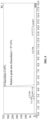
- FIG. 4 shows an HPLC spectrum of a crude sucralose reaction solution
- FIG. 5 shows an HPLC spectrum of sucralose obtained after the treatment according to the method of Example 1.
- the sucralose in FIG. 4 has an HPLC purity of about 94% (which is calculated according to an HPLC peak area proportion)
- the sucralose in FIG. 5 has an HPLC purity of higher than 97% (97.36%, which was calculated according to an HPLC peak area proportion), indicating that the method of the present disclosure has a significant effect on the purification of sucralose.
- a 250 mL three-necked round-bottomed flask with a mechanical stirring device was used. 80 g of a sucralose-containing concentrated reaction solution that had been treated by removing a solvent was added to the three-necked round-bottomed flask, and 40 mL of ethyl acetate was added thereto to obtain a mixed solution. Stirring was started, and under stirring, the mixed solution was heated to 60°C and stirred at 60°C for 1 h, at which point a large amount of sucralose solid was precipitated in a resulting system.
- the resulting system was cooled to 0°C at a cooling rate of 3°C/10 min, stirred at 0°C for 2 h, and then filtered, and the resulting solid was collected, obtaining purified sucralose with an HPLC purity of higher than 98% (which was calculated according to an HPLC peak area proportion) and a recovery rate of 78%.
- a 250 mL three-necked round-bottomed flask with a mechanical stirring device was used. 80 g of a sucralose-containing concentrated reaction solution that had been treated by removing a solvent was added to the three-necked round-bottomed flask, and 30 mL of ethyl acetate was added thereto to obtain a mixed solution. Stirring was started, and under stirring, the mixed solution was heated to 50°C and stirred at 50°C for 3 h, at which point a large amount of sucralose solid was precipitated in a resulting system.
- the resulting system was cooled to 8°C at a cooling rate of 1°C/10 min, stirred at 8°C for 3 h, and then centrifuged, and a resulting solid was collected, obtaining purified sucralose with an HPLC purity of higher than 97% (which was calculated according to an HPLC peak area proportion) and a recovery rate of 82%.
- a 500 mL three-necked round-bottomed flask with a mechanical stirring device was used. 200 g of a sucralose-containing concentrated reaction solution that had been treated by removing a solvent was added to the three-necked round-bottomed flask, and 50 mL of ethyl acetate was added thereto to obtain a mixed solution. Stirring was started, and under stirring, the mixed solution was heated to 60°C and stirred at 60°C for 3 h, at which point a large amount of sucralose solid was precipitated in a resulting system.
- the resulting system was cooled to 5°C at a cooling rate of 1°C/10 min, stirred at 5°C for 3 h, and then centrifuged, and a resulting solid was collected, obtaining purified sucralose with an HPLC purity of higher than 98% (which was calculated according to an HPLC peak area proportion) and a recovery rate of 85%.
- Example 4 100 g of the sucralose crystal obtained in Example 4 was taken and added to 100 mL of deionized water to obtain a first mixture. The first mixture was heated to 60°C and stirred to completely dissolve the sucralose. 2 g of activated carbon was added thereto to obtain a second mixture. The second mixture was stirred at 60°C for 1 h and then filtered while hot to remove the activated carbon and obtain a filtrate. The filtrate was collected and slowly cooled to 25°C within 6 h, such that a large amount of sucralose crystal was precipitated in the resulting system. The resulting system was filtered, and a sucralose crystal was collected, obtaining refined sucralose with an HPLC purity of higher than 99% (which was calculated according to an HPLC peak area proportion) and a recovery rate of 70%.
- a 500 mL three-necked round-bottomed flask with a mechanical stirring device was used. 80 g of a sucralose-containing concentrated reaction solution that had been treated by removing a solvent was added to the three-necked round-bottomed flask, and 250 mL of water was added thereto for dissolution to obtain an aqueous solution. 200 mL of butyl acetate was added to the aqueous solution to obtain a mixed solution. Stirring was started, and the mixed solution was stirred at ambient temperature for 1 h to make butyl acetate fully extract impurities in the aqueous solution. A resulting system was left to stand and subjected to phase separation, obtaining an aqueous phase, in which sucralose had an HPLC purity of about 95% (which was calculated according to an HPLC peak area proportion) and a recovery rate of 90%.
- the purification method is provided in the present disclosure, in which a concentrate of a crude sucralose is the directly slurried without redissolving the crude sucralose in a solution.
- the purification method of the present disclosure has the advantages of simple operations, small treatment capacity, and small solvent consumption.
- ethyl acetate is a solvent widely used in the process to produce sucralose (such as chlorination), and the boiling point of ethyl acetate is much lower than the boiling point of butyl acetate, such that the energy consumption in the distillation for solvent recovery is greatly reduced, which is conducive to improving the production efficiency and reducing the production cost.
Landscapes
- Chemical & Material Sciences (AREA)
- Organic Chemistry (AREA)
- Molecular Biology (AREA)
- Biotechnology (AREA)
- Genetics & Genomics (AREA)
- Health & Medical Sciences (AREA)
- Life Sciences & Earth Sciences (AREA)
- Engineering & Computer Science (AREA)
- Biochemistry (AREA)
- General Health & Medical Sciences (AREA)
- Crystallography & Structural Chemistry (AREA)
- Chemical Kinetics & Catalysis (AREA)
- Physics & Mathematics (AREA)
- Thermal Sciences (AREA)
- Organic Low-Molecular-Weight Compounds And Preparation Thereof (AREA)
- Pharmaceuticals Containing Other Organic And Inorganic Compounds (AREA)
Applications Claiming Priority (1)
| Application Number | Priority Date | Filing Date | Title |
|---|---|---|---|
| PCT/CN2020/128654 WO2022099606A1 (fr) | 2020-11-13 | 2020-11-13 | Procédé de purification de sucralose |
Publications (4)
| Publication Number | Publication Date |
|---|---|
| EP4215538A1 true EP4215538A1 (fr) | 2023-07-26 |
| EP4215538A4 EP4215538A4 (fr) | 2023-10-11 |
| EP4215538B1 EP4215538B1 (fr) | 2026-03-11 |
| EP4215538C0 EP4215538C0 (fr) | 2026-03-11 |
Family
ID=75145396
Family Applications (1)
| Application Number | Title | Priority Date | Filing Date |
|---|---|---|---|
| EP20961162.3A Active EP4215538B1 (fr) | 2020-11-13 | 2020-11-13 | Procédé de purification de sucralose |
Country Status (5)
| Country | Link |
|---|---|
| US (1) | US20230399351A1 (fr) |
| EP (1) | EP4215538B1 (fr) |
| CN (1) | CN112585151A (fr) |
| MX (1) | MX2023005617A (fr) |
| WO (1) | WO2022099606A1 (fr) |
Families Citing this family (3)
| Publication number | Priority date | Publication date | Assignee | Title |
|---|---|---|---|---|
| CN114014897A (zh) * | 2021-12-20 | 2022-02-08 | 安徽金禾实业股份有限公司 | 一种三氯蔗糖的纯化结晶方法 |
| WO2024082175A1 (fr) * | 2022-10-19 | 2024-04-25 | 安徽金禾实业股份有限公司 | Procédé de préparation de produit raffiné de sucralose |
| WO2024082157A1 (fr) * | 2022-10-19 | 2024-04-25 | 安徽金禾实业股份有限公司 | Procédé de préparation de sucralose brut à l'aide d'un système d'hydrolyse alcaline alcool-eau amélioré |
Family Cites Families (11)
| Publication number | Priority date | Publication date | Assignee | Title |
|---|---|---|---|---|
| US5498709A (en) * | 1994-10-17 | 1996-03-12 | Mcneil-Ppc, Inc. | Production of sucralose without intermediate isolation of crystalline sucralose-6-ester |
| US7049435B2 (en) * | 2002-03-08 | 2006-05-23 | Tate & Lyle Public Limited Company | Extractive methods for purifying sucralose |
| US20040030124A1 (en) * | 2002-08-06 | 2004-02-12 | Catani Steven J. | Process for recovering chlorosucrose compounds |
| US20060188629A1 (en) * | 2005-01-21 | 2006-08-24 | Greg Liesen | Method for the purification of sucralose |
| CN101177437B (zh) * | 2007-12-07 | 2010-10-27 | 浙江普洛医药科技有限公司 | 一种环保的三氯蔗糖的合成方法 |
| CN101768193A (zh) * | 2010-01-14 | 2010-07-07 | 湖北益泰药业有限公司 | 一种高收率制备三氯蔗糖的方法 |
| CN102391319B (zh) * | 2011-10-14 | 2015-01-07 | 山东三和维信生物科技有限公司 | 三氯蔗糖的结晶方法 |
| CN106188166A (zh) * | 2016-07-02 | 2016-12-07 | 安徽广信农化股份有限公司 | 一种用于三氯蔗糖分离提纯的方法 |
| CN106674292B (zh) * | 2016-12-09 | 2019-02-22 | 福建科宏生物工程股份有限公司 | 一种三氯蔗糖水结晶母液的提纯处理方法 |
| CN109503680A (zh) * | 2018-12-12 | 2019-03-22 | 安徽金禾实业股份有限公司 | 一种三氯蔗糖-6-乙酯母液酯相处理方法 |
| CN110372764A (zh) * | 2019-01-12 | 2019-10-25 | 山东康宝生化科技有限公司 | 一种从多重母液里提取三氯蔗糖的方法 |
-
2020
- 2020-11-13 MX MX2023005617A patent/MX2023005617A/es unknown
- 2020-11-13 US US18/250,728 patent/US20230399351A1/en active Pending
- 2020-11-13 EP EP20961162.3A patent/EP4215538B1/fr active Active
- 2020-11-13 WO PCT/CN2020/128654 patent/WO2022099606A1/fr not_active Ceased
- 2020-11-13 CN CN202080004013.XA patent/CN112585151A/zh active Pending
Also Published As
| Publication number | Publication date |
|---|---|
| MX2023005617A (es) | 2023-05-29 |
| US20230399351A1 (en) | 2023-12-14 |
| EP4215538B1 (fr) | 2026-03-11 |
| CN112585151A (zh) | 2021-03-30 |
| EP4215538C0 (fr) | 2026-03-11 |
| EP4215538A4 (fr) | 2023-10-11 |
| WO2022099606A1 (fr) | 2022-05-19 |
Similar Documents
| Publication | Publication Date | Title |
|---|---|---|
| EP4215538B1 (fr) | Procédé de purification de sucralose | |
| CN1257182C (zh) | 甘草次酸的制备方法 | |
| US20220204522A1 (en) | Process for separating and purifying artemisinin | |
| CN111187328B (zh) | 一种制备罗汉果醇的方法 | |
| CN109320400A (zh) | 一种从罗汉果甜苷生产废液中提取天然甘露醇的方法 | |
| EP4206211B1 (fr) | Procédé de purification de sucralose | |
| CN107698607B (zh) | 酶法合成氨苄西林结晶母液中有效成分的综合回收方法 | |
| CN111662344B (zh) | 一种从甜菊糖的一次结晶母液中回收莱鲍迪苷a的方法 | |
| CN106279088B (zh) | 一种以柚子皮为原料提取高纯度柚皮素的方法 | |
| CN104591999A (zh) | 一种长链有机酸的提纯方法 | |
| CN107033114B (zh) | 一种二氢杨梅素的分离纯化方法 | |
| WO2021212535A1 (fr) | Procédé de purification du chlorhydrate de benzhexol | |
| CN114015732B (zh) | 一种穿心莲内酯和脱水穿心莲内酯的工业化制备方法 | |
| CN114933588A (zh) | 雷贝拉唑钠粗品的精制方法 | |
| CN1583700A (zh) | 高纯度厚朴酚制备技术 | |
| CN113461769A (zh) | 一种白桦脂醇的制备方法 | |
| CN114014897A (zh) | 一种三氯蔗糖的纯化结晶方法 | |
| CN104098510B (zh) | 一种从高乌头植物根中提取高乌甲素的方法 | |
| CN112094184B (zh) | 一种从银杏叶提取物层析废水中提取莽草酸的方法 | |
| CN102180781B (zh) | 从二氧化碳萃取酒花残渣中提取生产高纯度黄腐酚的方法 | |
| CN116425811B (zh) | 一种三氯蔗糖溶析结晶工艺 | |
| CN117186163B (zh) | 一种三氯蔗糖-6-乙酸酯提纯工艺 | |
| CN114702487B (zh) | 一种麦角酸的纯化方法 | |
| CN116284171B (zh) | 一种4,1',6'-三氯蔗糖-6-乙酸酯的纯化方法 | |
| CN104591996B (zh) | 一种有机酸的精制方法 |
Legal Events
| Date | Code | Title | Description |
|---|---|---|---|
| STAA | Information on the status of an ep patent application or granted ep patent |
Free format text: STATUS: THE INTERNATIONAL PUBLICATION HAS BEEN MADE |
|
| PUAI | Public reference made under article 153(3) epc to a published international application that has entered the european phase |
Free format text: ORIGINAL CODE: 0009012 |
|
| STAA | Information on the status of an ep patent application or granted ep patent |
Free format text: STATUS: REQUEST FOR EXAMINATION WAS MADE |
|
| 17P | Request for examination filed |
Effective date: 20230420 |
|
| AK | Designated contracting states |
Kind code of ref document: A1 Designated state(s): AL AT BE BG CH CY CZ DE DK EE ES FI FR GB GR HR HU IE IS IT LI LT LU LV MC MK MT NL NO PL PT RO RS SE SI SK SM TR |
|
| A4 | Supplementary search report drawn up and despatched |
Effective date: 20230911 |
|
| RIC1 | Information provided on ipc code assigned before grant |
Ipc: C07H 5/02 20060101ALI20230905BHEP Ipc: C07H 1/06 20060101AFI20230905BHEP |
|
| DAV | Request for validation of the european patent (deleted) | ||
| DAX | Request for extension of the european patent (deleted) | ||
| GRAP | Despatch of communication of intention to grant a patent |
Free format text: ORIGINAL CODE: EPIDOSNIGR1 |
|
| STAA | Information on the status of an ep patent application or granted ep patent |
Free format text: STATUS: GRANT OF PATENT IS INTENDED |
|
| INTG | Intention to grant announced |
Effective date: 20251001 |
|
| GRAS | Grant fee paid |
Free format text: ORIGINAL CODE: EPIDOSNIGR3 |
|
| GRAA | (expected) grant |
Free format text: ORIGINAL CODE: 0009210 |
|
| STAA | Information on the status of an ep patent application or granted ep patent |
Free format text: STATUS: THE PATENT HAS BEEN GRANTED |
|
| AK | Designated contracting states |
Kind code of ref document: B1 Designated state(s): AL AT BE BG CH CY CZ DE DK EE ES FI FR GB GR HR HU IE IS IT LI LT LU LV MC MK MT NL NO PL PT RO RS SE SI SK SM TR |
|
| REG | Reference to a national code |
Ref country code: CH Ref legal event code: F10 Free format text: ST27 STATUS EVENT CODE: U-0-0-F10-F00 (AS PROVIDED BY THE NATIONAL OFFICE) Effective date: 20260311 Ref country code: GB Ref legal event code: FG4D |
|
| REG | Reference to a national code |
Ref country code: DE Ref legal event code: R096 Ref document number: 602020068657 Country of ref document: DE |
|
| REG | Reference to a national code |
Ref country code: IE Ref legal event code: FG4D |
|
| U01 | Request for unitary effect filed |
Effective date: 20260325 |
|
| U07 | Unitary effect registered |
Designated state(s): AT BE BG DE DK EE FI FR IT LT LU LV MT NL PT RO SE SI Effective date: 20260331 |