EP4216657A1 - Procédé et appareil de configuration d'agrégation, et terminal - Google Patents
Procédé et appareil de configuration d'agrégation, et terminal Download PDFInfo
- Publication number
- EP4216657A1 EP4216657A1 EP21868649.1A EP21868649A EP4216657A1 EP 4216657 A1 EP4216657 A1 EP 4216657A1 EP 21868649 A EP21868649 A EP 21868649A EP 4216657 A1 EP4216657 A1 EP 4216657A1
- Authority
- EP
- European Patent Office
- Prior art keywords
- terminal
- access technology
- information
- bearer
- another access
- Prior art date
- Legal status (The legal status is an assumption and is not a legal conclusion. Google has not performed a legal analysis and makes no representation as to the accuracy of the status listed.)
- Pending
Links
Images



Classifications
-
- H—ELECTRICITY
- H04—ELECTRIC COMMUNICATION TECHNIQUE
- H04W—WIRELESS COMMUNICATION NETWORKS
- H04W40/00—Communication routing or communication path finding
- H04W40/24—Connectivity information management, e.g. connectivity discovery or connectivity update
- H04W40/248—Connectivity information update
-
- H—ELECTRICITY
- H04—ELECTRIC COMMUNICATION TECHNIQUE
- H04L—TRANSMISSION OF DIGITAL INFORMATION, e.g. TELEGRAPHIC COMMUNICATION
- H04L5/00—Arrangements affording multiple use of the transmission path
- H04L5/0091—Signalling for the administration of the divided path, e.g. signalling of configuration information
- H04L5/0094—Indication of how sub-channels of the path are allocated
-
- H—ELECTRICITY
- H04—ELECTRIC COMMUNICATION TECHNIQUE
- H04W—WIRELESS COMMUNICATION NETWORKS
- H04W76/00—Connection management
- H04W76/10—Connection setup
- H04W76/15—Setup of multiple wireless link connections
- H04W76/16—Involving different core network technologies, e.g. a packet-switched [PS] bearer in combination with a circuit-switched [CS] bearer
-
- H—ELECTRICITY
- H04—ELECTRIC COMMUNICATION TECHNIQUE
- H04L—TRANSMISSION OF DIGITAL INFORMATION, e.g. TELEGRAPHIC COMMUNICATION
- H04L45/00—Routing or path finding of packets in data switching networks
- H04L45/24—Multipath
- H04L45/245—Link aggregation, e.g. trunking
-
- H—ELECTRICITY
- H04—ELECTRIC COMMUNICATION TECHNIQUE
- H04W—WIRELESS COMMUNICATION NETWORKS
- H04W28/00—Network traffic management; Network resource management
- H04W28/02—Traffic management, e.g. flow control or congestion control
- H04W28/0268—Traffic management, e.g. flow control or congestion control using specific QoS parameters for wireless networks, e.g. QoS class identifier [QCI] or guaranteed bit rate [GBR]
-
- H—ELECTRICITY
- H04—ELECTRIC COMMUNICATION TECHNIQUE
- H04W—WIRELESS COMMUNICATION NETWORKS
- H04W4/00—Services specially adapted for wireless communication networks; Facilities therefor
- H04W4/50—Service provisioning or reconfiguring
-
- H—ELECTRICITY
- H04—ELECTRIC COMMUNICATION TECHNIQUE
- H04W—WIRELESS COMMUNICATION NETWORKS
- H04W40/00—Communication routing or communication path finding
-
- H—ELECTRICITY
- H04—ELECTRIC COMMUNICATION TECHNIQUE
- H04W—WIRELESS COMMUNICATION NETWORKS
- H04W72/00—Local resource management
- H04W72/20—Control channels or signalling for resource management
- H04W72/25—Control channels or signalling for resource management between terminals via a wireless link, e.g. sidelink
-
- H—ELECTRICITY
- H04—ELECTRIC COMMUNICATION TECHNIQUE
- H04W—WIRELESS COMMUNICATION NETWORKS
- H04W76/00—Connection management
- H04W76/10—Connection setup
- H04W76/15—Setup of multiple wireless link connections
-
- H—ELECTRICITY
- H04—ELECTRIC COMMUNICATION TECHNIQUE
- H04W—WIRELESS COMMUNICATION NETWORKS
- H04W80/00—Wireless network protocols or protocol adaptations to wireless operation
- H04W80/02—Data link layer protocols
-
- H—ELECTRICITY
- H04—ELECTRIC COMMUNICATION TECHNIQUE
- H04W—WIRELESS COMMUNICATION NETWORKS
- H04W84/00—Network topologies
- H04W84/02—Hierarchically pre-organised networks, e.g. paging networks, cellular networks, WLAN [Wireless Local Area Network] or WLL [Wireless Local Loop]
- H04W84/10—Small scale networks; Flat hierarchical networks
- H04W84/12—WLAN [Wireless Local Area Networks]
Definitions
- This application relates to the field of communication technologies, and specifically, to an aggregation configuration method and an apparatus, and a terminal.
- a long term evolution (Long Term Evolution, LTE) system starts to support a sidelink (Sidelink, SL, or translated to a secondary link, a side link, a sidelink, or the like), and is configured to perform direct data transmission between terminal user equipments (User Equipment, UE) without going through a network device.
- a sidelink Sidelink, SL, or translated to a secondary link, a side link, a sidelink, or the like
- UE terminal user equipments
- a 5G new radio (New Radio, NR) system may be used in a working frequency band above 6 GHz that is not supported by LTE, and supports a larger working bandwidth.
- the NR system supports an interface between a base station and a terminal and an SL interface for direct communication between terminals.
- the SL interface may also be referred to as a PC5 interface.
- a Uu interface may support an aggregation operation with a wireless local area network (Wireless Local Area Network, WLAN), but the SL interface does not support the aggregation operation with the WLAN.
- WLAN Wireless Local Area Network
- the SL does not support the aggregation operation with the WLAN, so that there is no related configuration process.
- An objective of embodiments of this application is to provide an aggregation configuration method and an apparatus, and a terminal, which can resolve a problem that SL and WLAN aggregation is not supported in the existing technologies.
- an embodiment of this application provides an aggregation configuration method, applied to a first terminal, the method including: sending first aggregation configuration information to a second terminal, where the first aggregation configuration information is used for configuring an aggregation operation of a sidelink SL and another access technology between the first terminal and the second terminal.
- an embodiment of this application provides an aggregation configuration method, applied to a second terminal, the method including: receiving first aggregation configuration information sent by a first terminal, where the first aggregation configuration information is used for configuring an aggregation operation of a sidelink SL and another access technology between the first terminal and the second terminal.
- an aggregation configuration apparatus applied to a first terminal, the apparatus including: a first sending module, configured to send first aggregation configuration information to a second terminal, where the first aggregation configuration information is used for configuring an aggregation operation of a sidelink SL and another access technology between the first terminal and the second terminal.
- an aggregation configuration apparatus applied to a second terminal, the apparatus including: a first receiving module, configured to receive first aggregation configuration information sent by a first terminal, where the first aggregation configuration information is used for configuring an aggregation operation of a sidelink SL and another access technology between the first terminal and the second terminal.
- a terminal includes a processor, a memory, and a program or instruction stored on the memory and executable on the processor, the program or instruction, when executed by the processor, implementing steps of the method according to the first aspect, or implementing steps of the method according to the second aspect.
- a readable storage medium stores a program or instruction, the program or instruction, when executed by a processor, implementing steps of the method according to the first aspect, or implementing steps of the method according to the second aspect.
- a chip includes a processor and a communication interface, where the communication interface is coupled to the processor, and the processor is configured to run a program or instruction of a network-side device, to implement the method according to the first aspect, or implement the method according to the second aspect.
- first aggregation configuration information used for configuring an aggregation operation of a sidelink SL and another access technology between a first terminal and a second terminal is transmitted through a PC5 interface between the first terminal and the second terminal, so that the first terminal and the second terminal can better use the aggregation operation of the SL and the another access technology under control of a network, thereby improving service rates of the terminals, ensuring the quality of service of a terminal service, and ensuring the system efficiency while improving the user experience.
- first and second are used to distinguish similar objects, but are unnecessarily used to describe a specific sequence or order. It should be understood that the data in such a way are interchangeable in proper circumstances, so that the embodiments of this application can be implemented in other orders than the order illustrated or described herein.
- Objects distinguished by “first”, “second”, and the like are usually one type, and the number of objects is not limited.
- the first object may be one or more than one.
- “and/or” means at least one of the connected objects, and the character “/" generally indicates an "or” relationship between the associated objects.
- LTE Long Term Evolution
- LTE-Advanced LTE-Advanced
- LTE-A LTE-Advanced
- CDMA Code Division Multiple Access
- TDMA Time Division Multiple Access
- FDMA Frequency Division Multiple Access
- OFDMA Orthogonal Frequency Division Multiple Access
- SC-FDMA Single-carrier Frequency-Division Multiple Access
- system and “network” in the embodiments of this application are often used interchangeably, and the described technology can be used not only for the above systems and radio technologies, but also for other systems and radio technologies.
- NR New Radio
- the following description describes a new radio (New Radio, NR) system for example objectives, and NR terms are used in most of the description below, although these technologies are also applicable to applications other than NR system applications, such as a 6 th generation (6 th Generation, 6G) communication system.
- 6G 6 th generation
- FIG. 1 is a block diagram of a wireless communication system to which the embodiments of this application are applicable.
- the wireless communication system includes a terminal 11 and a network-side device 12.
- the terminal 11 may also be referred to as a terminal device or user equipment (User Equipment, UE).
- UE User Equipment
- the terminal 11 may be, for example, a terminal-side device such as a mobile phone, a tablet personal computer (Tablet Personal Computer), a laptop computer (Laptop Computer), a personal digital assistant (Personal Digital Assistant, PDA), a palmtop computer, a netbook, an ultra-mobile personal computer (ultra-mobile personal computer, UMPC), a mobile Internet device (Mobile Internet Device, MID), a wearable device (Wearable Device), an in-vehicle device (VUE), or a pedestrian terminal (PUE).
- the wearable device includes: a bracelet, earphones, glasses, or the like. It should be noted that, a specific type of the terminal 11 is not limited in the embodiments of this application.
- the network-side device 12 may be a base station or a core network, where the base station may be referred to as a Node B, an evolved node B, an access point, a base transceiver station (Base Transceiver Station, BTS), a radio base station, a radio transceiver, a basic service set (Basic Service Set, BSS), an extended service set (Extended Service Set, ESS), a node B, an evolved node B (eNB), a home node B, a home evolved node B, a WLAN access point, a WiFi node, a transmitting receiving point (Transmitting Receiving Point, TRP), or another appropriate term in the field, as long as the same technical effect is achieved.
- the base station is not limited to a specific technical term. It should be noted that, a base station in the NR system is used as an example in the embodiments of this application, but a specific type of the base station is not limited.
- an embodiment of this application further provides an aggregation configuration method, applied to a first terminal.
- the method includes the following steps.
- Step 201 Send first aggregation configuration information to a second terminal, where the first aggregation configuration information is used for configuring an aggregation operation of a sidelink SL and another access technology between the first terminal and the second terminal.
- the first terminal sends the first aggregation configuration information to the second terminal by using a PC5 radio resource control (Radio Resource Control, RRC) message or an another layer message (for example, a media access control (Media Access Control, MAC) control element or an L2 control message).
- RRC Radio Resource Control
- MAC media access control
- the another access technology may be a WLAN, behavioral hotspot Wifi, Bluetooth, or the like, which is not specifically limited herein.
- an another access technology interface involved in this embodiment of this application is a WLAN interface, a Wifi interface, a Bluetooth interface, or the like.
- the another access technology being a WLAN technology is used as an example for description in the following embodiments of this application.
- the WLAN interface or the Wifi interface or the Bluetooth interface uses an unlicensed spectrum and shares a bandwidth, so that the fee is low or there is no fee.
- a terminal has a WLAN or Wifi interface or a Bluetooth interface as standard, so that there is no additional hardware cost.
- an SL interface between terminals supports an aggregation operation with the WLAN. In this way, the transmission efficiency between users can be greatly improved, and route configurations of different services can be performed according to characteristics of the services, thereby improving the user experience on a basis of ensuring the quality of service (Quality of Service, QoS).
- QoS Quality of Service
- SL and WLAN aggregation means that, in an existing SL architecture, some data flows need to be offloaded to the WLAN for transmission and unified management and control.
- An SL and WLAN aggregation architecture includes the following bearer types:
- First bearer (may also be referred to as switched WLAN bearer): a bearer that performs transmission completely by WLAN interface and resources, where the bearer may be a user data bearer or a signaling bearer.
- the WLAN is not used for dedicated transmission signaling due to unreliability thereof.
- Second bearer (may also be referred to as split WLAN bearer): a bearer that can perform transmission by SL interface and resources and the WLAN interface and resources, where the bearer may be a user data bearer or a signaling bearer.
- Third bearer (may also be referred to as SL bearer): a bearer that performs transmission completely by the SL interface and resources, where the bearer may be a user data bearer or a signaling bearer.
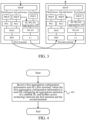
- a schematic diagram of a protocol stack architecture of an SL and WLAN aggregation architecture is provided.
- the third bearer is completely consistent with an existing SL bearer, and can reuse a processing manner of the existing SL bearer.
- the first bearer and the second bearer are introduced new bearer types because of the SL and WLAN aggregation, and have the following features:
- the first bearer performs transmission completely by the WLAN interface and resources.
- an L2 and an L1 thereof comply with a WLAN protocol.
- an SL PDCP layer protocol is required for functions such as header compression, security, and data reordering, and a new SL-WLAN aggregation AP (Access Point) layer needs to be added between a PDCP and a WLAN L2 protocol for distinguishing and identification of bearer identifiers.
- the AP layer explicitly carries a bearer identifier, so as to identify which PDCP entity the bearer identifier corresponds to (due to a one-to-one correspondence between PDCP entities and RBs).
- the second bearer performs transmission by the SL interface and resources and the WLAN interface and resources.
- This type of bearer has a common PDCP layer, and is divided into two legs (leg) under the PDCP layer: one is a traditional SL RLC bearer, which performs transmission by SL RLC/MAC/PHY, and the other is a WLAN bearer, which adds a bearer identifier (RB ID) at the SL-WLAN aggregation AP layer, and then delivers the bearer identifier to a WLAN L2/L1 transmission protocol for transmission.
- RB ID bearer identifier
- the second bearer may perform transmission by using the resources from the two interfaces, there are two transmission manners.
- One is to transmit only once, that is, a data packet is either transmitted on an SL link or transmitted on a WLAN link.
- the other is retransmission, that is, a data packet is copied into two copies, where one is transmitted on the SL link, and the other is transmitted on the WLAN link to improve the reliability.
- An underlying mapping relationship due to the existing SL transmission, uses a layer 2 Destination ID (Destination ID) and a layer 2 Source ID (Source ID) to identify a pair of terminals in communication.
- the two Destination/Source IDs are 24 bits respectively.
- 16 bits of the Destination ID are carried by a PHY (physical) layer, and the remaining 8 bits are carried by a MAC layer.
- 8 bits of the Source ID are carried by a PHY layer, and the remaining 16 bits are carried by a MAC layer.
- peer terminals in communication may be uniquely determined by PHY+MAC of the SL interface. However, no such mechanism is used for the WLAN link.
- a MAC address of the WLAN link needs to be mapped, that is, in an SL or WLAN signaling process, two terminals exchange to learn WLAN MAC addresses of peer terminals.
- the WLAN MAC addresses and the Destination/Source ID can be bound, and the SL link and WLAN link after bonding can perform normal aggregation communication.
- a terminal 1 and a terminal 2 respectively use a layer 2 ID 1 and a layer 2 ID 2 for SL communication, and in addition, on the WLAN link aggregated with the SL, the terminal 1 uses a MAC address 1, and the terminal 2 uses a MAC address 2. After the terminal 1 and the terminal 2 exchange, a correspondence between the layer 2 IDs and the MAC addresses may be stored.
- aggregation processing may be performed on SL data received from the layer 2 ID 2 (an SL of the terminal 2) and WLAN data received from the MAC address 2 (a WLAN of the terminal 2).
- SL data received from the layer 2 ID 2 an SL of the terminal 2
- WLAN data received from the MAC address 2 a WLAN of the terminal 2.
- a target bearer a same PDCP entity entering a same bearer identifier performs a reordering operation, and then delivers the target bearer to an upper layer.
- the first aggregation configuration information includes at least one of the following:
- a sending terminal and a receiving terminal perform data transmission and receiving operations according to a configuration.
- the second bearer may perform transmission by the SL interface and the WLAN interface.
- the PDCP layer performs reordering and replication operations.
- the first bearer is the bearer that performs transmission completely by the WLAN interface, and also has an SL PDCP layer protocol stack. It should be noted that, as long as data is transmitted by the WLAN interface, the SL-WLAN aggregation AP layer needs to identify a bearer. That is, an AP layer at which the SL and the another access technology are aggregated carries a bearer identifier for the first bearer or the second bearer through a data packet transmitted by using the another access technology. The bearer identifier is used for assisting in determining a corresponding PDCP entity.
- the method further includes: exchanging terminal capability information with the second terminal, where the terminal capability information is used for indicating whether the aggregation operation of the SL and the another access technology is supported.
- step 201 includes: sending, in a case that both the first terminal and the second terminal support the aggregation operation of the SL and the another access technology, the first aggregation configuration information to the second terminal.
- the sending terminal and the receiving terminal may carry capability information about whether to support the aggregation operation of the SL and the another access technology in a capability negotiation process. If one party does not support the aggregation operation, the aggregation cannot be configured.
- the method further includes: receiving information about an another access technology MAC address of the second terminal sent by the second terminal.
- the link of the another access technology is determined by the another access technology MAC address of the first terminal included in the first aggregation configuration information and the another access technology MAC address of the second terminal sent by the second terminal.
- WLAN MAC addresses of the two terminals are exchanged through PC5 RRC, in other words, there is an aggregation relationship between data received from the notified pair of WLAN MAC addresses and a corresponding SL bearer.
- PC5 RRC For example, if two pieces of PC5 RRC are established between the sending terminal and the receiving terminal, two pairs of WLAN MAC addresses are required to correspond to the two pieces of PC5 RRC in a one-to-one manner. In this way, data of an SL1 and a WLAN address pair 1 can be aggregated, and data of an SL2 and a WLAN address pair 2 can be aggregated, thereby avoiding confusion.
- the method further includes:
- the network side needs to configure specific parameters (namely, second aggregation configuration information) of the aggregation operation for the terminal.
- a first configuration that needs to be clarified is whether an SL-WLAN aggregation function is supported in this cell.
- the configuration of whether supported may be configured as follows:
- Manners of obtaining the second aggregation configuration information according to different states of the terminal may include the following content:
- the first terminal in the connected state reports, through RRC dedicated signaling, a service requirement thereof and even information that may include a situation of the SL/WLAN link to the network side, and the network side provides, according to the specific service requirement, precise aggregation configuration information through the RRC dedicated signaling, where the configuration information may be precisely provided according to a specific service of the terminal, and has strong pertinence.
- a system information block (system information block, SIB) message sent by the network-side device is received.
- SIB system information block
- the first terminal in the connected state may also use the second aggregation configuration information in a SIB. Because overheads of the SIB message need to be considered, the SIB message can only provide the configuration information according to general classification of service types, and cannot provide a precise configuration for a specific service of the terminal.
- pre-configuration information is obtained.
- the terminal cannot obtain real-time aggregation configuration information from the network side.
- the pre-configuration information is used to determine the second aggregation configuration information. Similar to the SIB message, the pre-configuration information can only provide the configuration information according to general classification of service types, and cannot provide a precise configuration for a specific service of the terminal.
- the second aggregation configuration information includes at least one of the following:
- the above three configuration manners may be summarized in two types.
- One is that the network side provides common aggregation configuration information, and the first terminal finally determines, according to the common aggregation configuration information, type and corresponding parameters of each bearer with reference to a service, even a link situation, and the like of the first terminal.
- This type of configuration manner includes SIB and pre-configuration information, and is characterized by obtaining the aggregation configuration information before the service reaches.
- the other is that the network side provides dedicated aggregation configuration information, and the first terminal reports specific service information and even the link situation.
- the network side provides precise type and configuration parameters of each bearer according to the specific information.
- a manner of dedicated signaling is typical.
- At least one of the following may be generally included:
- Bearer attributes related to the SL-WLAN aggregation generally include: the SL bearer, the SL bearer+the switched WLAN bearer, the SL bearer+the split WLAN bearer, the SL+the split WLAN bearer+the switched WLAN bearer, and other manners. Because the SL is the basis, the SL is necessarily supported when there is no WLAN signal. For example, a signaling design method may use two bits to respectively represent whether a switched WLAN and a split WLAN may be supported, where 0 represents not supported, and 1 represents supported. Therefore, 00 indicates the SL bearer, 10 indicates the SL+the switched WLAN, 01 indicates the SL+the split WLAN, and 11 indicates the SL+the split WLAN+the switched WLAN. Alternatively, the above four or more possible manners are configured by enumeration. Each enumeration value represents a combination of bearer attributes, and values and corresponding meanings are pre-defined.
- An aggregation attribute is configured according to granularity of a QoS flow, for example, whether a specific QoS flow can only be mapped to the SL bearer, or may be mapped to the switched WLAN bearer, or may be mapped to the split WLAN bearer.
- the aggregation attribute is configured according to a QoS characteristic.
- a service that meets a specific QoS requirement has extremely high block error rate and/or delay requirement (for example, higher than a specific threshold), or has a higher priority (meets a priority threshold) may be configured that the service can only be mapped to the SL bearer.
- a service with low block error rate and/or delay requirement (for example, less than a specific threshold) may be mapped to the switched WLAN bearer.
- a QoS requirement thereof is generally between the two, and certainly there may be a certain overlap between each other, and in an overlapping area, two or more bearer types may be mapped to.
- the aggregation attribute is configured according to granularity of a radio bearer (Radio Bearer, RB). That is, different QoS flows are first mapped to different RBs according to QoS or a QoS flow of a service, and it is then further identified in an RB configuration whether an RB can only be mapped to the SL bearer, or may also be mapped to the WLAN split bearer, or even may be mapped to the switched WLAN bearer.
- Radio Bearer Radio Bearer
- the network side may further provide a suggested priority order, for example, priorities are sorted in descending or ascending order according to an order in which mapping manners of the bearers appear in configuration signaling.
- a priority policy is defaulted, and a high priority represents that a bearer type is preferentially selected.
- the bearer type is preferentially selected.
- a sub-priority is considered only when the bearer type with the high priority does not met the requirement, and so on.
- the split WLAN bearer can be configured only when quality (for example, received signal strength and a channel saturation degree) of the WLAN link meets a specific threshold, or the switched WLAN bearer can be configured only when the quality (for example, the received signal strength and the channel saturation degree) of the WLAN link meets another threshold.
- the two thresholds may be the same or independent.
- the split WLAN bearer can be configured only when quality (for example, received signal strength and a channel busy situation) of the SL link meets a specific threshold, or the switched WLAN bearer can be configured only when the quality (for example, the received signal strength and the channel busy situation) of the SL link meets another threshold.
- the two thresholds may be the same or independent.
- the condition of the WLAN link and the condition of the SL link may be respectively configured, or may be configured simultaneously.
- the simultaneous configuration means that WLAN-related bearers can be configured only when the two conditions are met; otherwise, the SL only bearer is configured.
- a configuration of the switched WLAN bearer or the split WLAN bearer may be a common configuration, or may be a configuration provided according to aggregation of each RB.
- An existing SL RB may have, according to a characteristic of a QoS flow mapped to the SL RB, different configurations, for example, PDCP layer parameters, RLC layer parameters, and even MAC parameters.
- the bearer may have different PDCP configurations independent of the SL bearer, where the PDCP configurations may be configured for each RB, that is, each switched WLAN RB has a set of PDCP configurations; or may have a set of common PDCP configurations for all switched WLAN bearers.
- the bearer When a bearer is configured as the split WLAN bearer, the bearer may have different PDCP/RLC/PDCP configurations independent of the SL bearer, where the PDCP/RLC/PDCP configurations may be configured for each RB, that is, each split WLAN bearer has a set of PDCP/RLC/PDCP configurations; or may have a set of common PDCP/RLC/PDCP configurations for all split WLAN bearers.
- a method of a WLAN specific identifier such as a data type or label, may also be configured, so that aggregated data is distinguished from common WLAN data.
- the method further includes: reporting configuration assistance information to the network-side device, where the configuration assistance information includes at least one of the following:
- the first terminal reporting the configuration assistance information may be based on a function switch of a network. For example, only when the terminal capability information is reported in a cell supporting an SL function and the network configures a switch of the service information that the SL interface of the first terminal tends to transmit, the service information that the SL interface of the first terminal tends to transmit is reported; and the another access technology measurement information of the first terminal is only reported in a cell supporting the SL-WLAN aggregation.
- the dedicated aggregation configuration may generally include the following content: First, the network maps QoS flows of the first terminal to corresponding RBs.
- the network provides aggregation attributes for these RBs. For example, if an RB is defaulted as an SL bearer, it may be configured as a switched WLAN bearer or a split WLAN bearer;
- a method of a WLAN specific identifier such as a data type or label, may also be configured, so that aggregated data is distinguished from common WLAN data.
- a configuration between terminals is determined by a sending terminal (namely, a first terminal), and then is sent to a receiving terminal.
- the sending terminal refers to an initiator of a service
- the receiving terminal refers to a receiver of the service.
- the two terminals may be the sending terminal and the receiving terminal.
- the sending terminal determines the configuration and sends the configuration to the receiving terminal.
- conflict resolution is performed, that is, one party agrees with the configuration of the other party; or configuration failure processing is performed.
- the sending terminal may directly send the detailed information configured by the network side to the receiving terminal.
- the sending terminal In the idle state or the inactive state or the offline state obtains common aggregation information, the sending terminal needs to correspondingly select aggregation attribute information suitable for services thereof according to the information, obtains responded RB detailed configuration information according to a selection result, and sends the RB configuration information to the receiving terminal.
- a switched WLAN bearer or a split WLAN bearer in the above process, it means that an association between a WLAN link and an SL link needs to be established between the sending terminal and the receiving terminal. Therefore, when or after the sending terminal sends first aggregation configuration information to the receiving terminal, the sending terminal needs to inform information about a WLAN MAC address thereof to the receiving terminal, so that the receiving terminal can establish a correct association between the WLAN link and the SL link.
- a method of a WLAN specific identifier such as a data type or label, may also be exchanged, so that aggregated data is distinguished from common WLAN data.
- a symmetrical bearer configuration is established between the sending terminal and the receiving terminal.
- a data transmission manner thereof may completely use the existing process.
- This embodiment focuses on how the switched WLAN bearer (namely, a first bearer) and the split WLAN bearer (namely, a second bearer) perform data transmission.
- the method further includes:
- the sending terminal maps a QoS flow to a configured PDCP entity according to a normal process, and the PDCP entity performs processing such as header compression and security, and adds a PDCP header, to form a PDCP PDU;
- the PDCP PDU is sent to a corresponding SL-WLAN aggregation AP layer, and at this layer, the PDCP PDU is encapsulated, and a new header is added, where header information carries an RB ID;
- the PDU formed at the SL-WLAN aggregation AP layer is sent to a WLAN L2/L1, and for this type of data, a WLAN specific identifier, such as a data type or label, is used, so that aggregated data is distinguished from common WLAN data;
- a WLAN MAC address that has been exchanged is used, to facilitate identification of the receiving terminal; and the data is sent by a WLAN interface.
- the method further includes:
- the sending terminal maps a QoS flow to a configured PDCP entity according to a normal process, and the PDCP entity performs processing such as header compression and security, and adds a PDCP header, to form a PDCP PDU;
- a PDCP layer determines to send the PDCP PDU to SL RLC or an SL-WLAN aggregation AP layer on a WLAN side according to the first aggregation configuration information; if the PDCP PDU is sent to the SL RLC, the existing process is performed; if the PDCP PDU is sent to the corresponding SL-WLAN aggregation AP layer, at this layer, the PDCP PDU is encapsulated, and a new header is added, where header information carries an RB ID; and the PDU formed at the SL-WLAN aggregation AP layer is sent to a WLAN L2/L1, and for this type of data, a specific identifier, such as a data type or label, is used, so
- data to which the new header information is added corresponds to a specific identifier of the another access technology, and the specific identifier is used for indicating that the data is data related to aggregation.
- the specific identifier is a specific port number or an identifier of the WLAN.
- the specific identifier is carried by the sending terminal, the receiving terminal parses the specific identifier, and transmits a data packet to the SL-WLAN aggregation AP layer, and the AP layer determines a corresponding PDCP entity through a bearer identifier in the header information.
- first aggregation configuration information used for configuring an aggregation operation of a sidelink SL and another access technology between a first terminal and a second terminal is transmitted through a PC5 interface between the first terminal and the second terminal, so that the first terminal and the second terminal can better use the aggregation operation of the SL and the another access technology under control of a network, thereby improving service rates of the terminals, ensuring the quality of service of a terminal service, and ensuring the system efficiency while improving the user experience.
- an embodiment of this application further provides an aggregation configuration method, applied to a second terminal.
- the method includes the following steps.
- Step 401 Receive first aggregation configuration information sent by a first terminal, where the first aggregation configuration information is used for configuring an aggregation operation of a sidelink SL and another access technology between the first terminal and the second terminal.
- the first terminal sends the first aggregation configuration information to the second terminal by using a PC5 RRC message or an another layer message (for example, a MAC control element or an L2 control message).
- a PC5 RRC message or an another layer message (for example, a MAC control element or an L2 control message).
- the another access technology may be a WLAN, behavioral hotspot Wifi, Bluetooth, or the like, which is not specifically limited herein.
- an another access technology interface involved in this embodiment of this application is a WLAN interface, a Wifi interface, a Bluetooth interface, or the like.
- the another access technology being a WLAN technology is used as an example for description in the following embodiments of this application.
- the WLAN interface or the Wifi interface or the Bluetooth interface uses an unlicensed spectrum and shares a bandwidth, so that the fee is low or there is no fee.
- a terminal has a WLAN or Wifi interface or a Bluetooth interface as standard, so that there is no additional hardware cost.
- an SL interface between terminals supports an aggregation operation with the WLAN. In this way, the transmission efficiency between users can be greatly improved, and route configurations of different services can be performed according to characteristics of the services, thereby improving the user experience on a basis of ensuring the Quality of Service (Quality of Service, QoS).
- SL and WLAN aggregation means that, in an existing SL architecture, some data flows need to be offloaded to the WLAN for transmission and unified management and control.
- An SL and WLAN aggregation architecture includes the following bearer types:
- First bearer (may also be referred to as switched WLAN bearer): a bearer that performs transmission completely by WLAN interface and resources, where the bearer may be a user data bearer or a signaling bearer.
- the WLAN is not used for dedicated transmission signaling due to unreliability thereof.
- Second bearer (may also be referred to as split WLAN bearer): a bearer that can perform transmission by SL interface and resources and the WLAN interface and resources, where the bearer may be a user data bearer or a signaling bearer.
- Third bearer (may also be referred to as SL bearer): a bearer that performs transmission completely by the SL interface and resources, where the bearer may be a user data bearer or a signaling bearer.
- the first aggregation configuration information includes at least one of the following:
- a sending terminal and a receiving terminal perform data transmission and receiving operations according to a configuration.
- the second bearer may perform transmission by the SL interface and the WLAN interface.
- the PDCP layer performs reordering and replication operations.
- the first bearer is the bearer that performs transmission completely by the WLAN interface, and also has an SL PDCP layer protocol stack. It should be noted that, as long as data is transmitted by the WLAN interface, the SL-WLAN aggregation AP layer needs to identify a bearer. That is, an AP layer at which the SL and the another access technology are aggregated carries a bearer identifier for the first bearer or the second bearer through a data packet transmitted by using the another access technology.
- the method further includes: exchanging terminal capability information with the first terminal, where the terminal capability information is used for indicating whether the aggregation operation of the SL and another access technology is supported.
- step 401 includes: receiving, in a case that both the first terminal and the second terminal support the aggregation operation of the SL and the another access technology, the first aggregation configuration information sent by the first terminal.
- the sending terminal and the receiving terminal may carry capability information about whether to support the aggregation operation of the SL and the another access technology in a capability negotiation process. If one party does not support the aggregation operation, the aggregation cannot be configured.
- the method further includes: sending information about an another access technology MAC address of the second terminal to the first terminal.
- the link of the another access technology is determined by the another access technology MAC address of the first terminal included in the first aggregation configuration information and the another access technology MAC address of the second terminal sent by the second terminal.
- WLAN MAC addresses of the two terminals are exchanged through PC5 RRC, in other words, there is an aggregation relationship between data received from the notified pair of WLAN MAC addresses and a corresponding SL bearer.
- PC5 RRC For example, if two pieces of PC5 RRC are established between the sending terminal and the receiving terminal, two pairs of WLAN MAC addresses are required to correspond to the two pieces of PC5 RRC in a one-to-one manner. In this way, data of an SL1 and a WLAN MAC address pair 1 can be aggregated, and data of an SL2 and a WLAN MAC address pair 2 can be aggregated, thereby avoiding confusion.
- the receiving first aggregation configuration information of the sending terminal includes the following behaviors:
- the first aggregation configuration information of the sending terminal may be supported, for example, whether the WLAN is available, and whether a configuration conflict.
- a corresponding bearer is configured according to the configuration information, and a response is returned to the sending terminal to indicate that the configuration is successful, and when there is a WLAN-related bearer, a WLAN MAC address of the receiving terminal is carried in response information, so that the sending terminal establishes a correct association between an SL link and a WLAN link.
- the receiving terminal cannot accept the first aggregation configuration information, for example, the WLAN is unavailable, or the configuration conflicts, new configuration information may be suggested to the sending terminal, and when there is a WLAN-related bearer, a WLAN MAC address of the receiving terminal is carried in the new configuration information, so that the sending terminal establishes the correct association between the SL link and the WLAN link.
- a configuration failure is returned to the sending terminal.
- the method further includes:
- a symmetrical bearer configuration is established between the sending terminal and the receiving terminal.
- a data transmission manner thereof may completely use the existing process.
- This embodiment focuses on how the switched WLAN bearer (namely, a first bearer) and the split WLAN bearer (namely, a second bearer) perform data transmission.
- data reception includes: receiving data through the WLAN interface; identifying, through a specific identifier that is negotiated and configured, that the data is SL-WLAN aggregation data; learning, after WLAN L1/L2 processing, a binding relationship of data of which terminal and a layer L2 ID according to a WLAN MAC address, to find a corresponding SL-WLAN aggregation AP layer; parsing a PDU of the SL-WLAN aggregation AP layer; determining a corresponding PDCP entity according to a bearer identifier carried in header information, and sending a parsed data part to a PDCP; and performing, by the PDCP, reordering as needed, performing normal operations such as header removing, decompression, and de-security, and sending a parsed PDCP SDU to an upper layer in sequence/out of order (only bearers configured with out-of-delivery can be delivered out of order; otherwise, all need to be delivered in sequence).
- data reception includes:
- the data received through the another access technology interface corresponds to a specific identifier of the another access technology, and the specific identifier is used for indicating that the data is data related to aggregation.
- the specific identifier is a specific port number or an identifier of the WLAN.
- the specific identifier is carried by the sending terminal, the receiving terminal parses the specific identifier, and transmits a data packet to the SL-WLAN aggregation AP layer, and the AP layer determines a corresponding PDCP entity through a bearer identifier in the header information.
- first aggregation configuration information used for configuring an aggregation operation of a sidelink SL and another access technology between a first terminal and a second terminal is transmitted through a PC5 interface between the first terminal and the second terminal, so that the first terminal and the second terminal can better use the aggregation operation of the SL and the another access technology under control of a network, thereby improving service rates of the terminals, ensuring the quality of service of a terminal service, and ensuring the system efficiency while improving the user experience.
- an execution entity may be an aggregation configuration apparatus, or a control module configured to execute the aggregation configuration method in the aggregation configuration apparatus.
- an example in which the aggregation configuration apparatus executes the aggregation configuration method is used to describe the aggregation configuration apparatus provided in the embodiments of this application.
- an embodiment of this application further provides an aggregation configuration apparatus 500, applied to a first terminal.
- the apparatus includes: a first sending module 501, configured to send first aggregation configuration information to a second terminal, where the first aggregation configuration information is used for configuring an aggregation operation of a sidelink SL and another access technology between the first terminal and the second terminal.
- the first aggregation configuration information includes at least one of the following:
- an AP layer at which the SL and the another access technology are aggregated carries a bearer identifier for the first bearer or the second bearer through a data packet transmitted by using the another access technology.
- the apparatus further includes: a first interaction module, configured to exchange terminal capability information with the second terminal, where the terminal capability information is used for indicating whether the aggregation operation of the SL and the another access technology is supported.
- the first sending module includes: a first sending sub-module, configured to send, in a case that both the first terminal and the second terminal support the aggregation operation of the SL and the another access technology, the first aggregation configuration information to the second terminal.
- the apparatus further includes: a second receiving module, configured to receive information about an another access technology MAC address of the second terminal sent by the second terminal.
- the link of the another access technology is determined by the another access technology MAC address of the first terminal included in the first aggregation configuration information and the another access technology MAC address of the second terminal sent by the second terminal.
- the apparatus further includes:
- the second aggregation configuration information includes at least one of the following:
- the third receiving module includes:
- the apparatus further includes: a reporting module, configured to report configuration assistance information to the network-side device, where the configuration assistance information includes at least one of the following:
- the apparatus further includes:
- the apparatus further includes:
- data to which the new header information is added corresponds to a specific identifier of the another access technology, and the specific identifier is used for indicating that the data is data related to aggregation.
- first aggregation configuration information used for configuring an aggregation operation of a sidelink SL and another access technology between a first terminal and a second terminal is transmitted through a PC5 interface between the first terminal and the second terminal, so that the first terminal and the second terminal can better use the aggregation operation of the SL and the another access technology under control of a network, thereby improving service rates of the terminals, ensuring the quality of service of a terminal service, and ensuring the system efficiency while improving the user experience.
- the aggregation configuration apparatus provided in this embodiment of this application is an apparatus that can execute the above aggregation configuration method, and all embodiments of the above aggregation configuration method are applicable to the apparatus, and can achieve same or similar beneficial effects.
- an embodiment of this application further provides an aggregation configuration apparatus 600, applied to a second terminal.
- the apparatus includes: a first receiving module 601, configured to receive first aggregation configuration information sent by a first terminal, where the first aggregation configuration information is used for configuring an aggregation operation of a sidelink SL and another access technology between the first terminal and the second terminal.
- the first aggregation configuration information includes at least one of the following:
- an AP layer at which the SL and the another access technology are aggregated carries a bearer identifier for the first bearer or the second bearer through a data packet transmitted by using the another access technology.
- the apparatus further includes: a second interaction module, configured to exchange terminal capability information with the first terminal, where the terminal capability information is used for indicating whether the aggregation operation of the SL and the another access technology is supported.
- the first receiving module includes: a first receiving sub-module, configured to receive, in a case that both the first terminal and the second terminal support the aggregation operation of the SL and the another access technology, the first aggregation configuration information sent by the first terminal.
- the apparatus further includes: a second sending module, configured to send information about another access technology MAC address of the second terminal to the first terminal.
- the link of the another access technology is determined by the another access technology MAC address of the first terminal included in the first aggregation configuration information and the another access technology MAC address of the second terminal sent by the second terminal.
- the apparatus further includes:
- the data received through the another access technology interface corresponds to a specific identifier of the another access technology, and the specific identifier is used for indicating that the data is data related to aggregation.
- first aggregation configuration information used for configuring an aggregation operation of a sidelink SL and another access technology between a first terminal and a second terminal is transmitted through a PC5 interface between the first terminal and the second terminal, so that the first terminal and the second terminal can better use the aggregation operation of the SL and the another access technology under control of a network, thereby improving service rates of the terminals, ensuring the quality of service of a terminal service, and ensuring the system efficiency while improving the user experience.
- the aggregation configuration apparatus provided in this embodiment of this application is an apparatus that can execute the above aggregation configuration method, and all embodiments of the above aggregation configuration method are applicable to the apparatus, and can achieve same or similar beneficial effects.
- the aggregation configuration apparatus in this embodiment of this application may be an apparatus, or may be a component, an integrated circuit, or a chip in a terminal.
- the apparatus may be a mobile electronic device or a non-mobile electronic device.
- the mobile electronic device may be a mobile phone, a tablet computer, a notebook computer, a palmtop computer, an in-vehicle electronic device, a wearable device, an ultra-mobile personal computer (ultra-mobile personal computer, UMPC), a netbook, a personal digital assistant (personal digital assistant, PDA), or the like
- the non-mobile electronic device may be a server, a network attached memory (Network Attached Storage, NAS), a personal computer (personal computer, PC), a television (television, TV), a teller machine, a self-service machine, or the like. This is not specifically limited in this embodiment of this application.
- the aggregation configuration apparatus in this embodiment of this application may be an apparatus having an operating system.
- the operating system may be an android (Android) operating system, may be an iOS operating system, and may also be another possible operating system. This is not specifically limited in this embodiment of this application.
- the aggregation configuration apparatus provided in this embodiment of this application can implement all processes implemented by the method embodiments of FIG. 1 to FIG. 4 . To avoid repetition, details are not described herein again.
- an embodiment of this application further provides a terminal 700, including a processor 701, a memory 702, and a program or instruction stored on the memory 702 and executable on the processor 701.
- the program or instruction when executed by the processor 701, implements all processes of the embodiments of the above aggregation configuration method, and can achieve the same technical effects. To avoid repetition, details are not described herein again.
- FIG. 8 is a schematic diagram of a hardware structure of a terminal that implements the embodiments of this application.
- a terminal 800 includes, but is not limited to, components such as a radio frequency unit 801, a network module 802, an audio output unit 803, an input unit 804, a sensor 805, a display unit 806, a user input unit 807, an interface unit 808, a memory 809, and a processor 810.
- the terminal 800 further includes a power supply (such as a battery) for supplying power to the components.
- the power supply may logically connect to the processor 810 by using a power supply management system, thereby implementing functions, such as charging, discharging, and power consumption management, by using the power supply management system.
- a terminal structure shown in FIG. 8 does not constitute a limitation to the terminal, and the terminal may include more or fewer components than those shown in the figure, or some components may be combined, or a different component deployment may be used. Details are not described herein again.
- the input unit 804 may include a graphics processing unit (Graphics Processing Unit, GPU) 8041 and a microphone 8042.
- the graphics processing unit 8041 performs processing on image data of a static picture or a video that is obtained by an image acquisition apparatus (for example, a camera) in a video acquisition mode or an image acquisition mode.
- the display unit 806 may include a display panel 8061, for example, the display panel 8061 may be configured in a form such as a liquid crystal display or an organic light-emitting diode.
- the user input unit 807 includes a touch panel 8071 and another input device 8072.
- the touch panel 8071 is also referred to as a touch screen.
- the touch panel 8071 may include two parts: a touch detection apparatus and a touch controller.
- the another input device 8072 may include, but is not limited to, a physical keyboard, a functional key (for example, a volume control key or a switch key), a track ball, a mouse, and a joystick, and the details will not be described herein again.
- the radio frequency unit 801 receives downlink data from a network-side device and sends downlink data to the processor 810 for processing. In addition, the radio frequency unit sends uplink data to the network-side device.
- the radio frequency unit 801 includes, but is not limited to, an antenna, at least one amplifier, a transceiver, a coupler, a low noise amplifier, a duplexer, and the like.
- the memory 809 may be configured to store a software program or instruction and various data.
- the memory 809 may mainly include a program or instruction storage region and a data storage region.
- the program or instruction storage region may store an operating system, an application program or instruction required by at least one function (for example, a sound playback function and an image playback function), or the like.
- the memory 809 may include a high speed random access memory, and may also include a non-volatile memory.
- the non-volatile memory may be a read-only memory (Read-Only Memory, ROM), a programmable ROM (Programmable ROM, PROM), an erasable PROM (Erasable PROM, EPROM), an electrically EPROM (Electrically EPROM, EEPROM), or a flash memory.
- ROM Read-Only Memory
- PROM programmable ROM
- PROM erasable PROM
- EPROM Erasable PROM
- EEPROM Electrically EPROM
- flash memory a flash memory.
- the non-volatile memory may be at least one magnetic disk storage device, a flash memory device, or other volatile solid-state storage devices.
- the processor 810 may include one or more processing units.
- the processor 810 may integrate an application processor and a modem.
- the application processor mainly processes an operating system, a user interface, an application program or instruction, and the like.
- the modem mainly processes wireless communication, such as a baseband processor. It may be understood that the foregoing modem may not be integrated into the processor 810.
- the radio frequency unit 801 is configured to send first aggregation configuration information to a second terminal, where the first aggregation configuration information is used for configuring an aggregation operation of a sidelink SL and another access technology between the first terminal and the second terminal.
- the radio frequency unit 801 is configured to receive first aggregation configuration information sent by a first terminal, where the first aggregation configuration information is used for configuring an aggregation operation of a sidelink SL and another access technology between the first terminal and the second terminal.
- first aggregation configuration information used for configuring an aggregation operation of a sidelink SL and another access technology between a first terminal and a second terminal is transmitted through a PC5 interface between the first terminal and the second terminal, so that the first terminal and the second terminal can better use the aggregation operation of the SL and the another access technology under control of a network, thereby improving service rates of the terminals, ensuring the quality of service of a terminal service, and ensuring the system efficiency while improving the user experience.
- the terminal provided in this embodiment of this application is a terminal that can execute the above aggregation configuration method, and all embodiments of the above aggregation configuration method are applicable to the terminal, and can achieve same or similar beneficial effects.
- An embodiment of this application further provides a readable storage medium, storing a program or instruction.
- the program or instruction when executed by a processor, implements all processes of the embodiments of the above aggregation configuration method, and can achieve the same technical effects. To avoid repetition, details are not described herein again.
- the processor is the processor in the above electronic device in the foregoing embodiments.
- the readable storage medium includes a computer-readable storage medium, for example, a computer read-only memory (Read-Only Memory, ROM), a random access memory (Random Access Memory, RAM), a magnetic disk, or an optical disc.
- An embodiment of this application further provides a chip, including: a processor and a communication interface, where the communication interface is coupled to the processor, and the processor is configured to run a program or instruction, to implement all processes of the embodiments of the above aggregation configuration method, and can achieve the same technical effects. To avoid repetition, details are not described herein again.
- the chip mentioned in this embodiment of this application may also be referred to as a system-level chip, a system chip, a chip system, a system on chip, or the like.
- the term “include”, “comprise” or any other variation thereof in this specification is intended to cover a non-exclusive inclusion, which specifies the presence of stated processes, methods, objects, or apparatuses, but does not preclude the presence or addition of one or more other processes, methods, objects, or apparatuses. Without more limitations, elements defined by the sentence “including one " does not exclude that there are still other same elements in the processes, methods, objects, or apparatuses.
- the scope of the methods and apparatuses in the implementations of this application is not limited to performing the functions in the order shown or discussed, but may also include performing, according to involved functions, the functions basically simultaneously or in a reverse order. For example, the described methods may be performed in an order different from that described, and various steps may also be added, omitted, or combined.
- features described with reference to some examples may be combined in other examples.
- the computer software product is stored in a storage medium (for example, a read-only memory (ROM)/random access memory (RAM), a magnetic disk or an optical disc), and includes several instructions for instructing a terminal (which may be a mobile phone, a computer, a server, an air conditioner, a network device, or the like) to perform the method described in the embodiments of this application.
- a storage medium for example, a read-only memory (ROM)/random access memory (RAM), a magnetic disk or an optical disc
- a terminal which may be a mobile phone, a computer, a server, an air conditioner, a network device, or the like
Landscapes
- Engineering & Computer Science (AREA)
- Signal Processing (AREA)
- Computer Networks & Wireless Communication (AREA)
- Mobile Radio Communication Systems (AREA)
Applications Claiming Priority (2)
| Application Number | Priority Date | Filing Date | Title |
|---|---|---|---|
| CN202010998257.6A CN114258158A (zh) | 2020-09-21 | 2020-09-21 | 聚合配置方法、装置及终端 |
| PCT/CN2021/118510 WO2022057827A1 (fr) | 2020-09-21 | 2021-09-15 | Procédé et appareil de configuration d'agrégation, et terminal |
Publications (2)
| Publication Number | Publication Date |
|---|---|
| EP4216657A1 true EP4216657A1 (fr) | 2023-07-26 |
| EP4216657A4 EP4216657A4 (fr) | 2024-03-20 |
Family
ID=80776490
Family Applications (1)
| Application Number | Title | Priority Date | Filing Date |
|---|---|---|---|
| EP21868649.1A Pending EP4216657A4 (fr) | 2020-09-21 | 2021-09-15 | Procédé et appareil de configuration d'agrégation, et terminal |
Country Status (4)
| Country | Link |
|---|---|
| US (1) | US20230216649A1 (fr) |
| EP (1) | EP4216657A4 (fr) |
| CN (1) | CN114258158A (fr) |
| WO (1) | WO2022057827A1 (fr) |
Cited By (1)
| Publication number | Priority date | Publication date | Assignee | Title |
|---|---|---|---|---|
| WO2025110905A1 (fr) * | 2023-11-22 | 2025-05-30 | Telefonaktiebolaget Lm Ericsson (Publ) | Procédés et appareils de communication de relais dans un système de communication sans fil |
Families Citing this family (2)
| Publication number | Priority date | Publication date | Assignee | Title |
|---|---|---|---|---|
| CN116489730B (zh) * | 2022-01-17 | 2025-12-12 | 邦克山科技有限责任公司 | 一种被用于无线通信的方法和设备 |
| CN119835680A (zh) * | 2023-10-07 | 2025-04-15 | 中兴通讯股份有限公司 | 基于聚合终端的数据上传方法、设备及可读存储介质 |
Family Cites Families (6)
| Publication number | Priority date | Publication date | Assignee | Title |
|---|---|---|---|---|
| US9578576B2 (en) * | 2014-07-11 | 2017-02-21 | Sony Corporation | Control of offloading for device-to-device traffic in a cellular network |
| CN109076639A (zh) * | 2016-05-13 | 2018-12-21 | 富士通株式会社 | 信息传输装置、方法以及通信系统 |
| CN106454710B (zh) * | 2016-10-31 | 2021-11-16 | 宇龙计算机通信科技(深圳)有限公司 | 用于d2d通信的资源配置方法及资源配置装置、基站和终端 |
| US11337263B2 (en) * | 2017-01-19 | 2022-05-17 | Qualcomm Incorporated | Packet based link aggregation architectures |
| US11039426B2 (en) * | 2018-09-27 | 2021-06-15 | Qualcomm Incorporated | Variable size physical sidelink control channel and aggregation |
| US11943769B2 (en) * | 2020-08-14 | 2024-03-26 | Qualcomm Incorporated | Sidelink carrier aggregation for beamforming and pathloss reference signals |
-
2020
- 2020-09-21 CN CN202010998257.6A patent/CN114258158A/zh active Pending
-
2021
- 2021-09-15 WO PCT/CN2021/118510 patent/WO2022057827A1/fr not_active Ceased
- 2021-09-15 EP EP21868649.1A patent/EP4216657A4/fr active Pending
-
2023
- 2023-03-09 US US18/119,809 patent/US20230216649A1/en active Pending
Cited By (1)
| Publication number | Priority date | Publication date | Assignee | Title |
|---|---|---|---|---|
| WO2025110905A1 (fr) * | 2023-11-22 | 2025-05-30 | Telefonaktiebolaget Lm Ericsson (Publ) | Procédés et appareils de communication de relais dans un système de communication sans fil |
Also Published As
| Publication number | Publication date |
|---|---|
| US20230216649A1 (en) | 2023-07-06 |
| EP4216657A4 (fr) | 2024-03-20 |
| WO2022057827A1 (fr) | 2022-03-24 |
| CN114258158A (zh) | 2022-03-29 |
Similar Documents
| Publication | Publication Date | Title |
|---|---|---|
| US20250159757A1 (en) | Communication method, slrb establishment method, and communications apparatus | |
| US20230216649A1 (en) | Aggregation configuration method and apparatus, and terminal | |
| CN110149732B (zh) | 一种通信方法及无线通信装置 | |
| EP3755091B1 (fr) | Procédé d'indication de données pour liaison secondaire, et dispositif terminal | |
| EP3190830A1 (fr) | Procédé et dispositif de traitement de service | |
| US12538172B2 (en) | PDCP duplication configuring, activating, or deactivating method and terminal | |
| CN114342468B (zh) | 信息更新方法、设备及系统 | |
| WO2023212912A1 (fr) | Procédé et appareil de prise en charge de collecte de mesure de qualité d'expérience (qoe) | |
| CN114501482B (zh) | 无线通信方法、装置、中继设备、远端设备和基站 | |
| JP7785124B2 (ja) | エンドツーエンドQoS需要情報の分割方法、端末及びネットワーク側機器 | |
| WO2017215275A1 (fr) | Procédé et appareil de communication permettant de réaliser une continuité de service | |
| WO2021134701A1 (fr) | Procédé, appareil et système de communication d2d | |
| US11818788B2 (en) | Mobile communication system, terminal device, base station device, communication method, and computer program | |
| CN111800238A (zh) | 载波聚合参数配置方法、设备及系统 | |
| WO2022057825A1 (fr) | Procédé et appareil de configuration d'agrégation, et terminal | |
| CN112913322A (zh) | 终端装置、基站装置以及方法 | |
| US20240064853A1 (en) | Rrc connection maintenance method, related device, and readable storage medium | |
| EP4033853B1 (fr) | Procédé et terminaux permettant de changer la configuration de porteuse d'une interface de communication directe | |
| WO2020038294A1 (fr) | Procédé de transmission, et dispositif terminal | |
| CN112470544A (zh) | 终端装置、基站装置以及方法 | |
| US20230224785A1 (en) | Service data transmission method and apparatus, terminal device, and network device | |
| CN109996207B (zh) | 一种数据发送方法、装置以及计算机程序产品 | |
| EP4195756A1 (fr) | Procédé de mesure, appareil de mesure, terminal et dispositif réseau | |
| WO2022222792A1 (fr) | Procédé de traitement de service, dispositif associé et support de stockage lisible | |
| CN108366397A (zh) | 数据映射方法及装置和无线设备 |
Legal Events
| Date | Code | Title | Description |
|---|---|---|---|
| STAA | Information on the status of an ep patent application or granted ep patent |
Free format text: STATUS: THE INTERNATIONAL PUBLICATION HAS BEEN MADE |
|
| PUAI | Public reference made under article 153(3) epc to a published international application that has entered the european phase |
Free format text: ORIGINAL CODE: 0009012 |
|
| STAA | Information on the status of an ep patent application or granted ep patent |
Free format text: STATUS: REQUEST FOR EXAMINATION WAS MADE |
|
| 17P | Request for examination filed |
Effective date: 20230411 |
|
| AK | Designated contracting states |
Kind code of ref document: A1 Designated state(s): AL AT BE BG CH CY CZ DE DK EE ES FI FR GB GR HR HU IE IS IT LI LT LU LV MC MK MT NL NO PL PT RO RS SE SI SK SM TR |
|
| DAV | Request for validation of the european patent (deleted) | ||
| DAX | Request for extension of the european patent (deleted) | ||
| REG | Reference to a national code |
Ref country code: DE Ref legal event code: R079 Free format text: PREVIOUS MAIN CLASS: H04W0076160000 Ipc: H04W0076150000 |
|
| A4 | Supplementary search report drawn up and despatched |
Effective date: 20240215 |
|
| RIC1 | Information provided on ipc code assigned before grant |
Ipc: H04W 88/02 20090101ALN20240209BHEP Ipc: H04W 84/12 20090101ALN20240209BHEP Ipc: H04W 76/14 20180101ALN20240209BHEP Ipc: H04W 40/00 20090101ALN20240209BHEP Ipc: H04W 28/02 20090101ALN20240209BHEP Ipc: H04W 4/50 20180101ALN20240209BHEP Ipc: H04W 4/46 20180101ALN20240209BHEP Ipc: H04W 40/24 20090101ALI20240209BHEP Ipc: H04L 45/24 20220101ALI20240209BHEP Ipc: H04W 76/16 20180101ALI20240209BHEP Ipc: H04W 76/15 20180101AFI20240209BHEP |