EP4218204B1 - Commande de fichier chiffré - Google Patents
Commande de fichier chiffré Download PDFInfo
- Publication number
- EP4218204B1 EP4218204B1 EP21794062.6A EP21794062A EP4218204B1 EP 4218204 B1 EP4218204 B1 EP 4218204B1 EP 21794062 A EP21794062 A EP 21794062A EP 4218204 B1 EP4218204 B1 EP 4218204B1
- Authority
- EP
- European Patent Office
- Prior art keywords
- access
- file
- information
- client
- request
- Prior art date
- Legal status (The legal status is an assumption and is not a legal conclusion. Google has not performed a legal analysis and makes no representation as to the accuracy of the status listed.)
- Active
Links
Images








Classifications
-
- H—ELECTRICITY
- H04—ELECTRIC COMMUNICATION TECHNIQUE
- H04L—TRANSMISSION OF DIGITAL INFORMATION, e.g. TELEGRAPHIC COMMUNICATION
- H04L63/00—Network architectures or network communication protocols for network security
- H04L63/04—Network architectures or network communication protocols for network security for providing a confidential data exchange among entities communicating through data packet networks
- H04L63/0428—Network architectures or network communication protocols for network security for providing a confidential data exchange among entities communicating through data packet networks wherein the data content is protected, e.g. by encrypting or encapsulating the payload
-
- G—PHYSICS
- G06—COMPUTING OR CALCULATING; COUNTING
- G06F—ELECTRIC DIGITAL DATA PROCESSING
- G06F21/00—Security arrangements for protecting computers, components thereof, programs or data against unauthorised activity
- G06F21/60—Protecting data
- G06F21/602—Providing cryptographic facilities or services
-
- G—PHYSICS
- G06—COMPUTING OR CALCULATING; COUNTING
- G06F—ELECTRIC DIGITAL DATA PROCESSING
- G06F21/00—Security arrangements for protecting computers, components thereof, programs or data against unauthorised activity
- G06F21/60—Protecting data
- G06F21/62—Protecting access to data via a platform, e.g. using keys or access control rules
- G06F21/6218—Protecting access to data via a platform, e.g. using keys or access control rules to a system of files or objects, e.g. local or distributed file system or database
-
- H—ELECTRICITY
- H04—ELECTRIC COMMUNICATION TECHNIQUE
- H04L—TRANSMISSION OF DIGITAL INFORMATION, e.g. TELEGRAPHIC COMMUNICATION
- H04L63/00—Network architectures or network communication protocols for network security
- H04L63/06—Network architectures or network communication protocols for network security for supporting key management in a packet data network
- H04L63/062—Network architectures or network communication protocols for network security for supporting key management in a packet data network for key distribution, e.g. centrally by trusted party
-
- H—ELECTRICITY
- H04—ELECTRIC COMMUNICATION TECHNIQUE
- H04L—TRANSMISSION OF DIGITAL INFORMATION, e.g. TELEGRAPHIC COMMUNICATION
- H04L63/00—Network architectures or network communication protocols for network security
- H04L63/10—Network architectures or network communication protocols for network security for controlling access to devices or network resources
- H04L63/107—Network architectures or network communication protocols for network security for controlling access to devices or network resources wherein the security policies are location-dependent, e.g. entities privileges depend on current location or allowing specific operations only from locally connected terminals
-
- H—ELECTRICITY
- H04—ELECTRIC COMMUNICATION TECHNIQUE
- H04L—TRANSMISSION OF DIGITAL INFORMATION, e.g. TELEGRAPHIC COMMUNICATION
- H04L63/00—Network architectures or network communication protocols for network security
- H04L63/10—Network architectures or network communication protocols for network security for controlling access to devices or network resources
- H04L63/108—Network architectures or network communication protocols for network security for controlling access to devices or network resources when the policy decisions are valid for a limited amount of time
-
- H—ELECTRICITY
- H04—ELECTRIC COMMUNICATION TECHNIQUE
- H04L—TRANSMISSION OF DIGITAL INFORMATION, e.g. TELEGRAPHIC COMMUNICATION
- H04L63/00—Network architectures or network communication protocols for network security
- H04L63/20—Network architectures or network communication protocols for network security for managing network security; network security policies in general
-
- H—ELECTRICITY
- H04—ELECTRIC COMMUNICATION TECHNIQUE
- H04W—WIRELESS COMMUNICATION NETWORKS
- H04W12/00—Security arrangements; Authentication; Protecting privacy or anonymity
- H04W12/60—Context-dependent security
- H04W12/63—Location-dependent; Proximity-dependent
- H04W12/64—Location-dependent; Proximity-dependent using geofenced areas
-
- H—ELECTRICITY
- H04—ELECTRIC COMMUNICATION TECHNIQUE
- H04L—TRANSMISSION OF DIGITAL INFORMATION, e.g. TELEGRAPHIC COMMUNICATION
- H04L2463/00—Additional details relating to network architectures or network communication protocols for network security covered by H04L63/00
- H04L2463/041—Additional details relating to network architectures or network communication protocols for network security covered by H04L63/00 using an encryption or decryption engine integrated in transmitted data
Definitions
- the present disclosure relates generally to data security, and more specifically to encrypted file control.
- File encryption allows for sharing files between computers over insecure networks and may prevent third parties from accessing sensitive data. However, file encryption may only be as secure as the keys used to encrypt the files.
- US 2008/162931 describes that access to a digital asset by a user may be controlled by encrypting the digital asset, embedding the encrypted digital asset in a file, providing a file viewer to the user, responding to a request by the user to access the digital asset by sending a request from the file viewer to a server, the request including identification information related to the user and the file, processing the request from the file viewer, with information in a database related to authorization of the user to access the digital asset, to produce and send to the viewer an encrypted authorization key and responding to receipt of the encrypted authorization key by the viewer by decrypting the authorization key to permit the requested access to the digital asset via the file viewer.
- the described techniques relate to improved methods, systems, devices, and apparatuses that support encrypted file control.
- the described techniques provide for sharing encrypted files without compromising the encryption keys used to encrypt the files.
- the payloads of the encrypted files are salted and encrypted with multiple salts and keys that are stored in multiple repositories.
- a server In response to an access request to encrypt or decrypt a file, a server generates an access package that includes information (e.g., data and/or code) for performing the access. For example, if the data pack includes source code, the source code may be injected with the salts and keys used to encrypt or decrypt payloads of encrypted files.
- a server sends an access response, with the access package, to the access device that sent the access request to the server.
- the access device may compile the source code from the access package to generate an executable that may encrypt or decrypt payloads of encrypted files.
- the access device may transform the data of the payload based on data included in the access package.
- the executables and/or access packages may be removed from the access device to minimize the amount of time that the salts and keys are in the memory of the access device. Not storing the salts and keys on the access device reduces the impact and probability that an access device will be compromised.
- Encryption techniques are used in a variety of environments for securing data from unauthorized access.
- Various forms of cryptographic keys may be used for encryption of data, decryption of data, secure transmission of data, and the like.
- these techniques require that users and systems maintain control, containment, and visibility of keys and data in order to protect data.
- organizations implement device management techniques and systems, identity management techniques and systems, storage management techniques and systems, cloud containment techniques and systems, data classification techniques and systems, among other techniques and systems, in order to protect data. Due to the complexities of these systems and techniques, as well as the proliferation of bad actors, data loss and unauthorized data access is widespread.
- Implementations described herein support systems and techniques for self-protecting, self-aware, and self-intelligent data.
- the implementations described support an access client that is configured to interact with a server in order to protect data using the techniques described herein.
- the techniques support instant and dynamic data control. For example, if first user has transmitted an encrypted file to a second user, and the first user no longer wants the second user to have access to the file. The first user may access a platform to restrict the second user's access to the file in near real-time, even though the second user already has the file on their device.
- These techniques are supported at various levels of granularity including at the file level, groups of files or folders of files, team levels, organization levels, etc. Further, these techniques may be applicable to various elements or portions within a file.
- a file may include one or more data objects (e.g., object linking and embedding objects (OLE), images), and these objects may be encrypted and decrypted (separate from the file itself) while applying various the file access policy techniques described herein.
- OLE object linking and embedding objects
- the described techniques support file access restrictions or policies using various considerations, such as geographical locations, device types, and periods of times, among other restrictions. For example, a user may restrict access to a file or group of files by other users that are in a specific country. These restrictions may be implemented in near-real time even though the other users already have the file on their personal devices in the specific country.
- a server may generate and transmit an access package to an access client that is executing on a user device in response to a request from the access client.
- the access package may include one or more cryptographic keys and executable code.
- the access client is configured to execute the executable code in order to encrypt or decrypt a payload (e.g., a file).
- the encrypted file may include one or more data packs that include file ownership information, file access policies, access logs, among other information. These data packs allow the data to be self-intelligent, as described in further detail herein.
- the server with which the access client is configured to communicate may maintain various file access policies, such as authorized user access, device access, etc.
- the server may maintain a mapping of files and access policies (validation parameters).
- the server upon receipt of a request to encrypt/decrypt a file, the server checks that the user/device is authorized to perform an encryption/decryption, identifies the corresponding keys, generates the access package, and transmits the access package to the client.
- the self-intelligent data configuration, the access client, and the server function to maintain data security in a dynamic manner.
- aspects of the disclosure are initially described in the context of a computing environment supporting encryption file control. Aspects of the disclosure are further described with respect to an access package that supports encrypted file control, an example file control scenario, and process flow diagrams. Aspects of the disclosure are further illustrated by and described with reference to apparatus diagrams, system diagrams, and flowcharts that relate to encrypted file control.
- FIG. 1 illustrates an example of a system 100 that supports encrypted file control in accordance with aspects of the present disclosure.
- the system 100 is configured to create and control access to encrypted files.
- the system 100 includes access devices 105, a mobile device 110, a server 115, and a repository 120.
- the access devices 105 interact with encrypted files based on communications with the server 115.
- Each of the access devices 105 in conjunction with access clients 125 executing on the access devices 105, may act as an encryptor device to generate and encrypt files and as a decryptor device to decrypt and view encrypted files.
- the access device 105-b may be an encryptor device that generates an encrypted file (in conjunction with the server 115) and sends the encrypted file to the access device 105-a.
- the access device 105-a may be a decryptor device that decrypts (in conjunction with the server 115) and views the encrypted file in accordance with policies associated with the encrypted file.
- the access devices 105 may be examples of computing systems in accordance with those described in FIG. 8 and, for example, may be smartphones, laptop computers, tablets, desktop computers, and the like.
- the access devices 105 may interact with the other access devices 105, the mobile device 110, and the server 115 using wired or wireless communication techniques
- the access device 105-a may encrypt files, receive encrypted files from other access devices, interact with the server 115 to generate and access encrypted files, present information decrypted from the encrypted files, and establish connections and update data with the mobile device 110.
- the access device 105-a includes an access client 125.
- the access client 125 is set of programs operating on the access device 105-a that generates, accesses, and views encrypted files.
- the access client 125 may be a native application or web based application operating through a web browser on the access device 105-a.
- the access application may include a user interface 130-a and an access executable 135-a.
- the access clients 125 may also be application plug-ins for various file viewing applications, such as word processing applications, spreadsheet applications, and the like.
- the user interface 130-a is part of the access client 125 that handles user interaction.
- the user interface 130-a includes user interface elements (buttons, text boxes, media player windows, etc.) that provide output to and receive input from a user.
- the access executable 135-a is an executable file created by the access device 105-a from an access package from the server 115 to manipulate encrypted files on the access device 105-a.
- the access executable 135-a may be a dynamic link library (DLL).
- the access executable 135-a includes an access function 140-a.
- the access function 140-a is a part of the access executable 135-a that performs a function.
- the access function 140-a may be an encryptor function that creates an encrypted file, a decryptor function that decrypts an encrypted file, a terminate function that removes an encrypted file, a decoy function, etc.
- a decoy function may provide output for an encrypted file that is similar the expected output from the encrypted file but does not include data from the payload of the encrypted file.
- the access device 105-b includes the access client 125-b, which includes the user interface 130-b and the access executable 135-b.
- the access executable 135-b includes the access function 140-b.
- the hardware and components of the access device 105-b operate analogously to those of the access device 105-a.
- the mobile device 110 interacts with the access device 105-a to establish network connections and transfer data.
- the mobile device 110 is a computing system in accordance with those described in FIG. 8 and, for example, may be a smartphone, desktop computer, laptop computer, tablet, or other type of personal device (e.g., a security card or security key).
- the mobile device 110 may establish a personal area wireless connection with the access device 105-a and transfer location information.
- the mobile device 110 includes the mobile application 145.
- the mobile application 145 is a set of programs operating on the mobile device 110 that establish the connection to the access device 105-a, gather location data, and transfer location data.
- the mobile application 145 may gather the location data from a positioning system of the mobile device 110 (e.g., a global positioning system (GPS) module) that determines the location of the mobile device and may include the longitude, latitude, and altitude of the mobile device 110.
- GPS global positioning system
- the server 115 interacts with the other components of the system 100 to control access to encrypted files.
- the server 115 may be an example of a computing system in accordance with those described in FIG. 10 and, for example, may be one of multiple servers in one or more cloud environments that host the server application 185.
- the server application 185 is a set of programs that provides access responses to access requests from the access device 105-a through access device 105-b and may be managed by a services provider.
- the server 115 receives access requests from the access device 105-a through access device 105-b for encrypted files.
- the server application 185 authorizes the access requests using several types of information, including user credentials (user identifier, email address, access token, etc.), access device location information, mobile device location information, user privileges information, file access permissions, etc.
- the server application 185 generates access responses for access requests based on the authorization of the access requests.
- the server application 185 generates access packages included within the access responses that are returned to the access device 105-a through access device 105-b.
- Access packages include source code from the repository 120 that has been injected with information, including keys from one or more of the key servers 190.
- the access packages may be compiled by the access devices 105 to form the respective access executables 135 and the respective access functions 140.
- the key servers 190 generate and maintain the keys used to encrypt and decrypt files in the system 100.
- the key servers 190 communicate with the server 115.
- the key servers 190 may be hosted on different servers in different cloud zones and on different cloud environments to prevent the system 100 from having a single point of compromise and improve security.
- Different key servers may store different types of keys. For example, one key server may mange payload keys, another server may manage micro database keys, another key server may manage file keys, etc.
- Different key servers and sets of key servers may be set up for the different entities using the system 100. For example, a first entity may use a first set of key servers for the different types of keys and a second entity may have a second set of key servers, which may be different from the first set of key servers.
- the repository 120 is a computing system that may include multiple computing devices in accordance with those described in FIG. 10 .
- the repository 120 may be hosted by a cloud services provider hosting the server application 185.
- the cloud services provider may provide hosting, virtualization, and data storage services as well as other cloud services.
- the services provider managing the server application 185 may operate and control the data, programs, and applications that store and retrieve data from the repository 120.
- the data in the repository 120 may include source code, filters, databases, etc.
- the repository 120 includes access source code 150, obfuscation filters 175, and a macro database 180.
- the access source code 150 is the source code that is used to generate the access executables 135 after being injected with additional information (e.g., keys from one or more key servers 190).
- the access source code 150 includes encryption source code 155, decryption source code 160, user rights source code 165, and terminate source code 170.
- the encryption source code 155 includes instructions for encrypting payloads to generate encrypted files.
- the decryption source code 160 includes instructions for decrypting encrypted files to recover the payloads from the encrypted files.
- the user rights source code 165 includes instructions for processing encrypted files based on user access rights (e.g., full access, collaborative access, and read only access).
- the terminate source code 170 includes instructions for removing an encrypted file from an access device.
- User access rights to a file may include various levels such as full access, collaborative access, and read only access.
- full access the user may recover the original file, which may be edited with external applications.
- a spreadsheet may be recovered and edited with a native spreadsheet application.
- collaborative access the user may view and update information within an encrypted file but not recover the original file.
- the user may be able to view and edit information from the payload of the encrypted file within the access client 125 but may not be able to save or print the information from the payload of the encrypted file.
- read only access the user may view information from an encrypted file without being able to edit the information.
- the user may view the information using the access client 125 but may not edit, print, or save information from the encrypted file being viewed.
- the user access rights which also may be referred to as access policies, may be enforced by the access client 125 and/or the access executable 135. In some cases, the user access rights may prevent the payload from being shared within a video conferencing application.
- the obfuscation filters 175 implement data loss prevention (DLP).
- the obfuscation filters 175 identify types and structures of data to obfuscate.
- an obfuscation filter may use regular expressions to identify social security numbers with search string " ⁇ d ⁇ 3 ⁇ - ⁇ d ⁇ 2 ⁇ - ⁇ d ⁇ 4 ⁇ " and replace matches with the replacement string "XXX-XX-XXX” to remove social security numbers from a document.
- the obfuscation filters 175 may be applied prior to encrypting a payload so that the payload of an encrypted file does not include personally identifying information.
- the obfuscation filters 175 may be applied after decryption of an encrypted file to prevent viewing or distributing personally identifying information from an encrypted file.
- the obfuscation filters 175 may be enforced as access policies or user rights.
- the macro database 180 stores information about the files controlled by the system 100.
- the macro database 180 may include a superset of the information in the micro databases (e.g., also referred to as data packs) stored in each encrypted file of the system 100.
- the macro database 180 stores information about each access of each encrypted file.
- the macro database 180 for an encrypted file may include a table of information with columns for the date of access to the encrypted file, the type of access (create, read, write, update, etc., information about a user (e.g., a user identifier), information about the access device (hardware identifiers, software identifiers, network connection identifiers, machine address code (MAC) address identifiers, etc.).
- the rows of the table may distinguish between different access events.
- the macro database 180 documents a chain of custody that identifies the users and machines that access the encrypted files of the system 100.
- the macro database 180 may use a hash chain to store the access event information. For example, for each access event added to the macro database 180 for an encrypted file, the information of the access event combined with a prior hash value to form a hash payload. A cryptographic hashing algorithm is applied to the hash payload to generate a new hash value that is stored with the access event information. The new hash value may be used as the "prior hash value" for a subsequent access event to form an immutable chain of hash values. If information in the hash chain is modified, then subsequent hash values will be incorrect.
- Each of the components of the system 100 work in conjunction to support dynamic, self-intelligent, and self-protecting data security.
- a user may access the access client 125-a to secure a file and grant access to the file for various users.
- the user selects the file that is to be secured.
- the file may be an example of a video file, audio file, word processor file, text file, multimedia file, PDF, or the like.
- the user may be prompted, by the access client 125-a, to select user access parameters that correspond to file access policies.
- These user access parameters may include users that are authorized to view the file, location or geofencing restrictions (e.g., office or other administrative authorized locations), time periods or embargos, device restrictions, among other types of policies and restrictions.
- location or geofencing restrictions e.g., office or other administrative authorized locations
- time periods or embargos e.g., device restrictions, among other types of policies and restrictions.
- the access client 125-a may access a local or remote listing of contacts or users and prompt the user to search for and/or select the users that are to have access the file and type of access (e.g., read only, collaborate, full access) for each user.
- the user may select a user interface (UI) component to encrypt the file.
- UI user interface
- the access client 125-a may receive an access package from the server 115 in response to requesting to encrypt the file.
- the access package may include the access executable 135-a, and the access client 125-a may execute the instructions of the executable 135-a to encrypt the file using keys received from server 115 in the access package.
- Encryption of the file results in a new encrypted file with a new file extension (e.g., different from the original file), and the new encrypted file is intelligent (rights management aware) based on the file access policies that are embedded in the encrypted file itself.
- the new encrypted file replaces the original file. In such cases, the original file is automatically deleted upon successful creation of the encrypted file. This feature may depend on an organization's specific policies or may be activated upon file encryption.
- the encrypted file may be passed to other various users using a variety of techniques, such as email, FTP, database access, remote access, etc.
- the access device 105-b has local or remote access to the encrypted file.
- the access client 125-a is configured to transmit a decryption request to the server 115.
- the request may include various information that is to be validated at the server 115. If the server 115 validates the request, then the server 115 transmits a response with an access package that includes the access executable 135-b.
- the access client 125-b executes the instructions of the access executable 135-b to decrypt the file and its components (e.g., data packs, described in further detail herein).
- the access client 125-b enforces user access rights or access policies that are included in the data packs.
- the data packs that are included with the encrypted files include ownership information (e.g., user, device, organization), file access policies (e.g., types of user access rights), and access logs. This information travels with the encrypted file and may be updated via a decryption request. As the file access policies are included with the file, the contents of the file (e.g., the payload, such as PDF) are accessible when the file access policies are enforced.
- ownership information e.g., user, device, organization
- file access policies e.g., types of user access rights
- access logs This information travels with the encrypted file and may be updated via a decryption request.
- the file access policies are included with the file, the contents of the file (e.g., the payload, such as PDF) are accessible when the file access policies are enforced.
- the server 115 via the server application 185 and repository 120, maintains file policies and access rights.
- an encrypted file is not decryptable by an access client 125 without communicating with a server.
- users e.g., administrative users or file owners
- file access policies associated with various files using an access client 125 (e.g., a dashboard supported by the access client 125).
- the server 115 may determine that the access policies in the file are stale (e.g., not current) and transmit the updated access policies with the access package to the access client 125.
- FIG. 2 illustrates an example of an encrypted file 200 that supports encrypted file control in accordance with aspects of the present disclosure.
- the encrypted file 200 uses multiple salts and keys (which are not stored in the encrypted file 200) to control access to the payload 205 and protect the payload 205 from unauthorized access.
- the encrypted file 200 includes the payload 205, the data packs 210, and the metadata 215.
- the payload 205 is an electronic file that forms the basis of the encrypted file 200.
- the payload 205 may include any type of electronic file, including text documents, spreadsheets, slide presentations, source code files, image files, archive files, video files, etc.
- the encrypted file 200 may include a single file within the payload 205.
- the payload 205 may be salted with the payload salt 220 and encrypted with the payload key 225 prior to being inserted into the encrypted file 200.
- the payload key 225 may be an advanced encryption standard (AES) 256 key that is 256 bits long.
- AES advanced encryption standard
- the payload salt 220 is a randomly generated eight byte value.
- the payload salt 220 is applied to the payload 205 by appending the payload salt 220 to the payload 205.
- the data packs 210 may include a subset of information of the macro database (e.g., macro database 180 of FIG. 1 ) that pertains to recent access to the encrypted file 200, file access policies associated with the encrypted file 200, and owner information associated with the encrypted file.
- the data packs 210 may include access log information (e.g., in access log 250) that that identifies prior last user(s) to access the encrypted file 200 and the prior access device(s) to access the encrypted file 200.
- the data pack may include the access log 250 that includes fingerprints associated with users and devices that previously accessed the encrypted file 200.
- User fingerprint information may include an email address, an access token, a hash value, etc.
- Access device fingerprint information may include a hardware and/or software identifier.
- the finger information for the access log 250 may include network information, geographical location information, access client information, etc.
- the access log 250 includes hardware information that uniquely identifies a hardware component executing the access client.
- the hardware information may be a user thumbprint that is a universally unique identifier (UUID) from the computing system of the user.
- UUID universally unique identifier
- the access information of the access log 250 may include an access timestamp. The access timestamp may identify the date and time of the last successful access to the encrypted file 200.
- the data packs 210 may include indications of access rights (e.g., file access policies 245) for the encrypted file 200 and entity or ownership information (also referred to as an owner database) for the encrypted file 200.
- the file access policies 245 may indicate full access, collaborative access, read only access and may be specified on a global basis, a per group basis, a per user basis, etc.
- the file access policies may also include digital rights management information, which may be a subset of file access policies that includes data that identifies the privileges and access rights of users for the encrypted file 200.
- the digital rights management information may include values for the following fields: PrintAllowed, SaveAllowed, LocalCopyAllowed, ForwardAllowed, Collaborate, ReadOnly, and FullAccess.
- the digital rights management information may be configured on a global basis, per group basis, per user basis, etc.
- the access rights may also include display constraints that restrict or allow access to the file using various programs, such as a restricting or allowance of sharing the payload in a video conference program.
- the values for the PrintAllowed, SaveAllowed, LocalCopyAllowed, ForwardAllowed may be binary values.
- the value for the PrintAllowed field identifies if information from the payload 205 of the encrypted file 200 may be printed by a user.
- the value for the SaveAllowed field identifies if information from the payload 205 of the encrypted file 200 may be saved by a user to an access device.
- the value for the LocalCopyAllowed field identifies if a local copy of information from the payload 205 of the encrypted file 200 may be stored on an access device.
- the value for the ForwardAllowed field identifies if information from the payload 205 of the encrypted file 200 may be forwarded to another device (e.g., as part of an email).
- the values for the Collaborate, ReadOnly, and FullAccess may be binary values that may be set independently.
- the value for the Collaborate field identifies if a user may have collaborative access to the payload 205 of the encrypted file 200.
- the value for the ReadOnly field identifies if a user may have read only access to the payload 205 of the encrypted file 200.
- the value for the FullAccess field identifies if a user may have full access to the payload 205 of the encrypted file 200.
- the access policies 245 may also include data loss prevention information that includes information and instructions that may identify and remove or obfuscate sensitive information from the payload 205 of the encrypted file 200.
- the data loss prevention information may be examples of display constraints, as described herein.
- the sensitive information they include personally identifying information.
- the sensitive information may be removed or obfuscated before the payload 205 is viewed with or saved to an access device acting as a decryptor device.
- the data loss prevention information may include values for the following fields PackageID, Rules, Rule ID.
- a value for a PackageID identifies a package of source code that is to be included in an access package to remove or obfuscate sensitive information from the payload 205.
- Values for the Rules field identify groups of rules that are to be included in an access package to remove or obfuscate sensitive information from the payload 205.
- a value for a RuleID identifies a particular rule that is to be included in an access package to remove or obfuscate sensitive information from the payload 205.
- Each rule for data loss prevention they include a regular expression string with a substitution string to replace data in the payload 205 that matches the regular expression (from the regular expression stream) according to the substitution string.
- the file access policies 245 may also include termination information. Termination information may include a termination flag that identifies if the payload 205 of the encrypted file 200 has been terminated. The payload 205 may have been terminated by replacing the original payload (after encryption) with null or random data that is the same size as the original payload to prevent access to data in the original payload. The termination flag may be set to true when a unauthorized user or device tries to access the encrypted file 200.
- the file access policies 245 may also force geographical location restrictions.
- a file access policy may indicate that the file is accessible only at an office location, a geographical location (e.g., within a state or country), or the like.
- the access client may use network information, GPS information, or other information that may be used to identify a geographical location, in order to determine that access is authorized. If such information is unavailable, access to the payload 205 may be restricted.
- the file access policies 245 may include various forms, including bits that indicate types of access rights, indications of rules or instructions enforcing data loss preventions, indications of geographical restrictions, and the like.
- the file access policies 245 may restrict a user from using a virtual private network (VPN) to access the files. Thus, if a VPN is detected, then an access request may be rejected or the user may be restricted from viewing the file.
- VPN virtual private network
- the ownership information 255 may include a value for an Author ID field uniquely identifies the user that created the encrypted file 200.
- the value for the Author ID may be an email address, an employee identifier, a username, etc.
- the ownership information 255 may include an entity signature, such as a digital signature.
- a user of the system may be one of multiple employees of the entity.
- Each encrypted file generated by users for the entity may include the same entity signature, which identifies the entity as the source of the encrypted file, or multiple entity signatures, which may identify the entity source of the encrypted file and the user that generated the encrypted file.
- the ownership information 255 may also include entity database information that includes an indication of one or more application programming interface (API) endpoints (e.g., uniform resource locators (URLs) that the access client is used to verify that a user has access to the encrypted file.
- API application programming interface
- the one or more API endpoints indicated may be a Verify API and a Transfer API.
- the Verify API may be accessed to verify that a user (having the same entity as the encrypted file 200) may access the encrypted file 200.
- the Transfer API may be accessed to verify that a user (having different entity as the encrypted file 200) may access the encrypted file 200.
- the API endpoints may be access before decryption of the encrypted file 200, the API endpoints may be located outside any encryption wrapper (e.g., may not be encrypted by one of the keys). For example, indications of the API endpoints may be included in metadata 215.
- the metadata 215 is a store of information about the encrypted file 200.
- the metadata 215 may identify the type of file in the payload 205, the name of the file in the payload 205, the length of the file in the payload 205, the encryption algorithms for the payload 205 (including the salting algorithm), the encryption algorithms for the data packs 210, the encryption algorithms for the encrypted file 200, etc.
- the metadata 215 may also include indications of the API endpoints.
- Various aspects of the metadata 215 may or may not be encrypted as part of the encrypted file 200. In some cases, aspects of the metadata 215 may be included in an access request (encryption or decryption request) to the server.
- the data packs 210 may be encrypted with one or more data pack keys 230 prior to being inserted into the encrypted file 200.
- the one or more data pack keys 230 may be an advanced encryption standard (AES) 128 keys.
- AES advanced encryption standard
- the one or more data pack keys 230 may be shorter than the payload key 225 to reduce the time needed to access the data in the data packs 210.
- the encrypted file 200 may be salted with the file salt 235 and encrypted with the file key 240.
- the file key 240 may be an advanced encryption standard (AES) 256 key.
- the file salt 235 is a randomly generated eight byte value.
- the file salt 235 may be applied to the contents of the encrypted file 200 (e.g., the payload 205 after being salted with the payload salt 220 and encrypted with the payload key 225, the data packs 210 after being encrypted with the data pack keys 230) by appending the file salt 235 to the encrypted file 200.
- a salt (e.g., the file salt 235) is created by generating a first random 8 digit number between 10000000 to 99999999 stored in Y. A second random number between 1 and 8 is then generated and stored in X. The Xth digit in Y is then replaced with the value of X. The steps of generating the second random number and replacing a value in Y are repeated four times. The value after the last replacement is the salt. Different algorithms may be used to generate the salts used by the system.
- Various information included in the data packs 210 supports the dynamic, self-intelligent, and self-protecting data security schemes described herein.
- an access client receives an access package (e.g., executables and access keys) from the server, the access client executes the executable code of the access package to decrypt the contents of the encrypted file using various keys.
- the access client is configured to enforce the access policies 245 that are included in the encrypted file.
- the executable code of the access package may cause the access log 250 to be updated with the information about the access client (e.g., client identifier, version, fingerprint), device executing the access client (e.g., device identifier, motherboard identifier, hardware identifier), user information, and other information as described herein.
- the access client e.g., client identifier, version, fingerprint
- device executing the access client e.g., device identifier, motherboard identifier, hardware identifier
- the access policies 245 associated with the file may be updated before the file is decrypted.
- the server e.g., server 115
- the server may respond with updated access policies in the access package such that the updated access policies are enforced upon decryption.
- the access policies are included with the file, various other features, such as offline access, are supported.
- FIG. 2 Aspects of FIG. 2 are described with respect to the payload 205 being a file. It should be understood that the techniques described herein may be applicable to portions of a file or objects within a file.
- a file may include multiple elements (e.g., OLE elements), images, charts, etc. that are embedded within a file.
- the payload 205 may be an example of one particular element within a file or a portion of the file (e.g., particular pages).
- the element or page e.g., payload 205
- the access policies 245 may be enforced for the element or page.
- the access log 250 and ownership information 255 may be based on the element or page within the file that is secured.
- FIG. 3 illustrates an example of a computing architecture 300 that supports encrypted file control in accordance with aspects of the present disclosure.
- the computing architecture 300 includes a user device 305 and a server 310.
- the user device 305 may be an example of an access device 105 as described with respect to FIG. 1 .
- the server 310 may be an example of a server 115 as described with respect to FIG. 1 .
- the user device 305 may be configured to execute an access client 325 to support the file control techniques described herein.
- a user of the user device 305 may access the access client 325 to encrypt and/or decrypt files or portions of files according to the techniques described herein.
- the user is required to login to the access client daily, periodically, etc.
- Logging in to the access cline 325 may trigger a communication with the server 310 including establishing a secure connection.
- a token may be generated at login, and the token may be used for secure communications with the server 325.
- the user may register a geographic location, network identifier, etc. at login, and such information is used for token generation, secure communications with the server, file access policy enforcement (e.g., data geo-fencing), etc.
- the access client 325 may use the access client to secure a file or portion of a file before it is transmitted to a set of users.
- the user may select the file and then select file access policies for the file via the access client 325.
- the access client 325 may send an access request 330 to the server 310.
- the server 310 may be identified based on a URL (e.g., an API endpoint) configured at the access client 325.
- the access request 330 may include access information 315, as well as file information associated with the file (file size, type, file metadata).
- the access information 315 may be customized based on the access client 325.
- the access information may include various information, such as internet protocol (IP) address, network information, motherboard identifier, universally unique (UU) identifier, user identifiers, client identifiers (e.g., client license identifier), client version, geo-location information, browser information (e.g., in case of a browser based client), application information (e.g., in case of a client plug-in).
- IP internet protocol
- UU universally unique
- client identifiers e.g., client license identifier
- client version e.g., client version, geo-location information, browser information (e.g., in case of a browser based client), application information (e.g., in case of a client plug-in).
- the access information 315 may also include an access token.
- the access information may include information about the user, the computing system of the user, the location of the computing system, and the type of access being requested.
- the information about the user may include a username, user access tokens, a digital signature of the user, a public key of user, etc.
- the information about the computing system of the user may include hardware and software identifiers of the hardware and software components of the computing system.
- the information about the location of the computer system may include an IP address for the computer system, which may be mapped to a geographic location.
- the access information may be part of a header of the access request and may be formatted in accordance with the JavaScript object notation (JSON) standard.
- JSON JavaScript object notation
- the server 310 may validate the access information 315. Validations may include validating locations, validating networks, validating the device, validating the token (e.g., token is active), and other information.
- an organization may be associated with organization policies that indication certain information is to be present in order to use the encrypt function. For example, a global policy may indicate that employees or users may only be able to encrypt a file when present at the office. As such, various validations are used to ensure organizational policies are satisfied. The validations are customizable for various considerations and scenarios.
- the access information 315, the access request 330, or another communication from the access client 325 may also include indications of file access policies for the file to be encrypted.
- the selected policies including read, write, collaborate, geo-restriction policies, authorized users, and other policies may be communicated to the server 310.
- the server 310 may maintain a record of the file information and access policies (e.g., in the macro database 180 of FIG. 1 ) in a secure repository.
- the access information may be stored as described herein, and the server 310 may generate an access package 320.
- the server 310 may call (e.g., transmit a request to) a secure key store to generate encryption keys using a key service.
- the secure key store may be an example of a third party key management service.
- the secure key store may return a random string that is used to generate the keys.
- the server 310 may be configured to split the string into one or more access keys 335, and as such, the secure key store may not be able to identify the access keys 335.
- the request to the key store may include file identification information that may be used in subsequent decryption request to receive the key string. Each encryption request may result in a different set of keys.
- the server 310 may also generate access information 340 for the access package 320.
- the access information may include code (e.g., executable code) from various types of encryption or decryption libraries. As such, the encryption/decryption schemes and keys may be customizable depending on the desires of the organization implementing the techniques described herein.
- the access information 340 may include instructions for encrypting the file including the payload and data packs.
- the access package 320 may include the indication of the file access policies and/or ownership information such that the policies and ownership information may be encrypted with the file.
- the access information 340 may be retrieved from a instruction repository (e.g., repository 120 of FIG. 1 ).
- the instruction repository may be configured for each tenant or organization that implements the system described herein, and as such, may use customizable or selectable encryption/decryption techniques, key formats, and the like.
- the access information 340 are compliable by the device 305 to generate machine executable code that is used to perform the operations (e.g., encrypt, decrypt, enforce policies).
- the access information 340 may include values or data payloads which is used to transform the data of the payload/file into another form, or is used to apply operations to change values within the data, or both.
- the data transformation instructions may be indicated in the access package 320 or may be configured at the access client 325. As such, when the access information 320 includes the values or data payloads, the access information 320 (and the access package 320) may not include compliable or executable code.
- the access package 320 is transmitted to the device 305 (e.g., the access client 325) in an access response 345.
- the access client 325 is configured to use the access information 340 in order to generate the encrypted file (e.g., using access keys 335).
- Using the access information may include executing the code included in the access information 340 that causes instantiation and encryption of the data packs, encryption of the payload (e.g., file to be encrypted), and encryption of the data packs and the file together. As such, depending on the configuration, there may be multiple layers of encryption in the encrypted file.
- the encrypted file may then be transmitted to various other users and devices using file transfer or communication techniques.
- Similar access information 315 may be communicated to the server 310.
- the server 310 may perform various validations. The validations for decryption may be different than the encryption validations. For example, the server 310 may determine whether the user and/or device requesting decryption are authorized to access the file based on the information stored in association with the file identifier. In some cases, the validation includes determining that the location of the requesting user device 305 satisfies a location policy (geo-location, network location).
- a location policy geo-location, network location
- the server 310 may generate the access package 320.
- Generation of the access package may include transmitting a request to the key storage service for the associated key string.
- the request to the key storage service may include an indication of the file identifier for the file to be decrypted.
- the server 310 may receive the key string and generate the access key 335 and the access information 340.
- the executable code may include decryption instruction for decrypting the entire file, the data packs, and the payload of the encrypted file.
- the access information 340 may cause the file and then the data packs to be encrypted.
- the file access policies of the data packs may then be enforced before the payload is decrypted. For example, if a policy is a geo-location policy and the policy is not satisfied based on information identified by the access client 325, then the execution of the access information 340 may be terminated until the policy is satisfied. Thus, the payload is not accessed even though portions of the file were decrypted.
- the access client 325 may instantiate an object associated with the code in memory and use the access keys 335 to encrypt or decrypt the file. After the file is successfully encrypted or decrypted, the code is destroyed (e.g., removed from memory). Thus, the object is sustained in the memory of the device 305 at run-time and removed after execution. Thus, the access client 325 is configured only to execute the code and is not configured (without the code) to encrypt or decrypt the files.
- the server 310 determines that the access request 330 is invalid based on the access information 315. For example, the server 310 may determine that the request came from an unauthorized location, network, device, client, user, etc. In such cases, the server 310 may perform various actions. One action may include transmitting an alert to an administrative user (e.g., via an email, alert, or the like). Another action may include generating the access package 320 with access information 340 that is configured to overwrite the contents of the payload. Additionally or alternatively, the access information 340 may trigger a termination flag in the file access policies. As such, after in unauthorized request, the user may not access the file, and the contents of the file may be overwritten.
- the server 310 may determine that the access request 330 is valid, but the server 310 but may also determine that the access policies 350 associated with the file are stale or out of date. To make such a determination, the server 310 may compare information (e.g., file information, hash values, versions) included in the access information 315 to information (e.g., file information, hash values, versions) maintained by the server 310. If the policies are stale or out of date, the access package 320 may include updated or current access policies 350 that are enforced by the access client 325.
- information e.g., file information, hash values, versions
- the access package 320 may include updated or current access policies 350 that are enforced by the access client 325.
- the access package may be an encryptor package, decryptor package, decoy package, or terminate package.
- the encryptor package may include source code with functions to encrypt data but does not include source code with functions to decrypt data.
- the decryptor package may include source code with functions to decrypt data but not for encrypting data.
- the terminate package may include source code with functions to hide or remove encrypted files.
- the decoy package may include source code with functions to display data that looks similar to data from an encrypted file, but which does not include data from the encrypted file.
- the terminate package and the decoy package may not include source code, keys, or salts used to encrypt or decrypt data.
- the terminate package may hide data by displaying a message to the user indicating that data from an encrypted file may not be decrypted.
- the terminate package may remove data by overwriting data within an encrypted file with random data in response to and access authorization indicating that the computing system that sent the access request is located in a prohibited area of the geofence. Prohibited areas of the geofence may include certain countries.
- the access client 325 is configured with access to folder structures at the user device 305, at a file storage web service, at a remote server, or the like.
- the access client 325 may also be configured to encrypt any file that is saved to a designated folder or location. As such, when a file is saved to a folder, the access client 325 may trigger the access request 330 (encryption request) transmissions to the server 310.
- folder level security schemes may be enforced.
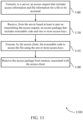
- FIG. 4 illustrates an example of a process flow 400 that supports encrypted file control in accordance with aspects of the present disclosure. Specifically, process flow 400 illustrates operations for encrypting files according to the techniques described herein.
- the process flow 400 includes access devices 405 and a server 410, which may be examples of the corresponding devices described with respect to FIGs. 1 through 3 .
- the access device 405-a transmits an access request to the server 410.
- the request is an encryption request to encrypt the payload.
- the access request includes the access information obtain using the access device 405-a.
- the server may be identified based on a configuration at the access client. For example, the access request may be transmitted to the server via an API endpoint that is configured at the access client.
- the server 410 may authorize or validate the request.
- Authorizing the request includes checking the location of the access device 405-a and verifying that the user is authorized to use the system and perform the requested action.
- the location may be checked by identify the geographical location of the access device 405-a from the IP address of the access device 405-a and comparing the geographical location to a set of geofences, which may identify a set of countries in which the system may not be used.
- the user is verified from data in the access information. For example, a user access token may be provided that indicates the user is authorized to use the system and perform the requested action.
- Identification of the computing system that sent the request may be satisfied by receiving identifiers of hardware or software components, which may include MAC addresses, international mobile equipment identity (IMEI), serial numbers and model numbers for the computing system components (motherboard, processor, memory, graphics card, etc.), software version numbers for the operating system and basic input/output system (BIOS), etc.).
- identifiers for the computing system hardware and software components may be verified by comparing the received identifiers to computing system component identifiers that have been previously received and linked to the user making the access request.
- the location of the computing system may be checked by mapping the IP address of the computing system to a geographical location.
- the mapped geographical location may be compared to a geofence that identifies permissible geographical locations for the type of access specified in the access request.
- the geofence may identify certain countries in which no access is provided.
- the location of the computing system may also be identified based on wireless local area network (WLAN) or wireless wide area network (WWAN) positioning (e.g. cellular based positioning).
- WLAN wireless local area network
- WWAN wireless wide area network
- the access privileges may depend on the type of access being requested.
- system access privilege policies which may apply to each user of the system, may be checked to ensure that the user requesting the encryption is permitted to do so based on the system access privilege policies.
- system policies that apply to each user of the system For a decryption request, system policies that apply to each user of the system, group policies that apply to groups of users of the system, user policies that apply to individual users, and file policies that apply to individual files are checked to verify that a particular user may access a particular file with a particular level of privilege.
- the privilege levels may include full access, collaborative access, and read only. Each of the different types of policies may specify the level of access to individual or groups of files.
- Authorizing the access request may include comparing access device location information from the access information to an access device location rule to determine the access authorization.
- the access device location information may include the internet protocol (IP) address of the computing system that sent the access request and the geographic location to which the IP address is mapped.
- IP internet protocol
- the device location rule may define a geofence within which access may be authorized.
- the geofence identifies the geographical locations where access may be authorized or may be restricted. As an example, when the geographic location for the computing system is compared to a geofence that defines the area of a geographic location of a building and the computing system is determined to be within a geofence, access may be indicated as authorized within the access authorization. When the comparison indicates that the computing system is not within the geofence, the access authorization may indicate that access is not authorized.
- Authorizing the access request may also include comparing mobile device location information from the access information to a mobile device location rule to determine the access authorization.
- the mobile device location information may include satellite positioning information. Additionally or alternatively, the mobile device location information may identify a type of connection between the mobile device and the access device. The mobile device may be connected to the access device over a wired or wireless connection.
- the geographic location corresponding to the satellite positioning information maybe compared to the geographic location responding to the IP address of the computing system. If the geographic locations of the satellite positioning information and the IP address are in concurrence, then the access request may be authorized. Otherwise, access request may be denied.
- the server 410 may generate the access package.
- the server 410 When authorized, the server 410 generates an encryptor package in response to the encryption request from the access device 405-a.
- the encryptor package may generated by retrieving source code for an encryption function, generating and storing salts and keys for the file to be encrypted by the access device 405-a, and injecting the source code with information including the salts and keys.
- Generation of the access package may additionally or alternatively include identification of data payloads or values that are used to transform the data of the payload of the file.
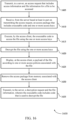
- FIG. 5 illustrates an example of a process flow 500 that supports encrypted file control in accordance with aspects of the present disclosure.
- process flow 500 illustrates operations for decrypting files according to the techniques described herein.
- the process flow 500 includes access devices 505 and a server 510, which may be examples of the corresponding devices described with respect to FIGs. 1 through 4 .
- the process flow 500 may be a continuation of process flow 400.
- the access device sends an access request to the server 510.
- the request also referred to as a decryption request, may include access information that identifies the encrypted file, the user of the access device 505-b, and the access device 505-b.
- the request may include an identifier of the encrypted file that is linked to access rights information stored in the data packs and in a macro database of the server.
- the identifier of the encrypted file may be used by the server to locate information about the encrypted file (including user access rights) in the macro database maintained by the server.
- the information about the file may be identified from metadata associated with the file.
- the server may be identified via a API endpoint that is associated with the file (e.g., in the metadata) or via a configuration at the access client (e.g., the access client is preconfigured with the API endpoint).
- the server 510 may authorize or validate the access request.
- the server may authorize the access request based on information included in the request an information maintained by the server in association with the file, such as access policies (e.g., user identifiers that are authorized to access the file).
- access policies e.g., user identifiers that are authorized to access the file.
- the access device 505-b may update the data packs of the file.
- the data packs may be updated by the access device 505-b as part of the decryption process by modifying the access logs (e.g., adding device information and user information associated with the access device 505-b).
- updating the data packs may include updating the file access logs based on information included in the access package.
- the data packs may be decrypted and updated with access information that identifies the date and time of access and a hardware identifier of the computing system that performed the access.
- an encryption process may be executed to regenerate the encrypted file with the updated data packs.
- the access request at 520 is transmitted to a server associated with the access client executing on the access device 505-b.
- the server associated with the access client may indicate that it is unable to validate the request (e.g., does not have access to the file information).
- the server may reply with a response indicating the URL for the correct server (e.g., server 510).
- the server may communicate with the correct server 510 in order to relay the access package to the access device 505-b.
- the user device 720 may support data security at an access client in accordance with examples as disclosed herein.
- the access request interface 725 may be configured as or otherwise support a means for transmitting, to a server, an access request that includes access information and file information for a file to be accessed.
- the access package interface 730 may be configured as or otherwise support a means for receiving, from the server based at least in part on transmitting the access request, an access package that includes executable code and one or more access keys.
- the execution component 735 may be configured as or otherwise support a means for executing, by the access client, the executable code to access the file using the one or more access keys.
- the access package removal component 740 may be configured as or otherwise support a means for removing the access package from memory associated with the access client.
- the encryption component 745 may be configured as or otherwise support a means for transmitting, to the server, an encryption request and the file information.
- the access package interface 730 may be configured as or otherwise support a means for receiving the access package that includes a data pack comprising an indication of one or more file access policies associated with the file, wherein the data pack is encrypted with the file using the one or more access keys.
- the one or more file access policies include read access, write access, display constraints, or a combination thereof.
- the access package interface 730 may be configured as or otherwise support a means for receiving the access package that includes a data pack comprising an indication of ownership information associated with the file, wherein the data pack is encrypted with the file using the one or more access keys.
- the policy component 755 may be configured as or otherwise support a means for transmitting, to the server, an indication of one or more file access policies associated the file.
- the encryption component 745 may be configured as or otherwise support a means for encrypting, using the executable code, a payload and one or more data packs using the one or more access keys to generate an encrypted file.
- the encryption component 745 may be configured as or otherwise support a means for encrypting the one or more data packs that include an indication of one or more file access policies, file ownership information, a file access audit log, or a combination thereof.
- the decryption component 750 may be configured as or otherwise support a means for transmitting, to the server, a decryption request and the file information, wherein the executable code includes code that is used to decrypt the file.
- the access package interface 730 may be configured as or otherwise support a means for receiving the access package that includes a data pack comprising one or more updated file access policies.
- the validation information component 760 may be configured as or otherwise support a means for identifying, at the access client, validation information that includes access client information, computer information, device information, geolocation information, an authentication token, or a combination thereof, wherein the decryption request includes an indication of the validation information.
- the file metadata component 765 may be configured as or otherwise support a means for identifying that the file is associated with the access client based at least in part on metadata associated with the file, wherein the file includes a payload encrypted using a first key of the one or more access keys and one or more encrypted data packs that are encrypted using at least one second key of the one or more access keys, wherein the decryption request is transmitted to the server based at least in part on the file being associated with the access client.
- the decryption component 750 may be configured as or otherwise support a means for decrypting the file using the one or more access keys.
- the decryption component 750 may be configured as or otherwise support a means for displaying, at the access client, a payload of the file according to one or more access policies associated with the file.
- the one or more access policies include read access, write access, display constraints, or a combination thereof. In some examples, the one or more access policies are included in a data pack that was decrypted with the file using the one or more access keys.
- the access log component 770 may be configured as or otherwise support a means for updating a file access audit log to include device information associated with the access client, user information, geographic location information, or a combination thereof.
- the decryption component 750 may be configured as or otherwise support a means for identifying, based at least in part on decrypting the file, a payload and one or more data packs in the file, wherein the one or more data packs include an indication of one or more file access policies, ownership information, a file access audit log, or a combination thereof.
- the execution component 735 may be configured as or otherwise support a means for instantiating, in the memory associated with the access client and based at least in part on executing the executable code, an access object that is used to decrypt or encrypt the file, wherein the access object is removed from the memory associated with the access client after decryption or encryption of the file.
- the decryption component 750 may be configured as or otherwise support a means for transmitting, to the server, a decryption request and the file information, wherein the executable code includes code that is used to overwrite contents of the file.
- the access request interface 725 may be configured as or otherwise support a means for transmitting the access request that includes the access information comprising a geographical location of a user device executing the access client, device information associated with the user device, network information associated with the user device, an authentication token associated with the access client, or a combination thereof.
- FIG. 8 shows a diagram of a system 800 including a device 805 that supports encrypted file control in accordance with aspects of the present disclosure.
- the device 805 may include components for bi-directional voice and data communications including components for transmitting and receiving communications, such as a data security manager 820, a communication module 810, an antenna 815, a user interface component 825, a database (application data) 830, a memory 835, and a processor 840. These components may be in electronic communication or otherwise coupled (e.g., operatively, communicatively, functionally, electronically, electrically) via one or more buses (e.g., a bus 845).
- the device 805 may be an example of a user device that executes an access client, as described herein. In some cases, the access client may correspond to the data security manager 820.
- the communication module 810 may manage input and output signals for the device 805 via the antenna 815.
- the communication module 810 may include an example of the communication module 810 of the user device 106 shown and described in FIG. 2 .
- the communication module 810 may manage communications with the server 110, as illustrated in FIG. 2 .
- the communication module 810 may also manage peripherals not integrated into the device 805.
- the communication module 810 may represent a physical connection or port to an external peripheral.
- the communication module 810 may utilize an operating system such as iOS ® , ANDROID ® , MS-DOS ® , MS-WINDOWS ® , OS/2 ® , UNIX ® , LINUX ® , or another known operating system.
- the communication module 810 may represent or interact with a modem, a keyboard, a mouse, a touchscreen, or a similar device. In some cases, the communication module 810 may be implemented as part of the processor 840. In some examples, a user may interact with the device 805 via the communication module 810, user interface component 825, or via hardware components controlled by the communication module 810.
- the device 805 may include a single antenna 815. However, in some other cases, the device 805 may have more than one antenna 815, which may be capable of concurrently transmitting or receiving multiple wireless transmissions.
- the communication module 810 may communicate bi-directionally, via the one or more antennas 815, wired, or wireless links as described herein.
- the communication module 810 may represent a wireless transceiver and may communicate bi-directionally with another wireless transceiver.
- the communication module 810 may also include a modem to modulate the packets, to provide the modulated packets to one or more antennas 815 for transmission, and to demodulate packets received from the one or more antennas 815.
- the user interface component 825 may manage data storage and processing in a database 830. In some cases, a user may interact with the user interface component 825. In other cases, the user interface component 825 may operate automatically without user interaction.
- the database 830 may be an example of a single database, a distributed database, multiple distributed databases, a data store, a data lake, or an emergency backup database.
- the memory 835 may include random-access memory (RAM) and read-only memory (ROM).
- RAM random-access memory
- ROM read-only memory
- the memory 835 may store computer-readable, computer-executable software including instructions that, when executed, cause the processor 840 to perform various functions described herein.
- the memory 835 may contain, among other things, a BIOS which may control basic hardware or software operation such as the interaction with peripheral components or devices.
- the processor 840 may include an intelligent hardware device, (e.g., a general-purpose processor, a DSP, a CPU, a microcontroller, an ASIC, an FPGA, a programmable logic device, a discrete gate or transistor logic component, a discrete hardware component, or any combination thereof).
- the processor 840 may be configured to operate a memory array using a memory controller.
- a memory controller may be integrated into the processor 840.
- the processor 840 may be configured to execute computer-readable instructions stored in a memory 835 to perform various functions (e.g., functions or tasks supporting a method and system for sleep staging algorithms).
- the data security manager 820 may support data security at an access client in accordance with examples as disclosed herein.
- the data security manager 820 may be configured as or otherwise support a means for transmitting, to a server, an access request that includes access information and file information for a file to be accessed.
- the data security manager 820 may be configured as or otherwise support a means for receiving, from the server based at least in part on transmitting the access request, an access package that includes executable code and one or more access keys.
- the data security manager 820 may be configured as or otherwise support a means for executing, by the access client, the executable code to access the file using the one or more access keys.
- the data security manager 820 may be configured as or otherwise support a means for removing the access package from memory associated with the access client.
- the data security manager 820 may include an application (e.g., "app"), program, software, or other component which is configured to facilitate data security techniques described herein via communications with a server, other user devices, and the like.
- FIG. 9 shows a block diagram 900 of a server 920 that supports encrypted file control in accordance with aspects of the present disclosure.
- the server 920 may be an example of aspects of a server as described with reference to FIGs. 1 through 6 .
- the server 920, or various components thereof, may be an example of means for performing various aspects of encrypted file control as described herein.
- the server 920 may include an access request interface 925, a request validation component 930, an access package component 935, an access package interface 940, an encryption component 945, a decryption component 950, a key identification component 955, a file policy component 960, an action component 965, a notification component 970, or any combination thereof.
- Each of these components may communicate, directly or indirectly, with one another (e.g., via one or more buses).
- the server 920 may support data security at a server in accordance with examples as disclosed herein.
- the access request interface 925 may be configured as or otherwise support a means for receiving, from an access client, an access request that includes access information and file information for a file to be accessed.
- the request validation component 930 may be configured as or otherwise support a means for validating the access request using the access information.
- the access package component 935 may be configured as or otherwise support a means for generating, based at least in part on validating the access request, an access package that includes executable code and one or more access keys.
- the access package interface 940 may be configured as or otherwise support a means for transmitting, to the access client, the access package, wherein the access package is compliable, by the access client, to an executable that is used to access the file.
- the encryption component 945 may be configured as or otherwise support a means for receiving, from the access client, an encryption request for encrypting the file, wherein the access package includes the executable code to encrypt the file using the one or more access keys.
- the access package interface 940 may be configured as or otherwise support a means for transmitting, to the access client, the access package that includes a data pack comprising an indication of one or more file access policies associated with the file, wherein the executable code is configured to encrypt the data pack with the file using the one or more access keys.
- the one or more file access policies comprise read access, write access, display constraints, or a combination thereof.
- the access package component 935 may be configured as or otherwise support a means for transmitting, to the access client, the access package that includes a data pack comprising the executable code that is configured to generate an audit log associated with the file and encrypt the audit log with the file using the one or more access keys.
- the access package component 935 may be configured as or otherwise support a means for transmitting, to the access client, the access package that includes a data pack comprising an indication of ownership information associated with the file, wherein the executable code is configured to encrypt the data pack with the file using the one or more access keys.
- the file policy component 960 may be configured as or otherwise support a means for receiving, from the access client, an indication of one or more file access policies associated with the file. In some examples, to support receiving the access request, the file policy component 960 may be configured as or otherwise support a means for storing, in association with a file identifier for the file, the one or more file access policies.
- the file policy component 960 may be configured as or otherwise support a means for receiving, from the access client, an indication of one or more users that are authorized to access the file. In some examples, to support receiving the access request, the file policy component 960 may be configured as or otherwise support a means for storing, in association with a file identifier for the file, the indication of the one or more users that are authorized to access the file.
- the decryption component 950 may be configured as or otherwise support a means for receiving, from the access client, a decryption request for decrypting the file, wherein the access package includes the executable code to decrypt the file using the one or more access keys.
- the file policy component 960 may be configured as or otherwise support a means for determining that a data pack that comprises one or more file access policies for the file is stale. In some examples, the file policy component 960 may be configured as or otherwise support a means for transmitting, based at least in part on determining that the data pack is stale, and updated data pack that includes one or more updated file access policies for the file.
- the request validation component 930 may be configured as or otherwise support a means for comparing, at the server, user information that is included in the access information received in the decryption request to an access record associated with the file. In some examples, the request validation component 930 may be configured as or otherwise support a means for determining that a user associated with the access client is authorized to access the file based at least in part on a result of the comparing, wherein the access package is transmitted to the access client based at least in part on determining that the user is authorized to access the file.
- the request validation component 930 may be configured as or otherwise support a means for determining that the access client is not authorized to decrypt the file based at least in part on the access information received in the decryption request.
- the action component 965 may be configured as or otherwise support a means for triggering, at the server, an action based at least in part on determining that the access client is not authorized to decrypt the file.
- the I/O controller 1010 may manage input signals 1045 and output signals 1050 for the device 1005.
- the I/O controller 1010 may also manage peripherals not integrated into the device 1005.
- the I/O controller 1010 may represent a physical connection or port to an external peripheral.
- the I/O controller 1010 may utilize an operating system such as iOS ® , ANDROID ® , MS-DOS ® , MS-WINDOWS ® , OS/2 ® , UNIX ® , LINUX ® , or another known operating system.
- the I/O controller 1010 may represent or interact with a modem, a keyboard, a mouse, a touchscreen, or a similar device.
- the I/O controller 1010 may be implemented as part of a processor 1030.
- a user may interact with the device 1005 via the I/O controller 1010 or via hardware components controlled by the I/O controller 1010.
- FIG. 19 shows a flowchart illustrating a method 1900 that supports encrypted file control in accordance with aspects of the present disclosure.
- the operations of the method 1900 may be implemented by a server or its components as described herein.
- the operations of the method 1900 may be performed by a server as described with reference to FIGs. 1 through 6 and 9 and 10 .
- a server may execute a set of instructions to control the functional elements of the server to perform the described functions. Additionally or alternatively, the server may perform aspects of the described functions using special-purpose hardware.
- the method may include receiving, from an access client, an access request that includes access information and file information for a file to be accessed.
- the operations of 2005 may be performed in accordance with examples as disclosed herein. In some examples, aspects of the operations of 2005 may be performed by an access request interface 925 as described with reference to FIG. 9 .
- the method may include receiving, from the access client, an encryption request for encrypting the file, wherein the access package includes the executable code to encrypt the file using the one or more access keys.
- the operations of 2010 may be performed in accordance with examples as disclosed herein. In some examples, aspects of the operations of 2010 may be performed by an encryption component 945 as described with reference to FIG. 9 .
- the method may include storing, in association with a file identifier for the file, the one or more file access policies.
- the operations of 2020 may be performed in accordance with examples as disclosed herein. In some examples, aspects of the operations of 2020 may be performed by a file policy component 960 as described with reference to FIG. 9 .
- the method may include validating the access request using the access information.
- the operations of 2025 may be performed in accordance with examples as disclosed herein. In some examples, aspects of the operations of 2025 may be performed by a request validation component 930 as described with reference to FIG. 9 .
- the method may include transmitting, to the access client, the access package, wherein the access package is compliable, by the access client, to an executable that is used to access the file.
- the operations of 2035 may be performed in accordance with examples as disclosed herein. In some examples, aspects of the operations of 2035 may be performed by an access package interface 940 as described with reference to FIG. 9 .
- the method may include receiving, from an access client, an access request that includes access information and file information for a file to be accessed.
- the operations of 2105 may be performed in accordance with examples as disclosed herein. In some examples, aspects of the operations of 2105 may be performed by an access request interface 925 as described with reference to FIG. 9 .
- the method may include receiving, from the access client, an indication of one or more users that are authorized to access the file.
- the operations of 2110 may be performed in accordance with examples as disclosed herein. In some examples, aspects of the operations of 2110 may be performed by a file policy component 960 as described with reference to FIG. 9 .
- the method may include receiving, from the access client, an encryption request for encrypting the file, wherein the access package includes the executable code to encrypt the file using the one or more access keys.
- the operations of 2115 may be performed in accordance with examples as disclosed herein. In some examples, aspects of the operations of 2115 may be performed by an encryption component 945 as described with reference to FIG. 9 .
- the method may include storing, in association with a file identifier for the file, the indication of the one or more users that are authorized to access the file.
- the operations of 2120 may be performed in accordance with examples as disclosed herein. In some examples, aspects of the operations of 2120 may be performed by a file policy component 960 as described with reference to FIG. 9 .
- the method may include validating the access request using the access information.
- the operations of 2125 may be performed in accordance with examples as disclosed herein. In some examples, aspects of the operations of 2125 may be performed by a request validation component 930 as described with reference to FIG. 9 .
- the method may include generating, based at least in part on validating the access request, an access package that includes executable code and one or more access keys.
- the operations of 2130 may be performed in accordance with examples as disclosed herein. In some examples, aspects of the operations of 2130 may be performed by an access package component 935 as described with reference to FIG. 9 .
- the method may include transmitting, to the access client, the access package, wherein the access package is compliable, by the access client, to an executable that is used to access the file.
- the operations of 2135 may be performed in accordance with examples as disclosed herein. In some examples, aspects of the operations of 2135 may be performed by an access package interface 940 as described with reference to FIG. 9 .
- FIG. 22 shows a flowchart illustrating a method 2200 that supports encrypted file control in accordance with aspects of the present disclosure.
- the operations of the method 2200 may be implemented by a server or its components as described herein.
- the operations of the method 2200 may be performed by a server as described with reference to FIGs. 1 through 6 and 9 and 10 .
- a server may execute a set of instructions to control the functional elements of the server to perform the described functions. Additionally or alternatively, the server may perform aspects of the described functions using special-purpose hardware.
- the method may include receiving, from an access client, an access request that includes access information and file information for a file to be accessed.
- the operations of 2205 may be performed in accordance with examples as disclosed herein. In some examples, aspects of the operations of 2205 may be performed by an access request interface 925 as described with reference to FIG. 9 .
- the method may include validating the access request using the access information.
- the operations of 2210 may be performed in accordance with examples as disclosed herein. In some examples, aspects of the operations of 2210 may be performed by a request validation component 930 as described with reference to FIG. 9 .
- the method may include comparing, at the server, user information that is included in the access information received in the decryption request to an access record associated with the file.
- the operations of 2215 may be performed in accordance with examples as disclosed herein. In some examples, aspects of the operations of 2215 may be performed by a request validation component 930 as described with reference to FIG. 9 .
- the method may include determining that a user associated with the access client is authorized to access the file based at least in part on a result of the comparing, wherein the access package is transmitted to the access client based at least in part on determining that the user is authorized to access the file.
- the operations of 2220 may be performed in accordance with examples as disclosed herein. In some examples, aspects of the operations of 2220 may be performed by a request validation component 930 as described with reference to FIG. 9 .
- the method may include generating, based at least in part on validating the access request, an access package that includes executable code and one or more access keys.
- the operations of 2225 may be performed in accordance with examples as disclosed herein. In some examples, aspects of the operations of 2225 may be performed by an access package component 935 as described with reference to FIG. 9 .
- the method may include transmitting, to the access client, the access package, wherein the access package is compliable, by the access client, to an executable that is used to access the file.
- the operations of 2230 may be performed in accordance with examples as disclosed herein. In some examples, aspects of the operations of 2230 may be performed by an access package interface 940 as described with reference to FIG. 9 .
- the method may include receiving, from the access client, a decryption request for decrypting the file, wherein the access package includes the executable code to decrypt the file using the one or more access keys.
- the operations of 2235 may be performed in accordance with examples as disclosed herein. In some examples, aspects of the operations of 2235 may be performed by a decryption component 950 as described with reference to FIG. 9 .
- FIG. 23 shows a flowchart illustrating a method 2300 that supports encrypted file control in accordance with aspects of the present disclosure.
- the operations of the method 2300 may be implemented by a server or its components as described herein.
- the operations of the method 2300 may be performed by a server as described with reference to FIGs. 1 through 6 and 9 and 10 .
- a server may execute a set of instructions to control the functional elements of the server to perform the described functions. Additionally or alternatively, the server may perform aspects of the described functions using special-purpose hardware.
- the method may include receiving, from an access client, an access request that includes access information and file information for a file to be accessed.
- the operations of 2305 may be performed in accordance with examples as disclosed herein. In some examples, aspects of the operations of 2305 may be performed by an access request interface 925 as described with reference to FIG. 9 .
- the method may include validating the access request using the access information.
- the operations of 2310 may be performed in accordance with examples as disclosed herein. In some examples, aspects of the operations of 2310 may be performed by a request validation component 930 as described with reference to FIG. 9 .
- the method may include generating, based at least in part on validating the access request, an access package that includes executable code and one or more access keys.
- the operations of 2315 may be performed in accordance with examples as disclosed herein. In some examples, aspects of the operations of 2315 may be performed by an access package component 935 as described with reference to FIG. 9 .
- the method may include transmitting, to a key storage service and based at least in part on receiving the access request, a request for a key string and a file identifier associated with the file.
- the operations of 2320 may be performed in accordance with examples as disclosed herein. In some examples, aspects of the operations of 2320 may be performed by a key identification component 955 as described with reference to FIG. 9 .
- the method may include receiving, from the key storage service, the key string associated with the file identifier.
- the operations of 2325 may be performed in accordance with examples as disclosed herein. In some examples, aspects of the operations of 2325 may be performed by a key identification component 955 as described with reference to FIG. 9 .
- the method may include generating the one or more access keys using the key string.
- the operations of 2330 may be performed in accordance with examples as disclosed herein. In some examples, aspects of the operations of 2330 may be performed by a key identification component 955 as described with reference to FIG. 9 .
- the method may include transmitting, to the access client, the access package, wherein the access package is compliable, by the access client, to an executable that is used to access the file.
- the operations of 2335 may be performed in accordance with examples as disclosed herein. In some examples, aspects of the operations of 2335 may be performed by an access package interface 940 as described with reference to FIG. 9 .
- a method for data security at an access client may include transmitting, to a server, an access request that includes access information and file information for a file to be accessed, receiving, from the server based at least in part on transmitting the access request, an access package that includes executable code and one or more access keys, executing, by the access client, the executable code to access the file using the one or more access keys, and removing the access package from memory associated with the access client.
- the apparatus may include a processor, memory coupled with the processor, and instructions stored in the memory.
- the instructions may be executable by the processor to cause the apparatus to transmit, to a server, an access request that includes access information and file information for a file to be accessed, receive, from the server based at least in part on transmitting the access request, an access package that includes executable code and one or more access keys, execute, by the access client, the executable code to access the file using the one or more access keys, and remove the access package from memory associated with the access client.
- the apparatus may include means for transmitting, to a server, an access request that includes access information and file information for a file to be accessed, means for receiving, from the server based at least in part on transmitting the access request, an access package that includes executable code and one or more access keys, means for executing, by the access client, the executable code to access the file using the one or more access keys, and means for removing the access package from memory associated with the access client.
- a non-transitory computer-readable medium storing code for data security at an access client is described.
- the code may include instructions executable by a processor to transmit, to a server, an access request that includes access information and file information for a file to be accessed, receive, from the server based at least in part on transmitting the access request, an access package that includes executable code and one or more access keys, execute, by the access client, the executable code to access the file using the one or more access keys, and remove the access package from memory associated with the access client.
- the method, apparatuses, and non-transitory computer-readable medium described herein may include further operations, features, means, or instructions for transmitting, to the server, an encryption request and the file information.
- receiving the access package may include operations, features, means, or instructions for receiving the access package that includes a data pack comprising an indication of one or more file access policies associated with the file, wherein the data pack may be encrypted with the file using the one or more access keys.
- the one or more file access policies include read access, write access, display constraints, or a combination thereof.
- receiving the access package may include operations, features, means, or instructions for receiving the access package that includes a data pack comprising an indication of ownership information associated with the file, wherein the data pack may be encrypted with the file using the one or more access keys.
- transmitting the encryption request may include operations, features, means, or instructions for transmitting, to the server, an indication of one or more file access policies associated the file.
- executing the executable code may include operations, features, means, or instructions for encrypting, using the executable code, a payload and one or more data packs using the one or more access keys to generate an encrypted file.
- encrypting the one or more data packs may include operations, features, means, or instructions for encrypting the one or more data packs that include an indication of one or more file access policies, file ownership information, a file access audit log, or a combination thereof.
- transmitting the access request may include operations, features, means, or instructions for transmitting, to the server, a decryption request and the file information, wherein the executable code includes code that may be used to decrypt the file.
- receiving the access package may include operations, features, means, or instructions for receiving the access package that includes a data pack comprising one or more updated file access policies.
- Some examples of the method, apparatuses, and non-transitory computer-readable medium described herein may further include operations, features, means, or instructions for identifying, at the access client, validation information that includes access client information, computer information, device information, geolocation information, an authentication token, or a combination thereof, wherein the decryption request includes an indication of the validation information.
- Some examples of the method, apparatuses, and non-transitory computer-readable medium described herein may further include operations, features, means, or instructions for identifying that the file may be associated with the access client based at least in part on metadata associated with the file, wherein the file includes a payload encrypted using a first key of the one or more access keys and one or more encrypted data packs that may be encrypted using at least one second key of the one or more access keys, wherein the decryption request may be transmitted to the server based at least in part on the file being associated with the access client.
- executing the executable code may include operations, features, means, or instructions for decrypting the file using the one or more access keys.
- Some examples of the method, apparatuses, and non-transitory computer-readable medium described herein may further include operations, features, means, or instructions for displaying, at the access client, a payload of the file according to one or more access policies associated with the file.
- the one or more access policies include read access, write access, display constraints, or a combination thereof.
- the one or more access policies may be included in a data pack that was decrypted with the file using the one or more access keys.
- Some examples of the method, apparatuses, and non-transitory computer-readable medium described herein may further include operations, features, means, or instructions for updating a file access audit log to include device information associated with the access client, user information, geographic location information, or a combination thereof.
- Some examples of the method, apparatuses, and non-transitory computer-readable medium described herein may further include operations, features, means, or instructions for identifying, based at least in part on decrypting the file, a payload and one or more data packs in the file, wherein the one or more data packs include an indication of one or more file access policies, ownership information, a file access audit log, or a combination thereof.
- Some examples of the method, apparatuses, and non-transitory computer-readable medium described herein may further include operations, features, means, or instructions for instantiating, in the memory associated with the access client and based at least in part on executing the executable code, an access object that may be used to decrypt or encrypt the file, wherein the access object may be removed from the memory associated with the access client after decryption or encryption of the file.
- Some examples of the method, apparatuses, and non-transitory computer-readable medium described herein may further include operations, features, means, or instructions for transmitting, to the server, a decryption request and the file information, wherein the executable code includes code that may be used to overwrite contents of the file.
- transmitting the access request may include operations, features, means, or instructions for transmitting the access request that includes the access information comprising a geographical location of a user device executing the access client, device information associated with the user device, network information associated with the user device, an authentication token associated with the access client, or a combination thereof.
- a method for data security at a server may include receiving, from an access client, an access request that includes access information and file information for a file to be accessed, validating the access request using the access information, generating, based at least in part on validating the access request, an access package that includes executable code and one or more access keys, and transmitting, to the access client, the access package, wherein the access package is compliable, by the access client, to an executable that is used to access the file.
- the apparatus may include a processor, memory coupled with the processor, and instructions stored in the memory.
- the instructions may be executable by the processor to cause the apparatus to receive, from an access client, an access request that includes access information and file information for a file to be accessed, validate the access request using the access information, generate, based at least in part on validating the access request, an access package that includes executable code and one or more access keys, and transmit, to the access client, the access package, wherein the access package is compliable, by the access client, to an executable that is used to access the file.
- the apparatus may include means for receiving, from an access client, an access request that includes access information and file information for a file to be accessed, means for validating the access request using the access information, means for generating, based at least in part on validating the access request, an access package that includes executable code and one or more access keys, and means for transmitting, to the access client, the access package, wherein the access package is compliable, by the access client, to an executable that is used to access the file.
- a non-transitory computer-readable medium storing code for data security at a server is described.
- the code may include instructions executable by a processor to receive, from an access client, an access request that includes access information and file information for a file to be accessed, validate the access request using the access information, generate, based at least in part on validating the access request, an access package that includes executable code and one or more access keys, and transmit, to the access client, the access package, wherein the access package is compliable, by the access client, to an executable that is used to access the file.
- receiving the access request may include operations, features, means, or instructions for receiving, from the access client, an encryption request for encrypting the file, wherein the access package includes the executable code to encrypt the file using the one or more access keys.
- the one or more file access policies comprise read access, write access, display constraints, or a combination thereof.
- transmitting the access package may include operations, features, means, or instructions for transmitting, to the access client, the access package that includes a data pack comprising the executable code that may be configured to generate an audit log associated with the file and encrypt the audit log with the file using the one or more access keys.
- transmitting the access package may include operations, features, means, or instructions for transmitting, to the access client, the access package that includes a data pack comprising an indication of ownership information associated with the file, wherein the executable code may be configured to encrypt the data pack with the file using the one or more access keys.
- receiving the access request may include operations, features, means, or instructions for receiving, from the access client, an indication of one or more file access policies associated with the file and storing, in association with a file identifier for the file, the one or more file access policies.
- receiving the access request may include operations, features, means, or instructions for receiving, from the access client, an indication of one or more users that may be authorized to access the file and storing, in association with a file identifier for the file, the indication of the one or more users that may be authorized to access the file.
- receiving the access request may include operations, features, means, or instructions for receiving, from the access client, a decryption request for decrypting the file, wherein the access package includes the executable code to decrypt the file using the one or more access keys.
- Some examples of the method, apparatuses, and non-transitory computer-readable medium described herein may further include operations, features, means, or instructions for determining that a data pack that comprises one or more file access policies for the file may be stale and transmitting, based at least in part on determining that the data pack may be stale, and updated data pack that includes one or more updated file access policies for the file.
- Some examples of the method, apparatuses, and non-transitory computer-readable medium described herein may further include operations, features, means, or instructions for comparing, at the server, user information that may be included in the access information received in the decryption request to an access record associated with the file and determining that a user associated with the access client may be authorized to access the file based at least in part on a result of the comparing, wherein the access package may be transmitted to the access client based at least in part on determining that the user may be authorized to access the file.
- Some examples of the method, apparatuses, and non-transitory computer-readable medium described herein may further include operations, features, means, or instructions for determining that the access client may be not authorized to decrypt the file based at least in part on the access information received in the decryption request and triggering, at the server, an action based at least in part on determining that the access client may be not authorized to decrypt the file.
- triggering the action may include operations, features, means, or instructions for generating an alert or message indicating that the access client transmitted an unauthorized access request.
- triggering the action may include operations, features, means, or instructions for transmitting the access package that includes the executable code to overwrite contents of the file.
- Some examples of the method, apparatuses, and non-transitory computer-readable medium described herein may further include operations, features, means, or instructions for transmitting, to a key storage service and based at least in part on receiving the access request, a request for a key string and a file identifier associated with the file, receiving, from the key storage service, the key string associated with the file identifier, and generating the one or more access keys using the key string.
- validating the access request may include operations, features, means, or instructions for validating the access information that includes a geographical location of a user device executing the access client, device information associated with the user device, network information associated with the user device, an authentication token associated with the access client, for a combination thereof.
- aspects of the disclosure may provide for consumer preference and maintenance interface.
- a general-purpose processor may be a microprocessor, but in the alternative, the processor may be any conventional processor, controller, microcontroller, or state machine.
- a processor may also be implemented as a combination of computing devices (e.g., a combination of a DSP and a microprocessor, multiple microprocessors, one or more microprocessors in conjunction with a DSP core, or any other such configuration).
- the functions described herein may be implemented in hardware, software executed by a processor, firmware, or any combination thereof. If implemented in software executed by a processor, the functions may be stored on or transmitted over as one or more instructions or code on a computer-readable medium. Other examples and implementations are within the scope of the disclosure and appended claims. For example, due to the nature of software, functions described above can be implemented using software executed by a processor, hardware, firmware, hardwiring, or combinations of any of these. Features implementing functions may also be physically located at various positions, including being distributed such that portions of functions are implemented at different physical locations.
- Computer-readable media includes both non-transitory computer storage media and communication media including any medium that facilitates transfer of a computer program from one place to another.
- a non-transitory storage medium may be any available medium that can be accessed by a general purpose or special purpose computer.
- non-transitory computer-readable media can comprise RAM, ROM, electrically erasable programmable read only memory (EEPROM), compact disk (CD) ROM or other optical disk storage, magnetic disk storage or other magnetic storage devices, or any other non-transitory medium that can be used to carry or store desired program code means in the form of instructions or data structures and that can be accessed by a general-purpose or special-purpose computer, or a general-purpose or special-purpose processor.
- RAM random access memory
- ROM read only memory
- EEPROM electrically erasable programmable read only memory
- CD compact disk
- magnetic disk storage or other magnetic storage devices or any other non-transitory medium that can be used to carry or store desired program code means in the form of instructions or data structures
- any connection is properly termed a computer-readable medium.
- the software is transmitted from a website, server, or other remote source using a coaxial cable, fiber optic cable, twisted pair, digital subscriber line (DSL), or wireless technologies such as infrared, radio, and microwave
- the coaxial cable, fiber optic cable, twisted pair, DSL, or wireless technologies such as infrared, radio, and microwave are included in the definition of medium.
- Disk and disc include CD, laser disc, optical disc, digital versatile disc (DVD), floppy disk and Blu-ray disc where disks usually reproduce data magnetically, while discs reproduce data optically with lasers. Combinations of the above are also included within the scope of computer-readable media.
- a general-purpose processor may be a microprocessor, but in the alternative, the processor may be any conventional processor, controller, microcontroller, or state machine.
- a processor may also be implemented as a combination of computing devices (e.g., a combination of a DSP and a microprocessor, multiple microprocessors, one or more microprocessors in conjunction with a DSP core, or any other such configuration).
- the functions of each unit may also be implemented, in whole or in part, with instructions embodied in a memory, formatted to be executed by one or more general or application-specific processors.
Landscapes
- Engineering & Computer Science (AREA)
- Computer Security & Cryptography (AREA)
- Theoretical Computer Science (AREA)
- General Engineering & Computer Science (AREA)
- Computer Hardware Design (AREA)
- Signal Processing (AREA)
- Computer Networks & Wireless Communication (AREA)
- Physics & Mathematics (AREA)
- Software Systems (AREA)
- General Health & Medical Sciences (AREA)
- General Physics & Mathematics (AREA)
- Bioethics (AREA)
- Computing Systems (AREA)
- Health & Medical Sciences (AREA)
- Databases & Information Systems (AREA)
- Storage Device Security (AREA)
- Two-Way Televisions, Distribution Of Moving Picture Or The Like (AREA)
- Selective Calling Equipment (AREA)
- Information Transfer Between Computers (AREA)
Claims (20)
- Procédé de sécurité de données au niveau d'un client d'accès (125, 325) s'exécutant sur un dispositif d'accès (105, 305, 405, 505), le procédé comprenant :la transmission, à partir du dispositif d'accès et vers un serveur (115, 310, 410, 510), d'une demande d'accès (330) qui comprend des informations d'accès et des informations de fichier pour un fichier auquel on souhaite accéder ;la réception, par le dispositif d'accès et à partir du serveur sur la base au moins en partie de la transmission de la demande d'accès, d'un paquet d'accès (320) qui comprend un code exécutable et une ou plusieurs clés d'accès ;l'exécution, par le client d'accès, du code exécutable pour accéder au fichier en utilisant l'une ou les plusieurs clés d'accès ; etla suppression, par le dispositif d'accès, du paquet d'accès de la mémoire associée au client d'accès.
- Procédé selon la revendication 1, dans lequel la demande d'accès comprend en outre :
une demande de chiffrement. - Procédé selon la revendication 2, dans lequel la réception du paquet d'accès comprend :
la réception du paquet d'accès qui comprend un pack de données comprenant une indication d'une ou plusieurs politiques d'accès de fichier associées au fichier ou une indication d'informations de propriété associées au fichier, dans lequel le pack de données doit être chiffré avec le fichier en utilisant la ou les plusieurs clés d'accès. - Procédé selon la revendication 2, dans lequel la transmission de la demande de chiffrement comprend :
la transmission, au serveur, d'une indication d'une ou plusieurs politiques d'accès de fichier associées au fichier. - Procédé selon la revendication 2, dans lequel l'exécution du code exécutable comprend :le chiffrement, en utilisant le code exécutable, d'une charge utile et d'un ou plusieurs packs de données en utilisant la ou les plusieurs clés d'accès pour générer un fichier chiffré ;dans lequel le ou les plusieurs packs de données comprennent par exemple une indication d'une ou de plusieurs politiques d'accès de fichier, d'informations de propriété de fichier, d'un journal d'audit d'accès à un fichier ou une combinaison de ceux-ci.
- Procédé selon la revendication 1, dans lequel la demande d'accès est une demande de déchiffrement et
dans lequel le code exécutable comprend un code qui doit être utilisé pour déchiffrer le fichier. - Procédé selon la revendication 6, dans lequel la réception du paquet d'accès comprend :
la réception du paquet d'accès qui comprend un pack de données comprenant une ou plusieurs politiques d'accès de fichier mises à jour. - Procédé selon la revendication 6, comprenant en outre :
l'identification, au niveau du client d'accès, d'informations de validation qui comprennent des informations de client d'accès, des informations informatiques, des informations de dispositif, des informations de géolocalisation, un jeton d'authentification ou une combinaison de ceux-ci, dans lequel la demande de déchiffrement comprend une indication des informations de validation. - Procédé selon la revendication 6, comprenant en outre :
l'identification que le fichier est associé au client d'accès sur la base au moins en partie de métadonnées associées au fichier, dans lequel le fichier comprend une charge utile chiffrée en utilisant une première clé de la ou des plusieurs clés d'accès et un ou plusieurs packs de données chiffrées qui sont chiffrés en utilisant au moins une deuxième clé de la ou des plusieurs clés d'accès, dans lequel la demande de déchiffrement est transmise au serveur sur la base au moins en partie du fichier qui est associé au client d'accès. - Procédé selon la revendication 6, dans lequel l'exécution du code exécutable comprend :
le déchiffrement du fichier en utilisant la ou les plusieurs clés d'accès. - Procédé selon la revendication 10, comprenant en outre :
l'affichage, au niveau du client d'accès, d'une charge utile du fichier selon une ou plusieurs politiques d'accès de fichier associées au fichier. - Procédé selon la revendication 3 ou 11, dans lequel la ou les plusieurs politiques d'accès de fichier comprennent des accès de lecture, des contraintes d'affichage ou une combinaison de ceux-ci.
- Procédé selon la revendication 11, dans lequel le déchiffrement du fichier en utilisant la ou les plusieurs clés d'accès fournit un pack de données déchiffrées du fichier, dans lequel le pack de données comprend des politiques d'accès.
- Procédé selon la revendication 10, comprenant en outre :
la mise à jour d'un journal d'audit d'accès à un fichier pour comprendre des informations de dispositif associées au client d'accès, des informations d'utilisateur, des informations de localisation géographique ou une combinaison de celles-ci. - Procédé selon la revendication 10, comprenant en outre :
l'identification, sur la base au moins en partie du déchiffrement du fichier, d'une charge utile et d'un ou plusieurs packs de données dans le fichier, dans lequel le ou les plusieurs packs de données comprennent une indication d'une ou plusieurs politiques d'accès de fichier, d'informations de propriété, d'un journal d'audit d'accès à un fichier ou une combinaison de ceux-ci. - Procédé selon la revendication 1, dans lequel l'exécution du code exécutable pour accéder au fichier en utilisant la ou les plusieurs clés d'accès comprend :l'instanciation, dans la mémoire associée au client d'accès, d'un objet d'accès ;l'utilisation de l'objet d'accès pour déchiffrer ou chiffrer le fichier ; etla suppression de l'objet d'accès de la mémoire associée au client d'accès après utilisation de l'objet d'accès pour déchiffrer ou chiffrer le fichier.
- Procédé selon la revendication 1, dans lequel la demande d'accès est une demande de déchiffrement et dans lequel en réponse à une détermination que la demande d'accès est invalide, le code exécutable comprend un code qui est utilisé pour écraser des contenus du fichier.
- Procédé selon la revendication 1, dans lequel la transmission de la demande d'accès comprend :
la transmission de la demande d'accès qui comprend des informations d'accès comprenant une localisation géographique d'un dispositif utilisateur exécutant le client d'accès, des informations de dispositif associées au dispositif utilisateur, des informations de réseau associées au dispositif utilisateur, un jeton d'authentification associé au client d'accès ou une combinaison de ceux-ci. - Dispositif d'accès (125, 325) de sécurité de données configuré pour exécuter un client d'accès (105, 305, 405, 505), comprenant :un processeur ;une mémoire couplée au processeur ; etdes instructions stockées dans la mémoire et exécutables par le processeur pour amener le dispositif d'accès (125, 325) à :transmettre, à partir du client d'accès et vers un serveur (115, 310, 410, 510), une demande d'accès (330) qui comprend des informations d'accès et des informations de fichier pour un fichier auquel on souhaite accéder ;recevoir, par le dispositif d'accès et à partir du serveur sur la base au moins en partie de la transmission de la demande d'accès, un paquet d'accès (320) qui comprend un code exécutable et une ou plusieurs clés d'accès ;exécuter, par le client d'accès, le code exécutable pour accéder au fichier en utilisant l'une ou les plusieurs clés d'accès ; etsupprimer, par le dispositif d'accès, le paquet d'accès de la mémoire associée au client d'accès.
- Support lisible par ordinateur non transitoire stockant un code de sécurité de données au niveau d'un client d'accès (125, 325), le code comprenant des instructions exécutables par un processeur d'un dispositif d'accès (105, 305, 405, 505) configuré pour exécuter le client d'accès pour :transmettre, à partir du client d'accès et vers un serveur (115, 310, 410, 510), une demande d'accès (330) qui comprend des informations d'accès et des informations de fichier pour un fichier auquel on souhaite accéder ;recevoir, par le dispositif d'accès et à partir du serveur sur la base au moins en partie de la transmission de la demande d'accès, un paquet d'accès (320) qui comprend un code exécutable et une ou plusieurs clés d'accès ;exécuter, par le client d'accès, le code exécutable pour accéder au fichier en utilisant l'une ou les plusieurs clés d'accès ; etsupprimer, par le dispositif d'accès, le paquet d'accès de la mémoire associée au client d'accès.
Applications Claiming Priority (2)
| Application Number | Priority Date | Filing Date | Title |
|---|---|---|---|
| US202063081763P | 2020-09-22 | 2020-09-22 | |
| PCT/US2021/051562 WO2022066775A1 (fr) | 2020-09-22 | 2021-09-22 | Commande de fichier chiffré |
Publications (3)
| Publication Number | Publication Date |
|---|---|
| EP4218204A1 EP4218204A1 (fr) | 2023-08-02 |
| EP4218204B1 true EP4218204B1 (fr) | 2025-02-26 |
| EP4218204C0 EP4218204C0 (fr) | 2025-02-26 |
Family
ID=80740441
Family Applications (1)
| Application Number | Title | Priority Date | Filing Date |
|---|---|---|---|
| EP21794062.6A Active EP4218204B1 (fr) | 2020-09-22 | 2021-09-22 | Commande de fichier chiffré |
Country Status (10)
| Country | Link |
|---|---|
| US (2) | US12061706B2 (fr) |
| EP (1) | EP4218204B1 (fr) |
| JP (1) | JP7609980B2 (fr) |
| KR (1) | KR102893163B1 (fr) |
| CN (1) | CN116686316A (fr) |
| AU (1) | AU2021347175B2 (fr) |
| CA (1) | CA3196276A1 (fr) |
| ES (1) | ES3028669T3 (fr) |
| IL (1) | IL301570B2 (fr) |
| WO (1) | WO2022066775A1 (fr) |
Families Citing this family (10)
| Publication number | Priority date | Publication date | Assignee | Title |
|---|---|---|---|---|
| EP4218204B1 (fr) | 2020-09-22 | 2025-02-26 | Keyavi Data Corp. | Commande de fichier chiffré |
| US12001822B2 (en) * | 2021-02-01 | 2024-06-04 | Capital One Services, Llc | Multi-signature validation of deployment artifacts |
| US12306966B2 (en) * | 2021-05-01 | 2025-05-20 | AtScale, Inc. | Secure distribution of embedded policy |
| US12355867B2 (en) * | 2023-02-28 | 2025-07-08 | Cisco Technology, Inc. | Secure distribution of cryptographic keys and policy attributes based on geographic trusted location |
| US12603768B2 (en) * | 2023-10-31 | 2026-04-14 | Jpmorgan Chase Bank, N.A. | Systems and methods for providing and maintaining secure client-based permission lists |
| CN118094612B (zh) * | 2023-12-08 | 2025-11-18 | 福建亿榕信息技术有限公司 | 一种基于移动终端的文件安全访问方法 |
| US12490095B2 (en) | 2024-01-29 | 2025-12-02 | Dell Products L.P. | Obtaining location data for data processing systems using out-of-band components |
| US12530470B2 (en) * | 2024-01-29 | 2026-01-20 | Dell Products L.P. | Policy implementation for data processing systems based on location data using out-of-band components |
| US12574419B2 (en) * | 2024-01-29 | 2026-03-10 | Dell Products L.P. | Management of location-based security policies using out of band methods |
| US20250371189A1 (en) * | 2024-06-04 | 2025-12-04 | Keyavi Data Corp. | Encrypted file search |
Citations (1)
| Publication number | Priority date | Publication date | Assignee | Title |
|---|---|---|---|---|
| EP2488987B1 (fr) * | 2009-10-13 | 2020-11-18 | Microsoft Technology Licensing, LLC | Mémorisation sécurisée de secrets temporaires |
Family Cites Families (29)
| Publication number | Priority date | Publication date | Assignee | Title |
|---|---|---|---|---|
| JPH10320478A (ja) * | 1997-03-19 | 1998-12-04 | Pumpkin House:Kk | 暗号化/復号通信システムおよび方法 |
| JP2000268096A (ja) * | 1999-03-18 | 2000-09-29 | Dainippon Printing Co Ltd | コンテンツ配信システム及びそのサーバ |
| JP3763702B2 (ja) * | 1999-05-27 | 2006-04-05 | 富士通株式会社 | データ運用方法 |
| JP3859450B2 (ja) * | 2001-02-07 | 2006-12-20 | 富士通株式会社 | 秘密情報管理システムおよび情報端末 |
| US20030154381A1 (en) * | 2002-02-12 | 2003-08-14 | Pervasive Security Systems, Inc. | Managing file access via a designated place |
| US20050071657A1 (en) * | 2003-09-30 | 2005-03-31 | Pss Systems, Inc. | Method and system for securing digital assets using time-based security criteria |
| US7523507B2 (en) * | 2004-05-27 | 2009-04-21 | Nokia Corporation | Delivery of non-permanent media files to a mobile station |
| US8554749B2 (en) * | 2006-10-23 | 2013-10-08 | Adobe Systems Incorporated | Data file access control |
| US8909924B2 (en) * | 2006-11-30 | 2014-12-09 | Dapict, Inc. | Digital asset management system |
| TWI394459B (zh) * | 2007-05-16 | 2013-04-21 | Sony Corp | Content download system and content download method, content provision device, and content supply method and content supply program, content receiving apparatus, and content receiving method and content receiving program |
| JP2009117907A (ja) * | 2007-11-01 | 2009-05-28 | Hitachi Software Eng Co Ltd | 復号鍵管理サーバ及び復号鍵要求プログラム |
| US8560785B1 (en) * | 2008-06-02 | 2013-10-15 | Symantec Corporation | Techniques for providing multiple levels of security for a backup medium |
| US8910278B2 (en) * | 2010-05-18 | 2014-12-09 | Cloudnexa | Managing services in a cloud computing environment |
| US10623400B2 (en) * | 2013-10-14 | 2020-04-14 | Greg Hauw | Method and device for credential and data protection |
| WO2015160118A1 (fr) * | 2014-04-15 | 2015-10-22 | (주)나무소프트 | Procédé et appareil de contrôle d'accès de programme d'application pour zone de mémoire sécurisée |
| DE102014113430A1 (de) * | 2014-09-17 | 2016-03-17 | Bundesdruckerei Gmbh | Verteilte Datenspeicherung mittels Berechtigungstoken |
| US10073791B2 (en) * | 2015-03-25 | 2018-09-11 | Vera | Securing files |
| WO2017064781A1 (fr) * | 2015-10-14 | 2017-04-20 | 株式会社アイキュエス | Système de gestion d'accès, système d'accès à des fichiers, dispositif de chiffrement et programme |
| WO2017064780A1 (fr) * | 2015-10-14 | 2017-04-20 | 株式会社アイキュエス | Dispositif de chiffrement de fichier, dispositif de déchiffrement de fichier, système, et programme |
| CN105653909B (zh) * | 2016-01-26 | 2018-09-25 | 腾讯科技(深圳)有限公司 | 信息处理方法、第一终端、第二终端、服务器及系统 |
| US9990474B2 (en) * | 2016-03-16 | 2018-06-05 | Konica Minolta Laboratory U.S.A., Inc. | Access control for selected document contents using document layers and access key sequence |
| US10798073B2 (en) * | 2016-08-26 | 2020-10-06 | Nicira, Inc. | Secure key management protocol for distributed network encryption |
| US9817675B1 (en) * | 2017-01-31 | 2017-11-14 | Hytrust, Inc. | Methods and systems for attaching an encrypted data partition during the startup of an operating system |
| US10715497B1 (en) * | 2017-02-13 | 2020-07-14 | Wells Fargo Bank, N.A. | Digital safety box for secure communication between computing devices |
| US10268842B2 (en) * | 2017-02-21 | 2019-04-23 | Motorola Solutions, Inc. | Device for operating a camera in a private mode and a non-private mode |
| CA2958668A1 (fr) * | 2017-02-23 | 2018-08-23 | Scenarex Inc. | Methodes et dispositif d'integration de la gestion de droits numeriques dans une chaine de blocs existante |
| JP2019080207A (ja) * | 2017-10-25 | 2019-05-23 | 株式会社東芝 | 携帯可能電子装置、及びicモジュール |
| US11258798B2 (en) * | 2018-02-27 | 2022-02-22 | Thales Dis France Sas | Method, entity and system for managing access to data through a late dynamic binding of its associated metadata |
| EP4218204B1 (fr) | 2020-09-22 | 2025-02-26 | Keyavi Data Corp. | Commande de fichier chiffré |
-
2021
- 2021-09-22 EP EP21794062.6A patent/EP4218204B1/fr active Active
- 2021-09-22 CN CN202180077463.6A patent/CN116686316A/zh active Pending
- 2021-09-22 ES ES21794062T patent/ES3028669T3/es active Active
- 2021-09-22 US US17/482,010 patent/US12061706B2/en active Active
- 2021-09-22 CA CA3196276A patent/CA3196276A1/fr active Pending
- 2021-09-22 IL IL301570A patent/IL301570B2/en unknown
- 2021-09-22 AU AU2021347175A patent/AU2021347175B2/en active Active
- 2021-09-22 JP JP2023518923A patent/JP7609980B2/ja active Active
- 2021-09-22 KR KR1020237012462A patent/KR102893163B1/ko active Active
- 2021-09-22 WO PCT/US2021/051562 patent/WO2022066775A1/fr not_active Ceased
-
2024
- 2024-07-12 US US18/770,817 patent/US20240362344A1/en active Pending
Patent Citations (1)
| Publication number | Priority date | Publication date | Assignee | Title |
|---|---|---|---|---|
| EP2488987B1 (fr) * | 2009-10-13 | 2020-11-18 | Microsoft Technology Licensing, LLC | Mémorisation sécurisée de secrets temporaires |
Also Published As
| Publication number | Publication date |
|---|---|
| KR102893163B1 (ko) | 2025-11-28 |
| NZ798884A (en) | 2025-05-02 |
| IL301570B1 (en) | 2025-10-01 |
| CN116686316A (zh) | 2023-09-01 |
| KR20230098156A (ko) | 2023-07-03 |
| IL301570B2 (en) | 2026-02-01 |
| ES3028669T3 (en) | 2025-06-19 |
| US20220092193A1 (en) | 2022-03-24 |
| US12061706B2 (en) | 2024-08-13 |
| JP7609980B2 (ja) | 2025-01-07 |
| CA3196276A1 (fr) | 2022-03-31 |
| AU2021347175A9 (en) | 2024-10-03 |
| AU2021347175A1 (en) | 2023-05-25 |
| AU2021347175B2 (en) | 2024-10-10 |
| EP4218204A1 (fr) | 2023-08-02 |
| EP4218204C0 (fr) | 2025-02-26 |
| JP2023543773A (ja) | 2023-10-18 |
| US20240362344A1 (en) | 2024-10-31 |
| IL301570A (en) | 2023-05-01 |
| WO2022066775A1 (fr) | 2022-03-31 |
Similar Documents
| Publication | Publication Date | Title |
|---|---|---|
| EP4218204B1 (fr) | Commande de fichier chiffré | |
| US12452235B2 (en) | Access to data stored in a cloud | |
| US11841931B2 (en) | Systems and methods for dynamically enforcing digital rights management via embedded browser | |
| US7515717B2 (en) | Security containers for document components | |
| AU2008341026B2 (en) | System and method for securing data | |
| US20190205317A1 (en) | Systems and methods for secure storage and retrieval of data objects | |
| US10061932B1 (en) | Securing portable data elements between containers in insecure shared memory space | |
| JP2003228519A (ja) | デジタル資産にパーベイシブ・セキュリティを提供する方法及びアーキテクチャ | |
| WO2019173774A1 (fr) | Systèmes et procédés pour un stockage et une récupération sécurisés d'objets de données | |
| EP4115590A1 (fr) | Système de géorepérage multifacteur pour système de chiffrement et de déchiffrement sécurisé | |
| HK40099748A (zh) | 加密文件控制 | |
| TR2023006911T2 (tr) | Şi̇freli̇ dosya kontrolü |
Legal Events
| Date | Code | Title | Description |
|---|---|---|---|
| STAA | Information on the status of an ep patent application or granted ep patent |
Free format text: STATUS: UNKNOWN |
|
| STAA | Information on the status of an ep patent application or granted ep patent |
Free format text: STATUS: THE INTERNATIONAL PUBLICATION HAS BEEN MADE |
|
| PUAI | Public reference made under article 153(3) epc to a published international application that has entered the european phase |
Free format text: ORIGINAL CODE: 0009012 |
|
| STAA | Information on the status of an ep patent application or granted ep patent |
Free format text: STATUS: REQUEST FOR EXAMINATION WAS MADE |
|
| 17P | Request for examination filed |
Effective date: 20230419 |
|
| AK | Designated contracting states |
Kind code of ref document: A1 Designated state(s): AL AT BE BG CH CY CZ DE DK EE ES FI FR GB GR HR HU IE IS IT LI LT LU LV MC MK MT NL NO PL PT RO RS SE SI SK SM TR |
|
| DAV | Request for validation of the european patent (deleted) | ||
| DAX | Request for extension of the european patent (deleted) | ||
| GRAP | Despatch of communication of intention to grant a patent |
Free format text: ORIGINAL CODE: EPIDOSNIGR1 |
|
| STAA | Information on the status of an ep patent application or granted ep patent |
Free format text: STATUS: GRANT OF PATENT IS INTENDED |
|
| RIC1 | Information provided on ipc code assigned before grant |
Ipc: G06F 21/62 20130101ALI20240910BHEP Ipc: H04W 12/64 20210101ALI20240910BHEP Ipc: H04L 9/40 20220101AFI20240910BHEP |
|
| INTG | Intention to grant announced |
Effective date: 20240918 |
|
| GRAS | Grant fee paid |
Free format text: ORIGINAL CODE: EPIDOSNIGR3 |
|
| GRAA | (expected) grant |
Free format text: ORIGINAL CODE: 0009210 |
|
| STAA | Information on the status of an ep patent application or granted ep patent |
Free format text: STATUS: THE PATENT HAS BEEN GRANTED |
|
| AK | Designated contracting states |
Kind code of ref document: B1 Designated state(s): AL AT BE BG CH CY CZ DE DK EE ES FI FR GB GR HR HU IE IS IT LI LT LU LV MC MK MT NL NO PL PT RO RS SE SI SK SM TR |
|
| REG | Reference to a national code |
Ref country code: GB Ref legal event code: FG4D |
|
| REG | Reference to a national code |
Ref country code: CH Ref legal event code: EP |
|
| REG | Reference to a national code |
Ref country code: DE Ref legal event code: R096 Ref document number: 602021026855 Country of ref document: DE |
|
| REG | Reference to a national code |
Ref country code: IE Ref legal event code: FG4D |
|
| U01 | Request for unitary effect filed |
Effective date: 20250326 |
|
| U07 | Unitary effect registered |
Designated state(s): AT BE BG DE DK EE FI FR IT LT LU LV MT NL PT RO SE SI Effective date: 20250401 |
|
| REG | Reference to a national code |
Ref country code: ES Ref legal event code: FG2A Ref document number: 3028669 Country of ref document: ES Kind code of ref document: T3 Effective date: 20250619 |
|
| PG25 | Lapsed in a contracting state [announced via postgrant information from national office to epo] |
Ref country code: RS Free format text: LAPSE BECAUSE OF FAILURE TO SUBMIT A TRANSLATION OF THE DESCRIPTION OR TO PAY THE FEE WITHIN THE PRESCRIBED TIME-LIMIT Effective date: 20250526 |
|
| PG25 | Lapsed in a contracting state [announced via postgrant information from national office to epo] |
Ref country code: PL Free format text: LAPSE BECAUSE OF FAILURE TO SUBMIT A TRANSLATION OF THE DESCRIPTION OR TO PAY THE FEE WITHIN THE PRESCRIBED TIME-LIMIT Effective date: 20250226 |
|
| PG25 | Lapsed in a contracting state [announced via postgrant information from national office to epo] |
Ref country code: HR Free format text: LAPSE BECAUSE OF FAILURE TO SUBMIT A TRANSLATION OF THE DESCRIPTION OR TO PAY THE FEE WITHIN THE PRESCRIBED TIME-LIMIT Effective date: 20250226 |
|
| REG | Reference to a national code |
Ref country code: GR Ref legal event code: EP Ref document number: 20250401025 Country of ref document: GR Effective date: 20250613 |
|
| REG | Reference to a national code |
Ref country code: CH Ref legal event code: U11 Free format text: ST27 STATUS EVENT CODE: U-0-0-U10-U11 (AS PROVIDED BY THE NATIONAL OFFICE) Effective date: 20251001 |
|
| PG25 | Lapsed in a contracting state [announced via postgrant information from national office to epo] |
Ref country code: SM Free format text: LAPSE BECAUSE OF FAILURE TO SUBMIT A TRANSLATION OF THE DESCRIPTION OR TO PAY THE FEE WITHIN THE PRESCRIBED TIME-LIMIT Effective date: 20250226 |
|
| PGFP | Annual fee paid to national office [announced via postgrant information from national office to epo] |
Ref country code: NO Payment date: 20250924 Year of fee payment: 5 Ref country code: GR Payment date: 20250929 Year of fee payment: 5 |
|
| PGFP | Annual fee paid to national office [announced via postgrant information from national office to epo] |
Ref country code: TR Payment date: 20250919 Year of fee payment: 5 |
|
| PGFP | Annual fee paid to national office [announced via postgrant information from national office to epo] |
Ref country code: GB Payment date: 20250911 Year of fee payment: 5 |
|
| PGFP | Annual fee paid to national office [announced via postgrant information from national office to epo] |
Ref country code: CZ Payment date: 20250918 Year of fee payment: 5 Ref country code: IE Payment date: 20250923 Year of fee payment: 5 |
|
| PG25 | Lapsed in a contracting state [announced via postgrant information from national office to epo] |
Ref country code: SK Free format text: LAPSE BECAUSE OF FAILURE TO SUBMIT A TRANSLATION OF THE DESCRIPTION OR TO PAY THE FEE WITHIN THE PRESCRIBED TIME-LIMIT Effective date: 20250226 |
|
| PGFP | Annual fee paid to national office [announced via postgrant information from national office to epo] |
Ref country code: IS Payment date: 20250924 Year of fee payment: 5 |
|
| PGFP | Annual fee paid to national office [announced via postgrant information from national office to epo] |
Ref country code: MK Payment date: 20250917 Year of fee payment: 5 |
|
| RAP4 | Party data changed (patent owner data changed or rights of a patent transferred) |
Owner name: KEYAVI DATA CORP. |
|
| U1H | Name or address of the proprietor changed after the registration of the unitary effect |
Owner name: KEYAVI DATA CORP.; US |
|
| PLBE | No opposition filed within time limit |
Free format text: ORIGINAL CODE: 0009261 |
|
| STAA | Information on the status of an ep patent application or granted ep patent |
Free format text: STATUS: NO OPPOSITION FILED WITHIN TIME LIMIT |
|
| REG | Reference to a national code |
Ref country code: CH Ref legal event code: L10 Free format text: ST27 STATUS EVENT CODE: U-0-0-L10-L00 (AS PROVIDED BY THE NATIONAL OFFICE) Effective date: 20260107 |
|
| PGFP | Annual fee paid to national office [announced via postgrant information from national office to epo] |
Ref country code: MC Payment date: 20251002 Year of fee payment: 5 |
|
| U21 | Renewal fee for the european patent with unitary effect paid with additional fee |
Year of fee payment: 5 Effective date: 20251205 |
|
| PGFP | Annual fee paid to national office [announced via postgrant information from national office to epo] |
Ref country code: CH Payment date: 20251001 Year of fee payment: 5 |
|
| PGFP | Annual fee paid to national office [announced via postgrant information from national office to epo] |
Ref country code: ES Payment date: 20251015 Year of fee payment: 5 |
|
| 26N | No opposition filed |
Effective date: 20251127 |
|
| REG | Reference to a national code |
Ref country code: CH Ref legal event code: R18 Free format text: ST27 STATUS EVENT CODE: U-0-0-R10-R18 (AS PROVIDED BY THE NATIONAL OFFICE) Effective date: 20260327 |