EP4219473A1 - Cristal de type ii d'un composé agoniste du récepteur de la mélanocortine et son procédé de préparation - Google Patents
Cristal de type ii d'un composé agoniste du récepteur de la mélanocortine et son procédé de préparation Download PDFInfo
- Publication number
- EP4219473A1 EP4219473A1 EP21886904.8A EP21886904A EP4219473A1 EP 4219473 A1 EP4219473 A1 EP 4219473A1 EP 21886904 A EP21886904 A EP 21886904A EP 4219473 A1 EP4219473 A1 EP 4219473A1
- Authority
- EP
- European Patent Office
- Prior art keywords
- crystalline form
- compound
- formula
- acid
- preparing
- Prior art date
- Legal status (The legal status is an assumption and is not a legal conclusion. Google has not performed a legal analysis and makes no representation as to the accuracy of the status listed.)
- Pending
Links
Images




Classifications
-
- C—CHEMISTRY; METALLURGY
- C07—ORGANIC CHEMISTRY
- C07D—HETEROCYCLIC COMPOUNDS
- C07D413/00—Heterocyclic compounds containing two or more hetero rings, at least one ring having nitrogen and oxygen atoms as the only ring hetero atoms
- C07D413/14—Heterocyclic compounds containing two or more hetero rings, at least one ring having nitrogen and oxygen atoms as the only ring hetero atoms containing three or more hetero rings
-
- C—CHEMISTRY; METALLURGY
- C07—ORGANIC CHEMISTRY
- C07D—HETEROCYCLIC COMPOUNDS
- C07D207/00—Heterocyclic compounds containing five-membered rings not condensed with other rings, with one nitrogen atom as the only ring hetero atom
- C07D207/02—Heterocyclic compounds containing five-membered rings not condensed with other rings, with one nitrogen atom as the only ring hetero atom with only hydrogen or carbon atoms directly attached to the ring nitrogen atom
- C07D207/04—Heterocyclic compounds containing five-membered rings not condensed with other rings, with one nitrogen atom as the only ring hetero atom with only hydrogen or carbon atoms directly attached to the ring nitrogen atom having no double bonds between ring members or between ring members and non-ring members
- C07D207/10—Heterocyclic compounds containing five-membered rings not condensed with other rings, with one nitrogen atom as the only ring hetero atom with only hydrogen or carbon atoms directly attached to the ring nitrogen atom having no double bonds between ring members or between ring members and non-ring members with hetero atoms or with carbon atoms having three bonds to hetero atoms with at the most one bond to halogen, e.g. ester or nitrile radicals, directly attached to ring carbon atoms
- C07D207/14—Nitrogen atoms not forming part of a nitro radical
-
- A—HUMAN NECESSITIES
- A61—MEDICAL OR VETERINARY SCIENCE; HYGIENE
- A61K—PREPARATIONS FOR MEDICAL, DENTAL OR TOILETRY PURPOSES
- A61K31/00—Medicinal preparations containing organic active ingredients
- A61K31/33—Heterocyclic compounds
- A61K31/395—Heterocyclic compounds having nitrogen as a ring hetero atom, e.g. guanethidine or rifamycins
- A61K31/535—Heterocyclic compounds having nitrogen as a ring hetero atom, e.g. guanethidine or rifamycins having six-membered rings with at least one nitrogen and one oxygen as the ring hetero atoms, e.g. 1,2-oxazines
- A61K31/5375—1,4-Oxazines, e.g. morpholine
- A61K31/5377—1,4-Oxazines, e.g. morpholine not condensed and containing further heterocyclic rings, e.g. timolol
-
- A—HUMAN NECESSITIES
- A61—MEDICAL OR VETERINARY SCIENCE; HYGIENE
- A61P—SPECIFIC THERAPEUTIC ACTIVITY OF CHEMICAL COMPOUNDS OR MEDICINAL PREPARATIONS
- A61P15/00—Drugs for genital or sexual disorders; Contraceptives
- A61P15/10—Drugs for genital or sexual disorders; Contraceptives for impotence
-
- A—HUMAN NECESSITIES
- A61—MEDICAL OR VETERINARY SCIENCE; HYGIENE
- A61P—SPECIFIC THERAPEUTIC ACTIVITY OF CHEMICAL COMPOUNDS OR MEDICINAL PREPARATIONS
- A61P29/00—Non-central analgesic, antipyretic or antiinflammatory agents, e.g. antirheumatic agents; Non-steroidal antiinflammatory drugs [NSAID]
-
- A—HUMAN NECESSITIES
- A61—MEDICAL OR VETERINARY SCIENCE; HYGIENE
- A61P—SPECIFIC THERAPEUTIC ACTIVITY OF CHEMICAL COMPOUNDS OR MEDICINAL PREPARATIONS
- A61P3/00—Drugs for disorders of the metabolism
- A61P3/04—Anorexiants; Antiobesity agents
-
- A—HUMAN NECESSITIES
- A61—MEDICAL OR VETERINARY SCIENCE; HYGIENE
- A61P—SPECIFIC THERAPEUTIC ACTIVITY OF CHEMICAL COMPOUNDS OR MEDICINAL PREPARATIONS
- A61P3/00—Drugs for disorders of the metabolism
- A61P3/08—Drugs for disorders of the metabolism for glucose homeostasis
- A61P3/10—Drugs for disorders of the metabolism for glucose homeostasis for hyperglycaemia, e.g. antidiabetics
-
- C—CHEMISTRY; METALLURGY
- C07—ORGANIC CHEMISTRY
- C07D—HETEROCYCLIC COMPOUNDS
- C07D207/00—Heterocyclic compounds containing five-membered rings not condensed with other rings, with one nitrogen atom as the only ring hetero atom
- C07D207/02—Heterocyclic compounds containing five-membered rings not condensed with other rings, with one nitrogen atom as the only ring hetero atom with only hydrogen or carbon atoms directly attached to the ring nitrogen atom
- C07D207/04—Heterocyclic compounds containing five-membered rings not condensed with other rings, with one nitrogen atom as the only ring hetero atom with only hydrogen or carbon atoms directly attached to the ring nitrogen atom having no double bonds between ring members or between ring members and non-ring members
- C07D207/10—Heterocyclic compounds containing five-membered rings not condensed with other rings, with one nitrogen atom as the only ring hetero atom with only hydrogen or carbon atoms directly attached to the ring nitrogen atom having no double bonds between ring members or between ring members and non-ring members with hetero atoms or with carbon atoms having three bonds to hetero atoms with at the most one bond to halogen, e.g. ester or nitrile radicals, directly attached to ring carbon atoms
- C07D207/16—Carbon atoms having three bonds to hetero atoms with at the most one bond to halogen, e.g. ester or nitrile radicals
-
- C—CHEMISTRY; METALLURGY
- C07—ORGANIC CHEMISTRY
- C07D—HETEROCYCLIC COMPOUNDS
- C07D403/00—Heterocyclic compounds containing two or more hetero rings, having nitrogen atoms as the only ring hetero atoms, not provided for by group C07D401/00
- C07D403/02—Heterocyclic compounds containing two or more hetero rings, having nitrogen atoms as the only ring hetero atoms, not provided for by group C07D401/00 containing two hetero rings
- C07D403/06—Heterocyclic compounds containing two or more hetero rings, having nitrogen atoms as the only ring hetero atoms, not provided for by group C07D401/00 containing two hetero rings linked by a carbon chain containing only aliphatic carbon atoms
-
- C—CHEMISTRY; METALLURGY
- C07—ORGANIC CHEMISTRY
- C07B—GENERAL METHODS OF ORGANIC CHEMISTRY; APPARATUS THEREFOR
- C07B2200/00—Indexing scheme relating to specific properties of organic compounds
- C07B2200/13—Crystalline forms, e.g. polymorphs
Definitions
- the present invention relates to a crystalline form II of a novel compound exhibiting an excellent agonistic activity for a melanocortin receptor, a method for preparing the same, and a pharmaceutical composition comprising the same.
- Leptin protein is a hormone secreted by adipocytes, and its secretion amount increases with an increase in body fat content. It regulates functions of various neuropeptides produced from hypothalamus, thereby regulating various in vivo functions, including appetite, body fat content, and energy metabolism ( Schwartz, et al., Nature 404, 661-671 (2000 )).
- the leptin protein signal transduction for controlling appetite and body weight is made through the regulation of many factors downstream, the most representative of which are melanocortin, agouti-related peptide (AgRP), and neuropeptide Y (NPY) hormones.
- proopiomelanocortin POMC
- a small peptide hormone, alpha-melanocyte-stimulating hormone (MSH) is produced from POMC neurons.
- the hormone is an agonist for melanocortin-4 receptors (MC4R) of second-order neurons and ultimately induces appetite decrease.
- M4R melanocortin-4 receptors
- NPY NPY also increases, which ultimately promotes appetite. That is, according to the change of leptin, the alpha-MSH hormone and the AgRP hormone act as agonists and antagonists for MC4R and thus are involved in appetite control.
- the Alpha-MSH hormone binds to three MCR subtypes in addition to MC4R to induce various physiological reactions.
- Five MCR subtypes have been identified so far.
- MC1R is expressed mainly in skin cells and is involved in regulating melanin pigmentation (skin pigmentation).
- MC2R is expressed mainly in the adrenal gland and is known to be involved in the production of glucocorticoid hormones. Its ligand is only adrenocorticotropic hormone (ACTH) derived from POMC.
- ACTH adrenocorticotropic hormone
- MC3R and MC4R which are expressed mainly in the central nervous system, are involved in regulating appetite, energy metabolism, and body fat storage efficiency, and MC5R expressed in various tissues is known to regulate exocrine function ( Wikberg, et al., Pharm Res 42 (5) 393-420 (2000 )).
- MC4R receptor activates appetite decrease and energy metabolism increase and thus has an effect of efficiently reducing body weight. Therefore, it has been proven to be a major action point in the development of anti-obesity drugs (Review: Wikberg, Eur. J.
- MC4R The role of MC4R in the control of appetite and body weight was primarily demonstrated through an experiment in an animal model of abnormal expression of the agouti protein (agouti mouse).
- agouti protein the agouti protein was expressed at a high concentration in the central nervous system and acted as an antagonist of MC4R in the hypothalamus to cause obesity ( Yen, TT et al., FASEB J. 8, 479-488 (1994 ); Lu D., et al. Nature 371, 799-802 (1994 )).
- agouti-related peptides similar to the actual agouti protein were expressed in hypothalamic nerves, and these are also known to be antagonists for MC4R and be involved in controlling appetite ( Shutter, et al., Genes Dev., 11, 593-602 (1997 ); Ollman, et al. Science 278, 135-138 (1997 )).
- Anorectic agents acting on the central nervous system were the main types of antiobestic drugs developed so far. Among them, most were drugs that modulate the action of neurotransmitters. Examples include noradrenalin agents (phentermine and mazindol), serotonergic agents, fluoxetine and sibutramine, and the like.
- noradrenalin agents phentermine and mazindol
- serotonergic agents fluoxetine and sibutramine, and the like.
- the neurotransmitter modulators have a wide range of effects on various physiological actions in addition to appetite suppression, through numerous subtype receptors. Accordingly, the modulators lack selectivity for each subtype, and thus have a major disadvantage in that they are accompanied by various side effects when administered for a long period.
- melanocortin agonists are neuropeptides, not neurotransmitters.
- the receptor is a G-protein coupled receptor (GPCR) that belongs to the most successful category of new drug action points developed so far.
- GPCR G-protein coupled receptor
- the crystal structure of a pharmaceutically active ingredient often affects the chemical stability of the drug. Different crystallization conditions and storage conditions can lead to changes in the crystal structure of the compound, and sometimes the accompanying production of other forms of the crystalline form.
- an amorphous drug product does not have a regular crystal structure, and often has other defects such as poor product stability, smaller particle size, difficult filtration, easy agglomeration, and poor flowability. Thus, it is necessary to improve various physical properties of the product. As such, it is necessary to study crystal structures having high purity and good chemical stability for a single compound.
- An aspect of the present invention provides a stable crystalline form of a novel compound having an excellent agonistic activity, which is selective for a melanocortin receptor, in particular, melanocortin-4 receptor (MC4R), and a method for preparing the same.
- M4R melanocortin-4 receptor
- Another aspect of the present invention provides a pharmaceutical composition comprising the stable crystalline form of the novel compound.
- the X-ray powder diffraction pattern has 3 or more, 5 or more, 7 or more, 9 or more, or 10 or more characteristic peaks selected from among peaks with the following diffraction angles (2 ⁇ values) of: 7.77 ⁇ 0.2°, 9.8210.2°, 10.5010.2°, 11.3710.2°, 12.3610.2°, 15.1710.2°, 15.4610.2°, 15.8810.2°, 16.7510.2°, 17.5910.2°, 17.9310.2°, 18.3310.2°, 19.6410.2°, 20.1910.2°, 21.1910.2°, 21.7110.2°, 23.2910.2°, 23.5810.2°, 24.4210.2°, 25.07 ⁇ 0.2°, 25.6310.2°, 26.3110.2°, 27.1710.2°, 27.5210.2°, and 28.96 ⁇ 0.2°, wherein R 1 is C 2 -C 5 alkyl.
- the compound of formula 1 can have an asymmetric carbon center and an asymmetric axis or an asymmetric plane, it can exist as cis or trans isomers, R or S isomers, racemates, diastereomer mixtures, and individual diastereomers, all of which are within the scope of the compound of formula 1.
- the compound of formula 1 is used to include all of the compound of formula 1, a pharmaceutically acceptable salt, an isomer, and a solvate thereof.
- R 1 is C 2 to C 5 alkyl. In another embodiment according to the present invention, in formula 1, R 1 is a straight-chain or branched C 2 to C 5 alkyl, for example, ethyl, n-propyl, iso-propyl, n-butyl, iso-butyl, sec-butyl, or tert-butyl.
- R 1 is C 2 or C 3 alkyl. In another embodiment according to the present invention, in formula 1, R 1 is a straight-chain or branched C 2 or C 3 alkyl, for example, ethyl, n-propyl, or iso-propyl.
- the pharmaceutically acceptable salt includes, but are not limited to, acid-addition salts which are formed from inorganic acids, such as hydrochloric acid, sulfuric acid, nitric acid, phosphoric acid, hydrobromic acid, and hydroiodic acid; organic carbonic acids, such as tartaric acid, formic acid, citric acid, acetic acid, trichloroacetic acid, trifluoroacetic acid, gluconic acid, benzoic acid, lactic acid, fumaric acid, and maleic acid; or sulfonic acids, such as methanesulfonic acid, benzenesulfonic acid, p-toluenesulfonic acid, or naphthalene-sulfonic acid.
- inorganic acids such as hydrochloric acid, sulfuric acid, nitric acid, phosphoric acid, hydrobromic acid, and hydroiodic acid
- organic carbonic acids such as tartaric acid, formic acid, citric acid, acetic acid,
- the solvate may include a hydrate; and a solvate with an organic solvent, such as methanol, ethanol, 2-propanol, 1,2-propanediol, 1,3-propanediol, n-butanol, 1,4-butanediol, tert-butanol, acetic acid, acetone, butyl acetate, methyl acetate, ethyl acetate, propyl acetate, t-butyl acetate, isobutyl acetate, methylethylketone, 2-pentanone, tetrahydrofuran, acetonitrile, chloroform, toluene, and mixtures thereof.
- an organic solvent such as methanol, ethanol, 2-propanol, 1,2-propanediol, 1,3-propanediol, n-butanol, 1,4-butanediol, tert-but
- the crystalline form II may be a crystalline form of the pharmaceutically acceptable salt of the compound of formula 1.
- the pharmaceutically acceptable salt of the compound of formula 1 may be a hydrochloride compound of the following formula 2: wherein R 2 is C 2 -C 5 alkyl.
- the pharmaceutically acceptable salt of the compound of formula 1 may be N -((3 S ,5 S )-1-((3 S ,4 R )-1-( tert- butyl)-4-(4-chlorophenyl)pyrrolidine-3-carbonyl)-5-(morpholine-4-carbonyl)pyrrolidin-3-yl)- N -((1 s ,4 R )-4-methylcyclohexyl)isobutyramide hydrochloride of the following formula 3.
- the crystalline form II may be a crystalline form of the solvate, specifically the hydrate of the pharmaceutically acceptable salt of the compound of formula 1.
- the crystalline form II may be a crystalline form of the hydrate of the hydrochloride salt of the compound of formula 1.
- the crystalline form II may be a crystalline form of the compound of the following formula 4.
- the crystalline form II according to the present invention shows 3 or more, 5 or more, 7 or more, 9 or more, or 10 or more characteristic peaks selected from among peaks with 2 ⁇ values of: 7.77 ⁇ 0.2°, 9.8210.2°, 10.5010.2°, 11.3710.2°, 12.3610.2°, 15.1710.2°, 15.4610.2°, 15.8810.2°, 16.7510.2°, 17.5910.2°, 17.9310.2°, 18.3310.2°, 19.6410.2°, 20.1910.2°, 21.1910.2°, 21.7110.2°, 23.2910.2°, 23.5810.2°, 24.4210.2°, 25.07 ⁇ 0.2°, 25.6310.2°, 26.3110.2°, 27.1710.2°, 27.5210.2°, and 28.96 ⁇ 0.2°, as analyzed by X-ray powder diffraction (XRD).
- XRD X-ray powder diffraction
- the crystalline form II may have the XRD pattern shown in FIG. 4 .
- DSC differential scanning calorimetry
- the crystalline form II may have the DSC profile shown in FIG. 5 .
- the crystalline form II according to the present invention in the thermogravimetric analysis (TGA) profile, may have 15% or less, for example, 1% to 15%, 1% to 10%, 5% to 10%, or 6% of weight loss when heated to a temperature of 170°C or less.
- TGA thermogravimetric analysis
- the crystalline form II may have the TGA profile shown in FIG. 6 .
- the stability test result showed that the crystalline form II according to the present invention exhibited chemical stability for 4 weeks under the accelerated condition (40°C, 75% RH) and the harsh condition (80°C). Thus, it can be seen that the crystalline form II according to the present invention is stable against heat and humidity.
- X-ray diffraction (XRD) analysis shows the results performed using PANalytical X' Pert Pro MPD system (Malvern Panalytical Ltd.).
- DSC Differential scanning calorimetry
- TGA Thermogravimetric analysis
- the crystalline form II may have higher purity than a crude compound of formula 1, an amorphous compound of formula 1, or other crystalline forms of the compound of formula 1, and may be physically and chemically more stable.
- the agonistic ability for the melanocortin-4 receptor and preventive or therapeutic effects on diseases, such as obesity, diabetes, inflammation, erectile dysfunction, or the like, of the crystalline form II of the compound of formula 1, can be more excellent than those of known melanocortin-4 receptor agonists.
- the effects of the present invention are not limited thereto.
- the present invention provides a method for preparing the crystalline form II, comprising the steps of: preparing a mixed solution by dissolving the compound of formula 1 in a crystallization solvent; and obtaining crystals from the mixed solution.
- the compound represented by formula 1 is dissolved in a crystallization solvent.
- the compound of formula 1 for preparing the crystalline form II may be a compound of formula 1, a salt thereof, an isomer thereof, or a solvate thereof.
- the compound of formula 1 may be obtained by the preparation method described in the specification of application no. KR 10-2019-0141649 (filed on 7 November 2019 ) .
- the crystallization solvent may be used without particular limitation as long as it is a suitable solvent for crystallization of compounds.
- the crystallization solvent includes a mixture of water and a polar aprotic organic solvent.
- the polar aprotic organic solvent may include ethyl acetate, methyl isobutyl ketone, dimethyl sulfoxide, tetrahydrofuran, acetone, dimethylformamide, acetonitrile, or a mixture thereof.
- the polar aprotic organic solvent may include ethyl acetate.
- the crystallization solvent may be a mixed solvent in which water and the polar aprotic organic solvent are mixed in a volume ratio of 20:1 to 1:20, specifically 15:1 to 1:15, 10:1 to 1:10, 1:1 to 1:10, 1:5 to 1:18, 1:7 to 1:16, 1:7.5 to 1:15, 1:8 to 1:13, 1:8.5 to 1:12, 1:9 to 1:11, 1:9.5 to 1:10.5, or 1:10.
- 0.1 to 5 mL, 0.3 to 3 mL, 0.5 to 1.5 mL, 0.6 to 1 mL, 0.65 to 0.9 mL, 0.65 to 0.7 mL, or 0.66 mL of the crystallization solvent may be used.
- Dissolution of the compound of formula 1 in the crystallization solvent may be carried out without or with stirring at room temperature, for example, 20 to 30°C, specifically 23 to 28°C, or 25°C.
- a mixed solution in which the compound of formula 1 has been dissolved at room temperature may be obtained by using 0.6 mL of EtOAc and 0.06 mL of distilled water with respect to 1 g of the compound of formula 1.
- the method includes the step of obtaining crystals from the mixed solution in which the compound of formula 1 has been dissolved.
- the crystals may be obtained, for example, by cooling the solution, by adding an acid dropwise to the solution to form a precipitate, by evaporating the solvent, by adding an antisolvent for supersaturation, or by using methods, such as slurry conversion, or the like.
- the crystallization step may include stirring the mixed solution.
- the method may further include a step for adding a non-polar organic solvent to the mixed solution before, after, or simultaneously with stirring the mixed solution.
- the stirring may be performed by known means, and the stirring time is, for example, but not limited to, 10 hours to 24 hours (inclusive), specifically hours, 10 hours to 24 hours, 12 hours to 20 hours, 15 hours to 19 hours, 16 hours to 19 hours, or 18 hours.
- the precipitate formed by stirring while adding the non-polar organic solvent dropwise to the mixed solution may be filtered and washed to obtain crystals.
- the yield or production stability of the obtained crystalline form II may be improved by adding the non-polar organic solvent to increase the production rate of crystallized particles, but the present invention is not limited thereto.
- the non-polar organic solvent may be used without particular limitation as long as it is an organic solvent having non-polar properties, but, for example, hexane, heptane, cyclohexane, carbon tetrachloride, benzene, chloroform, and the like, may be used.
- the method may include a step for adding heptane to the solution during crystallization from the mixed solution.
- the crystalline form II as obtained above may have higher purity than a crude compound of formula 1, an amorphous compound of formula 1, or any other crystalline forms of formula 1, and may be physically and chemically more stable.
- the effects of the present invention are not limited thereto.
- the present invention provides a pharmaceutical composition
- a pharmaceutical composition comprising: (i) the crystalline form II; and (ii) a pharmaceutically acceptable carrier.
- the crystalline form II according to the present invention exhibits excellent agonistic actions on melanocortin receptors, in particular, melanocortin-4 receptors (MC4R).
- M4R melanocortin-4 receptors
- the present invention can provide a pharmaceutical composition for agonizing melanocortin receptors, the composition containing the above-described crystalline form II as an active ingredient.
- the pharmaceutical composition may be a composition for agonizing the function of the melanocortin-4 receptor.
- the pharmaceutical composition can exhibit excellent effects of preventing or treating obesity, diabetes, inflammation, and erectile dysfunction, it may be a composition for preventing or treating obesity, diabetes, inflammation, or erectile dysfunction.
- the use of the present invention is not limited the diseases.
- carrier refers to a compound that facilitates the introduction of compounds into a cell or tissue.
- the total daily dose to be administered to a host in a single dose or in divided doses may be preferably in the range of 0.01 to 10 mg/kg body weight.
- the specific dose level for an individual patient may vary depending on the specific compound to be used, the patient's weight, sex, health status, diet, administration time of the drug, administration method, excretion rate, drug combination, the severity of the disease, or the like.
- the crystalline form II of the present invention may be administered by any route as desired.
- the amorphous compound of the present invention may be administered by injection or orally.
- the pharmaceutical composition of the present invention may be in various oral dosage forms, such as tablets, pills, powders, capsules, granules, syrups, or emulsions, or parenteral dosage forms, such as injection preparations for intramuscular, intravenous, or subcutaneous administration.
- Preparations for injection may be prepared according to known techniques using suitable dispersing agents, wetting agents, suspending agents, or excipients.
- Excipients that can be used in the pharmaceutical preparation of the present invention include, but are not limited to, sweeteners, binders, solubilizers, solubilizing agents, wetting agents, emulsifiers, isotonic agents, adsorbents, disintegrants, antioxidants, preservatives, lubricants, fillers, fragrances, etc.
- lactose lactose, dextrose, sucrose, mannitol, sorbitol, cellulose, glycine, silica, magnesium aluminum silicate, starch, gelatin, gum tragacanth, arginic acid, sodium alginate, methylcellulose, sodium carboxymethyl cellulose, water, ethanol, polyethylene glycol, polyvinyl pyrrolidone, sodium chloride, calcium chloride, orange essence, strawberry essence, vanilla flavor, etc. may be used.
- examples of the carrier to be used may include, but are not limited to, cellulose, calcium silicate, corn starch, lactose, sucrose, dextrose, calcium phosphate, stearic acid, magnesium stearate, calcium stearate, gelatin, talc, etc.
- examples of the carrier may include, but are not limited to, water, saline, aqueous glucose solution, an aqueous sugar-like solution, alcohols, glycol, ethers, oils, fatty acids, fatty acid esters, glycerides, etc.
- M4R melanocortin-4 receptors
- a crystalline form II as described above for use in treating or preventing obesity, diabetes, inflammation, or erectile dysfunction.
- a method for agonizing the function of melanocortin receptors in particular, melanocortin-4 receptors (MC4R)
- M4R melanocortin-4 receptors
- a method for treating obesity, diabetes, inflammation, or erectile dysfunction comprising a step for administering to a subject the above-described crystalline form II.
- the crystalline form II according to the present invention exhibits excellent agonistic action on melanocortin receptors, in particular, melanocortin-4 receptors (MC4R), and thus can be usefully used for preventing or treating obesity, diabetes, inflammation, and erectile dysfunction.
- melanocortin-4 receptors M4R
- the crystalline form II according to the present invention exhibits an on-target effect on melanocortin-4 receptors, thereby exhibiting weight loss and diet reduction effects, without affecting anxiety and depression.
- it can be administered without any safety issues, such as side effects of human ether-a-go-go related gene (hERG) inhibition or mutagenesis.
- hERG human ether-a-go-go related gene
- the crystalline form II has purity, yield, physical and chemical stability, which are more excellent than the crude compound of formula 1, the amorphous compound of formula 1, or any other crystalline forms of formula 1.
- the crystalline form II may have superior solubility, storage stability, and production stability to the compound of formula 1, the amorphous compound of formula 1, or any other crystalline forms of formula 1.
- the title compound was obtained through the following steps A, B, C, D, and E.
- Step A Preparation of 1-(tert-butyl) 2-methyl (2S,4S)-4-azidopyrrolidine-1,2-dicarboxylate
- Step B Preparation of 1-(tert-butyl) 2-methyl (2S,4S)-4-aminopyrrolidine-1,2-dicarboxylate
- Step C Preparation of 1-(tert-butyl) 2-methyl (2S,4S)-4-(((1s,4R)-4-methylcyclohexyl)amino)pyrrolidine-1,2-dicarboxylate
- Step D Preparation of 1-(tert-butyl) 2-methyl (2S,4S)-4-(N-((1s,4R)-4-methylcyclohexyl)isobutyramido)pyrrolidine-1,2-dicarboxylate
- Step E Preparation of methyl (2S,4S)-4-(N-((1s,4R)-4-methylcyclohexyl)isobutyramido)pyrrolidine-2-carboxylate hydrochloride
- the title compound was obtained through the following steps A, B, and C.
- Step A Preparation of methyl (2S,4S)-1-((3S,4R)-1-(tert-butyl)-4-(4-chlorophenyl)pyrrolidine-3-carbonyl)-4-(N-((1s,4R)-4-methylcyclohexyl)isobutyramido)pyrrolidine-2-carboxylate
- reaction solvent was concentrated under reduced pressure, 0.5 N sodium hydroxide aqueous solution was added, and extraction was performed twice with ethyl acetate. The organic layer was washed twice with sodium chloride aqueous solution and water, dried over anhydrous magnesium sulfate, and filtered.
- Step B Preparation of (2S,4S)-1-((3S,4R)-1-(tert-butyl)-4-(4-chlorophenyl)pyrrolidine-3-carbonyl)-4-(N-((1s,4R)-4-methylcyclohexyl)isobutyramido)pyrrolidine-2-carboxylic acid
- Step C Preparation of N-((3S,5S)-1-((3S,4R)-1-(tert-butyl)-4-(4-chlorophenyl)pyrrolidine-3-carbonyl)-5- (morpholine-4-carbonyl)pyrrolidin-3-yl)-N-((1s,4R)-4- methylcyclohexyl)isobutyramide
- reaction solution was concentrated under reduced pressure, 0.5 N sodium hydroxide aqueous solution was added, and extraction was performed twice with ethyl acetate. The organic layer was washed twice with sodium chloride aqueous solution and water, dried over anhydrous magnesium sulfate, and filtered.
- the XRD ( FIG. 1 ), DSC ( FIG. 2 ), and TGA ( FIG. 3 ) analyses results for the compound of Preparation Example 4 were shown in FIGs. 1 to 3 , respectively. The analyses results confirmed that it was an amorphous compound.
- the XRD, DSC, and TGA analysis methods each are as described in Experimental Examples for Example 1 below.
- the powder XRD diffraction pattern was obtained using PANalytical X'Pert Pro MPD system equipped with a monochromatized radiation source and Ni filter as a solid-state detector by the following method.
- the XRD measurement result of the obtained crystalline form II is shown in FIG. 4 .
- the crystalline form II according to the present invention exhibited characteristic peaks (2 ⁇ ) at 7.77°, 9.82°, 10.50°, 11.37°, 12.36°, 15.17°, 15.46°, 15.88°, 16.75°, 17.59°, 17.93°, 18.33°, 19.64°, 20.19°, 21.19°, 21.71°, 23.29°, 23.58°, 24.42°, 25.07°, 25.63°, 26.31°, 27.17°, 27.52°, and 28.96°.
- Table 1 The specific values of the XRD are shown in Table 1 below.
- the DSC was measured using Mettler Toledo DSC1 system. 2-5 mg of the sample is weighed and put into a 40 ⁇ L Al crucible (flat-bottomed aluminum pan with one pin-hole lid), and one pinhole is made. Then, DSC measurement is performed while the sample is heated from 25°C to 350°C at a rate of 10°C/min. During the measurement, nitrogen gas is supplied to the inside of the instrument at a rate of 70 mL/min to prevent the inflow of oxygen and other gases. Data collection and evaluation were performed using the software STARe.
- the DSC measurement result of the obtained crystalline form II is shown in FIG. 5 .
- the first endothermic peak was observed at about 28.8°C (onset), and the second endothermic peak was observed at about 172.6°C (onset). After about 220°C, an endothermic peak due to decomposition appeared.
- the temperature values have an error of ⁇ 5°C.
- the TGA was measured using Mettler Toledo TGA/DSC 1 module. About 4-8 mg of the sample is weighed and put into a 100 ⁇ L Al crucible (flat-bottomed aluminum crucibles). Then, TGA measurement is performed while the sample is heated from 30°C to 350°C at a rate of 10°C/min. During the measurement, nitrogen gas is supplied to the inside of the instrument at a rate of 80 mL/min to prevent the inflow of oxygen and other gases. Data collection and evaluation were performed using the software STARe.
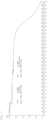
- the TGA measurement result of the obtained crystalline form II is shown in FIG. 6 .
- the crystalline form II according to the present invention showed chemical stability for 4 weeks under the accelerated condition (40°C, 75% RH) and the harsh condition (80°C). Thus, it was confirmed that the crystalline form II according to the present invention showed excellent stability to heat and humidity.
Landscapes
- Health & Medical Sciences (AREA)
- Chemical & Material Sciences (AREA)
- Organic Chemistry (AREA)
- Veterinary Medicine (AREA)
- Public Health (AREA)
- General Health & Medical Sciences (AREA)
- Animal Behavior & Ethology (AREA)
- Life Sciences & Earth Sciences (AREA)
- Pharmacology & Pharmacy (AREA)
- Medicinal Chemistry (AREA)
- Chemical Kinetics & Catalysis (AREA)
- Nuclear Medicine, Radiotherapy & Molecular Imaging (AREA)
- General Chemical & Material Sciences (AREA)
- Diabetes (AREA)
- Bioinformatics & Cheminformatics (AREA)
- Engineering & Computer Science (AREA)
- Obesity (AREA)
- Hematology (AREA)
- Endocrinology (AREA)
- Epidemiology (AREA)
- Child & Adolescent Psychology (AREA)
- Emergency Medicine (AREA)
- Rheumatology (AREA)
- Pain & Pain Management (AREA)
- Gynecology & Obstetrics (AREA)
- Reproductive Health (AREA)
- Pharmaceuticals Containing Other Organic And Inorganic Compounds (AREA)
- Medicines That Contain Protein Lipid Enzymes And Other Medicines (AREA)
- Peptides Or Proteins (AREA)
- Organic Low-Molecular-Weight Compounds And Preparation Thereof (AREA)
- Plural Heterocyclic Compounds (AREA)
Applications Claiming Priority (2)
| Application Number | Priority Date | Filing Date | Title |
|---|---|---|---|
| KR20200142397 | 2020-10-29 | ||
| PCT/KR2021/015470 WO2022092910A1 (fr) | 2020-10-29 | 2021-10-29 | Cristal de type ii d'un composé agoniste du récepteur de la mélanocortine et son procédé de préparation |
Publications (2)
| Publication Number | Publication Date |
|---|---|
| EP4219473A1 true EP4219473A1 (fr) | 2023-08-02 |
| EP4219473A4 EP4219473A4 (fr) | 2024-03-13 |
Family
ID=81384111
Family Applications (1)
| Application Number | Title | Priority Date | Filing Date |
|---|---|---|---|
| EP21886904.8A Pending EP4219473A4 (fr) | 2020-10-29 | 2021-10-29 | Cristal de type ii d'un composé agoniste du récepteur de la mélanocortine et son procédé de préparation |
Country Status (15)
| Country | Link |
|---|---|
| US (1) | US20230399321A1 (fr) |
| EP (1) | EP4219473A4 (fr) |
| JP (2) | JP2023548163A (fr) |
| KR (2) | KR102672625B1 (fr) |
| CN (1) | CN116490497A (fr) |
| AU (1) | AU2021371829B2 (fr) |
| CA (1) | CA3195432A1 (fr) |
| CL (1) | CL2023001224A1 (fr) |
| CO (1) | CO2023006517A2 (fr) |
| IL (1) | IL302426A (fr) |
| JO (1) | JOP20230086A1 (fr) |
| MX (1) | MX2023004656A (fr) |
| PE (1) | PE20240124A1 (fr) |
| WO (1) | WO2022092910A1 (fr) |
| ZA (1) | ZA202305595B (fr) |
Cited By (3)
| Publication number | Priority date | Publication date | Assignee | Title |
|---|---|---|---|---|
| EP4249485A4 (fr) * | 2020-12-22 | 2024-05-15 | Lg Chem, Ltd. | Forme cristalline iii de composé agoniste du récepteur de la mélanocortine et procédé de préparation s'y rapportant |
| EP4249483A4 (fr) * | 2020-12-22 | 2024-05-15 | Lg Chem, Ltd. | Forme cristalline i d'un composé agoniste du récepteur de la mélanocortine et son procédé de préparation |
| EP4249484A4 (fr) * | 2020-12-22 | 2024-05-15 | Lg Chem, Ltd. | Cristal de type ii d'un composé agoniste du récepteur de la mélanocortine et son procédé de préparation |
Families Citing this family (6)
| Publication number | Priority date | Publication date | Assignee | Title |
|---|---|---|---|---|
| TWI832128B (zh) * | 2020-12-22 | 2024-02-11 | 南韓商Lg化學股份有限公司 | 使用作為黑皮質素-4受體選擇性促效劑 |
| US20240228473A1 (en) * | 2021-05-06 | 2024-07-11 | Lg Chem, Ltd. | Crystalline form v of melanocortin receptor agonist compound, and method for preparing same |
| US20240239783A1 (en) * | 2021-05-06 | 2024-07-18 | Lg Chem, Ltd. | Crystal form vii of melanocortin receptor agonist compound and method for preparing same |
| AU2022271120A1 (en) * | 2021-05-07 | 2023-11-09 | Lg Chem, Ltd. | Crystal form iv of organic acid salts of melanocortin receptor agonist compound, and preparation method thereof |
| CN117242063A (zh) * | 2021-05-07 | 2023-12-15 | 株式会社Lg化学 | 黑皮质素受体激动剂化合物与香兰素的共晶及其制备方法 |
| BR112023022334A2 (pt) * | 2021-05-07 | 2023-12-26 | Lg Chemical Ltd | Formas cristalinas de sulfato do composto agonista do receptor de melanocortina, seus métodos de preparação, seus usos, e composições farmacêuticas compreendendo as mesmas |
Family Cites Families (12)
| Publication number | Priority date | Publication date | Assignee | Title |
|---|---|---|---|---|
| WO2000074679A1 (fr) * | 1999-06-04 | 2000-12-14 | Merck & Co., Inc. | Piperidines substituees en tant qu'agonistes du recepteur de melanocortine-4 |
| WO2002059107A1 (fr) * | 2001-01-23 | 2002-08-01 | Eli Lilly And Company | Piperidines/piperazines substituees utilisees comme agonistes du recepteur de melanocortine |
| AR044510A1 (es) | 2003-04-14 | 2005-09-14 | Merck & Co Inc | Procedimiento e intermedios para preparar acidos carboxilicos de pirrolidina |
| US7989634B2 (en) * | 2003-11-12 | 2011-08-02 | Lg Life Sciences Ltd. | Melanocortin receptor agonists |
| TWI332501B (en) * | 2006-07-14 | 2010-11-01 | Lg Life Sciences Ltd | Melanocortin receptor agonists |
| KR20080007046A (ko) * | 2006-07-14 | 2008-01-17 | 주식회사 엘지생명과학 | 멜라노코틴 수용체의 항진제 |
| UA99555C2 (en) * | 2008-11-12 | 2012-08-27 | Элджи Лайф Саенсез Лтд. | Melanocortin receptor agonists |
| CA3053168A1 (fr) | 2017-02-08 | 2018-08-16 | Tilray, Inc. | Procedes et appareil de traitement de cannabis par energie rayonnante a basse pression |
| EP3953327B1 (fr) * | 2019-11-07 | 2023-12-27 | Lg Chem, Ltd. | Agonistes du récepteur de la mélanocortine-4 |
| JP2024500966A (ja) * | 2020-12-22 | 2024-01-10 | エルジー・ケム・リミテッド | メラノコルチン受容体アゴニスト化合物の結晶形iおよびその製造方法 |
| CN116648249A (zh) * | 2020-12-22 | 2023-08-25 | 株式会社Lg化学 | 黑皮质素受体激动剂化合物的结晶形式ii及其制备方法 |
| US20240051919A1 (en) * | 2020-12-22 | 2024-02-15 | Lg Chem, Ltd. | Crystalline form iii of melanocortin receptor agonist compound and preparation method therefor |
-
2021
- 2021-10-29 EP EP21886904.8A patent/EP4219473A4/fr active Pending
- 2021-10-29 MX MX2023004656A patent/MX2023004656A/es unknown
- 2021-10-29 IL IL302426A patent/IL302426A/en unknown
- 2021-10-29 US US18/251,101 patent/US20230399321A1/en active Pending
- 2021-10-29 CN CN202180073241.7A patent/CN116490497A/zh active Pending
- 2021-10-29 JP JP2023526435A patent/JP2023548163A/ja active Pending
- 2021-10-29 KR KR1020210146189A patent/KR102672625B1/ko active Active
- 2021-10-29 PE PE2023001495A patent/PE20240124A1/es unknown
- 2021-10-29 AU AU2021371829A patent/AU2021371829B2/en active Active
- 2021-10-29 WO PCT/KR2021/015470 patent/WO2022092910A1/fr not_active Ceased
- 2021-10-29 CA CA3195432A patent/CA3195432A1/fr active Pending
-
2023
- 2023-04-27 JO JOJO/P/2023/0086A patent/JOP20230086A1/ar unknown
- 2023-04-27 CL CL2023001224A patent/CL2023001224A1/es unknown
- 2023-05-17 CO CONC2023/0006517A patent/CO2023006517A2/es unknown
- 2023-05-24 ZA ZA2023/05595A patent/ZA202305595B/en unknown
-
2024
- 2024-05-31 KR KR1020240071409A patent/KR20240085231A/ko active Pending
-
2025
- 2025-06-04 JP JP2025093514A patent/JP2025116220A/ja active Pending
Cited By (3)
| Publication number | Priority date | Publication date | Assignee | Title |
|---|---|---|---|---|
| EP4249485A4 (fr) * | 2020-12-22 | 2024-05-15 | Lg Chem, Ltd. | Forme cristalline iii de composé agoniste du récepteur de la mélanocortine et procédé de préparation s'y rapportant |
| EP4249483A4 (fr) * | 2020-12-22 | 2024-05-15 | Lg Chem, Ltd. | Forme cristalline i d'un composé agoniste du récepteur de la mélanocortine et son procédé de préparation |
| EP4249484A4 (fr) * | 2020-12-22 | 2024-05-15 | Lg Chem, Ltd. | Cristal de type ii d'un composé agoniste du récepteur de la mélanocortine et son procédé de préparation |
Also Published As
| Publication number | Publication date |
|---|---|
| AU2021371829B2 (en) | 2024-01-18 |
| AU2021371829A1 (en) | 2023-06-01 |
| KR20220057471A (ko) | 2022-05-09 |
| CN116490497A (zh) | 2023-07-25 |
| JP2025116220A (ja) | 2025-08-07 |
| KR102672625B1 (ko) | 2024-06-07 |
| US20230399321A1 (en) | 2023-12-14 |
| JP2023548163A (ja) | 2023-11-15 |
| EP4219473A4 (fr) | 2024-03-13 |
| KR20240085231A (ko) | 2024-06-14 |
| CO2023006517A2 (es) | 2023-09-08 |
| CA3195432A1 (fr) | 2022-05-05 |
| JOP20230086A1 (ar) | 2023-04-27 |
| MX2023004656A (es) | 2023-05-18 |
| PE20240124A1 (es) | 2024-01-22 |
| CL2023001224A1 (es) | 2023-11-03 |
| IL302426A (en) | 2023-06-01 |
| ZA202305595B (en) | 2024-09-25 |
| WO2022092910A1 (fr) | 2022-05-05 |
Similar Documents
| Publication | Publication Date | Title |
|---|---|---|
| EP4219474A1 (fr) | Forme cristalline iii de composé agoniste du récepteur de la mélanocortine et son procédé de préparation | |
| AU2021367714B2 (en) | Crystalline form iv of melanocortin receptor agonist compound and preparation method therefor | |
| AU2021367713B2 (en) | Crystalline form i of melanocortin receptor agonist compound and preparation method therefor | |
| AU2021371829B2 (en) | Crystalline form ii of melanocortin receptor agonist compound and preparation method therefor | |
| EP4249483A1 (fr) | Forme cristalline i d'un composé agoniste du récepteur de la mélanocortine et son procédé de préparation | |
| EP4249484A1 (fr) | Cristal de type ii d'un composé agoniste du récepteur de la mélanocortine et son procédé de préparation | |
| EP4249482A1 (fr) | Agoniste amorphe du récepteur de la mélanocortine et son procédé de préparation | |
| KR20250135150A (ko) | 멜라노코르틴 수용체 작용제 화합물의 결정형 ⅶ 및 이의 제조방법 | |
| EP4219471A1 (fr) | Agoniste du récepteur de la mélanocortine-4 amorphe | |
| AU2025203783A1 (en) | Crystalline form v of melanocortin receptor agonist compound, and method for preparing same | |
| EP4249485A1 (fr) | Forme cristalline iii de composé agoniste du récepteur de la mélanocortine et procédé de préparation s'y rapportant | |
| EP4317148A1 (fr) | Cristaux de sulfate de composé agoniste du récepteur de la mélanocortine et leur procédé de production | |
| EP4321512A1 (fr) | Co-cristal de composé agoniste du récepteur de la mélanocortine et de vanilline et son procédé de préparation |
Legal Events
| Date | Code | Title | Description |
|---|---|---|---|
| STAA | Information on the status of an ep patent application or granted ep patent |
Free format text: STATUS: THE INTERNATIONAL PUBLICATION HAS BEEN MADE |
|
| PUAI | Public reference made under article 153(3) epc to a published international application that has entered the european phase |
Free format text: ORIGINAL CODE: 0009012 |
|
| STAA | Information on the status of an ep patent application or granted ep patent |
Free format text: STATUS: REQUEST FOR EXAMINATION WAS MADE |
|
| 17P | Request for examination filed |
Effective date: 20230425 |
|
| AK | Designated contracting states |
Kind code of ref document: A1 Designated state(s): AL AT BE BG CH CY CZ DE DK EE ES FI FR GB GR HR HU IE IS IT LI LT LU LV MC MK MT NL NO PL PT RO RS SE SI SK SM TR |
|
| REG | Reference to a national code |
Ref country code: DE Ref legal event code: R079 Free format text: PREVIOUS MAIN CLASS: C07D0403060000 Ipc: C07D0207160000 |
|
| DAV | Request for validation of the european patent (deleted) | ||
| DAX | Request for extension of the european patent (deleted) | ||
| A4 | Supplementary search report drawn up and despatched |
Effective date: 20240212 |
|
| RIC1 | Information provided on ipc code assigned before grant |
Ipc: A61P 15/10 20060101ALI20240206BHEP Ipc: A61P 29/00 20060101ALI20240206BHEP Ipc: A61P 3/10 20060101ALI20240206BHEP Ipc: A61P 3/04 20060101ALI20240206BHEP Ipc: A61K 31/5377 20060101ALI20240206BHEP Ipc: C07D 207/16 20060101AFI20240206BHEP |
|
| STAA | Information on the status of an ep patent application or granted ep patent |
Free format text: STATUS: EXAMINATION IS IN PROGRESS |
|
| 17Q | First examination report despatched |
Effective date: 20250611 |